|
(11) | EP 0 531 715 A1 |

| (12) | EUROPEAN PATENT APPLICATION |
|
|
|
|
|||||||||||||||||||||||||||
| (54) | Process for producing alcohols and ketones |
| (57) The present invention provides a process for the oxidation of straight-chain, branched-chain
or cyclic alkanes of 1-20 carbon atoms and benzene derivatives represented by the
following formulas (1) - (2). The alcohols and ketones obtained by the oxidation of
the alkanes mentioned above and those by the oxidation of the benzene derivatives
mentioned above represented by the following formulas (3) - (6) are important as basic
starting materials in producing various chemical products including resins, such as
nylon and polyester, pharmaceuticals, agricultural chemicals, perfumes, dyes, etc.
|
[0001] The present invention relates to a process for the oxidation of straight-chain, branched-chain or cyclic alkanes of 1-20 carbon atoms and benzene derivatives. The alcohols and ketones obtained by the oxidation of these alkanes and benzene derivatives are compounds which are important as basic starting materials in the production of various chemical products, including resins, such as nylon and polyesters, pharmaceuticals, agricultural chemicals, perfumes, dyes, etc.
[0002] For effective utilization of alkanes and benzene derivatives which occur naturally in abundance, the development of an efficient process for producing alcohols and ketones by direct oxidation of these alkanes and benzene derivatives is eagerly awaited.
[0003] However, unactivated alkanes, which have no active functional group, can be oxidized only with great difficulty. Although many researches have reported on this subject, their results are not yet fully satisfactory for reasons of, for example, severe reaction conditions [Chem. Process Eng. (London), 1969, 50(6), 63] and complicated post-treatment steps required (J. Chem. Soc., Perkin Trans. I, 1986, 947).
[0004] The object of the present invention is to provide a process for producing alcohols and ketones advantageously by the oxidation of alkanes and benzene derivatives with oxygen using an easily available catalyst under mild conditions.
[0005] Thus, according to the present invention, a process is provided for producing the corresponding alcohols or ketones derived from the alkanes defined below, or alcohols represented by the formula (3)
wherein R¹, R², X and m are as defined below, or by the formula (4)
wherein X, Y, Z and m are as defined below, or ketones represented by the formula (5)
wherein R¹, X and m are as defined below, or by the formula (6)
wherein X, Z and m are as defined below,
which comprises reacting a straight-chain, branched-chain or cyclic alkane of 1-20 carbon atoms or a benzene derivative represented by the formula (1)
wherein R¹ and R² may be the same or different and each denote a hydrogen atom, (C₁-C₂₀)alkyl group, alkyl group substituted with a halogen, alkoxy or phenoxy, phenyl group unsubstituted or substituted with a halogen, alkyl, alkoxy or phenoxy or phenylalkyl group unsubstituted or substituted with a halogen, alkyl, alkoxy or phenoxy, or they conjointly as -CHR¹(R²) in its entirety denote a (C₃-C₁₂)cycloalkyl group unsubstituted or substituted with a halogen, alkyl, alkoxy, phenyl or phenoxy; X may be the same or different and denotes a hydrogen atom, halogen atom, (C₁-C₆)alkyl group, (C₁-C₆)alkoxy group, phenyl group or phenoxy group; and m denotes 1 or 2, or by the formula (2)
wherein Y denotes a hydrogen atom, halogen atom, (C₁-C₆)alkyl group, (C₁-C₆)alkoxy group, phenyl group or phenoxy group; Z denotes a group of -CH₂CH₂-, -CH₂CH₂CH₂-or
X and X' may be the same or different and each denote a hydrogen atom, halogen atom, (C₁-C₆)alkyl group, (C₁-C₆)alkoxy group, phenyl group or phenoxy group; and m and n each independently denote 1 or 2, with oxygen in the absence or presence of a proton source and in the presence of a transition metal catalyst and an aldehyde.
[0006] The straight-chain, branched-chain or cyclic alkanes of 1-20 carbon atoms used as the starting material in the present invention may be, for example, methane, ethane, propane, n-butane, isobutane, n-pentane, n-hexane, n-heptane, n-octane, n-nonane, n-decane, n-undecane, n-dodecane, n-pentadecane, n-eicosane, 2-methylbutane, 2-methylheptane, 2-methyltetradecane, 2,6-dimethylheptane, 2,2,8-trimethylnonane, 3-methylpentane, 4-methylnonane, 4-n-propylnonane, 2,2-dimethylbutane, 2,2-dimethylpentane, 3,3-dimethylpentane, 2,2-dimethylhexane, 3,3-dimethylhexane, 3,3-dimethylnonane, 2,2-dimethyltridecane, 3,3-dimethyltridecane, 4,4-dimethylheptane, 4,4-dimethyldecane, 5,5-dimethylnonane, 5,5-dimethyltridecane, 7,7-dimethyltridecane, 2,2,8,8-tetramethylnonane, 4,4,5,5-tetramethyldecane, 5-ethyl-5-n-propyldecane, cyclopentane, cyclohexane, cycloheptane, cyclooctane, cyclododecane, methylcyclopentane, methylcyclohexane, ethylcyclohexane, ethylcyclooctane, 1,2-dimethylcyclohexane, decalin, norbornane, adamantane, etc.
[0007] The alcohols and ketones which are the objective compounds of the present invention can be obtained, by using the alkanes mentioned above, as the corresponding alcohols and ketones derived from the alkanes. Examples of the alcohols include methanol, ethanol, isopropyl alcohol, 2-butanol, tert-butanol, 2-pentanol, 3-pentanol, 2-hexanol, 3-hexanol, 2-heptanol, 3-heptanol, 4-heptanol, 2-octanol, 3-octanol, 4-octanol, 2-nonanol, 3-nonanol, 4-nonanol, 5-nonanol, 2-decanol, 3-decanol, 4-decanol, 5-decanol, 2-undecanol, 3-undecanol, 4-undecanol, 5-undecanol, 6-undecanol, 2-dodecanol, 3-dodecanol, 4-dodecanol, 5-dodecanol, 6-dodecanol, 2-pentadecanol, 3-pentadecanol, 4-pentadecanol, 5-pentadecanol, 6-pentadecanol, 7-pentadecanol, 8-pentadecanol, 2-eicosanol, 3-eicosanol, 4-eicosanol, 5-eicosanol, 6-eicosanol, 7-eicosanol, 8-eicosanol, 9-eicosanol, 10-eicosanol, 2-methyl-2-butanol, 3-methyl-2-butanol, 2-methyl-2-heptanol, 2-methyl-3-heptanol, 2-methyl-4-heptanol, 6-methyl-3-heptanol, 6-methyl-2-heptanol, 2-methyl-2-tetradecanol, 2-methyl-3-tetradecanol, 2-methyl-4-tetradecanol, 2-methyl-5-tetradecanol, 2-methyl-6-tetradecanol, 2-methyl-7-tetradecanol, 13-methyl-7-tetradecanol, 13-methyl-6-tetradecanol, 13-methyl-5-tetradecanol, 13-methyl-4-tetradecanol, 13-methyl-3-tetradecanol, 13-methyl-2-tetradecanol, 2,6-dimethyl-2-heptanol, 2,6-dimethyl-3-heptanol, 2,6-dimethyl-4-heptanol, 2,8,8-trimethyl-2-nonanol, 2,8,8-trimethyl-3-nonanol, 2,8,8-trimethyl-4-nonanol, 2,2,8-trimethyl-5-nonanol, 2,2,8-trimethyl-4-nonanol, 2,2,8-trimethyl-3-nonanol, 3-methyl-3-pentanol, 3-methyl-2-pentanol, 4-methyl-4-nonanol, 4-methyl-2-nonanol, 4-methyl-3-nonanol, 4-methyl-5-nonanol, 6-methyl-4-nonanol, 6-methyl-3-nonanol, 6-methyl-2-nonanol, 4-n-propyl-4-nonanol, 4-n-propyl-2-nonanol, 4-n-propyl-3-nonanol, 4-n-propyl-5-nonanol, 6-n-propyl-4-nonanol, 6-n-propyl-3-nonanol, 6-n-propyl-2-nonanol, 3,3-dimethyl-2-butanol, 2,2-dimethyl-3-pentanol, 4,4-dimethyl-2-pentanol, 3,3-dimethyl-2-pentanol, 2,2-dimethyl-3-hexanol, 5,5-dimethyl-3-hexanol, 5,5-dimethyl-2-hexanol, 3,3-dimethyl-2-hexanol, 4,4-dimethyl-3-hexanol, 4,4-dimethyl-2-hexanol, 3,3-dimethyl-2-nonanol, 3,3-dimethyl-4-nonanol, 3,3-dimethyl-5-nonanol, 7,7-dimethyl-4-nonanol, 7,7-dimethyl-3-nonanol, 7,7-dimethyl-2-nonanol, 2,2-dimethyl-3-tridecanol, 2,2-dimethyl-4-tridecanol, 2,2-dimethyl-5-tridecanol, 2,2-dimethyl-6-tridecanol, 2,2-dimethyl-7-tridecanol, 12,12-dimethyl-6-tridecanol, 12,12-dimethyl-5-tridecanol, 12,12-dimethyl-4-tridecanol, 12,12-dimethyl-3-tridecanol, 12,12-dimethyl-2-tridecanol, 3,3-dimethyl-2-tridecanol, 3,3-dimethyl-4-tridecanol, 3,3-dimethyl-5-tridecanol, 3,3-dimethyl-6-tridecanol, 3,3-dimethyl-7-tridecanol, 11,11-dimethyl-6-tridecanol, 11,11-dimethyl-5-tridecanol, 11,11-dimethyl-4-tridecanol, 11,11-dimethyl-3-tridecanol, 11,11-dimethyl-2-tridecanol, 4,4-dimethyl-2-heptanol, 4,4-dimethyl-3-heptanol, 4,4-dimethyl-2-decanol, 4,4-dimethyl-3-decanol, 4,4-dimethyl-5-decanol, 7,7-dimethyl-5-decanol, 7,7-dimethyl-4-decanol, 7,7-dimethyl-3-decanol, 7,7-dimethyl-2-decanol, 5,5-dimethyl-2-nonanol, 5,5-dimethyl-3-nonanol, 5,5-dimethyl-4-nonanol, 5,5-dimethyl-2-tridecanol, 5,5-dimethyl-3-tridecanol, 5,5-dimethyl-4-tridecanol, 5,5-dimethyl-6-tridecanol, 5,5-dimethyl-7-tridecanol, 9,9-dimethyl-6-tridecanol, 9,9-dimethyl-5-tridecanol, 9,9-dimethyl-4-tridecanol, 9,9-dimethyl-3-tridecanol, 9,9-dimethyl-2-tridecanol, 7,7-dimethyl-2-tridecanol, 7,7-dimethyl-3-tridecanol, 7,7-dimethyl-4-tridecanol, 7,7-dimethyl-5-tridecanol, 7,7-dimethyl-6-tridecanol, 2,2,8,8-tetramethyl-3-nonanol, 2,2,8,8-tetramethyl-4-nonanol, 2,2,8,8-tetramethyl-5-nonanol, 4,4,5,5-tetramethyl-2-decanol, 4,4,5,5-tetramethyl-3-decanol, 6,6,7,7-tetramethyl-5-decanol, 6,6,7,7-tetramethyl-4-decanol, 6,6,7,7-tetramethyl-3-decanol, 6,6,7,7-tetramethyl-2-decanol, 5-ethyl-5-n-propyl-2-decanol, 5-ethyl-5-n-propyl-3-decanol, 5-ethyl-5-n-propyl-4-decanol, 6-ethyl-6-n-propyl-5-decanol, 6-ethyl-6-n-propyl-4-decanol, 6-ethyl-6-n-propyl-3-decanol, 6-ethyl-6-n-propyl-2-decanol, 3-n-butyl-3-n-propyl-2-octanol, 4-butyl-4-ethyl-2-nonanol, 4-butyl-4-ethyl-3-nonanol, cyclopentanol, cyclohexanol, cycloheptanol, cyclooctanol, cyclododecanol, 1-methylcyclopentanol, 2-methylcyclopentanol, 3-methylcyclopentanol, 1-methylcyclohexanol, 2-methylcyclohexanol, 3-methylcyclohexanol, 4-methylcyclohexanol, 1-ethylcyclohexanol, 2-ethylcyclohexanol, 3-ethylcyclohexanol, 4-ethylcyclohexanol, 1-cyclohexylethanol, 1-ethylcyclooctanol, 2-ethylcyclooctanol, 3-ethylcyclooctanol, 4-ethylcyclooctanol, 5-ethylcyclooctanol, 1-cyclooctylethanol, 1,2-dimethylcyclohexanol, 2,3-dimethylcyclohexanol, 3,4-dimethylcyclohexanol, 9-decalol, 1-decalol, 2-decalol, endo-norborneol, exo-norborneol, 1-adamantanol, 2-adamantanol, etc. Examples of the ketones include acetone, 2-butanone, 2-pentanone, 3-pentanone, 2-hexanone, 3-hexanone, 2-heptanone, 3-heptanone, 4-heptanone, 2-octanone, 3-octanone, 4-octanone, 2-nonanone, 3-nonanone, 4-nonanone, 5-nonanone, 2-decanone, 3-decanone, 4-decanone, 5-decanone, 2-undecanone, 3-undecanone, 4-undecanone, 5-undecanone, 6-undecanone, 2-dodecanone, 3-dodecanone, 4-dodecanone, 5-dodecanone, 6-dodecanone, 2-pentadecanone, 3-pentadecanone, 4-pentadecanone, 5-pentadecanone, 6-pentadecanone, 7-pentadecanone, 8-pentadecanone, 2-eicosanone, 3-eicosanone, 4-eicosanone, 5-eicosanone, 6-eicosanone, 7-eicosanone, 8-eicosanone, 9-eicosanone, 10-eicosanone, 3-methyl-2-butanone, 2-methyl-3-heptanone, 2-methyl-4-heptanone, 6-methyl-3-heptanone, 6-methyl-2-heptanone, 2-methyl-3-tetradecanone, 2-methyl-4-tetradecanone, 2-methyl-5-tetradecanone, 2-methyl-6-tetradecanone, 2-methyl-7-tetradecanone, 13-methyl-7-tetradecanone, 13-methyl-6-tetradecanone, 13-methyl-5-tetradecanone, 13-methyl-4-tetradecanone, 13-methyl-3-tetradecanone, 13-methyl-2-tetradecanone, 2,6-dimethyl-3-heptanone, 2,6-dimethyl-4-heptanone, 2,8,8-trimethyl-3-nonanone, 2,8,8-trimethyl-4-nonanone, 2,2,8-trimethyl-5-nonanone, 2,2,8-trimethyl-4-nonanone, 2,2,8-trimethyl-3-nonanone, 3-methyl-2-pentanone, 4-methyl-2-nonanone, 4-methyl-3-nonanone, 4-methyl-5-nonanone, 6-methyl-4-nonanone, 6-methyl-3-nonanone, 6-methyl-2-nonanone, 4-n-propyl-2-nonanone, 4-n-propyl-3-nonanone, 4-n-propyl-5-nonanone, 6-n-propyl-4-nonanone, 6-n-propyl-3-nonanone, 6-n-propyl-2-nonanone, 3,3-dimethyl-2-butanone, 2,2-dimethyl-3-pentanone, 4,4-dimethyl-2-pentanone, 3,3-dimethyl-2-pentanone, 2,2-dimethyl-3-hexanone, 5,5-dimethyl-3-hexanone, 5,5-dimethyl-2-hexanone, 3,3-dimethyl-2-hexanone, 4,4-dimethyl-3-hexanone, 4,4-dimethyl-2-hexanone, 3,3-dimethyl-2-nonanone, 3,3-dimethyl-4-nonanone, 3,3-dimethyl-5-nonanone, 7,7-dimethyl-4-nonanone, 7,7-dimethyl-3-nonanone, 7,7-dimethyl-2-nonanone, 2,2-dimethyl-3-tridecanone, 2,2-dimethyl-4-tridecanone, 2,2-dimethyl-5-tridecanone, 2,2-dimethyl-6-tridecanone, 2,2-dimethyl-7-tridecanone, 12,12-dimethyl-6-tridecanone, 12,12-dimethyl-5-tridecanone, 12,12-dimethyl-4-tridecanone, 12,12-dimethyl-3-tridecanone, 12,12-dimethyl-2-tridecanone, 3,3-dimethyl-2-tridecanone, 3,3-dimethyl-4-tridecanone, 3,3-dimethyl-5-tridecanone, 3,3-dimethyl-6-tridecanone, 3,3-dimethyl-7-tridecanone, 11,11-dimethyl-6-tridecanone, 11,11-dimethyl-5-tridecanone, 11,11-dimethyl-4-tridecanone, 11,11-dimethyl-3-tridecanone, 11,11-dimethyl-2-tridecanone, 4,4-dimethyl-2-heptanone, 4,4-dimethyl-3-heptanone, 4,4-dimethyl-2-decanone, 4,4-dimethyl-3-decanone, 4,4-dimethyl-5-decanone, 7,7-dimethyl-5-decanone, 7,7-dimethyl-4-decanone, 7,7-dimethyl-3-decanone, 7,7-dimethyl-2-decanone, 5,5-dimethyl-2-nonanone, 5,5-dimethyl-3-nonanone, 5,5-dimethyl-4-nonanone, 5,5-dimethyl-2-tridecanone, 5,5-dimethyl-3-tridecanone, 5,5-dimethyl-4-tridecanone, 5,5-dimethyl-6-tridecanone, 5,5-dimethyl-7-tridecanone, 9,9-dimethyl-6-tridecanone, 9,9-dimethyl-5-tridecanone, 9,9-dimethyl-4-tridecanone, 9,9-dimethyl-3-tridecanone, 9,9-dimethyl-2-tridecanone, 7,7-dimethyl-2-tridecanone, 7,7-dimethyl-3-tridecanone, 7,7-dimethyl-4-tridecanone, 7,7-dimethyl-5-tridecanone, 7,7-dimethyl-6-tridecanone, 2,2,8,8-tetramethyl-3-nonanone, 2,2,8,8-tetramethyl-4-nonanone, 2,2,8,8-tetramethyl-5-nonanone, 4,4,5,5-tetramethyl-2-decanone, 4,4,5,5-tetramethyl-3-decanone, 6,6,7,7-tetramethyl-5-decanone, 6,6,7,7-tetramethyl-4-decanone, 6,6,7,7-tetramethyl-3-decanone, 6,6,7,7-tetramethyl-2-decanone, 5-ethyl-5-n-propyl-2-decanone, 5-ethyl-5-n-propyl-3-decanone, 5-ethyl-5-n-propyl-4-decanone, 6-ethyl-6-n-propyl-5-decanone, 6-ethyl-6-n-propyl-4-decanone, 6-ethyl-6-n-propyl-3-decanone, 6-ethyl-6-n-propyl-2-decanone, 3-n-butyl-3-n-propyl-2-octanone, 4-butyl-4-ethyl-2-nonanone, 4-butyl-4-ethyl-3-nonanone, cyclopentanone, cyclohexanone, cycloheptanone, cyclooctanone, cyclododecanone, 2-methylcyclopentanone, 3-methylcyclopentanone, 2-methylcyclohexanone, 3-methylcyclohexanone, 4-methylcyclohexanone, 2-ethylcyclohexanone, 3-ethylcyclohexanone, 4-ethylcyclohexanone, cyclohexyl methyl ketone, 2-ethylcyclooctanone, 3-ethylcyclooctanone, 4-ethylcyclooctanone, 5-ethylcyclooctanone, cyclooctyl methyl ketone, 2,3-dimethylcyclohexanone, 3,4-dimethylcyclohexanone, 1-decalone, 2-decalone, norcamphor, 2-adamantanone, etc.
[0008] Examples of the benzene derivatives represented by the above formula (1) used as the starting material in the present invention include ethylbenzene, n-propylbenzene, n-butylbenzene, n-heptylbenzene, n-undecylbenzene, 2-chloroethylbenzene, 2-methoxyethylbenzene, 2-phenoxyethylbenzene, diphenylmethane, di(p-chlorophenyl)methane, di(p-tolyl)methane, di(p-methoxyphenyl)methane, di(m-phenoxyphenyl)methane, 1,2-diphenylethane, 1,3-diphenylpropane, o-ethyltoluene, m-ethyltoluene, p-ethyltoluene, o-chloroethylbenzene, m-chloroethylbenzene, p-chloroethylbenzene, p-bromoethylbenzene, p-methoxyethylbenzene, m-phenoxyethylbenzene, 2,4-dichloroethylbenzene, 2,4-dibromoethylbenzene, 2-chloro-4-methoxyethylbenzene, cumene, o-chlorocumene, m-chlorocumene, p-chlorocumene, p-bromocumene, p-methoxycumene, m-phenoxycumene, 2-phenylbutane, 2-phenylhexane, 3-phenylpentane, 3-phenylheptane, phenylcyclohexane, 1,3,5-triisopropylbenzene, etc.
[0009] The alcohols or the ketones which are the objective compounds of the present invention can be obtained, by use of the benzene derivatives mentioned above, as the alcohols represented by the above formula (3) or as the ketones represented by the above formula (5).
[0010] Examples of the alcohols represented by the formula (3) include 1-phenylethanol, 1-phenyl-1-propanol, 1-phenyl-1-butanol, 1-phenyl-1-heptanol, 1-phenyl-1-undecanol, 2-chloro-1-phenylethanol, 2-methoxy-1-phenylethanol, 2-phenoxy-1-phenylethanol, diphenylmethanol, di(p-chlorophenyl)methanol, di(p-tolyl)methanol, di(p-methoxyphenyl)methanol, di(m-phenoxyphenyl)methanol, 1,2-diphenylethanol, 1,3-diphenyl-1-ethanol, 1-(o-tolyl)ethanol, 1-(m-tolyl)ethanol, 1-(p-tolyl)ethanol, 1-(2'-chlorophenyl)ethanol, 1-(3'-chlorophenyl)ethanol, 1-(4'-chlorophenyl)ethanol, 1-(4'-bromophenyl)ethanol, 1-(4'-methoxyphenyl)ethanol, 1-(3'-phenoxyphenyl)ethanol, 1-(2',4'-dichlorophenyl)ethanol, 1-(2',4'-dibromophenyl)ethanol, 1-(2'-chloro-4'-methoxyphenyl)ethanol, 2-phenyl-2-propanol, 2-(2'-chlorophenyl)-2-propanol, 2-(3'-chlorophenyl)-2-propanol, 2-(4'-chlorophenyl)-2-propanol, 2-(4'-bromophenyl)-2-propanol, 2-(4'-methoxyphenyl)-2-propanol, 2-(3'-phenoxyphenyl)-2-propanol, 2-phenyl-2-butanol, 2-phenyl-2-hexanol, 3-phenyl-3-pentanol, 3-phenyl-3-heptanol, 1-phenylcyclohexanol, 2-(3',5'-diisopropylphenyl)-2-propanol, etc.
[0011] Examples of the ketones represented by the formula (5) include acetophenone, propiophenone, butanophenone, heptanophenone, undecaphenone, 2-chloroacetophenone, 2-methoxyacetophenone, 2-phenoxyacetophenone, benzophenone, 4,4'-dichlorobenzophenone, 4,4'-dimethylbenzophenone, 4,4'-dimethoxybenzophenone, 3,3'-diphenoxybenzophenone, 2-phenylacetophenone, 3-phenylpropiophenone, 2'-methylacetophenone, 3'-methylacetophenone, 4'-methylacetophenone, 2'-chloroacetophenone, 3'-chloroacetophenone, 4'-chloroacetophenone, 4'-bromoacetophenone, 4'-methoxyacetophenone, 3'-phenoxyacetophenone, 2',4'-dichloroacetophenone, 2',4,-dibromoacetophenone, 2'-chloro-4'-methoxyacetophenone, etc.
[0012] Examples of the benzene derivatives represented by the above formula (2) used as the starting material in the present invention include indan, tetralin, fluorene, 2,7-dibromofluorene, 2,7-dimethylfluorene, 2,7-dimethoxyfluorene, 2,7-diphenoxyfluorene, 1-methylindan, 9-methylfluorene, etc.
[0013] The alcohols or the ketones which are the objective compounds of the present invention can be obtained, by use of benzene derivatives mentioned above, as the alcohols represented by the above formula (4) or as the ketones represented by the above formula (6).
[0014] Examples of the alcohols represented by the formula (4) include 1-indanol, 1-tetralol, 9-fluorenol, 2,7-dibromo-9-fluorenol, 2,7-dimethyl-9-fluorenol, 2,7-dimethoxy-9-fluorenol, 2,7-diphenoxy-9-fluorenol, 1-methyl-1-indanol, 9-methyl-9-fluorenol, etc.
[0015] Examples of the ketones represented by the formula (6) include 1-indanone, 1-tetralone, fluorenone, 2,7-dibromofluorenone, 2,7-dimethylfluorenone, 2,7-dimethoxyfluorenone, 2,7-diphenoxyfluorenone, etc.
[0016] The transition metal catalyst may be a chromium-containing catalyst, manganese-containing catalyst, iron-containing catalyst, cobalt-containing catalyst, nickel-containing catalyst, copper-containing catalyst, ruthenium-containing catalyst, osmium-containing catalyst, and the like. Specific examples thereof include Cr, CrCl₂·nH₂O, Cr₂(SO₄)₃·nH₂O, CrCl₃·nH₂O, CrF₃·nH₂O, Cr(OAc)₃·nH₂O, Cr(HCOO)₃·nH₂O, Cr(NO₃)₃·nH₂O, CrNH₄(SO₄)₂·nH₂O, CrPO₄·nH₂O, Cr₂O₃·nH₂O, CrO₃, Cr(acac)₃, Mn, MnCl₂·nH₂O MnBr₂·nH₂O, MnF₂, MnSO₄·nH₂O, Mn(NO₃)₂·nH₂O, Mn(OAc)₂·nH₂O, Mn(ClO₄)₂·nH₂O, MnHPO₄·nH₂O, MnCO₃·nH₂O, Mn(OAc)₃·nH₂O, MnO₂, Mn(acac)₂·nH₂O, Mn(acac)₃·nH₂O, Fe, Fe(CO)₅, Fe(CO)₉, Fe(CO)₁₂, FeCl₂·nH₂O, FeBr₂·nH₂O, FeSO₄·nH₂O, Fe(ClO₄)₂·nH₂O, FeSO₄·(NH₆)₂SO₄·nH₂O, Fe₃(PO₄)₂·nH₂O, FeCl₃·nH₂O, FeF₃·nH₂O, Fe₂(SO₄)₃·nH₂O, Fe(NO₃)₃·nH₂O, Fe(OAc)₃, Fe(ClO₄)₃·nH₂O, FeNH₄(SO₄)₂·nH₂O, FePO₄·nH₂O, Fe₂O₃, Fe₃O₄, Fe(acac)₃, Co, CoCl₂·nH₂O, CoBr₂·nH₂O, CoI₂·nH₂O, CoF₂·nH₂O, CoSO₄·nH₂O, Co(NO₃)₂·nH₂O, Co(OAc)₂·nH₂O, CoSO₄·(NH₄)₂SO₄·nH₂O, Co₃(PO₄)₂·nH₂O, CoCO₃, Co(OH)₂, Co(acac)₂·nH₂O, Co(acac)₃·nH₂O, Co₃O₄, Ni, NiCl₂·nH₂O, NiBr₂·nH₂O, NiI₂·nH₂O, NiF₂·nH₂O, NiSO₄·nH₂O, Ni(NO₃)₂·nH₂O, Ni(OAc)₂·nH₂O, Ni(HCOO)₂·nH₂O, Ni(ClO₄)₂·nH₂O, NiSO₄·(NH₄)₂SO₄·nH₂O, NiCO₃, Ni(OH)₂, Ni(acac)₂·nH₂O, NiO, Ni₂O₃, Cu, CuCl, CuBr, CuI, CuCl₂·nH₂O, CuBr₂, CuF₂, CuSO₄·nH₂O, Cu(NO₃)₂·nH₂O, Cu(OAc)₂·nH₂O, Cu(ClO₄)₂·nH₂O, Cu(OH)₂, Cu(OCH₃)₂, Cu₃(PO₄)₂·nH₂O, CuO, Cu₂O, Cu(acac)₂, Ru, Ru₃(CO)₁₂, RuCl₂(PPh₃)₃, RuCl₃·nH₂O, RuO₂·nH₂O, RuO₄, Os, OsCl₃·nH₂O and OSO₄, wherein n is usually an integer of 0-12. Preferred among them are iron-containing catalysts and copper-containing catalysts, which cause little environmental pollution.
[0017] These catalysts may also be used as a mixture thereof or after being supported on heteropoly-acids, silica gel, carbon powders, polymers, etc. The amount of the catalyst to be used is not particularly limited, but is usually in the range of 0.01-200% by mole, preferably 0.1-5% by mole, relative to the alkane or the benzene derivative.
[0018] Specific examples of the aldehyde used in the present invention include formaldehyde, acetaldehyde, propionaldehyde, butanal, pentanal, hexanal, heptanal, decanal, 2-methylpropanal, cyclohexanecarboxaldehyde, isovaleraldehyde, pivalaldehyde, benzaldehyde, p-chlorobenzaldehyde, m-chlorobenzaldehyde, p-tolualdehyde, p-anisaldehyde, paraformaldehyde, paraldehyde, etc. Preferred among them are acetaldehyde, propionaldehyde, butanal and heptanal, which are easily available and have a low molecular weight. The amount of the aldehyde to be used is not critical but usually in the range of 0.1-1000% by mole, preferably 1-400% by mole, relative to the alkane or the benzene derivative.
[0019] The addition of the proton source is particularly effective when the transition metal catalyst is a simple substance or a heterogeneous catalyst.
[0020] Specific examples of the proton source include formic acid, acetic acid, monochloroacetic acid, dichloroacetic acid, trichloroacetic acid, monobromoacetic acid, trifluoroacetic acid, propanoic acid, butyric acid, heptanoic acid, decanoic acid, benzoic acid, p-toluenesulfonic acid, hydrochloric acid, hydrogen bromide, sulfuric acid, nitric acid, water, etc., preferred of which are acetic acid and benzoic acid.
[0021] Though the amount of the proton source to be used is not particularly restricted, it is usually in the range of 1-100 equivalents relative to the transition metal catalyst. The use of the proton source is not necessary when the transition metal catalyst contains water.
[0022] The reaction of the present invention may be conducted also in the presence of a solvent. As examples of solvents which may be used, mention may be made of halogenated hydrocarbons such as dichloromethane, chloroform, ethylene dichloride, etc., esters such as ethyl acetate, etc., nitriles such as acetonitrile, etc., and aromatic hydrocarbons such as benzene, toluene, xylene, monochlorobenzene, dichlorobenzene, etc.
[0023] The oxygen used in the present invention may be, besides oxygen, also air. The method of supplying the oxygen is not particularly limited, and the reaction is usually conducted while blowing oxygen or air into the reaction system or under an atmosphere of oxygen or air, either at normal pressure or under applied pressure (<20 atm for oxygen, <100 atm for air). The reaction temperature is usually in the range from 0°C to the reflux temperature of the reaction mixture, preferably in the range from 20°C to 80°C.
[0024] The reaction time is not particularly limited. The reaction mixture may be analyzed by suitable means such as gas chromatography (GC) and the point at which the rate of formation of the intended alcohol or ketone levels off may be taken as the end point of the reaction. The reaction time is usually in the range from 1 hour to 1 week. In the present reaction, the aldehyde used is converted into the corresponding carboxylic acid and hence can be easily separated from the intended product.
[0025] After completion of the reaction, the reaction mixture is washed with an aqueous sodium sulfite solution and aqueous sodium hydrogen carbonate solution, then concentrated and, if necessary and desired, subjected to additional operations such as rectification, whereby the intended alcohol or ketone can be obtained.
[0026] According to the process of the present invention, alcohols or ketones can be obtained under mild conditions and in one step from alkanes or alkylbenzene derivatives through the reaction thereof with oxygen by using an easily available transition metal catalyst and an aldehyde in the presence or absence of a proton source, so that the process is valuable also from the industrial point of view.
[0027] The present invention will be described in more detail below with reference to Examples, but the invention is in no way limited thereto.
Examples 1 - 26
[0028] To a mixture of 272 mg of adamantane, 3% by mole (relative to adamantane) of a catalyst, 4 mg of acetic acid and 10 mℓ of dichloromethane was added dropwise a solution of 897 mg of cyclohexanecarboxaldehyde in 2 mℓ of dichloromethane under an oxygen atmosphere at 25°C over a period of 2 hours, and the resulting mixture was stirred at that temperature for further 15 hours. The reaction mixture obtained was analyzed by GC to obtain the results shown in Table 1. The products formed were subjected to quantitative determination by means of GC-IS (internal standard) method and identification of structure by means of GC-MS (mass spectrometry).
Examples 27 - 36
[0029] A mixture of 272 mg of adamantane, 3% by mole (relative to adamantane) of a catalyst, 264 mg of acetaldehyde and 12 mℓ of dichloromethane was stirred under an oxygen atmosphere at 25°C for 17 hours. The reaction mixture was analyzed by GC to obtain the results shown in Table 2.
Examples 37 - 67
[0030] A solution of 897 mg of cyclohexanecarboxaldehyde in 2 mℓ of dichloromethane was added dropwise to a mixture of 212 mg of ethylbenzene, 1% by mole (relative to ethylbenzene) of a catalyst, 1.2 mg of acetic acid and 10 mℓ of dichloromethane under an oxygen atmosphere at 25°C over a period of 2 hours, and the mixture was stirred at that temperature for further 15 hours. The resulting reaction mixture was analyzed by GC to obtain the results shown in Table 3. The products formed were subjected to quantitative determination by means of GC-IS method and identification of structure by means of GC-MS.
Examples 68 - 71
[0031] To a mixture of 272 mg of adamantane, 3.4 mg of Fe, 4 mg of acetic acid and 10 mℓ of dichloromethane a solution of 4 equivalents (relative to adamantane) of an aldehyde in 2 ml of dichloromethane was added dropwise under an oxygen atmosphere at 25°C over a period of 2 hours, and the mixture was stirred at that temperature for further 15 hours. The resulting reaction mixture was analyzed by GC to obtain the results shown in Table 4.
Examples 72 - 75
[0032] The same procedures as in Example 68 were followed except for using 16 mg of RuCl₃·3H₂O in place of 3.4 mg of Fe to obtain the results shown in Table 5.
Examples 76 - 80
[0033] A mixture of 272 mg of adamantane, 5.9 mg of Cu(OH)₂, 3 equivalents (relative to adamantane) of an aldehyde and 12 mℓ of dichloromethane was stirred under an oxygen atmosphere at 25°C for 17 hours. The resulting reaction mixture was analyzed by GC to obtain the results shown in Table 6.
Examples 81 - 83
[0034] A solution of 914 mg of heptanal in 2 mℓ of a solvent was added dropwise to a mixture of 272 mg of adamantane, 16 mg of RuCl₃·3H₂O, 4 mg of acetic acid and 10 mℓ of the solvent under an oxygen atmosphere at 25°C over a period of 2 hours, and the mixture was stirred at that temperature for further 15 hours. The resulting reaction mixture was analyzed by GC to obtain the results shown in Table 7.
Examples 84 - 87
[0035] A solution of heptanal in 2 mℓ of dichloromethane was added dropwise to a mixture of 272 mg of adamantane, 3.4 mg of Fe, 4 mg of acetic acid and 10 mℓ of dichloromethane under an oxygen atmosphere at 25°C over a period of 2 hours, and the mixture was stirred at that temperature for further 15 hours. The reaction mixture was analyzed by GC to obtain the results shown in Table 8.
Examples 88 - 90
[0036] The same procedures as in Example 84 were followed except for using 16 mg of RuCl₃·3H₂O in place of 3.4 mg of Fe to obtain the results shown in Table 9.
Examples 91 - 92
[0037] A solution of 914 mg of heptanal in 2 mℓ of dichloromethane was added dropwise to a mixture of 272 mg of adamantane, Fe, acetic acid and 10 mℓ of dichloromethane under an oxygen atmosphere at 25°C over a period of 2 hours, and the mixture was stirred at that temperature for further 15 hours. The reaction mixture was analyzed by GC to obtain the results shown in Table 10.
Examples 93 - 94
[0038] The same procedures as in Example 91 were followed except for using RuCl₃·3H₂O in place of Fe and altering the amount of heptanal to 685 mg, to obtain the results shown in Table 11.
Examples 95 - 96
[0039] A solution of 914 mg of heptanal in 2 mℓ of dichloromethane was added dropwise to a mixture of 272 mg of adamantane, 1.1 mg of Fe, acetic acid and 10 mℓ of dichloromethane under an oxygen atmosphere at 25°C over a period of 2 hours, and the mixture was stirred at that temperature for further 15 hours. The reaction mixture was analyzed by GC to obtain the results shown in Table 12.
Examples 97 - 99
[0040] The same procedures as in Example 95 were followed except for using 16 mg of RuCl₃·3H₂O in place of 1.1 mg of Fe and altering the amount of heptanal to 685 mg, to obtain the results shown in Table 13.
Examples 100 - 102
[0041] A solution of 914 mg of heptanal in 2 mℓ of dichloromethane was added dropwise to a mixture of 272 mg of adamantane, 1.1 mg of Fe, 1% by mole (relative to adamantane) of an acid and 10 mℓ of dichloromethane under an oxygen atmosphere at 25°C over a period of 2 hours, and the mixture was stirred at that temperature for further 15 hours. The reaction mixture was analyzed by GC to obtain the results shown in Table 14.
Examples 103 - 106
[0042] A mixture of 272 mg of adamantane, 5.9 mg of Cu(OH)₂, 264 mg of acetaldehyde, 3% by mole (relative to adamantane) of an acid and 12 mℓ of dichloromethane was stirred under an oxygen atmosphere at 25°C for 17 hours. The reaction mixture was analyzed by GC to obtain the results shown in Table 15.
Examples 107 - 112
[0043] A solution of 914 mg of heptanal in 2 mℓ of dichloromethane was added dropwise to a mixture of 2 mmoles of an alkane, 1.1 mg of Fe, 1.2 mg of acetic acid and 10 mℓ of dichloromethane under an oxygen atmosphere at 25°C over a period of 2 hours, and the mixture was stirred at that temperature for further 15 hours. The reaction mixture was analyzed by GC to obtain the results shown in Table 16. The products formed were subjected to quantitative determination by means of GC-IS method and identification of structure by means of GC-MS.
Examples 113 - 117
[0044] The same procedures as in Examples 107 - 112 were followed except for using 16 mg of RuCl₃·3H₂O in place of 1.1 mg of Fe and altering the amount of heptanal to 685 mg, to obtain the results shown in Table 17.
Table 17
| Example | Alkane | Conv,a% | Product | Yield,b% |
| 113 | n-heptane | 0.8 | heptanols | trace |
| heptanonesc | 0.5(72) | |||
| 114 | n-decane | 2.0 | decanolsd | 0.9(41) |
| decanonese | 0.9(44) | |||
| 115 | cyclohexane | 3.1 | cyclohexanol | 1.1(36) |
| cyclohexanone | 1.6(53) | |||
| 116 | cyclooctane | 8.4 | cyclooctanol | 1.8(21) |
| cyclooctanone | 5.2(63) | |||
| 117 | methylcyclohexane | 11 | methylcyclo- | 7.5(66) |
| hexanolsf | ||||
| methylcyclo- | 2.6(23) | |||
| hexanonesg |
| aBased on the starting alkanes. | ||||
| bBased on the starting alkanes. Values in parentheses correspond to yields based on the converted alkanes. | ||||
| c2-one : 3-one : 4-one = 47 : 33 : 20. | ||||
| d2-ol : 3-ol : (4+5)-ols = 35 : 24 : 41. | ||||
| e2-one : 3-one : (4+5)-ones = 21 : 26 : 53. | ||||
| f1-ol : 2-ol : 3-ol : 4-ol = 87 : 3 : 7 : 3. | ||||
| g2-one : 3-one : 4-one = 13 : 62 : 25. |
Examples 118 - 122
[0045] A solution of 152 mg of heptanal in 2 mℓ of dichloromethane was added dropwise to a mixture of 13.3 mmoles of an alkane, 0.6 mg of Fe, 0.6 mg of acetic acid and 10 mℓ of dichloromethane under an oxygen atmosphere at 25°C over a period of 2 hours, and the mixture was stirred at that temperature for further 15 hours. The reaction mixture was analyzed by GC to obtain the results shown in Table 18.
Table 18
| Example | Alkane | Conv,a% | Product | Yield,b% |
| 118 | n-heptane | 6.7 | heptanolsc | 2.2(33) |
| heptanonesd | 8.5(63) | |||
| 119 | n-decane | 6.5 | decanolse | 2.3(37) |
| decanonesf | 8.0(61) | |||
| 120 | cyclohexane | 14 | cyclohexanol | 6.6(48) |
| cyclohexanone | 13(48) | |||
| 121 | cyclooctane | 17 | cyclooctanol | 6.0(36) |
| cyclooctanone | 20(59) | |||
| 122 | methylcyclohexane | 63 | methylcyclohexanolsg | 46(73) |
| methylcyclohexanonesh | 27(21) |
| aBased on the starting heptanal. | ||||
| bBased on the starting heptanal. Values in parentheses correspond to yields based on the converted alkanes. | ||||
| c2-ol : 3-ol : 4-ol = 41 : 35 : 24. | ||||
| d2-one : 3-one : 4-one = 44 : 38 : 18. | ||||
| e2-ol : 3-ol : (4+5)-ols = 30 : 22 : 48. | ||||
| f2-one : 3-one : (4+5)-ones = 24 : 21 : 55. | ||||
| g1-ol : 2-ol : 3-ol : 4-ol = 86 : 4 : 8 : 2. | ||||
| h2-one : 3-one : 4-one = 17 : 63 : 20. |
Example 123
[0046] The same procedures as in Example 118 were followed except for using 2.6 mg of RuCl₃·3H₂O in place of 0.6 mg of Fe to obtain the following results.
Conversion : 70% (based on heptanal)
[0047] Methylcyclohexanols yield : 61% (based on heptanal), 88% (based on converted methylcyclohexane), 1-ol : 2-ol : 3-ol : 4-ol = 91 : 2 : 5 : 2.
[0048] Methylcyclohexanones yield : 12% (based on heptanal), 8% (based on converted methylcyclohexane), 2-one : 3-one : 4-one = 23 : 58 : 19.
Examples 124 - 128
[0049] A solution of 152 mg of heptanal in 2 mℓ of ethyl acetate was added to a mixture of 13.3 mmoles of an alkane, 2.6 mg of RuCl₃·3H₂O, 0.6 mg of acetic acid and 10 mℓ of ethyl acetate under an oxygen atmosphere at 50°C, and the mixture was stirred at that temperature for 15 hours. The reaction mixture was analyzed by GC to obtain the results shown in Table 19.
Table 19
| Example | Alkane | Conv,a% | Product | Yield,b% |
| 124 | n-heptane | 3.8 | heptanolsc | 0.9(30) |
| heptanonesd | 5.1(68) | |||
| 125 | n-decane | 6.1 | decanolse | 1.4(24) |
| decanonesf | 9.1(74) | |||
| 126 | cyclohexane | 6.6 | cyclohexanol | 2.4(35) |
| cyclohexanone | 8.1(61) | |||
| 127 | cyclooctane | 16 | cyclooctanol | 2.7(16) |
| cyclooctanone | 27(82) | |||
| 128 | methylcyclohexane | 78 | methylcyclohexanolsg | 53(67) |
| methylcyclohexanonesh | 45(29) |
| aBased on the starting heptanal. | ||||
| bBased on the starting heptanal. Values in parentheses correspond to yields based on the converted alkanes. | ||||
| c2-ol : 3-ol : 4-ol = 40 : 40 : 20. | ||||
| d2-one : 3-one : 4-one = 41 : 41 : 18. | ||||
| e2-ol : 3-ol : (4+5)-ols = 30 : 24 : 46. | ||||
| f2-one : 3-one : (4+5)-ones = 22 ; 36 : 42. | ||||
| g1-ol : 2-ol : 3-ol : 4-ol = 96 : 1 : 2 : 1. | ||||
| h2-one : 3-one : 4-one = 17 : 62 : 21. |
Examples 129 - 134
[0050] A solution of 352 mg of acetaldehyde in 2 mℓ of dichloromethane was added dropwise to a mixture of 2 mmoles of an alkane, 1.1 mg of Fe, 1.2 mg of acetic acid and 10 mℓ of dichloromethane under an oxygen atmosphere at 25°C over a period of 2 hours, and the mixture was stirred at that temperature for further 15 hours. The reaction mixture was analyzed by GC to obtain the results shown in Table 20.
Table 20
| Example | Alkane | Conv,a% | Product | Yield,b% |
| 129 | n-heptane | 5.8 | heptanolsc | 1.0(17) |
| heptanonesd | 4.8(82) | |||
| 130 | n-decane | 6.0 | decanolse | 0.5(9) |
| decanonesf | 5.1(87) | |||
| 131 | cyclohexane | 8.0 | cyclohexanol | 2.6(33) |
| cyclohexanone | 5.0(62) | |||
| 132 | cyclooctane | 14 | cyclooctanol | 1.2(9) |
| cyclooctanone | 11(81) | |||
| 133 | methylcyclohexane | 11 | methylcyclohexanolsg | 5.1(47) |
| methylcyclohexanonesh | 4.7(42) | |||
| 134 | adamantane | 35 | adamantanoli | 27(77) |
| 2-adamantanone | 2.7(8) |
| aBased on the starting alkanes. | ||||
| bBased on the starting alkanes. Values in parentheses correspond to yields based on the converted alkanes. | ||||
| c2-ol : 3-ol : 4-ol = 40 : 40 : 20. | ||||
| d2-one : 3-one : 4-one = 37 : 42 : 21. | ||||
| e2-ol : 3-ol : (4+5)-ols = 27 : 27 : 46. | ||||
| f2-one : 3-one : (4+5)-ones = 22 : 33 : 44. | ||||
| g1-ol : 2-ol : 3-ol : 4-ol = 64 : 7 : 22 : 7. | ||||
| h2-one : 3-one : 4-one = 28 : 52 : 20. | ||||
| i1-ol : 2-ol = 92 : 8. |
Examples 135 - 140
[0051] A mixture of 2 mmoles of an alkane, 5.9 mg of Cu(OH)₂, 1.2 mg of acetic acid, 264 mg of acetaldehyde and 12 mℓ of dichloromethane was stirred under an oxygen atmosphere at 25°C for 17 hours. The reaction mixture was analyzed by GC to obtain the results shown in Table 21.
Table 21
| Example | Alkane | Conv,a% | Product | Yield,b% |
| 135 | n-heptane | 3.2 | heptanolsc | 0.5(16) |
| heptanonesd | 2.7(84) | |||
| 136 | n-decane | 4.6 | decanolse | 0.7(15) |
| decanonesf | 3.8(83) | |||
| 137 | cyclohexane | 4.5 | cyclohexanol | 1.7(38) |
| cyclohexanone | 2.6(58) | |||
| 138 | cyclooctane | 9.9 | cyclooctanol | 0.9(9) |
| cyclooctanone | 8.7(88) | |||
| 139 | cyclododecane | 12 | cyclododecanol | 3.7(31) |
| cyclododecanone | 7.9(67) | |||
| 140 | methylcyclohexane | 8.6 | methylcyclohexanolsg | 5.8(67) |
| methylcyclohexanonesh | 2.5(29) |
| aBased on the starting alkanes. | ||||
| bBased on the starting alkanes. Values in parentheses correspond to yields based on the converted alkanes. | ||||
| c2-ol : 3-ol : 4-ol = 40 : 34 : 26. | ||||
| d2-one : 3-one : 4-one = 40 : 43 : 17. | ||||
| e2-ol : 3-ol : (4+5)-ols = 20 : 20 : 60. | ||||
| f2-one : 3-one : (4+5)-ones = 27 : 27 : 46. | ||||
| g1-ol : 2-ol : 3-ol : 4-ol = 66 : 8 : 21 : 5. | ||||
| h2-one : 3-one : 4-one = 18 : 61 : 21. |
Examples 141 - 145
[0052] A solution of 914 mg of heptanal in 2 mℓ of dichloromethane was added dropwise to a mixture of 2 mmoles of a benzene derivative, 1.1 mg of Fe, 1.2 mg of acetic acid and 10 mℓ of dichloromethane under an oxygen atmosphere at 25°C over a period of 2 hours, and the mixture was stirred at that temperature for further 15 hours. The reaction mixture was analyzed by GC to obtain the results shown in Table 22. The structure of the product formed was indentified by means of GC-MS.
Table 22
| Example | Substrate | Conv,a% | Product | Yield,b% |
| 141 | ethylbenzene | 20 | 1-phenylethanol | 3.3(16) |
| acetophenone | 16(79) | |||
| 142 | indan | 31 | 1-indanol | 7.9(25) |
| 1-indanone | 18(59) | |||
| 143 | p-ethyltoluene | 49 | 1-(p-tolyl)-ethanol | 10(21) |
| 4'-methylacetophenone | 26(54) | |||
| 144 | p-chloroethylbenzene | 15 | 1-(4'-chlorophenyl)ethanol | 3.6(25) |
| 1-(4'-chlorophenyl)acetophenone | 11(73) | |||
| 145 | m-chloroethylbenzene | 8.8 | 1-(3'-chlorophenyl)ethanol | 2.6(29) |
| 1-(3'-chlorophenyl)acetophenone | 6.2(71) |
| aBased on the starting substrates. | ||||
| bBased on the starting substrates. Values in parentheses correspond to yields based on the converted substrates. |
Examples 146 - 147
[0053] The same procedures as in Example 141 or 142 were followed except for using 352 mg of acetaldehyde in place of 914 mg of heptanal to obtain the following results.
Table 23
| Example | Substrate | Conv,a% | Product | Yield,b% |
| 146 | ethyl-benzene | 26 | 1-phenylethanol | 2.1(8) |
| acetophenone | 14(56) | |||
| 147 | indan | 12 | 1-indanol | 2.1(18) |
| 1-indanone | 6.3(54) |
| aBased on the starting substrates. | ||||
| bBased on the starting substrates. Values in parentheses correspond to yields based on the converted substrates. |
Example 148
[0054] A solution of 152 mg of heptanal in 2 mℓ of ethyl acetate was added dropwise to a mixture of 1.412 g of ethylbenzene, 2.6 mg of RuCl₃·3H₂O, 0.6 mg of acetic acid and 10 mℓ of ethyl acetate under an oxygen atmosphere at 50°C over a period of 2 hours, and the mixture was stirred at that temperature for further 15 hours. The reaction mixture was analyzed by GC to obtain the following results.
Conversion : 48% (based on heptanal)
Example 149
[0057] A mixture of 20.2 g of cyclohexane, 3.4 mg of Fe, 3.6 mg of acetic acid and 1.055 g of paraldehyde was stirred under an oxygen atmosphere at 70°C for 1 week. The reaction mixture was analyzed by GC to obtain the following results.
- Cyclohexanol yield :
- 5.8% (based on paraldehyde),
- turnover number :
- 23
- Cyclohexanone yield :
- 29.3% (based on paraldehyde),
- turnover number :
- 102
Example 150
[0058] The same procedures as in Example 149 were followed except for using 2.741 g of heptanal in place of paraldehyde and altering the amount of acetic acid to 360 mg, to obtain the following results.
- Cyclohexanol yield :
- 9.6% (based on heptanal),
- turnover number :
- 38
- Cyclohexanone yield :
- 22.5% (based on heptanal),
- turnover number :
- 90
Example 151
[0059] The same procedures as in Example 149 were followed except for using 1.057 g of acetaldehyde in place of paraldehyde and altering the amount of acetic acid to 360 mg, to obtain the following results.
- Cyclohexanol yield :
- 3.4% (based on acetaldehyde)
- turnover number :
- 14
- Cyclohexanone yield :
- 8.7% (based on acetaldehyde)
- turnover number :
- 35
Example 152
[0060] A mixture of 67.3 g of cyclohexane, 11 mg of Fe, 12 mg of acetic acid and 3.52 g of acetaldehyde was placed in an autoclave and stirred under an applied oxygen pressure (8 kg/cm²) at 70°C for 24 hours. The reaction mixture was analyzed by GC to obtain the following results.
- Cyclohexane conversion :
- 23.1% (based on acetaldehyde)
- Cyclohexanol yield :
- 9.1% (based on acetaldehyde),
39.5% (based on converted cyclohexane) - turnover number :
- 36
- Cyclohexanone yield :
- 27.4% (based on acetaldehyde),
59.5% (based on converted cyclohexane) - turnover number :
- 110
Example 153
[0061] A mixture of 6.73 g of cyclohexane, 1.1 mg of Fe, 1.2 mg of acetic acid and 352 mg of acetaldehyde was placed in an autoclave and stirred under an applied air pressure (10 kg/cm²) at 70°C for 5 days. The reaction mixture was analyzed by GC to obtain the following results.
- Cyclohexane conversion :
- 20.1% (based on acetaldehyde),
- Cyclohexanol yield :
- 7.7% (based on acetaldehyde)
38.3% (based on converted cyclohexane) - turnover number :
- 31
- Cyclohexanone yield :
- 24.8% (based on acetaldehyde),
61.7% (based on converted cyclohexane) - turnover number :
- 99
1. A process for producing the corresponding alcohols or ketones derived from the alkanes
defined below, or alcohols represented by the formula (3)
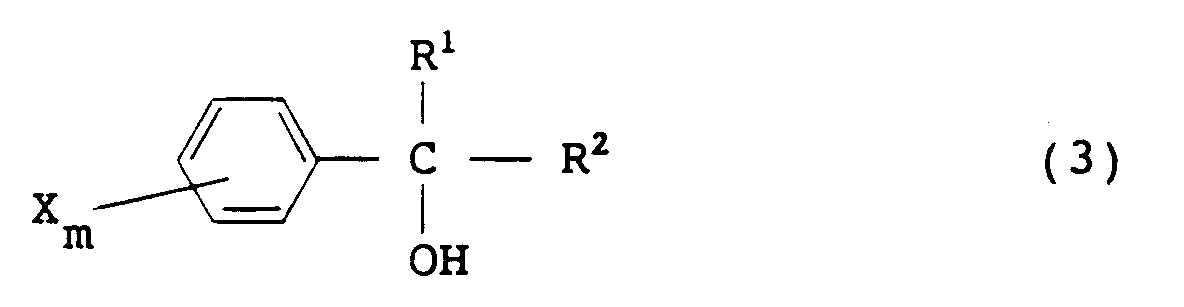
wherein R¹, R², X and m are as defined below, or by the formula (4)
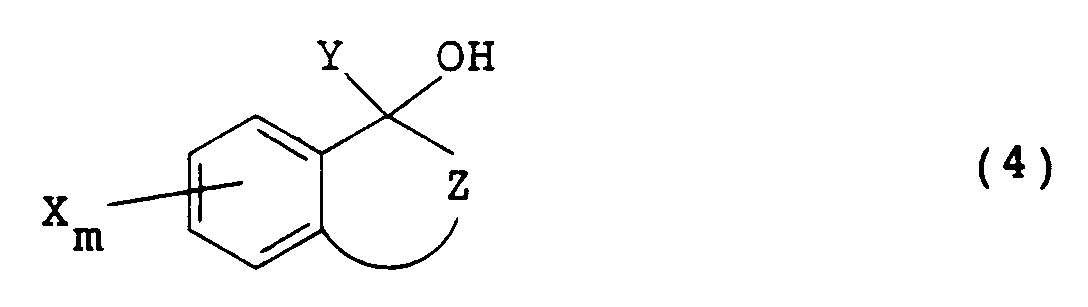
wherein X, Y, Z and m are as defined below, or ketones represented by the formula (5)
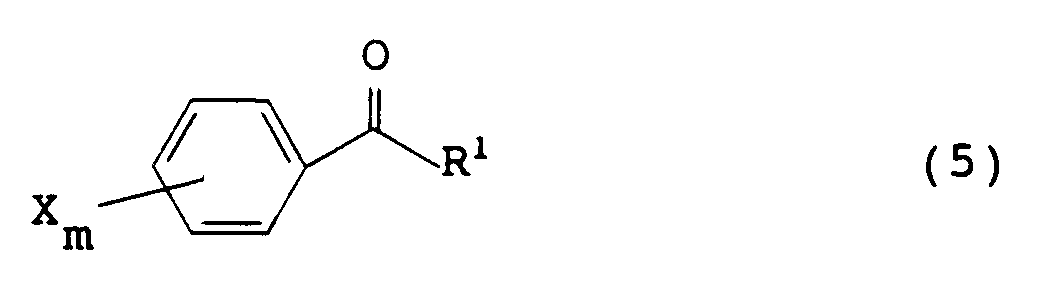
wherein R¹, X and m are as defined below, or by the formula (6)
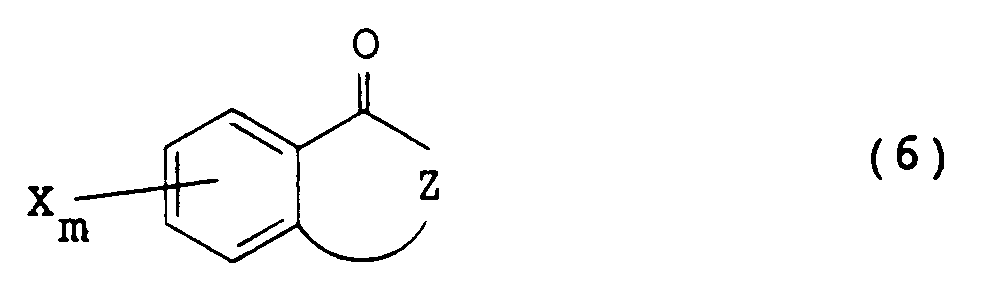
wherein X, Z and m are as defined below,
which comprises reacting a straight-chain, branched-chain or cyclic alkane of 1-20 carbon atoms or a benzene derivative represented by the formula (1)
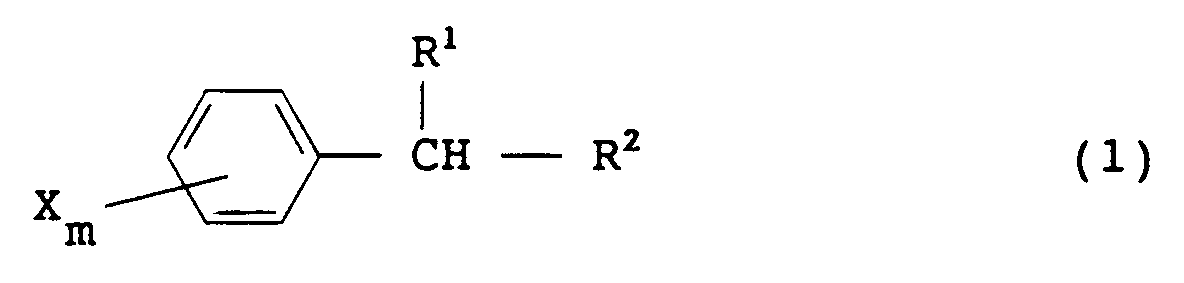
wherein R¹ and R² may be the same or different and each denote a hydrogen atom, (C₁-C₂₀)alkyl group, alkyl group substituted with a halogen, alkoxy or phenoxy, phenyl group unsubstituted or substituted with a halogen, alkyl, alkoxy or phenoxy, or phenylalkyl group unsubstituted or substituted with a halogen, alkyl, alkoxy or phenoxy, or they conjointly as -CHR¹(R²) in its entirety denote a (C₃-C₁₂)cycloalkyl group unsubstituted or substituted with a halogen, alkyl, alkoxy, phenyl or phenoxy; X may be the same or different and denotes a hydrogen atom, halogen atom, (C₁-C₆)alkyl group, (C₁-C₆)alkoxy group, phenyl group or phenoxy group; and m denotes 1 or 2, or by the formula (2)
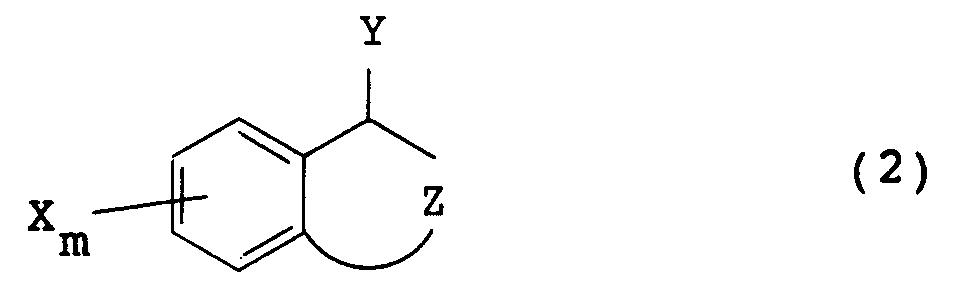
wherein Y denotes a hydrogen atom, halogen atom, (C₁-C₆)alkyl group, (C₁-C₆)alkoxy group, phenyl group or phenoxy group; Z denotes a group of -CH₂CH₂-, -CH₂CH₂CH₂-or
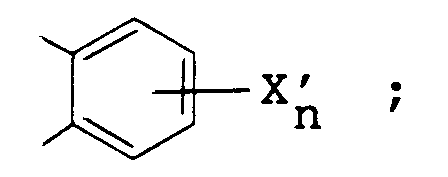
X and X' may be the same or different and each denote a hydrogen atom, halogen atom, (C₁-C₆)alkyl group, (C₁-C₆)alkoxy group, phenyl group or phenoxy group; and m and n each independently denote 1 or 2,
with oxygen in the absence or presence of a proton source and in the presence of a transition metal catalyst and an aldehyde.
wherein R¹, R², X and m are as defined below, or by the formula (4)
wherein X, Y, Z and m are as defined below, or ketones represented by the formula (5)
wherein R¹, X and m are as defined below, or by the formula (6)
wherein X, Z and m are as defined below,
which comprises reacting a straight-chain, branched-chain or cyclic alkane of 1-20 carbon atoms or a benzene derivative represented by the formula (1)
wherein R¹ and R² may be the same or different and each denote a hydrogen atom, (C₁-C₂₀)alkyl group, alkyl group substituted with a halogen, alkoxy or phenoxy, phenyl group unsubstituted or substituted with a halogen, alkyl, alkoxy or phenoxy, or phenylalkyl group unsubstituted or substituted with a halogen, alkyl, alkoxy or phenoxy, or they conjointly as -CHR¹(R²) in its entirety denote a (C₃-C₁₂)cycloalkyl group unsubstituted or substituted with a halogen, alkyl, alkoxy, phenyl or phenoxy; X may be the same or different and denotes a hydrogen atom, halogen atom, (C₁-C₆)alkyl group, (C₁-C₆)alkoxy group, phenyl group or phenoxy group; and m denotes 1 or 2, or by the formula (2)
wherein Y denotes a hydrogen atom, halogen atom, (C₁-C₆)alkyl group, (C₁-C₆)alkoxy group, phenyl group or phenoxy group; Z denotes a group of -CH₂CH₂-, -CH₂CH₂CH₂-or
X and X' may be the same or different and each denote a hydrogen atom, halogen atom, (C₁-C₆)alkyl group, (C₁-C₆)alkoxy group, phenyl group or phenoxy group; and m and n each independently denote 1 or 2,
with oxygen in the absence or presence of a proton source and in the presence of a transition metal catalyst and an aldehyde.
2. The process according to Claim 1 wherein the transition metal catalyst is a chromium-containing
catalyst, manganese-containing catalyst, iron-containing catalyst, cobalt-containing
catalyst, nickel-containing catalyst, copper-containing catalyst, ruthenium-containing
catalyst or osmium-containing catalyst.
3. The process according to Claim 2 wherein the chromium-containing catalyst is Cr, CrCl₂·nH₂O,
CrCl₃·nH₂O, Cr(OAc)₃·nH₂O or Cr(acac)₃.
4. The process according to Claim 2 wherein the manganese-containing catalyst is Mn,
MnCl₂·nH₂O, Mn(OAc)₂·nH₂O, Mn(OAc)₃·nH₂O, Mn(acac)₂·nH₂O or Mn(acac)₃·nH₂O.
5. The process according to Claim 2 wherein the iron-containing catalyst is Fe, FeCl₂·nH₂O,
FeCl₃·nH₂O, Fe(OAc)₃ or Fe(acac)₃.
6. The process according to Claim 2 wherein the cobalt-containing catalyst is Co, CoCl₂·nH₂O,
Co(OAc)₂·nH₂O, Co(acac)₂·nH₂O or Co(acac)₃·nH₂O.
7. The process according to Claim 2 wherein the nickel-containing catalyst is Ni, NiCl₂·nH₂O,
Ni(OAc)₂·nH₂O or Ni(acac)₂·nH₂O.
8. The process according to Claim 2 wherein the copper-containing catalyst is Cu, CuCl,
Cu(OAc)₂·nH₂O, Cu(OH)₂, Cu(OCH₃)₂, Cu₂O or Cu(acac)₂.
9. The process according to Claim 2 wherein the ruthenium-containing catalyst is Ru,
RuCl₃·nH₂O or RuO₂.
10. The process according to Claim 2 wherein the osmium-containing catalyst is Os or OsCl₃·nH₂O.
11. The process according to any one of Claims 1 to 10 wherein aldehyde is formaldehyde,
acetaldehyde, propionaldehyde, butanal, pentanal, hexanal, heptanal, decanal, 2-methylpropanal,
cyclohexanecarboxaldehyde, isovaleraldehyde, pivalaldehyde, benzaldehyde, p-chlorobenzaldehyde,
m-chlorobenzaldehyde, p-tolualdehyde, p-anisaldehyde, paraformaldehyde or paraldehyde.
12. The process according to any one of Claims 1 to 11 wherein proton source is formic
acid, acetic acid, monochloroacetic acid, dichloroacetic acid, trichloroacetic acid,
monobromoacetic acid, trifluoroacetic acid, propanoic acid, butyric acid, heptanoic
acid, decanoic acid, benzoic acid, p-toluenesulfonic acid, hydrochloric acid, hydrogen
bromide, sulfuric acid, nitric acid or water.
13. The process according to any one of Claims 1 to 12 wherein transition metal catalyst
is used in an amount of 0.01-200% by mole relative to the alkane or the benzene derivative.
14. The process according to any one of Claims 1 to 13 wherein aldehyde is used in an
amount of 0.1-1000% by mole relative to the alkane or the benzene derivative.
15. The process according to any one of Claims 1 to 14 wherein proton source is used in
an amount of 1-100 equivalents relative to the transition metal catalyst.
16. The process according to any one of Claims 1 to 15 wherein reaction temperature is
from 0°C to the reflux temperature of the reaction mixture.
17. The process according to any one of Claims 1 to 16 wherein reaction time is from 1
hour to 1 week.
18. The process according to any one of Claims 1 to 17 wherein reaction is conducted without
a solvent.