|
(11) | EP 0 536 423 A1 |

| (12) | EUROPEAN PATENT APPLICATION |
| published in accordance with Art. 158(3) EPC |
|
|
|
|
|||||||||||||||||||||||||||
| (54) | HEAT-PROOF LEAD WIRE FOR HIGH DC VOLTAGE |
| (57) A heat-proof lead wire for high DC voltages, on whose conductor an insulation cover
made of a polyolefine resin composition is formed. The polyolefine resin composition
is a flame-retarded resin mixture of a polyethylene whose crystalline component has
a melting point higher than 125 °C and an ethylen-alpha olefine copolymer. The mixture
contains as an essential component a monomer having carbon-carbon unsaturated bond
in the molecular. The insulation cover formed of the resin composition is irradiated
with ionizing radiation. Thereby, the heat-proof lead wire for high DC voltages has
a vertical flame retardency (VW-1) of the UL standard and the characteristic of temperature
rating below 125 °C. |
FIELD OF THE INVENTION
[0001] The present invention relates to heat-resistant, high-voltage lead wires for direct current, which have performances covering the UL Standards at higher than 125 °C of temperature ratings and are to be utilized, for example, for wiring in televisions, electromagnetic cookers, copying machines, computers and other electronic appliances.
BACKGROUND OF THE INVENTION
[0002] It is important for the insulated wires used in televisions, electromagnetic cookers, copying machines, computers and other electronic appliances to be safe against fire, and such fire-resistant, insulated wires as authorized by the Electric Appliances Regulations in Japan, the UL Standards in the United States and the CSA Standards in Canada are used for the purpose.
[0003] In addition, since the fire-resistant, insulated wires used in the high-voltage parts of electronic appliances deal direct current of so high a voltage of 10 to 40 kV, safety against high voltage is also important.
[0004] As the method of evaluation of high-voltage wires for electronic appliances, one described in the Subject 758 in the UL Standards are known. In the evaluating method described there, (1) the high-voltage cut-through test and (2) the fire-resistance test are regarded to be technically difficult to pass.
[0005] Fig. 2 is given for explaining the high-voltage cut-through test according to the Subject 758 in the UL Standards. As shown in the figure, to both ends of a wire 13 which is hung down over two parallel drill rods 11, 1/32" in diameter, are applied loads 10 of 1 pound, in a bath kept at the temperature rating, and when 1.5 times as high a rated voltage is applied from the source of direct current 12, breakdown must not take place within 7 hours.
[0006] Fig. 3 is provided for the explanation of the fire-resistance test according to the UL Standards. As shown in the figure, when a wire 18, placed perpendicular in an enclosure 14 for the protection from the movement of surrounding air, is exposed to fire from a burner 15, the fire must be extinguished within 60 seconds, and an absorbent cotton 17 placed on the bottom must not take fire from dropped burning matter and moreover a sheet of kraft paper 16 placed above must not take fire into flame nor be scorched.
[0007] In order to satisfy these two requirements, double layered wire comprising inner polyethylene insulation and outer flame retarding resin composition jacket have been employed.
[0008] For instance, a wire in which polyethylene with melting point higher than 105 °C is coated over the conductor for passing the high-voltage cut through test, and the flame retarding jacket comprising mainly ethylene-vinylacetate-vinylchloride copolymer is coated surrounding the polyethylene insulation is reported. (See Japanese Patent Publication No. 41786/1977)
It is also reported that the simmilar double layered wire outer layer of which is comprising polyvinylchloride grafted chlorinated polyethylene (Japanese Patent Publication No. 15058/1979), chlorosulfonated polyethylene. (Japanese Patent Laid-Open Publication No. 42755/1974)
These insulated wires achieve VW-1 level flame retardancy by means of covering polyethlene with a highly fire resisting resin composition, which can compensate easy flamability of polyethylene while keeping the excellent insulation property and tracking resistance of polyethylene.
[0009] However, these insulated wires have upper limit of temperature rating of 105°C , because the outer resin composition layer have PVC moiety or chlorine-containing monomers as a repeating unit.
[0010] There are also some examples of single layered high-voltage lead wires in prior art, the insulation of these wires are flame retardant resin like a chlorinated polyethylene. However, these insulated wires also have upper limit of temperature rating of 105°C , so these high-voltage wires cannot be used at higher temperatures.
[0011] A method to make a flame retarded polyethylene composition by adding the flame retardant is also known. However, the withstand voltage characteristics of these flame retarded polyethylene composition is inferior, so the high-voltage lead wires with excellent properties have not been obtained by using such a flame retarded polyethylene composition as an insulation.
[0012] On the other hand, requirements for the use of high-voltage lead wires have increasingly been severe. Size of electronic appliances has become more and more smaller and many functions have been required with the result of increased amount of wiring and increased requirement for higher safety and higher heat resistance in wiring materials. To meet such requirements employment of some highly heat-resistant resins other than polyolefins may be considerable.
[0013] Generally the high-voltage lead wires used in an enviroment at higher than 150°C , wires with vulcanized silicon rubber have been employed.
[0014] Silicon rubber insulated high-voltage lead wires have excellent flexibility and electrical properties, however, the silicon rubber insulation is apt to tear by scrapping with metal edge during wiring operation. It sometimes causes cracks of the insulation and leads to the dielectrical brake-down trouble in the worst case.
[0015] Some techniques, for example, covering the silicon rubber insulated wires with braided glass tubing or resin tubing are known. However, in generall silicon rubber insulated wires are expensive, and the total cost becomes much higher when such protecting tubings are adopted. And in addition, diameter of the protected wire becomes so large,the handling property becomes insufficient in wiring operation.
[0016] High-voltage wires for direct current utilizing such fluorocarbon resins as tetrafluoroethylene and tetrafluoroethylene-hexafluoroethylene copolymer as the insulating materials are also known. They are excellent wires with heat resistance at higher than 150 °C , but they are more expensive than silicone-rubber insulated wires and accordingly they are not practical for use other than for specific purpose.
[0017] Thus the first objective of the present invention is to provide a heat-resistant high-voltage lead wire for direct current with temperature rating of 125 °C , which can be manufactured efficiently using inexpensive materials.
[0018] The second objective of the present invention is to provide a heat-resistant high-voltage lead wire for direct current with extremely large utility value corresponding to the requirement of higher heat resistant property in the fields of using high-voltage wires for direct current.
BRIEF DESCRIPTION OF THE DRAWINGS
[0019]
Figs. 1 (A) and (B) are cross sectional diagrams of embodiments of the high-voltage lead wire for direct current according to the present invention;
Fig. 2 is a diagram for explaining the high-voltage cut-through test; and
Fig. 3 is a diagram for explaining the VW-1 combustion test.
SUMMARY OF THE INVENTION
[0020] The present invention has been completed after extensive studies for over-coming the above described problems by using a polyethylene resin composition as an insulating material with which high-voltage lead wires for direct current having the perpendicular flame resistance (VW-1) in UL Standards and the characteristics passing the requirements for the temperature rating of higher than 125 °C in UL Standards.
[0021] The temperature rating of 125 °C here referred to means that the products pass the above-stated high-voltage cut-through test in the UL Standards at the test temperature of 125°C and also satisfy the following heat aging tests.
[0022] In case of the polyethylene insulated wire with temperature rating of 125 °C , it is required that the retention of tensile strength is more than 70% and retention of elongation is more than 65% after heat aging test for 7 days at 158°C and for 60 days at 136 °C .
[0023] In case of temperature rating of 150°C , it is required that the retention of tensile strength is more than 70% and retention of elongation is more than 65% after heat aging test for 7 days at 180 °C and for 60 days at 158°C .
[0024] One example of the embodiment of such polyolefin resin compositions satisfying the above mentioned perpendicular flame resistance (VW-1) and other requirments for temperature rating of 125 °C in UL Standards is the flame retarded polyolefin resin composition which essentially contains (A) resin mixture of polyethylene of which crystalline component has higher than 125 °C of melting point and ethylene- α -olefin copolymer, and (B) multi-functionalized monomer which has the unsaturated carbon-carbon bonds in a molecule.
[0025] And the high-voltage lead wire for direct current can be manufactured by extruding the said flame retarded polyolefin resin composition over the conductor followed by ionizing radiation process.
[0026] In more detail, the resin mixture (A) is comprising polyethylene of which crystalline component has higher than 125 °C of melting point and ethylene-vinylacetate copolymer, ethylene-methylacrylate copolymer, ethylene-ethylacrylate copolymer, ethylene-methylmethacrylate copolymer, ethylene-1-butene copolymer, ethylene-propylene rubber or other ethylene-α -olefin copolymer, and it is preferable that the polyethylene of which crystalline component has a melting point higher than 125 °C occupies in the resin mixtures more than 40% by weight and less than 80% by weight.
[0027] To the 100 parts of above mentioned resin mixture(A), a single or an admixed multi-functionalized monomer (B) which has the unsaturated carbon-carbon bonds in molecule selected from trimethyrolpropanetrimethacrylate, pentaerythritoltrimethacrylate, triallylisocyanurate, triacrylformal is added preferably 1 to 10 parts by weight, as well as flame retardant and inorganic fillers.
[0028] And the high-voltage lead wire according to the present invention is obtained by extruding this resin composition over the conductor in single or double layer structure followed by irradiation of ionizing radiation.
[0029] Figs. 1 (A) and (B) are cross-sectional views of the high-voltage wires for direct current according to the present invention and 1 stands for the conductor while 2 and 3 for the coating films of the above stated resin composition; 2 and 3 may be of a same composition or of different ones within the range of the above stated compositions.
[0030] As examples of the above flame retardant may be mentioned such organic halogen compounds as a brominated diphenylether derivative, a brominated bisphenol derivative, a brominated epoxy-resin derivative, a brominated phthalimide derivative, perchloropentacyclodecane and trichloroethyl phosphate, and antimony trioxide, borates and molybdenum oxide.
[0031] Examples of the inorganic filler are talc, clay, silica and calcium carbonate as well as aluminium hydroxide and magnesium hydroxide.
[0032] As the ionizing radiations to be employed, α -rays, β -rays (electron beam), γ -rays, X-rays, ultraviolet rays and others may be mentioned, but in view of the transmitting distance of the radiation, irradiation dose and other aspects of industrial profitability electron beam is particularly preferable to use.
[0033] Needless to mention, antioxidants, lubricants, coloring pigments, fillers and other additives may be added to the above resin compositions if desired.
[0034] Another example of polyolefin resin compositions to embody the present invention is the resin composition which is the mixture of 100 parts by weight of polyolefin resin and more than 100 parts by weight and less than 200 parts by weight of metal hydroxide and more than 5 parts by weight and less than 50 parts by weight of a halogen containing flame retardant and 1 parts by weight and less than 10 parts by weight of organic silane compound represented by general formula bellow, and the high-voltage lead wire for direct current is produced by extruding the said resin composition over the conductor and irradiating said extruded resin composition layer with an ionizing radiation.
where, R stands for an alkyl group containing acryl or methacryl group and X¹, X² and X³ are atomic groups selected from the group of alkoxy, alkyl and halogen.
[0035] As polyolefin resins may be mentioned, in addition to polyethylene, such ethylene-α -olefin copolymers as ethylene-vinylacetate copolymer, ethylene-methyl acrylate copolymer, ethylene-ethylacrylate copolymer, ethylene-methylmethacrylate copolymer, ethylene-1-butene copolymer, ethylene-1-hexene copolymer and ethylene-propylene rubber, and among them ethylene-vinyl acetate copolymer, ethylene-methylacrylate copolymer and ethylene-ethylacrylate copolymer are particularly preferable from the view point of their flexibility and extrusion performance.
[0036] As the halogen-containing flame retardants may be mentioned as examples such a chlorine-containing retardant as perchloropentacyclodecane, such bromine-containing retardants as brominated diphenylether derivative, brominated bisphenol derivative, brominated epoxy resin derivative and brominated phthalimide, and such a phosphorus-containing retardant as brominated phosphate, and it is also possible to augment the flame retarding performance by using in combination of auxiliary flame retardants such as antimony trioxide, zinc borate and molybdenum oxide.
[0037] The halogen-containing flame retardants are desired to be used in the range of 5 to 50 parts by weight in view of the perpendicular flame resistant property (VW-1) of the high-voltage wire for direct current with thicker than 1.0 mm of insulating layer, and when they are used in less than 5 parts by weight flame retarding performance is unsatisfactory while when they are used in more than 50 parts by weight heat aging resistance will be deteriorated.
[0038] Examples of the metal hydroxides are aluminum hydroxide, magnesium hydroxide and calcium hydroxide, and of them magnesium hydroxide with the particle size in the range of 0.1 to 3 µm is preferable in view of its extrusion processibility, and the particles with no surface treatment with fatty acid salts, silane coupling agents or other agents are preferable in view of their high-voltage cut-through performance and initial tensile strength.
[0039] The preferable amount of metal hydroxide to be added is in the range of 100 to 200 parts by weight in view of the high-voltage cut-through performance, and when it is less than 100 parts by weight the high-voltage cut-through performance is unsatisfactory while when it is more than 200 parts by weight extrusion operation will be undesirably affected.
[0040] As the organic silane compounds as shown by the above general formula may be mentioned, for examples, γ -methacryloxypropyltrimethoxysilane, γ -acryloxypropyltrimethoxysilane, γ -methacryloxypropyldimethoxymethylsilane, and γ -methacryloxyethyltrimethoxysilane are preferably to be used, and the organic silane compound is to be added when mixing the molten polyolefin resin, metal hydroxide and halogen-containing flame retardant with compounding machine.
[0041] The preferable amount of the organic silane compound to be added is in the range of 1 to 10 parts by weight in view of the balance between the high-voltage cut-through property and initial tensile strength at break where the amount of metal hydroxide is in range of 100 to 200 parts by weight.
[0042] When the added amount of organic silane compounds is less than 1 part by weight, the high-voltage cut-through property is insufficient and the initial tensile strength at break is lower than the level of 1.06kg/mm² which is required for polyolefin insulated wires in UL Standards, while addition of the organic silane compounds more than 10 parts by weight leads to undesirable effect in the flame retardancy.
[0043] Into the above resin compositions may be added, if desired, such inorganic fillers as talc, clay, calcium carbonate, magnesium carbonate and zinc oxide antimony trioxide, zinc borate, antioxidant, coloring pigment, such a multi-functionalized monomers which accelerates cross-linking as trimethylolpropane trimethacrylate, and other additives, and mixing these ingredients may be done by using such well-known mixing apparatus as banbury mixer, pressure kneader, open-roll mixer and mono- and biaxial mixers.
[0044] Coating the conductor with these resin compositions may be performed by using known melt extruder, and the insulation may be formed over the conductor in single layer or in multiple layers of a same material.
[0045] For the cross-linking of the resin compositions, thermal curing may possibly be employed if an organic peroxide is added into the compositions and compressed steam is applied for heating after extruding over the conductor, but in view of the balance between the high-voltage cut-through property and the mechanical properties of insulation layer such as tensile strength and elongation, at break, the curing process with ionized radiation is preferably used.
[0046] Cross-linking with irradiation of ionizing radiations may be conducted by using α -rays, electron beam ( β -rays), γ -rays, X-rays, ultraviolet rays and others from the sources of ionizing radiations, but in view of such industrial profitabilities as transmitting distance, irradiation dose and time required by irradiation, electron beam is desirable as the source of radiation.
(First Embodiment)
[0048] The resin compositions shown in Tables 1 to 3 were applied by the melt extrusion method over annealed copper wire, 0.8 mm φ in outer diameter, to make an insulation layer of 1.21 mm thick, and then irradiated by electron beam at 1 MeV of acceleration voltage to obtain sample wires.
[0049] The resin compositions shown in Tables 1 to 3 were formulated in common, other than polyethylene, ethylene- α -olefin copolymer and a monomer containing unsaturated carbon-carbon bond moiety in the molecule, 45 parts by weight of tetrabromobisphenol derivative (containing bromine in 62 % by weight; molelcular weight about 8000), 30 parts by weight of powdered antimony trioxide, 15 parts by weight of powdered clay, 5 parts by weight of powdered silica, 3 parts by weight of pentaerithrytyl-tetrakis[3-(3,5-di-t-butyl-4-hydroxyphenyl)propionate], 1 part by weight of distearyl thiodipropionate and 0.5 part by weight of zinc stearate per 100 parts by weight of the resin mixture of polyethylene and ethylene-α -olefin copolymer, and the preparation of the resin compositions were done by using an open-roll mixer heated at 150 °C and after the mixing the compositions were made into pelets and used for melt extrusion.
[0050] In Tables 1 to 3 the high-voltage cut-through tests were performed in a gear oven maintained at 125 °C by charging loads of 1 pound each at both end of sample wire and applying 30 kV of direct current at n = 3. The withstand voltage tests were performed in a gear oven maintained at 125 °C by applying direct current of 25 kV at n = 3, after sample wire was submitted to heat aging for 7 days in a gear oven at 158°C and wound 7 times round a mandrel, 0.5 inch in outer diameter. In the columns for the high-voltage cut-through test and withstand voltage test in Tables 1 to 3 are given the breaking time of the first of the 3 test samples.
[0051] In the heat aging tests the residual elongation percentage of sample wires after submitting to heat aging for 7 days in a gear oven at 158°C was evaluated. Here, the residual elongation percentage = elongation of heat-aged sample wire/initial elongation × 100, and 65% or higher of the residual elongation percentage was evaluated as acceptable. The Combustion tests were carried out by following the VW-1 method at n = 5.
[0052] The results on the characteristics of the high-voltage cut-through test, withstand voltage test, heat aging test and combustion test for the different resin compositions of sample wire are as follows.
[0053] For the high-voltage cut-through test such resin compositions as Examples 1 to 6 and Comparative Example 12 which contained polyethylene with higher than 125 °C of melting point and ethylene- α -olefin copolymer in the ratio of more than 40/60 by weight and also contained a monomer having unsaturated carbon-carbon bond moiety in the molecule passed the test at 125 °C .
[0054] On the other hand, such a composition as Comparative Example 2 of which base resin was comprising solely of polyethylene with melting point higher than 125 °C passed the high-voltage cut-through test however, it showed markedly lowered initial elongation.
[0055] As for the withstand voltage test such compositions as Comparative Examples 1, 3, 4, 5, 6, 7 and 8 which did not contain a monomer having unsaturated carbon-carbon bond moiety in the molecule caused dielectric break-down before reaching 7 hours of testing time. By contrast such sample wires as Examples 1 through 6 and Comparative Examples 2, 9, 10, 11 and 12 containing the monomer having unsaturated carbon-carbon bond moiety in the molecule showed longer than 8 hours of the withstand voltage characteristics.
[0056] As for the results of the heat aging resistance test and the combustion test of VW-1, it was found that such compositions as Examples 1 through 6 and Comparative Examples 11 and 12 which contained a monomer having unsaturated carbon-carbon bond moiety in the molecule showed higher than acceptable 65% of residual elongation percentage after heat aging and also passed the VW-1.
[0057] By contrast such compositions as Comparative Examples 5, 6, 7 and 8 which did not contain a monomer having unsaturated carbon-carbon bond moiety in the molecule gave undesirably lower than 65% of the residual elongation percentage after heat aging; the compositions of Comparative Examples 6 and 8 which were irradiated 30 Mrad dose of electron beam passed the VW-1 test however, these samples did not passed the heat aging test. On the other hand, Comparative Examples 5 and 7 which were irradiated 10 Mrad dose of electron beam showed higher than 65% of the residual elongation percentage after heat aging test however, some samples could not pass the VW-1 test.
[0058] As obvious from the above discussion, in view of the balance of all of the characteristics of high-voltage cut-through, withstand voltage, VW-1 combustion test and heat aging resistance, it is concluded that such resin compositions are preferable, which contain the polyethylene with melting point of higher than 125 °C and ethylene-α - olefin copolymer in higher than 40/60 of composing ratio, more preferably in the range of 40/60 to 80/20, and which contain the monomer having unsaturated carbon-carbon bond moiety in the molecule. It is mentioned further on the monomer having unsaturated carbon-carbon bond moiety in the molecule that such so-called trifunctional monomers as trimethylolpropanetrimethacrylate, pentaerythritoltrimethacrylate, triallyl isocyanurate and triallylcyanurate are preferably contained into the resin compositions for efficient production of high-voltage lead wire for direct current by using relatively low doses of irradiation.
(Second Embodiment)
[0059] Sample wires were prepared as follows: The resin compositions shown in Tables 4 to 6 were kneaded together with polyolefin resin, fillers, organic silane compound, anti-oxidant and other additives which were added at a same time by using an open-roll mixer heated at 130°C and the mixture was made into pellets. The pellets were used to be extruded over annealed copper wire, 0.8 mm in diameter by using a melt extruder to obtain insulated wires with diameters of 2.27 mm and 4.23 mm, which were irradiated by electron beam at 2 MV of acceleration voltage to prepare the sample wires.
[0060] To the resin compositions described in Tables 4 to 6 were formulated, in addition to the shown ingredients, 10 parts by weight of antimony trioxide, 3 parts by weight of pentaerythrityltetrakis[3-(3,5-di-t-butyl-4-hydroxyphenyl) propionate], 1 part by weight of distearyl thiodipropionate and 0.5 part by weight of zinc stearate in common, against 100 parts by weight of the polyolefin resin.
[0061] The high-voltage cut-through test in Tables 4 to 6 was performed by charging 1 pound load at each of both ends of sample wire in a gear oven maintained at 125°C and the dielectric breakdown time was measured by applying 15kV of direct current to the samples of 2.27 mmφ and 60 kV to those of 4.23 mm φ at n = 3 respectively, and when 3 samples stood unbroken for longer than 8 hours the example was judged as passed.
[0062] In the heat aging test with the sample wires with 2.27 mm φ diameter, the retention of tensile strength and of elongation of the samples which had been submitted to aging by heating for 7 days at 158°C and those aged for 60 days at 136 °C were measured.
[0063] Here,
, and samples were judged as passed when they showed higher than 70% of the retention of tensile strength and higher than 65% of that of elongation. The combustion test was carried out following the VW-1 method at n = 5.
[0064] The characteristics of the resin coatings in the high-voltage cut-through test, heat aging test, combustion test and other tests in reference to their composition are as follows.
[0065] In Examples 7 through 13 such resin compositions as containing magnesium hydroxide with no surface treatment in the range of 100 to 200 parts by weight, halogen containing type flame retardant in the range of 5 to 50 parts by weight and an organic silane compound as represented by the general formula [1] in the range of 1 to 10 parts by weight, against 100 parts by weight of the olefin resin, were extruded over the conductor and cross-linked by electron bean irradiation. These samples passed the high-voltage cut-through test and both of the 2.27 mm φ and 4.23 mmφ samples passed the combustion test. They showed the initial tensile strength in the range of 1.1 to 1.3 kg/mm², satisfied the tensile strength higher than 1.06 kg/mm² required in the UL Standards and passed both heat aging tests at 158 °C for 7 days and at 136°C for 60 days. These samples showed about 3 to 6 kg/mm² of the Young's modulus in the insulating layer demonstrating that they were materials with excellent flexibility.
[0066] In Comparative Example 13 the sample contained 200 parts by weight of magnesium hydroxide without surface-treatment, 20 parts by weight of halogen containing type flame retardant and 5 parts by weight of an organic silane compound represented by the general formula [1] and was not irradiated by electron beam for cross linking. This sample failed to pass the high-voltage cut-through test and did not reach the level of 1.06 kg/mm² required in the UL Standards for the initial tensile strength.
[0067] In Comparative Example 14, a resin compound without being added with the the organic silane compound represented by the general formula [1] was used for insulating layer. The sampel failed to pass the high-voltage cut-through test.
[0068] In Comparative Example 15, magnesium hydroxide of which surface had previously been treated with oleate was used. The sample passed the VW-1 test however, it showed the tensile strength lower than 1.06kg/mm² and did not passed the high-voltage cut-through test, heat-aging test.
[0069] The sample in Comparative Example 16 used magnesium hydroxide previously surface-treated with vinylsilane passed the VW-1 test however, it showed the tensile strength lower than 1.06kg/mm² and failed to pass the high-voltage cut-through test, heat-aging test.
[0070] In Comparative Example 17, magnesium hydroxide which had previously been surface-treated with γ -methacryloxypropyl-trimethoxysilane was used. The sample passed the combustion test but the initial tensile strength was lower than 1.06 kg/mm², and it failed to pass the high-voltage cut-through test and showed lower than 65% of the residual elongation percentage after the heat aging test.
[0071] In Comparative Example 18, vinyltriethoxysilane was employed in place of an organic silane compound represented by the general formula. The sample did not pass the high-voltage cut-through test and did not satisfy the required level of 1.06 kg/mm² of the initial tensile strength.
[0072] In Comparative Example 19, a polyfunctionalized monomer of trimethylolpropanetrimethacrylate, which had been widely used as a cross-linking accelerator for polyolefin and other thermoplastic resins, was added to accelerate the cross-linking efficiency by electron beam irradiation, but the sample failed to pass the high-voltage cut-through test and the 4.23 mm φ sample did not pass the combustion test.
[0073] The sample in Comparative Example 20 contained 80 parts by weight of magnesium hydroxide of which surface had not been treated failed to pass the high-voltage cut-through test.
[0074] The sample in Comparative Example 21 contained 240 parts by weight of magnesium hydroxide. It passed the high-voltage cut-through test however, it is questionable in practical use because it had slightly unsatisfactory appearance after extrusion and lower than 100% of initial elongation.
[0075] In Comparative Example 22 no halogen containing type flame retardant was added to the sample. It passed the high-voltage cut-through test but in the VW-1 test, the sample of 2.27 mm φ passed it while the one of 4.23 mm φ failed.
[0076] In the samples of Comparative Examples 23 and 24, halogen containing type flame retardant was not used but tributyl phosphate and ammonium polyphosphate, phosphorus-type retardants, were used instead. In comparison with Comparative Example 22, the replacements were found to lower the flame resistance and also exert undesirable effects on the high-voltage cut-through characteristics.
[0077] In Comparative Examples 25 and 26, 2 parts by weight of dicumyl peroxide were added per 100 parts by weight of the polyolefin resin to make a thermally curable resin compositions and they were extruded over the conductor and heat-cured by compressed steam. The sample of Comparative Example 26 satisfied the high-voltage cut-through characteristics however, it showed undesirably lower than 100% of initial elongation, while the sample of Comparative Example 25 satisfied the initial elongation characteristics but failed to pass the high-voltage cut-through and heat aging resistance test, showing unbalance among characteristics.
[0078] Thus, a high-voltage lead wire for direct current which passes the required high-voltage cut-through property and flame resistance (VW-1), with temperature rating higher than 125°C grade and excellent flexibility can be obtained by making a resin composition by adding more than 100 parts by weight and less than 200 parts by weight of magnesium hydroxide with no surface treated, more than 5 parts by weight and less than 50 parts by weight of a halogen containing type flame retardant and more than 1 part by weight and less than 10 parts by weight of an organic silane compound which is represented by the general formula to 100 parts by weight of EVA, EEA or other polyolefin resin and mixing to make a resin composition, which is extruded over the conductor and is irradiated by electron beam, in other words, by using such a resin composition that is made, in the manufacturing process of the composition, by adding an organic silane compound represented by the general formula, during hot melt kneading of a mixture of polyolefin resin,magnesium hydroxide without surface treatment, halogen containing type flame retardant and other fillers and by irradiating by such an ionizing radiation as electron beam.
[0079] As explained above, according to the present invention for high-voltage lead wire for direct current, high-voltage wire for direct current that satisfies the temperature rating of 125 °C can be manufactured using an inexpensive materials efficiently, and it should meet the demand of heat resistance in the field of high-voltage wires for direct current and it is expected to have extremely large value of utility.
1. A heat-resistant, high-voltage lead wire for direct current, characterized in that
the insulating layer over the conductor is formed by a polyolefin based resin composition
and said high valtage lead wire satisfies the perpendicular flame resistance (VW-1)
and has characteristics of higher than 125°C of temperature rating in the UL (Underwriters
Laboratories) Standards.
2. A heat-resistant, high-voltage lead wire for direct current as claimed in claim (1),
wherein the polyolefin resin composition is a flame-retarded resin composition comprising
a resin mixture (A) of a polyethylene of which crystalline component has melting point
of higher than 125°C and ethylene- α -olefin copolymer, and multi-functionalized monomer
(B) having the unsaturated carbon-carbon bond moiety in molecule as an indispensable
component and said insulating layer is irradiated by an ionizing radiation.
3. A heat-resistant, high-voltage lead wire for direct current as claimed in claim (1),
wherein the polyolefin resin composition is a resin composition made by adding more
than 1 part by weight and less than 10 parts by weight of an organic silane compound
which is represented by the general formula described below, during the mixing of
more than 100 parts by weight and less than 200 parts by weight of a metal hydroxide
and more than 5 parts by weight and less than 50 parts by weight of a halogen containing
type flame retardant to 100 parts by weight of a polyolefin resin, and said insulating
layer is irradiated by an ionizing radiation:
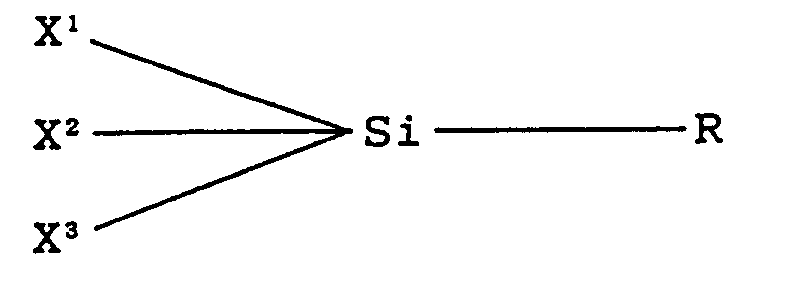
where, R stands for an alkyl group containing acryl or methacryl group, and X¹, X² and X³ represent the atomic groups selected from a group comprising of alkoxy, alkyl and halogen.
where, R stands for an alkyl group containing acryl or methacryl group, and X¹, X² and X³ represent the atomic groups selected from a group comprising of alkoxy, alkyl and halogen.
4. A heat-resistant, high-voltage lead wire for direct current as claimed in claim (2),
wherein the monomer (B) having unsaturated carbon-carbon bond moiety in the molecule
is a compound or a mixture of 2 or more compounds selected from a group comprising
of trimethylolpropane trimethacrylate, pentaerythritol trimethacrylate, triallyl isocyanurate,
triallyl cyanurate and triacrylformal.