|
(11) | EP 0 536 647 A1 |

| (12) | EUROPEAN PATENT APPLICATION |
|
|
|
|
|||||||||||||||||||||||||||
| (54) | Direct positive silver halide photographic materials |
| (57) The improved direct positive silver halide photographic material has at least one
direct positive silver halide photographic emulsion layer on a base and is characterized
by containing the dye compound specified hereinafter. The material has high adaptability
for safelight. |
BACKGROUND OF THE INVENTION
[0001] This invention relates to a direct positive silver halide photographic material and, more particularly, to a direct positive silver halide photographic material having high adaptability for safelight.
[0002] To permit the handling of films under roomlight, they have been given improved adaptability for safelight by adding dyes to filter layers so that the films will not undergo a photochemical reaction at the wavelength of a safelight source. However, no dyes have yet been found that provide direct positive photosensitive materials with satisfactory adaptability for safelight.
SUMMARY OF THE INVENTION
[0003] The present invention has been accomplished under these circumstances and has as an object providing a direct positive silver halide photographic material that has high adaptability for safelight.
[0004] The present inventors conducted intensive studies in order to attain the above-described object and they have found that it can be attained by the following direct positive silver halide photogaphic material:
[0005] A direct positive silver halide photographic material that has at least one direct positive silver halide photogaphic emulsion layer on a base, characterized by containing a compound represented by the following general formula (I):
where R₁ and R₂ are each a hydrogen atom, a halogen atom (e.g. Cl or Br), an alkylcarbonyl group (e.g. methylcarbonyl or ethylcarbonyl), a hydroxycarbonyl group, an alkoxycarbonyl group (e.g. methoxycarbonyl or ethoxycarbonyl), a sulfonic acid group, an aminosulfonyl group, a substituted or unsubstituted alkyl group (e.g. methyl or ethyl) or an aryl group (e.g. phenyl), provided that R₁ and R₂ may combine to form a ring (e.g. 5- or 6-membered ring);
X and Y which may be the same or different each represents -O-, -S-, -Se-, -Te-,
-SO₂- or
L is -CH₂CH₂-,
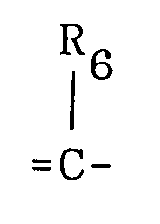
K is =CH- or
n is an integer of 0 - 6;
Z is a hydroxy group, a mercaptoxy group, a sulfonic acid group, an amino group, a hydroxycarbonyl group, an alkylcarbonyl group (e.g. methylcarbonyl or ethylcarbonyl), a halogen atom (e.g. Cl or Br), an alkoxy group, an alkylthio group (e.g. methylthio), an aminosulfonyl group, a substituted or unsubstituted alkyl group (e.g. methyl or ethyl) or an aryl group (e.g. phenyl);
m is an integer of 0 - 3;
R₃, R₄, R₅ and R₆ are each an alkyl group (e.g. methyl or ethyl), an aryl group (e.g. phenyl), an alkoxy group (e.g. methoxy or ethoxy), an alkylthio group (e.g. methylthio), a trialkylsiloxy group (e.g. trimethylsiloxy), a halogen atom (e.g. Cl or Br) or a tertiary amino group; and
M₁ and M₂ which may be the same or different each represents an alkali metal (e.g. Na or K).
[0006] Specific but by no means limiting examples of the compound represented by the general formula (I) are listed below.
[0007] Dyes represented by the general formula (I) may be used either on their own or as admixtures. They may also be combined with known other dyes.
[0008] Dyes represented by the general formula (I) may be incorporated in silver halide emulsion layers or in other constituent layers including hydrophilic colloidal layers.
[0009] Dyes represented by the general formula (I) are preferably contained in amounts of 1 mg to 2 g, more preferably 5 mg to 1 g, per square meter of the photographic material.
[0010] Dyes represented by the general formula (I) may be added to coating solutions for hydrophilic colloidal layers after they are dissolved in suitable solvents such as water, alcohols (e.g. methanol and ethanol), and mixtures thereof.
[0012] In producing the direct positive silver halide photographic material of the present invention, any known techniques can be applied without any particular limitations in various aspects including the base, layer arrangement and additives. Said material can be processed photographically by various known techniques.
[0013] The following examples are provided for the purpose of further illustrating the present invention but are in no way to be taken as limiting.
Example 1
[0014] An emulsion was prepared in the following manner.
| Solution (1): | |
| Water | 7.35 L |
| Gelatin | 93.0 g |
| NaCl | 1.83 g |
| Solution (2): | |
| 1 % Na₃RhCl₆ | 15.0 ml |
| Gelatin | 50.0 g |
| NaCl | 310 g |
| KBr | 70 g |
| H₂O | to make 1650 ml |
| Solution (3): | |
| AgNO₃ | 1.0 kg |
| H₂O | to make 1650 ml |
| Solution (4): | |
| 1/10 N HNO₃ | 71 ml |
| Solution (5): | |
| Sodium carbonate | 8.8 g |
| H₂O | to make 660 ml |
| Water | 1600 ml |
[0015] Solution (4) was added to solution (1) to adjust the pH to 3.0. Thereafter, solutions (2) and (3) were simultaneously injected into solution (1) over 70 min at 35°C, EAg of 280 mV and pH of 2.0. After 4-min ripening, solution (5) was added and the pH was adjusted to 5.8, followed by desalting in the usual manner to prepare emulsion A.
[0017] To emulsion A, thiourea dioxide and chloroauric acid were added in respective amounts of 0.2 mg and 1.0 mg per mole of silver and the mixture was ripened at 65°C for 60 min to cause fogging. Further, 500 mg of 5-nitroindazole, 500 mg of compound a (see below), 10 mg of compound (A) (see below) as a bactericide, 3 g of saponin, 3 g of a styrene-maleic acid co-polymer and 20 g of a polymer latex of butyl acrylate were added, all amounts being based on one mole of silver:
To make a protective film, 4 g of sodium 1-decyl-2-(3-isopentyl)-succinate-2-sulfonate and 2 g of amorphous silica particles having an average size of 5 µm were added and dispersed in an aqueous solution of gelatin (500 g). Then, dyes of the present invention and comparative dyes were added in the amounts shown in Table 1 and the thus prepared coating solutions were applied onto subbed polyethylene terephthalate films (as rendered antistatic by application of a hydrophilic colloidal layer - - see Japanese Patent Application No. 143430/1990) in such a way as to give a silver deposit of 2.8 g/m² and gelatin contents of 1.5 g/m² and 0.8 g/m² in the emulsion and protective layers, respectively.
[0018] A backing layer was formed on the opposite side of the base by applying a coating solution that was repared by the following procedure: to an aqueous solution of gelatin (36 g), 1.6 g of (C-1), 1.9 g (C-2), 0.2 g of saponin and 5 g (C-3) were added; then, 2 g of a styrene-maleic acid copolymer was added for viscosity adjustment; further, citric acid was added to effect pH adjustment to 5.4; the reaction product of polyglycerol and epichlorohydrin was added in an amount of 100 mg; and finally, 140 mg of glyoxal was added. The thus prepared coating solution was applied to give a gelatin deposit of 2.0 g/m² and dried.
[0019] At the same time, a backing protective layer was formed by applying a coating solution that was prepared by the following procedure: to an aqueous solution of gelatin (50 g), 340 mg of a sodium salt of a 2-sulfonate-succinic acid bis(2-ethylhexyl)ester, 3 g of sodium chloride, 500 mg of mucochloric acid, 500 mg of spherical polymethyl methacrylate particles (average size: 4 µm) as a matting agent and 1 g of glyoxal were added. The thus prepared coating solution was applied simultaneously with the coating layer for backing layer to give a gelatin deposit of 1.0 g/m² and dried.
[0020] The samples thus prepared were exposed through an optical wedge with FF daylight printer New Type FA-Q of Ushio U-Tec K.K. and thereafter processed with an automatic processor Model GR-26 at 38°C for 20 sec using developer CDM-621 and fixing solution CFL-851, each being a product of Konica Corp. Further, the samples were evaluated for adaptability for safelight and the degree of color remnant. Sensitivity was evaluated in terms of relative values, with the value for sample 7 being taken as 100.
[0021] The degree of color remnant was evaluated in 10 levels:
- 5 - 10 :
- acceptable level (best at 10)
- 1 - 4 :
- unacceptable
Testing adaptability for safelight:
[0022] A sample preliminarily subjected to contact exposure in such a way that a halftone document with 50 % dots would be transformed to 55 % dots was exposed to light of 200 lux from a uv cut fluorescent lamp and the time required for the dot percentage to drop by 2 % was measured.
Accelerated aging test:
[0023] A thermal treatment was performed on a sample to investigate the effect of aging on its photographic performance. The treatment consisted of heating an unexposed sample at 50°C for 3 days to prepare a virtually aged sample.
[0025] The photographic material provided by the present invention has the following advantages:
(1) It has good spectrum characteristics and, in particular, it absorbs a sufficient amount of safelight to prevent substantial decrease in dot percentage when it is used for making printing plates;
(2) It will decolor during processing and, hence, will undergo only negligible contamination by color remnant after processing; and
(3) It contains a dye that is inert to photographic emulsions.
1. A direct positive silver halide photographic material that has at least one direct
positive silver halide photographic emulsion layer on a base, characterized by containing
a compound represented by the following general formula (I):
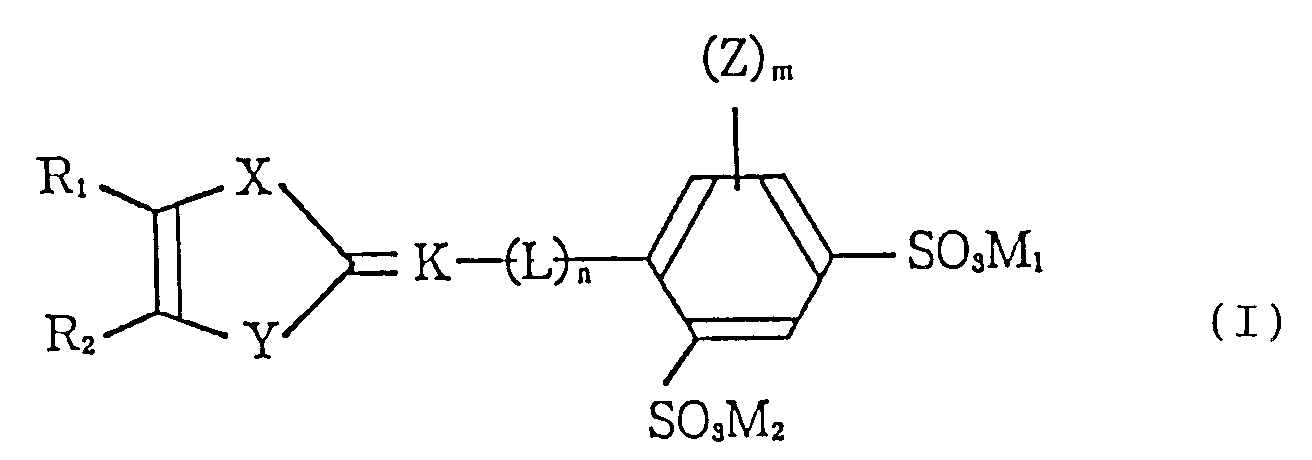
where R₁ and R₂ are each a hydrogen atom, a halogen atom, an alkylcarbonyl group, a hydroxycarbonyl group, an alkoxycarbonyl group, a sulfonic acid group, an aminosulfonyl group, a substituted or unsubstituted alkyl group or an aryl group, provided that R₁ and R₂ may combine to form a ring;
X and Y which may be the same or different each represents -O-, -S-, -Se-, -Te-,
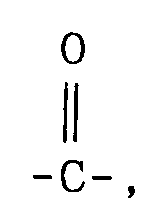
-SO₂- or
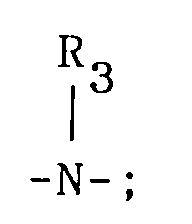
L is -CH₂CH₂-,
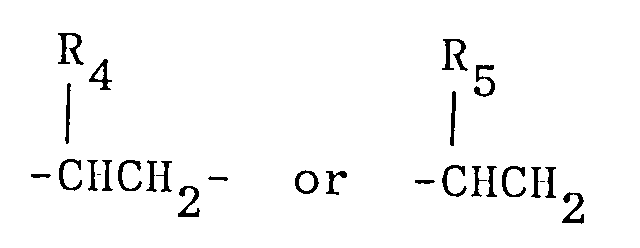
K is =CH- or
n is an integer of 0 - 6;
Z is a hydroxy group, a mercaptoxy group, a sulfonic acid group, an amino group, a hydroxycarbonyl group, an alkylcarbonyl group, a halogen atom, an alkoxy group, an alkylthio group, an aminosulfonyl group, a substituted or unsubstituted alkyl group or an aryl group;
m is an integer of 0 - 3;
R₃, R₄, R₅ and R₆ are each an alkyl group, an aryl group, an alkoxy group, an alkylthio group, a trialkylsiloxy group, a halogen atom or a tertiary amino group; and
M₁ and M₂ which may be the same or different each represents an alkali metal.
where R₁ and R₂ are each a hydrogen atom, a halogen atom, an alkylcarbonyl group, a hydroxycarbonyl group, an alkoxycarbonyl group, a sulfonic acid group, an aminosulfonyl group, a substituted or unsubstituted alkyl group or an aryl group, provided that R₁ and R₂ may combine to form a ring;
X and Y which may be the same or different each represents -O-, -S-, -Se-, -Te-,
-SO₂- or
L is -CH₂CH₂-,
K is =CH- or
n is an integer of 0 - 6;
Z is a hydroxy group, a mercaptoxy group, a sulfonic acid group, an amino group, a hydroxycarbonyl group, an alkylcarbonyl group, a halogen atom, an alkoxy group, an alkylthio group, an aminosulfonyl group, a substituted or unsubstituted alkyl group or an aryl group;
m is an integer of 0 - 3;
R₃, R₄, R₅ and R₆ are each an alkyl group, an aryl group, an alkoxy group, an alkylthio group, a trialkylsiloxy group, a halogen atom or a tertiary amino group; and
M₁ and M₂ which may be the same or different each represents an alkali metal.
2. A direct positive silver halide photographic material according to claim 1 wherein
the compound represented by the general formula (I) is contained in amounts of 1 mg
to 2 g per square meter of the photogphaphic material.