|
(11) | EP 0 536 663 A1 |

| (12) | EUROPEAN PATENT APPLICATION |
|
|
|
|
|||||||||||||||||||||||||||
| (54) | Dye image forming method |
| (57) An image forming method of a color photographic light-sensitive material is provided,
wherein a difference in sensitivity between the case when exposed for 0.1 seconds
and the case when exposed for 100 seconds is within 50% in all the blue-sensitive
silver halide emulsion layer, green-sensitive silver halide emulsion layer and red-sensitive
silver halide emulsion layer; the silver halide grains in each of the light-sensitive
layers contain iridium; and the magenta coupler contained in the green-sensitive silver
halide emulsion layer is dispersed using a high-boiling solvent having a dielectric
constant of not less than 6.0 and a high-boiling solvent having a dielectric constant
of less than 6.0. When the photographic material is subjected to developing within
15 minutes after exposure, improvements are achieved in reciprocity law failure and
latent image stability, and color cross-over is prevented. |
FIELD OF THE INVENTION
[0001] The present invention relates to a dye image forming method in a light-sensitive silver halide color photographic material. More particularly, the present invention relates to a dye image forming method that can undergo less reciprocity-law failure and enjoy a superior latent image stability and can prevent color cross-over.
BACKGROUND OF THE INVENTION
[0002] Recently, there is a growing users' need for enlargement of prints. In general, users who have taken photographs request photofinishing laboratories to print negative films in a small size. After prints are returned, users again request the photofinishing laboratories to make enlargement of photographs with favorite scenes. The photofinishing laboratories desire light-sensitive materials that can finish exposure in a short time for the purpose of improving operating efficiency. In other words, they desire light-sensitive materials having a high sensitivity. In particular, they desire those having a high sensitivity when photographs are enlarged.
[0003] In light-sensitive materials, a difference in exposure conditions between small-sized ones and largesized ones brings about a lowering of operating efficiency. That is, the exposure conditions must be again set up because of a difference in sensitivity balance between the three layers, a blue-sensitive layer, a green-sensitive layer and a red-sensitive layer.
[0004] As a means for improvements, it is known to incorporate a water-soluble iridium compound in silver halide grains as an approach from light-sensitive materials. For example, Japanese Patent Examined Publications No. 41180/1984 and No. 46404/1988 and Japanese Patent Publications Open to Public Inspection (hereinafter referred to as Japanese Patent O.P.I. Publication(s)) No.316039/1988 and No. 250437/1987 disclose to incorporate a water-soluble iridium compound in silver halide grains.
[0005] Incidentally, in photofinishing laboratories, developing is carried out after exposure has been operated. Processing machines that carry out developing in several minutes after exposure, have been made available, as in NPS-6020, manufactured by KONICA CORPORATION. In some instances, however, according to operator's circumstances, developing is carried out after several tens of minutes have lapsed. It has been found that a phenomenon of image density deviation occurs depending on the time for which exposed light-sensitive materials are left to stand. That is, the latent image stability becomes deficient. In particular, it has been found that latent images greatly change within 15 minutes after exposure and the latent image stability becomes more deficient in the case of light-sensitive materials containing silver halide grains having a high silver chloride content.
[0006] Proposals to improve latent image stability are disclosed in Japanese Patent O.P.I. Publication No. 232545/1985, No. 153041/1985 and No. 113236/1985 and Japanese Patent Examined Publication No. 24459/1985. In the course of researches made by the present inventors, however, improvements have been found to be little made on the silver halide grains having a high silver chloride content.
[0007] Japanese Patent O.P.I. Publication No. 234151/1990 also discloses that the latent image stability can be improved and the reciprocity-law failure can be lessened when the halide component is perfectly uniformly distributed throughout silver halide grains and at the same time grains are doped with a polyvalent metal in their insides. No satisfactory improvement, however, has been accomplished.
[0008] In developing operations also, the developing time is being shortened. The developing time has been anyhow shortened by the use of a color photographic paper and a processing solution which are disclosed in International Publication No. W087-04534. It, however, has been found that color cross-over occurs. With regard to the prevention of the color cross-over, U.S. Patents No. 2,336,327 and No. 4,277,553 disclose a technique by which an improvement is made using a hydroquinone compound. This technique, however, is little effective.
SUMMARY OF THE INVENTION
[0009] An object of the present invention is to provide a dye image forming method that can undergo less reciprocity-law failure and enjoy a superior latent image stability and can prevent color cross-over, in a light-sensitive silver halide color photographic material.
[0010] The present invention provides a image forming method comprising subjecting a light-sensitive silver halide color photographic material to color developing within 15 minutes after exposure, said light-sensitive silver halide color photographic material comprising a support and provided thereon a blue-sensitive silver halide emulsion layer, a green-sensitive silver halide emulsion layer, a red-sensitive silver halide emulsion layer and at least one non-sensitive layer, wherein;
a difference in sensitivity between an instance in which said light-sensitive silver halide color photographic material is exposed for 0.1 second and an instance in which said light-sensitive silver halide color photographic material is exposed for 100 seconds is within 50% in each light-sensitive layer, that is,
wherein ΔSB represents a difference in sensitivity of said blue-sensitive silver halide emulsion layer, ΔSG represents a difference in sensitivity of said green-sensitive silver halide emulsion layer, and ΔSR represents a difference in sensitivity of said red-sensitive silver halide emulsion layer, and the difference in sensitivity ΔS of each light-sensitive layer is defined by the following expression:
wherein S0.1 represents a sensitivity obtained when exposed for 0.1 second and S₁₀₀ represents a sensitivity obtained when exposed for 100 seconds;
said light-sensitive layers satisfy the relationship of the following expression:
silver halide grains in each of said light-sensitive layers contain iridium; and
a magenta coupler contained in said green-sensitive silver halide emulsion layer is dispersed using a high-boiling organic solvent having a dielectric constant of not less than 6.0 and a high-boiling organic solvent having a dielectric constant of less than 6.0.
DETAILED DESCRIPTION OF THE INVENTION
[0011] The light-sensitive silver halide color photographic material of the present invention is comprised of a support and provided thereon a blue-sensitive silver halide emulsion layer, a green-sensitive silver halide emulsion layer, a red-sensitive silver halide emulsion layer and at least one non-sensitive layer which are laminated in appropriate layer number and order.
[0012] The green-sensitive silver halide emulsion layer of the light-sensitive silver halide color photographic material usually contains a magenta coupler. As the magenta coupler, the following coupler represented by Formula M-I is preferably used.
In the formula, Z represents a group of non-metal atoms necessary to complete a nitrogen-containing heterocyclic ring. The ring formed by said Z may have a substitutent. X represents a hydrogen atom or a group capable of being split off upon reaction with an oxidized product of a color developing agent. R represents a hydrogen atom or a substituent.
[0013] There are no particular limitations on the substituent represented by R. It may typically include groups such as alkyl, aryl, anilino, acylamino, sulfonamide, alkylthio, arylthio, alkenyl and cycloalkyl. Besides these, it may also include a halogen atom, groups such as cycloalkenyl, alkynyl, a heterocyclic ring, sulfonyl, sulfinyl, phosphonyl, acyl, carbamoyl, sulfamoyl, cyano, alkoxy, aryloxy, heterocyclic oxy, siloxy, acyloxy, carbamoyloxy, amino, alkylamino, imido, ureido, sulfamoylamino, alkoxycarbonylamino, aryloxycarbonylamino, alkoxycarbonyl, aryloxycarbonyl and heterocyclic thio, a spiro compound residual group, and a bridged hydrocarbon compound residual group.
[0014] The alkyl group represented by R may preferably include those having 1 to 32 carbon atoms, which may be either straight-chain or branched.
[0016] The acylamino group represented by R may include an alkylcarbonylamino group and an arylcarbonylamino group.
[0017] The sulfonamide group represented by R may include an alkylsulfonylamino group and an arylsulfonylamino group.
[0018] The alkyl component or aryl component in the alkylthio group or arylthio group represented by R may include the alkyl group or aryl group represented by R.
[0019] The alkenyl group represented by R may preferably include those having 2 to 32 carbon atoms; and the cycloalkyl group, those having 3 to 12 carbon atoms, and particularly 5 to 7 carbon atoms. The alkenyl group may be either straight-chain or branched.
[0020] The cycloalkenyl group represented by R may preferably include those having 3 to 12 carbon atoms, and particularly preferably 5 to 7 carbon atoms.
[0021] The sulfonyl group represented by R may include an alkylsulfonyl group and an arylsulfonyl group;
the sulfinyl group may include an alkylsulfinyl group and an arylsufinyl group;
the phosphonyl group may include an alkylphosphonyl group, an alkoxyphosphonyl group, an aryloxyphosphonyl group and an arylphosphonyl group;
the acyl group may include an alkylcarbonyl group and an arylcarbonyl group;
the carbamoyl group may include an alkylcarbamoyl group and an arylcarbamoyl group;
the sulfamoyl group may include an alkylsulfamoyl group and an arylsulfamoyl group;
the acyloxy group may include an alkylcarbonyloxy group and arylcarbonyloxy group;
the carbamoyloxy group may include an alkylcarbamoyloxy group and an arylcarbamoyloxy group;
the ureido group may include an alkylureido group and an arylureido group;
the sulfamoylamino group may include an alkylsulfamoylamino group and an arylsulfamoylamino group;
the heterocyclic group may preferably include those of 5 to 7 members, specifically including a 2-furyl group, a 2-thienyl group, a 2-pyrimidinyl group and a 2-benzothiazolyl group;
the heterocyclic oxy group may preferably include those having a heterocyclic ring of 5 to 7 members, including, for example, a 3,4,5,6-tetrahydropyranyl-2-oxy group and a 1-phenyltetrazole-5-oxy group;
the heterocyclic thio group may preferably include a heterocyclic thio group of 5 to 7 members, including, for example, a 2-pyridylthio group, a 2-benzothiazolylthio group and a 2,4-diphenoxy-1,3,5-triazole-6-thio group;
the siloxy group may include a trimethylsiloxy group, a triethylsiloxy group and a dimethylbutylsiloxy group;
the imido group may include a succinimido group, a 3-heptadecylsuccinimido group, a phthalimido group and a glutalimido group;
the spiro compound residual group may include spiro[3.3]heptan-1-yl; and
the bridged hydrocarbon compound residual group may include bicylo[2.2.1]heptan-1-yl, tricyclo[3.3.1.13.7] decan-1-yl and 7,7-dimethyl-bicyclo[2.2.1]heptan-1-yl.
[0022] The group represented by X, capable of being split off through the reaction with an oxidized product of a color developing agent, may include, for example, a halogen atom such as a chlorine atom, a bromine atom or a fluorine atom, and groups such as alkoxy, aryloxy, heterocyclic oxy, acyloxy, sulfonyloxy, alkoxycarbonyloxy, aryloxycarbonyl, alkyloxalyloxy, alkoxyoxalyloxy, alkylthio, arylthio, heterocyclic thio, alkyloxythiocarbonylthio, acylamino, sulfonamido, a nitrogen-containing heterocyclic ring bonded with a N atom, alkyloxycarbonylamino, aryloxycarbonylamino, carboxyl, and
wherein R₁' has the same definition for the above R, and Z', the same definition for the above Z; and R₂' and R₃' each represent a hydrogen atom, an aryl group, an alkyl group or a heterocyclic group, and preferably a halogen atom, in particular, a chlorine atom.
[0023] The nitrogen-containing heterocyclic group formed by Z or Z' may include a pyrazole ring, an imidazole ring, a triazole ring or a tetrazole ring, and the substituent the above ring may have may include those described for the above R.
[0024] The coupler represented by Formula M-I is more specifically represented, for example, by the following Formulas M-II to M-VII.
In the above Formulas M-II to M-VII, R₁ to R₈ and X have the same definitions for the above R and X, respectively.
[0025] Among Formula M-I, preferred is the one represented by Formula M-VIII shown below.
In the formula, R₁, X and Z₁ have the same definitions for R, X and Z, respectively, in Formula M-I.
[0026] Among the magenta couplers represented by Formulas M-II to M-VII, particularly preferred magenta couplers are the magenta coupler represented by Formula M-II.
[0027] The substituent the ring formed by Z in Formula M-I or the ring formed by Z₁ in Formula M-VIII may have, and R₂ to R₈ in Formulas M-II to M-VI may preferably include those represented by Formula M-IX shown below.
In the formula, R¹ represents an alkylene group, and R² represents an alkyl group, a cycloalkyl group or an aryl group.
[0028] The alkylene group represented by R¹ may preferably have two or more, more preferably 3 to 6, carbon atoms at the straight-chain moiety, and may be straight-chain or branched.
[0030] When used for the formation of positive images, what is most preferable as the substituents R and R₁ of the heterocyclic ring described above is a substituent represented by the following Formula M-X.
In the formula, R₉, R₁₀ and R₁₁ each have the same definitions for the above R.
[0031] Any two of the above R₉, R₁₀ and R₁₁, for example, R₉ and R₁₀, may also combine to form a saturated or unsaturated ring as exemplified by cycloalkane, cycloalkene and a heterocyclic ring, and the ring thus formed and R₁₁ may further combine to form a bridged hydrocarbon compound residual group.
[0032] Particularly preferred in Formula M-X are (i) the case when at least two of R₉ to R₁₁ are alkyl groups, and (ii) the case when one of R₉ to R₁₁, for example, R₁₁, is a hydrogen atom, and other two, R₉ and R₁₀, combine to form cycloalkyl together with the route carbon atom.
[0033] Still particularly preferred in (i) is the case when any two of R₉ to R₁₁ are alkyl groups and the remaining one is a hydrogen atom or an alkyl group.
[0034] When used for the formation of negative images, what is most preferable as the substituents R and R₁ of the heterocyclic ring described above is a substituent represented by the following Formula M-XI.
In the formula, R₁₂ has the same definition for the above R. R₁₂ may preferably be a hydrogen atom or an alkyl group.
[0035] Typical examples of the compounds are shown below.
In addition to the above typical examples of the compounds, the compounds may also be exemplified by the compounds shown as Nos. 1 to 4, 6, 8 to 17, 19 to 24, 26 to 43, 45 to 59, 61 to 104, 106 to 121, 123 to 162 and 164 to 223 among the compounds disclosed in Japanese Patent O.P.I. Publication No. 166339/1987, pages 18 to 32.
[0036] The above couplers can be synthesized by making reference to Journal of the Chemical Society, Perkin I (1977), 2047-2052, U.S. Patent No. 3,725,067, Japanese Patent O.P.I. Publications No. 99437/1984, No. 42045/1983, No. 162548/1984, No. 171956/1984, No. 33552/1985, No. 43659/1985, No. 172982/1985, No. 190779/1985, No. 209457/1987 and No. 307453/1988.
[0037] This coupler can be used usually in the range of from 1 x 10⁻³ mol to 1 mol, and preferably from 1 x 10⁻² mol to 8 x 10⁻¹ mol, per mol of silver halide.
[0038] The couplers of the present invention can also be used in combination with magenta couplers of different types.
[0039] The magenta coupler of the present invention is dispersed using a mixed solvent composed of at least one high-boiling organic solvent having a dielectric constant of not less than 6.0 and at least one high-boiling organic solvent having a dielectric constant of less than 6.0.
[0040] There are no particular limitations on the upper limit of the dielectric constant of the high-boiling organic solvent having a dielectric constant of not less tan 6.0. The dielectric constant may preferably be not more than 20. Such a solvent can be exemplified by esters such as phthalate and phosphate, organic acid amides, ketones and hydrocarbon compounds having a dielectric constant of not less than 6.0.
[0041] In the present invention, it is preferred to use a high-boiling organic solvent having a vapor pressure of not more than 0.5 mmHg at 100°C. It is more preferred to use phthalates or phosphates among such high-boiling organic solvents. The organic solvent may be comprised of a mixture of two or more kinds. In this instance, the mixture may have the dielectric constant of not less than 6.0. The dielectric constant referred to in the present invention indicates a dielectric constant measured at 30°C. The high-boiling organic solvent having a dielectric constant of not less than 6.0 may preferably be a dialkylphthalate or a phosphate represented by the following Formula II or Formula III, respectively.
In the formula, R₅ and R₆ each represent an alkyl group having 1 to 4 carbon atoms.
In the formula, R₇, R₈ and R₉ each represent an alkyl group having 1 to 4 carbon atoms or an aryl group such as a phenyl group.
[0043] Typical examples of the high-boiling organic solvent represented by the above Formula II or III are shown below. The present invention is by no means limited by these examples. (Exemplary Compounds)
With regard to the high-boiling organic solvent having a dielectric constant of less than 6.0, used together with the high-boiling organic solvent having a dielectric constant of not less than 6.0 when the magenta coupler of the present invention is dispersed, there are no particular limitations on the lower limit of the dielectric constant. The dielectric constant may preferably be not less than 1.9. Such a solvent can be exemplified by esters such as phthalate and phosphate, organic acid amides, ketones and hydrocarbon compounds having dielectric constant of less than 6.0.
[0044] In the present invention, it is preferred to use a high-boiling organic solvent having a vapor pressure of not more than 0.5 mmHg at 100°C. It is more preferred to use phthalates or phosphates among such high-boiling organic solvents. The organic solvent may be comprised of a mixture of two or more kinds. In this instance, the mixture may have the dielectric constant of less than 6.0. The dielectric constant herein referred to indicates a dielectric constant measured at 30°C.
[0045] The phthalate advantageously used in the present invention may include a compound represented by the following Formula HA.
In the formula, RH1 and RH2 each represent an alkyl group, an alkenyl group or an aryl group.
[0046] In the present invention, the alkyl group represented by RH1 and RH2 in the above Formula HA may be straight-chain or branched, and is exemplified by a butyl group, a pentyl group, a hexyl group, a heptyl group, an octyl group, a nonyl group, a decyl group, an undecyl group, a dodecyl group, a tridecyl group, a tetradecyl group a pentadecyl group, a hexadecyl group, a heptadecyl group or an octadecyl group. The aryl group represented by RH1 and RH2 is exemplified by a phenyl group or a naphthyl group, and the alkenyl group, a hexenyl group, a heptenyl group or an octadecenyl group. These alkyl group, alkenyl group and aryl group may each have a substituent or substituents. The substituent(s) on the alkyl group and alkenyl group can be exemplified by a halogen atom, an alkoxy group, an aryl group, an aryloxy group, an alkenyl group and an alkoxycarbonyl group. The substituent(s) on the aryl group can be exemplified by a halogen atom, an alkyl group, an alkoxyl group, an aryl group, an aryloxy group, an alkenyl group and an alkoxycarbonyl group. Two or more substituents of these may be introduced in the alkyl group, alkenyl group or aryl group.
[0047] The phosphate advantageously used in the present invention may include a compound represented by the following Formula HB.
In the formula, RH3, RH4 and RH5 each represent an alkyl group, an alkenyl group or an aryl group, provided that the total sum of the carbon atom number of the groups represented by RH3, RH4 and RH5 is from 24 to 54.
[0048] The alkyl group represented by RH3, RH4 and RH5 in Formula HB is exemplified by a butyl group, a pentyl group, a hexyl group, a heptyl group, an octyl group, a nonyl group, a decyl group, an undecyl group, a dodecyl group, a tridecyl group, a tetradecyl group a pentadecyl group, a hexadecyl group, a heptadecyl group, an octadecyl group or a nonadecyl group.
[0049] The alkyl group, alkenyl group and aryl group may each have a substituent or substituents. Preferably, RH3, RH4 and RH5 are each an alkyl group, which is exemplified by a 2-ethylhexyl group, a n-octyl group, a 3,5,5-trimethylhexyl group, a n-nonyl group, a n-decyl group, a sec-decyl group, a sec-dodecyl group and a t-octyl group.
[0050] Examples of the organic solvent according to the present invention are shown below. The present invention is by no means limited by these examples.
Exemplary Organic Solvents:
[0051]
The high-boiling organic solvents according to the present invention may each be used in an amount ranging from 0.01 mol to 10 mols, and preferably from 0.05 mol to 5 mols, per mol of silver halide.
[0052] The magenta coupler of the present invention can be incorporated into the green-sensitive silver halide emulsion layer by, for example, mixing and dissolving the magenta coupler in at least one high-boiling organic solvent having a dielectric constant of not less than 6.0 and at least one high-boiling organic solvent having a dielectric constant of less than 6.0, together with hydrophobic additives such as an ultraviolet absorbent, a dye image stabilizer and a color mixture preventive agent, thereafter mixing the solution with an aqueous gelatin solution containing a surface active agent, followed by emulsifying dispersion using a high-speed mixer, a colloid mill or an ultrasonic dispersion machine, and then adding the dispersion to a silver halide emulsion.
[0053] In the light-sensitive silver halide color photographic material of the present invention, a difference in sensitivity between an instance in which the light-sensitive material is exposed for 0.1 second and an instance in which it is exposed for 100 seconds is within 50%, and preferably within 40%, in each light-sensitive layer, and also the light-sensitive layers satisfy the relationship of the following expression:
wherein ΔSB represents a difference in sensitivity of the blue-sensitive silver halide emulsion layer, ΔSG represents a difference in sensitivity of the green-sensitive silver halide emulsion layer, and ΔSR represents a difference in sensitivity of the red-sensitive silver halide emulsion layer, in which the difference in sensitivity of each light-sensitive layer is represented by the following expression:
wherein S0.1 and S₁₀₀ each represent a sensitivity obtained when the light-sensitive silver halide color photographic material is exposed for 0.1 second and 100 seconds, respectively. This means that the three layers have almost the same difference in sensitivity. In other words, this means that there is substantially no difference between the balance of sensitivities under exposure for 0.1 second and the balance of sensitivities under exposure for 100 seconds. When the above relationship is not satisfied, the color cross-over seriously occurs.
[0054] The sensitivity is measured, for example, in the following way: As described in SHASHIN KOGAKU NO KISO -GIN'EN SHASHIN HEN- (The Basic Photographic Engineering -Silver Salts-), Japan Photographic Society, 1979, Koronasha Co., pp.375-394, the light-sensitive layer is exposed to light using a sensitometer and an optical wedge. Thereafter color photographic processing is carrying out using a processor (for example, Process CPK-2-21, manufactured by KONICA CORPORATION), and each color is measured using a densitometer (for example, Densitometer PDA-65, manufactured by KONICA CORPORATION). A reciprocal of the amount of exposure that gives a reflection density of 1.0 is regarded as the sensitivity.
[0055] When exposed for 0.1 second and 100 seconds, the amount of exposure must be the same with each other. In order to control the difference in sensitivity between the case when exposed for 0.1 second and the case when exposed for 100 seconds to be within 50%, iridium must be incorporated in the silver halide grains.
[0056] In the present invention, to incorporate the iridium in the silver halide grains means that a water-soluble iridium compound is added at any stages of the formation of nuclei of silver halide, crystal growth, and physical ripening.
[0057] A specific method therefor includes a method in which the iridium compound is previously added in a mother solution before the formation of nuclei, a method in which it is previously added in a halide solution or soluble silver salt solution used for the growth, or a method in which it is added after completion of the growth and immediately before the physical ripening is carried out. In a method of preparing an emulsion by feeding fine grains silver halide to form and grow silver halide grains, the iridium compound may be added to the fine grains silver halide by the method described above, which are then added to a reaction vessel to form silver halide grains.
[0058] The iridium compound to be added may be used in the manner divided into different stages. The iridium compound to be added may be used in the form of a solution obtained by mixing two or more different kinds of iridium compounds. Alternatively, two or more solutions each comprising a different kind of iridium compound may be added at different stages.
[0059] There are no particular limitations on the iridium compound used in the present invention. The compound that is industrially usable and preferable from the viewpoint of the stability, safety or economical merits of the compound may include halogenated iridium (III) compounds, halogenated iridium (IV) compounds, and those having a halogen, amine, oxalato or the like as a ligand in a iridium complex. Examples thereof are shown below. The present invention is by no means limited by these: Iridium trichloride, iridium tribromide, potassium hexachloroiridate (III), ammonium iridium (III) sulfate, potassium iridium (III) disulfate, tripotassium iridium (III) trisulfate, iridium (III) sulfate, trioxalatoiridium (III), potassium hexacyanoiridate (III), iridium tetrachloride, iridium tetrabromide, potassium hexachloroiridate (IV), ammonium hexachloroiridate (IV), potassium iridate (IV), trioxalatoiridium (IV), potassium hexacyanoiridate (IV).
[0060] In the present invention, any desired compounds can be selected from these compounds, or optionally can be used in combination. These iridium compounds are used by dissolving in water or a solvent miscible with water. A method frequently practiced for the purpose of stabilizing a solution of the iridium compound can be used, i.e. a method in which a hydrogen halide as exemplified by hydrogen chloride or hydrogen bromide, an alkali halide as exemplified by potassium chloride, sodium chloride or potassium bromide or nitric acid is added.
[0061] In the present invention, the iridium compound may preferably be added in an amount of from 10⁻⁹ to 10⁻⁴ mol, and more preferably from 10⁻⁸ to 10⁻⁸ mol, in the number of mols of the iridium compound per mol of silver halide. Its addition in an amount more than 10⁻⁶ mol may bring about undesirable results in respect of the latent image stability and color cross-over.
[0062] The silver halide grains of the light-sensitive silver halide color photographic material used in the dye image forming method of the present invention may preferably have a silver chloride content of not less than 90 mol%, a silver bromide content of not more than 10 mol% and a silver iodide content of not more than 0.5 mol%. They may more preferably be silver chlorobromide grains having a silver bromide content of from 0.1 mol% to 1 mol%.
[0063] The silver halide grains may be used alone, or may also be used in combination with other silver halide grains having different composition. They may also be used in combination with silver halide grains having a silver chloride content of less than 10 mol%.
[0064] In the silver halide emulsion layer containing silver halide grains having a silver chloride content of not less than 90 mol%, the silver halide grains having a silver chloride content of not less than 90 mol% are held in a proportion of not less than 60% by weight, and preferably not less than 80% by weight, in the whole silver halide grains contained in the emulsion layer.
[0065] The composition of silver halide grains may be uniform throughout a grain, from its inside to its outer portion, or may be different between the inside and outer portion of a grain. In the case when the composition of the grain is different between the inside and the outer portion, the composition may change continuously or discontinuously.
[0066] There are no particular limitations on the grain size of the silver halide grains according to the present invention. Taking account of the rapid processing performance and sensitivity, and also other photographic performances, it may be preferably in the range of from 0.2 µm to 1.6 µm, and more preferably from 0.25 µm to 1.2 µm. The above grain size can be measured by various methods commonly used in the present technical field. Typical methods are described in Loveland, "Grain Size Analytical Methods", A.S.T.M. Symposium on Light Microscopy, 1955, pp.94-122, or Mees and James, "The Theory of The Photographic Process", 3rd Ed., 2nd Chapter, Macmillan Publishing Co., Inc. (1966).
[0067] This grain size can be measured by the use of the projected area or diameter approximate value of a grain. If the grains are of substantially uniform shape, the grain size distribution can be represented fairly accurately as the diameter or projected area.
[0068] The grain size distribution of the silver halide grains according to the present invention may be polydisperse or monodisperse. Prefered are monodisperse silver halide grains wherein, in the grain size distribution of the silver halide grains, its coefficient of variation is 0.22 or less, and preferably 0.15 or less. Here, the coefficient of variation is a coefficient indicating the breadth of the grain size distribution, and can be defined by the following expression:
Here, ri represents the grain size of the individual grains; and ni, its number. The grain size herein mentioned indicates the diameter when a silver halide grain is spherical; and, when it is cubic or of the form other than the spherical, the diameter obtained by calculating a projected image thereof as a round image having the same area.
[0069] In the present invention, the silver halide grains of the light-sensitive silver halide color photographic material used in the dye image forming method of the present invention may be those obtained by any of the acid method, the neutral method and the ammoniacal method. The grains may be grown at one time, or may be grown after making seed grains. The method of making seed grains and the method of growing them may be the same or different.
[0070] The manner by which soluble silver salts are reacted with soluble halogen salts may be any of those including the normal precipitation, the reverse precipitation, the double-jet precipitation, and the combination of any of these. Preferred are grains obtained by the double-jet precipitation. As one manner of the double-jet precipitation, it is also possible to use the pAg-controlled double-jet precipitation described in Japanese Patent O.P.I. Publication No. 48521/1979.
[0072] As the silver halide grains, those of any shape can be used. A preferable example thereof is a cube having {100} face as a crystal surface. It is also possible to prepare grains of the shape such as an octahedron, a tetradecahedron or a dodecahedron, according to the methods as disclosed in publications such as U.S. Patents No. 4,183,756 and No. 4,225,666, Japanese Patent O.P.I. Publication No. 26589/1980, Japanese Patent Publication No. 42737/1980, and The Journal of Photographic Science, 21, 39 (1973), and put them into use. Grains with twin planes may also be used.
[0073] The silver halide grains used in the present invention may be comprised of grains having a single shape, or comprised of a mixture of grains having various shapes.
[0074] From emulsions containing the silver halide grains, excess soluble salts may be removed after the growth of the silver halide grains has been completed, or they may remain unremoved. In the case when the slats are removed, they can be removed by the method described in Research Disclosure No. 17643.
[0075] The silver halide grains used in emulsions may be those in which a latent image is mainly formed on the surfaces, or those in which it is formed in the insides of grains. It is preferred to use grains in which the latent image is mainly formed on the surfaces.
[0076] These emulsions are chemically sensitized by conventional methods. More specifically, the sulfur sensitization making use of a compound containing sulfur capable of reacting with silver ions or an active gelatin, the selenium sensitization making use of a selenium compound, the reduction sensitization making use of a reducing substance and the noble metal sensitization making use of a compound of noble metal such as gold or the like can be used alone or in combination.
[0077] In the present invention, a chalcogen sensitizer may be used as a chemical sensitizer. The chalcogen sensitizer is the generic term of sulfur sensitizers, selenium sensitizers and tellurium sensitizers. Sulfur sensitizers and selenium sensitizers are preferable for photographic use. The sulfur sensitizers can be exemplified by thiosulfates, allylthiocarbasides, thioureas, allylisothiocyanates, cystine, p-toluene thiosulfonates and rhodanine. Besides, it is possible to use the sulfur sensitizers disclosed in U.S. Patents No. 1,574,944, No. 2,410,689, No. 2,278,947, No.2,728,668, No. 3,501,313 And No.3,656,955, West German Laid-open Application (OLS) No. 14 22 869, and Japanese Patent O.P.I. Publications No. 24937/1981 and No. 45016/1980. The amount of the sulfur sensitizer added may vary over a considerable range depending on pH, temperature, and silver halide grain size. As a standard, the sulfur sensitizer may preferably be added in an amount of from 10⁻⁷ mol to 10⁻⁷ mol per mol of silver halide.
[0078] Selenium sensitizers may be used in place of the sulfur sensitizers. Usable selenium sensitizers may include aliphatic isoselenocyanates such as allyisocyanate, selenoureas, selenoketones, selenoamides, selenocarboxylic acid salts or esters, selenophosphates, and selenides such as diethyl selenide and diethyl diselenide. Examples of these are disclosed in U.S. Patents No. 1,574,944, No. 1,602,592 and No. 1,623,499.
[0079] The reduction sensitization may also be used in combination. There are no particular limitations on reducing agents, which may include stannous chloride, thiourea dioxide, hydrazine and polyamine.
[0080] Noble metal compounds other than gold, as exemplified by palladium compounds, may also be used in combination.
[0081] The silver halide grains of the light-sensitive silver halide color photographic material used in the dye image forming method of the present invention may preferably contain a gold compound. As gold compounds preferably used in the present invention, the oxidation number of the gold may be +1 or +3, and many kinds of gold compounds can be used. Typical examples thereof are chloroauric acid, potassium chloroaurate, auric trichloride, potassium auric thiocyanate, potassium iodoaurate, tetracyanoauric azide, ammonium aurothiocyanate, pyridyl trichlorogold, gold sulfide and gold selenide.
[0082] The gold compound may be so used as to sensitize silver halide grains, or may be so used as substantially not to contribute the sensitization.
[0083] The amount of the gold compound used may vary depending on various conditions. As a standard, the gold compound may be used in an amount of from 10⁻⁸ mol to 10⁻¹ mol, and preferably from 10⁻⁷ mol to 10⁻² mol, per mol of silver halide. The gold compound may be added at any stages so long as it is added during the formation of silver halide grains, during physical ripening, during chemical ripening and after completion of chemical ripening.
[0084] The emulsions of the present invention can be spectrally sensitized to the desired wavelength region by the use of dyes known in the photographic industrial field as spectral sensitizers. The spectral sensitizers may be used alone or may be in combination of two or more kinds.
[0085] A supersensitizer, which is a compound that absorbs substantially no visible light and is capable of strengthening the sensitizing action of the sensitizing dye, may be contained in the emulsion together with the sensitizing dye.
[0086] A yellow coupler is usually used in the blue-sensitive silver halide emulsion layer of the present invention.
[0087] Yellow couplers that can be preferably used include known acylacetoanilide couplers. Of these, benzoylacetoanilide compounds and pivaloylacetoanilide compounds are advantageous.
[0088] Examples of usable yellow couplers are disclosed in British Patent No. 1,077,874, Japanese Patent Examined Publication No. 40757/1970, Japanese Patent O.P.I. Publications No.1031/1972, No. 26133/1972, No. 94432/1973, No. 87650/1975, No. 3631/1976, No. 115219/1977, No. 99433/1979, No. 133329/1979 and No. 30127/1981, U.S. Patents No. 2,875,057, No. 3,253,924, No. 3,265,506, No. 3,408,194, No. 3,551,155, No. 3,551,156, No. 3,664,841, No. 3,725,072, No. 3,730,722, No. 3,891,445, No. 3,900,483, No. 3,929,484, No. 3,933,500, No. 3,973,968, No.3,990,896, No. 4,012,259, No. 4,022,620, No. 4,029,508, No. 4,057,432, No. 4,106,942, No. 4,133,958, No. 4,269,936, No. 4,286,053, No. 4,304,845, No. 4,314,023, No. 4,336,327, No. 4,356,258, No. 4,386,155 and No. 4,401,752.
[0089] The yellow coupler may be usually used in an amount of from 2 × 10⁻³ mol to 5 × 10⁻¹ mol, and preferably from 1 × 10⁻² mol to 5 × 10⁻¹ mol, per mol of silver halide.
[0090] A cyan coupler is contained in the red-sensitive silver halide emulsion layer of the present invention.
[0091] The cyan couplers may typically include four equivalent type or two equivalent type phenol or naphthol cyan dye forming couplers. These couplers are disclosed, for example, in U.S. Patents No. 2,306,410, No. 2,356,475, No. 2,362,598, No. 2,367,531, No. 2,369,929, No. 2,423,730, No. 2,474,293, No. 2,476,008, No. 2,498,466 No. 2,545,687, No. 2,728,660, No. 2,772,162, No. 2,895,826, No. 2,976,146, No. 3,002,836, No. 3,419,390, No. 3,446,622, No. 3,476,563, No. 3,737,316, No. 3,758,308 and No. 3,839,044, British Patents No. 478,991, No. 945,542, No.1,084,480, No. 1,377,233, No. 1,388,024 and No. 1,543,040, and Japanese Patent O.P.I. Publications No. 37425/1972, No. 10135/1975, No. 25228/1975, No. 112038/1975, No. 117422/1975, No. 130441/1975, No. 6551/1976, No. 37647/1976, No. 52828/1976, No. 108841/1976, No.109630/1978, No. 48237/1979, No. 66129/1979, No. 131931/1979, No. 32071/1980, No. 146050/1984, No. 31953/1984 and No. 117249/1985.
[0092] The cyan coupler may be usually used in an amount of from 1 × 10⁻³ mol to 1 mol, and preferably from 1 × 10⁻² mol to 8 × 10⁻¹ mol, per mol of silver halide.
[0093] Besides the compounds described above, various photographic additives can be added to the light-sensitive silver halide color photographic material containing the silver halide emulsions of the present invention.
[0094] Examples thereof are ultraviolet absorbents as exemplified by benzophenone compounds and benzotriazole compounds; development accelerators as exemplified by 1-allyl-3-pyrazolidone compounds; surface active agents as exemplified by alkylnaphthalenesulfonates, alkylsuccinic acid ester sulfonates, itaconates, and polyalkylene oxide compounds; water-soluble anti-irradiation agents as exemplified by azo compounds, styryl compounds, oxonol compounds, anthraquinone compounds and triphenylmethane compounds; film-property improvers as exemplified by glycerol, polyalkylene glycol, polymer latex, and solid or liquid paraffins; anti-color crossover agents as exemplified by non-diffusible hydroquinone compounds; dye image stabilizers as exemplified by hydroquinone derivatives, gallic acid derivatives, phenol compounds, hydroxychroman compounds, polyalkylpiperidine compounds, and aromatic amine compounds; water-soluble or oil-soluble fluorescent brighteners; and background tone modifiers such as oil-soluble coloring dyes.
[0095] To add hydrophilic compounds among dye-forming couplers, colored couplers, DIR couplers, DIR compounds, image stabilizers, anti-color-foggants, ultraviolet absorbents and fluorescent brighteners which are not required to be absorbed on the surfaces of silver halide crystals, there can be used a variety of methods such as solid dispersion, latex dispersion and oil-in-water emulsification dispersion. This can be suitably selected depending on the chemical structure of the hydrophobic compounds such as couplers. As the oil-in-water emulsification dispersion, a conventionally known method for dispersing hydrophobic additives such as couplers can be applied. Usually, the method may be carried out by dissolving the compounds in a high boiling organic solvent having a boiling point of 150°C or above optionally together with a low boiling and/or water soluble organic solvent, and carrying out emulsification dispersion in a hydrophilic binder such as an aqueous gelatin solution by the use of a surface active agent and by the use of a dispersing means such as a stirrer, a homogenizer, a colloid mill, a flow jet mixer, an ultrasonic device, followed by addition of the dispersion to an intended hydrophilic colloid layer. The step of removing the dispersing medium or, at the same time of the dispersion, removing the low-boiling organic solvent may be inserted.
[0096] The high-boiling organic solvent and low-boiling organic solvent may preferably be used in a proportion of 1:0.1 to 1:50, and more preferably from 1:1 to 1:20.
[0097] As high-boiling solvents, used are organic solvents with a boiling point of 150°C or above such as phenol derivatives, alkyl phthalates, phosphates, citrates, benzoates, alkylamides, fatty acid esters and trimesates that do not react with an oxidized product of a developing agent.
[0098] The high-boiling organic solvents that can be used are disclosed in U.S. Patents No. 2,322,027, No. 2,533,514, No. 2,835,579, No. 3,287,134, No. 2,353,262, No. 2,852,383, No. 3,554,755, No. 3,676,137, No. 3,676,142, No. 3,700,454, No. 3,748,141, No. 3,779,765 and No. 3,837,863, British Patents No. 958,441 and No. 1,222,753, OLS 25 38 889, Japanese Patent O.P.I. Publications No. 1031/1972, No. 90523/1974, No. 23823/1975, No. 26037/1976, No. 27921/1976, No. 27922/1976, No. 26035/1976, No. 26036/1976, No. 62632/1975, No. 1520/1978, No. 1521/1978, No. 15127/1978, No. 119921/1979, No. 119922/1979, No. 25057/1980, No. 36869/1980, No. 19049/1981 and No. 81836/1981, and Japanese Patent Examined Publication No. 29060/1973.
[0099] The low-boiling or water-soluble organic solvent that can be used together with, or in place of, the high-boiling solvent may include those disclosed in U.S. Patent No. 2,801,171 and No. 2,949,360. The low-boiling and substantially water-insoluble organic solvent may include ethyl acetate, propyl acetate, butyl acetate, butanol, chloroform, carbon tetrachloride, nitromethane, nitroethane and benzene, and the water-soluble organic solvent may include acetone, methyl isobutyl ketone, β-ethoxyethyl acetate, methoxy glycol acetate, methanol, ethanol, acetonitrile, dioxane, dimethylformamide, dimethylsulfoxide, hexamethyl phosphoryl amide, diethylene glycol monophenyl ether and phenoxy ethanol.
[0100] A surface active agent may be used as a dispersion auxiliary, which can be exemplified by anionic surface active agents such as alkylbenzene sulfonates, alkylnaphthalene sulfonates, alkyl sulfonates, alkyl sulfuric acid esters, alkyl phosphoric acid esters, sulfosuccinic acid esters and sulfoalkyl polyoxyethylene alkyl phenyl ethers; nonionic surface active agents such as steroid type saponines, alkylene oxide derivatives and glycidol derivatives; amphoteric surface active agents such as amino acids, aminoalkylsulfonic acids and alkylbetainic acids; and cationic surface active agents such as quaternary ammonium salts, any of which may preferably be used.
[0101] Specific examples of these surface active agents are disclosed in "Handbook of Surface Active Agents", Sangyo Tosho, 1966, and "Data for Studies and Techniques on Emulsifying Agents and Emulsifying Apparatus", Kagaku Hanronsha, 1978.
[0102] The latex dispersion method may preferably include the methods disclosed, for example, in U.S. Patents No. 4,199,363, No. 4,214,047, No. 4,203,716 and No. 4,247,627, Japanese Patent O.P.I. Publications No. 74538/1974, No. 59942/1976, No. 59943/1976 and No. 32552/1979.
[0103] The support used in the light-sensitive silver halide photographic material of the present invention include supports made of paper, glass, cellulose acetate, cellulose nitrate, polyester, polyamide, polystyrene or the like, or a laminate material comprising two or more substrates, as exemplified by a laminate comprising paper and a polyolefin (e.g. polyethylene or polypropylene) sheet, which can be appropriately used according to the purpose. In general, this support is also subjected to various surface treatments so that the adhesion to the silver halide emulsion layer can be improved. For example, it is possible to use supports whose surfaces have been roughened by a mechanical means or with a suitable organic solvent, and also those having been subjected to a surface treatment such as electron bombardment treatment or flame treatment or having been subjected to subbing treatment to provide a subbing layer.
[0104] The light-sensitive silver halide color photographic material of the present invention may preferably be developed within 15 minutes after exposure. Development carried out after the lapse of 15 minutes is not preferable since density variations may occur, and hence the development must be made within 15 minutes.
[0105] Light sources used in printers, enlargers and sensitometers used in the present invention may preferably be tungsten lamps or halogen lamps in view of the stability required for light sources.
[0106] In the light-sensitive silver halide photographic material of the present invention, images can be formed by photographic processing known in the present industrial field.
[0107] Color developing agents used in a color developing solution in the present invention include known compounds widely used in the various color photographic processes. These developing agents include aminophenol type derivatives and p-phenylenediamine type derivatives. These compounds, which are more stable than in a free state, are used commonly in the form of salts, for example, in the form of hydrochlorides or sulfates. These compounds are also used commonly in a concentration of from about 0.1 g to about 30 g per liter of a color developing solution, preferably in a concentration of from about 1 g to about 1.5 g per liter of a color developing solution.
[0108] The color developing agents used in the color developing solution may typically include aromatic primary amine compounds, in particular, p-phenylenediamine compounds. Preferable examples thereof are N,N'-diethyl-p-phenylenediamine hydrochloride, N-ethyl-p-phenylenediamine hydrochloride, N,N'-dimethyl-p-phenylenediamine hydrochloride, 2-amino-5-(N-ethyl-N-dodecylamino)-toluene, N-ethyl-N-β-methanesulfonamidoethyl-3-methyl-4-aminoaniline sulfate, N-ethyl-N-β-hydroxyethylaminoaniline, 4-amino-N-(2-methoxyethyl)-N-ethyl-3-methylaniline-p-toluene sulfonate, N,N-diethyl-3-methyl-4-aminoaniline, and N-ethyl-N-(β-hydroxyethyl)-3-methyl-4-aminoaniline.
[0109] These color developing agents may be used alone or in combination of two or more kinds. Alternatively, one or more kinds of color developing agents may be used in combination with other black and white developing agent as exemplified by hydroquinone, 1-phenyl-3-pyrazolidone and N-methyl-p-aminophenols. In this instance, the color developing agent may be added in an amount ranging from 0.2 mol to 2 mols, and preferably from 0.4 mol to 0.7 mol, per mol of silver halide contained in the light-sensitive silver chloride color photographic material.
[0110] When the light-sensitive silver halide color photographic material of the present invention is color-developed, N-ethyl-N-β-methanesulfonamidoethyl-3-methyl-4-aminoaniline sulfate is particularly preferred as the color developing agent, among the above compounds.
[0111] In addition to the above developing agent, the color developing solution may optionally contain various photographic additives known in the photographic industrial field, as exemplified by alkali agents such as sodium hydroxide, potassium hydroxide, sodium tertiary phosphate, potassium carbonate and potassium hydrogencarbonate, preservatives such as N,N-diethylhydroxylamine, N,N-bis(methoxyethyl)hydroxylamine, triethanolamine, diethanolamine glycose and potassium sulfite, organic solvents such as methanol, ethanol, butanol and ethylene glycol, development regulators such as citrazinic acid and polyethylene glycol, heavy metal ion masking agents, and development accelerators.
[0112] Sulfite ions such as sodium sulfite and potassium sulfite serving as the preservatives of the color developing solution may cause only a small lowering of color forming properties even if added in a relatively large amount (for example, about 0.01 mol or more per liter of the color developing solution), when the color developing solution contains benzyl alcohol, a color forming properties improver. When, however, the benzyl alcohol in the color developing solution is contained only in an amount of 0 to about 5 ml per liter of the color developing solution, the sulfite ions must be controlled to be about 0.004 mol or less per liter of the color developing solution.
[0113] The light-sensitive silver halide color photographic material of the present invention is developed using a color developing solution containing no, or a very small amount of, water-soluble bromide. A color developing solution containing the water-soluble bromide in excess may result in an abrupt decrease in the rate of development of the light-sensitive silver halide color photographic material to make it impossible to achieve the object of the present invention. The bromide ions in the color developing solution should be in a concentration of about not more than 0.1 g, and preferably not more than 0.05 g, in terms of potassium bromide and per liter of the color developing solution.
[0114] In an instance in which a minute quantity of bromide ions dissolve out of the light-sensitive color photographic material as a result of development when the light-sensitive material of the present invention is continuously processed while a color developing replenishing solution is continuously supplied, the minute quantity of bromide ions accumulate in the color developing solution. Even in such an instance, the bromide ions in the color developing solution should preferably be controlled within the above rage by appropriately selecting the rate of replenishment using the color developing replenishing solution, based on the amount of the whole bromides contained in the light-sensitive material.
[0115] The effect of the present invention becomes particularly remarkable when in the color developing solution a water-soluble chloride is used as the development regulator.
[0116] The water-soluble chloride used may be used in an amount ranging from 0.5 g to 5 g, and preferably from 1 g to 3 g, in terms of potassium chloride and per liter of the color developing solution.
[0117] In the color developing solution, the organic development restrainer as disclosed in Japanese Patent O.P.I. Publication No. 95345/1983 may be further used so long as what is intended in the present invention is not damaged. Adenine, guanine or the like may preferably be used in an amount ranging from 0 to 0.02 g/lit. in the color developing solution.
[0118] The pH of the color developing solution of the present invention may preferably be 9.5 or more, and more preferably 13 or less. It is conventionally known to accelerate development by increasing the pH of developing solutions. In the light-sensitive silver halide color photographic material of the present invention, a satisfactory rapid development performance can be obtained even when the pH is 11 or less.
[0119] The color developing solution may have a temperature of from 15° to 45°C, and preferably from 20° to 40°C.
[0120] The light-sensitive silver halide color photographic material is, after color developing, subjected to bleaching and fixing. The bleaching may be carried out simultaneously with the fixing. As a bleaching agent, a variety of compounds can be used, particularly including polyvalent metal compounds such as iron (III), cobalt (III) and copper (II); in particular, complex salts of these polyvalent metal cations with organic acids, as exemplified by aminopolycarboxylic acids such as ethylenediaminetetraacetic acid, nitrilotriacetate and N-hydroxyethyl ethylenediaminebiacetic acid, metal complex salts of malonic acid, tartaric acid, malic acid, diglycolic acid or dithioglycolic acid, and ferricyanic acid salts, dicromates, etc., which can be used alone or in suitable combination.
[0121] As a fixing agent, a soluble complexing agent capable of solubilizing a silver halide as a complex salt may be used. This soluble complexing agent may include, for example, sodium thiosulfate, ammonium thiosulfate, potassium thiocyanate, thiourea and thioether.
[0122] After fixing, washing is usually carried out. Alternatively, stabilizing may be carried out as a substitute for the washing, or both of them may be used in combination. A stabilizing solution used in the stabilizing may contain a pH regulator, a chelating agent, an antifungal agent and so forth. Specific conditions for these processings can be set making reference to Japanese Patent O.P.I. Publication No. 134636/1983.
EXAMPLES
[0123] Examples of the present invention will be described below. Embodiments of the present invention are by no means limited to these.
Example 1
[0124] On a paper support one side of which was laminated with polyethylene and the other side of which was laminated with polyethylene containing titanium oxide, each layer with the constitution shown below was provided by coating, to produce a multi-layer light-sensitive silver halide color photographic material. Coating solutions were prepared in the following way:
First layer coating solution:
[0125] To 26.7 g of yellow coupler Y-1, 10.0 g of dye image stabilizer ST-1 and 6.67 g of dye image stabilizer ST-2, 60 ml of ethyl acetate was added and dissolved. The resulting solution was emulsifyingly dispersed using an ultrasonic homogenizer, in 220 ml of an aqueous 10% gelatin solution containing 7 ml of a 20% surface active agent SU-1. Thus a yellow coupler dispersion was prepared. The resulting dispersion was mixed with a blue-sensitive silver halide emulsion (containing 10 g of silver) prepared under the conditions described later to give a first layer coating solution.
[0126] Second layer to seventh layer coating solutions were also prepared in the same procedure as the first layer coating solution. High-boiling organic solvents used in the third layer were as shown in Table 2.
[0127] As hardening agents, a compound H-1 was added to the second and fourth layers, and H-2 to the seventh layer. As coating aids, surface active agents SU-2, SU-3 were added to make adjustment of surface tension.
[0128] The amounts of the silver halide emulsions are each indicated in terms of silver.
- DBP
- Dibutyl phthalate
- DOP
- Dioctyl phthalate
- DNP
- Dinonyl phthalate
- DIDP
- Diisodecyl phthalate
- PVP
- Polyvinyl pyrrolidone
Preparation of blue-sensitive silver chlorobromide emulsion:
[0129] In 1,000 ml of an aqueous 2% gelatin solution kept at a temperature of 40°C, the following solution A and solution B were simultaneously added over a period of 30 minutes while controlling the pAg and pH to be 6.5 and 5.5, respectively, and the following solution C and solution D were further simultaneously added over a period of 180 minutes while controlling the pAg and pH to be 7.3 and 5.5, respectively.
[0130] At this time, the pAg was controlled by the method disclosed in Japanese Patent O.P.I. Publication No. 45437/1984 and the pH was controlled using an aqueous solution of sulfuric acid or sodium hydroxide.
| Solution A: | |
| Sodium chloride | 3.42 g |
| Potassium bromide | 0.03 g |
| By adding water, made up to | 200 ml |
| Solution B: | |
| Silver nitrate | 10 g |
| By adding water, made up to | 200 ml |
| Solution C: | |
| Sodium chloride | 102.7 g |
| Potassium bromide | 1.0 g |
| Water-soluble iridium compound | Type and amount are shown in Table 2. |
| By adding water, made up to | 600 ml |
| Solution D: | |
| Silver nitrate | 300 g |
| By adding water, made up to | 600 ml |
[0131] After completion of the addition, the emulsion was desalted using an aqueous 5% solution of Demol-N, produced by Kao Atlas Co., and an aqueous 20% solution of magnesium sulfate, and then mixed with an aqueous gelatin solution to give a monodisperse cubic emulsion EMP-1 having an average grain size of 0.85 µm, a coefficient of variation (σ/r) of 0.07 and a silver chloride content of 99.5 mol%.
[0132] The above emulsion EMP-1 was subjected to chemical sensitization at 50°C for 90 minutes using the following compounds to give a blue-sensitive silver halide emulsion Em-B.
| Sodium thiosulfate | 0.8 mg/mol·AgX |
| Chloroauric acid | 0.5 mg/mol·AgX |
| Stabilizer STB-1 | 6 x 10⁻⁴ mg/mol·AgX |
| Spectral sensitizer BS-1 | 4 x 10⁻⁴ mg/mol·AgX |
| Spectral sensitizer BS-2 | 1 x 10⁻⁴ mg/mol·AgX |
Preparation of green-sensitive silver chlorobromide emulsion:
[0133] The procedure for the preparation of EMP-1 was repeated except that the addition time of the solutions A and B and the addition time of the solutions C and D were changed, to give a monodisperse cubic emulsion EMP-2 having an average grain size of 0.43 µm, a coefficient of variation (σ/r) of 0.08 and a silver chloride content of 99.5 mol%.
[0134] The emulsion EMP-2 was subjected to chemical sensitization at 55°C for 120 minutes using the following compounds to give a green-sensitive silver halide emulsion Em-G.
| Sodium thiosulfate | 1.5 mg/mol·AgX |
| Chloroauric acid | 1.0 mg/mol·AgX |
| Stabilizer STB-1 | 6 x 10⁻⁴ mg/mol·AgX |
| Spectral sensitizer GS-2 | 4 x 10⁻⁴ mg/mol·AgX |
Preparation of red-sensitive silver chlorobromide emulsion:
[0135] The procedure for the preparation of EMP-1 was repeated except that the addition time of the solutions A and B and the addition time of the solutions C and D were changed, to give a monodisperse cubic emulsion EMP-3 having an average grain size of 0.50 gm, a coefficient of variation (σ/r) of 0.08 and a silver chloride content of 99.5 mol%.
[0136] The emulsion EMP-3 was subjected to chemical sensitization at 60°C for 90 minutes using the following compounds to give a red-sensitive silver halide emulsion Em-R.
| Sodium thiosulfate | 1.8 mg/mol·AgX |
| Chloroauric acid | 2.0 mg/mol·AgX |
| Stabilizer STB-1 | 6 x 10⁻⁴ mg/mol·AgX |
| Spectral sensitizer RS-1 | 1 x 10⁻⁴ mg/mol·AgX |
The following evaluation was made on the samples thus prepared.
(1) Reciprocity law failure:
[0137] Using a sensitometer Type KS-7 (manufactured by KONICA CORPORATION), wedge exposure was carried out for 0.1 second and 100 seconds. In either exposure time, the amount of exposure was made equal. Densities of yellow, magenta and cyan dye images obtained by photographic processing shown below were measured using a densitometer PDA-65 (manufactured by KONICA CORPORATION) to determine sensitivities (reciprocals of the amount of exposure that gave a reflection density of 1.0) and the aforesaid difference in sensitivity (ΔSB, ΔSG and ΔSR).
| Processing steps | Temp. | Time |
| Color developing | 35.0 ±0.3°C | 45 sec. |
| Bleach-fixing | 35.0 ±0.3°C | 45 sec. |
| Stabilizing | 30 to 34°C | 90 sec. |
| Drying | 60 to 80°C | 60 sec. |
| Color developing solution | |
| Pure water | 800 ml |
| Triethanolamine | 10 g |
| N,N-diethylhydroxylamine | 5 g |
| Potassium bromide | 0.02 g |
| Potassium chloride | 2 g |
| Potassium sulfite | 0.3 g |
| 1-Hydroxyethylidene-1,1-diphosphonic acid | 1.0 g |
| Ethylenetriaminetetraacetic acid | 1.0 g |
| Disodium catechol-3,5-diphosphonate | 1.0 g |
| N-ethyl-N-(β-methanesulfonamidoethyl)-3-methyl-4-aminoaniline sulfate | 4.5 g |
| Fluorescent brightener (4,4'-diaminostilbenesulfonic acid derivative) | 1.0 g |
| Potassium carbonate | 27 g |
| Made up to 1 liter in total by adding water, and adjusted to pH 10.10. | |
| Bleach-fixing solution | |
| Ferric ammonium ethylenediaminetetraacetate dihydrate | 60 g |
| Ethylenediaminetetraacetic acid | 3 g |
| Ammonium thiosulfate (aqueous 70% solution) | 100 ml |
| Ammonium sulfite (aqueous 40% solution) | 27.5 ml |
| Made up to 1 liter in total by adding water, and adjusted to pH 5.7 using potassium carbonate or glacial acetic acid. | |
| Stabilizing solution | |
| 5-Chloro-2-methyl-4-isothiazolin-3-one | 1.0 g |
| Ethylene glycol | 1.0 g |
| 1-Hydroxyethylidene-1,1-diphosphonic acid | 2.0 g |
| Ethylenediaminetetraacetic acid | 1.0 g |
| Ammonium hydroxide (aqueous 20% solution) | 3.0 g |
| Fluorescent brightener (4,4'-diaminostilbenesulfonic acid derivative) | 1.5 g |
| Made up to 1 liter in total by adding water, and adjusted to pH 7.0 using sulfuric acid or potassium hydroxide. | |
(2) Latent image stability:
[0138] The above samples were exposed in the same manner as in (1). After exposure, developing was carried out under conditions of 23°C, 55% RH after the exposed samples were left to stand for 3 seconds, 3 minutes, 10 minutes, 14 minutes, 17 minutes and 25 minutes. Sensitivities were determined in a similar manner to (1), provided that the sensitivity of the sample having been left for 3 seconds in each group of samples was assumed as 100. Latent image stability was indicated as relative difference values.
(3) Color cross-over:
[0139] Using a sensitometer KS-7 Type (manufactured by KONICA CORPORATION), the above samples were exposed to green light through an optical wedge. (An interference filter of a central wavelength of 550 nm was used.) On the resulting samples, reflection densities were measured using a densitometer PDA-65 (manufactured by KONICA CORPORATION), and blue reflection densities at a green reflection density of 1.6 were determined from the characteristic curves obtained. The values thus obtained are shown in Table 3 as values indicating the degree of color cross-over.
[0140] As shown in Table 3 [laterally continued from Tables 3(1) to 3(2)], the samples of the present invention (Nos. 10, 11, 18 and 19), in which the water-soluble iridium compound has been so added that the difference in sensitivity between 0.1 second exposure and 100 second exposure is smaller than 50% and also its balance is not lost, and the high-boiling organic solvent with a dielectric constant of not less than 6.0 and the high-boiling organic solvent with a dielectric constant of less than 6.0 are used, are seen to have caused no color cross-over and also have maintained the stability of latent images when developed within 15 minutes after completion of the exposure.
Example 2
[0141] Samples were prepared in the same manner as in Example 1 except that II-I and H-1 (used in an amount of 0.13 g/m² each) were used for dispersing the magenta coupler and the water-soluble iridium salt was used in the amount shown in Table 4. Results obtained are shown in Table 5.
[0142] As shown in Fig. 5 [laterally continued from Tables 5(1) to 5(2)], the same effect is seen to have obtained also when other water-soluble iridium salts are used. Use of the water-soluble iridium salt in an amount of 1 × 10⁻⁴ mol/AgX or more is seen to have been effective against the reciprocity law failure but have brought about a little poor latent image stability and color cross-over.
Table 4
| Water-soluble iridium salt (mol/AgX) | ||||
| No. | Type | Blue-sensitive layer | Green-sensitive layer | Red-sensitive layer |
| 201 | None | 0 | 0 | 0 |
| 202 | Potass. hexachloroiridate(IV) | 8×10⁻⁹ | 4×10⁻⁸ | 3×10⁻⁸ |
| 203 | Potass. hexachloroiridate(IV) | 2×10⁻⁷ | 9×10⁻⁶ | 9×10⁻⁶ |
| 204 | Potass. hexachloroiridate(IV) | 1×10⁻⁶ | 8×10⁻⁵ | 6×10⁻⁵ |
| 205 | Potass. hexachloroiridate(IV) | 9×10⁻⁶ | 2×10⁻⁴ | 3×10⁻⁴ |
| 206 | Potass. hexachloroiridate(IV) | 9×10⁻⁶ | 6×10⁻⁴ | 7×10⁻⁴ |
| 207 | Potass. hexachloroiridate(IV) | 2×10⁻⁴ | 2×10⁻⁴ | 2×10⁻⁴ |
| 208 | Potass. hexachloroiridate(III) | 8×10⁻⁹ | 8×10⁻⁹ | 8×10⁻⁹ |
| 209 | Potass. hexachloroiridate(III) | 3×10⁻⁸ | 2×10⁻⁷ | 2×10⁻⁷ |
| 210 | Potass. hexachloroiridate(III) | 1×10⁻⁷ | 8×10⁻⁶ | 1×10⁻⁵ |
| 211 | Potass. hexacyanoiridate(IV) | 8×10⁻⁹ | 8×10⁻⁹ | 8×10⁻⁹ |
| 212 | Potass. hexacyanoiridate(IV) | 3×10⁻⁸ | 2×10⁻⁷ | 2×10⁻⁷ |
| 213 | Potass. hexacyanoiridate(IV) | 1×10⁻⁷ | 8×10⁻⁶ | 1×10⁻⁵ |
Example 3
[0143] Samples were prepared in the same manner as in Example 1 except that the water-soluble iridium salt was potassium hexachloroiridate (IV), which was used in an amount of 5 × 10⁻⁹ mol/AgX based on silver halide in the blue-sensitive layer and in an amount of 3 × 10⁻⁸ mol/AgX based on silver halide in the green-and red-sensitive layers each. The high-boiling organic solvents used for dispersing the magenta coupler were as shown in Table 6 [Table 6(1)].
[0144] As shown in Table 6 [laterally continued from Tables 6(1) to 6(3)], use of the high-boiling organic solvent with a dielectric constant of not less than 6 and the high-boiling organic solvent with a dielectric constant of less than 6 in combination is seen to have superior results on the reciprocity law failure and latent image stability and have caused less color cross-over. In particular, use of the phthalic acid type high-boiling organic solvents (dielectric constant: not less than 6 and less than 6) is seen to have brought about particularly good results on the color cross-over (Sample Nos. 301, 302, 305-9 and 311).
Example 4
[0145] Samples were prepared in the same manner as in Example 1 except that the water-soluble iridium salt was potassium hexachloroiridate (IV), which was used in an amount of 5 × 10⁻⁹ mol/AgX based on silver halide in the blue-sensitive layer and in an amount of 3 × 10⁻⁸ mol/AgX based on silver halide in the green-and red-sensitive layers each. The magenta coupler as shown in Table 7 was used and also II-9 and H-1 were used as the high-boiling organic solvents in an amount of 0.13 g/m² for each. In instances in which the magenta couplers of Compound 1 and Compound 2 were used, the green-sensitive silver chlorobromide emulsion in the third layer (green-sensitive layer) was in a coating weigh of 0.34 g/m².
[0146] As shown in Table 7 [laterally continued from Tables 7(1) to 7(3)], use of the magenta coupler represented by Formula M-1 is seen to have brought about an improvement in resistance to color cross-over, and use of the magenta couplers shown as M-10 and M-28 is seen to have achieved well balanced three-phase sensitivity variations in regard to the reciprocity law failure and latent image stability (Samples Nos. 405 and 406).
1. An image forming method comprising subjecting a light-sensitive color photographic
material to color developing within 15 minutes after exposure, said light-sensitive
color photographic material comprising a support and provided thereon a blue-sensitive
silver halide emulsion layer, a green-sensitive silver halide emulsion layer, a red-sensitive
silver halide emulsion layer and at least one non-sensitive layer, wherein;
said green-sensitive silver halide emulsion layer contains a magenta coupler and a mixture of a high-boiling solvent (1) having a dielectric constant of not less than 6.0 and a high-boiling solvent (2) having a dielectric constant of less than 6.0;
each of said light-sensitive silver halide emulsion layers contains silver halide grains containing iridium;
said light-sensitive layers satisfy the following requirements (i) and (ii):


wherein ΔSB, ΔSC or ΔSR represents respectively a difference in sensitivity of the blue-sensitive layer, the green-sentive layer or the red-sensitive layer as defined by the following expression:

wherein S0.1 represents a sensitivity obtained when said light-sensitive silver halide color photographic material is exposed for 0.1 second and S₁₀₀ represents a sensitivity obtained when said light-sensitive silver halide color photographic material is exposed for 100 seconds.
said green-sensitive silver halide emulsion layer contains a magenta coupler and a mixture of a high-boiling solvent (1) having a dielectric constant of not less than 6.0 and a high-boiling solvent (2) having a dielectric constant of less than 6.0;
each of said light-sensitive silver halide emulsion layers contains silver halide grains containing iridium;
said light-sensitive layers satisfy the following requirements (i) and (ii):
wherein ΔSB, ΔSC or ΔSR represents respectively a difference in sensitivity of the blue-sensitive layer, the green-sentive layer or the red-sensitive layer as defined by the following expression:
wherein S0.1 represents a sensitivity obtained when said light-sensitive silver halide color photographic material is exposed for 0.1 second and S₁₀₀ represents a sensitivity obtained when said light-sensitive silver halide color photographic material is exposed for 100 seconds.
2. The image forming method of claim 1, wherein said magenta coupler is represented by
Formula M-I,
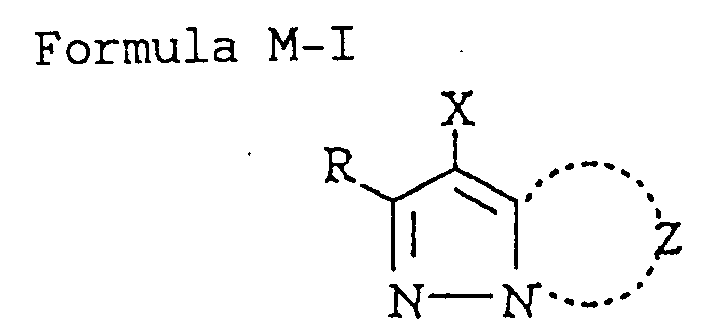
wherein Z represents a group of non-metallic atoms necessary to form a nitrogen-containing heterocyclic ring which may have a substituent; X represents a hydrogen atom or a group capable of being split off upon reaction with an oxidized product of a color developing agent; and R represents a hydrogen atom or a substituent.
wherein Z represents a group of non-metallic atoms necessary to form a nitrogen-containing heterocyclic ring which may have a substituent; X represents a hydrogen atom or a group capable of being split off upon reaction with an oxidized product of a color developing agent; and R represents a hydrogen atom or a substituent.
3. The image forming method of claim 2, wherein said magenta coupler is represented by
the following Formula M-II through M-VII
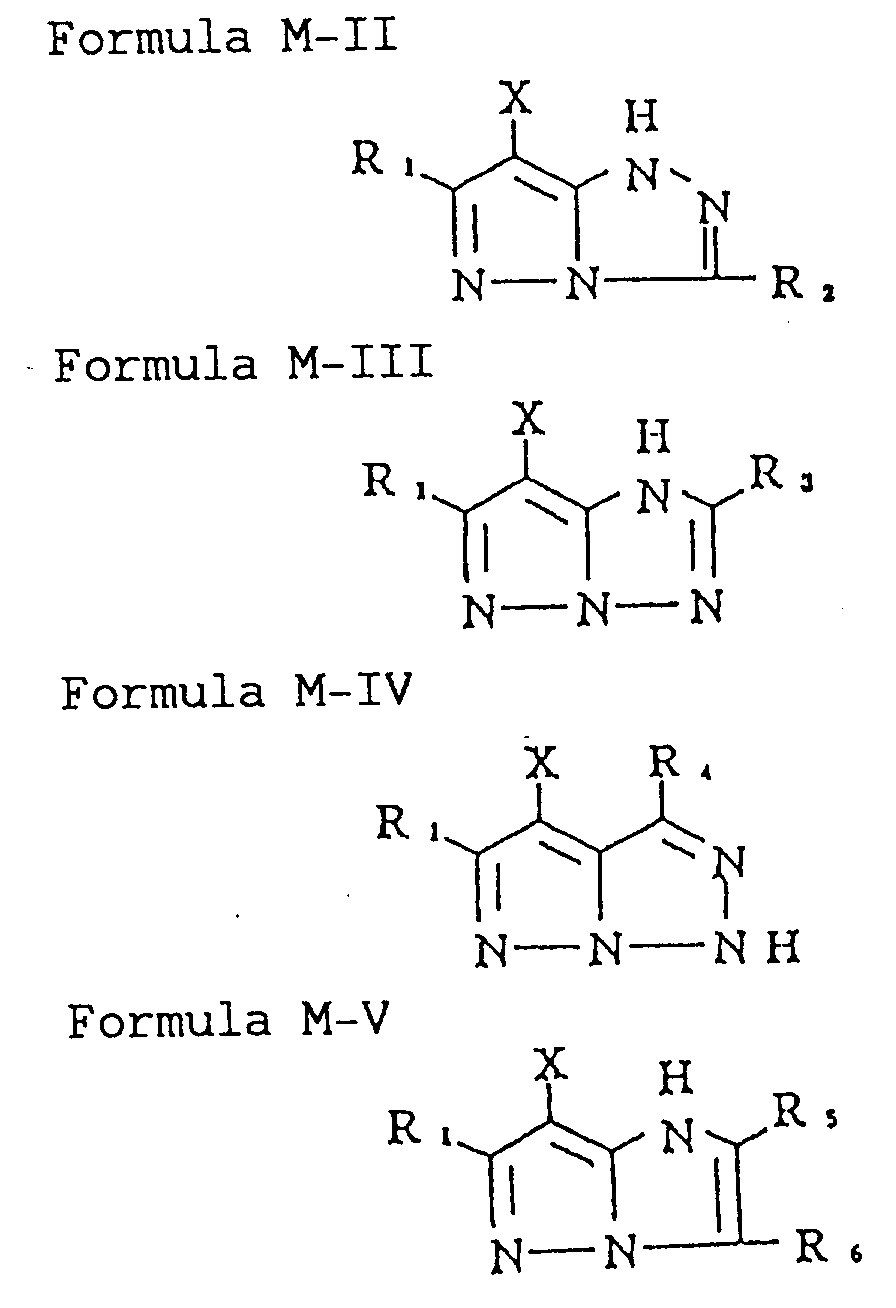
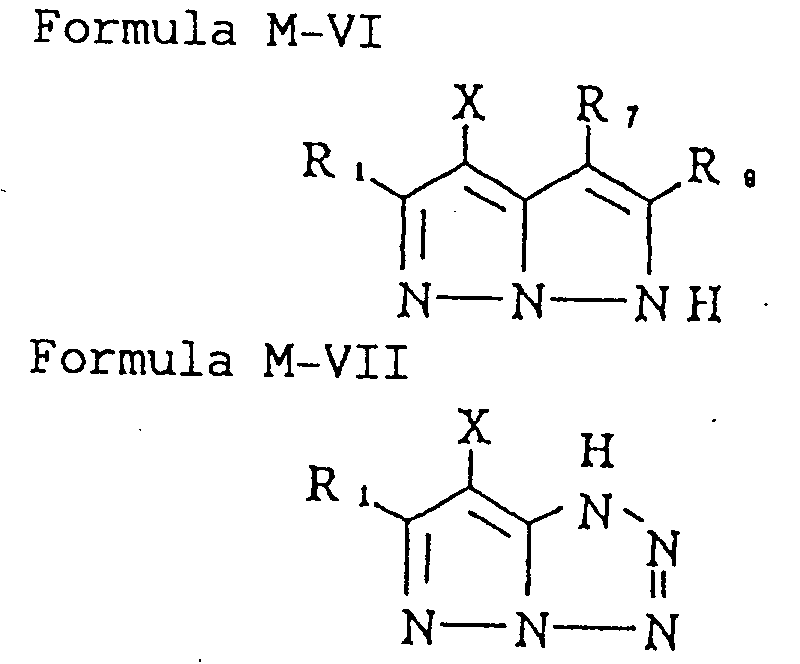
wherein R₁ through R₈ and X have the same definitions as those of R and X of claim 2, respectively.
wherein R₁ through R₈ and X have the same definitions as those of R and X of claim 2, respectively.
4. The image forming method of claim 2 or 3, wherein said magenta coupler is containd
in an amount of 1 x 10⁻³ to 1 mol per mol of silver halide.
5. The image forming method of claim 1, 2, 3 or 4, wherein said high-boiling solvent
(1) is represented by the following Formula II or III,
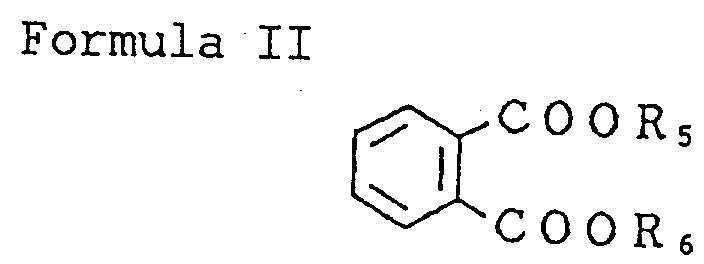
wherein R₅ and R₆ each represent an alkyl group having 1 to 4 carbon atoms,
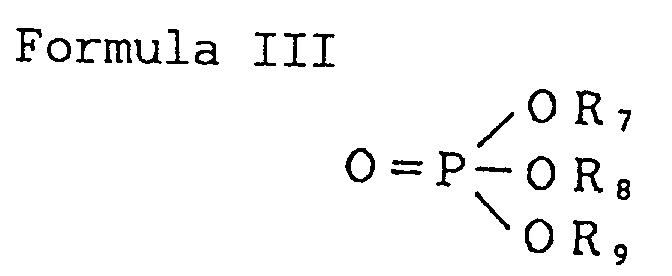
wherein R₇, R₈ and R₉ each represent an alkyl group having 1 to 4 carbon atoms and an aryl group.
wherein R₅ and R₆ each represent an alkyl group having 1 to 4 carbon atoms,
wherein R₇, R₈ and R₉ each represent an alkyl group having 1 to 4 carbon atoms and an aryl group.
6. The image forming method of claims 1 or 2 to 5, wherein said high-boiling solvent
(2) is represented by the following Formula HA or HB
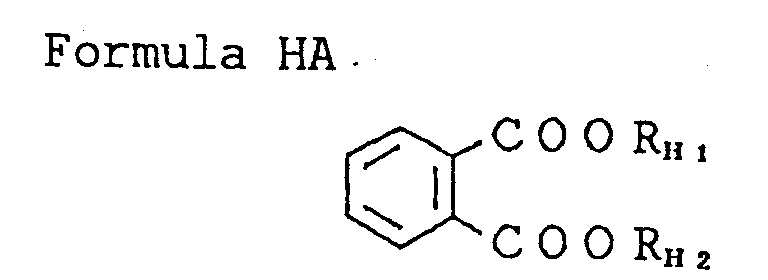
wherein RH1 and RH2 each represent an alkyl group, an alkenyl group or an aryl group.
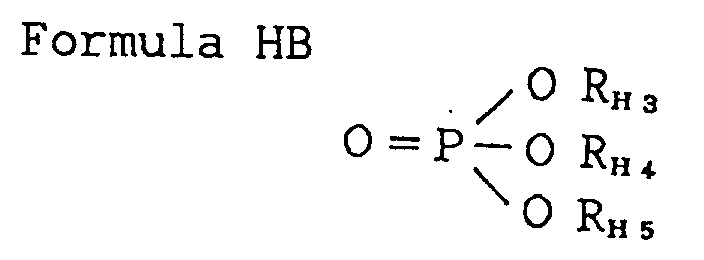
wherein RH3, RH4 and RH5 each represent an alkyl group, an alkenyl group or an aryl group, provided that the total sum of the carbon atoms number of the groups represented by RH3, RH4 and RH6 is 24 to 54.
wherein RH1 and RH2 each represent an alkyl group, an alkenyl group or an aryl group.
wherein RH3, RH4 and RH5 each represent an alkyl group, an alkenyl group or an aryl group, provided that the total sum of the carbon atoms number of the groups represented by RH3, RH4 and RH6 is 24 to 54.
7. The image forming method of claims 1 or 2 to 6, wherein said silver halide grains
contain iridium in an amount of 10⁻⁸ to 10⁻⁴ mol per mol of silver halide.