|
(11) | EP 0 539 039 B1 |

| (12) | EUROPEAN PATENT SPECIFICATION |
|
|
| (54) |
Thermal disproportionation of arylhalosilanes Thermische Disproportionierung von Arylhalosilanen Disproportionnement thermique d'aryl halosilanes |
|
|
|||||||||||||||||||||||||||||||
|
||||||||||||||||||||||||||||||||
| Note: Within nine months from the publication of the mention of the grant of the European patent, any person may give notice to the European Patent Office of opposition to the European patent granted. Notice of opposition shall be filed in a written reasoned statement. It shall not be deemed to have been filed until the opposition fee has been paid. (Art. 99(1) European Patent Convention). |
[0001] The present invention is a process for the thermal disproportionation of arylhalosilanes containing at least one hydrogen bonded to silicon. The process involves heating the arylhalosilanes in liquid phase to a temperature within a range of about 250°C. to 450°C. The present process is particularily useful for the disproportionation of phenyldihalosilanes to diphenyldihalosilanes.
[0002] It is known that disproportionation of monoaryldichlorosilanes occurs in the presence of Friedel-Crafts type catalysts. For example, Wagner, U. S. Patent 2,746,981, issued May 22, 1956, describes a process for the disproportionation of an aryldichlorosilane containing one aryl group and one hydrogen group, by heating the aryldichlorosilane to a temperature of at least 50°C. and a pressure not to exceed atmospheric in the presence of a Friedel-Crafts type catalyst taken from the class consisting of aluminum chloride and boron chloride and recovering a diarydichlorosilane.
[0003] Japanese Patent 62263189, Published November 16, 1987, describes the use of Lewis acid compounds for the disproportionation of aryldihalosilanes under reduced pressure. The catalysts used are described as Lewis acid compounds such as metal halides and aryl metal compounds. Examples of catalysts described in the Japanese patent are aluminum chloride, aluminum bromide, triphenylborane and tolylborane.
[0004] In general, these processes involving the use of catalyst require that the catalyst either be removed or neutralized prior to distillation to separate desired product. If the catalyst is not removed, the desired product can be disproportionated during the distillation process, reducing process yield. In addition, catalysts such as AlCl3 easily sublime coating the processing equipment. Therefore, it is an objective of the present invention to provide a disproportionation process that does not present these problems typically associated with the use of catalysts.
[0005] Gilman et al., J. Org. Chem. 23:326-328 (1958), describes the uncatalyzed disproportionation of Ph2SiH2 at 100°C. to 300°C. at atmospheric pressure.
[0006] Eaborn et al., J. Organometal. Chem. 4:489 (1965), describes a process where phenyltrimethylsilane and trichlorosilane are reacted at 500°C. in the gas phase to give phenyltrichlorosilane and trimethylsilane.
[0007] The present process comprises the thermal disproportionation of arylhalosilanes containing at least one hydrogen atom bonded to silicon by heating to a temperature of 250°C. to 450°C. in the absence of a catalyst. The process avoids the aforementioned problems typically associated with the use of catalysts to disproportionate arylhalosilanes.
[0008] The present invention is a process for the thermal disproportionation of arylhalosilanes containing at least one hydrogen bonded to silicon. The process involves heating the arylhalosilanes in liquid phase to a temperature within a range of about 250°C. to 450°C. The present process is particularily useful for the disproportionation of phenyldihalosilanes to diphenyldihalosilanes.
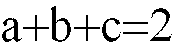
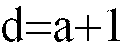
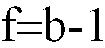
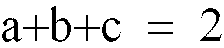
[0009] The present invention is a process for the thermal disproportionation of arylhalosilanes. The process comprises heating arylhalosilanes of formula RcR1aHbSiX4-a-b-c (1), in liquid phase in a standard pressure reactor capable of maintaining sufficient pressure to keep the arylhalosilane in the liquid phase at process temperatures, at a temperature within a range of about 250°C. to 450°C., for a reaction time of 0.1 to 18 hours, to effect disproportionation to product arylhalosilanes of formula RcR1dHfSiX4-c-d-f (2), where each R is independently selected from a group consisting of alkyl radicals of one to 12 carbon atoms, each R1 is independently selected from a group consisting of aryl radicals and substituted aryl radicals, X is a halogen atom selected from a group consisting of bromide, chloride and iodide, a=1 or 2, b=1 or 2, c=0 or 1,
or 3,
and
.
[0010] Arylhalosilanes which can be thermally disproportionated by the present process are described by Formula (1). The arylhalosilane can contain zero or one substituent R. Each R is independently selected from a group consisting of alkyl radicals of one to 12 carbon atoms. The radical R can be, for example, methyl, ethyl, propyl, isopropyl, butyl, tert- butyl and decyl. Preferred is when R is methyl. The arylhalosilane can contain one or two substituents R1, where each R1 is independently selected from a group consisting of aryl and substituted aryl radicals. R1 can be, for example, phenyl, tolyl, xylyl, chlorobenzyl and dichlorobenzyl. Preferred is when R1 is phenyl. The arylhalosilane can contain one or two substituents X, where X is a halogen atom selected from a group consisting of bromide, chloride and iodide. The preferred halogen atom is chloride. The arylhalosilane must contain one or two hydrogen atom bound to the silicon atom in order for the disproportionation reaction of the present process to occur.
[0011] Examples of arylhalosilanes useful in the present process include phenyldichlorosilane, diphenylchlorosilane, phenylchlorosilane, methylphenylchlorosilane, ethylphenylchlorosilane, phenyldibromosilane, phenyldiiodosilane, tolyldichlorosilane and chlorophenyldichlorosilane. The preferred arylhalosilane is selected from the group consisting of phenyldichlorosilane and methylphenylchlorosilane.
[0012] The arylhalosilane is heated in the liquid phase at a temperature of within a range of about 250°C. to 450°C. A preferred temperature for the process is within a range of about 300°C. to 400°C. The present process can be run in any standard pressure reactor capable of maintaining sufficient pressure to keep the arylhalosilane in the liquid phase at process temperatures. A preferred reactor designed is a continuous flow high pressure coil.
[0013] The time required for the disproportion reaction to occur depends on the temperature at which the process is conducted. In general, reaction times of 0.1 minutes to 18 hours are useful. Preferred is a reaction time within a range of about 0.5 to 4 hours.
[0014] Product arylhalosilanes which can be formed by the present process are represented by Formula (2), above, where R, R1 and X are as previously described. In the described process, two arylhalosilane molecules disproportionate effecting an exchange of an aryl or substituted aryl substituent on one arylhalosilane molecule for a hydrogen on the silicon atom of the other arylhalosilane molecule.
[0015] Those skilled in the art will recognize that, as a result of this disproportionation reaction, an arylhalosilane molecule containing an additional aryl or substituted aryl substituent and a second halosilane containing an additional hydrogen will be formed. The inventor believes that this is an equilibrium reaction, where an equilibrium is formed between the arylhalosilane and the product arylhalosilane. Therefore, it may be desirable to separate the equilibrium mixture, by a process such as distillation and recycle the recovered arylhalosilane back to the process.
[0016] Examples of product arylhalosilanes which can be formed by the present process include diphenyldichlorosilane, diphenylchlorosilane, triphenylchlorosilane, methyldiphenylchlorosilane, ethyldiphenylchlorosilane, diphenyldibromosilane, diphenyldiiodosilane, ditolyldichlorosilane and di(chlorophenyl)dichlorosilane. The preferred product arylhalosilane is selected from the group consisting of diphenyldichlorosilane and diphenylmethylchlorosilane.
[0017] To facilitate understanding of the present invention, the following examples are provided. The examples are provided for illustration only and are not intended to limited the claims herein.
Example 1
[0018] The thermal disproportionation of phenyldichlorosilane (PhHSiCl2) at 300°C. was evaluated. The evaluation was carried out in sealed, 8 mm by 25 cm, Pyrex Brand tubes. Prior to sealing and use, the Pyrex tubes were dried at 120°C. for two hours. A 1.0 ml aliquot of PhHSiCl2 was added to each of four dried Pyrex Brand tubes and the tubes sealed. The tubes were then heated in a tube heater maintained at 300°C., for the times given in Table 1. At each indicated time period, a tube was removed from the tube heater and placed in dry ice to cool.
[0019] The content of each tube was evaluated using gas liquid chromatography (GLC) with a thermal conductivity (TC) detector. The results are present in Table 1 as the area percent under the GLC-TC readout curve, for each of the described compounds.
Table 1
| Thermal Disproportionation of PhHSiCl2 at 300°C. | |||||
| Time (h) | GLC-TC Area % | ||||
| PhHSiCl2 | H2SiCl2 | HSiCl3 | PhSiCl3 | Ph2SiCl2 | |
| 1.0 | 86.0 | 2.1 | 0.0 | 4.1 | 7.0 |
| 2.0 | 81.1 | 3.4 | 0.3 | 4.3 | 10.1 |
| 3.0 | 74.2 | 5.3 | 0.3 | 3.8 | 15.8 |
| 18.5 | 47.9 | 7.2 | 3.6 | 6.2 | 30.8 |
Example 2
[0020] The thermal disproportionation of PhHSiCl2 at 350°C. was evaluated by a process similar to that described for Example 1. The results are presented in Table 2.
Table 2
| Thermal Disproportionation of PhHSiCl2 at 350°C. | |||||
| Time (h) | GLC-TC Area % | ||||
| PhHSiCl2 | H2SiCl2 | HSiCl3 | PhSiCl3 | Ph2SiCl2 | |
| 1.0 | 61.6 | 8.0 | 1.O | 4.1 | 23.7 |
| 2.0 | 55.7 | 9.1 | 1.6 | 4.2 | 27.4 |
| 3.0 | 45.2 | 8.4 | 4.3 | 5.6 | 32.3 |
| 16.0 | 27.9 | 4.4 | 7.6 | 17.8 | 34.8 |
Example 3
[0021] The thermal disproportionation of PhHSiCl2 at 400°C. was evaluated by a process similar to that described for Example 1. The results are presented in Table 3.
Table 3
| Thermal Disproportionation of PhHSiCl2 at 400°C. | |||||
| Time (h) | GLC-TC Area % | ||||
| PhHSiCl2 | H2SiCl2 | HSiCl3 | PhSiCl3 | Ph2SiCl2 | |
| 0.5 | 55.3 | 6.3 | 3.3 | 4.7 | 26.4 |
| 1.0 | 37.5 | 5.6 | 7.3 | 10.0 | 32.9 |
| 1.5 | 34.2 | 5.2 | 7.6 | 12.0 | 33.7 |
| 2.0 | 30.2 | 4.5 | 7.8 | 16.1 | 33.5 |
Example 4
[0022] The thermal disproportionation of phenylmethylchlorosilane at 350°C. , for one hour, was evaluated. The process was similar to that described for Example 1, except that the tubes were maintained under a nitrogen blanket after drying. The results were analyzed by GLC using both a flame ionization detector (FID) and a mass spectrometer (MS) as a detector. The results are presented in Table 4 as the area percent under the curve defined by the detector readout.
Table 4
| Thermal Disproportionation of PhMeHSiCl | |||||
| GLC-TC Area % | |||||
| PhMeHSiCl | PhMeSiH2 | PhMeSiCl2 | Ph2MeHSi | Ph2MeSiCl | (PhMeH)2O |
| 19.4 | 1.5 | 2.4 | 1.1 | 36.2 | 29.3 |
Example 5 (Not within the scope or the present invention)
[0023] The thermal disproportionation of PhHSiCl2 at various temperatures, in vapor phased, was evaluated. The process was conducted under a nitrogen gas blanket. Liquid PhHSiCl2 was fed to a heated 2.5 cm by 33 cm quartz column packed with broken quartz. The flow rate of liquid PhHSiCl2 to the heated column is presented in Table 5. The temperatures ranges evaluated by this process are described in Table 5. The eluent from the column was evaluated by GLC-TC and the results are present as area percent under the GLC-TC readout curve.
Table 5
| Thermal Disproportionation of PhHSiCl2 in The Vapor Phase | ||
| Flow Rate (ml/min.) | Temp. Range (°C.) | GLC-TC Area % |
| Ph2SiCl2 | ||
| 0.6 | 380-410 | 0.2 |
| 0.1 | 478-500 | 4.0 |
| 0.1 | 564-620 | 26.8 |
1. A process for thermal disproportionation of arylhalosilanes, the process comprising
heating arylhalosilanes of formula RcR1aHbSiX4-a-b-c, in liquid phase in a standard pressure reactor capable of maintaining sufficient
pressure to keep the arylhalosilane in the liquid phase at process temperatures, at
a temperature within a range of about 250°C. to 450°C., for a reaction time of 0.1
to 18 hours, to effect disproportionation to product arylhalosilanes of formula RcR1dHfSiX4-c-d-f, where each R is independently selected from a group consisting of alkyl radicals
of 1 to 12 carbon atoms, each R1 is independently selected from a group consisting of aryl radicals and substituted
aryl radicals, X is a halogen atom selected from a group consisting of bromide, chloride
and iodide, a=1 or 2, b=1 or 2, c=O or 1,
or 3,
and
.
or 3,
and
.
2. A process according to claim 1 where the process is conducted in a continuous-flow
pressure coil.
1. Verfahren zur thermischen Disproportionierung von Arylhalogensilanen, wobei das Verfahren
umfaßt: Erwärmen von Arylhalogensilanen der Formel RcR1aHbSiX4-a-b-c in flüssiger Phase in einem Standarddruckreaktor, der in der Lage ist, einen ausreichenden
Druck aufrechtzuerhalten, um die Arylhalogensilane in der flüssigen Phase bei den
Verfahrenstemperaturen zu halten, auf eine Temperatur innerhalb eines Bereichs von
ungefähr 250° C bis 450° C für eine Reaktionszeit von 0,1 bis 18 Stunden, um die Disproportionierung
zu Produktarylhalogensilanen der Formel RcR1dHfSiX4-c-d-f zu bewirken, wobei jedes R unabhängig voneinander ausgewählt ist aus einer Gruppe,
bestehend aus Alkylresten mit 1 bis 12 Kohlenstoffatomen, jedes R1 unabhängig voneinander ausgewählt ist aus einer Gruppe, bestehend aus Arylresten
und substituierten Arylresten, X ein Halogenatom, ausgewählt aus einer Gruppe, bestehend
aus Bromid, Chlorid und Iodid, ist, a = 1 oder 2 ist, b = 1 oder 2 ist, c = 0 oder
1 ist,
oder 3 ist,
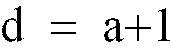
ist und
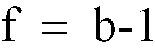
ist.
oder 3 ist,
ist und
ist.
2. Verfahren nach Anspruch 1, wobei das Verfahren in einem spiralförmigen Druckströmungsrohr
durchgeführt wird.
1. Un procédé pour la dismutation thermique d'arylhalogénosilanes, le procédé consistant
à chauffer des arylhalogénosilanes de formule RcR1aHbSiX4-a-b-c, en phase liquide dans un réacteur classique résistant à la pression qui est capable
de tenir une pression suffisante pour maintenir l'arylhalogénosilane en phase liquide
aux températures opératoires, à une température comprise dans un intervalle d'environ
250°C à 450°C, pendant un temps de réaction de 0,1 à 18 heures, afin d'effectuer une
dismutation pour produire des arylhalogénosilanes de formule RcR1dHfSiX4-c-d-f, où chaque R est choisi indépendamment dans la classe formée par les radicaux alkyles
de 1 à 12 atomes de carbone, chaque R1 est choisi indépendamment dans la classe formée par les radicaux aryles et les radicaux
aryles substitués, X est un atome d'halogène choisi dans la classe formée par le brome,
le chlore et l' iode, a = 1 ou 2, b = 1 ou 2, c = 0 ou 1,

ou 3,
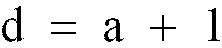
et
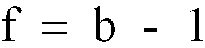
.
ou 3,
et
.
2. Un procédé selon la revendication 1, le procédé étant conduit dans un serpentin résistant
à la pression à écoulement continu.