|
(11) | EP 0 555 149 A1 |

| (12) | EUROPEAN PATENT APPLICATION |
|
|
|
|
|||||||||||||||||||||||||||
| (54) | Use of oxazopyrroloquinolines and pyrroloquinolinequinones for the manufacture of nerve growth factor production accelerators |
| (57) Nerve growth factor production accelerating agents containing oxazopyrroloquinolines,
pyrroquinolinequinones and/or their esters as active ingredient are provided. As the
oxazopyrroloquinolines and their esters exhibit such production accelerating activity,
they are suitably utilized for preventing and treating functional disorders of central
nervous system, particularly, Alzheimer's dementia, cerebral ischemia and spinal trauma,
as well as for functional disorders of peripheral nervous system, particularly, peripheral
nervous system trauma and diabetic neurosis. As the pyrroquinolinequinones and their
esters exhibit strong nerve growth factor production accelerating activity, they are
suitably utilized for preventing and treating functional disorders of peripheral nervous
system, particularly, peripheral nervous system trauma, diabetic neurosis, etc. |
[0001] This invention relates to pharmaceuticals, particularly, those for treating or preventing retrograde neural diseases, such as dementia senilis and Alzheimer's disease, and further to production accelerators for nerve growth factor (hereinafter referred to as NGF) which works for the recovery of neural function in central and peripheral nervous system diseases. Furthermore, it relates to compositions for preventing or treating neuronal degeneration.
[0002] NGF is a nutrition and growth factor necessary for the growth and maintenance of neuronal tissues, which is considered to be essential for maturation and differentiation of sensory and sympathetic nerves in the peripheral nervous system, and magnocellular cholinergic neurons in the central nervous system, as well as for life maintenance. It has, thus, been thought that the increase in the NGF level serves for the treatments of central functional disorders, such as Alzheimer's disease, vascular dementia and spinal trauma, and peripheral functional disorders, such as peripheral nervous trauma and diabetic neuronal disorders.
[0003] However, NGF is a protein with the molecular weight of 13,000 as monomer and 26,000 as dimer, so that it can not pass through the blood-brain barrier. Accordingly, it has ben thought preferable that an agent accelerating the production of NGF in the living body, rather than NGF itself, is administered to promote bio-synthesis of NGF, thereby to improve disorders of the central and peripheral nervous system. Thus, investigations to seek NGF production accelerators have been attempted.
[0004] Cathecholamines, such as epinephrine, norepinephrine and dopamine, have been found as agents having NGF production acceleratirig activity. However, because these compounds are a kind of hormones, their administration to accelerate the NGF synthesis accompanies some side effects due to quantitatively ill-balanced hormones in the living body. Therefore, satisfactory drugs have not yet been discovered from the practical point of view.
[0005] The present inventors have extensively studied on NGF production accelerating agents on account of the reasons as mentioned above, and accomplished the present invention, based upon the findings that oxazopyrroloquinolines, pyrroloquinolinequinones, and their esters exhibit the NGF production accelerating activity. Accordingly, the present invention is to provide an NGF production accelerating agent containing an oxazopyrroloquinoline or pyrroloquinolinequinone and/or their esters as active ingredient.
[0006] The term, oxazopyrroloquinolines (hereinafter referred to as OPQs), used herein means 2,8,10-tricarboxy-1H-oxazo[5,4-h]-pyrrolo[2,3-f]quinolines (OPQ) and 5-substituted compounds thereof. The OPQs and their esters are represented by the following formula:
[wherein R represents a hydrogen atom or an alkyl group having 1-4 carbon atoms, which may be substituted with a hydroxyl, carboxyl, mercapto, carbamoyl, hydroxyphenyl, guanidyl, imidazolyl, or methylmercapto group, and R1, R2 and R3 represent a hydrogen atom or an alkyl, alkenyl or benzyl group which may be same or different.]
[0007] OPQs employed in the present invention can readily be prepared by a process wherein a pyrroloquinolinequinone compound or its salt (hereinafter referred to as PQQ, which will be explained more minutely below) is allowed to react with an a -amino acid, methylamine or the like in the presence of oxygen. The reaction is usually undertaken in a aqueous medium like a microbial culture. The pH of the reaction mixture is usually in the range from 2 to 10, and the reaction temperature is practically in the range from 20 to 100°C. And the reaction time is preferably within 24 hours.
[0008] OPQs in the present invention include OPQ (R=H) obtained from a PQQ and any of glycine, threonine, tryptophan, proline, tyrosine, serine, and monomethylamine [Japanese Patent Publication (Laid-Open) No. 294281/1991]; hydroxymethyl-OPQ obtained from a PQQ and serine [Japanese Patent Publication (Laid-Open) No. 123782/1991]; 1-methylethyl-OPQ obtained from a PQQ and valine [Japanese Patent Publication (Laid-Open) No. 170484/1991]; 1-methylpropyl-OPQ obtained from a PQQ and isoleucine [Japanese Patent Publication (Laid-Open) No. 170485/1991]; 2-methylpropyl-OPQ obtained from a PQQ and leucine [Japanese Patent Publication (Laid-Open) No. 170486/1991; methyl-OPQ obtained from a PQQ and alanine [Japanese Patent Publication (Laid-Open) No. 188081/1991]; 2-carboxyethyl-OPQ obtained from a PQQ and glutamic acid [Japanese Patent Publication (Laid-Open) No. 190882/1991]; 2-carbamoylethyl-OPQ obtained from a PQQ and glutamine [Japanese Patent Publication (Laid-Open) No. 188082/1991]; 2-methylthioethyl-OPQ obtained from a PQQ and methionine [Japanese Patent Publication (Laid-Open) No. 19088/1991]; benzyl-OPQ obtained from a PQQ and phenylalanine [Japanese Patent Publication (Laid-Open) No. 190881/1991]; 4-hydroxyphenylmethyl-OPQ obtained from a PQQ and tyrosine [Japanese Patent publication (Laid-Open) No. 9387/1992]; carboxymethyl-OPQ obtained from a PQQ and aspartic acid; carbamoylmethyl-OPQ obtained from a PQQ and asparagine; 4-imidazolylmethyl-OPQ obtained from a PQQ and histidine; 4-aminobutyl-OPQ obtained from a PQQ and lysine; 3-guanidinopropyl-OPQ obtained from a PQQ and arginine; and mercaptomethyl-OPQ obtained from a PQQ and cysteine. As shown above, Rgroup of each OPQs basically corresponds to the R group of a-amino acid [R-CH(NH2)COOH] which is used for substrate to produce one of OPQs. When the tyrosine is used as a-amino acid, OPQ (R=H) is main product in the case that the pH value of the reaction mixture is low and 4-hydroxyphenylmethyl OPQ (R=CH2C4H40H) is main product in the case that the value is high.
[0009] Salts of these OPQs include alkali metal salts, alkali earth metal salts, ammonium salts and substituted ammonium salts, which are also effective as the NGF production accelerating agents. Typical examples are the salts of sodium, potassium, magnesium, calcium, ammonium, trimethylammonium, triethylammonium, and triethanolammonium.
[0010] Esters of these OPQs include those in which R1, R2 and R3 in the formula mentioned above represent a hydrogen atom, or an alkyl, alkenyl, or benzyl group, which may be same or different, to form mono-, di- or triesters. These OPQs esters can be prepared by a conventional process wherein an OPQs or its salt is allowed to react with an alcohol. The alkyl group may be a methyl or ethyl group, and the alkenyl group may be an allyl group.
[0011] These objective OPQs esters can also be obtained by a conventional process wherein a PQQ or its salt is allowed to react with an alcohol to give the corresponding PQQ ester, and then the ester is allowed to react with an amino acid or methylamine.
[0012] PQQs have been found as a coenzyme for methanol dehydrogenase in methanol-metabolizing bacteria. The term, PQQs, used herein means 4,5-dihydro-4,5-dioxo-1 H-pyrrolo[2,3-f] quinoline-2,7,9-tricarboxylic acid (PQQ) and its salts. The PQQs and their esters are represented by the following formula:
[wherein in R1, R2 and R3 represent a hydrogen or an alkyl, alkenyl, benzyl, propargyl or alkoxycarbonylalkyl group, which may be same or different.]
[0013] PQQs and their esters actively accelerate NGF production, but they can not increase the NGF level in cerebral cortex, though they exhibit the production accelerating activity to sciatic nerve in animal experiments. Therefore, they are suitably used as preventing and therapeutic agents for degenerations of peripheral nervous system, such as peripheral nervous trauma and diabetic neurosis.
[0014] PQQs employed in this invention can be prepared by any of organic chemical syntheses [for example, that mentioned in J.A.C.S. Vol. 103, pages 5599-5600 (1981)] and fermentation methods [for example, that mentioned in Japanese Patent Publication (Laid-Open) No. 218597/1989]. PQQs referred to in this invention means PQQ and its salts, such as sodium and potassium salts of PQQ.
[0015] In the above formula for PQQ esters, Rl, R2 and R3 represent a hydrogen atom, or alkyl, alkenyl, benzyl, propargyl or alkoxycarbomethyl group, which may be same or different, to form mono-, di- or triesters. The alkyl group may be a methyl or ethyl group, and the alkenyl group may be an allyl group.
[0016] PQQ triesters are readily synthesized by reaction of a PQQ with an alcohol [see, for example, Japanese Patent Publications (Laid-Open) Nos. 123781/1991 and 145492/1991]. PQQ monoesters or diesters can be obtained by partial hydrolysis of a PQQ triester under basic condition. PQQ diesters can also be obtained by reaction of a PQQ monoester with an alcohol under suitably selected reaction conditions of the temperature and the period of time.
[0017] OPQs and PQQs and their esters in this invention may be administered orally or non-orally. In case of oral administration, they may be administered in the form of conventional formulations such as capsules, tablets, and powders. In case of non-oral administration, the formulations may be those for injections and parenteral fluids. Sustained release formulations are also effective.
[0018] Dosage and dosing time vary depending on symptoms, ages, body weights, dosing formulations, and others, but they may be administered ordinarily in an amount of 1-500 mg a day for adults in case of oral administration, or 0.1-100 mg at once or in several times in case of non-oral administration.
[0019] In preparing formulations of the active ingredients of this invention, any additives, such as surface active agents, excipients, coloring agents, preservatives, coating auxiliaries, and the like may be suitably used. They may also be used in combination with other pharmaceuticals.
[0020] Hereinafter, examples are illustrated in order to show the NGF production accelerating activity of PQQs, OPQs and their esters, according to the present invention. These examples are, however, never construed to limit the invention.
Example 1
[0021] L-M cells offibroblast cell line originated from a mouse connective tissue were suspended in a 199 culturing medium (manufactured by Flow Laboratories) containing 0.5% peptone (manufactured by Difco Laboratories), and the suspension was placed in a microplate with 96 flat bottom holes to make the cell numbers of 2 x 10⁴- /hole, which was then incubated in a C02 incubator (at 37°C, in an atmosphere of 5% C02 and 95% air) for 3 days. Each incubated liquid was replaced by a 199 medium containing OPQ of each given concentration and 0.5% bovine serum albumin (manufactured by Armour Pharmaceutical) or the same medium containing no OPQ, and incubated in a C02 incubator.
[0022] After 24 hour incubation, the amount of NGF contained in the supernatant fluid was estimated by enzyme immunoassay [see Korsching and Thoenen, Proc. Natl. Acad. Sci., U.S.A., 80, 3513-3516, (1983)]. The results are shown in Table 1.
NGF assay
[0023] A solution of anti-mouse (3-NGF antibody (made by using (3-NGF prepared from mouse submaxillary gland as antigen) was dispensed to each hole on a 96 hole microplate made of polystyrene (MS-3496F, manufactured by Sumitomo Bakelite Co. Ltd.) in an amount of 50µl/hole, and stood for 4 hours at 37°C. The antibody not adsorbed to each hole of the microplate was removed, and each hole was rinsed 3 times with a cleansing liquor. Asolution of standard β-NGF (manufactured by Toyobo Co., Ltd. ) or a sample solution was dispensed to each hole in an amount of 40 µl/hole, and stood for 18 hours at 4°C. Then, the standard β-NGF or sample solution ( incubated supernatant as mentioned above) was removed, and each hole was rinsed 3 times. A solution of anti-β-NGF monoclonal antibody labeled with β-glactosidase (manufactured by Boehringer Mannheim) (40 mU/ml, pH 7.6) was dispensed to each hole in an amount of 50 µl/hole, and stood for 4 hours at 37°C. Then, the enzyme-labeled antibody was removed, and each hole was rinsed 3 times. A solution of 4-methylumbelliferyl-β-galactoside (manufactured by Sigma) was dispensed to each hole in an amount of 100 µg/hole, and allowed to react for 1.5 hours at room temperature, and then a 0.2 M glycine-sodium hydroxide buffer (pH 10.3) was dispensed to each hole in an amount of 100 wl/hole to stop the enzyme reaction. Fluorescent intensity of 4-methyllumbelliferone produced was estimated using a plate reader, and NGF amount was calculated from .the standard curve. The results are shown in Table 1. NGF production accelerating activity of the tested compound was shown as a relative value (%) of the NGF amount produced by cells treated with the testing compound against the NGF amount produced by untreated cells without testing compound.
Example 2
[0024] Procedure of Example 1 was repeated using hydroxymethyl-OPQ, in place of OPQ, to estimate its NGF production accelerating activity. The results are shown in Table 2.
Example 3
[0025] Procedure of Example 1 was repeated using methyl-OPQ , in place of OPQ, to estimate its NGF production accelerating activity. The results are shown in Table 3.
Example 4
[0026] Procedure of Example 1 was repeated using 2-carboxyethyl -OPQ, in place of OPQ, to estimate its NGF production accelerating activity. The results are shown in Table 4.
Example 5
[0027] Procedure of Example 1 was repeated using benzyl-OPQ, in place of OPQ, to estimate its NGF production accelerating activity. The results are shown in Table 5.
Example 6
[0028] Procedure of Example 1 was repeated using 1-methylpropyl -OPQ, in place of OPQ, to estimate its NGF production accelerating activity. The results are shown in Table 6.
Example 7
[0029] Procedure of Example 1 was repeated using 2-methylpropyl -OPQ, in place of OPQ, to estimate its NGF production accelerating activity. The results are shown in Table 7.
Example 8
[0030] Procedure of Example 1 was repeated using 2-methylthioethyl -OPQ, in place of OPQ, to estimate its NGF production accelerating activity. The results are shown in Table 8.
Example 9
[0031] Procedure of Example 1 was repeated using 2-carbamoylethyl-OPQ, in place of OPQ, to estimate its NGF production accelerating activity. The results are shown in Table 9.
Example 10
[0032] Procedure of Example 1 was repeated using 1-methylethyl -OPQ, in place of OPQ, to estimate its NGF production accelerating activity. The results are shown in Table 10.
Example 11
[0033] Procedure of Example 1 was repeated using 4-hydroxyphenylmethyl -OPQ, in place of OPQ, to estimate its NGF product ion accelerating activity. The results are shown in Table 11.
Example 12
[0034] Procedure of Example 1 was repeated using OPQ methyl ester at 2-position (OPQ-2-ME), in place of OPQ, to estimate its NGF production accelerating activity. The results are shown in Table 12.
Example 13
[0035] Procedure of Example 1 was repeated using OPQ methyl ester at 7-position (OPQ-7-ME), in place of OPQ, to estimate its NGF production accelerating activity. The results are shown in Table 13.
Example 14
[0036] Procedure of Example 1 was repeated using OPQ dimethyl ester at 2- and 7-positions (OPQ-2,7-DME), in place of OPQ, to estimate its NGF production accelerating activity. The results are shown in Table 14.
Example 15
[0037] Procedure of Example 1 was repeated using OPQ dimethyl ester at 2- and 9-positions (OPQ-2,9-DME), in place of OPQ, to estimate its NGF production accelerating activity. The results are shown in Table 15.
Example 16
[0038] Procedure of Example 1 was repeated using OPQ trimethyl ester (OPQ-TME), in place of OPQ, to estimate its NGF production accelerating activity. The results are shown in Table 16.
Example 17
[0039] Procedure of Example 1 was repeated using OPQ 2-methyl-7,9-diethyl ester (OPQ-2-ME-7,9-DEE), in place of OPQ, to estimate its NGF production accelerating activity. The results are shown in Table 17.
Example 18
[0040] Procedure of Example 1 was repeated using PQQ-Na2, in place of OPQ, to estimate its NGF production accelerating activity. The results are shown in Table 18.
Example 19
[0041] Procedure of Example 1 was repeated using PQQ dipotassium salt (PQQ·K2), in place of OPQ, to estimate its NGF production accelerating activity. The results are shown in Table 19.
Example 20
[0042] Procedure of Example 1 was repeated using PQQ methyl ester at 2-position (PQQ-2-ME), in place of OPQ, to estimate its NGF production accelerating activity. The results are shown in Table 20.
Example 21
[0043] Procedure of Example 1 was repeated using PQQ methyl ester at 7-position (PQQ-7-ME), in place of OPQ, to estimate its NGF production accelerating activity. The results are shown in Table 21.
Example 22
[0044] Procedure of Example 1 was repeated using PQQ dimethyl ester at 2- and 9-positions (PQQ-2,9-DME), in place of OPQ, to estimate its NGF production accelerating activity. The results are shown in Table 22.
Example 23
[0045] Procedure of Example 1 was repeated using PQQ trimethyl ester (PQQ-TME), in place of OPQ, to estimate its NGF production accelerating activity. The results are shown in Table 23.
Example 24
[0046] Procedure of Example 1 was repeated using PQQ triethyl ester (PQQ-TEE), in place of OPQ, to estimate its NGF production accelerating activity. The results are shown in Table 24.
Example 25
[0047] Procedure of Example 1 was repeated using PQQ triallyl ester (PQQ-TAE), in place of OPQ, to estimate its NGF production accelerating activity. The results are shown in Table 25.
Example 26
[0048] Procedure of Example 1 was repeated using PQQ triethoxycarbonylmethyl ester (PQQ-TECE), in place of OPQ, to estimate its NGF production accelerating activity. The results are shown in Table 26.
Example 27
[0049] Procedure of Example 1 was repeated using PQQ tripropargyl ester (PQQ-TPGE), in place of OPQ, to estimate its NGF production accelerating activity. The results are shown in Table 27.
Example 28
[0050] L-M cells were incubated in similar way as in Example 1 using epinephrine which has been known as an NGF production accelerator, in place of OPQ, to estimate its NGF production accelerating activity. The results are shown in Table 28.
[0051] Epinephrine showed NGF product ion accelerating activity at an amount of not less than 12.5 pg/ml, and exhibited the maximum value (about 500%) at an amount of 100 µg/ml. On the other hand, OPQs and OPQ esters showed almost the same degree of NGF production accelerating activity as shown in Examples 1-17. Also, PQQs and PQQ esters gave high activity values even at a lower concentration, having markedly higher NGF production accelerating activity, when compared with epinephrine.
Example 29
[0053] In three groups (A, B and C) of L-M cell incubation system, Group Acontained no tested compound, Group B contained 100 µg/ml of PQQ-Na2, and Group C contained 275 µg/ml of epinephrine. Amounts of NGF produced during the course of times (3, 6, 9, 12, 24, 30, 36 and 48 hours from the beginning of incubation) were estimated. The results are shown in Table 29.
[0054] As obvious from the table, addition of PQQ- Na2 definitely increases NGF production, as compared with the cases of no addition and adding epinephrine.
Example 30
[0055] SD female rats ( weeks age, 160-190 g) were put under anesthesia by intramuscularly administering 25 mg of ketamine hydrochloride and 0.25 mg of doloperidol. Left femor sciatic nerve was exposed and cut off, and the cut ends were connected with a gap of about 2 mm using a silicone tube (1 mm inner diameter, 6 mm length). The gap between the cut ends was filled with an isotonic sodium chloride solution. After reduction of the operational cut, each 0.5 ml of an aqueous 2% gum arabic solution containing a given concentration of OPQ was administered intraperitoneally. As control, 0.5 ml of an aqueous 2% gum arabic solution containing no OPQ was administered intraperitoneally. As for positive control, the gap of the cut ends of sciatic nerve was filled with an isotonic sodium chloride solution containing 1 mg/ml of NGF, and 0.5 ml of an aqueous 2% gum arabic solution containing no OPQ was administered intraperitoneally. After 4 weeks from the operation, animals were sacrificed by cervical bertebral luxation, and the reproduced sciatic nerves were collected. Cross sectional slices of the reproduced sciatic nerves were prepared and dyed with hemathoxyl in-eosine, and number of the reproduced nerve fibers was counted.
[0056] The results are shown in Table 30. As obvious from the table, number of the reproduced sciatic nerves was much increased by administering OPQ, which was comparable to direct inject ion of NGF.
Example 31
[0057] Procedure of Example 30 was repeated using OPQ trimethyl ester (OPQ-TME), in place of OPQ, to estimate the reproduction accelerating activity of OPQ-TME for sciatic nerve. The results are shown in Table 31.
[0058] As obvious from the table, number of the reproduced sciatic nerves was much increased by administering OPQ-TME, which was comparable to NGF.
Example 32
[0059] Procedure of Example 30 was repeated using PQQ.Na2, in place of OPQ, to estimate the reproduction accelerating activity for sciatic nerve. The results are shown in Table 32.
[0060] As obvious from the table, number of the reproduced sciatic nerves was much increased by administering OPQ.Na2, which was comparable to NGF.
Example 33
[0061] Procedure of Example 30 was repeated using PQQ trimethyl ester (PQQ-TME), in place of OPQ, to estimate its reproduction accelerating activity for sciatic nerve. The results are shown in Table 33.
[0062] As obvious from the table, number of the reproduced sciatic nerves was much increased by administering PQQ-TME, which was comparable to NGF.
Example 34
[0063] OPQ trimethyl ester (OPQ-TME) was suspended in 0. 5 ml of an aqueous 2% gum arabica in a given concentration, and the suspension was administered to Wistar male rats (8-10 weeks age, 200-250 g) intraperitoneally. Administrations were conducted every other days once a day, 4 times in total. After 2 days from the last administration, rats were dissected under anesthesia, and the neocortex, submaxillary grand and hippocampus were collected. The following procedures were conducted under ice-cooling. Each of these tissues was weighed, and mixed with a 20 time-volume of a phosphate buffer (8 g/I of NaCi, 0.2 g/I of KCI, 1.15 g/I of Na2HP04 and 0.2 g/I of KH2P04), and the mixture was homogenized by an ultrasonic crusher, followed by centrifugation at 10,000 x G for 30 minutes to separate the supernatant. Amount of NGF contained in the supernatant was estimated by enzyme immunoassay. The results are shown in Table 34. NGF amount (ng) per 1 mg (wet weight) of neocortex, submaxillary gland or hippocampus was set forth as the average value ± standard error from 3 heads tested simultaneously. As for former two tissues, relative activities were also shown against the case of no OPQ-TME administration.
[0064] As obvious from the table, NGF contents in neocortex and submaxillary gland were increased by administering OPT-TME. Particularly, the degree of increase was high in neocortex.
Example 35
[0065] Procedure of Example 34 was repeated using PQQ trimethyl ester (PQQ-TME), in place of OPQ-TME, to estimate the accelerating activities of PQQ-TME for NGF contents of neocortex, submaxillary gland and hippocampus. The results are shown in Table 35.
[0066] Administration of PQQ-TME did not increase the NGF contents in neocortex, submaxillary gland and hip- pocanpus. Supposedly, PQQ-TME have no NGF production accelerating activity to central nervous system.
[0067] Thus, as OPQs and their esters exhibit NGF production accelerating activity, and, in animal experiments, they increase the NGF content in neocortex, and accelerate reproduction of sciatic nerve, the nerve growth factor production accelerators of the present invention are suitably utilized as preventive and therapeutic agents for functional disorders of central nervous system, particularly, Alzheimer's dementia, cerebral ischemia and spinal trauma, as well as for functional disorders of peripheral nervous system, particularly, peripheral nervous system trauma and diabetic neurosis.
[0068] Further, as PQQs and their esters exhibit strong NGF production accelerating activity, and, in animal experiments, they accelerate the reproduction of sciatic nerve, the present accelerators are suitably utilized as preventing and treating agents for functional disorders of peripheral nervous system, particularly, peripheral nervous system trauma, diabetic neurosis, etc.
1. A nerve growth factor production accelerating composition which comprises an oxazopyrroloquinoline
or its ester represented by the following formula as active ingredient:
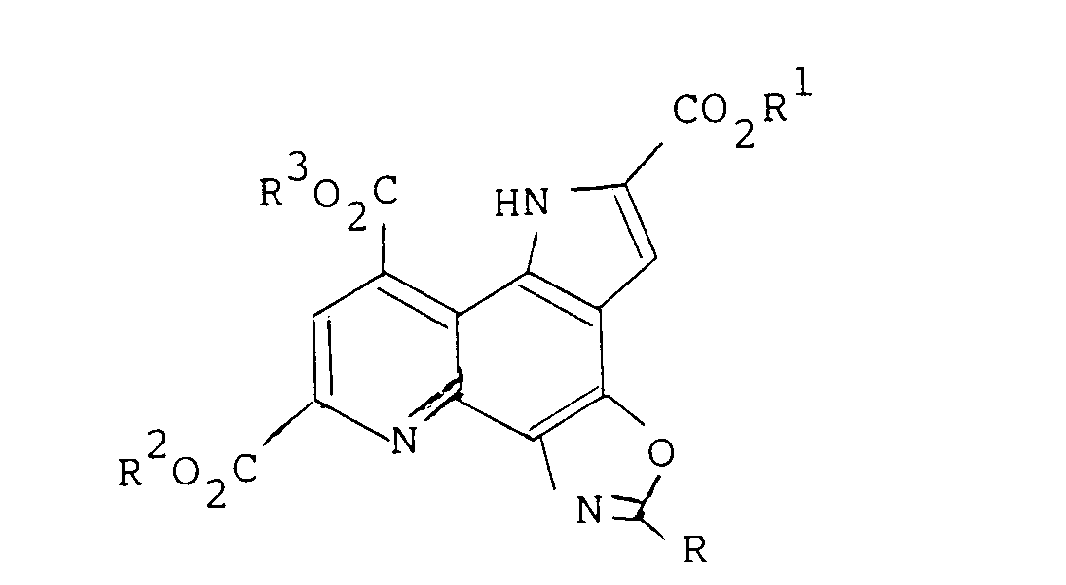
[wherein R represents a hydrogen atom or an alkyl group having 1-4 carbon atoms, which may be substituted with a hydroxyl, carboxyl, mercapto, carbamoyl, hydroxyphenyl, guanidyl, imidazolyl or methylmercapto group, and R1, R2 and R3 represent a hydrogen atom or an alkyl, arkenyl or benzyl group, which may be same or different.]
[wherein R represents a hydrogen atom or an alkyl group having 1-4 carbon atoms, which may be substituted with a hydroxyl, carboxyl, mercapto, carbamoyl, hydroxyphenyl, guanidyl, imidazolyl or methylmercapto group, and R1, R2 and R3 represent a hydrogen atom or an alkyl, arkenyl or benzyl group, which may be same or different.]
2. The use for preventing or treating degeneration of central or peripheral nervous
system of an oxazopyr- roloquinol ine or its ester represented by the following formula:
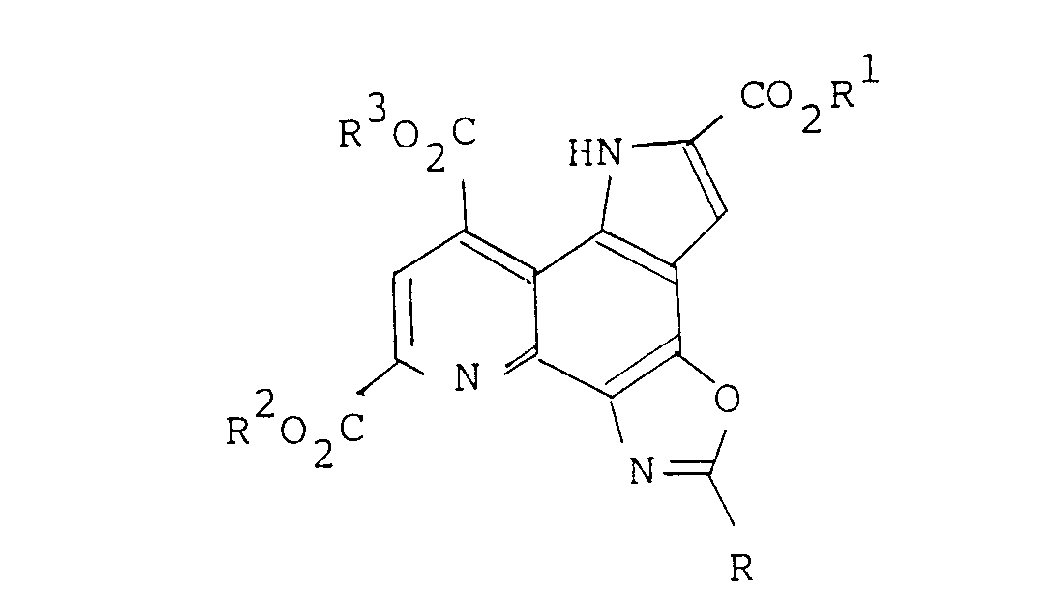
[wherein R represents a hydrogen atom or an alkyl group having 1-4 carbon atoms, which may be substituted with a hydroxyl, carboxyl, metcapto, carbamoyl, hydroxyphenyl, guanidyl, imidazolyl or methylmercapto group, and R1, R2 and R3 represent a hydrogen atom or an alkyl, arkenyl or benzyl group, which may be same or different.]
[wherein R represents a hydrogen atom or an alkyl group having 1-4 carbon atoms, which may be substituted with a hydroxyl, carboxyl, metcapto, carbamoyl, hydroxyphenyl, guanidyl, imidazolyl or methylmercapto group, and R1, R2 and R3 represent a hydrogen atom or an alkyl, arkenyl or benzyl group, which may be same or different.]
3. A nerve growth factor production accelerating composition which comprises a pyrroloquinol
inequinone or its ester represented by the following formula as active ingredient:
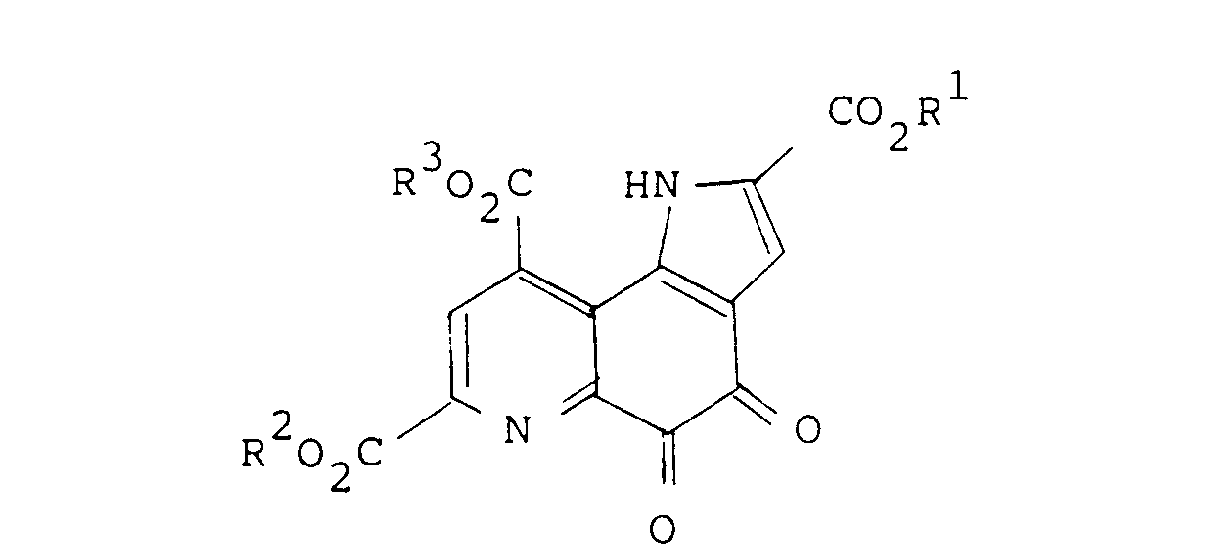
[wherein R1, R2 and R3 represent a hydrogen atom or an alkyl, alkenyl, benzyl, propargyl or alkoxycarbonylalkyl group, which may be same or different.]
[wherein R1, R2 and R3 represent a hydrogen atom or an alkyl, alkenyl, benzyl, propargyl or alkoxycarbonylalkyl group, which may be same or different.]
4. The use for preventing or treating degeneration of peripheral nervous system of
a pyrroloquinol inequinone and/or its ester represented by the following formula:
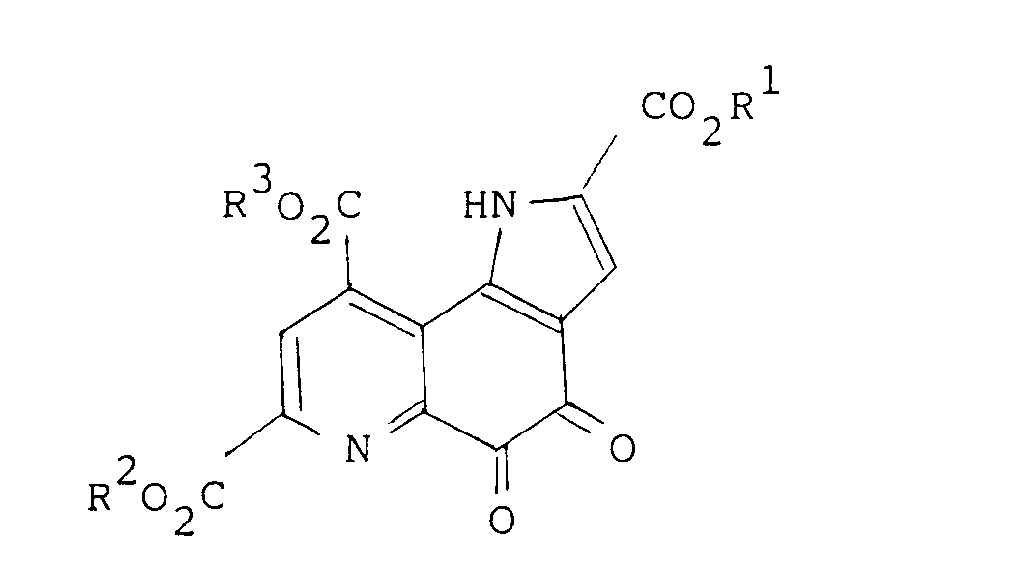
[wherein R1, R2 and R3 represent a hydrogen atom or an alkyl, alkenyl, benzyl, propargyl or alkoxycarbonylalkyl group, which may be same or different.]
[wherein R1, R2 and R3 represent a hydrogen atom or an alkyl, alkenyl, benzyl, propargyl or alkoxycarbonylalkyl group, which may be same or different.]