|
(11) | EP 0 559 395 A1 |

| (12) | EUROPEAN PATENT APPLICATION |
|
|
|
|
|||||||||||||||||||||||||||
| (54) | Silver halide color reversal photographic light-sensitive material |
| (57) A silver halide color reversal photographic light-sensitive material which is improved
in color reproduction and graininess is provided, containing a pyrazolotriazole type
coupler having a dye image stabilizer residue such as a compound represented by the
following formula [IA-3] or [IA-4], and a compound capable of splitting off a developing
inhibitor by a redox reaction,
|
FIELD OF THE INVENTION
[0001] The present invention relates to a silver halide color reversal photographic light-sensitive material, particularly to a silver halide color reversal photographic light-sensitive material improved in color reproducibility and graininess.
BACKGROUND OF THE PRIOR ART
[0002] The demand for higher quality images in silver halide color reversal photographic light-sensitive materials has become strong in recent years. And graininess, sharpness and color reproducibility are regarded to be especially important among various photographic properties required in forming images.
[0003] It is known that dye images are formed on a silver halide color photographic light-sensitive material by color development which comprises reaction between an aromatic primary amine color developing agent and a coupler. However, dyes formed from the usual couplers are not necessarily ideal in absorption spectrum; especially, magenta and cyan dyes have disadvantages in photographic color reproduction, such as a broad absorption spectrum and a secondary absorption in the short wavelength region. Particularly, such a secondary absorption in the short wavelength region is liable to deteriorate saturation. Use of a pyrazoloazole-type magenta coupler is known as a measure to minimize the secondary absorption. However, when used in a color reversal photographic material, this type coupler has disadvantages of deteriorating sensitivity and graininess, though it decreases the secondary absorption. Accordingly, elimination of such defects are desired.
[0004] As a measure to improve the graininess, enhancement of an inter-image effect is known. And as a means to enhance the inter-image effect, addition of a diffusible 4-thiazoline-2-one to a color reversal photographic material is known; use of an N-substituted 4-thiazoline-2-one compound in development of a color photographic material to reduce a silver halide to silver is also known as another means. However, these methods are not necessarily satisfactory; therefore, daylight-type high-speed color reversal photographic materials which are commmercially available are rather poor in color reproduction because of their insufficient inter-image effect, and improvement in that point is strongly demanded.
[0005] Meanwhile, there is an increasing concern for pollution of the natural environment caused by processing solutions for silver halide color light-sensitive materials. Although highly safe raw materials are used in these processing solutions, harmful influences of formalin used in a stabilizing solution, the final processing bath, on the human body is becoming a problem. Formalin is used in the stabilizing bath to inactivate unreacted magenta couplers, which remain in a color light-sensitive material through the processes of development and thereby damage magenta dye images and cause undesired stains. Accordingly, addition of formalin is widely practiced and, use of a stabilizing solution devoid of formalin not only lowers storage stability of magenta dye images but also causes considerable staining.
[0006] It is known that two-equivalent magenta couplers can provide a high storage stability even when used in a stabilizing solution containing no formalin. But it has become apparent that use of two-equivalent magenta couplers alone cannot be practiced because it is liable to form images of poor graininess, particularly in a very large-sized prints or in an enlarged projection of a color reversal image. In addition, there has been a demand for decreasing or eliminating perfectly other raw materials for processing solutions, such as ammonium ions or ammonia, to prevent adverse influences on the natural environment. Though several preventive measures have so far been proposed, these are not necessarily satisfactory. Elimination of such undesired materials is strongly demanded, from the standpoint of pollution control and environmental protection, by which are on the rise in recent years.
SUMMARY OF THE INVENTION
[0007] Accordingly, the object of the invention is to provide a silver halide color reversal photographic light-sensitive material improved in color reproduction and excellent in graininess.
[0008] That is, the object of the invention is attained by a silver halide color reversal photographic light-sensitive material having on a support hydrophilic colloidal layers including a coupler-containing red-sensitive, green-sensitive, blue-sensitive silver halide emulsion layer and a nonlight-sensitive hydrophilic colloidal layer, wherein at least one of couplers is that represented by the following formula [IA], [IB], [IC], [ID], [IE], [IF-1], [IF-2], [IF-3] or [IF-4] and at least one of hydrophilic layers contains a compound represented by the following formula [Q-1]:
[0009] In the formula, A represents a residue given by eliminating R2 or R3 from the pyrazolotriazole magenta coupler represented by the following formula [II] or [III], L represents a divalent linking group, Y represents a nonmetal atomic group necessary to form a five- or six-membered heterocycle in conjunction with a nitrogen atom, R1 represents a substituent, and n is an integer of 0 to 4.
[0010] In the formulas, R2 and R3 represent a hydrogen atom or a substituent, X represents a hydrogen atom or a group capable of splitting off upon reaction with an oxidation product of a color developing agent.
[0011] In a preferred embodiment of the invention, the silver halide color photographic light-sensitive material contains the magenta coupler represented by the foregoing formula [IA] which is a compound represented by the following formula [IA-1] or [IA-2].
[0012] In the formulas, L1 represents a divalent linking group having a principal chain comprising 5 or less atoms, R1 and R2 each represent a substituent, Y represents a nonmetal atomic group necessary to form a five- or six-membered heterocycle in conjunction with a nitrogen atom, n is an integer of 0 to 4, X represents a hydrogen atom or a group capable of splitting off upon reaction with an oxidation product of a color developing agent.
[0013] In a particularly preferred embodiment of the invention, the silver halide color photographic light-sensitive material contains the magenta coupler represented by the foregoing formula [IA] which is a compound represented by the following formula [IA-3] or [IA-4].
[0014] In the formulas, R1' R2 and R4 each represent a substituent, Y represents a nonmetal atomic group necessary to form a five- or six-membered heterocycle in conjunction with a nitrogen atom, n is an integer of 0 to 4, m represents 1 or 2, X represents a hydrogen atom or a group capable of splitting off upon reaction with an oxidation product of a color developing agent.
[0015] In the formula, A represents a residue given by eliminating R2 or R3 from the pyrazolotriazole magenta coupler represented by the foregoing formula [II] or [III], LB represents a divalent linking group or a mere linking moiety, RB represents an alkylene group, Y represents a nonmetal atomic group necessary to form a five- or six-membered heterocycle in conjunction with a nitrogen atom.
[0016] In the formula, A represents a residue given by eliminating R2 or R3 from the pyrazolotriazole magenta coupler represented by the foregoing formula [II] or [III], Lc represents a divalent linking group or a mere linking moiety, E represents
R16 represents a hydrogen atom or a substituent, Y represents a nonmetal atomic group necessary to form a five- or six-membered heterocycle together with a nitrogen atom.
[0017]
In the formula, A represents a residue given by eliminating R2 or R3 from the pyrazolotriazole magenta coupler represented by the foregoing formula [II] or [III], LD represents a divalent linking group or a mere linking moiety, B represents -O-, -S-, -SO2-,
RD represents a hydrogen atom or a substituent, Ra, Rb, Rc, and Rd each represent an alkyl group, YD represents a nonmetal atomic group necessary to form a five- or six-membered ring, provided that one of the atoms in the nonmetal atomic group is linked with B, R16 represents a hydrogen atom or a substituent.
[0018] In the formula, A represents a residue given by eliminating R2 or R3 from the pyrazolotriazole magenta coupler represented by the foregoing formula [II] or [III], LE represents a divalent linking group, RE1 and RE2 represent a hydrogen atom or a substituent, RE1 and RE2 may be the same or different and may couple with each other to form a five- to seven-membered ring, k represents 0 or 1, ZE represents -O-, -S-,
R16 represents a hydrogen atom or a substituent.
[0019] In the formulas, La and Lb each represent a divalent linking group or a mere linking moiety, RF represents an alkylene or arylene group, Y represents a nonmetal atomic group necessary to form a five- or six-membered ring, nf represents 0 or 1, Ra1, Rb1, Rc1, Rd1 and Re1 each represent an hydrogen atom or a substituent, provided that at least one of Ra1 to Rd1 is a hydroxyl, alkoxy or aryloxy group or
Xf represents -SO2-, -S-,
(R16) S each represent a hydrogen atom or a substituent, the two (R16)s may be the same or different, X represents a hydrogen atom or a group capable of splitting off upon reaction with an oxidation product of a color developing agent.
[0020] In the formula, Q represents a redox residue capable of releasing the moiety other than Q upon redox reaction during development, TIME represents a divalent group which adjusts the timing to release X, X represents a developing inhibitor residue, n represents 0 or 1.
DETAILED DESCRIPTION OF THE INVENTION
[0022] In formulas [IA], [II], [III], [IA-1], [IA-2], [IA-3], [IA-4], [IB], [IC], [ID], [IE], [IF-1], [IF-2], [IF-3] and [IF-4], the substituent represented by R1, R2, R3, R4, RD, RE1, RE2, Ra1, Rb1, Rc1, Rd1 or Re1 is not particularly limited but typically includes an alkyl, aryl, anilino, acylamino, sulfonamido, alkylthio, arylthio, alkenyl and cycloalkyl group; other examples thereof include a halogen atom, a cycloalkenyl, alkynyl, heterocyclic, sulfonyl, sulfinyl, phosphonyl, acyl, carbamoyl, sulfamoyl, cyano, alkoxy, aryloxy, heterocycloxy, siloxy, acyloxy, carbamoyloxy, amino, alkylamino, imido, ureido, sulfamoylamino, alkoxycarbonylamino, aryloxycarbonylamino, alkoxycarbonyl, aryloxycarbonyl and heterocyclothio group, a spiro compound residue, and a bridged hydrocarbon residue.
[0023] The alkyl group represented by R1 to Re1 described above is preferably one having 1 to 32 carbon atoms and may be either linear or branched.
[0025] The acylcarbonylamino group represented by R1, R2, R3 or R4 includes an alkylcarbonylamino and arylcarbonylamino group.
[0026] The sulfonamido group represented by R1 to Re1 includes an alkylsulfonylamido and arylsulfonylamido group.
[0027] The alkyl or aryl component in the alkylthio or arylthio group represented by R1 to Re1 includes the alkyl and aryl group represented by R1, R2, R3 or R4.
[0028] The alkenyl group represented by R1 to Re1 is preferably one having 2 to 32 carbon atoms and may be either linear or branched; the cycloalkyl group is preferably one having 3 to 12, especially 5 to 7 carbon atoms.
[0029] The cycloalkenyl group represented by R1 to Re1 is preferably one having 3 to 12, especially 5 to 7 carbon atoms.
[0030] The sulfonyl group represented by R1 to Re1 includes an alkylsulfonyl and arylsulfonyl group. The sulfinyl group includes an alkylsulfinyl and arylsulfinyl group. The phosphonyl group includes an alkylphosphonyl, al- koxyphosphonyl, aryloxyphosphonyl and arylphosphonyl group. The acyl group includes an alkylcarbonyl and aryl carbonyl group. The carbamoyl group includes an alkylcarbamoyl and arylcarbamoyl group. The sulfamoyl group includes an alkylsulfamoyl and arylsulfamoyl group. The acyloxy group includes an alkylcarbonyloxy and arylcarbonyloxy group. The carbamoyloxy group includes an alkylcarbamoyloxy and arylcarbamoyloxy group. The ureido group includes an alkylureido and arylureido group. The sulfamoylamino group includes an alkylsulfamoylamino and arylsulfamoylamino group. The heterocyclic group is preferably a five- to seven-membered one; typical examples thereof are a 2-furyl, 2-thienyl, 2-pyrimidinyl and 2-benzothiazolyl group. The heterocycloxy group is preferably a five- to seven-membered one such as a 3,4,5,6-tetrahydropyranyl-2-oxy or 1-phenyltetrazole-5-oxy group. The heterocyclothio group is preferably a five- to seven-membered one such as a 2-pyridylthio, 2-benzothiazolylthio or2,4-diphenoxy-1,3,5-triazole-6-thio group. The siloxy group includes a trimethylsiloxy, triethylsiloxy and dimethylbutylsiloxy group. The imido group includes a succinimido, 3-hep- tadecylsuccinimido, phthalimido and glutarimido group. The spiro compound residue includes spiro[3.3]heptane-1-yl. The bridged hydrocarbon residue includes bicyclo[2.2.1]heptane-1 yl, tricy- clo[3.3.1.137]decane-1-yl and 7,7-dimethylbicyclo[2.2.1]heptane-1-yl.
[0032] The group represented by Xwhich can split off upon reaction with an oxidation product of a color developing agent includes, for example, a halogen atom (e.g., chlorine, bromine, fluorine), an alkoxy, aryloxy, heterocycloxy, acyloxy, sulfonyloxy, alkoxycarbonyloxy, aryloxycarbonyloxy, alkyloxalyloxy, alkoxyoxalyloxy, alkylthio, arylthio, heterocyclothio, alkyloxythiocarbonylthio, acylamino, sulfonamido, N-atom-bonded nitrogen-containing heterocyclic, alkyloxycarbonylamino, aryloxycarbonylamino and carboxyl group. Among them, a halogen atom, particularly a chlorine atom is preferred.
[0033] When n is 2 or more, plural Rls may be the same or different and may form a condensed ring in conjunction with each other.
[0034] Oligomeric couplers such as dimeric couplers and polymeric couplers each having a pyrazolotriazole ring in R2, R3 or X are also included in the invention.
[0035] In the formulas [IA], [IB], [IC], [ID], and [IE] in which a residue is represented by A, those containing groups formed by eliminating A from the compound represented by each formula are included in the invention.
[0036] Further, in formulas [IA], [IB], [IC], [ID], [IE], [IF-1], [IF-2], [IF-3] and [IF-4], the divalent linking group represented by L, L1, LB, Lc, LD, La or Lb includes divalent groups derived from an alkyl, aryl, anilino, acylamino, sulfonamido, alkylthio, arylthio, alkenyl, cycloalkyl, cycloalkenyl, alkynyl, heterocyclic, sulfonyl, sulfinyl, phosphonyl, acyl, carbamoyl, sulfamoyl, alkoxy, aryloxy, heterocycloxy, acyloxy, carbamoyloxy, amino, alkylamino, imido, ureido, sulfamoylamino, alkyoxycarbonylamino, aryloxycarbonylamino, alkoxycarbonyl, aryloxycarbonyl and heterocyclothio group as well as divalent groups formed by combining these divalent groups; preferred among them are those represented by the following formula [X]:
[0038] R13, R14 and R15 in formula [X] each represent an alkylene group of 1 to 12 carbon atoms or an arylene, alkylenearylene or aralkylene group. The alkylene group may be either linear or branched; examples thereof include a methylene, methylmethylene, dimethylene and decamethylene group. Examples of the arylene group include a phenylene and naphthylene group. Examples of the aralkylene and alkylenearylene group include
[0039] The above alkylene, arylene, alkylenearylene and aralkylene groups respectively represented by R13, R14 and R15 may have a substituent; examples of such a substituent are the same as those represented by the foregoing R1, R2, R3 and R4.
[0040] L1, L2 and L3 in formula [X] each represent
In the formulas, R16 represents a hydrogen atom or an alkyl or aryl group; when two (R16)s are present, these may be the same or different; p, q, r, s, t and u each represent an integer of 0 or 1.
[0041] The principal chain length of the divalent linking group represented by -LB-RB- in formula [IB], -Lc- in formula [IC], -LD- in formula [ID], -LE- in formula [IE] and -La and -Rb- in formulas [IF-1] to [IF-4] is preferably not more than 15, especially not more than 10, in the number of atoms. When a ring structural portion is contained in the linking group, the number of atoms is counted along a route which gives the least number of atoms, such as 3 for the m-phenylene structure and 2 for the o-phenylene structure.
[0042] The alkylene group represented by RB of formula [IB], which may be either a linear one or a branched one, is preferably one having 1 to 32 carbon atoms; examples thereof include a methylene, methylmethylene, dimethylene and decamethylene group.
[0043] The alkylene group represented by RF of formula [IF-1] to [IF-4], which may be either a linear one or a branched one, is preferably one having 1 to 32 carbon atoms; examples thereof include a methylene, methylmethylene, dimethylene and decamethylene group. Examples of the arylene group include a phenylene and naphthylene group.
[0044] The nonmetal atomic group represented by YD of formula [ID] is preferably a saturated hydrocarbon or a saturated hydrocarbon directly linked with an oxygen, nitrogen and/or sulfur atom; the alkyl group represented by Ra, Rb, Rc, Rd or Re of formula [ID] is preferably one having 1 to 32 carbon atoms and may be any of a linear, branched, cyclic, saturated and unsaturated one; examples thereof include a methyl, ethyl, isopropyl, cyclohexyl and vinyl group, particularly preferred is a linear alkyl group.
[0045] The group
in formulas [IF-1] to [IF-4] represents a phenol-type image stabilizer residue and, preferably, it is represented by formula [FA] or [FB].
[0046] In formula [FA], R122, R123, R125 and R126 represents a hydrogen or halogen atom or a hydroxyl, alkyl, alkenyl, aryl, alkoxy or acylamino group. Among them, the alkyl, alkenyl and aryl group are the same as the alkyl, alkenyl and aryl group defined for the foregoing R1; the halogen atom includes fluorine, chlorine and bromine; examples of the alkoxy group include a methoxy, ethoxy and benzyloxy group; the acylamino group is expressed by R127-CONH-, where R127 represents an alkyl group (e.g., methyl, ethyl, n-propyl, n-butyl, n-octyl, tert-octyl, benzyl), an alkenyl group (e.g. allyl, octenyl, oleyl), an aryl group (e.g., phenyl, methoxyphenyl, naphthyl) or a heterocyclic group (e.g., pyridinyl, pyrimidinyl).
[0047] Further, in formula [FA], R124 represents an alkyl, hydroxyl, aryl, alkoxy, alkenyloxy or aryloxy group. Among them, the alkyl and aryl group are the same as the alkyl and aryl group defined for the foregoing R1; the alkoxy group is the same as the alkoxy group defined for the foregoing R122, R123, R125 and R126; further, R122 and R123 may carry out ring closure in conjunction with each other to form a five- or six-membered heterocycle, or R123 and R124 may carry out ring closure to form a five- or six-membered heterocycle; such a heterocycle includes one which has a spiro-linkage formed by bonding with another ring.
[0048] The following are typical examples of the residue represented by formula [FA], but the scope of the invention is not limited to them.
[0049] In formula [FB], R131 represents a secondary or tertiary alkyl group, a secondary or tertiary alkenyl group, a cycloalkyl group or an aryl group; R132 represents a halogen atom or an alkyl, alkenyl, cycloalkyl or aryl group; n2 represents an integer of 0 to 3; when two or more (R131)s or (Rl32)s are present in a moiety represented by this formula, the respective (R131)s or (Rl32)s may be the same or different; YB1 represents SO, SO2 or an alkylene group.
[0050] The secondary or tertiary alkyl group or the secondary or tertiary alkenyl group represented by R131 is one having preferably 3 to 32, especially 4 to 12 carbon atoms; examples thereof include a t-butyl, s-butyl, t-amyl, s-amyl, t-octyl, i-propyl, i-propenyl and 2-hexenyl group. The alkyl group represented by R132 is preferably one having 1 to 32 carbon atoms, and the alkenyl group is preferably one having 2 to 32 carbon atoms; examples thereof include a methyl, ethyl, t-butyl, pentadecyl, 1-hexylnonyl, 2-chlorobutyl, benzyl, 2,4-di-t-amylphenoxymethyl, 1-ethoxytridecyl, allyl and isopropenyl group. The cycloalkyl group represented by R131 or R132 is preferably one having 3 to 12 carbon atoms, and may be either linear or branched; examples thereof include a cyclohexyl, 1-methylcyclohexyl and cyclopentyl group. The aryl group represented by R131 or R132 is preferably a phenyl or naphthyl group; examples thereof include a phenyl, 4-nitrophenyl, 4-t-butylphenyl, 2,4-di-t-amylphenyl, 3-hexadecyloxyphenyl and a-naphthyl group. The alkylene group represented by YB1 is preferably one having 1 to 12 carbon atoms; examples thereof include a methylene, ethylene, propylene, butylidene and hexamethylene group. The groups represented by these R131, R132 or YB1 may have a substituent such as a halogen atom or a nitro, cyano, amido, sulfonamido, alkoxy, aryloxy, alkylthio, arylthio or acyl group.
[0051] Typical examples of the compound represented by formula [FB] are shown below, but the scope of the invention is not limited to them.
[0052] In formulas [IA], [IA-1], [IA-2], [IA-4], [IB], [IC], [IF-1], [IF-2], [IF-3] and [IF-4], it is preferable that the nonmetal atomic group represented by Y have
,
,
,
, where R17 and R18 each represent a hydrogen atom, an alkyl or aryl group and n1 represents an integer of 0 to 2.
[0053] In formulas [IA], [IA-1], [IA-2], [IA-3], [IA-4], [IB], [IC], [IF-1], [IF-2], [IF-3] and [IF-4], the five- or six-membered heterocycle represented by
may be a saturated one or an unsaturated one, but it is preferably a saturated ring. These heterocycles may have a substituent represented by R1, R2, R3 or R4.
[0054] In formulas [IA-1] and [IA-2], L1 represents a divalent linking group having a principal chain length not more than 5 atoms, provided that the number of atoms in the ring structure is counted along a route which gives the least number of atoms, such as 2 for the m-phenylene structure and 3 for the o-phenylene structure, when a ring structure is present in the linking group.
[0055] The linking group is more specifically expressed by the following formula [X1]:
In the formula, A1 to A5 each represent an atom having 2 or more valences or a mere linking group, and each of the atoms may be further substituted with a hydrogen atom or a substituent; *1 represents the position to link with a pyrazolotriazole ring; *2 represents the position to link with a phenoxy group.
[0056] The atoms represented by A1 to A5 each having 2 or more valences are atoms of Group IIA, IIIA, IVA, VA or VIA. These are preferably nonmetal atoms, more desirably carbon, nitrogen, oxygen, silicon, phosphorus, sulfur or selenium, and most preferably carbon, nitrogen, oxygen, sulfur or phosphorus.
[0057] When RF is an arylene group and nf is 1 in formulas [IF-1] to [IF-4], it is preferable that the principal chain of the linking group La be not more than 5 in the number of atoms like L1, the linking group represented by La is also expressed by formula [X1].
[0059] In the formulas, R16, R1, *1, *2, n and n1 are the same as those described above, n1 is 1 or 2, n2 is 1, 2 or 3, n3 is 0, 1, 2 or 3, n4 is an integer of 1 to 4, n5 is an integer of 1 to 5, n6 is 0 or 1, and n7 is 0, 1 or 2.
[0060] The following are typical examples of the magenta coupler of the invention, but the scope of the invention is not limited to them.
[0061] The foregoing pyrazolazole-type magenta coupler according to the invention can be synthesized by referring to Journal of the Chemical Society, Perkin I (1977), 2047-2052, U.S. Pat. No. 3,725,067, Japanese Pat. O.P.I. Pub. Nos. 99437/1984, 42045/1983, 162548/1984, 171956/1984, 33552/1985, 43659/1985, 172982/1985, 190779/1985, 189539/1986, 241754/1986, 163351/1988 and 157031/1987.
[0063] Examples of the redox residue represented by Q include hydroquinone, catechol, p-aminophenol, o-aminophenol, 1,2-naphthalene diol, 1,4-naphthalene diol, 1,6-naphthalene diol, 1,2-diaminonaphthoI, 1,4-diaminonaphthol and 1,6-diaminonaphthol. In these compounds, it is preferred that the amino group is substituted with a sulfonyl group of 1 to 20 carbon atoms or an acyl group of 1 to 20 carbon atoms. Examples of such a sulfonyl group include a substituted or unsubstituted aliphatic sulfonyl group or aromatic sulfonyl group. Examples of such an acyl group include a substituted or unsubstituted aliphatic acyl group or aromatic acyl group.
[0064] The hydroxyl group or the amino group which form the redox residue represented by Q may be protected by a protective group which can lose the protecting capability in the developing process. Suitable protective groups are, for example, acyl, alkoxycarbonyl and carbamoyl groups each having 1 to 20 carbon atoms; the protective groups disclosed in Japanese Pat. O.P.I. Pub. Nos. 197037/1984 and 201057/1984 are also preferred. If possible, these protective groups may be linked with a substituent of Q described below to form a five-, six or seven-membered ring.
[0065] The redox residue represented by Q may be substituted with a suitable substituent as long as it does not lose its redox capability. Suitable substituents are those having not more than 25 carbon atoms; examples thereof include alkyl, aryl, alkylthio, arylthio, alkoxy, aryloxy, amino, amido, sulfonamido, alkoxycarbonylamino, ureido, carbamoyl, alkoxycarbonyl, sulfamoyl, sulfonyl, cyano, acyl and carboxyl groups, and halogen atoms.
[0066] -(TIME)n-X is a group which is released in the form of-(TIME)n-X only when the redox residue represented by Q in formula [Q-I] undergoes a cross-oxidation reaction to form an oxidation product.
[0067] Preferably, TIME is a timing group linked with Q through a nitrogen or oxygen atom and releases X, through one or more steps of reactions, from -(TIME)n-X released in the developing process.
[0068] Examples of TIME include those disclosed, for example, in U.S. Pat. Nos. 4,248,962,4,409,323,4,146,396, British Pat. No. 2,096,783, Japanese Pat. O.P.I. Pub. Nos. 146828/1976,56837/1982. TIME may also be a combination of two or more of those disclosed in the above literature.
[0069] Examples of the developing inhibitor residue represented by X include a compound having a mercapto group linked with a heterocycle or a heterocyclic compound capable of forming an imino group. The compound having a mercapto group linked with a heterocycle includes, for example, substituted or unsubstituted mercapto-azoles and substituted or unsubstituted mercapto-pyrimidines.
[0070] The heterocyclic compound capable of forming an imino group includes, for example, substituted or unsubstituted triazoles, substituted or unsubstituted indazoles, and substituted or unsubstituted benzimidazoles.
[0071] Further, X may be one which splits off from TIME of formula [Q-I] to become a compound having a developing inhibiting capability and, then, changes to a compound having virtually no, or the least, developing inhibiting capability by being inactivated through a chemical reaction with a developer component. Examples of the functional group which undergoes such a chemical reaction include an ester, carbonyl, imino, ammonium and imido group, and a Michael-addition-receiving group.
[0072] The compound represented by the above formula [Q-I] is described in detail in Japanese Pat. O.P.I. Pub. No. 103639/1987.
[0073] The following are typical examples of the compound of the invention represented by formula [Q-I]:
[0074] The compound represented by formula [Q-I] can be synthesized by referring to the description in Japanese Pat. O.P.I. Pub. Nos. 103637/1987 and 66644/1991.
[0075] The compound represented by formula [Q-I] can be incorporated in any hydrophilic colloidal layer of a silver halide photographic light-sensitive material. Preferred addition methods include a method of adding it in the form of an oil-in-water type dispersion obtained by dissolving it in a high boiling organic solvent and dispersing the resulting solution in an aqueous medium, a method of dissolving it in an organic solvent miscible with water such as an alcohol or acetone, and a method of mechanically pulverizing it.
[0076] The addition amount of this compound in a silver halide emulsion layer is preferably 1 x 10⁻⁵ to 1 x 10⁻¹ mol, especially 1 x 10⁻⁴ to 1 x 10⁻² mol per mol of silver halide contained therein. When the compound is added to a nonlight-sensitive hydrophilic colloidal layer, the addition amount is preferably 1.0 x 10⁻⁷ to 1.0 x 10⁻³ mol/m2, especially 1.0 x 10-s to 1.0 x 10⁻⁴ mol/m2.
[0077] The total silver coating weight of the color reversal light-sensitive material of the invention is not more than 7.0 g/m2, preferably 6.5 to 3.0 g/m2 and especially 6.1 to 4.0 g/m2.
[0078] The dry coating thickness of the color reversal light-sensitive material of the invention is preferably not more than 18 µm, especially 16 to 10 µm, measuring from the bottom of the light-sensitive emulsion layer nearest the support to the top of the light-sensitive emulsion layer farthest from the support. And the dry coating thickness of a green-sensitive layer is preferably 0.5 to 4 µm per layer.
[0079] The dry coating thickness mentioned here means a coating thickness measured under conditions of 23°C and 55% relative humidity. The coating thickness of each layer is determined by taking an enlarged photograph of an cross section of a dry sample using a scanning electron microscope and then measuring the thickness of each layer.
[0080] It is preferable in the light-sensitive material of the invention that at least one of the red-sensitive, green-sensitive and blue-sensitive layers be composed of two or more spectrally sensitive emulsion layers to give a two-layer structure comprising a high-speed layer and a low-speed layer or a three-layer structure comprising a high-speed layer, a medium-speed layer and a low-speed layer of the same spectral sensitivity.
[0081] Preferably, a silver halide emulsions used in the silver halide color reversal light-sensitive material of the invention is a monodispersed silver halide emulsion. The monodispersed silver halide emulsion means an emulsion in which the amount of the silver halide contained within the grain size range of average grain size d±20% is not less than 70%, preferably not less than 80% and especially not less than 90% of the total amount of the silver halide.
[0082] The term "average grain size d" used here is defined as grain size d, at which the product of frequency n of grains having grain size d, and d,3, n x d,3, becomes the largest. (Three significant figures, the last figure is rounded to the nearest whole number.)
[0083] "The grain size" used here means a diameter of a circular image converted, in the same area, from a projected image of a grain.
[0084] The grain size can be determined by steps of dispersing grains on a flat sample table without overlapping them, taking an enlarged photograph of them with an electron microscope at magnifications of 10,000 to 50,000, and measuring a grain diameter or a projected area of a grain on the print. (The number of grains for measurement must be 1,000 or more at random.)
[0085] In the invention, particularly preferred monodispersed emulsions are those having a distribution extent of not more than 20%, especially not more than 15%, when the distribution extent is defined by
[0087] In the invention, the method for measuring the grain size conforms to the foregoing measuring method, and the average grain size is given in an arithmetic mean as follows:
[0088] The average grain size of silver halide emulsions used in the invention is desirably 0.1 to 10.0 µm, more desirably 0.2 to 5.0 µm, and most desirably 0.3 to 3.0 µm.
[0089] Preferably, the silver halide emulsion according to the invention comprises silver iodobromide having an average silver iodide content of 0 to 20 mol%, especially 1 to 15 mol%.
[0090] The silver halide emulsion of the invention may contain silver chloride within the limit not harmful to the intended effect of the invention.
[0091] The silver halide emulsion of the invention has a high silver iodide content phase inside of its grains.
[0092] The silver iodide content of such a high silver iodide content phase is desirably 10 to 45 mol%, more desirably 15 to 42 mol%, and most desirably 20 to 40 mol%.
[0093] Silver halide grains having an inner high silver iodide content phase according to the invention have the structure in which the high silver iodide content phase is covered with a low silver iodide content phase having a lower silver iodide content or with a silver chlorobromide phase.
[0094] The average silver iodide content of the low silver iodide content phase, which forms the outermost layer and has a silver iodide content lower than that of the high silver iodide content phase, is preferably not more than 6 mol% and more desirably 0 to 4 mol%. Further, there may be formed an intermediate phase having a medium silver iodide content between the outermost phase and the high silver iodide content phase.
[0095] The silver iodide content of the intermediate phase is preferably 10 to 22 mol% and more desirably 12 to 20 mol%.
[0096] The difference in silver iodide content between the outermost phase and the intermediate phase and that between the intermediate phase and the inner high silver iodide content phase are preferably not less than 6 mol%, respectively; more preferably, these differences are not less than 10 mol%, respectively.
[0097] In the above modes, there may be present other silver halide phases at the center of the inner high silver iodide content phase, between the inner high silver iodide content phase and the central phase, and between the intermediate phase and the outermost phase.
[0098] The volume of the outermost phase is desirably 4 to 70% and more desirably 10 to 50% of the whole grain. The volume of the high silver iodide content phase is desirably 10 to 80%, more desirably 20 to 50% and most desirably 20 to 45% of the whole grain. The volume of the intermediate phase is desirably 5 to 60% and more desirably 20 to 55% of the whole grain.
[0099] These phases may be a single phase having a uniform composition, a group of phases comprising plural phases of uniform compositions which change stepwise, a continuous phase in which the composition changes continuously, or a combination thereof.
[0100] In another mode of the silver halide emulsion of the invention, silver iodide localized inside of a grain virtually does not form a uniform phase, but the silver iodide content changes continuously from the center to the outer portion of a grain. In this case, it is preferable that the silver iodide content monotonously decrease from the point at which the silver iodide content is highest to the outer portion of a grain.
[0101] The silver iodide content at the point where the silver iodide content is highest is desirably 10 to 45 mol%, more desirably 20 to 40 mol%. Further, the silver iodide content of the outermost phase is desirably not more than 6 mol%, more desirably 0 to 4 mol%.
[0102] It is preferable that the silver halide emulsion of the invention satisfy at least one of the following four requirements.
[0103] 1. When the average silver iodide content (Ji) determined by fluorescent X-ray spectroscopy (or X-ray fluo- rometry) is compared with the silver iodide content on the grain surface (J2) determined by X-ray photoelectron spectroscopy, the relation of Ji>J2 is satisfied.
[0104] The grain size used here is a diameter of a circumscribed circle of a grain face which gives the maximum projected area of a grain.
[0106] Prior to measurement by X-ray photoelectron spectroscopy, a sample emulsion has to be pretreated. First, gelatin is decomposed by adding a pronase solution to the emulsion and stirring the mixture for 1 hour at 40°C. After centrifuging emulsion grains and removing the supernatant liquid, the pronase solution is added thereto, and the gelatin is decomposed again under the above conditions. The sample is centrifuged again, followed by decantation. Distilled water is added therein to redisperse the emulsion grains and, after centrifugation, the supernatant liquid is removed. This washing procedure is repeated three times and, then, the emulsion grains are redispersed in ethanol. The resultant dispersion is coated thinly on a mirror-polished silicone wafer to obtain a test sample.
[0107] Measurement by X-ray photoelectron spectroscopy is made, for example, using an ESCA/SAM560 (PHI Corp.) as measuring equipment and Mg-Ka ray as excitation X-ray source under conditions of X-ray source voltage of 15 KV, X-ray source current of 40 mA, and pass energy of 50 eV.
[0108] In order to determine the surface halide composition, Ag3d, Br3d, 13ds/2 electrons are detected. Calculation of the composition ratio is made by the relative sensitivity coefficient method from integrated intensities of respective peaks. The composition ratio is given in atomic percentages by use of 5.10, 0.81, 4.592 as respective relative sensitivity coefficients of Ag3d, Br3d, 13d3/2.
[0109] 2. When the above average silver iodide content (Ji) determined by fluorescent X-ray spectroscopy is compared with the mean value (J3) of measurements of the silver iodide content obtained by X-ray microanalysis of a silver halide crystal grain at a position more than 80% apart in the longitudinal direction from its center, the relation of Ji>J3 is satisfied.
[0111] Silver halide grains are dispersed on an electron microscopic examination grid mounted on an electron microscope equipped with an energy dispersive X-ray analyzer, and the magnification is set so as to allow one crystal grain to appear on the CRT display, while cooling the system with liquid nitrogen. Then, the intensities ofAgLa-ray and I La-ray are integrated for a specified period of time. The silver iodide content can be calculated using the intensity ratio of lLα-ray/AgLα-ray and a calibration curve prepared beforehand.
[0112] 3. At height of maximum peak height 0.13 in a (420) X-ray diffraction signal with a CuKa-ray radiation source, the signal is continuously present over an angle of diffraction of 1.5 degrees or more. Preferably, the signal is continuously present over an angle of diffraction of 1.5 degrees or more at a height of maximum peak height x 0.15. More desirably, the signal is present over an angle of diffraction of 1.8 degrees or more, particularly 2.0 degrees or more. The wording "the signal is present" means that the signal intensity is higher than maximum peak height x 0.13 or 0.15 at the points so specified.
[0113] In a more preferable mode of the silver halide emulsion of the invention, the above (420) X-ray diffraction signal with a CuKa-ray radiation source has 2 or 3 peaks, especially 3 peaks.
[0114] X-ray diffraction is well known as a means to examine the crystal structure of silver halide.
[0115] Among various characteristic X-rays usable as sources of radiation, a CuKa-ray which targets Cu is most widely used.
[0116] Silver iodobromide has the rock salt structure, and its (420) diffraction signal with a CuKa-ray radiation source is observed in 71° to 74° (20). Since the signal has a relatively high intensity and a sharp angle, it gives a high resolution and is best suited for the examination of crystal structure.
[0117] In examining a photographic emulsion by X-ray diffractometry, gelatin has to be removed, and measurement has to be carried out by the powder method using a sample mixed with a standard sample such as a silicone.
[0118] Details of the measuring method can be seen, for example, in "KISO BUNSEKIKAGAKU KOZA 24, X-SEN BUNSEKI (Fundamental Chemical Analysis Course Vol.24, X-ray Analysis)", Kyoritsu Shuppan Co.
[0119] 4. When the average silver iodide content is determined for an individual silver halide grain by the above X-ray microanalysis, the relative standard deviation of the measured values is not more than 20%, preferably not more than 15% and more desirably not more than 12%.
[0120] The term "relative standard deviation" stands for a value obtained by centupling the value given by dividing the standard deviation of silver iodide content measured using, for example, at least 100 emulsion grains by the average silver iodide content at that time.
[0121] The silver halide emulsion of the invention may comprise regular crystal grains such as cube, tetradecahedral or octadecahedral ones, twinned crystal grains such as tabular ones, or a mixture thereof.
[0122] With tabular twinned grains, it is desirable that at least 60% of the total projected grain area be occupied by grains having a ratio of the diameter of a circle equivalent to a grain's projected area to the grain thickness of 1 to 20. This ratio is more desirably 1.2 to 8.0, most desirably 1.5 to 5.0.
[0123] Emulsions comprising monodispersed regular crystal grains can be prepared by referring to the methods disclosed, for example, in Japanese Pat. O.P.I. Pub. Nos. 177535/1984, 138538/1985, 52238/1984, 143331/1985, 35726/1985, 258536/1985 and 14636/1886.
[0124] Emulsions comprising monodispersed twinned crystal grains can be prepared, for example, by referring to the method for growing spherical seed grains disclosed in Japanese Pat. O.P.I. Pub. No. 14636/1986.
[0125] In growing seed grains, it is preferable to add an aqueous silver nitrate solution and an aqueous halide solution by the double-jet method. Further, iodine can be fed to the system in the form of silver iodide. The addition is made at a rate which neither forms new nuclei nor broadens the grain size distribution by the Ost- wald ripening; that is, the addition is made preferably at a rate of 30 to 100% of the addition rate which forms new nuclei.
[0126] Another useful means to grow grains comprises the addition of silver halide fine grains to a system where grains are being grown, so that the fine grains added are dissolved and recrystallized therein. An embodiment of this method can be seen on page 88 of the Collection of Abstracts of Lectures at the 1983 Annual Meeting of the Photographic Society of Japan.
[0127] The conditions for the growth of silver halide grains are preferably a pAg of 5 to 11, a temperature from 40 to 85°C and a pH of 11.5 to 12.
[0128] In forming images with the light-sensitive material of the invention, there may be employed eitherthe usual developing method for color negative films or that for reversal films, but the developing method for reversal films is, in particular, preferred.
[0129] As processing means for reversal films, use of E-6 processing solutions (Trademark of Eastman Kodak Co.) and recipe E-7 of the same company is known. In the processing with them, an exposed silver halide color light-sensitive material is processed in the order of 1st developing bath containing a black-and-white developing agent, washing bath, reversal bath containing a fogging agent, color developing bath having a pH of 11 or more, conditioning bath, bleaching bath to oxidize developed silver, fixing bath to remove silver, washing, and stabilizing bath to stabilize color images with formalin.
[0130] The above processing solutions, which have so far been widely used, contain formalin (formaldehyde) and ammonium ions which pollute the natural environment; further, these require a relatively long processing time and are not satisfactory in stabilizing capability. These problems can be solved by the processing method according to the invention.
[0131] The silver halide color light-sensitive material of the invention exhibits an excellent image preservability, even when color developed and processed in a final processing bath which is substatially free of aldehyde compounds. The phase "substantially free of aldehyde compounds" used here means that the concentration of aldehyde compounds contained in a final processing bath is not more than 1.Ox10-2 mol/I, preferably not more than 2.0 x 10⁻³ mol/I and especially not more than 1.0 x 10⁻³ mol/I.
[0132] In the invention, a formalin precursor is a compound which gradually decomposes to release formalin. As examples of such compounds, hexamethylenetetraamine compounds, N-methylol compounds and hexahydrotriazine compounds are known and described, for example, in Japanese Pat. O.P.I. Pub. Nos. 244036/1988 and 153348/1990.
[0133] In the invention, the formalin precursor may be added in any processing solution if after color developing; but, preferably it is added to a final processing bath, and particularly preferably it is added to a conditioning bath which follows the color developing bath, as is shown in U.S. Pat. No. 4,921,779. The addition amount of the formalin precursor is 0.1 to 20 grams per liter of processing solution.
[0134] A preferable embodiment of the invention are attained by a bleach for silver halide color photographic light-sensitive materials, in which at least 0.10 mol/I of a ferric complex salt of the compound represented by the following formula [A] is contained and the concentration of ammonium ions is not more than 50 mol% of the total cations contained therein, and by a method for processing silver halide color photographic light-sensitive materials using the bleach.
[0135] In the formula, A1 to A4, which may be the same or different, each represent -CH20H, -COOM or-PO3M1M2. M, M1 and M2 each represent a hydrogen, sodium or potassium atom or an ammonium. X represents a substituted or unsubstituted alkylene group having 2 to 5 carbon atoms, and the total number of carbon atoms including those in a branched portion is 3 or more.
[0136] One preferred embodiment of the invention comprises the above bleach whose pH is 2.0 to 5.5 and the method for processing silver halide color light-sensitive materials by use of the bleach. Another preferred embodiment of the invention comprises the above bleach in which the concentration of ammonium ions is not more than 20 mol% of the total cations contained therein and the method for processing silver halide color light-sensitive materials by use of the bleach. Also preferred are the above bleach having an ammonium ion concentration of 0 to 10 mol% of the total cations and the method for processing silver halide color light-sensitive materials by use of said bleach. Further, the replenishing of the bleach within the range of 20 to 400 ml per m2 of light-sensitive material is also preferred, because it markedly produces the intended effect of the invention.
[0137] The bleach containing a ferric complex salt of the compound represented by formula [A] is known in the art by the description in Japanese Pat. O.P.I. Pub. No. 222252/1987, and the liability to bleach fogging is also described in the above patent specification. Further, it is also made known by Japanese Pat. O.P.I. Pub. No. 44352/1990 that bleach fogging can be controlled by making the pH of a bleach 2.5 to 5.5. However, bleach fogging cannot be completely prevented by reducing the pH of a bleach by the method described in the above patent specification; moreover, when such a bleach is used at a low replenishing rate in processing a small amount of light-sensitive materials, the stabilizing capability is heavily deteriorated.
[0138] It have been found that though bleach fogging is made liable to occur by the bleaching power of a ferric complex salt of the compound of formula [A], use of ammonium ions in this ferric complex salt particularly accelerates the deterioration of stabilizing capability.
[0140] In addition to the above chemical structures, these compounds (A-1) to (A-9) can be used in the form of sodium, potassium or ammonium salts. But, bleach fogging is liable to occur when an ammonium salt is present in a large amount; therefore, the amount of an ammonium ferric complex salt is controlled at 50 mol% or less, preferably 20 mol% or less and especially within the range of 0 to 10 mol%.
[0141] Among the above illustrated compounds, preferred ones are compounds (A-1), (A-4), (A-7), (A-8), and compound (A-1) is particularly preferred.
[0142] A ferric complex salt of the compound represented by formula [A] is used in an amount of at least 0.10 mol, preferably 0.15 to 0.6 mol, and especially 0.18 to 0.5 mol per liter of bleach.
[0143] In the bleach of the invention, ferric complex salts of the compound of formula [A] may be jointly used with ferric complex salts of other aminopolycarboxylic acids such as ethylenediaminetetraacetic acid ferric complex salts, diethylenetriaminepentaacetic acid ferric complex salts, 1,2-cyclohexanediaminetetraacetic acid ferric complex salts and glycol-ether-diaminetetraacetic acid ferric complex salts.
[0144] However, in order to produce the intended effect of the invention as much as possible, it is preferable that the bleach of the invention use substantially a ferric complex salt of the compound represented by formula [A] alone. The term "substantially" used here means that a ferric complex salt of the compound of formula [A] amounts to at least 70 mol% of the total ferric complex salts. This ratio is desirably not less than 80 mol%, more desirably not less than 90 mol%, most desirably not less than 95 mol%.
[0145] In the invention, it is preferable that a light-sensitive material processed with the bleach be processed subsequently with a fixer or a bleach-fixer for reasons of rapid processing.
[0146] The fixer used in the invention contains at least 0.1 mol/I of thiocyanates, and its ammonium ion content is controlled at less than 50 mol% of the total cations; accordingly, it has little influence upon natural environment and improves the processing stability of a silver halide color photograpic light-sensitive material as the foregoing bleach does. The content of thiocyanates is not less than 0.1 mol per liter of fixer, but it is preferably not less than 0.3 mol, more preferably 0.5 to 3.0 mol per liter of fixer. Use of thiocyanates helps to enhance fixing capability and to improve preservability of a stabilizing solution which follows.
[0147] Typical examples of the thiocyanates are potassium thiocyanate, sodium thiocyanate and ammonium thiocyanate, but usable ones are not limited to them.
[0148] As with the foregoing bleach, in the fixer of the invention, the content of ammonium ion is not more than 50 mol%, preferably not more than 20 mol% and especially 0 to 10 mol% of the total cations. Cations other than ammonium ions are potassium ion sodium ion.
[0149] In embodying the invention, silver may be recovered from the fixer or bleach-fixer by conventional processes. Useful processes are the electrolytic process (see French Pat. No. 2,299,667), the precipitation process (see Japanese Pat. O.P.I. Pub. No. 73037/1977, German Pat. 2,331,220), the ion exchange process (see Japanese Pat. O.P.I. Pub. No. 17114/1976, German Pat. 2,548,237) and the metal replacement method (see British Pat. 1,353,805).
[0150] For reasons of rapid processing, in-line silver recovery from a tank solution is preferred, but the recovery from a waste overflow can also be practiced.
[0151] The fixer and the bleach-fixer of the invention produce the intended effect of the invention well at a replenishing rate not more than 800 ml per m2 of light-sensitive material. Much better results can be obtained within the range of 20 to 650 ml/m2, particularly 30 to 400 ml/m2.
[0152] Further, the effect of the invention is enhanced when iodides (ammonium iodide, potassium iodide, sodium iodide, lithium iodide) are contained in an amount of 0.1 to 10 g/I in the fixer or the bleach-fixer of the invention .
[0153] Good results can be obtained at an addition amount of 0.3 to 5 g/I, preferably 0.5 to 3 g/I and especially 0.8 to 2 g/l.
[0154] When the bleach containing the compound represented by [A] is used in the embodiment of the invention, bleaching can be performed immediately after color developing by eliminating the processing with a conditioner bath which has been widely employed and, thereby, a high bleaching capability can be obtained.
[0155] In the invention, the total processing time taken by bleaching and a treatment featuring a fixing capability (fixing or bleach-fixing) is not more than 10 minutes, preferably not more than 8 minutes, and especially 3 to 6 minutes. The bleaching time is not more than 6 minutes, preferably not more than 5 minutes, especially 1 to 4 minutes The time taken by the treatment featuring a fixing capability is not more than 4 minutes, preferably not more than 3 minutes, especially 1 to 2 minutes.
[0156] The final processing bath used in the invention, which is virtually devoid of aldehyde compounds, is described. The final processing bath is used to enhance the stability of a silver halide color light-sensitive material after development and is also called a stabilizing bath.
[0157] The invention can also be applied to the case where a color light-sensitive material is processed with a processing solution having a fixing capability, such as a fixer or a bleach-fixer, and then directly subjected to stabilizing with virtually no washing. Any of silver halide color photographic light sensitive materials, such as negative films, photographic printing paper, and reversal films, can be processed with the stabilizer of the invention.
[0158] The stabilizer may contain salts of organic acids (e.g., citric acid, acetic acid, succinic acid, oxalic acid, benzoic acid), pH adjusting agents (e.g., phosphates, borates, hydrochlorides, sulfates), surfactants, fungicides, chelating agents, salts of metals such as Zn, Al, Sn, Ni, Bi. These additives can be added in any combination or in any amount within the limits necessary to maintain the pH of the stabilizer properly, not harmful to the storage stability of color photographic images and not to cause precipitation.
[0159] In order to improve the image preservability, the pH of the stabilizer is adjusted to within the range of 4.0 to 9.0, preferably 5.5 to 9.0, and especially 6.0 to 8.5. For the same purpose, it is also preferable to control the amount of Ca and Mg ions contained therein up to 5 ppm.
[0160] Suitable fungicides used in the stabilizer are hydroxybenzoate compounds, phenolic compounds, thiazole compounds, pyridine compounds, guanidine compounds, carbamate compounds, morpholine compounds, quaternary phosphonium compounds, ammonium compounds, urea compounds, isoxazole compounds, prop- anolamine compounds, sulfamide compounds, amino acid compounds and benzotriazole compounds.
[0161] In view of the preservability of the stabilizer, phenol compounds, thiazole compounds and benzotriazole compounds are particularly preferred.
[0162] Typical examples thereof include 1,2-benzisothiazoIine-3-one, 2-methyl-4-isothiazoline-3-one, 2-octyl-4-isothiazoline3-one, 5-chloro-2-methyl-4-isothiazoline-3-one, sodium o-phenylphenol and benzotriazole. The addition amount of these antiseptics is 0.001 to 20 g, preferably 0.005 to 10 g per liter of stabilizer.
[0163] The stabilizer of the invention may incorporate, in combination, the compounds described above in regard to the stabilization of dye images, such as hexamethylenetetraamine, triazine compounds, N-methylol compounds (dimethylolurea, trimethylolurea, dimethylolguanidine, N-hydroxymethylhydroxyethyl-amine, trime- thylolmelamine) and aliphatic aldehydes. But, in view of pollution control and the preservability of the stabilizer, it is preferable that the stabilizer is substantially free of formalin.
[0164] The replenishing amount of the stabilizer per unit area of a color light-sensitive material being processed is usually 1 to 80 times the amount of processing solution brought from the preceding bath. More specifically, it is preferable that the stabilizing tank be configured to make the content of the preceding bath component (bleach-fixer component or fixer component) in the final stabilizing bath 1/100 or less. For a lower pollution and a higher solution preservability, the content is preferably 1/100 to 1/100000, especially 1/200 to 1/50000.
[0165] The stabilizing tank may be composed of a plurality of tanks; in embodying the invention, the number of such plural tanks is preferably 2 to 6.
[0166] When two or more tanks are installed, adoption of the countercurrent system (a fixer is fed to the rear bath and overflown from the front bath) is preferred in view of the effect of the invention, particularly for lower pollution and higher image preservability.
[0167] The amount of the processing solution brought in varies with the type of light-sensitive materials, conveying speed and conveying system of an automatic processor, and squeezing method for light-sensitive materials; but, in the case of color light-sensitive materials, it is usually 50 ml/m2 to 150 ml/m2. In order to produce the effect of the invention against such a brought-in amount, the replenishing amount is preferably within the range of 50 ml/m2 to 4000 ml/m2, especially within the range of 100 ml/m2 to 1500 ml/m2.
[0169] The invention can be advantageously applied to color reversal films and color reversal paper.
[0170] In general, color reversal films and color reversal paper comprise a blue-sensitive, green-sensitive and red-sensitive silver halide emulsion layer and a nonlight-sensitive hydrophilic colloidal layer, but the invention is not restricted at all by the configuration of these layers.
[0171] Each of the red-sensitive layer, green-sensitive layer and blue-sensitive layer may be divided into a high-speed layer and a low-speed layer. Further, there may also be used the layer configuration in which at least one of the red-sensitive layer, green-sensitive layer and blue-sensitive layer is divided into three layers as seen in Japanese Pat. Exam. Pub. No. 15495/1974, the layer configuration in which light-sensitive emulsion layers are grouped into a high-speed emulsion layer unit and a low-speed emulsion layer unit as seen in Japanese Pat. O.P.I. Pub. No. 49027/1976, and the layer configuration described in German Offenlegungshrift Nos. 2,622,922, 2,622,923, 2,622,924, 2,704,826 and 2,704,797.
[0172] In addition, the layer configuration described in Japanese Pat. O.P.I. Pub. Nos. 177551/1984,177552/1984 and 180555/1984 can also be applied to the invention.
[0173] Silver halide emulsions used in the light-sensitive material of the invention may be chemically sensitized by the usual method and spectrally sensitized to a desired wavelength region by use of a sensitizing dye.
[0174] These silver halide emulsions may contain antifoggants and stabilizers. Gelatin is advantageously used as binder in these emulsions.
[0175] Emulsion layers and other hydrophilic colloidal layers may be hardened and may contain plasticizers and lattices of water insoluble or sparingly soluble synthetic polymers.
[0176] In emulsion layers of the color light-sensitive material, couplers are used. Further, there may be contained colored couplers with correction capability, competitive couplers and compounds which release, upon reaction with an oxidation product of a developing agent, a photographically useful fragment such as a developing accelerator, bleach accelerator, developer, silver halide solvent, toning agent, hardener, foggant, antifoggant, chemical sensitizer, spectral sensitizer or desensitizer.
[0177] Auxiliary layers such as a filter layer, anti-halation layer and anti-irradiation layer may be provided in the light-sensitive material. There may be contained in these layers and/or emulsion layers dyes which are washed out or bleached in the course of development.
[0178] The light-sensitive material may contain formalin scavengers, optical whitening agents, matting agents, lubricants, image stabilizers, surfactants, antistain agents, developing accelerators, developing inhibitors and bleach accelerators.
[0179] As support, polyethylene laminated paper, polyethylene terephthalate film, baryta paper and triacetylcellulose can be used.
[0180] In forming color images using the light-sensitive material of the invention, the usual color reversal process is carried out after exposing.
EXAMPLES
Example-1
[0182] A multilayer color light-sensitive material for comparison, sample 101, was prepared by forming, in order, the layers of the following compositions on a subbed cellulose triacetate film support.
[0183] Coating weights of respective components are given in g/m2, but those of silver halides are shown in silver equivalent.
10th layer (intermediate layer)
[0185] Besides the above composition, gelatin hardeners H-1 and H-2, surfactants, fungicide DI-1 were added to each layer.
[0186] The silver halide emulsions used in the respective light-sensitive layers were prepared by referring to Example 1 of Japanese Pat. O.P.I. Pub. No. 178447/1984. Each of them was a monodispersed emulsion having a distribution extent not more than 20%.
[0187] After desalting and washing, each emulsion was chemically ripened in the presence of sodium thiosulfate, chloroauric acid and ammonium thiocyanate. Then, the sensitizing dyes, 4-hydroxy-6-methyl-1,3,3a,7-tetra- zaindene and 1-phenyl-5-mercaptotetrazole were added thereto.
[0189] Sample Nos.102 to 116 were prepared by changing the couplers in the 8th and 9th layers to equivalent amounts of the couplers shown in Table 1 and by adding the compounds expressed by formula [Q-1] in the 3rd, 4th and 7th layers as shown in Table 1. Each sample was exposed to white light through an optical step wedge for sensitometry and subjected to the following processing (processing-A).
[0191] Each of the processed samples was evaluated for sensitivity, graininess (RMS) and inter-image effect. The results are shown in Table 2.
[0192] The sensitivity is shown by a value relative to the sensitivity of the green-sensitive layer of sample No.101 which is regarded as 100.
[0193] The graininess is obtained by measuring the RMS value and expressed by a value relative to the RMS value of sample No.101 which is regarded as 100.
[0194] The RMS value was measured by scanning the measured portion of a sample with a microdensitometer having a scanning aperture area of 1800 wm2 (slit width 10 µm, slit length 180 µm) and recorded by the value obtained by multiplying the variation in densities of 1000 or more measurements by 1000.
[0195] In the measurement of the inter-image effect, each sample was exposed to red light through a continuous optical wedge and processed under the following conditions. Then, it was exposed to green light and blue light likewise and processed under the following conditions. Further, the sample was exposed to white light (red light+green light+blue light) and processed under the following conditions. In the above procedure, the exposure in the red light exposing and the exposure of red light in the white light exposing were the same. Logarithms of exposures at the point of density 1.0, i.e., LogE (R), LogE (G), LogE (B) and LogE (R, G, B), were then determined for each sample.
[0196] Subsequently, LogE (R, G, B) - LogE (R), LogE (R, G, B) - LogE (G) and LogE (R, G, B) - LogE (B) were calculated to use these values as measures of the inter-image effect to the red-sensitive layer, the inter-image effect to the green-sensitive layer and the inter-image effect to the blue-sensitive layer, respectively. The larger the value is, the larger the inter-image effect.
[0197] As the inter-image effect increases, the saturation or chroma becomes higher and, thereby color reproducibility is improved.
M-3 (comparative coupler)
[0198]
It is confirmed from the results in Table 2 that sample Nos.106 to 116 of the invention are less in sensitivity deterioration and have better graininesses (RMS) and higher inter-image effects. In an actual photographing test, they also exhibited high saturations and excellent color reproductions as compared with comparative sample Nos.101 to 105.
Example 2
[0199] The foregoing processing Awas varied to the following processings B to J, and exposed sample Nos.101 to 116 were processed thereby.
[0201] Processing C: The same as processing B, except that 0.3 g/I of hexamethylenetetraamine was added to the conditioner of processing B.
[0202] Processing D: The same as processing A, except that the bleach composition in processing A was changed to the following.
[0203]
Processing E: The same as processing D, except that the fixer composition in processing D was changed to the following.
[0204] Processing F: The same as processing E, except that the conditioner bath was removed from processing E. Processing G: The same as processing E, except that formalin was removed from the stabilizer and 3.0 g/I of hexamethylenetetraamine was added to the conditioner.
[0205] Processing H: The same as processing F, except that formalin was removed from the stabilizer. Processing I: The same as processing H, except that the washing treatment after fixing was removed. Processing J: The same as processing I, except that the bleaching time was changed from 6 min to 4 min, and the fixing time from 4 min to 2 min.
[0206] The evaluation results showed that the light-sensitive material of the invention maintained high photographic properties to give excellent results even with the above samples, which were adjusted to low pollution or rapid processing capability.
Example 3
[0207] Sample Nos.301 to 309 were prepared in the same manner as sample 116 of Example 1, except that coupler MA-1 used in the 8th and 9th layers was replaced with equivalent amounts of compounds MA-20, MA-42, MB-20, MC-2, MC-5, MD-9, ME-33, MF-2 and MF-19. In the evaluation conducted as Examples 1 and 2, the intended effect of the invention was clearly observed.
Example 4
1. A silver halide color reversal photographic light-sensitive material comprising
a support having thereon photographic component layers comprising a red-sensitive
silver halide emulsion layer, a green-sensitive silver halide emulsion layer, a blue-sensitive
silver halide emulsion layer and a nonlight-sensitive hydrophilic colloidal layer,
wherein at least one of said silver halide emulsion layers contains a magenta coupler
represented by the following formula [IA], [IB], [IC], [ID], [IE], [IF-1], [IF-2],
[IF-3] or [IF-4]; and at least one of said component layers contains a compound represented
by the following formula [Q-1]:
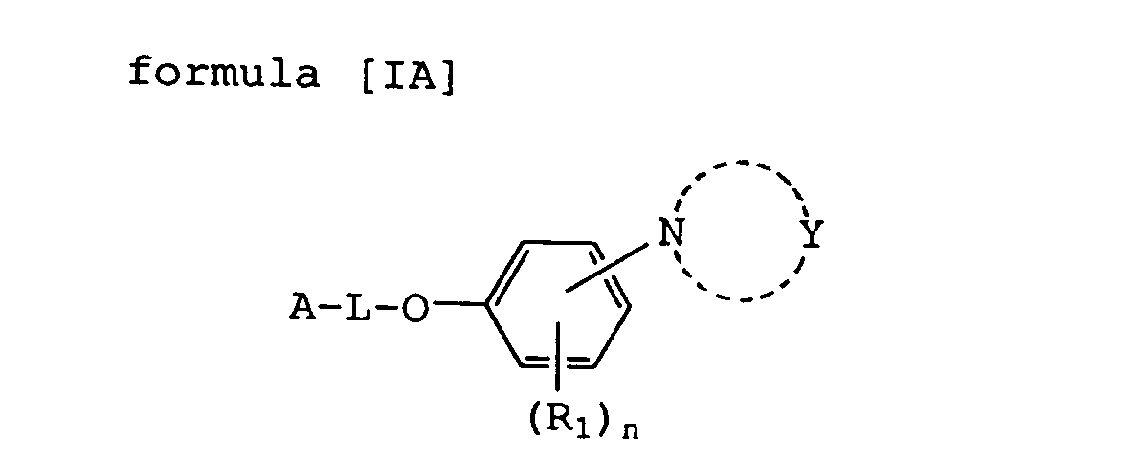
wherein A represents a residue given by eliminating R2 or R3 from a pyrazolotriazole magenta coupler represented by the following formula [II] or [III], L represents a divalent linking group, Y represents a nonmetal atomic group necessary to form a five- or six-membered nitrogen-containing heterocyclic ring, R1 represents a substituent, and n is an integer of 0 to 4,
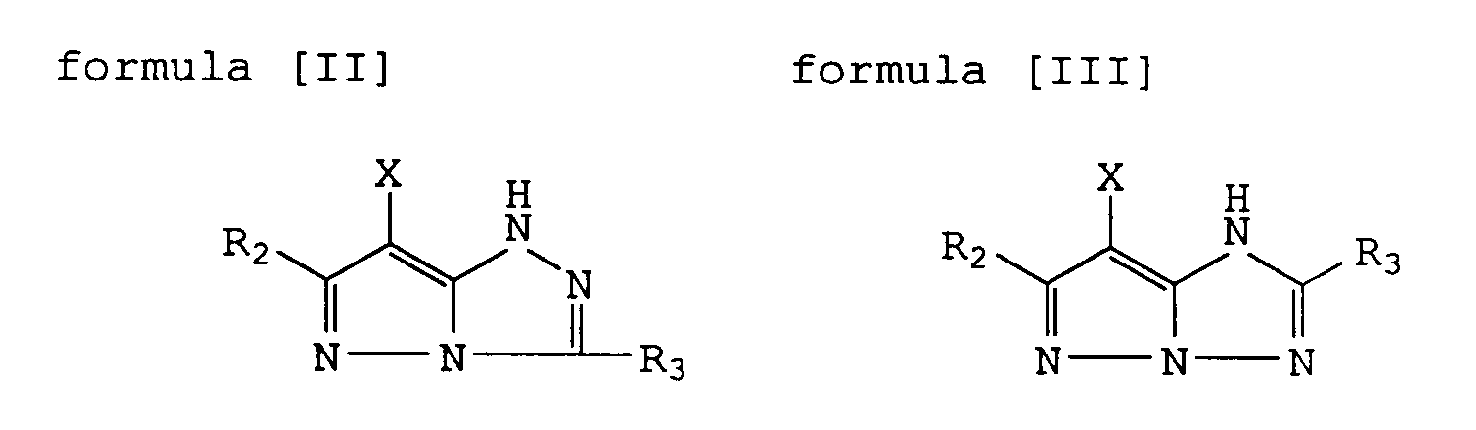
wherein R2 and R3 each represent a hydrogen atom or a substituent, X represents a hydrogen atom or a group capable of splitting off upon reaction with an oxidation product of a color developing agent;

wherein A is the same as that defined in the foregoing formula [IA], LB represents a divalent linking group, RB represents an alkylene group, Y represents a nonmetal atomic group necessary to form a five- or six-membered nitrogen-containing heterocyclic ring and nB is 0 or 1;
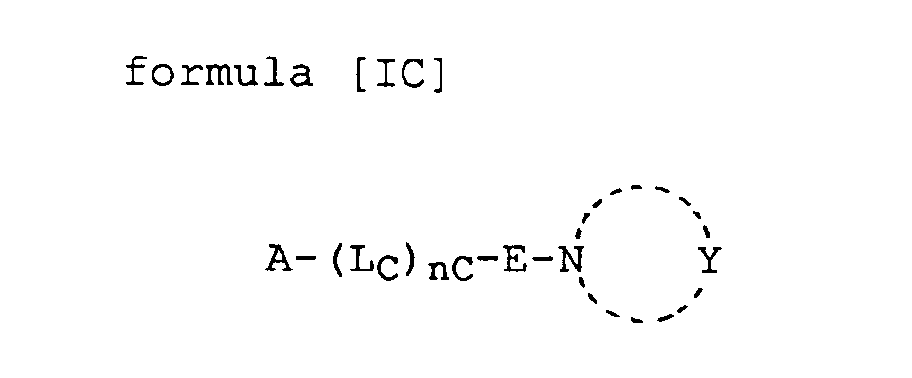
wherein A is the same as that defined in formula [IA], Lc represents a divalent linking group, E represents

in which R16 represents a hydrogen atom or a substituent, Y represents a nonmetal atomic group necessary to form a five- or six-membered nitrogen-containing heterocyclic ring and nC is 0 or 1;
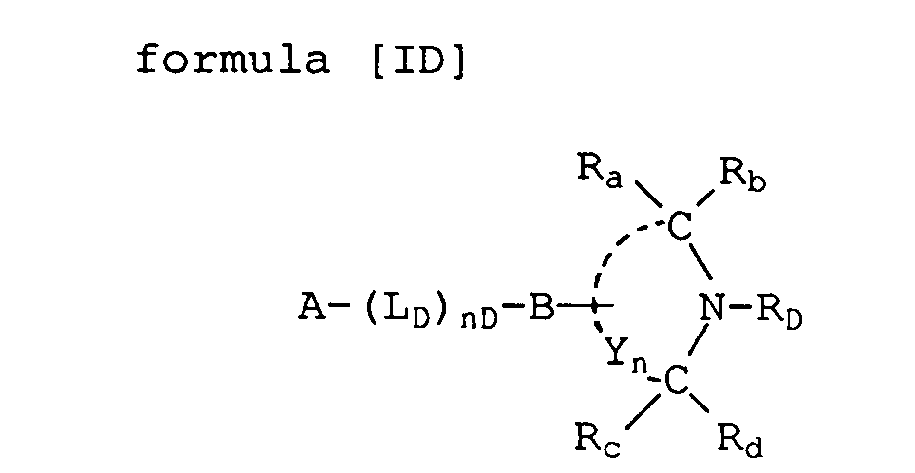
wherein A is the same as that defined in formula [IA], LD represents a divalent linking group, B represents -O-, -S-, -SO2-,
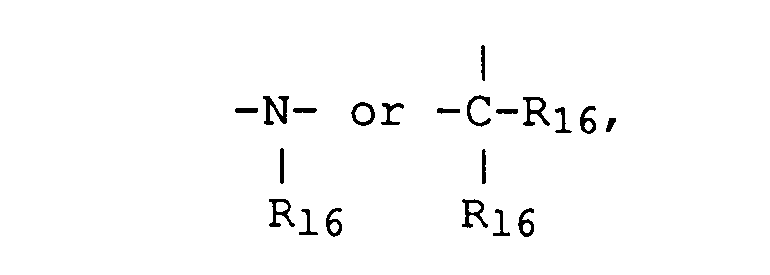
in which R16 represents a hydrogen atom or a substituent, RD represents a hydrogen atom or a substituent, Ra Rb, Rc and Rd each represent an alkyl group, YD represents a nonmetal atomic group necessary to form a five- or six-membered heterocyclic ring and nD is 0 or 1;

wherein A is the same as that defined in formula [IA], LE represents a divalent linking group, RE1 and RE2 each represent a hydrogen atom or a substituent, which may couple with each other to form a five- or six-membered ring, k is 0 or 1 and ZE represents -O-, -S-,
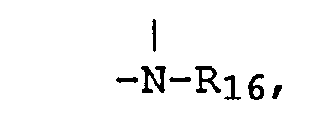
in which R16 represents a hydrogen atom or a substituent;
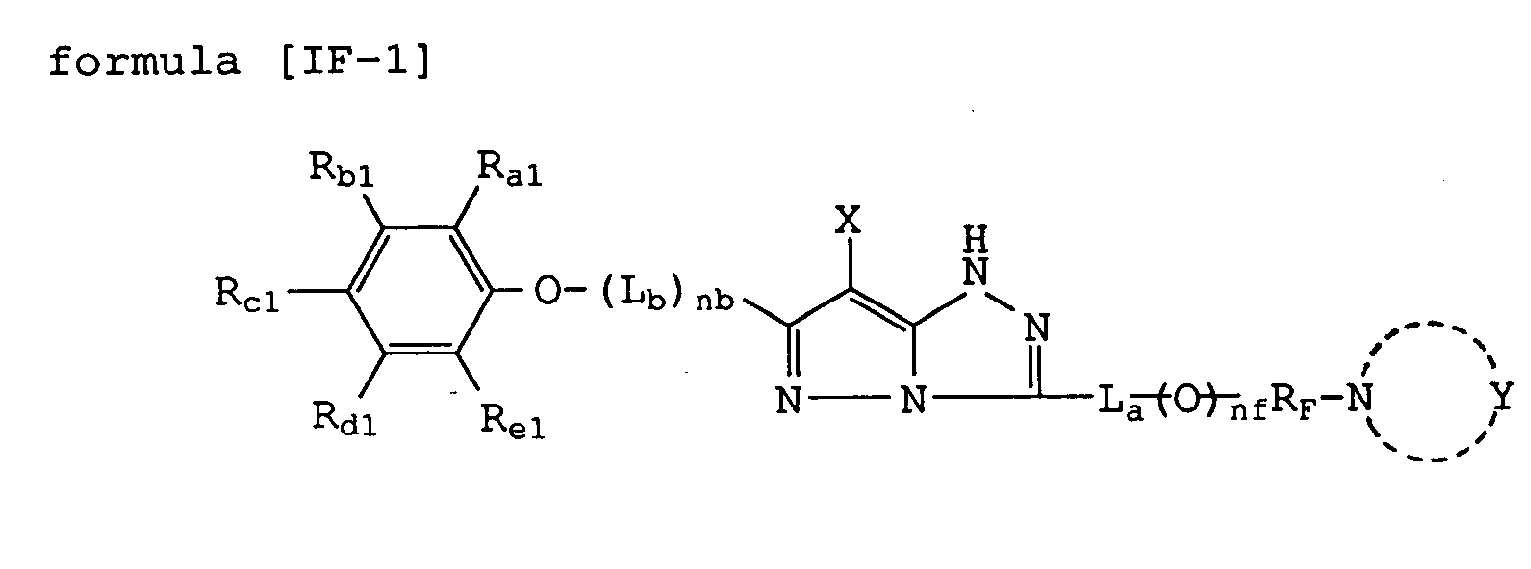
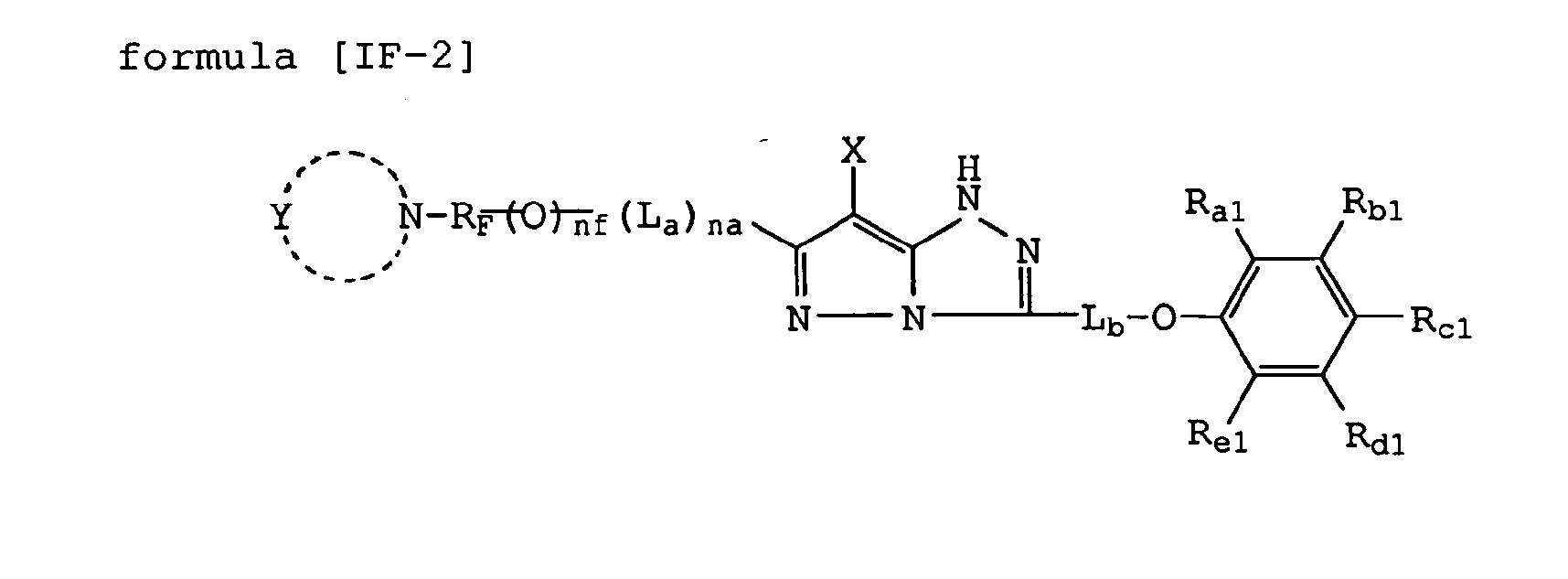
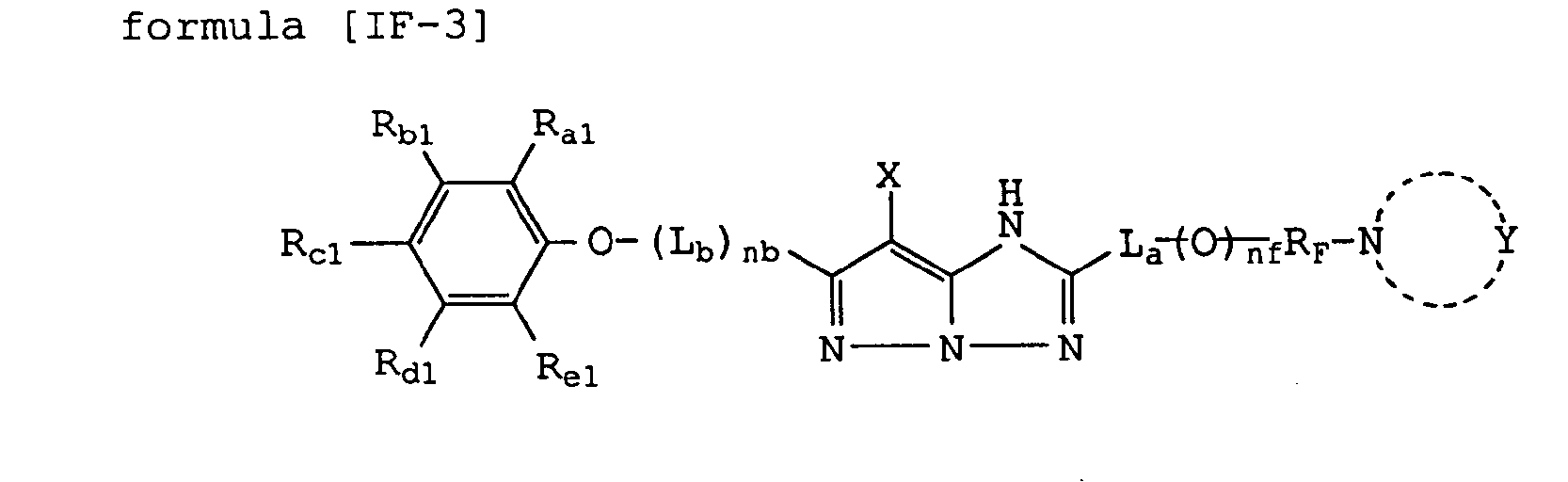
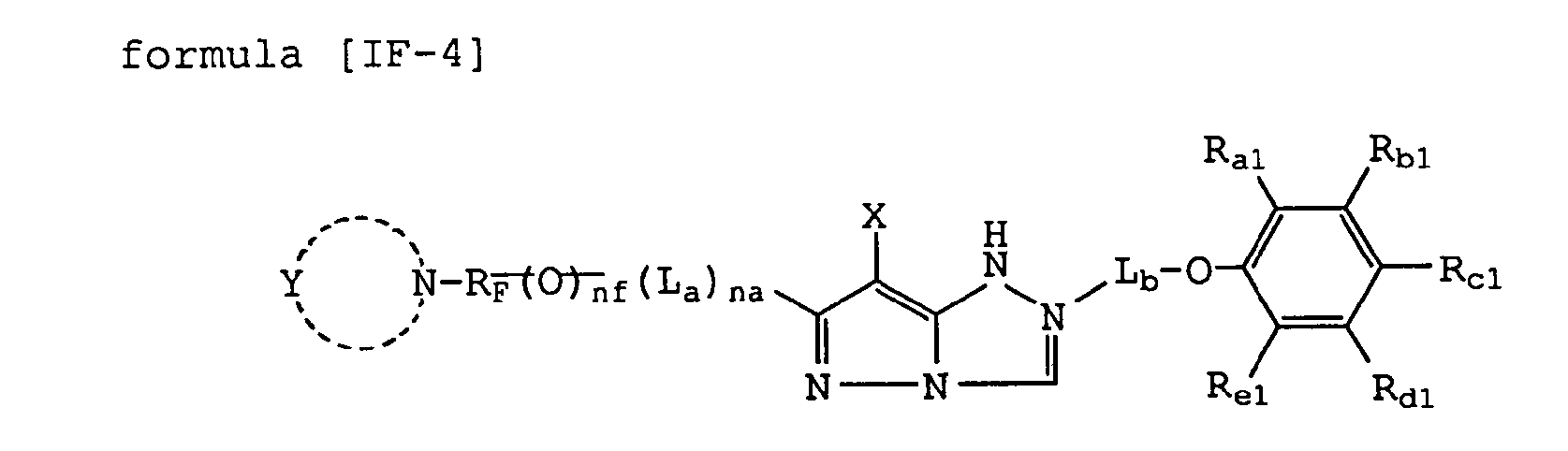
wherein La and Lb each represent a divalent linking group, RF represents an alkylene or arylene group, Y represents a nonmetal atomic group necessary to form a five- or six-membered ring, na, nb and nf each are 0 or 1, Ra1, Rb1, Rc1, Rd1 and Re1 each represents a hydrogen atom or a substituent, provided that at least one of Ra1 through Rd1 is a hydroxyl, alkoxy or aryloxy group or
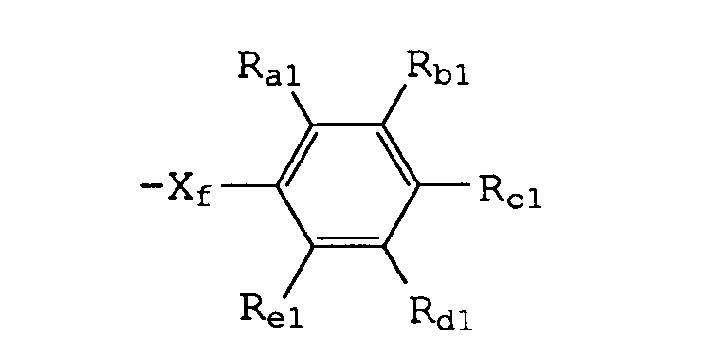
in which Xf represents -SO2-, -S-,
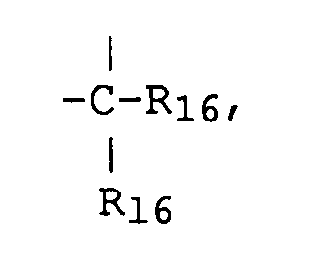
R16 represents a hydrogen atom or a substituent and X represents a hydrogen atom or a group capable of splitting off upon reaction with an oxidation product of a color developing agent;

wherein Q represents a redox residue capable of releasing a moiety other than Q upon redox reaction during development, TIME represents a divalent group, X represents a developing inhibitor residue and n is 0 or 1.
wherein A represents a residue given by eliminating R2 or R3 from a pyrazolotriazole magenta coupler represented by the following formula [II] or [III], L represents a divalent linking group, Y represents a nonmetal atomic group necessary to form a five- or six-membered nitrogen-containing heterocyclic ring, R1 represents a substituent, and n is an integer of 0 to 4,
wherein R2 and R3 each represent a hydrogen atom or a substituent, X represents a hydrogen atom or a group capable of splitting off upon reaction with an oxidation product of a color developing agent;
wherein A is the same as that defined in the foregoing formula [IA], LB represents a divalent linking group, RB represents an alkylene group, Y represents a nonmetal atomic group necessary to form a five- or six-membered nitrogen-containing heterocyclic ring and nB is 0 or 1;
wherein A is the same as that defined in formula [IA], Lc represents a divalent linking group, E represents
in which R16 represents a hydrogen atom or a substituent, Y represents a nonmetal atomic group necessary to form a five- or six-membered nitrogen-containing heterocyclic ring and nC is 0 or 1;
wherein A is the same as that defined in formula [IA], LD represents a divalent linking group, B represents -O-, -S-, -SO2-,
in which R16 represents a hydrogen atom or a substituent, RD represents a hydrogen atom or a substituent, Ra Rb, Rc and Rd each represent an alkyl group, YD represents a nonmetal atomic group necessary to form a five- or six-membered heterocyclic ring and nD is 0 or 1;
wherein A is the same as that defined in formula [IA], LE represents a divalent linking group, RE1 and RE2 each represent a hydrogen atom or a substituent, which may couple with each other to form a five- or six-membered ring, k is 0 or 1 and ZE represents -O-, -S-,
in which R16 represents a hydrogen atom or a substituent;
wherein La and Lb each represent a divalent linking group, RF represents an alkylene or arylene group, Y represents a nonmetal atomic group necessary to form a five- or six-membered ring, na, nb and nf each are 0 or 1, Ra1, Rb1, Rc1, Rd1 and Re1 each represents a hydrogen atom or a substituent, provided that at least one of Ra1 through Rd1 is a hydroxyl, alkoxy or aryloxy group or
in which Xf represents -SO2-, -S-,
R16 represents a hydrogen atom or a substituent and X represents a hydrogen atom or a group capable of splitting off upon reaction with an oxidation product of a color developing agent;
wherein Q represents a redox residue capable of releasing a moiety other than Q upon redox reaction during development, TIME represents a divalent group, X represents a developing inhibitor residue and n is 0 or 1.
2. The photographic material of claim 1, wherein said coupler represented by formula
[IA] is a compound represented by the following formula [IA-1] or [IA-2],
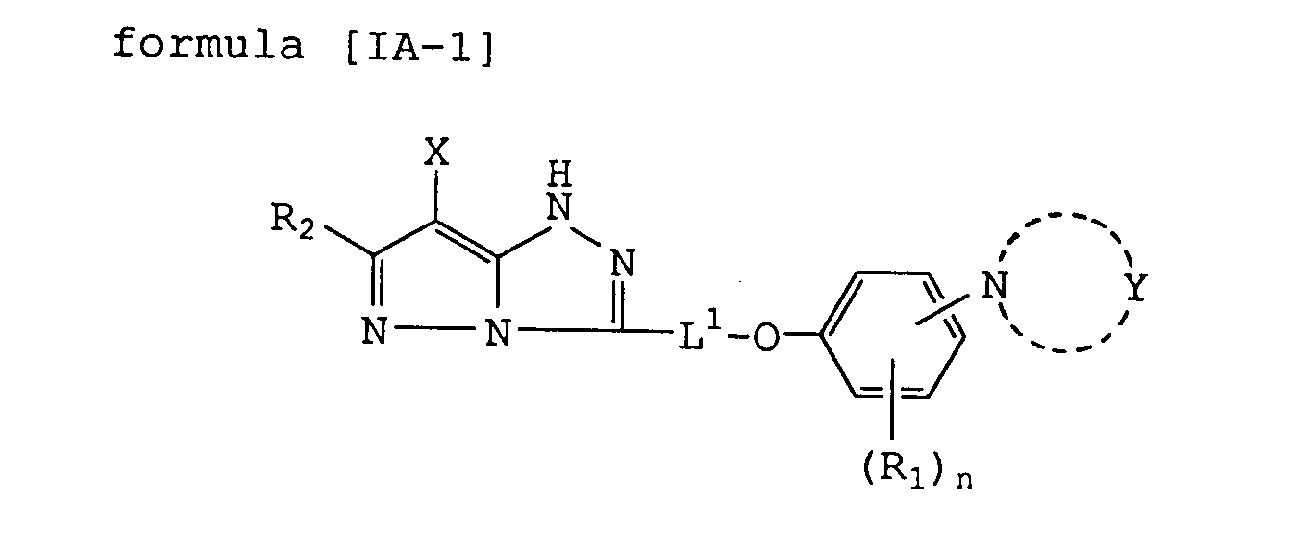
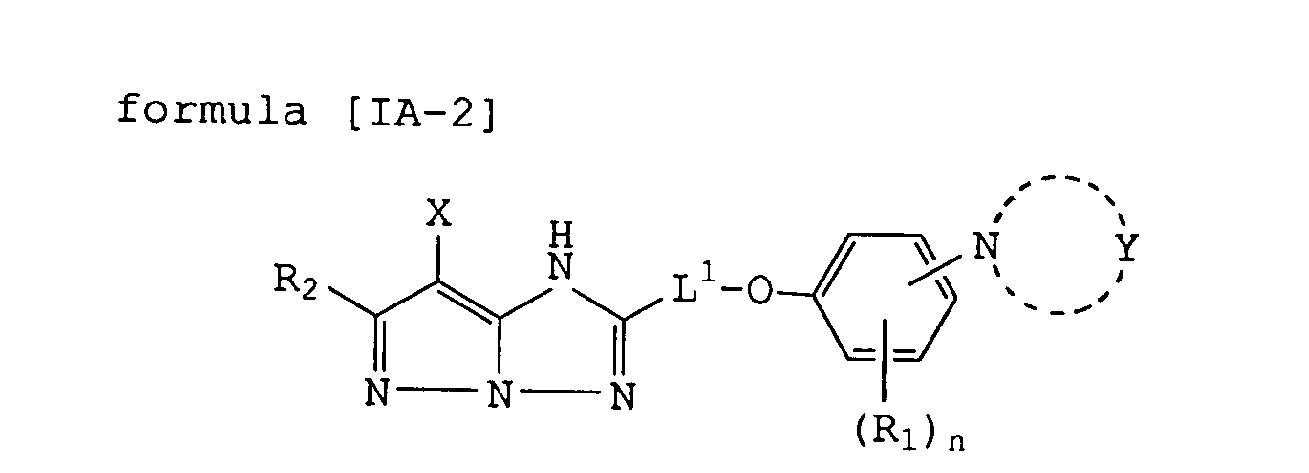
wherein L1 represents a divalent linking group having a principal chain length of 5 or less atoms, R1 and R2 each represent a substituent, Y represents a nonmetal atomic group necessary to form a five- or six-membered nitrogen-containing heterocyclic ring, n is an integer of 0 to 4 and X represents a hydrogen atom or a group capable of splitting off upon reaction with an oxidation product of a color developing agent.
wherein L1 represents a divalent linking group having a principal chain length of 5 or less atoms, R1 and R2 each represent a substituent, Y represents a nonmetal atomic group necessary to form a five- or six-membered nitrogen-containing heterocyclic ring, n is an integer of 0 to 4 and X represents a hydrogen atom or a group capable of splitting off upon reaction with an oxidation product of a color developing agent.
3. The photographic material of claim 1, wherein said coupler represented by formula
[IA] is a compound represented by the following formula [IA-3] or [IA-4],
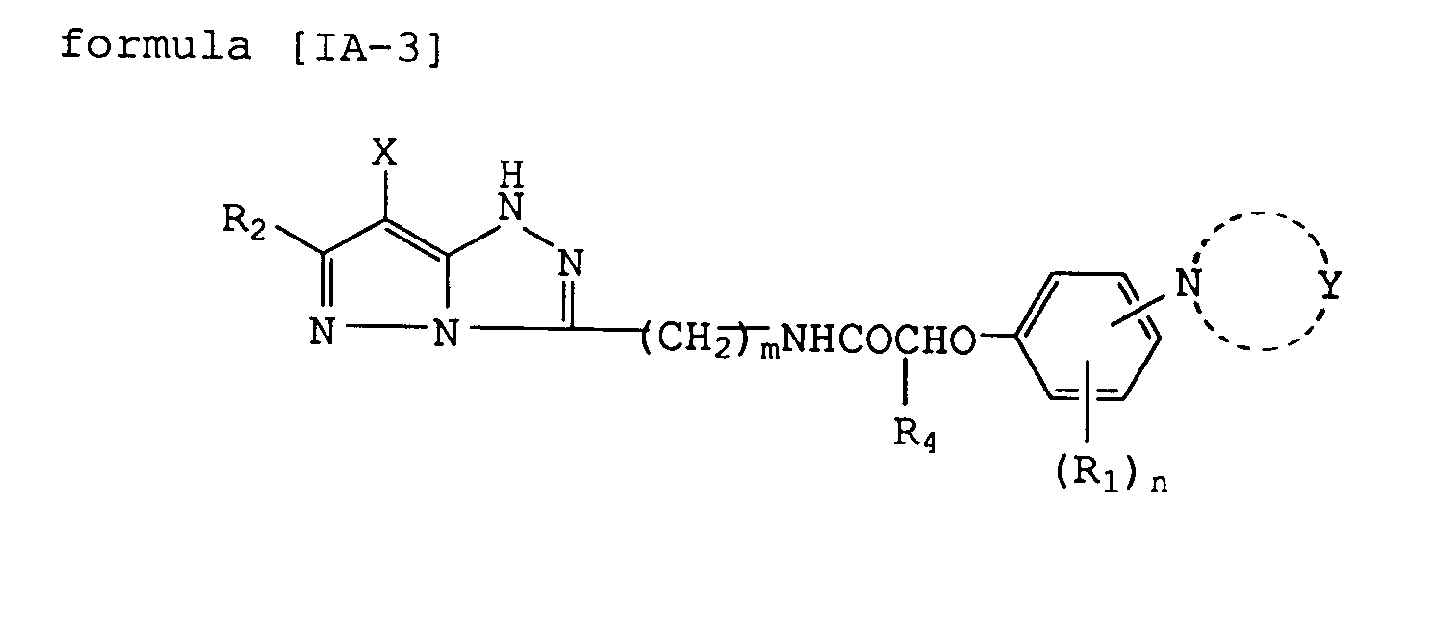
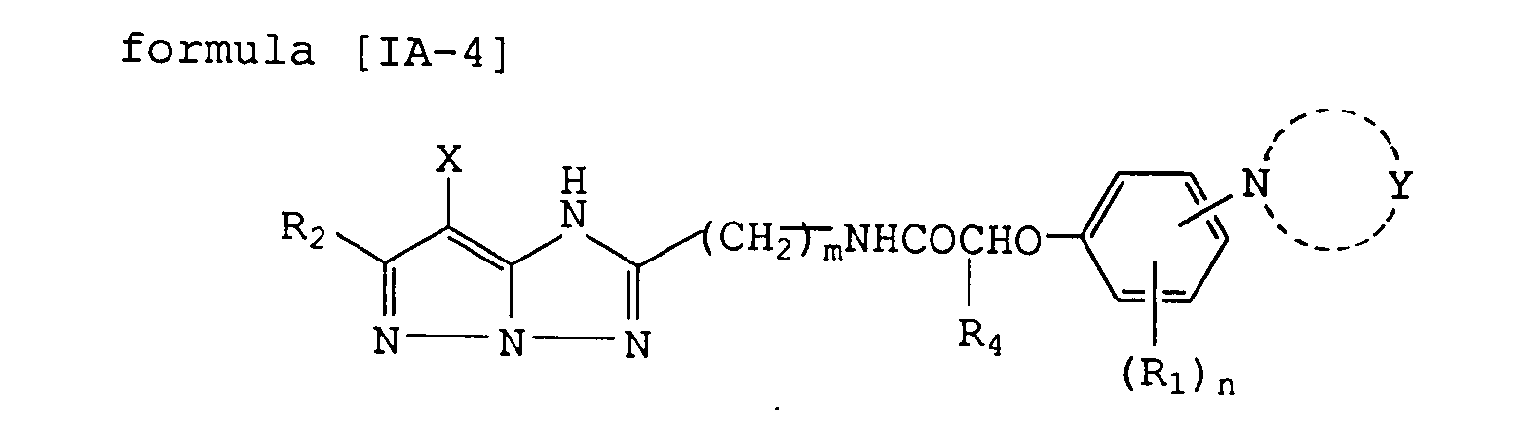
wherein R1, R2 and R4 each represent a substituent, Y represents a nonmetal atomic group necessary to form a five- or six-membered nitrogen-containing heterocyclic ring, n is an integer of 0 to 4, m is 1 or 2 and X represents a hydrogen atom or a group capable of splitting off upon reaction with an oxidation product of a color developing agent.
wherein R1, R2 and R4 each represent a substituent, Y represents a nonmetal atomic group necessary to form a five- or six-membered nitrogen-containing heterocyclic ring, n is an integer of 0 to 4, m is 1 or 2 and X represents a hydrogen atom or a group capable of splitting off upon reaction with an oxidation product of a color developing agent.
4. The photographic material of claim 1, wherein at least one of said silver halide
emulsion layer comprises monodispersed silver halide grain emulsion having a distribution
extent of not more than 20%.
5. The photographic material of claim 1, wherein at least one of said silver halide
emulsion layer comprises silver halide grains having an average iodide content of
1 to 15 mol%.
6. The photographic material of claim 5, wherein said silver halide grains have a
internal high iodide content phase within the grain.
7. The photographic material of claim 1, wherein said photographic material is processed
by the steps comprising black and white development, fogging treatment, color development,
conditioning, bleach, fixing and stabilization.
8. The photographic material of claim 7, wherein said stabilization is carried out
in a stabilizing solution substantially not containing formalin.
9. The photographic material of claim 7, wherein said conditioning is carried out
in a conditioning solution containing a formalin scavenger selected from hexamethylenetetramine
compounds, N-methylol compounds and hexahydrotriazine compounds.
10. The photographic material of claim 7, wherein said bleach is carried out in a
bleaching solution containing a ferric complex salt of a compound represented by the
following formula [A],
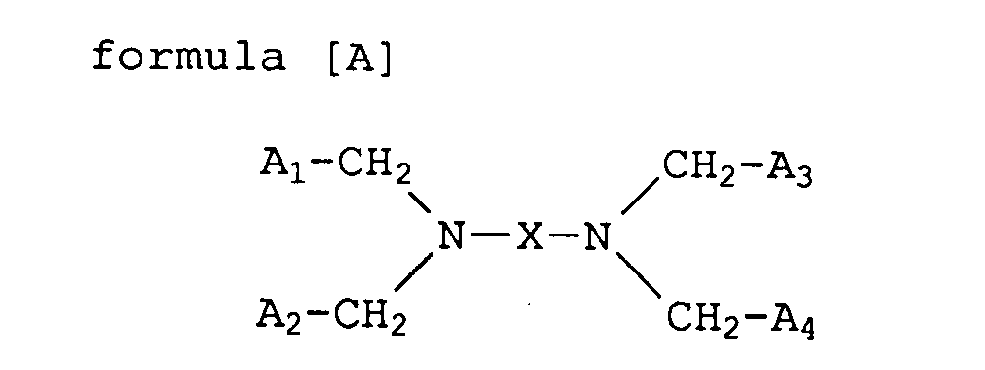
wherein Ai to A4 each represent-CH2OH,-COOM or-PO3M1M2, M, M1 and M2 each represent a hydrogen, sodium or potassium atom or ammonium group, X represents a substituted or unsubstituted alkylene group having 2 to 5 carbon atoms, in which a total number of carbon atoms including those in a brached portion is 3 or more.
wherein Ai to A4 each represent-CH2OH,-COOM or-PO3M1M2, M, M1 and M2 each represent a hydrogen, sodium or potassium atom or ammonium group, X represents a substituted or unsubstituted alkylene group having 2 to 5 carbon atoms, in which a total number of carbon atoms including those in a brached portion is 3 or more.