|
(11) | EP 0 563 460 B1 |

| (12) | EUROPEAN PATENT SPECIFICATION |
|
|
| (54) |
Acidic activated bleaching composition Durch Säure aktivierte Bleichzusammensetzung Composition de blanchiment activée par un acide |
|
|
||||||||||||||||||||||||||||
| Note: Within nine months from the publication of the mention of the grant of the European patent, any person may give notice to the European Patent Office of opposition to the European patent granted. Notice of opposition shall be filed in a written reasoned statement. It shall not be deemed to have been filed until the opposition fee has been paid. (Art. 99(1) European Patent Convention). |
Technical field
[0001] The present invention relates to bleaching compositions, mainly for use in laundry applications. The compositions according to the present invention, which comprise hydrogen peroxide as well as peracid precursors, are stable upon storage.
Background
[0002] Bleaching compositions using hydrogen peroxide have been extensively described in the art. Such hydrogen peroxide bleaches have an advantage over chlorine bleaches in that they are environmentally more compatible. Another advantage is that they are "milder" bleaches. This latter advantage is especially significant in laundry applications as hydrogen peroxide bleaches are safer to fabrics.
[0003] A major drawback of hydrogen peroxide bleaches is that they are less active than chlorine bleaches at low temperatures which are often encountered in modern laundering applications. Thus, hydrogen peroxide bleach activators have been developed and have been extensively described in the art. These activators are mainly transition metals or peracid precursors. Peracid precursors react with hydrogen peroxide to yield peracids. Peracids are the "activated" bleaching compounds which are efficient at low temperatures.
[0004] A problem which occurs in the formulation of such "activated" hydrogen peroxide bleaching compositions is the difficulty to obtain a composition which is both chemically and physically stable. Indeed, such compositions of the prior art are either turbid suspensions of insoluble activators with good chemical stability, or clear compositions with poor chemical stability which causes significant and undesired oxygen release.
[0005] It has now been found that this problem could be addressed by formulating a bleaching composition comprising hydrogen peroxide, an organic peracid precursor selected from a specific class, e.g. glycol and glycerin esters, and by formulating said composition in a narrow, acidic pH range. The mildly acidic pH range allows for adequate chemical stability of both the hydrogen peroxide and the organic peracid precursor. The activation of hydrogen peroxide trough the formation of a peracid is enhanced by the pH raise which occurs upon dilution in the wash water, especially when a detergent composition bringing further alkalinity is also present in the wash water.
[0006] Glycol esters have been often described as solvents in detergent and bleaching compositions. Such compositions are described for instance in US-A-3 956 159. These compositions have a pH of 6.5 and above.
[0007] JP-A-62252500 (abstract) discloses bleaching compositions which comprise a bleach activator, including triacetin. These compositions are formulated at neutral or weakly basic pH.
[0008] Bleaching compositions for various applications, comprising triacetin are also disclosed in JP-A-62001792, JP-A-62001794 JP-A-62001796, and JP-A-61042600 (abstracts).
[0009] EP-A-125 781 discloses bleaching compositions comprising hydrogen peroxide and a particular peroxyacid generator like for example 1,1,5-triacetoxypent-4-ene, 1,1,5,5-tetraacetoxy pentane, the corresponding butene and butane compounds, ethylidene benzoate acetate and bis (ethylidene acetate) adipate.
Summary of the invention
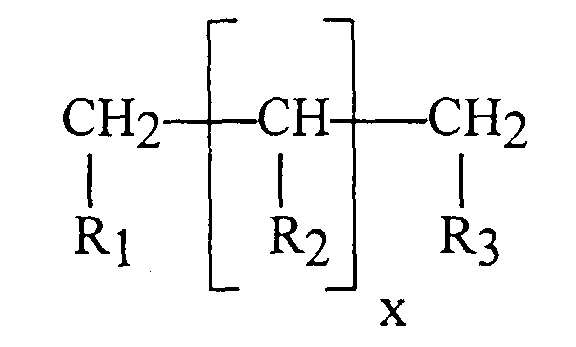
[0010] The compositions according to the present invention are clear aqueous bleaching compositions comprising hydrogen peroxide as well as an organic peracid precursor, characterized in that the compositions have a pH in the range of from 3.5 to 6, and that the organic peracid precursor is a compound according to the formula:
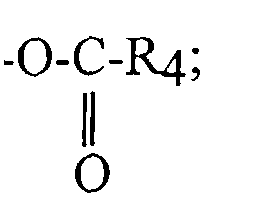
wherein x is 0 or 1, R1, R2, R3 are independently selected from -H, -OH,
where R4 is C1-C4 alkyl, with the proviso that at least two of R1, R2 or R3 are
or mixtures thereof.
Detailed description of the invention
[0011] The compositions according to the present invention are clear aqueous liquid compositions which comprise hydrogen peroxide. Preferably, the compositions according to the present invention comprise from 0.5 % to 20 % by weight of the total composition of hydrogen peroxide, more preferably from 2 % to 15 %, most preferably from 4 % to 9%.
[0012] The compositions according to the present invention further comprise a specific organic peracid precursor according to the formula:
wherein x is 0 or 1, R1, R2, R3 are independently selected from -H, -OH,
where R4 is C1-C4 alkyl, with the proviso that at least two of R1 R2 or R3 are
or mixtures thereof. All these compounds are well known chemicals which are commercially available or can be synthesized according to the chemical literature.
[0013] Preferred such peracid precursors for use in the compositions according to the present invention are selected from ethylene glycol diesters, triacetin and diacetin, or mixtures thereof. Particularly preferred compounds are triacetin and ethylene glycol diacetate. Tributyrin also displays excellent stability in the compositions according to the present invention but is less preferred because it is less soluble in the compositions according to the present invention.
[0014] The compositions according to the present invention typically comprise from 1 % to 15 % by weight of the total composition of such an organic peracid precursor, or mixtures thereof. The desired amount of organic peracid precursor can also be defined in relation to the amount of hydrogen peroxide in the composition. Accordingly, the compositions according to the present invention preferably comprise from 0.1 to 2 moles of organic peracid precursor per mole of hydrogen peroxide.
[0015] The compositions according to the present invention have a pH in the range of from 3.5 to 6, most preferably from 3.5 to 5, most preferably about 4. The pH of the composition can be adjusted and buffered with such chemicals as organic and inorganic acids which are stable to oxidation, citric acid, sulphuric acid, sodium hydroxide, ammonia and amines. Preferred buffer for use in the compositions according to the present invention is citric acid. It is essential that the pH of the composition remains within the above range as said range is critical to ensure adequate chemical stability of the hydrogen peroxide and of the specific organic peracid precursors used in the compositions according to the present invention.
[0016] The compositions according to the present invention may comprise surfactants. Preferred surfactants for use herein are well known anionic surfactants such as alkyl benzene sulphonates and alkyl sulfates, and/or nonionic surfactants such as ethoxylated and/or propoxylated alcohols. All surfactants for use herein must be resistant to oxidation by peracids and hydrogen peroxide, and are preferably water-soluble. The compositions according to the present invention can comprise from 0% to 30% by weight of the total composition of surfactants, preferably from 0.5 % to 15 %, most preferably from 2 % to 8 %.
[0017] The compositions according to the present invention may further comprise peroxide stabilizers such as stannates, 8-hydroxyquinoline, pyrophosphates and phosphonates. Chelating agents may also be useful in the context of the present invention; suitable chelants include EDTA, NTA and DETPA, picolinic and dipicolinic acids and amino polyphosphonates, although some of these are poorly environmentally compatible. Radical scavengers can also be used herein, such as butylated hydroxy toluene and other hindered hydroxy benzenes, or sodium benzoate. Butylated hydroxy toluene is a highly preferred ingredient as it has been observed that it stabilizes the peracid precursors according to the present invention, as well as hydrogen peroxide.
[0018] The compositions according to the present invention can also comprise such optional ingredients as whitening agents, dyes, builders, thickeners, hydrotropes, perfumes, all of which need to be compatible with the mildly acidic pH and the oxidizing environment of the compositions according to the present invention.
[0019] The compositions according to the present invention are further illustrated in the following examples.
Examples
[0020] The following compositions are made by mixing together the listed ingredients in the listed proportions.
| Ingredients: | % by weight: | |||
| I | II | III | IV | |
| Hydrogen peroxide | 6.0 | 6.0 | 6.0 | 6.0 |
| Na alkyl sulphate | 2.8 | 2.8 | 2.8 | 2.8 |
| Triacetin | 4.0 | 5.0 | 4.0 | 4.0 |
| Citric acid | 1.0 | 1.0 | 1.0 | 1.0 |
| Na Stannate | 0.0015 | 0.0010 | 0.0015 | 0.0015 |
| Na hydroxide | pH 4 | pH 4 | pH 3.5 | pH 5 pH 4 |
| Water & minors | up to 100 % | |||
| Ingredients: | % by weight: | |||
| V | VI | VII | VIII | |
| Hydrogen peroxide | 6.0 | 8.0 | 3.5 | 5.0 |
| Na alkyl sulphate | 2.8 | 2.0 | 4.0 | 3.5 |
| Triacetin | - | 3.0 | 5.0 | - |
| Ethylene glycol diacetate | 4.0 | - | - | 5.0 |
| Citric acid | 1.0 | 1.0 | 1.0 | 1.0 |
| Na stannate | 0.0015 | 0.0015 | 0.0010 | 0.0015 |
| Na hydroxide | pH 4 | pH 4 | pH 4 | pH 4 |
| Water & minors | up to 100 % | |||
1. An aqueous bleaching composition comprising hydrogen peroxide and an organic peracid
precursor, characterized in that the compositions have a pH in the range of from 3.5 to 6, and that the organic
peracid precursor is a compound according to the formula:
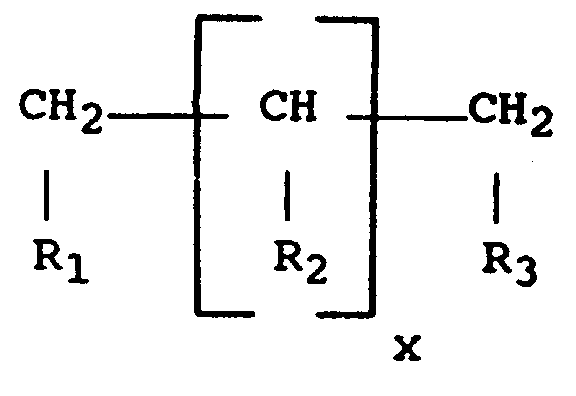
wherein x is 0 or 1, R1, R2, R3 are independently selected from -H, -OH,
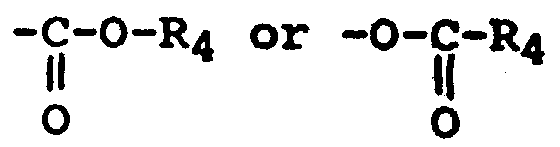
where R4 is C1-C4 alkyl, with the proviso that at least two of R1, R2 or R3 are
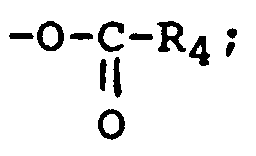
or mixtures thereof.
wherein x is 0 or 1, R1, R2, R3 are independently selected from -H, -OH,
where R4 is C1-C4 alkyl, with the proviso that at least two of R1, R2 or R3 are
or mixtures thereof.
2. A composition according to claim 1 which has a pH in the range of from 3.5 to 5.
3. A composition according to claim 2 which has a pH of about 4.
4. A composition according to any of the preceding claims wherein the organic peracid
precursor is selected from ethylene glycol diesters, triacetin, diacetin, or mixtures
thereof.
5. A composition according to claim 4 wherein the organic peracid precursor is selected
from triacetin and ethylene glycol diacetate.
6. A composition according to any of the preceding claims which comprises from 0.5 %
to 20 % by weight of the total composition of hydrogen peroxide.
7. A composition according to any of the preceding claims which comprises from 1 % to
15 % by weight of the total composition of said organic peracid precursor.
8. A composition according to claim 6 which comprises from 0.1 to 2 moles of said organic
peracid precursor per mole of hydrogen peroxide.
9. A composition according to any of the preceding claims which comprises from 0.5 %
to 15 % by weight of the total composition of a surfactant.
10. A composition according to any of the preceding claims which comprises citric acid.
11. A composition according to any of the preceding claims which comprises butylated hydroxy
toluene.
1. Wäßrige Bleichmittelzusammensetzung, umfassend Wasserstoffperoxid und einen organischen
Persäurevorläufer, dadurch gekennzeichnet, daß die Zusammensetzung ein pH im Bereich
von 3,5 bis 6 aufweist und daß der organische Persäurevorläufer eine Verbindung der
Formel
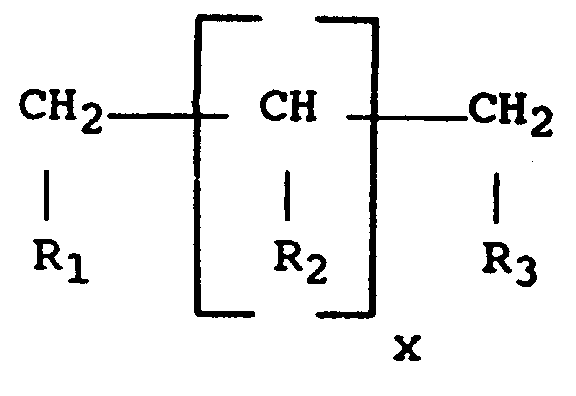
ist, worin x 0 oder list, R1, R2, R3 unabhängig voneinander aus -H, -OH,
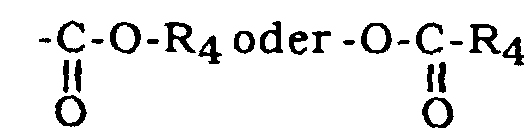
gewählt sind, worin R4 ein C1-C4-Alkyl ist, mit der Maßgabe, daß mindestens zwei von R1, R2 oder R3
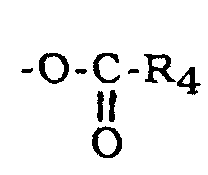
sind; oder Mischungen hiervon.
ist, worin x 0 oder list, R1, R2, R3 unabhängig voneinander aus -H, -OH,
gewählt sind, worin R4 ein C1-C4-Alkyl ist, mit der Maßgabe, daß mindestens zwei von R1, R2 oder R3
sind; oder Mischungen hiervon.
2. Zusammensetzung nach Anspruch 1, welche einen pH im Bereich von 3,5 bis 5 aufweist.
3. Zusammensetzung nach Anspruch 2, welche einen pH von etwa 4 aufweist.
4. Zusammensetzung nach mindestens einem der vorangehenden Ansprüche, wobei der organische
Persäurevorläufer aus Ethylenglycoldiestern, Triacetin. Diacetin oder Mischungen hiervon
gewählt ist.
5. Zusammensetzung nach Anspruch 4, wobei der organische Persäurevorläufer aus Triacetin
und Ethylenglycoldiacetat gewählt ist.
6. Zusammensetzung nach mindestens einem der vorangehenden Ansprüche, umfassend 0,5 bis
20 Gew.-% der gesamten Zusammensetzung an Wasserstoffperoxid.
7. Zusammensetzung nach mindestens einem der vorangehenden Ansprüche, umfassend 1-15
Gew.-% der gesamten Zusammensetzung des organischen Persäurevorläufers.
8. Zusammensetzung nach Anspruch 6, umfassend 0,1 bis 2 Mole des organischen Persäurevorläufers,
pro Mol Wasserstoffperoxid.
9. Zusammensetzung nach mindestens einem der vorangehenden Ansprüche, umfassend 0,5 bis
15 Gew.-% der gesamten Zusammensetzung eines Tensids.
10. Zusammensetzung nach mindestens einem der vorangehenden Ansprüche, umfassend Zitronensäure.
11. Zusammensetzung nach mindestens einem der vorangehenden Ansprüche, umfassend butyliertes
Hydroxytoluol.
1. Composition de blanchiment aqueuse comprenant du peroxyde d'hydrogène et un précurseur
de peracide organique, caractérisée en ce que les compositions ont un pH dans le domaine
de 3,5 à 6, et en ce que le précurseur de peracide organique est un composé répondant
à la formule:
dans laquelle x vaut 0 ou 1, R1, R2, R3 sont choisis indépendamment parmi -H, -OH,
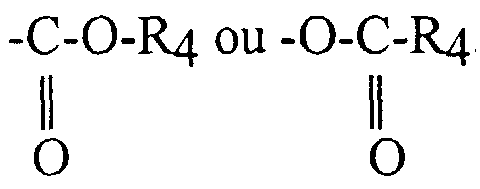
où R4 est un groupe alkyle en C1-C4, à condition qu'au moins deux des radicaux R1, R2 et R3 soient
ou leurs mélanges.
dans laquelle x vaut 0 ou 1, R1, R2, R3 sont choisis indépendamment parmi -H, -OH,
où R4 est un groupe alkyle en C1-C4, à condition qu'au moins deux des radicaux R1, R2 et R3 soient
ou leurs mélanges.
2. Composition selon la revendication 1, qui possède un pH dans le domaine de 3,5 à 5.
3. Composition selon la revendication 2, qui possède un pH d'environ 4.
4. Composition selon l'une quelconque des revendications précédentes, dans laquelle le
précurseur de peracide organique est choisi parmi les diesters d'éthylèneglycol, la
triacétine, la diacétine, ou leurs mélanges.
5. Composition selon la revendication 4, dans laquelle le précurseur de peracide organique
est choisi parmi la triacétine et le diacétate d'éthylèneglycol.
6. Composition selon l'une quelconque des revendications précédentes, qui comprend de
0,5% à 20%, en poids de la composition totale, de peroxyde d'hydrogène.
7. Composition selon l'une quelconque des revendications précédentes, qui comprend de
1% à 15%, en poids de la composition totale, dudit précurseur de peracide organique.
8. Composition selon la revendication 6, qui comprend de 0,1 à 2 moles dudit précurseur
de peracide organique par mole de peroxyde d'hydrogène.
9. Composition selon l'une quelconque des revendications précédentes, qui comprend de
0,5% à 15%, en poids de la composition totale, d'un tensioactif.
10. Composition selon l'une quelconque des revendications précédentes, qui comprend de
l'acide citrique.
11. Composition selon l'une quelconque des revendications précédentes, qui comprend de
l'hydroxytoluène butylé.