| (19) |
 |
|
(11) |
EP 0 567 466 B2 |
| (12) |
NEW EUROPEAN PATENT SPECIFICATION |
| (45) |
Date of publication and mentionof the opposition decision: |
|
13.10.1999 Bulletin 1999/41 |
| (45) |
Mention of the grant of the patent: |
|
19.04.1995 Bulletin 1995/16 |
| (22) |
Date of filing: 23.08.1991 |
|
| (51) |
International Patent Classification (IPC)6: C25D 7/06 |
| (86) |
International application number: |
|
PCT/US9106/051 |
| (87) |
International publication number: |
|
WO 9213/118 (06.08.1992 Gazette 1992/21) |
|
| (54) |
APPARATUS FOR IMPROVED CURRENT TRANSFER IN RADIAL CELL ELECTROPLATING
VORRICHTUNG ZUR VERBESSERTEN STROMÜBERTRAGUNG BEIM GALVANISIEREN IN EINER RADIALZELLE
APPAREIL PERMETTANT D'OBTENIR UN MEILLEUR TRANSFERT DE COURANT DANS UN SYSTEME D'ELECTRODEPOSITION
A CELLULE RADIALE
|
| (84) |
Designated Contracting States: |
|
AT BE DE FR GB NL |
| (30) |
Priority: |
18.01.1991 US 644065
|
| (43) |
Date of publication of application: |
|
03.11.1993 Bulletin 1993/44 |
| (73) |
Proprietor: USX ENGINEERS AND CONSULTANTS, INC. |
|
Pittsburgh
Pennsylvania 15219-4776 (US) |
|
| (72) |
Inventors: |
|
- MODROWSKI, Thomas, Anthony
Saline, MI 48187 (US)
- PFISTER, Larry, Edward
Glenshaw, PA 15237 (US)
- RAYBUCK, Gregory, Alan
Canton, MI 48187 (US)
- STODDART, James, Oliver, Jr.
Grosse Ile, MI 48138 (US)
|
| (74) |
Representative: Lerwill, John et al |
|
A.A. Thornton & Co.
Northumberland House
303-306 High Holborn
London, WC1V 7LE
London, WC1V 7LE (GB) |
| (56) |
References cited: :
EP-A- 0 282 980
EP-B- 0 306 782
GB-A- 1 174 971
US-A- 3 483 113
|
EP-A- 0 425 354
WO-A-89/01537
US-A- 1 819 130
|
|
| |
|
|
- The Making, Shaping and Treating of Steel, Lankford et al, USA 10TH ED.
- An Outline of News Electrogalvanizing Line, Komoda et al, Kawasaki Steel Techn. Report
nr. 8, Sept. 1983
- Proceedings Internat.Conf. on Zinc and Zn-alloy coated steel sheet, Galvatech 89,
Sept. 5-7, 1989.
- The Iron and Steel Institute of Japan; High-Current Density Electroplating of Zinc-Nickel
and Zn-Iron Alloys, Weymeersch et al, Plating and Surface Finishing, July 1986
- HighCurrent Density Electroplating by the Radial Jet Electrolysis Process, Paramanathan
et al, World Steel & Metalworking, vol. 10, 1989
|
|
| |
|
Technical Field
[0001] The present invention is related to an apparatus for electrodeposition of a metallic
coating onto a metallic strip and, more particularly, to a device for improving the
transfer of current to the strip in a radial cell type electroplating apparatus.
[0002] Steel strip is used in many applications which are subject to conditions which could
lead to corrosion, such as body panels on motor vehicles and exterior building panels.
In order to improve the corrosion resistance of steel strip. it is often plated with
a corrosion resistant material, such as Zinc or a zinc alloy. While this coating may
be applied through a hot dip process, superior coating adhesion, paintability and
formability are obtained through electroplating of the metallic material onto the
strip.
Background Art
[0003] Apparatus for electroplating can be of several primary types: horizontal, vertical,
or radial. The present invention is directed to a device for use on a radial cell
electrodeposition apparatus. In this apparatus a large rotating drum is used as the
cathode and the strip is directed into a tank containing electrolyte and is passed
about the circumference of the cathodic drum. Electrical current is caused to flow
from one or more anodes through the electrolyte solution to the strip as the strip
passes through the electrolyte bath about the exterior of the rotating drum cathode.
In order to prevent plating of metal on the drum side of the strip, deflector rolls
above the electrolyte bath urge the strip into contact with the radial drum in sealing
engagement therewith.
[0004] The amount of current which is delivered to the cell determines the thickness of
the coating plated onto the strip during its immersion within the electrolyte bath.
In order to apply a thicker coating or to increase the speed at which the strip travels
through the cell while applying a predetermined thickness of coating, higher electrical
current is required. In order to achieve the high plating speed required for commercial
electrodeposition operations, a relatively high current density must be applied to
the strip. If this current is not evenly transferred to the strip, areas of very good
contact between the strip and the conductor band of the conductor drum can experience
local heating which can result in very small areas of strip discoloration, which are
called "hot spots", or of strip deformation, which are called "arc spots". Since this
material is usually intended for exterior applications, the customer specifications
are very rigid and result in the rejection of material which exhibits even very light
defects of this nature. In order to avoid these defects, the plating line may be run
at a slower speed than optimum, resulting in productivity losses.
[0005] One method of improving the uniformity of the contact between the strip and the conductor
band is to increase the tension on the strip to pull it more tightly around the conductor
drum, which urges it more firmly against the conductor band. However, all steel strip
is of a relatively light gauge and therefore has a relatively low yield stress. The
tension required to achieve acceptable strip-conductor band contact is just below
the yield stress of standard strip gauges (about 0.005 to 0.010 inch [0.13 to 0.25
mm] thick) and is above the yield stress of relatively thin gauge strip and of strip
of low yield stress steel grades, such as interstitial free (IF) steels which are
used for drawing. Therefor, these steels can not be coated effectively using this
procedure.
[0006] What is needed is an improved apparatus for use in a radial-type electroplating cell
to improve the transfer of current between the conductor band and the strip to prevent
current-induced defects and improve productivity while reducing the tension required
for effective current transfer.
Disclosure of the Invention
[0007] An improved radial-type electrodeposition apparatus for plating metal onto one side
of a metallic strip according to the invention has a reservoir for retaining a bath
of plating electrolyte, a radial cathode partially submerged in the electrolyte bath,
the cathode having a central conductor band of a width less than the strip width and
non-conducting pliable edges, anodes arranged about the submerged portion of the radial
cathode, and deflector rolls located above the electrolyte bath and cooperating with
the radial cathode to exert a tensile force on the portion of strip between the deflector
rolls, the tensile force urging the metallic strip against the conductor band of the
radial cathode with a force normal to the strip surface and the conductor band surface,
wherein the improvement comprises means for improving current transfer between the
strip and the conductor band, the means contacting the strip proximate the tangent
point of the strip with the radial cathode, the tangent point being defined by the
strip between the radial cathode and one of the deflector rolls, and imparting a contact
force normal to the strip surface to urge the strip uniformly against the conducting
band of the radial cathode, the contact force permitting a reduction in the amount
of tensile force required for uniform current transfer between the strip and the conducting
band.
Brief Description of the Drawings
[0008]
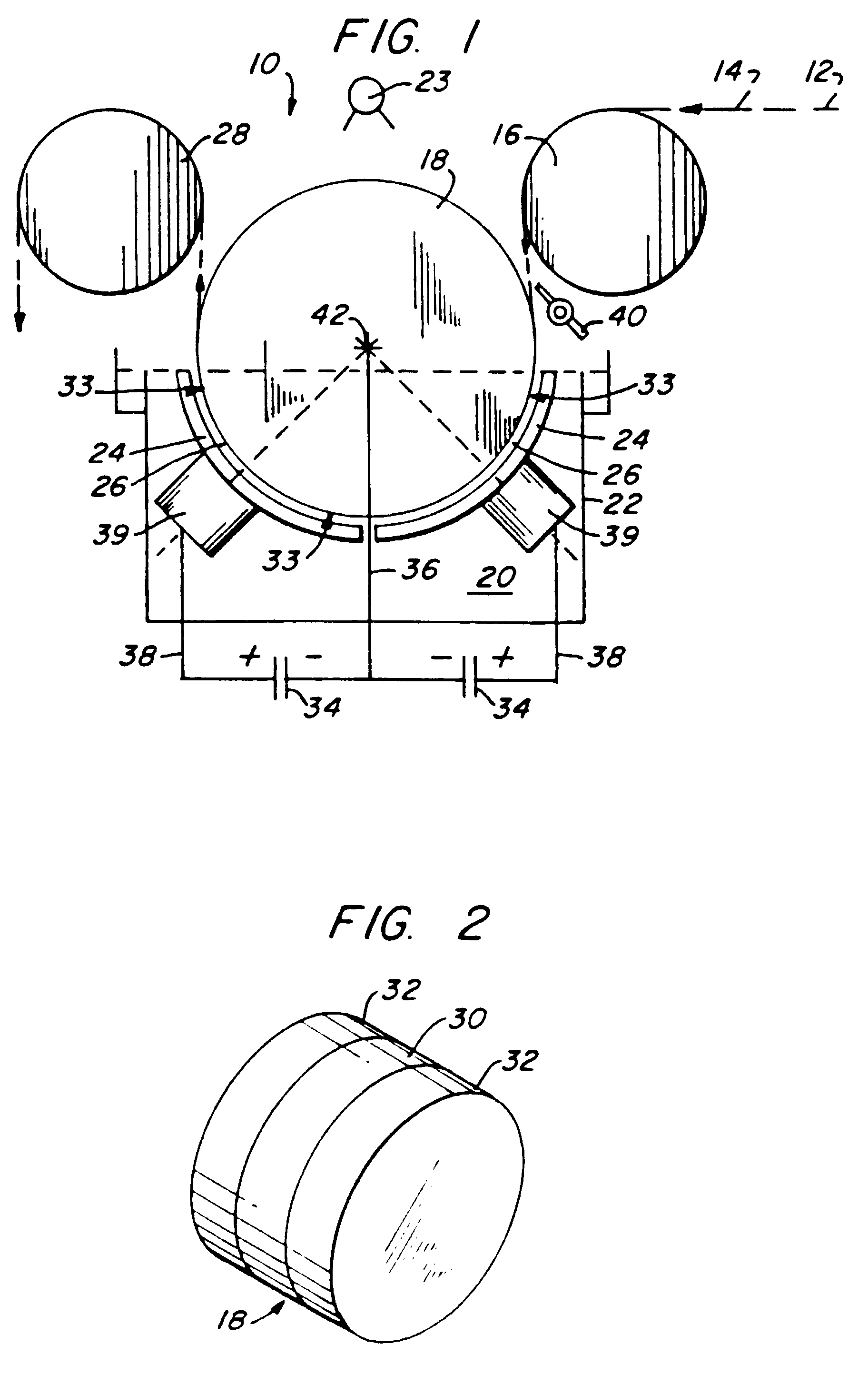
Figure 1 is a side elevational view of a prior art radial cell for electroplating
of metal strip;
Figure 2 is a perspective view of a radial drum cathode for use in a radial cell.
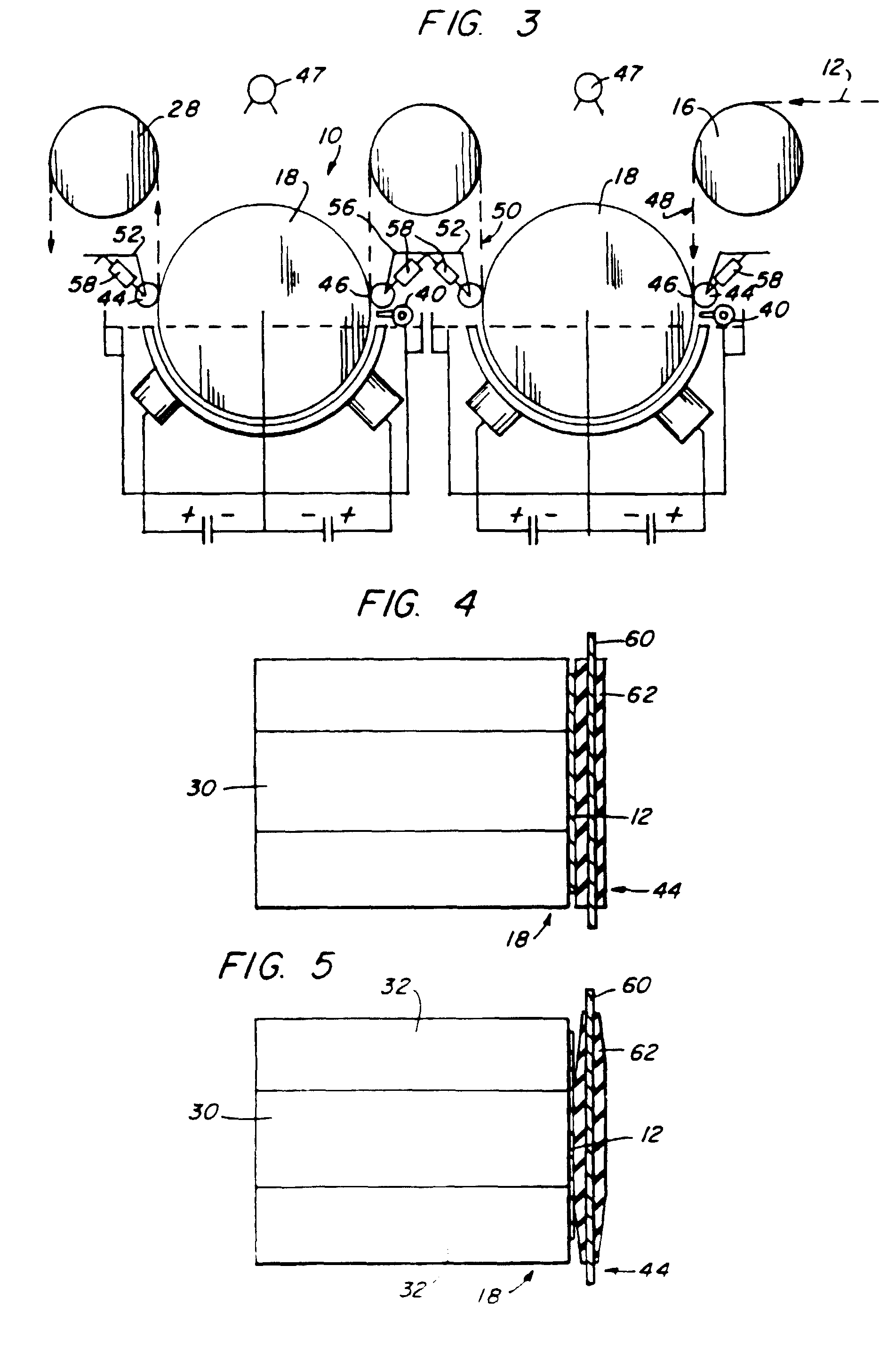
Figure 3 is a side elevational view of a radial cell for electroplating of metal strip
according to the invention.
Figure 4 is a sectional plan view of the improved current transferring device according
to the invention taken through the axis of the device; and
Figure 5 is a sectional plan view of an alternate embodiment of an improved current
transferring device according to the invention taken through the axis of the device.
Best Mode for Carrying Out the Invention
[0009] The invention is particularly applicable for use on a conventional radial cell electroplating
system, such as that described in U.S. Patent No. 4,822,457, the specification of
which is herein incorporated by reference. Figure I illustrates a single conventional
radial-type electroplating cell 10 which is generally used in combination with other
plating cells arranged so that within each cell a coating of a pre-determined thickness
is deposited onto the strip such that the total coating deposited by the system of
individual plating cells is of the desired thickness. Within each plating cell 10
a steel strip 12 is passed in a direction 14 about the exterior of the deflector roll
16. Deflector roll 16 directs the strip downwardly around conductor roll 18 which
is partially submerged in bath 20 of the electrolyte solution contained within tank
22. A fluid, usually water or electrolyte is sprayed through sprays 23 onto the conductor
roll 18 to prevent drying and caking. Anodes 24 are provided in close proximity about
conductor roll 18 within electrolyte bath 20. The strip 12 is carried by conductor
roll 18 through the small gap 26 between conductor roll 18 and anodes 24. The strip
then travels upwardly over exit deflector roll 28 and to the next plating cell or
out of the system. In the preferred embodiment, conductor roll 18 is approximately
8 feet (240 cm) in diameter and deflector rolls 16 and 28 are preferably about 54
inches (140 cm) in diameter.
[0010] Figure 2 illustrates the preferred construction of the conductor roll. Conductor
roll 18 is preferably formed from a single steel roll onto which a conductor band
30 is shrink-fitted. Conductor band 30 is preferably made from a material with superior
corrosion resistance and electrical conductivity, such as a hastelloy or wiscalloy
alloy. Conductor band 30 is preferably of a width slightly less than the width of
the narrowest strip to be electroplated within plating cell 10. The edge portions
32 of conductor roll 18 are covered with a pliable material, such as a polyurethane
rubber.
[0011] Referring to Figures 1 and 2, deflector rolls 16 and 28 cooperate to place the portion
of the strip 12 between deflector rolls 16 and 28 in tension. About the portion of
the conductor roll 18 contacted by the strip 12, this tensile force is translated
into a normal force 33 which acts to urge strip 12 firmly against conductor roll 18
so that the center portion of the strip contacts conductor band 30 and the edge portions
of the strip are held firmly against pliable portions 32. Uniform contact between
the strip and conductor band is required to prevent areas of superior current transfer,
which areas would experience current-induced defects such as hot spots or arc spots.
In order to produce this uniform contact in a conventional radial plating cell, the
tension between the deflector rolls must be kept at a very high level very near the
material's yield stress. The tension also assists in sealing the strip edges against
the pliable material at the edges of the conductor roll 18, also called masking, to
keep electrolyte from flowing between strip 12 and conductor roll 18 to prevent plating
on the side of the strip in contact with conductor roll 18.
[0012] Electrical power is supplied from direct current (D.C.) power sources 34 through
cable 36 to conductor roll 18. Cables 38 connect the positive side of the D.C. sources
34 to anodes 24 through anode bridges 39. A controlled level of D.C. current is directed
through the conductive electroplating liquid containing ions of the metal to be plated
onto the strip, creating a cathode-liquid-anode circuit and resulting in the deposition
of a controlled thickness of a metal coating onto the steel strip. The anodes can
be soluble or insoluble, depending on the anion of the electrolyte used (for example,
CI
- for soluble, SO
4- for insoluble). In insoluble anode systems, plating metal or alloy must be periodically
added to replenish the electrolyte. In the preferred embodiment, the zinc anodes are
soluble and the zinc dissolved during electroplating acts to maintain the desired
level of metal ions in the electrolyte solution for optimum electroplating efficiency.
[0013] The electrolyte preferred for use with the invention is a zinc-chloride solution.
For the electroplating of a 10-20% Fe-Zn alloy coating on the steel strip, the preferred
electrolyte solution is described in U.S. Patent No. 4,540,472, the specification
of which is incorporated herein by reference. A zinc-chloride solution of the type
disclosed in U.S. Patent No. 4,541,903, the specification of which is also incorporated
herein by reference, may also be used. Also, the invention is more broadly applicable
to systems where sulfate or other electrolyte solutions are used.
[0014] The radial cell of the invention preferably includes a header 40 for applying a uniform
film of electrolyte solution to the surface of strip 12 prior to entry of the surface
into the electrolyte bath. A preferred method for applying the electrolyte and a preferred
form of the header are more fully described in U.S. Patent No. 4,822,457, which has
previously been referenced hereinabove. The application of this electrolyte solution
to the strip substantially eliminates any non-uniformity in the film carried on the
strip from the prior treatment station.
[0015] Preferably, the center point 42 of conductor roll 18 is provided with bearings for
assisting rotation of the conductor roll about its axis and electrical connection
means (not shown) for electrically connecting cable 36 to the conductor roll. It is
desirable that this center point 42 be above the level of the electrolyte bath 20
to minimize the need to seal the bearings and electrical connection from the electrolyte.
It is also preferred that the deflector rolls 16 and 28 be spaced apart horizontally
slightly less than the diameter of conductor roll 18. This spacing provides for wrap-around
of the strip about the conductor roll 18 of slightly more than 180 degrees and preferably
on the order of 186 degrees.
[0016] Figure 3 illustrates the current transfer improvement device 44 installed on two
radial electroplating cells 10 arranged in series. The device 44 preferably contacts
strip 12 at approximately the strip contact point 46 or tangent with the conductor
roll 18. The device 44 acts to apply a force normal to the strip and conductor roll
18 at the contact point between the device 44 and strip 12. This normal force acts
to urge the strip uniformly against the conductor band to provide for uniform current
transfer between the conductor band and strip. This normal force offsets the amount
of normal force which must be supplied by placing the strip in tension between the
deflector rolls 16 and 28 and permits the cell 10 to operate with significantly lower
tension between the deflector rolls 16 and 28, permitting the electroplating of lower
yield stress materials such as thinner gauge steel and grades of steel having relatively
low yield stresses. While it has not been established what the minimum strip tension
will be when using the device, an experimental run at less than 60% of the line tension
specified for use without the device was successful and even greater reductions are
believed possible.
[0017] Also, the device presents further advantages. A fluid, usually water or electrolyte,
is sprayed through sprays 47 onto the conductor drum 18 to prevent drying and caking
on the conductor band since the associated debris could undesirably mark the strip.
The fluid from these sprays can cause the strip to lift from the drum surface as the
strip speed is increased, minimizing the electrical contact between the strip and
conductor band. The device prevents this hydroplaning by urging the strip against
the conductor band with sufficient force to overcome the force of the fluid film.
[0018] The device 44 has been successfully tested to contact the strip 12 at the tangent
point 46 and up to 1 degree below the tangent point. It is expected that slight deviations
from this range would also be satisfactory. However, as the contact point of the device
44 with the strip is moved higher above tangent 46, device 44 will impart undesirable
bending stresses into the strip. Depending on the profile of device 44, these bending
stresses can result in creasing of the strip caused by the device 44 or creasing of
the strip caused by contact of the strip with the conductor band 30 of conductor roll
18. Therefore, the preferred range of contact of device 44 with strip 18 is between
0 and 1 degree below the contact point 46.
[0019] In the preferred embodiment illustrated in Figure 3, device 44 according to the invention
is provided on each side of each conductor roll 18. The use of device 44 only on the
entry side 48 of conductor roll 18 would result in improved results over the use of
no device. However, if the device is used only on the exit side 50 of conductor roll
18, electrolyte will continue to find its way between strip 12 and conductor roll
18, resulting in poor contact and undesirable plating of metal on the side of the
strip in contact with the conductor roll 18. It is preferred to have a device 44 on
each side of the conductor roll since the two devices cooperate to hold the strip
12 firmly against the conductor roll 18 to permit the use of higher current for electroplating
without the creation of hot spots or arc spots on the strip. As the line tensions
are reduced, the device 44 on the exit side 50 also assists in maintaining the proper
tracking of the strip on conductor roll 18, that is, the strip is kept near the center
of conductor roll 18.
[0020] Device 44, which can be referred to as a holddown roll, is preferably mounted on
a stationary frame member such as frame 52 and is biased against the strip with an
adjustable force. Support 54 is attached at one end to device 44 and is pivotably
attached to frame 52 at pivot point 56. A biasing device 58 attaches between frame
52 and device 44 to urge device 44 against the strip. Preferably, biasing device 58
can urge the device 44 against strip 12 with a measurable and controllable pressure.
Also, it is preferred that the biasing force can be released for strip feeding. Therefore,
in the preferred embodiment, biasing member 58 takes the form of a hydraulic or pneumatic
cylinder.
[0021] If the biasing force is too low, strip to conductor band contact will not be sufficiently
improved to avoid current induced defects in the strip surface. The minimum biasing
force is believed to be on the order of 10 psi (0.70 kg/cm
2). The preferred range for the biasing force is 15 to 45 psi (1.1 to 3.2 kg/cm
2).
[0022] Figure 4 illustrates a cross sectional view of device 44 mounted in contact with
strip 12 to urge the strip against conductor roll 18. Conductor roll 18 is generally
on the order of 84 to 86 inches (210 to 220 cm) wide. Conductor band 30 is generally
approximately 29 inches (74 cm) wide and is mounted about the center of conductor
roll 18. Device 44 can take the form illustrated in Figure 4 whereby it is as long
as the conductor roll is wide. In this form, device 44 will be about 84 to 86 inches
(210 to 220 cm) wide. The device has also been successfully tested in a profile whereby
device 44 contacts strip 12 over a width just slightly greater than that of conductor
band 30. One embodiment of a device which so contacts the strip is illustrated in
Figure 5. An alternative embodiment (not shown) of such a device would be a device
which is only as long at the width of contact desired between device 44 and the strip,
for example, 30 inches (76 cm).
[0023] Device 44 is preferably formed using a solid center mandril 60 of a corrosion resistant
material, such as titanium bar stock. A relatively soft roll material 62, such as
polyurethane, is mounted about mandril 60 for rotation with the mandril. The mandril
is mounted onto support 54 to rotate with respect to the support such as through the
use of bearings (not shown).
[0024] A header is preferably mounted for applying a uniform film of electrolyte solution
to the surface of the strip 12 after it is contacted by device 44 and before it enters
the electrolyte bath 20. Various irregularities in the film carried on the strip from
the prior cell caused by the deflector roll or by device 44 are eliminated in this
manner so that the metallic coating applied within the electrolyte bath is uniform.
In particular, the embodiment of device 44 shown in Figure 5 acts as a squeegee, leaving
only a thin film of electrolyte about the center of the strip but a heavier film near
the strip edges. Also, in the full width embodiment of Figure 4, the processing of
strip of different widths can lead to slight grooves in device 44 which will produce
a nonuniform film on the strip. These irregularities, which could lead to corresponding
irregularities in the electodeposited coating, are eliminated by applying sufficient
additional electrolyte to the strip after it is contacted by the device but prior
to its entry into the electrolyte bath to form a uniform film.
[0025] In operation, strip 12 is threaded in direction 14 over deflector roll 16, between
device 44 and conductor roll 18 through the gap 26 between anode 24 and conductor
roll 18, between device 44 on the exit side 50 of conductor roll 18 and conductor
roll 18 and over deflector roll 28. The biasing member 58 is then engaged to apply
a predetermined force through support 54 to urge device 44 against strip 12 and to
urge strip 12 against the conductor band 30 of conductor roll 18 with a predetermined
force. This procedure is repeated for each plating cell 10 of the system. The deflector
rolls 16 and 28 are rotated to cause strip 12 to pass through electrolyte bath 20.
D.C. current is applied between the anode 24 and cathode drum 18. Electrolyte is caused
to flow through header 40 into contact with the strip 12. Within each cell 10 metal
ions migrate from the anode through gap 26 resulting in a coating of a predetermined
thickness of zinc or zinc alloy being plated onto strip 12. Strip 12 is then caused
to enter the next cell in the coating system, the number of cells being determined
by the total coating thickness required of the line and the coating capability of
each cell 10. Each anode 24 is rated at a specific current. At the maximum current,
a maximum line speed achievable is based upon calculations of the current density
and the thickness of coating which will be achieved within each cell.
[0026] Through use of device 44, the strip is held firmly in contact with conductor band
30 at reduced strip tension. Thereby, excellent uniformity of current transfer is
achieved at the contact point between the strip and the entire width of the conductor
band 30, reducing the frequency of current-induced defects on the strip by reducing
the number of small local areas of high current transfer to the strip. Also, device
44 holds strip 12 against the pliable edge portions 32 in sealing engagement therewith
to prevent the electrolyte from flowing between strip 12 and conductor roll 18 to
prevent plating on the side of the strip in contact with conductor roll 18. By performing
these two functions, the amount of tension which must be applied to the strip between
deflector rolls 16 and 28 is reduced, thereby enabling the electroplating of lighter
gage, wider and softer steels such as interstitial free steels.
[0027] What has been described above are preferred embodiments of the invention and the
invention is not limited thereto.
1. A radial-type electrodeposition apparatus for plating metal onto one side of a metallic
strip, the apparatus comprising a reservoir for retaining a bath of plating electrolyte,
a radial cathode partially submerged in the electrolyte bath, the cathode having a
central conductor band of a width less than the strip width and non-conducting pliable
edges. anodes arranged about the submerged portion of the radial cathode, and deflector
rolls located above the elec trolyte bath and cooperating with the radia cathode to
exert a tensile force on the portior of strip between the deflector rolls, the tensile
force urging the metallic strip against the conductor band of the radial cathode with
a force normal to the strip surface and the conductor band surface, the apparatus
characterized by means for improving current transfer between the strip and the conductor
band, said means contacting the strip proximate the tangent point of the strip with
the radial cathode, the tangent point being defined by the strip between the radial
cathode and one of the deflector rolls, and imparting a contact force normal to the
strip surface to urge the strip uniformly against the conducting band of the radial
cathode, the contact force permitting a reduction in the amount of tensile force required
for uniform current transfer between the strip and the conducting band.
2. An apparatus according to claim 1, further characterized in that said means for improving
current transfer comprises a holddown roll.
3. An apparatus according to claim 2, further characterized in that said means for improving
current transfer contacts the strip before the strip enters the electrolyte bath.
4. An apparatus according to claim 3, further characterized in that said means for improving
current transfer comprises a second holddown roll adapted to contact the strip after
it exits the electrolyte bath.
5. An apparatus according to claim 3, further characterized in that said holddown roll
contacts the strip across the entire width of the strip.
6. An apparatus according to claim 3, further characterized in that said holddown roll
contacts only a portion of the strip, the portion being slightly wider that the conductor
band.
7. An apparatus according to claim 1, further characterized by header means for applying
a uniform film of electrolyte to the strip surface after the strip is contacted by
said holddown roll but before the strip enters the electrolyte bath.
8. An apparatus according to any one of claims 1 to 7, further characterised in that
the reservoir contains an electrolyte solution comprising chlorides and the anodes
of the electrodeposition apparatus are soluble in the electrolyte solution.
9. An apparatus according to anyone of claims 1 to 7, further characterised in that the
reservoir contains an electrolyte solution comprising sulphates and the anodes of
the electrodeposition apparatus are insoluble in the electrolyte solution.
10. A radial-type electrodeposition apparatus for plating metal onto one side of a metallic
strip, the apparatus comprising a reservoir for retaining a bath of plating electrolyte,
a radial cathode partially submerged in the electrolyte bath, the cathode having a
central conductor band of a width less than the strip width and non-conducting pliable
edges, soluable anodes arranged about the submerged portion of the radial cathode,
and deflector rolls located above the electrolyte bath, the strip passing over one
deflector roll, into the electrolyte bath about the conductor roll, out of the electrolyte
bath and about a second deflector roll, the deflector rolls cooperating with the radial
cathode to exert a tensile force on the portion of strip between the deflector rolls,
the tensile force urging the metallic strip against the conductor band of the radial
cathode with a force normal to the strip surface and the conductor band surface, the
apparatus characterised by a holddown roll adapted to contact the strip proximate
the tangent point of the strip with the radial cathode, the tangent point being defined
by the strip between the radial cathode and one of the deflector rolls, and to urge
the strip uniformly against the conducting band of the radial cathode, the holddown
roll having a non-metallic surface, the contact force permitting a reduction in the
amount of tensile force required for uniform current transfer between the strip and
the conducting band.
11. An apparatus according to claim 10, further characterised in that a holddown roll
contacts the strip before the strip enters the electrolyte bath.
12. An apparatus according to claim 11, further characterised by a device for depositing
a uniform film of electrolyte on the portion of the strip between the holddown roll
and the electrolyte bath.
13. An apparatus according to claim 12, further characterised in that a second holddown
roll contacts the strip after the strip exits from the electrolyte bath.
14. An apparatus according to claim 13, further characterised in that said holddown rolls
are urged against the strip by biasing means adjusted to press the holddown rolls
against the strip with a force in the range of 10 to 45 psi (0.70 to 3.2 kg/cm2).
15. An apparatus according to claim 14, further characterised in that said holddown rolls
are urged against the strip by biasing means adjusted to press the holddown rolls
against the strip with a force in the range of 15 to 25 psi (1.1 to 1.8 kg/cm2).
16. An apparatus according to claim 10, further characterized in that said holddown roll
is as wide as the conductor roll.
17. An apparatus according to claim 10, further characterized in that said holddown roll
contacts a portion of the strip only slightly wider than the conductor band.
18. A method of electroplating a metallic coating onto a metallic strip using a radial-type
electrodeposition apparatus, the apparatus comprising a radial cathodic conductor
roll having a central conductor band and pliable edges, an electrolyte bath, anodes
in close proximity to the conductor roll within the electrolyte bath, and first and
second deflector rolls located above the electrolyte bath, the conductor roll being
partially submerged in electrolyte bath, the method comprising threading a metallic
strip over the first deflector roll, about the exterior of the conductor roll, into
the electrolyte bath between the conductor roll and the anodes, out of the electrolyte
bath and over the second deflector roll, tensioning the strip between the first deflector
roll, the conductor roll and the second deflector roll to a tension level sufficient
to urge the strip against the conductor band for transferring current to the strip,
and rotating the deflector rolls to cause the strip to pass through the electrolyte
bath, the method characterized by contacting the strip at about the tangent point
between the strip and the conductor roll prior to entry of the strip into the electrolyte
bath, the tangent point being defined by the strip between the conductor roll and
the first deflector roll, and uniformly urging the strip against the conductor band
and reducing the tension level on the strip.
19. A method according to claim 18, further characterized in that said contacting and
urging are performed with a holddown roll.
20. A method according to claim 19, further characterized in that a second holddown roll
contacts the strip after it has exited from the electrolyte bath at about its tangent
point with the conductor roll and urges the strip uniformly against the conductor
band.
21. A method according to claim 20, further characterized in that the force with which
the two holddown rolls urges the strip against the conductor band is in the range
10 to 45 psi (0.70 to 3.2 kg/cm2).
22. A method according to claim 19, further characterized by applying electrolyte to the
surface of the strip after the strip has been contacted by the holddown roll and before
the strip enters the electrolyte bath to form a uniform film of electrolyte on the
strip.
23. A method according to claim 22, further characterized in that said applying of electrolyte
is performed through a spray header.
24. A method according to claim 19, further characterized in that said holddown roll contacts
the strip across the full width of the strip.
25. A method according to claim 19, further characterized, in that said holddown roll
contacts only a central portion of the strip slightly wider than the conductor band.
26. A method according to claim 17, further characterized in that the anodes are soluble.
27. A method according to claim 17, further characterized in that the anodes are insoluble.
1. Galvanisiervorrichtung vom Radialtyp zum Plattieren von Metall auf eine Seite eines
metallischen Bands, wobei die Vorrichtung ein Reservoir zur Aufnahme eines Bads eines
Plattierelektrolyten, eine Radialkathode, die teilweise in das Elektrolytbad eingetaucht
ist, wobei die Kathode ein mittleres Leiterband mit einer Breite geringer als die
Bandbreite und nicht leitende, geschmeidige Kanten besitzt, wobei die Anoden um den
eingetauchten Bereich der Radialkathodeangeordnet sind, und Ablenkwalzen, die oberhalb
des Elektrolytbads angeordnet sind und mit der Radialkathode zusammenwirken, um eine
Spannkraft auf den Bereich des Bands zwischen den Ablenkwalzen aufzubringen, wobei
die Spannkraft das Metallband gegen das Leiterband der Radialkathode mit einer Kraft
normal zu der Bandoberfläche und der Leiterbandoberfläche drückt, aufweist, wobei
die Vorrichtung durch eine Einrichtung zur Verbesserung der Stromübertragung zwischen
dem Band und dem Leiterband gekennzeichnet ist, wobei die Einrichtung das Band in
der Nähe des Tangentenpunkts des Bands mit der Radialkathode berührt, wobei der Tangentenpunkt
durch das Band zwischen der Radialkathode und einer der Ablenkwalzen definiert ist,
und eine Kontaktkraft normal zu der Bandoberfläche ausübt, um das Band gleichförmig
gegen das leitende Band der Radialkathode zu drücken, wobei die Kontaktkraft eine
Reduktion der Höhe der Spannkraft ermöglicht, die für eine gleichförmige Stromübertragung
zwischen dem Band und dem leitenden Band erforderlich ist.
2. Vorrichtung nach Anspruch 1, die weiterhin dadurch gekennzeichnet ist, daß die Einrichtung
zur Verbesserung einer Stromübertragung eine Niederhaltewalze aufweist.
3. Vorrichtung nach Anspruch 2, die weiterhin dadurch gekennzeichnet ist, daß die Einrichtung
zur Verbesserung einer Stromübertragung das Band kontaktiert, bevor das Band in das
Elektrolytbad eintritt.
4. Vorrichtung nach Anspruch 3, die weiterhin dadurch gekennzeichnet ist, daß die Einrichtung
zur Verbesserung der Stromübertragung eine zweite Niederhaltewalze aufweist, die dazu
geeignet ist, das Band zu kontaktieren, nachdem es das Elektrolytbad verläßt.
5. Vorrichtung nach Anspruch 3, die weiterhin dadurch gekennzeichnet ist, daß die Niederhaltewalze
das Band über die gesamte Breite des Bands kontaktiert.
6. Vorrichtung nach Anspruch 3, die weiterhin dadurch gekennzeichnet ist, daß die Niederhaltewalze
nur einen Bereich des Bands kontaktiert, wobei der Bereich geringfügig breiter als
das Leiterband ist.
7. Vorrichtung nach Anspruch 1, die weiterhin durch eine Verteilereinrichtung zur Aufbringung
eines gleichförmigen Films eines Elektrolyten auf die Bandoberfläche, indem das Band
durch die Niederhaltewalze kontaktiert wird, jedoch bevor das Band in das Elektrolytbad
eintritt, gekennzeichnet ist.
8. Vorrichtung nach einem der Ansprüche 1 bis 5, die weiterhin dadurch gekennzeichnet
sind, daß das Reservoir eine Elektrolytlösung enthält die Chlorid aufweist, und die
Anoden der Galvanisiervorrichtung in der Elektrolytlösung lösbar sind.
9. Vorrichtung nach einem der Ansprüche 1 bis 7, die weiterhin dadurch gekennzeichnet
ist, daß das Reservoir eine Elektrolytlösung enthält, die Sulfate aufweist, und die
Anoden der Galvanisiervorrichtung in der Elektrolytlösung nicht lösbar sind.
10. Galvanisiervorrichtung vom Radialtyp zum Plattieren von Metall auf eine Seite eines
metallischen Bands, wobei die Vorrichtung ein Reservoir zur Aufnahme eines Bads aus
Plattierelektrolyten, eine Radialkathode, die teilweise in das Elektrolytbad eintaucht,
wobei die Kathode ein mittleres Leiterband einer Breite geringer als die Bandbreite
und nicht leitende, geschmeidige Kanten besitzt, lösbare Anoden, die um den eingetauchten
Bereich der Radialkathode angeordnet sind, und Ablenkwalzen, die oberhalb des Elektrolytbads
angeordnet sind, wobei das Band über eine Ablenkwalze, in das Elektrolytbad um die
Leiterwalze, aus dem Elektrolytbad und um die zweite Ablenkwalze führt, wobei die
Ablenkwalzen mit der Radialkathode zusammenwirken, um eine Spannkraft auf den Bereich
des Bands zwischen den Ablenkwalzen auszuüben, wobei die Spannkraft das metallische
Band gegen das Leiterband der Radialkathode mit einer Kraft normal zu der Bandoberfläche
und der Leiteroberfläche drückt, aufweist, wobei die Vorrichtung durch die Niederhaltewalze,
die dazu geeignet ist, das Band in der Nähe des Tangentenpunkts des Bands mit der
Radialkathode zu berühren, wobei der Tangentenpunkt durch das Band zwischen der Radialkathode
und einer der Ablenkwalzen definiert ist, und um das Band gleichförmig gegen das leitende
Band der Radialkathode zu drücken, wobei die Niederhaltewalze eine nicht metallische
Oberfläche besitzt, wobei die Kontaktkraft eine Reduktion der Größe der Spannkraft
ermöglicht, die für eine gleichförmige Stromübertragung zwischen Band und dem leitenden
Band erforderlich ist, gekennzeichnet ist.
11. Vorrichtung nach Anspruch 10, die weiterhin dadurch gekennzeichnet ist, daß die Niederhaltewalze
das Band kontaktiert, bevor das Band in das Elektrolytbad eintritt.
12. Vorrichtung nach Anspruch 11, die weiterhin durch eine Vorrichtung zum Niederschlagen
eines gleichförmigen Films eines Elektrolyten auf den Bereich des Bands zwischen der
Niederhaltewalze und dem Elektrolytbad gekennzeichnet ist.
13. Vorrichtung nach Anspruch 12, die weiterhin dadurch gekennzeichnet ist, daß eine zweite
Niederhaltewalze das Band kontaktiert, nachdem das Band aus dem Elektrolytbad austritt.
14. Vorrichtung nach Anspruch 13, die weiterhin dadurch gekennzeichnet ist, daß die Niederhaltewalzen
gegen das Band durch eine Vorspanneinrichtung gedrückt werden, die so eingestellt
ist, um die Niederhaltewalzen mit einer Kraft in dem Bereich von 10 bis 45 psi (0,70
bis 3,2 kg/cm2) zu pressen.
15. Vorrichtung nach Anspruch 14, die weiterhin dadurch gekennzeichnet ist, daß die Niederhaltewalzen
gegen das Band durch eine Vorspanneinrichtung gedrückt werden, die so eingestellt
ist, um die Niederhaltewalzen mit einer Kraft in dem Bereich von 15 bis 25 psi (1,0
bis 1,8 kg/cm2) zu pressen.
16. Vorrichtung nach Anspruch 10, die weiterhin dadurch gekennzeichnet ist, daß die Niederhaltewalze
so breit wie die Leiterwalze ist.
17. Vorrichtung nach Anspruch 10, die weiterhin dadurch gekennzeichnet ist, daß die Niederhaltewalze
einen Bereich des Bands nur geringfügig breiter als das Leiterband kontaktiert.
18. Verfahren zum Galvanisieren einer metallischen Beschichtung auf ein metallisches Band
unter Verwendung einer Galvanisiervorrichtung vom Radialtyp, wobei die Vorrichtung
eine radiale, kathodische Leiterwalze, die ein mittleres Leiterband und geschmeidige
Kanten besitzt, ein Elektrolytbad, Anoden in der dichten Nähe zu der Leiterwalze innerhalb
des Elektrolytbads, und eine erste und zweite Ablenkwalze, die oberhalb des Elektrolytbads
angeordnet sind, wobei die Leiterwalze teilweise in das Elektrolytbad eingetaucht
wird, aufweist, wobei das Verfahren ein Schrauben des metallischen Bands über die
erste Ablenkwalze, über das Äußere der Leiterwalze, in das Elektrolytbad zwischen
der Leiterwalze und den Anoden, aus dem Elektrolytbad und über die zweite Ablenkwalze,
Spannen des Bands zwischen der ersten Ablenkwalze, der Leiterwalze und der zweiten
Ablenkwalze auf ein Spannungsniveau ausreichend, um das Band gegen das Leiterband
zum Übertragen eines Stroms auf das Band zu drücken, und Drehen der Ablenkwalzen,
um zu bewirken, daß das Band durch das Elektrolytbad hindurchführt, aufweist, wobei
das Verfahren durch Kontaktieren des Bands an etwa dem Tangentenpunkt zwischen dem
Band und der Leiterwalze vor dem Eintritt des Bands in das Elektrolytbad, wobei der
Tangentenpunkt durch das Band zwischen der Radialkathode und einer der Ablenkwalzen
definiert ist, und durch gleichförmiges Drücken des Bands gegen das Leiterband und
durch Reduzieren des Spannungsniveaus auf das Band gekennzeichnet ist.
19. Verfahren nach Anspruch 18, das weiterhin dadurch gekennzeichnet ist, daß das Kontaktieren
und das Drücken mit einer Niederhaltewalze durchgeführt werden.
20. Verfahren nach Anspruch 19, das weiterhin dadurch gekennzeichnet ist, daß die zweite
Niederhaltewalze das Band., nachdem es aus dem Elektrolytbad ausgetreten ist, an ungefähr
seinem Tangentenpunkt mit der Leiterwalze kontaktiert und das Band gleichförmig gegen
das Leiterband drückt.
21. Verfahren nach Anspruch 20, das weiterhin dadurch gekennzeichnet ist, daß die Kraft,
mit der die Niederhaltewalzen das Band gegen das Leiterband drükken, in dem Bereich
von 10 bis 45 psi (0,70 bis 3,2 kg/cm2) liegt.
22. Verfahren nach Anspruch 19, das weiterhin durch Aufbringung eines Elektrolyten auf
die Oberfläche des Bands, nachdem das Band durch die Niederhaltewalze kontaktiert
worden ist und bevor das Band in das Elektrolytbad eintritt, um einen gleichförmigen
Film des Elektrolyten auf dem Band zu bilden, gekennzeichnet ist.
23. Verfahren nach Anspruch 22, das weiterhin dadurch gekennzeichnet ist, daß die Aufbringung
eines Elektrolyten durch einen Sprühstäuber durchgeführt wird.
24. Verfahren nach Anspruch 19, das weiterhin dadurch gekennzeichnet ist, daß die Niederhaltewalze
das Band quer über die vollständige Breite des Bands kontaktiert.
25. Verfahren nach Anspruch 19, das weiterhin dadurch gekennzeichnet ist, daß die Niederhaltewalze
nur den mittleren Bereich des Bands geringfügig breiter als das Leiterband kontaktiert.
26. Verfahren nach Anspruch 17, das weiterhin dadurch gekennzeichnet ist, daß die Anoden
lösbar sind.
27. Verfahren nach Anspruch 17, das weiterhin dadurch gekennzeichnet ist, daß die Anoden
nicht lösbar sind.
1. Appareil d'électrodéposition de type radial destiné à déposer un métal sur une première
face d'un ruban métallique, l'appareil comprenant un réservoir destiné à contenir
un bain d'électrolyte de dépôt, une cathode radiale partiellement immergée dans le
bain d'électrolyte, la cathode ayant un ruban conducteur central dont la largeur est
inférieure à la largeur de la bande et des bords souples non conducteurs, des anodes
placées autour de la partie immergée de la cathode radiale, et des rouleaux déflecteurs
placés au-dessus du bain d'électrolyte et coopérant avec la cathode radiale pour appliquer
une force de traction à la partie de la bande comprise entre les rouleaux déflecteurs,
la force de traction repoussant la bande métallique contre le ruban conducteur de
la cathode radiale avec une force normale à la surface de la bande et à la surface
du ruban conducteur, l'appareil étant caractérisé par un dispositif destiné à accroître
le transfert du courant entre la bande et le ruban conducteur, ce dispositif étant
au contact de la bande à proximité du point de tangence de la bande avec la cathode
radiale, le point de tangence étant défini par la bande entre la cathode radiale et
l'un des rouleaux déflecteurs, et exerçant une force de contact perpendiculaire à
la surface de la bande afin que celle-ci soit repoussée uniformément contre le ruban
conducteur de la cathode radiale, la force de contact permettant une réduction de
la force de traction nécessaire à un transfert uniforme de courant entre la bande
et le ruban conducteur.
2. Appareil selon la revendication 1, caractérisé en outre en ce que le dispositif destiné
à accroître le transfert de courant comprend un rouleau d'appui.
3. Appareil selon la revendication 2, caractérisé en outre en ce que le dispositif destiné
à augmenter le transfert de courant est au contact de la bande avant que celle-ci
ne pénètre dans le bain d'électrolyte.
4. Appareil selon la revendication 3, caractérisé en outre en ce que le dispositif destiné
à augmenter le transfert de courant comprend un second rouleau d'appui destiné à être
au contact de la bande après sa sortie du bain d'électrolyte.
5. Appareil selon la revendication 3, caractérisé en outre en ce que le rouleau d'appui
est au contact de la bande sur toute la largeur de celle-ci.
6. Appareil selon la revendication 3, caractérisé en outre en ce que le rouleau d'appui
est au contact d'une partie seulement de la bande, cette partie étant légèrement plus
large que le ruban conducteur.
7. Appareil selon la revendication 1, caractérisé en outre par un dispositif collecteur
destiné à appliquer un film uniforme d'électrolyte à la surface de la bande après
que celle-ci a été mise au contact du rouleau d'appui mais avant que la bande ne pénètre
dans le bain d'électrolyte.
8. Appareil selon l'une quelconque des revendications 1 à 7, caractérisé en outre en
ce que le réservoir contient une solution d'électrolyte contenant des chlorures, et
les anodes de l'appareil d'électrodéposition sont solubles dans la solution d'électrolyte.
9. Appareil selon l'une quelconque des revendications 1 à 7, caractérisé en outre en
ce que le réservoir contient une solution d'électrolyte qui comprend des sulfates,
et les anodes de l'appareil d'électrodéposition sont insolubles dans la solution d'électrolyte.
10. Appareil d'électrodéposition de type radial destiné au dépôt d'un métal sur une face
d'une bande métallique, l'appareil comprend un réservoir destiné à contenir un bain
d'électrolyte de dépôt, une cathode radiale partiellement immergée dans le bain d'électrolyte,
la cathode ayant un ruban conducteur central dont la largeur est inférieure à la largeur
de la bande et des bords souples non conducteurs, des anodes solubles placées autour
de la partie immergée de la cathode radiale, et des rouleaux déflecteurs placés au-dessus
du bain d'électrolyte, la bande passant sur un premier rouleau déflecteur, dans le
bain d'électrolyte autour du rouleau déflecteur, en dehors du bain d'électrolyte et
sur un second rouleau déflecteur, les rouleaux déflecteurs coopérant avec la cathode
radiale pour appliquer une force de traction à la partie de bande comprise entre les
rouleaux déflecteurs, la force de traction repoussant la bande métallique contre le
ruban conducteur de la cathode radiale avec une force normale à la surface de la bande
vers la surface du ruban conducteur, l'appareil étant caractérisé par un rouleau d'appui
destiné à être au contact de la bande à proximité du point de tangence de la bande
avec la cathode radiale, le point de tangence étant défini par la bande entre la cathode
radiale et l'un des rouleaux déflecteurs, et à repousser la bande uniformément contre
le ruban conducteur de la cathode radiale, le rouleau d'appui ayant une surface non
métallique, la force de contact permettant une réduction de l'amplitude de la force
de traction nécessaire à un transfert uniforme de courant entre la bande et le ruban
conducteur.
11. Appareil selon la revendication 10, caractérisé en outre en ce qu'un rouleau d'appui
est au contact de la bande avant que la bande ne pénètre dans le bain d'électrolyte.
12. Appareil selon la revendication 11, caractérisé en outre par un appareil de dépôt
d'un film uniforme d'électrolyte sur la partie de bande comprise entre le rouleau
de maintien et le bain d'électrolyte.
13. Appareil selon la revendication 12, caractérisé en outre en ce qu'un second rouleau
de maintien est au contact de la bande après la sortie de celle-ci du bain d'électrolyte.
14. Appareil selon la revendication 13, caractérisé en outre en ce que les rouleaux de
maintien sont repoussés contre la bande par un dispositif de rappel ajusté afin qu'il
repousse les rouleaux de maintien contre la bande avec une pression comprise entre
0,70 et 3,2 bar (10 à 45 psi).
15. Appareil selon la revendication 14, caractérisé en outre en ce que les rouleaux de
maintien sont repoussés contre la bande par un dispositif de rappel ajusté afin qu'il
repousse les rouleaux de maintien contre la bande avec une pression comprise entre
1,1 et 1,8 bar (15 à 25 psi).
16. Appareil selon la revendication 10, caractérisé en outre en ce que le rouleau de maintien
a une largeur égale à celle du rouleau conducteur.
17. Appareil selon la revendication 10, caractérisé en outre en ce que le rouleau de maintien
est au contact d'une partie de la bande seulement légèrement plus large que le ruban
conducteur.
18. Procédé d'électrodéposition d'un revêtement métallique sur une bande métallique à
l'aide d'un appareil d'électrodéposition de type radial, l'appareil comprenant un
rouleau conducteur cathodique radial ayant un ruban conducteur central et des bords
souples, un bain d'électrolyte, des anodes très proches du rouleau conducteur dans
le bain d'électrolyte, et un premier et un second rouleau déflecteur placés au-dessus
du bain d'électrolyte, le rouleau conducteur étant partiellement immergé dans le bain
d'électrolyte, le procédé comprenant l'enfilement d'une bande métallique sur le premier
rouleau déflecteur, autour de l'extérieur du rouleau conducteur, dans le bain d'électrolyte
entre le rouleau conducteur et les anodes, en dehors du bain d'électrolyte et sur
le second rouleau déflecteur, la mise sous tension de la bande entre le premier rouleau
déflecteur, le rouleau conducteur et le second rouleau déflecteur à une tension suffisante
pour repousser la bande contre le ruban conducteur d'une manière qui convient au transfert
d'un courant à la bande, et l'entraînement en rotation du rouleau déflecteur afin
que la bande passe dans le bain d'électrolyte, le procédé étant caractérisé par la
mise en contact de la bande, à peu près au point de tangence entre la bande et le
rouleau conducteur avant l'entrée de la bande dans le bain d'électrolyte, le point
de tangence étant défini par la bande entre le rouleau conducteur et le premier rouleau
déflecteur, et le rappel uniforme de la bande contre le ruban conducteur avec réduction
du niveau de tension appliqué à la bande.
19. Procédé selon la revendication 18, caractérisé en outre en ce que la mise en contact
et le rappel sont réalisés avec un rouleau d'appui.
20. Procédé selon la revendication 19, caractérisé en outre en ce qu'un second rouleau
d'appui est au contact de la bande après sa sortie du bain d'électrolyte à peu près
au point de tangence avec le rouleau conducteur et repousse la bande uniformément
contre le ruban conducteur.
21. Procédé selon la revendication 20, caractérisé en outre en ce que la pression avec
laquelle les deux rouleaux de maintien repoussent la bande contre le ruban conducteur
est comprise entre 0,70 et 3,2 bar (10 à 45 psi).
22. Procédé selon la revendication 19, caractérisé en outre par l'application d'électrolyte
à la surface de la bande après que la bande a été mise au contact du rouleau d'appui
et avant que la bande ne pénètre dans le bain d'électrolyte pour la formation d'un
film uniforme d'électrolyte sur la bande.
23. Procédé selon la revendication 22, caractérisé en outre en ce que l'application d'électrolyte
est réalisée par un collecteur de pulvérisation.
24. Procédé selon la revendication 19, caractérisé en outre en ce que le rouleau d'appui
est au contact de la bande sur toute la largeur de celle-ci.
25. Procédé selon la revendication 19, caractérisé en outre en ce que le rouleau d'appui
est au contact d'une partie centrale seulement de la bande qui est légèrement plus
large que le ruban conducteur.
26. Procédé selon la revendication 17, caractérisé en outre en ce que les anodes sont
solubles.
27. Procédé selon la revendication 17, caractérisé en outre en ce que les anodes sont
insolubles.