| (19) |
 |
|
(11) |
EP 0 572 492 B1 |
| (12) |
EUROPEAN PATENT SPECIFICATION |
| (45) |
Mention of the grant of the patent: |
|
19.11.1997 Bulletin 1997/47 |
| (22) |
Date of filing: 21.02.1992 |
|
| (51) |
International Patent Classification (IPC)6: G10K 11/16 |
| (86) |
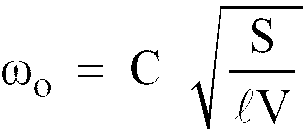
International application number: |
|
PCT/GB9200/314 |
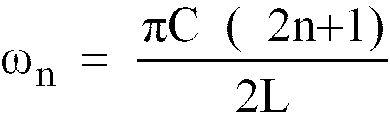
| (87) |
International publication number: |
|
WO 9215/088 (03.09.1992 Gazette 1992/23) |
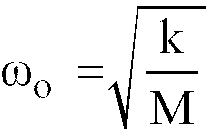
|
| (54) |
METHOD AND APPARATUS FOR ATTENUATING ACOUSTIC VIBRATIONS IN A MEDIUM
Verfahren und Vorrichtung zur Dämpfung akustischer Schwingungen in einem Medium
PROCEDE ET APPAREIL SERVANT A AFFAIBLIR LES VIBRATIONS ACOUSTIQUES DANS UN MILIEU
|
| (84) |
Designated Contracting States: |
|
DE FR GB IT NL SE |
| (30) |
Priority: |
21.02.1991 GB 9103689
|
| (43) |
Date of publication of application: |
|
08.12.1993 Bulletin 1993/49 |
| (73) |
Proprietor: LOTUS CARS LIMITED |
|
Norwich,
Norfolk NR14 8EZ (GB) |
|
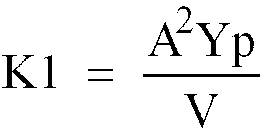
| (72) |
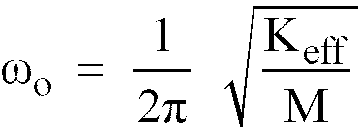
Inventors: |
|
- McDONALD, Anthony Malcolm
Barnham Broom,
Norfolk NR9 4DE (GB)
- HUTCHINS, Stephen Mark
Huntingdon,
Cambridgeshire PE17 3PN (GB)
- STOTHERS, Ian
Nr. Thethford,
Norfolk IP25 7ET (GB)
- CROWTHER, Philip John
Attleborough,
Norfolk NR17 1BE (GB)
|
| (74) |
Representative: Mayes, Stuart David et al |
|
BOULT WADE TENNANT,
27 Furnival Street
London EC4A 1PQ
London EC4A 1PQ (GB) |
| (56) |
References cited: :
EP-A- 0 039 459
EP-A- 0 265 000
DE-A- 3 729 765
|
EP-A- 0 047 678
DE-A- 3 034 575
|
|
| |
|
|
|
|
| |
|
| Note: Within nine months from the publication of the mention of the grant of the European
patent, any person may give notice to the European Patent Office of opposition to
the European patent
granted. Notice of opposition shall be filed in a written reasoned statement. It shall
not be deemed to
have been filed until the opposition fee has been paid. (Art. 99(1) European Patent
Convention).
|
[0001] This invention relates to a method and apparatus for attenuating acoustic vibrations
in a medium, and more particularly to a method and apparatus to control a tunable
acoustic resonator to effect such attenuation.
[0002] It is well known that an acoustic resonator can be used to attenuate acoustic vibration
in a system (DE 3729765). However, the resonant frequency of the resonator and hence
the frequency of the acoustic vibrations that are attenuated in a system is dependent
on the dimensions and structure or type of resonator employed. In a simple case where
attenuation is required of acoustic vibrations at a fixed frequency, resonators of
fixed structure are employed as disclosed in DE 3729765. This arrangement is however
limited in that if the frequency of the acoustic vibration to be attenuated changes,
then the efficiency of the resonator as an attenuator decreases as the frequency moves
away from the resonant frequency.
[0003] A resonator is disclosed in EP 0039459 which attempts to overcome this limitation
in relation to the use of a resonator to attenuate the noise generated by a turbo
machine. Two specific types of resonators are disclosed, one being a quarter wave
resonator and the other being a Helmholtz resonator. The resonant frequency of the
quarter wave resonator is varied by varying the length of pipe, whilst the resonant
frequency of the Helmholtz resonator is varied by varying the volume of the resonant
chamber. Thus the resonant frequency is variable to enable attenuation of unwanted
variable frequency acoustic vibrations created by the turbo machine. This document
does not however address the problem of how such resonators can be accurately controlled.
[0004] The present invention provides apparatus for attenuating acoustic vibrations in a
medium, said apparatus comprising a tunable acoustic resonator with an open end for
interfacing with said medium outside of said resonator, at least one transducer to
provide a first signal indicative of a dynamic parameter of the medium within said
resonator, and a resonator controller operable in response to said first signal to
tune said resonator to a selected frequency of said acoustic vibrations.
[0005] The present invention also provides a method of attenuating acoustic vibrations in
a medium comprising the steps of interfacing a tunable acoustic resonator with said
medium outside of said resonator, measuring a dynamic parameter of the medium within
said resonator to give a first signal, and tuning said resonator to a selected frequency
of said acoustic vibrations in response to said first signal.
[0006] The present invention is applicable to any acoustic resonators such as a quarter
wave resonator, a Helmholtz resonator or a mechanical resonator. When a Helmholtz
resonator or quarter wave resonator is used, the first signal can provide a measure
of the dynamic pressure at a point within the resonant chamber. When a mechanical
resonator is used, the first signal can provide a measure of the motion of the oscillating
mass. If an air chamber is used as the spring for a mechanical resonator then the
first signal can provide a measure of the dynamic pressure within the chamber.
[0007] In one aspect of the present invention the resonator controller is operative to determine
said selected frequency in response to a predetermined characteristic of said first
signal and to tune said resonator so as to maximise the amplitude of said first signal
at said selected frequency.
[0008] Thus, the present invention can provide for the adaptive control of a resonator without
the need for any external signal indicating the frequency of the acoustic vibrations
to be attenuated. In this aspect conveniently an algorithm would be performed using
digital processing apparatus which had stored the characteristics of the resonator
and which could therefore calculate the frequency of the acoustic vibrations reaching
the resonator and attenuate the frequency with the largest amplitude for example.
The processing apparatus in this instance has knowledge of the dimensions of the resonator
for example. This could be obtained from knowledge of for example the position of
a piston moveable to vary the resonant volume in a Helmholtz or quarter wave resonator.
The processor may alternatively be an analogue processor.
[0009] In another aspect of the present invention a reference means provides a reference
signal indicative of said selected frequency and the resonator controller is operative
to tune said resonator so as to maximise the amplitude of said first signal at said
selected frequency. An arrangement that can accomplish this comprises a filter means
to band-pass filter the first signal at the reference signal frequency, wherein said
resonator controller is operative to tune said resonator so as to maximise the amplitude
of the band-pass filtered first signal.
[0010] In a further aspect of the present invention the apparatus includes a second signal
indicative of a dynamic parameter of said medium outside of said resonator and reference
means providing a reference signal indicative of said selected frequency, wherein
said resonator controller is operative to tune said resonator so as to maintain the
phase difference between the first and second signals at said selected frequency substantially
at 90°. In such an arrangement the resonator controller preferably includes a band-pass
filter for each of said first and second signals, to band-pass filter each resonator
signal at said reference signal frequency, a multiplier to receive the filtered first
and second signals and output a combined signal and an integrator or low pass filter
to receive the combined signal and output a resonator control signal.
[0011] A transducer can be provided in the medium to provide the second signal indicative
of the dynamic pressure within the medium outside of said resonator. Thus in this
aspect of the invention two different signals are provided. The second transducer
provides a measure of the force applied to the resonator whilst the first transducer
provides a measure of the response by the resonator to that force.
[0012] The present invention is applicable for use in the reduction of transmission of acoustic
vibrations along a duct, and in particular to the reduction of acoustic vibrations
along an exhaust or inlet pipe of an internal combustion engine; although the present
invention is by no means limited as such and may be used to reduce unwanted acoustic
vibrations in any system.
[0013] Conveniently, when the present invention is applied to the reduction of acoustic
vibrations transmitted along an exhaust pipe, the reference means may comprise either
a peak detection filter to detect the frequency of the acoustic vibrations with the
largest amplitude, or it can provide a synchronising signal to the rotation rate of
the engine. Alternately the resonator controller is operative to detect the frequency
of the acoustic vibrations with the largest amplitude by utilising its knowledge of
the characteristics of the resonator.
[0014] Examples of the present invention will now be described with reference to the drawings,
in which:-
Figure 1 diagrammatically illustrates the three types of resonators that may be employed
in embodiments of the present invention;
Figure 2 illustrates the use of a quarter wave resonator according to one embodiment
of the present invention;
Figure 3 illustrates the use of a Helmholtz resonator according to a second embodiment
of the present invention;
Figure 4 illustrates the use of a mechanical resonator according to a third embodiment
of the present invention;
Figure 5 illustrates the use of a fluid filled Helmholtz resonator according to a
fourth embodiment of the present invention; and
Figure 6 illustrates the use of a mechanical resonator according to a fifth emodiment
of the present invention.
Figure 7 illustrates the use of a quarter wave resonator according to a further embodiment
of the present invention.
[0015] Referring now to the drawings, Figure 1 illustrates three types of resonators that
can be employed in cancelling undesired acoustic vibration. The resonators are shown
connected to a duct 2, although the present invention is not limited as such.
[0016] The resonator could be a Helmholtz resonator 1 where the air mass in the neck oscillates
on the natural spring created by the air in the bulb. Damping is produced partly by
flow effects in the neck, but mainly by sound radiation into the duct.
[0017] For the Helmholtz resonator it can be shown that the resonant frequency ω
o can be given by
where
- S =
- neck area
- ℓ =
- neck length
- V =
- bulb volume
- C =
- speed of sound
[0018] Thus the resonant frequency of the resonator can be adjusted by adjustinq the neck
length, neck area or bulb volume.
[0019] Alternatively, the resonator could be a quarter wave length resonator 3, which can
be viewed as a special case of a Helmholtz resonator, where the neck and the bulb
have the same diameter. Here the effective mass and stiffness are both continuous.
[0020] For the quarter wave length resonator it can be shown that the resonant frequency
of ω
n can be given by
where
- n =
- 0, 1, 2, ........
- L =
- length of side branch
- C =
- speed of sound
[0021] Thus the resonant frequency of the quarter wave length resonator can be adjusted
by varying the length of the side branch. This can be implemented for example by using
a sliding piston.
[0022] It should be noted that the quarter wave resonator also has the advantage that resonance
not only occurs at the fundamental frequency (n = 0) but also at higher harmonics
(n = 1, 2, ...).
[0023] The resonator can also be a mechanical resonator 4 with a piston of mass M on a spring
in a side branch.
[0024] For the mechanical resonator it can be shown that the resonance frequency of ω
o can be given by
where
- k =
- spring stiffness
- M =
- piston mass
[0025] To adjust the resonant frequency of this type of resonator the most simple arrangement
is to adjust the spring stiffness. This could be adjusted for example by having a
variable rate spring or a compressed gas spring where the spring stiffness is proportional
to the gas pressure.
[0026] All three resonators described hereinabove have related behaviour at resonance which
is typified by:
1) the oscillating displacement at the free end (duct end) being a maximum;
2) the oscillating force or pressure at the fixed end (or bulb wall in the case of
the Helmholtz resonator) being a maximum, and displacement being zero; and
3) the force or pressure fluctuations at the free end being 90° out of phase with
those at the fixed end (bulb wall).
[0027] Thus in order to measure the resonant frequency of the resonator any one or more
of these three parameters can be measured. In measuring any one or more of these parameters,
accurate control of the resonator can be implemented since the accurate resonant frequency
of the resonator is known. The measurement of, for instance, gas pressure within the
resonator has the advantage of automatically compensating for any temperature variations
that may occur between the medium in which the undesired acoustic vibrations are being
transmitted and the medium contained within the resonant cavity.
[0028] Thus, control schemes that can be used to ensure that resonance is obtained at the
desired frequency can be based on the three common behavioural characteristics of
the resonator at resonance in that:
1) the piston or gas motion at the free end must be maximised;
2) the force or pressure at the fixed end (bulb wall) must be maximised; and
3) the phase of the force or pressure fluctuations at the fixed end of the resonator
must lag those at the free (duct) end by 90°.
[0029] This is exactly true for lightly damped systems and a good approximation for more
heavily damped systems.
[0030] The third control arrangement has the advantage that by measuring the phase, one
has direct knowledge of which direction to make adjustments of the resonance frequency
of the resonator, thus making adaption very fast and robust.
[0031] In view of the feedback control arrangement wherein measurements are made directly
of the resonant frequency of the resonator, the control system is fully adaptive and
can respond to local changes in the environment (sound, speed, temperature, etc.).
The required parameters of the resonator can be measured using transducers and the
output of these transducers can be filtered so as to be sensitive only to the frequency
of interest, i.e. the undesired acoustic vibration frequency. This frequency is selected
according to the desired function of the resonator.
[0032] When any of the resonators hereinbefore described are attached to attenuate acoustic
vibrations in a medium (e.g. in a duct), sound travelling in the medium (along the
duct) will be reflected at the point of fixture. This is how the resonators operate
to minimise transmission of acoustic vibrations through the medium.
[0033] A resonator can be used in the inlet or exhaust of an internal combustion engine
to minimise transmitted sound especially at the resonant frequency or frequencies.
Thus in one embodiment of the present invention the resonator can be automatically
tuned by adjusting its effective mass or spring parameters. The frequency of interest
can be selected in several ways. It can have a fixed relation to one harmonic of the
engine and can be obtained from an engine tachometer signal for example. Alternatively,
it can automatically be chosen to be the frequency at which attenuation would be the
most effective at any given time. This could be achieved by identifying the loudest
frequency component from for example a tailpipe or inlet microphone and the resonator
could be adapted to that frequency. Alternatively, a resonator controller could have
stored in a memory the characteristics of the resonator and could perform an algorithm
to ascertain the frequency of the acoustic vibrations impinging on the open end of
the resonator having the largest amplitude. The resonator could then be tuned to this
frequency.
[0034] The use of such resonators need not be confined to use in ducts. For instance the
resonators may be used to control noise in a volume such as a vehicle cabin and to
improve the efficiency of acoustic attenuation an array of such resonators may be
used.
[0035] Specific embodiments incorporating one type of resonator and control system will
now be described with reference to Figures 2 and 7 of the drawings.
[0036] Figure 2 illustrates a quarter wave resonator 3, attached to a duct 2 via an open
end 5. The length of the side branch and hence the resonant frequency of the resonator
is adjustable using a piston 6 attached to a movable far end wall 7 of the resonator.
The piston 6 is driven by a motor 8 which is controlled by a control signal transmitted
on line 9.
[0037] Within the resonant cavity 10 of the quarter wave resonator there is a transducer
mounted on the movable far end wall 7. The transducer 11 provides a measure of the
dynamic pressure of the gas at the far end wall of the resonator. Signals from the
transducer 11 are filtered by a band-pass filter 12, the centre frequency of which
is controlled by a signal on line 13 which in this example of this invention is provided
from a tachometer 14 of an internal combustion engine. Thus the band-pass filter filters
the dynamic pressure signals from the transducer 11 to provide a measure of the dynamic
pressure at the selected frequency of the acoustic vibrations to be attenuated. The
output signal from the band-pass filter 12 is then input into a maximum signal detector
15 which detects any decrease in the amplitude of the signal at the required frequency.
If a decrease is detected then a signal is output via the amplifier 16 on line 9 to
the motor to move the piston 6 and the far end wall 7 to adjust the resonant frequency
of the resonator.
[0038] Figure 3 illustrates a second embodiment of the present invention in which a Helmholtz
resonator 1 is connected to a duct 2 via a neck portion 20. The Helmholtz resonator
has a resonant chamber 21 the volume of which can be varied by moving a far end wall
22 by the action of a piston 6 driven by a motor 8. In this example it is also possible
to vary the neck length by moving a neck insert 25 which is attached to the far end
wall 22 and moves therewith in unison. The pressure of the gas within the resonant
cavity 21 is measured by a transducer 26 whilst the pressure of the gas in the duct
2 is measured by transducer 27. The signals from these two transducers 26 and 27 are
individually filtered by band-pass filters 31 and 32 the centre frequencies of which
are controlled by a signal on line 28. The signal on line 28 represents the selected
frequency of the acoustic vibrations to be attenuated, and this signal is provided
from filter 29 by peak selection filtering of a signal representing the acoustic vibrations
at a position in the duct upstream of the resonator as measured by a transducer 30.
Thus the selected frequency of the filtered acoustic vibrations that are to be attenuated
is decided by selecting the acoustic vibrations in the duct having the largest amplitude.
[0039] The signals from the transducers 26 and 27 after having been filtered by band-pass
filters 31 and 32 are multiplied together by the multiplier 33. The multiplied signal
from the multiplier 33 is then applied to an integrator 34 which supplies the resonator
control signal on line 35 to the motor 34 to move the piston 23 and far end wall 22
in order to change the resonant cavity volume, and hence the resonant frequency of
the resonator.
[0040] In this example of the present invention the neck length as well as the volume of
the Helmholtz resonator is varied. This provides for extra sensitivity, although only
one parameter need be varied.
[0041] The two filtered pressure signals provided from transducers 26 and 27 after filtering
in the band-pass filters 31 and 32, will generally have a phase difference of φ between
them. Thus the output of the multiplier 33 x(t) will be


[0042] By choosing a time constant for the integrator 34 which is long compared to 2π/ω
o, but short compared to the time over which ω
o is expected to vary, then the integrator output, y(t), will be approximately

[0043] A low pass filter could alternatively be used instead of the integrator 34 to provide
y(t).
[0044] Thus at resonance when φ = 90°, the motor drive signal y(t) will be zero. At a frequency
below the resonant frequency, φ<90° so that y(t)>0, thus driving the motor one way.
At frequency above resonance, φ>90° so y(t)<0, thus driving the motor the other way.
In both cases the polarity of the control signal provided on line 35 can be easily
set so that the system is convergent and stable.
[0045] Referring now to Figure 4, this diagram illustrates the use of a mechanical resonator
4 attached to a duct 2 for a fluid or gas medium. The mechanical resonator comprises
a mass 40 suspended at the interface between the resonator 4 and the duct 2 by a diaphragm
41. The diaphragm 41 forms an airtight seal across the interface sealing gas in a
cavity 42. The cavity 42 has a preset regulator valve 43 regulating gas provided by
a pump 44. The cavity 42 also has a motorised valve 45 to control the pressure there
within. A transducer in the form of a microphone 27 is provided within the duct adjacent
to the interface with the resonator to provide a measure of the pressure in the duct
and hence the force applied to the resonator. In the cavity 42 there is a transducer
47 providing signals indicative of the pressure within the cavity 42. The signals
from the transducers 27 and 47 are band-pass filtered in filters 31 and 32 with the
centre frequency of the filters 31 and 32 controlled by a signal on line 13. The signal
on line 13 provides a signal representative of the selected frequency of the acoustic
vibrations to be attenuated. In this example of the present invention such a signal
is provided from the tachometer 14 of an internal combustion engine.
[0046] The filtered signals from the transducers 27 and 47 are then multiplied in the multiplier
33 and the combined signal integrated in integrator 34 to provide the resonator control
signal on line 35 which is amplified in amplifier 16 to provide the control signal
which controls the motorised valve 45 in order to control the pressure of the gas
within the cavity 42.
[0047] In operation the pump 44 provides a constant head of pressure which can be controlled
by the preset regulator valve 43, and the pressure in the resonator cavity 42 is varied
by opening or closing the motorised valve 45.
[0048] The gas in the cavity 42 acts as a spring the spring stiffness K
1 of which is given by
where
- Υ =
- ratio of specific heats
- A =
- area
- p =
- pressure of gas
- V =
- volume of cavity
[0049] The resonant frequency ω
o of such a resonator can be given by
where

and
- K2 =
- diaphragm stiffness
- M =
- diaphragm mass
[0050] Referring now to Figure 5, this diagram illustrates a Helmholtz resonator 1 connected
to a duct 2 via a neck 20. In this arrangement the volume of the cavity 21 within
the resonator is varied by partially filling it with an incompressible fluid 60. The
control arrangement illustrated in this diagram is the same as that illustrated in
Figure 2 for the quarter wave resonator and like reference numerals denote like components.
The resonator control signal produced by the controller controls a positive displacement
pump 61 which pumps fluid either from or to the reservoir 62.
[0051] Referring now to Figure 6, this diagram illustrates use of the same control system
as described in Figures 2 and 5 to control a mechanical resonator 4. In this diagram
like reference numerals denote like components. The mass 40 is provided with an accelerometer
46 which measures the motion of the mass 40. The signal provided from the accelerometer
is equivalent to that provided by the transducer 47 in Figure 4. The signal from this
is then utilised by the control system as described in relation to Figures 2 and 5
to control the motorised valve 45 as described with respect to Figure 4.
[0052] Referring now to Figure 7, this diagram illustrates the use of a quarter wave resonator
as described in relation to Figure 2. However, in this embodiment, the resonator controller
is different and comprises a digital processing apparatus 70 which has stored characteristics
of the resonator to enable it to deconvolve the effects of the resonator on the acoustic
vibrations impinging on the open end 5 of the resonator and hence determine the frequency
component of the acoustic noise with the largest amplitude. A control signal is then
output on line 9 to the motor 8 to tune the resonator to the frequency at which the
largest amplitude has been detected. In this system the characteristics of the resonator
need be input to the processor only once and the system needs no reference signals.
This system could be used where only small changes in the fluid properties (temperature
etc.) are expected.
[0053] A method according to one embodiment of the present invention of controlling a resonator
will now be described with reference to Figures 2, 5 and 6.
[0054] A first signal indicative of the vibrations in the resonator 1, 3 or 4, is band-pass
filtered with the centre frequency of the band-pass filter 12 being set at the selected
frequency of the acoustic vibrations to be attenuated, the centre frequency being
controlled by a second signal on the line 13. The amplitude of this filtered signal
is then detected by a maximum signal detector 15 and a resonator control signal output
to maximise the amplitude of the measured first signal at the selected frequency of
the acoustic vibrations to be attenuated. The first signal can either be a measure
of the motion of the mass 40 in a mechanical resonator 4 or it can be a measure of
the pressure at a point within the resonant cavity 10 or 21 of either a quarter wave
or Helmholtz resonator.
[0055] A method of controlling a resonator to attenuate undesired acoustic vibrations according
to a second embodiment of the present invention will now be described with reference
to Figures 3 and 4.
[0056] First signals from the first transducers 26 and 47 and second signals from the second
transducers 27 are band-pass filtered at the selected frequency of the acoustic vibration
to be attenuated. The filtered signals are then multiplied and integrated or filtered
to provide a resonator control signal on line 35. The resonator control signal will
be output whenever the phase difference between the signals from the first and second
transducers 26 and 27 or from the first and second transducers 47 and 27 strays from
a value of approximately 90°. It is a condition of resonance that to a good approximation
the phase difference between these two signals should be 90° and therefore any deviation
from this phase difference indicates a drift from resonance. This technique has the
advantage that the resonator control signal output from the integrator 34 gives an
indication of the direction in which to adjust the resonant frequency.
[0057] When a resonator and control system as hereinbefore described is used to cancel undesired
acoustic noise in a duct, it may be the case that significant force is transmitted
to the resonator housing by the action of the resonator. To minimise vibration generated
in this way a symmetric arrangement of resonators, or a resonator of intrinsic axial
symmetry can be used.
[0058] The control systems illustrated in Figures 2 to 6 may be implemented either digitally
or in an analogue manner.
[0059] The present invention can thus provide a compact unit comprising a resonator and
a control system for use in the attenuation of undesired acoustic vibrations in a
system such as a duct.
1. Apparatus for attenuating acoustic vibrations in a medium, said apparatus comprising
a tunable acoustic resonator with an open end for interfacing with said medium outside
of said resonator, at least one transducer to provide a first signal indicative of
a dynamic parameter of said medium within the resonator, and a resonator controller
operable in response to said first signal to tune said resonator to a selected frequency
of said acoustic vibrations.
2. Apparatus as claimed in Claim 1, wherein said resonator controller is operative to
determine said selected frequency in response to a predetermined characteristic of
said first signal indicative of the dynamic parameter of said medium and to tune said
resonator so as to maximise the amplitude of said first signal at said selected frequency.
3. Apparatus as claimed in Claim 1 including reference means providing a reference signal
indicative of said selected frequency, wherein said resonator controller is operative
to tune said resonator so as to maximise the amplitude of said first signal indicative
of the dynamic parameter of said medium at said selected frequency.
4. Apparatus as claimed in Claim 3, wherein said resonator controller includes filter
means for band-pass filtering said first signal indicative of the dynamic parameter
of said medium at said reference signal frequency, said resonator controller being
operative to tune said resonator so as to maximise the amplitude of the band-pass
filtered first signal.
5. Apparatus as claimed in Claim 1 including a second transducer to provide a second
signal indicative of a dynamic parameter of said medium outside of said resonator
and reference means providing a reference signal indicative of said selected frequency,
wherein said resonator controller is operative to tune said resonator so as to maintain
the phase difference between the first and second signals at said selected frequency
substantially at 90°.
6. Apparatus as claimed in Claim 5, wherein said resonator controller includes a band-pass
filter for each of said first and second signals, to band-pass filter each said signal
at said reference signal frequency, a multiplier to receive the filtered signals and
output a combined signal and an integrator or low pass filter to receive the combined
signal and output a resonator control signal.
7. Apparatus as claimed in Claim 1, wherein said resonator has a resonant chamber and
a first transducer mounted therein to provide the first signal which is a measure
of the dynamic pressure of the medium at a point within said resonant chamber, remote
from said open end of said resonator.
8. Apparatus as claimed in any preceding claim, wherein said resonator is a Helmholtz
resonator.
9. Apparatus as claimed in Claim 7, wherein said resonator is a quarter wave resonator
and said first transducer is mounted at a far end wall of said resonant chamber.
10. Apparatus as claimed in Claim 8 or Claim 9, wherein said resonator controller comprises
means to move a far end wall of said resonant chamber.
11. Apparatus as claimed in any of Claims 1 to 7, wherein said resonator is a mechanical
resonator with a sprung mass, said mass having a motion transducer attached thereto
to provide the first signal which is a measure of the motion of said mass.
12. Apparatus as claimed in Claim 11, wherein said motion transducer is an accelerometer
to provide a measure of the acceleration of said mass.
13. Apparatus as claimed in Claim 11 or Claim 12, wherein said mass is suspended by a
diaphragm adjacent said open end of said resonator and the spring effect is provided
by a gas contained in a chamber by said diaphragm.
14. Apparatus as claimed in Claim 13, wherein the pressure of the gas within the cavity
is controlled by said resonator controller.
15. Apparatus as claimed in any of Claims 5 to 14 including a second transducer mounted
in said medium outside of said resonator to provide said second signal which is indicative
of the dynamic pressure within said medium outside of said resonator.
16. Apparatus as claimed in any preceding claim adapted to reduce the transmission of
undesired acoustic vibration along a duct.
17. Apparatus as claimed in any preceding claim adapted to reduce the transmission of
acoustic vibration along an exhaust pipe from an internal combustion engine.
18. Apparatus as claimed in any of Claims 3 to 17, wherein said reference means comprises
a peak detection filter to detect the frequency of the acoustic vibrations with the
largest amplitude and output said reference signal at said frequency.
19. Apparatus as claimed in Claim 17, wherein said reference means is operative to synchronise
said reference signal to the rotation rate of said engine.
20. A method of attenuating acoustic vibrations in a medium comprising the steps of interfacing
a tunable acoustic resonator with said medium outside of said resonator, measuring
a dynamic parameter of the medium within said resonator to give a first signal, and
tuning said resonator to a selected frequency of said acoustic vibrations in response
to said first signal.
21. A method as claimed in Claim 20 including the steps of determining said selected frequency
in response to a predetermined characteristic of said first signal indicative of the
dynamic parameter of the medium within the resonator and tuning said resonator so
as to maximise the amplitude of said first signal at said selected frequency.
22. A method as claimed in Claim 20 including the steps of measuring said selected frequency
to provide a reference signal, and tuning said resonator so as to maximise the amplitude
of said first signal indicative of the dynamic parameter of the medium within the
resonator at said selected frequency.
23. A method as claimed in Claim 22 including the steps of band-pass filtering said first
signal at said reference signal frequency and tuning said resonator so as to maximise
the amplitude of the band-pass filtered first signal.
24. A method as claimed in Claim 20 including the steps of measuring said selected frequency
to provide a reference signal, providing a second signal, and tuning said resonator
so as to maintain the phase difference between the first and second signals at said
selected frequency substantially at 90°.
25. A method as claimed in Claim 24 including the step of band-pass filtering each of
said first and second signals at said reference signal frequency, multiplying the
filtered signals and integrating the multiplied signals to provide a resonator control
signal.
26. A method as claimed in any of Claims 20 to 25, including the step of measuring the
dynamic pressure of the medium in the resonator at a point in a chamber of said resonator,
remote from the interface of said resonator with said medium, to provide the first
signal.
27. A method as claimed in Claim 26, wherein said step of tuning said resonator includes
the step of moving a far end wall of said chamber.
28. A method as claimed in any of Claims 20 to 26, wherein said resonator is a mechanical
resonator with a sprung mass, said method including the step of measuring the motion
of said mass to provide the first signal.
29. A method as claimed in Claim 28, wherein the motion of said mass is measured using
an accelerometer.
30. A method as claimed in Claim 28 or Claim 29, wherein said mass is suspended by a diaphragm
and is adjacent to said interface, and said spring effect is provided by a chamber
containing gas, said method including the steps of tuning said resonator by controlling
the pressure of said gas in said chamber.
31. A method as claimed in any of Claims 24 to 30 including the step of measuring the
dynamic pressure within said medium outside of said resonator to provide said second
signal.
1. Vorrichtung zum Dämpfen von akustischen Vibrationen in einem Medium, welche Vorrichtung
einen abstimmbaren akustischen Resonator mit einem offenen Ende zum Ankoppeln an das
Medium außerhalb des Resonators, wenigstens einen Wandler zum Liefern eines ersten
Signals, das für einen dynamischen Parameter des Mediums innerhalb des Resonators
kennzeichnend ist, und eine Resonatorsteuereinheit aufweist, die in Reaktion auf das
erste Signal betreibbar ist, um den Resonator auf eine ausgewählte Frequenz der akustischen
Vibrationen abzustimmen.
2. Vorrichtung nach Anspruch 1, bei der die Resonatorsteuereinheit so arbeitet, daß sie
die ausgewählte Frequenz als Reaktion auf eine vorbestimmte Charakteristik des ersten
Signals bestimmt, das für den dynamischen Parameter des Mediums kennzeichnend ist,
und den Resonator so abstimmt, daß die Amplitude des ersten Signals bei der ausgewählten
Frequenz maximiert wird.
3. Vorrichtung nach Anspruch 1, die Bezugsmittel einschließen, die ein Bezugssignal liefern,
das für die ausgewählte Frequenz kennzeichnend ist, wobei die Resonatorsteuereinheit
so arbeitet, daß sie den Resonator so abstimmt, daß die Amplitude des ersten Signals
maximiert wird, das für den dynamischen Parameter des Mediums bei der ausgewählten
Frequenz kennzeichnend ist.
4. Vorrichtung nach Anspruch 3, bei der die Resonatorsteuereinheit Filtermittel für Bandpaßfilterung
des ersten Signals aufweist, das kennzeichnend für den dynamischen Parameter des Mediums
bei der Bezugssignalfrequenz ist, wobei die Resonatorsteuereinheit so arbeitet, daß
sie den Resonator so abstimmt, daß die Amplitude des bandpaßgefilterten ersten Signals
maximiert wird.
5. Vorrichtung nach Anspruch 1, die einen zweiten Wandler zum Liefern einen zweiten Signals,
das kennzeichnend für einen dynamischen Parameter des Mediums außerhalb des Resonators
ist, und Bezugsmittel aufweist, die ein Bezugssignal liefern, das kennzeichnend für
die ausgewählte Frequenz ist, wobei die Resonatorsteuereinheit so arbeitet, daß sie
den Resonator so abstimmt, daß die Phasendifferenz zwischen den ersten und zweiten
Signalen bei der ausgewählten Frequenz im wesentlichen bei 90° gehalten wird.
6. Vorrichtung nach Anspruch 5, bei der die Resonatorsteuereinheit einen Bandpaßfilter
für jedes der ersten und zweiten Signale, um jedes Signal bei der Bezugssignalfrequenz
einer Bandpaßfilterung zu unterziehen, einen Multiplier zum Empfangen der gefilterten
Signale und zum Ausgeben eines kombinierten Signals und einen Integrator oder Tiefpaßfilter
zum Empfangen des kombinierten Signals und zum Ausgeben eines Resonatorsteuersignals
aufweist.
7. Vorrichtung nach Anspruch 1, bei der der Resonator eine Resonanzkammer und einen ersten
Wandler aufweist, der darin angebracht ist, um das erste Signal zu liefern, das ein
Maß für den dynamischen Druck des Mediums an einer Stelle innerhalb der Resonanzkammer
fern von dem offenen Ende der Kammer ist.
8. Vorrichtung nach einem vorangehenden Anspruch, bei der der Resonator ein Helmholtz-Resonator
ist.
9. Vorrichtung nach Anspruch 7, bei der der Resonator ein Viertelwellenlängen-Resonator
ist und der erste Wandler an der fernen Endwand der Resonanzkammer angebracht ist.
10. Vorrichtung nach Anspruch 8 oder 9, bei der die Resonatorsteuereinheit Mittel aufweist,
eine ferne Endwand der Resonanzkammer zu bewegen.
11. Vorrichtunq nach einem der Ansprüche 1 bis 7, bei der der Resonator ein mechanischer
Resonator mit einer gefederten Masse ist, wobei die Masse einen daran angebrachten
Bewegungswandler aufweist, um das erste Signal zu liefern, das ein Maß für die Bewegung
der Masse ist.
12. Vorrichtung nach Anspruch 11, bei der der Bewegungswandler ein Beschleunigungsmesser
ist, um ein Maß für die Beschleunigung der Masse zu liefern.
13. Vorrichtung nach Anspruch 11 oder 12, bei der die Masse von einer Membran nahe dem
offenen Ende des Resonators schwebend gehalten wird und die Federwirkung durch ein
Gas geliefert wird, das in der Kammer durch die Membran eingeschlossen ist.
14. Vorrichtung nach Anspruch 13, bei der der Druck des Gases innerhalb des Hohlraums
durch die Resonatorsteuereinheit gesteuert wird.
15. Vorrichtung nach einem der Ansprüche 5 bis 14, die einen zweiten Wandler einschließt,
der in dem Medium außerhalb des Resonators angebracht ist, um das zweite Signal zu
liefern, das für den dynamischen Druck im Medium außerhalb des Resonators kennzeichnend
ist.
16. Vorrichtung nach einem vorangehenden Anspruch, die dazu ausgebildet ist, die Übertragung
von unerwünschter akustischer Vibration entlang einer Leitung oder eines Kanals zu
verringern.
17. Vorrichtung nach einem voranqehenden Anspruch, die dazu ausgebildet ist, die Übertragung
von akustischer Vibration in einem Auspuffrohr von einem Verbrennungsmotor zu verringern.
18. Vorrichtung nach einem der Ansprüche 3 bis 17, wobei die Bezugsmittel einen Spitzendetektionsfilter
aufweisen, um die Frequenz der akustischen Vibrationen mit der größten Amplitude zu
detektieren und um das Bezugssignal bei der Frequenz auszugeben.
19. Vorrichtung nach Anspruch 17, wobei die Bezugsmittel so arbeiten, daß sie das Bezugssignal
mit der Umdrehungsgeschwindigkeit des Motors synchronisieren.
20. Verfahren zum Abschwächen von akustischen Vibrationen in einem Medium, das die Schritte
aufweist, einen abstimmbaren akustischen Resonator an das Medium außerhalb des Resonators
anzukoppeln, einen dynamischen Parameter des Mediums innerhalb des Resonators zu messen,
um ein erstes Signal zu erhalten, und den Resonator auf eine ausgewählte Frequenz
der akustischen Vibrationen als Reaktion auf das erste Signal abzustimmen.
21. Verfahren nach Anspruch 20, das die Schritte einschließt, die ausgewählte Frequenz
als Reaktion auf eine vorbestimmte Charakteristik des ersten Signals, das kennzeichnend
für den dynamischen Parameter des Mediums innerhalb des Resonators ist, und den Resonator
abzustimmen, um so die Amplitude des ersten Signals bei der ausgewählten Frequenz
zu maximieren.
22. Verfahren nach Anspruch 20, das die Schritte aufweist, die ausgewählte Frequenz zu
messen, um ein Bezugssignal zu liefern, und den Resonator so abzustimmen, daß die
Amplitude des ersten Signals maximiert wird, das für den dynamischen Parameter des
Mediums innerhalb des Resonators bei der ausgewählten Frequenz kennzeichnend ist.
23. Verfahren nach Anspruch 22, das die Schritte aufweist, das erste Signal bei der Bezugssignalfrequenz
einer Bandpaßfilterung zu unterziehen und den Resonator so abzustimmen, daß die Amplitude
des der Bandpaßfilterung unterzogenen ersten Signals maximiert wird.
24. Verfahren nach Anspruch 20, das die Schritte aufweist, die ausgewählte Frequenz zu
messen, um ein Bezugssignal zu liefern, ein zweites Signal zu liefern und den Resonator
so abzustimmen, daß die Phasendifferenz zwischen den ersten und zweiten Signalen bei
der ausgewählten Frequenz im wesentlichen bei 90° gehalten wird.
25. Verfahren nach Anspruch 24, das die Schritte aufweist, jedes der ersten und zweiten
Signale bei der Bezugssignalfrequenz einer Bandpaßfilterung zu unterziehen, die gefilterten
Signale zu multiplizieren und die multiplizierten Signale zu integrieren, um ein Resonatorsteuersignal
zu liefern.
26. Verfahren nach einem der Ansprüche 20 bis 25, das die Schritte einschließt, den dynamischen
Druck des Mediums im Resonator an einer Stelle in einer Kammer des Resonators fern
von der Grenzfläche des Resonators mit dem Medium zu messen, um das erste Signal zu
liefern.
27. Verfahren nach Anspruch 26, bei dem der Schritt der Abstimmung des Resonators den
Schritt einschließt, eine ferne Endwand der Kammer zu bewegen.
28. Verfahren nach einem der Ansprüche 20 bis 26, bei dem der Resonator ein mechanischer
Resonator mit einer gefederten Masse ist, wobei das Verfahren den Schritt einschließt,
die Bewegung der Masse zu messen, um das erste Signal zu liefern.
29. Verfahren nach Anspruch 28, bei dem die Bewegung der Masse unter Verwendung eines
Beschleunigungsmessers gemessen wird.
30. Verfahren nach Anspruch 28 oder 29, bei dem die Masse durch eine Membran schwebend
gehalten wird und der Grenzfläche benachbart ist, und wobei die Federwirkung durch
eine Gas enthaltende Kammer geliefert wird, wobei das Verfahren die Schritte aufweist,
den Resonator durch Steuern des Drucks des Gases in der Kammer abzustimmen.
31. Verfahren nach einem der Ansprüche 24 bis 30, das den Schritt aufweist, den dynamischen
Druck im Medium außerhalb des Resonators zu messen, um das zweite Signal zu liefern.
1. Appareil pour atténuer les vibrations acoustiques dans un milieu, ledit appareil comprenant
un résonateur acoustique pouvant être accordé avec une extrémité ouverte pour réaliser
une interface avec ledit milieu à l'extérieur dudit résonateur, au moins un transducteur
pour délivrer un premier signal indicatif d'un paramètre dynamique dudit milieu à
l'intérieur du résonateur, et un dispositif de commande de résonateur fonctionnant
en réponse audit premier signal de façon à accorder ledit résonateur à une fréquence
sélectionnée desdites vibrations acoustiques.
2. Appareil selon la revendication 1, dans lequel ledit dispositif de commande de résonateur
fonctionne de façon à déterminer ladite fréquence sélectionnée en réponse à une caractéristique
prédéterminée dudit premier signal indicatif du paramètre dynamique dudit milieu et
à accorder ledit résonateur de façon à maximiser l'amplitude dudit premier signal
à ladite fréquence sélectionnée.
3. Appareil selon la revendication 1, comprenant des moyens de référence délivrant un
signal de référence indicatif de ladite fréquence sélectionnée, dans lequel ledit
dispositif de commande de résonateur fonctionne de façon à accorder ledit résonateur
de façon à maximiser l'amplitude dudit premier signal indicatif du paramètre dynamique
dudit milieu à ladite fréquence sélectionnée.
4. Appareil selon la revendication 3, dans lequel ledit dispositif de commande de résonateur
comprend des moyens formant filtre pour filtrer avec une bande passante ledit premier
signal indicatif du paramètre dynamique dudit milieu à ladite fréquence de signal
de référence, ledit dispositif de commande de résonateur fonctionnant de façon à accorder
ledit résonateur de façon à maximiser l'amplitude du premier signal filtré avec une
bande passante.
5. Appareil selon la revendication 1, comprenant un deuxième transducteur pour délivrer
un deuxième signal indicatif d'un paramètre dynamique dudit milieu à l'extérieur dudit
résonateur et des moyens de référence délivrant un signal de référence indicatif de
ladite fréquence sélectionnée, dans lequel ledit dispositif de commande de résonateur
fonctionne de façon à accorder ledit résonateur de façon à maintenir la différence
de phase entre les premier et deuxième signaux à ladite fréquence sélectionnée sensiblement
à 90°.
6. Appareil selon la revendication 5, dans lequel ledit dispositif de commande de résonateur
comprend un filtre passe-bande pour chacun desdits premier et deuxième signaux, afin
de filtrer avec une bande passante chacun desdits signaux à ladite fréquence de signal
de référence, un multiplicateur pour recevoir les signaux filtrés et délivrer en sortie
un signal combiné et un intégrateur ou filtre passe-bas afin de recevoir le signal
combiné et de délivrer en sortie un signal de commande de résonateur.
7. Appareil selon la revendication 1, dans lequel ledit résonateur comporte une chambre
résonante et un premier transducteur monté à l'intérieur de celle-ci de façon à délivrer
le premier signal qui est une mesure de la pression dynamique du milieu en un point
à l'intérieur de ladite chambre résonante, éloigné de ladite extrémité ouverte dudit
résonateur.
8. Appareil selon l'une quelconque des revendications précédentes, dans lequel ledit
résonateur est un résonateur de Helmholtz.
9. Appareil selon la revendication 7, dans lequel ledit résonateur est un résonateur
quart d'onde et ledit premier transducteur est monté sur une paroi d'extrémité éloignée
de ladite chambre résonante.
10. Appareil selon la revendication 8 ou la revendication 9, dans lequel ledit dispositif
de commande de résonateur comprend des moyens pour déplacer une paroi d'extrémité
éloignée de ladite chambre résonante.
11. Appareil selon l'une quelconque des revendications 1 à 7, dans lequel ledit résonateur
est un résonateur mécanique avec une masse suspendue, ladite masse comportant un transducteur
de mouvement qui est fixé à celle-ci afin de délivrer le premier signal qui est une
mesure du mouvement de ladite masse.
12. Appareil selon la revendication 11, dans lequel ledit transducteur de mouvement est
un accéléromètre, de façon à délivrer une mesure de l'accélération de ladite masse.
13. Appareil selon la revendication 11 ou la revendication 12, dans lequel ladite masse
est suspendue par un diaphragme voisin de ladite extrémité ouverte dudit résonateur
et l'effet de suspension est assuré par un gaz contenu dans une chambre par ledit
diaphragme.
14. Appareil selon la revendication 13, dans lequel la pression du gaz à l'intérieur de
la cavité est contrôlée par ledit dispositif de commande de résonateur.
15. Appareil selon l'une quelconque des revendications 5 à 14, comprenant un deuxième
transducteur monté dans ledit milieu à l'extérieur dudit résonateur afin de délivrer
ledit deuxième signal qui est indicatif de la pression dynamique à l'intérieur dudit
milieu à l'extérieur dudit résonateur.
16. Appareil selon l'une quelconque des revendications précédentes, adapté pour réduire
la transmission de la vibration acoustique indésirable le long d'un conduit.
17. Appareil selon l'une quelconque des revendications précédentes, adapté pour réduire
la transmission de la vibration acoustique le long d'un tuyau d'échappement venant
d'un moteur à combustion interne.
18. Appareil selon l'une quelconque des revendications 3 à 17, dans lequel lesdits moyens
de référence comprennent un filtre de détection de pic pour détecter la fréquence
des vibrations acoustiques avec la plus grande amplitude et délivrer en sortie ledit
signal de référence à ladite fréquence.
19. Appareil selon la revendication 17, dans lequel lesdits moyens de référence agissent
de façon à synchroniser ledit signal de référence à la vitesse de rotation dudit moteur.
20. Procédé d'atténuation de vibrations acoustiques dans un milieu, comprenant les étapes
de mise en interface d'un résonateur acoustique pouvant être accordé avec ledit milieu
à l'extérieur dudit résonateur, de mesure d'un paramètre dynamique du milieu à l'intérieur
dudit résonateur pour donner un premier signal, et d'accord dudit résonateur à une
fréquence sélectionnée desdites vibrations acoustiques en réponse audit premier signal.
21. Procédé selon la revendication 20, comprenant les étapes de détermination de ladite
fréquence sélectionnée en réponse à une caractéristique prédéterminée dudit premier
signal indicatif du paramètre dynamique du milieu à l'intérieur du résonateur et d'accord
dudit résonateur de façon à maximiser l'amplitude dudit premier signal à ladite fréquence
sélectionnée.
22. Procédé selon la revendication 20, comprenant les étapes de mesure de ladite fréquence
sélectionnée afin de délivrer un signal de référence, et d'accord dudit résonateur
de façon à maximiser l'amplitude dudit premier signal indicatif du paramètre dynamique
du milieu à l'intérieur du résonateur à ladite fréquence sélectionnée.
23. Procédé selon la revendication 22, comprenant les étapes de filtrage à une bande passante
dudit premier signal au moins à ladite fréquence de signal de référence et d'accord
dudit résonateur de façon à maximiser l'amplitude du premier signal filtré à une bande
passante.
24. Procédé selon la revendication 20, comprenant les étapes de mesure de ladite fréquence
sélectionnée afin de délivrer un signal de référence, de délivrance d'un deuxième
signal, et d'accord dudit résonateur de façon à maintenir la différence de phase entre
les premier et deuxième signaux à ladite fréquence sélectionnée sensiblement à 90°.
25. Procédé selon la revendication 24, comprenant l'étape de filtrage à une bande passante
de chacun desdits premier et deuxième signaux à ladite fréquence de signal de référence,
de multiplication des signaux filtrés et d'intégration des signaux multipliés afin
de délivrer un signal de commande de résonateur.
26. Procédé selon l'une quelconque des revendications 20 à 25, comprenant l'étape de mesure
de la pression dynamique du milieu dans le résonateur en un point dans une chambre
dudit résonateur, éloigné de l'interface dudit résonateur avec ledit milieu, de façon
à délivrer le premier signal.
27. Procédé selon la revendication 26, dans lequel ladite étape d'accord dudit résonateur
comprend l'étape de déplacement d'une paroi d'extrémité éloignée de ladite chambre.
28. Procédé selon l'une quelconque des revendications 20 à 26, dans lequel ledit résonateur
est un résonateur mécanique avec une masse suspendue, ledit procédé comprenant l'étape
de mesure du mouvement de ladite masse afin de délivrer le premier signal.
29. Procédé selon la revendication 28, dans lequel le mouvement de ladite masse est mesuré
à l'aide d'un accéléromètre.
30. Procédé selon la revendication 28 ou la revendication 29, dans lequel ladite masse
est suspendue par un diaphragme et est adjacente à ladite interface, et ledit effet
de suspension est assuré par une chambre contenant un gaz, ledit procédé comprenant
les étapes d'accord dudit résonateur par contrôle de la pression dudit gaz dans ladite
chambre.
31. Procédé selon l'une quelconque des revendications 24 à 30, comprenant l'étape de mesure
de la pression dynamique à l'intérieur dudit milieu à l'extérieur dudit résonateur
afin de délivrer ledit deuxième signal.