| (19) |
 |
|
(11) |
EP 0 588 416 B1 |
| (12) |
EUROPEAN PATENT SPECIFICATION |
| (45) |
Mention of the grant of the patent: |
|
29.01.1997 Bulletin 1997/05 |
| (22) |
Date of filing: 03.09.1993 |
|
| (51) |
International Patent Classification (IPC)6: F16G 5/16 |
|
| (54) |
Transverse element for an endless transmission unit
Querelement für endloses Antriebsorgan
Elément transversal organe sans fin de transmission
|
| (84) |
Designated Contracting States: |
|
BE DE ES FR GB IT NL |
| (30) |
Priority: |
17.09.1992 NL 9201608
|
| (43) |
Date of publication of application: |
|
23.03.1994 Bulletin 1994/12 |
| (73) |
Proprietor: Van Doorne's Transmissie B.V. |
|
NL-5000 AM Tilburg (NL) |
|
| (72) |
Inventor: |
|
- Hendriks, Emery Frederik Maria
NL-5591 NR Heeze (NL)
|
| (74) |
Representative: de Bruijn, Leendert C. et al |
|
Nederlandsch Octrooibureau
P.O. Box 29720
2502 LS Den Haag
2502 LS Den Haag (NL) |
| (56) |
References cited: :
EP-A- 0 014 013
EP-A- 0 298 258
FR-A- 430 142
|
EP-A- 0 203 852
EP-A- 0 460 721
|
|
| |
|
|
- PATENT ABSTRACTS OF JAPAN, vol. 7, no. 177 (M-233)(1322), 5th August 1983; & JP-A-58
81 252 (NISSAN) 16-05-1983
|
|
| |
|
| Note: Within nine months from the publication of the mention of the grant of the European
patent, any person may give notice to the European Patent Office of opposition to
the European patent
granted. Notice of opposition shall be filed in a written reasoned statement. It shall
not be deemed to
have been filed until the opposition fee has been paid. (Art. 99(1) European Patent
Convention).
|
[0001] The invention relates to a transverse element for an endless transmission unit, which
transmission unit comprises one or more carriers having transverse elements slidably
disposed thereon, the transverse element being provided with coupling means and also
a tilting zone on at least one of the two main faces of the transverse element, which
coupling means and the tilting zone are integrated in a universal joint comprising
at least one ridge in one main face and a corresponding groove in the other main face.
[0002] Such a transverse element for an endless transmission unit is used, inter alia, in
continuously variable transmissions for, for example, vehicles and is known as such
from JP-A-58/81252.
[0003] The object of the invention is to provide an improved transverse element which is
easier to position and more stable. This object according to one development of the
invention is achieved in that at least two ridges are provided in one main side, with
a groove between them, and at least two grooves are provided in the other main side,
with a ridge between them.
[0004] The groove in one main side can be wider than the ridge in the other main side, or
said ridge or groove can extend over the full width of the transverse element. If
desired, the transverse elements can consequently move sideways relative to each other,
which is desirable in particular for those applications in which the two pulleys are
not completely aligned and the endless transmission unit is running at a slight angle.
[0005] A transition from a ridge and adjoining groove situated in the same plane preferably
has a slanting boundary in this case. This makes the groove/ridge combination self-locating
and ensures good mutual positioning.
[0006] The ridge and/or the groove according to the invention are preferably semi-circular
in shape. The radius in this case can advantageously lie between 0.2 and 2 mm, and
is preferably 0.5 mm. This shape of the groove and the ridge promotes rolling of the
transverse elements relative to each other, and the positioning in the other directions
is also ensured.
[0007] According to a further development of the invention, at least one of the two main
faces is at least partially profiled in at least the crosswise direction, and is preferably
convex. The groove and/or the ridge can be correspondingly profiled in this case.
The radius of the profiled surface is in this case advantageously chosen between 1
and 10 metres, and is preferably 2 metres. The profiled surface means that the transverse
elements can also roll laterally to some extent, which is desirable in particular
for applications in which the two pulleys of the continuously variable transmission
are not fully aligned and the endless transmission element has to run at a slight
angle.
[0008] According to a further characteristic, the main face and/or the ridge is partially
convex in the centre. The convex part in this case can merge into a slanting part.
[0009] The invention also relates to an endless transmission unit provided with one or more
transverse elements according to the invention.
[0010] The invention will be explained with reference to a drawing, in which:
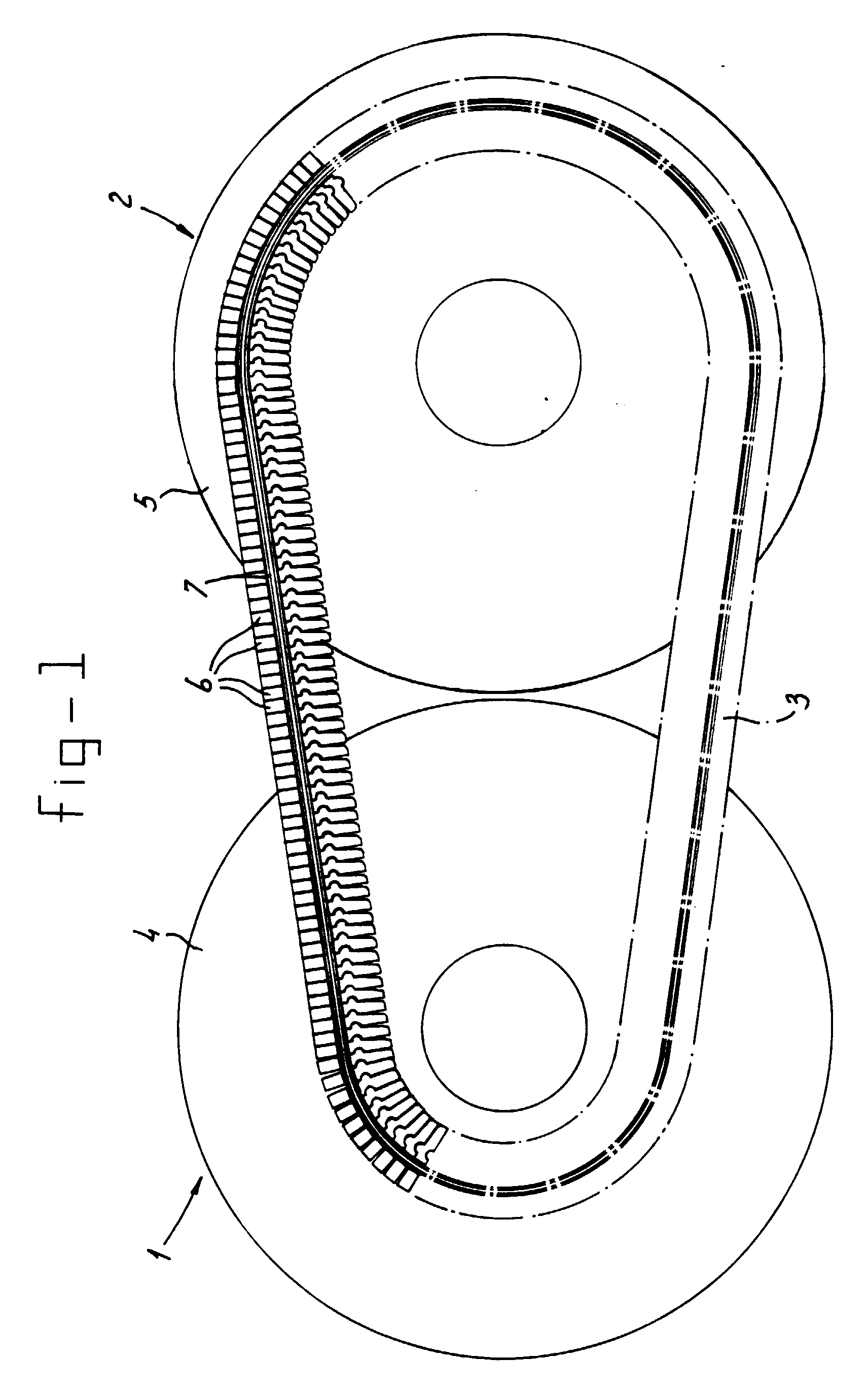
Fig. 1 shows a diagrammatically illustrated continuously variable transmission;
Fig. 2 shows a transverse element in front view (a) and side view (b);
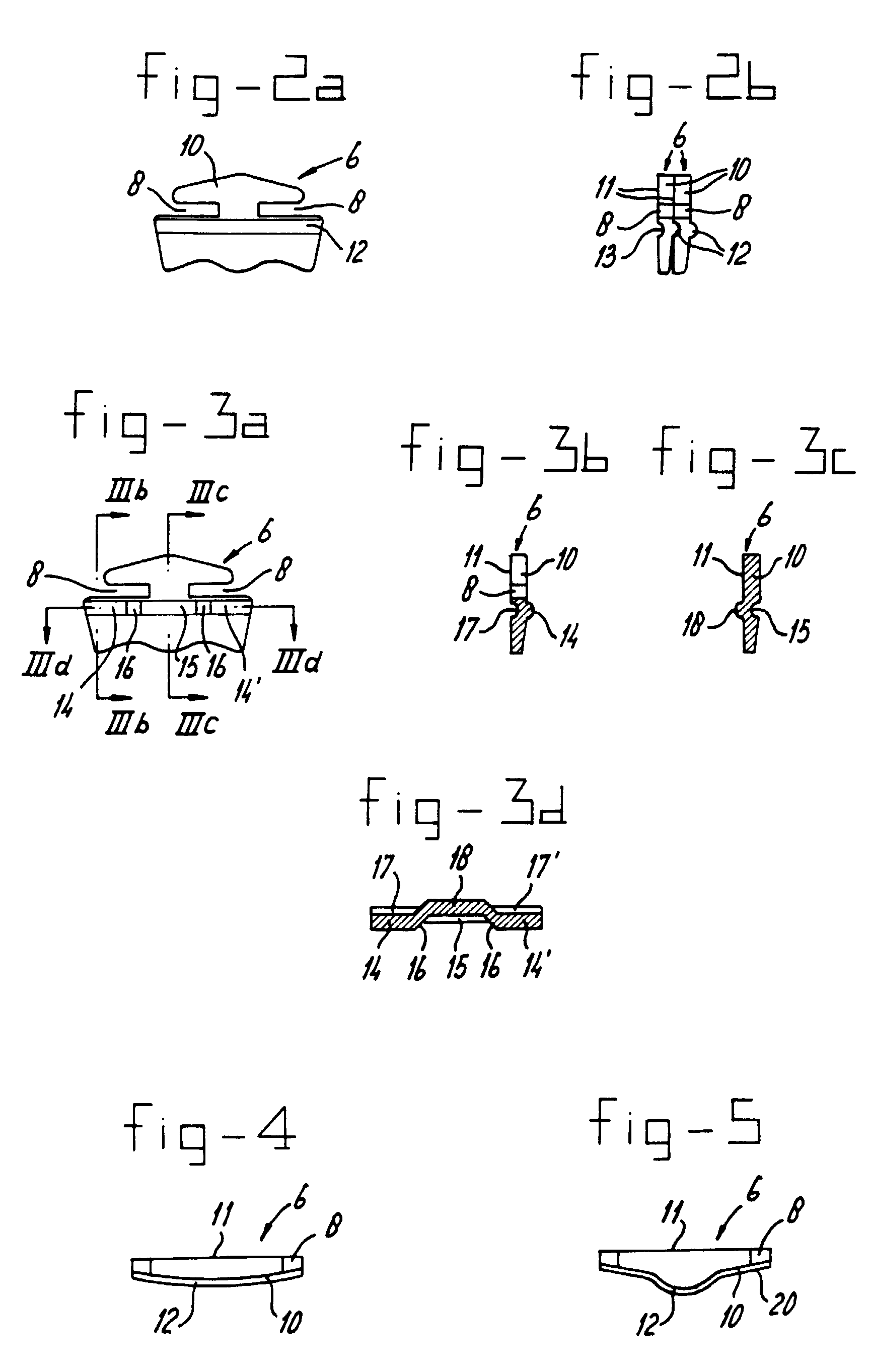
Fig. 3 shows a transverse element according to one development of the invention provided
with several ridges and grooves, in front view (a), in cross-section IIIb-IIIb, in
cross-section IIIc-IIIc and in cross-section IIId-IIId;
Fig. 4 shows a top view of the transverse element shown in Figure 2, in which the
main face and the ridge are convex in the crosswise direction according to a further
development of the invention;
Fig. 5 shows a top view of the transverse element shown in Figure 2, in which the
centre parts of the main face and of the ridge are convex and slope to the sides according
to said further development of the invention.
[0011] The continuously variable transmission shown in Figure 1 comprises two pulleys 1,
2, with an endless transmission unit 3 fitted around them. The endless transmission
unit 3 in this example is provided with carriers 7 having transverse elements 6 disposed
slidably thereon.
[0012] The transverse elements 6 can be of a type in the case of which only one carrier
7 can be accommodated, but they can also be of a type in the case of which two or
more carriers 7 can be accommodated. The carrier or carriers 7, for their part, can
comprise one or more stacks of endless elements.
[0013] Figure 2a shows a transverse element 6 of the type in the case of which two carriers
7 can be accommodated in the lateral openings 8. In order to illustrate the element
6 further, two of said transverse elements 6 are placed with their main faces 10,
11 against each other in Figure 2b in side view. The main face 10 may run radially
inwards at a slight angle to main face 11. This supports the bending of the endless
transmission unit 3, but is not absolutely necessary for this purpose. A ridge 12
is provided on the main side 10, while a complementary groove 13 is formed in main
face 11. In the assembled state shown in Figure 2b, ridge 12 extends into groove 13,
forming a universal joint. The ridge 12 and the groove 13 make rolling of the transverse
elements 6 relative to each other possible during bending of the endless transmission
unit between the pulleys. The ridge 12 and the groove 13 also ensure precise positioning
of the transverse elements 6.
[0014] Figure 2a shows an embodiment of the transverse element 6 in which the ridge 12 and
the groove 13 are provided over the full width of the transverse element 6. This is
advantageous in particular when a certain relative lateral movement of the transverse
elements 6 is desirable. Furthermore, the same effect can be achieved to a greater
or lesser extent by making the ridge narrower than the groove 13.
[0015] It may, on the other hand, be desirable for the transverse elements also to be fixed
relative to each other in the lateral direction. This can be achieved, inter alia,
by the embodiment according to one development of the invention shown in Figure 3,
in which two ridges 14, 14' with a groove 15 between them are provided on the main
face 10. Two grooves 17, 17' with a ridge 18 between them are provided on the other
main face 11. This makes the main faces 10 and 11 complementary, while in this embodiment
the transverse elements cannot shift laterally relative to each other. Furthermore,
in the embodiment shown in Figure 3 the boundary between the ridges 14, 14', 18 and
the adjoining grooves 15, 17, 17' are made slanting, with the result that the coupling
between ridges and grooves is self-seeking and a good coupling is ensured.
[0016] The ridges and grooves in the embodiments of the figures shown are preferably semi-circular
in shape, a radius of between 0.2 and 2 mm, and of 0.5 mm in particular, being suitable
for the curvature.
[0017] In the embodiment according to a further development of the invention shown in Figure
4, the main face 10 of the transverse element 6 is convex in the crosswise direction.
The ridge 12 situated on the main face 10 is correspondingly convex in the crosswise
direction. This makes it possible for the transverse elements 6 also to roll laterally.
An advantageous radius for the construction of the convex main side lies between one
and ten metres, and is preferably two metres.
[0018] In a further development of this inventive idea shown in Figure 5, the main face
10 and the ridge 12 are convex only in the centre part in the crosswise direction,
which convex part ends laterally in slanting parts 20. The slanting parts preferably
have an angle of gradient between 0.01° and 0.15°, and in particular 0.05°.
[0019] It will be clear that the invention is not limited to the embodiments shown and that
many variants which are considered to fall within the inventive idea are conceivable
within the scope of the invention. For example, two spatially separated ridges may
be disposed on one main face, while two complementary, spatially separated grooves
are provided in the other main face. The ridges and grooves may in this case - but
also in other embodiments - have any desired profiles in front view, for example a
round profile.
1. Transverse element (6) for an endless transmission unit (3), which transmission unit
(3) comprises one or more carriers (7) having transverse elements (6) slidably disposed
thereon, the transverse element (6) being provided with coupling means and also a
tilting zone on at least one of the two main faces (10, 11) of the transverse element,
which coupling means and the tilting zone are integrated in a universal joint comprising
at least one ridge (14,18) in one main face and a corresponding groove (15,17) in
the other main face, characterized in that at least two ridges (14,14') are provided in one main face, with a groove
(15) between them, and at least two grooves (17, 17') are provided in the other main
face, with a ridge between (18) them.
2. Transverse element of claim 1, wherein the groove (15,17,17') in one main face is
wider than the ridge (14,14',18) in the other main face.
3. Transverse element of one of the preceding claims, wherein a transition from one ridge
(14, 14') and adjacent groove (15) situated in the same main face has a slanting boundary (16).
4. Transverse element of one of the preceding claims, wherein the ridge and/or groove
are semi-circular in shape.
5. Transverse element of claim 4, wherein the radius of the semi-circular ridge and/or
groove lies between 0.2 and 2 mm, preferably 0.5 mm.
6. Transverse element (6) for an endless transmission unit (3), which transmission unit
(3) comprises one or more carriers (7) having transverse elements (6) slidably disposed
thereon, the transverse element (6) being provided with coupling means and also a
tilting zone on at least one of the two main faces (10, 11) of the transverse element
(6), which coupling means and the tilting zone are integrated in a universal joint
comprising at least one ridge (12) in one main face and a corresponding groove in the other main face, characterized in that at least one of the two main faces (10, 11) is at least partially profiled
in at least the crosswise direction.
7. Transverse element of claim 6, wherein the groove and/ or the ridge are at least partially
profiled correspondingly to the main face (10, 11) in which the groove and/or the
ridge are provided.
8. Transverse element of claim 7, wherein at least one of the two main faces is at least
partially convex.
9. Transverse element of claim 8, wherein the convex part has a radius which lies between
one and ten metres, preferably two metres.
10. Transverse element of claim 8 or 9, wherein the main face (11) with the groove provided
therein is flat, and wherein the main face (10) with the ridge is at least partially
convex.
11. Transverse element of one of the preceding claims 6-10, wherein at least one main
face (10) and the ridge (12) and/or groove are convex in the centre part.
12. Transverse element of claim 11, wherein the convex centre part of the main face (10)
and/or the ridge (12) merges laterally into a slanting part (20).
13. Transverse element of claim 12, wherein the slanting part (20) forms an angle of gradient
between 0.01° and 0.15°, preferably 0.05°.
14. Endless transmission unit (3) provided with one or more transverse elements (6) according
to one of the preceding claims.
1. Querelement (6) für ein endloses Antriebsorgan (3), welches Antriebsorgan (3) einen
oder mehrere Träger (7) umfaßt, die Querelemente (6) aufweisen, die daran verschiebbar
angeordnet sind, wobei das Querelement (6) mit einer Kopplungseinrichtung und auch
einem Neigungsbereich auf mindestens einer der zwei Hauptseiten (10, 11) des Querelements
versehen ist, wobei die Kopplungseinrichtung und der Neigungsbereich in ein Universalgelenk
integriert sind, das mindestens eine Rippe (14, 18) in einer Hauptseite und eine entsprechende
Nut (15, 17) in der anderen Hauptseite umfaßt, dadurch gekennzeichnet, daß mindestens zwei Rippen (14, 14') in einer Hauptseite mit einer Nut (15) zwischen
ihnen vorgesehen sind, und mindestens zwei Nuten (17, 17') in der anderen Hauptseite
mit einer Rippe zwischen (18) ihnen vorgesehen sind.
2. Querelement des Anspruchs 1, worin die Nut (15, 17, 17') in einer Hauptseite weiter
als die Rippe (14, 14', 18) in der anderen Hauptseite ist.
3. Querelement nach einem der vorhergehenden Ansprüche, worin ein Übergang von einem
Rippe (14, 14') und der benachbarten Nut (15), die sich in derselben Hauptseite befindet,
eine schräge Abgrenzung (16) hat.
4. Querelement nach einem der vorhergehenden Ansprüche, worin die Rippe und/oder die
Nut halbkreisförmig sind.
5. Querelement des Anspruchs 4, worin der Radius der halbkreisförmigen Rippe und/oder
Nut zwischen 0,2 und 2 mm, vorzugsweise bei 0,5 mm liegt.
6. Querelement (6) für ein endloses Antriebsorgan (3), welches Antriebsorgan (3) einen
oder mehrere Träger (7) umfaßt, die Querelemente (6) aufweisen, die daran verschiebbar
angeordnet sind, wobei das Querelement (6) mit einer Kopplungseinrichtung und auch
einem Neigungsbereich auf mindestens einer der zwei Hauptseiten (10, 11) des Querelements
versehen ist, wobei die Kopplungseinrichtung und der Neigungsbereich in ein Universalgelenk
integriert sind, das mindestens eine Rippe (14, 18) in einer Hauptseite und eine entsprechende
Nut (15, 17) in der anderen Hauptseite umfaßt, dadurch gekennzeichnet, daß mindestens eine der zwei Hauptseiten (10, 11) mindestens teilweise in mindestens
der Querrichtung mit einem Profil versehen ist.
7. Querelement des Anspruchs 6, worin die Nut und/oder die Rippe mindestens teilweise
entsprechend der Hauptseite (10, 11) mit einem Profil versehen ist, in der die Nut
und/oder die Rippe vorgesehen ist.
8. Querelement des Anspruchs 7, worin mindestens eine der zwei Hauptseiten mindestens
teilweise konvex ist.
9. Querelement des Anspruchs 8, worin der konvexe Teil einen Radius aufweist, der zwischen
einem und zehn Metern, vorzugsweise bei zwei Metern liegt.
10. Querelement des Anspruchs 8 oder 9, worin die Hauptseite (11) mit der darin vorgesehenen
Nut flach ist, und worin die Hauptseite (10) mit der Rippe mindestens teilweise konvex
ist.
11. Querelement nach einem der vorhergehenden Ansprüche 6-10, worin mindestens eine Hauptseite
(10) und die Rippe (12) und/oder die Nut in dem mittleren Teil konvex sind.
12. Querelement des Anspruchs 11, worin der konvexe, mittlere Teil der Hauptseite (10)
und/oder die Rippe (12) seitlich in einen geneigten Teil (20) verläuft.
13. Querelement des Anspruchs 12, worin der geneigte Teil (20) einen Steigungswinkel von
zwischen 0,01° und 0,15°, vorzugsweise von 0,05°, bildet.
14. Endloses Antriebsorgan (3), das mit einem oder mehreren Querelementen (6) gemäß einem
der vorhergehenden Ansprüche versehen ist.
1. Élément transversal (6) pour une unité de transmission sans fin (3), laquelle unité
de transmission (3) comprend un ou plusieurs supports (7) comportant des éléments
transversaux (6) montés de manière à pouvoir glisser sur ces supports, l'élément transversal
(6) étant équipé de moyens d'accouplement et également d'une zone de basculement'sur
au moins l'une des deux faces principales (10,11) de l'élément transversal, lesquels
moyens d'accouplement et la zone de basculement sont intégrés dans un joint universel
comprenant au moins une nervure (14,18) située sur une face principale et une rainure
correspondante (15,17) située sur l'autre face, caractérisé en ce qu'au moins deux
nervures (14,14') sont prévues sur une face principale, avec une rainure (15) entre
elles, et au moins deux rainures (17,17') sont prévues sur l'autre face principale,
avec une nervure (18) entre elles.
2. Élément transversal selon la revendication 1, dans lequel la rainure (15,17,17') située
dans une face principale est plus large que la nervure (14,14',18) située sur l'autre
face principale.
3. Élément transversal selon l'une des revendications précédentes, dans lequel une transition
entre une nervure (14,14') et une rainure adjacente (15) située dans la même face
principale possède une limite inclinée (16).
4. Élément transversal selon l'une des revendications précédentes, selon lequel la nervure
et/ou la rainure ont une forme semi-circulaire.
5. Élément transversal selon la revendication 4, dans lequel le rayon de la nervure et/ou
de la rainure semi-circulaire est compris entre 0,2 et 2 mm et de préférence égal
à 0,5 mm.
6. Élément transversal pour une unité de transmission sans fin (3), laquelle unité de
transmission (3) comprend plusieurs transporteurs (7) comportant des éléments transversaux
(6) montés de manière à pouvoir glisser sur cette unité, l'élément transversal (6)
étant équipé de moyens d'accouplement et également d'une zone de basculement sur au
moins l'une des deux faces principales (10,11) de l'élément transversal, lesquels
moyens d'accouplement et la zone de basculement sont intégrés dans un joint universel
comprenant au moins une nervure (12) située sur une face principale et une rainure
correspondante située sur l'autre face, caractérisé en ce qu'au moins l'une des deux
faces principales (10,11) est au moins partiellement profilée dans au moins une direction
transversale.
7. Élément transversal selon la revendication 6, selon lequel la rainure et/ou la nervure
sont au moins partiellement profilées d'une manière correspondant à la face principale
(10,11), dans laquelle la rainure et/ou la nervure sont prévues.
8. Élément transversal selon la revendication 7, dans lequel au moins l'une des deux
faces principales est au moins partiellement convexe.
9. Élément transversal selon la revendication 8, dans lequel la partie convexe possède
un rayon qui est compris entre un et dix mètres et est égal de préférence à deux mètres.
10. Élément transversal selon la revendication 8 ou 9, dans lequel la face principale
(11), dans laquelle est ménagée la rainure, est plane et la face principale (10) pourvue
de la nervure est au moins partiellement convexe.
11. Élément transversal selon l'une des revendications précédentes 6-10, dans lequel au
moins upe face principale (10) et la nervure (12) et/ou la rainure sont convexes dans
la partie centrale.
12. Élément transversal selon la revendication 11, dans lequel la partie centrale convexe
de la face principale (10) et/ou la nervure (12) se raccordent latéralement à une
partie inclinée (20).
13. Élément transversal selon la revendication 12, dans lequel la partie inclinée (20)
fait un angle de gradient compris entre 0,01° et 0,15° et égal de préférence à 0,05°.
14. Unité de transmission sans fin (3) équipée d'un ou plusieurs éléments transversaux
(6) selon l'une des revendications précédentes.