| (19) |
 |
|
(11) |
EP 0 605 829 B1 |
| (12) |
EUROPEAN PATENT SPECIFICATION |
| (45) |
Mention of the grant of the patent: |
|
16.09.1998 Bulletin 1998/38 |
| (22) |
Date of filing: 17.12.1993 |
|
|
| (54) |
Sealing device particularly for casements and the like
Abdichtungsvorrichtung, insbesondere für Rahmen oder dergleichen
Dispositif d'étanchéité, en particulier pour châssis ou similaires
|
| (84) |
Designated Contracting States: |
|
DE ES FR |
| (30) |
Priority: |
07.01.1993 IT MI930008
|
| (43) |
Date of publication of application: |
|
13.07.1994 Bulletin 1994/28 |
| (73) |
Proprietor: Barrett Aluminium and Metals Ltd. |
|
Dublin 2, Ireland (IE) |
|
| (72) |
Inventor: |
|
- Venchiarutti, Franco
I-20017 RHO (Prov. of Milan) (IT)
|
| (74) |
Representative: Modiano, Guido, Dr.-Ing. et al |
|
Modiano & Associati SpA
Via Meravigli, 16
20123 Milano
20123 Milano (IT) |
| (56) |
References cited: :
EP-A- 0 247 533
DE-A- 3 127 510
NL-A- 8 801 999
|
DE-A- 2 359 972
DE-U- 9 207 608
|
|
| |
|
|
|
|
| |
|
| Note: Within nine months from the publication of the mention of the grant of the European
patent, any person may give notice to the European Patent Office of opposition to
the European patent
granted. Notice of opposition shall be filed in a written reasoned statement. It shall
not be deemed to
have been filed until the opposition fee has been paid. (Art. 99(1) European Patent
Convention).
|
[0001] The present invention relates to a sealing device particularly for casements and
the like.
[0002] As is known, a problem which is currently strongly felt in the manufacture of casements
is related to the seals which are produced in order to obtain, for example, the so-called
"open joint".
[0003] In the solutions currently in use, the gaskets to be used for casements with extruded
aluminum profiled elements are different from those to be used for casements with
thermal insulation, since the coupling regions of the gaskets on the casements are
modified.
[0004] Furthermore, in the solutions of the known art the gaskets can be stiffened only
in the region where they couple to the profiled elements, since the amount of material,
generally rubber or similar plastic material, which forms the coupling tangs is increased;
however, such gaskets generally have the drawback that they are easily subject to
deformations, once they have been installed on the casement, so that poorly sealed
regions unavoidably form on the casement.
[0005] Another severe problem related to the solutions of the known art is constituted by
the fact that the corner region, i.e. the region where mutually perpendicular gaskets
must mate, is particularly critical. It is thus unavoidable that considerable losses
occur in these regions; such losses are due to the fact that it is not possible to
form a complete joint and consequently close the extension of the sealing gasket.
[0006] Another drawback is furthermore constituted by the fact that spacer bars made of
insulating plastic material are used, especially with thermally insulating profiled
elements, and unavoidably widen the gasket coupling region, with consequent connection
problems and difficulty in producing a correct abutment region for said gasket.
[0007] NL-A-8 801 999 discloses a sealing device including a combination of features as
recited in the preamble of the appended claim 1.
[0008] The present invention renders the use of such a sealing device in combination with
a gasket in the form of a sealing profiled element more variable.
[0009] A particular embodiment of the invention is directed to a sealing device which allows
to significantly improve the coupling in the corner regions, consequently improving
the seal, since it is possible to form a complete joint for said gasket.
[0010] Another embodiment of the present invention is directed to a sealing device wherein
the particular structure of the gasket allows to insert said gasket directly on the
aluminum profiled elements or bars prior to bar cutting, thus simultaneously cutting
the bar and the gasket, with consequent improved manufacturing precision.
[0011] Another embodiment of the present invention is directed to a sealing device which
allows to configure the sealing gaskets so as to avoid subjecting them to deformations
and furthermore allows, in the case of thermally insulating casements, to make the
gasket act on a part made of thermally insulating material instead of on the metal
part, as instead currently occurs.
[0012] The advantages of the invention which will become apparent hereinafter are achieved
by a sealing device as defined in the appended claims.
[0013] Further characteristics and advantages of the invention will become apparent from
the following description of a preferred but not exclusive embodiment of a sealing
device particularly for casements and the like, illustrated only by way of non-limitative
example in the accompanying drawings, wherein:
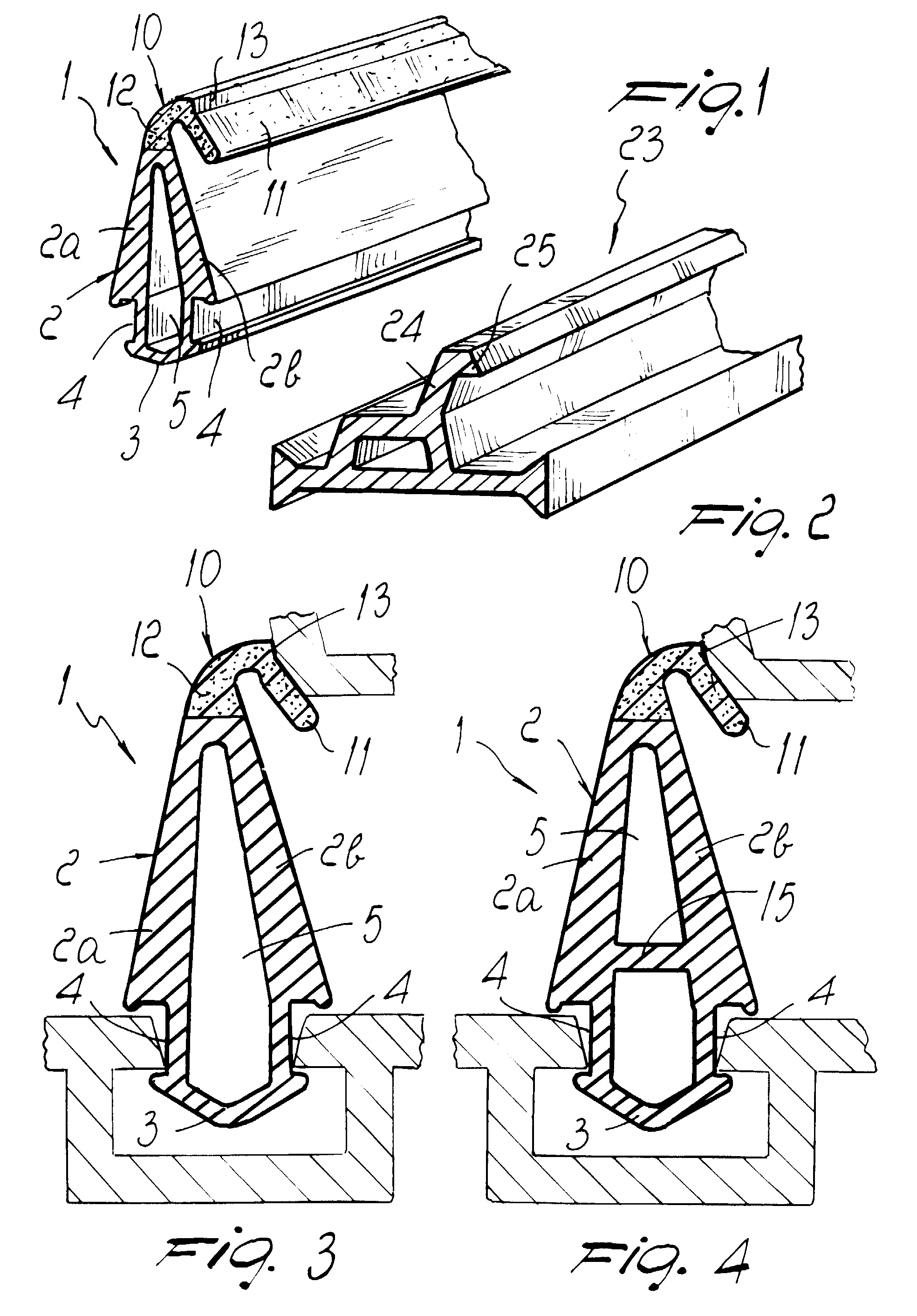
figure 1 is a schematic perspective view of a possible embodiment of the gasket;
figure 2 is a perspective view of a shaped spacer bar for thermally insulating profiled
elements;
figures 3 and 4 are transverse sectional views of two different embodiments of the
gasket, applied to a casement;
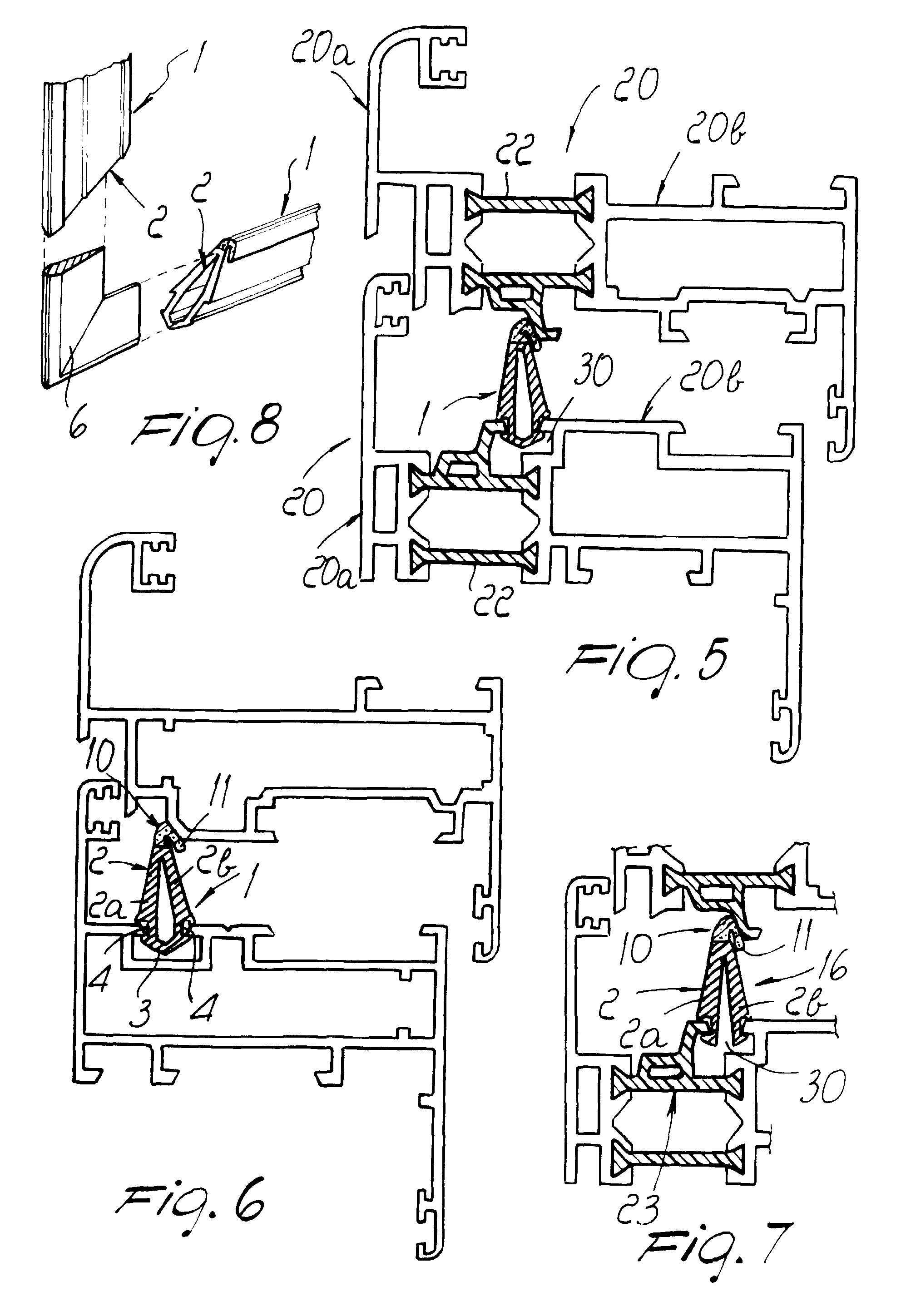
figure 5 is a schematic view of the device according to the invention applied to a
thermally insulating casement;
figure 6 is a view of the gasket applied to a casement with no thermal insulation;
figure 7 is a view of a different embodiment of the gasket, with insertion from the
front;
figure 8 is a perspective view of an L-shaped element for coupling in the corner regions
of the sealing profiled elements.
[0014] With reference to the above figures, the sealing device particularly for casements
and the like, according to the invention, comprises a sealing profiled element, generally
designated by the reference numeral 1, which has a body constituted by a coupling
region, generally designated by the reference numeral 2, made of semirigid material.
[0015] The coupling region 2 is provided with two arms 2a and 2b which merge toward the
free end and are connected to the coupling end by means of a bridge 3.
[0016] At the coupling end there are oppositely arranged recesses 4 for connection in the
seat.
[0017] An internal cavity 5 is formed inside the coupling body 2 in order to allow the insertion
of L-shaped elements 6 for joining the sealing profiled elements at the corner regions
of the casement.
[0018] The coupling portion, at its free end, is rigidly associated with an end portion
10 which is made of relatively soft material and preferably but not necessarily is
shaped so that its end flap 11 is folded with respect to the connecting portion 12,
which is rigidly associated with respect to the coupling body 2.
[0019] The end flap 11 is directed toward the gasket coupling body and is connected to the
connecting portion 12 by means of a raised portion 13 which in practice allows to
increase the sealing surface in order to produce optimum coupling to the facing profiled
element.
[0020] According to what is shown in figure 4, a different embodiment is provided for and
entails the adoption of a stiffening cross-member 15 arranged in the cavity 5 and
mutually joining the two oppositely arranged arms 2a and 2b.
[0021] According to a further embodiment, shown in figure 7, there is a sealing profiled
element, generally designated by the reference numeral 16, wherein the two arms, again
designated by the reference numerals 2a and 2b, are not mutually joined by the bridge
3 at the coupling region, thus allowing elastic contraction of one arm with respect
to the other for insertion into the cavity from the front.
[0022] The sealing device according to the invention is designed so that it is possible
to use the same sealing profiled element both for thermally insulating casements and
for casements with no thermal insulation.
[0023] For this purpose, the bars which join the two portions 20a and 20b of a profiled
element with thermal insulation, generally designated by the reference numeral 20,
are formed so that one bar 22 is of a conventional type and is connected to the related
parts of the profiled element, whereas the other bar 23 has, on one of its faces,
a tab 24 which protrudes laterally with respect to the body of the bar 23 and ends
with a tooth 25 extending parallel to the extension of the body of the bar 23.
[0024] Said tab 24 performs a double function, as more clearly shown in figure 5.
[0025] First of all, the back or extrados of the tab 24 acts as an abutment edge for said
gasket 1, so that in the forming of the so-called "open joint" the gasket couples
directly, forming a seal, on a thermally insulating material; furthermore, the tooth
25 arranged at the free end of the tab 24 has the purpose of forming, directly on
the profiled element, a seat 30 for the connection of the gasket.
[0026] In this manner, the same sealing profiled element is usable both for casements without
thermal insulation and for casements with thermal insulation.
[0027] Furthermore, by virtue of the exclusive shape of the bar 23, the external concavity,
which must generally be covered by secondary gaskets or by extensions of the central
gasket, is eliminated, thus avoiding stagnation of the water which is normally present
in the external chambers of open-joint sealing systems.
[0028] From the above description it can thus be seen that the invention achieves the intended
aim and objects, and in particular the fact is stressed that the sealing device described
above, which is based on the use of a particular shape of a bar made of thermally
insulating material in the manufacture of profiled elements with thermal insulation
and cooperates with a gasket shaped so that it is substantially rigid in the coupling
region and soft in the sealing region, allows to optimize the seals.
[0029] Furthermore, the sealing profiled element, designed so that it is substantially rigid,
allows to absolutely avoid any deformation of the gasket and furthermore, in combination
with the above described bar, is usable indifferently on profiled elements with thermal
insulation and on profiled elements without thermal insulation.
[0030] The invention thus conceived is susceptible to numerous modifications and variations,
all of which are within the scope of the invention.
[0031] In practice, the materials employed, as well as the contingent shapes and dimensions,
may be any according to the requirements.
[0032] Where technical features mentioned in any claim are followed by reference signs,
those reference signs have been included for the sole purpose of increasing the intelligibility
of the claims and accordingly such reference signs do not have any limiting effect
on the scope of each element identified by way of example by such reference signs.
1. Sealing device particularly for casements and the like, comprising, in a profiled
element (20) with thermal insulation, at least one of the bars (23) which join the
two parts (20a,20b) of the profiled element (20) having a tab (24) which protrudes
from the body of the bar and ends with a tooth (25) extending substantially parallel
with respect to said bar (23), said tooth (25) arranged at the end of said tab (24)
of said bar (23) is suitable to form, in cooperation with an oppositely arranged tooth
of the profiled element (20), a seat (30) for accommodating a sealing profiled element
(1), characterized in that the protruding tab (24) has a flat surface arranged opposite the tooth (25) and is
suitable to act as an abutment element for said sealing profiled element (1) such
that said profiled element (20) is usable both for forming the seat for accommodating
the sealing profiled element (1) and for acting as an abutment element for the sealing
profiled element (1).
2. Sealing device according to claim 1, wherein said sealing profiled element (1) has
different hardnesses in transverse cross-section, the body of said profiled element
forming a coupling portion (2) made of semirigid material which is rigidly associated
with an end portion (10) made of relatively soft material, said body, in said coupling
portion (2), forming an internal cavity (5), there being provided an L-shaped joining
element (6) inserted in the internal cavity (5) for joining the profiled element (1)
at the corners of the casement.
3. Sealing device according to claim 2, characterized in that said sealing profiled element
(1) has a body constituted by two arms (2a, 2b) which merge at said end portion (10)
and are joined, at their opposite end, by a bridge (3) which forms said cavity (5)
in cooperation with said arms (2a, 2b).
4. Sealing device according to claim 3, characterized in that it comprises, at the end
of said arms (2a, 2b), on the side of the coupling region (2), recesses (4) for accommodating
said sealing profiled element (1) in the coupling seat of the profiled element.
5. Sealing device according to any one or more of the preceding claims 2 to 4, characterized
in that said end portion (10) is made of relatively soft material and has a connecting
portion (12) ending with an end flap (11) folded toward said coupling body (2).
6. Sealing device according to claim 5, characterized in that said end flap (11) is connected
to said connecting portion (12) by means of a raised portion (13) suitable to increase
the region of contact to provide the seal.
7. Sealing device according to any one or more of the preceding claims 2 to 6, characterized
in that said sealing profiled element (1) has, in said coupling body (2), a cross-member
(15) affecting said cavity (5) and suitable to stiffen the profiled element.
8. Sealing device according to any one or more of the preceding claims 3 to 7, characterized
in that said arms (2a, 2b) which constitute said coupling body (2) are mutually separate
at their free end in order to provide a mutual spacing elasticity suitable to allow
an elastic contraction insertion of said arms of said sealing profiled element (1)
into a profiled element seat.
1. Abdichtungsvorrichtung, insbesondere für Rahmen oder dergleichen, bei der in einem
Profilelement (20) mit thermischer Isolation wenigstens eine der Leisten (23), die
die beiden Teile (22a, 22b) des Profilelementes (20) verbindet, einen Ansatz (24)
aufweist, der von dem Körper der Leiste vorsteht und in einem Zahn (25) endet, der
sich im wesentlichen parallel im Bezug auf die Leiste (23) erstreckt, wobei der Zahn
(25), der am Ende des Ansatzes (24) der Leiste (23) angeordnet ist, geeignet ist,
in Zusammenwirkung mit einem gegenüberliegend angeordneten Zahn des Profilelementes
(20) einen Sitz (30) zur Aufnahme eines Abdichtungs-Profilelementes (1) zu bilden,
dadurch gekennzeichnet, daß der vorstehende Ansatz (24) eine flache Oberfläche aufweist, die gegenüber dem Zahn
(25) angeordnet ist und geeignet ist, als Anschlagelement für das Abdichtungs-Profilelement
(1) zu wirken, so daß das Profilelement (20) sowohl zur Bildung eines Sitzes zur Aufnahme
des Dichtungs-Profilelementes (10) als auch dazu verwendbar ist, als Anschlagelement
für das Abdichtungs-Profilelement (1) zu wirken.
2. Abdichtungsvorrichtung nach Anspruch 1, worin das Abdichtungs-Profilelement (1) eine
unterschiedliche Härte in transversalem Querschnitt aufweist, der Körper des Profilelementes
einen Kopplungsabschnitt (2) aus halb starrem Material bildet, der starr mit einem
Endabschnitt (10) aus einem verhältnismäßig weichem Material verbunden ist, der Körper
in dem Kopplungsabschnitt (2) eine interne Ausnehmung (5) bildet und worin ein L-förmiges
Verbindungselement (6) vorgesehen ist, welches in der internen Ausnehmung (5) eingesetzt
ist, um das Profilelement (1) an den Ecken des Rahmens zu verbinden.
3. Abdichtungsvorrichtung nach Anspruch 2, dadurch gekennzeichnet, daß das Abdichtungs-Profilelement (1) einen Körper aufweist, der aus zwei Armen (2a,
2b) gebildet ist, die an dem Endabschnitt (10) ineinander übergehen, und an ihren
gegenüberliegenden Enden durch eine Brücke (3) miteinander verbunden sind, die die
Ausnehmung (5) in Zusammenwirkung mit den Armen (2a, 2b) bildet.
4. Abdichtungsvorrichtung nach Anspruch 3, dadurch gekennzeichnet, daß sie an dem Ende der Arme (2a, 2b) auf der Seite des Kopplungsbereiches zwei Ausnehmungen
(4) aufweist, um das Abdichtungs-Profilelement (1) in dem Kopplungssitz des Profilelements
aufzunehmen.
5. Abdichtungsvorrichtung nach einem oder mehreren der vorhergehenden Ansprüche 2 bis
4, dadurch gekennzeichnet, daß der Endabschnitt (10) aus einem verhältnismäßig weichen Material gebildet ist und
einen Verbindungsabschnitt (12) aufweist, der an einem Endansatz (11) endet, der in
Richtung auf den Kopplungskörper (2) umgefaltet ist.
6. Abdichtungsvorrichtung nach Anspruch 5, dadurch gekennzeichnet, daß der Endansatz (11) mit dem Verbindungsabschnitt (12) mit Hilfe eines angehobenen
Abschnittes (13) verbunden ist, der geeignet ist, den Kontaktbereich zu erhöhen, um
eine Dichtung bereitzustellen.
7. Abdichtungsvorrichtung nach einem oder mehreren der vorhergehenden Ansprüche 2 bis
6, dadurch gekennzeichnet, daß das Abdichtungs-Profilelement (1) an dem Kopplungskörper (2) einen Querteil (10)
aufweist, der die Ausnehmung (5) beeinflußt und geeignet ist, das Profilelement zu
versteifen.
8. Abdichtungsvorrichtung nach einem oder mehreren der vorhergehenden Ansprüche 3 bis
7, dadurch gekennzeichnet, daß die Arme (2a, 2b), die den Kopplungskörper (2) bilden, an ihrem freien Ende wechselweise
getrennt voneinander sind, um einen wechselseitigen Abstand bereitzustellen, der elastisch
ausgebildet und dazu geeignet ist, eine elastische Kontraktionseinführung der Arme
des Abdichtungsprofilelements (1) in einen Profilelementsitz zu gestatten.
1. Dispositif d'étanchéité, destiné en particulier à des châssis de fenêtre ou analogue,
comprenant, dans un élément profilé (20) avec isolation thermique, l'une au moins
des barres (23) qui réunit les deux parties (20a, 20b) de l'élément profilé (20) qui
comporte une patte (24) dépassant du corps de la barre et se terminant par une dent
(25) qui est sensiblement parallèle à ladite barre (23), ladite dent (25) placée en
l'extrémité de ladite patte (24) de la barre (23) étant apte à former, en association
avec une dent de l'élément profilé (20) disposée en vis-à-vis, un logement (30) destiné
à recevoir un élément profilé d'étanchéité (1),
caractérisé en ce que la patte en saillie (24) comporte une surface plate disposée
à l'opposé de la dent (25) et est capable de servir d'élément d'arrêt pour ledit élément
profilé d'étanchéité (1) de sorte que ledit élément profilé (20) peut être utilisé
à la fois pour former le logement destiné à recevoir l'élément profilé d'étanchéité
(1) et pour servir d'élément d'arrêt à l'élément profilé d'étanchéité (1).
2. Dispositif d'étanchéité selon la revendication 1, dans lequel ledit élément profilé
d'étanchéité (1) présente des duretés différentes dans sa section transversale, le
corps dudit élément profilé formant une partie d'accouplement (2) faite d'un matériau
semi-rigide qui est rigidement associée à une partie d'extrémité (10) faite d'un matériau
relativement mou, ledit corps formant dans ladite partie d'accouplement (2) une cavité
intérieure (5), un élément de jonction (6) en forme de L étant inséré dans ladite
cavité intérieure (5) pour assurer la jonction de l'élément profilé (1) au niveau
des angles du châssis.
3. Dispositif d'étanchéité selon la revendication 2, caractérisé en ce que ledit élément
profilé d'étanchéité (1) comprend un corps formé de deux branches (2a, 2b) qui se
rejoignent en ladite partie d'extrémité (10) et qui sont réunies, en leur extrémité
opposée, par un pontet (3) qui forme ladite cavité (5) en coopération avec lesdites
branches (2a, 2b).
4. Dispositif d'étanchéité selon la revendication 3, caractérisé en ce qu'il comprend,
en l'extrémité desdites branches (2a, 2b) et du côté de la partie d'accouplement (2),
des évidements (4) servant à ajuster ledit élément d'étanchéité profilé (1) dans le
logement d'accouplement de l'élément profilé.
5. Dispositif d'étanchéité selon une ou plusieurs des précédentes revendications 2 à
4, caractérisé en ce que ladite partie d'extrémité (10) est faite d'un matériau relativement
mou et comprend une partie de liaison (12) qui se termine par un rabat terminal (11)
replié vers ledit corps d'accouplement (2).
6. Dispositif d'étanchéité selon la revendication 5, caractérisé en ce que ledit rabat
terminal (11) est couplé à ladite partie de liaison (12) par une partie soulevée (13)
capable d'augmenter la zone de contact pour assurer l'étanchéité.
7. Dispositif d'étanchéité selon une ou plusieurs des précédentes revendications 2 à
6, caractérisé en ce que ledit élément profilé d'étanchéité (1) comprend, dans ledit
corps d'accouplement (2), une traverse (15) qui affecte ladite cavité (5) et permet
de rigidifier l'élément profilé.
8. Dispositif d'étanchéité selon une ou plusieurs des précédentes revendications 3 à
7, caractérisé en ce que lesdites branches (2a, 2b) qui constituent ledit corps d'accouplement
(2) sont séparées l'une de l'autre en leur extrémité libre afin de fournir une élasticité
d'espacement mutuel qui permet une insertion desdites branches dudit élément profilé
d'étanchéité (1) dans un logement de l'élément profilé par contraction élastique.