| (19) |
 |
|
(11) |
EP 0 614 960 B1 |
| (12) |
EUROPEAN PATENT SPECIFICATION |
| (45) |
Mention of the grant of the patent: |
|
06.11.1996 Bulletin 1996/45 |
| (22) |
Date of filing: 07.03.1994 |
|
| (51) |
International Patent Classification (IPC)6: C09K 11/02 |
|
| (54) |
Cathode-ray tube fluorescent material and its method of manufacture
Fluoreszentes Kathodenstrahlrohr-Material und Verfahren zur Herstellung desselben
Matériau fluorescent pour tube à rayons cathodiques et méthode de fabrication de celui-ci
|
| (84) |
Designated Contracting States: |
|
GB IT |
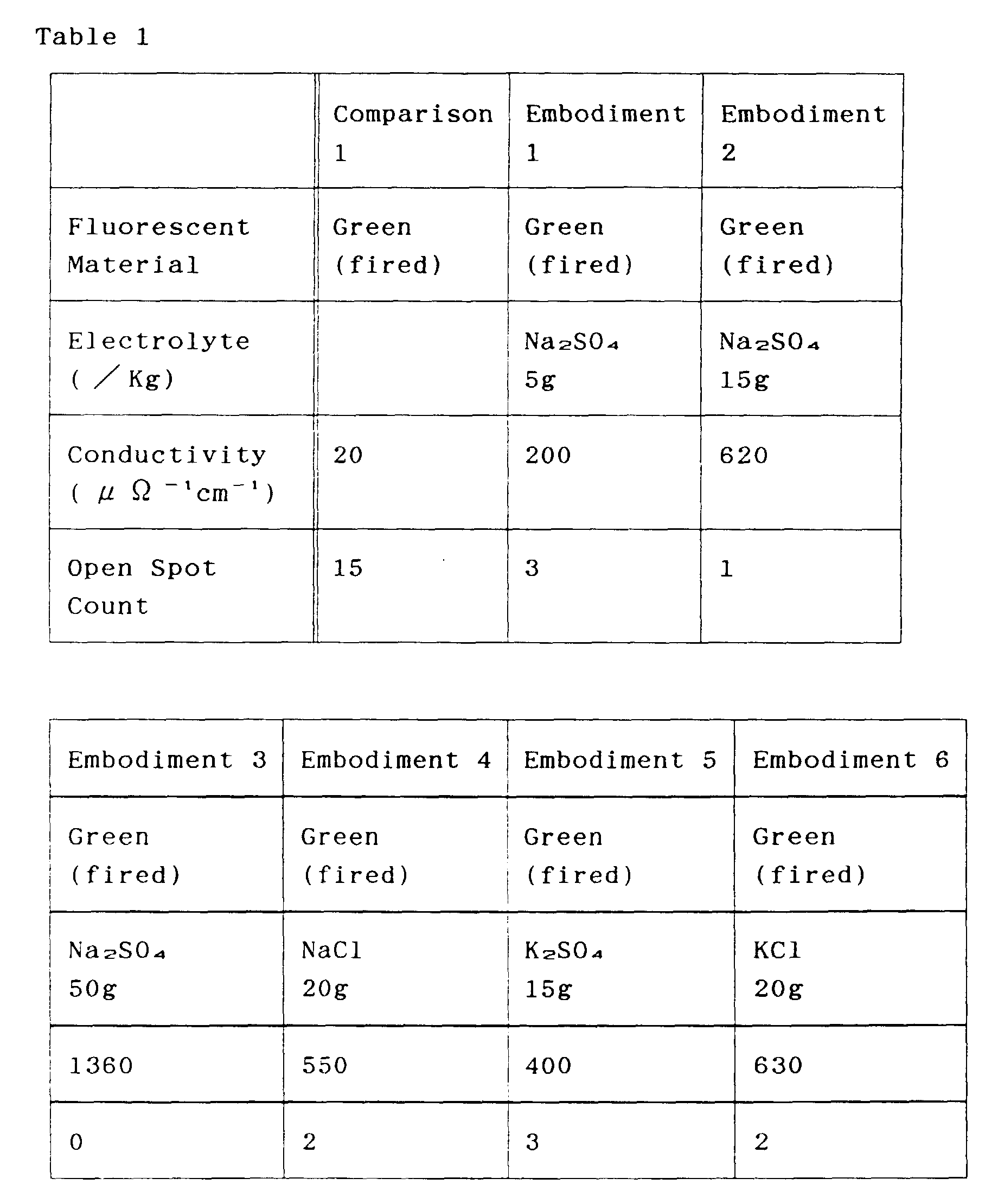
| (30) |
Priority: |
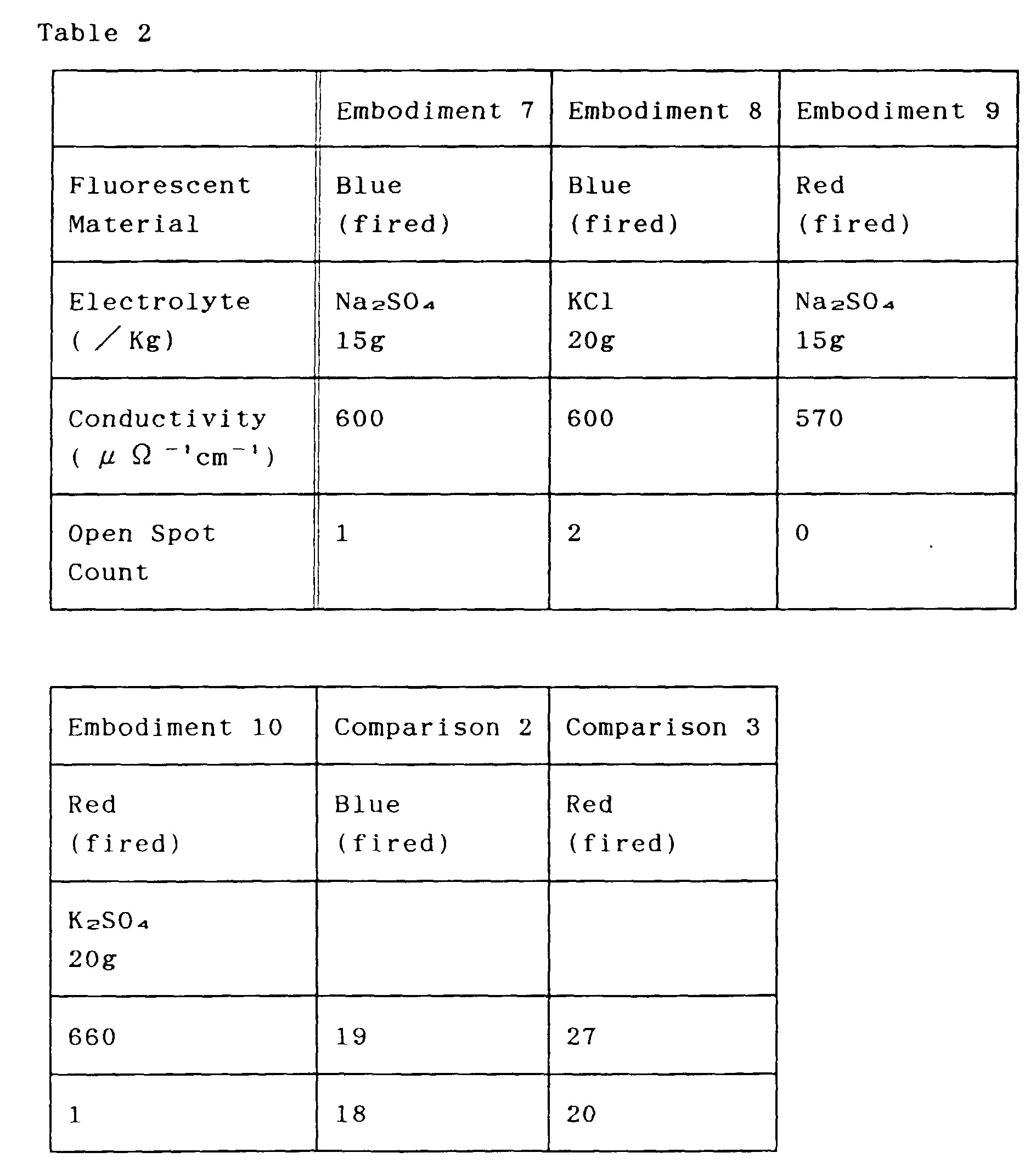
11.03.1993 JP 50433/93
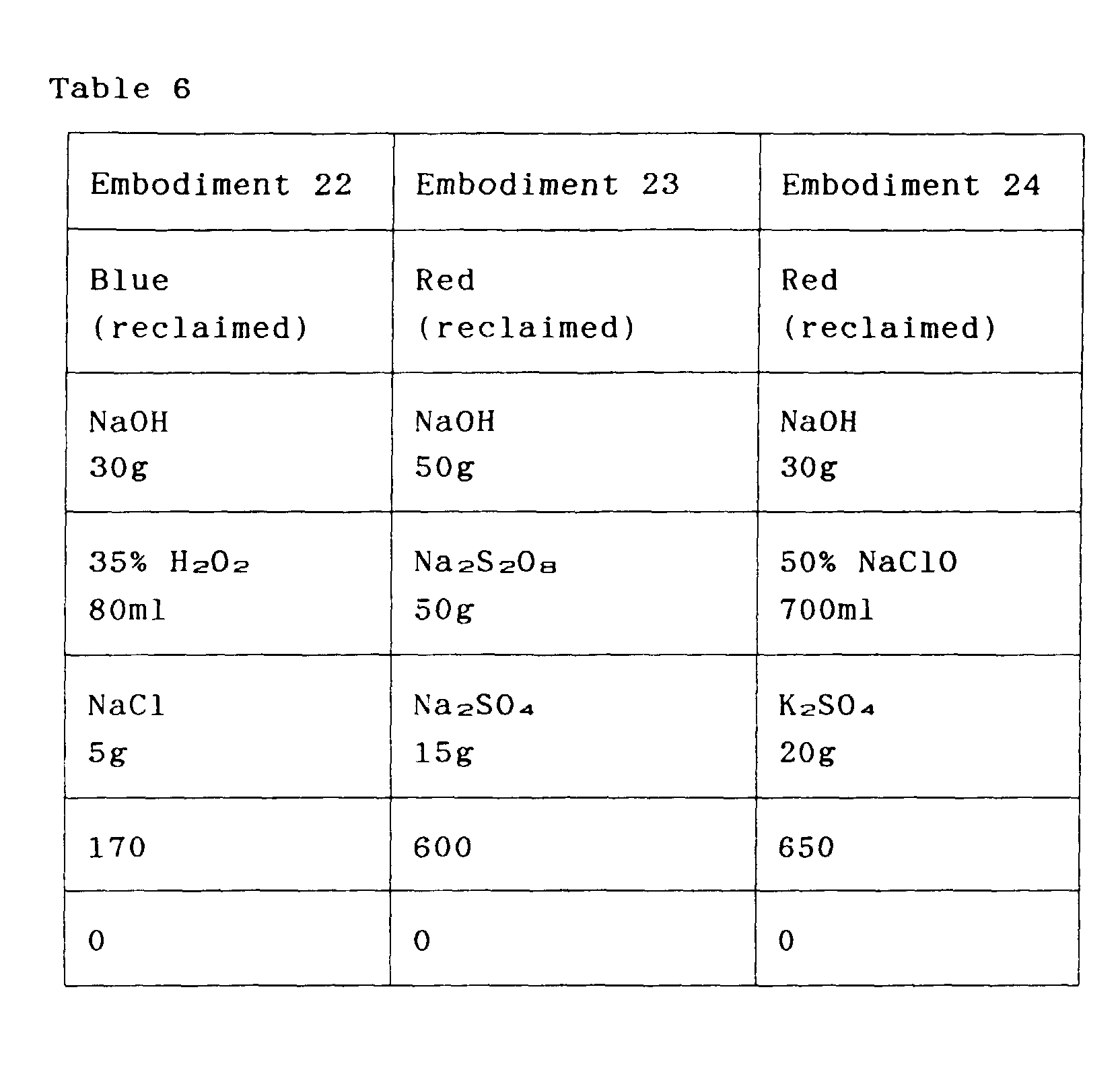
|
| (43) |
Date of publication of application: |
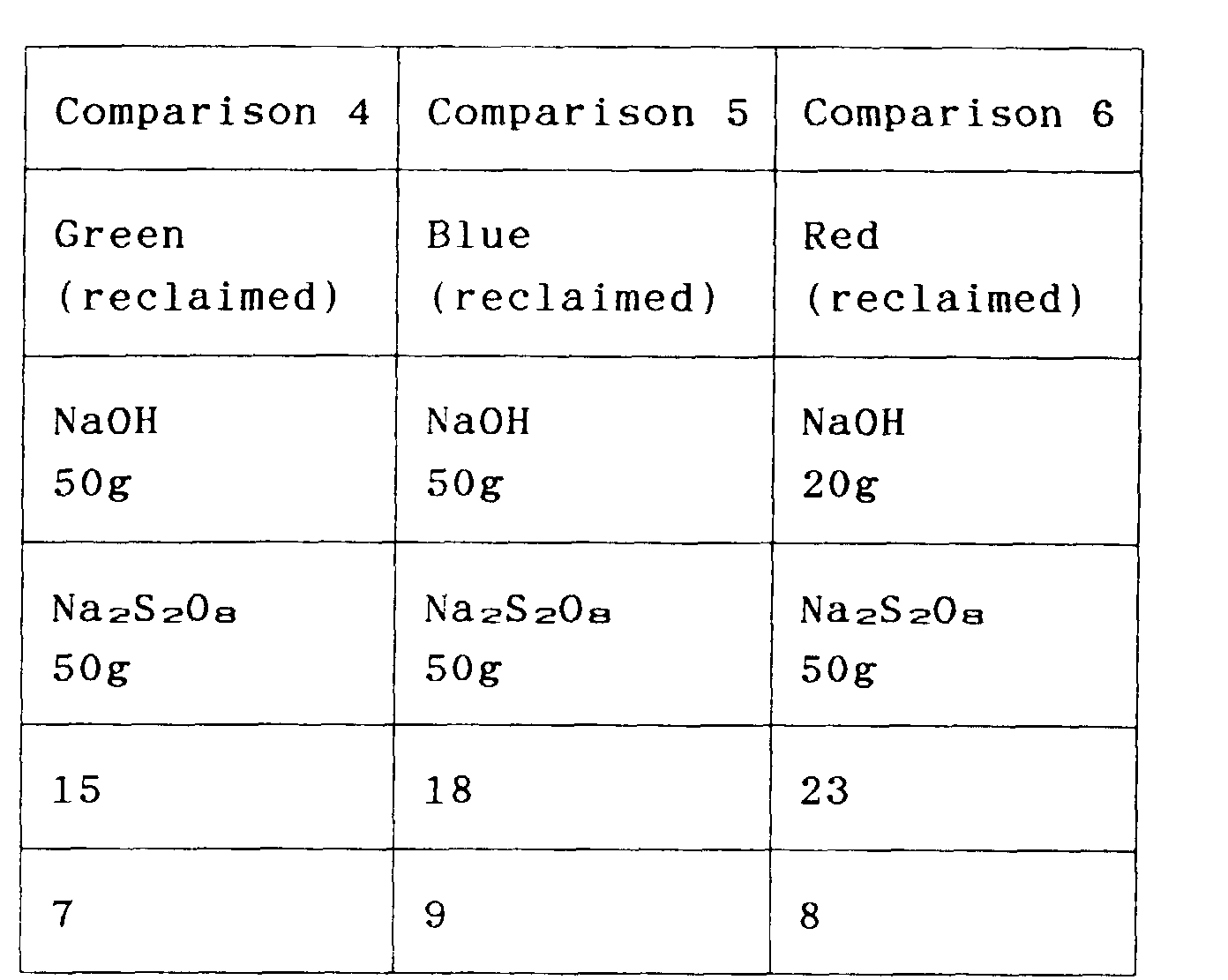
|
14.09.1994 Bulletin 1994/37 |
| (73) |
Proprietor: NICHIA CHEMICAL INDUSTRIES, LTD. |
|
Anan-shi,
Tokushima-ken (JP) |
|
| (72) |
Inventors: |
|
- Aihara, Yoshikatsu
Anan-shi,Tokushima 774 (JP)
- Bando, Shoichi
Ishii-cho, Myozai-gun, Tokushima 779-32 (JP)
|
| (74) |
Representative: Hillier, Peter et al |
|
Reginald W. Barker & Co.,
Chancery House,
53-64, Chancery Lane
London, WC2A 1QU
London, WC2A 1QU (GB) |
| (56) |
References cited: :
EP-A- 0 228 010
|
EP-A- 0 482 603
|
|
| |
|
|
- PATENT ABSTRACTS OF JAPAN vol. 2, no. 34 (C-005)8 March 1978 & JP-A-52 133 887 (MATSUSHITA)
|
|
| |
|
| Note: Within nine months from the publication of the mention of the grant of the European
patent, any person may give notice to the European Patent Office of opposition to
the European patent
granted. Notice of opposition shall be filed in a written reasoned statement. It shall
not be deemed to
have been filed until the opposition fee has been paid. (Art. 99(1) European Patent
Convention).
|
[0001] This invention relates to a Cathode-Ray Tube (CRT) fluorescent material and its method
of manufacture wherein the surface properties of the fluorescent material are modified,
while maintaining fluorescent functionality, to allow uniform fluorescent material
film formation during CRT face-plate coating.
[0002] Various coating methods have been developed for forming a fluorescent material coating
on the face-plate of a color CRT. Among them, the slurry method is the most often
used. In the slurry method, a face-plate is coated with a fluorescent film as follows.
Ammonium dichromate (ADC) or like substance is added to an aqueous solution of fluorescent
material particles and polyvinyl alcohol (PVA) to make a fluorescent material suspension
(slurry). The inner surface of the face-plate is coated with this fluorescent material
suspension. The coated surface is then exposed to ultra-violet light through a shadow-mask
causing the exposed areas to oxidize and harden. Since the unexposed fluorescent material
particles do not react, they are sprayed off with water to develop the surface. In
this fashion a prescribed fluorescent pattern is formed on the face-plate.
[0003] In the slurry method, the entire panel including the face-plate was traditionally
heated to about 38°C to 40 °C. Recently, in order to increase production by reducing
drying time after exposure and development, it has become common to dry the panel
including the face-plate by heating it to the high temperature of 55°C to 60°C during
the drying step.
[0004] However, by drying the fluorescent coating at these high temperatures, local thinning
of the fluorescent material and open spots occur more frequently in the coating resulting
in a reduction in production yield. Therefore, fluorescent material particles with
modified surfaces, that allow a uniform fluorescent coating to be formed without open
spots even when the panel is dried at the high temperature of 55°C to 60°C and maintain
fluorescent functionality, have long been sought.
[0005] The present inventor discovered that the above mentioned problems could be solved
by attaching large quantities of electrolytes, which are sulphates, nitrates, or chlorides
of alkali metals or nitrates or chlorides of alkaline-earth metals, to the fluorescent
particles, rather than by methods of forming a fluorescent coating such as adding
small amounts of aqueous zinc sulphate solution to the fluorescent material slurry
in the slurry method disclosed, for example, in Japanese Non-examined Patent Publication
No. 52-67569 issued June 4, 1977. The present invention was completed as a result
of this earnest research.
[0006] Consequently, an object of this invention is to provide a CRT fluorescent material
and its method of manufacture wherein fluorescent particle surfaces are modified,
while maintaining fluorescent functionality, to allow formation of a uniform CRT face-plate
fluorescent coating, even when it is dried at panel temperatures of 55°C to 60°C.
[0007] The CRT fluorescent material of this invention is produced by adding an electrolytes,
which are sulphates, nitrates, or chlorides of an alkali metal or nitrates or chlorides
of alkaline-earth metals, to a liquid suspension containing fluorescent material particles
which have gone through a cleaning process step. The electrolytes are added to the
fluorescent material suspension until the clear top liquid (supernatant) has a conductivity
greater than or equal to 30 µΩ
-1cm
-1. The fluorescent material suspension subsequently goes through dehydration and drying
to yield fluorescent material with electrolytic material attached to the surfaces
of the fluorescent particles.
[0008] It is preferable to process the CRT fluorescent material of this invention with an
oxidizing agent by adding an alkali hydroxide and an oxidizing agent in the cleaning
process step and including a subsequent process step to reduce the pH by adding acid.
[0009] The amount of electrolytes added to the fluorescent material suspension is ideally
adjusted within the range of 0.1 to 20 parts by weight of electrolyte to 100 parts
by weight of fluorescent particles.
[0010] EP-A-482603 discloses a method of manufacturing x-ray intensifying screens which
have higher resolutions, are faster and less noisy than conventional X-ray intensifying
screens. A screen is formed by adhering particles of light scattering particulate
material to the surfaces of the fluorescent material particles. The light scattering
materials are selected from Barium-, strontium- or calcium Sulphates, titanium dioxide
or magnesium oxide and may be formed on the fluorescent particles by precipitation.
[0011] A luminescent phosphor composition is disclosed in EP-A-228010 composed of particles
formed by fusion of a phosphor and a sulphate of an alkaline earth metal. Typically
a mixture of phosphor and sulphate are sintered to produce a luminescent phosphor
at a lower cost than conventional phosphors.
[0012] The invention will now be described by way of example with reference to the accompanying
drawings, in which:-
Fig. 1 is a flow-chart showing the process steps for manufacturing the CRT fluorescent
material of the present invention.
Fig. 2 is a graph showing the relation between panel temperature and open spot count
compared with prior art.
Fig. 3 is a graph showing the relation between conductivity and open spot count for
the present invention.
[0013] In the present invention, an electrolytic material is attached to the surfaces of
CRT fluorescent material particles for the purpose of forming uniform fluorescent
coatings without open spots even when rapid drying is performed using high temperatures
and bringing about more dispersion.
[0014] CRT fluorescent material with electrolytes attached to the fluorescent particle surfaces
is manufactured as follows. This is a description of embodiments of the present invention
with reference to the drawings.
[0015] The fluorescent material particles of the present invention can be either a mixture
of fluorescent raw material which has been treated at high temperature (fired), or
fluorescent material reclaimed by removing ammonium dichromate and other impurities
from the effluent produced by the water cleaning development process following slurry
method coating. Fig. 1 shows a process flow-chart of the finishing stages that attach
electrolytic material to these types of fluorescent material particles.
[0016] As shown in Fig. 1, the finishing process is normally made up of a cleaning step
in which the fluorescent material particles are water cleaned, a dispersion step in
which the cleaned particles are dispersed by a suitable vibration means, a sorting
step in which the dispersed particles are sorted out by a suitable sifting means,
a covering step comprising a covering of SiO
2 micro-particles, and a dehydration and drying step for final dehydration and drying
to produce the fluorescent material product in powder form. In this finishing process,
the dispersion step after cleaning through the covering step may be omitted, as appropriate,
for reclaimed material.
[0017] Of particular note in Fig. 1 is the electrolyte addition step between the covering
step and the final dehydration and drying step. Restating this to include the case
of reclaimed material, the electrolyte addition step is after the particles have gone
through water cleaning and before the final dehydration and drying step. In this step,
electrolytic solutions such as sulfates, nitrates, and chlorides of alkali metals
(for example, Li, K, and Na) or alkaline-earth metals (for example, Ca, Sr, Ba, and
Mg) are added to the fluorescent particle suspension with the supernatent liquid discarded.
Electrolytes are added as an aqueous solution in a ratio of at least 0.1 parts by
weight of electrolytic solution to 100 parts by weight of fluorescent material. This
fluorescent material suspension is then slowly stirred.
[0018] Electrolytes, which are K
2SO
4, Na
2SO
4, LiCl, KCl, NaCl, etc., dissolved in water are preferable. From the particular embodiment
presented later, the amount of additive is preferably 0.1 to 20 parts by weight of
electrolyte to 100 parts by weight of fluorescent material. However, the accurate
amount of electrolytic solution additive is such that the conductivity of the solution
of suspended fluorescent material particles is adjusted greater than or equal to 30
µΩ
-1cm
-1 and preferably greater than or equal to 50 µΩ
-1cm
-1. This conductivity measurement is made with a conductivity meter after stirring the
added electrolytic solution with the fluorescent material. This conductivity value
is that of the supernatent solution and is extremely easy to measure during production.
[0019] Another item of particular note is the desirability of oxidizing agent processing
performed by addition of an oxidizing agent in the cleaning step. Namely, it is desirable
to add an alkali hydroxide such as NaOH or KOH to the aqueous suspension of either
heat-treated (fired) or reclaimed fluorescent particles after the water cleaning step.
This addition is made in a ratio of 0.5 to 15 parts by weight of alkali hydroxide
solution to 100 parts by weight of fluorescent material. The solution is heated to
75° C to 80° C, and subsequently an oxidizing agent such as H
2O
2, NaClO, or Na
2S
2O
8 is added also approximately in the ratio of 0.5 to 15 parts by weight of oxidizing
agent to 100 parts by weight of fluorescent material. The alkali hydroxide and oxidizing
agent may be added simultaneously. Following this, an acid such as an organic acid
is added to reduce the pH of the fluorescent material suspension.
[0020] Regardless of whether the electrolyte addition step is performed solely or in tandem
with oxidizing agent processing in the cleaning step, a uniform fluorescent coating
can be formed without open spots on a color Braun tube (CRT) even with high panel
temperature processing. This is explained subsequently with reference to Fig. 2 and
Fig. 3.
[0021] A 14 inch panel face-plate is used for open spot inspection. The method of omission
inspection is as follows.
① The inner surface of the face-plate is pre-coated with a 0.1% solution of polyvinyl
alcohol (PVA).
② The panel is heated to 59° C.
③ Fluorescent material particles are suspended in the usual slurry of PVA and ammonium
dichromate photo-resist (ADC).
④ The inner surface of the face-plate is coated with this fluorescent material suspension
(slurry).
⑤ In a dark room, a light source shines from the inner surface of the panel face-plate.
The fluorescent coating is evaluated by collimating light from the outer surface of
the panel face-plate.
⑥ For a uniform fluorescent coating, the entire screen is black. Anomalous regions
such as thinly coated areas can be counted open spots.
[0022] Various experiments were performed using this type of open spot inspection. First,
by changing panel temperature, the relation between average number of open spots and
panel temperature, as shown in Fig. 2, was obtained. In Fig. 2, the dotted line (a)
represents coatings of prior art fluorescent particles without the electrolyte addition
step. The solid line (b) represents coatings of the present invention with the electrolyte
addition step. From Fig. 2 it is clear that average open spot count rises for prior
art coatings when panel temperature exceeds 50° C, while average open spot count rises
when panel temperature exceeds 60° C for coatings with fluorescent particles of the
present invention which have gone through an electrolyte addition step.
[0023] Turning next to Fig. 3, the results of investigating average open spot count as a
function of the conductivity of the fluorescent material suspension is shown. Fluorescent
material suspension conductivity in this graph was measured as follows. 40g of fluorescent
material was added to 100ml of pure water and stirred for 15min. This fluorescent
material suspension is allowed to sit, supernatant liquid is removed after the fluorescent
particles sink, and the conductivity of the supernatant liquid is measured with a
conductivity meter. In Fig. 3, the dotted line 1 is for coatings of fluorescent material
particles with only the electrolyte addition step performed and without oxidizing
agent processing in the cleaning step. The solid line 2 is for coatings of fluorescent
material particles with both the electrolyte addition step performed and with oxidizing
agent processing in the cleaning step. From Fig. 3 it is clear that compared to coatings
of fluorescent material particles with no electrolyte addition step that produce an
average open spot count greater than 20, open spot counts for coatings of fluorescent
particles with an electrolyte addition step drop suddenly near a conductivity of 30
µΩ
-1cm
-1. After this sudden drop, open spot counts are down to about 3 for the electrolyte
addition step only case, and down to about 0.5 for the electrolyte addition step plus
oxidizing agent processing case when conductivity is near 50 µΩ
-1cm
-1.
[0024] The following describes a specific embodiments of the present invention.
[0025] One kilogram of zinc sulfide family green light emitting fluorescent material which
has completed normal heat treatment processing (firing) is added to five liters of
pure water. After sufficient stirring, the fluorescent material is allowed to sink,
and the supernatant liquid is removed. This operation is repeated 5 to 7 times to
water clean the fluorescent material performing the cleaning step.
[0026] Next, after performing the normal processing steps of dispersion, sorting, and covering,
electrolytic material is attached to the fluorescent particles in the electrolyte
addition step. In the electrolyte addition step, an electrolytes are added to the
fluorescent material suspension. 5g, 15g, and 50g of Na
2SO
4 (embodiments 1, 2, and 3); 20g of NaCl (embodiment 4); 15g of K
2SO
4 (embodiment 5); and 20g of KCl (embodiment 6) dissolved in suitable amounts of pure
water are used as electrolytic material. Each of these electrolytes are added to a
fluorescent material suspension and slowly stirred. Subsequently, processing of the
fluorescent material is finished with the normal dehydration and drying step.
[0027] The comparison fluorescent material 1 (comparison 1) is processed the same as embodiment
1 except that no electrolytic material is attached to the fluorescent particle surfaces.
Table 1 shows the supernatant liquid conductivity and panel fluorescent coating open
spot count for comparison material 1 and embodiments 1 through 6.
[0028] Different from embodiments 1 through 6, Table 2 shows the results of performing the
electrolyte addition step for zinc sulfide family blue light emitting fluorescent
material and yttrium sulfate family red light emitting fluorescent material as well
as comparison materials 2 and 3 with no electrolyte addition step.
[0029] Embodiments with oxidizing agent processing during the cleaning step are discussed
next. Three liters of pure water are added to 1kg of zinc sulfide family green light
emitting fluorescent material and 50g of NaOH is added while stirring the solution.
This suspended solution is heated to 75° C to 80° C and 50g of Na
2S
2O
8 is added while maintaining a temperature of 75° C to 80° C and stirring for one hour.
After allowing sediment to settle and removing the supernatant liquid, three liters
of pure water are again added and the pH of the solution is reduced to 4.2 by dripping
in acetic acid while stirring. After approximately 5min of stirring, the solution
is allowed to settle and the supernatant liquid is removed. Next with five liters
of pure water, stirring and decanting is performed six times. The cleaning step is
completed by verifying that the pH of the supernatant liquid is greater than or equal
to 4.7.
[0030] After performing normal dispersion, sorting, and covering steps, 15g of Na
2SO
4 is dissolved in an appropriate amount of water and added to the fluorescent material
particles with the supernatant removed. The aqueous solution is slowly stirred and
the preparation process is finished with the usual dehydration and drying step.
[0032] Table 5 and Table 6 show embodiments using fluorescent particles reclaimed during
coating in the slurry method as well as comparison examples 4 through 6 with no electrolyte
addition step.
Table 5
| |
Embodiment 19 |
Embodiment 20 |
Embodiment 21 |
| Fluorescent |
Green |
Green |
Blue |
| Material |
(reclaimed) |
(reclaimed) |
(reclaimed) |
| Alkali |
NaOH |
NaOH |
NaOH |
| Hydroxide ( / Kg) |
50g |
50g |
50g |
| Oxidizing |
Na2S2O8 |
Na2S2O8 |
Na2S2O8 |
| Agent ( / Kg) |
50g |
50g |
50g |
| Electrolyte |
Na2SO4 |
KCl |
Na2SO4 |
| ( / Kg) |
15g |
5g |
20g |
| Conductivity (µΩ-1cm-1) |
590 |
190 |
700 |
| Open Spot Count |
0 |
0 |
0 |
[0033] Although the electrolyte addition step has been described separately from the SiO
2 covering step, it should be clear that the electrolyte addition step may be performed
during, or simultaneous with the covering step to the extent that there is no deviation
from the basic intent of the present invention.
[0034] The CRT fluorescent material of the present invention, produced by the above mentioned
process steps, has fluorescent function and can form a uniform fluorescent CRT face-plate
coating even when dried at high panel temperatures between 55° C to 60° C. These fluorescent
particles with modified surface properties can be obtained by a simple method of adding
an electrolytic solution, such as Na
2SO
4 or K
2SO
4, followed by dehydration and drying.
1. A cathode-ray tube fluorescent material characterised in that at least one electrolyte
selected from the group selected from the group of sulphates, nitrates or chlorides
of alkali metals or nitrates, or chlorides of alkaline earth metals, is attached to
the fluorescent particle surfaces, and the electrolyte is added to the fluorescent
material suspension to make the supernatant liquid have a conductivity greater than
or equal to 30 µΩ-1cm-1.
2. A cathode-ray tube fluorescent material as recited in claim 1 wherein the electrolytic
material is K2SO4.
3. A cathode-ray tube fluorescent material as recited in claim 1 wherein the electrolytic
material is Na2SO4.
4. A cathode-ray tube fluorescent material as recited in claim 1 wherein the electrolytic
material is KCl.
5. A cathode-ray tube fluorescent material as recited in claim 1 wherein the electrolytic
material is NaCl.
6. A cathode-ray tube fluorescent material as recited in claim 1 characterized in that
an oxidizing agent and electrolytic material are attached to the fluorescent particle
surfaces, and wherein the electrolytic material is a sulphate, nitrate or chloride
of an alkali metal or a nitrate or chloride of an alkaline earth metal with an attachment
ratio of 0.1 to 20 parts by weight of electrolytic material to 100 parts by weight
of fluorescent material particles.
7. A cathode-ray tube fluorescent material as recited in claim 6 wherein the oxidizing
agent is Na2S2O3, H2O2, or NaClO.
8. A cathode-ray tube fluorescent material as recited in claim 6 wherein the electrolytic
material is K2SO4.
9. A cathode-ray tube fluorescent material as recited in claim 6 wherein the electrolytic
material is Na2SO4.
10. A cathode-ray tube fluorescent material as recited in claim 6 wherein the electrolytic
material is KCl.
11. A cathode-ray tube fluorescent material as recited in claim 6 wherein the electrolytic
material is NaC1.
12. A method of manufacturing cathode-ray tube fluorescent material wherein at least one
electrolyte selected from the group consisting of sulphates, nitrates or chlorides
of alkali metals or nitrates or chlorides of alkaline earth metals, is added to a
liquid suspension including fluorescent material particles, which have gone through
a cleaning step; the electrolytes are added to the fluorescent material suspension
to make the supernatant liquid have a conductivity greater than or equal to 30 µΩ-1cm-1; and the liquid suspension of fluorescent material is subsequently dehydrated and
dried to attach electrolytic material to the surfaces of the fluorescent particles.
13. A method of manufacturing cathode-ray tube fluorescent material as recited in claim
12 wherein the amount of electrolyte added to the fluorescent material suspension
is adjusted to make the conductivity of the supernatant liquid greater than or equal
to 50 µΩ-1cm-1.
14. A method of manufacturing cathode-ray tube fluorescent material as recited in claim
12 wherein the amount of electrolyte added is 0.1 to 20 parts by weight to 100 parts
by weight of fluorescent material particles.
15. A method of manufacturing cathode-ray tube fluorescent material as recited in claim
12 wherein the electrolytic material is K2SO4.
16. A method of manufacturing cathode-ray tube fluorescent material as recited in claim
12 wherein the electrolytic material is Na2SO4.
17. A method of manufacturing cathode-ray tube fluorescent material as recited in claim
12 wherein the electrolytic material is KCl.
18. A method of manufacturing cathode-ray tube fluorescent material as recited in claim
12 wherein the electrolytic material is NaCl.
19. A method of manufacturing cathode-ray tube fluorescent material wherein electrolytes,
which are sulphates, nitrates or chlorides of alkali metals or nitrates or chlorides
of alkaline earth metals, are added to a liquid suspension including fluorescent material
particles, which have gone through a cleaning step including oxidizing agent processing
comprising alkali hydroxide and oxidizing agent addition followed by acid addition
to reduce the pH; wherein the electrolytes are added to the fluorescent material suspension
to make the supernatant liquid have a conductivity greater than or equal to 30 µΩ-1cm-1; and wherein the liquid suspension of fluorescent material is subsequently dehydrated
and dried to attach electrolytic material to the surfaces of the fluorescent particles.
20. A method of manufacturing cathode-ray tube fluorescent material as recited in claim
19 wherein the amount of alkali hydroxide added is 0.5 to 15 parts by weight to 100
parts by weight of fluorescent material.
21. A method of manufacturing cathode-ray tube fluorescent material as recited in claim
19 wherein the alkali hydroxide is NaOH.
22. A method of manufacturing cathode-ray tube fluorescent material as recited in claim
19 wherein the alkali hydroxide is KOH.
23. A method of manufacturing cathode-ray tube fluorescent material as recited in claim
19 wherein the oxidizing agent is H2O2.
24. A method of manufacturing cathode-ray tube fluorescent material as recited in claim
19 wherein the oxidizing agent is NaClO.
25. A method of manufacturing cathode-ray tube fluorescent material as recited in claim
19 wherein the oxidizing agent is Na2S2O3.
26. A method of manufacturing cathode-ray tube fluorescent material as recited in claim
19 wherein the amount of electrolyte added to the fluorescent material suspension
is adjusted to make the conductivity of the supernatant liquid greater than or equal
to 50 µΩ-1cm-1.
27. A method of manufacturing cathode-ray tube fluorescent material as recited in claim
19 wherein the amount of electrolyte added is 0.1 to 20 parts by weight to 100 parts
by weight of fluorescent material particles.
28. A method of manufacturing cathode-ray tube fluorescent material as recited in claim
19 wherein the electrolytic material is K2SO4.
29. A method of manufacturing cathode-ray tube fluorescent material as recited in claim
19 wherein the electrolytic material is Na2SO4.
30. A method of manufacturing cathode-ray tube fluorescent material as recited in claim
19 wherein the electrolytic material is KC1.
31. A method of manufacturing cathode-ray tube fluorescent material as recited in claim
19 wherein the electrolytic material is NaCl.
1. Leuchtstoff für eine Kathodenstrahlröhre, dadurch gekennzeichnet, daß an die Oberflächen
der Leuchtstoffteilchen mindestens ein Elektrolyt gebunden ist, der aus der Gruppe
der Sulfate, Nitrate oder Chloride von Alkalimetallen oder der Nitrate oder Chloride
von Erdalkalimetallen ausgewählt ist, und daß der Elektrolyt der Leuchtstoffsuspension
zugegeben wird, um zu erreichen, daß die Leitfähigkeit der überstehenden Flüssigkeit
größer oder gleich 30 µΩ-1cm-1 wird.
2. Leuchtstoff für eine Kathodenstrahlröhre nach Anspruch 1, wobei das Elektrolytmaterial
K2SO4 ist.
3. Leuchtstoff für eine Kathodenstrahlröhre nach Anspruch 1, wobei das Elektrolytmaterial
Na2SO4 ist.
4. Leuchtstoff für eine Kathodenstrahlröhre nach Anspruch 1, wobei das Elektrolytmaterial
KCl ist.
5. Leuchtstoff für eine Kathodenstrahlröhre nach Anspruch 1, wobei das Elektrolytmaterial
NaCl ist.
6. Leuchtstoff für eine Kathodenstrahlröhre nach Anspruch 1, dadurch gekennzeichnet,
daß ein Oxidationsmittel und Elektrolytmaterial an die Oberflächen der Leuchtstoffteilchen
gebunden sind, und wobei das Elektrolytmaterial ein Sulfat, Nitrat oder Chlorid eines
Alkalimetalls oder ein Nitrat oder Chlorid eines Erdalkalimetalls mit einem Bindungsverhältnis
von 0.1 bis 20 Gewichtsteilen zu 100 Gewichtsteilen Leuchtstoffteilchen ist.
7. Leuchtstoff für eine Kathodenstrahlröhre nach Anspruch 6, wobei das Oxidationsmittel
Na2S2O3, H2O2 oder NaClO ist.
8. Leuchtstoff für eine Kathodenstrahlröhre nach Anspruch 6, wobei das Elektrolytmaterial
K2SO4 ist.
9. Leuchtstoff für eine Kathodenstrahlröhre nach Anspruch 6, wobei das Elektrolytmaterial
Na2SO4 ist.
10. Leuchtstoff für eine Kathodenstrahlröhre nach Anspruch 6, wobei das Elektrolytmaterial
KCl ist.
11. Leuchtstoff für eine Kathodenstrahlröhre nach Anspruch 6, wobei das Elektrolytmaterial
NaCl ist.
12. Verfahren zur Herstellung eines Leuchtstoffs für eine Kathodenstrahlröhre, wobei mindestens
ein aus der Gruppe der Sulfate, Nitrate oder Chloride von Alkalimetallen oder der
Nitrate oder Chloride von Erdalkalimetallen ausgewählter Elektrolyt einer Flüssigkeitssuspension
zugegeben wird, die Leuchtstoffteilchen enthält, welche einen Reinigungsschritt durchlaufen
haben; wobei die Elektrolyte der Leuchtstoffsuspension zugegeben werden, um zu erreichen,
daß die überstehende Flüssigkeit eine Leitfähigkeit größer oder gleich 30 µΩ-1cm-1 hat; und wobei die Flüssigkeitssuspension des Leuchtstoffs anschließend entwässert
und getrocknet wird, um Elektrolytmaterial an die Oberflächen der Leuchtstoffteilchen
zu binden.
13. Verfahren zur Herstellung eines Leuchtstoffs für eine Kathodenstrahlröhre nach Anspruch
12, wobei der Anteil des Elektrolyten, welcher der Leuchtstoffsuspension zugegeben
wird, so eingestellt wird, daß die Leitfähigkeit der überstehenden Flüssigkeit größer
oder gleich 50 µΩ-1cm-1 wird.
14. Verfahren zur Herstellung eines Leuchtstoffs für eine Kathodenstrahlröhre nach Anspruch
12, wobei der zugegebene Elektrolytanteil 0,1 bis 20 Gewichtsteile auf 100 Gewichtsteile
der Leuchtstoffteilchen beträgt.
15. Verfahren zur Herstellung eines Leuchtstoffs für eine Kathodenstrahlröhre nach Anspruch
12, wobei das Elektrolytmaterial K2SO4 ist.
16. Verfahren zur Herstellung eines Leuchtstoffs für eine Kathodenstrahlröhre nach Anspruch
12, wobei das Elektrolytmaterial Na2SO4 ist.
17. Verfahren zur Herstellung eines Leuchtstoffs für eine Kathodenstrahlröhre nach Anspruch
12, wobei das Elektrolytmaterial KCl ist.
18. Verfahren zur Herstellung eines Leuchtstoffs für eine Kathodenstrahlröhre nach Anspruch
12, wobei das Elektrolytmaterial NaCl ist.
19. Verfahren zur Herstellung eines Leuchtstoffs für eine Kathodenstrahlröhre, wobei Elektrolyte,
die Sulfate, Nitrate oder Chloride von Alkalimetallen oder Nitrate oder Chloride von
Erdalkalimetallen sind, einer Flüssigkeitssuspension zugegeben werden, die Leuchtstoffteilchen
enthält, welche einen Reinigungsschritt durchlaufen haben, der eine Verarbeitung mit
einem Oxidationsmittel mit Zugabe eines Alkalihydroxids und eines Oxidationsmittels
und anschließender Zugabe einer Säure zur Herabsetzung des pH-Wertes einschließt;
wobei die Elektrolyte der Leuchtstoffsuspension zugegeben werden, um zu erreichen,
daß die überstehende Flüssigkeit eine Leitfähigkeit größer oder gleich 30 µΩ-1cm-1 hat; und wobei die Flüssigkeitssuspension des Leuchtstoffs anschließend entwässert
und getrocknet wird, um Elektrolytmaterial an die Oberflächen der Leuchtstoffteilchen
zu binden.
20. Verfahren zur Herstellung eines Leuchtstoffs für eine Kathodenstrahlröhre nach Anspruch
19, wobei der zugegebene Alkalihydroxidanteil 0,5 bis 15 Gewichtsteile auf 100 Gewichtsteile
Leuchtstoff beträgt.
21. Verfahren zur Herstellung eines Leuchtstoffs für eine Kathodenstrahlröhre nach Anspruch
19, wobei das Alkalihydroxid NaOH ist.
22. Verfahren zur Herstellung eines Leuchtstoffs für eine Kathodenstrahlröhre nach Anspruch
19, wobei das Alkalihydroxid KOH ist.
23. Verfahren zur Herstellung eines Leuchtstoffs für eine Kathodenstrahlröhre nach Anspruch
19, wobei das Oxidationsmittel H2O2 ist.
24. Verfahren zur Herstellung eines Leuchtstoffs für eine Kathodenstrahlröhre nach Anspruch
19, wobei das Oxidationsmittel NaClO ist.
25. Verfahren zur Herstellung eines Leuchtstoffs für eine Kathodenstrahlröhre nach Anspruch
19, wobei das Oxidationsmittel Na2S2O3 ist.
26. Verfahren zur Herstellung eines Leuchtstoffs für eine Kathodenstrahlröhre nach Anspruch
19, wobei der Anteil des Elektrolyten, welcher der Leuchtstoffsuspension zugegeben
wird, so eingestellt wird, daß die Leitfähigkeit der überstehenden Flüssigkeit größer
oder gleich 50 µΩ-1cm-1 wird.
27. Verfahren zur Herstellung eines Leuchtstoffs für eine Kathodenstrahlröhre nach Anspruch
19, wobei der zugegebene Elektrolytanteil 0,1 bis 20 Gewichtsteile auf 100 Gewichtsteile
der Leuchtstoffteilchen beträgt.
28. Verfahren zur Herstellung eines Leuchtstoffs für eine Kathodenstrahlröhre nach Anspruch
19, wobei das Elektrolytmaterial K2SO4 ist.
29. Verfahren zur Herstellung eines Leuchtstoffs für eine Kathodenstrahlröhre nach Anspruch
19, wobei das Elektrolytmaterial Na2SO4 ist.
30. Verfahren zur Herstellung eines Leuchtstoffs für eine Kathodenstrahlröhre nach Anspruch
19, wobei das Elektrolytmaterial KCl ist.
31. Verfahren zur Herstellung eines Leuchtstoffs für eine Kathodenstrahlröhre nach Anspruch
19, wobei das Elektrolytmaterial NaCl ist.
1. Matière fluorescente pour tube cathodique, caractérisée en ce qu'au moins un électrolyte
choisi dans le groupe des sulfates, nitrates ou chlorures de métaux alcalins, ou des
nitrates ou chlorures de métaux alcaline-terreux, est attaché aux surfaces de particules
fluorescentes, l'électrolyte étant ajouté à la suspension de matière fluorescente
de façon que le liquide surnageant ait une conductivité supérieure ou égale à 30 µΩ-1cm-1.
2. Matière fluorescente pour tube cathodique selon la revendication 1, dans laquelle
la matière électrolytique est K2SO4.
3. Matière fluorescente pour tube cathodique selon la revendication 1, dans laquelle
la matière électrolytique est Na2SO4.
4. Matière fluorescente pour tube cathodique selon la revendication 1, dans laquelle
la matière électrolytique est KCl.
5. Matière fluorescente pour tube cathodique selon la revendication 1, dans laquelle
la matière électrolytique est NaCl.
6. Matière fluorescente pour tube cathodique selon la revendication 1, caractérisée en
ce qu'un agent oxydant et la matière électrolytique sont attachés aux surfaces de
particules fluorescentes, et dans laquelle la matière électrolytique est un sulfate,
un nitrate ou un chlorure d'un métal alcalin, ou un nitrate ou un chlorure d'un métal
alcalino-terreux, avec un rapport d'attachement de 0,1 à 20 parties en poids de matière
électrolyte à 100 parties en poids de particules de matière fluorescente.
7. Matière fluorescente pour tube cathodique selon la revendication 6, dans laquelle
l'agent oxydant est Na2S2O3, H2O2 ou NaClO,
8. Matière fluorescente pour tube cathodique selon la revendication 6, dans laquelle
la matière électrolytique est K2SO4.
9. Matière fluorescente pour tube cathodique selon la revendication 6, dans laquelle
la matière électrolytique est Na2SO4.
10. Matière fluorescente pour tube cathodique selon la revendication 6, dans laquelle
la matière électrolytique est KCl.
11. Matière fluorescente pour tube cathodique selon la revendication 6, dans laquelle
la matière électrolytique est NaCl.
12. Procédé de fabrication d'une matière fluorescente pour tube cathodique, dans lequel
au moins un électrolyte choisi dans le groupe constitué des sulfates, nitrates ou
chlorures de métaux alcalins, ou des nitrates ou chlorures de métaux alcalino-terreux,
est ajouté à une suspension liquide incluant des particules de matière fluorescente,
qui sont passées par une étape de nettoyage; les électrolytes sont ajoutés à la suspension
de matière fluorescente de façon que le liquide surnageant ait une conductivité supérieure
ou égale à 30 µΩ-1cm-1; et la suspension liquide de matière fluorescente est ensuite déshydratée et séchée
pour attacher la matière électrolytique aux surfaces des particules fluorescentes.
13. Procédé de fabrication d'une matière fluorescente pour tube cathodique selon la revendication
12, dans lequel la quantité d'électrolyte ajoutée à la suspension de matière fluorescente
est ajustée de façon que la conductivité du liquide surnageant soit supérieure ou
égale à 50 µΩ-1cm-1.
14. Procédé de fabrication d'une matière fluorescente pour tube cathodique selon la revendication
12, dans lequel la proportion d'électrolyte ajoutée est 0,1 à 20 parties en poids
pour 100 parties en poids de particules de matière fluorescente.
15. Procédé de fabrication d'une matière fluorescente pour tube cathodique selon la revendication
12, dans lequel la matière électrolytique est K2SO4.
16. Procédé de fabrication d'une matière fluorescente pour tube cathodique selon la revendication
12, dans lequel la matière électrolytique est Na2SO4.
17. Procédé de fabrication d'une matière fluorescente pour tube cathodique selon la revendication
12, dans lequel la matière électrolytique est KCl.
18. Procédé de fabrication d'une matière fluorescente pour tube cathodique selon la revendication
12, dans lequel la matière électrolytique est NaCl.
19. Procédé de fabrication d'une matière fluorescente pour tube cathodique, dans lequel
des électrolytes, qui sont des sulfates, nitrates ou chlorures de métaux alcalins,
ou des nitrates ou chlorures de métaux alcalino-terreux, sont ajoutés à une suspension
liquide incluant des particules de matière fluorescente, qui sont passées par une
étape de nettoyage incluant un traitement avec un agent oxydant, comprenant l'addition
d'un hydroxyde alcalin et d'un agent oxydant, après quoi un acide est ajouté pour
réduire le pH; dans lequel les électrolytes sont ajoutés à la suspension de matière
fluorescente de façon que le liquide surnageant ait une conductivité supérieure ou
égale à 30 µΩ-1cm-1; et dans lequel la suspension liquide de matière fluorescente est ensuite déshydratée
et séchée pour attacher la matière électrolytique aux surfaces des particules fluorescentes.
20. Procédé de fabrication d'une matière fluorescente pour tube cathodique selon la revendication
19, dans lequel la proportion d'hydroxyde alcalin ajoutée est 0,5 à 15 parties en
poids pour 100 parties en poids de matière fluorescente.
21. Procédé de fabrication d'une matière fluorescente pour tube cathodique selon la revendication
19, dans lequel l'hydroxyde alcalin est NaOH.
22. Procédé de fabrication d'une matière fluorescente pour tube cathodique selon la revendication
19, dans lequel l'hydroxyde alcalin est KOH.
23. Procédé de fabrication d'une matière fluorescente pour tube cathodique selon la revendication
19, dans lequel l'agent oxydant est H2O2.
24. Procédé de fabrication d'une matière fluorescente pour tube cathodique selon la revendication
19, dans lequel l'agent oxydant est NaClO.
25. Procédé de fabrication d'une matière fluorescente pour tube cathodique selon la revendication
19, dans lequel l'agent oxydant est Na2S2O3.
26. Procédé de fabrication d'une matière fluorescente pour tube cathodique selon la revendication
19, dans lequel la quantité d'électrolyte ajoutée à la suspension de matière fluorescente
est ajustée de façon que la conductivité du liquide surnageant soit supérieure ou
égale à 50 µΩ-1cm-1.
27. Procédé de fabrication d'une matière fluorescente pour tube cathodique selon la revendication
19, dans lequel la proportion d'électrolyte ajoutée est 0,1 à 20 parties en poids
pour 100 parties en poids de particules de matière fluorescente.
28. Procédé de fabrication d'une matière fluorescente pour tube cathodique selon la revendication
19, dans lequel la matière électrolytique est K2SO4.
29. Procédé de fabrication d'une matière fluorescente pour tube cathodique selon la revendication
19, dans lequel la matière électrolytique est Na2SO4.
30. Procédé de fabrication d'une matière fluorescente pour tube cathodique selon la revendication
19, dans lequel la matière électrolytique est KCl.
31. Procédé de fabrication d'une matière fluorescente pour tube cathodique selon la revendication
19, dans lequel la matière électrolytique est NaCl.