|
(11) | EP 0 656 883 B1 |

| (12) | EUROPEAN PATENT SPECIFICATION |
|
|
| (54) |
CATIONIC LIPIDS KATIONISCHE LIPIDE LIPIDES CATIONIQUES |
|
|
|||||||||||||||||||||||||||||||
| Note: Within nine months from the publication of the mention of the grant of the European patent, any person may give notice to the European Patent Office of opposition to the European patent granted. Notice of opposition shall be filed in a written reasoned statement. It shall not be deemed to have been filed until the opposition fee has been paid. (Art. 99(1) European Patent Convention). |
[0001] Cationic lipid compounds are disclosed, having utility in lipid aggregates for delivery of macromolecules and other compounds into cells.
Background of the Invention
[0002] Lipid aggregates such as liposomes have been found to be useful as agents for delivery to introduce macromolecules, such as DNA, RNA, protein, and small chemical compounds such as pharmaceuticals, to cells. In particular, lipid aggregates comprising cationic lipid components have been shown to be especially effective for delivering anionic molecules to cells. In part, the effectiveness of cationic lipids is thought to result from enhanced affinity for cells, many of which bear a net negative charge. Also in part, the net positive charge on lipid aggregates comprising a cationic lipid enables the aggregate to bind polyanions, such as nucleic acids. Lipid aggregates containing DNA are known to be effective agents for efficient transfection of target cells.
[0003] The structure of various types of lipid aggregates varies, depending on composition and method of forming the aggregate. Such aggregates include liposomes, unilamellar vesicles, multilameller vesicles, micelles and the like, having particle sizes in the nanometer to micrometer range. Methods of making lipid aggregates are by now well-known in the art. The main drawback to use of conventional phospholipid-containing liposomes for delivery is that the material to be delivered must be encapsulated and the liposome composition has a net negative charge which is not attracted to the negatively charged cell surface. By combining cationic lipid compounds with a phospholipid, positively charged vesicles and other types of lipid aggregates can bind DNA, which is negatively charged, can be taken up by target cells, and can transfect target cells. (Felgner, P.L. et al. (1987) Proc. Natl. Acad. Sci. USA 84:7413-7417; Eppstein, D. et al., U.S. Patent 4,897,355.)
[0004] A well-known cationic lipid disclosed in the prior art is N-[1-(2,3-dioleoyloxy)propyl]-N,N,N-trimethylammonium chloride (DOTMA). The structure of DOTMA is:
DOTMA by itself or in 1:1 combination with dioleoylphosphatidylethanolamine (DOPE) is formulated into liposomes using standard techniques. Felgner, et al. supra demonstrated that such liposomes provided efficient delivery of nucleic acids to some types of cells. A DOTMA:DOPE (1:1) formulation is sold under the tradename LIPOFECTIN (Gibco/BRL: Life Technologies, Inc., Gaithersburg, MD). Another commercially available cationic lipid is 1,2-bis(oleoyloxy) -3-3-(trimethylammonia) propane (DOTAP), which differs from DOTMA only in that the oleoyl moieties are linked via ester, rather than ether bonds to the propylamine. DOTAP is believed to be more readily degraded by target cells. A related group of prior art compounds differ from DOTMA and DOTAP in that one of the methyl groups of the trimethylammonium group is replaced by a hydroxyethyl group. Compounds of this type are similar to the Rosenthal Inhibitor (RI) of phospholipase A (Rosenthal, A.F. and Geyer, R.P. (1960) J. Biol. Chem. 235:2202-2206) which has stearoyl esters linked to the propylamine core. The dioleoyl analogs of RI are commonly abbreviated as DORI-ether and DORI-ester, depending on the linkage of the fatty acid moieties to the propylamine core. The hydroxy group can be used as a site for further functionalization, for example by esterification to carboxyspermine. D1 relates to compounds of formula A:
and optical isomers thereof, wherein R3, R4 and R5 are the same or different and are C1-8 alkyl, aryl, C7-11 aralkyl, or two or three of R3, R4 or R5 taken together form quinuclidino, piperidino, pyrrolidino or morpholino.
[0005] WO-A-9116024 relates to cationic lipids of general formula B, similar to that of formula A:
where Y1 and Y2 are the same or different and are -OCH2-, -O-C(O)-, or -O-; R1 and R2 are the same or different and are H, or C1-23 alkyl or alkenyl; and R3 and R4 are H or C1-24 alkyl. R5 is an alkyl group; R6 is absent or a -C(O)-(CH2)m-NH-, a diaminocarboxylic acid or -C(O)-(CH2)m-NH linked to a diaminocarboxylic acid and R7 is a variety of groups including spermine, spermidine and amino acids with positively charge groups.
[0006] In addition, WO-A-9116024 discloses compounds of formula A where R1 and R2 can be linked via ester as well as ether linkages. In these compounds the R3, R4 and R5 substituents are the same as in US-A-4897355.
[0007] Another class of prior art compounds has been disclosed by Behr et al. (1989) Proc. Natl. Acad. Sci. USA 86:6982-6986; EP-A-039411 (Oct. 24, 1990), in which carboxyspermine has been conjugated to two types of lipids. The structures of 5-carboxyspermylglycine dioctadecylamide (DOGS) is:
The structure of dipalmitoylphosphatidylethanolamine 5-carboxyspermylamide (DPPES) is:
[0008] Both DOGS and DPPES have been used to coat plasmids, forming a lipid aggregate complex that provides efficient transfection. The compounds are claimed to be more efficient and less toxic than DOTMA for transfection of some cell lines. DOGS is available commercially as TRANSFECTAM™ (Promega, Madison, WI).
[0009] A cationic cholesterol derivative (DC-Chol) has been synthesized and formulated into liposomes in combination with DOPE. (Gao, X. and Huang, L. (1991) Biochim. Biophys. Res. Comm. 179:280-285) The compound's structure is
Liposomes formulated with DC-Chol are said to provide more efficient transfection and lower toxicity than DOTMA-containing liposomes for some cell lines.
[0010] Lipopolylysine, formed by conjugating polylysine to DOPE, has been reported to be especially effective for transfection in the presence of serum, a condition likely to be encountered in vivo (Zhou, X. et al. (1991) Biochim. Biophys. Acta 1065:8-14).
[0011] Despite advances in the field, a need remains for a variety of improved cationic lipid compounds. In particular, no single cationic lipid to date has been found to work well with all cell types. Since different cell types differ from one another in membrane composition, it is not surprising that different compositions and types of lipid aggregate are effective for different cell types, either for their ability to contact and fuse with target cell membranes, or for aspects of the transfer process itself. At present these processes are not well understood, consequently the design of effective cationic lipids is largely empirical. Besides content and transfer, other factors are of importance, for example, ability to form lipid aggregates suited to the intended purpose, toxicity to the target cell, stability as a carrier for the compound to be delivered, and ability to function in an in vivo environment. In addition lipid aggregates can be improved by broadening the range of substances which can be delivered to cells. The cationic lipid compounds of the present invention have improved function with respect to several of the foregoing attributes.
Summary of the Invention
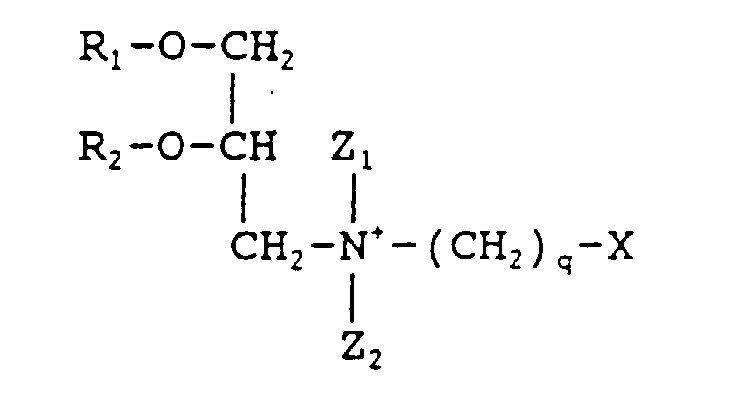
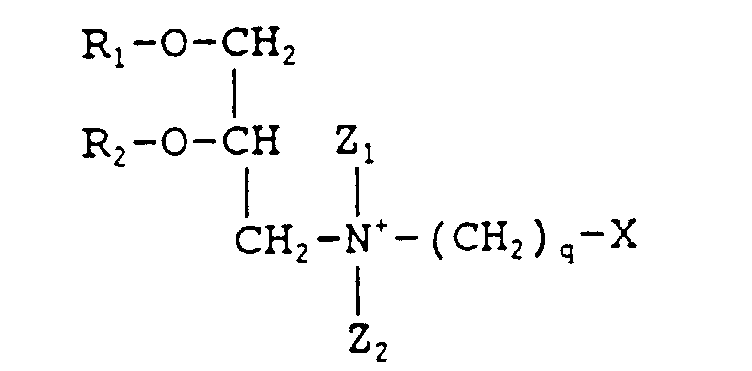
[0012] The present invention provides novel cationic lipids according to the general formula:
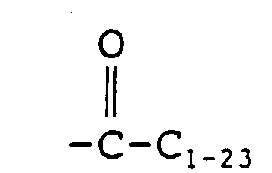
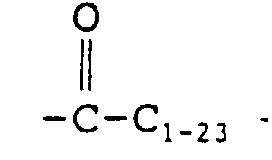
wherein R1 and R2, independently of one another, are C1-23 alkyl or alkenyl, or
alkyl or alkenyl, Z1 and Z2, independently of one another, are H or unbranched alkyl C1-6, q is an integer from 1 to 6, and X is selected from any of X1-X16 where
X1 is -(CH2)nBr, (CH2)nCl, (CH2)nF or (CH2)nI, where n is an integer from 0 to 6;
X2 is -(CH2)nNH2, where n is an integer from 0 to 6;
X3 is -NH-(CH2)m-NH2, where m is an integer from 2 to 6;
X4 is -NH-(CH2)3-NH-(CH2)4-NH2 ;
X5 is -NH-(CH2)3-NH-(CH2)4-NH(CH2)3-NH2 ;
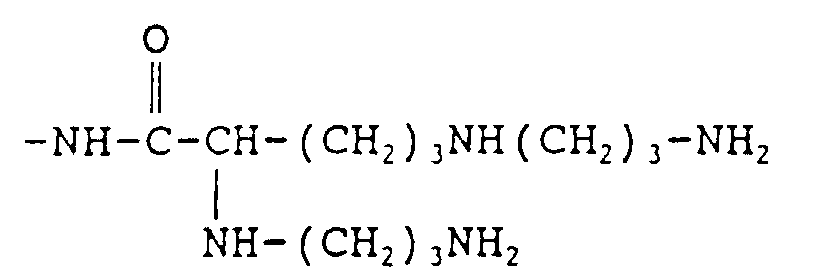
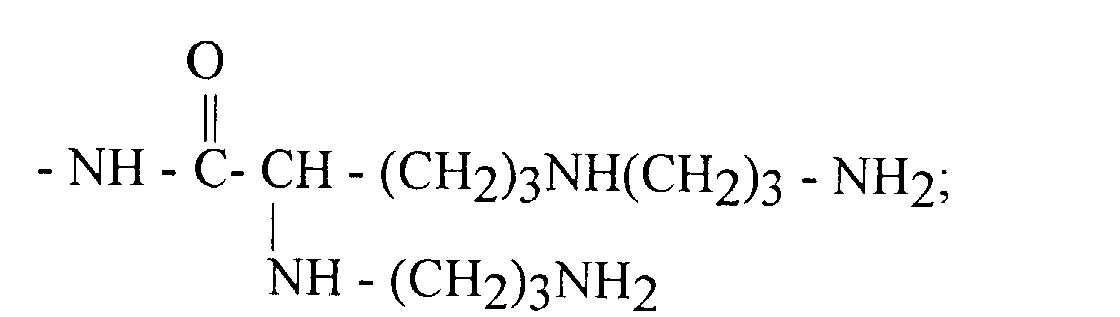
X6 is
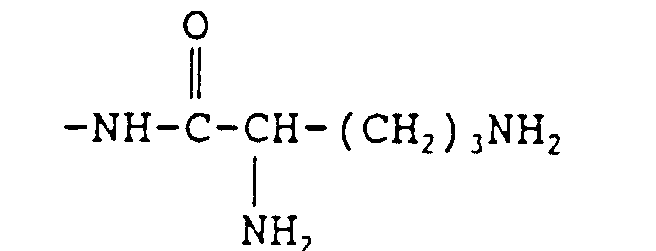
X7 is
or
X8 is
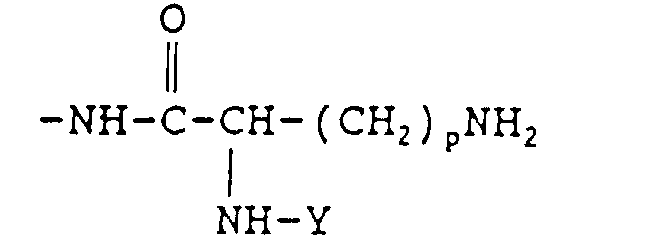
where p is is an integer from 2 to 5, Y is H or other groups attached by amide or alkyl amino groups;
X9 is a polyamine, e.g., polylysine, polyarginine, polybrene, histone or protamine;
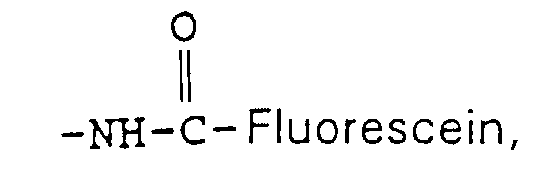
X10 is a reporter molecule, e.g.,
biotin, folic acid or PPD;
X11 is a polysaccharide or substituted polysaccharide;
X12 is a protein;
X13 is an antibody;
X14 is an amine or halide reactive group;
X15 is -(CH2)r-SH, where r is an integer from 0 to 6; and
X16 is -(CH2)s-S-S-(CH2)t-NH2, where s is an integer from 0 to 6, and t is an integer from 2 to 6.
[0013] Compounds of the invention are useful, either alone or in combination with other lipid aggregate-forming components, e.g., DOPE or cholesterol, for formulation into liposomes or other lipid aggregates. Such aggregates are cationic, able to complex with anionic macromolecules, such as nucleic acids. The lipid aggregate macromolecular complex interacts with cells making the macromolecule available for absorption and uptake by the cell. The halogenated compounds of the invention are also especially useful as intermediates for chemically coupling the cationic lipid to reporter molecules, proteins, polypeptides, antibodies, polysaccharides and the like to permit targeted delivery, quantitative assessment of targeting, greater efficiency of delivery and enhanced range of delivery capabilities.
[0014] Compounds of the invention can conjugate to a variety of useful molecules and substances such as polyamines, polyamine acids, polypeptides, proteins, fluorescent dyes, intercalating dyes, reporter molecules, biotin, polysaccharides, monosaccharides, solid support materials, magnetic beads, dendrimer particles, DEAE-Sephadex™ (Pharmacia, Inc.), and the like. Depending on the specific compound of the invention and the substance to be conjugated thereto, conjugation can occur using a compound of the invention as an alkylating agent, using a free amine thereof to react with an amine-reactive group of the substance to be conjugated, or by the use of cross-linking agents.
Brief Description of the Figures
[0015] Figure 1 is a diagrammatic reaction scheme for synthesis of cationic lipids of the invention. Numerals identify the specific numbered compounds described in the Examples.
[0016] Figure 2 is a diagrammatic reaction scheme for conjugating a halogenated compound of the invention (X=X1) to molecules having an amino functionality (W).
[0017] Figure 3 is a diagrammatic reaction scheme for conjugating a compound of the invention (e.g., X = X2- X8) to a molecule or substance having an amine-reactive group (W2).
[0018] Figure 4 is a diagrammatic reaction scheme for conjugating a compound of the invention (e.g., X = X2 - X8) to another molecule or substance by use of a cross-linking agent.
Detailed Description of the Invention
[0019] The present invention provides novel cationic lipids of the DORI family, however, they provide unique properties and advantages not heretofore available to the liposome art. The compounds can be used alone or in combination with other compounds, for example, DOPE, to prepare liposomes and other lipid aggregates suitable for transfection or delivery of compounds other than DNA to target cells, either in vitro or in vivo.
[0020] Compounds of the invention having a halogen substituent (X is X1) are additionally useful for synthesis of more complex cationic lipids having the halogen replaced by a desired compound. The convenience of the halogen as a useful leaving group makes such substitutions straightforward. Examples of useful substituents include, without limitation, reporter groups, proteins, peptides, antibodies, carbohydrates, polysaccharides, and the like. Reporter groups can be any readily analyzed or visualized molecule, including, without limitation, fluorescent tags (Fluorescein, rhodamine), luminescent tags (4-methoxy-4-(3-phosphatephenyl)-spiro[1,2-dioxetane-3,2'-adamantane] (PPD)) biotin, dyes, chelators, affinity probes, etc. Such reporters enable visualization and measurement of target cell-lipid aggregate interactions. Such reporters also provide a means for subsequently accessing targeted cells, by providing surface binding sites unique to targeted cells. In addition, certain drugs and therapeutic compounds can be substituted at the halogen site, by a metabolizable linkage, thereby enhancing efficiency of drug delivery. Also, DNA intercalating compounds can be substituted, providing further DNA binding and enhancing transfection efficiency.
[0021] Compounds of the invention having an amide linked carboxyspermine (X=X6), lysine (X=X8) and shorter diamino acids (X=X7) are especially efficient DNA delivery compounds, and can be used to form lipid aggregates by themselves, without combination with DOPE or other liposome-forming compound.
[0022] Compounds of the invention having the cationic lipid component coupled to a carbohydrate or polysaccharide (X=X11), a polypeptide or protein (X=X12) or an antibody (X=X13) are useful in applications where the function of the substituent group is important. For example, specific delivery to a selected target cell type can be facilitated by a cationic lipid of the invention having a substituent that binds an antigen or receptor specific to the desired target cell. The ability to address a selected target cell type is especially useful in in vivo applications, for example in gene therapy.
[0023] Compounds of the invention wherein the cationic lipid component comprises enol-ether linkages are susceptible to hydrolysis in an acidic environment. These compounds, which are structurally similar to the plasmalogens found in cell membranes, are useful in pH-controlled delivery of macromolecules. In enol-ether compounds, R1 and R2 are alkenyl groups having a double bond adjacent to the ether linkage, and X is hydrogen or X1 - X16.
Definitions
[0024] Lipid Aggregate is a generic term which includes liposomes of all types both unilamellar and multilamellar as well as micelles and more amorphous aggregates of cationic lipid or lipid mixed with amphipathic lipids such as phospholipids.
[0025] Target Cell refers to any cell to which a desired compound is delivered, using a lipid aggregate as carrier for the desired compound.
[0026] Transfection is used herein to mean the delivery of expressible nucleic acid to a target cell, such that the target cell is rendered capable of expressing said nucleic acid. It will be understood that the term "nucleic acid" includes both DNA and RNA without regard to molecular weight, and the term "expression" means any manifestation of the functional presence of the nucleic acid within the cell, including without limitation, both transient expression and stable expression.
[0027] Delivery is used to denote a process by which a desired compound is transferred to a target cell such that the desired compound is ultimately located inside the target cell or in, or on the target cell membrane. In many uses of the compounds of the invention, the desired compound is not readily taken up by the target cell and delivery via lipid aggregates is a means for getting the desired compound into the cell. In certain uses, especially under in vivo conditions, delivery to a specific target cell type is preferable and can be facilitated by compounds of the invention.
[0028] The cationic lipids were prepared by following the general reaction scheme given below (Fig. 1).
[0029] 3-dimethylamino-1,2-propanediol was treated with an alkali base followed with an alkylating agent of the desired length to obtain the corresponding dialkoxy derivative. To obtain the acyl derivatives the diol was treated with the desired acyl chloride in pyridine. Thus compound 1 was obtained by treating 3-di-methylamino-1,2-propanediol with oleyl mesylate in the presence of KOH in refluxing xylene.
[0030] Compound 1 was further alkylated using dibromoethane at high temperature to give compound 3. Treatment of compound 3 with diaminopropane or spermine at high temperature yielded compound 4 or compound 5, respectively.
[0031] Alkylation of compound 1 at 130°C with 2-bromoethyl phthalimide yielded compound 7. Removal of the phthalimido group with hydrazine yielded compound 2. Compound 2 was acylated with tetra-t-butoxycarbonylspermine-carboxylic acid in the presence of dicyclohexylcarbodiimide to obtain compound 6. Removal of the BOC protecting group of compound 6 with trifluoroacetic acid resulted in compound 8.
[0032] The scheme provides a general method for the conjugation of lipids to any molecule or substance of interest. The alkylbromide 3 can be used as a general alkylating agent. Thus, any molecule of interest that has a nucleophilic moiety can react with compound 3 (Fig. 2) (J. March (1985) Advanced Organic Chemistry, John Wiley & Sons, New York, pp. 364-366; Hilgetag & A. Martini, eds. (1972) Preparative Organic Chemistry, John Wiley & Sons, New York, pp. 448-460). For example, the primary amino group of polylysine reacts with the bromide to give polylysine-lipid-conjugate. Other macromolecules that contain amino groups such as proteins and antibodies can also be conjugated to lipids in this manner. Smaller molecules that contain amino groups such as intercalators (methidium spermine), fluorescent dyes, nucleotides, nucleosides, amino acids, peptides and other reporter molecules such as biotin can also be conjugated in this manner.
[0033] Conversely, compounds 2, 4, 5, or 8 can be used for the conjugation of any molecules of interest that have electrophilic or nucleophilic sites. Compounds 2, 4, 5, or 8 can react with reporter molecules or other desired molecules if these molecules contain carboxylic acid sites, NHS ester or other active groups such as isothiocyanates, alkylhalides or chlorotriazines (Fig. 3) (Keezer, F. and Douraghi-Zdeh, K. (1967) Chem. Rev. 67:107; Dottario-Martin, B. and Ravel, J.H. (1978) Anal. Biochem. 76:562; Staros, J.V. (1982) Biochemistry 21:3950.
[0034] Compounds 2, 4, 5, or 8 can also be conjugated with molecules that contain nucleophilic sites such as amines by using cross-linking agents (Fig. 4). Disuccinimidyl suberate can be used to conjugate compounds 2, 4, 5, or 8 to molecules that contain an amino group (Staros, J.V. (1982) Biochemistry 21:3990). Cross-linking agents that contain NHS ester and maleimide can be used to conjugate compounds 2, 4, 5, or 8 to molecules that contain sulfhydryl group (Fig. 4) (Ji, T.H. (1979) Biochem. Biophys. Acta 559:39).
[0035] The compounds of the invention can be used in the same manner as are prior art compounds such as DOTMA, DOTAP, DOGS and the like. Methods for incorporating such cationic lipids into lipid aggregates are well-known in the art. Representative methods are disclosed by Felgner et al., supra; Eppstein et al. supra; Behr et al. supra; Bangham, A. et al. (1965) M. Mol. Biol. 23:238-252; Olson, F. et al. (1979) Biochim. Biophys. Acta 557:9-23; Szoka, F. et al. (1978) Proc. Natl. Acad. Sci. USA 75:4194-4198; Mayhew, E. et al. (1984) Biochim. Biophys. Acta 775:169-175; Kim, S. et al. (1983) Biochim. Biophys. Acta 728:339-348; and Fukunaga, M. et al. (1984) Endocrinol. 115:757-761. Commonly used techniques for preparing lipid aggregates of appropriate size for use as delivery vehicles include sonication and freeze-thaw plus extrusion. See, e.g., Mayer, L. et al. (1986) Biochim. Biophys. Acta 858:161-168. Microfluidization is used when consistently small (50 - 200 nm) and relatively uniform aggregates are desired (Mayhew, E., supra). Aggregates ranging from about 50 nm to about 200 nm diameter are preferred; however, both larger and smaller sized aggregates are functional.
[0036] Methods of transfection and delivery of other compounds are well-known in the art. The compounds of the present invention yield lipid aggregates that can be used in the same processes as those prior art compounds.
[0037] A one-to-one mixture (by weight) of the desired lipid and dioleylphosphatidyl ethanolamine was prepared in CHCl3. The CHCl3 was removed on the rotary evaporator to obtain a thin film of lipid mixture. The mixture was hydrated with enough water to obtain approximately 1.25 mg of lipid per ml of solution. The solution was passed through a microfluidizer twice and diluted to 1 mg/ml. The liposome formulation was then filtered through a 0.2 µ filter. Compound 8 was also formulated without DOPE either by sonication at 1 mg/ml in water or by dissolving a dried lipid film with ethanol and then adding water to give a final concentration of 2.5 mg/ml. Ethanol was 10% of that volume. In some instances, this was further diluted with water to 1 mg/ml, 4% ethanol.
[0038] The use of representative compounds of the invention is further detailed by reference to the following Examples. in each case, the ability of various compounds of the invention to provide efficient transfection was compared with a control using Lipofectin™ reagent. All abbreviations used herein are standard abbreviations in the art. Specific procedures not described in detail are either referenced or well-known in the art.
EXAMPLES
Preparative Example 1
[0039] 2,3-dioleyloxy-1-(N,N-dimethylamino)proprane (1). To a three-necked, 2-liter round bottom flask equipped with a Dean-Stork trap were added 3-dimethylamino-1,2-propanediol (6.08 g, 51.1 mmoles), xylene (1300 ml) and KOH (8.0 g). The solution was refluxed for 2 hours while removing water azeotropically via the Dean-Stork trap. Oleyl mesylate (40.0 g, 115.6 mmoles) in 100 ml xylene was added to the reaction mixture drop-wise in 30 minutes. Refluxing was continued for 3 hours and the reaction mixture concentrated to a gum. The gum was triturated with 400 ml hexane and filtered. The solid was washed with 100 ml hexane followed with 200 ml ethyl acetate. The filtrates were combined, concentrated and subjected to flash chromatography. 2,3-dioleyloxy-1-(N,N-dimethylamino)propane was obtained as a colorless oil in 76% yield, TLC: Rf = 0.37 (Silica gel: 5% EtOAc: hexane); IR: 2925, 2850, 1469, 1120, 1040 cm-1; HNMR (CDCl3) δ 5.35 (t, 4H), 4.13 (q, 1H) 3.4-3.65 (m, 6H), 2.35-2.45 (m, 2H), 2.25 (S, 6H), 1.95-2.05 (m, 8H), 1.5-1.65 (m, 4H), 1.2-1.45 (m, 4H) 0.9 (t, 6H).
Preparative Example 2
[0040] 2H-Isoindole-2-ethanaminium N-[2,3-bis(9-octadecenyloxy)-propyl]-1,3-dihydro-N,N-dimethyl-1,3-dioxo-, bromide (7), 2,3-di-oleyloxy-1-(N,N-dimethylamino)propane (1.238 g, 2 mmole) was combined with N-(2-bromoethyl)phthalimide and heated under argon (130°C) for 18 hours. TLC analysis (Silica gel 20% MeOH/CHCl3) showed the lipid starting material was completely consumed. The desired material was purified by flash chromatography using step gradient of hexane/CHCl3 (1:1), to 20% MeOH/CHCl3. The desired material was obtained in 25% yield as a gum. IR: 2920, 2850, 1760(s), 1720, 1460, 1390 cm-1.
Example 3
[0041] 1-Propanaminium, N-(2-amino)ethyl-N,N-dimethyl-2,3-bis(9-octadecenyloxy)-bromide (2). Compound 7 (800 mg) was combined with hydrazine (200 µl) in MeOH (30 ml). The reaction mixture was refluxed under argon for 20 hours. The reaction mixture was cooled and the precipitate was filtered off. The filtrate was concentrated to dryness. The desired product was obtained after reverse phase chromatography (C-18, 20% aqueous methanol) in 48% yield. IR: 3300, 2920, 2850, 1460 cm-1.
Example 4
[0042] 3-Oxa-5,9,15-triazaheptadecan-17-aminium. N-[2,3-bis(9-octadecenyloxy)propyl]-9-[(1,1-dimethylethoxy)carbonyl]-13-{[(1,1-di-methylethoxy)carbonyl][3-{[1,1-dimethylethoxy-carbon-yl]amino}propyl]amino}-N,N,2,2-tetramethyl-4,14-dioxo-bromide (6). N,N,N,N-tetra-t-butoxy-5-spermine carboxylic acid (470 mg, 0.7 mmoles) was treated with dicyclohexylcarbodiimide (206 mg, 1 mmole) and N-hydroxy succinimide (115 mg, 1 mmole) in 50 ml of 1:1 dioxane:CH2Cl2. The reaction mixture was stirred at room temperature overnight under argon. The dicyclohexyl urea that precipitated was filtered off. Compound 2 (220 mg) was dissolved in CH2Cl2 (10 ml) that contained triethylamine (24 µl) and added to the reaction mixture. The mixture was stirred at room temperature overnight. The solution was concentrated to dryness and taken in 100 ml CHCl3 and extracted with 0.1 M NaHCO3 (2 x 100 ml) followed with H2O (100 ml). The CHCl3 layer was dried over Na2SO4 and concentrated. The desired material was obtained in 53% yield after flash chromatography. Rf = 0.8 (20% MeOH in CHCl3) IR: 2920, 2850, 1680, 1375, 1175 cm-1.
Example 5
[0043] 1-Propanaminium, N-[2-[[2,5-bis[(3-aminopropyl)amino]-1-oxo-pentyl]amino]ethyl]-n,n-dimethyl-2,3,-bis(9-octadecenyloxy)-, tetra(trifluoroacetate) salt (8). A solution of compound 6 in CH2Cl2 (160 mg in 2 ml) was treated with 2 ml of trifluoroacetic acid/CH2Cl2 (1:1) at room temperature for 15 minutes. The mixture was then concentrated to dryness and co-evaporated with methanol (3 x 30 ml). The desired product was obtained in 68% yield after reverse phase chromatography (C-18, 20% aqueous methanol eluent). IR: 1920, 2850, 1680, 1210, 1140, cm-1.
Example 6
[0044] 1-Propanaminium, N-[2-(2-bromo)ethyl]-N,N-dimethyl-2,3-bis(9-octadecenyloxy)-, bromide (3). 2,3-dioleyloxy-1-(N,N-dimethylamino)propane (1.8 g) was dissolved in 9 ml of dibromoethane (that was passed through an alumina (III) column). The solution was heated at 80°C for 8 hours and concentrated in vacuo to a gum. The gum was dissolved in minimum amount (~60 ml) hot CH3CN and cooled to -20°C overnight. The yellowish precipitate was separated by decantation. The precipitate was dissolved in CH2Cl2 (120 ml) and decolonized with neutral norite. The CH2Cl2 was evaporated and the residue was crystallized from CH3CN as above to obtain the desired material in 43% yield.
Example 7
[0045] 1-Propanaminium,N-{2-[[3-[[4-[(3-aminopropyl)amino]butyl]-amino]propyl]amino]ethyl}-n,n-dimethyl-2,3-bis-(9-octadecenyl-oxy)-, bromide (5). Compound 3 (1.2 g) was treated with 3 ml of spermine at 80°C for 2 days under argon. The reaction mixture was concentrated under vacuum at high temperature (50°C). The mixture was co-evaporated with water (50 ml) followed with ethanol (50 ml) and used in transfection without further purification.
Example 8
[0046] 1-Propanaminium, N-[2-[(3-aminopropyl)amino]ethyl]-N,N-di-methyl-2,3-bis(9-octadecenyloxy)-, bromide (4). Compound 3 (460 mg) was heated at 60°C in 3 ml diaminopropane under Argon for 3 hours. The mixture was concentrated to dryness at 50°C under vacuum. The gummy material that was obtained was co-evaporated with water (50 ml) followed with ethanol (50 ml). The material was used in transfection without further purification.
Example 9
[0047] Cell culture and plasmids. Baby hamster kidney (BHK-21), COS-7, HeLa-S3 cells, and normal human fibroblasts isolated from newborn foreskin dermis were grown in Dulbecco's-modified Eagle's medium (DMEM) containing 10% fetal bovine serum (FBS), 2 mM L-glutamine (gln), 0.1 mM MEM nonessential amino acids (NEAA), 100 U/ml penicillin, and 100 µg/ml streptomycin. NIH-3T3 cells were grown in DMEM containing 10% calf serum (CS), 2 mM gln, 0.1 mM NEAA 100 U/ml penicillin, and 100 µg/ml streptomycin. PC12 cells were grown in DMEM containing 10% horse serum, 5% FBS, 2 mM gln, 0.1 mM NEAA, 100 U/ml penicillin, and 100 µ/ml streptomycin. Jurkat cells (human lymphoid cell line) were grown in RPMI-1640 supplemented with 10% FBS, 2 mM L-glutamine, 100 U/ml penicillin, and 100 µg/ml streptomycin. Human keratinocytes were isolated from newborn foreskin epidermis and cultured in Keratinocyte Growth Medium (Clonetics, San Diego, CA). All cell lines were maintained in a humidified incubator with a 5% CO2 atmosphere at 37°C.
[0048] pSV2CAT (5.0 Kb) was described previously (Gorman, C.M. et al. (1982) Mol. Cell. Biol. 2:1044). pCMVCAT (5.0 Kb) was also described previously (Foecking M.K. and Hofstetter, H. (1986) Gene 45:101). Plasmid DNA was purified by isopycnic centrifugation in CsCl/EtBr gradients after recovery by alkaline lysis (Maniatis, T. et al. (1982) in Molecular Cloning: A Laboratory Manual, Cold Spring Harbor Laboratory, Cold Spring Harbor, NY, pp. 90-91).
Example 10
[0049] Transient transfection of adherent cells (BHK-21, HeLa-S3, NIH-3T3, PC12. Cos-7, human keratinocytes, human fibroblasts) with cationic lipids. For transient transfection of pSV2CAT DNA or pCMVCAT DNA, cells were plated in 6-well tissue culture dishes (35mm wells) and incubated overnight to approximately 60% confluency. To transfect cells in one well, 1-2 µg of pSV2CAT DNA or pCMVCAT DNA was diluted in 100 µl Opti-MEM I. Cationic lipids were diluted separately in another 100 µl aliquot of Opti-MEM I. The two solutions were then mixed in a polystyrene tube, incubated for 10-15 min at room temperature to allow the formation of a DNA-liposome complex, and diluted to one ml by adding 0.8 ml Opti-MEM I or DMEM containing 5% fetal bovine serum (FBS), 2 mM gln, 0.1 mM NEAA, and lacking antibiotics. The cells were washed once with Opti-MEM I or serum-free DMEM, and the DNA-liposome complex was added directly to the cells. After a six hr incubation at 37°C, the transfection complexes were removed and two ml of DMEM containing 10% FBS, 2 mM gln, 0.2 mM NEAA, 100 U/ml penicillin, and 100 µg/ml streptomycin, was added to each well. Note: human keratinocytes were cultured and transfected in Keratinocyte Growth Medium. Cells were incubated for an additional 48 hrs and lysed in situ by freeze-thawing once or twice in 300 µl 0.1M Tris-HCl, pH 7.8-8.0, containing 0.1% Triton X-100. Cell lysates were assayed for CAT activity.
Example 11
[0050] Transient Transfection of Jurkat Cells with Cationic Lipids. For transient nuclear expression of pSV2CAT or pCMVCAT in Jurkat cells, cells were washed with Opti-MEM I or serum-free RPMI 1640 containing 2 mM gln and plated in six-well plates at a density of 3 X 10⁶ cells per well in 0.8 ml Opti-MEM I or RPMI 1640. For each transfection, 5 µg pSV2CAT DNA or 2µg pCMVCAT DNA was diluted in 100 µl Opti-MEM I. Lipids were diluted separately in another 100µl aliquot of Opti-MEM I. The two solutions were then mixed in a polystyrene tube and incubated for 10-15 min at room temperature. The DNA-liposome complex was added to the cell suspensions and incubated 6 hours at 37°C, after which 4 ml growth medium were added per well (RPMI-1640; 10% FBS). Phorbol myristate acetate (Sigma Chemical Co., St. Louis, MO) and phytohemagglutinin (Sigma) were also added to a final concentration of 50 ng/ml and 1 µg/ml, respectively, to activate the cells. Cells were harvested at approximately 48 hours post-transfection by centrifugation. Cell lysates were prepared by resuspending cell pellets at 0°C in 0.1 M Tris-HCl pH 8.0 containing 0.1% Triton X-100 and freeze-thawing once. Cell lysates were cleared by centrifugation and assayed for CAT activity.
Example 12
[0051] Chloramphenicol acetyltransferase (CAT) assay. Cell lysates were assayed for CAT activity as described by Neumann et al. (1987) BioTechniques 5:444 using [14C]-butyryl coenzyme A (New England Nuclear, Boston, MA). The enzyme reactions were incubated for 2 hrs at 37°C, overlayed with 3.0 ml Econofluor (New England Nuclear) and then incubated for an additional 2 hrs to allow diffusion of the acetylated chloramphenicol into the scintillation fluid. CAT activity was determined by measuring radioactivity in a liquid scintillation counter.
Example 13
[0052] Results. Results are shown in Tables 1-8. The "% protein" column indicates the relative amount of protein in the sample tested for CAT activity and therefore provides a way to estimate toxicity of the compounds being tested. The "CAT Activity" column indicates the relative transfection effectiveness of the lipid formulation in the various cell lines. The control sample was a cell culture grown under similar conditions as those that were transfected, but with no DNA or cationic lipid added. Protein was measured using a commercially available Bradford protein assay (BioRad Laboratories, Richmond, CA).
[0053] For BHK-21 (Table 1), NIH-3T3 (Table 2B), keratinocytes (Table 3), PC12 (Table 4), Jurkat (Table 5), and Cos-7 (Table 6) cells, compound 8 was highly effective for DNA transfection with minimal toxicity. Fibroblasts (Table 7) were also successfully transfected with compound 8. Compounds 4 and 5 were also effective for DNA transfection in keratinocytes (Table 3), and compound 3 had good activity in HeLa-S3 cells in the presence or absense of serum (Table 8). Compounds 2 and 3 also had good activity for DNA transfection in NIH-3T3 cells (Tables 2A and 2B).
TABLE 1
| TRANSFECTION RESULTS WITH BHK-21 CELLS | |||
| LIPID | CAT ACTIVITY (CPM) | µg LIPID | % protein (% of control) |
| COMPOUND 2/DOPE | 12202 | 3µg | 57 |
| COMPOUND 3/DOPE | 11,226 | 6µg | 29 |
| COMPOUND 8/DOPE | 73,628 | 6µg | 83 |
| COMPOUND 8/DOPE | 49,417 | 18µg | 103 |
| COMPOUND 8 (EtOH) | 67,858 | 3.8µg | 59 |
| COMPOUND 8 SONICATED | 73,856 | 6µg | 114 |
| Transfections were for 6 hours in OPTI-MEM I with 1 µg pSV2CAT DNA, in 35 mm wells. 3 µl of 300 µl extract assayed for CAT activity. | |||
TABLE 2A
| NIH-3T3 (Mouse fibroblast cell line) | |||
| LIPID | CAT ACTIVITY (CPM) | µg LIPID | % protein (% of control) |
| COMPOUND 4 | 3,114 | 24µg | 111% |
| COMPOUND 5/DOPE | 1,180 | 26µg | 92% |
| COMPOUND 3 | 6,074 | 16µg | 35% |
| Transfections for 6 hours in OPTI MEM serum-free medium with 2µg pSV2CAT DNA. | |||
TABLE 2B
| NIH-3T3 (MOUSE FIBROBLAST CELL LINE) | |||
| LIPID | CAT ACTIVITY (CPM/150ul) | µg LIPID | % protein (% of control) |
| COMPOUND 8/DOPE | 17,564 | 12µg | 100% |
| COMPOUND 8 | 30,488 | 15µg | 89% |
| COMPOUND 2/DOPE | 14,890 | 12µg | 68% |
| COMPOUND 3/DOPE | 13,002 | 18µg | 55% |
| COMPOUND 4/DOPE | 1,446 | 18µg | 104% |
| DNA-Lipid complexes made in OPTI-MEM. Transfections for 6 hours in DMEM with 2µg pCMVCAT DNA. | |||
TABLE 3
| NORMAL HUMAN KERATINOCYTES | |||
| LIPID | CAT ACTIVITY (CPM) | µg LIPID | % protein (% of control) |
| COMPOUND 4 | 20,038 | 40µg | 41% |
| COMPOUND 5/DOPE | 17,818 | 90µg | 39% |
| COMPOUND 3 | 10,598 | 10µg | 42% |
| COMPOUND 8 (EtOH) | 33,818 | 25µg | 38% |
| COMPOUND 8/DOPE | 20,410 | 25µg | 65% |
| Transfections for 5 hours (compound 8) or 6 hours (compounds 3, 4, and 5) with 2µg pSV2CAT DNA in 35 mm well. 50 µl of 300µl assayed for CAT activity. | |||
TABLE 4
| TRANSFECTION RESULTS WITH PC12 CELLS (RAT PHEOCHROMOCYTOMA CELL LINE) |
|||
| LIPID | CAT ACTIVITY (CPM/150ul) | µg LIPID | % protein (% of control) |
| COMPOUND 8/DOPE | 12,950 | 15µg | 87% |
| COMPOUND 8 | 28,512 | 40µg | 66% |
| DNA-lipid complexes were made in OPTI-MEM. PC12 cells (6 X 10⁵ cells) were transfected in DMEM with 2µg of pCMVCAT DNA for 6 hours. | |||
TABLE 5A
| TRANSFECTION RESULTS WITH JURKAT CELLS (HUMAN T-LYMPHOMA CELL LINE) WITH pSV2CAT |
|||
| LIPID | CAT ACTIVITY (CPM/150µl) | µg LIPID | % protein (% of control) |
| COMPOUND 4 | 2252 | 20µg | 93% |
| COMPOUND 5 | 1170 | 20µg | 100% |
| COMPOUND 4 | 820 | 30µg | 100% |
| COMPOUND 5/DOPE | 702 | 30µg | 76% |
| COMPOUND 3 | 3008 | 30µg | 97% |
| Jurkat cells (3 X 10⁶ cells) were transfected in OPTI-MEM with 5µg of pSV2CAT DNA for 6 hours. | |||
TABLE 5B
| TRANSFECTION RESULTS WITH JURKAT CELLS (HUMAN T-LYMPHOMA CELL LINE) WITH pCMVCAT |
|||
| LIPID | CAT ACTIVITY (CPM/150ul) | µg LIPID | % protein (% of control) |
| COMPOUND 8/DOPE | 12,766 | 30µg | 113% |
| COMPOUND 8 | 44,996 | 15µg | 47% |
| DNA-lipid complexes were made in OPTI-MEM. Jurkat cells (3 X 10⁶ cells) were transfected in RPMI-1640 with 2µg of pCMVCAT DNA for 6 hours. | |||
TABLE 6
| COS-7 CELLS | |||
| LIPID | CAT ACTIVITY (CPM/150ul) | µg LIPID | % protein (% of control) |
| COMPOUND 8 | 14,282 | 12µg | 99.1% |
| COMPOUND 8 DOPE | 53,875 | 6µg | 68.9% |
| DNA-lipid complexes were made in DMEM. Cos-7 cells (1x10⁵ cells) were transfected in DMEM with 1 µg of pSV2CAT DNA for 6 hours. | |||
TABLE 7
| TRANSFECTION RESULTS WITH NORMAL HUMAN FIBROBLASTS | |||
| LIPID | CAT ACTIVITY (CPM) | µg LIPID | % protein (% of control) |
| COMPOUND 8 (EtOH) | 4,288 | 6µg | 56 |
| COMPOUND 8/DOPE | 11,486 | 18µg | 18 |
| Transfection for 6 hours in OptiMEM I with 2 µ pSV2CAT DNA. 150 µl of 300 µl extract assayed for CAT activity. | |||
TABLE 8
| TRANSFECTION OF HeLa-S3 CELLS BY COMPOUND 3 | |||
| MEDIUM | CAT ACTIVITY (CPM) | µg LIPID | % protein (% of control) |
| DMEM, 5% FBS | 78,798 | 6µg | 54% |
| OPTIMEM I, 0% FBS | 29,400 | 12µg | 43% |
| Transfections for 6 hours with 2µg pSV2CAT DNA. | |||
1. A compound having the structure
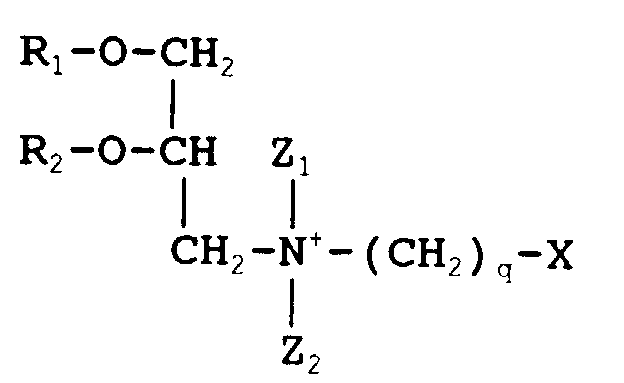
wherein R1 and R2, independently of one another, are C1-23 alkyl or alkenyl, or
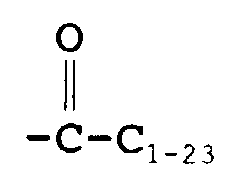
alkyl or alkenyl, Z1 and Z2, independently of one another, are H or unbranched alkyl C1-6, q is an integer from 1 to 6, and X is selected from any of X1-X16 where
X1 is -(CH2)nBr, (CH2)nCl, (CH2)nF or (CH2)nI, where n is an integer from 0 to 6;
X2 is -(CH2)nNH2, where n is an integer from 0 to 6;
X3 is -NH-(CH2)m-NH2, where m is an integer from 2 to 6;
X4 is -NH-(CH2)3-NH-(CH2)4-NH2;
X5 is -NH-(CH2)3-NH-(CH2)4-NH(CH2)3-NH2 ;
X6 is
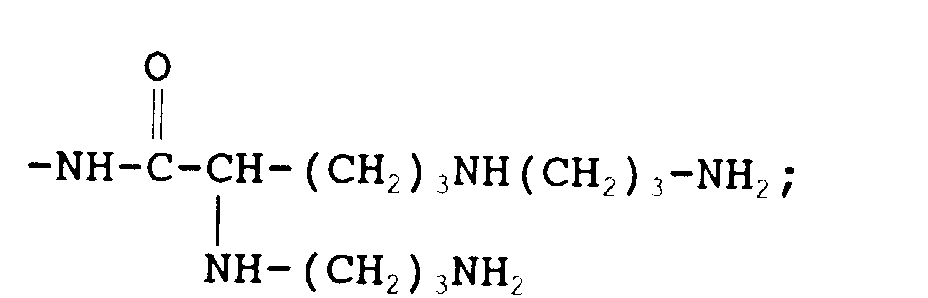
X7 is
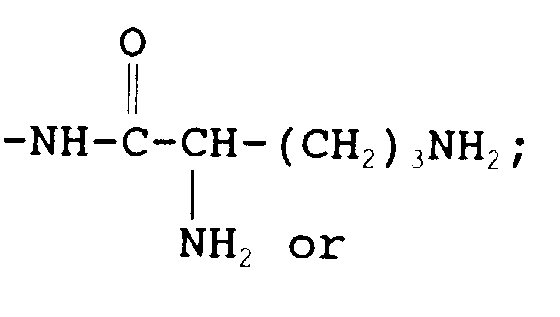
or
X8 is
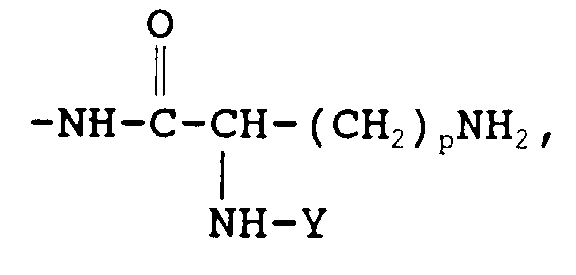
where p is is an integer from 2 to 5, Y is H or other groups attached by amide or alkyl amino groups;
X9 is a polyamine, e.g., polylysine, polyarginine, polybrene, histone or protamine;
X10 is a reporter molecule, e.g.,
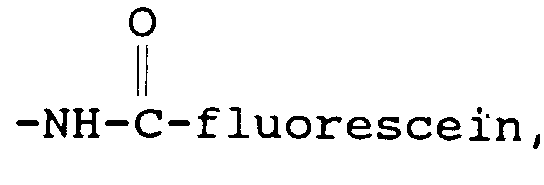
biotin, folic acid or PPD;
X11 is a polysaccharide or substituted polysaccharide;
X12 is a protein;
X13 is an antibody;
X14 is an amine or halide reactive group;
X15 is -(CH2)r-SH, where r is an integer from 0 to 6; and
X16 is -(CH2)s-S-S-(CH2)t-NH2, where s is an integer from 0 to 6, and t is an integer from 2 to 6.
wherein R1 and R2, independently of one another, are C1-23 alkyl or alkenyl, or
alkyl or alkenyl, Z1 and Z2, independently of one another, are H or unbranched alkyl C1-6, q is an integer from 1 to 6, and X is selected from any of X1-X16 where
X1 is -(CH2)nBr, (CH2)nCl, (CH2)nF or (CH2)nI, where n is an integer from 0 to 6;
X2 is -(CH2)nNH2, where n is an integer from 0 to 6;
X3 is -NH-(CH2)m-NH2, where m is an integer from 2 to 6;
X4 is -NH-(CH2)3-NH-(CH2)4-NH2;
X5 is -NH-(CH2)3-NH-(CH2)4-NH(CH2)3-NH2 ;
X6 is
X7 is
or
X8 is
where p is is an integer from 2 to 5, Y is H or other groups attached by amide or alkyl amino groups;
X9 is a polyamine, e.g., polylysine, polyarginine, polybrene, histone or protamine;
X10 is a reporter molecule, e.g.,
biotin, folic acid or PPD;
X11 is a polysaccharide or substituted polysaccharide;
X12 is a protein;
X13 is an antibody;
X14 is an amine or halide reactive group;
X15 is -(CH2)r-SH, where r is an integer from 0 to 6; and
X16 is -(CH2)s-S-S-(CH2)t-NH2, where s is an integer from 0 to 6, and t is an integer from 2 to 6.
2. A compound having the structure
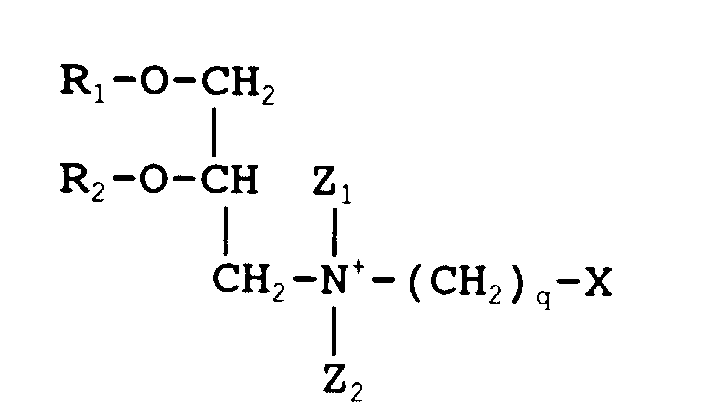
wherein R1 and R2, independently of one another, are C1-23 alkyl or alkenyl, or
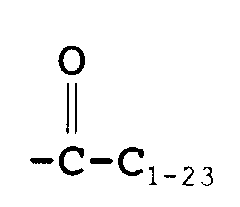
alkyl or alkenyl, Z1 and Z2, independently of one another, are H or unbranched alkyl C1-6, q is an integer from 1 to 6, and X is selected from any of X1-X8, X15, or X16.
wherein R1 and R2, independently of one another, are C1-23 alkyl or alkenyl, or
alkyl or alkenyl, Z1 and Z2, independently of one another, are H or unbranched alkyl C1-6, q is an integer from 1 to 6, and X is selected from any of X1-X8, X15, or X16.
3. A compound according to claim 2 wherein X is X2.
4. A compound according to claim 2 wherein X is X2, and n is 2.
5. A compound according to claim 2 wherein X is X2, n is 1, R1 and R2 are C18 alkenyl groups, and Z1 and Z2 are methyl groups.
6. A compound according to claim 2 wherein X is X1.
7. A compound according to claim 2 wherein X is X1 is (CH2)nBr, and n is 1.
8. A compound according to claim 2 wherein X is (CH2)nBr, n is 1, R1 and R2 are C18 alkenyl groups, and Z1 and Z2 are methyl groups.
9. A compound according to claim 2 wherein X is X3.
10. A compound according to claim 2 wherein X is X3, q is 2, and m is 3.
11. A compound according to claim 2 wherein X is X3, q is 2, m is 3, Z1 and Z2 are methyl groups and R1 and R2 are C18 alkenyl groups.
12. A compound according to claim 2 wherein X is X5.
13. A compound according to claim 2 wherein X is X5, and q is 2.
14. A compound according to claim 2 wherein X is X5, q is 2, Z1 and Z2 are methyl groups, and R1 and R2 are C18 alkenyl groups.
15. A compound according to claim 2 wherein X is X6.
16. A compound according to claim 2 wherein X is X6, and q is 2.
17. A compound according to claim 2 wherein X is X6, q is 2, Z1 and Z2 are methyl groups, and R1 and R2 are C18 alkenyl groups.
18. A lipid aggregate comprising a compound according to any of the claims 1-17.
19. A method of conjugating a cationic lipid to a substance comprising reacting said substance
with a cationic lipid that is a compound of any one of claims 1-17 and wherein said
substance has a free amino group or an amino-reactive group.
20. A method of conjugating a cationic lipid to a substance having a reactive group comprising
reacting a cross-linking reagent with said lipid and said substance, whereby a conjugate
is formed, wherein said cationic lipid is a compound according to any of cliams 1-17.
21. A method of transfecting a cell comprising contacting said cell with a lipid aggregate
comprising DNA and a cationic lipid composition comprising a compound of any of claims
1-17.
22. A method according to any of claims 19-21 wherein X is X6.
23. A method according to any of claims 19-21 wherein X is X6 and q is 2.
24. A method according to any of claims 19-21 wherein said substance is a phospholipid.
25. A method according to any of claims 19-21 wherein said substance is a dioleoylphosphatidylethanolamine
(DOPE).
26. A kit for preparing a lipid aggregate comprising a cationic lipid according to any
of claims 1-17 and a phospholipid.
27. A kit for preparing a lipid aggregate comprising a cationic lipid according to any
of claims 1-17 and dioleoylphosphatidylethanolamine (DOPE).
28. A lipid aggregate comprising a compound according to any of the claims 1-17 and further
comprising a phospholipid.
29. A lipid aggregate comprising the compound of claim 15 and further comprising a phospholipid.
30. The lipid aggregate of claim 15 wherein the phospholipid is dioleoylphosphatidylethanolamine
(DOPE).
1. Verbindung mit der Struktur
worin R1 und R2 unabhängig voneinander ein C1-23-Alkylrest oder Alkenylrest oder
-Alkylrest oder Alkenylrest sind, Z1 und Z2 unabhängig voneinander H oder ein unverzweigter C1-6-Alkylrest sind, q eine ganze Zahl von 1 bis 6 ist und X aus einem von X1-X16 ausgewählt ist, worin
X1-(CH2)nBr, (CH2)nCl, (CH2)nF oder (CH2)nl ist, worin n eine ganze Zahl von 0 bis 6 ist,
X2 -(CH2)nNH2 ist, worin n eine ganze Zahl von 0 bis 6 ist,
X3 -NH-(CH2)m-NH2 ist, worin m eine ganze Zahl von 2 bis 6 ist,
X4 -NH-(CH2)3-NH-(CH2)4-NH2 ist,
X5 -NH-(CH2)3-NH-(CH2)4-NH(CH2)3-NH2 ist,
X6
ist,
X7
ist, oder
X8
ist, worin p eine ganze Zahl von 2 bis 5 ist, Y H oder andere Gruppen, die durch Amid- oder Alkylamino-Gruppen gebunden sind, ist,
X9 ein Polyamin ist, beispielsweise Polylysin, Polyarginin, Polybrene, Histon oder Protamin,
X10 ein Anzeigemolekül ist, beispielsweise
Biotin, Folsäure oder PPD,
X11 ein Polysaccharid oder substituiertes Polysaccharid ist,
X12 ein Protein ist,
X13 ein Antikörper ist,
X14 eine Amin- oder Halogen-reaktive Gruppe ist,
X15 -(CH2)r-SH ist, worin r eine ganze Zahl von 0 bis 6 ist, und
X16 -(CH2)s-S-S-(CH2)t-NH2 ist, worin s eine ganze Zahl von 0 bis 6 und t eine ganze Zahl von 2 bis 6 sind.
worin R1 und R2 unabhängig voneinander ein C1-23-Alkylrest oder Alkenylrest oder
-Alkylrest oder Alkenylrest sind, Z1 und Z2 unabhängig voneinander H oder ein unverzweigter C1-6-Alkylrest sind, q eine ganze Zahl von 1 bis 6 ist und X aus einem von X1-X16 ausgewählt ist, worin
X1-(CH2)nBr, (CH2)nCl, (CH2)nF oder (CH2)nl ist, worin n eine ganze Zahl von 0 bis 6 ist,
X2 -(CH2)nNH2 ist, worin n eine ganze Zahl von 0 bis 6 ist,
X3 -NH-(CH2)m-NH2 ist, worin m eine ganze Zahl von 2 bis 6 ist,
X4 -NH-(CH2)3-NH-(CH2)4-NH2 ist,
X5 -NH-(CH2)3-NH-(CH2)4-NH(CH2)3-NH2 ist,
X6
ist,
X7
ist, oder
X8
ist, worin p eine ganze Zahl von 2 bis 5 ist, Y H oder andere Gruppen, die durch Amid- oder Alkylamino-Gruppen gebunden sind, ist,
X9 ein Polyamin ist, beispielsweise Polylysin, Polyarginin, Polybrene, Histon oder Protamin,
X10 ein Anzeigemolekül ist, beispielsweise
Biotin, Folsäure oder PPD,
X11 ein Polysaccharid oder substituiertes Polysaccharid ist,
X12 ein Protein ist,
X13 ein Antikörper ist,
X14 eine Amin- oder Halogen-reaktive Gruppe ist,
X15 -(CH2)r-SH ist, worin r eine ganze Zahl von 0 bis 6 ist, und
X16 -(CH2)s-S-S-(CH2)t-NH2 ist, worin s eine ganze Zahl von 0 bis 6 und t eine ganze Zahl von 2 bis 6 sind.
2. Verbindung mit der Struktur
worin R1 und R2 unabhängig voneinander ein C1-23-Alkylrest oder Alkenylrest oder
-Alkylrest oder Alkenylrest sind, Z1 und Z2 unabhängig voneinander H oder ein unverzweigter C1-6-Alkylrest sind, q eine ganze Zahl von 1 bis 6 ist und X aus einem von X1-X8, X15 oder X16 ausgewählt ist.
worin R1 und R2 unabhängig voneinander ein C1-23-Alkylrest oder Alkenylrest oder
-Alkylrest oder Alkenylrest sind, Z1 und Z2 unabhängig voneinander H oder ein unverzweigter C1-6-Alkylrest sind, q eine ganze Zahl von 1 bis 6 ist und X aus einem von X1-X8, X15 oder X16 ausgewählt ist.
3. Verbindung nach Anspruch 2, worin X X2 ist.
4. Verbindung nach Anspruch 2, worin X X2 ist und n 2 ist.
5. Verbindung nach Anspruch 2, worin X X2 ist, n 1 ist, R1 und R2 C18-Alkenylgruppen sind und Z1 und Z2 Methylgruppen sind.
6. Verbindung nach Anspruch 2, worin X X1 ist.
7. Verbindung nach Anspruch 2, worin X X1 ist, welches (CH2)nBr ist und n 1 ist.
8. Verbindung nach Anspruch 2, worin X (CH2)nBr ist, n 1 ist, R1 und R2 C18-Alkenylgruppen sind und Z1 und Z2 Methylgruppen sind.
9. Verbindung nach Anspruch 2, worin X X3 ist.
10. Verbindung nach Anspruch 2, worin X X3, q 2 und m 3 sind.
11. Verbindung nach Anspruch 2, worin X X3, q 2, m 3, Z1 und Z2 Methylgruppen und R1 und R2 C18-Alkenylgruppen sind.
12. Verbindung nach Anspruch 2, worin X X5 ist.
13. Verbindung nach Anspruch 2, worin X X5 und q 2 sind.
14. Verbindung nach Anspruch 2, worin X X5, q 2, Z1 und Z2 Methylgruppen und R1 und R2 C18-Alkenylgruppen sind.
15. Verbindung nach Anspruch 2, worin X X6 ist.
16. Verbindung nach Anspruch 2, worin X X6 und q 2 sind.
17. Verbindung nach Anspruch 2, worin X X6, q 2, Z1 und Z2 Methylgruppen und R1 und R2 C18-Alkenylgruppen sind.
18. Lipidaggregat, umfassend eine Verbindung nach einem der Ansprüche 1 bis 17.
19. Verfahren zum Konjugieren eines kationischen Lipids an eine Substanz, umfassend das
Umsetzen dieser Substanz mit einem kationischen Lipid, das eine Verbindung nach einem
der Ansprüche 1 bis 17 ist, und wobei die Substanz eine freie Aminogruppe oder eine
Amino-reaktive Gruppe aufweist.
20. Verfahren zum Konjugieren eines kationischen Lipids an eine Substanz mit einer reaktiven
Gruppe, welches das Umsetzen eines Vernetzungsreagenz mit dem Lipid und der Substanz
umfaßt, wodurch ein Konjugat gebildet wird, wobei das kationische Lipid eine Verbindung
nach einem der Ansprüche 1 bis 17 ist.
21. Verfahren zum Transfizieren einer Zelle, umfassend das Inkontaktbringen der Zelle
mit einem Lipidaggregat, umfassend DNA und eine kationische Lipidzusammensetzung,
welche eine Verbindung nach einem der Ansprüche 1 bis 17 umfaßt.
22. Verfahren nach einem der Ansprüche 19 bis 21, wobei X X6 ist.
23. Verfahren nach einem der Ansprüche 19 bis 21, wobei X X6 und q 2 sind.
24. Verfahren nach einem der Ansprüche 19 bis 21, wobei die Substanz ein Phospholipid
ist.
25. Verfahren nach einem der Ansprüche 19 bis 21, wobei die Substanz ein Dioleoylphosphatidylethanolamin
(DOPE) ist.
26. Kit zur Herstellung eines Lipidaggregats, umfassend ein kationisches Lipid nach einem
der Ansprüche 1 bis 17 und ein Phospholipid.
27. Kit zum Herstellen eines Lipidaggregats, umfassend ein kationisches Lipid nach einem
der Ansprüche 1 bis 17 und Dioleoylphosphatidylethanolamin (DOPE).
28. Lipidaggregat, umfassend eine Verbindung nach einem der Ansprüche 1 bis 17 und weiter
umfassend ein Phospholipid.
29. Lipidaggregat, umfassend die Verbindung von Anspruch 15 und weiter umfassend ein Phospholipid.
30. Lipidaggregat nach Anspruch 15, wobei das Phospholipid Dioleoylphosphatidylethanolamin
(DOPE) ist.
1. Composé ayant la structure suivante
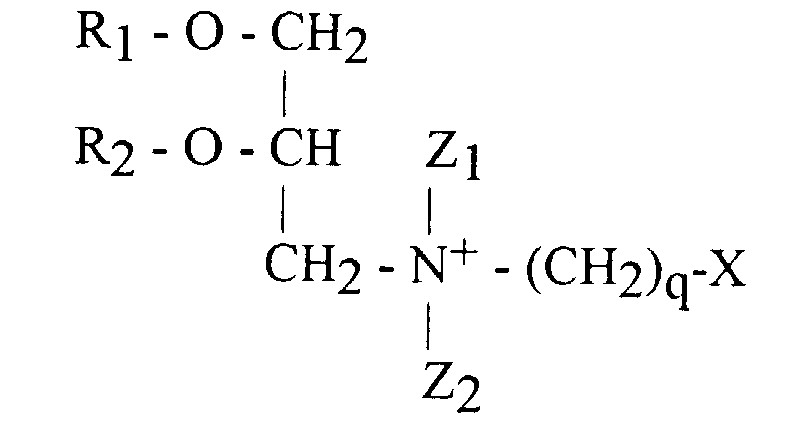
dans laquelle R1 et R2, indépendamment l'un de l'autre, sont des groupes alkyle ou alcényle en C1-C23, ou
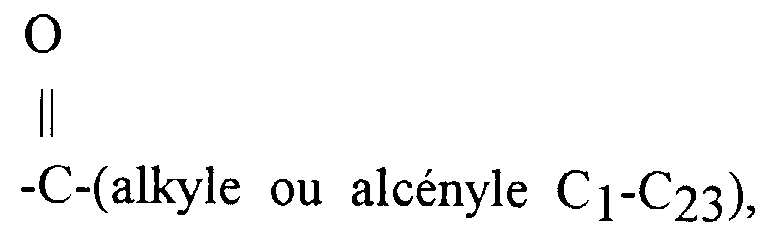
Z1 et Z2, indépendamment l'un de l'autre, sont H ou des groupes alkyle non ramifiés en C1-C6, q est un nombre entier de 1 à 6, et X est choisi parmi l'un quelconque des groupes X1 à X16 où
X1 est -(CH2)nBr, (CH2)nCl, (CH2)nF ou (CH2)nI, où n est un nombre entier de 0 à 6;
X2 est -(CH2)nNH2, où n est un nombre entier de 0 à 6;
X3 est -NH-(CH2)m-NH2, où m est un nombre entier de 2 à 6;
X4 est -NH-(CH2)3-NH-(CH2)4-NH2;
X5 est -NH-(CH2)3-NH-(CH2)4-NH(CH2)3-NH2;
X6 est
X7 est
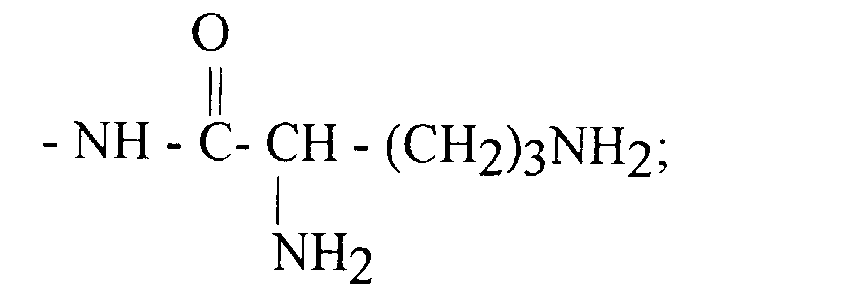
ou X8 est
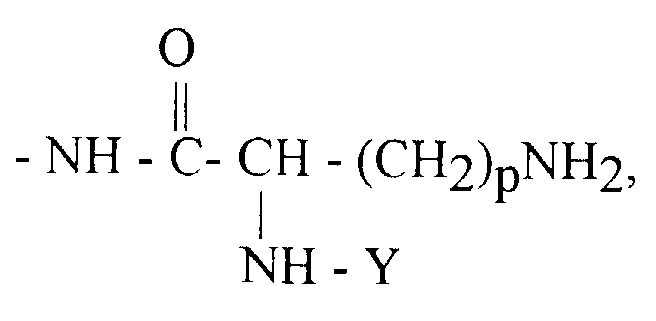
où p est un nombre entier de 2 à 5,
Y est H ou d'autres groupes liés par des groupes amide ou alkylamino;
X9 est une polyamine, par exemple, polylysine, polyarginine, polybrène, histone ou protamine;
X10 est une molécule ligand, par exemple,
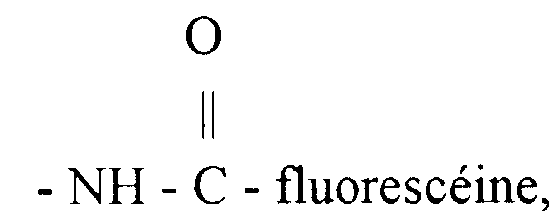
biotine, acide folique ou PPD;
X11 est un polysaccharide ou un polysaccharide substitué;
X12 est une protéine;
X13 est un anticorps;
X14 est un groupe réactif avec une amine ou un halogénure;
X15 est -(CH2)r-SH, où r est un nombre entier de 0 à 6; et
X16 est -(CH2)s-S-S-(CH2)t-NH2, où s est un nombre entier de 0 à 6, et t est un nombre entier de 2 à 6.
dans laquelle R1 et R2, indépendamment l'un de l'autre, sont des groupes alkyle ou alcényle en C1-C23, ou
Z1 et Z2, indépendamment l'un de l'autre, sont H ou des groupes alkyle non ramifiés en C1-C6, q est un nombre entier de 1 à 6, et X est choisi parmi l'un quelconque des groupes X1 à X16 où
X1 est -(CH2)nBr, (CH2)nCl, (CH2)nF ou (CH2)nI, où n est un nombre entier de 0 à 6;
X2 est -(CH2)nNH2, où n est un nombre entier de 0 à 6;
X3 est -NH-(CH2)m-NH2, où m est un nombre entier de 2 à 6;
X4 est -NH-(CH2)3-NH-(CH2)4-NH2;
X5 est -NH-(CH2)3-NH-(CH2)4-NH(CH2)3-NH2;
X6 est
X7 est
ou X8 est
où p est un nombre entier de 2 à 5,
Y est H ou d'autres groupes liés par des groupes amide ou alkylamino;
X9 est une polyamine, par exemple, polylysine, polyarginine, polybrène, histone ou protamine;
X10 est une molécule ligand, par exemple,
biotine, acide folique ou PPD;
X11 est un polysaccharide ou un polysaccharide substitué;
X12 est une protéine;
X13 est un anticorps;
X14 est un groupe réactif avec une amine ou un halogénure;
X15 est -(CH2)r-SH, où r est un nombre entier de 0 à 6; et
X16 est -(CH2)s-S-S-(CH2)t-NH2, où s est un nombre entier de 0 à 6, et t est un nombre entier de 2 à 6.
2. Composé ayant la structure suivante
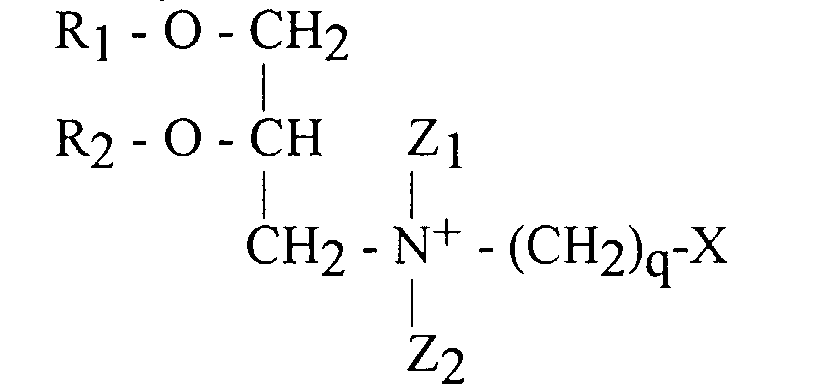
dans laquelle R1 et R2, indépendamment l'un de l'autre, sont des groupes alkyle ou alcényle en C1-C23, ou
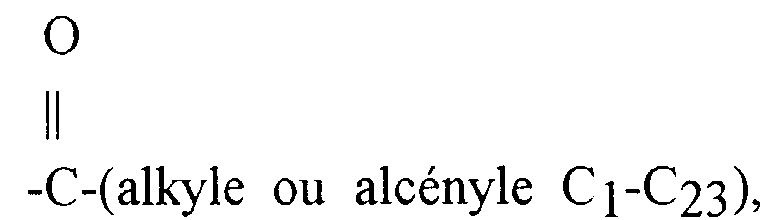
Z1 et Z2, indépendamment l'un de l'autre, sont H ou des groupes alkyle non ramifiés en C1-C6, q est un nombre entier de 1 à 6, et X est choisi parmi l'un quelconque des groupes X1 à X8, X15, ou X16.
dans laquelle R1 et R2, indépendamment l'un de l'autre, sont des groupes alkyle ou alcényle en C1-C23, ou
Z1 et Z2, indépendamment l'un de l'autre, sont H ou des groupes alkyle non ramifiés en C1-C6, q est un nombre entier de 1 à 6, et X est choisi parmi l'un quelconque des groupes X1 à X8, X15, ou X16.
3. Composé selon la revendication 2, dans lequel X est X2.
4. Composé selon la revendication 2, dans lequel X est X2, et n vaut 2.
5. Composé selon la revendication 2, dans lequel X est X2, n vaut 1, R1 et R2 sont des groupes alcényle en C18, et Z1 et Z2 sont des groupes méthyle.
6. Composé selon la revendication 2, dans lequel X est X1.
7. Composé selon la revendication 2, dans lequel X est X1 et représente (CH2)nBr, et n vaut 1.
8. Composé selon la revendication 2, dans lequel X est (CH2)nBr, n vaut 1, R1 et R2 sont des groupes alcényle en C18, et Z1 et Z2 sont des groupes méthyle.
9. Composé selon la revendication 2, dans lequel X est X3.
10. Composé selon la revendication 2, dans lequel X est X3, q vaut 2, et m vaut 3.
11. Composé selon la revendication 2, dans lequel X est X3, q vaut 2, m vaut 3, Z1 et Z2 sont des groupes méthyle et R1 et R2 sont des groupes alcényle en C18.
12. Composé selon la revendication 2, dans lequel X est X5.
13. Composé selon la revendication 2, dans lequel X est X5, et q vaut 2.
14. Composé selon la revendication 2, dans lequel X est X5, q vaut 2, Z1 et Z2 sont des groupes méthyle, et R1 et R2 sont des groupes alcényle en C18.
15. Composé selon la revendication 2, dans lequel X est X6.
16. Composé selon la revendication 2, dans lequel X est X6, et q vaut 2.
17. Composé selon la revendication 2, dans lequel X est X6, q vaut 2, Z1 et Z2 sont des groupes méthyle, et R1 et R2 sont des groupes alcényle en C18.
18. Agrégat lipidique comprenant un composé selon l'une quelconque des revendications
1 à 17.
19. Procédé pour conjuguer un lipide cationique à une substance, comprenant la réaction
de ladite substance avec un lipide cationique qui est un composé selon l'une quelconque
des revendications 1 à 17, et dans lequel ladite substance possède un groupe amino
libre ou un groupe réactif avec un groupe.
20. Procédé pour conjuguer un lipide cationique à une substance ayant un groupe réactif,
comprenant la réaction d'un réactif réticulant avec ledit lipide et ladite substance,
ce qui permet de former un conjugué, dans lequel ledit lipide cationique est un composé
selon l'une quelconque des revendications 1 à 17.
21. Procédé de transfection d'une cellule comprenant la mise en contact de ladite cellule
avec un agrégat lipidique comprenant un ADN et une composition lipidique cationique
comprenant un composé selon l'une quelconque des revendications 1 à 17.
22. Procédé selon l'une quelconque des revendications 19 à 21, dans lequel X est X6.
23. Procédé selon l'une quelconque des revendications 19 à 21, dans lequel X est X6 et q vaut 2.
24. Procédé selon l'une quelconque des revendications 19 à 21, dans lequel ladite substance
est un phospholipide.
25. Procédé selon l'une quelconque des revendications 19 à 21, dans lequel ladite substance
est une dioléoylphosphatidyléthanolamine (DOPE).
26. Trousse pour préparer un agrégat lipidique comprenant un lipide cationique selon l'une
quelconque des revendications 1 à 17 et un phospholipide.
27. Trousse pour préparer un agrégat lipidique comprenant un lipide cationique selon l'une
quelconque des revendications 1 à 17 et une dioléoylphosphatidyléthanolamine (DOPE).
28. Agrégat lipidique comprenant un composé selon l'une quelconque des revendications
1 à 17 et comprenant en outre un phospholipide.
29. Agrégat lipidique comprenant le composé selon la revendication 15 et comprenant en
outre un phospholipide.
30. Agrégat lipidique selon la revendication 15, dans lequel le phospholipide est une
dioléoylphosphatidyléthanolamine (DOPE).