| (19) |
 |
|
(11) |
EP 0 674 100 B1 |
| (12) |
EUROPEAN PATENT SPECIFICATION |
| (45) |
Mention of the grant of the patent: |
|
03.12.1997 Bulletin 1997/49 |
| (22) |
Date of filing: 21.03.1995 |
|
|
| (54) |
System for operating and controlling actuators, sensors and devices installed in the
bodywork of a vehicle, in an engine of the vehicle, and in an air intake assembly
System zur Betätigung und Steuerung von Aktuatoren, Sensoren und Geräten im Kraftfahrzeug,
im Motor von Kraftfahrzeugen und in einer Luftzufuhr
Système pour commander et actionner des actuateurs capteurs et appareils installés
dans le corps d'un véhicule, dans le moteur et dans l'entrée d'air
|
| (84) |
Designated Contracting States: |
|
DE ES FR GB SE |
| (30) |
Priority: |
22.03.1994 IT BO940119
|
| (43) |
Date of publication of application: |
|
27.09.1995 Bulletin 1995/39 |
| (73) |
Proprietor: MAGNETI MARELLI S.p.A. |
|
20145 Milano (IT) |
|
| (72) |
Inventors: |
|
- Gaviani, Giovanni
I-47037 Rimini (IT)
- Biagini, Luca
I-42100 Reggio Emilia (IT)
|
| (74) |
Representative: Jorio, Paolo, Dr. Ing. et al |
|
Studio Torta S.r.l.,
Via Viotti, 9
10121 Torino
10121 Torino (IT) |
| (56) |
References cited: :
DE-U- 9 100 962
US-A- 3 996 914
|
FR-A- 2 676 885
US-A- 5 207 186
|
|
| |
|
|
- PATENT ABSTRACTS OF JAPAN vol. 8, no. 12 (M-269) (1449) 19 January 1984 & JP-A-58
174 145 (MITSUBISHI DENKI)
|
|
| |
|
| Note: Within nine months from the publication of the mention of the grant of the European
patent, any person may give notice to the European Patent Office of opposition to
the European patent
granted. Notice of opposition shall be filed in a written reasoned statement. It shall
not be deemed to
have been filed until the opposition fee has been paid. (Art. 99(1) European Patent
Convention).
|
[0001] The invention relates to a system for operating and controlling actuators, sensors
and devices installed in the bodywork of a vehicle, in an engine of the vehicle and
in an air intake assembly.
[0002] As is known, a system of the above-mentioned type comprises an electronic unit mounted
in the engine compartment and to which are connected all the actuators, sensors and
devices installed in the various parts of the vehicle. The unit has a male connector
connected to a female connector forming the terminal part of a bundle of electric
cables connecting to the above-mentioned components of the vehicle. In its run this
bundle of cables divides into sub-bundles which in their turn divide in their run
into cables which are then connected to the various components of the vehicle.
[0003] The system described above has a number of disadvantages.
[0004] In particular, as is known, the longer the run of the electric cables which originate
from the unit, the more frequent the possibility of such cables behaving like an antenna
receiving spurious signals from the outside which will interfere with the signals
received from and generated by the unit itself. Furthermore, every time the bundles
and sub-bundles divide they require connectors which constitute one of the weak points
of the entire electrical connection system insofar as they may be subject to mechanical
stresses which foster electrical disconnection. Essentially the entire electrical
connection system is complicated to assemble and requires a long period of time because
of the long run of electric cables which, among other things, require runs remote
from sources of heat and mounting brackets and because of the large number of electrical
connections to be made.
[0005] The object of the invention is to produce a system for operating and controlling
actuators, sensors and devices installed in the bodywork of a vehicle, in an engine
of the vehicle and in an air intake assembly which does not have the above-mentioned
disadvantages and which is thus provided with an electrical connection system which
is easy to operate and requires less installation time.
[0006] Further objects and advantages of the invention will emerge from the description
below.
[0007] According to claim 1 a system in use operating and controlling actuators, sensors
and devices installed in the bodywork of a vehicle, in an engine of the vehicle and
in an air intake assembly is produced, which comprises an electronic unit having a
first electrical connector connected to a second electrical connector forming the
terminal part of a first bundle of electric cables connecting to the actuators, sensors
and devices installed in the said bodywork of the said vehicle, a third electrical
connector connected to a fourth electrical connector forming the terminal part of
a second bundle of electric cables connecting to the actuators, sensors and devices
installed in the said engine of the said vehicle, a fifth electrical connector connected
to a sixth electrical connector forming the terminal part of a third bundle of electric
cables connecting to the actuators, sensors and devices installed in the said air
intake assembly; the said unit being carried by a body of the said air intake assembly.
[0008] Two preferred embodiments will now be described in order to provide a better understanding
of the invention, purely by way of non-exhaustive examples and with reference to the
accompanying drawings, in which :
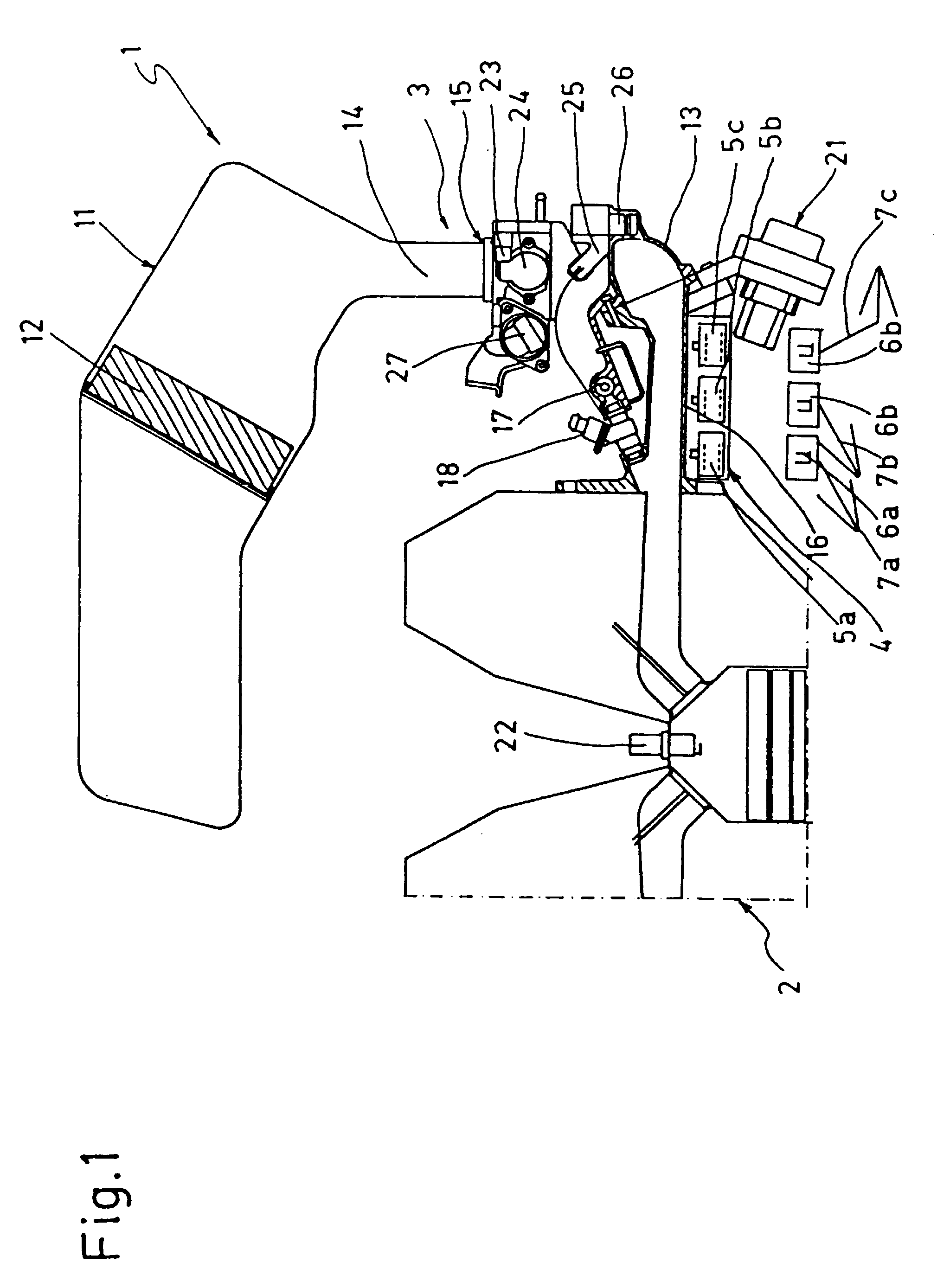
Fig. 1 is a diagrammatic and part-sectional view of a first embodiment of the system
to which the invention relates; and
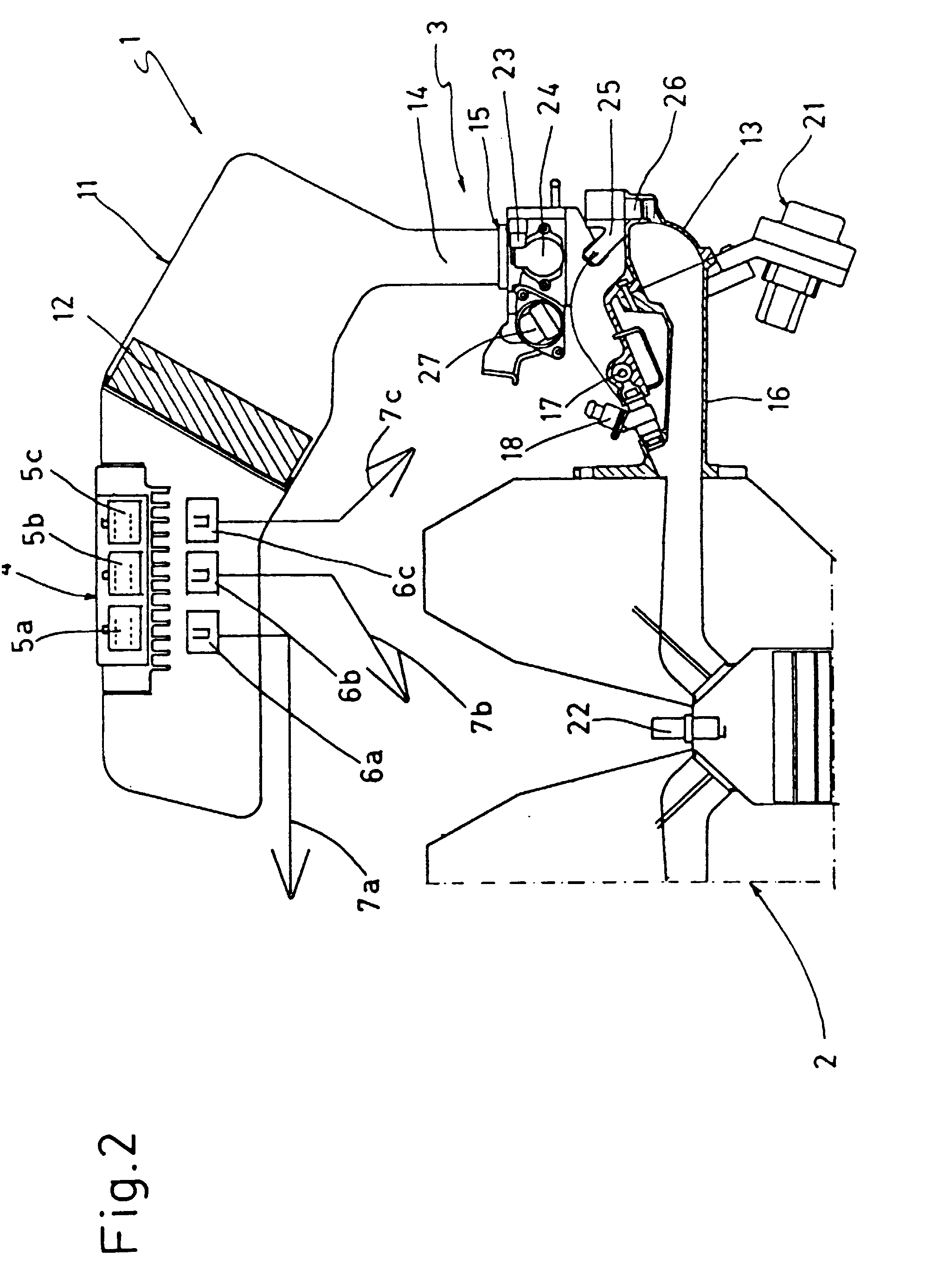
Fig. 2 is a diagrammatic and part-sectional view of a second embodiment of the system
to which the invention relates.
[0009] According to the illustrations in Figs. 1 and 2, in its entirety 1 denotes a system
for operating and controlling actuators, sensors and devices installed in the bodywork
(not shown) of a vehicle, in an engine 2 (partially shown) of the vehicle and in an
air intake assembly 3. The system 1 shown here relates to an engine in which the supply
of the air/fuel mixture is of the type known as multi-point and hence to an engine
in which a corresponding injector is coupled to each engine cylinder.
[0010] The system 1 comprises an electronic unit 4 having three male (female) connectors
5a, 5b and 5c capable of being coupled to three female (male) connectors 6a, 6b and
6c which constitute the terminal part of a respective bundle 7a, 7b and 7c of electric
cables. The bundle 7a relates to electric cables connecting to the actuators, sensors
and devices (not shown) installed in the bodywork of the vehicle such as, for example,
a device for air-conditioning the interior compartment of the vehicle, a device for
controlling the central locking of the vehicle's doors, a device for actuating the
supply to a lighting assembly, a device for actuating a windscreen wiper assembly
etc. The bundle 7b relates to electric cables connecting to the actuators, sensors
and devices (not shown) installed in the engine 2 of the vehicle such as, for example,
an engine stroke sensor, an engine revolutions sensor, an engine cooling device, a
device for recording the composition of the exhaust gases etc.
[0011] The air intake assembly 3 comprises a first body 11 in which an air filter 12 is
installed, a second body 13, a pipe 14 which puts the body 11 in communication with
the body 13 and along which a motorized throttle-valved body 15 is installed, and
a multiplicity of pipes 16 which originate from the body 13 and which convey the air/fuel
mixture towards an inlet of a respective engine cylinder. Installed on the air intake
assembly 3 are a fuel manifold 17, a multiplicity of injectors 18 (one per engine
cylinder), each of which is capable of injecting fuel into a respective pipe 16, and
an electrical ignition coil 21 connected in a way which is not illustrated to spark
plugs 22 installed in the engine cylinders. Sensors and valves are installed along
the entire air intake assembly and in particular an air temperature sensor 23 installed
on the throttle-valved body 15, a throttle position sensor 24 also installed on the
throttle-valved body 15, a load sensor 25 (air flowrate detection) installed on the
body 13, a valve 26 installed on the body 13 and capable of defining the blow-by of
the fuel vapours from the fuel manifold 17 towards the inside of the body 13, and
a valve 27 installed on the throttle-valved body 15 and capable of recording the position
of the throttle valve of the body 15 at idling speed.
[0012] The bundle 7c relates to electric cables connecting to the actuators, sensors and
devices installed in the air intake assembly 3 and in particular connecting to the
motorized throttle-valved body 15, to the injectors 18, to the electrical ignition
coil 21, to the sensors 23, 24 and 25, and to the valves 26 and 27. The unit 4 is
fixed to a body of the air intake assembly 3 and in particular either to an external
wall of one of the pipes 16 as shown in Fig. 1 or to the body 11 as shown in Fig.
2.
[0013] In practice, after the production of the air intake assembly and the installation
on it of all the above-mentioned elements, actuators, sensors and devices, the unit
4 is installed either on one of the pipes 16 or on the body 11. It is now possible
to connect the connectors 5c and 6c together and to connect the cables of the bundle
7c to the above-mentioned elements, actuators, sensors and devices. Following these
connections it is possible to carry out, prior to the installation of the assembly
3 on the engine 2, the testing of such elements, actuators, sensors and devices. After
the above-mentioned operations the manufacturer of the assembly 3 can send that assembly
3 (in which the unit 4 and the above-mentioned elements, actuators, sensors and devices
are integrated) to the car manufacturer.
[0014] At the car manufacturer's premises, after having installed the assembly 3 on the
engine 2, the connections are made between the connectors 5b and 6b and the connections
between the cables of the bundle 7b and the elements, actuators, sensors and devices
fitted to the engine 2. Following these connections it is possible to carry out, prior
to the installation of the engine 2 in the vehicle's engine compartment, the testing
of these elements, actuators, sensors and devices fitted to the engine 2. Finally,
after having installed the engine 2 in the engine compartment, the connections are
made between the connectors 5a and 6a and the connections between the cables of the
bundle 7a and the elements, actuators, sensors and devices fitted in the bodywork
of the vehicle and which may also be subject to testing.
[0015] The advantages gained with the implementation of the invention will be evident from
the above description.
[0016] In particular an air intake assembly 3 has been produced in which the electronic
unit 4 and a multiplicity of elements, actuators, sensors and devices which can be
tested prior to sending this assembly 3 to the vehicle manufacturer are integrated.
Consequently, at the premises of the manufacturer of the air intake assembly 3 it
is possible to optimize the elements, actuators, sensors and devices fitted to the
said assembly and the materials used. It is therefore evident that with the system
1 to which the invention relates it is possible to produce an integrated assembly
3 of high quality and reliability and reduced assembly times and costs. Furthermore,
with the integrated assembly 3, the operations of electrical connections and testing
carried out at the vehicle manufacturer's premises are facilitated, insofar as a bundle
of cables is provided for each destination (bodywork, engine and intake assembly).
It should be made clear that with the system 1, the design of the runs through which
the bundles of cables have to pass is simplified, runs which can be reduced and therefore
be free from interference. It should also be stressed that the installation of the
unit 4 on the assembly 3 permits a reduced overall space occupied.
[0017] The assembly 3 could support other elements also connected to the unit 4 as well
a those described above.
1. System in use operating and controlling actuators, sensors and devices installed in
the bodywork of a vehicle, in an engine (2) of the vehicle and in an air intake assembly
(3), the system comprising an electronic unit (4) having a first electrical connector
(5a) connected to a second electrical connector (6a) forming the terminal part of
a first bundle (7a) of electric cables connecting to the actuators, sensors and devices
installed in the said bodywork of the said vehicle, a third electrical connector (5b)
connected to a fourth electrical connector (6b) forming the terminal part of a second
bundle (7b) of electric cables connecting to the actuators, sensors and devices installed
in the said engine (2) of the said vehicle, a fifth electrical connector (5c) connected
to a sixth electrical connector (6c) forming the terminal part of a third bundle (7c)
of electric cables connecting to the actuators, sensors and devices installed in the
said air intake assembly (3); the said unit (4) being carried by a body (11 or 16)
of the said air intake assembly (3).
2. System according to Claim 1, characterized in that the said air intake assembly (3)
comprises a first body (11) in which an air filter (12) is installed, a second body
(13), a first pipe (14) which puts the said first body (11) in communication with
the said second body (13) and along which a throttle-valved body (15) is installed,
and at least one second pipe (16) which originates from the said second body (13)
and which conveys the air/fuel mixture towards an inlet of an engine cylinder; the
said unit (4) being installed on the said first body (11).
3. System according to Claim 1, characterized in that the said air intake assembly (3)
comprises a first body (11) in which an air filter (12) is installed, a second body
(13), a first pipe (14) which puts the said first body (11) in communication with
the said second body (13) and along which a throttle-valved body (15) is installed,
and at least one second pipe (16) which originates from the said second body (13)
and which conveys the air/fuel mixture towards an inlet of an engine cylinder; the
said unit (4) being installed on an external wall of the said second pipe (16).
4. System according to Claim 2 or 3, characterized in that installed on the said air
intake assembly (3) are a fuel manifold (17), at least one injector (18) capable of
injecting fuel into the said second pipe (16), an electrical ignition coil (21) connected
to spark plugs (22) installed in the engine cylinders, a first sensor (23) for air
temperature, a second sensor (24) for throttle position of the throttle-valved body
(15), a third sensor (25) for load (air flowrate detection), a first valve (26) capable
of defining the blow-by of the fuel vapours from the said fuel manifold (17) towards
the inside of the said second body (13), and a second valve (27) capable of recording
the position of the throttle valve of the said throttle-valved body (15) at idling
speed; the said third bundle (7c) relating to electric cables connecting to means
of motorizing the said throttle-valved body (15), to the said injector (18), to the
said electrical ignition coil (21), to the said sensors (23, 24 and 25) and to the
said valves (26 and 27).
1. System zur Verwendung bei der Betätigung und Steuerung von Stellorganen, Meßfühlern
und Vorrichtungen, die an der Karosserie eines Fahrzeuges, im Motor (2) eines Fahrzeuges
und in einer Luftansaugvorrichtung (3) befestigt sind, wobei das System eine elektronische
Einheit (4) aufweist, die einen ersten elektrischen Verbinder (5a) enthält, der mit
einem zweiten elektrischen Verbinder (6a), der das Endteil eines ersten Bündels (7a)
elektrischer Kabel zur Verbindung der an der Karosserie des Fahrzeuges befestigten
Stellorgane, Meßfühler und Vorrichtungen bildet, verbunden ist, sowie einen dritten
elektrischen Verbinder (5b), der mit einem vierten elektrischen Verbinder (6b), der
das Endteil eines zweiten Bündels (7b) elektrischer Kabel zur Verbindung der im Motor
(2) des Fahrzeuges befestigten Stellorgane, Meßfühler und Vorrichtungen bildet, verbunden
ist, und einen fünften elektrischen Verbinder (5c), der mit einem sechsten elektrischen
Verbinder (6c), der das Endteil eines dritten Bündels (7c) elektrischer Kabel zur
Verbindung der in der Luftansaugvorrichtung (3) des Fahrzeuges befestigten Stellorgane,
Meßfühler und Vorrichtungen bildet, verbunden ist, wobei die Einheit (4) auf einem
Körper (11 oder 16) der Luftansaugvorrichtung (3) gehaltert ist.
2. System nach Anspruch 1, dadurch gekennzeichnet, daß die Luftansaugvorrichtung (3)
einen ersten Körper (11) mit einem darin angebrachten Luftfilter (12), einen zweiten
Körper (13), ein erstes Rohr (14) mit einem daran angebrachten Drosselklappenkörper
(15), das den ersten Körper (11) mit dem zweiten Körper (13) verbindet, und wenigstens
ein zweites Rohr (16) aufweist, das aus dem zweiten Körper (13) herausläuft und das
Kraftstoff-Luft-Gemisch einem Einlaß eines Motorzylinders zuführt, wobei die Einheit
(4) an dem ersten Körper (11) befestigt ist.
3. System nach Anspruch 1, dadurch gekennzeichnet, daß die Luftansaugvorrichtung (3)
einen ersten Körper (11) mit einem darin angebrachten Luftfilter (12), einen zweiten
Körper (13), ein erstes Rohr (14) mit einem daran angebrachten Drosselklappenkörper
(15), das den ersten Körper (11) mit dem zweiten Körper (13) verbindet, und wenigstens
ein zweites Rohr (16) aufweist, das aus dem zweiten Körper (13) herausläuft und das
Kraftstoff-Luft-Gemisch einem Einlaß eines Motorzylinders zuführt, wobei die Einheit
(4) an einer Außenwand des zweiten Rohres (16) befestigt ist.
4. System nach Anspruch 2 oder 3, dadurch gekennzeichnet, daß an der Luftansaugvorrichtung
(3) ein Kraftstoffverteiler (17), wenigstens ein Injektor (18), der dazu geeignet
ist, Kraftstoff in das zweite Rohr (16) einzuspritzen, eine mit den in den Motorzylindern
befestigten Zündkerzen (22) verbundene elektrische Zündspule (21), ein erster Meßfühler
(23) für die Lufttemperatur, ein zweiter Meßfühler (24) für die Drosselstellung des
Drosselklappenkörpers (15), ein dritter Meßfühler (25) für die Ladung (Erfassung des
Luftdurchsatzes), ein erstes Ventil (26), das dazu geeignet ist, den Durchsatz der
Kraftstoffdämpfe vom Kraftstoffverteiler (17) in das Innere des zweiten Körpers (13)
zu bestimmen, und ein zweites Ventil (27) befestigt sind, das dazu geeignet ist, die
Position des Drosselventils des Drosselklappenkörpers (15) bei Leerlaufdrehzahl zu
registrieren, wobei sich das dritte Bündel (7c) auf elektrische Kabel bezieht, die
mit den Antriebsmitteln des Drosselklappenkörpers (15), mit dem Injektor (18), mit
der elektrischen Zündspule (21), mit den Meßfühlern (23, 24 und 25) und den Ventilen
(26 und 27) verbunden sind.
1. Système utilisé pour faire fonctionner et commander des actionneurs, des capteurs
et des dispositifs installés dans la carrosserie d'un véhicule, dans un moteur (2)
du véhicule et dans une unité d'admission d'air (3), le système comprenant une unité
électronique (4) possédant un premier connecteur électrique (5a) connecté à un second
connecteur électrique (6a) formant la partie terminale d'un premier faisceau (7a)
de câbles électriques raccordés aux actionneurs, aux capteurs et aux dispositifs installés
dans ladite carrosserie dudit véhicule, un troisième connecteur électrique (5b) connecté
à un quatrième connecteur électrique (6b) formant la partie terminale d'un second
faisceau (7b) de câbles électriques connectés aux actionneurs, aux capteurs et aux
dispositifs installés dans ledit moteur (2) dudit véhicule, un cinquième connecteur
électrique (5c) connecté à un sixième connecteur électrique (6c) formant la partie
terminale d'un troisième faisceau (7c) de câbles électriques connectés aux actionneurs,
aux capteurs et aux dispositifs installés dans ladite unité d'admission d'air (3);
ladite unité (4) étant portée par un corps (11 ou 16) de ladite unité d'admission
d'air (3).
2. Système selon la revendication 1, caractérisé en ce que ladite unité d'admission d'air
(3) comprend un premier corps (11), dans lequel un filtre à air (12) est installé,
un second corps (13), une première canalisation (14) qui place ledit premier corps
(11) en communication avec ledit second corps (13) et dans laquelle est installé un
corps (15) équipé du papillon des gaz, et au moins une seconde canalisation (16) qui
s'étend à partir dudit second corps (13) et véhicule le mélange air/carburant en direction
d'une entrée d'un cylindre du moteur; ladite unité (4) étant installée sur ledit premier
corps (11).
3. Système selon la revendication 1, caractérisé en ce que ladite unité d'admission d'air
(3) comprend un premier corps (11), dans lequel un filtre à air (12) est installé,
un second corps (13), une première canalisation (14) qui place ledit corps (11) en
communication avec ledit second corps (13) et dans lequel est installé un corps (15)
équipé du papillon des gaz, et au moins une seconde canalisation (16) qui s'étend
à partir dudit second corps (13) et véhicule le mélange air/carburant en direction
d'une entrée d'un cylindre du moteur; ladite unité (4) étant installée sur une paroi
extérieure de ladite seconde canalisation (16).
4. Système selon la revendication 2 ou 3, caractérisé en ce que dans ladite unité d'admission
d'air (3) sont installés un collecteur de carburant (14), au moins un injecteur (18)
apte à injecter du carburant dans ladite seconde canalisation (16), une bobine d'allumage
électrique (21) connectée à des bougies d'allumage (22) installées dans les cylindres
du moteur, un premier capteur (23) de la température de l'air, un second capteur (24)
pour positionner le papillon d'étranglement du corps (15) équipé du papillon des gaz,
un troisième capteur (25) de la charge (détection du débit d'air), une première soupape
(26) apte à définir le trajet de contournement des vapeurs de carburant depuis ledit
collecteur de carburant (17) en direction de l'intérieur dudit second corps (13),
et une seconde soupape (27) apte à enregistrer la position du papillon des gaz dudit
corps (15) équipé du papillon des gaz, à la vitesse de ralenti; ledit troisième faisceau
(7c) comprenant des câbles électriques connectés à des moyens pour actionner de façon
motorisée le corps (15) équipé du papillon des gaz, audit injecteur (18), à ladite
bobine d'allumage électrique (21), auxdits capteurs (23,24 et 25) et auxdites soupapes
(26 et 27).