|
(11) | EP 0 695 239 B1 |

| (12) | EUROPEAN PATENT SPECIFICATION |
|
|
| (54) |
COMPOSITE TIRE INNER-LINERS AND INNER TUBES MISCHUNGEN FüR INNENSCHICHTE UND SCHLäUCHE VON LUFTREIFEN GARNITURES INTERIEURES ET CHAMBRES A AIR POUR PNEUMATIQUES COMPOSITES |
|
|
|||||||||||||||||||||||||||||||
| Note: Within nine months from the publication of the mention of the grant of the European patent, any person may give notice to the European Patent Office of opposition to the European patent granted. Notice of opposition shall be filed in a written reasoned statement. It shall not be deemed to have been filed until the opposition fee has been paid. (Art. 99(1) European Patent Convention). |
[0001] The invention relates to novel compositions useful for the manufacture of tire inner-liners and inner tubes as well as inner-liners and tubes containing those compositions. The inner-liner compositions comprise various rubbers and mixtures of those rubbers containing silicate clay platelets. The addition of these platelets to the rubbers produces a composition which has sufficiently low air permeability to be useful in the manufacture of tire inner-liners and inner tubes.
[0002] It is well-known in the art that tire inner-liners must be constructed of materials which are relatively low in air permeability and yet flexible. The rubbers which have been almost exclusively used for this purpose are butyl rubbers, particularly the halogenated butyl rubbers. Until recently, only these polymers possessed the necessary traits to be useful in the manufacture of tire inner-liners and tire inner tubes.
[0003] Recently, a novel family of copolymers has been used to manufacture tire inner-liners. Published International Application PCT/US91/04896 discloses the use of isomonoolefin/para-alkyl styrene copolymers for the manufacture of tire inner-liners. Tire inner-liners made from these copolymers exhibit very low air permeability.
[0004] The problem with using butyl rubbers and the new copolymers is that these polymers are relatively expensive when compared to general purpose rubbers. General purpose rubbers, however, do not possess the required low air permeability. Therefore a need exists to develop rubber compositions which are relatively inexpensive yet possess sufficiently low air permeability to be used in the production of tire inner-liners.
[0005] The addition of clays to rubber is well-known in the art. Clays have been added to rubber compositions to improve their strength. For example, U.S. Patent 4,889,885 discloses the preparation of a composite material by adding a layered silicate to rubber to improve the mechanical properties. The resulting products, however, are relatively stiff and therefore are unsuitable for the use as tire inner-liners.
SUMMARY OF THE INVENTION
[0006] It has recently been found that by controlling the size, spacing, and orientation of specific silicate clay platelets in a rubber composition, it is possible to produce a rubber composition having sufficiently low air permeability to be useful as a tire inner-liner or inner tube composition. This improved air permeability does not substantially decrease the flexibility of the rubber required for its use in a tire. Thus it is now possible to produce a low-cost tire inner-liner or inner tube from a general purpose rubber which will perform as well as the more expensive halobutyl compounds presently used. Moreover, the ability to use general purpose rubbers for the inner-lining will help with the adhesion between the inner-liner and the tire carcass in that the general purpose rubbers will be more compatible with the other rubber components of the tire.
[0007] The silicate platelets may also be contained in a butyl rubber type matrix. This results in lower air diffusion and is highly useful for tire inner-liners and inner tubes with exceptionally long inflation retention.
[0008] In practice of the invention the layers of silicate clay are dispersed in the rubber composition forming platelets of between 7 to 12 angstroms thick. The inter layer distance is about 12 angstroms or greater. In the practice of the invention the platelets should be aligned such that the majority of the platelets have their face perpendicular to the direction of gas diffusion. In this manner the platelets form a air barrier preventing the diffusion of air through the rubber of the inner-liner.
DETAILED DESCRIPTION OF THE INVENTION
[0009] Pneumatic tires are typically produced so that the inflation gas, usually air, is contained by a barrier. This barrier can be an inner tube, an inner-liner, or some part or all of the tire carcass. The barrier performs critical safety and utility functions in the tire. If diffusion of the air through the tire is minimized, inflation pressure is maintained over a long period of time. Under-inflation leads to tire damage and possible catastrophic failure.
[0010] Moreover, internal or inter-carcass, pressure within the tire contributes to oxidative degradation of the rubber and reinforcing fibers and to internal flaw growth during operation.
[0011] The compositions of this invention which have air barrier characteristics greatly improved over the rubbers used to construct the body of the tire can be used as inner-tubes or inner-liners.
[0012] According to the invention there is provided a tire inner-liner comprising a complex and solid rubber, said complex being composed of reactive rubber having a positively charged group and layered silicate uniformly dispersed therein, 40% or more of the silicate faces being arranged perpendicular to the direction of gas diffusion due to an imposed pressure differential, the silicate layers having a thickness of 7 to 12 angstroms and are at least 25 times longer and 25 times wider than they are thick, the interlayer distance of said layered silicate being greater than 12 angstroms, the reactive rubber being soluble in or crosslinkable with the solid rubber and wherein the layered silicate is contained in the complex in an amount of 1 to 50 parts by weight per 100 parts by weight of the reactive rubber.
[0014] However, to keep the pressure as low as possible in the area of the reinforcing elements in the tire, the lowest diffusion composition in the tire should be on the high pressure side of these elements.
[0015] The inner-liner, inner tube, or barrier compositions of the present invention comprise a complex of a reactive rubber having layered silicate uniformly dispersed therein. The content of the layered silicate in this complex should be 1 to about 50 parts per weight for 100 parts per weight of the reactive rubber. With less than 0.5 parts per weight, insufficient silicate is present to lower the air permeability of the composition adequately. Conversely, when more than 50 parts by weight are used the composition is too stiff to be used as a tire inner-liner composition. In the preferred embodiment the silicate comprises from 2 to 30 parts by weight, is most preferred.
[0016] The layered silicate creates an air barrier within the composition reducing the diffusion of air through the composition. The silicate is a layered phyllosilicate material composed of magnesium silicate layers or aluminum silicate layers having a thickness of 7 to 12 angstroms. These layered clay materials are negatively charged on account of the isomorphous ion exchange. They differ from one another in characteristic properties depending upon the density and distribution of the negative charges. The preferred layered silicate in this invention is one which one negative charge occupies an area of 25 to 200Å2 on the layer surface.
[0017] Examples of the layered silicates which may be used in the practice of the invention are various clay minerals including smectite clay, minerals (such as montmorillonite, saponite, beidellite, montronite, hectorite, and stevensite); vermiculite and halloysite. These may be natural or synthetic clays. Of these montmorillonite is preferred.
[0018] In the present invention the inner-liner composition should preferably be composed of a complex and a solid rubber. The complex is composed of a reactive rubber having positively charged groups and a layered silicate uniformly dispersed in said reactive rubber, with the interlayer distance greater than 12 angstroms. In addition, the complex should preferably have such a structure that the reactive rubber is solubilized in the solid rubber. This structure is responsible for the composite material having superior mechanical characteristics to include low air permeability. These pronounced effects are attributed to the following.
[0019] The layered silicate is uniformly dispersed in the rubber component because the layered silicate is directly bound to the reactive rubber having positively charged groups through ionic bonding and the reactive rubber is highly miscible in the solid rubber or can he reacted with the solid rubber. In addition, in the case of vulcanized rubber, the layered silicate is directly connected to the rubber network chain formed by the rubber component, so that the layered silicate greatly restricts the molecular motion of the rubber network chains in the vicinity of the interface.
[0020] The fact that the layered silicate is uniformly dispersed in the rubber component and is aligned with the faces of the layers to the pressure differential leads to the low air permeability of the composition.
[0021] The compatibility of the solid rubber with the complex composed of the layered silicate and the reactive rubber leads to low viscosity and good processability at the time of processing. This is an advantage over other systems which may tend to increase viscosity at the time of processing. In addition, the layered silicate directly connected to the reactive rubber is easily mobile and contributes to the dispersability of the layered silicate. The inner-liner composition is constructed such that the layered silicate is uniformly dispersed in the rubber composition. This structure is formed by dispersing the layered silicate in the form of molecules into the reactive rubber and solubilising the reactive rubber in the complex into the solid rubber. Any attempt to uniformly disperse the layered silicate into solid rubber would be unsuccessful because of the incompatibility of the two components. Thus the above-mentioned structure cannot be made in such a reverse way.
The reactive rubber used in the present invention is one which has a positively charged group. The positively charged group may be in the main chain or side chain of the reactive rubber or at the terminal end thereof. The reactive rubber may have one or more positively charged groups in one molecule. Examples of the reactive rubber can include those which have polybutadiene; butadiene copolymers containing styrene, isoprene, acrylonitrile; polyisobutylene; isobutylene copolymers containing butadiene, isoprene, styrene, para-methylstyrene; polychloroprene; ethylene propylene diene copolymers; polyisoprene; copolymers of isoprene and styrene, butadiene and acrylonitrile; natural rubber; or modified product thereof in the main chain or a portion thereof and also have in the molecule an onium salt wherein the cation of the salt has the general formula
- -[M1R1R2R3R4]+
- wherein M1 denotes N or P,
- -[M2R1R2R3]+
- wherein M2 denotes S, or
- -[M3R1]+
- wherein M3 denotes
- [M1R1R2R3]
- wherein M1 denotes N or P
- [M2R1R2]
- wherein M2 denotes S or
- [M3]
- wherein M3 denotes
[0023] The complex composed of the layered silicate and the reactive rubber is composed of the reactive rubber and the layered silicate uniformly dispersed into the reactive rubber. The dispersion of the layered silicate in the form of molecules produces the ionic association between the liquid rubber and the layered silicate. This ionic bond may form the crosslinked structure of the reactive rubber. In other words, the individual layers of the silicate are completely separated from one another by the force greater than the bonding force (such as van der Waals forces and electrostatic attractive forces) between the layers. Moreover, the negative charge on the silicate is connected to the positive charge (onium ion) in the reactive rubber through ionic bonding or association.
[0024] A substantial fraction of the layered silicate in the complex should have an interlayer distance of greater than 12 angstroms. With an interlayer distance less than 12 angstroms, the complex does not uniformly disperse into the solid rubber.
[0025] The solid rubber should preferably be one which has a molecular weight of greater than 10,000 so that it can be vulcanized or crosslinked to the bulk state. Solid rubbers which may be used in the practice of this invention include polybutadiene; butadiene copolymers containing styrene, isoprene or acrylonitrile; polyisobutylene; isobutylene copolymers containing butadiene, isoprene, styrene or paramethylstyrene; polychloroprene; ethylene propylene diene copolymers; polyisoprene; isoprene copolymers containing butadiene, styrene, acrylonitrile and natural rubber.
[0026] The complex composed of the layered silicate and reactive rubber should be compounded with the solid rubber at a ratio of 1 to 100, preferably 2 to 50 parts by weight of the former to 100 parts by weight of the latter. If the amount of the complex is less than 1 part by weight, the layered silicate produces little effect for the rubber phase containing solid rubber and reactive rubber. With an amount in excess of 100 parts by weight, the content of the reactive rubber in the rubber phase is so high that it impairs the inherent characteristics of the solid rubber.
[0027] The rubber composition may be incorporated according to need with carbon black to enhance the reinforcement effect and other characteristics of the rubber. Examples of carbon black include SAF (N11), ISAF (N220), HAF (N330), FEF (N550), GPF (N660), and SRF (N770) [ASTM designations in parentheses]. Carbon black should be added in an amount of 0 to 100 parts by weight, preferably 0 to 70 parts by weight for 100 parts by weight of the solid rubber. With an amount in excess of 100 parts by weight, the resulting rubber composition has such a high viscosity that the improvement of processability of the complex is less significant.
[0028] Other compounding materials may also be used in the compositions to control rheological and physical properties well known in the art. These include non-reinforcing fillers, such as, clays and plasticizers, such as hydrocarbon process oils, low molecular weight hydrocarbon resins and alkyl phthalates.
[0029] The rubber composition is characterized by the fact that the reactive rubber in the complex is solubilizable in or reactive with the solid rubber. In other words, the reactive rubber component in the complex has good miscibility with the solid rubber or can be made to crosslink with the solid rubber. The solid rubber includes elastomeric compositions that exhibit glass transition temperatures of less than about -25°C. Examples of these solid rubbers include polybutadiene; butadiene copolymers of styrene, isoprene, or acrylonitrile; polyisobutylene; isobutylene copolymers containing butadiene, isoprene, styrene, or paramethylstyrene; polychloroprene; ethylene propylene diene copolymers; polyisoprene; isoprene copolymers containing butadiene, styrene or acrylonitrile and natural rubber. The thermoplastic elastomers may also be used for the solid rubber component of the invention.
[0030] The rubber composition may have incorporated, in addition, carbon black, acid acceptors, or antioxidants or other commonly used additives according to need. This rubber composition can be vulcanized with sulfur, peroxide, etc. or other vulcanising agents and vulcanization accelerators commonly used for solid rubbers. In addition, vulcanization can be accomplished with any vulcanising molding machine.
[0031] The inner-liner composition of the present invention may be produced according to the following process. First, a clay mineral composed of a layered silicate is uniformly dispersed in water in a concentration lower than 5 wt. %. Separately, reactive rubber having a positively charged terminal group is dispersed in a solvent in a concentration lower than 50 wt. %. They are mixed together with vigorous stirring to make a homogeneous mixture. The mixing ratio of the layered silicate to the reactive rubber should preferably be 1:0.1 to 1:5 on a dry basis. The complex which is composed of the layered silicate in reactive rubber and dispersed in the water containing mixed solvent is collected by vacuum filtration or pressure filtration followed by a preliminary drying at 50 to 100°C in air followed by drying at 80 to 150°C in vacuo. The solubilization of the reactive rubber in the complex into the solid rubber may be accomplished by mixing the complex with solid rubber or by mixing with an emulsion or latex of the rubber. During the mixing, carbon black or other additives are added. Thus, there is obtained the desired composite material which is based on rubber as the resin.
[0032] The rubber compositions of the present invention can then be formed into tire inner-liners or inner tubes using conventional processing techniques such as calendering or extrusion followed by building the tire and molding.
[0033] It has been discovered that when the compositions of this invention are prepared they exhibit a brittle temperature of less than about -20°C and an air diffusion of less than about one half of that of styrene butadiene rubber and also are preferably crosslinkable with chemical curatives.
[0034] In producing the tire inner-liner composition of the invention, care must be taken to insure that the platelets are at least 25 times longer and 25 times wider than they are thick and that the plates are on average arranged such that about 40% of the platelets are arranged so that the face is perpendicular to the direction of gas diffusion due to an imposed pressure differential.
[0035] Platelets can be arranged in several ways. Extruding, extending or shearing the material before crosslinking lines the plates up in the direction of flow. In addition, if the platelets are small, and have charges on the surface, this can facilitate a self-aligning morphology to inhibit diffusion. The use of the self-aligning characteristic is particulary useful if the materials are prepared with a solvent present to reduce the viscosity of the system. In this case the inner-liner may be cast as a film and used conventionally or applied to a vulcanized tire.
Example 1
[0036] A layered silicate, montmorillonite clay, was slurried with water at one part of clay per 100 parts of water and centrifuged to remove impurities. The clay slurry was then contacted with excess ion exchange resin. The resin was in the acid form and this produced the acid form of the clay. The water slurry of the acid clay was contacted in a Waring blender with a 5% by weight toluene solution of a reactive rubber, Hycar™ 1300 (amine terminated butadiene-acrylonitrile oligomer from B.F. Goodrich Co., Mn about 1300). On contact in the Waring blender there was a sharp increase in the viscosity. The material was further mixed in a microfluidizor and the water and toluene were removed by distillation. The final material contained 25 parts of clay per 75 parts of reactive polymer. The material was light brown and clear. The distance between the layers was determined by x-ray scattering to be 14 angstroms. The glass transition temperature was measured by dynamic mechanical thermal analysis. The material exhibited a major loss peak (maximum in
) at -37°C. The major loss peak for the Hycar 1300 without the clay was -41°C.
[0037] The polymer-clay composition was pressed into a film about 0.43 mm (17 mils) thick in a press heated to 125°C to give a clear, flexible film. The diffusion of gas through the film was measured on an Oxtran 2/20 diffusion device manufactured by Mocon, Minneapolis, MN. The experiments were carried out at 30°C and 0% relative humidity. Oxygen was used as the diffusing gas. Under these conditions the polymer-clay composition exhibited an oxygen transmission rate of 4.2 cm3-mil/m2 day 103. Under the same condition a styrene-butadiene copolymer (SBR-1500) typically used in the manufacture of tires had an oxygen transmission rate of 2.32 cm3-mm/m2 day 103 (91.2 cm3-mil/m2 day 103) or about 22 times greater than the composite.
Example 2
[0038] The polymer-clay composition of Example 1 was applied to the inner surface of a passenger car tire at a thickness of about 0.38 mm (15 mil). Prior to the application of the polymer-clay composition the tire lost inflation pressure at about 103 mbar (1.5 psi)/month at 30°C at an inflation pressure of 2208 mbar (32 psi). After the polymer-clay composition was applied the loss of inflation pressure was less than 14 mbar (0.2 psi)/month.
Example 3
[0039] A polymer clay composition containing 4.8 parts montmorillonite clay, 19 parts Hycar™ 1300 amine terminated butadiene acrylonitrile oligomer and 76 parts by weight of styrene-butadiene copolymer (SBR-1500) was synthesized by first reacting acid clay with the reactive polymer by the procedure of Example 1. After the reactive polymer and clay had been mixed, SBR-1500 emulsion was added with further mixing in the microfluidizer. Toluene and water were then removed by distillation and further drying under vacuum. The polymer-clay composition was pressed into a film 0.56 mm (22 mils) in thickness on a hot press at 125°C.
[0040] The film was soft and flexible at room temperature and had a brittleness temperature of less than about 45°C. The oxygen transmission rate was measured under the conditions of Example 1 and found to be 1.08 cm3-mm/m2 day 103 (42.5 cm3-mil/m2 day 103). This is less than one-half the oxygen transmission rate of the SBR-1500.
Example 4
[0041] The polymer clay composition of Example 3 was compounded on a two-roll mill with 2 phr (parts per hundred parts of rubber by weight) of strearic acid, 5 phr zinc ozide, 2 phr sulfur, and 1.5 phr Altax™ (benzothiazyl disulfide) and vulcanized into a 0.51 mm (20 mil) thick pad by heating in a mold for 20 min. at 153°C.
[0042] The composition was insoluble in toluene showing it to be well cured and it exhibited the same oxygen transmission rate as the uncured sample.
[0043] The composition containing the curatives was sheeted out on a two roll mill to form an uncured sheet about 0.89 mm (35 mils) in thickness. SBR-1500 was compounded with the same amounts of curatives and also sheated out on a two roll mill to form an uncured sheet about 0.76 mm (30 mils) in thickness. The sheets were pressed together in a mold and press cured by heating for 20 min. at 153°C. The sheets could not be separated after vulcanization.
1. A tire inner-liner comprising a complex and solid rubber, said complex being composed
of reactive rubber having a positively charged group and a layered silicate uniformly
dispersed therein, 40% or more of the silicate faces being arranged perpendicular
to the direction of gas diffusion due to an imposed pressure differential, the silicate
layers having a thickness of 7 to 12 angstroms and are at least 25 times longer and
25 times wider than they are thick, the interlayer distance of said layered silicate
being greater than 12 angstroms, the reactive rubber being soluble in or crosslinkable
with the solid rubber and wherein the layered silicate is contained in the complex
in an amount of 1 to 50 parts by weight per 100 parts by weight of the reactive rubber.
2. The tire inner-liner described in claim 1 wherein the reactive rubber is one which
has a molecular weight of greater than 450.
3. The tire inner-liner as described in any one of the preceding claims wherein the solid
rubber is one selected from the group comprising natural rubber, synthetic rubber,
thermoplastic elastomer and blends thereof.
4. The tire inner-liner as defined in any one of the preceding claims wherein the solid
rubber is polybutadiene.
5. The tire inner-liner as defined in any one of the preceding claims wherein the solid
rubber is one which has a molecular weight of not less than 10,000.
6. The tire inner-liner as defined in any one of the preceding claims wherein the content
of said complex is 2 to 50 parts by weight per 100 parts by weight of the solid rubber.
7. The tire inner-liner as defined in any one of the preceding claims which further comprises
carbon black.
8. The tire inner-liner as defined in any one of the preceding claims wherein said reactive
rubber comprises one or more rubber selected from the group consisting of polybutadiene;
butadiene copolymer which contains styrene, isoprene, or acrylonitrile; polyisobutylene;
isobutylene containing copolymers containing butadiene, isoprene, styrene, para-methylstyrene;
polychloroprene,; ethylene propylene diene copolymers; polyisoprene; isoprene copolymers
containing isobutylene, butadiene, styrene or acrylonitrile; natural rubber; or modified
product thereof said reactive rubber further comprising an onium salt or onium salt
precursor.
9. The tire inner-liner defined in claim 8 wherein the cation of said onium salt has
the general structure
-[M1R1R2R3R4]+
wherein M1 denotes nitrogen or phosphorous
-[M2R1R2R3]+
wherein M2 denotes sulphur, or
-[M3R1]+
wherein M3 denotes
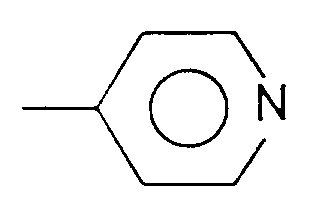
and R1, R2, R3 and R4 independently denote hydrogen, alkyl groups, aryl groups or ally groups which may be the same or different.
-[M1R1R2R3R4]+
wherein M1 denotes nitrogen or phosphorous
-[M2R1R2R3]+
wherein M2 denotes sulphur, or
-[M3R1]+
wherein M3 denotes
and R1, R2, R3 and R4 independently denote hydrogen, alkyl groups, aryl groups or ally groups which may be the same or different.
10. The tire inner-liner defined in claim 8 wherein said onium salt precursor has the
general structure
[M1R1R2R3]
wherein M1 denotes nitrogen or phosphorous
[M2R1R2]
wherein M2 denotes sulphur, or
[M3]
wherein M3 denotes
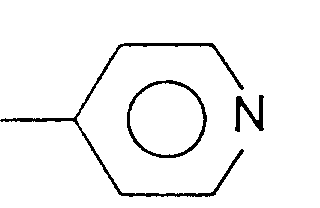
and R1, R2 and R3 independently denote hydrogen, alkyl groups, aryl groups or allyl groups which may be the same or different.
[M1R1R2R3]
wherein M1 denotes nitrogen or phosphorous
[M2R1R2]
wherein M2 denotes sulphur, or
[M3]
wherein M3 denotes
and R1, R2 and R3 independently denote hydrogen, alkyl groups, aryl groups or allyl groups which may be the same or different.
11. The tire inner-liner defined in any of the preceding claims wherein said reactive
rubber is an amine terminated rubber.
12. The tire inner-liner defined in claim 10 wherein said reactive rubber comprises amine
terminated butadiene-acrylonitrile rubber.
13. The tire inner-liner defined in any of the preceding claims wherein said layered silicate
comprises phyllosilicate.
14. The tire inner-liner defined in any of the preceding claims wherein said layered silicate
is a clay selected from the group consisting of smectite clays, vermiculite, halloysite
and montmorillonite.
15. A pneumatic tire having an inner-liner according to any of the preceding claims.
16. A tire inner-tube comprising a complex and solid rubber as described in any of claims
2 to 14.
1. Reifeninnengummi, das einen Komplex und festen Kautschuk umfaßt, wobei der Komplex
aus reaktivem Kautschuk mit einer positiv geladenen Gruppe und einem gleichförmig
darin dispergierten Schichtsilikat zusammengesetzt ist, wobei 40 % oder mehr der Silikatflächen
senkrecht zu der Gasdiffusionsrichtung aufgrund einer auferlegten Druckdifferenz sind,
die Silikatschichten eine Dicke von 7 bis 12 Å aufweisen und mindestens 25 mal länger
und 25 mal breiter sind, als sie dick sind, wobei der Zwischenschichtabstand des Schichtsilikats
größer als 12 Å ist, der reaktive Kautschuk in dem festen Kautschuk löslich oder mit
diesem vernetzbar ist und das Schichtsilikat in dem Komplex in einer Menge von 1 bis
50 Gewichtsteilen auf 100 Gewichtsteile des reaktiven Kautschuks vorhanden ist.
2. Reifeninnengummi nach Anspruch 1, bei dem der reaktive Kautschuk ein Molekulargewicht
größer als 450 hat.
3. Reifeninnengummi nach einem der vorhergehenden Ansprüche, bei dem der feste Kautschuk
ausgewählt ist aus der Gruppe, die Naturkautschuk, synthetischen Kautschuk, thermoplastisches
Elastomer und Mischungen derselben umfaßt.
4. Reifeninnengummi nach einem der vorhergehenden Ansprüche, bei dem der feste Kautschuk
Polybutadien ist.
5. Reifeninnengummi nach einem der vorhergehenden Ansprüche, bei dem der feste Kautschuk
ein Molekulargewicht von nicht weniger als 10 000 hat.
6. Reifeninnengummi nach einem der vorhergehenden Ansprüche, bei dem der Gehalt an Komplex
2 bis 50 Gewichtsteile auf 100 Gewichtsteile des festen Kautschuks beträgt.
7. Reifeninnengummi nach einem der vorhergehenden Ansprüche, das außerdem Ruß umfaßt.
8. Reifeninnengummi nach einem der vorhergehenden Ansprüche, bei dem der reaktive Kautschuk
einen oder mehrere Kautschuke ausgewählt aus der Gruppe bestehend aus Polybutadien;
Butadiencopolymer, das Styrol, Isopren oder Acrylnitril enthält; Polyisobutylen; isobutylenhaltigen
Copolymeren, die Butadien, Isopren, Styrol, para-Methylstyrol enthalten; Polychloropren;
Ethylen/Propylen/Dien-Copolymeren; Polyisopren; Isoprencopolymeren, die Isobutylen,
Butadien, Styrol oder Acrylnitril enthalten; Naturkautschuk; oder modifizierten Produkte
derselben umfaßt, wobei der reaktive Kautschuk außerdem ein Oniumsalz oder einen Oniumsalzvorläufer
umfaßt.
9. Reifeninnengummi nach Anspruch 8, bei dem das Kation des Oniumsalzes die allgemeine
Struktur
-[M1R1R2R3R4]+ ,
wobei M1 Stickstoff oder Phosphor bedeutet,
-[M2R1R2R3]+ ,
wobei M2 Schwefel bedeutet, oder
-[M3R1]+ ,
wobei M3
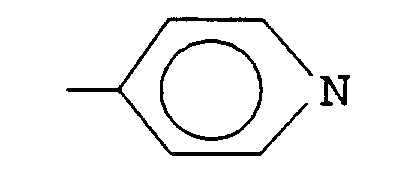
bedeutet und R1, R2, R3 und R4 unabhängig Wasserstoff, Alkylgruppen, Arylgruppen oder Allylgruppen bedeuten, die gleich oder unterschiedlich sein können, hat.
-[M1R1R2R3R4]+ ,
wobei M1 Stickstoff oder Phosphor bedeutet,
-[M2R1R2R3]+ ,
wobei M2 Schwefel bedeutet, oder
-[M3R1]+ ,
wobei M3
bedeutet und R1, R2, R3 und R4 unabhängig Wasserstoff, Alkylgruppen, Arylgruppen oder Allylgruppen bedeuten, die gleich oder unterschiedlich sein können, hat.
10. Reifeninnengummi nach Anspruch 8, bei dem der Oniumsalzvorläufer die allgemeine Struktur
[M1R1R2R3] ,
wobei M1 Stickstoff oder Phosphor bedeutet,
[M2R1R2] ,
wobei M2 Schwefel bedeutet, oder
[M3] ,
wobei M3
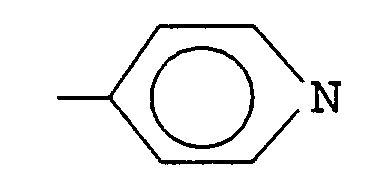
bedeutet und R1, R2 und R3 unabhängig Wasserstoff, Alkylgruppen, Arylgruppen oder Allylgruppen bedeuten, die gleich oder unterschiedlich sein können, hat.
[M1R1R2R3] ,
wobei M1 Stickstoff oder Phosphor bedeutet,
[M2R1R2] ,
wobei M2 Schwefel bedeutet, oder
[M3] ,
wobei M3
bedeutet und R1, R2 und R3 unabhängig Wasserstoff, Alkylgruppen, Arylgruppen oder Allylgruppen bedeuten, die gleich oder unterschiedlich sein können, hat.
11. Reifeninnengummi nach einem der vorhergehenden Ansprüche, bei dem der reaktive Kautschuk
ein Kautschuk mit Aminendgruppen ist.
12. Reifeninnengummi nach Anspruch 10, bei dem der reaktive Kautschuk Butadien/Acrylnitril-Kautschuk
mit Aminendgruppen umfaßt.
13. Reifeninnengummi nach einem der vorhergehenden Ansprüche, bei dem das Schichtsilikat
Phyllosilikat umfaßt.
14. Reifeninnengummi nach einem der vorhergehenden Ansprüche, bei dem das Schichtsilikat
ein Ton ausgewählt aus der Gruppe bestehend aus Smectittonen, Vermiculit, Halloysit
und Montmorillonit ist.
15. Luftreifen mit einem Innengummi nach einem der vorhergehenden Ansprüche.
16. Reifeninnenschlauch, der einen Komplex und einen festen Kautschuk gemäß einem der
Ansprüche 2 bis 14 umfaßt.
1. Revêtement intérieur de bandage pneumatique, comprenant un complexe et du caoutchouc
solide, ce complexe étant composé de caoutchouc réactif portant un groupe chargé positivement
et d'un silicate en couches qui y est uniformément dispersé, 40 % ou davantage des
faces de silicate étant disposées perpendiculairement à la direction de diffusion
du gaz en raison de l'imposition d'une différence de pression, les couches de silicate
ayant une épaisseur de 7 à 12 angströms et étant au moins 25 fois plus longues et
25 fois plus larges qu'elles ne sont épaisses, la distance entre couches de ce silicate
en couches étant supérieure à 12 angströms, le caoutchouc réactif étant soluble dans,
ou réticulable avec, le caoutchouc solide et le silicate en couches étant contenu
dans le complexe en une quantité de 1 à 50 parties en poids pour 100 parties en poids
du caoutchouc réactif.
2. Revêtement intérieur pour bandage pneumatique suivant la revendication 1, dans lequel
le caoutchouc réactif est un caoutchouc qui a un poids moléculaire supérieur à 450.
3. Revêtement intérieur pour bandage pneumatique suivant l'une quelconque des revendications
précédentes, dans lequel le caoutchouc solide est un caoutchouc choisi dans le groupe
comprenant le caoutchouc naturel, un caoutchouc synthétique, un élastomère thermoplastique
et des mélanges de ces caoutchoucs.
4. Revêtement intérieur pour bandage pneumatique suivant l'une quelconque des revendications
précédentes, dans lequel le caoutchouc solide est un polybutadiène.
5. Revêtement intérieur pour bandage pneumatique suivant l'une quelconque des revendications
précédentes, dans lequel le caoutchouc solide est un caoutchouc dont le poids moléculaire
n'est pas inférieur à 10 000.
6. Revêtement intérieur pour bandage pneumatique suivant l'une quelconque des revendications
précédentes, dans lequel la proportion du complexe en question est de 2 à 50 parties
en poids pour 100 parties en poids du caoutchouc solide.
7. Revêtement intérieur pour bandage pneumatique suivant l'une quelconque des revendications
précédentes, qui comprend en outre du noir de carbone.
8. Revêtement intérieur pour bandage pneumatique suivant l'une quelconque des revendications
précédentes, dans lequel le caoutchouc réactif comprend un ou plusieurs caoutchoucs
choisis dans le groupe consistant en polybutadiène ; copolymère de butadiène contenant
du styrène, de l'isoprène ou de l'acrylonitrile ; polyisobutylène ; copolymères d'isobutylène
contenant du butadiène, de l'isoprène, du styrène, du para-méthylstyrène ; polychloroprène,
copolymères éthylène-propylène-diène, polyisoprène ; copolymères d'isoprène contenant
de l'isobutylène, du butadiène, du styrène ou de l'acrylonitrile ; caoutchouc naturel
; ou produit modifié de ce caoutchouc, le caoutchouc réactif en question comprenant
en outre un sel d'onium ou un précurseur de sel d'onium.
9. Revêtement intérieur pour bandage pneumatique suivant la revendication 8, dans lequel
le cation du sel d'onium présente la structure générale
-[M1R1R2R3R4]+
dans laquelle M représente de l'azote ou du phosphore,
-[M2R1R2R3]+
dans laquelle M2 représente du soufre, ou
-[M3R1]+
dans laquelle M3 est un groupe
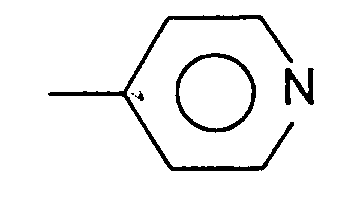
et R1, R2, R3 et R4 représentent, indépendamment, de l'hydrogène, des groupes alkyle, des groupes aryle ou des groupes allyle qui peuvent être identiques ou différents.
-[M1R1R2R3R4]+
dans laquelle M représente de l'azote ou du phosphore,
-[M2R1R2R3]+
dans laquelle M2 représente du soufre, ou
-[M3R1]+
dans laquelle M3 est un groupe
et R1, R2, R3 et R4 représentent, indépendamment, de l'hydrogène, des groupes alkyle, des groupes aryle ou des groupes allyle qui peuvent être identiques ou différents.
10. Revêtement intérieur pour bandage pneumatique suivant la revendication 8, dans lequel
le précurseur de sel d'onium présente la structure générale
[MR1R2R3]
dans laquelle M représente de l'azote ou du phosphore
[M2R1R2]
dans laquelle M2 représente du soufre, ou
[M3]
dans laquelle M3 représente un groupe
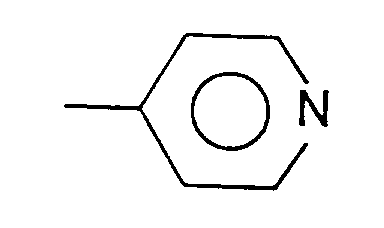
et R1, R2 et R3 représentent, indépendamment, de l'hydrogène, des groupes alkyle, des groupes aryle ou des groupes allyle qui peuvent être identiques ou différents.
[MR1R2R3]
dans laquelle M représente de l'azote ou du phosphore
[M2R1R2]
dans laquelle M2 représente du soufre, ou
[M3]
dans laquelle M3 représente un groupe
et R1, R2 et R3 représentent, indépendamment, de l'hydrogène, des groupes alkyle, des groupes aryle ou des groupes allyle qui peuvent être identiques ou différents.
11. Revêtement intérieur pour bandage pneumatique suivant l'une quelconque des revendications
précédentes, dans lequel le caoutchouc réactif est un caoutchouc à terminaison amine.
12. Revêtement intérieur pour bandage pneumatique suivant la revendication 10, dans lequel
le caoutchouc réactif comprend un caoutchouc butadiène-acrylonitrile à terminaison
amine.
13. Revêtement intérieur pour bandage pneumatique suivant l'une quelconque des revendications
précédentes, dans lequel les silicates en couches comprennent un phyllosilicate.
14. Revêtement intérieur pour bandage pneumatique suivant l'une quelconque des revendications
précédentes, dans lequel le silicate en couches est une argile choisie dans le groupe
constitue des argiles du type smectite, de la vermiculite, de l'hallosite et de la
montmorillonite.
15. Bandage pneumatique possédant un revêtement intérieur suivant l'une quelconque des
revendications précédentes.
16. Tube intérieur de bandage pneumatique comprenant un complexe et un caoutchouc solide
suivant l'une quelconque des revendications 2 à 14.