| (19) |
 |
|
(11) |
EP 0 703 604 B1 |
| (12) |
EUROPEAN PATENT SPECIFICATION |
| (45) |
Mention of the grant of the patent: |
|
05.12.2001 Bulletin 2001/49 |
| (22) |
Date of filing: 20.09.1994 |
|
| (51) |
International Patent Classification (IPC)7: H01L 21/00 |
|
| (54) |
Apparatus for the controlled cooling of chemical tanks
Anlage zum kontrollierten Abkühlen von chemischen Behältern
Dispositif pour le refroidissement contrôlé de cuves chimique
|
| (84) |
Designated Contracting States: |
|
DE FR GB IT |
| (43) |
Date of publication of application: |
|
27.03.1996 Bulletin 1996/13 |
| (73) |
Proprietor: Consorzio per la Ricerca sulla
Microelettronica nel Mezzogiorno |
|
95121 Catania (IT) |
|
| (72) |
Inventor: |
|
- Falzone, Alberto
I-95022 Aci Catena,
Catania (IT)
|
| (74) |
Representative: Mittler, Enrico et al |
|
c/o Mittler & C. s.r.l.,
Viale Lombardia, 20
20131 Milano
20131 Milano (IT) |
| (56) |
References cited: :
EP-A- 0 507 387
US-A- 4 370 192
|
GB-A- 1 424 434
|
|
| |
|
|
- PATENT ABSTRACTS OF JAPAN vol. 12 no. 318 (E-650) ,29 August 1988 & JP-A-63 081932
(HITACHI LTD) 12 April 1988,
|
|
| |
|
| Note: Within nine months from the publication of the mention of the grant of the European
patent, any person may give notice to the European Patent Office of opposition to
the European patent
granted. Notice of opposition shall be filed in a written reasoned statement. It shall
not be deemed to
have been filed until the opposition fee has been paid. (Art. 99(1) European Patent
Convention).
|
[0001] The present invention relates to an apparatus for the controlled cooling of chemical
tanks.
[0002] In microelectronic industry, the manufacturing of integrated circuits involves several
steps of liquid-based or "wet" etching: the silicon wafers are immersed in rather
capacious tanks (to allow the simultaneous processing of several wafers) containing
a chemical solution whose composition and temperature depend on the particular material
to be etched.
[0003] In some cases the etching process is carried out at temperatures higher than the
room temperature (21 °C): the etching solution must be maintained within a temperature
range from 28 °C to 38 °C, for which purpose means for heating the etching solution
are necessary.
[0004] There is a class of materials for which the etching process is carried out at room
temperature; in this class, some materials, such as silicon, react with the etching
solution generating heat (i.e., the reaction is exothermic); if no cooling means are
provided, the heat generated by the reaction causes an increase in the temperature
of the etching solution which modifies (increases) the reaction speed, and the etching
process goes out of control: as a result, several wafers must be rejected.
[0005] Also, as evident, cooling means are necessary when the etching process is carried
out at temperatures lower than the room temperature.
[0006] According to the known art, said cooling means comprise teflon coils which are immersed
in the etching solution and through which water is made to flow. The coils are connected
to an external tank to which a refrigerating system is associated. A temperature sensor
immersed in the etching solution controls the refrigerating system to maintain the
etching solution in the desired temperature range.
[0007] The problem is that, with use and handling due to cleaning, microfractures are created
in the teflon coils, through which the water leaks out contaminating the etching solution
with ions present in the water. Such ions deposit on the silicon wafers and give rise
to defects that cause the wafers to be rejected.
[0008] In the published European Patent EP-A- 507387 a device for heating chemical tanks
is described which comprises a pair of heat-exchanger teflon coils, immersed in the
etching solution, through which an inert gas such as pure nitrogen is made to flow.
The coils are connected to respective heating units which are fed with the inert gas
from a main supply line. The use of an inert gas as the heating element instead of
water assures that, even in presence of microfractures in the teflon coils through
which the gas can leak, the etching solution is not contaminated.
[0009] US-A-4 370 192 discloses an apparatus for cooling a tank by means of gaseous nitrogen.
[0010] In view of the state of the art described, it is an object of the present invention
to provide an apparatus according to claim 1 for the controlled cooling of chemical
tanks used for wet etching of semiconductor wafers, which is safe and relyable from
the point of view of the contamination of the etching solution.
[0011] Also an object of the present invention is to provide a method of controlled cooling
according to claim 13.
[0012] According to the present invention, such object is attained by means of an apparatus
for the controlled cooling of chemical tanks containing a chemical solution which
must be kept at a first prescribed temperature, comprising at least one heat-exchanger
coil immersed inside of a chemical tank and through which there is made to circulate
a flow of an inert gas, characterized by comprising storage means for storing and
cooling a prescribed volume of inert gas at a second prescribed temperature lower
than said first prescribed temperature, feeding means for feeding the storage means
with inert gas coming from a main supply line, and valve means interposed between
said storage means and an inlet of said at least one heat-exchanger coil for controlling
the supply of cooled inert gas to the heat-exchanger coil.
[0013] The apparatus according to the present invention does not pose any problem of contamination
of the solution, since it uses an inert gas as cooling element. Furthermore, thanks
to the fact that storage means of cool inert gas are provided, the cooling apparatus
of the present invention is capable of rapidly compensating any undesired temperature
increase in the chemical solution, due for example to the heat generated by the etching
reaction: to this purpose, it is sufficient to properly dimension the storage means
to store a sufficient volume of cool inert gas.
[0014] The features of the present invention will be made more evident by the following
detailed description of one practical embodiment, described as a non-limiting example
in the annexed drawings, wherein:
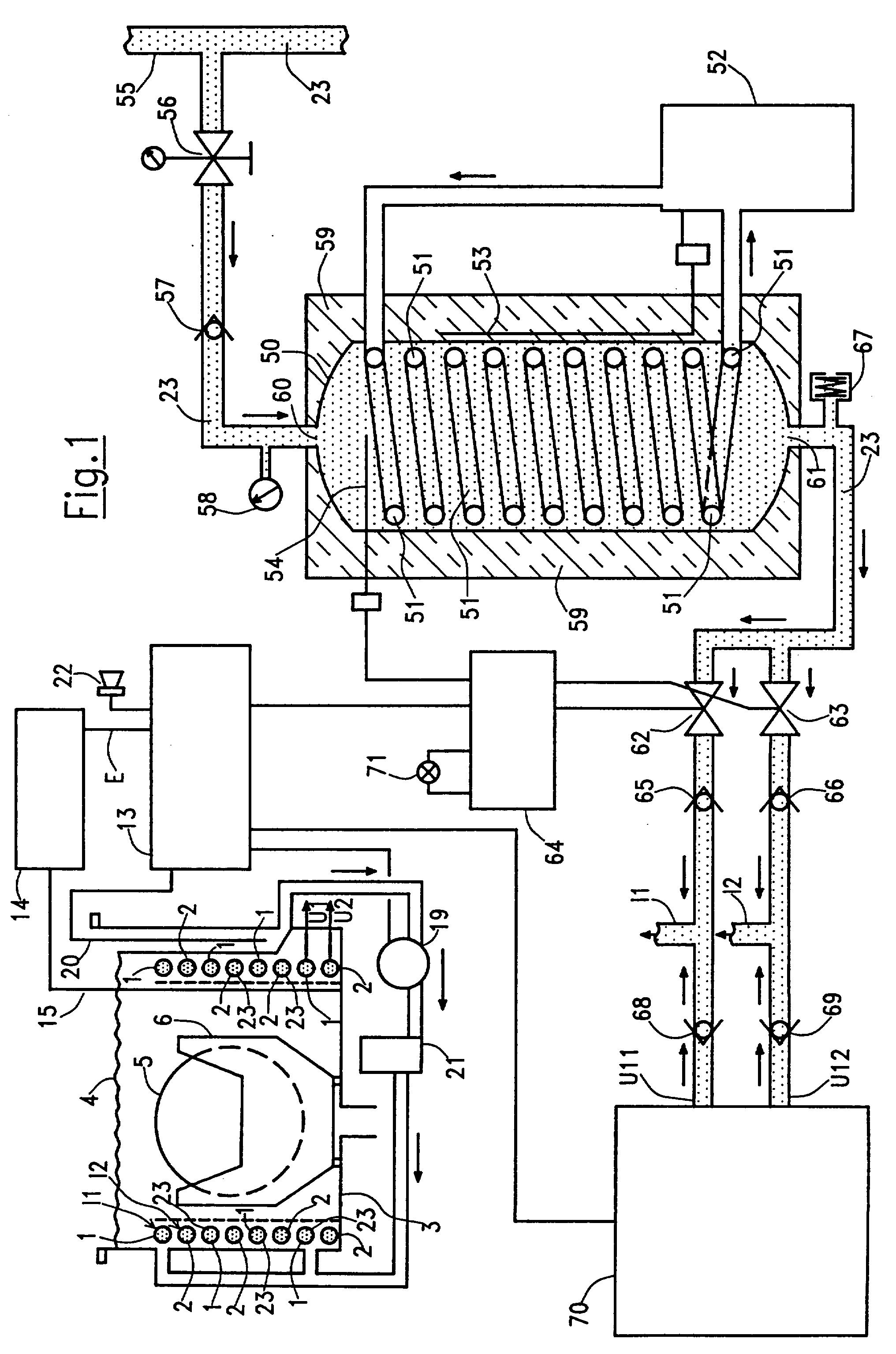
Figure 1 is a schematic view of a chemical tank and of an apparatus for the controlled
cooling of the chemical tank according to the present invention;
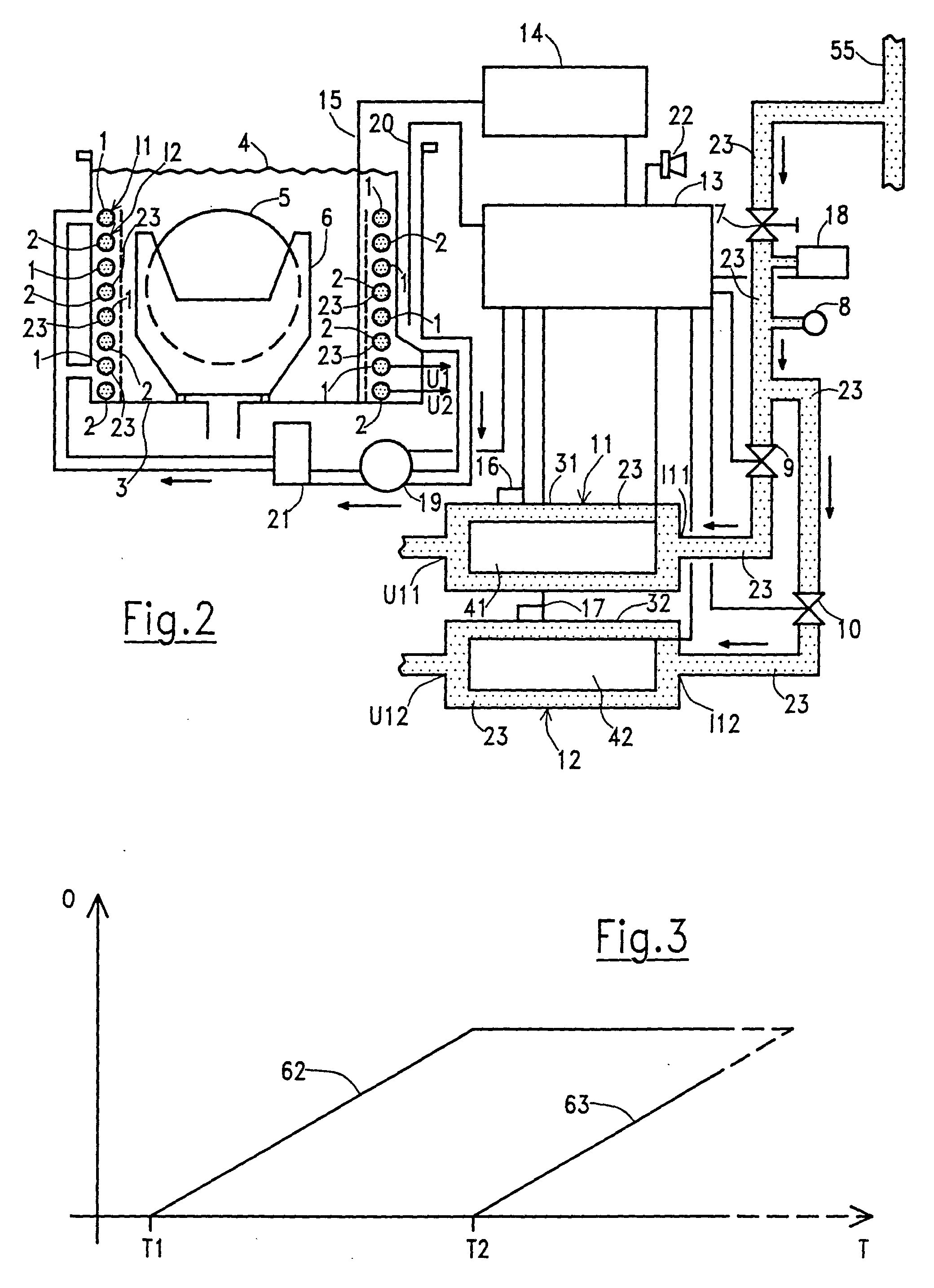
Figure 2 is a schematic view of the chemical tank and of a device for heating the
inert gas;
Figure 3 is a diagram showing the opening characteristics of two valves of the cooling
apparatus with respect to temperature.
[0015] With reference to Figure 1, a first and a second heat-exchanger coils 1, 2 are arranged
and intercalated one to the other in the proximity of the walls of a chemical tank
3 containing a chemical solution 4 suitable for etching silicon wafers 5 (only one
shown in the drawing) in turn contained in corresponding containers 6. The tank 3
has a typical volume of about 24 l, and the solution is for example a mixture of hydrofluoric
acid and ammonium fluoride in the proportion of one to seven by volume.
[0016] The tank 3 is provided with a pump 19 having a corresponding filter 21 for the filtered
recirculation of the solution 4, and with an associated level control 20 connected
to an input of a main control unit 13 and suitable for stopping the recirculation
pump 19 in case of an excessive lowering of the level of the solution 4 in the tank
3.
[0017] The coils 1, 2 are made of teflon and are both traversed by a flow of an inert gas
23, such as pure nitrogen, that enters into the coils 1, 2 through respective inlets
I1, I2 and leave the coils 1, 2 from respective discharge outlets U1, U2.
[0018] The cooling apparatus comprises a cilindrical container 50 made of stainless steel
having a volume of about 25 l, inside which there is arranged a heat-exchanger coil
51 also made of stainless steel, in a position adjacent to the walls of the container
50. The coil 51 is the expansion coil of a per-se known refrigerating machine 52.
The container 50 has a coating 59 of thermal insulator material.
[0019] The container 50 has an inlet 60 at its top end which is fed with the inert gas 23
coming from a main supply line 55 through a pressure regulator 56 and a nonreturn
valve 57; a pressure gauge 58 measures the pressure of the inert gas 23 downstream
from the nonreturn valve 57 and just upstream of the inlet 60.
[0020] The container 50 has an outlet 61 at its bottom end through which the cooled inert
gas 23 is fed to the coils 1, 2 respectively through a first linearly-operating solenoid
valve 62 and a second linearly-operating solenoid valve 63, which are individually
controlled by a peripheral control unit 64. The first and second linearly-operating
valves 62 and 63 are respectively connected to the inlets I1, I2 of the coils 1, 2
through respective nonreturn valves 65 and 66. Just downstream from the outlet 61
of the container 50 there is provided a relief valve 67 which discharges the inert
gas 23 from the container 50 in case of overpressure.
[0021] The activation of the refrigerating machine 52 is controlled by a thermostat 53 externally
attached to the wall of the container 50. The temperature of the inert gas 23 inside
the container 50 is measured by means of a sensor 54 which is connected to the peripheral
control unit 64.
[0022] The peripheral control unit 64 communicates with the main control unit 13, which
is also connected to a temperature controller 14 suitable for receiving from a thermocouple
15 signals related to the temperature of the solution 4 and for sending to the main
control unit 13 a signal E equal to the deviation between the detected temperature
and the preset temperature. The main control unit 13 is further provided with an alarm
device 22 suitable for providing an operator with an acoustical signal in case of
malfunctions in the apparatus.
[0023] The cooling apparatus according to the preferred embodiment of the present invention
also comprises a heating device schematically shown in Figure 1 by a block 70 and
substantially of the type described in the already mentioned European Patent Application
No. 507387. The heating device, shown in detail in Figure 2, comprises a first and
a second inert gas heating units 11, 12 each consisting of a shell 31, 32 having a
cylindrical shape which houses a respective electrical resistance 41, 42 inside it.
[0024] The heating units 11, 12 have respective inlets I11, I12 fed with the inert gas coming
from the main supply line 55 through a common pressure regulator 7 and respective
solenoid valves 9, 10, which are individually controlled by the main control unit
13. Just downstream from the pressure regulator 7, which sets a maximum pressure of
about 1 bar, a safety pressure switch 18 is inserted in the line feeding the inert
gas 23 to the solenoid valves 9, 10 and is suitable for transmitting to the main control
unit 13 a signal for automatically switching the heating units 11, 12 off in the case
of a pressure fall of the inert gas 23 in the main supply line 55 so as not to damage
the heating elements 11, 12 themselves.
[0025] The heating units 11, 12 are driven by the main control unit 13 are further provided
with safety control means 16, 17 of excess temperature, which intervene in case of
anomalies in the heating units 11, 12. One of the two solenoid valves 9 and 10, e.g.
the valve 9, is controlled by the main control unit 13 in an implulsive manner, while
the other valve 10 is controlled in a linear manner.
[0026] The heating units 11, 12 have respective outlets U11 and U12 which are respectively
connected, through respective nonreturn valves 68 and 69, to the inlets I1 and I2
of the coils 1 and 2.
[0027] The inert gas 23 coming from the main supply line 55 is fed to the container 50 through
the pressure regulator 56 and the nonreturn valve 57; the pressure regulator 56 limits
the pressure downstream from it to a value of about 7-8 bar, lower than the pressure
of the inert gas 23 in the main supply line 55 (typically 10-12 bar). Inside the container
50, the inert gas 23 is progressively cooled to the temperature set by the thermostat
53 (2-4 °C). As the inert gas cools, the pressure inside the container 50 lowers,
and more gas is intaken from the main supply line 55, till the pressure inside the
container 50 reaches the value set by the pressure regulator 56.
[0028] Hence, the container 50 works as a reservoir of cool gas for refrigerating the etching
solution 4, the volume of the container 50 and the temperature at which it is kept
being chosen so as to store a number of refrigerating units at least sufficient to
rapidly compensate the heat that can be generated by the chemical reaction of etching
of the silicon wafers.
[0029] When the temperature of the inert gas inside the container 50, measured by the thermal
sensor 54, reaches the preset value stored in the peripheral control unit 64, this
last signals to the main control unit 13 a "ready" condition, and also activates a
"ready" device 71 (e.g. a lamp) for the operator.
[0030] For the purpose of controlling the reaction speed and thus the rate of removal of
the material to be etched, the chemical solution 4 must be maintained at a prescribed
temperature (T1 in Figure 3), with maximum allowed variations within a narrow temperature
range (T1 ± (T2-T1) in Figure 3); for example, in the case of a room temperature etching
process, the prescribed temperature T1 is 21 °C, and the allowed temperature range
is 21 °C ± 0.5 °C (i.e. T2 = 21.5 °C).
[0031] After the "ready" condition is signalled to the operator by the peripheral control
unit 64, the container 6 of silicon wafers 5 is introduced into the tank 3 containing
the etching solution 4. The etching solution 4 reacts with the material to be etched;
the chemical reaction that takes place is, in some cases, exothermic: thus, the heat
generated by the reaction causes the temperature of the solution 4 to rise. The temperature
of the solution 4 is detected by the temperature controller 14, which supplies the
main control unit 13 with the signal E corresponding to the deviation of the detected
temperature with respect to the preset temperature, for example 21 °C for a room temperature
etching process. If the value of said deviation is positive, the main control unit
13 sends to the peripheral control unit 64 a command for the opening of the linearly-operating
valves 62, 63. As long as the deviation does not exceed 0.5 °C, i.e. as long as the
temperature T of the solution 4 does not exceed T2 in Figure 3, only one of the two
valves 62, 63 is opened (for example the valve 62), proportionally to the amount of
the deviation up to the maximum opening for T = T2. If instead the deviation from
the prescribed temperature exceeds 0.5 °C, both the valves 62, 63 are opened, the
valve 62 at its maximum opening and the valve 63 proportionally to the difference
between the temperature T of the solution and T2, so that the temperature of the solution
4 can quickly return into the allowed temperature range. Figure 3 shows the opening
characteristics of the valves 62, 63 with temperature. As cool gas 23 leaves the container
50, the pressure in the container 50 decreases, and other gas is intaken from the
main supply line 55.
[0032] As the temperature of the solution 4 approaches the preset value, the valves 62,
63 are progressively closed, again according to the characteristic of Figure 3.
[0033] If, due to the thermic inertia of the system, the temperature of the solution lowers
below the preset value, the main control unit 13 determines the activation of the
heating units 11, 12. As long as the deviation of the detected temperature from the
preset temperature is small (i.e. the detected temperature is in the allowed range
20.5 °C - 21 °C), the main control unit 13 impulsively drive the valve 9 with a pulsed
signal having a duty cycle depending on the amount of the temperature deviation; the
other valve 10 is kept closed. The hot gas at the outlet U11 of the heating unit 11
is fed, via the nonreturn valve 68, to the inlet I1 of the coil 1. When instead the
temperature deviation is large (i.e. when the detected temperature falls outside the
allowed range 20.5 °C - 21 °C), the valve 9 is kept open, and the valve 10 is linearly
controlled in a manner proportional to the difference between the detected temperature
and the minimum allowed temperature (20.5 °C). The hot gas is fed both the coils 1,
2, so that the temperature of the solution can quickly return in the allowed temperature
range.
1. Apparatus for the controlled cooling of chemical tanks containing a chemical solution
(4) which must be kept at a first prescribed temperature (T1), comprising at least
one heat-exchanger coil (1,2) immersed inside of a chemical tank (3) and through which
there is made to circulate a flow of an inert gas (23), characterized by comprising storage means (50-53) for storing and cooling a prescribed volume of inert
gas (23) at a second prescribed temperature lower than said first prescribed temperature
(T1), feeding means (56-58) for feeding the storage means (50-53) with inert gas (23)
coming from a main supply line (55), said feeding means (56-58) comprises a pressure
regulator (56) which is set to allow the intake of the inert gas (23) from the main
supply line (55) until a prescribed pressure inside a container (50) is reached, said
container being comprised in said storage means, and a nonreturn valve (57) interposed
between the pressure regulator (56) and the inlet (60) of the container (50), and
valve means (62,65,63,66) interposed between said storage means (50-53) and an inlet
(I1,I2) of said at least one heat-exchanger coil (1,2) for controlling the supply
of cooled inert gas (23) to the heat-exchanger coil (1,2).
2. Apparatus according to claim 1, characterized in that said storage means (50-53) comprises the container (50) for the inert gas (23) and
refrigerating means (51-53) associated to the container (50), said container (50)
having an inlet (60) coupled to said feeding means (56-58) and an outlet (61) coupled
to said valve means (62,65,63,66).
3. Apparatus according to claim 2, characterized in that said refrigerating means (51-53) comprises a refrigerating machine (52) having an
expansion coil (51) located inside of the container (50).
4. Apparatus according to claim 1, characterized by comprising sensing means (15,14) for measuring the temperature of the chemical solution
(4) inside the tank (3), and control means (13,64) for activating said valve means
(62,65,63,66) when said temperature of the chemical solution (4) inside the tank (3)
exceeds said first prescribed temperature (T1).
5. Apparatus according to claim 4, characterized in that said at least one heat-exchanging coil (1,2) comprises a first coil (1) and a second
coil (2) intercalated one to the other, said valve means (62,65,63,66) comprising
first valve means (62,65), interposed between the outlet of the container (50) and
an inlet (I1) of the first coil (1), and second valve means (63,66) interposed between
the outlet (61) of the container (50) and an inlet (I2) of the second coil (2).
6. Apparatus according to claim 5, characterized in that said first valve means (62,65) are activated when the temperature of the chemical
solution (4) in the tank (3) exceeds said first prescribed temperature (T1), and said
second valve means (63,66) are activated when the temperature of the chemical solution
(4) in the tank (3) exceeds a third prescribed temperature (T2) higher than the first
prescribed temperature (T1).
7. Apparatus according to claim 6, characterized in that said first and second valve means (62,65,63,66) respectively comprise a first and
a second linearly operating valves (62,63), the opening of said first linearly operating
valve (62) being controlled by the control means (13,64) in a manner proportional
to the difference between the temperature of the chemical solution (4) inside the
tank and said first prescribed temperature (T1), and the opening of said second linearly
operating valve (63) being controlled by the control means (13,64) in a manner proportional
to the difference between the temperature of the chemical solution (4) inside the
tank (3) and said third prescribed temperature (T2).
8. Apparatus according to claim 7, characterized in that said first and second valve means (62,65,63,66) further comprise two nonreturn valves
(65,66) each inserted between a respective linearly operating valve (62,63) and a
respective inlet (I1,I2) of said two heat-exchanging coils (1,2).
9. Apparatus according to claim 8, characterized by comprising a device (70) for heating the inert gas (23), said device comprising a
first and a second heating units (11,12) each having a respective inlet (I11,I12)
for the inert gas (23), respective valve means (9,10) controlling the flow of the
inert gas (23) into the heating units (11,12), and a respective outlet (U11,U12) coupled
to the inlet (I1,I2) of the first and second heat-exchanging coils (1,2) respectively.
10. Apparatus according to claim 9, characterized in that when the temperature of the chemical solution (4) in the tank (3) falls below the
first prescribed temperature (T1) said control means activate at least one of said
heating units (11,12).
11. Apparatus according to claim 10, characterized in that one of said heating units (11,12) is controlled by said control means (13,64) in
a linear manner, and the other of said heating units (11,12) is controlled by said
control means (13,64) in an impulsive manner.
12. Apparatus according to claim 11, characterized in that the between the outlets (U11,U12) of the heating units (11,12) and the inlets (I1,I2)
of the respective heat-exchange coils (1,2) there are inserted nonreturn valves (68,69).
13. Method of controlled cooling of chemical tanks containing a chemical colution (4)
which must be kept at a first prescribed temperature (T1),
characterized in that it provides for:
- storing a prescribed volume of an inert gas (23) and cooling it at a second prescribed
temperature lower than said first prescribed temperature;
- continuously detecting a temperature of the chemical solution (4) inside the chemical
tank (3);
- controlling the flow of the stored cooled inert gas (23) into a first heat exchanger
coil (1) immersed in the chemical solution (4) in a linear manner proportional to
the difference between the temperature of the chemical solution (4) and said first
prescribed temperature, and for controlling the flow of the stored cooled inert gas
(23) into a second heat exchanger coil (2) immersed in the chemical solution (4) in
a linear manner proportional to the difference between the temperature of the chemical
solution (4) and a third prescribed temperature (T2) higher than said first prescribed
temperature.
1. Anlage zum kontrollierten Abkühlen von chemischen Behältern, die eine chemische Lösung
(4) enthalten, die auf einer ersten vorbestimmten Temperatur (T1) gehalten werden
muß, aufweisend mindestens eine Wärmetauscherspirale (1, 2) die in das Innere eines
chemischen Behälters (3) eingetaucht ist und durch die eine Strömungszirkulation eines
Inertgases (23) erfolgt, dadurch gekennzeichnet, daß sie eine Speichervorrichtung (50-53) zur Speicherung und Abkühlung eines vorbestimmten
Volumens des Inertgases (23) auf eine zweite vorbestimmte Temperatur, die niedriger
als die erste vorbestimmte Temperatur (T1) ist, aufweist, eine Zuführvorrichtung (56-58)
zur Belieferung der Speichervorrichtung (50-53) mit dem Inerdgas (23), das von einer
Hauptversorgungsleitung (55) kommt, wobei die Zuführvorrichtung (56-58) einen Druckregler
(56) aufweist, der so eingestellt ist, daß er das Ansaugen des Inertgases (23) aus
der Hauptversorgungsleitung (55) gestattet, bis ein vorbeschriebener Druck im Inneren
eines Behälters (50) erreicht wird, wobei der Behälter in der Speichervorrichtung
vorgesehen ist, und ein Rückschlagventil (57), das zwischen dem Druckregler (56) und
dem Einlaß (60) des Behälters (50) angeordnet ist, und eine Ventilvorrichtung (62,
65, 63, 66), die zwischen der Speichervorrichtung (50-53) und einem Einlaß (I1, I2)
der mindestens einen Wärmetauscherspirale (1,2) angeordnet ist, um die Lieferung von
gekühltem Inertgas (23) an die Wärmetauscherspirale (1, 2) zu steuern.
2. Anlage gemäß Anspruch 1, dadurch gekennzeichnet, daß die Speichervorrichtung (50-53) den Behälter (50) für das Inertgas (23) aufweist,
sowie eine Kühleinrichtung (51-53), die mit dem Behälter (50) verbunden ist, wobei
der Behälter (50) einen Einlaß (60) hat, der mit der Zuführvorrichtung (56-58) gekoppelt
ist, und einen Auslaß (61), der mit der Ventilvorrichtung (62, 65, 63, 66) gekoppelt
ist.
3. Anlage gemäß Anspruch 2, dadurch gekennzeichnet, daß die Kühleinrichtung (51-53) ein Kühlgerät (52) aufweist, das eine Ausdehungsspirale
(51) hat, die im Inneren des Behälters (50) angeordnet ist.
4. Anlage gemäß Anspruch 1, dadurch gekennzeichnet, daß sie eine Sensorvorrichtung (15, 14) aufweist, um die Temperatur der chemischen Lösung
(4) im Inneren des Behälters (3) zu messen, und eine Steuervorrichtung (13, 64) um
die Ventilvorrichtung (62, 65, 63, 66) zu aktivieren, wenn die Temperatur der chemischen
Lösung (4) im Inneren des Behälters (3) die erste vorbeschriebene Temperatur (T1)
überschreitet.
5. Anlage gemäß Anspruch 4, dadurch gekennzeichnet, daß die wenigstens eine Wärmetauscherspirale (1, 2) eine erste Spirale (1) und eine zweite
Spirale (2) aufweist, die ineinander eingeschoben sind, wobei die Ventilvorrichtung
(62, 65, 63, 66) einer erste Ventilvorrichtung (62, 65) aufweist, die zwischen dem
Auslaß des Behälters (50) und einem Einlaß (I1) der ersten Spirale (1) angeordnet
ist, und eine zweite Ventilvorrichtung (63, 66), die zwischen dem Auslaß (61) des
Behälters (50) und einem Einlaß (I2) der zweiten Spirale (2) angeordnet ist.
6. Anlage gemäß Anspruch 5, dadurch gekennzeichnet, daß die erste Ventilvorrichtung (62, 65) aktiviert wird, wenn die Temperatur der chemischen
Lösung (4) in dem Behälter (3) die erste vorbeschriebene Temperatur (T1) überschreitet,
und daß die zweite Ventilvorrichtung (63, 66) aktiviert wird, wenn die Temperatur
der chemischen Lösung (4) in dem Tank (3) eine dritte vorbeschriebene Temperatur (T2),
die höher als die erste vorbeschriebene Temperatur (T1) ist, überschreitet.
7. Anlage gemäß Anspruch 6, dadurch gekennzeichnet, daß die erste und die zweite Ventilvorrichtung (62, 65, 63, 66) jeweils erste und zweite
linear arbeitende Ventile (62, 63) aufweist, wobei die Öffnung des ersten linear arbeitenden
Ventils (62) durch die Steuervorrichtung (13, 64) in einer Art und Weise gesteuert
wird, daß sie proportional zur Differenz zwischen der Temperatur der chemischen Lösung
(4) im Inneren des Behälters und der ersten vorbeschriebenen Temperatur (T1) ist,
und wobei die Öffnung des zweiten linear arbeitenden Ventils (63) durch die Steuervorrichtungen
(13, 64) in einer Art und Weise gesteuert wird, daß sie proportional zur Differenz
zwischen der Temperatur der chemischen Lösung (4) im Inneren des Behälters (3) und
der dritten vorbeschriebenen Temperatur (T2) ist.
8. Anlage gemäß Anspruch 7, dadurch gekennzeichnet, daß die erste und die zweite Ventilvorrichtung (62, 65, 63, 66) des weiteren zwei Rückschlagventile
(65, 66) aufweist, von denen jedes zwischen einem jeweiligen linear arbeitenden Ventil
(62, 63) und einem jeweiligen Einlaß (I1, I2) der zwei Wärmetauscherspiralen (1, 2)
eingesetzt ist.
9. Anlage gemäß Anspruch gemäß Anspruch 8, dadurch gekennzeichnet, daß sie eine Vorrichtung (70) aufweist, um das Inertgas (23) aufzuheizen, wobei die Vorrichtung
eine erste und zweite Heizeinheit (11, 12) aufweist, von denen jede einen jeweiligen
Einlaß (I11, I12) für das Inertgas (23) hat, jeweilige Ventilvorrichtungen (9, 10),
die die Strömung des Inertgases (23) in die Heizeinheit (11, 12) steuern, und einen
jeweiligen Auslaß (U11, U12), der jeweils mit dem Einlaß (I1, I2) der ersten und zweiten
Wärmetauscherspirale (1, 2) gekoppelt ist.
10. Anlage gemäß Anspruch 9, dadurch gekennzeichnet, daß dann, wenn die Temperatur der chemischen Lösung (4) in dem Behälter (3) unter die
erste vorbeschriebene Temperatur (T1) fällt, die Steuervorrichtung wenigstens eine
der Heizeinheiten (11, 12) aktiviert.
11. Anlage gemäß Anspruch 10, dadurch gekennzeichnet, daß eine der Heizeinheiten (11, 12) durch die Steuervorrichtung (13, 64) in einer linearen
Art und Weise gesteuert wird, und daß die andere der Heizeinheiten (11, 12) durch
die Steuervorrichtung (13, 64) impulsartig gesteuert wird.
12. Anlage gemäß Anspruch 11, dadurch gekennzeichnet, daß zwischen den Auslässen (U11, U12) der Heizeinheiten (11, 12) und den Einlässen (I1,
I2) der jeweiligen Wärmetauscherspirale (1, 2) Rückschlagventile (68, 69) eingesetzt
sind.
13. Verfahren zur kontrollierten Abkühlung chemischer Behälter, die eine chemische Lösung
4 enthalten, die auf einer ersten vorbeschriebenen Temperatur (T1) gehalten werden
muß,
dadurch gekennzeichnet, daß es folgendes vorsieht:
- Speichern eines vorbeschriebenen Volumens eines Inertgases (23) und Abkühlung desselben
auf eine zweite vorbeschriebene Temperatur, die niedriger als die erste vorbeschriebene
Temperatur ist;
- Kontinuierliches Erfassen einer Temperatur der chemischen Lösung (4) im Inneren
des Behälters (3) ;
- Steuern der Strömung des gespeicherten gekühlten Inertgases (23) in eine erste Wärmetauscherspirale
(1), die in die chemische Lösung (4) eingetaucht ist, in einer linearen Art und Weise,
proportional zur Differenz zwischen der Temperatur der chemischen Lösung (4) und der
ersten vorbeschriebenen Temperatur, und Steuern der Strömung des gespeicherten gekühlten
Inertgases (23) in eine zweite Wärmetauscherspirale (2), die in die chemische Lösung
(4) eingetaucht ist, in einer linearen Art und Weise, proportional zur Differenz zwischen
der Temperatur der chemischen Lösung (4) und einer dritten vorbeschriebenen Temperatur
(T2), die höher als die erste vorbeschriebene Temperatur ist.
1. Appareil pour le refroidissement commandé de cuves chimiques contenant une solution
chimique (4) qui doit être maintenue à une première température prescrite (T1), comportant
au moins un serpentin d'échangeur de chaleur (1, 2) immergé à l'intérieur d'une cuve
chimique (3) et à travers lequel est amené à circuler un écoulement de gaz inerte
(23), caractérisé en ce qu'il comporte des moyens de stockage (50 à 53) destinés à stocker et refroidir un volume
prescrit de gaz inerte (23) à une deuxième température prescrite plus basse que ladite
première température prescrite (T1), des moyens d'alimentation (56 à 58) destinés
à alimenter les moyens de stockage (50 à 53) en gaz inerte (23) provenant d'une conduite
d'alimentation principale (55), lesdits moyens d'alimentation (56 à 58) comportent
un régulateur de pression (56) qui est réglé afin de permettre l'admission du gaz
inerte (23) provenant de la conduite d'alimentation principale (55) jusqu'à ce qu'une
pression prescrite à l'intérieur d'un réservoir (50) soit atteinte, ledit réservoir
étant inclus dans lesdits moyens de stockage, et une soupape anti-retour (57) interposée
entre le régulateur de pression (56) et l'entrée (60) du réservoir (50), et des moyens
de soupape (62, 65, 63, 66) interposés entre lesdits moyens de stockage (50 à 53)
et une entrée (I1, I2) dudit au moins un serpentin d'échangeur de chaleur (1, 2) afin
de commander l'alimentation en gaz inerte refroidi (23) vers le serpentin d'échangeur
de chaleur (1, 2).
2. Appareil selon la revendication 1, caractérisé en ce que lesdits moyens de stockage (50 à 53) comprennent le réservoir (50) pour le gaz inerte
(23) et des moyens de réfrigération (51 à 53) associés au réservoir (50), ledit réservoir
(50) ayant une entrée (60) reliée aux dits moyens d'alimentation (56 à 58) et une
sortie (61) reliée aux dits moyens de soupape (62, 65, 63, 66).
3. Appareil selon la revendication 2, caractérisé en ce que lesdits moyens de réfrigération (51 à 53) comportent une machine de réfrigération
(52) ayant un serpentin de détente (51) disposé à l'intérieur du réservoir (50).
4. Appareil selon la revendication 1, caractérisé en ce qu'il comporte des moyens de détection (15, 14) destinés à mesurer la température de
la solution chimique (4) à l'intérieur de la cuve (3), et des moyens de commande (13,
64) destinés à activer lesdits moyens de soupape (62, 65, 63, 66) lorsque ladite température
de la solution chimique (4) à l'intérieur de la cuve (3) dépasse ladite première température
prescrite (T1).
5. Appareil selon la revendication 4, caractérisé en ce que ledit serpentin d'échangeur de chaleur (1, 2) comprend un premier serpentin (1) et
un deuxième serpentin (2) intercalés l'un par rapport à l'autre, lesdits moyens de
soupape (62, 65, 63, 66) comportant des premiers moyens de soupape (62, 65), interposés
entre la sortie du réservoir (50) et une entrée (I1) du premier serpentin (1), et
des seconds moyens de soupape (63, 66) interposés entre la sortie (61) du réservoir
(50) et une entrée (I2) du deuxième serpentin (2).
6. Appareil selon la revendication 5, caractérisé en ce que lesdits premiers moyens de soupape (62, 65) sont activés lorsque la température de
la solution chimique (4) dans la cuve (3) dépasse ladite première température prescrite
(T1), et lesdits seconds moyens de soupape (63, 66) sont activés lorsque la température
de la solution chimique (4) dans la cuve (3) dépasse une troisième température prescrite
(T2) plus élevée que la première température prescrite (T1).
7. Appareil selon la revendication 6, caractérisé en ce que lesdits premiers et seconds moyens de soupape (62, 65, 63, 66) comportent de manière
respective une première et une deuxième soupape à fonctionnement linéaire (62, 63),
l'ouverture de ladite première soupape à fonctionnement linéaire (62) étant commandée
par les moyens de commande (13, 64) d'une manière proportionnelle à la différence
entre la température de la solution chimique (4) à l'intérieur de la cuve et ladite
première température prescrite (T1), et l'ouverture de ladite deuxième soupape à fonctionnement
linéaire (63) étant commandée par les moyens de commande (13, 64) d'une manière proportionnelle
à la différence entre la température de la solution chimique (4) à l'intérieur de
la cuve (3) et ladite troisième température prescrite (T2).
8. Appareil selon la revendication 7, caractérisé en ce que lesdits premiers et seconds moyens de soupape (62, 65, 63, 66) comportent en outre
deux soupapes anti-retour (65, 66) insérées chacune entre une soupape à fonctionnement
linéaire respective (62, 63) et une entrée respective (I1, I2) desdits deux serpentins
d'échangeur de chaleur (1, 2).
9. Appareil selon la revendication 8, caractérisé en ce qu'il comporte un dispositif (70) pour le chauffage du gaz inerte (23), ledit dispositif
comportant une première et une deuxième unité de chauffage (11, 12) pour le gaz inerte
(23), des moyens de soupape respectifs (9, 10) qui commandent l'écoulement de gaz
inerte (23) dans les unités de chauffage (11, 12), et une sortie respective (U1, U2)
reliée à l'entrée (I1, I2) des premier et deuxième serpentins d'échangeur de chaleur
(1, 2) respectivement.
10. Appareil selon la revendication 9, caractérisé en ce que, lorsque la température de la solution chimique (4) dans la cuve (3) tombe en dessous
de la première température prescrite (T1), lesdits moyens de commande activent au
moins une desdites unités de chauffage (11, 12).
11. Appareil selon la revendication 10, caractérisé en ce que une desdites unités de chauffage (11, 12) est commandée par lesdits moyens de commande
(13, 64) d'une manière linéaire, et l'autre desdites unités de chauffage (11, 12)
est commandée par lesdits moyens de commande (13, 64) d'une manière impulsionnelle.
12. Appareil selon la revendication 11, caractérisé en ce que des soupapes anti-retour (68, 69) sont insérées entre les sorties (U1, U2) des unités
de chauffage (11, 12) et les entrées (I1, I2) des serpentins d'échangeur de chaleur
respectifs (1, 2).
13. Procédé de refroidissement commandé de cuves chimiques contenant une solution chimique
(4) qui doit être maintenue à une première température prescrite (T1),
caractérisé en ce qu'il prévoit de :
- stocker un volume prescrit de gaz inerte (23) et le refroidir à une deuxième température
prescrite plus basse que ladite première température prescrite (T1) ;
- détecter en continu une température de la solution chimique (4) à l'intérieur de
la cuve (3) ;
- commander l'écoulement du gaz inerte stocké refroidi (23) dans un premier serpentin
d'échangeur de chaleur (1) immergé dans la solution chimique (4) d'une manière linéaire
proportionnelle à la différence entre la température de la solution chimique (4) et
ladite première température prescrite, et commander l'écoulement du gaz inerte stocké
refroidi (23) dans un deuxième serpentin d'échangeur de chaleur (2) immergé dans la
solution chimique (4) d'une manière linéaire proportionnelle à la différence entre
la température de la solution chimique (4) et une troisième température prescrite
(T2) supérieure à ladite première température prescrite.