|
(11) | EP 0 704 318 A1 |

| (12) | EUROPEAN PATENT APPLICATION |
|
|
|
|
||||||||||||||||
| (54) | Imaging method for thermal-sensitive material |
| (57) The present invention relates to a novel imaging method for thermal sensitive materials,
more precisely to an imaging method comprising (1) forming a primary image by the
imagewise thermal exposure of thermographic materials comprising a source of reducible
metal ions in reaction proximity with thermal reducing compounds, and (2) uniformly
processing the primary image during and/or subsequent to said imagewise thermal exposure. |
FIELD OF THE INVENTION
[0001] The present invention relates to a novel imaging method for thermal sensitive materials, more precisely to an imaging method comprising (1) forming a primary image by the imagewise thermal exposure of thermographic materials comprising a source of reducible metal ions in reaction proximity with thermal reducing compounds, and (2) uniformly processing the primary image during and/or subsequent to said imagewise thermal exposure.
BACKGROUND OF THE ART
[0002] In the art of imaging systems, imaging elements that can be imagewise exposed by means of light or heat are well known. Silver halide photographic elements are the most representative elements of the class of light-sensitive materials. They usually require a further wet development processing in order to render visible the latent image formed during light exposure. Sometimes, the photosensitive silver halide films are processed by low intensity non-imagewise secondary photoexposure, as described in Research Disclosure, December 1989, Item 308119, Paragraph XXVII.
[0003] Another well known class of photosensitive imaging elements comprising silver halides and involving dry processing includes the so called dry silver films (photothermographic elements). Dry silver films are exposed by means of actinic radiation to form a latent image, which is then amplified by means of heat. These and other photothermographic materials have been described by J.W.Carpenter and P.W.Lauf in their review of "Photothermographic Silver Halide Systems", Research Disclosure, No. 17029, June 1978. Within this class can be further cited the pre-photothermographic elements described in US 3,764,329, US 3,802,888, US 3,816,132 and US 4,113,496. They comprises, instead of silver halides, some particular halide anion thermal precursors, which allow the formation of silver halide when the elements are uniformly heated before imagewise photoexposure. These elements can be daylight handled before thermal activation.
[0004] A further class of imaging elements are the so called thermosensitive recording materials, widely employed in facsimile machines, labels, tickets, charts for recording the output of medical or scientific monitoring apparatus, and the like. Direct thermal and thermal mass or dye transfer materials are the most representative examples of this class. In the most common form, the recording material comprises a support carrying a coating of a thermally-sensitive composition comprising a color former, usually a substantially colorless electron donating dye precursor, and a color developer, usually an electron accepting compound. Heat is imagewise applied to the element by means of a thermal head, a thermal pen or a laser beam, and upon said imagewise applied heating, the color former instantaneously reacts with the color developer to form a recorded image.
[0005] All of the foregoing is well known in the art and is the subject of extensive patent literature, and so needs no further description.
[0006] Each of the above mentioned classes of imaging elements has of some disadvantages. For example, the conventional wet processed silver halide photographic materials have a high environmental impact due to their processing chemistry; the photothermographic materials give lower image fastness and limited optical density (for example, their processed image has still some unreacted silver halide and unexposed areas undergo to blackening from photoreduction of silver ions, giving a so called "print-out"). Moreover, the direct thermal and thermal mass or dye transfer materials require high imaging energy and give limited image fastness and optical density as well.
[0007] The use of high power laser diodes to simultaneously imagewise light-expose and thermally-develop photothermographic materials that contain near-infrared (NIR) dyes is already known in the art. In those systems, light is used both to generate a latent image in dye-sensitized silver halides and to imagewise thermally develop the silver halide latent image, by means of the light-to-heat conversion promoted by the NIR dyes. EP 582,144 suggests that thermographic materials comprising NIR dyes and a reducing agent for silver ions is an effective laser diode addressable imaging system. The material disclosed in EP 582,144 does not comprise silver halides and is imaged electronically using a simple laser scanner that requires no post-thermal processing step for the media. A disadvantage of the above method relates to the poor image tone obtained and the low stability of the silver image, as well as the high laser energy required to expose and develop the photothermographic material.
[0008] The object of the present invention is to provide a new method for obtaining images from conventionally known imaging elements overcoming some of the above mentioned disadvantages, so providing a silver image having good black hue and good fastness, with a reduction of the thermal energy for the imagewise exposure.
SUMMARY OF THE INVENTION
[0009] This can be accomplished by means of an imaging element which, upon imagewise exposure to heat, forms a primary image, which can be amplified (developed) by means of a uniform processing. Here, the term "primary image" means a visible and/or non-visible "latent image" that may be processed to improve its characteristics (optical density, hue, fastness and the like) to obtain the desired final image.
[0010] The present invention also relates to a method for obtaining an image wherein a imaging material comprising at least one heat-reducible metal compound in reaction proximity with a reducing compound is imagewise exposed to heat, and developed by means of uniform processing method during and/or subsequent to said imagewise thermal exposure.
DETAILED DESCRIPTION OF THE INVENTION
[0011] The present invention relates to a method for obtaining an image wherein an imaging material, comprising at least one heat-reducible metal compound in reaction proximity with a reducing compound is imagewise exposed to heat, and developed by means of uniform processing during and/or subsequent to said imagewise thermal exposure.
[0012] Within the broadest definition of the present invention, any known imaging material which comprises reducible metal ions can be processed according to the claimed method. Hence, any known silver halide material can be useful to describe the method of the present invention, including conventional photosensitive silver halide films, conventional photothermographic materials (dry silver materials), prephotothermographic materials (as described, for example, in US 3,764,329, US 3,802,888, US 3,816,132, US 4,113,496), and direct thermal materials (as described in EP 582,144). Of course, when conventional photosensitive silver halide elements are employed in the method of the present invention, both the imagewise thermal exposure and the processing must be performed in the dark or in safety light, to prevent high Dmin formation due to the elements' intrinsic photosensitivity. For practical reasons, it would be more useful to employ thermographic materials which are not sensitive to light. These latter materials can be exposed and processed in daylight.
[0013] According to the more general definition of the present invention, the term "thermographic material" means any imaging element which can be imagewise exposed by means of heat, that is a thermal-sensitive material, and developed by means of uniform processing, preferably by means of a uniform thermal exposure. For sake of clarity, the imaging elements useful in the method of the present invention will be hereinbelow defined as "thermographic materials".
[0014] The heat reducible metal compounds which can be used in the present invention can be any metal compound which can form a catalytic latent image when heated for an ultra short time (from 0.01 microsecond to 100 millisecond, preferably from 0.1 microseconds to 10 milliseconds), at high temperatures (from 100 to 1200°C) in the presence of a reducing agent, said latent image being further processable to form the desired final image.
[0015] Any material comprising a support having at least one layer of a binder dispersion of a reducible source of metal ions which can be imagewise exposed to heat to obtain a primary image which in turn can be amplified by means of uniform processing can be useful in the method of the present invention. Metals which can be useful for the purpose of the present invention are, for example, Au, Ag, Cu, Pd, Rh, and the like. Organic or inorganic silver salts have been demonstrated particularly useful in the method of the present invention, but any other organic or inorganic metal salt, or combination thereof, which can be reduced to metal specks by means of heat can be useful. The selection of a specific metal salt is mainly related to the tone and hue of the resulting metal, its redox potential, its cost and availability. Other metal ions having, per se, a low catalytic redox activity, such as, for example, Ca, Mg, Zn, Bi, and the like, may be used as promoters for the primary image formation and/or as processing accelerators.
[0016] The thermographic material useful in the method of the present invention may be constructed of one or more layers on at least one substrate.
[0017] Single layer constructions may contain the metal source compound, the developer, the toner and binder as well as other additional materials such as coating aids and other adjuvants. Multiple-layer constructions can contain the metal source in one emulsion layer and some of the other ingredients in the same or other layers. A protective layer is usually coated as a top-layer to protect the sensitive layers from damage due to handling during storing, exposure, and/or development. Also, intermediate layers can be interposed between the layer comprising the metal source and the layer comprising the toner, the developer or both. Multiple-layer constructions can be realized also in order to separate the layer comprising the final image from the layer(s) comprising developer and/or other additives after processing. For this purpose a multilayered structure comprising all the required ingredients in different layers can be coated on two different support bases, which can be separated at the end of the imaging process.
[0018] For the multisheet and/or for the multilayer film cases, it is possible that both the "primary image" formation and/or its uniform processing involve the thermal diffusion transfer of at least one meltable ingredient so that also the so called "position latent images" are possibly formed and have a significant role in the imaging control.
[0019] When for example a developer melting at a moderate temperature is coated next to a redox catalyst thermal precursor layer comprising the reducible source of silver ions, during the imagewise thermal exposure a developer diffusion transfer occurs giving a "developer position latent image" overlapping to the catalyst "primary image" so that during the uniform thermal processing not only an imagewise catalyzed amplification of the primary image is obtained but also a self-stopping processing occurs because only that portion of developer that is imagewise transferred by diffusion transfer is in reaction proximity with the catalyst. Said circumstance indicates the importance of said "position latent images" and also of the different selectable film configurations for the scope of the present invention method.
[0020] The preferred silver source compound, as mentioned above, may be any material which contains a reducible source of silver ions. Inorganic silver salts, such as silver halide can be used, but silver salts of organic acids, particularly long chain (9 to 30, preferably 15 to 28 carbon atoms) fatty carboxylic acids are preferred. Complexes of organic or inorganic silver salts wherein the ligand has a high stability constant between 4.0 and 10.0 are also desirable. The silver source material constitutes from about 5 to 90 percent by weight of the imaging layer. The additional layers in a multilayer construction would not greatly affect the percentage of the silver source material desired in the single imaging layer.
[0021] Particularly suitable organic silver salts include silver salts of organic compounds having a carboxy group. Preferred examples thereof include a silver salt of an aliphatic carboxylic acid and a silver salt of an aromatic carboxylic acid. Preferred examples of the silver salts of aliphatic carboxylic acids include silver behenate, silver stearate, silver oleate, silver laurate, silver caprate, silver myristate, silver palmitate, silver maleate, silver fumarate, silver tartarate, silver furoate, silver linoleate, silver butyrate, silver versatates and silver camphorate, mixtures thereof, etc. Preferred examples of the silver salts of aromatic carboxylic acid and other carboxyl group-containing compounds include silver benzoate, a substituted silver benzoate such as silver 3,5-dihydroxybenzoate, silver o-methylbenzoate, silver m-methylbenzoate, silver p-methylbenzoate, silver 2,4-dichlorobenzoate, silver acetamidobenzoate, silver p-phenyl benzoate, etc., silver gallate, silver tannate, silver phthalate, silver terephthalate, silver salicylate, silver phenylacetate, silver pyromellitate, a silver salt of 3-carboxymethyl-4-methyl-4-thiazoline-2-thione or the like as described in U.S. Pat. No. 3,785,830, and a silver salt of an aliphatic carboxylic acid containing a thioether group as described in U.S. Pat. No. 3,330,663, etc.
[0022] Silver salts of compounds containing mercapto or thione groups and derivatives thereof can be used. Preferred examples of these compounds include a silver salt of 3-mercapto-4-phenyl-1,2,4-triazole, a silver salt of 2-mercaptobenzimidazole, a silver salt of 2-mercapto-5-aminothiadiazole, a silver salt of 2-(2-ethylglycolamido) benzothiazole, a silver salt of thioglycolic acid such as a silver salt of a S-alkyl thioglycolic acid (wherein the alkyl group has from 12 to 22 carbon atoms) as described in Japanese patent application No. 28221/73, a silver salt of a dithiocarboxylic acid such as a silver salt of dithioacetic acid, a silver salt of thioamide, a silver salt of 5-carboxylic-1-methyl-2-phenyl-4-thiopyridine, a silver salt of mercaptotriazine, a silver salt of 2-mercaptobenzoxazole, a silver salt as described in U.S. Pat. No. 4,123,274, for example, a silver salt of 1,2,4-mercaptothiazole derivative such as a silver salt of 3-amino-5-benzylthio-1,2,4,-thiazole, a silver salt of thione compound such as a silver salt of 3-(2-carboxyethyl)-4-methyl-4-thiazoline-2-thione as disclosed in U.S. Pat. No. 3,201,678.
[0023] Furthermore, a silver salt of a compound containing an imino group can be used. Preferred examples of these compounds include a silver salt of benzothiazole and a derivative thereof as described in Japanese patent publications Nos. 30270/69 and 18146/70, for example, a silver salt of benzothiazole such as silver salt of methylbenzotriazole, etc., a silver salt of a halogen substituted benzotriazole, such as a silver salt of 5-chlorobenzotriazole, etc., a silver salt of 1,2,4-triazole, of 1-H-tetrazole as described in U.S. Pat. No. 4,220,709, a silver salt of imidazole and an imidazole derivative, and the like.
[0024] It is also found convenient to use silver half soaps, of which an about equimolar blend of silver behenate and behenic acid, prepared by precipitation from aqueous solution of the sodium salt of commercial behenic acid and about 14.5 percent silver, represents a preferred example. Transparent sheet materials made on transparent film backing require a transparent coating and for this purpose the silver behenate full soap, containing less than about 5 percent of free behenic acid and about 20-25% silver may be used.
[0025] The method used for making silver soap dispersions is well known in the art and is disclosed in Research Disclosure April 1983(22812), October 1983(23419) and U.S. Pat. No. 3,985,565.
[0026] The thermographic material can contain additives to improve the reducing action of heat, to improve the tone of the developed metal, and the like.
[0027] In particular, the thermographic material additionally comprises at least one reducing agent (developer), and, according to a preferred embodiment, at least one toner, dispersed in a binder.
[0028] The reducing agent for silver ion may be any material, preferably organic material, which will reduce silver ion to metallic silver. Conventional photographic developers such as phenidone, hydroquinones, and catechol are useful but hindered phenol reducing agents are preferred. The reducing agent should be present as 1 to 10 percent by weight of the imaging layer. In a two-layer construction, if the reducing agent is in the second layer, slightly high proportions, of from about 2 to 15 percent tend to be more desirable.
[0029] A wide range of reducing agents have been disclosed including amidoximes such as phenylamidoxime, 2-thienylamidoxime and p-phenoxy-phenylamidoxime, azine, e.g., 4-hydroxy-3,5-dimethoxy-benzaldehyde azine; a combination of aliphatic carboxylic acid aryl hydrazides and ascorbic acid, such as 2,2-bis(hydroxymethyl)propionyl-β-phenyl hydrazide in combination with ascorbic acid; a combination of polyhydroxybenzene and hydroxylamine, a reductone and/or a hydrazine, e.g., a combination of hydroquinone and bis(ethoxyethyl)hydroxylamine, piperidinohexose reductone or formyl-4-methylphenyl hydrazine, hydroxamic acids such as phenyl-hydroxamic acid, p-hydroxyphenyl hydroxamic acid, and β-alanine hydroxamic acid; a combination of azines and sulfonamidophenols, e.g., phenothiazine and 2,6-di-chloro-4-benzenesulfonamidophenol; α-cyanophenylacetic acid derivatives such as ethyl-α-cyano-2-methylphenylacetate, ethyl α-cyanophenylacetate; bis-β-naphthols as illustrated by 2,2'-dihydroxy-1,1'-binaphthyl, 6,6'-dibromo-2,2'-dihydroxy-1,1'-binaphthyl, and bis(2-hydroxy-1-naphthyl)-methane; a combination of bis-β-naphthol and a 1,3-dihydroxybenzene derivative, e.g., 2,4-hydroxy-benzophenone or 2'4'-di-hydroxyacetophenone; 5-pyrazolones such as 3-methyl-1-phenyl-5-pyrazolone; reductones as illustrated by dimethylamino hexose reductone, anhydro dihydro amino hexose reductone, and anhydro dihydro piperidone hexose reductone; sulfonamidophenol reducing agents such as 2,6-dichloro-4-benzensulfonoamidophenol, and p-benzenesulfonamidophenol; 2-phenyl-indane-1,3-dione and the like; chromans such as 2,2-dimethyl-7-t-butyl-6-hydroxy-chroman; 1,4-dihydro-pyridines such as 2,6-dimethoxy-3,5-dicarbethoxy-1,4-di-hydropyridine; bisphenols e.g., bis(2-hydroxy-3-t-butyl-5-methylphenyl)methane, 2,2-bis-(4-hydroxy-3-methylphenyl)propane, 4,4-ethylidene-bis(2-tert-butyl-6-methylphenol), and 2,2-bis(3,5-dimethyl-4-hydroxyphenyl)propane; ascorbic acid derivatives, e.g., 1-ascorbylpalmitate, ascorbylstearate and unsaturated aldehydes and ketones, such as benzyl and diacetyl; 3-pyrazolidones and certain indane-1,3-diones.
[0030] The literature discloses additives, "toners", which can have several roles, such as, for example, silver salt wetting, the control of pigment formation speed, pigment dispersion degree, and image hue.The materials may be present, for example, in amounts from 0.1 to 10 percent by weight of all silver bearing components. Toners are well known materials in the photothermographic art as shown in U.S. Pat. No. 3,080,254; 3,847,612 and 4,123,282.
[0031] Examples of toners include phthalimide and N-hydroxy-phthalimide; cyclic imides such as succinimide, pyrazoline-5-ones, and a quinazolinone, 3-phenyl-2-pyrazoline-5one, 1-phenylurazole, quinazoline and 2,4-thiazolidinedione; naphthalimides, e.g., N-hydroxy-1,8-naphthalimide; cobalt complexes, e.g., cobaltic hexamine trifluoroacetate; mercaptans as illustrated by 3-mercapto-1,2,4-triazole, 2,4-dimercaptopyrimidine, 3-mercapto-4,5-diphenyl-1,2,4-triazole and 2,5-dimercapto-1,3,4-thiadiazole; N-(aminomethyl)aryl dicarboximides, e.g. (N-dimethylaminomethyl)-phthalimide, and N-(dimethylaminomethyl)-naphthalene-2,3 di-carboximide; and a combination of blocked pyrazoles, isothiuronium derivatives and certain photobleach agents, e.g., a combination of N,N'-hexamethylene bis-(1-carbamoyl-3,5-dimethylpyrazole), 1,8-(3,6-diazaoctane)-bis-(isothiuronium)-trifluoroacetate and 2-(tribromomethylsulfonyl benzo-thiazole); and merocyanine dyes such as 3-ethyl-5-[(3-ethyl-2-benzo-thiazolinylidene)-1-methylethylidene]-2-thio-2,4-oxazolidinedione; phthalazinone, phthalazinone derivatives or metal salts or these derivatives such as 4-(1-naphthyl)-phthalazinone, 6-chloro-phthalazinone, 5,7-dimethoxyphthalazinone, and 2,3-dihydro-1,4-phthalazinedione; a combination of phthalazinone plus sulfinic acid derivatives, e.g., phthalic acid, 4-methylphthalic acid, 4-nitrophthalic acid, and tetrachlorophthalic anhydride; quinazolinediones, benzoxazine or naphthoxazine derivatives; rhodium complexes functioning not only as tone modifiers but also as sources of halide ion for silver halide formation in situ, such as ammonium hexachlororhodate (III), rhodium bromide, rhodium nitrate and potassium hexachlororhodate (III); inorganic peroxides and persulfates, e.g., ammonium peroxydisulfate and hydrogen peroxide; benzoxazine-2,4-diones such as 1,3-benzoxazine-2,4-dione, 8-methyl-1,3-benzoxazine-2,4-dione, and 6-nitro-1,3-benzoxazine-2,4-dione; pyrimidines and asymmetric triazines, e.g., 2,4-dihydroxypyrimidine, 2-hydroxy-4-aminopyrimidine, and azauracil, and tetrazapentalene derivatives, e.g., 3,6-dimercapto1,4-diphenyl-1H,4H-2,3a,5,6a-tetrazapentalene, and 1,4-di(o-chloro-phenyl)3,6-dimercapto-1H,4H-2,3a,5,6a-tetrazapentalene.
[0032] Optionally, the thermographic material useful in the method of the present invention can contain compounds absorbing the infrared portion of the electromagnetic spectrum, preferably in the range of from 600 to 1500 nm, more preferably in the range of from 700 to 1100 nm. Useful compounds for this purpose are organic dyes, such as, merocyanines, cyanines and especially tricarbocyanines. Such infrared absorbing dyes are described for example in US Pat. Nos. 3,457,078, 3,619,154, 3,682,630, 3,690,891, 3,695,888, 4,030,932 and 4,367,800. The preferred classes of dyes are the tricarbocyanines such as 3,3'-dialkylthia-tricarbocyanines, thiatricarbocyanines (especially with rigidified chains), selenotricarbocyanines, and enamine tricarbocyanines. "Tricarbocyanine" is a term used in the art to include dyes having an amidinium-ion chromophoric system (see Mees and James above, page 201). Tricarbocyanine infrared absorbing dyes are also described in US Patent Nos. 4,536,473, 4,959,294, 5,061,618, 4,619,892, 3,506,655, 3,552,974, 3,623,881 and 3,758,461.
[0033] Preferred infrared absorbing dyes are represented by the following general formula:
wherein,
Z1 and Z2 each independently represents the atoms necessary to complete a azole nucleus or a thiazole nucleus or an oxazole nucleus or a selenazole nucleus,
Q represents the atoms necessary to complete a 5- or 6-membered carbocyclic ring,
R1 and R2 each independently represents a alkyl group,
R3 represents hydrogen, alkyl groups of 1 to 4 carbon atoms, aryl groups, cyano, halogen or - NR4R5, wherein R4 and R5 each independently represents alkyl groups of 1 to 6 carbon atoms or aryl groups or together represent the non-metallic atoms necessary to form a 5- or 6-membered heterocyclic ring,
X⁻ represents an anion, and
n represents an integer of 1 to 2, provided that n is 1 when the dye forms an intramolecular salt.
[0034] According to the scope of the present invention when the term "group" is used to describe a chemical compound or substituent, the described chemical material includes the basic group and that group with conventional substitution. Where the term "moiety" is used to describe a chemical compound or substituent only an unsubstituted chemical material is intended to be included.
[0035] The binder may be selected from any of the well-known natural or synthetic resins such as gelatin, polyvinyl acetals, polyvinyl chloride, polyvinyl acetate, cellulose acetate, polyolefins, polyesters, polystyrene, polyacrylonitrile, polycarbonates, and the like. Copolymers and terpolymers are of course included in these definitions. The preferred polymer is polyvinyl butyral, butylethyl cellulose, methacrylate copolymers, maleic anhydride ester copolymers, polystyrene, and butadiene-styrene copolymers.
[0036] Optionally these polymers may be used in combination of two or more thereof. Such a polymer is used in an amount sufficient to carry the components dispersed therein, that is, within the effective range of the action as the binder. The effective range can be appropriately determined by one skilled in the art. As a guide in the case of carrying at least an organic silver salt, it can be said that a preferable ratio of the binder to the organic silver salt ranges from 15:1 to 1:15, and particularly from 8:1 to 1:8.
[0037] Thermographic emulsions of the invention can be coated on a wide variety of supports. Typical supports include polyester film, subbed polyester film, poly(ethylene terephthalate) film, cellulose nitrate film, cellulose ester film, poly(vinyl acetal) film, polycarbonate film and related or resinous materials, as well as glass, paper, metal and the like. Typically, a flexible support is employed, especially a paper support, which can be partially acetylated or coated with baryta and/or an α-olefin polymer, particularly a polymer of an α-olefin containing 2 to 10 carbon atoms such as polyethylene, polypropylene, ethylene-butene copolymers and the like.
[0038] Thermographic emulsions of this invention can be coated by various coating procedures including dip coating, air knife coating, curtain coating, or extrusion coating using hoppers of the type described in Benguin, U.S. Pat. No. 2,681,294. If desired, two or more layers may be coated simultaneously by the procedures described in Russell, U.S. Pat. No. 2,761,791 and Wynn British Patent No. 837,095.
[0039] The thermographic material is imagewise exposed to heat in order to promote the primary image formation, which will be further processed to obtain the final image. According to a preferred embodiment, the thermal exposure can be performed by conventional thermal printing head. The more appropriate burn profile can be optimized for each particular composition of the thermographic material by a man skilled in the art.
[0040] As above mentioned, the thermographic material useful in the method of the present invention can contain compounds absorbing the infrared portion of the electromagnetic spectrum. In this case, the imagewise exposure could also be performed by an infrared laser source. It must be highlighted that the role of the infrared adsorbing dye is to convert the infrared radiation to heat, and not to photosensitize the thermographic material to infrared light. The thermographic material containing the infrared dye useful in the method of the present invention must be substantially insensitive to infrared light. By the term "substantially insensitive to infrared light" is meant that the thermographic material is not able to give a latent image (i.e.,the primary image) upon exposure to an infrared emitting laser diode with a power lower than 10,000 erg/cm² (0.001J/cm²). Said imagewise thermal exposure, producing the "primary image", can also be done by "contact copy" (where the infrared radiation is imagewise transmitted by a reverse image pattern in vacuum contact with thermal film) by using unmodulated laser scanner emitting high intensity uniform radiation absorbed both by the pattern image and by the thermosensitive film. Obviously, to isolate said thermal film imaged by "contact copy" from the heat converted within the pattern image, the thermally sensitive side of thermal film should preferably contact the counterside of the pattern support.
[0041] The more appropriate processing to obtain the final image is selected according to the specific thermographic material employed. Conventional silver halide materials can be processed in their conventional aqueous processing line. Other thermographic materials, such as dry silver materials and direct thermal materials can be processed by uniform exposure to heat. Pre-photothermographic materials can be processed by heat combined or not with photoexposure. The preferred processing method, when effective, includes development by uniform exposure to heat. The thermal processing of the primary image may be done by any conventional thermal processing method capable of supplying uniform heat to the film surface (provided that the time-temperature threshold conditions for fogging the Dmin areas is not exceeded). Hence the processing heat may be supplied by contacting the film with hot surfaces (plates, rollers, ribbons..), by irradiation, by hot fluids uniform blowing, including gas or fluidized solid suspensions, by dipping in hot fluids, and the like.
[0042] As far as the primary image formation is concerned, the thermographic material is imagewise exposed to heat by means of a thermal printing head or an infrared laser. In both the cases, the thermographic material is exposed for an ultrarapid period of time, in the order of from 0.01 microsecond to 100 millisecond, preferably from 1 microsecond to 10 milliseconds, to a source of heat, which is able to locally increase the temperature of the thermographic material to a value of from about 100° to 1200°C. The elementary or smallest imaging spot may range from about 100 µm² for laser exposures, up to the thermal printhead elementary dot dimensions, the areas of which are an obvious function of the selected head addressability (dpi), but being usually smaller than 10000 µm². The ultrarapid heating of the thermographic material promotes the formation of the "primary image" or "latent image". The primary image has a high redox catalytic action. The primary image can be visible or not visible, depending upon the amount of energy employed during exposure and the nature of film ingredients.
[0043] In the case of high temperature, short time (milliseconds) exposures after the sensitive element layer has reached said very high temperatures and formed the primary images, it takes some time (milliseconds) for heat dissipation and for cooling down below the developing thermal thresholds. This is not a practical thermal exposure time for consistency, but may give some significant progress in changing the transient invisible latent image into the partially visible "primary image". Hence the "transient" non-visible "latent image" may be more or less imagewise thermally developed during the few milliseconds following the imagewise thermal exposure due to said imagewise heat dissipation. Said imagewise thermal development occurs mainly in the zones of the thermographic films receiving the highest levels of exposure.
[0044] The partially and imagewise developed transient thermal latent image becomes partially visible is the real "primary image" of the thermographic materials that, however, maintains a very high catalytic activity and must be further amplified and stabilized by the uniform and controlled thermal processing of the present invention method in a relatively low temperature range (65-140°C).
[0045] In some cases, as when a very powerful developer is used (i.e. alkyl gallates, alkyl hydroquinones etc..), the transient latent image is much more amplified during the imagewise thermal exposure and may generate very dense and almost black "primary images". Said very dense and almost black primary images are, however, still too unstable and need further non-imagewise thermal amplification to become denser, blacker and faster as well.
[0046] The conditions of the thermal development can vary upon the composition of the thermographic material employed. For each composition, the thermal fogging threshold for the formation of the image can be identified by a time to temperature diagram. A time-temperature diagram can be obtained for each thermographic element by several ways, but it is convenient to use the very same apparatus that will be used for the thermal processing, because the rapidity of the heat transmission to the film is a very important factor. For example, if the element is to be processed by contact with metallic surfaces (instead of hot blown air or uniform IR irradiation), the unexposed thermographic film may be interposed between two isothermal metal hot surfaces starting from T=65°C, for increasing times starting from 5 seconds up to 100 seconds and the time to obtain a significant Dmin (at least 0.1 above base) is noted. Contact times shorter than 5 seconds or longer than 100 seconds may have limited practical interest. Starting from T=65°C (the elements being fogged at a temperature lower than 65°C for said contact times, could not be preferred), if no detectable Dmin occurs within 100 seconds, the contact is repeated at T+5°C and so on up to a maximum T=140°C, until a T-t fogging threshold is observed. A threshold thermal sensitivity higher than 140°C would not be desirable.
[0047] After identification of a minimum fogging temperature within the time range of 5-100 seconds (if any), the threshold exposures are identified also for higher temperatures and shorter time couples until enough dots are found to interpolate the exposure t-T line.
[0048] After the imagewise exposure of a given thermographic element, its primary image will be processed in the desired range of t-T processing exposure space slightly below said thermal threshold line and by using the very same processing apparatus used for threshold identification.
[0049] When continuous processing is performed in line with the imagewise thermal exposure, a processing temperature is selected to adjust the desired length of the exposure-processing apparatus and to optimize imaging consistency.
[0050] The preferred thermographic elements have a thermal threshold in the range from 65°C to 130° C in the time range of from 1 to 100 seconds, preferably, from 75°C to 110°C in the time range of from 5-80 seconds, and more preferably from 85°C to 100°C in the time range of from 10-60 seconds.
[0051] Due to the need of producing only a small part of the image during the imagewise thermal exposure (i.e. the "primary one" instead of the final one), the novel imaging method of the present invention requires a limited imaging energy, whereas the final image is completed afterwards by the imagewise catalyzed thermal reduction of the silver ions remaining in the image areas and by involving cheaper uniform processing energy. To optimize the printing productivity, the processing of the "primary image" is preferably done "in line" with the exposure, by putting the processing section just after the exposure section of a continuous exposure-processing device so that the total imaging time is compressed by overlapping. The processing can also be performed concurrently with the formation of the primary image if the thermographic element is uniformly preheated to a temperature just below the thermal threeshold described above. In this case as soon as the primary image is formed by the action of the thermal image-wise exposure, the catalytic action of the metal specks and the action of the heating allow the formation of the final image.
[0052] Thermographic elements including the those described in EP 582,144 are particularly preferred for the scope of the present invention. The "in line processing" is particularly convenient when the present invention imaging method is applied to said non-photosensitive thermographic elements. In fact, in this case the printing productivity is surprisingly higher than the one obtainable by employing the EP 582,144 method with the very same films (i.e by omitting the processing of the present invention method).
[0053] The need of producing just the "primary image" (instead of the direct image obtained according to EP 582,144) allows faster scanning with the printhead or with the laser. Thus, in spite of the additional processing, the productivity is higher than in EP 582,144 because the rate determining step of the present invention printing method is the imagewise thermal exposure, not the thermal processing.
[0054] However, the processing may be done separately and later, because the "primary image" of the present invention method has a significant stability and may be processed with negligible final image differences if kept for several days at room temperature. It must be also stressed that the amplification of the "primary image" by said thermal uniform processing is not dependent on the imagewise thermal exposure conditions so that it allows an important second chance in controlling the final image characteristics with a high degree of freedom (both for the imaging and the processing conditions) and with high consistency. For these reasons, the present invention, in comparison with the prior art, allows improved and better controlled final image characteristics including hue, optical density, sensitometry and, overall, significantly higher image fastness.
[0055] In fact, the strong catalytic activity owned by the unprocessed direct Images of EP 582,144 (which must be considered just overexposed "primary images") allows and determines their slow but significant room temperature "shelf autoprocessing" in terms of a continuous and uncontrolled change of image optical density, hue and sensitometry in a few days or weeks (according to temperature).
[0056] The invention will be now described with reference to the following examples, which cannot be intended as limitative of the extent and scope of the present invention.
EXAMPLE 1
SAMPLE 1
[0058] A thermographic film 1 was prepared according to the following procedure. A paper support base was coated with a layer of thermosensitive composition comprising 8g of a 26% silver behenate dispersion in 6% Mowital™ B60H in acetone/mek (1/9) and 0.033 moles of cupric behenate per mole of silver behenate, 0.35g of Irganox™ 2246 developer, and 0.1g of phthalazinone toner, at a wet coating gap of 50µm with a Erichsen precision coater. A protective layer comprising 8g of 6% Mowital™ B60H solution in acetone/mek (9/1) was top-coated at a wet coating gap of 30µm.
SAMPLE 2
[0059] A thermographic film 2 was prepared according to the same procedure of sample 1, but an infrared dye IR-1 was additionally present in the coating composition of the thermosensitive layer.
SAMPLE 3
[0060] A thermographic film 3 was prepared according to the following procedure. A paper support base was coated with a first layer comprising a composition of 8g of a 26% silver behenate dispersion in 6% Mowital™ B60H in acetone/mek (1/9) and 0.033 moles of cupric behenate per mole of silver behenate (silver soap), at a wet coating gap of 50µm with a Erichsen precision coater. A second layer was coated on the first layer with a coating composition comprising 0.35g of Irganox™ 2246 developer and 0.1g of phthalazinone toner dispersed in 8g of a 6% Mowital™ B60H solution in acetone/mek (9/1) (binder), at a wet coating gap of 30µm. A protective layer comprising 8g of 6% Mowital™ B60H solution in acetone/mek (9/1) was top-coated at a wet coating gap of 30µm.
SAMPLE 4
[0061] A thermographic film 4 was prepared according to the same procedure of sample 3, but the order of coating of the first and second layer was inverted.
SAMPLE 5
[0062] A thermographic film 5 was prepared according to the same procedure of sample 3, but the first layer composition comprises 0.1g of toner dispersed in the binder and the second layer comprises the silver soap and 0.25g of developer. The wet coating gap of the second layer was 50µm.
SAMPLE 6
[0063] A thermographic film 6 was prepared according to the same procedure of sample 3, but the first layer comprises the silver soap and the developer, and the second layer comprises the toner dispersed in the binder.
SAMPLE 7
[0064] A thermographic film 7 was prepared according to the same procedure of sample 3, but the first layer comprises the developer dispersed in the binder, and the second layer comprises the toner dispersed in the silver soap. The wet coating gaps of the first and second layer were inverted.
SAMPLE 8
[0065] A thermographic film 8 was prepared according to the same procedure of sample 3, but the first layer comprises the toner dispersed in the silver soap, and the second layer comprises the developer dispersed in the binder.
SAMPLE 9
[0066] A thermographic film 9 was prepared according to the same procedure of sample 3, but the first layer comprises 0.25g of developer dispersed in the silver soap, and the second layer comprises the toner dispersed in the binder.
SAMPLE 10
[0067] A thermographic film 10 was prepared according to the following procedure. A paper support base was coated with a first layer comprising 0.1g of phthalazinone toner dispersed in 8g of 6% Mowital™ B60H solution in acetone/mek (9/1) (binder), at a wet coating gap of 30µm with a Erichsen precision coater. An intermediate layer was coated on the first layer with a coating composition comprising 8g of a 26% silver behenate dispersion in 6% Mowital™ B60H in acetone/mek (1/9) and 0.033 moles of cupric behenate per mole of silver behenate (silver soap), at a wet coating gap of 50µm. A third layer was coated on the intermediate layer with a coating composition comprising 0.35g of Irganox™ 2246 developer dispersed in 8g of a 6% Mowital™ B60H solution in acetone/mek (9/1) (binder), at a wet coating gap of 50µm. A protective layer comprising 8g of 6% Mowital™ B60H solution in acetone/mek (9/1) was top-coated at a wet coating gap of 30µm.
SAMPLE 11
[0068] A thermographic film 11 was prepared according to the same procedure of sample 10, but the first layer comprises the developer and the third layer comprises the toner.
SAMPLE 12
[0069] A thermographic film 12 was prepared according to the same procedure of sample 10, but the intermediate layer comprises 0.25g of developer, and 0.1g of toner are present in both the first and the third layer.
SAMPLE 13
[0070] A thermographic film 13 was prepared according to the same procedure of sample 10, but the developer is present in both the first and the third layer, dispersed in the binder, and the toner is present in the intermediate layer, together with the silver soap.
SAMPLE 14
[0071] A thermographic film 14 was prepared according to the same procedure of sample 10, but the first layer comprises the silver soap, the intermediate layer comprises the toner dispersed in the binder, at a wet coating gap of 30mm, and the third layer comprises the developer dispersed in the binder.
SAMPLE 15
[0072] A thermographic film 15 was prepared according to the following procedure. A paper support base was coated with a first layer comprising a composition of 8g of a 26% silver behenate dispersion in 6% Mowital™ B60H in acetone/mek (1/9) and 0.033 moles of cupric behenate per mole of silver behenate (silver soap) and 0.35g of dodecyl gallate developer, at a wet coating gap of 50µm with a Erichsen precision coater. A second layer was coated on the first layer with a coating composition comprising 0.2g of phthalazinone toner dispersed in 8g of a 6% cellulose biacetate solution in acetone/mek (9/1) (binder), at a wet coating gap of 30µm. A protective layer comprising 8g of 6% Mowital™ B60H solution in acetone/mek (9/1) was top-coated at a wet coating gap of 30µm.
SAMPLE 16
[0073] A thermographic film 16 was prepared according to the following procedure. A paper support base was coated with a first layer comprising a composition of 8g of a 26% silver behenate dispersion in 6% Mowital™ B60H in acetone/mek (1/9) and 0.033 moles of cupric behenate per mole of silver behenate (silver soap), 0.35g of Irganox™ 2246 developer, and 0.05g of dodecyl gallate developer, at a wet coating gap of 50µm with a Erichsen precision coater. A second layer was coated on the first layer with a coating composition comprising 0.2g of phthalazinone toner dispersed in 8g of a 6% Mowital™ B60H solution in acetone/mek (9/1) (binder), at a wet coating gap of 30µm. A protective layer comprising 8g of 6% Mowital™ B60H solution in acetone/mek (9/1) was top-coated at a wet coating gap of 30µm.
[0074] The thermographic films 1 to 16 were exposed with a conventional Kyocera KMT-128 thermal print head having 8dots/mm resolution, heating element size of 0.105x0.200mm², and printing width of 128 mm (1024 dots). The burn profile was designed with a pre-heating of 3060 µs, followed by additional steps of 70 ON/40 OFF µs, for a total exposing time of 13620 µs corresponding to Dmax. The voltage was set at 15.5 Volts. After exposure, the films were developed by uniform heat exposure at 98°C for 10 sec. The results are summarized in the following Table 1.
TABLE 1
| AFTER EXPOSURE | AFTER DEVELOPMENT | |||
| FILM | Dmax | HUE | Dmax | HUE |
| 1 | 0.787 | BROWN | 1.556 | BLACK |
| 2 | 0.828 | BROWN | 1.615 | BLACK |
| 3 | 0.319 | BROWN | 1.538 | BLACK |
| 4 | 0.366 | BROWN | 1.736 | BLACK |
| 5 | 0.599 | BROWN | 1.680 | BLACK |
| 6 | 0.184 | BROWN | 1.404 | BLACK |
| 7 | 0.477 | BROWN | 1.366 | BLACK |
| 8 | 0.262 | BROWN | 1.191 | BLACK |
| 9 | 0.823 | BROWN | 1.676 | BLACK |
| 10 | 0.250 | BROWN | 1.345 | BLACK |
| 11 | 0.264 | BROWN | 1.189 | BLACK |
| 12 | 0.308 | BROWN | 1.675 | BLACK |
| 13 | 0.358 | BROWN | 1.672 | BLACK |
| 14 | 0.167 | BROWN | 0.841 | BLACK |
| 15 | 1.210 | BROWN | 1.483 | BLACK |
| 16 | 1.479 | BROWN | 1.870 | BLACK |
[0075] A very good final image having a neutral black hue and high Dmax was obtained after the uniform thermal processing. The final image of all the sample films showed also a better stability under accelerated ageing than the primary image.
[0076] Irganox™ 2246 developer is the trade name for a hindered polyphenol having the following formula:
The infrared absorbing dye IR-1 is represented by the following formula:
The phthalazinone toner is represented by the following formula:
EXAMPLE 2
SAMPLES 17 AND 17a
[0077] A thermographic film 17 was prepared according to the following procedure. A paper support base was coated with a layer of thermosensitive composition comprising 8g of a 26% silver behenate dispersion in 6% Mowital™ B60H in acetone/mek (1/9), 0.35g of Irganox™ 2246 developer, and 0.1g of phthalazinone toner, at a wet coating gap of 50µm with a Erichsen precision coater. A protective layer comprising 8g of 6% Mowital™ B60H solution in acetone/mek (9/1) was top-coated at a wet coating gap of 30µm. Sample 17a was prepared in the same way of sample 17, but the silver soap layer further comprises 0.033 moles of cupric formate per mole of silver behenate.
SAMPLES 18 AND 18a
[0078] A thermographic film 18 was prepared according to the following procedure. A paper support base was coated with a first layer comprising a composition of 8g of a 26% silver behenate dispersion in 6% Mowital™ B60H in acetone/mek (1/9) (silver soap), at a wet coating gap of 50µm with a Erichsen precision coater. A second layer was coated on the first layer with a coating composition comprising 0.35g of Irganox™ 2246 developer and 0.1g of phthalazinone toner dispersed in 8g of a 6% Mowital™ B60H solution in acetone/mek (9/1) (binder), at a wet coating gap of 50µm. A protective layer comprising 8g of 6% Mowital™ B60H solution in acetone/mek (9/1) was top-coated at a wet coating gap of 30µm. Sample 18a was prepared in the same way of sample 18, but the silver soap layer comprises 0.033 moles of cupric formate per mole of silver behenate.
SAMPLES 19 AND 19a
[0079] Thermographic films 19 and 19a were prepared according to the same procedure of samples 18 and 18a, but the order of coating of the first and second layer was inverted.
SAMPLES 20 AND 20a
[0080] Thermographic films 20 and 20a were prepared according to the same procedure of samples 18 and 18a, but the first layer comprises the developer dispersed in the binder, and the second layer comprises the toner dispersed in the silver soap.
SAMPLES 21 AND 21a
[0081] Thermographic films 21 and 21a were prepared according to the same procedure of samples 18 and 18a, but the first layer comprises the toner dispersed in the silver soap, and the second layer comprises the developer dispersed in the binder.
SAMPLES 22 AND 22a
[0082] Thermographic films 22 and 22a were prepared according to the same procedure of samples 18 and 18a, but the first layer composition comprises 0.1g of toner dispersed in the binder and the second layer comprises the silver soap and 0.35g of developer.
SAMPLES 23 AND 23a
[0083] Thermographic films 23 and 23a were prepared according to the same procedure of samples 18 and 18a, but the first layer comprises the silver soap and the developer, and the second layer comprises the toner dispersed in the binder.
SAMPLES 24 AND 24a
[0084] A thermographic film 24 was prepared according to the following procedure. A paper support base was coated with a first layer comprising 0.35g of Irganox™ 2246 developer dispersed in 8g of 6% Mowital™ B60H solution in acetone/mek (9/1) (binder), at a wet coating gap of 50µm with a Erichsen precision coater. An intermediate layer was coated on the first layer with a coating composition comprising 8g of a 26% silver behenate dispersion in 6% Mowital™ B60H in acetone/mek (1/9) (silver soap), at a wet coating gap of 50µm. A third layer was coated on the intermediate layer with a coating composition comprising 0.1 g of phthalazinone toner dispersed in 8g of a 6% Mowital™ B60H solution in acetone/mek (9/1) (binder), at a wet coating gap of 50µm. A protective layer comprising 8g of 6% Mowital™ B60H solution in acetone/mek (9/1) was top-coated at a wet coating gap of 30µm. Sample 24a was prepared in the same way of sample 24, but the silver soap layer further comprises 0.033 moles of cupric formate per mole of silver behenate.
SAMPLE 25 AND 25a
[0085] Thermographic films 25 and 25a were prepared according to the same procedure of samples 24 and 24a, but the first layer comprises the toner and the third layer comprises the developer.
SAMPLE 26 AND 26a
[0086] Thermographic films 26 and 26a were prepared according to the same procedure of samples 24 and 24a, but the first layer comprises the developer dispersed in the binder, the intermediate layer comprises the toner dispersed in the binder and the third layer comprises the silver soap.
SAMPLE 27 AND 27a
[0087] Thermographic films 27 and 27a were prepared according to the same procedure of samples 24 and 24a, but the first layer comprises the silver soap, the intermediate layer comprises the toner dispersed in the binder and the third layer comprises the developer dispersed in the binder.
SAMPLE 28 AND 28a
[0088] Thermographic films 28 and 28a were prepared according to the same procedure of samples 24 and 24a, but the first layer comprises the silver soap, the intermediate layer comprises the developer dispersed in the binder and the third layer comprises the toner dispersed in the binder.
SAMPLE 29 AND 29a
[0089] Thermographic films 29 and 29a were prepared according to the same procedure of samples 24 and 24a, but the first layer comprises the toner dispersed in the binder, the intermediate layer comprises the developer dispersed in the binder and the third layer comprises the silver soap.
[0090] The thermographic films 17 to 29 and 17a to 29a were exposed with a conventional Kyocera KMT-128 thermal print head having 8dots/mm resolution, heating element size of 0.105x0.200mm², and printing width of 128 mm (1024 dots). The burn profile was designed with a pre-heating of 1275 µs, followed by 30 steps with 70µs ON/70µs OFF, 40 steps with 70µsON/105µsOFF, and 53 steps with 70µsON/140µsOFF, for a total exposing time of 23605 µs corresponding to Dmax. The voltage was set at 15.5 Volts. After exposure, the films were developed by uniform heat exposure at 90, 95, 100, and 105°C for 10 sec. The results are summarized in the following Table 2.
TABLE 2
| MAXIMUM DENSITY | ||||
| FILM | 90°C | 95°C | 100°C | 105°C |
| 17 | 0.35 | / | 0.55 | High Fog |
| 17a | 1.76 | 2.23 | High Fog | High Fog |
| 18 | 0.14 | / | 0.23 | 0.35 |
| 18a | 1.21 | 2.11 | 1.84 | 1.81 |
| 19 | 0.32 | / | 0.75 | 0.86 |
| 19a | 1.75 | / | 2.03 | 1.88 |
| 20 | 0.34 | / | 0.52 | 0.16 |
| 20a | 1.03 | / | 1.81 | 1.42 |
| 21 | 0.03 | / | 0.03 | 0.05 |
| 21a | 1.03 | 2.11 | 1.77 | 1.87 |
| 22 | 0.49 | / | 0.03 | 1.15 |
| 22a | 1.21 | 2.29 | 1.87 | 1.73 |
| 23 | 0.03 | / | 0.23 | 0.14 |
| 23a | 0.59 | 1.38 | 1.56 | 1.73 |
| 24 | 0.03 | 0.03 | 0.32 | 0.18 |
| 24a | 1.18 | 1.51 | 1.73 | 2.09 |
| 25 | 0.03 | 0.03 | 0.19 | / |
| 25a | 0.65 | 1.54 | 0.79 | / |
| 26 | 0.03 | 0.03 | 0.21 | 0.87 |
| 26a | 0.85 | 2.11 | 1.95 | 1.94 |
| 27 | 0.03 | 0.03 | 0.05 | 0.06 |
| 27a | 0.65 | 1.15 | 1.84 | 1.85 |
| 28 | 0.03 | / | 0.04 | 0.04 |
| 28a | 0.03 | / | 0.41 | 1.32 |
| 29 | 0.03 | 0.03 | 0.06 | 0.06 |
| 29a | 0.63 | 0.73 | 1.31 | 1.93 |
[0091] The presence of cupric formate showed a strong catalytic action in both the formation of the primary image and in its amplification. This allows a reduction of the energy employed to develop the primary image.
EXAMPLE 3
[0092] A thermographic film 30 was prepared by coating on white polyester support, with an Erichsen bar coater, a first layer solution comprising 8 g. of 26% a silver behenate dispersion in 6% Mowital™ B60H in acetone/Mek (1/9), comprising also 0.033 moles of cupric behenate per mole of silver behenate, 0.35 g of Irganox™ 2246 and 0.0025 g. of the IR-1 dye at 50 micron wet gap, followed by a second layer solution coated at 30 micron wet gap comprising 8 g of 6% cellulose diacetate in mek, 0.2 g of phthalazinone toner and 0.075 g of additional IR-1 dye. No protective layer was coated.
[0093] A thermographic film 31 was prepared by coating a first layer solution comprising 8 g. of 26% silver behenate dispersion in 6% cellulose diacetate and including also 0.033 moles of cupric behenate and 1/6 moles of magnesium behenate per mole of silver behenate and 0.0025 g of the IR-1 dye, followed by a second layer solution coated at 30 micron wet gap and comprising 0.2 g of phthalazinone toner and 0.075 g of additional IR-1 dye. No protective layer was coated.
[0094] The samples 30 and 31 were put on a 10 cm diameter drum laser test bed comprising a laser diode giving 116 mW at 820 nm, on 350 sq. micron spot area and were scanned at increasing drum rotational speed.
[0095] The film 30 gave a visible yellow primary image at 100 r.p.m (52 cm/s.) with ROD 0.67 and absorption maximum at 440 nm and invisible primary images at 200, 400 and 600 rpm. After said imagewise thermal exposure obtained by conversion to heat of the laser beam absorbed by the IR-1 dye, the film 30 was thermally developed for 5 s at 90°C giving amplification of the yellow primary image obtained at 52 cm/s, which turned to a value of neutral black ROD equal to 1.68, while the invisible primary image band obtained at 200 r.p.m. turned to a value of grey ROD equal to 0.68, the one obtained at 400 r.p.m. turned to a value of grey ROD equal to 0.44 and the last one printed at 600 r.p.m. turned to just a ROD value of 0.12 (over base).
[0096] The film 31 gave a visible (yellow-brown) latent image too at 100 r.p.m. with ROD equal to 0.32 with absorption maximum at about 445 nm. and invisible ones at higher speed. However, the exposed film 31 was heat processed for 10 s at 80°C (or 5 s at 85°C) giving neutral black amplified image with ROD equal to 1.2 in the areas exposed at 100 r.p.m. and grey nuance with decreasing ROD values at increasing rotational drum speed, getting amplification threshold at about 600 r.p.m. Also the film 2 of example 1 was similarly exposed by laser diode way (in addition to the thermal printhead mode) and gave similar yellow primary image (at about 100 rpm) and invisible primary images at increasingly higher rotational speeds, followed by amplification to neutral black and grey images by thermal processing at 97°C for 10 s. It must be stressed the similarity of the sample 2 behavior, when it was imagewise thermally exposed by thermal printhead (as in the described example 1) and when it was exposed by heat converted IR laser beam. In both the cases a partially visible (yellow) primary image is formed and it is amplified to neutral black by uniform thermal processing, indicating that in both the cases the ultimate role of thermal exposure in causing the primary image.
EXAMPLE 4
[0097] To demonstrate that also conventional photothermographic "Dry Silver" films are compatible with the novel imaging method of the present invention, a sample of the commercial 3M Dry Silver paper SY 1770 (film 32) was exposed, in the safety red light and with the same thermal printhead used for the examples 1, to 16 step sensitometric pattern and at 15.5 applied Volts, by using a continuous heating burn profile of 8220 microseconds. Of course, the latent image was not observed in daylight (to prevent the film photoexposure), but it was thermally amplified in red safety lights with conventional Dry Silver processor at 120°C for 10s.The obtained sensitometry is described in the following table 3:
TABLE 3
| STEP | ROD | STEP | ROD |
| 1 | 0.28 | 9 | 0.75 |
| 2 | 0.28 | 10 | 1.06 |
| 3 | 0.28 | 11 | 1.40 |
| 4 | 0.28 | 12 | 1.70 |
| 5 | 0.28 | 13 | 1.70 |
| 6 | 0.33 | 14 | 1.70 |
| 7 | 0.42 | 15 | 1.70 |
| 8 | 0.52 | 16 | 1.70 |
| ROD = Relative Optical Density | |||
[0098] The data of table 3 demonstrate that also the conventional photothermographic dry silver films fulfill the novel method of the present invention because can generate a primary (or latent) image by imagewise thermal exposure which can be amplified by uniform thermal processing.
EXAMPLE 5
[0099] To demonstrate that also conventional photosensitive silver halide films are compatible with the novel imaging method of the present invention, the following samples 33, 34, 35, 36, 37, 38 of 3M Company graphic arts and radiographic commercial films were exposed with the same thermal printhead, 16 step sensitometric pattern and burn profile of the example 4 by applying 15 Volts for the samples 33, 34 and 38, and 14 Volts for the samples 35, 36 and 37. To avoid sticking with the thermal head a 4.5 micron polyester commercial support (Mitsui) was interposed between the thermal head and the film emulsion, and this reduced the heat transmission but did not prevent a sufficient thermal exposure.
FILM 33: EDG-AR-II
FILM 34: EDG IR
FILM 35: DRC-S
FILM 36: EDG-AR-I
FILM 37 : RAN
FILM 38 : IR PLUS
After the imagewise thermal exposure the obtained primary (or latent) images were not observed in daylight (to prevent the film photoexposure), but were amplified in red safety light in conventional automatic processors conditions and aqueous processing solutions of Graphic Arts and Medical X-ray. The obtained sensitometry is described in the following table 4:
TABLE 4
| Relative Optical Density | ||||||
| STEP | FILM 33 | FILM 34 | FILM 35 | FILM 36 | FILM 37 | FILM 38 |
| 1 | 0.05 | 0.05 | 0.05 | 0.05 | 0.05 | 0.20 |
| 2 | 0.05 | 0.05 | 0.05 | 0.05 | 0.05 | 0.20 |
| 3 | 0.05 | 0.05 | 0.05 | 0.05 | 0.05 | 0.20 |
| 4 | 0.05 | 0.05 | 0.05 | 0.05 | 0.05 | 0.20 |
| 5 | 0.05 | 0.05 | 0.05 | 0.05 | 0.05 | 0.20 |
| 6 | 0.08 | 0.05 | 0.05 | 0.05 | 0.05 | 0.40 |
| 7 | 0.16 | 0.05 | 0.05 | 0.05 | 0.05 | 1.02 |
| 8 | 0.24 | 0.16 | 0.05 | 0.05 | 0.05 | 2.33 |
| 9 | 0.61 | 0.50 | 0.07 | 0.05 | 0.05 | 3.21 |
| 10 | 1.38 | 1.18 | 0.18 | 0.05 | 0.05 | 3.59 |
| 11 | 2.78 | 2.02 | 0.29 | 0.17 | 0.05 | 3.75 |
| 12 | 3.32 | 3.41 | 0.68 | 0.42 | 0.10 | 3.75 |
| 13 | 4.72 | 4.62 | 1.35 | 0.86 | 0.20 | 3.75 |
| 14 | 4.80 | 5.88 | 2.28 | 1.52 | 0.39 | 3.75 |
| 15 | 4.82 | 6.14 | 3.45 | 2.97 | 0.81 | 3.75 |
| 16 | 4.96 | 6.24 | 5.23 | 4.70 | 1.09 | 3.75 |
1. An imaging method wherein an imaging material, comprising at least one support having
coated thereon at least one heat-sensitive layer which comprises at least one heat-reducible
metal compound dispersed in a polymeric binder, is (1) imagewise exposed to heat to
form an imagewise exposed material comprising a primary image, and (2) uniformly processed
to obtain the final image.
2. The method of claim 1 wherein said imaging material comprises a combination of at
least one heat-reducible metal compound selected in the group of Au, Ag, Cu, Pd, and
Rh organic and inorganic compounds.
3. The method of claim 1 wherein said imaging material comprises at least one organic
or inorganic silver compound.
4. The method of claim 1 wherein said imaging material comprises a combination of heat-reducible
metal compounds including at least one organic or inorganic silver compound.
5. The method according to claims 3 and 4, wherein said silver compound is a silver salt
of organic acids having from 9 to 30 carbon atoms.
6. The method according to claim 1, wherein said imaging material further comprises at
least one reducing agent and at least one toner, dispersed in the polymeric binder.
7. The method according to claim 1, wherein said imaging material is imagewise thermally
exposed to a temperature of from 100 to 1200°C for a period of time of from 0.01 microsecond
to 100 millisecond.
8. The method according to claim 1, wherein said imagewise exposed imaging material can
provide a final image when uniformly heated in the range of temperature of from 65°
to 130°C for a period of time of from 1 to 100 seconds.
9. The method according to claim 1, wherein said imagewise exposed imaging material can
provide a final image when uniformly heated in the range of temperature of from 75°
to 110°C for a period of time of from 5 to 80 seconds.
10. The method according to claim 1, wherein said imagewise exposed imaging material is
uniformly heated in the range of temperature of from 85° to 100°C for a period of
time of from 10 to 60 seconds to form said final image.
11. The method according to claim 1, wherein said imaging material further comprises at
least one organic or inorganic infrared absorbing compound.
12. The method according to claim 9, wherein said infrared absorbing dye is a tricarbocyanine
dye.
13. The method according to claim 9, wherein said absorbing dye is represented by the
following formula:
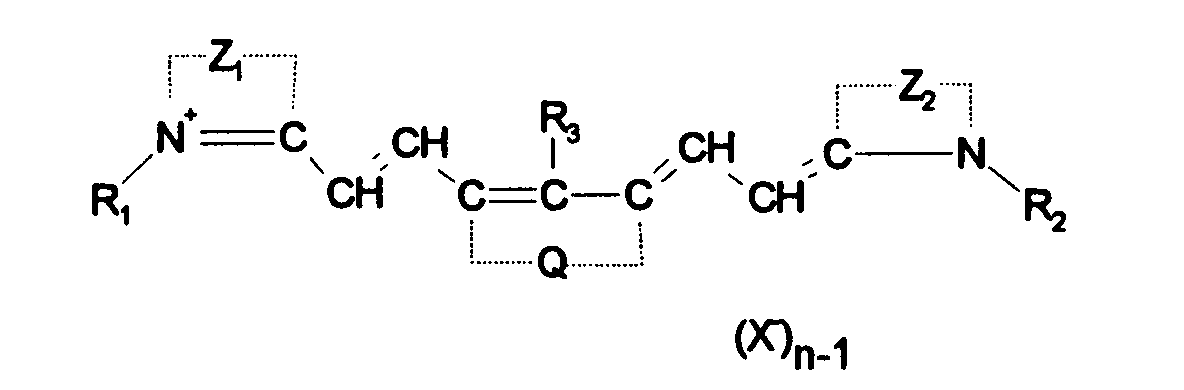
wherein,
Z1 and Z2 each independently represents the atoms necessary to complete a azole nucleus or a thiazole nucleus or a oxazole nucleus or a selenazole nucleus,
Q represents the atoms necessary to complete a 5- or 6-membered carbocyclic ring,
R1 and R2 each independently represents a alkyl group,
R3 represents hydrogen, alkyl of 1 to 4 carbon atoms, aryl, cyano, halogen or - NR4R5, wherein R4 and R5 each independently represents alkyl of 1 to 6 carbon atoms or aryl or together represent the non-metallic atoms necessary to form a 5-or 6-membered heterocyclic ring,
X⁻ represents an anion, and
n represents an integer of 1 to 2, provided that n is 1 when the dye forms an intramolecular salt.
wherein,
Z1 and Z2 each independently represents the atoms necessary to complete a azole nucleus or a thiazole nucleus or a oxazole nucleus or a selenazole nucleus,
Q represents the atoms necessary to complete a 5- or 6-membered carbocyclic ring,
R1 and R2 each independently represents a alkyl group,
R3 represents hydrogen, alkyl of 1 to 4 carbon atoms, aryl, cyano, halogen or - NR4R5, wherein R4 and R5 each independently represents alkyl of 1 to 6 carbon atoms or aryl or together represent the non-metallic atoms necessary to form a 5-or 6-membered heterocyclic ring,
X⁻ represents an anion, and
n represents an integer of 1 to 2, provided that n is 1 when the dye forms an intramolecular salt.
14. The method according to claim 1, wherein said imaging material is imagewise exposed
by means of a thermal printing head.
15. The method according to claim 1, wherein said imaging material is imagewise exposed
by means of a infrared laser source.
16. The method according to claim 1 wherein said imaging material is pre-heated before
said image-wise thermal exposure.
17. The method according to claim 1 wherein said imaging material is uniformly processed
during the image-wise thermal exposure.
18. The method according to claim 1 wherein said imaging material is uniformly processed
subsequent the image-wise thermal exposure.