|
(11) | EP 0 729 357 B1 |

| (12) | EUROPEAN PATENT SPECIFICATION |
|
|
| (54) |
MICROENCAPSULATED 1,2-BENZAZOLES MIKROVERKAPSELTE 1,2-BENZAZOLE 1,2-BENZAZOLE MICROENCAPSULES |
|
|
|||||||||||||||||||||||||||||||||||
| Note: Within nine months from the publication of the mention of the grant of the European patent, any person may give notice to the European Patent Office of opposition to the European patent granted. Notice of opposition shall be filed in a written reasoned statement. It shall not be deemed to have been filed until the opposition fee has been paid. (Art. 99(1) European Patent Convention). |
Background of the Invention
[0001] The present invention relates to microencapsulated 3-piperidinyl-substituted 1,2-benzisoxazoles and 1,2-benzisothiazoles, their preparation and their use in the treatment of mental illness.
[0002] EP-A-0368388 and EP-A-0196132 disclose 3-piperidinyl- 1,2-benzisoxazoles with antipsychotic properties.
[0003] U.S. Patent No. 4,804,663 discloses 3-piperidinyl-1,2-benzisothiazoles and 3-piperidinyl- 1,2-benzisoxazoles that have antipsychotic properties. In particular, 3-[2-[4-(6-fluoro-1,2-benzisoxazol-3-yl)-1 -piperidinyl] ethyl]-6,7,8,9-tetrahydro-2-methyl-4H-pyrido[1,2-a] pyrimidin-4 one ("risperidone") is disclosed.
[0004] U.S. Patent No. 5,158,952 describes 3-piperidinyl-1,2-benzisoxazoles having long-acting antipsychotic properties. In particular, 3-[2-[4-(6-fluoro-1,2-benzisoxazol 3-yl)-1-piperidinyl] ethyl]-6,7,8,9-tetrahydro-9-hydroxy-2-methyl-4H-pyrido[1,2-a] pyrimidin-4-one ("9-hydroxy-risperidone") is disclosed.
[0005] A number of methods are known by which compounds can be encapsulated in the form of microparticles. In many of these processes, the material to be encapsulated is dispersed in a solvent containing a wall forming material. At a single stage of the process, solvent is removed from the microparticles and thereafter the microparticle product is obtained.
[0006] Pharmaceutical compositions in the form of microparticles which allow controlled release of the active substance are described in EP-A-0486959.
[0007] U.S. Patent No. 3,737,337 discloses the preparation of a wall or shell forming polymeric material in a solvent that is only partially miscible in water. A solid or core material is dissolved or dispersed in the polymer-containing solution and, thereafter, the core material-containing solution is dispersed in an aqueous liquid that is immiscible in the organic solvent in order to remove solvent from the microparticles.
[0008] Another example of a process in which solvent is removed from microparticles containing a substance is disclosed in U.S. Patent No. 3,523,906. In this process a material to be encapsulated is emulsified in a solution of a polymeric material in a solvent that is immiscible in water and then the emulsion is emulsified in an aqueous solution containing a hydrophilic colloid. Solvent removal from the microparticles is then accomplished by evaporation and the product is obtained.
[0009] In U.S. Patent No. 3,691,090, organic solvent is evaporated from a dispersion of microparticles in an aqueous medium, preferably under reduced pressure.
[0010] Similarly, U.S. Patent No. 3,891,570 discloses a method in which solvent from a dispersion of microparticles in a polyhydric alcohol medium is evaporated from the microparticles by the application of heat or by subjecting the microparticles to reduced pressure. Another example of a solvent removal process is shown in U. S. Patent No. 3,960,757.
[0011] U. S. Patents No. 4,389,330 and 4.530,840 describe the preparation of microparticles containing an active agent by a method comprising: (a) dissolving or dispersing an active agent in a solvent and dissolving a wall forming material in that solvent; (b) dispersing the solvent containing the active agent and wall farming material in a continuous-phase processing medium; (c) evaporating a portion of the solvent from the dispersion of step (b), thereby forming microparticles containing the active agent in the suspension; and (d) extracting the remainder of the solvent from the microparticles.
Description of the Invention
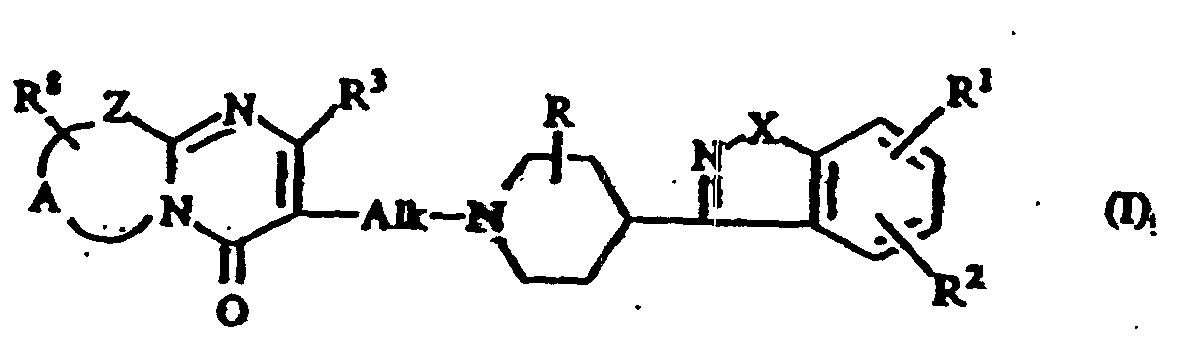
[0012] The invention relates to a pharmaceutical composition comprising a suitable pharmaceutical carrier and further comprising biodegradable and biocompatible microparticles containing a 1,2-benzazole of formula (I):
(wherein
R is hydrogen or C1-6alkyl;
R1 and R2 independently are hydrogen, halo, hydroxy, C1-6alkyloxy and C1-6alkyl;
X is O or S;
Alk is C1-4alkanediyl; and
R3 is hydrogen or C1-6alkyl;
Z is -S-, -CH2-, or -CR4=CR5-; where R4 and R5 independently are hydrogen or C1-6alkyl;
A is a bivalent radical -CH2-CH2-, -CH2-CH2-CH2- or CR6=CR7-; wherein R6 and R7 are hydrogen, halo, amino or C1-6alkyl; and
R8 is hydrogen or hydroxyl)
or a pharmaceutically acceptable acid addition salt thereof,
said microparticles being made of a polymeric matrix material having a molecular weight in the range of 100,000 to 300,000 daltons, and being capable of releasing said 1,2-benzazole or salt thereof over an extended period.
[0013] In the foregoing definitions, the term "halo" is generic to fluoro, chloro, bromo, and iodo; "C1-6alkyl" is meant to include straight and branched chain saturated hydrocarbon radicals having from 1 to 6 carbon atoms, such as, for example, methyl, ethyl, propyl, butyl, pentyl, hexyl, and isomers thereof; "C1-4alkanediyl" is meant to include bivalent straight or branched chain alkanediyl radicals having from 1 to 4 carbon atoms, such as, for example, methylene, ethylene, propylene, butylene. and isomers thereof.
[0014] Preferred compounds within the invention are those wherein R3 is C1-6alkyl and in particular is methyl and A is a bivalent radical -CH2-CH2-, -CH2-CH2-CH2-, or -CR6=CR7-, wherein R6 and R7 independently are hydrogen or C1-6alkyl.
Particularly preferred compounds are those preferred compounds wherein X is oxygen, R is hydrogen, R1 is halo or in particular is hydrogen, and R2 is hydrogen, halo, hydroxy, or C1-6alkyloxy.
More particularly preferred compounds are those particulary preferred compounds wherein -Z-A- is -CH2-CH2-CH2-CH2-, -,S-CH2-CH2-, -S-(CH2)3-. -S-CR6=CR7-, or -CH=CH-CR6=CR7-, wherein R6 and R7 independently are hydrogen or methyl and R8 is hydrogen or 9-hydroxy.
The most preferred compounds are 3-[2-[4-(6-fluoro- 1,2-benzisoxazol-3-yl)-1-piperidinyl) ethyl]-6,7,8,9-tetrahydro-2-methyl-4H-pyrido[1,2-a] pyrimidin-4-one ("Risperidone") and the pharmaceutically acceptable acid addition salts thereof.
[0015] The compounds of formula (I) can generally be prepared by the methods described in US-4,804,663 or US-5,158,952.
[0016] The compounds of formula (I) have basic properties and, consequently, can be convened to their therapeutically active non-toxic acid addition salt forms by treatment with appropriate acids, such as, for example, inorganic acids, such as hydrohalic acid, e.g., hydrochloric, hydrobromic, and the like; sulfuric acid, nitric acid, phosphoric acid, and the like; or organic acids, such as, for example, acetic, propanoic, hydroacetic, 2-hydroxypropanoic, 2-oxopropanoic, ethanedioic, propanedioic, butanedioic, (Z)-2-butenedioic, (E)-2-butenedioic, 2-hydroxybutanedioic, 2,3-dihydroxybutanedioic, 2-hydroxy-1,2,3-propanetricarboxylic, methanesulfonic, ethanesulfonic, benzenesulfonic, toluenesulfonic, cyclohexanesulfamic, 2-hydroxybenzoic, 4-amino-2-hydroxybenzoic, and the like acids.
[0017] The compounds of formula (I) are potent antagonists of a series of neurotransmitters and, as a result, have useful pharmacological properties. In particular, the compounds of formula (I) are combined serotonin and dopamine antagonists. Consequently, they are useful as anti-psychotics and in the treatment of a variety of complaints in which serotonin release is of predominant importance such as, for example, in the blocking of serotonin-induced contractions of bronchial tissues and of blood vessels, arteries as well as veins. Therapeutic indications for using the present compounds are mainly in the CNS area, i.e. as antipsychotic agents and therefore they can be used in combatting psychoses, in particular schizophrenia, aggressive behaviour, anxiety, depression and migraine. Additionally the compounds of form (I) are also useful as sedating, anxiolytic, anti-aggressive, anti-stress and muscular protectant agents.
[0018] The present invention further provides the use for the manufacture of a medicament for treating psychotic disorders of a microencapsulated compound of formula (I). Or still alternatively, there is provided the use of microencapsulated compound of formula (I) or a pharmaceutically acceptable acid addition salt thereof in admixture with a pharmaceutical carrier for treating psychotic disorders. In general, it is contemplated that an effective amount of the active ingredient per se would be from 0.01 mg/kg to 4 mg/kg body weight, more preferably, from 0.04 mg/kg to 2 mg/kg body weight.
[0019] By the term "administered" as used herein. any method of delivering the 1,2-benzazole-containing micropanicles of the invention to a warm blooded animal is intended, such as, for example, parenteral (intravenous, intramuscular, or subcutaneous) administration. By "microparticles" solid particles that contain an active agent, herein the 1,2-benzazole, either in solution or in crystalline form are meant. The active agent is dispersed or dissolved within the polymer that serves as the matrix of the particle.
[0020] In another aspect, the present invention relates to the use for the manufacture of a medicament, of a biodegradable and biocompatible microparticle composition comprising a 1,2-benzazole of formula (I) within a polymeric matrix, for inhibiting serotonergic or dopaminergic overstimulation in warm-blooded animals. Or the use of a biodegradable and biocompatible microparticle composition comprising a 1,2-benzazole of formula (I) within a polymeric matrix for inhibiting serotonergic or dopaminergic overstimulation in warm-blooded animals.
[0021] In still another aspect, the invention relates to microparticles made of a biocompatible and biodegradable matrix containing a compound of formula (I) or a pharmaceutically acceptable acid addition salt thereof.
[0022] The compositions of the present invention comprise micropardcles designed for the controlled release from a biocompatible, biodegradable matrix over an extended period of time of an effective amount of the 1,2-benzazole of formula (I). They provide advantages over compositions known in the art, such advantages comprising, inter alia, the fact that it is a biodegradable system, an injectable system that prevents the loss of dose during treatment, the ability to mix microparticles containing different drugs, and the ability to program release (multiphasic release patterns) to give faster or slower rates of drug release as needed.
[0023] In a preferred embodiment, administration of the 1,2-benzazoles to patients is achieved by a single administration of the drug loaded microparticles, releasing the drug in a constant or pulsed manner into the patient and eliminating the need for repetitive injections.
[0024] The product of the present invention offers the advantage of having a duration of action ranging from 7 to more than 200 days, depending upon the type of microparticle selected In a preferred embodiment, the microparticles are designed to afford treatment to patients over a period of 14 to 100 days, in particular 14 to 50 or to 60, or 30 to 60 days. The duration of action can be controlled by manipulation of the polymer composition, the polymer.drug ratio, and the microparticle size.
Another important advantage of the present invention is that practically all of the active agent is delivered to the patient because the polymer used is biodegradable, thereby permitting all of the entrapped agent to be released into the patient.
[0025] The polymeric matrix material of the microparticles of the present invention is a biocompatible and biodegradable polymeric material. The term"biocompatible" is defined as a polymeric material that is not toxic to the human body, is not carcinogenic, and does not significantly induce inflammation in body tissues. The matrix material should be biodegradable in the sense that the polymeric material should degrade by bodily processes to products readily disposable by the body and should not accumulate in the body. The products of the biodegradation should also be biocompatible with the body in the same sense that the polymeric matrix is biocompatible with the body.
[0026] Suitable examples of polymeric matrix materials include poly(glycolic acid), poly-D,L-lactic acid, poly-L-lactic acid, copolymers of the foregoing, poly(aliphatic carboxylic acids), copolyoxalates, polycaprolactone, polydioxonone, poly(ortho carbonates), poly(acetals), poly(lactic acid-caprolactone), polyorthoesters, poly(glycolic acid caprolactone), polyanhydrides, and natural polymers including albumin, casein, and waxes such as, glycerol mono- and distearate, and the like. The preferred polymer for use in the practice of this invention is dl-(polylactide-co-glycolide) i.e. a copolymer of poly(glycolic acid) and poly-D,L-lactic acid. It is preferred that the molar ratio of lactide to glycolide in such a copolymer be in the range of from 85:15 to 35:65, more in particular from 75:25 to 50:50, e.g. 85:15, 75:25, 65:35 or 50:50.
[0027] The amount of active agent incorporated in the microparticles usually ranges from 1 wt % to 90 wt. %, preferably 30 to 50 wt. %, more preferably 35 to 40 wt. %. By weight % is meant parts of agent per total weight of microparticle. For example, 10 wt. % agent would mean 10 parts agent and 90 parts polymer by weight.
[0028] The molecular weight of the polymeric matrix material is of some importance. The molecular weight should be high enough to permit the formation of satisfactory polymer coatings, i.e., the polymer should be a good film former. Usually, a satisfactory molecular weight is in the range of 5,000 to 500,000 daltons, preferably from 50,000 to 400,000, more preferably from 100,000 to 300,000, in particular from 100,000 to 200,000 and especially about 150,000 daltons. However since the properties of the film are also partially dependent on the particular polymeric material being used, it is very difficult to specify an appropriate molecular weight range for all polymers. The molecular weight of a polymer is also important from the point of view of its influence upon the biodegradation rate of the polymer. For a diffusionaJ mechanism of drug release, the polymer should remain intact until all of the drug is released form the microparticles and then degrade. The drug can also be released from the microparticles as the polymeric excipient bioerodes. By an appropriate selection of polymeric materials, a microparticle formulation can be made in which the resulting microparticles exhibit both diffusional release and biodegradation release properties. This is useful in affording multiphasic release patterns.
[0029] The microparticle product of the present invention can be prepared by any method capable of producing microparticles in a size range acceptable for use in an injectable composition such as the methods described in U.S.-4,389,330 and U.S.-4,530,840. One preferred method of preparation is that described in the former patent and comprises dissolving or dispersing the active agent in an appropriate solvent. To the agent containing medium is added the polymeric matrix material in an amount relative to the active ingredient that provides a product having the desired loading of active agent. Optionally, all of the ingredients of the microparticle product can be blended together in the solvent medium.
[0030] Solvents for the agent and the polymeric matrix material that can be employed in the practice of the present invention include organic solvents, such as acetone; halogenated hydrocarbons, such as chloroform, methylene chloride, and the like; aromatic hydrocarbon compounds; halogenated aromatic hydrocarbon compounds; cyclic ethers; alcohols, such as, benzyl alcohol; ethyl acetate; and the like. A preferred solvent is a mixture of benzyl alcohol and ethyl acetate.
[0031] The mixture of ingredients in the solvent is emulsified in a continuous-phase processing medium; the continuous-phase medium being such that a dispersion of microdroplets containing the indicated ingredients is formed in the continuous-phase medium. Naturally, the continuous-phase processing medium and the organic phase must be largely immiscible. The continuous-phase processing medium most commonly employed is water, although nonaqueous media, such as, xylene, toluene, and synthetic and natural oils can be used.
[0032] Usually, a surfactant is added to the continuous phase processing medium to prevent the microparticles from agglomerating and to control the size of the solvent microdroplets in the emulsion. A preferred surfactant-dispersing medium combination is a 0.1 to 10 wt. %, more preferably 0.5 to 2 wt. % solution of poly(vinyl alcohol) in water. The dispersion is formed by mechanical agitation of the mixed materials. An emulsion can also be formed by adding small drops of the active agent-wall forming material solution to the continuous phase processing medium.
[0033] The temperature during the formation of the emulsion is not especially critical, but can influence the size and quality of the microparticles and the solubility of the agent in the continuous phase. Of course, it is desirable to have as little of the agent in the continuous phase as possible.Moreover, depending on the solvent and continuous-phase processing medium employed, the temperature must not be too low or the solvent and processing medium will solidify or become too viscous for practical purposes. On the other hand, it must not be so high that the processing medium will evaporate or that the liquid processing medium will not be maintained. Moreover, the temperature of the medium cannot be so high that the stability of the particular active agent being incorporated in the microparticles is adversely affected Accordingly, the dispersion process can be conducted at any temperature that maintains stable operating conditions, preferably 20°C to 60°C, depending upon the agent and excipient selected.
[0034] The dispersion formed is stable and from this dispersion the organic phase fluid can be partially removed in the first step of the solvent removal process. The solvent can easily be removed by common techniques, such as heating, the application of a reduced pressure, or a combination of both. The temperature employed to evaporate solvent from the microdroplets is not critical, but should not be so high as to degrade the agent employed in the preparation of a given microparticle or to evaporate solvent at a rate rapid enough to cause defects in the wall forming material. Generally, from 10 to 90 %, preferably 40 to 60 % of the solvent is removal in the first solvent removal step. After the first stage, the dispersed microparticles in the solvent immiscible fluid medium . are isolated from the fluid medium by any convenient means of separation. Thus, for example, the fluid can be decanted from the microparticles or the microparticle suspension can be filtered. Various other combinations of separation techniques can be used, if desired.
[0035] Following the isolation of the microparticles from the continuous phase processing medium, the remainder of the solvent in the microparticles is removed by extraction. In this step, the microparticles can be suspended in the same continuous-phase processing medium used in step one, with or without surfactant, or in another liquid. The extraction medium removes the solvent from the microparncles, but does not dissolve them. During the extraction, the extraction medium containing dissolved solvent must be removed and replaced with fresh extraction medium. This is best done on a continual or continuous basis where the rate of extraction medium replenishment is critical. If the rate is too slow, agent crystals may protrude from the micropanicles or grow in the extraction medium. Obviously, the rate of extraction medium replenishment for a given process is a variable that can easily be determined at the time the process is performed and, therefore, no precise limits for the rate may be predetermined. After the remainder of the solvent has been removed, the microparticles are dried by exposure to air or by other conventional drying techniques, such as, vacuum drying, drying over a desiccant, or the like. This process is very efficient in encapsulating the agent since core loadings of up to 80 wt. %, preferably up to 50 wt. % can be obtained.
[0036] A more preferred method of encapsulating the active agent to form the controlled release microparticles of the present invention involves the use of static mixers. Static or motionless mixers consist of a conduit or tube in which is received a number of static mixing elements. Static mixers provide homogeneous mixing in a relatively short length of conduit, and in a relatively short period of time. With static mixers, the fluid moves through the mixer, rather than some part of the mixer, such as a blade, moving through the fluid. A static mixer is more fully described in U.S. Patent No. 4,511,258.
[0037] When using a static mixer to form an emulsion, a variety of factors determine emulsion particle size. These factors include the density and viscosity of the various solutions or phases to be mixed, volume ratio of the phases, interfacial tension between the phases, static mixer parameters (conduit diameter; length of mixing element; number of mixing elements), and linear velocity through the stadc mixer. Temperature is a variable because it affects density, viscosity, and interfacial tension. The controlling variables are linear velocity, shear rate, and pressure drop per unit length of static mixer. Particularly, droplet size decreases as linear velocity increases and droplet size increases as pressure drop decreases. Droplets will reach an equilibrium size after a fixed number of elements for a given flow rate. The higher the flow rate, the fewer elements needed. Because of these relationships, scaling from laboratory batch sizes to commercial batch sizes is reliable and accurate, and the same equipment can be used for laboratory and commercial batch sizes.
[0038] In order to create microparticles containing an active agent, an organic phase and an aqueous phase are combined. The organic: and aqueous phases are largely or substantially immiscible, with the aqueous phase constituting the continuous phase of the emulsion. The organic phase includes an active agent as well as a wall forming polymer or polymeric matrix material. The organic phase can be prepared by dissolving an active agent in an organic or other suitable solvent, or by forming a dispersion or an emulsion containing the active agent. Preferably, the organic phase and the aqueous phase are pumped so that the two phases are simultaneously flowing through a static mixer, thereby forming an emulsion, which comprises microparticles containing the active agent encapsulated in the polymeric matrix material. The organic and aqueous phases are pumped through the static mixer into a large volume of quench liquid. The quench liquid may be plain water, a water solution, or other suitable liquid Organic solvent may be removed from the microparticles while they are being washed or being stirred in the quench liquid. After the microparticles are washed in a quench to extract or remove the organic solvent, they are isolated, as through a sieve, and dried.
[0039] A laboratory set up for carrying out a static mixer process is illustrated in Figure 1. An organic or oil phase 30 is prepared by dissolving and, optionally, heating an active agent and a polymeric matrix material or polymer in a stirned pot 32 on a hot plate. However, the process of the present invention is not limited to preparing organic phase 30 by dissolving an active agent. Alternatively, organic phase 30 may be prepared by dispersing an active agent in a solution containing a polymeric matrix material. In such a dispersion, the active agent is only slightly soluble in organic phase 30. Alternatively, organic phase 30 may be prepared by preparing an emulsion containing an active agent and a polymeric matrix material (double emulsion process). In the double emulsion process, a primary emulsion is prepared which contains an active agent and a polymeric matrix material (organic phase 30). The primary emulsion may be a water-in-oil emulsion, an oil-in-water emulsion, or any suitable emulsion. The primary emulsion (organic phase 30) and an aqueous phase are then pumped through a static mixer to form a second emulsion which comprises microparticles containing the active agent encapsulated in the polymeric matrix material.
[0040] Organic phase 30 is pumped out of stirred pot 32 by a magnetically driven gear pump 34. The discharge of pump 34 feeds a "Y" connection 36. One branch 361 of "Y" connection 36 returns to pot 32 for recirculation flow. The other branch 362 feeds into an in-line static mixer 10. Aqueous or water phase 40 is prepared in like manner, with a stirred pot 42, a magnetically driven gear pump 44, and a "Y" connection 46. One branch 461 of "Y" connection 46 returns to pot 42 for recirculation flow. The other branch 462 feeds into in-line static mixer 10. Organic phase 30 and aqueous phase 40 are substantially immiscible.
[0041] Branches 362 and 462 from each solution which feed in-line static mixer 10 are joined by another "Y" connection 50 and feed through mixer inlet line 51 into static mixer 10. Static mixer 10 discharges through mixer outlet line 52 into wash tank 60. Silicone tubing and polypropylene fittings are used in the system illustrated in Figure 1. Silicone tubing having 9.53 mm ID is used for all lines except mixer outlet line 52. Smaller diameter tubing (4.76 mm ID) is used for mixer outlet line 52 to prevent collapse of the emulsion both in mixer outlet line 52 and upon entering wash tank 60.
[0042] In one embodiment of the process, pumps 34 and 44 are started in recirculation mode and desired flow rates are set for organic phase 30 and water phase 40. The flow rate of water phase 40 is preferably greater than the flow rate of organic phase 30. However, the two flow rates may be substantially the same. The ratio of the flow rate of water phase 40 to the flow rate of organic phase 30 is preferably in the range of 1:1 to 10:1. "Y" connection 46 is then switched so that water phase 40 flows through branch 462 to static mixer 10. Once water phase 40 fills mixer inlet line 51, static mixer 10, and mixer outlet line 52, "Y" connection 36 is switched so that organic phase 30 flows through branch 362 to static mixer 10. Organic phase 30 and aqueous phase 40 are now flowing simultaneously through static mixer 10. When the desired volume of organic phase has been pumped to static mixer 10, "Y" connection 36 is switched to recirculation through branch 361. Water phase 40 continues to flow for a short time to clean out any organic phase remaining in mixer inlet line S1, static mixer 10, and mixer outlet line 52. "Y" connection 46 is then switched to recirculation through branch 461.
Organic phase 30 and aqueous phase 40 are mixed in static mixer 10 to form an emulsion. The emulsion formed comprises microparticles containing the active agent encapsulated in the polymeric matrix material.
[0043] The microparticles produced by the method of the present invention are usually of a spherical shape, although they may be irregularly shaped. The microparticles produced by the method of the present invention can vary in size, ranging from submicron to millimeter diameters. In a preferred embodiment of the present invention, static mixing elements 14 of static mixer 10 are selected so that the resulting microparticles range in size from 1 to 500 micrometers (µm), preferably 25 to 180 micrometers in particularly 60 to 120 microns, e.g. 90 micrometers whereby administration of the microparticles can be carried out with a standard gauge needle. The microparticles may be stirred in wash tank 60 which contains a quench liquid. The microparticles may be isolated from the quench liquid, such as by using a sieve column. The microparticles may be dried using conventional drying techniques, and further size isolation may be done.
[0044] The active agent bearing microparticles are obtained and stored as a dry material. Prior to administration to a patient, the dry micropartictes can be suspended in an acceptable pharmaceutical liquid vehicle, preferably a 2.5 wt. % solution of carboxymethyl cellulose, whereupon the suspension is injected into the desired portion of the body. The microparcicles can be mixed by size or by type so as to provide for the delivery of active agent to the patient in a multiphasic manner and/or in a manner that provides different agents to the patient at different times, or a mixture of agents at the same time.
[0045] In vitro dissolution studies measuring the release of risperidone from microparticles of the invention showed an almost constant release of risperidone during a sustained period of time. Similarly, in vivo studies in dogs being dosed intramuscularly with microparticle formulations of the invention, in particular with the formulations described thereinafter in the examples, showed almost constant and long-lasting plasma concentrations of active agent.
[0046] The following examples further describe the materials and methods used in carrying out the invention.
Example 1: Preparation of 35% Theoretically Loaded Risperidone Microparticles (Batch Prodex 2)
[0047] First, the aqueous phase (solution A) is prepared by weighing and mixing 906.1 g 1% poly(vinyl alcohol), (Vinyl 205™, Air Products and Chemical Inc.), 29.7 g benzyl alcohol end 65.3 g ethyl acetate. Then the organic phase (solution B) is prepared by dissolving 29.3 g of high viscosity 75 :25 dl (polylactide-co-glycolide). in 108.7 g ethyl acetate and 108.4 g benzyl alcohol. Once the polymer is completely dissolved, 15.7 g risperidone base is added and dissolved in the polymer solution. The exposure time of the dissolved risperidone with the polymer is kept to a minimum (< 10 minutes). Solutions A and B are then pumped through a 6.35 mm diameter static mixer (Cole Parmer L04667-14) via a gear drive pump and head (Cole Parmer L07149-04, L07002-16) at flow rates of 198 and 24 ml/minute, respectively, into a quench composed of 55 liters of water for injection containing 1276.0 g of ethyl acetate, 92.3 g (0.02 Molar) of anhydrous sodium bicarbonate, and 116.2 g (0.02 Molar) of anhydrous sodium carbonate at 11 °C. The microparticles are allowed to stir in the first wash for 1.75 hours, then isolated by sieving with a 25 micron sieve. The product retained by the sieve is transferred to a 20-liter wash at 13°C. After stirring in the sieved wash for 2.25 hours, the microparticles are isolated and size fractionated by sieving through a stainless steel sieve column composed of 25- and 180-micron mesh sizes. The microparticles are dried overnight, then collected and weighed.
Example 2: Preparation of 40% Theoretically Loaded Risperidone Microparticles (Batch Prodex 3)
[0048] First, the aqueous phase (solution A) is prepared by weighing and mixing 904.4 g 1 % poly (vinyl alcohol), (Vinyl 205™. Air Products and Chemical Inc.), 30.1 g benzyl alcohol and 65.8 g ethyl acetate. Then the organic phase (solution B) is prepared by dissolving 27.1 g of high viscosity 75 :25 dl (polylactide-co-glycolide), in 99.3 g ethyl acetate and 99.1 g benzyl alcohol. Once the polymer is completely dissolved, 18.1 g risperidone base is added and dissolved in the polymer solution. The exposure time of the dissolved risperidone with the polymer is kept to a minimum (< 10 minutes). Solutions A and B are then pumped through a 6.35 mm diameter static mixer (Cole Parmer L04667-14) via a gear drive pump and head (Cole Farmer L07149-04, L07002-16) at flow rates of 198 and 24 ml/minute, respectively, and into a quench composed of 55 liters of water for injection containing 1375.6 g of ethyl acetate, 92.4 g (0.02 Molar) of anhydrous sodium bicarbonate, and 116.6 g (0.02 Molar) of anhydrous sodium carbonate at 12°C. The microparticles are allowed to stir in the first wash for 2 hours, then isolated by sieving with a 25-micron sieve. The product retained by the sieve is transferred to a 20 liter wash at 12°C. After stirring in the sieved wash for 3 hours, the microparticles are isolated and size fractionated by sieving through a stainless-steel sieve column composed of 25- and 180 micron mesh sizes. The microparticles are dried overnight, then collected and weighed.
Example 3: Lyophilisation and Gamma Irradiation of Microparticles from Batches Prodex 2 and Prodex 3 (Samples Prodex 4A, Prodex 4B, and Prodex 4C)
[0049] Microparticles from batches Prodex 2 and Prodex 3 were lyophilized. The microparticles were weighed into 5 cc serum vials. Then an aqueous vehicle composed of 0.75% CMC, 5% Mannitol, and 0.1% Tween 80™ was added to the vials. The microparticles were suspended in the vehicle by agitation, then quickly frozen in a dry ice/acetone bath. The vials were then lyophilized in a pilot-scale lyophilizer employing a ramped 30°C maximum temperature cycle for 50 hours. Samples Prodex 4A and Prodex 4C were lyophilized samples from Prodex 2 and Prodex 3, respectively. Sample Prodex 4B was lyophilized from Prodex 2 that had been subsequently sterilized by 2.2 MRad gamma irradiation from a 60Co source.
Example 4 : In vivo study
[0050] The duration of action of the microparticle-based risperidone formulations in the apomorphine-induced emesis test in dogs were studied. Neuroleptics are known to antagonize apomorphine-induced emesis by blocking dopamine D2 receptors in the area postrema of the fourth ventricle. The test is generally used to predict the onset and duration of antipsychotic action of neuroleptics in man (Janssen et al., Arzneim.-Forsch.IDrug Res. 15: 1196-1206 (1965); Niemegeers et al., Life Sci. 24:2201-2216 (1979)).
9-OH-risperidone has a pharmacological profile that is virtually identical to that of risperidone. Both constitute together the "active moiety" that determines the biological activity of risperidone.
Apomorphine was administered subcutaneously at 0.31 mg/kg to the dogs twice a week, during the whole course of the experiment. The dogs were observed for vomiting during a 1-hour period after the administration of apomorphine. Complete absence of emesis for 1 hour after apomorphine challenge was considered to reflect significant anti-emetic activity. The duration of the anti-emetic action was defined as the time interval during which 2 out of 3 dogs were protected from emesis.
The formulations were injected in a volume of 0.5 ml into the biceps femoralis of one of the hind limbs at the level of the thigh. At several time intervals after the intramuscular injection, blood samples were taken and, immediately thereafter, the dogs were challenged with a dose of apomorphine. Complete absence of emesis within 1 h after apomorphine challenge (which is never observed in control animals; n> 1000) was considered to reflect significant antiemetic activity.
Table 1 indicates whether the dogs were protected (+) or not protected (-) from apomorphine-induced emesis at the various time intervals after intramuscular injection of the depot formulations. All formulations showed an immediate onset of anti-emetic action.
1. A pharmaceutical composition comprising a suitable pharmaceutical carrier and further
comprising biodegradable and biocompatible microparticles containing a 1,2-benzazole
of formula I
(wherein
R is hydrogen or C1-6alkyl;
R1 and R2 independently are hydrogen, halo, hydroxy, C1-6alkyloxy and C1-6alkyl;
X is O or S;
Alk is C1-4alkanediyl; and
R3 is hydrogen or C1-6alkyl;
Z is -S-, -CH2-, or -CR4=CR5-; where R4 and R5 independently are hydrogen or C1-6alkyl;
A is a bivalent radical -CH2-CH2-, -CH2-CH2-CH2- or CR6=CR7-; wherein R6 and R7 are hydrogen, halo, amino or C1-6alkyl; and
R8 is hydrogen or hydroxyl)
or a pharmaceutically acceptable acid addition salt thereof,
said microparticles being made of a polymeric matrix material having a molecular weight in the range of-100,000 to 300,000 daltons, and being capable of releasing said 1,2-benzazole or salt thereof over an extended period of time.
(wherein
R is hydrogen or C1-6alkyl;
R1 and R2 independently are hydrogen, halo, hydroxy, C1-6alkyloxy and C1-6alkyl;
X is O or S;
Alk is C1-4alkanediyl; and
R3 is hydrogen or C1-6alkyl;
Z is -S-, -CH2-, or -CR4=CR5-; where R4 and R5 independently are hydrogen or C1-6alkyl;
A is a bivalent radical -CH2-CH2-, -CH2-CH2-CH2- or CR6=CR7-; wherein R6 and R7 are hydrogen, halo, amino or C1-6alkyl; and
R8 is hydrogen or hydroxyl)
or a pharmaceutically acceptable acid addition salt thereof,
said microparticles being made of a polymeric matrix material having a molecular weight in the range of-100,000 to 300,000 daltons, and being capable of releasing said 1,2-benzazole or salt thereof over an extended period of time.
2. A composition as claimed in claim 1, wherein the polymeric matrix material of said
microparticle is selected from poly(glycolic acid), poly-D,L-lactic acid, poly-L-lactic
acid, copolymers of the foregoing, poly(aliphatic carboxylic acids), copolyoxalates,
polycaprolactone, polydioxonone, poly(ortho carbonates), poly(acetals), poly(lactic
acid-caprolactone), polyorthoesters, poly(glycolic acidcaprolactone), polyanhydrides,
albumin, casein, and waxes.
3. A composition as claimed in claim 2, wherein the polymeric matrix material of said
microparticle is a copolymer of poly(glycolic acid) and poly-D,L-lactic acid.
4. A composition as claimed in claim 3 wherein the molar ratio of lactide to glycolide
is in the range of 85:15 to 50:50.
5. A composition as claimed in claim 4, wherein said microparticles comprise 1 to 90
wt. % of said 1,2-benzazole or salt thereof.
6. A composition as claimed in claim 1, wherein said microparticles comprise about 35
to 40 wt. % of said 1,2-benzazole or salt thereof.
7. A composition as claimed in claim 1, wherein said microparticles range in size from
1 to 500 micrometers.
8. A composition as claimed in claim 1, wherein said microparticles range in size from
25 to 180 micrometers.
9. A composition as claimed in claim 1, wherein said microparticles are formulated in
a liquid injection vehicle.
10. A composition as claimed in claim 1, wherein said liquid vehicle is physiological
saline solution or an aqueous solution of carboxymethyl cellulose with a surfactant.
11. A composition as claimed in any one of claims 1 to 10 wherein said microparticles
have a duration of action of 7 days or more.
12. A composition as claimed in claim 11 wherein said microparticles have a duration of
action of 14 to 100 days.
13. Biodegradable and biocompatible microparticles containing a 1,2-benzazole or salt
thereof as defined in any of claims 1 to 12.
14. The use for the manufacture of a medicament for treating psychotic disorders, of biodegradable
and biocompatible microparticles comprising a 1,2-benzazole of the formula I or salt
thereof as defined in any of claims 1 to 12.
15. A process for preparing microparticles as claimed in claim 13, characterized by dissolving or dispersing an active agent which is a 1,2-benzazole or salt thereof
as defined in claim 1 in an appropriate solvent, adding thereto the polymeric matrix
material in an amount relative to the active ingredient that provides a product having
the desired loading of active agent.
16. A process for preparing a pharmaceutical composition as claimed in any of claims 1
to 12, characterized in that the microparticles are mixed with the pharmaceutical carrier.
1. Pharmazeutische Zusammensetzung, enthaltend einen geeigneten pharmazeutischen Träger
und biologisch abbaubare und biokompatible Mikroteilchen, die ein 1,2-Benzazol der
Formel I
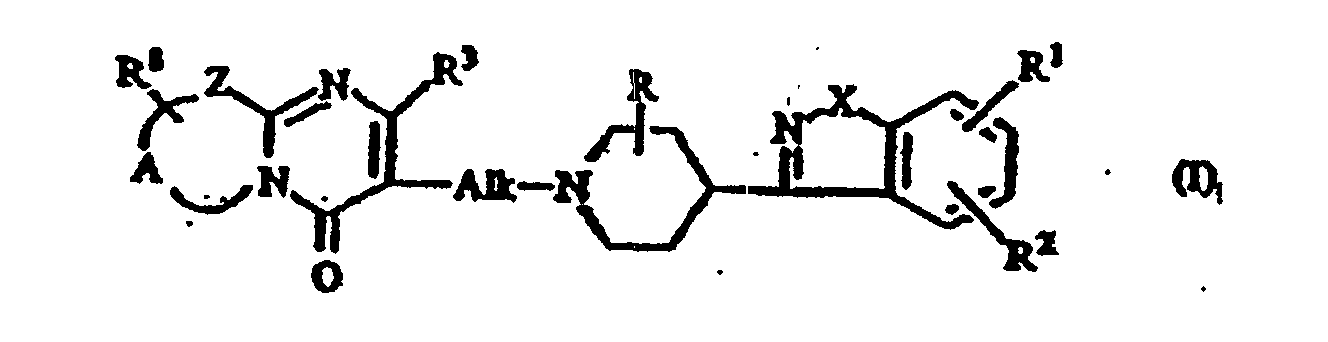
(worin
R für Wasserstoff oder C1-6-Alkyl steht;
R1 und R2 unabhängig voneinander für Wasserstoff, Halogen, Hydroxy, C1-6-Alkyloxy und C1-6-Alkyl stehen;
X für O oder S steht;
Alk für C1-4-Alkandiyl steht und
R3 für Wasserstoff oder C1-6-Alkyl steht;
Z für -S-, -CH2- oder -CR4=CR5-, worin R4 und R5 unabhängig voneinander Wasserstoff oder C1-6-Alkyl bedeuten, steht;
A für einen zweiwertigen Rest -CH2-CH2-, -CH2-CH2-CH2-, oder CR6=CR7-, worin R6 und R7 unabhängig voneinander Wasserstoff, Halogen, Amino oder C1-6-Alkyl bedeuten, steht und
R8 für Wasserstoff oder Hydroxyl steht)
oder ein pharmazeutisch unbedenkliches Säureadditionssalz davon
enthalten, aus einem polymeren Matrixmaterial mit einem Molekulargewicht im Bereich von 100.000 bis 300.000 Dalton hergestellt sind und dazu befähigt sind, das 1,2-Benzazol oder das Salz davon über einen längeren Zeitraum freizusetzen.
(worin
R für Wasserstoff oder C1-6-Alkyl steht;
R1 und R2 unabhängig voneinander für Wasserstoff, Halogen, Hydroxy, C1-6-Alkyloxy und C1-6-Alkyl stehen;
X für O oder S steht;
Alk für C1-4-Alkandiyl steht und
R3 für Wasserstoff oder C1-6-Alkyl steht;
Z für -S-, -CH2- oder -CR4=CR5-, worin R4 und R5 unabhängig voneinander Wasserstoff oder C1-6-Alkyl bedeuten, steht;
A für einen zweiwertigen Rest -CH2-CH2-, -CH2-CH2-CH2-, oder CR6=CR7-, worin R6 und R7 unabhängig voneinander Wasserstoff, Halogen, Amino oder C1-6-Alkyl bedeuten, steht und
R8 für Wasserstoff oder Hydroxyl steht)
oder ein pharmazeutisch unbedenkliches Säureadditionssalz davon
enthalten, aus einem polymeren Matrixmaterial mit einem Molekulargewicht im Bereich von 100.000 bis 300.000 Dalton hergestellt sind und dazu befähigt sind, das 1,2-Benzazol oder das Salz davon über einen längeren Zeitraum freizusetzen.
2. Zusammensetzung nach Anspruch 1, bei der das polymere Matrixmaterial der Mikroteilchen
unter Poly(glykolsäure), Poly-D,L-milchsäure, Poly-Lmilchsäure, Copolymeren davon,
Polymeren aliphatischer Carbonsäuren, Copolyoxalaten, Polycaprolacton, Polydioxonon,
Poly(orthocarbonaten), Poly(acetalen), Poly(milchsäure-caprolacton), Polyorthoestern,
Poly(glykolsäure-carprolacton), Polyanhydriden, Albumin, Casein und Wachsen ausgewählt
ist.
3. Zusammensetzung nach Anspruch 2, bei der es sich bei dem polymeren Matrixmaterial
der Mikroteilchen um ein Copolymer von Poly(glykolsäure) und Poly-D,L-milchsäure handelt.
4. Zusammensetzung nach Anspruch 3, bei der das Lactid/Glykolid-Molverhältnis im Bereich
von 85:15 bis 50:50 liegt.
5. Zusammensetzung nach Anspruch 4, bei der die Mikroteilchen 1 bis 90 Gew.-% des 1,2-Benzazols
oder Salzes davon enthalten.
6. Zusammensetzung nach Anspruch 1, bei der die Mikroteilchen 35 bis 40 Gew.-% des 1,2-Benzazols
oder Salzes davon enthalten.
7. Zusammensetzung nach Anspruch 1, bei der die Mikroteilchen eine Größe von 1 bis 500
Mikrometer haben.
8. Zusammensetzung nach Anspruch 1, bei der die Mikroteilchen eine Größe von 25 bis 180
Mikrometer haben.
9. Zusammensetzung nach Anspruch 1, bei der die Mikroteilchen in einem flüssigen Injektionsvehikel
formuliert sind.
10. Zusammensetzung nach Anspruch 1, bei der es sich bei dem flüssigen Injektionsvehikel
um physiologische Kochsalzlösung oder eine wäßrige Lösung von Carboxymethylcellulose
mit einem Tensid handelt.
11. Zusammensetzung nach einem der Ansprüche 1 bis 10, bei der die Mikroteilchen eine
Wirkdauer von 7 Tagen oder mehr aufweisen.
12. Zusammensetzung nach Anspruch 11, bei der die Mikroteilchen eine Wirkdauer von 14
bis 100 Tagen aufweisen.
13. Biologisch abbaubare und biokompatible Mikroteilchen mit einem 1,2-Benzazol oder einem
Salz davon gemäß einem der Ansprüche 1 bis 12.
14. Verwendung von biologisch abbaubaren und biokompatiblen Mikroteilchen mit einem 1,2-Benzazol
der Formel I oder einem Salz davon gemäß einem der Ansprüche 1 bis 12 zur Herstellung
eines Arzneimittels zur Behandlung von psychotischen Störungen.
15. Verfahren zur Herstellung von Mikroteilchen nach Anspruch 13, dadurch gekennzeichnet, daß man einen Wirkstoff, bei dem es sich um ein 1,2-Benzazol oder ein Salz davon gemäß
Anspruch 1 handelt, in einem geeigneten Lösungsmittel löst oder dispergiert und das
polymere Matrixmaterial in einer Menge, bezogen auf den Wirkstoff, zugibt, die die
gewünschte Wirkstoffbeladung ergibt.
16. Verfahren zur Herstellung einer pharmazeutischen Zusammensetzung nach einem der Ansprüche
1 bis 12, dadurch gekennzeichnet, daß man die Mikroteilchen mit dem pharmazeutischen Träger vermischt.
1. Composition pharmaceutique comprenant un véhicule pharmaceutique convenable et comprenant
en outre des microparticules biodégradables et biocompatibles contenant un 1,2-benzazole
de formule I
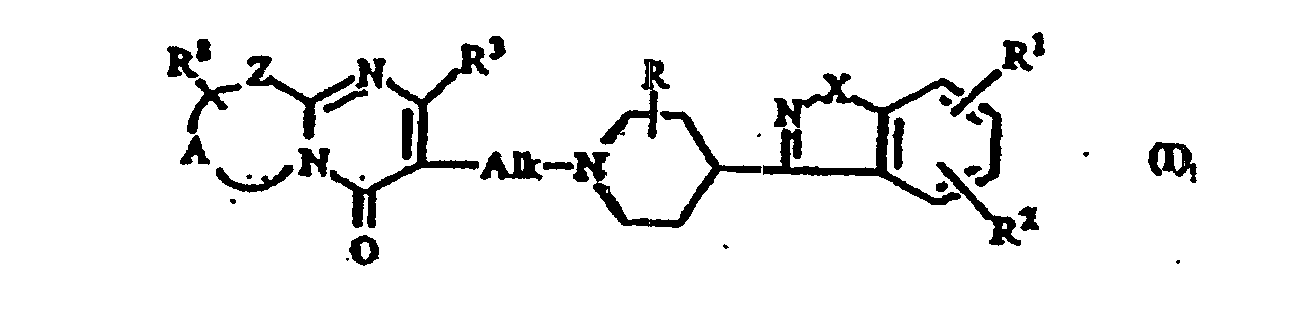
(dans laquelle
R est hydrogène ou alkyle en C1-6 ;
R1 et R2 sont indépendamment hydrogène, halogéno, hydroxy, alkyl(C1-6)oxy et alkyle en C1-6 ;
X est O ou S ;
Alk est alcanediyle en C1-4 ; et
R3 est hydrogène ou alkyle en C1-6 ;
Z est -S-, -CH2- ou -CR4=CR5- ; où R4 et R5 sont indépendamment hydrogène ou alkyle en C1-6 ;
A est un radical bivalent -CH2-CH2-, -CH2-CH2-CH2-
ou CR6=CR7- ; où R6 et R7 sont hydrogène, halogéno, amino ou alkyle en C1-6 ; et
R8 est hydrogène ou hydroxyle)
ou un sel d'addition d'acide pharmaceutiquement acceptable de celui-ci,
lesdites microparticules étant faites d'un matériau matriciel polymère ayant un poids moléculaire dans la plage allant de 100 000 à 300 000 daltons, et étant capables de libérer ledit 1,2-benzazole ou un sel de celui-ci au cours d'une période prolongée.
(dans laquelle
R est hydrogène ou alkyle en C1-6 ;
R1 et R2 sont indépendamment hydrogène, halogéno, hydroxy, alkyl(C1-6)oxy et alkyle en C1-6 ;
X est O ou S ;
Alk est alcanediyle en C1-4 ; et
R3 est hydrogène ou alkyle en C1-6 ;
Z est -S-, -CH2- ou -CR4=CR5- ; où R4 et R5 sont indépendamment hydrogène ou alkyle en C1-6 ;
A est un radical bivalent -CH2-CH2-, -CH2-CH2-CH2-
ou CR6=CR7- ; où R6 et R7 sont hydrogène, halogéno, amino ou alkyle en C1-6 ; et
R8 est hydrogène ou hydroxyle)
ou un sel d'addition d'acide pharmaceutiquement acceptable de celui-ci,
lesdites microparticules étant faites d'un matériau matriciel polymère ayant un poids moléculaire dans la plage allant de 100 000 à 300 000 daltons, et étant capables de libérer ledit 1,2-benzazole ou un sel de celui-ci au cours d'une période prolongée.
2. Composition selon la revendication 1, dans laquelle le matériau matriciel polymère
de ladite microparticule est choisi parmi le poly(acide glycolique), l'acide poly-D,L-lactique,
l'acide poly-L-lactique, les copolymères de ce qui précède, les poly(acides carboxyliques
aliphatiques), les copolyoxalates, la polycaprolactone, la polydioxonone, les poly(ortho-carbonates),
les poly(acétals), le poly(acide lactique-caprolactone), les polyorthoesters, le poly(acide
glycolique-caprolactone), les polyanhydrides, l'albumine, la caséine et les cires.
3. Composition selon la revendication 2, dans laquelle le matériau matriciel polymère
de ladite microparticule est un copolymère de poly(acide glycolique) et d'acide poly-D,L-lactique.
4. Composition selon la revendication 3, dans laquelle le rapport molaire du lactide
au glycolide se trouve dans la plage allant de 85:15 à 50:50.
5. Composition selon la revendication 4, dans laquelle lesdites microparticules comprennent
de 1 à 90% en poids dudit 1,2-benzazole ou d'un sel de celui-ci.
6. Composition selon la revendication 1, dans laquelle lesdites microparticules comprennent
d'environ 35 à 40% en poids dudit 1,2-benzazole ou d'un sel de celui-ci.
7. Composition selon la revendication 1, dans laquelle la taille desdites microparticules
va de 1 à 500 micromètres.
8. Composition selon la revendication 1, dans laquelle la taille desdites microparticules
va de 25 à 180 micromètres.
9. Composition selon la revendication 1, dans laquelle lesdites microparticules sont
formulées dans un véhicule d'injection liquide.
10. Composition selon la revendication 1, dans laquelle ledit véhicule liquide est une
solution saline physiologique ou une solution aqueuse de carboxyméthyl cellulose avec
un agent tensioactif.
11. Composition selon l'une quelconque des revendications 1 à 10, dans laquelle lesdites
microparticules ont une durée d'action de 7 jours ou plus.
12. Composition selon la revendication 11, dans laquelle lesdites microparticules ont
une durée d'action allant de 14 à 100 jours.
13. Microparticules biodégradables et biocompatibles contenant un 1,2-benzazole ou un
sel de celui-ci tel que défini selon l'une quelconque des revendications 1 à 12.
14. Utilisation pour la fabrication d'un médicament destiné au traitement de troubles
psychotiques, de microparticules biodégradables et biocompatibles comprenant un 1,2-benzazole
de formule I ou un sel de celui-ci tel que défini selon l'une quelconque des revendications
1 à 12.
15. Procédé de préparation de microparticules selon la revendication 13, caractérisé par la solubilisation ou la dispersion d'un agent actif qui est un 1,2-benzazole ou un
sel de celui-ci tel que défini selon la revendication 1 dans un solvant approprié,
l'addition à celui-ci du matériau matriciel polymère en une quantité relative à l'ingrédient
actif fournissant un produit ayant la charge désirée en agent actif.
16. Procédé de préparation d'une composition pharmaceutique selon l'une quelconque des
revendications 1 à 12, caractérisé en ce que les microparticules sont mélangées avec le véhicule pharmaceutique.