|
(11) | EP 0 804 200 B1 |

| (12) | EUROPEAN PATENT SPECIFICATION |
|
|
| (54) |
USE OF NORIBOGAINE DERIVATIVES FOR TREATING CHEMICAL DEPENDENCY IN MAMMALS VERWENDUNG VON NORIBOGAIN DERIVATEN ZUR BEHANDLUNG VON CHEMISCHER ABHÄNGIGKEIT BEI SÄUGERN UTILISATION DES DERIVES DE NORIBOGAINE DANS LE TRAITEMENT DE LA DEPENDANCE CHIMIQUE CHEZ LES MAMMIFERES |
|
|
|||||||||||||||||||||||||||||||
| Note: Within nine months from the publication of the mention of the grant of the European patent, any person may give notice to the European Patent Office of opposition to the European patent granted. Notice of opposition shall be filed in a written reasoned statement. It shall not be deemed to have been filed until the opposition fee has been paid. (Art. 99(1) European Patent Convention). |
Technical Field
[0001] The present invention provides the use of a noribogaine compound for the manufacture of a medicament for treating chemical dependency in mammals and a composition therefor.
Background Art
[0002] Ibogaine is one of at least 12 alkaloids found in the Tabernanthe iboga shrub of West Africa. The indigenous peoples have used the drug in ritual, ordeal or initiation potions in large dosages and as a stimulant in smaller doses. One of the earliest European references to the drug was made by Professor Baillon on the Mar. 6th, 1889 session of the Linnaen Society in Paris during which he described samples obtained by Griffon de Bellay from Gabon and the French Congo.
[0003] Early isolation, and identification of ibogaine was accomplished by Dybowski and Landrin (Compt. rend. ac. sc. 133:748, 1901); Haller and Heckel (ibid. 133:850); Lambert and Heckel (ibid. 133:1236) and Landrin (Bull. sc. pharm. 11:1905).
[0004] There was little interest in the drug until Raymond-Hamet and his associates Rothlin, E. and Raymon-Hamet published the "Effect of Ibogaine on the Isolated Rabbit Uterus" in 1938 (Compt. rend. soc. biol. 127:592-4). Raymond-Hamet continued to study the drug for a period of 22 years, and singularly published 9 papers: Pharmacological Action of Ibogaine (Arch. intern. pharmacodynamie, 63:27-39, 1939), Two physiological Properties Common to Ibogaine And Cocaine (Compt. rend. soc. biol. 133:426-9, 1940), Ibogaine And Ephedrine (Ibid. 134:541-4, 1940), Difference Between Physiological Action of Ibogaine And That of Cocaine (Ibid. 211:285-8, 1940), Mediate And Intermediate Effects of Ibogaine On The Intestine (Compt. rend. soc. biol. 135 176-79, 1941), Pharmacologic Antagonism Of Ibogaine (Compt. rend. 212:768-771, 1941), Some Color Reactions Of Ibogaine (Bull. soc. chim. Biol., 25:205-10, 1943), Sympathicosthenic Action of Ibogaine On The Vessels Of the Dog's Paw (Compt. rend 223:757-58, 1946), and Interpretation Of The Ultraviolet Absorption Curves Of Ibogaine And Tabernanthine (Ibid. 229:1359-61, 1949).
[0005] Vincent, conducted work on ibogaine in collaboration with Sero, Inhibiting Action Of Tabernanthe Iboga On Serum Cholinesterase (Compt. rend. Soc. Biol. 136:612-14, 1942). Vincent published five other papers: The Ultraviolet Absorption Spectrum Of Ibogaine (Brustier, B., Vincent D., & Sero, I., (Compt. rend., 216:909-11, 1943), Detection of Cholinesterase Inhibiting Alkaloids (Vincent, D. & Beaujard, P., Ann. pharm. franc. 3:22-26, 1945), The Cholinesterase Of The Pancreas: Its Behavior In the Presence Of Some Inhibitors In Comparison With The Cholinesterases of Serum And Brain (Vincent, D. & Lagreu, P., Bull. soc. chim. biol. 31:1043-45, 1949); and two papers, which he and Raymond-Hamet co-authored: Action of some Sympathicosthenic Alkaloids on the cholinesterases (Compt. rend. soc. biol., 150:1384-1386, 1956) and On Some Pharmacological Effects Of Three Alkaloids Of Tabernanthe Iboga, Bailion: Ibogaine, Iboluteine And Tabernanthine (Compt. rend. soc. biol., 154:2223-2227, 1960).
[0006] The structure of ibogaine was investigated by Dickel et al. (J.A.C.S. 80, 123, 1958). The first total synthesis was cited by Buchi et al. (J.A.C.S., 87, 2073, 1965) and (J.A.C.S. 88, 3099, 1966).
[0007] In 1956 Salmoiraghi and Page elucidated the relation between ibogaine and serotonin (J. Pharm & expt. ther. 120 (1), 20-25, 1957.9). Contemporaneously, Schneider published three papers. The first, Potentiation Action of Ibogaine on Morphine Analgesia was done in collaboration with Marie McArthur (Experiential 12:323-324, 1956), while the second was Neuropharmacological Studies of Ibogaine: An Indole Alkaloid With Central-Stimulant Properties (Schneider, J.A. & Sigg, E.B., Annals of N.Y. Acad, of Sciences, Vol. 66:765-776, 1957). The third was An Analysis of the Cardiovascular Action Of Ibogaine HCL (Schneider, J.A. & Rinehard, R.K., Arch. int. pharmacodyn., 110:92-102, 1957).
[0008] The stimulant properties of ibogaine were further investigated by Chen and Bohner, (J. Pharm. & Expt. Ther., 123 (3): 212-215, 1958). Gerson and Lang published A Psychological Study Of Some Indole Alkaloids (Arch. intern. pharmacodynamie, 135:31-56, 1962).
[0009] In 1963, Bunag evaluated certain aspects of the relationship between ibogaine and Substance P (Bunag, R.D.; Walaszek, E.J. The Cardiovascular Effects of Substance P in the Chicken Ann. N.Y. Acad. Sci. 104, Part 1, 437-48, 1963).
[0010] In 1969, Naranjo reported on the effects of both ibogaine and harmine on human subjects in his paper: Psychotherapeutic Possibilities Of New Fantasy-Enhancing Drug (Clinical Toxicology, 2 (2): 209-224, June 1969).
[0011] As a doctoral thesis in 1971, Dhahir published A Comparative Study of The Toxicity Of Ibogaine And Serotonin (University Microfilm International 71-25-341, Ann Arbor, Mich.). This thesis provides an overview of much of the work accomplished with ibogaine.
[0012] Additionally, studies of interest also include: The Effects Of Some Hallucinogens On Aggressiveness of Mice And Rats (Kostowski et al., Pharmacology 7:259-263, 1972), Cerebral Pharmacokinetics Of Tremor-Producing Harmala And Iboga Alkaloids (Zetler et al., Pharmacology 7 (40: 237-248, 1972), High Affinity 3H-Serotonin Binding To Caudate: Inhibition By Hallucinogenic And Serotonergic Drugs (Whitaker, P. & Seeman, P., Psychopharmacology 59:1-5, 1978, Biochemistry), Selective Labeling Of serotonin Receptors by d-(3H) Lysergic Acid Diethylamide In Calf Caudate (Proc. natl. acad. sci., USA, Vol. 75, No. 12, 5783-5787, Dec. 1978, Biochemistry) and A Common Mechanism Of Lysergic Acid, Indolealkylamine And Phenthylamine Hallucinogens: Serotonergic mediation of Behavioral Effects In Rats (Sloviter, Robert et al., J. Pharm. Expt. Ther., 214 (2):231-238, 1980).
[0014] It is an intriguing structure, which combines the structural features of tryptamine, tetrahydrohavaine and indeloazepines. The total synthesis of ibogaine has been reported. See Buchi, G. et al, J. Am. Chem. Soc., 1966, 88, 3099 (1966); Rosenmund, P. et al, Chem. Ber., 108, 1871 (1975) and Huffman at al, J. Org. Chem., 50, 1460 (1985).
[0015] More recently, it was discovered that ibogaine was effective as an "interrupter" of withdrawal and dependence for a variety of agents, such as heroin, cocaine, alcohol, amphetamine, caffeine and nicotine, for example. See U.S. Patent Nos. 4,587,243, 4,857,523, 4,499,096, 5,026,697 and 5,152,994 and International Publication Number WO 91/18609.
[0016] Despite a certain and potent effect, however, studies have failed to elucidate a mechanism of action. For example, studies of the binding properties of ibogaine to a large number of neurotransmitter receptor clones has failed to detect any significant pharmacology activities that would explain its mechanism of action.
[0017] Nevertheless, administration of ibogaine has proven to be generally effective in mammals for treating chemical dependency. Such dependencies include those to substances which are as diverse as heroin, cocaine, alcohol and nicotine.
[0018] However, the effects of ibogaine are relatively short in duration and are generally not observed beyond 24 hours after administration. Thus, a need exists for an agent which is as effective as ibogaine in treating chemical dependencies, yet which is longer lasting in effect.
Disclosure of the Invention
[0019] It is an object of the present invention to provide a use of an agent in the manufacture of a medicament for treating chemical dependency in a mammal.
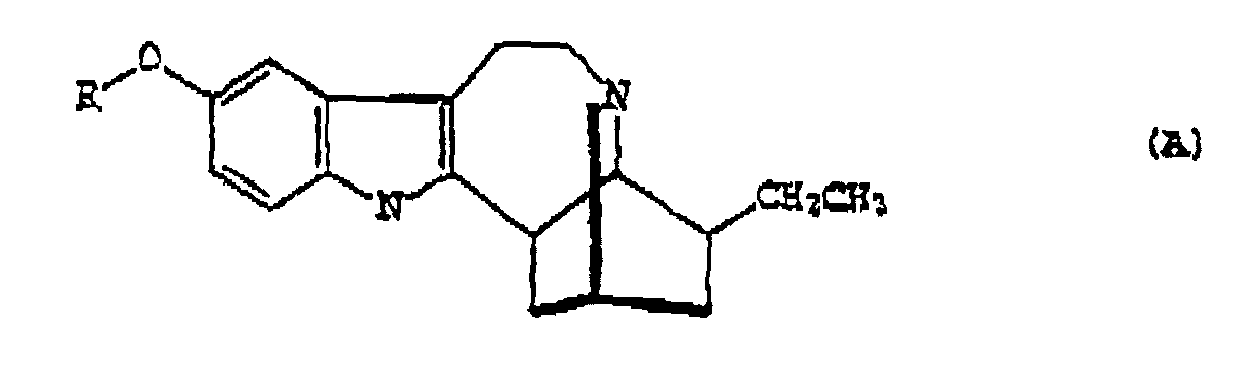
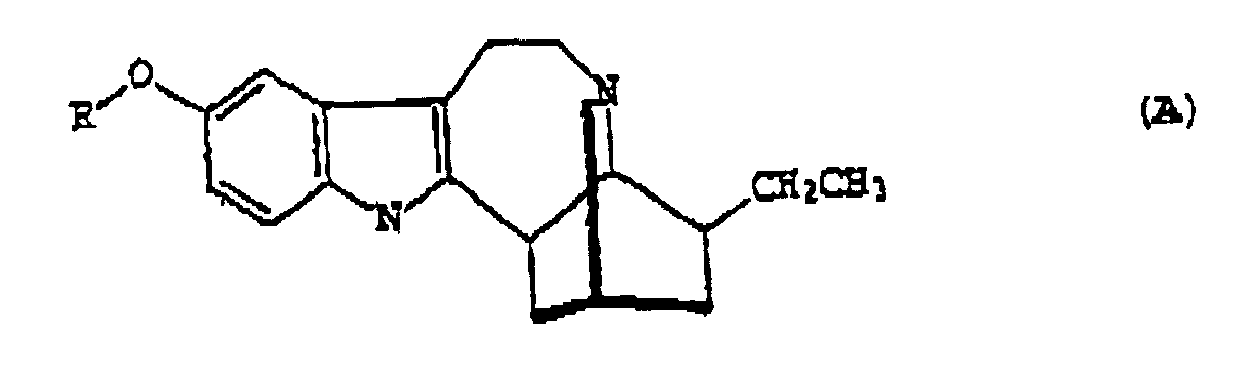
[0020] Accordingly, in a first aspect of the present invention, there is provided a use of a noribogaine compound of the formula (A) below, or a salt thereof with a pharmaceutically accpetable of a medicament for treating chemical dependency in a mammal,
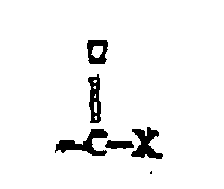
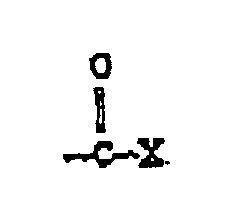
wherein R is hydrogen or a hydrolyzable group of the formula:
wherein x is an unsubstituted C1-C12 group or a C1-C12 group substituted by lower alkyl or lower alkoxy groups, wherein said noribogaine compound having said hydrolysable group hydrolyzes in vivo to form 12-hydroxy ibogamine.
Brief Description of the Drawings
[0021]
Figure 1 is a graphical plot of ibogaine pharmacokinetics in a human as a function of blood concentration versus time.
Figure 2 is a graphical plot of noribogaine (12-hydroxy ibogamine) pharmacokinetics in a human as a function of blood concentration versus time.
Best Mode for Carrying out the Invention
[0022] The present invention is predicated upon the surprising discovery of a new class or noribogaine compounds which have a greater and longer lasting activity in mammals than ibogaine for reducing craving for addictive substances, and treating chemical dependency.
[0023] In accordance with the present invention, it has been surprisingly discovered that noribogaine, a metabolite of ibogaine, and certain hydrolyzable esters of noribogaine have a much longer lasting effect than ibogaine. Thus, by administering the compounds of the present invention and compositions containing the same, a prolonged anti-craving effect may be obtained in mammals.
[0024] Generally, the present invention provides uses of compounds of the formula:
wherein R is hydrogen or a hydrolyzable hydrolyzable ester of from 1 to 12 carbons. Such compounds may be administered either as single compounds, mixtures of compounds or as composition for reducing craving in mammals and/or treating chemical dependency.
[0025] Generally, in the above formula, R is hydrogen or a group of the formula:
wherein X is a C1-C12, group, which is unsubstituted or substituted. For example, X may be a linear alkyl group such as methyl, ethyl, n-propyl, n-butyl, n-pentyl, n-hexyl, n-heptyl, n-octyl, n-nonyl, n-decyl, n-undecyl or n-dodecyl, or a branched alkyl group, such as i-propyl or sec-butyl. Also, X may be a phenyl group or benzyl group, either of which may be substituted with lower alkyl groups or lower alkoxy groups. Generally, the lower alkyl and/or alkoxy groups have from 1 to 6 carbons. For example, the group R may be acetyl, propionyl or benzoyl. However, these groups are only exemplary.
[0026] Generally, for all groups X, they may either be unsubstituted or substituted with lower alkyl or lover alkoxy groups. For example, substituted x may be o-, m- or p-methyl or methoxy benzyl groups.
[0027] The compounds used in the present invention specifically include all those of the formula (A) which in includes 12-hydroxy-ibogamine or those compounds which are hydrolyzed in vivo in mammals to form 12-hydroxy ibogamine.
[0029] Furthermore, the compounds of the present invention may be used either in the free base form or in the form of a pharmaceutically acceptable acid addition salt, such as, for example, the hydrochloride, hydrobromide, sulfate or phosphate salt.
[0030] The compounds used in the present invention may be made in several ways. For example, 12-hydroxy ibogamine (noribogaine) may be synthesized by o-demethylation of ibogaine. This may be effected, for example, by reacting ibogaine with boron tribromide/methylene chloride at room temperature and isolating and purifying the product using known methodologies.
[0031] From noribogaine, any of the hydrolyzable esters of the present invention may be synthesized by reacting noribogaine with an appropriate anhydride or acyl chloride with or without a catalyst, such as pyridine. For example, 12-hydroxy ibogamine can be reacted with acetic anhydride in the presence of pyridine catalyst to yield 12-acetoxyibogamine. This specific example may be modified by using the appropriate anhydride or acyl chloride to form any of the present esters. The anhydrides and/or acyl chlorides so used are all either known compounds or can be synthesized from known compounds using known reactions.
[0033] In accordance with the present invention, any single compound or mixture of compounds may be administered to a mammal in the amounts described in any one of U.S. Patent Nos. 4,587,243; 4,857,523, 4,499,076 5,026,697 or 5,152,994. Moreover, administration thereof may be from one to three times daily depending upon the need of the patient mammal to reduce craving for the substance of interest.
[0034] Generally, the present compounds or mixtures thereof are administered in an amount of from 0.01 mg to 100 mg per kg of body weight per day. The precise amount administered will vary as needed.
[0035] The medicament for treating drug dependency in mammals generally contain one or more of the compounds of the present invention in combination with a pharmaceutically acceptable carrier. Other excipients may also be added.
[0036] In accordance with the present invention, the compounds or compositions thereof may be administered in any manner, such as orally, intravenously, intramuscularly or interperitoneally. The present compositions may be compounded in any conventional manner using conventional excipients. For example, the present compositions may be compounded as capsules, tablets, pills, powders or solutions. Additionally, excipients, such as conventional binders and/or fillers, may be used.
[0037] Furthermore, the excipient and carrier formulations used for the present compositions may be those as described, for example, in U.S. Patent Nos. 5,192,746 and 5,132,408. However, any conventional and pharmaceutically acceptable excipient may be used.
[0038] Generally, any means of formulating the present compounds or compositions may be used. For example, any suitable solid or liquid formulation may be used. Moreover, any conventional time-release formulation may be used with the compounds and solid compositions of the present invention.
[0039] Furthermore, the present compounds or compositions containing the same may be administered in any manner, such as, for example, orally, by suppository or by rectal infusion in the same manner as described in any of U.S. Patent Nos. 4,587,243, 4,857,523, 4,499,096, 5,026,697 and 5,152.994.
[0040] In accordance with the present invention, the present invention may be used to treat chemical dependency in mammals for any substance which has the tendency to lead to such dependency. Such substances may be, but are not limited to, heroin, cocaine, PCP, marijuana, alcohol, nicotine, methamphetamine, opium, methadone, hycodan, morphine and caffeine. Generally, the present compounds are administered in an amount of 0.01 mg to 100 mg per kg of body weight per day. The compounds may be administered from one to up to several times per day, if necessary.
[0041] Of course, the chemical dependency treated in accordance with the present invention is not limited to heroin, cocaine, PCP, marijuana, alcohol, nicotine and caffeine. Rather, any type of chemical dependency may be treated thereby. As used herein, the term "chemical dependency" is intended to mean dependency of a mammal upon any single chemical, mixtures of chemicals, natural or synthetic product or mixture of all of the above which tend to promote repeated self-administration thereof. The mammals treated herein may be humans, cats, dogs, livestock or laboratory animals, such as rats, mice or rabbits, for example.
[0042] Furthermore, although the present invention is generally used in conjunction with humans, any mammals, such as dogs, cats, livestock or poultry may be treated as needed with adjustments being made for differences in body weight.
[0043] Quite surprisingly, in accordance with the present invention, it has been discovered that the present compounds, when administered, have a much longer lasting effect in reducing chemically dependent cravings in the mammalian body than ibogaine.
[0044] Furthermore, in accordance with the present invention, the long plasma half-life of the present compounds has been correlated with the long duration of psychoactive effects in mammals. Generally, the plasma half-life of the present compounds in mammals is from about 2 to 8 hours. However, the present compounds have been detected in human plasma and urine samples at four weeks post administration.
[0045] Finally, it is noted that for the sake of convenience, the compounds of the present invention may also be referred to as "noribogaine" or derivatives thereof.
[0046] In order to more fully describe the present invention, reference will now be made to certain examples which are provided solely for illustration.
EXAMPLE
[0047] An amount of ibogaine was administered to a human patient, and the plasma concentration of both ibogaine and a metabolite thereof, 12-hydroxy ibogamine, were observed as a function of time.
[0048] Figure 1 illustrates the result of administering a certain dosage of ibogaine to a human patient, where the plasma concentration of ibogaine is measured over time. In essence, a peak plasma concentration of about 1,100 ng/ml is observed at administration. It is also notable that at about 11 hours after ibogaine administration, plasma concentration of ibogaine diminished to less than 400 ng/ml. After about 24 hours, plasma concentration diminished to less than 200 ng/ml. Thus, ibogaine is rather quickly eliminated by the patient.
[0049] By contrast, Figure 2 illustrates the variation of noribogaine plasma concentration with time as a metabolite from the same ibogaine administration described above. In essence, a peak plasma concentration of noribogaine of about 590 ng/ml was reached only after about 11 hours from administration. Thereafter, even at 24 hours, a plasma concentration of greater than 500 ng/ml was observed. Thus, noribogaine exhibits a much longer plasma half-life than ibogaine and, thus, is much longer lasting in effect.
[0050] The present invention may also be advantageously used with laboratory animals in assessing the addictive potential in humans of present and prospective future addictive agents. As such, conventional methods of testing may be used in conjunction with the compounds and compositions of the present invention.
1. Use of a noribogaine compound of the formula (A) below, or a salt thereof with a pharmaceutically
acceptable salt, optionally in combination with a pharmaceutically acceptable carrier,
in the manufacture of a medicament for treating chemical dependency in a mammal,
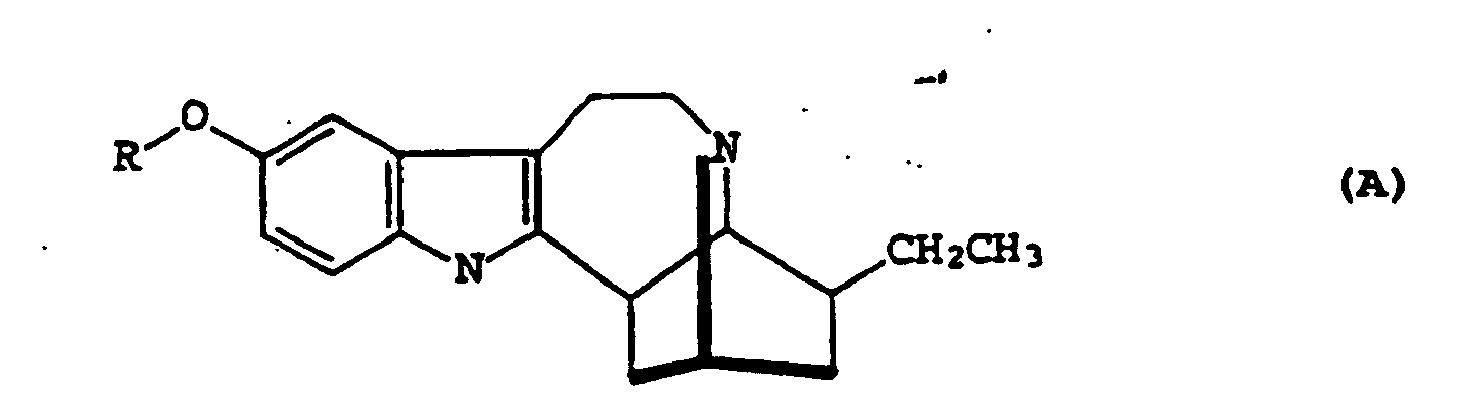
wherein R is hydrogen or a hydrolyzable group of the formula:
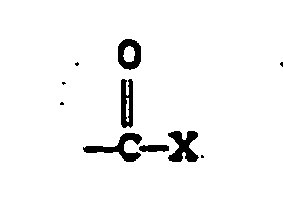
wherein X is an unsubstituted C1-C12 group or a C1-C12 group substituted by C1-6 alkyl or C1-6 alkoxy groups, wherein said noribogaine compound having said hydrolyzable group hydrolyses in vivo to form 12-hydroxy ibogamine.
wherein R is hydrogen or a hydrolyzable group of the formula:
wherein X is an unsubstituted C1-C12 group or a C1-C12 group substituted by C1-6 alkyl or C1-6 alkoxy groups, wherein said noribogaine compound having said hydrolyzable group hydrolyses in vivo to form 12-hydroxy ibogamine.
2. Use of a noribogaine compound of the formula (A) below, or a salt thereof with a pharmaceutically
acceptable salt, optionally in combination with a pharmaceutically acceptable carrier,
in the manufacture of a medicament for treating drug dependency in a mammal,
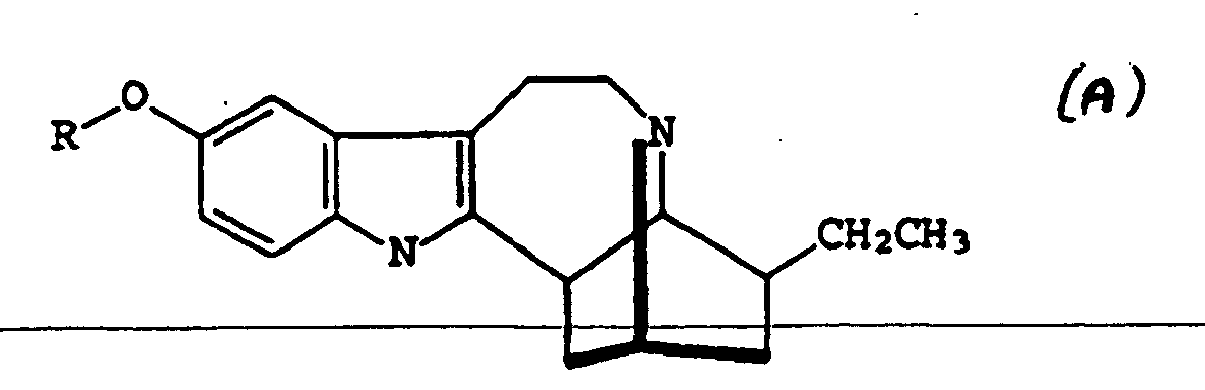
wherein R is hydrogen or a hydrolyzable group of the formula:
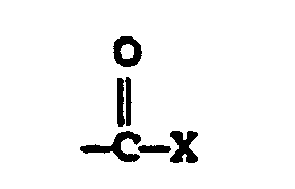
wherein X is an unsubstituted C1-C12 group or a C1-C12 group substituted by C1-6 alkyl or C1-6 alkoxy groups, wherein said noribogaine compound having said hydrolyzable group hydrolyses in vivo to form 12-hydroxy ibogamine.
wherein R is hydrogen or a hydrolyzable group of the formula:
wherein X is an unsubstituted C1-C12 group or a C1-C12 group substituted by C1-6 alkyl or C1-6 alkoxy groups, wherein said noribogaine compound having said hydrolyzable group hydrolyses in vivo to form 12-hydroxy ibogamine.
3. The use of claim 1, or claim 2, wherein X is C1-C6 group.
4. The use of Claim 3, wherein X is methyl or ethyl.
5. The use of Claim 1, or claim 2 wherein R is benzoyl.
6. The use of Claim 1, or claim 2 wherein R is hydrogen.
7. The use of Claim 1, or claim 2 wherein said mammal is human.
8. The use of Claim 1, or claim 2 wherein said dependency is to a substance selected
from the group consisting of heroin, cocaine, alcohol, nicotine, amphetamine, methamphetamine,
opium, methadone, hycodan, morphine and caffeine.
9. The use of Claim 1, or claim 2 wherein said noribogaine compound is 12-hydroxy ibogamine.
10. The use of Claim 2, wherein withdrawal symptoms from the drug are reduced.
1. Utilisation d'un composé noribogaine selon la formule (A) ci-dessous, ou d'un sel
de celui-ci avec un sel acceptable sur le plan pharmaceutique, facultativement en
combinaison avec un support acceptable sur le plan pharmaceutique, dans la fabrication
d'un médicament destiné à traiter une chimiodépendance chez un mammifère,
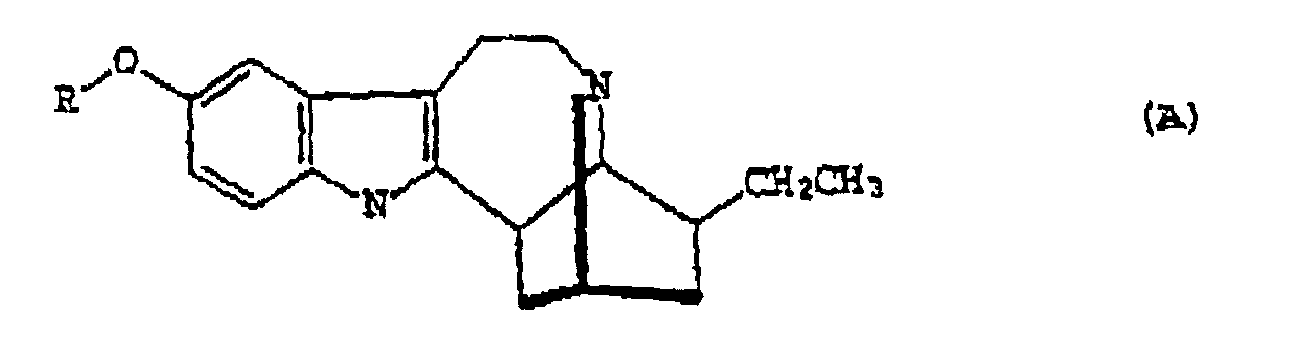
dans laquelle R est un hydrogène ou un groupement hydrolysable de formule :
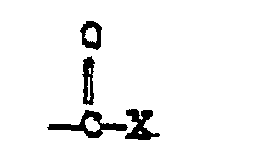
dans laquelle X est un groupement en C1 à C22 non substitué ou un groupement en C1 à C12 substitué par des groupements alkyle en C1 à C6 ou alcoxy en C1 à C6, où ledit composé noribogaine comportant ledit groupe hydrolysable s' hydrolyse in vivo pour former la 12-hydroxy ibogamine.
dans laquelle R est un hydrogène ou un groupement hydrolysable de formule :
dans laquelle X est un groupement en C1 à C22 non substitué ou un groupement en C1 à C12 substitué par des groupements alkyle en C1 à C6 ou alcoxy en C1 à C6, où ledit composé noribogaine comportant ledit groupe hydrolysable s' hydrolyse in vivo pour former la 12-hydroxy ibogamine.
2. Utilisation d'un composé noribogaine selon la formule (A) ci-dessous, ou d'un sel
de celui-ci avec un sel acceptable sur le plan pharmaceutique, facultativement en
combinaison avec un support acceptable sur le plan pharmaceutique, dans la fabrication
d'un médicament destiné à traiter une pharmacodépendance chez un mammifère,
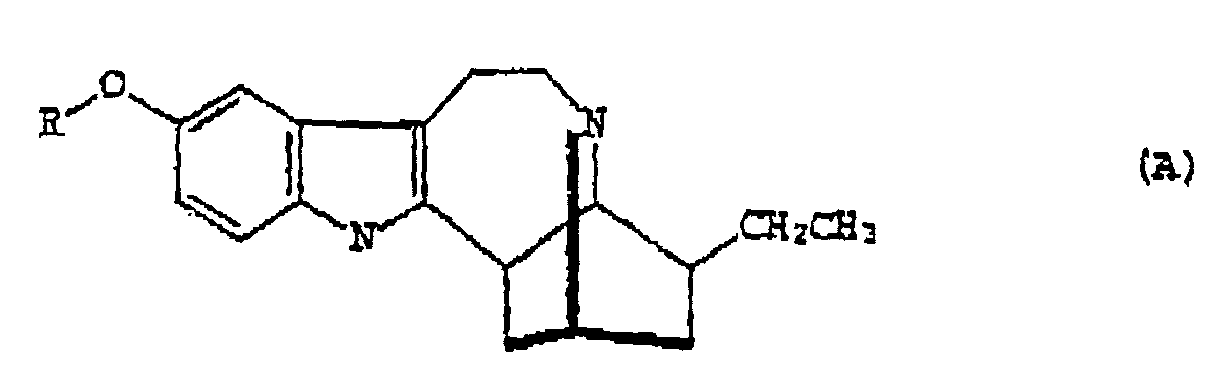
dans laquelle R est un hydrogène ou un groupement hydrolysable de formule :
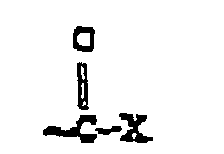
dans laquelle X est un groupement en C1 à C12 non substitué ou un groupement en C1 à C12 substitué par des groupements alkyle en C1 à C6 ou alcoxy en C1 à C6, où ledit composé noribogaine comportant ledit groupe hydrolysable s'hydrolyse in vivo pour former la 12-hydroxy ibogamine.
dans laquelle R est un hydrogène ou un groupement hydrolysable de formule :
dans laquelle X est un groupement en C1 à C12 non substitué ou un groupement en C1 à C12 substitué par des groupements alkyle en C1 à C6 ou alcoxy en C1 à C6, où ledit composé noribogaine comportant ledit groupe hydrolysable s'hydrolyse in vivo pour former la 12-hydroxy ibogamine.
3. Utilisation selon la revendication 1 ou la revendication 2, dans laquelle X est un
groupement en C2 à C6.
4. Utilisation selon la revendication 3, dans laquelle X est un méthyle ou un éthyle.
5. Utilisation selon la revendication 1 ou la revendication 2, dans laquelle R est un
benzoyle.
6. Utilisation selon la revendication 1 ou la revendication 2, dans laquelle R est un
hydrogène.
7. Utilisation selon la revendication 1 ou la revendication 2, dans laquelle ledit mammifère
est un humain.
8. Utilisation selon la revendication 1 ou la revendication 2, dans laquelle ladite dépendance
est à une substance choisie dans le groupe consistant en l'héroïne, la cocaïne, l'alcool,
la nicotine, une amphétamine, une méthamphétamine, l'opium, la méthadone, l'hycodan,
la morphine et la caféine.
9. Utilisation selon la revendication 1 ou la revendication 2, dans laquelle ledit composé
noribogaine est la 12-hydroxy ibogamine.
10. Utilisation selon la revendication 2, dans laquelle les symptômes de sevrage de la
drogue sont réduits.
1. Verwendung einer Norlbogain-Verbindung der unten stehenden Formel (A) oder eines Salzes
davon mit einem pharmazeutisch anwendbaren Salz, wahlweise in Verbindung mit einem
pharmazeutisch anwendbaren Träger, bei der Herstellung eines Medikamentes zur Behandlung
chemischer Abhängigkeit bei einem Säugetier,
worin R Wasserstoff ist oder eine hydrolysierbare Gruppe der Formel:
worin X eine nicht substituierte C1-C12-Gruppe oder eine durch C1-5-Alkyl- oder C1-6-Alkoxy-Gruppen substituierte C1- C12-Gruppe ist, wobei die Noribogain-Verbindung mit der hydrolysierbaren Gruppe in vivo zu 12-Hydroxyibogamin hydrolysiert wird.
worin R Wasserstoff ist oder eine hydrolysierbare Gruppe der Formel:
worin X eine nicht substituierte C1-C12-Gruppe oder eine durch C1-5-Alkyl- oder C1-6-Alkoxy-Gruppen substituierte C1- C12-Gruppe ist, wobei die Noribogain-Verbindung mit der hydrolysierbaren Gruppe in vivo zu 12-Hydroxyibogamin hydrolysiert wird.
2. Verwendung einer Noribogain-Verbindung der unten stehenden Formel (A) oder eines Salzes
davon mit einem pharmazeutisch anwendbaren Salz, wahlweise in Verbindung mit einem
pharmazeutisch anwendbaren Träger, bei der Herstellung eines Medikaments zur Behandlung
von Drogenabhängigkeit bei einem Säugetier,
worin R Wasserstoff ist oder eine hydrolysierbare Gruppe der Formel:
worin X eine nicht substituierte C1-C12-Gruppe oder eine durch C1-8-Alkyl- oder C1-6-Alkoxy-Gruppen substitulerte C1- C12-Gruppe ist, wobei die Noribogain-Verbindung mit der hydrolysierbaren Gruppe in vivo zu 12-Hydroxyibogamin hydrolysiert wird.
worin R Wasserstoff ist oder eine hydrolysierbare Gruppe der Formel:
worin X eine nicht substituierte C1-C12-Gruppe oder eine durch C1-8-Alkyl- oder C1-6-Alkoxy-Gruppen substitulerte C1- C12-Gruppe ist, wobei die Noribogain-Verbindung mit der hydrolysierbaren Gruppe in vivo zu 12-Hydroxyibogamin hydrolysiert wird.
3. Die Verwendung gemäß Anspruch 1 oder Anspruch 2, wobei X eine C1-C6-Gruppe ist.
4. Die Verwendung gemäß Anspruch 3, wobei X Methyl oder Ethyl ist.
5. Die Verwendung gemäß Anspruch 1 oder Anspruch 2, wobei R Benzoyl ist
6. Die Verwendung gemäß Anspruch 1 oder Anspruch 2, wobei R Wasserstoff ist.
7. Die Verwendung gemäß Anspruch 1 oder Anspruch 2, wobei das Säugetier ein Mensch ist.
8. Die Verwendung gemäß Anspruch 1 oder Anspruch 2, wobei die Abhängigkeit von einer
Substanz aus der Gruppe umfassend Heroin, Kokain, Alkohol, Nikotin, Amphetamin, Methamphetamin,
Opium, Methadon, Hycodan, Morphium und Koffein besteht.
9. Die Verwendung gemäß Anspruch 1 oder Anspruch 2, wobei besagte Noribogain-Verbindung
12-Hydroxyibogamin ist.
10. Die Verwendung gemäß Anspruch 2, wobei Entzugssymptome durch die Droge reduziert werden.