|
(11) | EP 0 804 510 B1 |

| (12) | EUROPEAN PATENT SPECIFICATION |
|
|
| (54) |
MONOAZO PIGMENTS MONOAZOPIGMENTE PIGMENTS MONOAZOIQUES |
|
|
|||||||||||||||||||||||||||||||
| Note: Within nine months from the publication of the mention of the grant of the European patent, any person may give notice to the European Patent Office of opposition to the European patent granted. Notice of opposition shall be filed in a written reasoned statement. It shall not be deemed to have been filed until the opposition fee has been paid. (Art. 99(1) European Patent Convention). |
[0001] This invention relates to monoazo pigments and more particularly to orange pigments of the azo pyrazolone series.
J. of Chromatography, 665, 197 (1994) discloses certain sulphonated azopyrazolones and the corresponding sodium and potassium salts.
European patent EP 0 225 553 discloses certain isomeric azopyrazolones as the calcium salts.
[0002] The use of pigments for the colouring of plastics materials is well known. For the production of orange colorations, it has been traditional to employ inorganic pigments such as cadmiums, lead chromes and molybdate oranges but these are now being phased out because of environmental pressures. Organic pigments that have been proposed as replacements for these inorganic materials have not been found entirely satisfactory in all of the major polymer types, especially in respect of their heat stability.
[0003] It has now been found that certain organic pigments of the azo pyrazolone series are characterised by excellent heat stability, light stability, and bleed fastness when used in a wide range of plastics materials.
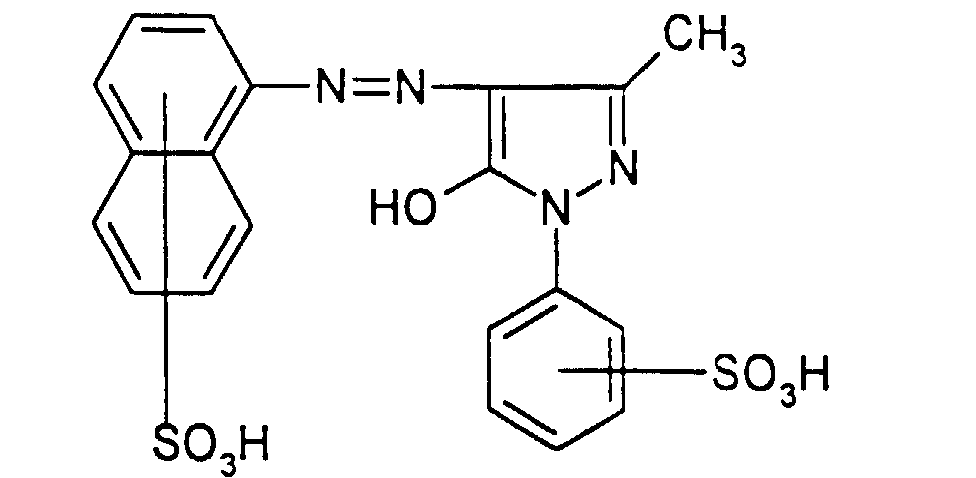
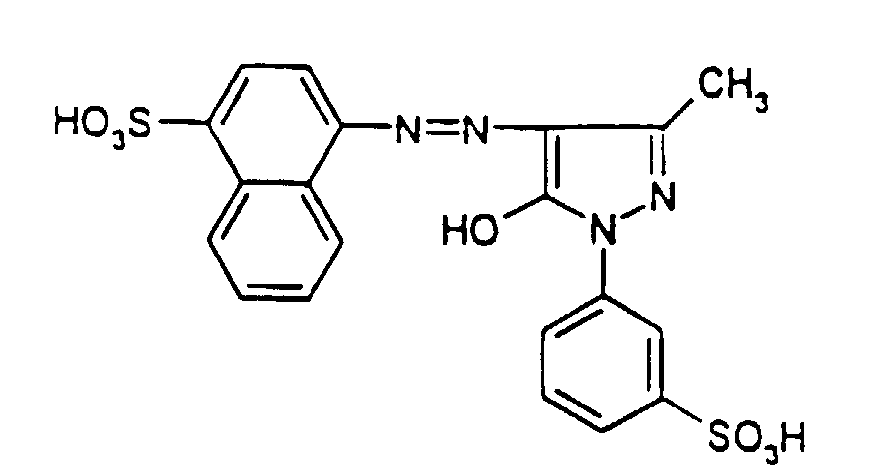
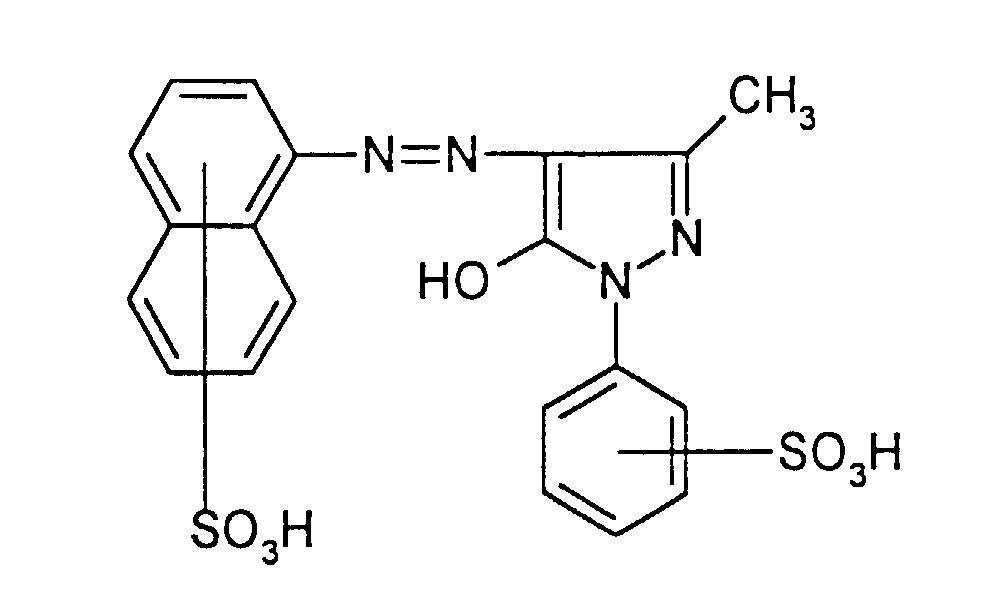
[0004] Accordingly, the invention provides an azo pyrazolone compound of the formula :
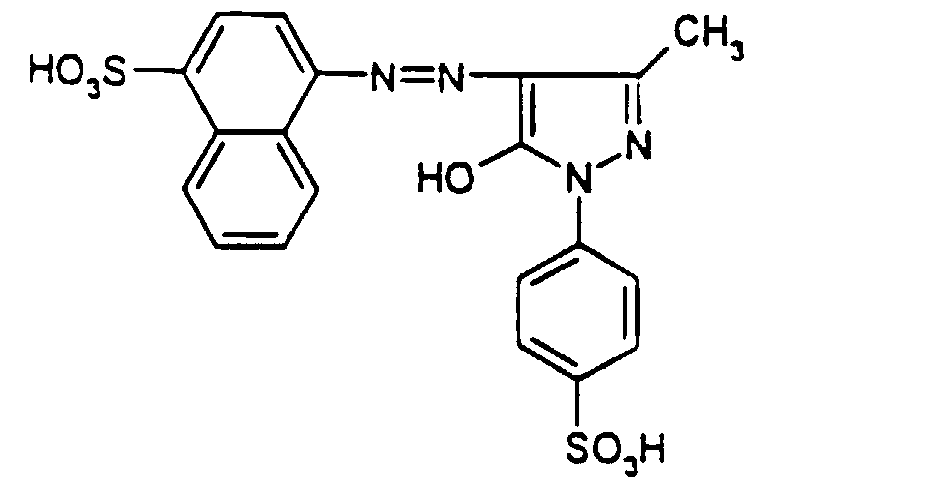
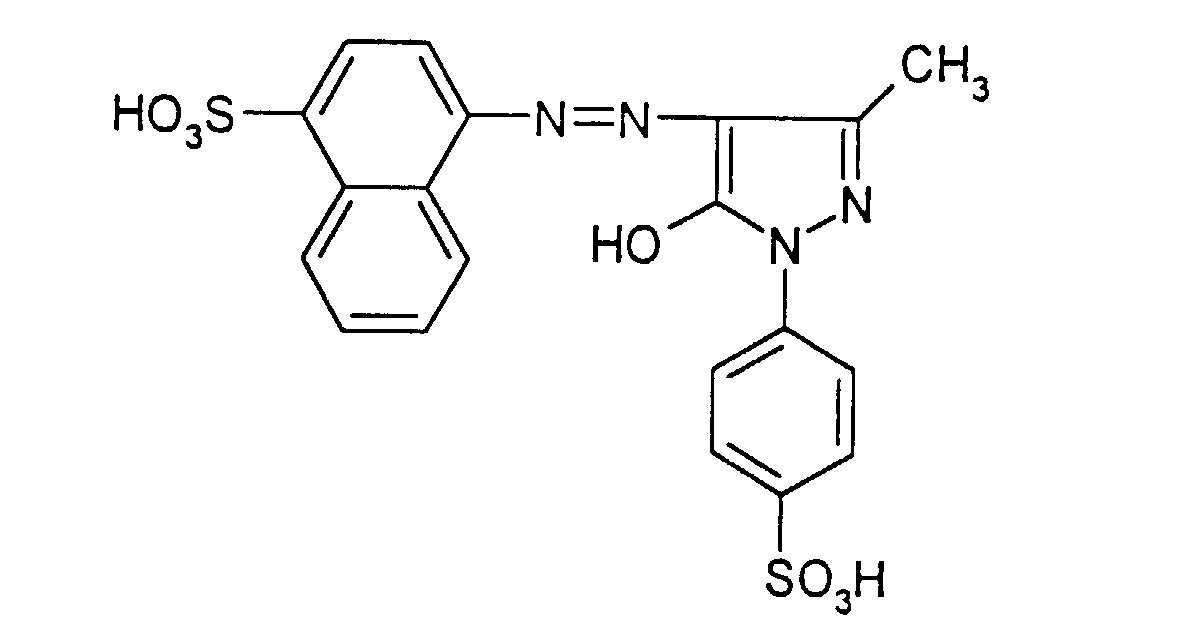
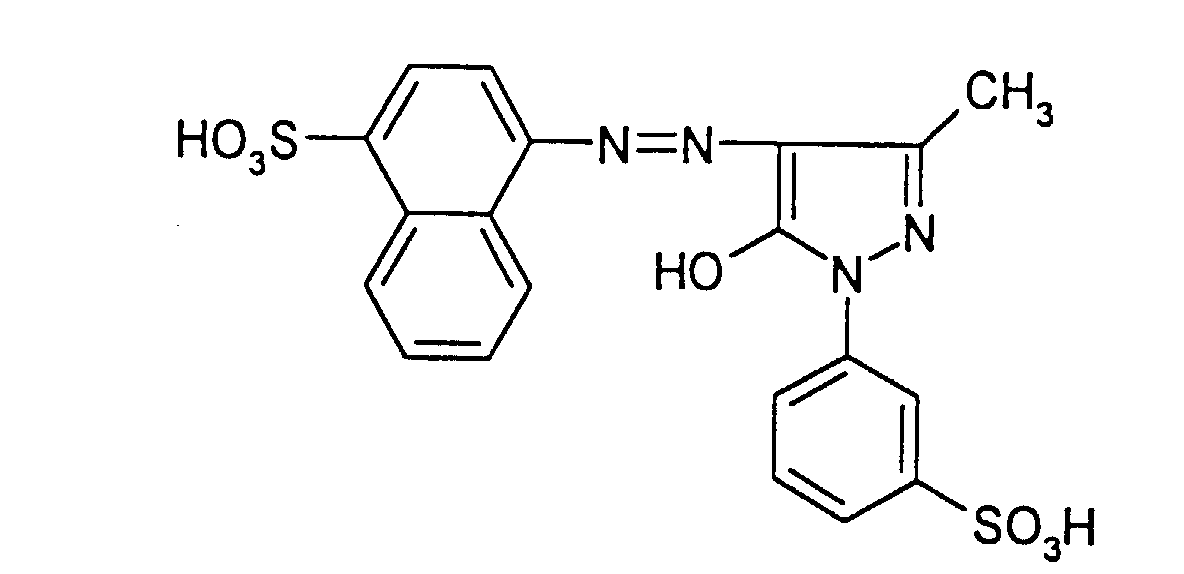
in the form of a salt except for
and
in the form of their sodium and potassium salts.
[0005] The salts of the compounds of Formula 1 may exhibit polymorphism and, where this is the case, the various polymorphic forms are regarded as within the scope of the invention.
[0006] Particularly advantageous compounds of Formula 1 in terms of superior heat and light stability are compounds in which the sulphonic acid group of the naphthalene nucleus is present in the 4- or 6-position relative to the azo link and the sulphonic acid group of the benzene ring is present in the 3- or 4-position relative to the pyrazolyl group.
[0007] The salt of the azo pyrazolone compound of Formula 1 may be a metal salt, for example, an alkali metal, alkaline earth metal or heavy metal salt, or a salt of a nitrogenous base, for example a primary, secondary or tertiary amine or quaternary ammonium salt, particularly useful pigments being the salts of barium, strontium, manganese, magnesium, sodium and, especially, calcium.
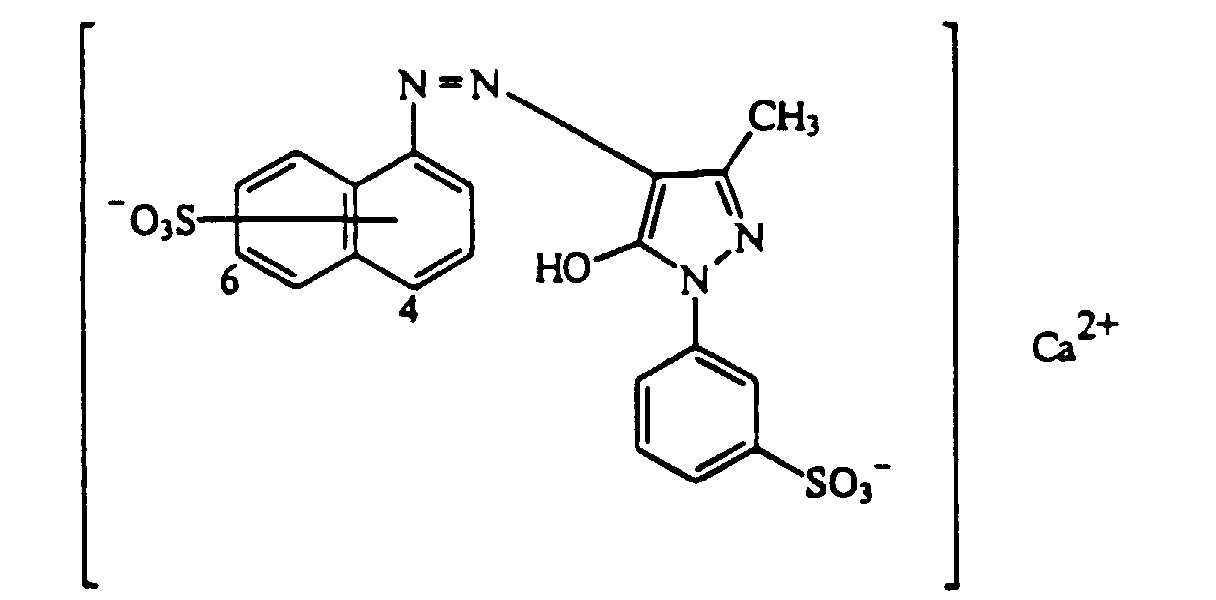
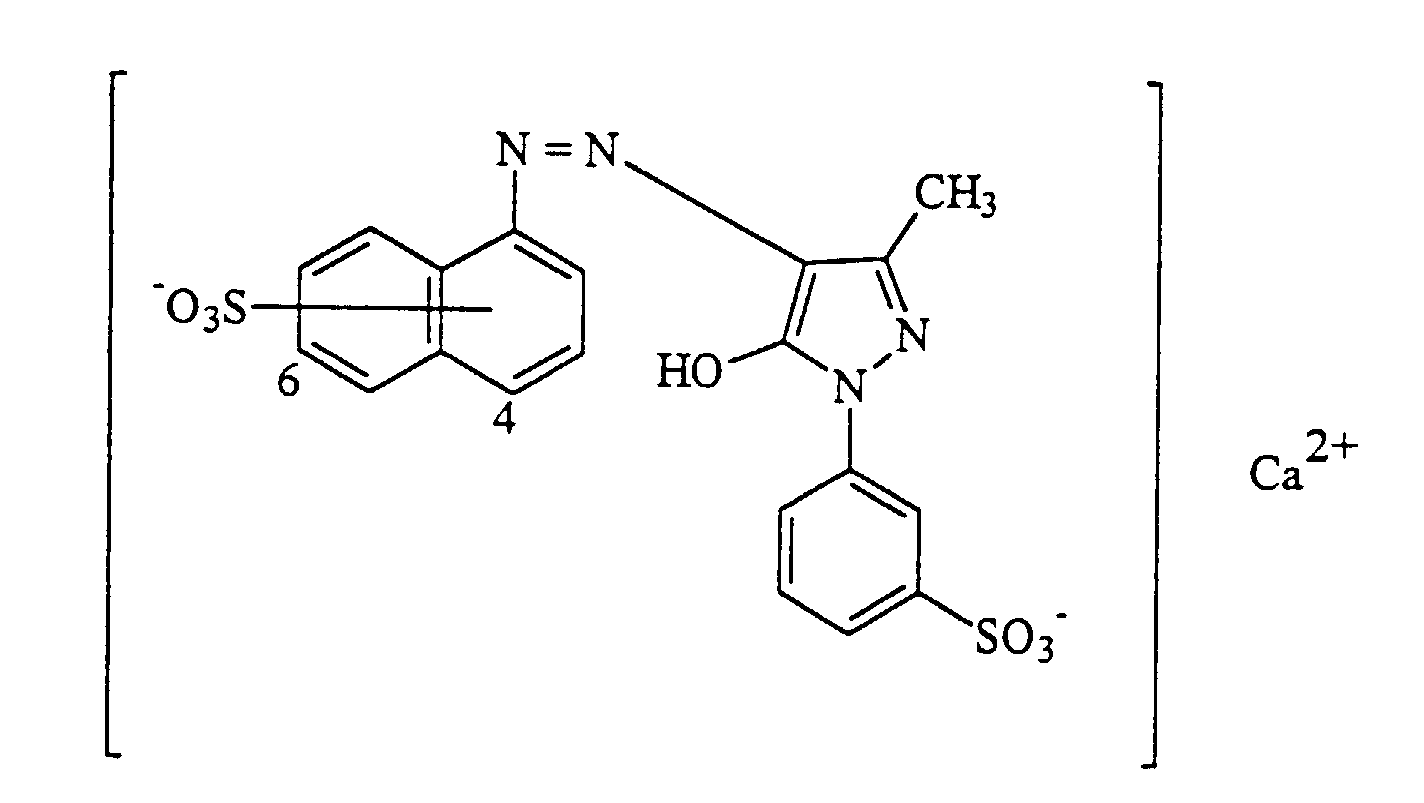
[0008] The most preferred compounds of the invention have the formula :
wherein the sulphonate group of the naphthalene nucleus is in the 4- or 6-position relative to the azo group.
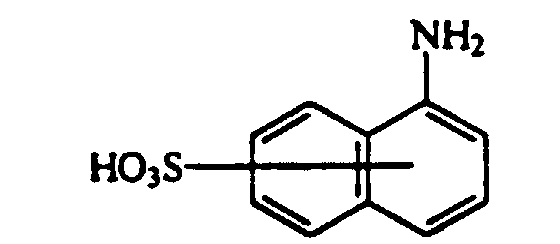
[0009] The azo pyrazolone compounds of the invention may be prepared by diazotising a naphthylamine sulphonic acid of the formula :
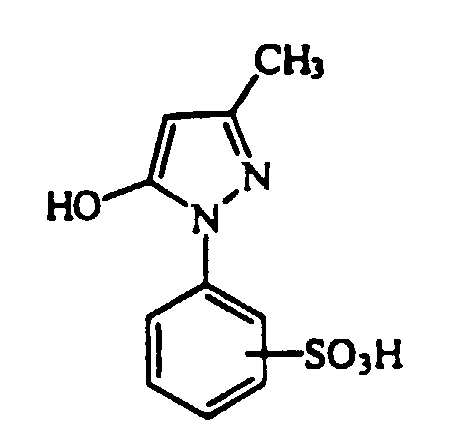
and coupling the resulting diazo compound with a sulphonated 3-methyl-1-phenylpyrazol-5-one of the formula :
and converting the resulting monoazo compound to the desired salt form.
[0010] The diazotisation and coupling reactions may be performed in a conventional manner appropriate to the classes of compound being used.
[0011] The preferred naphthylamine sulphonic acids for use in preparing the compounds of the invention are 1-naphthylamine-4-sulphonic acid and 1-naphthylamine-6-sulphonic acid whilst the preferred coupling components are 3-methyl-1-(4'-sulphophenyl)pyrazol-5-one and, especially 3-methyl-1-(3'-sulphophenyl)pyrazol-5-one.
[0012] It is often convenient to prepare the compound of Formula 1 in the form of a sodium salt and then convert the sodium salt to, for example, an alkaline earth or heavy metal lake by adding the required amount of a water-soluble alkaline earth metal or heavy metal salt, usually in the form of an aqueous solution.
[0013] Surface active agents and/or organic solvents may optionally be present during the synthesis of the compound of Formula 1 and/or during precipitation of the pigment.
[0014] The compounds of the invention, which may be subjected to conventional milling operations and/or thermal treatments in order to provide products of the desired particle size and/or crystal structure, are useful orange pigments which may be used in conventional manner. In particular, they may be used alone or in conjunction with other pigments for the coloration of plastics materials, for example polyvinyl chloride, polyolefins, polystyrene and ABS where they exhibit excellent properties. The compounds of the invention are also valuable for the pigmentation of surface coatings.
Example 1
[0016] 1-Naphthylamine-6-sulphonic acid (4.46g), de-ionised water (50ml) and hydrochloric acid (5.1 ml) were stirred together in a vessel surrounded by an ice-bath, followed by sufficient 48% sodium hydroxide solution to form a solution alkaline to Brilliant Yellow paper. The solution was then cooled to 0-5°C and a further amount (5.1 ml) of hydrochloric acid was added. A solution of sodium nitrite (1.56g) in de-ionised water (5ml) was added all at once and the mixture was stirred at 0-5°C for 30 mins. Excess nitrite was then removed by adding a few ml of 10% sulphamic acid solution.
[0017] 3-Methyl-1-(3'-sulphophenyl) pyrazol-5-one (5.4g) was added to de-ionised water (50ml) and the pH was adjusted to 6.5 by the addition of 48% sodium hydroxide solution. The solution was then stirred at 0-5°C and the diazo suspension obtained as described above was added over 10 mins whilst maintaining the pH at 6.5 by the addition of 48% sodium hydroxide solution. The coupling mixture was then stirred overnight at room temperature.
[0018] The reaction mixture was then heated to 90°C and a solution of calcium chloride (32g CaCl2 in 40ml water) was added all at once and the mixture stirred for a further 3 hours at 90°C. The mixture was then filtered hot and the product was washed chloride-free with de-ionised water (1000ml) and dried giving 7.3g of an orange solid.
Example 2
[0019] 1-Naphthylamine-4-sulphonic acid, sodium salt (6.14g), deionised water (50ml) and hydrochloric acid (5.1 ml) were stirred together in a vessel surrounded by an ice bath, followed by sufficient 48% sodium hydroxide solution to form a solution alkaline to Brilliant Yellow paper. The solution was then cooled to 0-5°C and a further amount (5.1 ml) of hydrochloric acid was added. A solution of sodium nitrite (1.56g) in deionised water (5ml) was added all at once and the mixture was stirred at 0-5°C for 30 mins. Excess nitrite was then removed by adding a few ml of 10% sulphamic acid solution.
[0020] 3-Methyl-1-(3'-sulphophenyl)pyrazol-5-one (6.08g) was added to deionised water (50ml) and the pH was adjusted to 6.5 by the addition of 48% sodium hydroxide solution. The solution was then stirred at 0-5°C and the diazo suspension obtained as described above was added over 10 mins whilst maintaining the pH at 6.5 by the addition of 48% sodium hydroxide solution. The coupling mixture was then stirred overnight at room temperature.
[0021] The reaction mixture was then heated to 90°C and a solution of calcium chloride (32g CaCl2 in 40ml water) was added all at once and the mixture stirred for a further 3 hours at 90°C. The mixture was then filtered hot and the product was washed chloride-free with deionised water (1000ml) and dried giving 8.4g of a orange solid.
Example 3
[0022] 1-Naphthylamine-4-sulphonic acid, sodium salt (5.74g), deionised water (50ml) and hydrochloric acid (5.1 ml) were stirred together in a vessel surrounded by an ice bath, followed by sufficient 48% sodium hydroxide solution to form a solution alkaline to Brilliant Yellow paper. The solution was then cooled to 0-5°C and a further amount (5.1 ml) of hydrochloric acid was added. A solution of sodium nitrite (1.56g) in deionised water (5ml) was added all at once and the mixture was stirred at 0-5°C for 30 mins. Excess nitrite was then removed by adding a few ml of 10% sulphamic acid solution.
[0023] 3-Methyl-1-(4'-sulphophenyl)pyrazol-5-one (5.6g) was added to deionised water (50ml) and the pH was adjusted to 6.5 by the addition of 48% sodium hydroxide solution. The solution was then stirred at 0-5°C and the diazo suspension obtained as described above was added over 10 mins whilst maintaining the pH at 6.5 by the addition of 48% sodium hydroxide solution. The coupling mixture was then stirred overnight at room temperature.
[0024] The reaction mixture was then heated to 90°C and a solution of calcium chloride (32g CaCl2 in 40ml water) was added all at once and the mixture stirred for a further 3 hours at 90°C. The mixture was then filtered hot and the product was washed chloride-free with deionised water (1000ml) and dried giving 3.4g of an orange solid.
1. An azo pyrazolone compound of the formula :
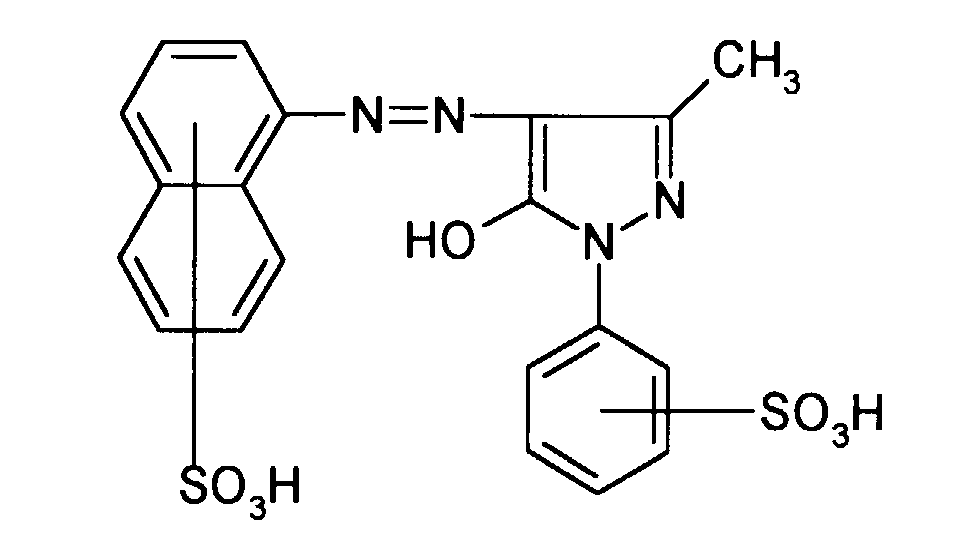
in the form of a salt except for
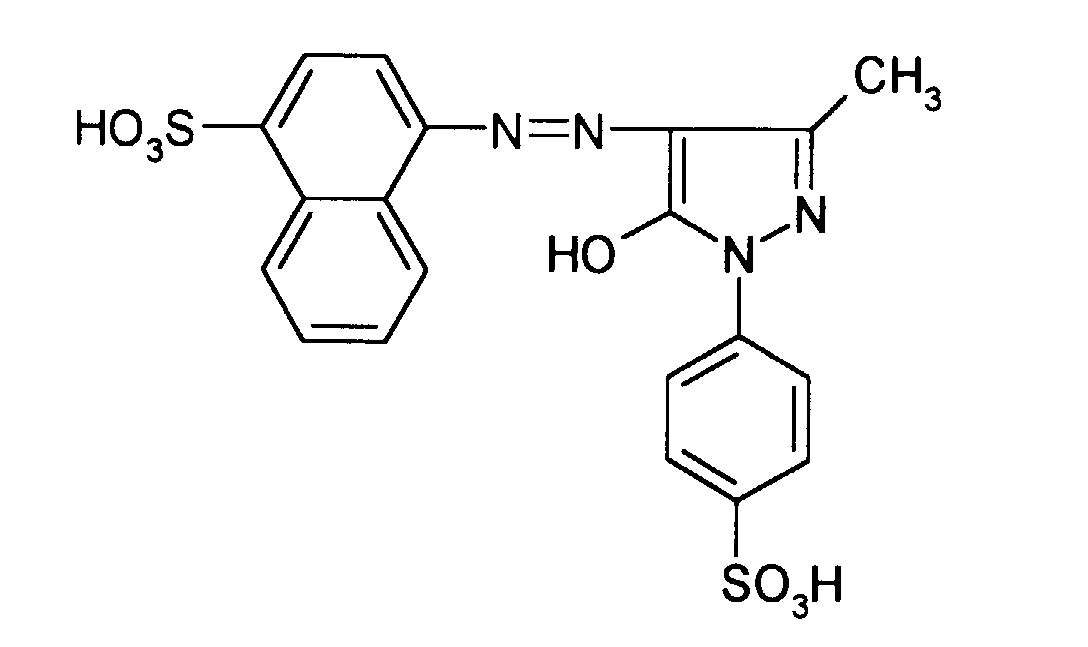
and
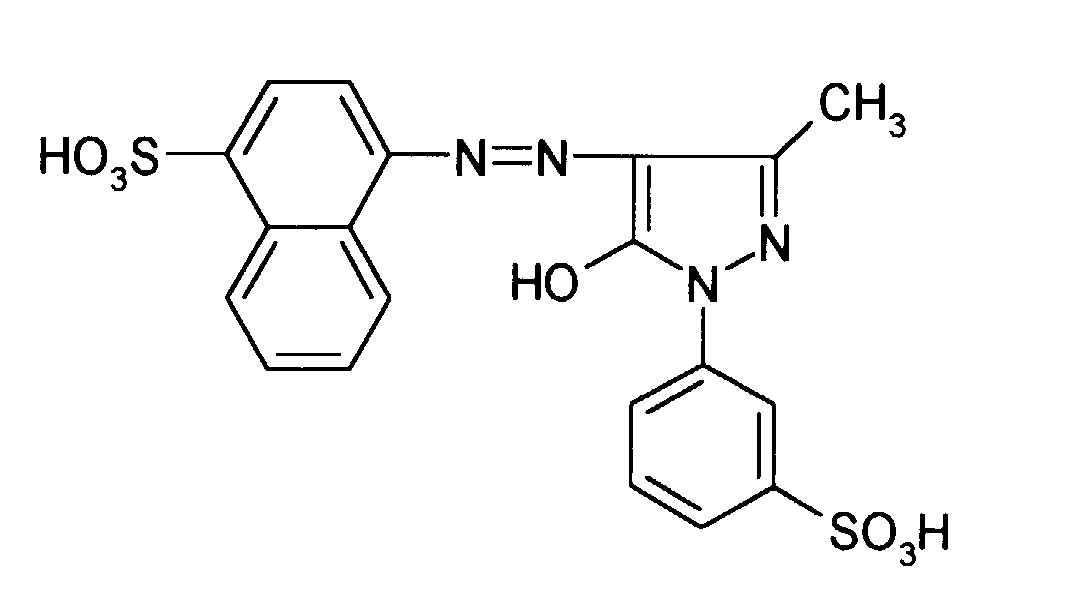
in the form of their sodium and potassium salts.
in the form of a salt except for
and
in the form of their sodium and potassium salts.
2. A compound according to claim 1 wherein the sulphonic acid group in the naphthalene
nucleus is in the 4- or 6- position relative to the azo link and the sulphonic acid
group in the benzene ring is in the 3- or 4-position relative to the pyrazolyl group.
3. A compound according to claim 1 or claim 2 wherein the salt is a metal salt or a salt
of a nitrogenous base.
4. A compound according to claim 3 wherein the salt is a calcium salt.
5. A compound according to claim 4 having the formula :
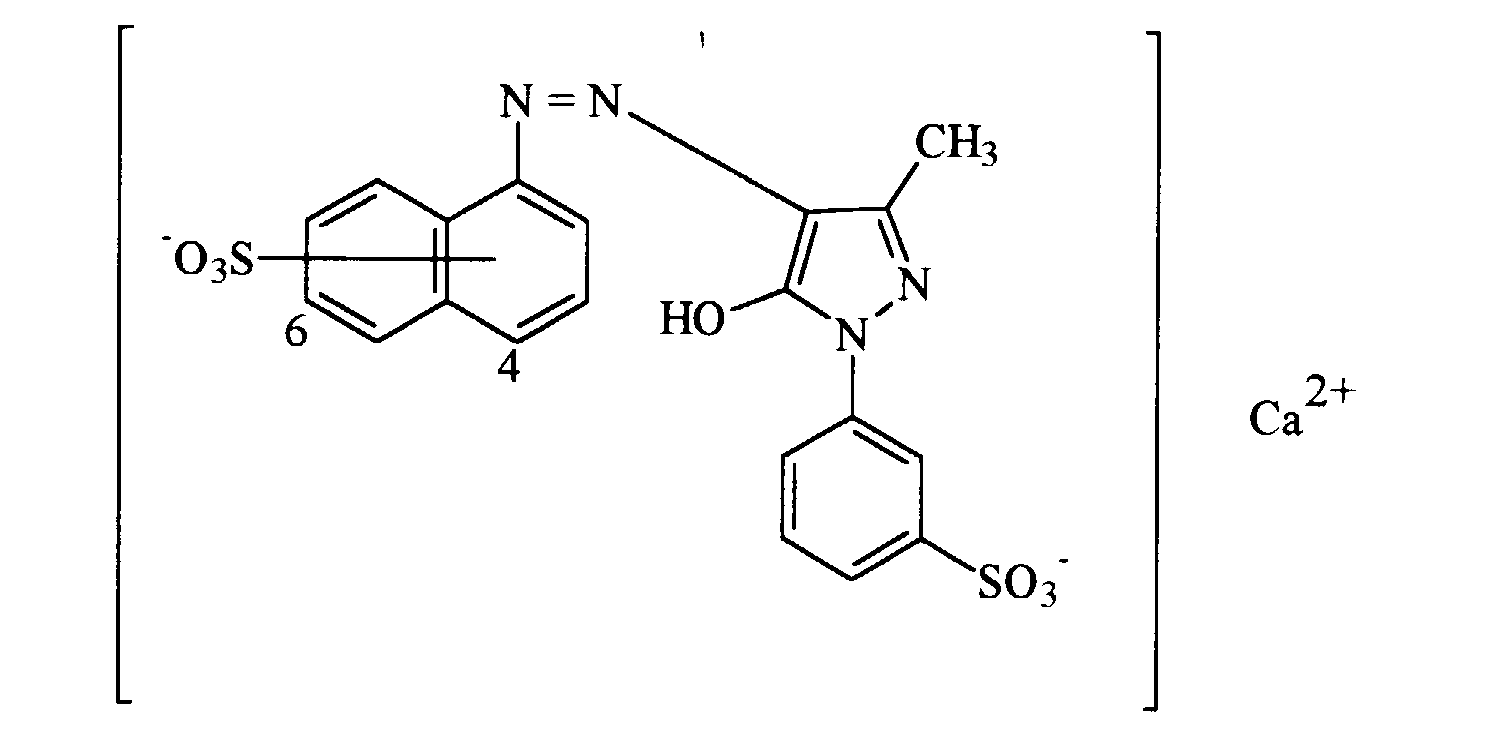
wherein the sulphonate group in the naphthalene nucleus is in the 4- or 6-position relative to the azo link.
wherein the sulphonate group in the naphthalene nucleus is in the 4- or 6-position relative to the azo link.
6. A method for the preparation of an azo pyrazolone compound as defined in claim 1 which
comprises diazotising a naphthylamine sulphonic acid of the formula :
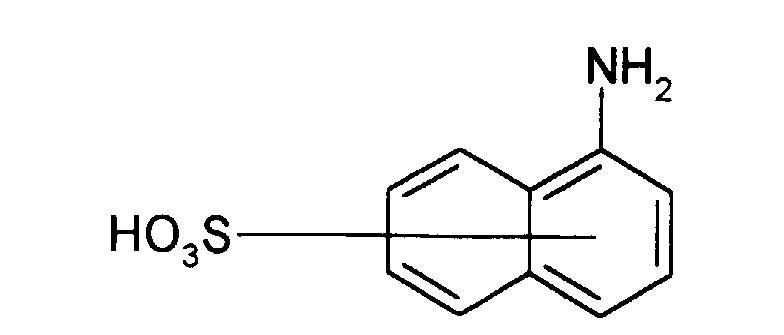
and coupling the resulting diazo compound with a sulphonated 3-methyl-1-phenylpyrazol-5-one of the formula :
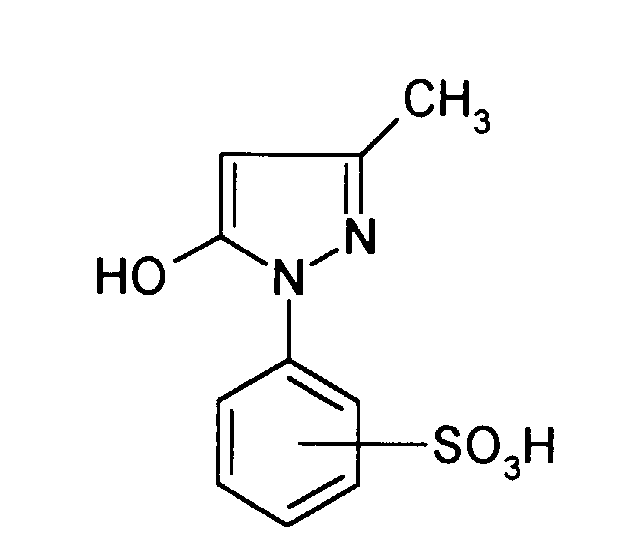
and converting the resulting monoazo compound to the desired salt form.
and coupling the resulting diazo compound with a sulphonated 3-methyl-1-phenylpyrazol-5-one of the formula :
and converting the resulting monoazo compound to the desired salt form.
7. A method according to claim 6 wherein the naphthylamine sulphonic acid comprises 1-naphthylamine-4-sulphonic
acid and/or 1-naphthylamine-6-sulphonic acid.
8. A method according to claim 6 or claim 7 wherein the sulphonated 3-methyl-1-phenylpyrazol-5-one
comprises 3-methyl-1-(4'-sulphophenyl)pyrazol-5-one and/or 3-methyl-1-(3'-sulphophenyl)pyrazol-5-one.
9. The use of an azo pyrazolone compound as defined in claim 1 as a pigment.
1. Azopyrazolon-Verbindung der Formel:
in Form eines Salzes, ausgenommen
und
in Form ihrer Natrium- und Kaliumsalze.
in Form eines Salzes, ausgenommen
und
in Form ihrer Natrium- und Kaliumsalze.
2. Verbindung nach Anspruch 1, wobei sich die Sulfonsäuregruppe des Naphthalinkerns in
der 4- oder 6-Position, relativ zur Azo-Bindung, befindet, und sich die Sulfonsäuregruppe
des Benzolrings in der 3- oder 4-Position, relativ zum Pyrazolylrest, befindet.
3. Verbindung nach Anspruch 1 oder 2, wobei das Salz ein Metallsalz oder ein Salz einer
stickstoffhaltigen Base ist.
4. Verbindung nach Anspruch 3, wobei das Salz ein Calciumsalz ist.
5. Verbindung nach Anspruch 4 mit der Formel:
in der sich die Sulfonatgruppe des Naphthalinkerns in der 4- oder 6-Position, relativ zur Azogruppe, befindet.
in der sich die Sulfonatgruppe des Naphthalinkerns in der 4- oder 6-Position, relativ zur Azogruppe, befindet.
6. Verfahren zur Herstellung einer Azopyrazolon-Verbindung nach Anspruch 1, umfassend
Diazotieren einer Naphthylaminsulfonsäure der Formel:
und Kuppeln der entstandenen Diazoverbindung mit einem sulfonierten 3-Methyl-1-phenylpyrazol-5-on der Formel
und Umwandeln der entstandenen Monoazoverbindung in die gewünschte Salzform.
und Kuppeln der entstandenen Diazoverbindung mit einem sulfonierten 3-Methyl-1-phenylpyrazol-5-on der Formel
und Umwandeln der entstandenen Monoazoverbindung in die gewünschte Salzform.
7. Verfahren nach Anspruch 6, wobei die Naphthylaminsulfonsäure 1-Naphthylamin-4-sulfonsäure
und/oder 1-Naphthylamin-6-sulfonsäure umfaßt.
8. Verfahren nach Anspruch 6 oder 7, wobei das sulfonierte 3-Methyl-1-phenylpyrazol-5-on
3-Methyl-1-(4'-sulfophenyl)pyrazol-5-on und/oder 3-Methyl-1-(3'-sulfophenyl)-pyrazol-5-on
umfaßt.
9. Verwendung einer Azopyrazolon-Verbindung nach Anspruch 1 als Pigment.
1. Composé azopyrazolone de formule :
sous la forme d'un sel à l'exception de
et
sous la forme de leurs sels de sodium et de potassium.
sous la forme d'un sel à l'exception de
et
sous la forme de leurs sels de sodium et de potassium.
2. Composé suivant la revendication 1, dans lequel le groupe acide sulfonique dans le
noyau naphtalène est présent en position 4 ou en position 6 par rapport à la liaison
azoïque et le groupe acide sulfonique dans le cycle benzène est présent en position
3 ou en position 4 par rapport au groupe pyrazolyle.
3. Composé suivant la revendication 1 ou la revendication 2, dans lequel le sel est un
sel métallique ou un sel d'une base azotée.
4. Composé suivant la revendication 3, dans lequel le sel est un sel de calcium.
5. Composé suivant la revendication 4, ayant la formule :
dans laquelle le groupe sulfonate dans le noyau naphtalène est en position 4 ou en position 6 par rapport à la liaison azoïque.
dans laquelle le groupe sulfonate dans le noyau naphtalène est en position 4 ou en position 6 par rapport à la liaison azoïque.
6. Procédé pour la préparation d'un composé azopyrazolone suivant la revendication 1,
qui comprend la diazotation d'un acide naphtylamine sulfonique de formule :
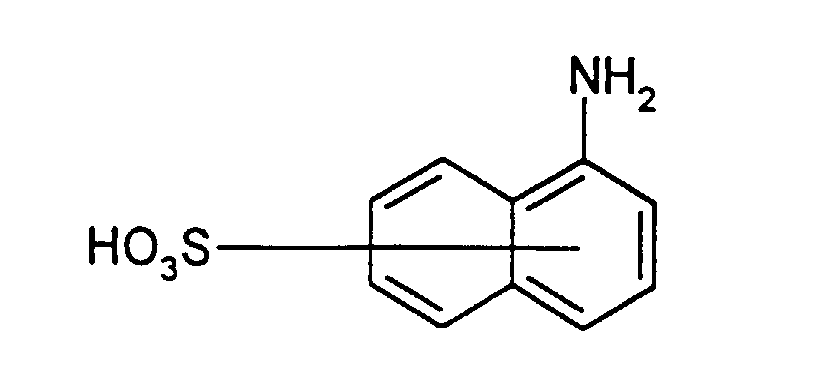
et le couplage du composé diazoïque résultant avec une 3-méthyl-1-phénylpyrazol-5-one sulfonée de formule :
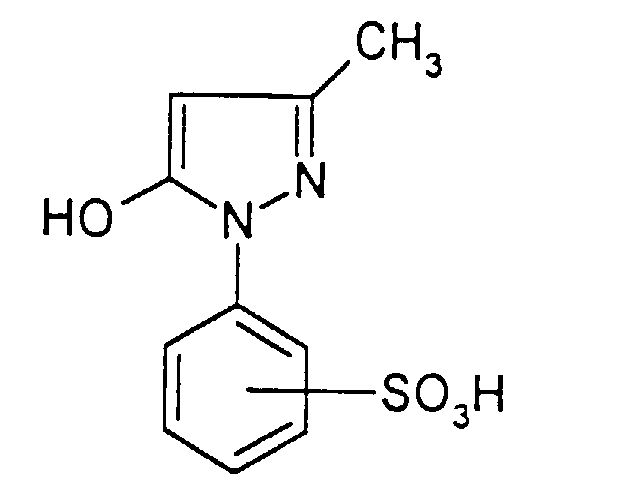
puis la conversion du composé monoazoïque résultant pour donner la forme saline désirée.
et le couplage du composé diazoïque résultant avec une 3-méthyl-1-phénylpyrazol-5-one sulfonée de formule :
puis la conversion du composé monoazoïque résultant pour donner la forme saline désirée.
7. Procédé suivant la revendication 6, dans lequel l'acide naphtylamine sulfonique comprend
l'acide 1-naphtylamine-4-sulfonique et/ou l'acide 1-naphtylamine-6-sulfonique.
8. Procédé suivant la revendication 6 ou la revendication 7, dans lequel la 3-méthyl-1-phénylpyrazol-5-one
sulfonée comprend la 3-méthyl-1-(4'-sulfophényl)-pyrazol-5-one et/ou la 3-méthyl-1-(3'-sulfophényl)-pyrazol-5-one.
9. Utilisation d'un composé azopyrazolone suivant la revendication 1, en tant que pigment.