(57) A data processor supports the use of multiple memory models by computer programs.
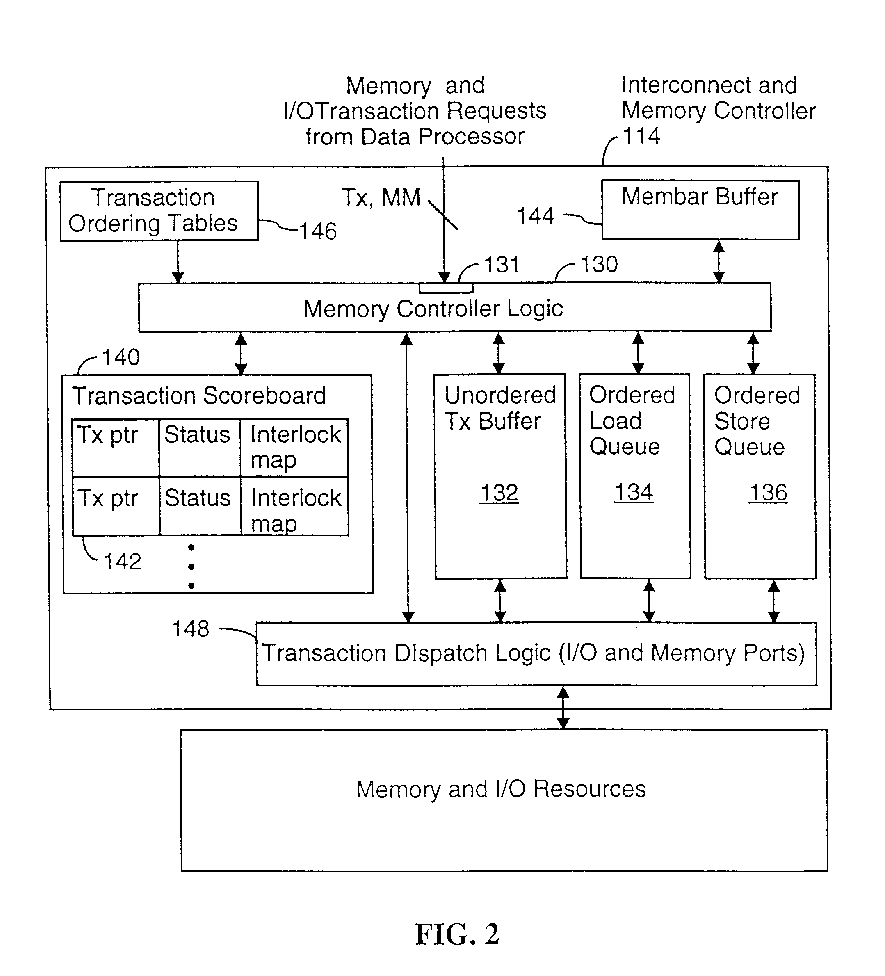
At a device external to a data processor, such as a memory controller, memory transactions
requests are received from the data processor. Each memory transaction request has
associated therewith a memory model selected from a predefined plurality of memory
models. In a preferred embodiment, the predefined memory models supported are SSO
(strong sequential order), TSO (total store order), PSO (partial store order) and
RMO (relaxed memory order). Data representing pending memory transactions are stored
in one or more pending transaction buffers and a pending transaction status array.
The pending transaction status data includes memory transaction order data that indicates
which of the pending memory transactions can be performed before other ones of the
pending memory transactions. More particularly, logic in the memory controller determines,
based on the memory model associated with a most recently received memory transaction
request and the memory model associated with at least one other pending memory transaction,
whether or not the memory transaction associated with the most recently received memory
transaction request can be performed before the other pending memory transaction,
and then stores data representing this ordering determination in a transaction scoreboard.
The memory controller performs the pending memory transactions in an order consistent
with the memory transaction order data. As a result, a subset of the pending memory
transactions are performed in a different order than they were received from the data
processor.
|
|
