(57) A method and apparatus for efficiently rendering and printing bands of image information
defined by a page description language. The invention estimates the print time for
each print band sufficiently in advance to control a page-oriented output device print
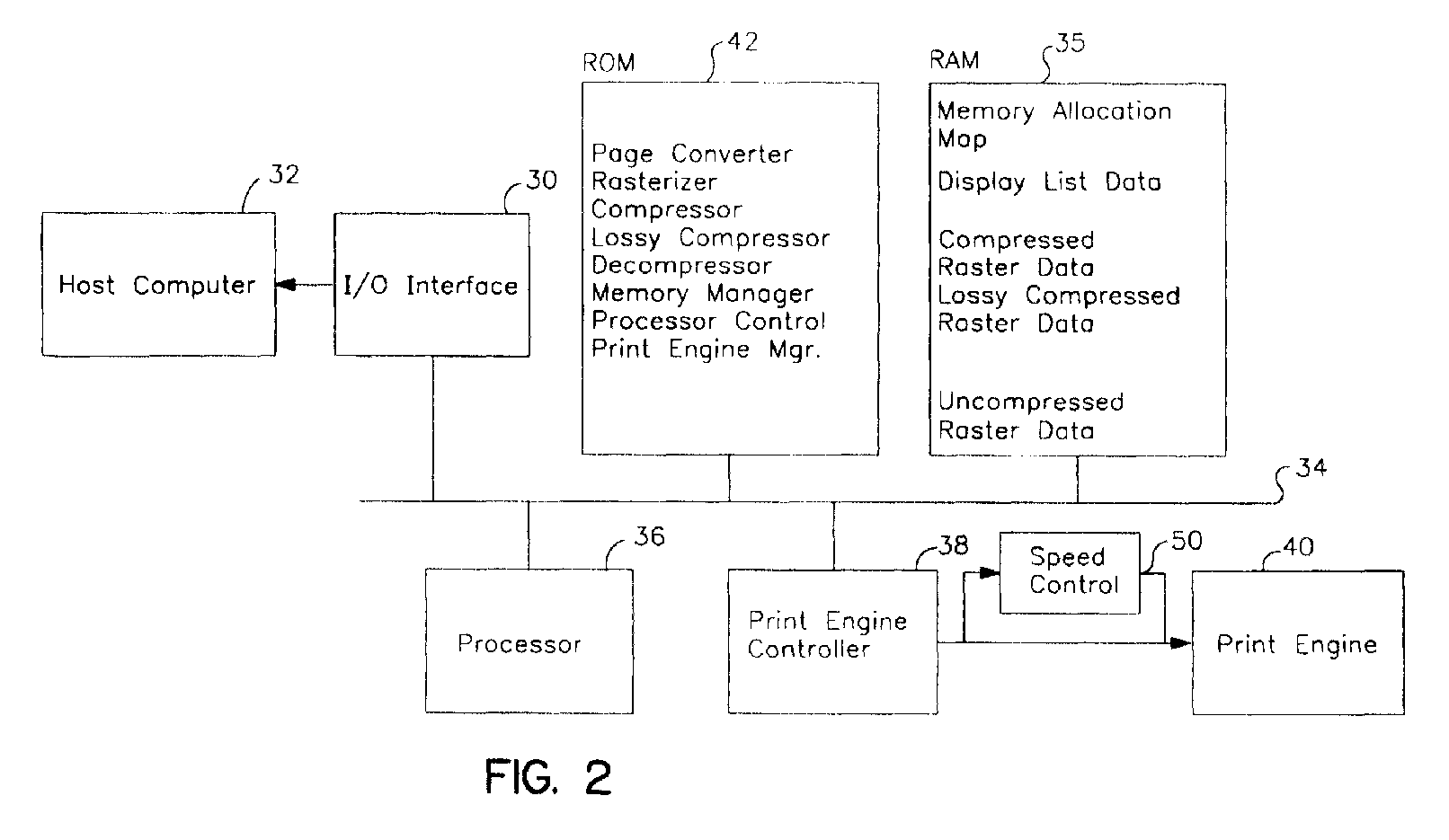
engine. In a first embodiment, the present invention controls the speed of the print
engine for each page to be printed, based on a "rendering cost" or rasterization time
estimate for some or all of the bands on each page. In a second embodiment, the present
invention controls the speed of the print engine for each band to be printed, based
on a "rendering cost" or rasterization time estimate for each band. An additional
aspect of the present invention is that the print engine can be sped up for empty
or sparse pages or bands, thus improving overall print speed. A third variation of
the invention controls the speed of the print engine between groups of bands ("subpages")
when the engine speed cannot be changed for each band, but can be changed for spaced-apart
bands or groups of bands. In each case, the print speed is matched to the rendering
speed to eliminate or reduce the need to pre-render, compress, and decompress page
description language print information. By rendering and printing each band of data
"on the fly", memory requirements are reduced. Print speed is optimized by providing
band print data "on the fly" while maintaining the highest print engine speed possible
for the complexity of particular data.
|
|
