Background of the Invention
[0001] PCT Application EP/91/02048 (International Publication No. WO 92/07904) discloses
the use of biscitraconimide and bisitaconimide. These materials have use as antireversion
coagents for rubber compounds. Unfortunately, production of these materials require
a labor-intensive and expensive dehydration step to form the imides.
[0002] U.S. Patent 5,328,963 relates to sulfur-vulcanized rubber compositions containing
0.1 to 10 phr of a maleamic acid of the formula

Use of this maleamic acid, however, does not yield the desirable antireversion properties
that is sought by those skilled in the art.
Summary of the Invention
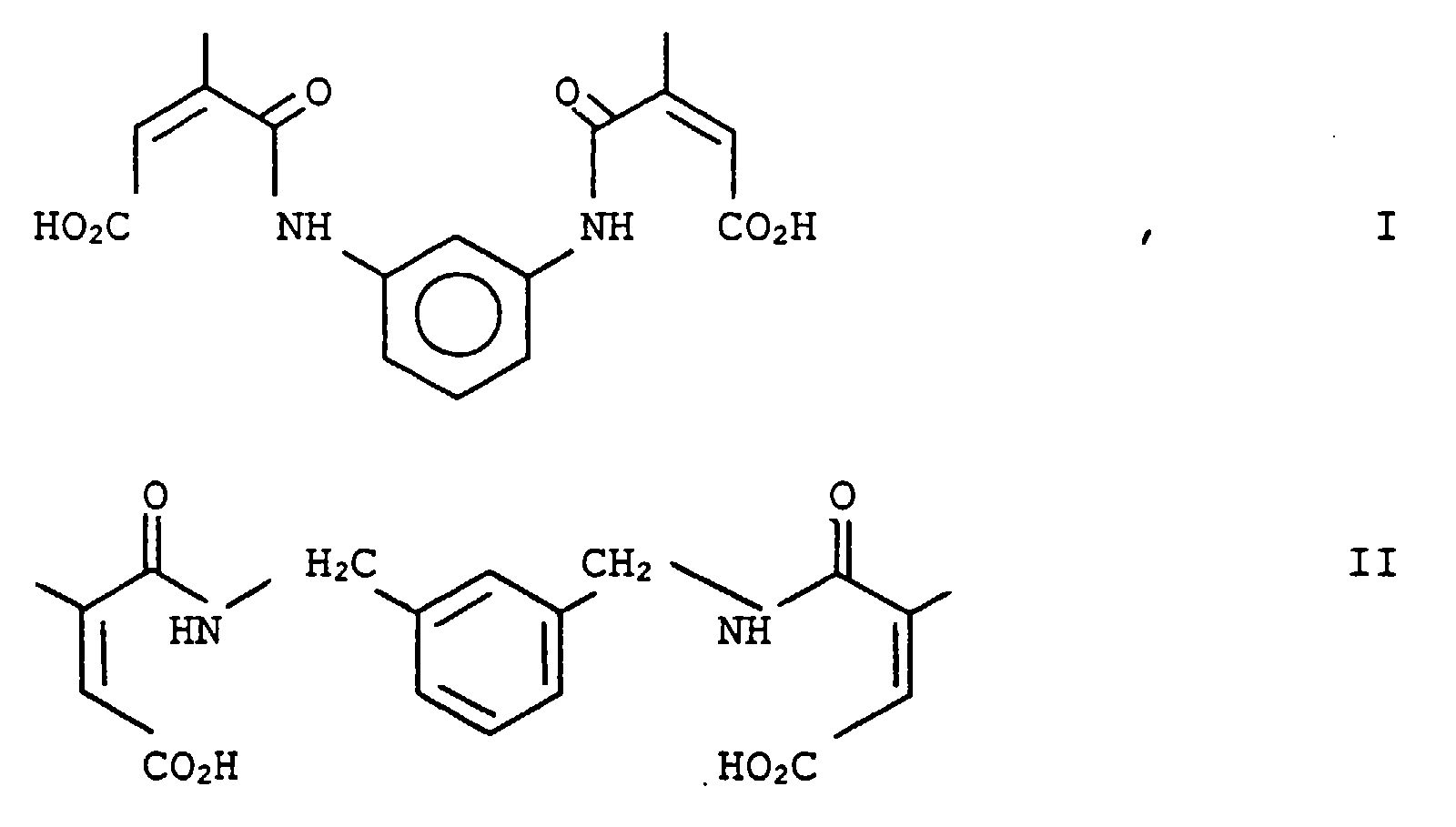
[0003] The present invention relates to rubber compounds containing acids of the formulae:
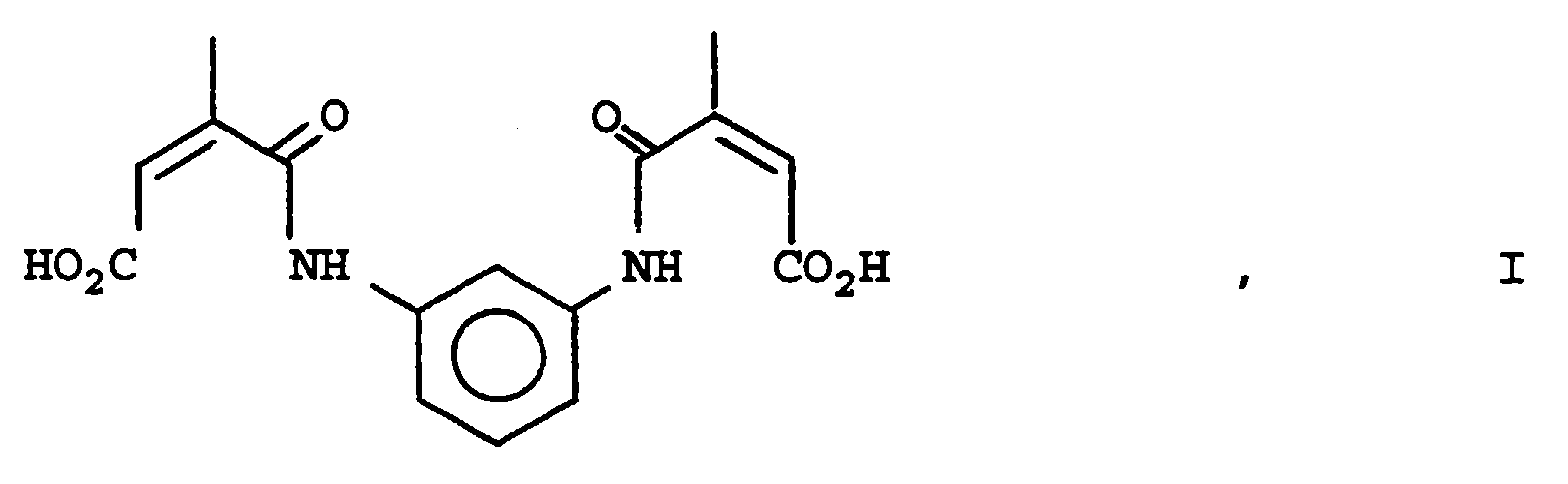
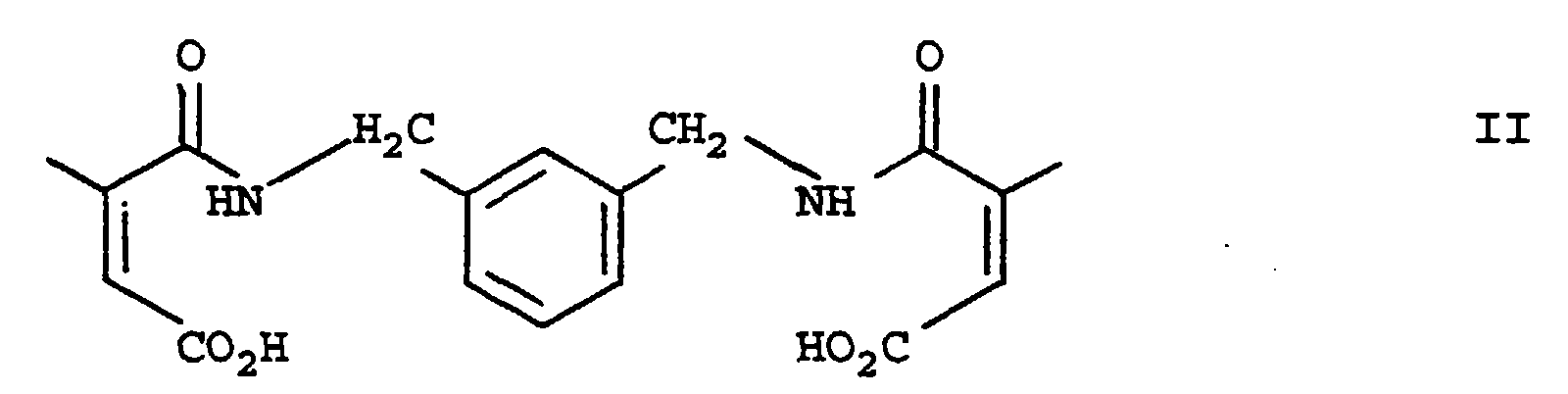
or mixtures thereof.
Detailed Description of the Preferred Embodiment
[0004] The acids used in the present invention may be present at various levels in the rubber
compounds of the present invention. For example, the level may range from about 0.1
to 10.0 by weight per 100 parts of rubber (also known as "phr"). Preferably, the level
ranges from about 0.5 to about 5.0 phr.
[0005] The acids may be prepared by condensing m-phenylene diamine or m-xylylene diamine
with citraconic anhydride to form N,N'-(m-phenylene)bis citraconamic acid or N,N'-(m-xylylene)bis
citraconamic acid. Mixtures of the two diamines may be used to form a mixture of the
two acids.
[0006] The citraconic anhydride is reacted with the m-phenylene diamine or m-xylylene diamine
under suitable conditions to form the N,N'-(m-phenylene)bis citraconamic acid or N,N'-(m-xylylene)bis
citraconamic acid. The anhydride may be reacted with the diamine compound in a variety
of mole ratios. Generally, the mole ratio of the anhydride to the diamine compound
ranges from about 2.5:1 to about 0.75:1 with a range of from about 2.1:1 to about
1.9:1 being preferred.
[0007] An organic solvent may be used to dissolve the anhydride or diamine compound. The
solvent is preferably inert to the reaction between the anhydride and the diamine
compound. Illustrative of solvents suitable for use in the practice of this invention
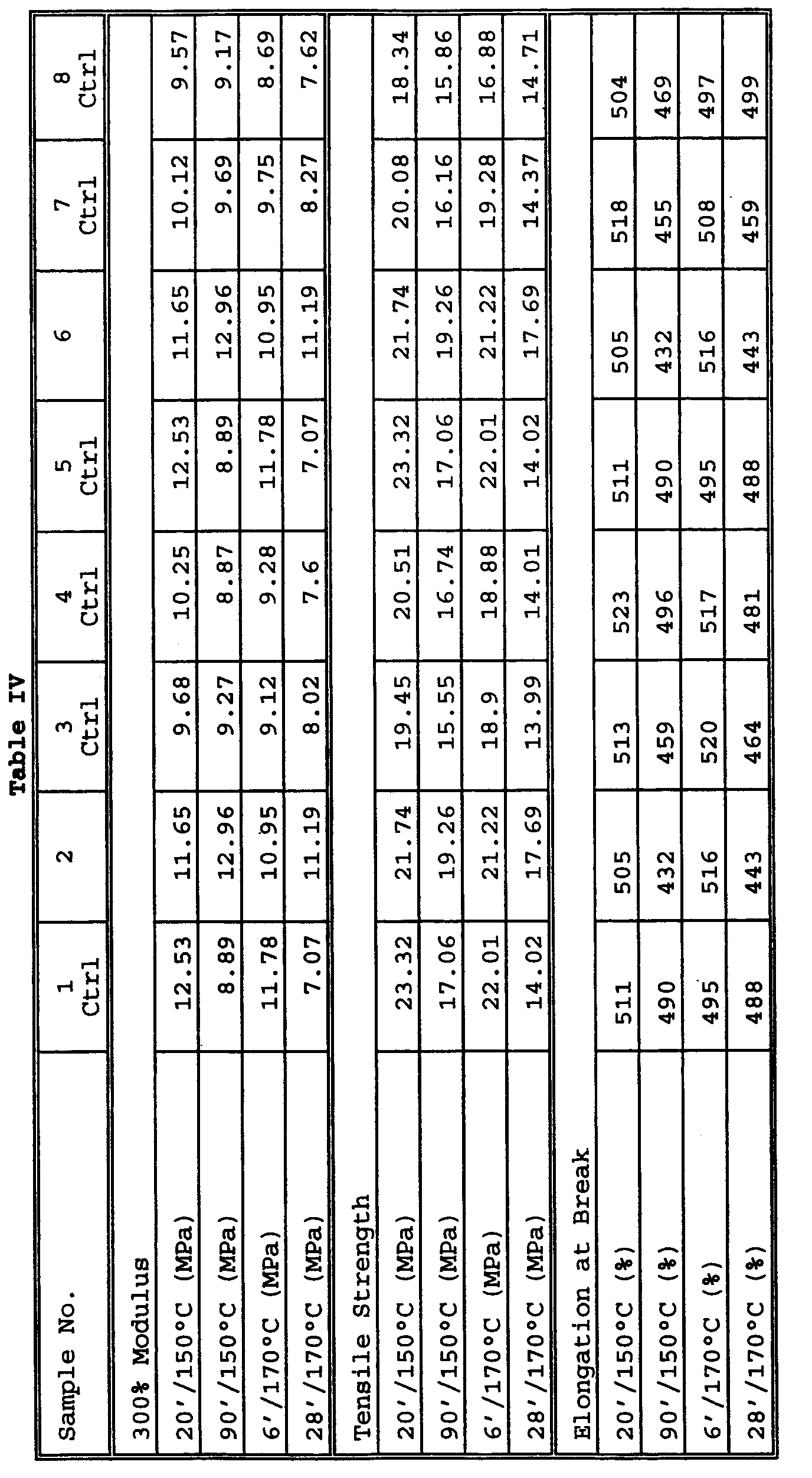
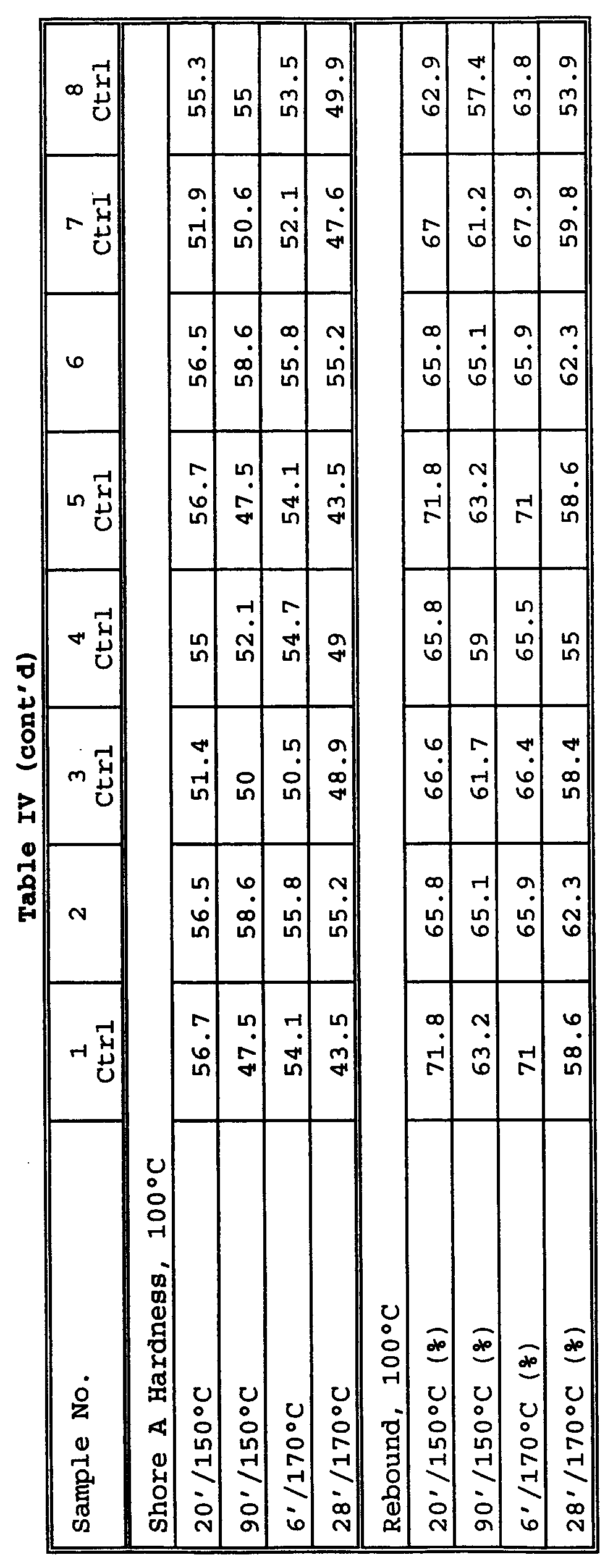
include: saturated and aromatic hydrocarbons, e.g., hexane, octane, dodecane, naphtha,
decalin, tetrahydronaphthalene, kerosene, mineral oil, cyclohexane, cycloheptane,
alkyl cycloalkane, benzene, toluene, xylene, alkyl-naphthalene, and the like; acetone;
ethers such as tetrahydrofuran, tetrahydropyran, diethylether, 1,2-dimethoxybenzene,
1,2-diethoxybenzene, the mono- and dialkylethers of ethylene glycol, propylene glycol,
butylene glycol, diethylene glycol, dipropylene glycol, oxyethyleneoxypropylene glycol,
and the like; fluorinated hydrocarbons that are inert under the reaction conditions
such as perfluoroethane, monofluorobenzene, and the like. Another class of solvents
are sulfones such as dimethylsulfone, diethylsulfone, diphenolsulfone, sulfolane,
and the like. Mixtures of the aforementioned solvents may be employed so long as they
are compatible with each other under the conditions of the reaction and will adequately
dissolve the diamine or anhydride compound and not interfere with the reaction.
[0008] The reaction between the anhydride and the diamine compound to form the aryl bis
citraconamic acid may be conducted over a wide temperature range. The temperature
may range from moderate to an elevated temperature. In general, the reaction may be
conducted at a temperature of between about 20°C to 100°C. The preferred temperature
range is from about 30°C to 80°C, while the most preferred temperature range is from
about 55°C to 65°C.
[0009] The reaction to form the aryl bis citraconamic acid may be conducted under a variety
of pressures. Pressures ranging from about 0 psig to 100 psig may be used.
[0010] The process for the preparation of the aryl bis citraconamic acid may be carried
out in a batch, semi-continuous or continuous manner. The reaction may be conducted
in a single reaction zone or in a plurality or reaction zones, in series or in parallel.
The reaction may be conducted intermittently or continuously in an elongated tubular
zone or in a series of such zones. The material of construction of the equipment should
be such as to be inert during the reaction. The equipment should also be able to withstand
the reaction temperatures and pressures. The reaction zone can be fitted with internal
and/or external heat exchangers to control temperature fluctuations. Preferably, an
agitation means is available to ensure the uniform reaction. Mixing induced by vibration,
shaker, stirrer, rotating, oscillation, etc. are all illustrative of the types of
agitation means which are contemplated for use in preparing the composition of the
present invention. Such agitation means are available and well known to those skilled
in the art.
[0011] The use of the aryl bis citraconamic acids improve the rheometer antireversion properties
of "sulfur-vulcanized elastomers or rubbers." The term "sulfur-vulcanized elastomer
or rubber" as used herein embraces both vulcanized forms of natural and all its various
raw and reclaim forms as well as various synthetic rubbers. The synthetic elastomers
include conjugated diene homopolymers and copolymers and copolymers of at least one
conjugated diene and aromatic vinyl compound. Representative synthetic polymers include
the homopolymerization products of butadiene and its homologues and derivatives, as
for example, methyl-butadiene, dimethylbutadiene and pentadiene as well as copolymers,
such as those formed from butadiene or its homologues or derivatives with other unsaturated
organic compounds. Among the latter are acetylenes, for example, vinyl acetylene;
olefins, for example, isobutylene, which copolymerizes with isoprene to form butyl
rubber; vinyl compounds, for example, acrylic acid, acrylonitrile (which polymerizes
with butadiene to form NBR), methacrylic acid and styrene, the latter polymerizing
with butadiene to form SBR, as well as vinyl esters and various unsaturated aldehydes,
ketones and ethers, e.g. acrolein, methyl isopropenyl ketone and vinylethyl ether.
Also included are the various synthetic rubbers prepared by the homopolymerization
of isoprene and the copolymerization of isoprene and other diolefins in various unsaturated
organic compounds. Also included are the synthetic rubbers such as 1,4-cis-polybutadiene
and 1,4-cis-polyisoprene and similar synthetic rubbers.
[0012] Specific examples of synthetic rubbers include neoprene (polychloroprene), polybutadiene
(including trans- and cis-1,4-polybutadiene), polyisoprene (including cis-1,4-polyisoprene),
butyl rubber, copolymers of 1,3-butadiene or isoprene with monomers such as styrene,
acrylonitrile and methyl methacrylate as well as ethylene/propylene terpolymers, also
known as ethylene/propylene/diene monomer (EPDM) and, in particular, ethylene/propylene/dicyclopentadiene
terpolymers and styrene/isoprene/butadiene rubber. The preferred synthetic rubbers
for use in the present invention are polybutadiene, polyisobutylene, butadiene-styrene
copolymers and cis,1,4-polyisoprene.
[0013] Vulcanization of the rubber compound of the present invention is generally carried
out at conventional temperatures ranging from about 100°C and 200°C. Preferably, the
vulcanization is conducted at temperatures ranging from about 110°C to 180°C. Any
of the usual vulcanization processes may be used such as heating in a press or mold,
heating with superheated steam or hot air or in a salt bath.
[0014] In addition to the citraconamic acids, other rubber additives may also be incorporated
in the rubber compound. The additives commonly used in rubber vulcanizates are, for
example, carbon black, tackifier resins, processing aids, antioxidants, antiozonants,
stearic acid, activators, waxes, phenol-formaldehyde resins, oils and peptizing agents.
As known to those skilled in the art, depending on the intended use of the rubber
compound, certain additives mentioned above are commonly used in conventional amounts.
Typical additions of carbon black comprise about 20 to 100 parts by weight of diene
rubber (phr), preferably 30 to 80 phr. Typical amounts of tackifier resins comprise
about 1 to 5 phr. Typical amounts of antioxidants comprise 1 to about 10 phr. Typical
amounts of antiozonants comprise 1 to about 10 phr. Typical amounts of stearic acid
comprise 1 to about 2 phr. Typical amounts of zinc oxide comprise 2 to 5 phr. Typical
amounts of waxes comprise 1 to 5 phr. Typical amounts of phenol-formaldehyde resins
comprise 1 to 8 phr. Typical amounts of oils comprise 5 to 40 phr. Typical amounts
of peptizers comprise 0.1 to 1 phr. The presence and relative amounts of the above
additives are not an aspect of the present invention.
[0015] The vulcanization of the rubber compound is conducted in the presence of a sulfur-vulcanizing
agent. Examples of suitable sulfur-vulcanizing agents include elemental sulfur (free
sulfur) or sulfur donating vulcanizing agents, for example, an amine disulfide, polymeric
polysulfide or sulfur olefin adducts. Preferably, the sulfur-vulcanizing agent is
elemental sulfur. As known to those skilled in the art, sulfur-vulcanizing agents
are used in an amount ranging from about 0.5 to 8 phr with a range of from 1.0 to
2.25 being preferred.
[0016] Accelerators are conventionally used to control the time and/or temperature required
for vulcanization and to improve the properties of the vulcanizate. In some instances,
a single accelerator system may be used, i.e., primary accelerator. Conventionally,
a primary accelerator is used in amounts ranging from about 0.5 to 2.0 phr. In another
instance, combinations of two or more accelerators may be used which may consist of
a primary accelerator which is generally used in the large amount (0.5 to 2.0 phr),
and a secondary accelerator which is generally used in smaller amounts (0.01 - 0.50
phr) in order to activate and to improve the properties of the vulcanizate. Combinations
of these accelerators have been known to produce a synergistic effect of the final
properties and are somewhat better than those produced by use of either accelerator
alone. In addition, delayed action accelerators may be used which are not affected
by normal processing temperatures but produce satisfactory cures at ordinary vulcanization
temperatures. Suitable types of accelerators that may be used include amines, disulfides,
guanidines, thiophthalimides, thioureas, thiazoles, thiurams, sulfenamides, dithiocarbamates
and xanthates. Preferably, the primary accelerator is a sulfenamide. If a secondary
accelerator is used, the secondary accelerator is preferably a guanidine, dithiocarbamate
or thiuram compound.
[0017] The rubber compounds containing the N,N'-(m-phenylene)bis citraconamic acids or N,N'-(m-xylylene)bis
citraconamic acid may be used in the preparation of and therefor in the form of composite
products including tires, power belts, conveyor belts, printing rolls, rubber shoe
heels and soles, rubber wringers, automobile floor mats, mud flaps for trucks, ball
mill liners, and the like. Preferably, the rubber vulcanizates are used in sidewall,
carcass ply or overlay compounds for tires.
[0018] The following examples are presented in order to illustrate but not limit the present
invention.
Example 1
Preparation of N,N'-(m-phenylene)bis citraconamic acid
[0019] A 3-liter, 3-neck round bottom flask was charged with 54 g (0.5 mole) of m-phenylenediamine
and 500 ml of reagent acetone and flushed with nitrogen. The flask was fitted with
a reflux condenser, mechanical stirrer and thermocouple. The solution was stirred
as 112 g (1.0 mole) of citracanic anhydride in 500 ml of reagent acetone was added
dropwise over about 1 1/2 hours as the temperature was allowed to rise to reflux the
acetone. The reaction mixture was refluxed for an additional hour, cooled to room
temperature and suction filtered to give 166 g of N,N'-(m-phenylene)bis citraconamic
acid as shown by NMR analysis, as a tan mustard-colored solid melting at 152-156°C.
Example 2
Preparation of N,N'-(m-xylylene)bis citraconamic acid
[0020] A 2.5-liter glass resin kettle was charged with 136.2 g (1.0 mole) of m-xylylenediamine
and 2000 ml of reagent acetone and flushed with nitrogen. The kettle was fitted with
a dropping funnel, reflux condenser, mechanical stirrer and thermocouple. The addition
funnel was charged with 246 g (2.2 moles) of citraconic anhydride which was slowly
added over a 2 1/2-hour period, with stirring and refluxing the acetone. The reaction
mixture was allowed to cool to room temperature with stirring. Suction filtering and
acetone wash of the solid product (air-drying) gives a 246 g of a tan powder, melting
at 148-150°C. The structure was confirmed by NMR analysis.
Example 3
Physical Testing
[0021] Table I below shows the basic rubber compound that was used in this example. The
rubber compound was prepared in a three-stage Banbury mix. All parts and percentages
are by weight unless otherwise noted. The cure data as well as other physical data
for each sample are listed in Tables II, III and IV.
Table I
| Sample No. |
1 Ctrl |
2 |
3 Ctrl |
4 Ctrl |
5 Ctrl |
6 |
7 Ctrl |
8 Ctrl |
| |
| Nonproductive A |
| Natural Rubber |
100 |
100 |
100 |
100 |
100 |
100 |
100 |
100 |
| Carbon Black |
30 |
30 |
30 |
30 |
30 |
30 |
30 |
30 |
| Oil |
5 |
5 |
5 |
5 |
5 |
5 |
5 |
5 |
| Nonproductive B |
| Carbon Black |
10 |
10 |
10 |
10 |
10 |
10 |
10 |
10 |
| Fatty Acid |
2 |
2 |
2 |
2 |
2 |
2 |
2 |
2 |
| Zinc Oxide |
3 |
3 |
3 |
3 |
3 |
3 |
3 |
3 |
| Productive |
| Amine Antioxidant |
0.75 |
0.75 |
0.75 |
0.75 |
0.75 |
0.75 |
0.75 |
0.75 |
| Sulfur |
2.25 |
2.25 |
2.25 |
2.25 |
2.25 |
2.25 |
2.25 |
2.25 |
| N-cyclohexyl-2-benzothiazylsulfenamide |
1.0 |
1.0 |
1.0 |
1.0 |
1.0 |
1.0 |
1.0 |
1.0 |
| N-(cyclohexylthio)phthalimide |
0.1 |
0.1 |
0.1 |
0.1 |
0.1 |
0.1 |
0.1 |
0.1 |
| N,N'-(m-phenylene)bis citraconamic acid |
|
4.1 |
|
|
|
4.1 |
|
|
| N,N'-(m-phenylene)bis maleamic acid |
|
|
4.1 |
|
|
|
3.72 |
|
| Bis 1,4-(p-anilino-alpha,alpha'-dimethyl)p-xylene-bis maleamic acid |
|
|
|
4.1 |
|
|
|
6.9 |
| mmols of acid |
|
13.5 |
|
|
|
13.5 |
13.5 |
13.5 |
[0022] Cure properties were determined using a Monsanto oscillating disc rheometer which
was operated at a temperature of 150°C and at a frequency of 11 hertz. A description
of oscillating disc rheometers can be found in the Vanderbilt Rubber Handbook edited
by Robert O. Ohm (Norwalk, Conn., R. T. Vanderbilt Company, Inc., 1990), pages 554-557.
The use of this cure meter and standardized values read from the curve are specified
in ASTM D-2084. A typical cure curve obtained on an oscillating disc rheometer is
shown on page 555 of the 1990 edition of the Vanderbilt Rubber Handbook.
[0023] In such an oscillating disc rheometer, compounded rubber samples are subjected to
an oscillating shearing action of constant amplitude. The torque of the oscillating
disc embedded in the stock that is being tested that is required to oscillate the
rotor at the vulcanization temperature is measured. The values obtained using this
cure test are very significant since changes in the rubber or the compounding recipe
are very readily detected.
[0024] The following Tables II, III and IV report cure properties that were determined from
cure curves that were obtained for the two rubber formulations that were prepared.
These properties include torque maximum (Max Tq), torque minimum (Min Tq), delta torque
(DEL Tq), minutes to 1 point of the torque increase (T1), minutes to 25 percent of
the torque increase (T25 minutes) and minutes to 90 percent of the torque increase
(T90 minutes).
[0025] Cure reversion measured using a rheometer can be defined as the incremental time
required for a fixed decrease in torque from the maximum value, expressed here for
example as Smax-1pt (time for the torque to decrease 1.0 unit or point below the maximum
value Max Tq). Such cure reversion measurements are defined by G M Bristow (NR Technology,
17 (1) 7, 1986).
[0026] Shore Hardness was determined in accordance with ASTM-1415.
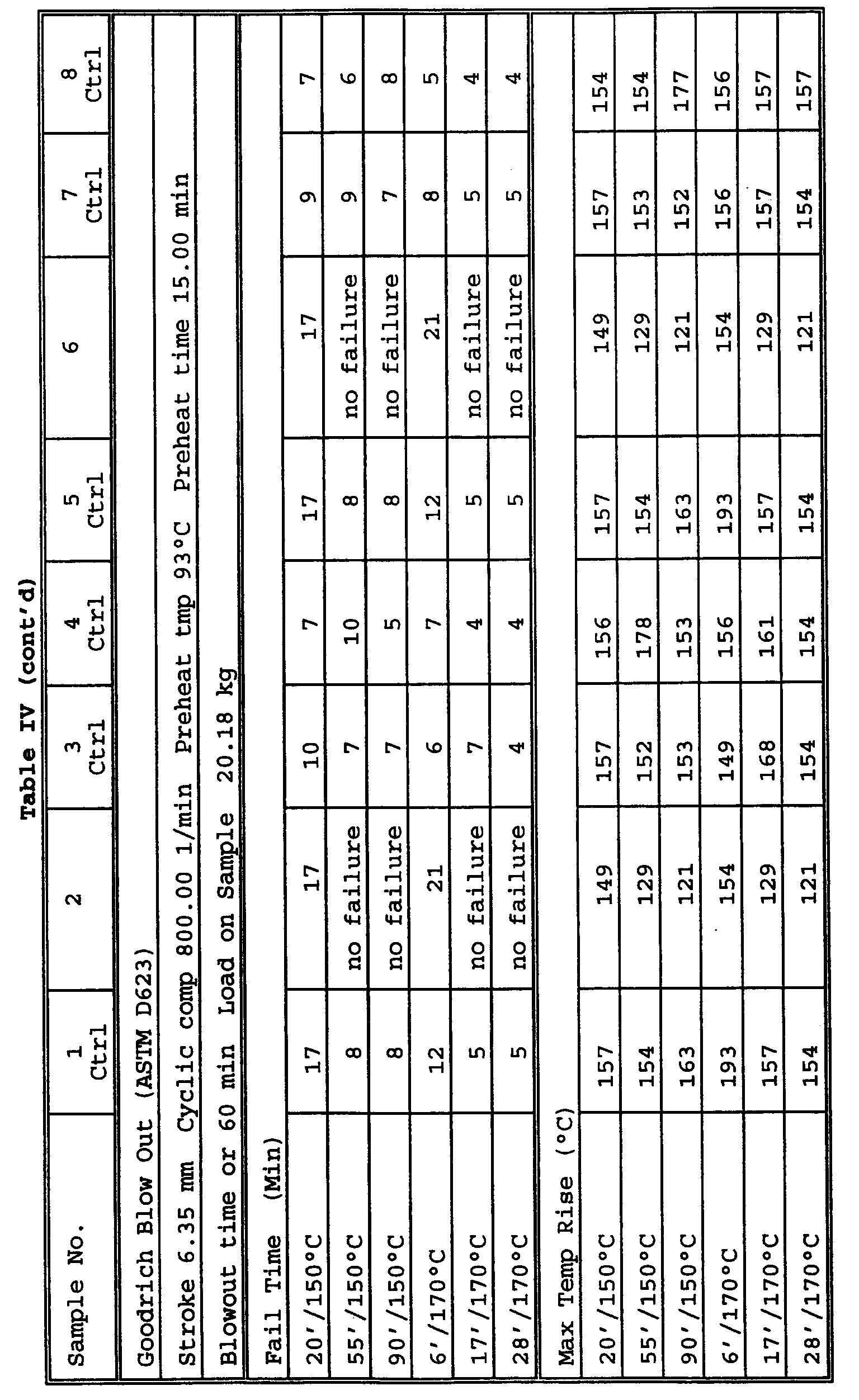
[0027] In Table IV, the various properties of the samples are reported which were cured
for 20 minutes at 150°C, 90 minutes at 150°C, 6 minutes at 170°C or 28 minutes at
170°C.
Table II
| Sample No. |
1 Ctrl |
2 |
3 Ctrl |
4 Ctrl |
5 Ctrl |
6 |
7 Ctrl |
8 Ctrl |
| phr of acid |
|
4.1 |
4.1 |
4.1 |
|
4.1 |
3.72 |
6.9 |
| Rheometer @ 150°C |
| Max Tq (DN.M) |
38 |
36.5 |
31.5 |
34 |
38 |
36.5 |
32 |
33 |
| Min Tq (DN.M) |
5 |
5 |
5.5 |
5.5 |
5 |
5 |
5.5 |
5.5 |
| Del Tq (DN.M) |
33 |
31.5 |
26 |
28.5 |
33 |
31.5 |
26.5 |
27.5 |
| Time to Max Tq (min) |
20 |
25 |
33 |
26.5 |
20 |
25 |
33.5 |
30 |
| T 1pt Rise, Min |
6.5 |
5 |
6 |
5.5 |
6.5 |
5 |
5.5 |
6.8 |
| T25 (Min) |
8.5 |
7.5 |
8.5 |
8.5 |
8.5 |
7.5 |
8 |
9 |
| T90 (Min) |
13.5 |
17 |
19 |
16 |
13.5 |
17 |
18.5 |
19 |
| Reversion (min/pt drop) |
| Smax-1 pt |
7 |
|
35 |
15.5 |
7 |
|
21.5 |
23 |
| Smax-2 pt |
12 |
|
87 |
29.5 |
12 |
|
58.5 |
50 |
| Smax-3 pt |
18 |
|
|
53.5 |
18 |
|
|
|
| Smax-4 pt |
25 |
|
|
93.5 |
25 |
|
|
|
| Smax-5 pt |
32 |
|
|
|
32 |
|
|
|
| Smax-6 pt |
41 |
|
|
|
41 |
|
|
|
| Smax-7 pt |
55 |
|
|
|
55 |
|
|
|
| Smax-8 pt |
73 |
|
|
|
73 |
|
|
|
| Smax-9 pt |
100 |
|
|
|
100 |
|
|
|
| Maximum Reversion/Time |
| Pt drop |
-9 |
-0.5 |
-2 |
-4 |
-9 |
-0.5 |
-2.5 |
-2.5 |
| Time (min) |
100 |
27 |
87 |
93.5 |
100 |
27 |
86.5 |
90 |
Table III
| Sample No. |
1 Ctrl |
2 |
3 Ctrl |
4 Ctrl |
5 Ctrl |
6 |
7 Ctrl |
8 Ctrl |
| phr of acid |
|
4.1 |
4.1 |
4.1 |
|
4.1 |
3.72 |
6.9 |
| Rheometer @ 170°C |
| Max Tq (DN.M) |
36.5 |
34 |
30 |
31.5 |
36.5 |
34 |
30.5 |
30.5 |
| Min Tq (DN.M) |
5 |
5 |
5 |
5 |
5 |
5 |
5 |
6 |
| Del Tq (DN.M) |
31.5 |
29 |
25 |
26.5 |
31.5 |
29 |
25.5 |
24.5 |
| Time to Max Tq (min) |
6 |
7.5 |
9 |
8 |
6 |
7.5 |
9 |
8.5 |
| T25 (Min) |
3 |
3 |
3 |
3 |
3 |
3 |
2.5 |
2.8 |
| T90 (Min) |
4.5 |
5.2 |
6 |
5 |
4.5 |
5.2 |
5.5 |
5.5 |
| Reversion (min/pt drop) |
| Smax-1 pt |
1.5 |
3.5 |
3 |
2.5 |
1.5 |
3.5 |
4 |
4 |
| Smax-2 pt |
2.5 |
8.5 |
6 |
4.5 |
2.5 |
8.5 |
7 |
6.5 |
| Smax-3 pt |
3 |
|
10 |
6.5 |
3 |
|
11 |
10.5 |
| Smax-4 pt |
5 |
|
15 |
9.5 |
5 |
|
16 |
17.5 |
| Smax-5 pt |
6 |
|
28 |
14 |
6 |
|
26 |
31.5 |
| Smax-6 pt |
7 |
|
|
22 |
7 |
|
|
|
| Smax-7 pt |
8.5 |
|
|
41 |
8.5 |
|
|
|
| Smax-8 pt |
10.5 |
|
|
|
10.5 |
|
|
|
| Smax-9 pt |
12.5 |
|
|
|
12.5 |
|
|
|
| Smax-10 pt |
16 |
|
|
|
16 |
|
|
|
| Smax-11 pt |
20 |
|
|
|
20 |
|
|
|
| Smax-12 pt |
25.5 |
|
|
|
25.5 |
|
|
|
| Smax-13 pt |
36 |
|
|
|
36 |
|
|
|
| Smax-14 pt |
60 |
|
|
|
60 |
|
|
|
| Maximum Reversion/Time |
| Pt drop |
-14.5 |
-2 |
-5.5 |
-7 |
-14.5 |
-2 |
-5.5 |
-5.5 |
| Time (min) |
114 |
8.5 |
49 |
41 |
114 |
8.5 |
44 |
54.5 |
[0028] Tables II and III compare the reversion-resistant behavior at 150°C and 170°C, respectively,
for N,N'-(m-phenylene)bis citraconamic acid (Sample 2), N,N'-(m-phenylene)bis maleamic
acid (Ctrl 3) and bis 1,4-(p-anilino-alpha,alpha'-dimethyl)p-xylene-bis maleamic acid
(Ctrl 4) at equal part (by weight) levels versus (Ctrl 1) which has no bis-acid added
to the compound formulation of Table I. When examining Table II (150°C cure) and Table
III (170°C), it was surprising that N,N'-(m-phenylene)bis citraconamic acid (Sample
2) provides excellent reversion-resistant behavior when compared to Ctrl 1 which has
no bis-acid added to the compound formulation and likewise is superior to other bis-acids
such as N,N'-(m-phenylene)bis maleamic acid (Ctrl 3) and bis 1,4-(p-anilino-alpha,alpha'-dimethyl)p-xylene-bis
maleamic acid (Ctrl 4). At the 150°C cure temperature, Ctrl 1 had a maximum reversion
of -9 pts, Ctrl 3 a maximum reversion of -2 pts and Ctrl 4 a maximum reversion -4
pts while N,N'-(m-phenylene)bis citraconamic acid (Sample 2) showed a maximum reversion
of only -0.5 pt. Comparison of reversion behavior at 170°C (Table III) likewise shows
the reversion-resistant superiority of N,N'-(m-phenylene)bis citraconamic acid (Sample
2). Thus, while Ctrl 1 had a maximum reversion of -14.5 pts, and Ctrl 3 and Ctrl 4
showed maximum reversions of -5.5 pts and -7 pts, respectively, N,N'-(m-phenylene)bis
citraconamic acid (Sample 2) of the present invention showed a maximum reversion of
only -2 pts.
[0029] The bis-acids discussed in this invention were likewise compared at equal molar levels
in Tables II and III (13.5 mmols) to compensate for any molecular weight differences.
At the equal molar concentrations, N,N'-(m-phenylene)bis citraconamic acid (Sample
6) of the present invention again is shown superior in promoting reversion resistance
versus Ctrl 5 (no bis-acid present), N,N'-(m-phenylene)maleamic acid (Ctrl 7) and
bis 1,4-(p-anilino-alpha,alpha'-dimethyl)p-xylene-bis maleamic acid (Ctrl 8).
[0030] From the results of Tables II and III, it is clear that N,N'-(m-phenylene)bis citraconamic
acid also provides improved properties to the final vulcanizate. Thus, use of N,N'-(m-phenylene)bis
citraconamic acid showed improvements in retention of modulus during overcure and
with increasing cure temperature, improvements in retention of tensile strength, improvements
in retention of hardness and improvements in retention of rebound properties. Reduction
in heat buildup along with extended times to sample failure or no failure at all was
also observed for Goodrich Blowout testing when N,N'-(m-phenylene)bis citraconamic
acid was utilized as part of the compound formulation.
Example 4
Physical Testing
[0031] Table V below shows the basic rubber compound that was used in this example. The
rubber compound was prepared in a three-stage Banbury mix. All parts and percentages
are by weight unless otherwise noted. The cure data as well as other physical data
for each sample are listed in Tables VI, VII and VIII.
Table V
| Nonproductive A |
| Oil |
5 |
5 |
5 |
| Natural Rubber |
100 |
100 |
100 |
| Carbon Black |
30 |
30 |
30 |
| Nonproductive B |
| |
135 |
135 |
135 |
| Steric Acid |
2 |
2 |
2 |
| Zinc oxide |
3 |
3 |
3 |
| Carbon Black |
10 |
10 |
10 |
| Productive |
| |
150 |
150 |
150 |
| N-cyclohexyl-2-benzothiazyl-sulfenamide |
1.0 |
1.0 |
1.0 |
| N-(cyclohexylthio)phthalimide |
0.1 |
0.1 |
0.1 |
| Amine Antioxidant |
0.75 |
0.75 |
0.75 |
| N,N'-(m-xylylene)bis citraconamic Acid |
|
2.2 |
3.31 |
| Sulfur |
2.25 |
2.25 |
2.25 |
| TOTAL |
154.1 |
156.1 |
157.41 |
Table VI
| Sample No. |
9 Ctrl |
10 |
11 |
| PHR of acid |
0 |
2.2 |
3.31 |
| Rheometer @ 150°C |
| Max Tq (DN.M) |
40 |
40.5 |
39.5 |
| Min Tq (DN.M) |
5 |
5 |
5 |
| Del Tq (DN.M) |
35 |
35.5 |
34.5 |
| Time to Max Tq |
18 |
22 |
23.5 |
| T 1pt Rise, (Min) |
5.5 |
5.2 |
5.5 |
| T25 (Min) |
8 |
7.5 |
7.5 |
| T90 (Min) |
12 |
14 |
14 |
| Reversion (min/pt drop) |
| Smax-1 pt |
7 |
18 |
21.5 |
| Smax-2 pt |
12.5 |
40 |
|
| Smax-3 pt |
14 |
98 |
|
| Smax-4 pt |
24 |
|
|
| Smax-5 pt |
31 |
|
|
| Smax-6 pt |
39 |
|
|
| Smax-7 pt |
50 |
|
|
| Smax-8 pt |
62 |
|
|
| Smax-9 pt |
80 |
|
|
| Smax-10 pt |
102 |
|
|
| Maximum Reversion/Time |
| Pt Drop |
-10 |
-3 |
-1.5 |
| Time (min) |
102 |
98 |
40.5 |
Table VII
| Sample No. |
9 Ctrl |
10 |
11 |
| PHR of acid |
|
2.2 |
3.31 |
| Rheometer @ 170°C |
| Max Tq (DN.M) |
37 |
37.5 |
36.5 |
| Min Tq (DN.M) |
5 |
5 |
4.5 |
| Del Tq (DN.M) |
32 |
32.5 |
32 |
| Time to Max Tq |
5.5 |
6 |
6 |
| T25 (Min) |
2.2 |
2.5 |
2.5 |
| T90 (Min) |
4 |
4.2 |
4.5 |
| Reversion (min/pt drop) |
| Smax-1 pt |
1.5 |
2.5 |
2.5 |
| Smax-2 pt |
2.5 |
4.5 |
4.5 |
| Smax-3 pt |
4 |
7 |
7 |
| Smax-4 pt |
5 |
9.5 |
10 |
| Smax-5 pt |
6.5 |
14 |
|
| Smax-6 pt |
7.5 |
21 |
|
| Smax-7 pt |
9 |
|
|
| Smax-8 pt |
10 |
|
|
| Smax-9 pt |
12 |
|
|
| Smax-10 pt |
14.5 |
|
|
| Smax-11 pt |
18.5 |
|
|
| Smax-12 pt |
23.5 |
|
|
| Smax-13 pt |
28.5 |
|
|
| Smax-14 pt |
37.5 |
|
|
| Smax-15 pt |
54.5 |
|
|
| Smax-16 pt |
114.5 |
|
|
| Maximum Reversion/Time |
| Pt Drop |
-16 |
-6.5 |
-4.5 |
| Time (min) |
114.5 |
32 |
18 |
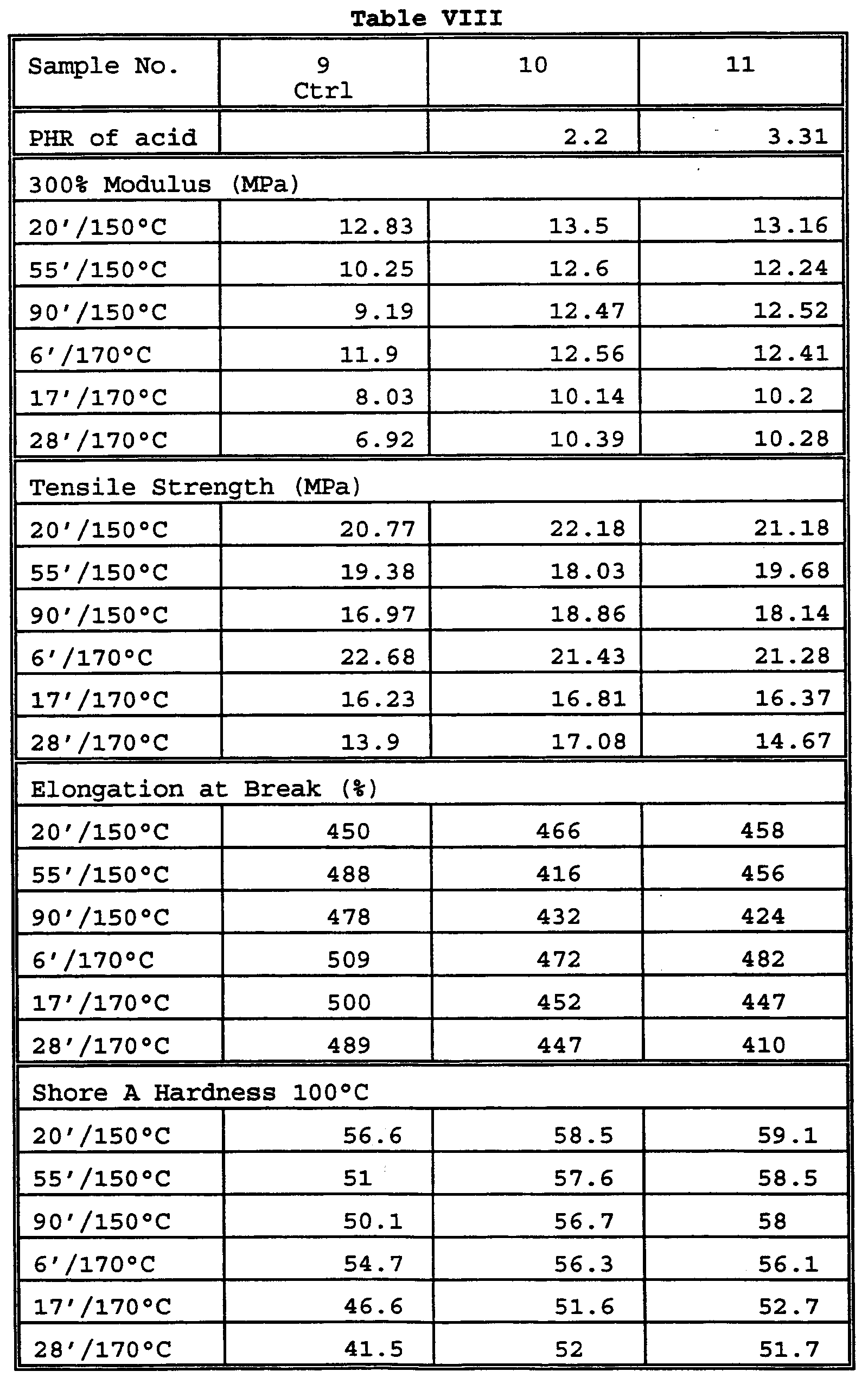
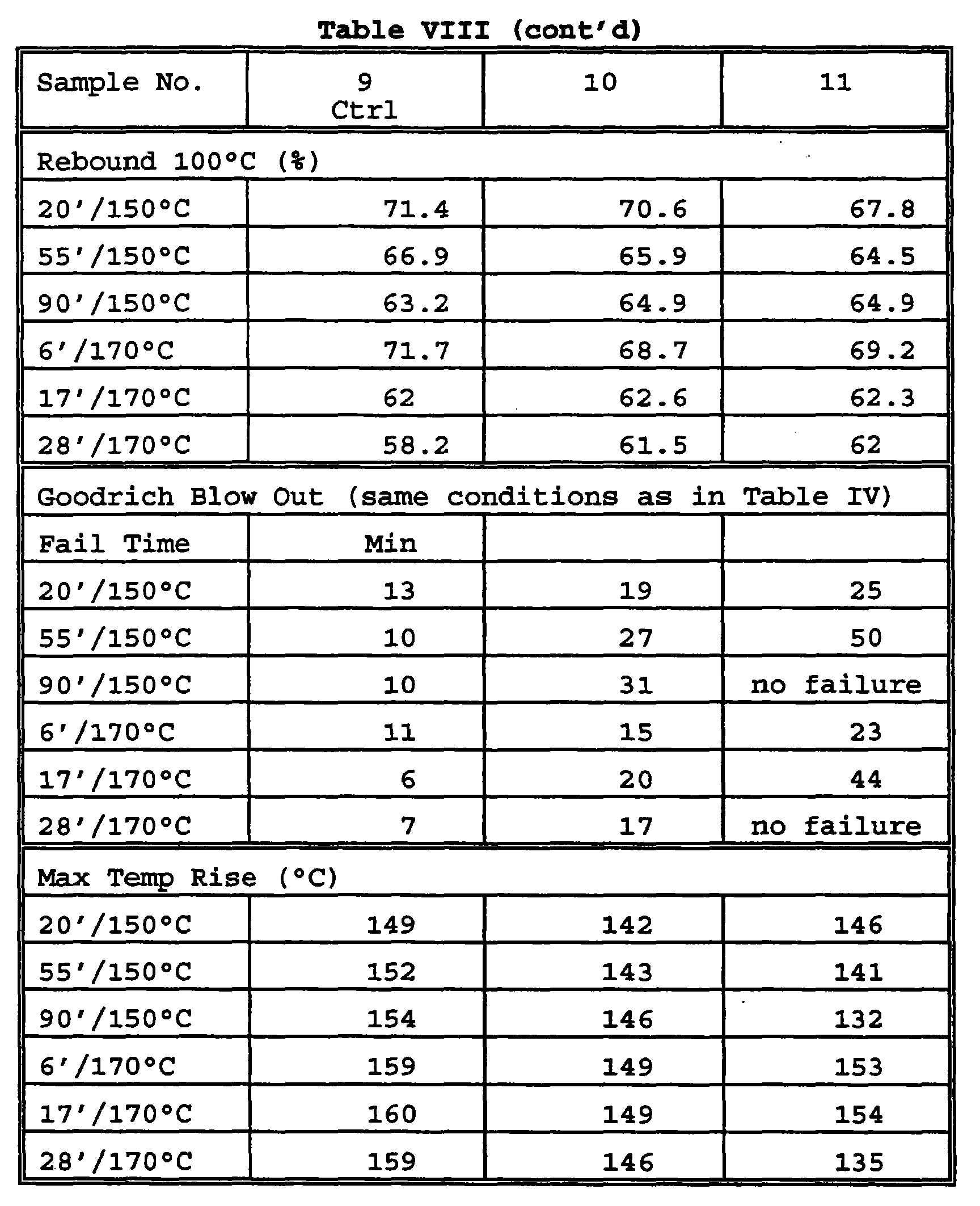
[0032] Tables VI, VII and VIII compare the reversion-resistant behavior at 150°C and 170°C,
respectively, for N,N'-(m-xylylene)bis citraconamic acid (Samples 10 and 11) versus
(Ctrl 9) which has no bis-acid added to the compound formulation of Table V. It is
immediately obvious when examining Table VI (150°C cure) and Table VII (170°C) that
N,N'-(m-xylylene)bis citraconamic acid (Samples 10 and 11) provides excellent reversion-resistant
behavior when compared to Ctrl 9 which has no bis-acid added to the compound formulation.
At the 150°C cure temperature, Ctrl 9 had a maximum reversion of -10 pts while N,N'-(m-xylylene)bis
citraconamic acid (Samples 10 and 11) showed maximum reversions of only -3 pts and
-1.5 pts, respectively. Comparison of reversion behavior at 170°C (Table VII) likewise
shows the reversion-resistant superiority of N,N'-(m-xylylene)bis citraconamic acid
(Samples 10 and 11) of the present invention. Thus, while Ctrl 9 had a maximum reversion
of -16 pts, N,N'-(m-xylylene)bis citraconamic acid (Samples 10 and 11) of the present
invention showed a maximum reversion of only -6.5 pts and -4.5 pts, respectively.
[0033] From the results of Table VIII, it is clear that of N,N'-(m-xylylene)bis citraconamic
acid also provides improved properties to the final vulcanizate. Thus, N,N'-(m-xylylene)bis
citraconamic acid of the present invention showed improvements in retention of modulus
during overcure and with increasing cure temperature, improvements in retention of
tensile strength, improvements in retention of hardness and improvements in retention
of rebound properties. Reduction in heat buildup along with extended times to sample
failure or no failure at all was also observed for Goodrich Blowout testing when N,N'-(m-xylylene)bis
citraconamic acid of the present invention was utilized as part of the compound formulation.
1. A vulcanized rubber composition characterized by a sulfur-vulcanized rubber and from
0.1 to 10 phr of a substituted bis citraconamic acid of the formulae:
or mixtures thereof.
2. The rubber composition of claim 1 characterized in that said rubber is selected from
the group consisting of a natural rubber and synthetic elastomer selected from conjugated
diene homopolymers and copolymers and from copolymers of at least one conjugated diene
and aromatic vinyl compound.
3. The rubber composition of claim 2 characterized in that said rubber is selected from
the group consisting of natural rubber, polychloroprene, synthetic 1,4-cis-polyisoprene,
butyl rubber, polybutadiene, styrene-butadiene copolymer, isoprene-butadiene copolymer,
styrene-isoprene-butadiene rubber, methyl methacrylate-butadiene copolymer, isoprene-butadiene
copolymer, methyl methacrylate-isoprene copolymer, acrylonitrile-isoprene copolymer,
acrylonitrile-butadiene copolymer, EPDM and mixtures thereof.
4. The rubber composition of claim 1 characterized in that from 0.5 to about 5.0 phr
of said substituted bis citraconamic acid is present.
5. The rubber composition of claim 1 characterized in that the substituted bis citraconamic
acid of formula I is used.
6. The rubber composition of claim 1 characterized in that the substituted bis citraconamic
acid of formula II is used.
7. The rubber composition of claim 1 characterized by being in the form of a composite
product.
8. The rubber composition of claim 7 characterized in that said composite product is
selected from the group consisting of tires, power belts, conveyor belts, printing
rolls, rubber shoe heels and soles, rubber wringers, automobile floor mats, mud flaps
and ball mill liners.
9. The rubber composition of claim 8 characterized in that said composite product is
a tire.
10. The rubber composition of claim 9 characterized in that said rubber composition is
used as sidewall, carcass ply or overlay compounds.
