(57) A hologram is superimposed on a traditional picture such as a photograph or printed
picture. The hologram is more viewable at certain angle ranges than at others. This
allows the hologram image, the picture or a combination of both to be seen at different
angles, thus allowing different visual effects. A pre-made multi-channel hologram
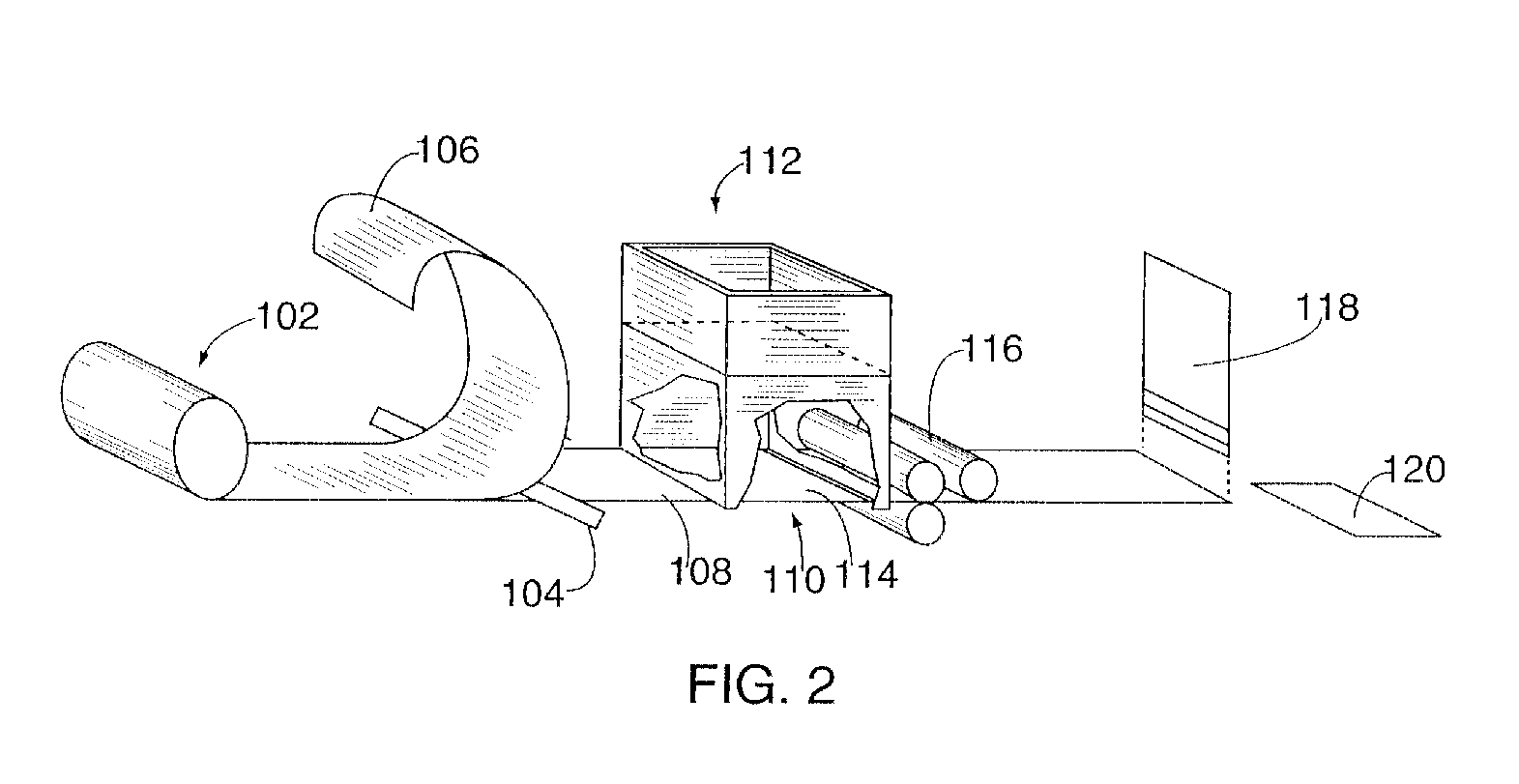
(110) may be superimposed over a user's portrait photograph (114) taken in a photo
booth. The multi-channel hologram (110) is aligned with the photograph (114) so that,
by varying the viewing angle of the combined picture and hologram, an interesting,
entertaining or educational effect, such as transforming, or "morphing", the user's
face into another face or image, is seen. For example, a portrait photograph of the
user can morph into an animal's face, a skeleton, a scary beast, etc. The morphing,
or transformation, effect is easily achieved by insuring that the hologram image is
substantially aligned with the portrait photograph. For example, the eyes of the user's
face in the portrait photograph (114) must match up with the eyes in the multi-channel
hologram (110). The multi-channel hologram (110) is affixed (116) to the photograph
(114) to produce the device (120). A "frame" in the multi-channel hologram may be
blank (i.e., fully transparent) so that the photograph can be seen without obstruction
at some angle. Other frames show successive phases of the morph. To view the morphing
effect, the viewer merely moves the combined photo and hologram device from side to
side, or up and down, so that the morphing effect is observed as the facial image
is progressively obscured by images of the multichannel hologram. This creates a visual
effect of having the photograph morph, or change, into the holographic image and vice
versa.
|
|
