| (19) |
 |
|
(11) |
EP 0 845 161 B1 |
| (12) |
EUROPEAN PATENT SPECIFICATION |
| (45) |
Mention of the grant of the patent: |
|
12.05.1999 Bulletin 1999/19 |
| (22) |
Date of filing: 08.08.1996 |
|
| (51) |
International Patent Classification (IPC)6: H01R 13/58 |
| (86) |
International application number: |
|
PCT/IB9600/781 |
| (87) |
International publication number: |
|
WO 9707/566 (27.02.1997 Gazette 1997/10) |
|
| (54) |
CRIMPABLE STRAIN RELIEF FERRULE HAVING A RETENTION TAB THEREUPON
ZUGENTLASTUNGSPRESSHÜLSE MIT HALTEZUNGE
FERRULE SERRE-CABLE SERTISSABLE A PATE DE RETENUE
|
| (84) |
Designated Contracting States: |
|
DE FR GB IT SE |
| (30) |
Priority: |
17.08.1995 GB 9516886
|
| (43) |
Date of publication of application: |
|
03.06.1998 Bulletin 1998/23 |
| (73) |
Proprietor: THE WHITAKER CORPORATION |
|
Wilmington,
Delaware 19808 (US) |
|
| (72) |
Inventor: |
|
- LANGRIDGE, Gary
St. Albans,
Hertfordshire A12 1TN (GB)
|
| (74) |
Representative: Heinz-Schäfer, Marion et al |
|
AMP International Enterprises Limited
Ampèrestrasse 3
9323 Steinach (SG)
9323 Steinach (SG) (CH) |
| (56) |
References cited: :
EP-A- 0 223 697
JP-A- 5 258 804
|
EP-A- 0 526 324
|
|
| |
|
|
|
|
| |
|
| Note: Within nine months from the publication of the mention of the grant of the European
patent, any person may give notice to the European Patent Office of opposition to
the European patent
granted. Notice of opposition shall be filed in a written reasoned statement. It shall
not be deemed to
have been filed until the opposition fee has been paid. (Art. 99(1) European Patent
Convention).
|
[0001] This invention relates to connectors and in particular to crimpable strain relief
ferrules that are attachable to a cable and a connector so that any load applied to
the cable is transmitted to the connector housing so that the load does not effect
the internal components of the connector.
[0002] It is well known in electrical connectors to provide strain relief so that a load
exerted on a cable is prevented from affecting the components within the connector.
This is accomplished by anchoring a jacket of the cable directly to a connector housing.
One way of doing so is to form the connector housing with a flange at a cable-receiving
portion thereof and then by either spreading the jacket of the cable over the flange
and attaching it thereto, such as by cable ties or crimp rings or by inserting the
cable into the flange and then deforming the flange about the cable in a manner that
retains the cable, such as by crimping. It is also known to over-mould a strain relief
boot directly upon the cable that includes a strain relief tail extending along the
cable and a strain relief body portion that may be held by the connector housing.
Yet another known way of providing strain relief is to mould a strain relief body
out of a deformable material and then use a metal or otherwise deformable crimp ring
to deform the strain relief body such that the cable is tightly engaged therein. The
body may then be attached to the housing.
[0003] EP-A-0 223 687 discloses a connector for a jacked cable having conductors therein
having a connector housing and a crimpable strain relief ferrule. The strain relief
ferrule is a metal collar with diametrically opposed ears that are open before assembly
and afterwards are pinched closed so that the collar is engaged with the cable. Where
the strain relief ferrule is retained in two half clamps that include recesses for
the ears. These half clamps are retained in a resilient sleeve.
[0004] While all of the afore going known strain relief apparatus perform admirably, it
would be desirable to provide an improvement thereupon such that strain relief may
be provided in a simpler and more economical manner. It would further be desirable
to provide this strain relief in a manner that reduces the number of parts while still
performing adequate strain relief. In addition, this strain relief should be provided
in a manner that enables the cable to be easily coupled to the connector housing.
Finally, it would be helpful if the strain relief were adapted so that the connector
could not be assembled until complete crimping occurs.
[0005] These and other objects are accomplished by providing a strain relief ferrule for
attachment to a jacketed cable and attaching said cable to a connector housing according
to claim 1.
[0006] The objects of this invention are also accomplished by providing a connector comprising
a connector housing for receiving contacts according to claim 8.
[0007] Advantageously then, a strain relief ferrule is provided that may be crimped to the
jacket of a cable prior to assembly with the connector housing and then inserted directed
into the connector housing and retained therewith. It is another advantage of this
invention that by performing the crimping operation the conductors within the cable
may be properly orientated. It is yet another advantage of this invention that the
tabs of the strain relief ferrule may be easily engaged within the connector housing
without the need for a cover thereover. It is yet another advantage of this invention
that the cable with the ferrule thereupon cannot be seated within the connector housing
until the ferrule has been crimped, thereby providing a check that proper attachment
has occurred.
[0008] The invention will now be described by way of example with reference to the following
drawings wherein:
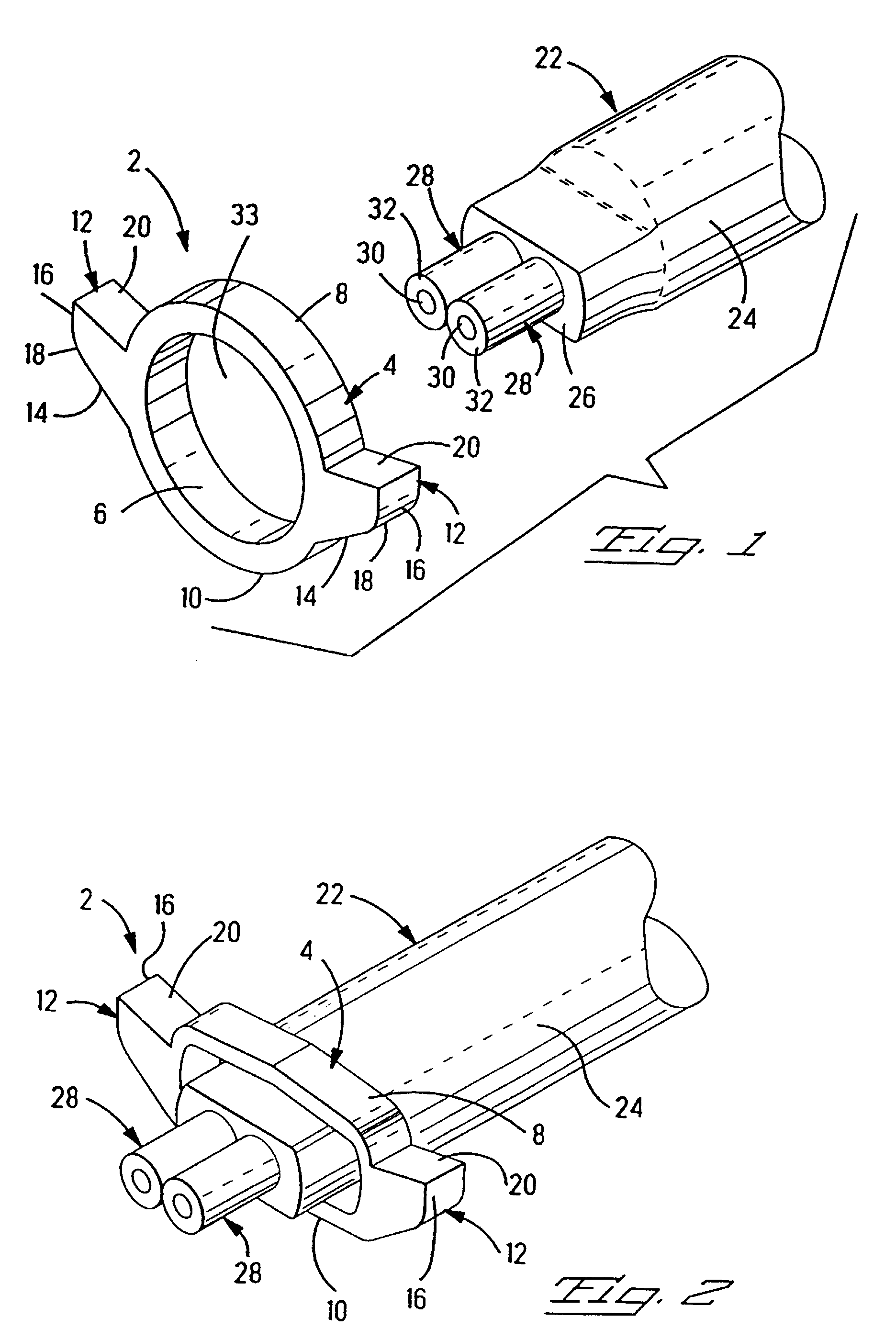
Figure 1 is a perspective view of a crimpable strain relief ferrule according to the
present invention and a jacketed cable upon which the ferrule is to be affixed;
Figure 2 is a perspective view of the components of Figure 1 shown in an assembled
form with the strain relief ferrule crimped to the cable;
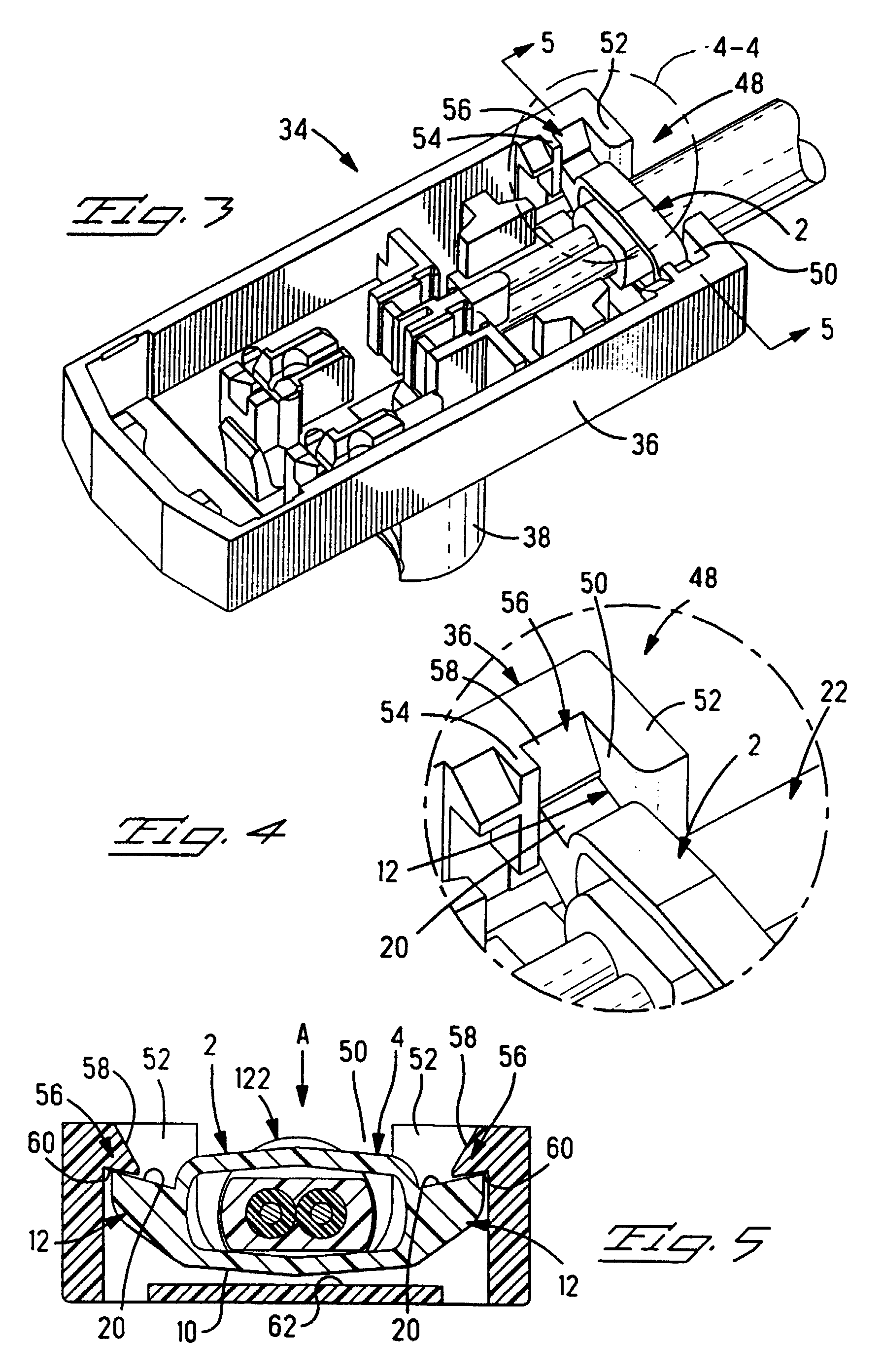
Figure 3 is an upper perspective view of an electrical connector incorporating the
assembly of Figure 2 therein;
Figure 4 is a detailed view of Figure 3 taken at section 4-4; and
Figure 5 is a cross-sectional view of the electrical connector of Figure 3 taken along
line 5-5.
[0009] With reference first to Figure 1, a crimpable strain relief ferrule according to
the present invention is shown generally at 2. The crimpable strain relief ferrule
2 includes a body portion 4 having a continuous internal cylindrical surface 6 and
corresponding upper and lower outer surfaces 8,10 respectively. The upper and lower
outer surfaces 8,10 meet through a pair of tabs 12. Each tab 12 includes a lower camming
surface 14 that is angled outward and upward. The camming surfaces 14 are tangentially
blended into end walls 16 through blend radii 18. The end walls 16 are joined to the
upper/outer surface 8 by retention ledges 20. The retention ledges 20 are configured
to be slightly undercut or back cut such that the intersection between the ledge 20
and the outer wall 16 is slightly above the inner section of the ledge 20 and the
outer surface 8.
[0010] Also shown in Figure 1 is a representative jacketed electrical cable at 22. Other
cables may be used. The jacketed cable 22 includes an outer jacket 24 having a dressed
forward end 26. In the particular cable 22 shown, a pair of insulated wires 28 extend
beyond the dressed face 26 and include conductive cores 30 surrounded by an insulative
layer 32. The jacketed cable 22 may include more or less conductive leads 28 and may
take on other shapes than the generally round cross section shown herein. If the cable
22 were to take on another shape, such as an oval, it may be desirable to alter the
shape of the interior 33 of the crimp ring 4, as defined by the interior surface 6,
to more closely correspond with the shape the jacketing cable 22. In addition, the
jacketed cable 22 may include additional members such as a strength member which would
comprise kevlar strands extending outwardly therefrom.
[0011] With reference now to Figure 2, the crimpable strain relief ferrule 2 is shown placed
on the cable 22 about the jacket 24 with the leads 28 extending therethrough. Once
properly positioned, the ferrule is crimped such that the upper and lower outer surfaces
8,10 are somewhat flattened, thereby expanding the ears 12 outward such that the width
across the end surface of the tabs 12 is increased. The crimping operation reduces
the height between the lower outer surface 10 and the retention ledges 20. In addition,
the crimping will orient the conductive leads 28 in a proper side-by-side relation.
If desired, an inner sleeve could be inserted along the conductors 28 so that any
crimping forces transmitted into the cable 22 do not adversely affect the conductors
therein.
[0012] With reference now to Figure 3, an electrical connector that incorporates the present
invention is shown generally at 34. The electrical connector 34 includes a connector
housing 36 having a mating portion 38 for engaging a complementary device and a cable
receiving portion 48 for receiving the cable 22 with the crimpable strain relief 2
affixed thereupon. The cable receiving portion 48 includes a channel 50 located between
opposing wall sections 52,54. Located at opposite ends and within the channel 50 between
the opposing walls 52,54 towards the open end thereof are latches 56 that each include
a camming surface 58 angled to funnel into the channel 50 and an undercut lower ledge
60 connected thereto.
[0013] As may be more readily observed in Figure 5, in order to properly position the strain
relief 2 within the connector housing 36, the strain relief 2 is positioned above
the channel 50 so that the camming surfaces 58 of latches 56 and the camming surfaces
14 of the tabs 12 correspond so that in response to a downward force along arrow A,
the latches 56 are displaced outward slightly until the strain relief 2 passes thereby
and then resile back to their original position, thereby captivating the strain relief
2 therein. As shown, the undercut surfaces 60 of the latches 56 overlap the retention
ledges 20 of the strain relief 2, thereby captivating the strain relief 2 and the
cable 122 with the connector. As the tabs 12 and part of the body 4 are located between
the opposing walls 52,54 in the channel 50 the strain relief 2 is also retained along
the axis of the cable 22.
[0014] In addition, a bottom wall 62 prevents over insertion of the strain relief 2 and
provides assurance that the strain relief body 4 is properly crimped as it is easily
imaginable that the height between the lower outer surface 10 and the latching surfaces
20 needs to be reduced by way of crimping in order for the undercut surface 60 of
the connector housing 36 to be able to engage the strain relief tabs 12. If complete
crimping has not occurred the lower outer surface 10 would interfere with the base
62 before the retention ledges 20 pass the point of intersection between the camming
surface 58 and the undercut wall 60 of the latches 56. By properly sizing the latches
56 it may be also assured that the necessary increase in the width of the crimpable
strain relief 2 must occur before the tabs 12 of the strain relief 2 could be engaged
by the corresponding latches 56 of the connector housing 36. Finally, as can be seen
in Figure 5, a further advantage is provided in that the cable may be affixed to the
connector 34 without the need for a cover to prevent it from being displaced therefrom;
however, the cover may be accommodated whereby assuring the upper outer surface 8
is properly crimped also by the upper surface 8 interfering with the cover in a manner
similar to that described for the housing 36.
1. A strain relief ferrule (2) for attachment to a jacketed cable (22) for attaching
said cable (22) to a connector housing (36) in a manner that transmits any load applied
to the cable (22) into the connector housing (36), the strain relief ferrule comprising
a deformable body (4) that is crimpable to said cable (22) for attachment therewith,
where said strain relief ferrule (2) is also attachable to said connector housing
(36), the strain relief ferrule (2) being characterized in that the deformable body
(4) is only retainable in the connector housing (36) upon complete crimping of the
strain relief ferrule (2).
2. The strain relief ferrule (2) of claim 1, further characterized in that the deformable
body (4) includes an outer surface (8,10) and an engagement tab (12) having a retention
ledge (20) for engagement by the housing (36) to retain the strain relief (2) therein,
where there is a first distance between the outer surface (10) and the retention ledge
(20) prior to crimping that prevents engagement by the housing (36) and a second distance
reached upon complete crimping such that the retention ledge (20) is engageable.
3. The strain relief ferrule of claim 1, further characterized in that the deformable
body (4) includes an outer surface (8,10) and an engagement tab (12) having a retention
ledge (20) for engagement by the housing (36), the engagement tab (12) having a first
position relative the centre of the body (4) in radial direction therefrom prior to
crimping and a second position, after complete crimping, further from the centre.
4. The strain relief ferrule (2) of claim 2 or claim 3, further characterized in that
an opposing tab (12) is included opposite the tab (12).
5. The strain relief ferrule (2) of claim 1, further characterized in that the deformable
body (4) includes an outer surface (8,10) from which a pair of opposing tabs (12)
extend, the tabs (12) including a retention ledge (20) disposed a first distance from
the outer surface (8,10) prior to crimping and an end wall (16) disposed in a first
position radially outward from the centre prior to crimping and upon complete crimping
the retention ledge (20) and outer surface (8,10') are brought closer together and
the opposing end walls (16) are moved further apart.
6. The strain relief ferrule (2) of claim 1, further characterized in that the deformable
body (4) has an interior surface (6) generally corresponding to the shape of the cable
(22) cross-section for receiving the cable (22) therethrough and the deformable body
(3) has upper and lower outer surfaces (8,10) separated by a pair of opposing tabs
(12), the tabs (12) having oppositely facing outer end walls (16) and retention ledges
(20) facing in a common direction, the deformable body (4) being crimpable by displacing
the upper and lower outer surfaces (8,1') towards each other such that the distance
to the retention ledge (20) is reduced.
7. The strain relief ferrule (2) of claim 5, further characterized in that as a result
of crimping, the outer end walls (16) are moved further apart.
8. A connector (34) for a jacketed cable (22) having conductors (28) therein, the connector
(34) comprising a connector housing (36) for receiving contacts therein that are engageable
to the conductors (28), where the housing (36) includes a mating portion (38) and
a cable receiving portion (48) for receiving the cable (22), the cable receiving portion
(48) including opposing walls (52,54) with a channel (50) having a base surface (62)
therebetween and retention features (56) disposed at opposing ends of the channel
(50) and a strain relief ferrule (2) receivable in the channel (50) for receiving
the cable (22) for crimping thereto where the strain relief ferrule (2) includes tabs
(12) that cooperate with the retention features (56) to retain the strain relief ferrule
(2) in the connector housing (36) when the strain relief ferrule (2) has been crimped
to the cable, the connector being characterized in that the distance between the base
surface (62) and the retention features (56) is such that for the tabs (12) to cooperate
with the retention features (56), the strain relief ferrule (2) must be crimped to
the cable (22).
9. The connector (34) of claim 8, further characterized in that the crimpable ferrule
(2) includes a deformable body (4) has an interior surface (6) generally corresponding
to the shape of the cable (22) cross-section for receiving the cable (22) therethrough
and the deformable body (3) has upper and lower outer surfaces (8,10) separated by
a pair of opposing tabs (12), the tabs (12) having oppositely facing outer end walls
(16) and retention ledges (20) facing in a common direction, the deformable body (4)
being crimpable by displacing the upper and lower outer surfaces (8,1') towards each
other such that the distance to the retention ledge (20) is reduced.
1. Crimpbare Zugentlastungshülse (2) zum Anbringen an einem mit einem Mantel versehenen
Kabel (22) zum Anbringen des Kabels (22) an einem Verbindergehäuse (36) auf eine Weise,
daß eine an das Kabel (22) angelegte etwaige Belastung in das Verbindergehäuse (36)
übertragen wird, wobei die Zugentlastungshülse einen verformbaren Körper (4) umfaßt,
der an das Kabel (22) zur Anbringung daran gekrümmt werden kann, wobei die Zugentlastungshülse
(2) auch an dem Verbindergehäuse (36) angebracht werden kann, wobei die Zugentlastungshülse
(2) dadurch gekennzeichnet ist, daß der verformbare Körper (4) in dem Verbindergehäuse
(36) nur bei vollständigem Crimpen der Zugentlastungshülse (2) gehalten werden kann.
2. Zugentlastungshülse (2) nach Anspruch 1, weiterhin dadurch gekennzeichnet, daß der
verformbare Körper (4) eine Außenfläche (8, 10) und eine Eingriffszunge (12) mit einem
Haltesims (20) zur Eingriffnahme durch das Gehäuse (36) zum Halten der Zugentlastung
(2) darin enthält, wobei vor dem Crimpen zwischen der Außenfläche (10) und dem Haltesims
(20) ein erster Abstand vorliegt, der einen Eingriff durch das Gehäuse (36) verhindert,
und bei vollständigem Crimpen ein zweiter Abstand erreicht wird, so daß der Haltesims
(20) in Eingriff genommen werden kann.
3. Zugentlastungshülse nach Anspruch 1, weiterhin dadurch gekennzeichnet, daß der verformbare
Körper (4) eine Außenfläche (8, 10) und eine Eingriffszunge (12) mit einem Haltesims
(20) zur Eingriffnahme durch das Gehäuse (36) enthält, wobei die Eingriffszunge (12)
vor dem Crimpen bezüglich der Mitte des Körpers (4) in radialer Richtung davon eine
erste Position und nach vollständigem crimpen eine von der Mitte weiter wegliegende
zweite Position aufweist.
4. Zugentlastungshülse (2) nach Anspruch 2 oder 3, weiter dadurch gekennzeichnet, daß
entgegengesetzt von der Zunge (12) eine entgegengesetzte Zunge (12) enthalten ist.
5. Zugentlastungshülse (2) nach Anspruch 1, weiter dadurch gekennzeichnet, daß der verformbare
Körper (4) eine Außenfläche (8, 10) enthält, von der aus sich ein Paar entgegengesetzter
Zungen (12) erstreckt, wobei die Zungen (12) einen vor dem Crimpen in einem ersten
Abstand von der Außenfläche (8, 10) angeordneten Haltesims (20) und eine vor dem Crimpen
in einer ersten Position radial nach außen angeordnete Endwand (16) enthält und bei
vollständigem Crimpen der Haltesims (20) und die Außenfläche (8, 10') näher zusammengebracht
werden und die entgegengesetzten Endwände (16) weiter voneinander wegbewegt werden.
6. Zugentlastungshülse (2) nach Anspruch 1, weiter dadurch gekennzeichnet, daß der verformbare
Körper (4) eine allgemein der Form des Querschnitts des Kabels (22) allgemein entsprechende
Innenfläche (6) zur Aufnahme des Kabels (22) dadurch aufweist und der verformbare
Körper (3) eine obere und untere Außenfläche (8, 10), die durch ein Paar entgegengesetzter
Zungen (12) getrennt sind, aufweist, wobei die Zungen (12) entgegengesetzt weisende
äußere Endwände (16) und Haltesimse (20) , die in eine gemeinsame Richtung weisen,
aufweisen, wobei der verformbare Körper (4) durch Verschieben der oberen und unteren
Außenfläche (8, 1') zueinanderhin derart, daß der Abstand von dem Haltesims (20) reduziert
wird, gecrimpt werden kann.
7. Zugentlastungshülse (2) nach Anspruch 5, weiter dadurch gekennzeichnet, daß als Ergebnis
des Crimpens die äußeren Endwände (16) voneinander wegbewegt werden.
8. Verbinder (34) für ein mit einem Mantel versehenes Kabel (22) mit Leitern (28) darin,
wobei der Verbinder (34) ein Verbindergehäuse (36) zur Aufnahme von Kontakten darin,
die die Leiter (28) in Eingriff nehmen können, umfaßt, wobei das Gehäuse (36) einen
Steckteil (38) und einen Kabelaufnahmeteil (48) zur Aufnahme des Kabels (22) enthält,
wobei der Kabelaufnahmeteil (48) entgegengesetzte Wände (52, 54) mit einem Kanal (50)
mit einer Bodenfläche (62) dazwischen und an entgegengesetzten Enden des Kanals (50)
angeordnete Haltemerkmale (56) und eine im Kanal (50) aufnehmbare Zugentlastungshülse
(2) zur Aufnahme des Kabels (22) zum Crimpen daran enthält, wobei die Zugentlastungshülse
(2) Zungen (12) enthält, die mit den Haltemerkmalen (56) zusammenwirken, um die Zugentlastungshülse
(2) in dem Verbindergehäuse (36) zu halten, wenn die Zugentlastungshülse (2) an das
Kabel gecrimpt worden ist, wobei der Verbinder dadurch gekennzeichnet ist, daß der
Abstand zwischen der Bodenfläche (62) und den Haltemerkmalen (56) derart ist, daß
zum Zusammenwirken der Zungen (12) mit den Haltemerkmalen (56) die Zugentlastungshülse
(2) an das Kabel (22) gecrimpt sein muß.
9. Verbinder (34) nach Anspruch 8, weiter dadurch gekennzeichnet, daß die crimpbare Hülse
(2) einen verformbaren Körper (4) mit einer der Form des Querschnitts des Kabels (22)
allgemein entsprechenden Innenfläche (6) zur Aufnahme des Kabels (22) dadurch aufweist
und der verformbare Körper (3) eine obere und untere Außenfläche (8, 10) aufweist,
die durch ein Paar entgegengesetzte Zungen (12) getrennt sind, wobei die Zungen (12)
entgegengesetzt weisende äußere Endwände (16) und Halteringe (20) aufweisen, die in
eine gemeinsame Richtung weisen, wobei der verformbare Körper (4) durch Verschieben
der oberen und unteren Außenfläche (8, 1') zueinander derart, daß der Abstand von
dem Haltesims (20) reduziert ist, gecrimpt werden kann.
1. Ferrule de décharge de traction (2) destinée à être fixée à un câble gainé (22) pour
fixer ledit câble (22) à un boîtier (36) de connecteur de façon à transmettre une
charge quelconque appliquée au câble (22) dans le boîtier (36) du connecteur, la ferrule
de décharge de traction comprenant un corps déformable (4) sertissable sur ledit câble
(22) pour s'y fixer, ladite ferrule de décharge de traction (2) pouvant également
être fixée audit boîtier (36) du connecteur, ladite ferrule de décharge de traction
(2) étant caractérisée en ce que le corps déformable (4) n'est susceptible d'être
retenu dans le boîtier (36) de connecteur qu'à la suite du sertissage complet de la
ferrule de décharge de traction (2).
2. Ferrule de décharge de traction (2) selon la revendication 1, caractérisée en outre
en ce que le corps déformable (4) comporte une surface extérieure (8, 10) et une patte
d'engagement (12) présentant un rebord de retenue (20) destiné à être engagé par le
boîtier (36) pour y retenir la décharge de traction (2), une première distance entre
la surface extérieure (10) et le rebord de retenue (20) préalablement au sertissage
empêchant l'engagement par le boîtier (36) et une deuxième distance atteinte suite
au sertissage complet, permettant l'engagement du rebord de retenue (20).
3. Ferrule de décharge de traction selon la revendication 1, caractérisée en outre en
ce que le corps déformabie (4) comporte une surface extérieure (8, 10) et une patte
d'engagement (12) présentant un rebord de retenue (20) destiné à être engagé par le
boîtier (36), la patte d'engagement (12) se trouvant dans une première position par
rapport au centre du corps (4) dans une direction radiale depuis celui-ci préalablement
au sertissage, et dans une deuxième position, suite au sertissage complet, plus éloignée
du centre.
4. Ferrule de décharge de traction (2) selon la revendication 2 ou la revendication 3,
caractérisée en outre en ce qu'une patte opposée (12) est prévue à l'opposé de la
patte (12).
5. Ferrule de décharge de traction (2) selon la revendication 1, caractérisée en outre
en ce que le corps déformable (4) comporte une surface extérieure (8, 10) depuis laquelle
se prolongent une paire de pattes opposées (12), les pattes (12) comportant un rebord
de retenue (20) disposé à une première distance de la surface extérieure (8, 10) préalablement
au sertissage et une paroi d'extrémité (16) disposée dans une première position radialement
vers l'extérieur depuis le centre préalablement au sertissage et, à la suite du sertissage
complet, le rebord de retenue (20) et la surface extérieure (8, 10) sont rapprochés
l'un de l'autre et les parois d'extrémité opposées (16) sont écartées davantage.
6. Ferrule de décharge de traction (2) selon la revendication 1, caractérisée en outre
en ce que le corps déformable (4) présente une surface intérieure (6) correspondant
généralement à la forme de la section transversale du câble (22) pour recevoir le
câble (22) à travers lui et le corps déformable (4) présente des surfaces extérieures
supérieure et inférieure (8, 10) séparées par une paire de pattes opposées (12), les
pattes (12) présentant des parois d'extrémité extérieures (16) tournées dans des directions
opposées et des rebords de retenue (20) tournés dans une direction commune, le corps
déformable (4) étant sertissable par déplacement des surfaces extérieures supérieure
et inférieure (8, 10) l'une vers l'autre de façon à réduire la distance jusqu'au rebord
de retenue (20).
7. Ferrule de décharge de traction (2) selon la revendication 5, caractérisé en outre
en ce que, du fait du sertissage, les parois d'extrémité extérieures (16) sont écartées
davantage.
8. Connecteur (34) pour un câble gainé (22) contenant des conducteurs (28), le connecteur
(34) comprenant un boîtier (36) de connecteur destiné à recevoir des contacts susceptibles
de s'engager avec les conducteurs (28), le boîtier (36) comportant une portion d'accouplement
(38) et une portion (48) de réception de câble destinée à recevoir le câble (22),
la portion (48) de réception du câble comportant des parois opposées (52, 54) avec
une rainure (50) présentant une surface de base (62) entre celles-ci et des dispositifs
de retenue (56) disposés à des extrémités opposées de la rainure (50) et une ferrule
de décharge de traction (2) susceptible d'être reçue dans la rainure (50) en vue de
recevoir le câble (22) pour y être sertie, la ferrule de décharge de traction (2)
comportant des pattes (12) qui coopèrent avec les dispositifs de retenue (56) pour
retenir la ferrule de décharge de traction (2) dans le boîtier (36) du connecteur
lorsque la ferrule de décharge de traction (2) a été sertie sur le câble, le connecteur
étant caractérisé en ce que la distance entre la surface de base (62) et les dispositifs
de retenue (56) est telle que, pour que les pattes (12) coopèrent avec les dispositifs
de retenue (56), la ferrule de décharge de traction (2) doit être sertie sur le câble
(22).
9. Connecteur (34) selon la revendication 8, caractérisé en outre en ce que la ferrule
sertissable (2) comporte un corps déformable (4) présentant une surface intérieure
(6) correspondant généralement à la forme de la section transversale du câble (22)
pour recevoir le câble (22) à travers lui et le corps déformable (4) présente des
surfaces extérieures supérieure et inférieure (8, 10) séparées par une paire de pattes
opposées (12), les pattes (12) présentant des parois d'extrémité extérieures (16)
tournées dans des directions opposées et des rebords de retenue (20) tournés dans
une direction commune, le corps déformable (4) étant sertissable par déplacement des
surfaces extérieures supérieure et inférieure (8, 10) l'une vers l'autre de façon
à réduire la distance jusqu'au rebord de retenue (20).