|
(11) | EP 0 849 329 A1 |

| (12) | EUROPEAN PATENT APPLICATION |
|
|
|
|
|||||||||||||||||||
| (54) | Composition and method for enhancing the surface adhesion of polyurethane foam to surfaces of thermoplastic blends |
| (57) A composition and method for promoting improved adhesion between a thermoplastic
resinous substrate and polyurethane foam is provided. In one aspect of this invention,
the composition comprises a thermoplastic mixture of at least one polyphenylene ether
and at least one poly(alkenylaromatic) compound; and at least one primary amine-containing
material or secondary amine-containing material. |
Field of the Invention
[0001] This invention relates to novel compositions of thermoplastic blends of polyphenylene ethers and poly(alkenylaromatic compounds) that improve adhesion with polyurethane foam. More particularly, the invention relates to substrate compositions containing polyphenylene ether resins and primary or secondary amine-containing materials. It also relates to a method for promoting the adhesion of polyurethane foam to the surfaces of said substrate compositions. The invention is further related to resinous articles with foam inserts.
Background of the Invention
[0002] Thermoplastic resins have become of interest in recent years as a replacement for metal in the interior parts of automobiles, such as the manufacture of instrument panels, top covers and arm rests in the interior of the car. In these applications one requirement of the plastic resin is that it must adhere to polyurethane foam. Currently, there are plastic products available that are in use for these applications. However, there is a need for improved properties of the plastics and improved adhesion of the plastic with the polyurethane foam.
[0003] One such product that has potential for use in the automotive industry is a General Electric Company product called "Noryl". Noryl® is a registered Trademark for the resinous mixture of polyphenylene ether and poly(alkenylaromatic compound). Noryl is a good choice for automotive applications because of its high impact strength, flame retardant property, low cost and dimensional stability. The successful application of Noryl for automotive interior components requires excellent adhesion performance with polyurethane foam. Previously, a resinous mixture of polyphenylene ether in 38 parts by weight with polystyrene and 62 parts by weight has shown little or no adhesion with polyurethane foam. Thus, there is a need to have a Noryl composition utilizing the properties of the thermoplastic resin mixture that will also provide improved adhesion with polyurethane foam.
Summary of the Invention
[0004] Accordingly, this invention provides a composition and method for promoting improved adhesion between a thermoplastic resinous substrate and polyurethane foam. In one aspect of this invention, the composition comprises a thermoplastic mixture of at least one polyphenylene ether and at least one poly(alkenylaromatic) compound; and at least one primary amine-containing material or secondary amine-containing material. By primary amine-containing material is meant a material having one or more -NH2 groups. Examples of such materials include, but are not limited to, cyclohexylamine and 1-hexadecylamine. Further, the primary amine-containing material can be a mixture of poly(oxymethyl-1,2-ethanediyl)-α-hydro-ω-(2-aminomethylethoxy) )ether with 2-ethyl-2-(hydroxymethyl)-1,3-propanediol in a ratio of about 3-1, commercially available as Jeffamine ™ T-403. By secondary amine-containing material is meant a material contains at least one R2NH where R is any alkyl or aryl group . A class of secondary amine-containing materials would be polyethyleneimines. Additional examples of such materials include, but are not limited to, diethylamine and dipropylamine.
[0005] Another aspect of the invention is an article comprising a resinous thermoplastic substrate and a layer of polyurethane foam on a surface of said substrate, wherein the substrate comprises a thermoplastic mixture of at least one polyphenylene ether and at least one poly(alkenylaromatic) compound; and at least one primary amine-containing material or secondary amine-containing material.
[0006] Still another aspect of the invention is a method for improving the adhesion of polyurethane foam to a resinous thermoplastic substrate comprising the steps of: forming a resinous substrate containing a thermoplastic mixture of at least one polyphenylene ether and at least one poly(alkenylaromatic) compound with at least one primary amine-containing material or secondary amine-containing material; placing the resinous thermoplastic substrate in a foaming mold shell; pouring a homogeneous foaming mixture into the foaming mold on the substrate; and removing the mold shell after a sufficient amount of time to cure the foam layer adhering to the substrate.
[0007] It is an object of this invention to provide a composition for a thermoplastic resin that is capable of providing enhanced adhesion between polyurethane foam and resinous thermoplastic substrates.
[0008] It is another object of this invention to provide an article containing a resinous thermoplastic substrate with an adhering polyurethane foam layer.
[0009] It is a further object of the invention to provide a method for making the article consisting of a resinous thermoplastic substrate with the foam layer. Also in accordance with this invention, there is provided a thermoplastic article of manufacture that could be used as an automotive instrument panel. A thermoplastic substrate used in the instrument panel is treated with polyurethane foam, exhibiting excellent adhesion between the polyurethane foam and the substrate material.
Description of the Invention
[0010] As noted above, the principal components of the inventive composition that will yield a resinous thermoplastic substrate with enhanced adhesion to polyurethane foam are: a thermoplastic mixture or blend of at least one polyphenylene ether and at least one poly(alkenylaromatic) compound and at least one primary amine-containing material or secondary amine-containing material. Other compounds can be present in the composition such as flame retardants, impact modifiers, mold releases, antioxidants, stabilizers, and mixtures thereof. The amount of polyphenylene ether in the polyphenylene ether-poly(alkenylaromatic) compound mixture is at least about 20 parts by weight based on a total of 100 parts. The preferred amount is about 30-50 parts by weight. The amount of poly(alkenylaromatic) compound in the polyphenylene ether-poly(alkenylaromatic) compound mixture is at least about 20 parts by weight based on a total of 100 parts.
[0011] Representative examples of polyphenylene ethers are known polymers comprising a plurality of structural units of the formula
wherein in each of said units independently, each Q1 is independently halogen, primary or secondary lower alkyl (i.e., alkyl containing up to seven carbon atoms), phenyl, haloalkyl, aminoalkyl, hydrocarbonoxy, or halohydrocarbonoxy, wherein at least two carbon atoms separate the halogen and the oxygen atoms; and each Q2 is independently hydrogen, halogen, primary or secondary lower alkyl, phenyl, haloalkyl, hydrocarbonoxy or halohydrocarbonoxy as defined for Q1. Most often, each Q1 is alkyl or phenyl, especially C1-4-alkyl, and each Q2 is hydrogen.
[0012] Both homopolymer and copolymer polyphenylene ethers are included. The preferred homopolymers and those containing 2,6-dimethyl-1,4-phenylene ether units. Suitable copolymers include random copolymers containing such units in combination with, for example, 2,3,6-trimethyl-1,4-phenylene ether units. Also included are polyphenylene ethers containing moieties prepared by grafting onto the polyphenylene ether in known manner such materials as vinyl monomers or polymers such as polystyrenes and elastomers, as well as coupled polyphenylene ethers in which coupling agents such as low molecular weight polycarbonates, quinones, heterocycles and formals, undergo reaction in known manner with the hydroxy groups of polyphenylene ether chains to produce a higher molecular weight polymer, provided a substantial proportion of free OH groups remains.
[0013] The polyphenylene generally has a number average molecular weight within the range of about 3,000-40,000 and a weight average molecular weight within the range of about 20,000-80,000, as determined, by gel permeation chromatography. Its intrinsic viscosity is most often in the range of about 0.15-0.6 dl./g., as measured in chloroform at 25°C.
[0014] The polyphenylene ethers are typically prepared by the oxidative coupling of at least one monohydroxyaromatic compound such as 2,6-xylenol or 2,3,6-trimethylphenol. Catalyst systems are generally employed for such coupling; they typically contain at least one heavy metal compound such as copper, manganese, or cobalt compound, usually in combination with various other materials.
[0015] Particularly useful polyphenylene ethers for many purposes are those which comprise molecules having at least one aminoalkyl-containing end group. The amino-alkyl radical is typically located in an ortho position to the hydroxy group. Products containing such end groups may be obtained by incorporating an appropriate primary or secondary monoamine such as di-n-butylamine or dimethylamine as one of the constituents of the oxidative coupling reaction mixture. Also frequently present are 4-hydroxybiphenyl end groups, typically obtained from reaction mixtures in which a by-product diphenoquinone is present, especially in a copper-halide-secondary or tertiary amine system. A substantial proportion of the polymer molecules, typically constituting as much as about 90% by weight of the polymer, may contain at least one of said aminoalkyl-containing and 4-hydroxybiphenyl end groups.
[0016] It will be apparent to those skilled in the art from the foregoing that the polyphenylene ethers contemplated for use in the present invention include all those presently known, irrespective of variations in structural units or ancillary chemical features.
[0017] The poly(alkenylaromatic compounds) employed in the thermoplastic resinous substrate composition include homopolymers and copolymers of such compounds as styrene, α-methylstyrene, 4-methylstyrene and dibromostyrene. Styrene is generally preferred. Particularly preferred are conventional rubber-modified polystyrenes, sometimes designated "high impact polystyrene" or "HIPS".
[0018] It is known that polyphenylene ethers and poly(alkenylaromatic compounds) are miscible in all proportions. While polyphenylene ether and poly(alkenylaromatic compound) blends containing any proportion of the two resins may be employed in the invention, it is preferred that the polyphenylene ether be present in amounts of at least about 20% by weight and preferably at least about 30-50% by weight, based on the two polymers. Most preferable is about 40% by weight, based on the two polymers. The poly(alkenylaromatic compound) is present in an amount of at least about 20% by weight, based on the two polymers, and preferably in an amount of about 20-80% by weight, and most preferably in an amount of about 50% by weight.
[0019] The polyphenylene ether and poly(alkenylaromatic) compound mixture or blend may also contain conventional additives, especially flame retardant additives and impact modifiers. Flame retardant additives include brominated styrenes and phosphorous-containing chemicals such as triphenylphosphate, tri-t-butylphenylphosphate, tetraphenyl, resorcinol bisphosphate, tetraxylyl resorcinol bisphosphate, tetraphenylhydroquinone bisphosphate and tetraxylyl hydroquinone bisphosphate. Impact modifiers for polyphenylene ether-poly(alkenylaromatic compound) mixtures or blends are known. They include diblock and triblock copolymers of alkenylaromatic compounds such as styrene and aliphatic dienes such as butadiene and isoprene. The composition may also include mold release compounds such as polyethylene.
[0020] Also as noted above, another principal ingredient in the composition is a primary amine-containing material or secondary amine-containing material. One such material is commercially known as Jeffamine T-403, which is poly(oxy)methyl-1 ,2-ethanediyl-α-hydro-ω-(2 aminomethylethoxy)ether with 2-ethyl-2-(hydroxymethyl)-1,3-propanediol in a ratio of 3-1. It was found that as little as about two (2) weight percent of Jeffamine in the inventive composition improves the adhesion of a foam blend to the thermoplastic resinous substrate. The primary amine-containing material may be present in the range of about 2 to 20 weight percent of the total composition. About eight to 20 weight percent of a primary amine-containing material, such as Jeffamine T-403, is a preferred range.
[0021] Also included as an additive applicable to this invention are secondary amine-containing materials such as polyethyleneimines. Examples of these materials include diethylamine and dipropylamine. The secondary amine-containing material may be present in the range of about 2 to 20 weight percent of the total composition. About 8 to 20 weight percent of a secondary amine in the inventive formulation is a preferred range.
[0022] The addition of more than one amine-containing material may further enhance the adhesion of polyurethane foam to the resinous thermoplastic substrate. For instance, the addition of a second additive such as Nirez™ 2150, which is a terpenephenol made by reacting limonene and phenol, was found to increase the adhesive performance between the resinous thermoplastic substrate and the polyurethane foam.
[0023] Further understanding of the present invention may be had from the following examples and comparative examples which are intended to illustrate, but not limit, the invention.
EXAMPLES
Example 1.
[0024] Three blends containing polyphenylene ether and poly(alkenylaromatic compound) were made and tested for foam adhesion. Table I shows the compositions in Plaques 1-3 and the physical appearance as well as the results from foam adhesion testing.
Table I.
| Plaque 1 | Plaque 2 | Plaque 3 | |
| PPE (0.46 i.v.)1 | 38 | 40 | 40 |
| Novacor 22722 | 62 | 60 | 60 |
| Jeffamine T-4033 | |||
| 2 | 8 | ||
| Plaque Appearance | |||
| Foam Adhesion | transp | transp | |
| X* | ±§ | √¶ |
| transp: transparent; X*: no adhesion; ±§: marginal adhesion; √¶: excellent |
|||
| 1. PPE (0.46 i.v.) - polyphenylene ether | |||
| 2. Novacor 2272 - polystyrene. | |||
| 3. Jeffamine T-403 - primary amine-containing material. |
[0025] Plaque 1 represents the standard Noryl formulation and is used as the control model without the amine containing additives. The control blend Plaque 1 contains only poly(2,6-dimethyl-1,4-phenylene oxide) (PPE) and Novacor 2272, a polystyrene. This had very poor polyurethane foam adhesion. The foam in Plaque 1 separated from the substrate cohesively. Plaque 2 had 40 parts by weight polyphenylene ether and 60 parts by weight polystyrene plus 2 parts by weight Jeffamine T-403, which is poly(oxy)methyl-1,2-(ethanediyl-α-hydro-ω-2-aminomethyloxyethoxy)ether with 2-ethyl-(hydroxymethyl)-1,3-propanediol in a ratio of 3:1. The foam adhesion for Plaque 2 was significantly improved over Plaque 1. Some cohesive failure in the polyurethane foam took place during the peel test. Plaque 3 demonstrates the same composition as Plaque 2 except that about eight weight percent of Jeffamine T-403 is used in the Noryl formulation. Plaque 3 had excellent foam adhesion with the polyurethane foam. A complete cohesive failure occurred in the foam during the peel test in Plaque 3. It is further pointed out from Table I that the plaque appearance of Plaque 2 and Plaque 3 was transparent, which shows that the Jeffamine T-403 additive has excellent compatibility with the polypropylene ether and polystyrene.
[0026] The foam procedure that was used to formulate the resinous article with a foam polyurethane layer to be tested for adhesion follows. A very light coat of the mold release was applied with a paper towel to all interior surfaces of the foaming mold. The plaques tested (composition shown in Tables I and II) were covered with a mesh screen and placed inside the mold. The plaques were held on the sides of the mold with a double-stick tape on their back surface. In a 1000 ml plastic disposable beaker, 308 grams of polyol UF1010B was weighed. In a separate 250 ml disposable beaker, 192 grams of polyisocyanate PAPI 4095 was added. Then, the polyisocyanate was poured into the polyol beaker, and the contents were mixed with overhead mechanical stirrer with a stirring speed of 5,000 rpm for 8 seconds. The homogeneous mixture was poured into the foaming mold immediately after mixing and a cover was placed on the mold, then it was fastened with two cover clamps. In about an hour the foamed plaques were removed from the mold by taking the mold apart.
[0027] The plaques with the polyurethane foam on the surface were then conditioned for 24 hours at room temperature. The samples were then cut into several 1 inch wide strips. The adhesion of the polyurethane foam to the plastic substrate that were covered with a mesh screen was accessed by pulling the foam apart from the substrate at 90° at a speed of 2.5 inches per minute. The locus of failure, whether cohesive or adhesive, and the force required for the failure were reported as noted in Table I.
Example 2
[0028] A fourth sample, Plaque 4, was made using a combination of Jeffamine and Nirez additives to improve the urethane foam adhesion. The composition of the improved Noryl formulation is shown in Table II.
Table II
| Plaque 4 | |
| PPE (0.46 intrinsic viscosity)1 | 45 |
| HIPS2 | 55 |
| Nirez 21503 | 5 |
| Jeffamine T4034 | 2 |
| Kraton G 16505 | 5 |
| SOL T63026 | 5 |
| Hostastat HS-17 | 2 |
| Polyethylene8 | 1.5 |
| ZnS/ZnO9 | 0.15/0.15 |
| 1. PPE (0.46 intrinsic viscosity) - polyphenylene ether | |
| 2. HIPS: high impact polystyrene | |
| 3. Nirez 2150 - terpene phenol resin | |
| 4. Jeffamine T-403 - primary amine-containing material | |
| 5. Kraton G 1650: styrene-ethylene-butylene (SEB) saturated rubber | |
| 6. SOL T6302: styrene-butadiene unsaturated rubber | |
| 7. Hostastat HS-1: Sodium C12-20 alkanesulfonates | |
| 8. Polyethylene - linear low density polyethylene | |
| 9. ZnS/ZnO - zinc sulfide/zinc oxide powders |
[0029] The formulation shown in Plaque 4 was made employing both Nirez 2150, terpenephenol made by reacting liminene and phenol and Jeffamine T-403. As anticipated, the formulation had excellent physical properties and foam adhesion. The foam test that was conducted was similar to that of Example 1. The foam adhesion between the Noryl resinous substrate and the polyurethane foam was excellent.
1. A composition for a resinous thermoplastic substrate comprising: a thermoplastic mixture
of at least one polyphenylene ether and at least one poly(alkenylaromatic) compound;
and at least one primary amine-containing material or secondary amine-containing material.
2. A composition according to claim 1 where the polyphenylene ether comprises a plurality
of structural units of the formula
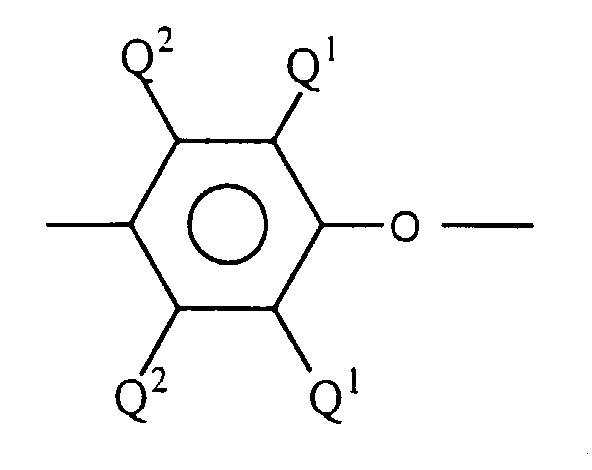
wherein in each of said units independently, each Q1 is independently halogen, primary or secondary lower alkyl containing up to seven carbon atoms, phenyl, haloalkyl, aminoalkyl, hydrocarbonoxy, or halohydrocarbonoxy, wherein at least two carbon atoms separate the halogen and the oxygen atoms; and each Q2 is independently hydrogen, halogen, primary or secondary lower alkyl, phenyl, haloalkyl, hydrocarbonoxy or halohydrocarbonoxy as defined for Q1.
wherein in each of said units independently, each Q1 is independently halogen, primary or secondary lower alkyl containing up to seven carbon atoms, phenyl, haloalkyl, aminoalkyl, hydrocarbonoxy, or halohydrocarbonoxy, wherein at least two carbon atoms separate the halogen and the oxygen atoms; and each Q2 is independently hydrogen, halogen, primary or secondary lower alkyl, phenyl, haloalkyl, hydrocarbonoxy or halohydrocarbonoxy as defined for Q1.
3. A composition according to claim 2 where the polyphenylene ether is a poly(2,6-dimethyl-1,4-phenylene
ether).
4. A composition according to claim 1 where the poly(alkenylaromatic) compound is polystyrene.
5. A composition according to claim 1 where the primary amine-containing material is
a mixture of poly(oxymethyl-1,2-ethanediyl)-α-hydro-ω-(2 aminomethylethoxy)ether with
2-ethyl-2-(hydroxymethyl)-1,3-propanediol in a ratio of about 3-1.
6. A composition according to claim 1, further comprising mold release compounds, flame
retardant additives, impact modifiers, antioxidants, stabilizers, and mixtures thereof.
7. A method for improving adhesion between a resinous thermoplastic substrate and foam,
said method comprising the steps of:
blending a mixture of at least one polyphenylene ether and at least one poly(alkenylaromatic compound);
adding at least one primary amine-containing or secondary amine-containing material to said polyphenylene ether-poly(alkenylaromatic) compound mixture in an amount that later produces sufficient adhesion of a foam to the resinous thermoplastic substrate;
forming the resinous thermoplastic substrate.
8. A method according to claim 7 where the primary amine-containing material is a mixture
of poly(oxymethyl-1,2-ethanediyl)-α-hydro-ω-( 2-aminomethylethoxy)ether with 2-ethyl-2-(hydroxymethyl)-1,3-propanediol
in a ratio of about 3-1.
9. A method according to claim 7 where the polyphenylene ether comprises a plurality
of structural units of the formula
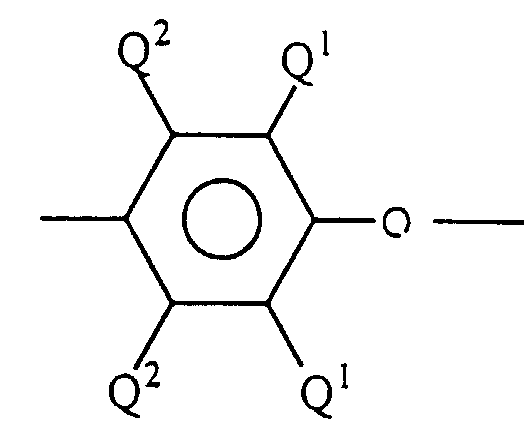
wherein in each of said units independently, each Q1 is independently halogen, primary or secondary lower alkyl containing up to seven carbon atoms, phenyl, haloalkyl, aminoalkyl, hydrocarbonoxy, or halohydrocarbonoxy, wherein at least two carbon atoms separate the halogen and the oxygen atoms; and each Q2 is independently hydrogen, halogen, primary or secondary lower alkyl, phenyl, haloalkyl, hydrocarbonoxy or halohydrocarbonoxy as defined for Q1.
wherein in each of said units independently, each Q1 is independently halogen, primary or secondary lower alkyl containing up to seven carbon atoms, phenyl, haloalkyl, aminoalkyl, hydrocarbonoxy, or halohydrocarbonoxy, wherein at least two carbon atoms separate the halogen and the oxygen atoms; and each Q2 is independently hydrogen, halogen, primary or secondary lower alkyl, phenyl, haloalkyl, hydrocarbonoxy or halohydrocarbonoxy as defined for Q1.
10. A resinous thermoplastic article, which comprises: a substrate molded from a resinous
thermoplastic consisting essentially of a mixture of 50 to 80 weight percent of polyphenylene
ether resin and 20 to 50 weight percent of a poly(alkenylaromatic) compound, and a
sufficient amount of at least one primary amine-containing material or secondary amine-containing
material to provide adhesion to a foam surface; and foam adhered directly to the substrate
surface.