|
(11) | EP 0 874 284 A1 |

| (12) | EUROPEAN PATENT APPLICATION |
|
|
|
|
|||||||||||||||||||||||
|
||||||||||||||||||||||||
| (54) | Developer for a positive electron beam resist composition |
| (57) The present invention relates to a developer for a positive electron beam resist
composition containing a cresolnovolak resin, a lower molecular additive with a specific
structure and a quinonediazide compound with a specific structure, the developer containing
specific amounts of alkali metal ions, weak acid anions and a water soluble organic
compound. Use of the developer with the positive electron beam resist composition, which results in excellent dry etching resistance and resolution, enables a fine pattern to be obtained at high sensitivity. |
[0001] The present invention relates to a developer for a positive electron beam resist composition used for producing masks for photolithography and semiconductor integrated circuits by using electron beam lithography.
[0002] Conventionally used positive electron beam resists are mainly composed of a polymer such as polymethyl methacrylate, poly(2,2,2-trifluoroethyl α-chloroacrylate) or poly(1-butenesulfone). However, these resists are disadvantageously poor in dry etching resistance. In recent years, dry-etching is increasingly used in the production of photomasks and semiconductor integrated circuits, and these conventional resists cannot be used satisfactorily in more cases.
[0003] On the contrary, positive photoresists mainly composed of a novolak resin and a quinonediazide compound (e.g., Japanese Patent Laid-Open (Kokai) Nos. 63-115162, 3-251845 and 4-12357) are excellent in dry etching resistance and in addition, can be developed by a non-swelling alkali aqueous solution, hence being excellent in resolution and pattern form advantageously. However, they are unpractically extremely low in sensitivity when used for electron beam lithography.
[0004] An object of the present invention is to present a developer for a positive electron beam resist composition mainly composed of a novolak resin and a quinonediazide compound, which composition is excellent in dry etching resistance and resolution and high in sensitivity.
[0005] Another object of the present invention is to present a developer for use in a method for forming a fine pattern specifically high in sensitivity, accurately rectangular in form and higher in resolution by using the positive electron beam resist composition.
[0006] The present invention provides a developer for a positive electron beam resist composition, as defined in claim 1 hereof. By use of the developer of the invention with positive electron beam resist compositions as described hereinbelow, a fine pattern at high sensitivity can be obtained.
[0007] The inventors studied the resists mainly composed of a novolak resin and a quinonediazide compound, and the processes for using them, and as a result, found that if a resist optimized in material and composition is developed by a developer with a specific composition according to the present invention, high sensitivity not achieved by applying any of the conventional photoresists can be achieved.
[0008] The developer of the present invention will be described in detail further below, but first the positive electron beam resist compositions with which it may be used will be described in detail.
[0009] The positive electron beam resist composition used with the developer of the present invention comprises (1) a cresolnovolak resin, (2) at least one additive selected from the group consisting of compounds represented by the following general formulae (I) and (II):
(where R1, R2 and R3 stand for, respectively independently, one selected from the group consisting of hydrogen atom, alkyl group, aralkyl group and aryl group; R4, R5, R6, R7, R8, R9, R10 and R11, respectively independently, one selected from the group consisting of hydrogen atom, halogen atom, hydroxyl group and alkyl group; m, 0 to 3; and n, 0 to 1.)
(where X stands for -(CH2)2-, -(CH2)3-,
and R stands for an alkyl group or aralkyl group.)
and (3) the quinonediazide compound obtained by letting methyl gallate and 1,2-naphthoquinonediazido-4-sulfonyl chloride react with with each other, as main ingredients, where the amount of the additive (2) is 5 to 20 wt% based on the weight of the resist solid; the amount of the quinonediazide compound (3) is 10 to 20 wt% based on the weight of the resist solid; and the triester content in the quinonediazide compound (3) is 30 to 55 wt%.
[0010] The cresolnovolak resin used in the positive electron beam composition can be obtained, for example, by condensing a cresol, preferably a mixture of p-cresol and m-cresol and formaldehyde or paraformaldehyde as a formaldehyde polymer or 1,3,5-trioxane.
[0011] The condensation reaction can be effected without any solvent or in an organic solvent. The organic solvent can be preferably selected from alcohols such as methanol, ethanol, 1-propanol, 2-propanol and 1-butanol, cellosolves such as methyl cellosolve, ethyl cellosolve and butyl cellosolve, cellosolve esters such as methyl cellosolve acetate and ethyl cellosolve acetate, ethers such as tetrahydrofuran and 1,4-dioxane.
[0012] The catalyst for the condensation reaction can be preferably selected from acids such as oxalic acid, formic acid, hydrochloric acid, sulfuric acid, perchloric acid, phosphoric acid and p-toluenesulfonic acid and metal salts such as zinc acetate and magnesium acetate.
[0013] The novolak resin thus obtained generally contains low molecular components such as dinuclear component with two phenols condensed and trinuclear component with three phenols condensed. The low molecular components contain those which cause scum and pattern deformation. If the synthesized novolak contains these low molecular components in a large amount, they should be removed by any proper operation, preferably to keep the total content of dinuclear and trinuclear components at 10 wt% or less.
[0014] To remove the low molecular components from the novolak resin, for example, any of the following methods can be used.
(1) Extraction method
[0015] The novolak resin is finely ground and stirred with an organic solvent such as benzene, toluene, xylene, chlorobenzene or dichlorobenzene, or water or a mixture consisting of an organic solvent such as ethanol or ethanol and water, at a certain temperature, and the lower molecular components are extracted.
(2) Re-precipitation method
[0016] The novolak resin is dissolved into an organic solvent such as methanol, ethanol, acetone or ethyl cellosolve, and a bad solvent such as water, petroleum ether or hexane is added dropwise into the novolak solution, or on the contrary the novolak solution is added dropwise into the bad solvent, for precipitating the novolak resin. The precipitate is then separated and dried.
(3) Separation method
[0017] The novolak resin is dissolved into a mixed solvent consisting of an organic solvent miscible with water such as methanol, ethanol, acetone or ethyl cellosolve and an organic solvent immiscible with water such as ethyl cellosolve acetate or propylene glycol monomethyl ether acetate, and water is added dropwise for separation into two layers. The organic layer is then separated and concentrated.
[0018] Furthermore, the electron beam resist composition contains at least one compound selected from a group consisting the compounds represented by the general formulae (I) and (II) as an additive.
[0019] Several known techniques use an alkali soluble low molecular compound as an additive for the photoresist, including those stated in Japanese Patent Laid-Open (Kokai) Nos. 1-44439, 1-177032, 2-275955, 3-230164, 3-251845, 4-12357.
[0020] However, the resists using any of these additives do not always give good results when used as electron beam resists, as described in detail in the prior art discussion section hereinabove. However, the most excellent properties are exhibited when any of the compounds represented by the general formula (I) stated in Japanese Laid-Open (Kokai) No. 4-12357 or any of the compounds represented by the general formula (II) stated in Japanese Patent Laid-Open (Kokai) No. 3-251845 is used with the specific quinonediazide compound described later.
[0021] Any one or several as a mixture of these additives can be used. The amount of the additive should be 5 to 20 wt% based on the weight of the resist solid. In this case, the resist solid refers to the balance remaining after removing the solvent from the resist composition. If the amount is less than 5 wt%, the sensitivity is too low, and if more than 20 wt%, the resist pattern is deformed. A preferable range is 10 to 20 wt%.
[0023] Especially preferable compounds among these additives are those represented by the general formula (I) where m stands for 0 or 1, more preferably where m stands for 0 while n stands for 0. Furthermore, compounds with halogen atoms and/or alkyl groups, particularly chlorine atoms and/or methyl groups as R4 to R11 are preferable. Those with the OH groups in the formula (I) at the p-position are also preferable.
[0024] The electron beam resist composition contains the quinonediazide compound obtained by reaction between methyl gallate and 1,2-naphthoquinonediazido-4-sulfonyl chloride as an ingredient sensitive to the electron beam.
[0025] The quinonediazide compound obtained like this is generally a mixture consisting of a monoester with one hydrogen atom of the hydroxyl groups of methyl gallate substituted by a 1,2-naphthoquinonediazido-sulfonyl group, a diester with two hydrogen atoms of the hydroxyl groups substituted by 1,2-naphthoquinonediazido-sulfonyl groups and a triester with all of the three hydrogen atoms of the hydroxyl groups substituted by 1,2-naphthoquinonediazido-sulfonyl groups. In this mixture, the amount of the triester must be 30 to less than 55 wt%, preferably 40 to 50 wt% based on the total amount of the quinonediazide compound. If the amount of the triester is more than the range, the sensitivity is too low, and if smaller than the range, the film thickness after development is decreased more in the non-exposed portion, to deform the pattern. The amount of all the quinonediazide compound should be 10 to 20 wt%, preferably 15 to 20 wt% based on the weight of the resist solid. If the amount is more than 20 wt%, the sensitivity is too low, and if less than 10 wt%, the film thickness is remarkably decreased.
[0026] This quinonediazide compound is known as a sensitive material for photoresists, but Japanese Patent Publication (Koho) No. 54-20330 reports that it is not practical for photoresists since the film remaining rate after completion of development is too large. As an improvement, Japanese Patent Laid-Open (Kokai) No. 63-115162 states that if the amount of the triester is kept at 0.4 wt% or more and the amount of the quinonediazide compound conforms to the following conditions, then the photoresist obtained becomes good in performance.
(where x is the weight ratio of the triester in the sensitive material, and A/B is the ratio by weight of the sensitive material to the alkaline soluble resin.)
[0027] However, this composition range does not agree with the range used in the electron beam resist of the present invention at all, and it can be seen that the composition preferable as a photoresist is greatly different from the composition preferable as an electron beam resist.
[0028] The resist composition can have such additives as a surfactant and antioxidant added properly in addition to the above main ingredients.
[0029] The resist composition can be obtained by dissolving the above ingredients into a solvent. The amount of the solvent used is not especially determined, but should be adjusted to keep the resist solid content in a range from 10 to 35 wt% of the resist composition. The solvent can be preferably selected from esters such as ethyl acetate, butyl acetate, amyl acetate, methyl propionate, ethyl propionate, methyl butyrate, ethyl butyrate, methyl benzoate, methyl lactate and ethyl lactate, cellosolves such as methyl cellosolve, ethyl cellosolve and butyl cellosolve, cellosolve esters such as methyl cellosolve acetate, ethyl cellosolve acetate and butyl cellosolve acetate, propylene glycol ether esters such as propylene glycol monomethyl ether acetate and propylene glycol monoethyl ether acetate, ethers such as 1,2-dimethoxyethane, 1,2-diethoxyethane, tetrahydrofuran, 1,4-dioxane and anisole, ketones such as methyl ethyl ketone, methyl isobutyl ketone, cyclohexanone and isophorone, amides such as dimethylformamide, dimethylacetamide and N-methylpyrrolidone, aprotic polar solvents such as dimethyl sulfoxide and sulfolane, and their mixtures.
[0030] The electron beam resist composition is applied onto a substrate, dried, exposed to an electron beam with a pattern, and developed using the developer of the present invention, to form a fine pattern.
[0031] The coating, drying and exposure can be effected according to any of the conventional methods used for forming an electron beam resist pattern. For example, a spinner is used for coating to form a film of about 0.5 to 2.0 µm in dry thickness, and the film is dried. For exposure, an ordinary electron beam exposure apparatus can be used.
[0032] According to the invention a developer as defined further below can be used to develop the above described electron beam resists, resulting in uniform development at high sensitivity, high resolution in good pattern form without any development residue.
[0033] The developer according to the present invention comprises alkali metal ions, weak acid anions and a water soluble organic compound subject to the following conditions: 0.05 ≤ a ≤ 0.5, 0.07 ≤ bn ≤ 1.5 and a < bn or a > bn, wherein a is the concentration of the alkali metal in mol/kg, b is the concentration of the weak acid anion in mol/kg and n is the valence of the weak acid anions, the concentration of the water soluble organic compound being 0.5 to 10 wt%.
[0034] The alkali metal is generally sodium or potassium. The concentration, a, of the alkali metal (the total concentration of the ionized metal and the salt) should be preferably 0.05 to 0.5 mol/kg, more preferably 0.08 to 0.4 mol/kg. If the concentration of the alkali metal is too high, the film thickness after development is decreased greatly, and no pattern can be obtained. If too low, the pattern portion to be dissolved is not dissolved, and no pattern can be obtained either.
[0035] The weak acid anion can be selected from carbonic acid anion (CO32-), silicic acid anion (SiO32-), phosphoric acid anion (PO43-), boric acid anion (BO33-). Among them, boric acid anion is most preferable. The product, bn, of the concentration, b, of the weak acid anion (the total concentration of the anion and the salt) and the valence, n, of the weak acid anion should be preferably 0.075 to 1.5 mol/kg, more preferably 0.15 to 0.9 mol/kg. If the concentration of the weak acid anion is too high, the dissolving rate is too low to allow development, and if the concentration is too low, the solubility becomes irregular, not to allow the pattern to be obtained. For example, if two or more kinds of anions such as CO32- and HCO3- exist in case of carbonic acid, the value of b should be obtained assuming the most dissociated state (CO32- in this case), and therefore the value or n should also be assumed to be the value in the most dissociated state (2 in this case), for obtaining the product, bn.
[0036] The relation between the concentration, a, of the alkali metal and the product, bn should be preferably a < bn or a > bn. For effective exhibition of buffer action, a < bn is preferable. The developer can also be used even at
, but it is inferior in buffer action.
[0037] The developer satisfying the above requirements can be prepared by, but not limited to, dissolving predetermined amounts of an alkali metal hydroxide and a weak acid into water, or dissolving predetermined amounts of an alkali metal hydroxide and a weak acid salt of the alkali metal into water.
[0038] The most preferable developer contains potassium ions and boric acid anions, and in this case, specifically high sensitivity can be obtained. In addition, if the developer is used, the pattern form is accurately rectangular and the resolution is also high advantageously. In this case, it is preferable that the molar ratio of potassium atoms to boron atoms in the developer is 100 : 50 to 100 : 100, more preferably 100 : 60 to 100 : 70. The preferable concentration of the developer depends on the developing machine, temperature and resist composition, but it is generally preferable that the amount of potassium atoms contained per 1 kg of the developer is in a range from 0.05 to 0.50 mole. The developer can be prepared not only from potassium hydroxide and potassium borate, but also from a corresponding amount of potassium hydroxide and boric acid.
[0039] The developer contains a water soluble organic compound. The water soluble organic compound contained in the developer can present such effects as more uniform solubility, higher sensitivity and freedom from development residue.
[0040] The water soluble organic compound can be one or more selected from, but not limited to, the compounds represented by the following general formulae (I, (II), (III), (IV) and (V), dimethyl sulfoxide, aceconitrile, pyridine, morpholine.
(where R1, R2, R3 and R4 stand for, respectively independently, one selected from the group consisting of hydrogen atom, alkyl group and hydroxyalkyl group; R1 and R4 may also be combined to form a closed ring; and the number of carbon atoms of this compound is 1 to 6.)
(where R1, R2 and R3 stand for, respectively independently, one selected from the group consisting of hydrogen atom, alkyl group and hydroxyalkyl group; R1 and R3 may also be combined to form a closed ring; and the number of carbon atoms of this compound is 1 to 9.)
(where R1, R2 and R3 stand for, respectively independently, one selected from the group consisting of hydrogen atom, alkyl group and hydroxyalkyl group; R1 and R3 may also be combined to form a closed ring; and the number of carbon atoms of this compound is 1 to 9.)
R1 (O-CHR2-CHR3)nO-R4 (IV)
(where R1, R2, R3 and R4 stand for, respectively independently, one selected from the group consisting of hydrogen atom, alkyl group and hydroxyalkyl group; R1 and R4 may also be combined to form a closed ring; n stands for 1 to 10; and the number of carbon atoms of this compound is 2 to 20.)
(where R1 and R2 stand for, respectively independently, one selected from the group consisting of alkyl group, hydroxyalkyl group and phenyl group with hydroxy group; and the number of carbon atoms of this compound is 3 to 14.)
[0041] The compounds represented by general formula (I) include methanol, ethanol, n-propanol, isopropanol, n-butanol, 2-methyl-1-propanol, 2-methyl-2-propanol, n-pentanol, 2-methyl-1-butanol, 2-methyl-2-butanol, 3-methyl-1-butanol, 3-methyl-2-butanol, 2,2-dimethyl-1-propanol, n-hexanol, cyclohexanol, 2,2-dimethyl-1,3-propanediol, glycerol, tetrahydrofuran.
[0042] The compounds represented by general formula (II) include diethylamine, triethylamine, propylamine, dipropylamine, isopropylamine, diisopropylamine, monoethanolamine, diethanolamine, triethanolamine, ethylethanolamine, methylethanolamine, ethyldiethanolamine, methyldiethanolamine, diethylaminoethanol, dimethylaminoethanol, propanolamine isopropanolamine, methylpropanolamine, methylisopropanolamine, dimethylpropanolamine, dimethylisopropanolamine, ethylpropanolamine, ethylisopropanolamine, diethylpropanolamine, diethylisopropanolamine, dibutylaminoethanol, pyrrolidine, pyrrole.
[0043] The compounds represented by general formula (III) include dimethylformamide, acetamide, N-methylacetamide, N,N-dimethylacetamide, N-ethylacetamide, N,N-diethylacetamide, pyrrolidone, N-methylpyrrolidone, N-vinylpyrrolidone, 3-pyrrolidino-1,2-propanediol, valerolactam, caprolactam.
[0044] The compounds represented by general formula (IV) include ethylene glycol, diethylene glycol, triethylene glycol, propylene glycol, ethylene glycol monomethyl ether, ethylene glycol monoethyl ether, ethylene glycol monobutyl ether, ethylene glycol monoisopropyl ether, diethylene glycol monomethyl ether, diethylene glycol monoethyl ether, diethylene glycol monobutyl ether, triethylene glycol monomethyl ether, triethylene glycol monoethyl ether, triethylene glycol monobutyl ether, ethylene glycol dimethyl ether, ethylene glycol diethyl ether, ethylene glycol dibutyl ether, diethylene glycol dimethyl ether, diethylene glycol diethyl ether, diethylene glycol dibutyl ether, triethylene glycol dimethyl ether, triethylene glycol diethyl ether, triethylene glycol dibutyl ether, propylene glycol monomethyl ether, propylene glycol dimethyl ether, polyethylene glycol, 1,4-dioxane.
[0045] The compounds represented by general formula (V) include acetone, methyl ethyl ketone, 4-hydroxy-4-methyl-2 -pentanone.
[0046] Preferable water soluble organic compounds are dimethyl sulfoxide and the compounds represented by general formulae (I), (II), (III) and (IV), particularly 2-diethylaminoethanol, dimethylaminoethanol, diethanolamine, monoethanolamine, tetrahydrofuran, ethanol, ethylene glycol, propylene glycol, dimethyl sulfoxide, N-methylpyrrolidone.
[0047] The amount of the water soluble organic compound added should be preferably in a range from 0.5 to 10 wt%. If the amount of the water soluble organic compound added is too large, the film thickness after development is decreased greatly to result in poor resolution, and if too small, film roughening and development residue are liable to occur.
[0048] The developer containing such an inorganic salt is high in interfacial tension, and hence poor in wettability and liable to cause uneven development. So, it is preferable to add any proper surfactant. The surfactant added greatly affects the performance of the developer. For example, a quaternary ammonium salt surfactant or polyoxyethylene surfactant often remarkably lowers the sensitivity. For the developer of the present invention, it is preferable to use an acetylene alcohol surfactant or sulfonate surfactant, since they do not adversely affect the performance. The amount of the surfactant added should be preferably 30 to 300 ppm based on the amount of the developer.
Example 1
(1) Preparation of novolak
[0050] A novolak resin was obtained according to an ordinary method, using 35 parts of m-cresol, 65 parts of p-cresol, 0.5 part of oxalic acid and 46 parts of 37% formalin.
[0051] By gel permeation chromatography, the novolak was found to be 6650 in weight average molecular weight (in terms of polyethylene oxide), 1184 in number average molecular weight, 5.62 in molecular weight dispersion, 10.5 wt% in dinuclear component content and 5.7 wt% in trinuclear component content.
[0052] One part of the novolak was dissolved into 5.00 parts of methanol, and with stirring, 4.00 parts of water were added dropwise, to precipitate the novolak. The supernatant solution was removed, and the precipitated novolak was taken out and dried in vacuum at 50°C for 24 hours. The amount of the novolak obtained was 0.86 part. The novolak was found to be 7,259 in weight average molecular weight, 1,745 in number average molecular weight, 4.16 in molecular weight dispersion, 6.1 wt% in dinuclear component content and 3.0 wt% in trinuclear component content.
(2) Preparation of quinonediazide compound
[0053] Fifteen point zero grams (81 mmol) of methyl gallate and 41.0 g (153 mmol) of 1,2-naphthoquinonediazido-4-sulfonyl chloride were dissolved into 220 cm3 of dioxane, and the solution was heated to 40°C. Then, a solution with 15.4 g (153 mmol) of triethylamine dissolved in 65 cm3 of dioxane was added dropwise, and the mixture was stirred for 5.5 hours. The reaction mixture was poured into water, and the precipitate formed was secured by filtration, washed by water, washed by methanol and dried, to obtain 41.0 g of a yellow powder. By high performance liquid chromatography, the triester content was found to be 48%. (3) Preparation of resist composition
[0054] The following raw materials were mixed, to prepare a resist solution. In the following description, "parts" means "parts by weight".
| Novolak prepared in (1) | 10.4 parts |
| Illustrated compound (I-3) | 1.3 parts |
| Quinonediazide compound prepared in (2) | 1.7 parts |
| Propylene glycol monomethyl ether acetate | 76.6 parts |
| Dimethylformamide | 10.0 parts |
| Surfactant "Troysol" 366 (produced by Troy Chemical) | 0.03 part |
(4) Preparation of developer
[0055] Two hundred and sixty eight cubic centimeters (0.268 mol) of 1N sodium hydroxide and 10.6 g (0.171 mol) of boric acid were dissolved into water, to make a total amount of 1 kg, and furthermore 0.05 g of "Surfinol" 104 (surfactant prepared by Nisshin Kagaku) was added.
(5) Resist process
[0056] The resist prepared in (3) was applied onto a silicon wafer using a spinner, and baked in a 110°C oven for 10 minutes, to prepare a 0.5 µm thick film sample.
[0057] An electron beam exposure apparatus was used to expose the sample to a 0.45 mm x 0.60 mm rectangular region at an acceleration voltage of 20 kV at a current of 1 nA sequentially with the exposure time changed.
[0058] Subsequently the developer prepared in (4) was used for immersion development at 23°C for 200 seconds, and the developed sample was rinsed by pure water.
(6) Evaluation of properties
[0059] The resist film thicknesses of the non-exposed portion and the exposed rectangular regions of the sample were measured one after another. For each exposed portion, the dosage (the value obtained by dividing the product of current and exposure time by the area) and the film remaining rate (the value obtained by dividing the film thickness of the exposed portion by the coating film thickness) were calculated, and the film remaining rates were plotted against the logarithms of the dosage, to draw a sensitivity curve. From the sensitivity curve, the dosage corresponding to a film remaining rate of 0 was obtained as the sensitivity value. The coating film thickness was subtracted from the film thickness of the non-exposed portion, to obtain the film thickness loss.
Example 2
(1) Preparation of resist composition
[0061] The following raw materials were mixed, to prepare a resist solution.
| The same novolak as used in Example 1 | 11.7 parts |
| The same quinonediazide compound as used in Example | 1 1.7 part |
| Propylene glycol monomethyl ether acetate | 76.6 parts |
| Dimethylformamide | 10.0 parts |
| Surfactant "Troysol" 366 (produced by Troy Chemical) | 0.03 part |
(2) Resist process and evaluation
[0062] A coating film sample was prepared and exposed as done in Example 1, and the same developer as used in Example 1 was used for immersion development for 140 seconds. The properties were evaluated as done in Example 1.
Example 3
(1) Preparation of resist composition
[0064] The following raw materials were mixed, to prepare a resist solution.
| The same novolak as used in Example 1 | 10.4 parts |
| p-cresol trimer | 1.3 parts |
| The same quinonediazide compound as used in Example 1 | 1.7 parts |
| Propylene glycol monomethyl ether acetate | 76.6 parts |
| Dimethylformamide | 10.0 parts |
| Surfactant "Troysol" 366 (produced by Troy Chemical) | 0.03 part |
(2) Resist process and evaluation
[0065] A coating film sample was prepared and exposed as done in Example 1, and the same developer as used in Example 1 was used for immersion development for 114 seconds. The properties were evaluated as done in Example 1.
Example 4
(1) Preparation of resist composition
[0067] The following raw materials were mixed, to prepare a resist solution.
| The same novolak as used in Example 1 | 10.4 parts |
| 2,3,4-trihydroxybenzophenone | 1.3 parts |
| The same quinonediazide compound as used in Example 1 | 1.7 parts |
| Propylene glycol monomethyl ether acetate | 76.6 parts |
| Dimethylformamide | 10.0 parts |
| Surfactant "Troysol" 366 (produced by Troy Chemical) | 0.03 part |
(2) Resist process and evaluation
[0068] A coating film sample was prepared and exposed as done in Example 1, and the same developer as used in Example 1 was used for immersion development for 114 seconds. The properties were evaluated as done in Example 1.
Example 5
[0070] The same resist as used in Example 1 was used, and film coating and exposure were effected under the same conditions. The sample was immersed in an aqueous solution containing 0.13 mole of potassium silicate per 1 kg for development for 103 seconds, and the properties were evaluated as done in Example 1.
Example 6
[0072] The same resist as used in Example 1 was used, and film coating and exposure were effected under the same conditions. The sample was immersed in an aqueous solution containing 0.213 mole of potassium silicate and 0.107 mole of tripotassium phosphate per 1 kg for development for 110 seconds, and the properties were evaluated as done in Example 1.
Example 7
[0074] The same resist as used in Example 1 was used, and film coating and exposure were effected under the same conditions. The sample was immersed in 0.14N potassium hydroxide aqueous solution for development for 96 seconds, and the properties were evaluated as done in Example 1.
Example 8
(1) Preparation of resist composition
[0076] The following raw materials were mixed, to prepare a resist solution.
| The same novolak as used in Example 1 | 10.4 parts |
| Illustrated compound (I-6) | 1.3 parts |
| The same quinonediazide compound as used in Example 1 | 1.7 parts |
| Propylene glycol monomethyl ether acetate | 76.6 parts |
| Dimethylformamide | 10.0 parts |
| Surfactant "Troysol" 366 (produced by Troy Chemical) | 0.03 part |
(2) Resist process and evaluation
[0077] A coating film sample was prepared and exposed as done in Example 1, and the same developer as used in Example 1 was used for immersion development for 180 seconds. The properties were evaluated as done in Example 1.
Example 9
(1) Preparation of resist composition
[0079] The following raw materials were mixed, to prepare a resist solution.
| The same novolak as used in Example 1 | 10.4 parts |
| Illustrated compound (II-6) | 1.3 parts |
| The same quinonediazide compound as used in Example 1 | 1.7 parts |
| Propylene glycol monomethyl ether acetate | 76.6 parts |
| Dimethylformamide | 10.0 parts |
| Surfactant "Troysol" 366 (produced by Troy Chemical) | 0.03 part |
(2) Resist process and evaluation
[0080] A coating film sample was prepared and exposed as done in Example 1, and the same developer as used in Example 1 was used for immersed development for 120 seconds. The properties were evaluated as done in Example 1.
Example 10
(1) Preparation of resist solution
[0082] The following raw materials were mixed, to prepare a resist solution.
| The same novolak as used in Example 1 | 10.4 parts |
| Illustrated compound (II-8) | 1.3 parts |
| The same quinonediazide compound as used in Example 1 | 1.7 parts |
| Propylene glycol monomethyl ether acetate | 76.6 parts |
| Dimethylformamide | 10.0 parts |
| Surfactant "Troysol" (produced by Troy Chemical) | 0.03 part |
(2) Resist process and evaluation
[0083] A coating film sample was prepared and exposed as done in Example 1, and the same developer as used in Example 1 was used for immersed development for 150 seconds. The properties were evaluated as done in Example 1.
Example 11
[0085] The same resist as used in Example 1 was used, and film coating and exposure were effected under the same conditions. The sample was immersed in 1 kg of a developer prepared by dissolving 196 cc (0.196 mol) of 1N potassium hydroxide, 7.0 g (0.113 mol) of boric acid and 30.0 g (3.0 wt%) of 2-diethylaminoethanol into water, for development at 23°C for 300 seconds, and the developed sample was rinsed by pure water. The properties were evaluated as done in Example 1.
[0087] By SEM, 0.5 µm line/space patterns could be observed to keep almost rectangles in an excellent form of 1 : 1. The development residue was not observed, and uniform resist patterns could be obtained.
Example 12
[0088] The same resist as used in Example 1 was used, and film coating and exposure were effected under the same conditions. The sample was immersed into a developer prepared by dissolving 236 cc (0.236 mol) of 1N potassium hydroxide, 8.4 g (0.135 mol) of boric acid and 20.0 g (2.0 wt%) of 2-diethylaminoethanol into water, to make a total amount of 1 kg, for development at 23°C for 300 seconds, and the developed sample was rinsed by pure water. The properties were evaluated as done in Example 1.
[0090] By SEM, 0.5 µm line/space patterns could be observed to keep almost rectangles in an excellent-form of 1 : 1. The development residue was not observed, and uniform resist patterns could be obtained.
Example 13
[0091] The same resist as used in Example 9 was used, and film coating and exposure were effected under the same conditions. The sample was immersed in a developer prepared by dissolving 196 cc (0.196 mol) of 1N potassium hydroxide, 7.0 g (0.113 mol) of boric acid and 30.0 g (3.0 wt%) of 2-diethylaminoethanol into water, to make a total amount of 1 kg, for development at 23°C for 300 seconds, and the developed sample was rinsed by pure water. The properties were evaluated as done in Example 1.
1. A developer for a positive electron beam resist composition, comprising alkali metal
ions, weak acid anions and a water soluble organic compound subject to the following
conditions: 0.05 ≤ a ≤ 0.5, 0.07 ≤ bn ≤ 1.5 and a < bn or a > bn, wherein a is the
concentration of the alkali metal in mol/kg, b is the concentration of the weak acid
anion in mol/kg and n is the valence of the weak acid anions, the concentration of
the water soluble organic compound being 0.5 to 10 wt%.
2. A developer according to claim 1, wherein said alkali metal is sodium and/or potassium.
3. A developer according to claim 1, wherein said weak acid anion is at least one weak
acid anion selected from the group consisting of carbonic acid anion, silicic acid
anion, phosphoric acid anion and boric acid anion.
4. A developer according to claim 1, wherein the water soluble organic compound is at
least one compound selected from the group consisting of the compounds represented
by the following general formulae (I), (II), (III), (IV) and (V), dimethyl sulfoxide,
acetonitrile, pyridine and morpholine:
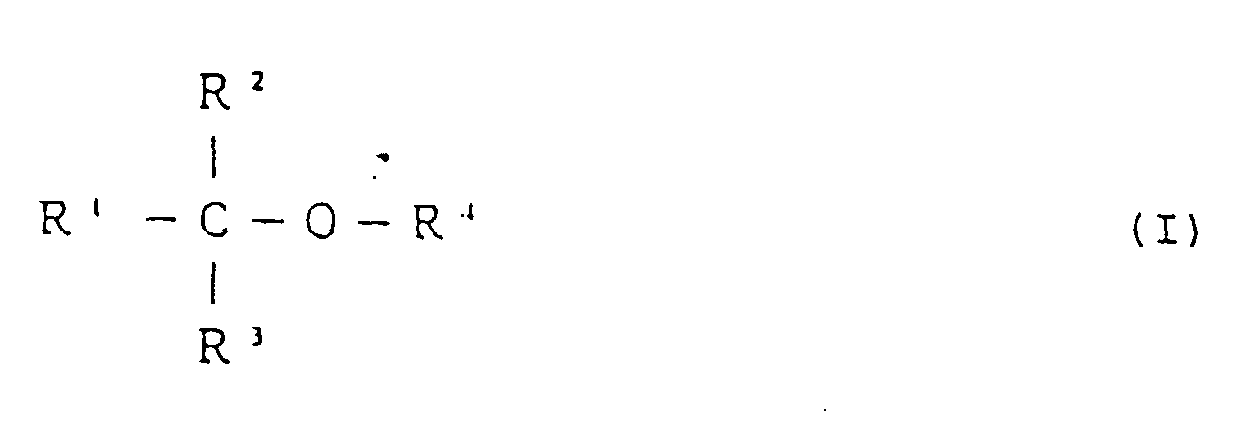
(where R1, R2, R3 and R4 stand for, respectively independently, one selected from the group consisting of hydrogen atom, alkyl group and hydroxyalkyl group; R1 and R4 may also be combined to form a closed ring; and the number of carbon atoms of this compound is 1 to 6.)
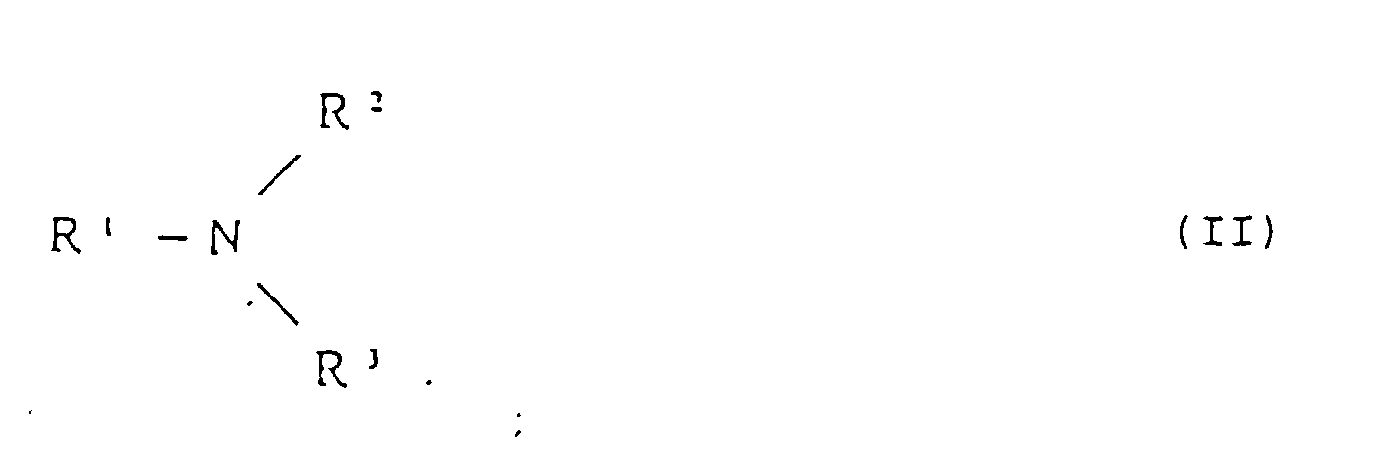
(where R1, R2 and R3 stand for, respectively independently, one selected from the group consisting of hydrogen atom, alkyl group and hydroxyalkyl group; R1 and R3 may also be combined to form a closed ring; and the number of carbon atoms of this compound is 1 to 9.)
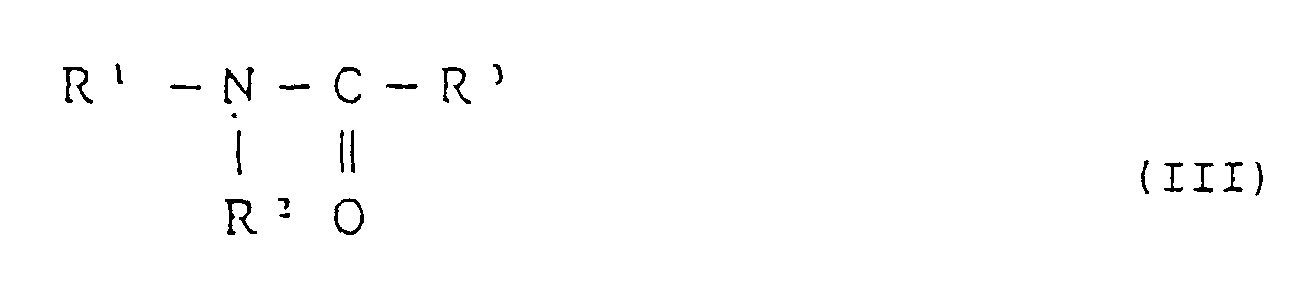
(where R1, R2 and R3 stand for, respectively independently, one selected from the group consisting of hydrogen atom, alkyl group and hydroxyalkyl group; R1 and R3 may also be combined to form a closed ring; and the number of carbon atoms of this compound is 1 to 9.)
R1 (O-CHR2-CHR3)nO-R4 (IV)
(where R1, R2, R3 and R4 stand for, respectively independently, one selected from the group consisting of hydrogen atom, alkyl group and hydroxyalkyl group; R1 and R4 may also be combined to form a closed ring; n stands for 1 to 10; and the number of carbon atoms of this compound is 2 to 20.)
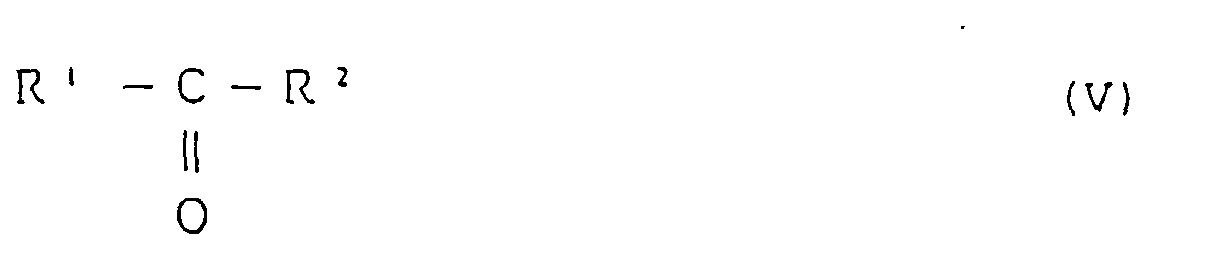
(where R1 and R2 stand for, respectively independently, one selected from the group consisting of alkyl group, hydroxyalkyl group and phenyl group with hydroxy group; and the number of carbon atoms of this compound is 3 to 14.)
(where R1, R2, R3 and R4 stand for, respectively independently, one selected from the group consisting of hydrogen atom, alkyl group and hydroxyalkyl group; R1 and R4 may also be combined to form a closed ring; and the number of carbon atoms of this compound is 1 to 6.)
(where R1, R2 and R3 stand for, respectively independently, one selected from the group consisting of hydrogen atom, alkyl group and hydroxyalkyl group; R1 and R3 may also be combined to form a closed ring; and the number of carbon atoms of this compound is 1 to 9.)
(where R1, R2 and R3 stand for, respectively independently, one selected from the group consisting of hydrogen atom, alkyl group and hydroxyalkyl group; R1 and R3 may also be combined to form a closed ring; and the number of carbon atoms of this compound is 1 to 9.)
R1 (O-CHR2-CHR3)nO-R4 (IV)
(where R1, R2, R3 and R4 stand for, respectively independently, one selected from the group consisting of hydrogen atom, alkyl group and hydroxyalkyl group; R1 and R4 may also be combined to form a closed ring; n stands for 1 to 10; and the number of carbon atoms of this compound is 2 to 20.)
(where R1 and R2 stand for, respectively independently, one selected from the group consisting of alkyl group, hydroxyalkyl group and phenyl group with hydroxy group; and the number of carbon atoms of this compound is 3 to 14.)