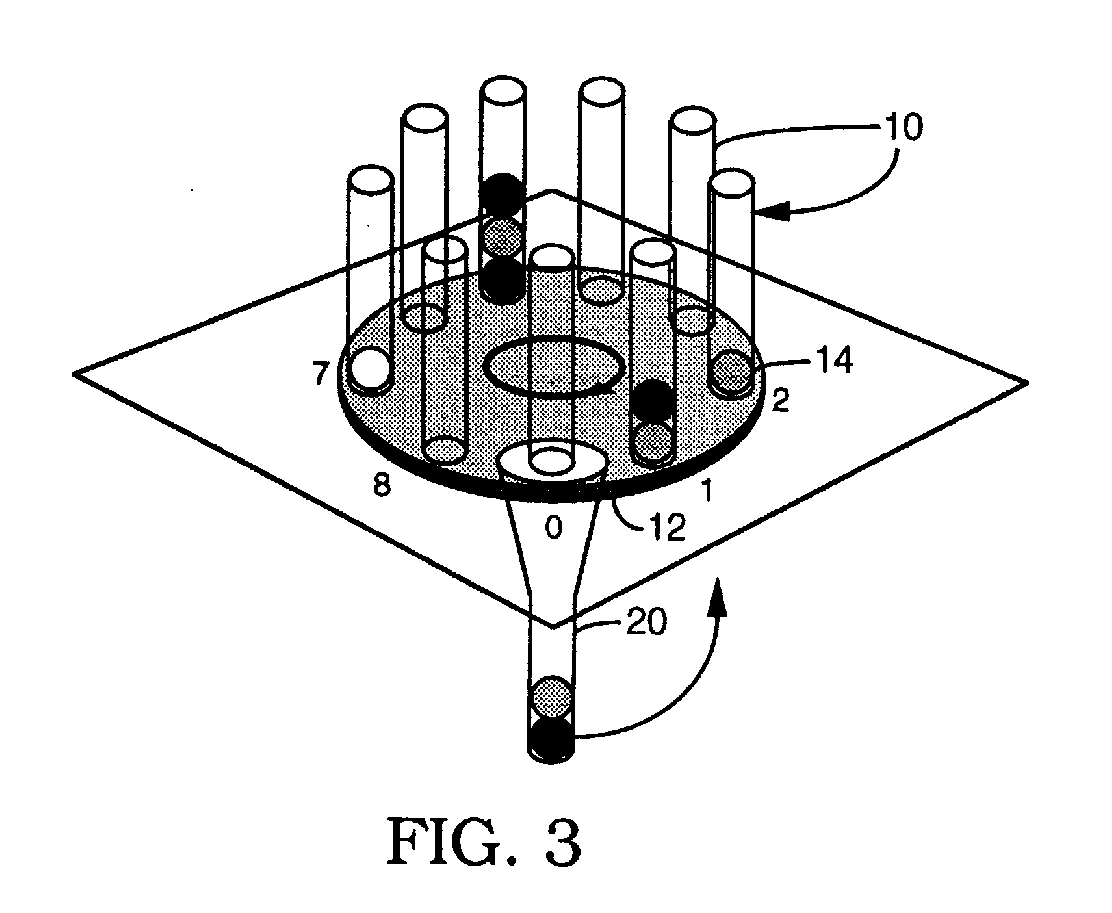
(57) A method is provided for the implementation of a time-wheel ATM cell scheduler with
very large number of queues that can precisely pace any assigned bandwidth described
in [i,m] terms (i cells in m cell-times), as long as m/i >= [number of queues]. The
method requires only a small, bounded amount of work per physical connection independent
of the number of VCS and comprises, at predetermined cell transmission time intervals,
interactively selecting one of the queues of the first type, if the selected queue
has at least one entry, transferring all entries of the first type from the selected
queue to a queue of the second type, if the queue of the second type has at least
one entry, transmitting an entry at a head of the queue of the second type, the entry
at the head of the queue of the second type being related to a step, if the period
of time elapsed since an entry at the head of the queue of the second type was last
transmitted is less than the step of the entry at the head of the queue of the second
type, appending said entry at the head of the queue of the second type to a tail of
one of the queues of the first type, and if a period of time elapsed since an entry
at the head of the queue of the second type was last transmitted is not less than
the step of the entry at the head of the queue of the second type, appending the entry
at the head of the queue of the second type to the tail of the queue of the second
type.
|
|
