|
(11) | EP 0 910 100 B1 |

| (12) | EUROPEAN PATENT SPECIFICATION |
|
|
| (54) |
Conductive polymer compositions and processes thereof Leitfähige Polymerzusammensetzungen und Verfahren damit Compositions de polymères conductrices et leur procédés |
|
|
|||||||||||||||||||||||||||||||
| Note: Within nine months from the publication of the mention of the grant of the European patent, any person may give notice to the European Patent Office of opposition to the European patent granted. Notice of opposition shall be filed in a written reasoned statement. It shall not be deemed to have been filed until the opposition fee has been paid. (Art. 99(1) European Patent Convention). |
[0001] U.S. Patent No. 4,338,222, discloses an electrically conducting, three-component composition comprising: a polymer matrix; an organic hole transport compound, particularly tetraaryl diamines, and oxidized species of the same molecule, which is the reaction product of the organic hole transport compound and an oxidizing agent capable of accepting one electron from the hole transport compound. U.S. Patent No. 5,448,342, discloses an overcoating comprising at least three constituents: a charge transport compound, for example, especially an aryl diamine, a polymer binder, especially a polycarbonate or a polyethercarbonate, and an oxidizing agent.
[0002] It is the object of the present invention to overcome the deficiencies of the conductive coatings provided by the prior art.
[0003] This object is achieved by the conductive coating according to claim 1 and the printing machine according to claim 8. Preferred embodiments are set forth in the subclaims.
[0004] In embodiments, the present invention provides a composition for use as conductive coatings comprising an oxidized oligomer salt, a charge transport molecule, and a polymer binder. The oxidized oligomer salt can be, for example, oxidized oligo-diarylamine salts, oxidized oligo-thiophene salts, oxidized oligo-aniline salts, oxidized porphyrin salts, oxidized tetrathiotetracene salts, oxidized tetraselenotetracene salts, oxidized mono and oligo-tetrathiafulvalene salts, and oligo-tetraselenafulvalene salts, oxidized oligo-metallocene salts, and the like compounds, and mixtures thereof. Preferred oxidized oligomer salts are those compounds which do not oxidize, for example; the charge transport molecule containing arylamine charge transport units. However, oxidized oligomers that can oxidize arylamine charge transport molecules or units are within the scope of the present invention. The conductivity of the conductive coatings, in embodiments, is for example, of from 10-12 to 100.0 S/cm and can be controlled by the concentration levels of the oxidized oligomer salt and the charge transport units contained charge transport molecules of the conductive coating compositions.
[0005] The oxidized oligo-diarylamine salt can be of the formulas
and mixtures thereof, wherein G is an aromatic group with from 6 to 100 carbon atoms and connects to all the diarylamine groups, Ar and Ar' are substituted or unsubstituted aromatic groups with from 6 to 18 carbon atoms, n is an integer from 2 to 36, and in embodiments, preferably from 2 to 12, m is an integer which is equal or less than n, X- is a monovalent counter anion such as BF4-, PF6-, AsF6-, SbF6-, ClO4-, AuCl4-, C60-, I-, Br3-, I3-, FeCl4-, SnCl5-, PO3-, (CF3SO3)4Al-, (CF3SO3)4Ga-, (CF3SO3)4Ta-, (CF3SO3)4B-, trifluoroacetate, benzoate, nitrobenzoate, toluenesulfonate, p-bromobenzenesulfonate, p-nitrobenzenesulfonate, trifluoromethanesulfonate, nonafluorobutanesulfonate, 2,2,2-trifluoroethanesulfonate, tetraphenylborate, anionic tetracyanoquinodimethane, bis(trifluoromethanesulfonyl)imide, and mixtures thereof, Y2- is a divalent counter anion selected from the group consisting of SiF62-, GeF62-, TiF62-, TaF72-, NbF72-, RuCl62-, OsCl62-, IrCl62-, PdCl42-, PdCl62-, PdI42-, PtCl42-, PtCl62-, PtBr62-, IrCl62-, ZrF62-, benzenedisulfonate, B12H122-, C602- fullerenes and mixtures thereof, reference also for example, N. G. Connelly and W. E. Geiger, "Chemical Redox Agents for Organometallic Chemistry", Chemical Reviews, 1996, 96, 877-910.
[0006] The oxidized oligo-diarylamine salt can be diamine salts of the formulas
wherein Ar and Ar' are unsubstituted or substituted aromatic groups with from 6 to 18 carbon atoms, such as, for example, phenyl, 3-methylphenyl, 4-methylphenyl, 3,4-dimethylphenyl, 4-ethylphenyl, 4-t-butylphenyl, 4-methoxyphenyl, 4-bromophenyl, 4-chlorophenyl, 3-iodophenyl, 4-flourophenyl, 4-phenylphenyl, 2-naphthyl, 1-naphthyl; R, R1, R2, R3, R1', R2', and R3' are independently selected from hydrogen, bromine, chlorine, fluorine, alkyl groups containing from 1 to 24 carbon atoms, and alkoxy groups containing from 1 to 24 carbon atoms; X- is monovalent counter anion as indicated above; Y2- is a divalent counter anion as indicated above; Z is selected from O, S, Se, and methylene -CH2-, n is an integer from 1 to 4; G is an alkylene group with 1 to 12 carbon atoms or of the formulas
wherein n' is an integer from 1 to 12, and wherein R and R' are alkyl groups with 1 to 12 carbon atoms.
[0007] The oxidized oligo-diarylamine salts are of the formula
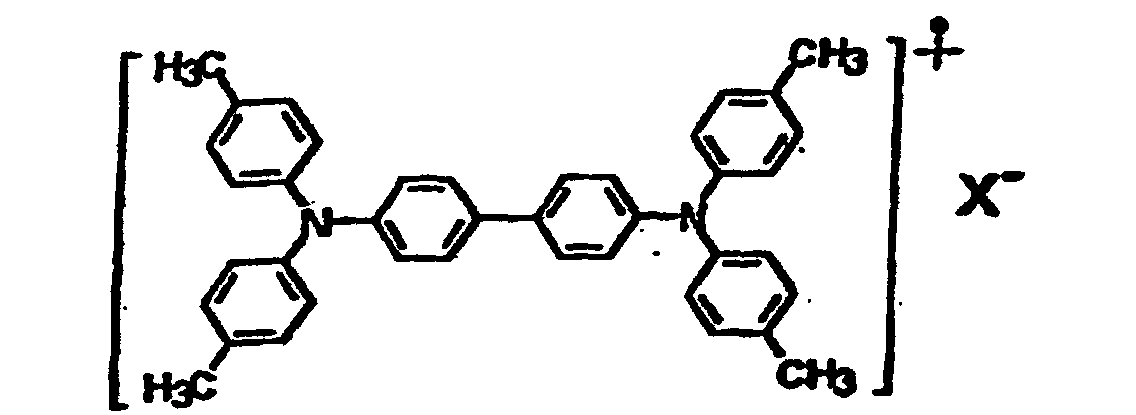
wherein R1, R2, R3, R1', R2', and R3' are independently selected from hydrogen, bromine, chlorine, fluorine, alkyl groups containing from 1 to 24 carbon atoms, substituted and unsubstituted aromatic groups, and alkoxy groups with from 1 to 12 carbon atoms, and X- is a monovalent counter anion. The oxidized oligo-diarylamine salts of this invention are tetratolyldiamine salts of the formula
wherein X- is a monovalent counter anion, such as, SbF6-, BF4-, PF6-, AsF6-, ClO4-, AuCl4-, C60-, I-, Br3-, I3-, FeCl4-, SnCl5-, trifluoroacetate, benzoate, nitrobenzoate, toluenesulfonate, p-bromobenzenesulfonate, p-nitrobenzenesulfonate, trifluoromethanesulfonate, nonafluorobutanesulfonate, 2,2,2-trifluoroethanesulfonate, and mixtures thereof.
[0008] Other illustrating oxidized oligo-diarylamine salts can be triamine salts such as of the formulas
wherein Ar and Ar' are independently selected from substituted and unsubstituted aromatic groups, n is 1, 2, or 3, and X- is a monovalent anion.
[0009] The oxidized oligo-diarylamine salts can be tetra-amine salts of the formulas
and
wherein Ar, Ar', and Ar" are substituted and unsubstituted aromatic groups, p-Ar and p-Ar' are para-substituted phenyl groups, n is 1 to 4, X- is a monovalent anion as indicated above, G can be of the formulas
wherein n' is an integer from 1 to 12; m and o are integers from 0 to 12; R and R' are alkyl groups with 1 to 12 carbon atoms.
[0010] Further illustrating oxidized oligo-diarylamine salts can be penta-amine salts of the formulas
wherein Ar, Ar', Ar" and Ar''' are substituted and unsubstituted aromatic groups, n is an integer from 1 to 5, and X- is a monovalent anion.
[0011] Alternatively, illustrating oxidized oligo-diarylamine salts can be hexa-amine salts, for example, of the formulas
wherein Ar and Ar' are substituted and unsubstituted aromatic groups with from 6 to 25 carbon atoms and with substituents including alkyl, aryl, alkoxy, hydrogen, and halide as indicated above, p-Ar and p-Ar' are para-substituted phenyl groups, n is an integer from 1 to 6, X- is a monovalent anion as indicated above, G can be of the formulas
and wherein m is an integer from 0 to 12.
[0012] Illustrating oxidized oligomer salts can be oligo-thiophene salts, for example, of the formulas
and wherein R, R1 and R2 are independently selected from hydrogen, alkyl, alkoxy, alkylthio groups containing from 1 to 12 carbon atoms, n is an integer from 2 to 12, m is an integer which is less than or equal to n, X is a monovalent anion as indicated above, Y and Y' are independently selected from O and S, and G is a substituted or unsubstituted alkylene group containing 1 to 24 carbon atoms.
[0013] Illustrating oligo-aniline salts suitable as oxidized oligomeric salts can be of the formula
wherein n is an integer from 1 to 12, m is an integer which is less than or equal to n+1, and X- is a monovalent anion;
[0014] Other illustrating, oxidized oligomeric salts can be, for example, oxidized porphyrin salts of the formulas
wherein R and R' are independently hydrogen, alkyl groups containing 1 to 20 carbon atoms, and an aromatic group with from 6 to 24 carbon atoms, and a heteroaryl group with form 5 to 24 carbon atoms, M is a divalent metal ion, such as Cu(II), Zn (II), Fe(II), Co (II), and X- is a monovalent anion as indicated above.
[0015] The illustrating oxidized oligomeric salts can be, oxidized tetrathiotetracene salts and oxidized tetraselenotetracene salts which are radical cations, for example, of the formulas,
and wherein X- is a monovalent anion; or oligo-tetrathiafulvalene salts and oxidized oligo-tetraselenafulvalene salts, respectively, for example, of the formulas
wherein G is nil or an n-valent aromatic group that connects all the fulvalene units, Y is S or Se, Z is nil or a divalent unsaturated group, n is an integer from 1 to 6, m is an integer which is less than or equal to n, m' is an integer which is less than or equal to n+2, R1 and R2 are independently selected from hydrogen, aryls with from 6 to 24 carbon atoms, alkyl, alkoxy, or alkylthio groups with from 1 to 12 carbon atoms, and X- is a monovalent anion as indicated above; and oxidized oligo-metallocene salts of the formula
wherein M is a divalent metal, such as Fe(II) and Co(II), Z can be, for example, nil, methylene, ethylene, Si(CH3)2, Si(CH3)Ph, Ge(CH3)2, or phenylene, n is an integer from 1 to 12, m is an integer which is less than or equal to n+2, and X- is a monovalent anion as indicated above.
[0016] The charge transport component can be, in embodiments, for example, N,N,N-triarylamine containing compounds, carbazole compounds, oligothiophene compounds, carbon 60 compounds and related fullerene compounds, and mixtures thereof. Preferred N,N,N-triarylamine containing compounds are of the formula
wherein R1, R2, R3, R1', R2', R3' are independently hydrogen, bromine, chlorine, fluorine, alkyl groups containing from 1 to 24 carbon atoms, substituted and unsubstituted aromatic groups, and alkoxy groups with 1 to 12 carbon atoms.
[0017] The polymer binder can include but are not limited to, for example, polyvinylcarbazoles, polythiophenes, polysilanes, polyanilines, poly(phenylene vinylenes), polyphenylenes, poly(phenylene sulfides), polyanilines, poly(phenylene sulfide phenylenamine), and polymers containing triarylamine charge transport units such as illustrated in the formula
wherein R1, R2 and R3 are independently hydrogen, bromine, chlorine, fluorine, alkyl groups containing from 1 to about 24 carbon atoms, substituted and unsubstituted aromatic groups, and alkoxy groups containing from 1 to 24 carbon atoms; G is selected from alkylene groups of 1 to 12 carbon atoms and the following formulae:
wherein n' is an integer from 1 to 12; R and R' are alkyl groups with 1 to 12 carbon atoms.
[0018] The polymer binder, in embodiments, can be, for example, solvent processable and melt processable thermoplastics and elastomeric resins. The inert polymers suitable as polymer binders can include but are not limited to thermoplastics and elastomerics such as polystyrenes, polycarbonates, polyesters, polyimides, polyurethanes, polysulfones, polyethersulfones, polyether ketones, polyamides, and the like materials, and copolymers and polymer blends thereof.
[0019] In embodiments, the weight percent ratio of the oxidized oligomer salt to the charge transport compound is of from 0.01:99.99 to 99.99:0.01, and the weight percent ratio of the oxidized oligomer salt plus the charge transport compound to the polymer binder is of from 10:90 to 90:10.
[0020] The conductive polymeric compositions of the present invention, in embodiments can have, for example, coatings with a conductivity of from 10-12 to 1.0 S/cm, and wherein the conductivity depends on the loading levels of the charge transport compound and the oxidized oligomer salt, reference for example the working examples, particularly Example V.
[0021] In embodiments, the present invention provides a process for the fabrication of conductive polymer coatings comprising:
preparing an oxidized oligomer salt;
admixing the oxidized oligomer salt with a charge transport molecule and a polymer binder in a solvent to give a coating solution; and
depositing conductive coatings from the coating solution on a substrate.
[0022] The substrate can have a thickness of from 0.005cm (50 microns) to 0.1cm (1,000 microns), and wherein the conductive coating layer has a thickness of from 1x10⁻⁵ to 5x10⁻⁴ cm (0.1 to 5.0 microns). The solids concentration of the coating solution can be of from 0.1 to 50 weight percent. The coatings can be deposited on the substrate by conventional means, for example, spin coating, spray coating, dip coating, and flow coating from a solution of an oxidized oligo-arylamine salt, a charge transport molecule and a polymer binder dissolved in organic solvents:
[0023] The oxidized oligomer salts can be prepared by chemical oxidation with an oxidant or electrochemical oxidation of an oligomer, reference for example, working Examples II and III herein. Oxidants for chemical oxidation of the oligomeric salts are ionic salts, Brønsted acids, and Lewis acids. Ionic salts include AgSbF6, AgAsF6, AgPF6, AgBF4, AgBr, AgI, AgF, AgCl, O2SbF6, O2AsF6, NOSbF6 and NOAsF6, (CH3CH2)O+(CF3SO3)Al-, (CH3CH2)O+(CF3SO3)Ga-, (CH3CH2)O+(CF3SO3)B-, CH3(C=O)+(CF3SO3)Al-. Brønsted acids include sulfonic acids, phosphoric acids, carboxylic acids. Lewis acids include AlCl3, GaCl3, SnCl4, BF3, FeCl3, AsF3, SnCl4, ZrCl4, ZnCl2, TiCl4, AuCl3, CuCl2, VCl3, InCl3, TaCl5, SbF5.
EXAMPLE I
Preparation of N, N, N', N'-tetra-p-tolyl-biphenyldiamine (TM-TPD):
[0024] Synthesis of 4'-methyacetanilide: Into three neck round bottom flask (5 L) equipped with a mechanical stirrer, a condenser, and an addition funnel, were added p-toluidine (995 grams, 9.3 mol) and hexanes (1.6 L). Acetic anhydride (960 mL, 10.2 mol) was added dropwise for 2 hour enough to reflux. Then it was refluxed for 1 hour and cooled to room temperature to give a brown solid. This was collected by suction filtration, transferred into a beaker, and washed with water (2 L) for 30 minutes. The filtration and washing procedures were repeated. The wet white crystals was air dried for 7 days to N-(4-Methylphenyl)acetamide (1,343g, 97% yield). Melting point: 150-152°C. (Lit. 153°C, Merck Index 11, 67).
[0025] Synthesis of N,N-p,p'-Ditolylamine: To a round bottom flask (3 L) equipped with a condenser a Dean-Stark trap, a mechanical stirrer, and an argon-outlet with a thermometer, was added 4'-methylacetanilide (448g, 3.0 mol), 4-iodotoluene (746 g, 3.4 mol, from Aldrich), potassium carbonate (830g, 6.0 mol), copper sulfate (20 g), and toluene (50 mL). The reaction mixture was heated at 210 °C for 24h in an oil bath. The resulting solution was decanted to a round bottom flask (5 L) and the remaining solid was washed with hot ethanol (3 x 500 mL). To the combined mixtures, were added potassium hydroxide (340 g) and water (400 mL) and were refluxed for 24 h. To resulting solution, a concentrated HCI (400 mL) was added dropwise followed by toluene (1000 mL). The mixture was refluxed for 10 min. The hot organic layer (top) was separated, washed with a hot water (500 mL x 2), and concentrated under reduced pressure. The resulting solid was recrystalized from the mixture of toluene (100 mL) and hexanes (700 mL). The obtained wet crystals was ground with a mortar and pestle, filtered, washed with hexanes (100 mL), and dried in air for 1 day to give brown crystals (360 g, 6 mol). The filtrate was concentrated under reduced pressure and recrystalized from the mixture of toluene (20 mL) and hexanes (150 mL) to give a brown solid (120 g, second crop). The combined solid was distilled at 165 °C and 1 Torr to give a white solid (445 g) while the first portion (15 g, distilled at 65-80 °C and 1 Torr) was discarded. The white solid was recrystalized from hexanes (500 mL) to give a white solid (422 g, 71% yield). Melting point: 80-82 °C (lit. 79 oC, TCI catalog ) 1H-NMR (CDCl3): 7.04 (d, 4H), 6.93 (d, 4H), 5.45 (s, br, 1H), 2.33 (s, 6H ) ppm. Note that when iodotoluenes from Oakwood Product Inc. or Charkit Chemical Inc. were used, the reaction was very slow. Three portions of CuSO4 (50 g) were added every 10 h and the reaction was completed in 40 h (over 95% conversion of 4'-methylacetanilide). During work-up after hydrolysis, suction filtration was required to remove copper residues.
[0026] Synthesis of N,N,N'N'-tetra-p-tolylphenyldiamine (TM-TPD): To a round bottom flask (5 L) equipped with a condenser a Dean-Stark trap, a mechanical stirrer, and an argon-outlet with a thermometer, was added 4,4'-diiodobyphenyl (DIB, 406 g, 1.0 mol), N,N-di-p-tolylamine (417 g, 2.1 mol), potassium hydroxide (448 g, 8.0 mol), and toluene (300 mL). After adding 1,10-phenanthroline (9.0 g) and CuCl (1.5 g) at 130 °C, the mixture was vigorously refluxed at 137 °C. After adding another portion of CuCl (3.5 g), a very severe exotherm was observed. The reaction mixture was further heated at 130 °C for 4 h. To the reaction mixture, was added water (400 mL), toluene (400 mL), and acetic acid (400 mL). The resulting solution was washed with water (2 L) by gentle swirling in a 6 L separatory funnel and top layer was collected. The aqueous layer was suction-filtered and residue was washed with toluene (300 mL) and top layer was separated. After combining organic solutions, the washing process was repeated once. The dark organic solution was concentrated in a reduced pressure and the resulting solution was chilled in freezer for 1 h to yield a brown solid. After filtering, the brown solid was washed with acetone (3 x 400 mL) and dried in oven at 45 °C and 10 Torr. To a round bottom flask (2 L) equipped with a condenser, a mechanical stirrer, an argon-outlet with a thermometer and heating mantle were charged the crude product (350 g) and a neutral alumina (200 g) and toluene (1 L). The mixture was heated at 90 °C for 2.5 h. The resulting yellow solution was filtered through a preheated Buchner funnel. The remaining alumina was extracted with a hot toluene (350 mL x 2). After concentrating the combined yellow solution in vacuo, the resulting pale yellow solid (350 g) and acetone (400 g) was heated at 60 °C and stirred at 23 °C for 15 h under argon to give a pale yellow solid. After filtering, washing with acetone (200 mL x 3), and drying in a reduced pressure overnight, a pure TM-TPD (306 g, 56% yield) was obtained. Melting point: 217-219°C; 1H-NMR (CDCl3): 7.39 (d, 4H), 7.07-7.00 (m, 20H), 2.31 (s, 12H) ppm.
EXAMPLE II
Preparation of oxidized N, N, N', N'-tetra-p-tolyl-4,4'-biphenyldiamine (TM-TPD) salts:
[0027] Synthesis of SbF6 salt: To a one neck flask (1I) equipped with a magnetic stirrer, were added TM-TPD (60.0 g, 0.11 mol) and dichloromethane (250 mL). To this solution, the solution of AgSbF6 (34.4g, 0.10 mol) in dichloromethane (250 mL) was added dropwise for 2h, the same reaction as in Example I above except charging TM-TPD, AgSbF6, and dichloromethane, gave an impure product containing dication complex. The resulting brown solution was filtered and the silver residue was rinsed with dichloromethane (50 mL). To the combined dichloromethane solution, hexanes (1500 mL) was slowly added for 1 h to give a blue solid (note that rapid addition of hexanes to dichloromethane solution gave an impure product containing TM-TPD). After filtering and drying at 40 °C and 15 Torr for 1 day a blue solid (76.8 g, 98.5% yield) was obtained. UV spectrum: 281, 362, 491 nm, mass spectrum (ESI/MS): M/Z 544.4+.
[0028] Synthesis of AsF6 salt: To a three neck flask (1 I) equipped with a magnetic stirrer, an addition funnel and argon inlet, were added TM-TPD (11.44 g, 0.021 mol) and dichloromethane (50 mL). A solution of AgAsF6 (5.94 g) in methylene chloride (50 mL) was stirred for 5 min and then filtered to give a clear solution. This was transferred into the addition funnel and added dropwise into the TM-TPD solution over 10 min. The resulting brown solution was filtered and the silver residue was rinsed with dichloromethane (50 mL). To the combined dichloromethane solution, hexanes (300 mL) was slowly added for 30 min to give a blue solid (fast addition of hexanes to dichloromethane solution gave an impure product containing TM-TPD). After stirring for 10 min, the dark blue precipitate was collected by suction filtration and dried in air for 2 days to give a blue solid, 13.3 g, 90 % yield.
[0029] Synthesis of AuCl4 salt: To a three neck flask (250 mL) equipped with a magnetic stirrer, were added TM-TPD (4.9 g, 0.009 mol), AuCl3 (3.64 g, 0.012 mol) and dichloromethane (85 mL). The reaction mixture was stirred for 18 h. The dark solution was filtered and the residue was extracted with methylene chloride (100 mL x 4). The solution was concentrated to about 200 mL and then added through filter paper into stirring hexanes (200 mL) to give a golden solid upon air dried (3.2 g). The collected solid was dissolved in methylene chloride (100 mL) and then poured into stirring hexanes (200 mL). The precipitate was collected by suction filtration and air dried to give a dark gold solid, 2.9 g, in 77% yield.
[0030] Synthesis of CF3COO salt: To a single neck flask (250 mL) equipped with a magnetic stirrer, were added TM-TPD (5.40g, 0.01 mol) and dichloromethane (25 mL). To this solution, the solution of CF3COOAg (2.2g) in dichloromethane (50 mL) was added dropwise. The resulting brown solution was stirred for 30 min and filtered. The filtrate was concentrated and the residue was dried in vacuum to give a dark blue solid (3.4 g).
EXAMPLE III
[0031] This example illustrates a typical procedure for the fabrication of the conductive coatings of the present invention. MYLAR® (75 microns) substrates with titanium coatings of about 200 to 300 Angstroms were from ICI. Substrates were overcoated with a silane blocking layer (200 to 500 Angstroms derived from 2-aminoisopropyltriehoxylsilane) and then an adhesive layer (200 to 500 Angstroms) of 49K polyester (from DuPont). The resulting substrates were used for depositing the conductive coatings using a Gardner mechanical driven film applicator which is enclosed in a plexiglass acrylic box with an attached cover. A substrate was placed on the vacuum plate of the Gardner coater and a size 0.004 Bird film applicator was placed on top of the substrate then coated with a conductive polymer layer using a solution prepared as follows: a mixture of N,N'-diphenyl-N,N'-di(m-tolyl)-[1,1'-biphenyl]-4,4'-diamine referred to as m-TPD hereinafter (4.0 g), MAKROLON® (7.44 g), TM-TPD·SbF6 (0.08 g) and methylene chloride (68 g) in an amber bottle was roll milled until complete solubilization of the solid occurred to give a coating solution with the following solid weight percents: MAKROLON (65%), m-TPD (35%) and TM-TPD·SbF6 (2% with respect to m-TPD. The resulting coating was air dried for 1 h and then dried in a forced air oven at 125 °C for 30 min to give a coating with about 20 - 25 microns thick. This sample corresponds to sample # 4 in Table 1. An Electrodag electrode was painted on the sample for charge relaxation time measurement which involved applying a pulsed voltage to the sample between electrodes. It is known that to the charge relaxation time constant is inversely proportional to the conductivity. Table 1 shows a series of coatings with different compositions and the corresponding initial charge relaxation time constant. All the samples were stress tested in an environmental chamber of 85 % relative humidity (RH) and 50 °C. The time constants of the samples were measured at different time intervals to determine the electrical stability of the coatings. As shown in Table 1, samples 1-3 that have the monomeric tritolylamine (TTA) salts are highly unstable and become 5 to 10 times more insulative than the as coated samples after 1 week under high RH. By contrast, samples 4, 5 and 6 which have the dimeric TM-TPD SbF6 salt are extremely stable for more than 8 weeks.
Table 1.
| Comparative stability of oxidized transport layers | |||||||||
| Sample NO. | Solid Composition: polymer binder/charge transport compound/oxidized salt (% by weight) | Charge relaxation time constant (millisecond) | |||||||
| As coated | 2 days | 1 wk | 2 wk | 4 wk | 6 wk | 7 wk | 8wk | ||
| 1 | MAKROLON (65%)/m-TPD(35%)/TTA·SbCl6 (5% with respect to m-TPD) | 0.43 | 0.88 | 4.50 | - | - | - | - | - |
| 2 | MAKROLON (65%)/m-TPD (35%)/TTA·SbF6 (5% with respect to m-TPD) | 0.36 | 0.72 | 2.20 | - | - | - | - | - |
| 3 | MAKROLON (65%)/m-TPD (35%)/TTA·AsF6 (5% with respect to m-TPD) | 0.60 | 0.90 | 3.67 | - | - | - | - | - |
| 4 | MAKROLON (65%)/m-TPD (35%)/TM-TPD·SbF6 (5% with respect to m-TPD) | 0.70 | - | 0.37 | 0.26 | 0.22 | 0.22 | 0.23 | 0.27 |
| 5 | MAKROLON (70%)/m-TPD (40%)/TM-TPD·SbF6 (5% with respect to m-TPD) | 0.55 | - | 0.31 | 0.28 | 0.30 | 0.32 | 0.30 | 0.33 |
| 6 | MAKROLON (70%)/m-TPD (40%)/TM-TPD·SbF6 (2% with respect to m-TPD) | 0.70 | - | 0.70 | 0.45 | 0.49 | 0.37 | 0.46 | 0.46 |
EXAMPLE IV
[0032] The samples shown in Table 2 are conductive coatings using TM-TPD as the charge transport compound, TM-TPD SbF6 as the oxidized charge transport salt, and MAKROLON as the polymer binder. Highly stable charge relaxation times implying highly stable conductivity are observed for these samples.
Table 2
| Conductive Coatings with High Degree of Electrical Stability | |||||||||
| Sample NO. | Solid composition: polymer binder/charge transport compound/oxidized salt (% by weight) | Charge relaxation time constant (millisecond) | |||||||
| As coated | 1 wk | 2 wk | 4 wk | 5 wk | 6 wk | 7 wk | 8wk | ||
| 7 | MAKROLON (60%)/TM-TPD(40%)/TM-TPD·SbF6 (2% with respect to TM-TPD) | 0.16 | 0.14 | 0.14 | 0.12 | 0.14 | 0.14 | 0.13 | 0.14 |
| 8 | MAKROLON (60%)/TM-TPD(40%)/TM-TPD·SbF6 (5% with respect to TM-TPD) | 0.05 | 0.04 | 0.02 | 0.03 | 0.03 | 0.03 | 0.02 | 0.03 |
| 9 | MAKROLON (70%)/TM-TPD(30%)/TM-TPD·SbF6 (2% with respect to TM-TPD) | 0.41 | 0.24 | 0.23 | 0.24 | 0.22 | 0.20 | 0.23 | 0.22 |
EXAMPLE V
[0033] This example illustrates the conductivity control by adjusting the loadings of the oxidized oligomeric salts (TM-TPD SbF6, molecular weight: 780.48) and the charge transport compound (TM-TPD, molecular weight: 544.69). As can be seen from tables 3 and 4, the conductivity of the coatings increases almost linearly with respect to the molar % of TM-TPD SbF6 and then reaches plateaus at 50/50 TM-TPD SbF6/TM-TPD. The conductivity of 2.78 M doped coatings, Table 4, is about one order of magnitude higher that for the 1.22 M doped coatings, Table 3, wherein M stands for molarity of TM-TPD SbF6/TM-TPD + TM-TPD per kilogram of binder polymer.
Table 3.
| Conductivity in Coatings Doped with 1.22 M of TM-TPD·SbF6+TM-TPD | |||||
| Sample NO. | MAKROLON/ CH2Cl2 weights (g/g) | TM-TPD·SbF6 Weight (g) | TM-TPD Weight (g) | Molar% of TM-TPD·SbF6 /TM-TPD | Conductivity (S/cm) |
| 10 | 1.50/15.0 | 0.03 | 0.98 | 2/98 | 4.50 x 10⁻⁹ |
| 11 | 1.50/15.0 | 0.09 | 0.94 | 6/94 | 3.50 x 10⁻⁸ |
| 12 | 1.50/15.0 | 0.14 | 0.90 | 10/90 | 7.40 x 10⁻⁸ |
| 13 | 1.50/15.0 | 0.43 | 0.70 | 30/70 | 7.00 x 10⁻⁷ |
| 14 | 1.50/15.0 | 0.72 | 0.50 | 50/50 | 1.00 x 10⁻⁶ |
| 15 | 1.50/15.0 | 1.00 | 0.30 | 70/30 | 1.50 x 10⁻⁶ |
Table 4.
| Conductivity in Coatings Doped with 2.78 M of TM-TPD·SbF6+TM-TPD | |||||
| Sample NO | MAKROLON/ CH2Cl2 weights (g/g) | TM-TPD·SbF6 Weight (g) | TM-TPD Weight (g) | Molar% of TM-TPD·SbF6 /TM-TPD | Conductivity (S/cm) |
| 16 | 0.72/10.0 | 0.03 | 1.00 | 2/98 | 3.30 x 10⁻⁸ |
| 17 | 0.72/10.0 | 0.10 | 1.06 | 6/94 | 2.20 x 10⁻⁷ |
| 18 | 0.72/10.0 | 0.16 | 1.00 | 10/90 | 9.00 x 10⁻⁷ |
| 19 | 0.72/10.0 | 0.47 | 0.76 | 30/70 | 8.80 x 10⁻⁶ |
| 20 | 0.72/10.0 | 0.78 | 0.55 | 50/50 | 1.50 x 10⁻⁵ |
| 21 | 0.72/10.0 | 1.09 | 0.33 | 90/10 | 1.00 x 10⁻⁵ |
1. A conductive coating comprising an oxidized tetratolyldiamine salt of the formula
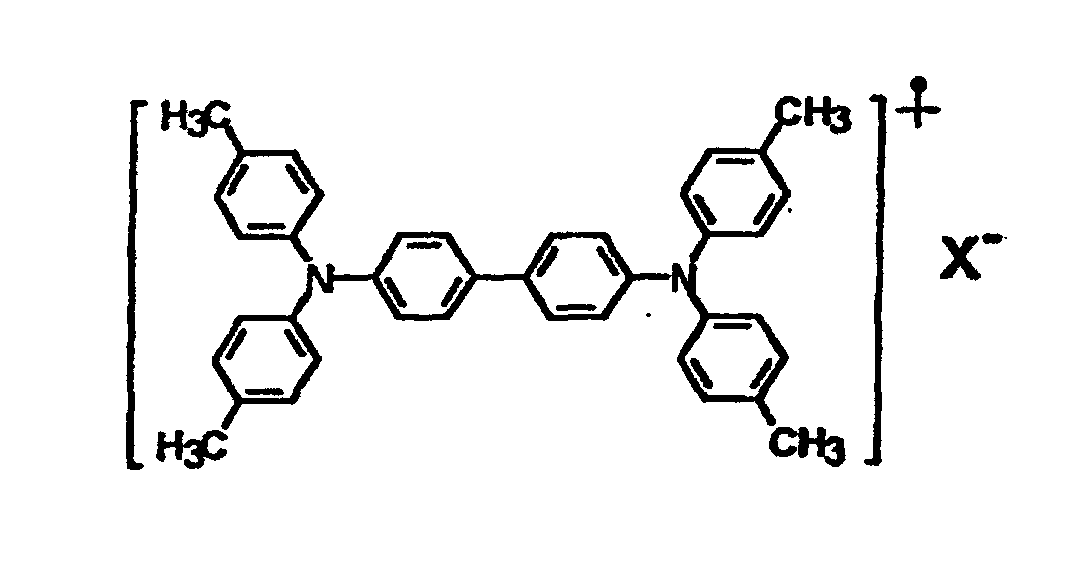
wherein X- is a monovalent counter anion, a charge transport component and a polymer binder.
wherein X- is a monovalent counter anion, a charge transport component and a polymer binder.
2. The conductive coating according to claim 1 wherein the charge transport compound
is selected from the group consisting of N,N,N-triarylamine containing compounds,
carbazole compounds, oligothiophene compounds, carbon 60 fullerene compounds, and
mixtures thereof.
3. The conductive coating according to claim 1 wherein the polymer binder is selected
from the group consisting of inert polymers, charge transport polymers, of the group
polyvinylcarbazoles, polythiophenes, polysilanes, polyanilines, poly(phenylene vinylenes),
polyphenylenes, poly(phenylene sulfides), polyanilines, poly(phenylene sulfide phenylenamine),
copolymers thereof, and mixtures thereof, in an amount of from 30 to 80 weight percent
of the total weight of the coating.
4. The conductive coating according to claim 1, wherein the weight percent ratio of the
oxidized oligomer salt to the charge transport compound is from 0.01:99.99 to 99.99:0.01,
and the weight percent ratio of oxidized oligomer salts to the combined charge transport
compound and polymer binder is from 10:90 to 90:10.
5. The conductive coating according to claim 1, wherein the charge transport molecule
of the formula
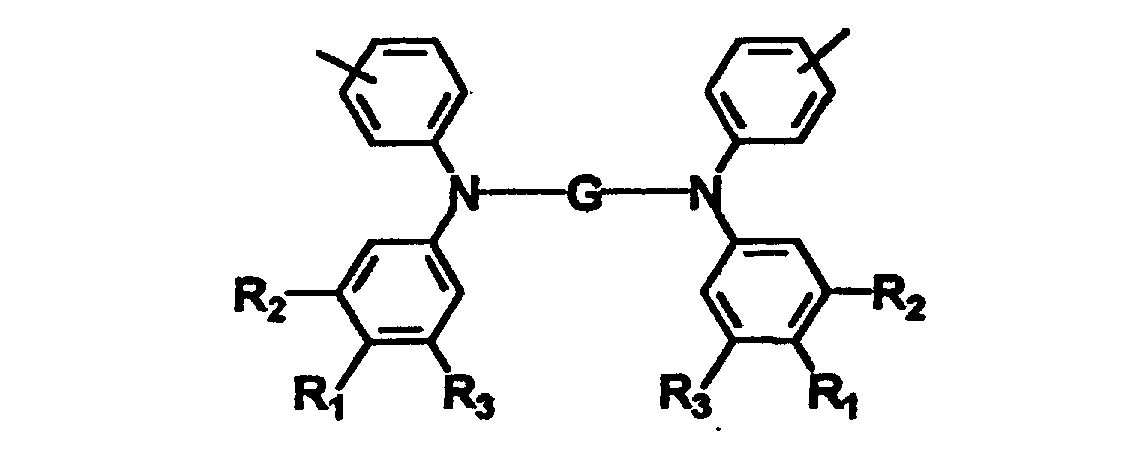
is integral with the binder molecule polymer, wherein R1, R2 and R3 are independently selected from the group consisting of hydrogen, bromine, chlorine, fluorine, alkyl groups containing from 1 to 24 carbon atoms, substituted and unsubstituted aromatic groups with from 6 to 24 carbon atoms, and alkoxy groups containing from 1 to 24 carbon atoms; G is selected from the group consisting of alkylene groups of 1 to 12 carbon atoms and the following formulas:

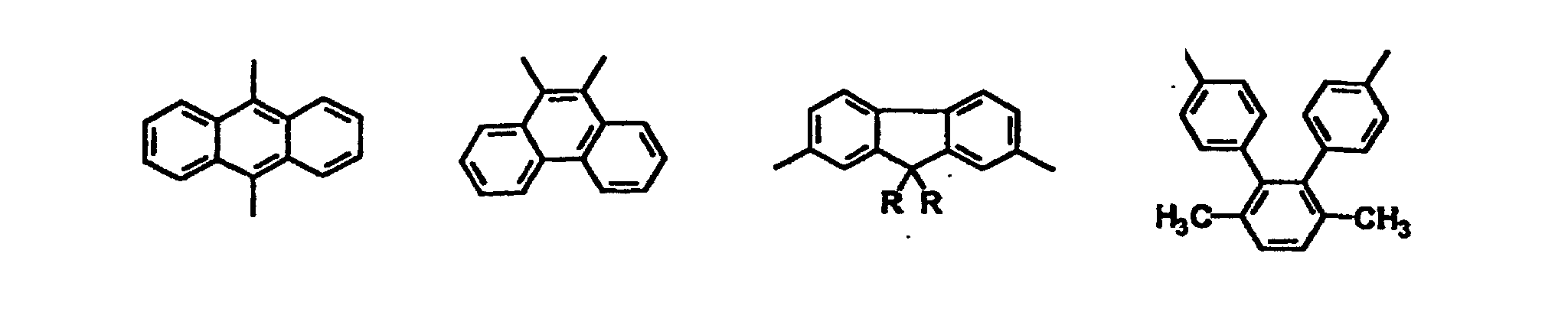




and
wherein n' is an integer from 1 to 12; R and R' are alkyl groups with 1 to 12 carbon atoms.
is integral with the binder molecule polymer, wherein R1, R2 and R3 are independently selected from the group consisting of hydrogen, bromine, chlorine, fluorine, alkyl groups containing from 1 to 24 carbon atoms, substituted and unsubstituted aromatic groups with from 6 to 24 carbon atoms, and alkoxy groups containing from 1 to 24 carbon atoms; G is selected from the group consisting of alkylene groups of 1 to 12 carbon atoms and the following formulas:
and
wherein n' is an integer from 1 to 12; R and R' are alkyl groups with 1 to 12 carbon atoms.
6. The conductive coating according to claim 1, wherein a coating thereof with a solids
concentration of 0.1 to 50 weight percent and with a thickness from 0.1 to 5.0 microns,
has a conductivity of from 10-12 to 1.0 S/cm.
7. The conductive coating according to claim 1, comprising an oxidized tetratolyldiamine
salt of the formula
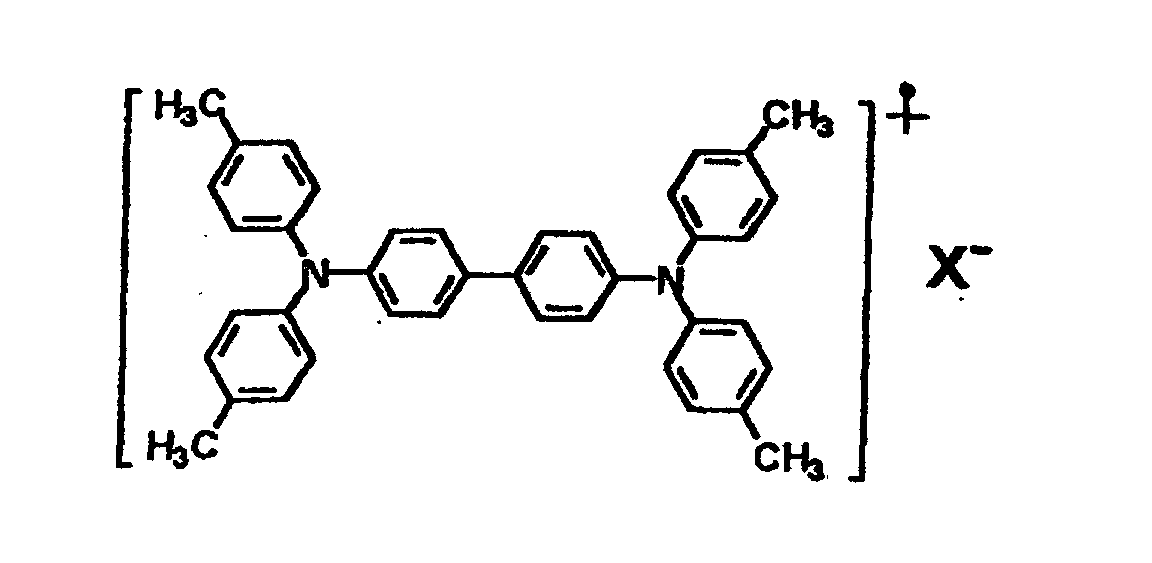
in an amount of 0.1 to 20 total weight percent, wherein X- is SbF6-, a charge transport component comprising a triarylamine in an amount of 20 to 60 total weight percent, and a polymer binder comprising a bisphenol polycarbonate in an amount of 80 to 99.9 total weight percent.
in an amount of 0.1 to 20 total weight percent, wherein X- is SbF6-, a charge transport component comprising a triarylamine in an amount of 20 to 60 total weight percent, and a polymer binder comprising a bisphenol polycarbonate in an amount of 80 to 99.9 total weight percent.
8. A printing machine comprising an imaging member comprising a conductive coating in
accordance with claim 1 or 7.
1. Leitfähige Beschichtung, umfassend ein oxidiertes Tetratolyldiaminsalz der Formel
worin X- ein einwertiges Gegenanion ist, eine Ladungstransportkomponente und ein Polymerbindemittel.
worin X- ein einwertiges Gegenanion ist, eine Ladungstransportkomponente und ein Polymerbindemittel.
2. Leitfähige Beschichtung gemäß Anspruch 1, worin die Ladungstransportverbindung ausgewählt
ist aus der Gruppe bestehend aus N,N,N-Triarylamin enthaltenden Verbindungen, Carbazolverbindungen,
Oligothiophenverbindungen, Kohlenstoff-60-fullerenverbindungen und Mischungen davon.
3. Leitfähige Beschichtung gemäß Anspruch 1, worin das Polymerbindemittel ausgewählt
ist aus der Gruppe bestehend aus inerten Polymeren, Ladungstransportpolymeren der
Gruppe Polyvinylcarbazole, Polythiophene, Polysilane, Polyaniline, Poly(phenylenvinylene),
Polyphenylene, Poly(phenylensulfide), Polyaniline, Poly(phenylensulfidphenylenamin),
Copolymeren davon und Mischungen davon in einer Menge von 30 bis 80 Gew.-% des Gesamtgewichts
der Beschichtung.
4. Leitfähige Beschichtung gemäß Anspruch 1, worin das Gewichtsprozentverhältnis des
oxidierten Oligomersalzes zu der Ladungstransportverbindung 0,01 : 99,99 bis 99,99
: 0,01 beträgt, und das Gewichtsprozentverhältnis von oxidierten Oligomersalzen zu
der vereinigten Ladungstransportverbindung und dem Polymerbindemittel 10 : 90 bis
90 : 10 beträgt.
5. Leitfähige Beschichtung gemäß Anspruch 1, worin das Ladungstransportmolekül der Formel
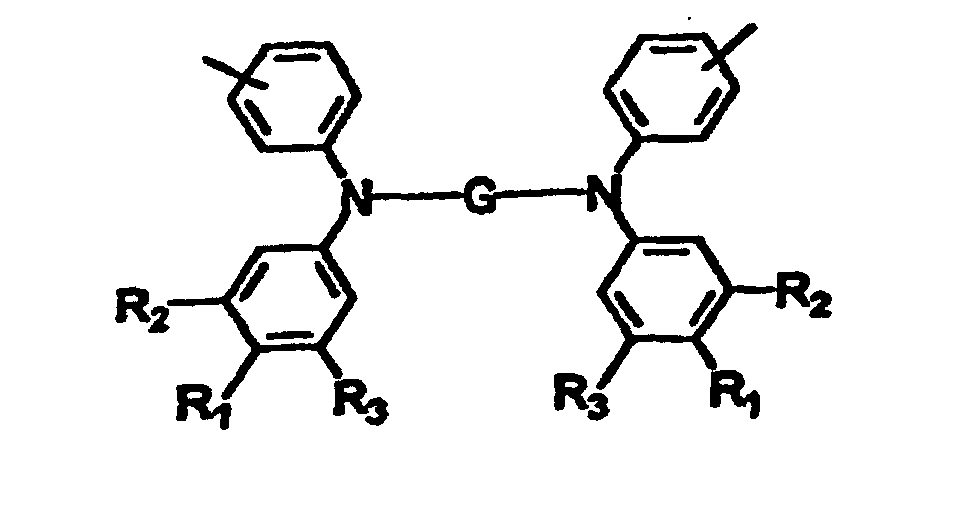
integral mit dem Molekül des Bindemittelpolymers ist, worin R1, R2 und R3 unabhängig voneinander ausgewählt sind aus der Gruppe bestehend aus Wasserstoff, Brom, Chlor, Fluor, Alkylgruppen mit 1 bis 24 Kohlenstoffatomen, substituierten und unsubstituierten aromatischen Gruppen mit 6 bis 24 Kohlenstoffatomen und Alkoxygruppen mit 1 bis 24 Kohlenstoffatomen, G ausgewählt ist aus der Gruppe bestehend aus Alkylengruppen mit 1 bis 12 Kohlenstoffatomen und den folgenden Formeln:






worin n' eine ganze Zahl von 1 bis 12 ist, und R und R' Alkylgruppen mit 1 bis 12 Kohlenstoffatomen sind.
integral mit dem Molekül des Bindemittelpolymers ist, worin R1, R2 und R3 unabhängig voneinander ausgewählt sind aus der Gruppe bestehend aus Wasserstoff, Brom, Chlor, Fluor, Alkylgruppen mit 1 bis 24 Kohlenstoffatomen, substituierten und unsubstituierten aromatischen Gruppen mit 6 bis 24 Kohlenstoffatomen und Alkoxygruppen mit 1 bis 24 Kohlenstoffatomen, G ausgewählt ist aus der Gruppe bestehend aus Alkylengruppen mit 1 bis 12 Kohlenstoffatomen und den folgenden Formeln:
worin n' eine ganze Zahl von 1 bis 12 ist, und R und R' Alkylgruppen mit 1 bis 12 Kohlenstoffatomen sind.
6. Leitfähige Beschichtung gemäß Anspruch 1, worin eine Beschichtung davon mit einer
Feststoffkonzentration von 0,1 bis 50 Gew.-% und mit einer Dicke von 0,1 bis 5,0 Mikron
eine Leitfähigkeit von 10-12 bis 1,0 S/cm hat.
7. Leitfähige Beschichtung gemäß Anspruch 1, umfassend ein oxidiertes Tetratolyldiaminsalz
der Formel
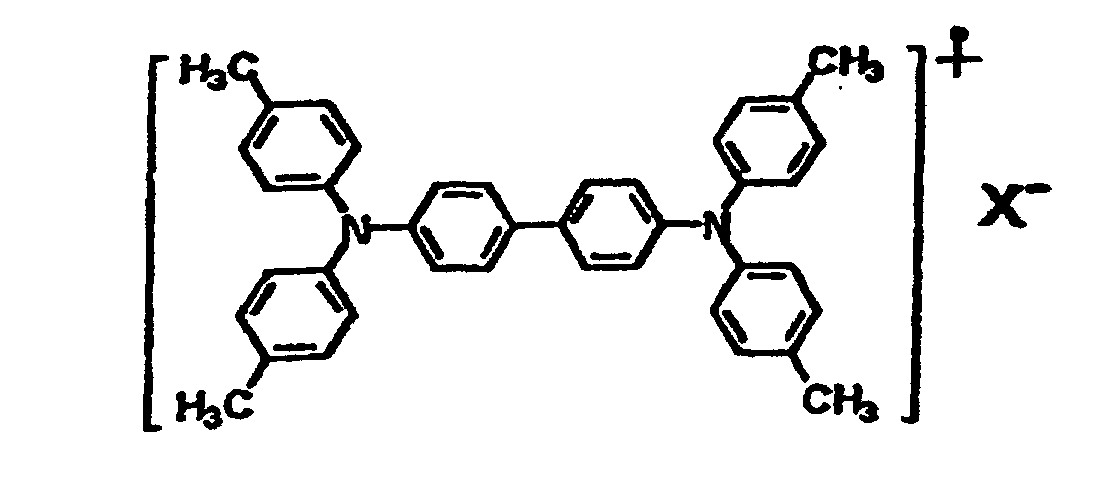
in einer Menge von 0,1 bis 20 % des Gesamtgewichts, worin X- SbF6- ist, eine Ladungstransportkomponente, umfassend ein Triarylamin in einer Menge von 20 bis 60 % des Gesamtgewichts, und ein Polymerbindemittel, umfassend ein Bisphenolpolycarbonat in einer Menge von 80 bis 99,9 % des Gesamtgewichts.
in einer Menge von 0,1 bis 20 % des Gesamtgewichts, worin X- SbF6- ist, eine Ladungstransportkomponente, umfassend ein Triarylamin in einer Menge von 20 bis 60 % des Gesamtgewichts, und ein Polymerbindemittel, umfassend ein Bisphenolpolycarbonat in einer Menge von 80 bis 99,9 % des Gesamtgewichts.
8. Druckmaschine mit einem Bildgebungselement, umfassend eine leitfähige Beschichtung
gemäß Anspruch 1 oder 7.
1. Revêtement conducteur comprenant un sel de tétratolyldiamine oxydé de formule
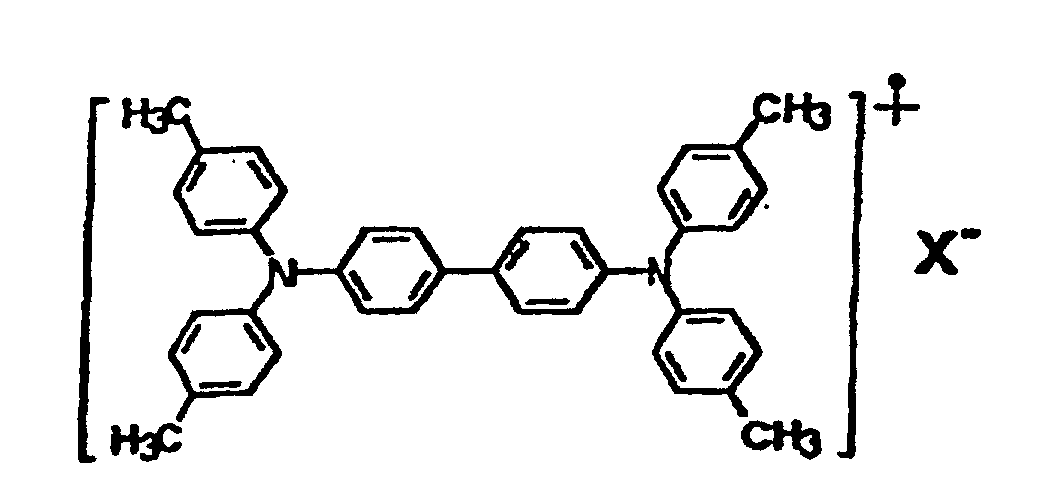
dans laquelle X- est un contre anion monovalent, un composant de transport de charge et un liant de polymère.
dans laquelle X- est un contre anion monovalent, un composant de transport de charge et un liant de polymère.
2. Revêtement conducteur selon la revendication 1, dans lequel le composé de transport
de charge est choisi parmi le groupe constitué de composés contenant une N,N,N-triarylamine,
de composés de carbazoles, de composés d'oligothiophènes, de composés de fullerène
carbone 60 et de mélanges de ceux-ci.
3. Revêtement conducteur selon la revendication 1, dans lequel le liant de polymère est
choisi parmi le groupe constitué de polymères inertes, de polymères de transport de
charge, du groupe des polyvinylcarbazoles, des polythiophènes, des polysilanes, des
polyanilines, des poly(phénylène vinylènes), des polyphénylènes, des poly(sulfure
de phénylène), des polyanilines, des poly(sulfure de phénylène-phénylène-amine), de
copolymères de ceux-ci, et de mélanges de ceux-ci, dans une proportion allant de 30
à 80 pour cent en poids du poids total du revêtement.
4. Revêtement conducteur selon la revendication 1, dans lequel le rapport des pourcentages
en poids du sel d'oligomères oxydés sur le composé de transport de charge est de 0,01:99,99
à 99,99:0,01, et le rapport des pourcentages en poids des sels d'oligomères oxydés
sur le composé de transport de charge et le liant de polymère combinés est de 10:90
à 90:10.
5. Revêtement conducteur selon la revendication 1, dans lequel la molécule de transport
de charge de formule
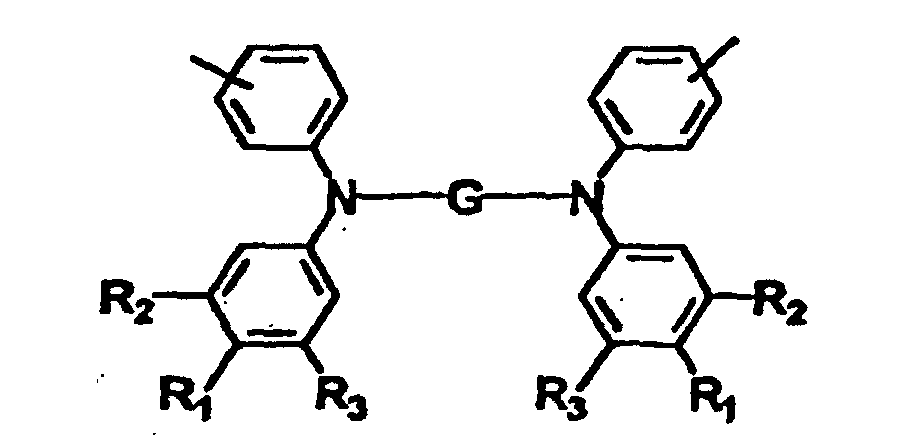
fait partie intégrante du polymère de molécule de liant, dans laquelle R1, R2 et R3 sont choisis indépendamment parmi le groupe constitué de l'hydrogène, du brome, du chlore, du fluor, des groupements alkyle contenant de 1 à 24 atomes de carbone, des groupements aromatiques substitués et non substitués comprenant de 6 à 24 atomes de carbone, et des groupements alcoxy contenant de 1 à 24 atomes de carbone, G est choisi parmi le groupe constitué de groupements alkylène de 1 à 12 atomes de carbone et des formules suivantes :






dans lesquelles n' est un nombre entier de 1 à 12, R et R' sont des groupements alkyle comprenant 1 à 12 atomes de carbone.
fait partie intégrante du polymère de molécule de liant, dans laquelle R1, R2 et R3 sont choisis indépendamment parmi le groupe constitué de l'hydrogène, du brome, du chlore, du fluor, des groupements alkyle contenant de 1 à 24 atomes de carbone, des groupements aromatiques substitués et non substitués comprenant de 6 à 24 atomes de carbone, et des groupements alcoxy contenant de 1 à 24 atomes de carbone, G est choisi parmi le groupe constitué de groupements alkylène de 1 à 12 atomes de carbone et des formules suivantes :
dans lesquelles n' est un nombre entier de 1 à 12, R et R' sont des groupements alkyle comprenant 1 à 12 atomes de carbone.
6. Revêtement conducteur selon la revendication 1, dans lequel un revêtement de celui-ci,
présentant une concentration en matière solide de 0,1 à 50 pour cent en poids et présentant
une épaisseur de 0,1 à 5,0 micromètres, présente une conductivité de 10-12 à 1,0 S/cm.
7. Revêtement conducteur selon la revendication 1, comprenant un sel de tétratolyldiamine
oxydé de formule
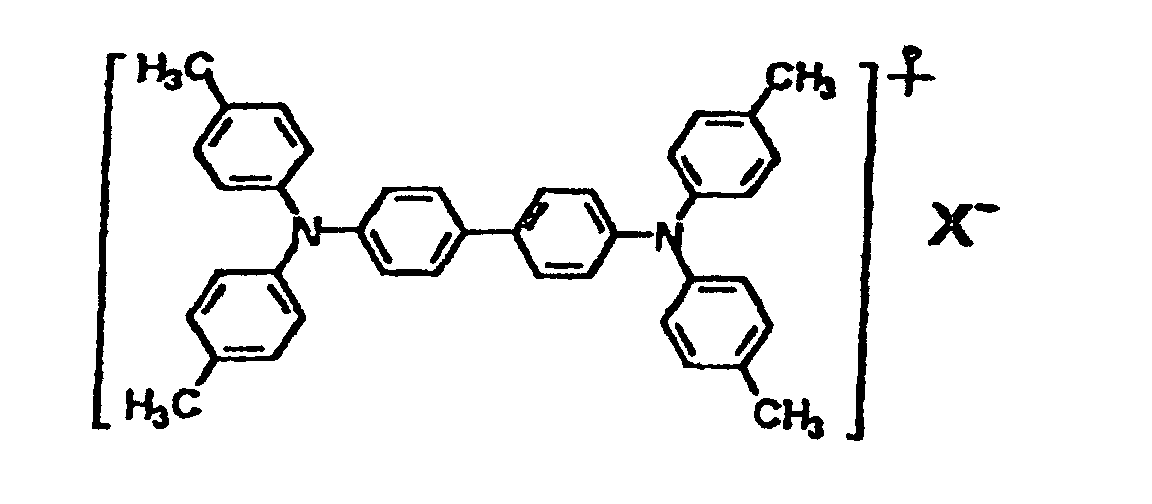
dans une proportion de 0,1 à 20 pour cent en poids total, dans laquelle X- est SbF6-, un composant de transport de charge comprenant une triarylamine dans une proportion de 20 à 60 pour cent en poids total, et un liant de polymère comprenant un polycarbonate de bisphénol dans une proportion de 80 à 99,9 pour cent en poids total.
dans une proportion de 0,1 à 20 pour cent en poids total, dans laquelle X- est SbF6-, un composant de transport de charge comprenant une triarylamine dans une proportion de 20 à 60 pour cent en poids total, et un liant de polymère comprenant un polycarbonate de bisphénol dans une proportion de 80 à 99,9 pour cent en poids total.
8. Machine d'impression comprenant un élément de formation d'image comportant un revêtement
conducteur selon la revendication 1 ou 7.