| (19) |
 |
|
(11) |
EP 0 911 279 B1 |
| (12) |
EUROPEAN PATENT SPECIFICATION |
| (45) |
Mention of the grant of the patent: |
|
14.08.2002 Bulletin 2002/33 |
| (22) |
Date of filing: 24.10.1998 |
|
|
| (54) |
Conveyor with hinge pin retention plug with snap fit
Förderkette mit Rückhaltestopfen mit Schnappverbindung für Scharnierstift
Chaîne transporteuse avec bouchon de rétention encliquetable pour goupille de charnière
|
| (84) |
Designated Contracting States: |
|
DE DK ES FR GB IT NL SE |
| (30) |
Priority: |
27.10.1997 US 958115
|
| (43) |
Date of publication of application: |
|
28.04.1999 Bulletin 1999/17 |
| (73) |
Proprietor: REXNORD CORPORATION |
|
Milwaukee, WI 53214 (US) |
|
| (72) |
Inventors: |
|
- Stebnicki, James C.
Whitefish Bay, WI 53217 (US)
- Koeferl, Paul
Germantown, WI 53022 (US)
|
| (74) |
Representative: Badger, John Raymond et al |
|
Invensys Intellectual Property,
PO Box 8433
Redditch B98 0DW
Redditch B98 0DW (GB) |
| (56) |
References cited: :
EP-A- 0 484 883
US-A- 5 335 768
|
US-A- 4 709 807
US-A- 5 339 946
|
|
| |
|
|
|
|
| |
|
| Note: Within nine months from the publication of the mention of the grant of the European
patent, any person may give notice to the European Patent Office of opposition to
the European patent
granted. Notice of opposition shall be filed in a written reasoned statement. It shall
not be deemed to
have been filed until the opposition fee has been paid. (Art. 99(1) European Patent
Convention).
|
BACKGROUND OF THE INVENTION
[0001] The invention relates generally to conveyors or chains or modular belting or the
like, and, more particularly, to conveyors or chains including a plurality of link
modules serially connected together by a plurality of hinge pins. The invention also
relates to plugs for retaining such hinge pins in a conveyor chain or modular belting.
[0002] In the past, some chains or conveyors used snap fit plugs in connection with MatTop®
chains manufactured by Rexnord Corporation. Others have manufactured hinge pins which
included an end diameter which was larger than the root diameter of the hinge pin
and which provided an internal snap fit between the hinge pin and the associated link
module.
[0003] Hinge pin retaining plugs utilising internal snap fit are known for example from
US-A-4709807 and EP-A-0787665.
SUMMARY OF THE INVENTION
[0004] A conveyor having an intended direction of travel and comprising a first link module
extending transversely of the intended direction of conveyor travel and including
a trailing portion including a plurality of spaced apart ears defining therebetween
a first series of spaces, and a second link module extending transversely of the intended
direction of conveyor travel and including a leading portion including a plurality
of spaced apart ears located in said spaces defined by said plurality of ears of said
trailing portion of said first link module, one of said leading and trailing plurality
of ears including a laterally located outer side ear having an outer side surface
extending along the direction of intended conveyor travel, and a bore extending from
said outer side surface transversely of the direction of intended conveyor travel,
a retention plug provided in said bore, said retention plug comprising a cylindrical
barrel portion extending in said bore and having an outer end, and interengaging surfaces
being provided on said plug and on said outer side ear for releasably preventing outward
withdrawal of said plug from said bore characterised in that said outer side surface
includes a non-annular recess extending from said bore along the direction of intended
conveyor travel, and wherein said plug includes a flange portion extending from said
outer end of said barrel portion and located in said recess in said outer side surface
of said end ear, said flange portion including an outer tab which is manipulatable
to facilitate removal of said retention plug.
[0005] Other features and advantages of the invention will become apparent to those skilled
in the art upon review of the following detailed description, claims and drawings.
DESCRIPTION OF THE DRAWINGS
[0006]
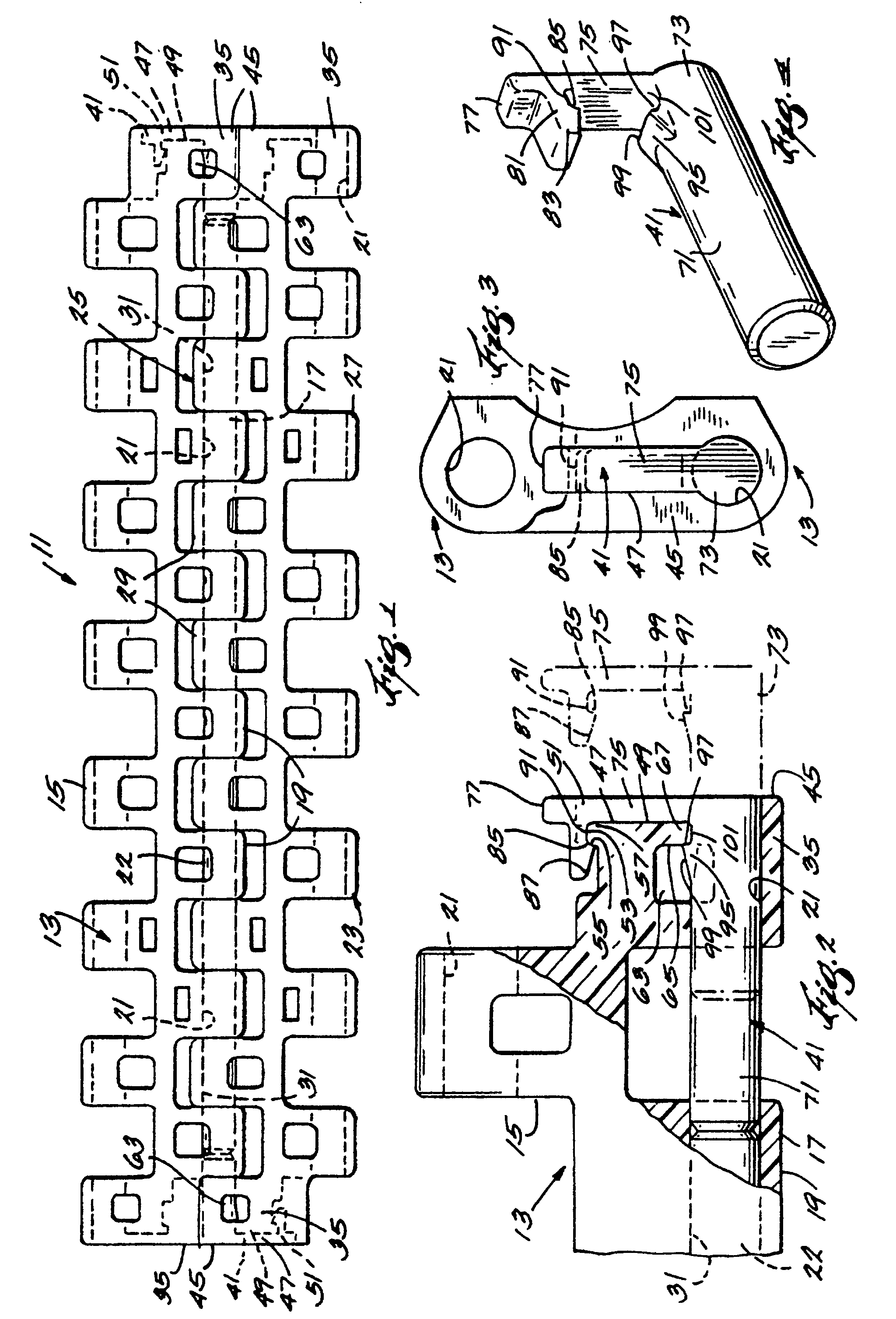
Figure 1 is a top plan view of a portion of a conveyor incorporating various of the
features of the invention.
Figure 2 is an enlarged, and partially broken away, top plan view of an end portion
of one of the link modules of the conveyor shown in Figure 1 and with the other link
module omitted.
Figure 3 is a partially broken end view, taken from the right in Figure 2.
Figure 4 is a perspective view of a retention plug employed in the conveyor shown
in Figure 1.
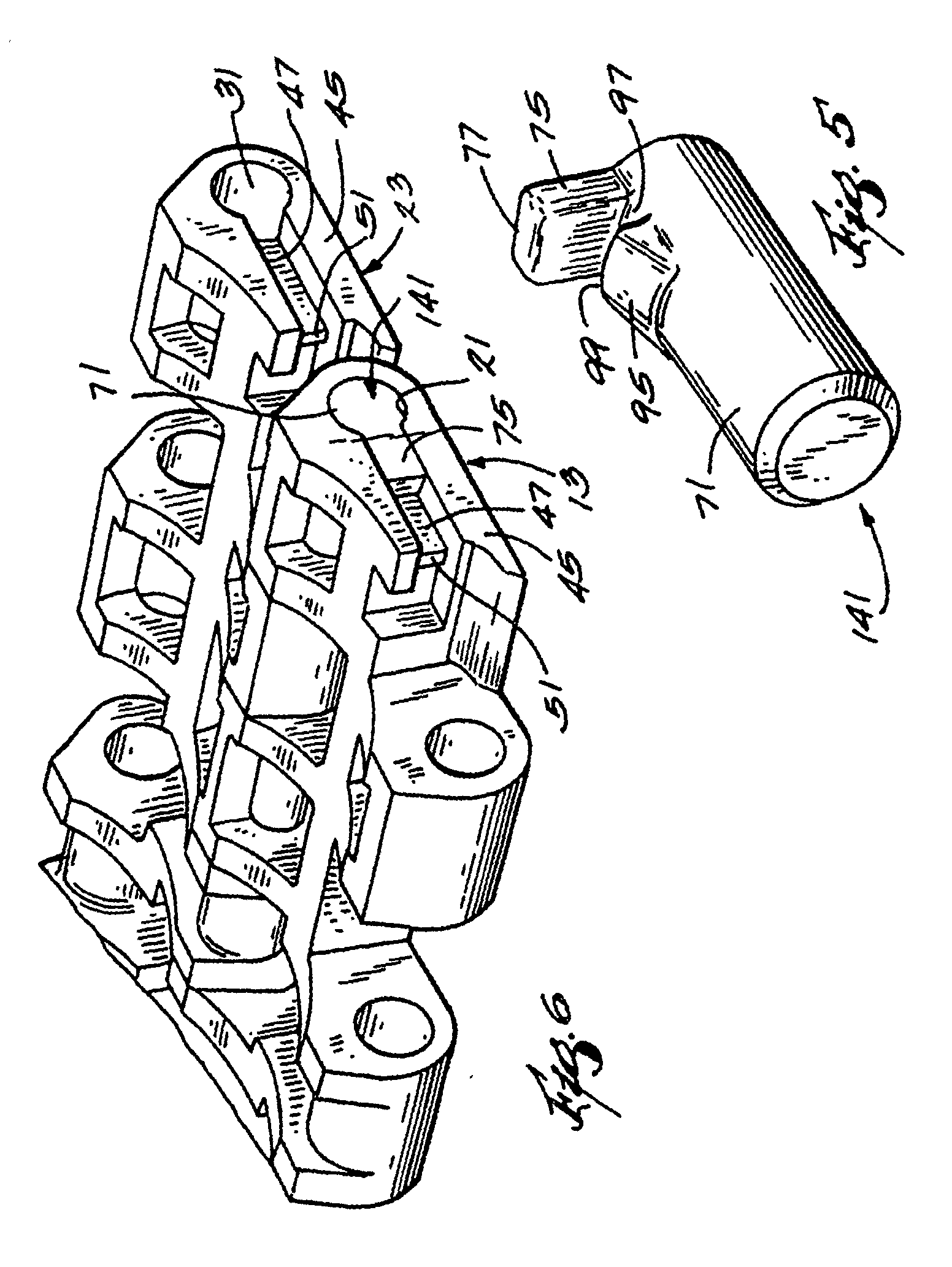
Figure 5 is a perspective view of another retention plug which can be employed in
the conveyor shown in Figure 1.
Figure 6 is a perspective view, from the bottom and side, of the conveyor which is
shown generally in Figure 1 and which is in assembled relation with the retention
plug shown in Figure 5.
[0007] Before one embodiment of the invention is explained in detail, it is to be understood
that the invention is not limited in its application to the details of the construction
and the arrangements of components set forth in the following description or illustrated
in the drawings. The invention is capable of other embodiments and of being practiced
or being carried out in various ways. Also, it is understood that the phraseology
and terminology used herein is for the purpose of description and should not be regarded
as limiting.
DESCRIPTION OF THE PREFERRED EMBODIMENT
[0008] Shown in the drawings is a first embodiment of a conveyor 11 having an intended direction
of travel and comprising a plurality of generally identical link modules serially
connected together by a plurality of hinge pins. More particularly, the conveyor 11
includes a first link module 13 extending transversely of the intended direction of
conveyor travel and including a leading portion 15 and a trailing portion 17 including
a plurality of spaced apart ears 19 respectively including therein transversely extending
bores 21 which receive a hinge pin 22, and which define therebetween a first series
of spaces. The leading portion 15 of the first link module 13 is generally identical
to the leading portion of a second link module 23 which will now be described.
[0009] The second link module 23 extends transversely of the intended direction of conveyor
travel and includes a trailing portion 27 which is generally identical to the trailing
portion 17 of the first link module 13. In addition, the second link module 23 also
includes a leading portion 25 including a plurality of spaced apart ears 29 which
are located in the spaces defined by the plurality of ears 19 of the trailing portion
17 of the first link module 13 and which respectively include therein transversely
extending bores 31 which receive the hinge pin 22.
[0010] The before mentioned hinge pin 22 extends in the bores 21 and 31 of the first and
second link modules 13 and 23 and has a length less than the full transverse width
of the conveyor 11 and is centered relative to the width of the conveyor 11. The hinge
pins 22 can be of any suitable construction.
[0011] At both outer sides, the link modules 13 and 23 also respectively include outer side
ears 35 respectively including the bores 21 and 31, as well as respective retention
plugs or pins 41 which serve to retain the hinge pin(s) 22 in the centered position
and which can also be readily detached and removed from the conveyor 11 to permit
access to the hinge pin(s) 22. In addition, the link modules 13 and 23 and the retention
plugs or pins 41 also include interengaging surfaces on the retention plugs or pins
and on the outer side ears for releasably preventing outward withdrawal of the retention
plugs or pins 41 from the bores 21 and 31.
[0012] More particularly in this last regard, each of the outer side ears 35 has an outer
side surface 45 extending along the direction of intended conveyor travel, and an
associated one of the bores 21 and 31 extending from the outer side surface 45 transversely
of the direction of intended conveyor travel and in axial alignment with the bores
21 and 31 in the other ears 19 and 29. Still more particularly, while other constructions
can be employed, each of the outer side surfaces 45 include a recess 47 extending
radially from the associated one of the bores 21 and 31 along the direction of intended
conveyor travel, and defined, in part, by a recessed surface 49 extending radially
from the associated one of the bores 21 and 31 and parallel to the outer side surface
45 and having an end 51 spaced from the associated one of the bores 21 and 31.
[0013] In addition, each of the outer side ears 35 includes an edge surface 53 extending
from the end of the recessed surface 49 and parallel to the associated one of the
bores 21 and 31, together with a first gripping surface 55 extending parallel to the
recessed surface 49 and from the edge surface 53 toward the associated one of the
bores 21 and 31 to define, with the recessed surface 49 and the edge surface 53, a
first gripping portion 57 extending or projecting away from the associated one of
the bores 21 and 31 and in generally aligned relation along the direction of intended
conveyor travel with the first gripping portion 57.
[0014] Still further in addition, each of the outer side ears 35 includes an aperture 63
which extends between the top and bottom of the associated outer side ear 35, which
extends transversely to the associated one of the bores 21 and 31, which communicates
with the associated one of the bores 21 and 31, and which is defined, in part, by
a second gripping surface 65 spaced inwardly from and parallel to the associated outer
side surface 45. The second gripping surface 65 defines, together with the recessed
surface 49, a second gripping portion 67 facing or projecting toward the associated
one of the bores 21 and 31.
[0015] The retention plugs 41 at each side of the conveyor 11 are both of identical construction
and respectively include a cylindrical barrel portion 71 extending in the bores 21
and 31 and including an outer end 73. In addition, each of the retention plugs 41
includes a flange portion 75 which extends from the outer end 73 of the barrel portion
71, which is located in the recess 47 in the outer side surface 45, and which includes
an outer end or outer part or tab 77 which is spaced from the barrel portion 71 and
which is accessible by an operator for manipulation to detach the retention plug 41
from the associated outer side ear 35.
[0016] Still further in addition, each of the retention plugs 41 includes a cantilevered
arm portion 81 which extends from the flange portion 75 inwardly of the outer end
or tab 77 thereof and in parallel relation to the barrel portion 71 and which includes
an outer enlarged portion or barb 83 projecting toward the barrel portion 71 and including
an edge 85 extending in generally parallel relation to the flange portion 75 and a
ramp surface 87 extending from the edge 85 and in outwardly diverging relation to
the axis of the barrel portion 71. The edge 85 defines, with the facing surface of
the flange portion 75, a first notch 91 resiliently engaging the first gripping portion
57 of the outer side ear 35.
[0017] In other words, the arm portion 81 and the outer enlarged portion or barb 83 provide
a cantilevered snap engagement or fit with the first gripping surface 55 of the link
module. More specifically, upon insertion, the enlarged portion or barb 83 is forced
around the first gripping surface 55 because the flange portion 75 is resilient and
bends to accommodate the cantilevered snap engagement or fit.
[0018] Still further in addition, each of the retention plugs 41 includes a tab or barb
portion 95 which extends radially from the barrel portion 71 in inwardly spaced relation
from the flange portion 75 and which includes an edge 97 extending in generally parallel
relation to the flange portion 75, and a ramp surface 99 extending from the edge 97
away from the flange portion 75 and in converging inclined relation to the axis of
the barrel portion 71 and in outwardly diverging relation with respect to the ramp
surface 87 of the enlarged portion 83. The edge 97 defines, with the facing surface
of the flange portion 75, a second notch 101 facilitating resilient or snap fit engagement
of the tab or barb portion 95 with the second gripping portion 67 of the outer ear
35.
[0019] If desired, the retention plug 41 can include only the tab portion 95 and omit the
enlarged portion or barb 83, whereby the retention plug 41 is retained only by engagement
of the gripping surface 65 of the gripping portion 67 with the tab or barb portion
95. Advantageously, the interengaging surfaces on the enlarged portion or barb 83
of the retention plug 41 and on the outer side ears 35 of the link modules 13 and
23 prevent the retention plug 41 from being excessively inserted into the bore 21
and facilitate or permit the use of a tool, if desired, to assist in disassembly of
the retention plug from the bore 21.
[0020] Alternatively, if desired, the retention plug 41 can omit the tab portion 95 and
can include only the flange portion 75, the arm portion 81, and the enlarged portion
or barb 83, whereby the retention plug 41 is retained only by engagement of the gripping
surface 55 of the gripping portion 57 with the enlarged portion or barb 83.
[0021] Any suitable material can be employed to fabricate the link modules 13 and 23, such
as for instance, from plastic materials having good snap fit qualities, such as polypropylene,
polybutylene, or polybutylene terephthalate; or polyethylene, or nylon. The material
should be sufficiently resilient to facilitate the snap fitting engagements but, at
the same time, sufficiently rigid so that the bore 21 does not permanently deform
during assembly and disassembly. In the particularly disclosed construction, the link
modules 13 and 23 are fabricated from acetal plastic.
[0022] The retention plugs 41 can be fabricated from any suitable material, such as several
engineering thermoplastics, poloefins, or even from metal. The material should be
sufficiently resilient to facilitate the snap fitting engagements but, at the same
time, sufficiently rigid so that the enlarged portion or barb 83 and the tab portion
or barb 95 do not permanently deform during assembly and disassembly. The same material
can be employed for both the link modules 13 and 23 and the insertion plugs 41. In
the particularly disclosed construction, the retention plugs 41 are fabricated from
plastic material and, in particular, from polybutylene terephthalate.
[0023] In operation, the retention plugs 41 at the opposite sides of the conveyor 11 serve
to restrain the hinge pin 22 from axial movement, or, in the absence of the hinge
pin 22, serve the function of the hinge pin 22. Furthermore, the retention plugs 41
are detachable from the outer end ears 35 to gain access to the hinge pin 22 by manipulation
of the outer end or tab 77 of the flange portion 75 to lift or dislodge the outer
end 77 from the recess 47, which dislodgement serves, if only one of the tab portion
95 and the enlarged portion 83 are employed, to disengage the snap fit between the
edge 85 or 97 from the associated gripping surface 55 and 65 or, when both the tab
portion 95 and the enlarged portion 83 are employed, to disengage the snap fit between
the edges 85 and 97 from the associated gripping surfaces 55 and 65.
[0024] More particularly, during the insertion of the retention plug 41 into the bore 21,
the tab or barb portion 95 creates, between the tab or barb portion 95 and the bore
21, a press fit which, after full assembly of the retention plug 41 into the bore
21, is released, with the result that the tab or barb portion 95 engages the gripping
surface 65 to provide the desired snap fit. During the insertion and withdrawal of
the retention plug 41 from the bore 21, one or both of these components is resiliently
deformed to provide for the press fit passage of the retention plug 41 through the
bore 21 and into snap fit engagement with the gripping surface 65 of the associated
link module 13 and 23. More particularly, the bore 21 in the link modules 13 and 23
can resiliently enlarge or stretch. In addition, the plastic material of the retention
plug 41 can resiliently deform or flow sufficiently to permit the passage of the tab
or barb portion 91 through the bore 21. After such passage, the bore 21 and the tab
or barb portion 95, as applicable, return to their non-stressed or normal condition
and the tab or barb portion 95 enters into the snap fit engagement with the gripping
surface 65.
[0025] Shown in Figure 5 tab or barb portion 95 and the bore 21 of the link modules 13 and
23 is actually a snap fit is another embodiment of a retention plug 141 which is constructed
in like manner to the retention plug 41 shown in Figure 4, except that the arm portion
81 is omitted and the flange portion 75 is shortened so that the length thereof is
less than the length of the recess 47. Desirably, one of the retention plugs 141 is
located in each of the bores 21 and 31 at each of the side surfaces 45 of the link
modules 13 and 23. One of the retention plugs 141 is shown in releasable assembled
relation with the link module 13. Accordingly, the retention plug 141 will not be
further described.
[0026] In the construction shown in Figure 6, as in the construction shown in Figures 1
through 4, the barrel portion 71 of the retention plug 141 extends in the bore 21
of the link module 13 and, as illustrated in Figure 6, the flange portion 75 of the
retention plug 141 extends in the recess 47 of the outer side surface 45.
[0027] The disclosed link module and retention plug assembly or conveyor 11 is particularly
well suited for retaining a hinge pin in a MatTop® style conveyor chain or modular
belting manufactured by Rexnord Corporation. For relatively small width conveyor chains,
the retention plugs 41 can also function as a hinge pin, thereby replacing the hinge
pin 22. Thus the disclosed retention plugs 41 can be used in conjunction with any
width conveyor belt or chain, and, in connection with smaller width chains, the disclosed
retention plugs 41 can be used to replace the usual hinge pin.
[0028] The disclosed link module and retention plug assembly or conveyor 11 also advantageously
affords removal of the retention plugs 41 from the associated one of the link modules
13 and 23 by inclusion of the outer end or tab 77 which facilitates disassembly.
[0029] A particularly desirable feature of the disclosed link module and plug assembly or
conveyor 11 is that the barrel portions 71 of the retention plugs 41 are not limited
in length and thus, as indicated above, the disclosed retention plugs 41 can also
serve as a hinge pin.
[0030] Another particularly desirable feature of the disclosed link module and plug assembly
or conveyor 11 is the inclusion of the ramp surfaces 87 and 99 which facilitate ease
of assembly and, when the retention plugs 41 are fully inserted, the locking edges
85 and 97 releasably lock to the associated one of the link modules 13 and 23.
[0031] In addition, still another desirable feature of the disclosed link module and plug
assembly or conveyor 11, is that the flange portion 75 also provides the function
of a stop which, once the retention plug 41 is inserted, prevents further insertion.
[0032] The disclosed link module and plug assembly or conveyor 11 advantageously also provides
for ease of assembly and cleanability. In addition, the disclosed link module and
plug assembly or conveyor 11 is also of relatively large size which has more field
acceptance in food processing factories because of the reduced chance that such a
larger size retention plug will be unexpectedly mixed in with packaged food products.
[0033] Various of the features are set forth in the following claims.
1. A conveyor (11) having an intended direction of travel and comprising a first link
module (13) extending transversely of the intended direction of conveyor travel and
including a trailing portion (17) including a plurality of spaced apart ears (19)
defining therebetween a first series of spaces, and a second link module (23) extending
transversely of the intended direction of conveyor travel and including a leading
portion (25) including a plurality of spaced apart ears (29) located in said spaces
defined by said plurality of ears (19) of said trailing portion (17) of said first
link module (13), one of said leading and trailing plurality of ears including a laterally
located outer side ear (35) having an outer side surface (45) extending along the
direction of intended conveyor travel, and a bore (21) extending from said outer side
surface transversely of the direction of intended conveyor travel, a retention plug
(41) provided in said bore (21), said retention plug (41) comprising a cylindrical
barrel portion (71) extending in said bore and having an outer end (73), and interengaging
surfaces (65,97) being provided on said plug and on said outer side ear for releasably
preventing outward withdrawal of said plug from said bore, characterised in that said outer side surface (45) indudes a non-annular recess (47) extending from said
bore (21) along the direction of intended conveyor travel, and wherein said plug (41)
includes a flange portion (75) extending from said outer end (73) of said barrel portion
and located in said recess (47) in said outer side surface of said end ear, said flange
portion (75) including an outer tab (77) which is manipulatable to facilitate removal
of said retention plug (41).
2. A conveyor in accordance with Claim 1, characterised in that said interengaging surfaces include a second gripping surface (65) extending on said
outer side ear (35) from said bore (21) and along the direction of intended conveyor
travel in inwardly spaced relation from said outer side surface (45), and a resilient
tab portion (95) extending radially outwardly from said barrel portion (71) in inwardly
spaced relation from said outer end (73) and in engagement with said gripping surface
(65) of said outer side ear.
3. A conveyor in accordance with Claim 1 or Claim 2, characterised by an aperture (63) extending in said outer side ear (35) transversely to said bore,
communicating with said bore, and defined, in part, by one of said interengaging surfaces
which is a second gripping surface (65) spaced inwardly from said outer side surface
(45) and extending along the direction of intended conveyor travel.
4. A conveyor in accordance with any one of Claims 1, 2 or 3, characterised in that said recess (47) is located in said outer side surface (45), extends radially from
said bore (21) along the direction of intended conveyor travel, and is defined, in
part, by a recessed surface (49) extending radially from said bore and parallel to
said outer side surface (45) and having an end spaced from said bore, an edge surface
(85) extending from said end of said recessed surface and parallel to said bore, a
first gripping surface (55) extending parallel to said recessed surface (47) and from
said edge surface (85) to define, with said recessed surface and said edge surface,
a gripping portion (57) projecting away from said bore, and said flange portion (75)
of the retention plug (41) extending from said outer end of said barrel portion, located
in said recess (47) in said outer side surface of said outer side ear, and including
an outer end (77) spaced from said barrel portion (71), and an arm portion (81) extending
from said flange portion inwardly of said outer end thereof and in parallel relation
to said barrel portion, and including an outer enlarged portion (83) projecting toward
said barrel portion (71) and defining, between said flange portion and said arm portion,
a notch (91) resiliently engaging said gripping portion (57) of said outer side ear.
5. A conveyor in accordance with any one of Claims 1 to 3, characterised by an aperture (63) extending in said outer side ear transversely to said bore, communicating
with said bore, and defined, in part, by a second gripping surface (65) spaced inwardly
from and parallel to said outer side surface (45) to define, with said recessed surface
(49), a second gripping portion (67) projecting toward said bore, and said flange
portion (75) of the retention plug (41) extending from said outer end (73) of said
barrel portion, located in said recess (47) in said outer side surface (45) of said
end ear, and including an outer end (73) spaced from said barrel portion, an arm portion
(81) extending from said flange portion (75) inwardly of said outer end thereof and
in parallel relation to said barrel portion, and including an outer enlarged portion
(83) projecting toward said barrel portion (71) and defining, between said flange
portion and said arm portion, a first notch (91) resiliently engaging said first gripping
portion (57) of said outer side ear (35), and a tab portion (95) extending radially
from said barrel portion (71) in inwardly spaced relation from said flange portion
(75) and defining with said flange portion (75), a second notch (101) resiliently
engaging said second gripping portion (67) of said outer ear.
6. A conveyor in accordance with Claim 5, characterised in that said tab portion (95) includes a side surface (99) facing said arm portion (81) and
normally extending in inclined relation to said flange portion, wherein said enlarged
portion (83) includes a side surface (87) facing said barrel portion and normally
extending in inclined relation to said flange portion (75), and wherein said side
surfaces of said tab portion and said enlarged portion extend in outwardly divergent
relation from said flange portion.
7. A conveyor in accordance with any one of the preceding Claims, characterised in that said first and second link modules (13,23) are fabricated from plastic.
8. A conveyor in accordance with any one of the preceding Claims, characterised in that said plug (41) is fabricated from plastic.
1. Förderer (11) mit einer Soll-Bewegungsrichtung und umfassend ein erstes Gliedermodul
(13), das sich quer zur Soll-Bewegungsrichtung des Förderers erstreckt und einen hinteren
Bereich (17) aufweist, der eine Vielzahl von beabstandeten Ohren (19) aufweist, die
zwischen einander eine erste Reihe von Räumen begrenzen, und ein zweites Gliedermodul
(23), das sich quer zur Soli-Bewegungsrichtung des Förderers erstreckt und einen vorderen
Bereich (25) aufweist, der eine Vielzahl von beabstandeten Ohren (29) aufweist, die
in den durch die Vielzahl der Ohren (19) des hinteren Bereichs (17) des ersten Gliedermoduls
(13) begrenzten Räumen angeordnet sind, wobei eine Vielzahl der vorderen und hinteren
Vielzahl der Ohren ein seitlich angeordnetes Außenseitenohr (35) mit einer Außenseitenfläche
(45), die sich entlang der Soll-Bewegungsrichtung des Förderers erstreckt, und eine
Bohrung (21), die sich von der Außenseitenfläche aus quer zu der Soll-Bewegungsrichtung
des Förderers erstreckt, aufweist, wobei ein Haltebolzen (41) in der Bohrung (21)
vorgesehen ist, wobei der Haltebolzen (41) einen zylindrischen Schaftbereich (71)
aufweist, der sich in der Bohrung erstreckt und ein Außenende (73) aufweist, und wobei
Eingriffsflächen (65, 97) an dem Bolzen und an dem Außenseitenohr zur freigebbaren
Verhinderung eines auswärts gerichteten Herausziehens des Bolzens aus der Bohrung
vorgesehen sind, dadurch gekennzeichnet, dass die Außenseitenfläche (45) eine nicht-kreisförmige Aussparung (47) aufweist, die
sich von der Bohrung (21) aus entlang der Soll-Bewegungsrichtung des Förderers erstreckt,
und wobei der Bolzen (41) einen Flanschbereich (75) aufweist, der sich von dem Außenende
(73) des Schaftbereichs aus erstreckt und in der Aussparung (47) in der Außenseitenfläche
des Außenohrs angeordnet ist, wobei der Flanschbereich (75) einen Außenansatz (77)
aufweist, der zur Ermöglichung des Entfemens des Haltebolzens (41) handhabbar ist.
2. Förderer nach Anspruch 1, dadurch gekennzeichnet, dass die Eingriffsflächen eine zweite Erfassungsfläche (65) aufweisen, die sich an dem
Außenseitenohr (35) von der Bohrung (21) aus und entlang der Soll-Bewegungsrichtung
des Förderers in einer einwärts beabstandeten Beziehung zu der Außenseitenfläche (45)
erstreckt, und wobei sich ein nachgiebiger Ansatzbereich (95) radial nach außen von
dem Schaftbereich (71) aus in einer einwärts beabstandeten Beziehung von dem Außenende
(73) und im Eingriff mit der Erfassungsfläche (65) des Außenseitenohrs erstreckt.
3. Förderer nach Anspruch 1 oder Anspruch 2, gekennzeichnet durch eine Öffnung (63), die sich in dem Außenseitenohr (35) quer zu der Bohrung erstreckt,
mit der Bohrung in Verbindung steht und teilweise durch eine der Eingriffsflächen begrenzt ist, die eine zweite Erfassungsfläche (65) ist,
die einwärts von der Außenseitenfläche (45) beabstandet ist und sich entlang der Soll-Bewegungsrichtung
des Förderers erstreckt.
4. Förderer nach irgendeinem der Ansprüche 1, 2 oder 3, dadurch gekennzeichnet, dass die Aussparung (47) in der Außenseitenfläche (45) angeordnet ist, sich radial von
der Bohrung (21) aus entlang der Soll-Bewegungsrichtung des Förderers erstreckt und
teilweise durch eine ausgesparte Fläche (49) begrenzt ist, die sich radial von der
Bohrung aus und parallel zu der Außenseitenfläche (45) erstreckt und ein von der Bohrung
beabstandetes Ende aufweist, wobei eine Randfläche (85) sich von dem Ende der ausgesparten Fläche aus und parallel zu
der Bohrung erstreckt, wobei eine erste Erfassungsfläche (55) sich parallel zu der
ausgesparten Fläche (47) und von der Randfläche (85) aus erstreckt, um mit der ausgesparten
Fläche und der Randfläche einen Erfassungsbereich (57) zu bilden, der von der Bohrung
aus vorsteht, und wobei sich der Flanschbereich (75) des Haltebolzens (41) von dem
Außenende des Schaftbereichs aus erstreckt, in der Aussparung (47) in der Außenseitenfläche
des Außenseitenohrs angeordnet ist und ein Außenende (77) aufweist, das von dem Schaftbereich
(71) beabstandet ist, und wobei ein Armbereich (81) sich von dem Flanschbereich aus
einwärts des äußeren Ende desselben und parallel zu dem Schaftbereich erstreckt und
einen vergrößerten Außenbereich (83) aulweist, der in Richtung zu dem Schaftbereich
(71) hin vorsteht und zwischen dem Flanschbereich und dem Armbereich eine Kerbe (91)
begrenzt, die mit dem Erfassungsbereich (57) des Außenseitenohrs nachgiebig in Eingriff
steht.
5. Förderer nach irgendeinem der Ansprüche 1 bis 3, gekennzeichnet durch eine Öffnung (63), die sich in dem Außenseitenohr quer zu der Bohrung erstreckt,
mit der Bohrung in Verbindung steht und teilweise durch eine zweite Erfassungsfläche (65) begrenzt ist, die einwärts von der Außenseitenfläche
(45) beabstandet und zu dieser parallel ist, um mit der ausgesparten Fläche (49) einen
zweiten Erfassungsbereich (67), der in Richtung zu der Bohrung hin vorsteht, zu begrenzen,
und wobei der Flanschbereich (75) des Haltebolzens (41), der sich von dem Außenende
(73) des Schaftbereichs aus erstreckt, in der Aussparung (47) in der Außenseitenfläche
(45) des Endohrs angeordnet ist und ein Außenende (73), das von dem Schaftbereich
beabstandet ist, einen Armbereich (81), der sich von dem Flanschbereich (75) aus einwärts
des Außenendes desselben und parallel zu dem Schaftbereich erstreckt, und der einen
vergrößerten Außenbereich (83), der in Richtung zu dem Schaftbereich (71) hin vorsteht
und zwischen dem Flanschbereich und dem Armbereich eine erste Kerbe (91) begrenzt,
die mit den ersten Erfassungsbereich (57) des Außenseiterohrs (35) nachgiebig in Eingriff
steht, und einen Ansatzbereich (95) aufweist, der sich von dem Schaftbereich (71)
aus radial in einer einwärts beabstandeten Beziehung von dem Flanschbereich (75) erstreckt
und in dem Flanschbereich (75) eine zweite Kerbe (101) begrenzt, die mit dem zweiten
Erfassungsbereich (67) des Außenohrs in Eingriff steht.
6. Förderer nach Anspruch 5, dadurch gekennzeichnet, dass der Ansatzbereich (95) eine Seitenfläche (99) aufweist, die dem Armbereich (81) zugewandt
ist und sich normalerweise in einer geneigten Beziehung zu dem Flanschbereich erstreckt,
wobei der vergrößerte Bereich (83) eine Seitenfläche (87) aufweist, die dem Schaftbereich
zugewandt ist und sich normalerweise in einer geneigten Beziehung zu dem Flanschbereich
(75) erstreckt, und wobei die Seitenflächen des Ansatzbereichs und des vergrößerten
Bereichs sich in einer nach außen auseinander laufenden Beziehung von dem Flanschbereich
erstrecken.
7. Förderer nach irgendeinem der vorhergehenden Ansprüche, dadurch gekennzeichnet, dass das erste und das zweite Gliedermodul (13, 23) aus Kunststoff hergestellt sind.
8. Förderer nach irgendeinem der vorhergehenden Ansprüche, dadurch gekennzeichnet, dass der Bolzen (41) aus Kunststoff hergestellt ist.
1. Convoyeur (11) présentant une direction de transport voulue et comprenant un premier
module de maillon (13) s'étendant transversalement à la direction de transport voulue
du convoyeur et comprenant une partie arrière (17) comprenant de multiples oreilles
espacées (19) définissant entre elles une première série d'espaces, et un deuxième
module de maillon (23) s'étendant transversalement à la direction de transport voulue
du convoyeur et comprenant une partie avant (25) comprenant de multiples oreilles
espacées (29) situées dans lesdits espaces définis par lesdites multiples oreilles
(19) de ladite partie arrière (17) dudit premier module de maillon (13), l'une desdites
multiples oreilles avant et arrière étant une oreille latérale extérieure située latéralement
(35) comportant une surface latérale extérieure (45) s'étendant dans la direction
de transport voulue du convoyeur, et un alésage (21) s'étendant à partir de ladite
surface latérale extérieure transversalement à la direction de transport voulue du
convoyeur, et un bouchon de retenue (41) prévu dans ledit alésage (21), ledit bouchon
de retenue (41) comprenant une partie formant corps cylindrique (71) s'étendant dans
ledit alésage et comportant une extrémité extérieure (73), des surfaces d'accouplement
(65, 97) étant prévues sur ledit bouchon et sur ladite oreille latérale extérieure
pour empêcher de manière libérable un retrait vers l'extérieur dudit bouchon hors
dudit alésage, caractérisé en ce que ladite surface latérale extérieure (45) comprend un évidement non annulaire (47)
s'étendant à partir dudit alésage (21) dans la direction de transport voulue du convoyeur,
et dans lequel ledit bouchon (41) comprend une partie formant rebord (75) s'étendant
à partir de ladite extrémité extérieure (73) de ladite partie formant corps et située
dans ledit évidement (47) de ladite surface latérale extérieure de ladite oreille
d'extrémité, ladite partie formant rebord (75) comprenant une patte extérieure (77)
qui est manipulable pour faciliter le retrait dudit bouchon de retenue (41).
2. Convoyeur selon la revendication 1, caractérisé en ce que lesdites surfaces d'accouplement comprennent une deuxième surface de préhension (65)
s'étendant sur ladite oreille latérale extérieure (35) à partir dudit alésage (21)
et dans la direction de transport voulue du convoyeur dans une relation d'espacement
vers l'intérieur à partir de ladite surface latérale extérieure (45), et une partie
formant patte élastique (95) s'étendant radialement vers l'extérieur à partir de ladite
partie formant corps (71) dans une relation d'espacement vers l'intérieur à partir
de ladite extrémité extérieure (73) et en prise avec ladite surface de préhension
(65) de ladite oreille latérale extérieure.
3. Convoyeur selon la revendication 1 ou la revendication 2, caractérisé par une ouverture (63) s'étendant dans ladite oreille latérale extérieure (35) transversalement
audit alésage, communiquant avec ledit alésage, et définie en partie par l'une desdites
surfaces d'accouplement qui est une deuxième surface de préhension (65) espacée vers
l'intérieur à partir de ladite surface latérale extérieure (45) et s'étendant dans
la direction de transport voulue du convoyeur.
4. Convoyeur selon l'une quelconque des revendications 1, 2 et 3, caractérisé en ce que ledit évidement (47) est situé dans ladite surface latérale extérieure (45), s'étend
radialement à partir dudit alésage (21) dans la direction de transport voulue du convoyeur,
et est défini, en partie, par une surface évidée (49) s'étendant radialement à partir
dudit alésage et parallèlement à ladite surface latérale extérieure (45) et comportant
une extrémité espacée dudit alésage, une surface marginale (85) s'étendant à partir
de ladite extrémité de ladite surface évidée et parallèlement audit alésage, une première
surface de préhension (55) s'étendant parallèlement à ladite surface évidée (47) et
à partir de ladite surface de bord (85) pour définir, avec ladite surface évidée et
ladite surface marginale , une partie de préhension (57) faisant saillie à partir
dudit alésage, et ladite partie formant rebord (75) du bouchon de retenue (41) s'étendant
à partir de ladite extrémité extérieure de ladite partie formant corps, située dans
ledit évidement (47) de ladite surface latérale extérieure de ladite oreille latérale
extérieure, et comprenant une extrémité extérieure (77) espacée de ladite partie formant
corps (71), et une partie formant bras (81) s'étendant à partir de ladite partie formant
rebord vers l'intérieur de ladite extrémité extérieure de celle-ci et dans une relation
parallèle à ladite partie formant corps, et comprenant une partie extérieure élargie
(83) faisant saillie vers ladite partie formant corps (71) et définissant, entre ladite
partie formant rebord et ladite partie formant bras, une entaille (91) en prise élastiquement
avec ladite partie de préhension (57) de ladite oreille latérale extérieure.
5. Convoyeur selon l'une quelconque des revendications 1 à 3, caractérisé par une ouverture (63) s'étendant dans ladite oreille latérale extérieure transversalement
audit alésage, communiquant avec ledit alésage, et définie, en partie, par une deuxième
surface de préhension (65) espacée vers l'intérieur de ladite surface latérale extérieure
(45) et parallèlement à celle-ci afin de définir, avec ladite surface évidée (49),
une deuxième partie de préhension (67) faisant saillie vers ledit alésage, et ladite
partie formant rebord (75) du bouchon de retenue (41) s'étendant à partir de ladite
extrémité extérieure (73) de ladite partie formant corps, située dans ledit évidement
(47) de ladite surface latérale extérieure (45) de ladite oreille d'extrémité, et
comprenant une extrémité extérieure (73) espacée de ladite partie formant corps, une
partie formant bras (81) s'étendant à partir de ladite partie formant rebord (75)
vers l'intérieur de ladite extrémité extérieure de celle-ci et dans une relation parallèle
à ladite partie formant corps, et comprenant une partie extérieure élargie (83) faisant
saillie vers ladite partie formant corps (71) et définissant, entre ladite partie
formant rebord et ladite partie formant bras, une première entaille (91) en prise
élastiquement avec ladite première partie de préhension (57) de ladite oreille latérale
extérieure (35), et une partie formant patte (95) s'étendant radialement à partir
de ladite partie formant corps (71) dans une relation d'espacement vers l'intérieur
de ladite partie formant rebord (75) et définissant, avec ladite partie formant rebord
(75), une deuxième entaille (101) en prise élastiquement avec ladite deuxième partie
de préhension (67) de ladite oreille extérieure.
6. Convoyeur selon la revendication 5, caractérisé en ce que ladite partie formant patte (95) comprend une surface latérale (99) faisant face
à ladite partie formant bras (81) et s'étendant normalement dans une relation inclinée
par rapport à ladite partie formant rebord, dans lequel ladite partie élargie (83)
comprend une surface latérale (87) faisant face à ladite partie formant corps et s'étendant
normalement dans une relation inclinée par rapport à ladite partie formant rebord
(75), et dans lequel lesdites surfaces latérales de ladite partie formant patte et
de ladite partie élargie s'étendent dans une relation divergeant vers l'extérieur
à partir de ladite partie formant rebord.
7. Convoyeur selon l'une quelconque des revendications précédentes, caractérisé en ce que lesdits premier et deuxième modules de maillon (13, 23) sont fabriqués en matière
plastique.
8. Convoyeur selon l'une quelconque des revendications précédentes, caractérisé en ce que ledit bouchon (41) est fabriqué en matière plastique.