| (19) |
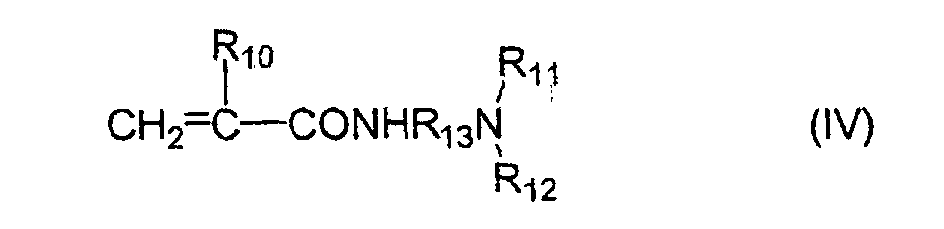
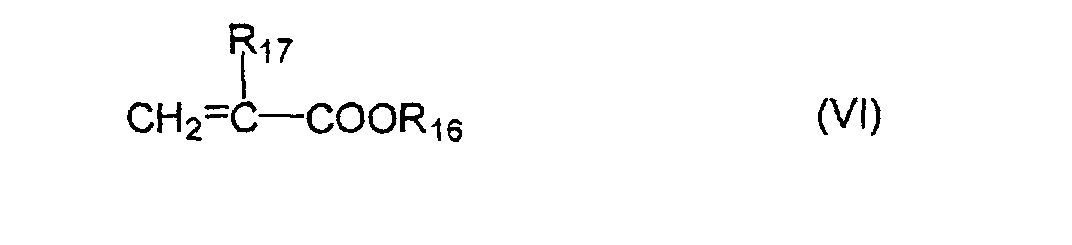
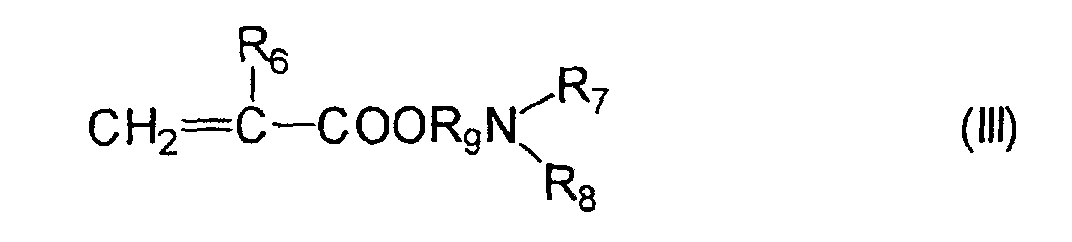
 |
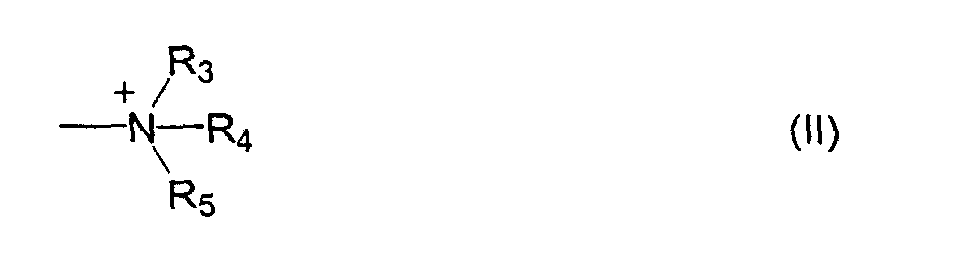
|
(11) |
EP 0 933 408 B1 |
| (12) |
EUROPEAN PATENT SPECIFICATION |
| (45) |
Mention of the grant of the patent: |
|
12.02.2003 Bulletin 2003/07 |
| (22) |
Date of filing: 13.10.1997 |
|
| (51) |
International Patent Classification (IPC)7: C09D 133/04, C09D 139/00, C08L 33/04, C08L 39/00, C23C 22/07, B05D 7/14, C23C 22/34, C23C 22/36, C23C 22/56, C23C 22/28, B05D 7/24, C09D 139/02, C09D 133/10 |
| (86) |
International application number: |
|
PCT/JP9703/656 |
| (87) |
International publication number: |
|
WO 9801/7735 (30.04.1998 Gazette 1998/17) |
|
| (54) |
METAL SURFACE TREATMENT FOR FOOD CAN USING AN ACRYLIC RESIN CONTAINING COMPOSITION
AND THE SO TREATED CAN
VERFAHREN ZUR BEHANDLUNG VON METALLOBERFLÄCHEN FÜR LEBENSMITTELBEHÄLTER MIT EINER
ACRYLHARZ ENTHALTENDE ZUSAMMENSETZUNG UND SO BEHANDELTEN BEHÄLTER
PROCEDE DE TRAITEMENT DE RECIPIENT ALIMENTAIRE METALLIQUE AVEC UNE COMPOSITION COMPRENANT
UNE RESINE ACRYLIQUE ET LE RECIPIENT ALIMENTAIRE AINSI TRAITE
|
| (84) |
Designated Contracting States: |
|
DE FR GB |
| (30) |
Priority: |
21.10.1996 JP 27836696
30.09.1997 JP 26555297
|
| (43) |
Date of publication of application: |
|
04.08.1999 Bulletin 1999/31 |
| (73) |
Proprietor: NIPPON PAINT CO., LTD. |
|
Osaka-shi
Osaka 530 (JP) |
|
| (72) |
Inventors: |
|
- SHIBATA, Yasuhiro
Kanagawa 225 (JP)
- KANDA, Tomoyuki
Kanagawa 247 (JP)
- TOUNAKA, Atsuhiko
Yokohama-shi
Kanagawa 225 (JP)
- MAEKAWA, Susumu
Kanagawa 242 (JP)
- YASUHARA, Kiyotada
Chiba 277 (JP)
|
| (74) |
Representative: HOFFMANN - EITLE |
|
Patent- und Rechtsanwälte
Arabellastrasse 4
81925 München
81925 München (DE) |
| (56) |
References cited: :
EP-A- 0 200 546
JP-A- 3 281 672
JP-A- 59 232 191
JP-A- 63 171 684
US-A- 4 637 839
|
EP-A- 0 208 367
JP-A- 6 146 002
JP-A- 63 171 683
US-A- 4 335 829
|
|
| |
|
|
- PATENT ABSTRACTS OF JAPAN vol. 011, no. 124 (C-416), 17 April 1987 (1987-04-17) &
JP 61 264040 A (KOBE STEEL LTD), 21 November 1986 (1986-11-21)
|
|
| |
|
|
|
Remarks: |
|
The file contains technical information submitted after the application was filed
and not included in this specification |
|
| Note: Within nine months from the publication of the mention of the grant of the European
patent, any person may give notice to the European Patent Office of opposition to
the European patent
granted. Notice of opposition shall be filed in a written reasoned statement. It shall
not be deemed to
have been filed until the opposition fee has been paid. (Art. 99(1) European Patent
Convention).
|
Field of the Invention
[0001] This invention relates to an acrylic resin-containing metal surface, treatment method
and treated metal material, and in particular to an acrylic resin-containing metal
surface, treatment method and treated metal material giving improved corrosion resistance,
film adhesion and slip properties (referred to also as "lubricity").
Background of the Invention
[0002] Conventionally, phosphate treatment, chromate treatment and non-chromate treatment,
etc. were performed as surface treatments for food cans, car bodies, coil coatings
for steel plate and metals for construction materials. For example, a phosphate film
is formed on a metal surface as a pretreatment when organic coatings such as paints
and adhesives are applied to metal surfaces such as iron, zinc, and aluminum. By subsequently
applying an organic film such as a coating, corrosion resistance and film adhesion
can be improved. However, conventional phosphate treatment did not necessarily provide
sufficient corrosion resistance, film adhesion or slip properties to satisfy demand
in recent years.
[0003] To improve corrosion resistance following phosphate treatment, it was common to apply
a coating after first applying a primer coat. However, if a primer was first applied,
although corrosion resistance and film adhesion improved, the number of coating steps
increased, complicating the procedure and leading to higher cost.
[0004] In the "Surface Treatment Method for Aluminum and Aluminum Alloys" described in Japanese
Laid-open publication No. Sho 51-73938, the metal to be treated is limited to aluminum.
This method aims to confer corrosion resistance and film adhesion properties. It is
described that this metal surface treatment method uses a liquid of which the principal
components are water-soluble resins such as vinyl acetate, vinylidene chloride and
acrylic acid or organic polymer film forming substances comprising emulsion resins,
and a water-soluble titanium compound.
[0005] However, although they offer improved corrosion resistance and film adhesion compared
with the prior art, the aforesaid metal surface treatment method has not reached recent
demand requirements. In particular, in the manufacture of food cans using aluminum
or its alloys, they do not prevent jamming, and in the coil coating of steel plate,
lubricity is poor.
Disclosure of the Invention
[0006] It is therefore an object of this invention to provide an acrylic resin-containing
metal surface, treatment method and treated metal material offering improved corrosion
resistance, film adhesion and slip properties.
[0007] To achieve this object, the acrylic resin-containing metal surface treatment composition
used according to this invention comprise:
a) a water-soluble, water-dispersible or emulsifiable acrylic resin comprising either
an amino group or an ammonium group, or both, together with a hydroxyl group and hydrophobic
group, and
b) a heavy metal or one of its salts.
[0008] As permeability is suppressed by an inorganic film which comprises a heavy metal
or one of its salts, corrosion resistance improves. Further, as the amino group or
ammonium group in the acrylic resin is coordinated with the (heavy) metal, the aforesaid
inorganic film is connected via the acrylic resin. This prevents cohesive failure
of the inorganic film, giving an almost uniform substrate film on the metal surface
which improves adhesion between the substrate film and the topcoat. The substrate
film of this invention refers to the film formed on the metal surface which comprises
the aforesaid inorganic film connected by the acrylic resin. In addition, the aforesaid
acrylic resin is almost uniformly distributed on the substrate film surface, so frictional
resistance is reduced and slip properties are improved.
[0009] Preferably, the amino group or the ammonium group in the acrylic resin-containing
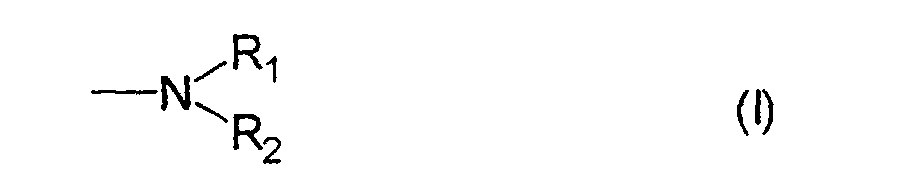
metal surface treatment composition used according to this invention comprises at
least the structural unit represented bythe following chemical formulae (I) or (II).
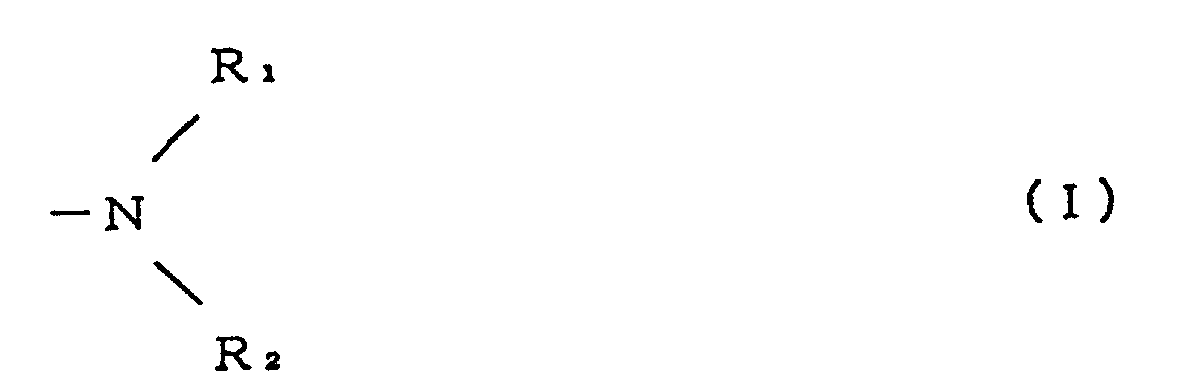
where R
1, R
2 are hydrogen, hydroxyl, a substituted or unsubstituted straight chain or branched
alkyl group comprising 1-5 carbon atoms, or a substituted or unsubstituted straight
chain or branched hydroxyalkyl group comprising 1-5 carbon atoms
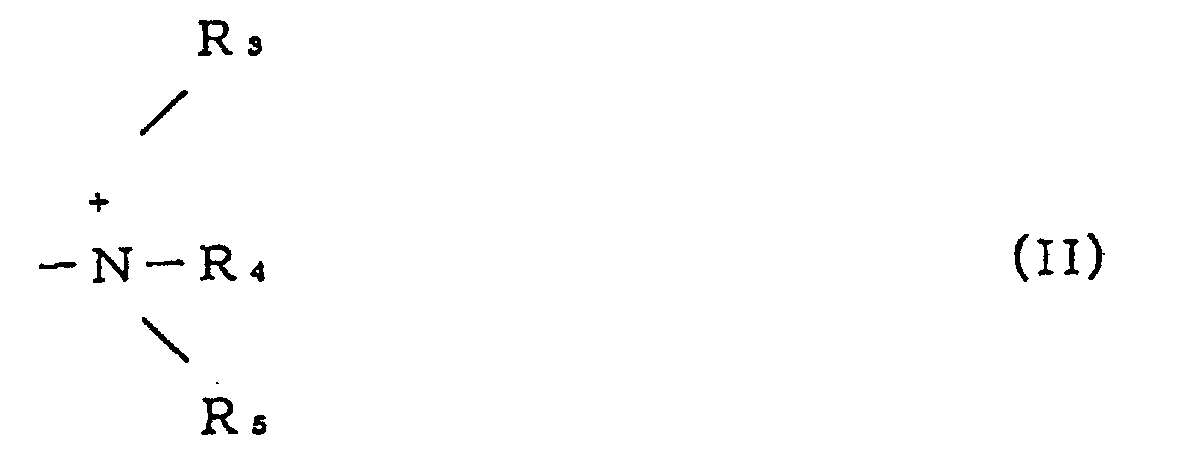
where R
3, R
4, R
5 are hydrogen, hydroxyl, a substituted or unsubstituted straight chain or branched
alkyl group comprising 1-5 carbon atoms, or a substituted or unsubstituted straight
chain or branched hydroxyalkyl group comprising 1-5 carbon atoms.
[0010] Moreover, the molecular weight of the acrylic resin in this invention is 500-100,000,
and preferably 1,000-20,000. When the molecular weight is less than 500, corrosion
resistance decreases. On the other hand, when the molecular weight exceeds 100,000,
hydrophilic properties decrease.
[0011] According to this invention, the acrylic resin content is 0.01-10g/l and preferably
0.1-5g/l relative to the metal surface treatment composition. When the acrylic resin
content is less than 0.01g/l, a binder effect is not manifested, and the physical
durability of the substrate film decreases. On the other hand, when the acrylic resin
content exceeds 10g/l, the adhesion between the substrate film and the metal surface
decreases.
[0012] In the acrylic resin-containing metal surface treatment composition used according
to this invention, the acrylic resin contains 1-10 amino and/or ammonium groups, 1-10
hydroxyl groups and 1-5 hydrophobic groups per 1000 molecular weight units of acrylic
resin. When there is less than one amino or ammonium group per 1000 molecular weight
units of acrylic resin, hydrophilic properties and adhesion to the metal decrease.
On the other hand, when there are more than 10 amino or ammonium groups per 1000 molecular
weight units of acrylic resin, corrosion resistance decreases.
[0013] When there is less than one hydroxyl group per 1000 molecular weight units of acrylic
resin, hydrophilic properties and film adhesion decrease. On the other hand, when
there are more than 10 hydroxyl groups per 1000 molecular weight units of acrylic
resin, corrosion resistance decreases.
[0014] When there is less than one hydrophobic group per 1000 molecular weight units of
acrylic resin, corrosion resistance and slip properties decrease. On the other hand,
when there are more than 5 hydrophobic groups per 1000 molecular weight units of acrylic
resin, hydrophilic properties and film adhesion decrease.
[0015] In the acrylic resin-containing metal surface treatment composition, the amino group
or ammonium group contained in the acrylic resin is introduced by copolymerization
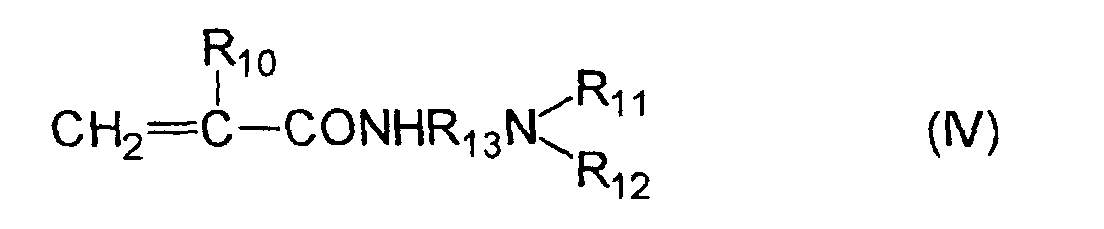
of a monomer comprising at least the structural unit represented by the following
chemical formulae (III) or (IV):
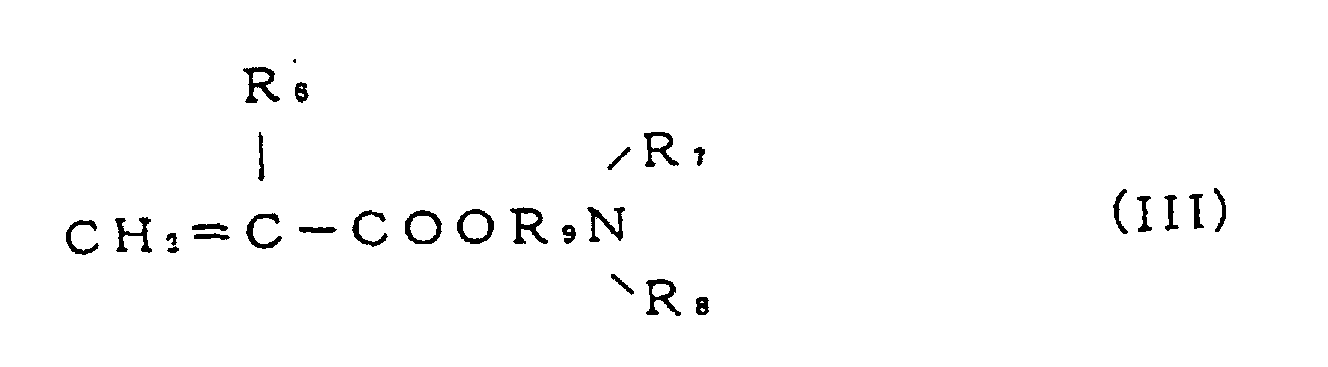
where R
6 is hydrogen or methyl,
R
7, R
8 are hydrogen, hydroxyl, a substituted or unsubstituted straight chain or branched
alkyl group comprising 1-5 carbon atoms, or a substituted or unsubstituted straight
chain or branched hydroxyalkyl group comprising 1-5 carbon atoms, and R
9 is an alkylene group comprising 1-5 carbon atoms.
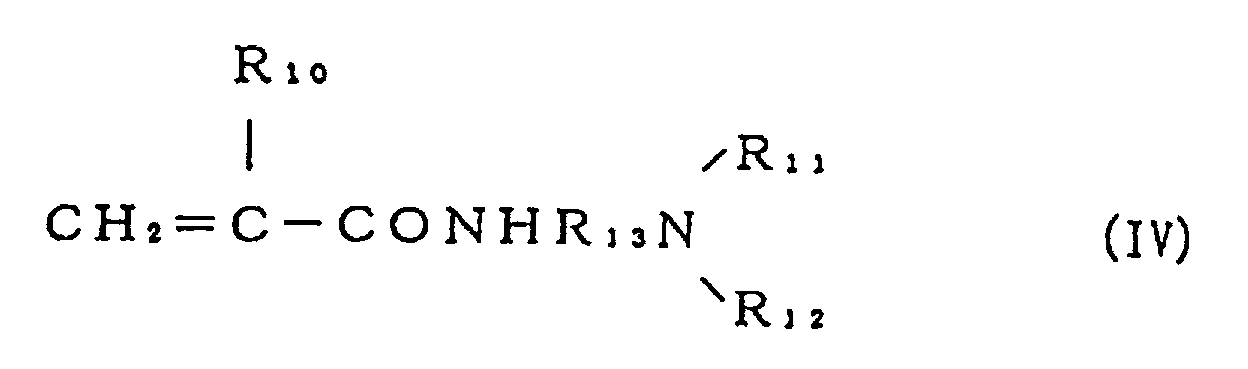
where R
10 are hydrogen or methyl, R
11, R
12 are hydrogen, hydroxyl, a substituted or unsubstituted straight chain or branched
alkyl group comprising 1-5 carbon atoms, or a substituted or unsubstituted straight
chain or branched hydroxyalkyl group comprising 1-5 carbon atoms, and R
13 is an alkylene group comprising 1-5 carbon atoms.
[0016] In the acrylic resin-containing metal surface treatment composition used according
to this invention, the hydroxyl group contained in the acrylic resin is introduced
by copolymerization of a monomer comprising at least the structural unit represented
by the following chemical formula (V):
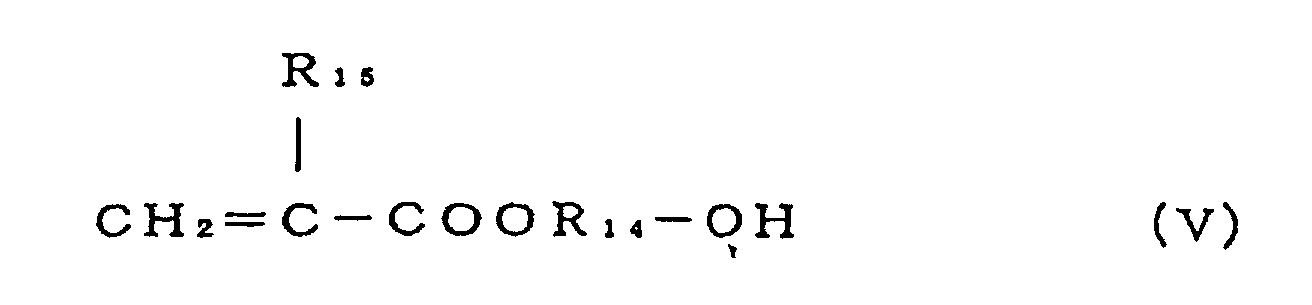
where R
14 is an alkylene group comprising 1-4 carbon atoms, and R
15 is hydrogen or methyl.
[0017] Moreover, in the acrylic resin-containing metal surface treatment composition used
according to this invention, the hydrophobic group contained in the acrylic resin
is introduced by copolymerization of a monomer comprising at least the structural
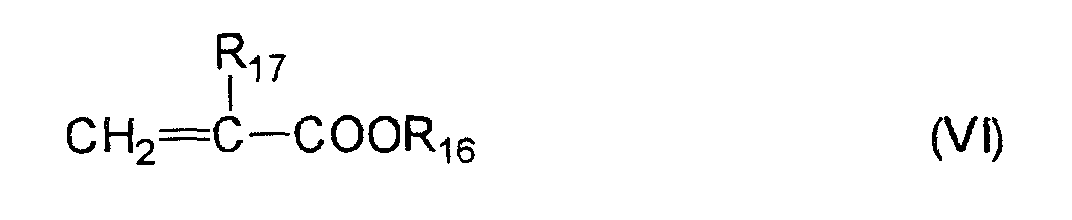
unit represented by the following chemical formula (VI):
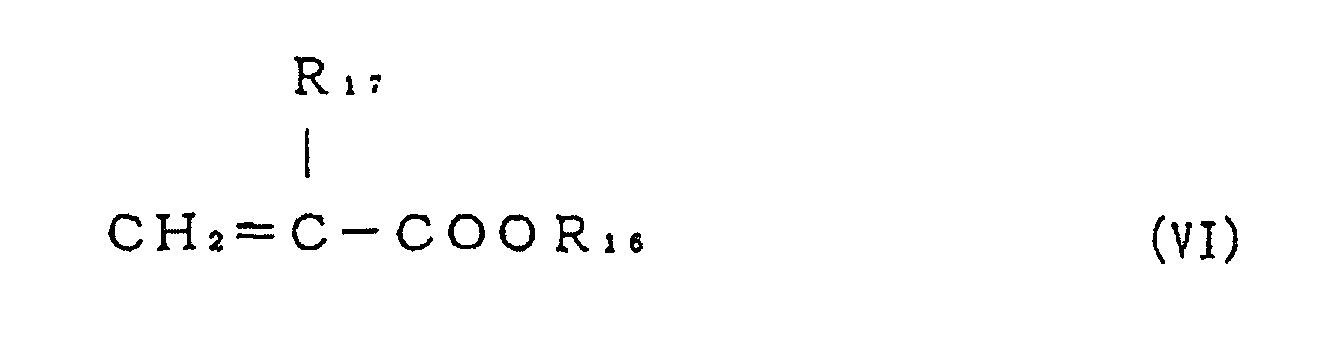
where R
16 is a straight chain, branched or cyclic alkyl group comprising 4-18 carbon atoms,
and R
17 is hydrogen or methyl.
[0018] In the acrylic resin of the acrylic resin-containing metal surface treatment composition
of this invention, copolymers of the following monomers are suitable.
(1) The acrylic monomer containing an amino group (ammonium group) may for example
be N, N-dimethylaminoethyl(meth)acrylate, N, N-diethylaminoethyl(meth)acrylate, (meth)acrylamide,
N, N-dimethylolacrylamide, N-methylolacrylamide, N-methylaminopropyl(meth)acrylamide,
N, N-dimethylaminopropyl(meth)acrylamide, N-ethylamino propyl(meth)acrylamide, N,
N-diethylaminopropyl (meth)acrylamide, or chlorides of these compounds.
(2) The acrylic monomer containing a hydroxyl group may for example be 2-hydroxyethyl(meth)acrylate,
hydroxypropyl(meth)acrylate, 4-hydroxybutyl (meth)acrylate, or 2, 3-dihydroxypropyl(meth)acrylate.
(3) The monomer containing a hydrophobic group may for example be n-butyl(meth)acrylate,
i-butyl (meth)acrylate, t-butyl(meth)acrylate, n-hexyl (meth)acrylate, 2-ethylhexyl(meth)acrylate,
lauryl (meth)acrylate, stearyl(meth)acrylate, cyclohexyl (meth)acrylate, isobornyl(meth)acrylate,
styrene, p-t-butylstyrene, vinyltoluene, vinylphenol or benzyl (meth)acrylate.
(4) Additionally, other monomers may be added such as acrylic acid, methacrylic acid,
maleic acid, itaconic acid or acrylonitrile.
[0019] The copolymerization ratios of copolymers formed from the aforesaid monomers are
amino group (ammonium group)-containing acrylic monomer 5-60 weight %, hydroxyl group-containing
acrylic monomer 20-80 weight %, hydrophobic group-containing monomer 5-50 weight %,
and other monomers 0-30 weight %.
More preferably, these ratios are amino group (ammonium group)-containing acrylic
monomer 20-40 weight %, hydroxyl group-containing acrylic monomer 30-60 weight % and
hydrophobic group-containing monomer 20-40 weight %.
[0020] When the copolymerization ratio of the amino group (ammonium group)-containing acrylic
monomer in the aforesaid copolymer is less than 5 weight %, hydrophilic properties
decrease, and the connectivity of the acrylic resin and inorganic film comprising
the heavy metal or salt decreases. On the other hand, when the copolymerization ratio
of the amino group (ammonium group)-containing acrylic monomer in the aforesaid copolymer
exceeds 60 weight %, corrosion resistance decreases.
[0021] When the copolymerization ratio of the hydroxyl group-containing acrylic monomer
in the aforesaid copolymer is less than 20 weight %, hydrophilic properties and film
adhesion decrease. On the other hand, when the copolymerization ratio of the hydroxyl-group-containing
acrylic monomer in the aforesaid copolymer exceeds 80 weight %, corrosion resistance
decreases.
[0022] When the copolymerization ratio of the hydrophobic group-containing monomer in the
aforesaid copolymer is less than 5 weight %, slip properties and corrosion resistance
decrease. On the other hand, when the copolymerization ratio of the hydrophobic group-containing
monomer in the aforesaid copolymer exceeds 50 weight %, hydrophilic properties and
film adhesion decrease.
Heavy metals
[0023] In the acrylic resin-containing metal surface treatment composition used according
to this invention, the heavy metal is at least one of the metals zirconium (Zr), molybdenum
(Mo), tungsten (W), niobium (Nb), nickel (Ni), cobalt (Co), manganese (Mn) and tantalum
(Ta).
[0024] The source of the aforesaid heavy metal is preferably a complex fluoride of the heavy
metal, other examples being a nitrate or phosphate.
[0025] The content of the complex fluoride of the heavy metal is preferably 0.01-10g/l relative
to the acrylic resin-containing metal surface treatment composition of this invention.
When the content of the complex fluoride of the heavy metal is less than 0.01g/l,
corrosion resistance decreases. On the other hand, when the content of the complex
fluoride of the heavy metal exceeds 10g/l, corrosion resistance again decreases.
[0026] The acrylic resin-containing metal surface treatment composition used according to
this invention may also contain a phosphoric acid or phosphate.
Examples of the phosphoric acid or phosphate are H
3PO
4, Na
3PO
4, Na
2HPO
4, NaH
2PO
4 and (NH
4)
3PO
4.
[0027] The content of the phosphoric acid or phosphate is 0.01-20g/l, but preferably 0.05-0.1g/l,
relative to the aforesaid acrylic resin-containing metal surface treatment composition.
When the phosphoric acid or phosphate content is less than 0.01g/l, corrosion resistance
decreases. When the phosphoric acid or phosphate content exceeds 20g/l, film adhesion
decreases.
[0028] The acrylic resin-containing metal surface treatment composition used according to
this invention may also contain the following etchants and etching assistants optionally.
Etchants
[0029] As etchant, hydrogen fluoride or one of its salts may be used. The etchant content
may be 0.005-0.5g/l relative to the metal surface treatment composition. When the
etchant content is less than 0.005g/l, etching is insufficient, and the substrate
film is not sufficiently formed on the metal surface.On the other hand, when the etching
content exceeds 0.5g/l, etching is excessive.
Etching assistants
[0030] As etching assistants, hydrogen peroxide (H
2O
2), nitrous acid (HNO
2), HBF
4 or one of its salts may be used. The etching assistant content may be 0.005-5g/l
of hydrogen peroxide (H
2O
2), nitrous acid (HNO
2) or nitrous acid salt relative to the metal surface treatment composition. When this
content is less than 0.005g/l, corrosion resistance decreases. On the other hand,
even if the content exceeds 5g/l, corrosion resistance decreases. Moreover, it is
preferable that the content of HBF
4 or its salt is 0.003-0.2g/l relative to the metal surface treatment composition.
When this content is less than 0.003g/l, corrosion resistance decreases. On the other
hand, even if the content exceeds 0.2g/l, corrosion resistance decreases.
Operating conditions and treatment method
[0031] In the metal surface treatment method according to this invention, the aforesaid
acrylic resin-containing metal surface treatment composition is brought in contact
with a metal surface, and the surface is then rinsed in water and dried.
[0032] The pH of the aforesaid metal surface treatment composition is approximately 2.0-5.0,
but preferably 2.5-3.5. The adjustment of pH is performed by NaOH, aqueous ammonia
or nitric acid. The contact temperature of the metal surface treatment composition
and metal material of this invention is normal temperature (e.g. 20°C)-90°C, and preferably
35-65°C. In general, the contact time of metal material and the acrylic resin-containing
metal surface treatment composition according to this invention is shorter the higher
the contact temperature.
[0033] When the composition of this invention is sprayed on the metal material, it is usual
to make contact for approximately 5 seconds - 5 minutes, but preferably for 10-60
seconds. When the dipping method is used, a longer contact time than the aforesaid
contact time is required. Additionally, contact can be made by the flow coat method
and the roll coat method.
[0034] The metal material to which the surface treatment is given as aforesaid is rinsed
in water, and enters a drying step. The drying temperature is 150-240°C, and at less
than 150°C, corrosion resistance decreases.
In the aforesaid rinsing step, after the metal material and the composition of this
invention are brought in contact, the surface-treated metal material is rinsed with
water to remove composition which did not become a a chemical conversion coating.
According to this invention, an inorganic-organic chemical coating is obtained in
a one step process.
[0035] The surface-treated metal material according to this invention is characterized by
the fact that it is surface-treated using the aforesaid acrylic resin-containing metal
surface treatment composition.
Industrial Application
[0036] According to the metal surface treatment method of this invention, permeability is
suppressed by an inorganic film comprising a heavy metal or one of its salts, so corrosion
resistance improves.
[0037] The amino group (ammonium group) in the acrylic resin is coordinated with the (heavy)
metal, and the aforesaid inorganic film is connected via the acrylic resin. Consequently,
cohesive failure of the inorganic film is prevented, and an almost uniform substrate
film is formed on the metal surface. This leads to improved adhesion between the substrate
film and the topcoat. Herein, the substrate film refers to a film comprising the aforesaid
inorganic film which is connected via the acrylic resin formed on the metal surface.
Further, as the aforesaid acrylic resin is almost uniformly distributed on the surface
of the substrate film, frictional resistance is lowered, and slip properties are improved.
[0038] Therefore, according to the metal surface treatment method of this invention, corrosion
resistance and film adhesion are remarkably improved compared with the prior art,
and slip properties are also conferred.
Moreover, according to the metal surface treatment method of this invention, when
food cans are manufactured using aluminum or its alloys, jamming is prevented, and
lubricity is conferred on coil coatings.
[0039] The metal surface treatment method of this invention can be used for treating a variety
of metal surfaces such as food cans, car bodies, coil coatings for steel plates and
construction materials.
1. An aluminum surface treatment method comprising:
bringing an acrylic resin-containing metal treatment composition in contact with the
surface of a food can material using aluminum or an aluminum alloy,
wherein said acrylic resin-containing metal treatment composition comprises a water-soluble,
water-dispersible or emulsifiable acrylic resin comprising either or both of an amino
group and an ammonium group together with a hydroxyl group and a hydrophobic group,
and further comprises at least one heavy metal selected from zirconium, molybdenum,
tungsten, niobium, nickel, cobalt, manganese and tantalum, or one of the salts of
these metals,
rinsing the surface of the material with water, and drying the surface of the material,
wherein:
the amino group or ammonium group is introduced by copolymerization of a monomer comprising
at least the structural unit represented by the following chemical formulae (III)
or (IV):
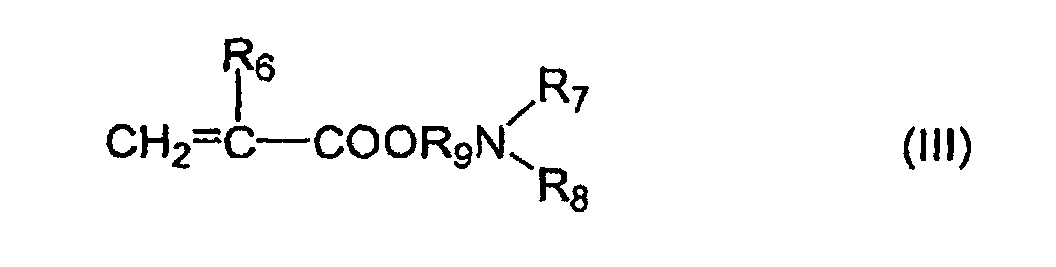
where R6 is hydrogen or methyl, R7, R8 are hydrogen, hydroxyl, a substituted or unsubstituted straight chain or branched
alkyl group comprising 1-5 carbon atoms, or a substituted or unsubstituted straight
chain or branched hydroxyalkyl group comprising 1-5 carbon atoms, and R9 is an alkylene group comprising 1-5 carbon atoms,
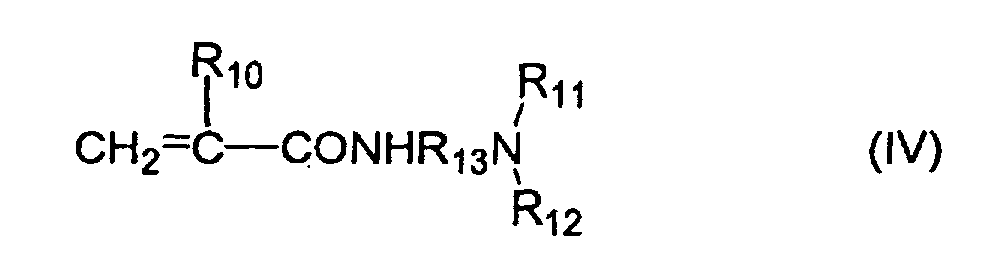
where R10 is hydrogen or methyl, R11, R12 are hydrogen, hydroxyl, a substituted or unsubstituted straight chain or branched
alkyl group comprising 1-5 carbon atoms, or a substituted or unsubstituted straight
chain or branched hydroxyalkyl group comprising 1-5 carbon atoms, and R13 is an alkylene group comprising 1-5 carbon atoms,
at least one of the hydroxyl groups is introduced by copolymerization of a monomer
having the structure shown by the following chemical formula (V):
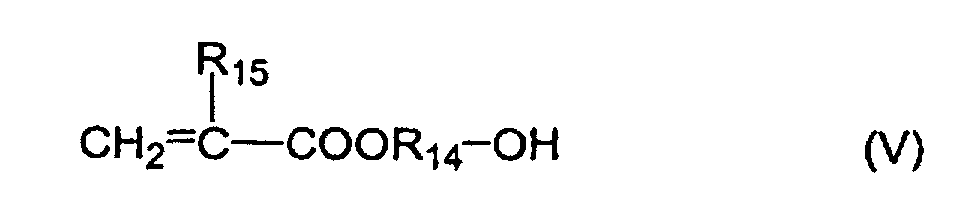
where R14 is an alkylene group comprising 1-4 carbon atoms, and R15 is hydrogen or methyl, and
at least one of the hydrophobic groups is introduced by copolymerization of a monomer
having the structure shown by the following chemical formula (VI):

where R16 is a straight chain, branched or cyclic alkyl group having from 4-18 carbon atoms,
and R17 is hydrogen or methyl.
2. An aluminum surface treatment method as defined in claim 1, wherein a metal surface
treatment composition containing an acrylic resin in which
said amino group or ammonium group comprises at least the structural unit represented
by the following chemical formulae (I) or (II):
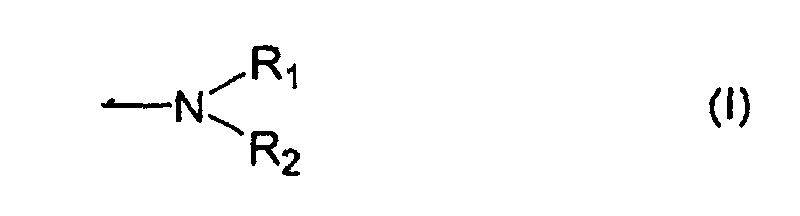
where R
1, R
2 are hydrogen, hydroxyl, a substituted or unsubstituted straight chain or branched
alkyl group comprising 1-5 carbon atoms, or a substituted or unsubstituted straight
chain or branched hydroxyalkyl group comprising 1-5 carbon atoms:
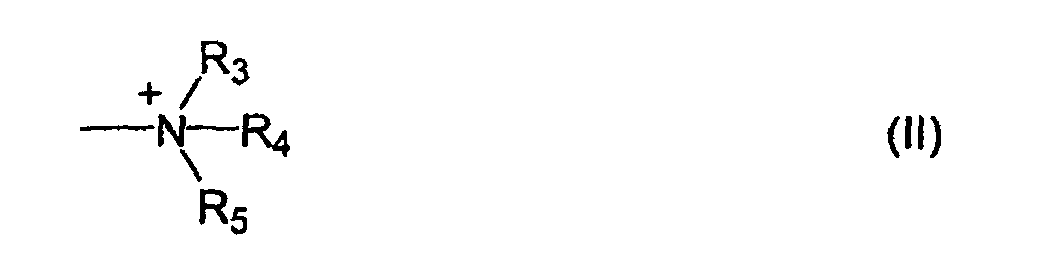
where R
3, R
4, R
5 are hydrogen, hydroxyl, a substituted or unsubstituted straight chain or branched
alkyl group comprising 1-5 carbon atoms, or a substituted or unsubstituted straight
chain or branched hydroxyalkyl group comprising 1-5 carbon atoms,
is brought in contact with the surface of a food can material using aluminum or an
aluminum alloy, the surface of the material is rinsed with water, and the surface
of the material is dried.
3. An aluminum surface treatment method as defined in claim 1 or claim 2, wherein a metal
surface treatment composition containing an acrylic resin, said resin comprising 1-10
of at, least one group selected from amino or ammonium, 1-10 hydroxyl groups and 1-5
hydrophobic groups per 1000 units of its molecular weight, is brought in contact with
the surface of a food can material using aluminum or an aluminum alloy, the surface
of the material is rinsed with water, and the surface of the material is dried.
4. An aluminum surface treatment method as defined in claim 1 or claim 2, wherein a metal
surface treatment composition containing an acrylic resin having a molecular weight
of 500 - 100,000, is brought in contact with the surface of a food can material using
aluminum or an aluminum alloy, the surface of the material is rinsed with water, and
the surface of the material is dried.
5. An aluminum surface treatment method as defined in claim l'or claim 2, wherein a metal
surface treatment composition containing 0.01-10g/l of an acrylic resin relative to
said metal surface treatment composition, is brought in contact with the surface of
a food can material using aluminum or an aluminum alloy, the surface of the material
is rinsed with water, and the surface of the material is dried.
6. An aluminum surface treatment method as defined in claim 1 or claim 2, wherein a metal
surface treatment composition containing 0.1-5g/l of an acrylic resin relative to
said metal surface treatment composition, is brought in contact with the surface of
a food can material using aluminum or an aluminum alloy, the surface of the material
is rinsed with water, and the surface of the material is dried.
7. An aluminum surface treatment method as defined in claim 1, wherein a metal surface
treatment composition containing an acrylic resin in which the copolymerization ratios
of the monomers of the acrylic resin copolymer are from 5-60 parts by weight of amino
or ammonium group-containing acrylic monomer, from 20-80 parts by weight of hydroxyl
group-containing acrylic monomer, from 5-50 parts by weight of hydrophobic group-containing
monomer, and from 0-30 parts by weight of other monomers, is brought in contact with
the surface of a food can material using aluminum or an aluminum alloy, the surface
of the material is rinsed with water, and the surface of the material is dried.
8. An aluminum surface treatment method as defined in claim 1, wherein a metal surface
treatment composition containing an acrylic resin in which the copolymerization ratios
of the monomers of the acrylic resin copolymer are from 20-40 parts by weight of amino
or ammonium group-containing acrylic monomer, from 30-60 parts by weight of hydroxyl
group-containing acrylic monomer and from 20-40 parts by weight of hydrophobic group-containing
monomer, is brought in contact with the surface of a food can material using aluminum
or an aluminum alloy, the surface of the material is rinsed with water, and the surface
of the material is dried.
9. An aluminum surface treatment method as defined in claim 1, wherein an acrylic resin-containing
metal surface treatment composition in which the heavy metal is at least one metal
selected from zirconium, niobium, manganese and tantalum, is brought in contact with
the surface of a food can material using aluminum or an aluminum alloy, the surface
of the material is rinsed with water, and the surface of the material is dried.
10. An aluminum surface treatment method as defined in claim 1 or claim 9, wherein the
acrylic resin-containing metal surface treatment composition in which the source of
said heavy metal is at least one of a complex fluoride, nitrate or phosphate of said
heavy metal, is brought in contact with the surface of a food can material using aluminum
or an aluminum alloy, the surface of the material is rinsed with water, and the surface
of the material is dried.
11. An aluminum surface treatment method as defined in claim 1 or claim 9, wherein the
acrylic resin-containing metal surface treatment composition in which the heavy metal
complex fluoride content is 0.01-10g/l relative to said metal surface treatment composition,
is brought in contact with the surface of a food can material using aluminum or an
aluminum alloy, the surface of the material is rinsed with water, and the surface
of the material is dried.
12. An aluminum surface treatment method as defined in any of claims 1 to 11, wherein
an acrylic resin-containing metal surface treatment composition further comprising
phosphoric acid or a phosphate, or both, is brought in contact with the surface of
a food can material using aluminum or an aluminum alloy, the surface of the material
is rinsed with water, and the surface of the material is dried.
13. An aluminum surface treatment method as defined in claim 12, wherein an acrylic resin-containing
metal surface treatment composition in which said phosphoric acid or phosphate is
H3PO4, Na3PO4, Na2HPO4, NaH2PO4 or (NH4)3PO4, is brought in contact with the surface of a food can material using aluminum or
an aluminum alloy, the surface of the material is rinsed with water, and the surface
of the material is dried.
14. An aluminum surface treatment method as defined in claim 12, wherein an acrylic resin-containing
metal surface treatment composition in which the phosphoric acid or phosphate content
is 0.01-20g/l relative to said metal surface treatment composition, is brought in
contact with the surface of a food can material using aluminum or an aluminum alloy,
the surface of the material is rinsed with water, and the surface of the material
is dried.
15. An aluminum surface treatment method as defined in any of claims 1 to 11, wherein
an acrylic resin-containing metal surface treatment composition further comprising
an etchant, is brought in contact with the surface of a food can material using aluminum
or an aluminum alloy, the surface of the material is rinsed with water, and the surface
of the material is dried.
16. An aluminum surface treatment method as defined in claim 15, wherein an acrylic resin-containing
metal surface treatment composition in which said etchant is hydrogen fluoride or
one of its salts, or both, is brought in contact with the surface of a food can material
using aluminum or an aluminum alloy, the surface of the material is rinsed with water,
and the surface of the material is dried.
17. An aluminum surface treatment method as defined in claim 15, wherein an acrylic resin-containing
metal surface treatment composition in which the etchant content is 0.005-5g/l relative
to the metal surface treatment composition of this invention, is brought in contact
with the surface of a food can material using aluminum or an aluminum alloy, the surface
of the material is rinsed with water, and the surface of the material is dried.
18. An aluminum surface treatment method as defined in any of claims 1 to 11, wherein
an acrylic-resin containing metal surface treatment composition further comprising
an etching assistant, is brought in contact with the surface of a food can material
using aluminum or an aluminum alloy, the surface of the material is rinsed with water,
and the surface of the material is dried.
19. An aluminum surface treatment method as defined in claim 18, wherein an acrylic resin-containing
metal surface treatment composition in which said etching assistant is at least one
of hydrogen peroxide, nitrous acid, a nitrous acid salt, HBF4 or a HBF4 salt, is brought in contact with the surface of a food can material using aluminum
or an aluminum alloy, the surface of the material is rinsed with water, and the surface
of the material is dried.
20. An aluminum surface treatment method as defined in claim 19, wherein an acrylic resin-containing
metal surface treatment composition in which the hydrogen peroxide, nitrous acid or
nitrous acid salt content is 0.005-5g/l relative to said metal surface treatment composition,
is brought in contact with the surface of a food can material using aluminum or an
aluminum alloy, the surface of the material is rinsed with water, and the surface
of the material is dried.
21. An aluminum surface treatment method as defined in claim 19, wherein an acrylic resin-containing
metal surface treatment composition in which the HBF4 or HBF4 salt content is 0.003-0.2g/l relative to the metal surface treatment composition
of this invention, is brought in contact with the surface of a food can material using
aluminum or an aluminum alloy, the surface of the material is rinsed with water, and
the surface of the material is dried.
22. A surface-treated food can material using aluminum or an aluminum alloy which has
been treated with an acrylic resin-containing metal surface treatment composition
as defined in any of claims 1 to 21.
1. Aluminiumoberflächen-Behandlungsverfahren umfassend:
Kontaktieren einer Acrylharz enthaltenden Metallbehandlungszusammensetzung mit der
Oberfläche eines Lebensmitteldosenmaterials unter Verwendung von Aluminium oder einer
Aluminiumlegierung,
worin die Acrylharz enthaltende Metallbehandlungszusammensetzung umfaßt: ein wasserlösliches,
wasserdispergierbares oder emulgierbares Acrylharz umfassend eines oder beide einer
Aminogruppe und einer Ammoniumgruppe zusammen mit einer Hydroxygruppe und einer hydrophoben
Gruppe, und außerdem umfassend mindestens ein Schwermetall ausgewählt aus Zirkonium,
Molybdän, Wolfram, Niob, Nickel, Kobalt, Mangan und Tantal, oder eines der Salze dieser
Metalle,
Spülen der Oberfläche des Materials mit Wasser und Trocknen der Oberfläche des Materials,
worin
die Aminogruppe oder Ammoniumgruppe eingeführt wird durch Copolymerisation eines Monomers
umfassend mindestens die strukturelle Einheit dargestellt durch die folgenden chemischen
Formeln (III) oder (IV):
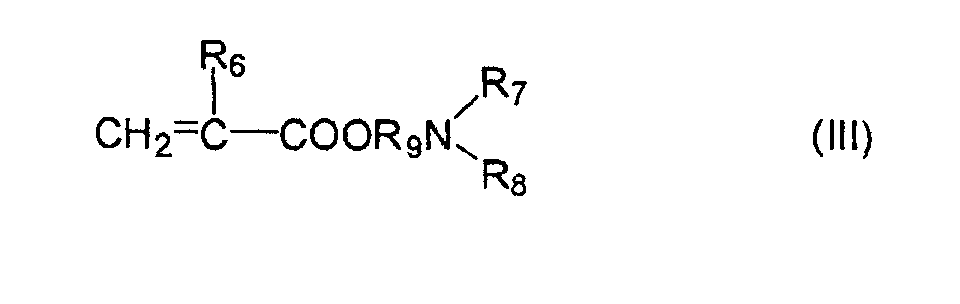
worin R
6 Wasserstoff oder Methyl ist, R
7, R
8 Wasserstoff, Hydroxy, eine substituierte oder nicht substituierte geradkettige oder
verzweigte Alkylgruppe umfassend 1 bis 5 Kohlenstoffatome oder eine substituierte
oder nicht substituierte geradkettige oder verzweigte Hydroxyalkylgruppe umfassend
1 bis 5 Kohlenstoffatome sind, und R
9 eine Alkylengruppe umfassend 1 bis 5 Kohlenstoffatome ist,
worin R
10 Wasserstoff oder Methyl ist, R
11, R
12 Wasserstoff, Hydroxy, eine substituierte oder nicht substituierte geradkettige oder
verzweigte Alkylgruppe umfassend 1 bis 5 Kohlenstoffatome oder eine substituierte
oder nicht substituierte geradkettige oder verzweigte Hydroxyalkylgruppe umfassend
1 bis 5 Kohlenstoffatome sind, und R
13 eine Alkylengruppe umfassend 1 bis 5 Kohlenstoffatome ist,
mindestens eine der Hydroxygruppen eingeführt wird durch Copolymerisation eines Monomers
mit der Struktur dargestellt durch die folgende chemische Formel (V):

worin R
14 eine Alkylengruppe umfassend 1 bis 4 Kohlenstoffatome und R
15 Wasserstoff oder Methyl ist, und
mindestens eine der hydrophoben Gruppen eingeführt wird durch Copolymerisation eines
Monomers mit der Struktur gezeigt durch die folgende chemische Formel (VI):
worin R
16 eine geradkettige, verzweigte oder zyklische Alkylgruppe mit 4 bis 18 Kohlenstoffatomen
und R
17 Wasserstoff oder Methyl ist.
2. Aluminiumoberflächen-Behandlungsverfahren gemäß Anspruch 1, worin eine Metalloberflächen-Behandlungszusammensetzung
enthaltend ein Acrylharz, worin
die Aminogruppe oder Ammoniumgruppe mindestens die strukturelle Einheit dargestellt
durch die folgenden chemischen Formeln (I) oder (II) umfaßt:

worin R
1, R
2 Wasserstoff, Hydroxy, eine substituierte oder nicht substituierte geradkettige oder
verzweigte Alkylgruppe umfassend 1 bis 5 Kohlenstoffatome oder eine substituierte
oder nicht substituierte geradkettige oder verzweigte Hydroxyalkylgruppe umfassend
1 bis 5 Kohlenstoffatome sind:
worin R
3, R
4, R
5 Wasserstoff, Hydroxy, eine substituierte oder nicht substituierte geradkettige oder
verzweigte Alkylgruppe umfassend 1 bis 5 Kohlenstoffatome oder eine substituierte
oder nicht substituierte geradkettige oder verzweigte Hydroxyalkylgruppe umfassend
1 bis 5 Kohlenstoffatome sind,
mit der Oberfläche eines Lebensmitteldosenmaterials unter Verwendung von Aluminium
oder einer Aluminiumlegierung kontaktiert wird, die Oberfläche des Materials mit Wasser
gespült wird, und die Oberfläche des Materials getrocknet wird.
3. Aluminiumoberflächen-Behandlungsverfahren gemäß Anspruch 1 oder Anspruch 2, worin
eine Metalloberflächen-Behandlungszusammensetzung enthaltend ein Acrylharz, das Harz
umfassend 1 bis 10 mindestens einer Gruppe ausgewählt aus Amino oder Ammonium, 1 bis
10 Hydroxygruppen und 1 bis 5 hydrophobe Gruppen pro 1.000 Einheiten ihres Molekulargewichts,
mit der Oberfläche eines Lebensmitteldosenmaterials unter Verwendung von Aluminium
oder einer Aluminiumlegierung kontaktiert wird, die Oberfläche des Materials mit Wasser
gespült wird, und die Oberfläche des Materials getrocknet wird.
4. Aluminiumoberflächen-Behandlungsverfahren gemäß Anspruch 1 oder Anspruch 2, worin
eine Metalloberflächen-Behandlungszusammensetzung enthaltend ein Acrylharz mit einem
Molekulargewicht von 500 bis 100.000 mit der Oberfläche eines Lebensmitteldosenmaterial
unter Verwendung von Aluminium oder einer Aluminiumlegierung kontaktiert wird, die
Oberfläche des Materials mit Wasser gespült wird, und die Oberfläche des Materials
getrocknet wird.
5. Aluminiumoberflächen-Behandlungsverfahren gemäß Anspruch 1 oder Anspruch 2, worin
eine Metalloberflächen-Behandlungszusammensetzung enthaltend 0,01 bis 10 g/l eines
Acrylharzes relativ zu der Metalloberflächen-Behandlungszusammensetzung mit der Oberfläche
eines Lebensmitteldosenmaterial unter Verwendung von Aluminium oder einer Aluminiumlegierung
kontaktiert wird, die Oberfläche des Materials mit Wasser gespült wird, und die Oberfläche
des Materials getrocknet wird.
6. Aluminiumoberflächen-Behandlungsverfahren gemäß Anspruch 1 oder Anspruch 2, worin
eine Metalloberflächen-Behandlungszusammensetzung enthaltend 0,1 bis 5 g/l eines Acrylharzes
relativ zu der Metalloberflächen-Behandlungszusammensetzung mit der Oberfläche eines
Lebensmitteldosenmaterial unter Verwendung von Aluminium oder einer Aluminiumlegierung
kontaktiert wird, die Oberfläche des Materials mit Wasser gespült wird, und die Oberfläche
des Materials getrocknet wird.
7. Aluminiumoberflächen-Behandlungsverfahren gemäß Anspruch 1, worin eine Metalloberflächen-Behandlungszusammensetzung
enthaltend ein Acrylharz,
worin die Copolymerisationsverhältnisse der Monomere des Acrylharzcopolymers 5 bis
60 Gew.Teile Amino- oder Ammoniumgruppe enthaltendes Acrylmonomer, 20 bis 80 Gew.Teile
Hydroxygruppe enthaltendes Acrylmonomer, 5 bis 50 Gew.Teile hydrophobe Gruppe enthaltendes
Monomer und 0 bis 30 Gew.Teile andere Monomere sind, mit der Oberfläche eines Lebensmitteldosenmaterial
unter Verwendung von Aluminium oder einer Aluminiumlegierung kontaktiert wird, die
Oberfläche des Materials mit Wasser gespült wird, und die Oberfläche des Materials
getrocknet wird.
8. Aluminiumoberflächen-Behandlungsverfahren gemäß Anspruch 1, worin eine Metalloberflächen-Behandlungszusammensetzung
enthaltend ein Acrylharz,
worin die Copolymerisationsverhältnisse der Monomere des Acrylharzcopolymers 20 bis
40 Gew.Teile Amino- oder Ammoniumgruppe enthaltendes Acrylmonomer, 30 bis 60 Gew.Teile
Hydroxygruppe enthaltendes Acrylmonomer und 20 bis 40 Gew.Teile hydrophobe Gruppe
enthaltendes Monomer sind, mit der Oberfläche eines Lebensmitteldosenmaterial unter
Verwendung von Aluminium oder einer Aluminiumlegierung kontaktiert wird, die Oberfläche
des Materials mit Wasser gespült wird, und die Oberfläche des Materials getrocknet
wird.
9. Aluminiumoberflächen-Behandlungsverfahren gemäß Anspruch 1, worin eine Acrylharz enthaltende
Metalloberflächen-Behandlungszusammensetzung, worin das Schwermetall mindestens ein
Metall ausgewählt aus Zirkonium, Niob, Mangan und Tantal ist, mit der Oberfläche eines
Lebensmitteldosenmaterials unter Verwendung von Aluminium oder einer Aluminiumlegierung
kontaktiert wird, die Oberfläche des Materials mit Wasser gespült wird, und die Oberfläche
des Materials getrocknet wird.
10. Aluminiumoberflächen-Behandlungsverfahren gemäß Anspruch 1 oder Anspruch 9, worin
die Acrylharz enthaltende Metalloberflächen-Behandlungszusammensetzung, worin die
Quelle des Schwermetalls mindestens eines aus einem komplexen Fluorid, Nitrat oder
Phosphat des Schwermetalls ist, mit der Oberfläche eines Lebensmitteldosenmaterials
unter Verwendung von Aluminium oder einer Aluminiumlegierung kontaktiert wird, die
Oberfläche des Materials mit Wasser gespült wird, und die Oberfläche des Materials
getrocknet wird.
11. Aluminiumoberflächen-Behandlungsverfahren gemäß Anspruch 1 oder Anspruch 9, worin
die Acrylharz enthaltende Metalloberflächen-Behandlungszusammensetzung, worin der
Schwermetall-Komplex-Fluorid-Gehalt 0,01 bis 10 g/l relativ zu der Metalloberflächen-Behandlungszusammensetzung
ist, mit der Oberfläche eines Lebensmitteldosenmaterials unter Verwendung von Aluminium
oder einer Aluminiumlegierung kontaktiert wird, die Oberfläche des Materials mit Wasser
gespült wird, und die Oberfläche des Materials getrocknet wird.
12. Aluminiumoberflächen-Behandlungsverfahren gemäß mindestens einem der Ansprüche 1 bis
11, worin eine Acrylharz enthaltende Metalloberflächen-Behandlungszusammensetzung
außerdem umfassend Phosphorsäure oder ein Phosphat oder beides, mit der Oberfläche
eines Lebensmitteldosenmaterials unter Verwendung von Aluminium oder einer Aluminiumlegierung
kontaktiert wird, die Oberfläche des Materials mit Wasser gespült wird, und die Oberfläche
des Materials getrocknet wird.
13. Aluminiumoberflächen-Behandlungsverfahren gemäß Anspruch 12, worin eine Acrylharz
enthaltende Metalloberflächen-Behandlungszusammensetzung, worin die Phosphorsäure
oder das Phosphat H3PO4, Na3PO4, Na2HPO4, NaH2PO4 oder (NH4)3PO4 ist, mit der Oberfläche eines Lebensmitteldosenmaterials unter Verwendung von Aluminium
oder einer Aluminiumlegierung kontaktiert wird, die Oberfläche des Materials mit Wasser
gespült wird, und die Oberfläche des Materials getrocknet wird.
14. Aluminiumoberflächen-Behandlungsverfahren gemäß Anspruch 12, worin eine Acrylharz
enthaltende Metalloberflächen-Behandlungszusammensetzung, worin der Phosphorsäure-
oder Phosphatgehalt 0,01 bis 20 g/l relativ zu der Metalloberflächen-Behandlungszusammensetzung
ist, mit der Oberfläche eines Lebensmitteldosenmaterials unter Verwendung von Aluminium
oder einer Aluminiumlegierung kontaktiert wird, die Oberfläche des Materials mit Wasser
gespült wird, und die Oberfläche des Materials getrocknet wird.
15. Aluminiumoberflächen-Behandlungsverfahren gemäß einem der Ansprüche 1 bis 11, worin
eine Acrylharz enthaltende Metalloberflächen-Behandlungszusammensetzung außerdem umfassend
ein Ätzmittel, mit der Oberfläche eines Lebensmitteldosenmaterials unter Verwendung
von Aluminium oder einer Aluminiumlegierung kontaktiert wird, die Oberfläche des Materials
mit Wasser gespült wird, und die Oberfläche des Materials getrocknet wird.
16. Aluminiumoberflächen-Behandlungsverfahren gemäß Anspruch 15, worin eine Acrylharz
enthaltende Metalloberflächen-Behandlungszusammensetzung, worin das Ätzmittel Fluorwasserstoff
oder eines seiner Salze oder beides ist, mit der Oberfläche eines Lebensmitteldosenmaterials
unter Verwendung von Aluminium oder einer Aluminiumlegierung kontaktiert wird, die
Oberfläche des Materials mit Wasser gespült wird, und die Oberfläche des Materials
getrocknet wird.
17. Aluminiumoberflächen-Behandlungsverfahren gemäß Anspruch 15, worin eine Acrylharz
enthaltende Metalloberflächen-Behandlungszusammensetzung, worin der Ätzmittelgehalt
0,005 bis 5 g/l relativ zu der Metalloberflächen-Behandlungszusammensetzung dieser
Erfindung ist, mit der Oberfläche eines Lebensmitteldosenmaterials unter Verwendung
von Aluminium oder einer Aluminiumlegierung kontaktiert wird, die Oberfläche des Materials
mit Wasser gespült wird, und die Oberfläche des Materials getrocknet wird.
18. Aluminiumoberflächen-Behandlungsverfahren gemäß einem der Ansprüche 1 bis 11, worin
ein Acrylharz enthaltende Metalloberflächen-Behandlungszusammensetzung außerdem umfassend
ein Ätzhilfsmittel mit der Oberfläche eines Lebensmitteldosenmaterials unter Verwendung
von Aluminium oder einer Aluminiumlegierung kontaktiert wird, die Oberfläche des Materials
mit Wasser gespült wird, und die Oberfläche des Materials getrocknet wird.
19. Aluminiumoberflächen-Behandlungsverfahren gemäß Anspruch 18, worin eine Acrylharz
enthaltende Metalloberflächen-Behandlungszusammensetzung, worin das Ätzhilfsmittel
mindestens eines von Wasserstoffperoxid, Salpetersäure, einem Salpetersäuresalz, HBF4 oder einem HBF4-Salz ist, mit der Oberfläche eines Lebensmitteldosenmaterials unter Verwendung von
Aluminium oder einer Aluminiumlegierung kontaktiert wird, die Oberfläche des Materials
mit Wasser gespült wird, und die Oberfläche des Materials getrocknet wird.
20. Aluminiumoberflächen-Behandlungsverfahren gemäß Anspruch 19, worin eine Acrylharz
enthaltende Metalloberflächen-Behandlungszusammensetzung, worin der Wasserstoffperoxid-,
Salpetersäure- oder
Salpetersäuresalz-Gehalt 0,005 bis 5 g/l relativ zu der Metalloberflächen-Behandlungszusammensetzung
ist, mit der Oberfläche eines Lebensmitteldosenmaterials unter Verwendung von Aluminium
oder einer Aluminiumlegierung kontaktiert wird, die Oberfläche des Materials mit Wasser
gespült wird, und die Oberfläche des Materials getrocknet wird.
21. Aluminiumoberflächen-Behandlungsverfahren gemäß Anspruch 19, worin eine Acrylharz
enthaltende Metalloberflächen-Behandlungszusammensetzung, worin der HBF4- oder der HBF4-Salzgehalt 0,003 bis 0,2 g/l relativ zu der Metalloberflächen-Behandlungszusammensetzung
dieser Erfindung ist, mit der Oberfläche eines Lebensmitteldosenmaterials unter Verwendung
von Aluminium oder einer Aluminiumlegierung kontaktiert wird, die Oberfläche des Materials
mit Wasser gespült wird, und die Oberfläche des Materials getrocknet wird.
22. Oberflächenbehandeltes Lebensmitteldosenmaterial unter Verwendung von Aluminium oder
einer Aluminiumlegierung, das mit einer Acrylharz enthaltenden Metalloberflächen-Behandlungszusammensetzung
gemäß einem der Ansprüche 1 bis 21 behandelt wurde.
1. Une méthode de traitement de surface d'aluminium comprenant:
- mettre une composition de traitement de métal contenant une résine acrylique en
contact avec la surface d'un matériau de boîte pour aliments utilisant l'aluminium
ou un alliage d'aluminium, dans lequel ladite composition de traitement de métal contenant
une résine acrylique comprend une résine acrylique hydrosoluble, hydrodispersable
ou émulsionnable comprenant l'un d'un groupe amino et d'un groupe ammonium ou les
deux ainsi qu'un groupe hydroxyle et un groupe hydrophobe, et comprend en outre au
moins un métal lourd sélectionné parmi le zirconium, le molybdène, le tungstène, le
niobium, le nickel, le cobalt, le manganèse et le tantale, ou l'un des sels de ces
métaux,
- rinçer la surface du matériau avec de l'eau, et sécher la surface du matériau,
dans lequel le groupe amino ou le groupe ammonium est introduit par copolymérisation
d'un monomère comprenant au moins l'unité structurale représentée par les formules
chimiques suivantes (III) ou (IV) :
où R
6 est de l'hydrogène ou du méthyle, R
7, R
8 sont de l'hydrogène, de l'hydroxyle, un groupe alcoyle substitué ou non substitué
à chaîne droite ou ramifiée comprenant 1 à 5 atomes de carbone, ou un groupe hydroxyalcoyle
substitué ou non substitué à chaîne droite ou ramifiée comprenant 1 à 5 atomes de
carbone, et R
9 est un groupe alcoylène comprenant 1 à 5 atomes de carbone,
où R
10 est de l'hydrogène ou du méthyle, R
11, R
12 sont de l'hydrogène, de l'hydroxyle, un groupe alcoyle substitué ou non substitué
à chaîne droite ou ramifiée comprenant 1 à 5 atomes de carbone, ou bien un groupe
hydroxyalcoyle substitué ou non substitué à chaîne droite ou ramifiée comprenant 1
à 5 atomes de carbone, et R
13 est un groupe alcoylène comprenant 1 à 5 atomes de carbone ; au moins l'un des groupes
hydroxyles est introduit par copolymérisation d' un monomère ayant la structure représentée
par la formule chimique suivante (V):

où R
14 est un groupe alcoylène comprenant 1 à 4 atomes de carbone et R
15 est de l'hydrogène ou du méthyle ; et
au moins l'un des groupes hydrophobes est introduit par copolymérisation d' un monomère
ayant la structure représentée par la formule chimique suivante (VI) :
où R
16 est un groupe alcoyle cyclique ou branché à chaîne droite comprenant 4 à 18 atomes
de carbone, et R
17 est de l'hydrogène ou du méthyle.
2. Une méthode de traitement de surface d'aluminium comme définie dans la revendication
1, dans laquelle une composition de traitement de surface de métal contenant une résine
acrylique dans laquelle ledit groupe amino ou groupe ammonium comprend au moins l'unité
structurale représentée par les formules chimiques suivantes (I) ou (II):
où R
1, R
2 sont de l'hydrogène, de l'hydroxyle, un groupe alcoyle substitué ou non substitué
à chaîne droite ou ramifiée comprenant 1 à 5 atomes de carbone, ou un groupe hydroxyalcoyle
substitué ou non substitué à chaîne droite ou ramifiée comprenant 1 à 5 atomes de
carbone,

où R
3, R
4, R
5 sont de l'hydrogène, de l'hydroxyle, un groupe alcoyle substitué ou non substitué
à chaîne droite ou ramifiée comprenant 1 à 5 atomes de carbone, ou un groupe hydroxyalcoyle
substitué ou non substitué à chaîne droite ou ramifiée comprenant 1 à 5 atomes de
carbone,
est mise en contact avec la surface d'un matériau de boîte pour aliments utilisant
de l' aluminium ou bien un alliage d'aluminium, la surface du matériau est rincée
avec de l'eau et la surface du matériau est séchée.
3. Une méthode de traitement de surface d'aluminium comme définie dans la revendication
1 ou la revendication 2, dans laquelle une composition de traitement de surface de
métal contenant une résine acrylique, ladite résine comprenant de 1 à 10 d'au moins
un groupe sélectionné parmi amino et ammonium, de 1 à 10 groupes hydroxyles et de
1 à 5 groupes hydrophobes pour 1000 unités de son poids moléculaire, est mise en contact
avec la surface d'un matériau de boîte pour aliments utilisant de l'aluminium ou un
alliage d'aluminium, la surface du matériau est rincée avec de l'eau et la surface
du matériau est séchée.
4. Une méthode de traitement de surface d'aluminium comme définie dans la revendication
1 ou la revendication 2, dans laquelle une composition de traitement de surface de
métal contenant une résine acrylique ayant un poids moléculaire de 500 à 100.000 est
mise en contact avec la surface d' un matériau de boîte pour aliments utilisant de
l'aluminium ou un alliage d'aluminium, la surface du matériau est rincée avec de l'eau
et la surface du matériau est séchée.
5. Une méthode de traitement de surface d'aluminium comme définie dans la revendication
1 ou la revendication 2, dans laquelle une composition de traitement de surface de
métal contenant de 0,01 à 10 g/l d'une résine acrylique par rapport à ladite composition
de traitement de surface de métal est mise en contact avec la surface d'un matériau
de boîte pour aliments utilisant de l'aluminium ou un alliage d'aluminium, la surface
du matériau est rincée avec de l'eau et la surface du matériau est séchée.
6. Une méthode de traitement de surface d'aluminium comme définie dans la revendication
1 ou la revendication 2, dans laquelle une composition de traitement de surface de
métal contenant de 0,1 à 5 g/l d'une résine acrylique par rapport à ladite composition
de traitement de surface de métal est mise en contact avec la surface d'un matériau
de boîte pour aliments utilisant de l'aluminium ou un alliage d'aluminium, la surface
du matériau est rincée avec de l'eau et la surface du matériau est séchée.
7. Une méthode de traitement de surface d'aluminium comme défini dans la revendication
1, dans laquelle une composition de traitement de surface de métal contenant une résine
acrylique dans laquelle les ratios de copolymérisation des monomères du copolymère
de résine acrylique sont de 5 à 60 parties en poids d'un monomère acrylique contenant
un groupe amino ou ammonium, de 20 à 80 parties en poids d'un monomère acrylique contenant
un groupe hydroxyle, de 5 à 50 parties en poids d'un monomère contenant un groupe
hydrophobe et de 0 à 30 parties en poids d'autres monomères est mise en contact avec
la surface d' un matériau de boîte pour aliments utilisant de l'aluminium ou un alliage
d'aluminium, la surface du matériau est rincée avec de l'eau et la surface du matériau
est séchée.
8. Une méthode de traitement de surface d'aluminium comme définie dans la revendication
1, dans laquelle une composition de traitement de surface de métal contenant une résine
acrylique dans laquelle les ratios de copolymérisation des monomères du copolymère
de résine acrylique sont de 20 à 40 parties en poids d'un monomère acrylique contenant
un groupe amino ou ammonium, de 30 à 60 parties en poids d'un monomère acrylique contenant
un groupe hydroxyle et de 20 à 40 parties en poids d'un monomère contenant un groupe
hydrophobe est mise en contact avec la surface d'un matériau de boîte pour aliments
utilisant de l'aluminium ou un alliage d' aluminium, la surface du matériau est rincée
avec de l'eau et la surface du matériau est séchée.
9. Une méthode de traitement de surface d'aluminium comme définie dans la revendication
1, dans laquelle une composition de traitement de surface de métal contenant une résine
acrylique dans laquelle le métal lourd est au moins un métal sélectionné parmi le
zirconium, le niobium, le manganèse et le tantale, est mise en contact avec la surface
d'un matériau de boîte pour aliments utilisant de l'aluminium ou un alliage d'aluminium,
la surface du matériau est rincée avec de l'eau et la surface du matériau est séchée.
10. Une méthode de traitement de surface d'aluminium comme définie dans la revendication
1 ou la revendication 9, dans laquelle la composition de traitement de surface de
métal contenant une résine acrylique dans laquelle la source dudit métal lourd est
au moins l'un d'un complexe fluoré, d'un nitrate ou d'un phosphate dudit métal lourd
est mise en contact avec la surface d'un matériau de boîte pour aliments utilisant
de l'aluminium ou un alliage d'aluminium, la surface du matériau est rincée avec de
l'eau et la surface du matériau est séchée.
11. Une méthode de traitement de surface d'aluminium comme définie dans la revendication
1 ou la revendication 9, dans laquelle la composition de traitement de surface de
métal contenant une résine acrylique dans laquelle la teneur en complexe fluoré de
métal lourd est de 0,01 à 10 g/l par rapport à ladite composition de traitement de
surface de métal est mise en contact avec la surface d'un matériau de boîte pour aliments
utilisant de l'aluminium ou un alliage d'aluminium, la surface du matériau est rincée
avec de l'eau et la surface du matériau est séchée.
12. Une méthode de traitement de surface d'aluminium comme définie dans l'une quelconque
des revendications 1 à 11, dans laquelle une composition de traitement de surface
de métal contenant une résine acrylique comprenant en outre de l'acide phosphorique
ou un phosphate ou les deux est mise en contact avec la surface d'un matériau de boîte
pour aliments utilisant de l'aluminium ou un alliage d'aluminium, la surface du matériau
est rincée avec de l'eau et la surface du matériau est séchée.
13. Une méthode de traitement de surface d'aluminium comme définie dans la revendication
12, dans laquelle une composition de traitement de surface de métal contenant une
résine acrylique, dans laquelle ledit acide phosphorique ou phosphate est H3PO4, Na3PO4, Na2HPO4, NaH2PO4 ou (NH4)3PO4, est mise en contact avec la surface d' un matériau de boîte pour aliments utilisant
de l'aluminium ou un alliage d' aluminium, la surface du matériau est rincée avec
de l'eau et la surface du matériau est séchée.
14. Une méthode de traitement de surface d'aluminium comme définie dans la revendication
12, dans laquelle une composition de traitement de surface de métal contenant une
résine acrylique dans laquelle la teneur en acide phosphorique ou en phosphate est
de 0,01 à 20 g/l par rapport à ladite composition de traitement de surface de métal
est mise en contact avec la surface d' un matériau de boîte pour aliments utilisant
de l'aluminium ou un alliage d'aluminium, la surface du matériau est rincée avec de
l'eau et la surface du matériau est séchée.
15. Une méthode de traitement de surface d'aluminium comme définie dans l'une quelconque
des revendications 1 à 11, dans laquelle une composition de traitement de surface
de métal contenant une résine acrylique comprenant en outre un mordant est mise en
contact avec la surface d'un matériau de boîte pour aliments utilisant de l' aluminium
ou un alliage d'aluminium, la surface du matériau est rincée avec de l'eau et la surface
du matériau est séchée.
16. Une méthode de traitement de surface d'aluminium comme définie dans la revendication
15, dans laquelle une composition de traitement de surface de métal contenant une
résine acrylique dans laquelle ledit mordant est du fluorure d' hydrogène ou l'un
de ses sels, ou les deux, est mise en contact avec la surface d'un matériau de boîte
pour aliments utilisant de l'aluminium ou un alliage d'aluminium, la surface du matériau
est rincée avec de l'eau et la surface du matériau est séchée.
17. Une méthode de traitement de surface d'aluminium comme définie dans la revendication
15, dans laquelle une composition de traitement de surface de métal contenant une
résine acrylique dans laquelle la teneur en mordant est de 0,005 à 5 g/l par rapport
à ladite composition de traitement de surface de métal de cette invention, est mise
en contact avec la surface d'un matériau de boîte pour aliments utilisant de l' aluminium
ou un alliage d'aluminium, la surface du matériau est rincée avec de l'eau et la surface
du matériau est séchée.
18. Une méthode de traitement de surface d'aluminium comme définie dans l'une quelconque
des revendications 1 à 11, dans laquelle une composition de traitement de surface
de métal contenant une résine acrylique comprenant en outre un auxiliaire de mordançage,
est mise en contact avec la surface d'un matériau de boîte pour aliments utilisant
de l'aluminium ou un alliage d'aluminium, la surface du matériau est rincée avec de
l'eau et la surface du matériau est séchée.
19. Une méthode de traitement de surface d'aluminium comme définie dans la revendication
18, dans laquelle une composition de traitement de surface de métal contenant une
résine acrylique, dans laquelle ledit auxiliaire de mordançage est au moins l'un parmi
le peroxyde d'hydrogène, l'acide nitreux, un sel de l'acide nitreux, HBF4 ou un sel de HBF4, est mise en contact avec la surface d'un matériau de boîte pour aliments utilisant
de l'aluminium ou un alliage d'aluminium, la surface du matériau est rincée avec de
l'eau et la surface du matériau est séchée.
20. Une méthode de traitement de surface d'aluminium comme définie dans la revendication
19, dans laquelle une composition de traitement de surface de métal contenant une
résine acrylique, dans laquelle la teneur en peroxyde d'hydrogène, acide nitreux,
ou sel de l'acide nitreux est de 0,005 à 5 g/l par rapport à ladite composition de
traitement de surface de métal, est mise en contact avec la surface d'un matériau
de boîte pour aliments utilisant de l'aluminium ou un alliage d'aluminium, la surface
du matériau est rincée avec de l'eau et la surface du matériau est séchée.
21. Une méthode de traitement de surface d'aluminium comme définie dans la revendication
19, dans laquelle une composition de traitement de surface de métal contenant une
résine acrylique, dans laquelle la teneur en HBF4 ou sel de HBF4 est de 0,003 à 0,2 g/l par rapport à la composition de traitement de surface de métal
de cette invention, est mise en contact avec la surface d'un matériau de boîte pour
aliments utilisant de l'aluminium ou un alliage d'aluminium, la surface du matériau
est rincée avec de l'eau et la surface du matériau est séchée.
22. Un matériau de boîte pour aliments traité en surface utilisant de l'aluminium ou un
alliage d'aluminium qui a été traité avec une composition de traitement de surface
de métal contenant une résine acrylique telle que définie dans l'une quelconque des
revendications 1 à 21.