| (19) |
 |
|
(11) |
EP 0 980 641 B1 |
| (12) |
EUROPEAN PATENT SPECIFICATION |
| (45) |
Mention of the grant of the patent: |
|
14.06.2006 Bulletin 2006/24 |
| (22) |
Date of filing: 08.04.1998 |
|
| (51) |
International Patent Classification (IPC):
|
| (86) |
International application number: |
|
PCT/DK1998/000147 |
| (87) |
International publication number: |
|
WO 1998/047318 (22.10.1998 Gazette 1998/42) |
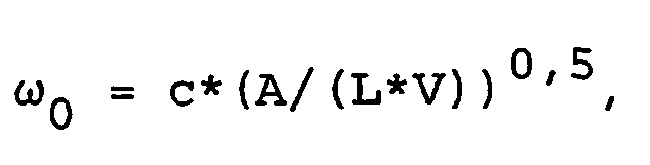
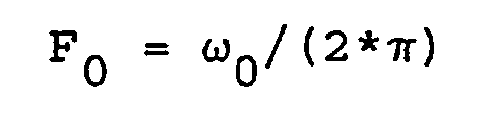
|
| (54) |
IN-THE-EAR HEARING AND WITH REDUCED OCCLUSION EFFECT AND METHOD FOR THE PRODUCTION
AND USER-FITTING OF SUCH A HEARING AID
IM-OHR-HILFEGERÄT MIT VERMINDERTEM VERSTOPFUNGSEFFEKT UND VERFAHREN ZUR HERSTELLUNG
UND BENUTZERANPASSUNG EINES SOLCHEN HÖRHILFEGERÄT
PROTHESE AUDITIVE "INTRA-CONQUE" A EFFET D'OCCLUSION REDUIT, PROCEDE DE PRODUCTION
ET ADAPTATEUR PERMETTANT D'ADAPTER UNE TELLE PROTHESE A L'UTILISATEUR
|
| (84) |
Designated Contracting States: |
|
CH DE DK FR GB IT LI NL |
| (30) |
Priority: |
15.04.1997 DK 42297
|
| (43) |
Date of publication of application: |
|
23.02.2000 Bulletin 2000/08 |
| (73) |
Proprietor: Widex A/S |
|
3500 Vaerloese (DK) |
|
| (72) |
Inventor: |
|
- WESTERMANN, Soren, Erik
DK-3480 Fredensborg (DK)
|
| (74) |
Representative: Raffnsoee, Knud Rosenstand et al |
|
Internationalt Patent-Bureau A/S
Rigensgade 11
1316 Copenhagen K
1316 Copenhagen K (DK) |
| (56) |
References cited: :
WO-A-91/03139
US-A- 5 033 090
|
CH-A- 681 125
US-A- 5 195 139
|
|
| |
|
|
- "A Damped High-Cut Cavity Vent for Profound Hearing Loss", AUSTRALIAN JOURNAL OF AUDIOLOGY,
1982, 4:1, pages 22-25.
- "Venting Without Feedback - Further Development of the High-Cut Cavity Vent", HEARING
INSTRUMENTS, Vol. 33, No. 4, 1982, page 12.
- "An Improved Version of the High-Cut Cavity Vent", 25 AUSTRALIAN JOURNAL OF AUDIOLOGY,
1981, 3:2, pages 36-39.
- "A New Kind of Earmold Vent- the High-Cut Cavity Vent", HEARING INSTRUMENTS, Vol.
32, No. 10, 1981, page 18.
|
|
| |
|
| Note: Within nine months from the publication of the mention of the grant of the European
patent, any person may give notice to the European Patent Office of opposition to
the European patent
granted. Notice of opposition shall be filed in a written reasoned statement. It shall
not be deemed to
have been filed until the opposition fee has been paid. (Art. 99(1) European Patent
Convention).
|
[0001] The present invention relates to a hearing aid for arrangement in the ear, particularly
completely inside the ear canal, comprising a plug for arrangement in the ear canal
and having a shell-like wall facing the interior of the ear canal and an outward faceplate
which together define a generally closed cavity in which are arranged an input transducer,
such as a microphone, for transforming external sounds into an electrical signal,
a signal processor for processing the signal produced by the input transducer and
producing a hearing-loss compensating electrical signal, and an output transducer
for transforming the signal from the signal processor into a hearing-loss compensating
sound signal, as well as a power source, such as a battery.
[0002] In hearing aids of this type, so-called occlusion effects often occur during use
as a consequence of the closure of the ear canal caused by the hearing aid, which
occlusion effects manifest themselves by the user experiencing his or her voice as
dominant, because voice sounds are transmitted through bones and tissue to the residual
volume which is located innermost in the ear canal and is defined by the housing of
the hearing aid and the eardrum. Furthermore, changes in the differential pressure
between the air in this confined volume and the atmosphere, for example when the user
is inside an ascending airplane, may give rise to an unpleasant feeling, which can
usually, however, be counteracted by the user making jaw movements that propagate
to the ear canal and create pressure-equalizing leakages between the ear canal wall
and the hearing aid.
[0003] To solve this problem it is well-known to provide both hearing aids of the type stated
and ear plugs for conventional behind-the-ear hearing aids with a through-going vent
passage from the innermost end of the hearing aid or the ear plug to the surroundings.
Typically, such a vent passage or vent is formed as a hose or a tube extending through
the hearing aid plug. However, this measure is disadvantageous in that it often gives
rise to acoustical feedback because part of the sound amplified by the hearing aid
and produced in the ear canal reaches the microphone of the hearing aid.
[0004] Some ear plugs without an integral hearing aid have a cavity in the vent passage
to remedy this problem. The purpose of this design is to make the vent passage with
such intermediate cavity act like a low-pass filter to damp the passage of high-frequency
sounds and thus reduce the tendency of acoustical feedback.
[0005] Solutions of this type are described, i.a., in the following articles by John Macrae:
"A new kind of earmold vent - the high-cut cavity vent", Hearing Instruments, vol.
32, No. 10, 1981, page 18 pp.,
"An improved version of the high-cut cavity vent", Australian Journal of Audiology,
1981 3:2, pages 36 - 39,
"Venting without feedback - further development of the high-cut cavity vent", Hearing
Instruments, vol. 33, No. 4, 1982, page 12 pp., and
"A damped high-cut cavity vent for profound hearing loss", Australian Journal of Audiology,
1982 4:1, pages 22 - 25.
[0006] The vent systems discussed here for ear plugs function as ordinary vent passages
as well as acoustic low-pass filters.
[0007] For hearing aids of the type indicated above of the ITE design, corresponding vent
systems, are known from i.a., CH-A-681,125 which discloses the features of the preambles
of claims 1 and 8, the cavity coupled in here being constituted by the part of the
cavity in the hearing aid housing not taken up by electronic components.
[0008] US-A-5,195,139 further describes a hearing aid in which, from a conventional vent
passage formed by a longitudinal canal through the wall or shell of the hearing aid
plug, an opening has been established into a closed cavity in the hearing aid. The
system functions as a Helmholtz resonator, whereby transmission of undesired frequencies
through the vent passage is damped. This is high-frequency damping in the range from
2.0 to 6.5 kHz. In addition to this filter characteristic, the vent passage functions
as an ordinary vent passage.
[0009] Accordingly, it is an object of the invention to provide a hearing aid of the type
stated, in which a significant damping of occlusion effects can be obtained without
the use of a conventional vent passage or vent with the consequent problems in the
form of manufacturing and mounting complications, acoustical feedback, etc.
[0010] For a hearing aid of the type stated, this is obtained according to the invention
in that an acoustical link in the form of a hose or tube piece is provided between
an orifice at the external side of the part of the wall of the plug facing the interior
of the ear canal and the residual volume of the internal cavity of the plug and, together
with said residual volume in the cavity, forms an approximated acoustical circuit
having a resonance frequency in the region of the first voice sound formants of the
user.
[0011] By means of the invention, undesired occlusion effects are damped through the increase
of the residual volume constituted by the part of the cavity in the hearing aid housing
which is not taken up by the electronic components of the hearing aid and produced
by said acoustical link in the interior of the ear canal within the hearing aid, and
this increase of volume is made virtually larger at the resonance frequency of the
acoustical circuit. Through the increase of the residual volume, the sound pressure
of occlusion sounds is reduced, since the surfaces that transmit the occlusion sounds
are not changed. Thereby the invention can damp occlusion sounds both with and without
a through-going vent passage, as explained in detail below.
[0012] Formation of said approximated acoustical circuit having a resonance frequency in
the region of the first voice sound formants of the user, typically in the region
from about 200 to about 800 Hz, causes a damping of the otherwise bothering propagation
of the user's voice sounds.
[0013] According to one embodiment of the invention, a certain softening of this damping
may be obtained, if desired, by a through-going vent passage or vent being provided
as well from said residual volume in the ear canal to the surroundings.
[0014] The invention also relates to a method for the production and user-fitting of a hearing
aid of the type stated, whereby a plug formed for arrangement in the ear canal is
manufactured with a substantially closed shell-like wall facing the interior of the
ear canal and an outward faceplate which together define a generally closed cavity
in which are arranged an input transducer, such as a microphone for transforming external
sound into an electrical signal, a signal processor for processing the signal produced
by the input transducer and producing a hearing-loss compensating electrical signal,
and an output transducer for transforming the signal from the signal processor into
a hearing-loss compensating sound signal, as well as a power source, such as a battery.
[0015] According to the invention, this method is characterized in that an acoustical link
in the form of a hose or tube pice is provided between an orifice at the external
side of the part of the wall of the plug facing the interior of the ear canal and
the residual volume of the internal cavity of the plug, which hose or tube piece is
tuned so that together with said residual volume in the cavity it forms an approximated
acoustical circuit having a resonance frequency in the region of the first voice sound
formants of the user.
[0016] Thereby the occlusion-effect-reducing acoustical link can be provided in a simple
manner in a completed hearing aid.
[0017] Advantageous embodiments and features of the hearing aid and the method according
to the invention are indicated in the dependent claims 2 - 7 and 9 - 14.
[0018] The invention will now be explained in more detail below with reference to the schematic
drawing, in which
Fig. 1 shows an embodiment of a hearing aid according to the invention in a CIC design,
and
Fig. 2 provides graphical reproductions of the sound pressure in a residual volume
in the ear canal, partly for a conventional, unvented CIC hearing aid, partly for
the hearing aid according to the invention with reduced occlusion effect without and
with a through-going vent passage.
[0019] The hearing aid shown in Fig. 1 in a so-called CIC design, i.e., for arrangement
completely inside the ear canal, comprises a preferably individually adapted plug
1 with a shell-like wall defining an outward orifice, at which a faceplate 2 is fastened
to the plug 1, for example by gluing.
[0020] When such hearing aid is arranged in the ear canal, a residual volume is left between
the tapering end of the plug 1 facing the interior of the ear canal and the eardrum,
often giving rise to unpleasant occlusion effects manifesting themselves in an amplification
of the user's own voice, especially in the region of the first voice sound formant,
because of sound transmission to the residual volume through bones and tissue.
[0021] In the hearing aid of Fig. 1, which may suitably be constructed in a compact, modular
design as described in the Applicant's concurrent DK patent application No. 0422/97,
but is not limited thereto, the wall of the plug 1 and the faceplate 2 together define
a cavity 3 in which, during use of the hearing aid, are arranged a battery 4, a microphone
part 5, a signal processing part 6 with the amplifier circuit of the hearing aid,
and a sound reproducer in the form of a receiver 7, from which the sound is transmitted
to the residual volume of the ear canal through a sound exit orifice 8. Said components
in the hearing aid are supplied with electric power from terminals 9 on the battery
4 and are in general interconnected via wire connections 10 and 11.
[0022] Although said components take up some space in the cavity 3, it will always have
a free residual volume 12.
[0023] According to the invention, the above residual volume in the ear canal is connected
with this residual volume through an acoustical link in the form of a hose or tube
piece 13, which is connected to an orifice 14 at the external side of the part of
the shell-like wall of the plug 1 facing the interior of the ear canal.
[0024] Together with the residual volume 12 in the plug 1, this hose or tube piece 13 forms
an approximated acoustical circuit having a resonance frequency in the region of the
first voice sound formants of the user.
[0025] Theoretically and ideally, the tuned acoustical circuit acts as an approximated Helmholtz
resonator according to the formula
where
is the angular frequency
c is the velocity of sound in air, about 340 m/s,
A is the internal cross-sectional area of the hose or tube piece 13 in m
2,
L is the length of the hose or tube piece 13 in m, and
V is the volume of the cavity 3 in m
3,
resulting in the resonance frequency
[0026] This is a theoretically ideal formula. In practice, the values stated are tuned with
empirically found correction factors. Thus, to the length L of the hose or tube piece
13, a correction factor depending on its internal diameter often has to be added and
multiplied by a correction factor depending on the hose or tube material.
[0027] Arrangement of this resonance frequency in the frequency region where the user's
voice penetrates strongly to the residual volume in the ear canal provides a substantial
damping of occlusion effects and an improvement of the comfort of use and speech reproduction
during conversation through a damping of the user's own voice.
[0028] For men, this frequency region is typically between 200 and 800 Hz, while for women
it is typically between 250 and 900 Hz.
[0029] At a dimensioning suitable for this, the cavity 3 in the plug 1 may thus have a volume
V of 0.3 - 1.2 cm
3, especially 0.6 cm
3, while the hose or tube piece 13 may have an internal diameter of 0.5 - 2.0 mm, especially
1 mm, and a length L of 3 - 20 mm, especially 7 mm.
[0030] The acoustical link through the hose or tube piece 13 is preferably provided in a
completed hearing aid by drilling a hole corresponding to the orifice 14, whereupon
the hose or tube piece 13 is inserted into the plug 1 at an insertion length corresponding
to the calculated value and is fastened to the plug 1 by gluing or melting.
[0031] In the graphical illustration in Fig. 2, the effect of providing the acoustical link
according to the invention is illustrated by the fully drawn graph B, which, compared
with the dashed graph A for a conventional non-vented CIC hearing aid, shows a significant
resonance damping of about 15 dB around 700 Hz, whereas the damping some octaves below
the resonance frequency only amounts to a value corresponding to the real volume increase
from the cavity 3.
[0032] The graphs in Fig. 2 show the amplification in dB in relation to the frequency in
Hz recorded in an acoustical coupler system pursuant to IEC 711 for a cavity 3 in
the plug 1 having a volume of 0.6 cm
3 and a hose or tube piece 13 having an internal diameter of 1 mm and a length of 7
mm.
[0033] In practice, it will be desirable with a softening of the resonance damping in many
cases. Such softening can be obtained according to one embodiment of the invention,
by supplementing the system with a leak in the form of a through-going vent passage
or vent from the residual volume in the ear canal to the surroundings.
[0034] As shown in Fig. 1, such vent passage can be established in a simple manner by drilling
one or more pinholes 15 in the outward side of the hearing aid, for example in the
battery lid 16. The aggregate vent passage will here extend from the orifice 14 through
the hose or tube piece 13 and the cavity 3 to the pinhole or pinholes 15.
[0035] This measure typically provides a damping function as illustrated by the dotted graph
C in Fig. 2.
[0036] As another possibility, a through-going vent passage may be formed as a separate
passage through the hearing aid, for example in the shell-like wall of the plug 1,
such as is described in WO 91/03139, whereby the acoustical link according to the
invention is not part of the vent passage, but can be freely dimensioned to provide
the optimum damping of occlusion effects.
[0037] In many cases there will already be leaks between the plug 1 and the wall of the
ear canal in themselves forming a vent passage. In such cases, the acoustical link
can also have the optimum design concerning damping of occlusion effects.
[0038] It is an advantage of the invention that it does not require special preparation
of the hearing aid before provision of the acoustical link.
[0039] A first work step in an otherwise completed hearing aid may therefore be to decide
whether an acoustical link should be provided.
[0040] To determine whether an acoustical link in the plug 1 is needed, a tightness/acoustical
measurement with the plug 1 arranged in the ear canal may be performed according to
the method of the invention prior to provision of the acoustical link.
1. A hearing aid for arrangement in the ear, particularly completely inside the ear canal,
comprising a plug (1) for arrangement in the ear canal and having a shell-like wall
facing the interior of the ear canal and an outward faceplate (2) which together define
a generally closed cavity (3) in which are arranged an input transducer, such as a
microphone (5), for transforming external sounds into an electrical signal, a signal
processor (6) for processing the signal produced by the input transducer and producing
a hearing-loss compensating electrical signal, and an output transducer (7) for transforming
the signal from the signal processor into a hearing-loss compensating sound signal,
as well as a power source, such as a battery (4), characterized in that an acoustical link in the form of a hose or tube piece (13) is provided between an
orifice (14) at the external side of the part of the wall of the plug (1) facing the
interior of the ear canal and the residual volume (12) of the internal cavity (3)
of the plug (1) and, together with said residual volume (12) in the cavity (3), forms
an approximated acoustical circuit having a resonance frequency in the region of the
first voice sound formants of the user.
2. A hearing aid according to claim 1, characterized in that said resonance frequency is in the range between 50 and 1000 Hz.
3. A hearing aid according to claim 2, characterized in that said resonance frequency is in the range between 200 and 800 Hz.
4. A hearing aid according to claim 3, characterized in that the cavity (3) in the plug (1) has a volume of 0.3 - 1.2 cm3, especially 0.6 cm3, and that said hose or tube piece (13) has an internal diameter of 0.5 - 2.0 mm,
especially 1 mm, and a length of 3 - 20 mm, especially 7 mm.
5. A hearing aid according to any one of the preceding claims, characterized in that a through-going vent passage or vent is provided as well through the hearing aid
plug 1 from the residual volume in the ear canal to the surroundings.
6. A hearing aid according to claim 5, characterized in that said hose or tube piece (13) forms part of said through-going vent passage.
7. A hearing aid according to claim 6, characterized in that said vent passage comprises one or more pinholes (15) in a part of the hearing aid
plug (1) facing the surroundings.
8. A method for the production and user-fitting of a hearing aid according to any one
of the preceding claims, whereby a plug (1) for arrangement in the ear canal is manufactured
with a substantially closed shell-like wall facing the interior of the ear canal and
an outward faceplate (2) which together define a generally closed cavity (3) in which
are arranged an input transducer (5), such as a microphone, for transforming external
sound into an electrical signal, a signal processor (6) for processing the signal
produced by the input transducer and producing a hearing-loss compensating electrical
signal, and an output transducer (7) for transforming the signal from the signal processor
into a hearing-loss compensating sound signal, as well as a power source, such as
a battery (4), characterized in that an acoustical link in the form of a hose or tube piece (13) is provided between an
orifice (14) at the external side of the part of the wall of the plug (1) facing the
interior of the ear canal and the residual volume (12) of the internal cavity (3)
of the plug, which hose or tube piece (13) is tuned so that together with said residual
volume (12) in the cavity (3) it forms an approximated acoustical circuit having a
resonance frequency in the region of the first voice sound formants of the user.
9. A method according to claim 8, characterized in that said resonance frequency is in the range between 50 and 1000 Hz.
10. A method according to claim 9, characterized in that said resonance frequency is in the range between 200 and 800 Hz.
11. A method according to claim 8, characterized in that a hose or tube piece (13) having an internal diameter of 0.5 - 2.0 mm, especially
1 mm, and a length of 3 - 20 mm, especially 7 mm, is used for a cavity (3) in the
plug housing (1) having a volume of 0.3 - 1.2 cm3, especially 0.6 cm3.
12. A method according to any one of claims 8 - 11, characterized in that said orifice (14) is formed in the shell of the hearing aid housing of a completed
hearing aid, whereupon said hose or tube piece (13) is inserted into the cavity (3)
of the hearing aid plug at an insertion length corresponding to the provision of said
acoustical circuit.
13. A method according to any one of claims 8 - 12, characterized in that a measurement of tightness and/or response from the hearing aid arranged in position
inside the ear canal is performed prior to providing said acoustical link.
14. A method according to claim 13, characterized in that a through-going vent passage or vent is provided through the hearing aid housing
from the residual volume in the ear canal to the surroundings.
1. Hörgerät, das im Ohr, insbesondere vollständig im Inneren des Gehörgangs anzuordnen
ist, ein Passstück (1) zur Anordnung im Gehörgang, das eine schalenähnliche Wand aufweist,
die dem Innenbereich des Gehörgangs zugekehrt ist, und einen äußeren Abdeckrahmen
(2) umfassend, die zusammen einen im Allgemeinen geschlossenen Hohlraum (3) umgrenzen,
in dem sowohl ein Eingangswandler, wie etwa ein Mikrophon (5), um Fremdschall in ein
elektrisches Signal zu überführen, ein Signalprozessor (6) zum Verarbeiten des von
dem Eingangswandler erzeugten Signals und Erzeugen eines einen Hörverlust kompensierenden
elektrischen Signals, und ein Ausgangswandler (7), um das Signal von dem Signalprozessor
in ein den Hörverlust kompensierendes Schallsignal zu überführen, als auch eine Energiequelle,
wie etwa eine Batterie (4), angeordnet sind, dadurch gekennzeichnet, dass eine akustische Verbindung in Form eines Schlauch- oder Röhrenstücks (13) zwischen
einer Öffnung (14) an der Außenseite des Teils der Wand des Passstücks (1), der dem
Innenbereich des Gehörgangs zugekehrt ist, und dem Restvolumen (12) des inneren Hohlraums
(3) des Passstücks (1) vorgesehen ist und zusammen mit dem Restvolumen (12) in dem
Hohlraum (3) einen genäherten akustischen Kreis bildet, der eine Resonanzfrequenz
im Bereich der ersten Formanten des Klangs der Stimme des Benutzers aufweist.
2. Hörgerät nach Anspruch 1, dadurch gekennzeichnet, dass die Resonanzfrequenz im Bereich zwischen 50 und 1000 Hz ist.
3. Hörgerät nach Anspruch 2, dadurch gekennzeichnet, dass die Resonanzfrequenz im Bereich zwischen 200 und 800 Hz ist.
4. Hörgerät nach Anspruch 3, dadurch gekennzeichnet, dass der Hohlraum (3) in dem Passstück (1) ein Volumen von 0,3 bis 1,2 cm3, vorzugsweise von 0,6 cm3, hat und dass das Schlauch- oder Röhrenstück (13) einen Innendurchmesser von 0,5
bis 2,0 mm, vorzugsweise von 1 mm, und eine Länge von 3 bis 20 mm, vorzugsweise von
7 mm hat.
5. Hörgerät nach einem der vorhergehenden Ansprüche, dadurch gekennzeichnet, dass ein durchgehender Luftdurchlasskanal oder Luftdurchlass auch durch das Hörgerät-Passstück
(1) hindurch vom Restvolumen im Gehörgang bis zur Umgebung vorgesehen ist.
6. Hörgerät nach Anspruch 5, dadurch gekennzeichnet, dass das Schlauch- oder Röhrenstück (13) einen Teil des durchgehenden Durchlasskanals
bildet.
7. Hörgerät nach Anspruch 6, dadurch gekennzeichnet, dass der Luftdurchlasskanal mindestens ein nadelfeines Loch (15) in einem Teil des Hörgerät-Passstücks
(1) aufweist, das zur Umgebung hin liegt.
8. Verfahren zum Herstellen und benutzergerechten Anpassen eines Hörgeräts nach einem
der vorhergehenden Ansprüche, wobei ein Passstück (1) zur Anordnung im Gehörgang mit
einer im Wesentlichen geschlossenen schalenähnlichen Wand, die dem Innenbereich des
Gehörgangs zugekehrt ist, und ein äußerer Abdeckrahmen (2) hergestellt werden, die
zusammen einen im Allgemeinen geschlossenen Hohlraum (3) umgrenzen, in dem sowohl
ein Eingangswandler (5), wie etwa ein Mikrophon, um Fremdschall in ein elektrisches
Signal zu überführen, ein Signalprozessor (6) zum Verarbeiten des von dem Eingangswandler
erzeugten Signals und Erzeugen eines einen Hörverlust kompensierenden elektrischen
Signals, und ein Ausgangswandler (7), um das Signal von dem Signalprozessor in ein
den Hörverlust kompensierendes Schallsignal zu überführen, als auch eine Energiequelle,
wie etwa eine Batterie (4) angeordnet werden, dadurch gekennzeichnet, dass eine akustische Verbindung in Form eines Schlauch- oder Röhrenstücks (13) zwischen
einer Öffnung (14) an der Außenseite des Teils der Wand des Passstücks (1), der dem
Innenbereich des Gehörgangs zugekehrt ist, und dem Restvolumen (12) des inneren Hohlraums
(3) des Passstücks geschaffen wird, welches Schlauch- oder Röhrenstück (13) so abgestimmt
wird, dass es zusammen mit dem Restvolumen (12) in dem Hohlraum (3) einen genäherten
akustischen Kreis bildet, der eine Resonanzfrequenz im Bereich der ersten Formanten
des Klangs der Stimme des Benutzers aufweist.
9. Verfahren nach Anspruch 8, dadurch gekennzeichnet, dass die Resonanzfrequenz im Bereich zwischen 50 und 1000 Hz ist.
10. Verfahren nach Anspruch 9, dadurch gekennzeichnet, dass die Resonanzfrequenz im Bereich zwischen 200 und 800 Hz ist.
11. Verfahren nach Anspruch 8, dadurch gekennzeichnet, dass ein Schlauch- oder Röhrenstück (13) mit einem Innendurchmesser von 0,5 bis 2,0 mm,
vorzugsweise von 1 mm, und einer Länge von 3 bis 20 mm, vorzugsweise von 7 mm, für
einen Hohlraum (3) in dem Passstück-Gehäuse (1) mit einem Volumen von 0,3 bis 1,2
cm3, vorzugsweise von 0,6 cm3, verwendet wird.
12. Verfahren nach einem der Ansprüche 8 bis 11, dadurch gekennzeichnet, dass die Öffnung (14) in der Ummantelung des Hörgerät-Gehäuses eines fertigen Hörgeräts
ausgebildet wird, wonach das Schlauch- oder Röhrenstück (13) mit einer Einschublänge
entsprechend der Bereitstellung des akustischen Kreises in den Hohlraum (3) des Hörgerät-Passstücks
eingeschoben wird.
13. Verfahren nach einem der Ansprüche 8 bis 12, dadurch gekennzeichnet, dass eine Messung der Dichtigkeit und/oder des Ansprechverhaltens des Hörgeräts, das an
der richtigen Stelle im Inneren des Gehörgangs angeordnet ist, ausgeführt wird, bevor
die akustische Verbindung geschaffen wird.
14. Verfahren nach Anspruch 13, dadurch gekennzeichnet, dass ein durchgehender Luftdurchlasskanal oder Luftdurchlass durch das Hörgerät-Gehäuse
hindurch vom Restvolumen im Gehörgang bis zur Umgebung geschaffen wird.
1. Prothèse auditive destinée à être agencée dans l'oreille, notamment complètement à
l'intérieur du canal auditif, comprenant un bouchon (1) pour l'agencement dans le
canal auditif et ayant une paroi analogue à une coquille tournée vers l'intérieur
du canal auditif et une plaque frontale extérieure (2) qui définissent conjointement
une cavité généralement fermée (3) dans laquelle sont agencés un transducteur d'entrée,
comme un microphone (5), pour transformer les sons extérieurs en un signal électrique,
un processeur de signaux (6) pour traiter le signal produit par le transducteur d'entrée
et produire un signal électrique de compensation de perte d'audition et un transducteur
de sortie (7) pour transformer le signal du processeur de signaux en un signal sonore
compensant la perte d'audition ainsi qu'une source d'énergie comme une pile (4), caractérisée en ce qu'une liaison acoustique sous la forme d'un tuyau ou d'une partie de tube (13) est prévue
entre un orifice (14) sur le côté extérieur de la partie de la paroi du bouchon (1)
tournée vers l'intérieur du canal auditif et le volume résiduel (12) de la cavité
interne (3) du bouchon (1) et, conjointement avec ledit volume résiduel (12) dans
la cavité (3), forme un circuit acoustique approximé ayant une fréquence de résonance
dans la région des premiers formants sonores vocaux de l'utilisateur.
2. Prothèse auditive selon la revendication 1, caractérisée en ce que ladite fréquence de résonance est comprise dans la gamme entre 50 et 1 000 Hz.
3. Prothèse auditive selon la revendication 2, caractérisée en ce que ladite fréquence de résonance est comprise dans la gamme entre 200 et 800 Hz.
4. Prothèse auditive selon la revendication 3, caractérisée en ce que la cavité (3) dans le bouchon (1) a un volume de 0,3 - 1,2 cm3, notamment de 0,6 cm3, et en ce que ledit tuyau ou partie de tube (13) présente un diamètre interne de 0,5 - 2,0 mm,
notamment de 1 mm, et une longueur de 3 - 20 mm, notamment de 7 mm.
5. Prothèse auditive selon l'une quelconque des revendications précédentes, caractérisée en ce qu'un passage d'évent traversant ou évent est prévu aussi au travers du bouchon 1 de
prothèse auditive à partir du volume résiduel dans le canal auditif vers l'environnement.
6. Prothèse auditive selon la revendication 5, caractérisée en ce que ledit tuyau ou partie de tube (13) forme une partie dudit passage d'évent traversant.
7. Prothèse auditive selon la revendication 6, caractérisée en ce que ledit passage d'évent comprend un ou plusieurs trous d'épingle (15) dans une partie
du bouchon (1) de prothèse auditive tournée vers l'environnement.
8. Procédé de production et d'adaptation à un utilisateur d'une prothèse auditive selon
l'une quelconque des revendications précédentes, dans lequel un bouchon (1) pour l'agencement
dans le canal auditif est fabriqué avec une paroi analogue à une coquille substantiellement
fermée, tournée vers l'intérieur du canal auditif, et une plaque frontale vers l'extérieur
(2) qui conjointement définissent une cavité généralement fermée (3) dans laquelle
sont agencés un transducteur d'entrée (5), comme un microphone, pour transformer un
son extérieur en un signal électrique, un processeur de signaux (6) pour traiter le
signal produit par le transducteur d'entrée et produire un signal électrique de compensation
de la perte d'audition et un transducteur de sortie (7) pour transformer le signal
du processeur de signaux en un signal sonore compensant la perte d'audition ainsi
qu'une source d'énergie comme une pile (4), caractérisé en ce qu'une liaison acoustique sous la forme d'un tuyau ou d'une partie de tube (13) est prévue
entre un orifice (14) sur le côté extérieur de la partie de la paroi du bouchon (1)
tournée vers l'intérieur du canal auditif et le volume résiduel (12) de la cavité
interne (3) du bouchon, lequel tuyau ou partie de tube (13) est accordé afin que,
conjointement avec ledit volume résiduel (12) dans la cavité (3), il forme un circuit
acoustique approximé ayant une fréquence de résonance dans la région des premiers
formants sonores vocaux de l'utilisateur.
9. Procédé selon la revendication 8, caractérisé en ce que ladite fréquence de résonance est comprise dans la gamme entre 50 et 1 000 Hz.
10. Procédé selon la revendication 9, caractérisé en ce que ladite fréquence de résonance est comprise dans la gamme entre 200 et 800 Hz.
11. Procédé selon la revendication 8, caractérisé en ce qu'un tuyau ou partie de tube (13) ayant un diamètre interne de 0,5 - 2,0 mm, notamment
de 1 mm, et une longueur de 3 - 20 mm, notamment de 7 mm, est utilisé pour une cavité
(3) dans le logement de bouchon (1) ayant un volume de 0,3 - 1,2 cm3, notamment de 0,6 cm3.
12. Procédé selon l'une quelconque des revendications 8 à 11, caractérisé en ce que ledit orifice (14) est formé dans la coquille du logement de prothèse auditive d'une
prothèse auditive complète, après quoi ledit tuyau ou partie de tube (13) est inséré
dans la cavité (3) du bouchon de prothèse auditive à une longueur d'insertion correspondant
à la prévision dudit circuit acoustique.
13. Procédé selon l'une quelconque des revendications 8 à 12, caractérisé en ce qu'on réalise une mesure d'étanchéité et/ou de réponse de la prothèse auditive agencée
en position à l'intérieur du canal auditif avant de prévoir ladite liaison acoustique.
14. Procédé selon la revendication 13, caractérisé en ce qu'un passage d'évent traversant ou évent est prévu au travers du logement de prothèse
auditive à partir du volume résiduel dans le canal auditif vers l'environnement:
