| (19) |
 |
|
(11) |
EP 0 988 157 B1 |
| (12) |
EUROPEAN PATENT SPECIFICATION |
| (45) |
Mention of the grant of the patent: |
|
18.09.2002 Bulletin 2002/38 |
| (22) |
Date of filing: 03.06.1998 |
|
| (51) |
International Patent Classification (IPC)7: B42D 15/00 |
| (86) |
International application number: |
|
PCT/GB9801/614 |
| (87) |
International publication number: |
|
WO 9805/5333 (10.12.1998 Gazette 1998/49) |
|
| (54) |
A METHOD OF MANUFACTURE AND OF VERIFICATION OF A SECURITY PAPER
VERFAHREN ZUM HERSTELLEN UND ZUM PRÜFEN EINES SICHERHEITSPAPIERS
PROCEDE DE FABRICATION ET DE VERIFICATION D'UN PAPIER DE SECURITE
|
| (84) |
Designated Contracting States: |
|
CH DE DK ES FI FR GB IT LI NL SE |
|
Designated Extension States: |
|
SI |
| (30) |
Priority: |
03.06.1997 GB 9711469
|
| (43) |
Date of publication of application: |
|
29.03.2000 Bulletin 2000/13 |
| (73) |
Proprietor: De La Rue International Limited |
|
Basingstoke, Hampshire RG22 4BS (GB) |
|
| (72) |
Inventors: |
|
- KNIGHT, Malcom, R., M.
Basingstoke,
Hampshire RG25 2BP (GB)
- REID, Duncan, Hamilton
Basingstoke,
Hampshire RG25 4ED (GB)
- BRATCHLEY, Robin
Reading,
Berkshire RG5 4TT (GB)
- NUTTON, Andrew
Hampshire RG22 4LX (GB)
|
| (74) |
Representative: Baverstock, Michael George Douglas et al |
|
BOULT WADE TENNANT,
Verulam Gardens
70 Gray's Inn Road
London WC1X 8BT
London WC1X 8BT (GB) |
|
| |
|
|
|
Remarks: |
|
The file contains technical information submitted after the application was filed
and not included in this specification |
|
| Note: Within nine months from the publication of the mention of the grant of the European
patent, any person may give notice to the European Patent Office of opposition to
the European patent
granted. Notice of opposition shall be filed in a written reasoned statement. It shall
not be deemed to
have been filed until the opposition fee has been paid. (Art. 99(1) European Patent
Convention).
|
[0001] The invention is concerned with security articles such as cheque guarantee cards,
identification cards and the like and such as security paper including bank notes,
cheques and the like. The present invention also relates to a method of manufacture
of security articles and a method of verifying the authenticity of the security article.
[0002] It is widely known to use in banknotes security threads which are made from a transparent
film provided with a continuous reflective metal layer, vacuum deposited aluminium
on polyester film being the commonest example. Banknotes made from such paper have
been in general circulation in many countries for many years. British patent specification
nos. GB-A-1552853 and GB-A-1604463 describe use of a security thread in a security
paper with the thread exposed on one side of the security paper at intervals along
the length of the thread, the regions of exposure being referred to as windows. The
original purpose of providing windows was to produce a strong public security feature
(i.e., a security feature readily identified by the general public) which presented
a sharp contrast in appearance when viewed in reflected light as opposed to when viewed
in transmitted light. In reflected light the security thread appeared as a continuous
dark line. In contrast, in reflected light, the portions of the thread visible at
the windows appeared silver. Furthermore, the windowed thread provided good protection
against photocopying because when a bank note with windowed thread is photocopied,
the reflective silver surfaces appearing in the windows appear black in the photocopy,
because of the reflected light.
[0003] Further to the original window thread design, improved more complex versions have
been produced. For instance, threads have been produced which are laminates of two
metallised polyester plies with magnetic material incorporated between them. Some
threads have been produced which are in parts demetallised, so that alphanumeric characters,
for instance, can be viewed on the thread in transmitted light. Some threads have
been produced which change colour with temperature. Some security threads have been
produced which have holographic images. Some security threads have been produced which
fluoresce under ultra-violet or infra-red light and some of these threads have been
produced with alphanumeric characters shown by demetallised portions.
[0004] With all of the windowed thread designs produced to date the aim of incorporating
the windowed thread in the bank note was to present a highly reflective image in regions
on one face of the bank note, this image being a very noticeable public security feature
and also a feature to prevent photocopying.
[0005] The applicants have appreciated that the strong public perception of windowed security
threads can in some cases be a problem. As bank note sizes are reduced on cost grounds
there is an increasing pressure on space. Bank note printers often wish to incorporate
complex print designs on a note surface but are limited by the strong reflected light
appearance of the windowed security thread. Often notes now have holograms/foils applied
to their surfaces and designers of bank notes are increasingly reluctant to make provision
for a second reflective element on the surface, i.e., the windowed security thread.
[0006] The present invention provides a security article having first and second surfaces
and a security thread having a first part located between the first and second surfaces
and a second part exposed in a window provided in the first surface, the security
thread comprising means providing at least one non- public security feature which
enables verification of authenticity of the security article and which is not visually
detectable when the security thread is exposed only to electro-magnetic radiation
in the visible spectrum, wherein the exposure of the second part of the security thread
in the window on the first surface enhances detection of the non-public security feature
by providing a readily accessible portion of the security thread, characterised in
that the whole of the part of the security thread exposed in the window in the first
surface has a matt non-reflective appearance and closely matches in colour a portion
of the first surface surrounding the window, whereby when the first surface is viewed
in reflected light in the visible spectrum the exposed part of the security thread
is unobtrusive and does not form a visually striking feature of the appearance of
the security article in reflected light in the visible spectrum.
[0007] The present invention has departed from accepted teaching by providing a windowed
thread which is not a readily apparent public security feature in reflected light.
Since the windowed thread is not readily apparent in reflected light, it does not
provide the protection against photocopying which was a prime aim of the previous
windowed threads. The non-public security feature could be a feature for recognition
by a trained inspector or cashier, e.g. using ultra-violet light.
[0008] Preferably the non-public security feature is a machine-measurable security feature
and the exposure of the second part of the security thread in the window enhances
measurement of the machine-measurable security feature.
[0009] The applicants have realised that there is merit in providing a windowed thread,
even when the windowed thread is not intended to provide a public security feature
in reflected light. The applicants have appreciated that the use of a windowed thread
is advantageous in presenting a machine-readable element on the surface of, for instance,
a bank note, where the security thread is readily accessible to an appropriate detector.
In the past, where security threads have not been visible in reflected light, they
have been embedded totally within a bank note and then machine-readable features included
in the security thread. For instance, use of a machine-readable luminescent layer
on a magnetic thread is disclosed in GB-A-1585533, on fully embedded thread. However,
the full embedding of the threads means that the embedded. threads are covered with
fibres and this makes it more difficult for machine authentication of the luminescent
contents to occur. There is a great practical advantage in using a windowed thread
to provide an area on the surface of, for instance, a bank note which can be readily
accessed by a machine detector.
[0010] Preferably the security article comprises material which allows transmission of light
between the first and second surfaces and the security thread is visible in such transmitted
light.
[0011] Thus, the thread of the present invention can be seen in the security article as
an immediately apparent strong continuous line in transmitted light.
[0012] In an alternative embodiment the security article again comprises material which
allows transmission of light between the first and second surfaces, but the security
thread is nearly transparent and is not readily visible in transmitted light.
[0013] The non-public security feature could be detected by exposing the second exposed
part of the security thread to electromagnetic radiation outside of the visible spectrum.
The detection could be facilitated by the security thread emitting electromagnetic
radiation on exposure to the non-visible electromagnetic radiation. The emitted radiation
could be electromagnetic radiation in the visible region of the electromagnetic spectrum.
[0014] Preferably the surface of the security thread exposed in the window has a gloss of
50 units or less as measured by a 60° glossmeter. Additionally, or alternatively,
a multi-angle glossmeter could be used to measure the gloss, in which case the measured
gloss would preferably be 10 units or less at 20°, 50 units or less at 60° and 120
units or less at 75°.
[0015] Preferably the surface of the security thread exposed in the window has a specular
reflectance of 5.0% or less as measured by a spectrophotometer operating in a range
of 400-700nm of electromagnetic radiation.
[0016] Preferably the security article of the present invention has a security thread which
comprises a metallised polymeric substrate coated at least in the exposed portion
with a matt coating obscuring the metal in the thread. The matt coating renders the
thread substantially non-reflective. Preferably the metallised polymeric substrate
is opaque.
[0017] In one embodiment the matt coating on the thread is luminescent and provides the
non-public security feature of the security thread by emitting measurable light when
exposed to ultra-violet radiation. In this embodiment a metallised polyester thread
could be covered with a matt pale yellow coating on the top surface (in practice on
both surfaces so the thread need not be oriented during manufacture, although use
of a top coating only is an option). The thread presents a machine-readable element
on the surface of the note which is readily accessible to an appropriate detector.
The coating is luminescent and the machine authentication involves exciting the luminescent
coating with appropriate wavelengths of ultra-violet light and measuring the subsequent
emitted light. Although in principle such detection would be possible with an embedded
thread, there is a great practical advantage in using a windowed thread in that the
intensity of stimulating light reaching the target and the intensity of emitted light
from the target is much greater without the overlying absorbing region of fibre.
[0018] In reflected light the thread with its matt pale yellow coating is relatively unobtrusive
and this is particularly true once the paper has been over-printed. The coating matches
fairly closely the colour of the bank note paper and once the bank note is printed
the windows in the paper become quite difficult to see except at certain angles where
some specular reflection occurs from the surface of the thread.
[0019] In one embodiment the luminescent material in the security thread emits light in
response to infra-red radiation. For instance, the luminescent material can provide
infra-red radiation stimulated Anti-Stokes luminescence.
[0020] In a further embodiment of the invention the means providing at least one non-public
security feature comprises an infra-red absorbent material which is provided in a
chosen pattern on the security thread on at least the second part of the security
thread exposed in the window, the chosen pattern being machine detectable when the
security article is exposed to infra-red radiation. Preferably the infra-red absorbent
material is coated with a layer of infra-red transparent material, the infra-red transparent
material having a colour which matches the portion of the first surface surrounding
the window.
[0021] In one embodiment the security thread comprises thermoluminescent material at least
in the second exposed part and the thermoluminescent material provides the non-public
security feature.
[0022] In a further embodiment the security thread comprises triboluminescent material at
least in the second exposed part and the triboluminescent material provides the non-public
security feature.
[0023] In one embodiment the security article has a thread which has first and second luminescent
materials with different characteristics provided on the security thread which together
form the means providing at least one non-public security feature, the first and second
luminescent materials having a similar appearance and colour when exposed solely to
visible light.
[0024] The first and second luminescent materials can emit light of two different wavelengths
and/or the two different materials can have phosphorescent decay half lives which
are different. These parameters can be measured by machine.
[0025] In one embodiment the first and second luminescent materials are provided in a chosen
pattern in the security thread.
[0026] In a further embodiment the security thread comprises a material provided in the
security thread which reflects infra-red radiation, the infra-red reflecting material
being present in the security thread in the exposed portion thereof and thereby forming
the means providing at least one non-public security feature.
[0027] Alternatively, the means providing the at least one non-public security feature can
comprise infra-red absorbent material provided in the security thread at least in
the exposed portion thereof.
[0028] In an additional embodiment the means providing at least one non-public security
feature in the security thread comprises ultra-violet reflecting material providing
in the security thread at least in the exposed portion thereof. Alternatively the
means providing at least one non-public security feature could comprise ultra-violet
absorbent material provided in the security thread at least in the exposed portion
thereof.
[0029] Preferably, in all embodiments of the security article a graphic design is applied
to the first surface of the security article, the graphic design being applied to
extend over and at least partially obscure the exposed part of the security thread.
The present invention has as one of its advantages the fact that it frees up space
on the surface of, for instance, a bank note for print designs, foils and holograms.
Thus, whilst in the past the designer of a bank note had to consider the windows in
the bank note when making his design, he can now consider the windows in the bank
note surface as being continuous with the bank note surface and can create graphic
designs which extend over the window, provided that the design does not completely
obscure the window with an ink which blocks the absorption, stimulation or emission
of radiation required to determine the presence of the security thread. Once these
designs are printed on the bank note then the windows in the bank note are further
obscured and are made less detectable. Thus, for instance, where the security article
is a security paper such as a bank note, the graphic design is printed on the first
surface of the security paper with the exposed part of the security thread being at
least partly over- printed. In this case, the exposed part of the security thread
would closely match in colour with the surrounding paper. Alternatively, the exposed
part of the security thread could closely match the colour of print on the surrounding
paper.
[0030] In a second aspect the present invention provides a method of manufacture of the
security article described above comprising, in any order, the steps of:
fabricating the security article with the first and second surfaces, whilst defining
the window in the first surface and locating the security thread in the security article
with the first part of the security thread lying between the first and second surfaces
and the second part of the security thread exposed in the window;
providing a matt non-reflective surface finish on at least the exposed portion of
the security thread; and
selecting the colour of the exposed portion of the security thread to match the colour
of the portion of the security article surrounding the window.
[0031] When the security thread comprises a polymeric substrate then the step of selecting
the colour of the exposed portion comprises selecting a coloured coating for the substrate,
which colour coating is applied to the substrate to provide the colour of the surface
of the exposed part of the security thread.
[0032] In a third aspect the present invention provides various methods of verifying the
authenticity of the security articles mentioned above. These methods variously include:
irradiating the security article with ultra-violet light and detecting the light emitted
by the luminescent material on the security thread;
irradiating the security article with infra-red radiation and measuring reflection
of the infra-red radiation;
irradiating the security article with infra-red radiation and measuring absorption
of the infra-red radiation;
irradiating the security article with ultra-violet radiation and measuring reflection
of the ultra-violet radiation;
irradiating the security article with ultra-violet radiation and measuring absorption
of the ultra-violet radiation;
irradiating the security article with infra-red radiation and detecting light emitted
by luminescent material;
irradiating the security article with infra-red radiation and detecting a pattern
of absorption of the infra-red radiation;
irradiating the security article with ultra-violet radiation and measuring the wavelengths
of light emitted by first and second luminescent materials on the security thread
(indeed there may be more than two luminescent materials on the security thread and
authentication could involve the measurement of the wavelengths of each light emitted
by each material) ;
irradiating the security article with ultra-violet radiation and measuring the phosphorescent
decay half-lives of first and second luminescent materials of the security threads
(indeed there may be more than two luminescent materials on the security thread and
authentication could involve the measurement of the half-life of each material);
heating the security article by exposing the security article to infra-red radiation
and detecting visible light emitted by thermoluminescent material; and
applying a mechanical force to the security thread and detecting visible light emitted
by triboluminescent material.
[0033] Preferred embodiments of the present invention will now be described with reference
to the accompanying drawings, in which:
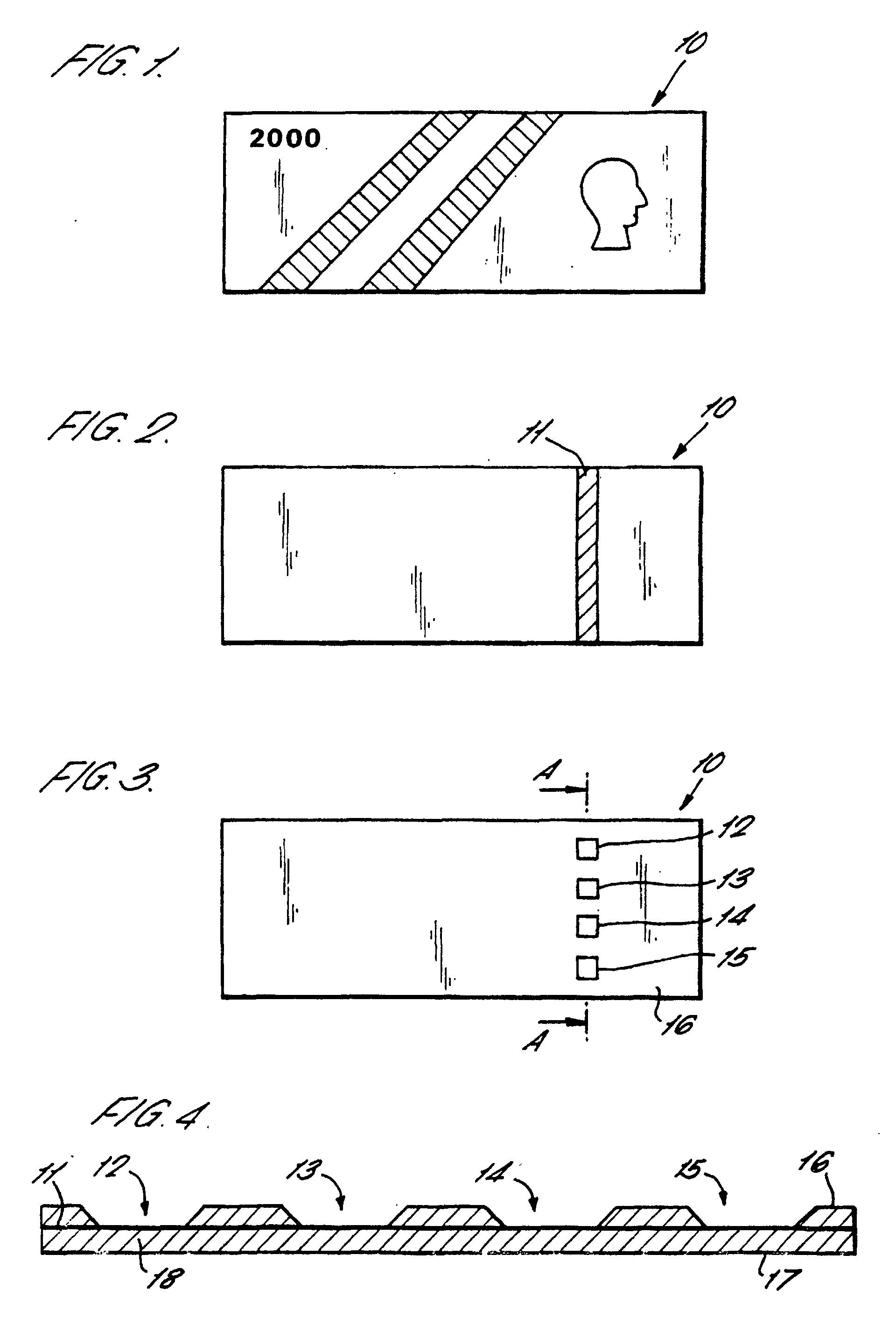
Figure 1 is a schematic representation of a bank note according to one embodiment
of the present invention, viewed in reflected light;
Figure 2 is a schematic view of the bank note of Figure 1, viewed in transmitted light;
Figure 3 is an illustration depicting windows in the surface of the bank note of Figures
1 and 2, which windows are not normally visible in reflected light;
Figure 4 is a cross-section through the bank note illustrated in Figures 1, 2 and
3, taken along the line A-A in Figure 3 in the direction of the arrows;
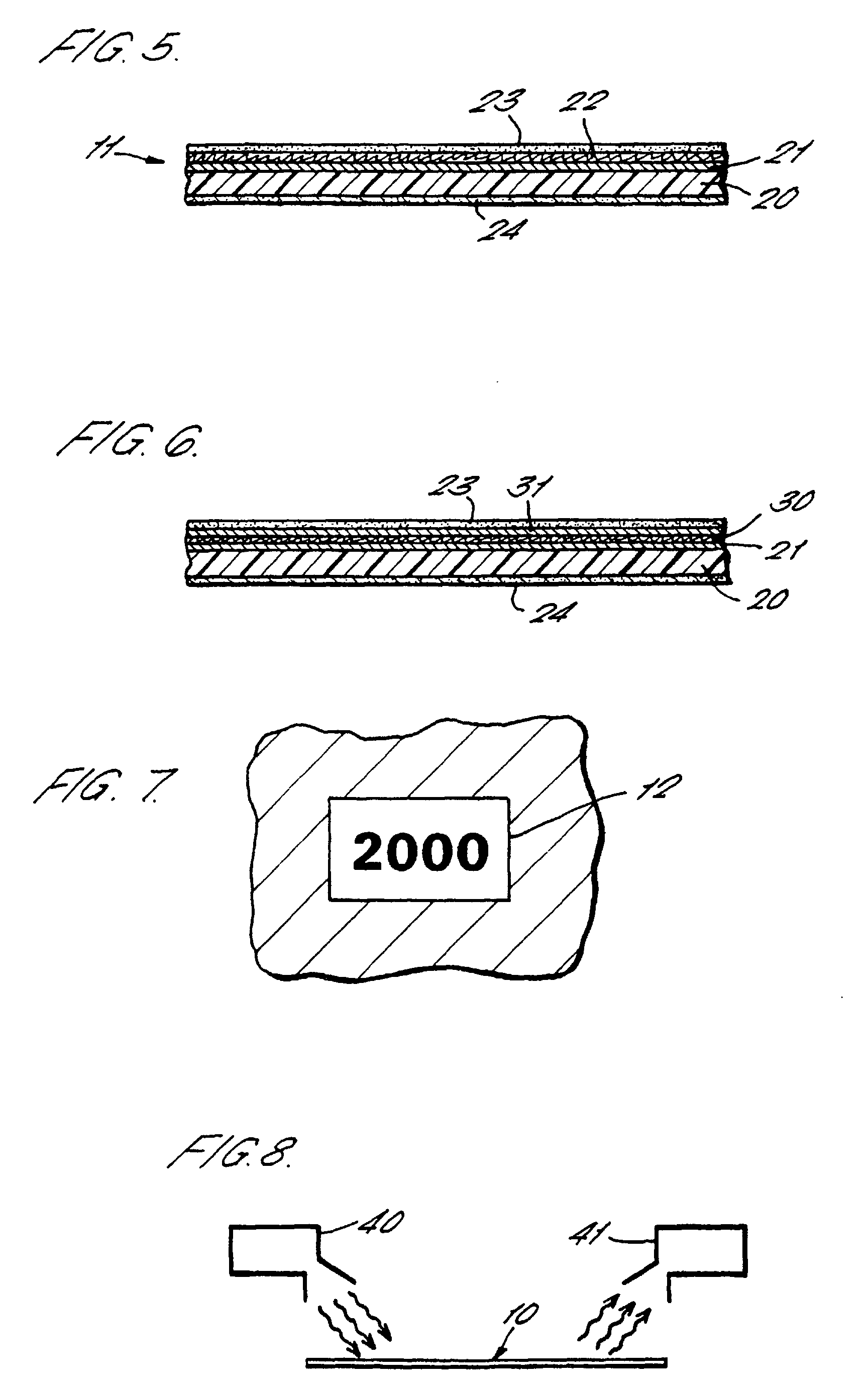
Figure 5 is a detail view of one embodiment of the invention, showing one window in
a bank note;
Figure 6 is a schematic cross-section through a first embodiment of a security thread
which can be used in the bank note of Figures 1 - 4;
Figure 7 is a cross-section through a second embodiment of security thread which can
be used in the bank notes of Figures 1 - 4; and
Figure 8 is a schematic representation of apparatus used to test the authenticity
of the bank note illustrated in Figures 1 - 4.
[0034] In Figure 1 there can be seen a bank note 10 according to a first embodiment of the
present invention. The Figure shows the bank note 10 viewed in reflected light. The
bank note 10 is printed over the whole of the surface of the bank note shown with
a graphic design which comprises the numeral 2,000, two stripes and a human head in
profile.
[0035] The bank note 10 comprises a security thread 11 which can be seen as a striking,
immediately apparent, strong continuous line when the bank note 10 is viewed in transmitted
light as seen in Figure 2.
[0036] The surface of the bank note 10 illustrated in Figures 1, 2 and 3 in fact comprises
four windows 12, 13, 14 and 15. In these windows the thread 11 is exposed, but between
these windows the thread 11 lies between the top surface 16 of the bank note 10 and
a bottom surface 17 of the bank note 10 (see Figure 4). In Figure 4 it can be seen
that the security thread 11 has the four windows 12, 13, 14 and 15 in which the security
thread 11 is exposed.
[0037] The security thread 11 comprises in one embodiment (see Figure 5) a polyester substrate
20 which is metallised with a metallic layer 21. Covering the metallic layer 21 is
a matt pale yellow coating 22. A final external coating of transparent colourless
adhesive 23 is applied over the top of the matt pale yellow coating to provide some
protection to the thread and to aid and ease manufacture. A coating 24 of transparent
colourless adhesive 23 is also applied to the bottom surface of the security thread
11. The matt pale yellow coating 22 matches fairly closely the appearance of the bank
note paper 18 surrounding the security thread 11. Thus, the parts of the security
thread visible in the windows 12, 13, 14 and 15 become quite difficult to see in reflected
light, except at certain angles when some specular reflection occurs from the adhesive
external coating of the security thread. For this reason, in Figure 1 the illustration
of the bank note 10 shows that the windows 12, 13, 14 and 15 are not visible in reflected
light. The portions of the thread 11 visible in the windows 12, 13, 14 and 15 are
even less visible when the bank note paper 18 is over printed with a graphic design,
as illustrated in Figure 1. Thus, the bank note is provided with a surprising optical
effect in that the general public will be generally unaware of the presence of a security
thread in the bank note 10 until the bank note 10 is held up to a light, when the
security thread becomes visible as a dark continuous line as can be seen in Figure
2.
[0038] The security thread 11 presents a machine readable element on the surface of the
bank note 10 where it is exposed by the windows 12, 13, 14 and 15. The security thread
11 is readily accessible to an appropriate machine detector at the windows 12, 13,
14 and 15.
[0039] In the preferred embodiment the matt pale yellow coating comprises luminescent material
and the machine authentication involves exciting the luminescent coating with appropriate
wavelengths of ultra-violet light and then measuring the subsequent emitted light.
Although in principle such detection would be possible with a fully embedded thread,
there is a great practical advantage in using a windowed thread in that the intensity
of the stimulating light reaching the target and the intensity of the emitted light
from the target is much greater without an absorbing region of fibre overlying the
security thread.
[0040] In essence the bank note 10 provides a new way of utilising windowed thread technology.
Whereas in the past the windowed thread technology was used for public identification
purposes primarily, now the windowed thread is used primarily for machine authentication
purposes and the public effect in reflected light thought so important with existing
windowed thread technology is deliberately avoided. Since the exposed portions of
the security thread match the surrounding paper, the bank note of the present invention
frees up space on the note surface for the printing of designs and for the affixing
of foils and holograms. The bank note at the same time also maximises the signal available
from a machine readable layer in or on the security thread 11. The bank note 10 also
includes what becomes an unexpected effect for the general public in that the security
thread 11 can be readily perceived in transmitted light.
[0041] Whilst in the embodiment described above the matt coating is applied over the entirety
of one surface of the security thread 11, in fact the matt coating could be applied
selectively only in those portions which are to be exposed in the windows 12, 13,
14 and 15. Also, whilst shown above the coating material 22 is provided on only one
side of the polyester substrate 20, the polyester substrate 20 could be provided with
the matt coating on both sides and with adhesive top coatings on both sides, in order
that the thread need not be oriented to one side only before being embedded in paper
stock in the manufacture of the bank note.
[0042] The manufacture of the bank note 10 would follow the steps usual in producing windowed
thread bank notes, except that the method would have the additional steps of providing
a matt non-reflective surface finish on at least those portions of the security thread
which will be exposed in the final bank note and the method includes the step of selecting
the matt coating with a colour which matches the colour of the bank note paper.
[0043] Whilst above the colour of the matt coating is chosen to match the colour of surrounding
paper, the colour of the coating could be chosen to match the colour of ink printed
on the regions of the paper surrounding the windows in the paper.
[0044] Whilst above, the security thread 11 is provided with a machine measurable parameter
by the use of luminescent material in the matt coating 22, other machine measurable
parameters could be used. For instance, infra-red stimulated Anti-Stokes luminescent
material could be used in or on the security thread at least in those portions exposed
in the windows 12, 13, 14 and 15, which luminescence could then be detected by a suitable
authentication machine. Alternatively, the coating 22 could be provided with infra-red
reflecting or absorbing material, with the method of authentication of the bank note
then comprising analysis of the reflection/absorption of infra-red radiation by the
security thread in the bank note. Similarly, ultra-violet reflecting/absorbing material
could be used in the security thread 11 and then the bank note 10 irradiated with
ultra-violet radiation and the reflection/absorption characteristics monitored for
when verifying the authenticity of the bank note. Furthermore, thermoluminescent material
could be used in the coating and this material would emit light when heated (e.g.
through exposure to infra-red radiation). It is also possible to use triboluminescent
material and excite the material by applying a mechanical force.
[0045] With all of these approaches, there is a benefit in having the security thread 11
exposed in the windows, since there would be no fibres of the bank note 10 which overlie
the security thread 11 in these regions and thus interfere with the detection process.
Furthermore, the use of a matt layer permits the use of much higher concentrations
of luminescent material, infra-red reflecting/absorbing material, ultra-violet reflection/absorbing
material, thermoluminescent material and/or triboluminescent material (e.g., inorganic
pigments) than would be acceptable in the coating on the thread if the thread had
to retain the traditionally very reflective/shiny appearance.
[0046] The applicant has considered in one embodiment printing an infra-red absorbent material
in the characteristic pattern on at least portions of the security thread 11. In Figure
6 it can be seen that the polyester substrate 20 is metallised and covered with a
metallic layer 21 and is then covered with the infra-red absorbent material 30 which
is printed in a characteristic pattern, e.g., in alphanumeric characters. The infra-red
absorbent material 30 is then covered with an overlying overcoat 31 of an infra-red
transparent material of a visible colour closely matching the colour of the surrounding
bank note paper or print on the paper. Finally the infra-red transparent material
would be covered with two coats 23 and 24 of transparent colourless adhesive for protection
purposes. The infra-red absorbent material could for instance be printed in the numerals
2,000 and in Figure 7 there can be seen an image of a part of a bank note showing
a window 12 in which the exposed part of the security thread 11 is printed with infra-red
absorbent material in the numerals 2,000, the image shown in Figure 7 then being obtainable
by use of suitable infra-red detecting apparatus.
[0047] In a further embodiment, a security thread can be printed with a characteristic pattern
by using two or more inorganic luminescent materials of similar appearance/colour
in visible light, but which emit light of different wavelengths and/or are excited
by different wavelengths of excitation light and/or have different phosphorescent
decay half-lives. The appearance/ colour of the luminescent materials in visible light
will be chosen to match the parts of the bank notes surrounding the windows. The materials
could be printed with a pattern showing alphanumeric characters, e.g., the numerals
2,000 as shown in Figure 7. The luminescent pattern is machine detectable, but could
also be observed by a human observer.
[0048] In Figure 8 there can be seen a schematic drawing showing apparatus for use in the
methods of authenticating bank note 10. An irradiator 40 is used to irradiate bank
note 10 with, for instance, ultra-violet or infra-red radiation and the detector 41
then detects what light is emitted from and/or ultra-violet radiation and/ or infra-red
radiation is reflected from the surface of the bank note 10. The detector 41 will
then enable determination of either the luminescent characteristics of material in
the security thread in the bank note 10, the infra-red or ultra-violet reflecting
characteristics of the security thread in the bank note 10 and/or the infra-red or
ultra-violet absorbing characteristics of the security thread in the bank note 10.
[0049] Whilst above all embodiments have described use of the invention for a bank note
10, the bank note 10 is only one example of a security article for which the present
invention is applicable. For instance, the present invention could be used for credit
cards and debit cards, with the security thread (which terms for the purpose of this
specification and claims will be interpreted as encompassing the term security strip,
commonly used for cards as opposed to bank notes) partially embedded in a plastic
material typically, with portions exposed at one surface. The term security article
can also include any form of security paper, for instance cheques and travellers'
cheques, bond documents, mortgage documents, in addition to standard bank notes used
in currency.
[0050] The exposed portions of the security thread 11 could have a colour which matches
the colour at the surrounding material of the security article (e.g. paper, plastics)
or the colour of the printing on the portions of surface of the security article surrounding
the exposed portions.
[0051] Examples of security articles incorporating the present invention will now be given,
as follows:
Example 1
[0052] A roll of polyester was vacuum-metallised with aluminium to a metal thickness of
approximately 30 nm. A coating comprising an inorganic phosphor, e.g. copper-doped
zinc sulphide (copper:zinc sulphide ratio between 50 and 100 parts per million) dispersed
in an organic binder at a proportion of 15% phosphor:binder by weight was applied
to both surfaces of the metallised polyester to a dry coating thickness of 5 microns.
A further organic protective coat and/or adhesive layer was applied over one or both
sides of the phosphor coated metallised film. The film was then mechanically reduced
by known means to form security threads in the width range typically 0.5 -4.0 mm.
The security threads were then incorporated into banknote paper by the known technique
described in EP-A-0059056 to form a windowed security thread. The paper was then printed,
cut and issued as banknotes.
[0053] The coating has a pale yellow colour in daylight which closely matches that of the
paper into which the thread is incorporated. The threads and the coated film from
which the threads are cut have a matt appearance. The matt appearance of the coated
film was characterised by one of several techniques as follows:-
(i) The gloss of the coated film was measured on a statistical Novo-Gloss 60° glossmeter
with an upper limit of 1000 gloss units (theoretical perfect mirror). The coated film
had a gloss measurement of 31 units; this compares with vacuum-metallised film with
an identical adhesive coat which, on the same instrument, measured 497 gloss units.
(ii) The gloss of the same film was measured on a multi-angle Novo-Gloss glossmeter
at 20°, 60° and 75° angle. This unit has an upper limit of 199 gloss units. The measurements
were as shown in the following table:
| Sample |
Angle |
Head Average gloss |
| Metallised film with luminescent coating and adhesive coating |
20° |
5.8 |
| 60° |
31.0 |
| 75° |
73.0 |
| Adhesive coated metallised polyester |
20° |
>199 |
| 60° |
>199 |
| 75° |
>199 |
(iii) The specular reflectance was measured on a Shimadzu UV3101-PC spectrophotometer.
The sample comprising a luminescent coating plus adhesive coating on metallised polyester
produced measurements ranging from 0.8% at 400nm to 1.6 at 700nm; the adhesive-coated
metallised polyester produced a value ranging from 50% at 400nm to 58% at 700 nm.
[0054] Under stimulation by UV light at a wavelength of 366 nm, the coating emitted green
light. Other phosphors may be used, e.g. manganese-doped zinc sulphide, which emits
orange light and silver-doped zinc sulphide which emits blue light.
[0055] During subsequent used note sorting operations, the banknotes were carried by a transport
path through a detection unit comprising a UV light source and optical filter tuned
to the emission wavelength of the doped zinc sulphide and an appropriate photodetector.
Example 2
[0056] A dispersion of magnetic material (gamma ferric oxide) in an organic binder was coated
to a dry film thickness of 5µm onto the metallised surface of a vacuum aluminised
12µm thick polyester. A second ply of vacuum aluminised 12µm polyester was laminated
to the first ply such that both aluminium layers and the magnetic layer were internal
to the laminate. A coating of luminescent material comprising copper-doped zinc sulphide
in an organic binder was applied to each side of the laminate, to a dry thickness
of 5µm. The film was then adhesive-coated on both sides and processed as described
in Example 1. During subsequent used note sorting operations, both the phosphorescent
emission and magnetic content of the security thread were measured according to known
techniques by appropriate detectors fitted to the sorting machine transport path.
Example 3
[0057] A layer of copper-doped zinc sulphide pigment incorporated into an organic binder
at a proportion of 5% by weight was coated to a dry thickness of 2µm onto transparent
12µm polyester. A layer of transparent adhesive was applied to each side to a dry
thickness of 4µm and the film converted to security threads as described in Example
1. In contrast to the devices described in Examples 1 and 2, this thread is semitransparent
and not readily apparent in the finished article when viewed in transmitted light.
In use, the presence of the luminescent coating may be determined by a machine, as
described in Example 1, or by a human observer when the luminescent component is excited
by placing the article under a source of UV light or between a source of UV light
and the observer.
Example 4
[0058] As Example 1, except that two different doped zinc sulphide phosphors were incorporated
into the organic binder in equal proportions to produce a combined weight of 15% pigment:binder.
In use, the different phosphors emitted different wavelengths of light which were
detected by photo-detectors fitted with appropriate narrow band optical filters tuned
to the emission wavelengths of the two phosphors.
Example 5
[0059] A security thread was prepared as described in Example 4 except that in this instance
phosphors with different half-life decay times were used. To authenticate banknotes
incorporating the thread, measurements were made of the different decay properties
of the two phosphors.
Example 6
[0060] As Example 1, except that a different zinc phosphor was used with a pale blue colour
in visible light, chosen to match the colour of the surrounding ink in the finished
banknote prepared from the paper incorporating the security thread.
Example 7
[0061] As Example 1, except that a fluorophor was used instead of an inorganic phosphor
as the luminescent pigment. A fluorescence rather than phosphorescence detector was
then used to authenticate the banknote on the sorting machine transport system.
Example 8
[0062] As Example 3, except that a lightly coloured IR absorbing pigment, e.g. substituted
chloro copper pH Halo cyanine, trade name PROJECT 900NP from the Zeneca company, was
incorporated into an organic binder at proportion of 5% pigment binder and used for
the coating over the transparent polyester to a dry coating thickness of 2 microns.
In use on used note sorting machines, measurement was made of the IR peak of 890nm
absorption due to the pigment which contrasted sharply with the IR transmission of
the surrounding areas of the security article.
Example 9
[0063] As Example 1, except that an Anti-Stokes pigment such as yttrium oxysulphide was
incorporated into the binder in place of the zinc sulphide phosphor at a concentration
of 30% pigment:binder and applied at a dry coating thickness of 2 microns. To authenticate
the finished banknote, it was placed under a source of IR radiation at 970nm which
excited the Anti-Stokes compound which then emitted green light at a wavelength of
540nm discernible to a human observer.
Example 10
[0064] As Example 1, except that a thermoluminescent pigment was incorporated into the binder
instead of the zinc sulphide phosphor. In use, the security article was heated by
an IR source or other heat source and the thermoluminescent material emitted visible
light which was detected by a photo-detector equipped with a suitable narrow band
optical filter.
Example 11
[0065] A manganese-doped zinc sulphide phosphor (manganese content 3000 parts per million)
was dispersed in an organic binder at a proportion of 30% pigment:binder and coated
onto one side of a 12 micron metallised polyester film to produce a triboluminescent
coating. The other side of the film was coated with an adhesive and the film reduced
by mechanical means to dimensions suitable for a banknote security thread, e.g. 1-4mm.
The thread was inserted into paper according to the process described in EP 0059056
such that the side of the film coated with the phosphor and binder was exposed in
the window regions. The paper was then printed, cut and issued as banknotes. The colour
of the ink in the window region of the banknote was selected to match closely that
of the phosphor/binder coating such that the presence of the windowed security thread
was not readily discernible in reflected light.
[0066] In use, the phosphor coating was stimulated by mechanical action such as rubbing
or pressing the surface with a hard transparent plastic rod. The phosphor exhibited
triboluminescent properties and emitted visible light which was discernible to the
human eye.
1. A security article having first and second surfaces and a security thread having a
first part located between the first and second surfaces and a second part exposed
in a window provided in the first surface, and the security thread comprising means
providing at least one non-public security feature which enables verification of authenticity
of the security article and which is not visually detectable when the security thread
is exposed only to electro-magnetic radiation in the visible spectrum, wherein the
exposure of the second part of the security thread in the window in the first surface
enhances detection of the non-public security feature by providing a readily accessible
portion of the security thread, characterised in that the whole of the part of the security thread exposed in the window in the first surface
has a matt non-reflective appearance and closely matches in colour a portion of the
first surface surrounding the window, whereby when the first surface is viewed in
reflected light in the visible spectrum the exposed part of the security thread is
unobtrusive and does not form a visually striking feature of the appearance of the
security article in reflected light in the visible spectrum.
2. A security article as claimed in claim 1 wherein at least one non-pubic security feature
is a machine measurable security feature and the exposure of the second part of the
security thread in the window enhances measurement of the machine measurable security
feature.
3. A security article as claimed in claim 1 or claim 2 which comprises material which
allows transmission of light between the first and second surfaces and wherein the
security thread is visible in such transmitted light.
4. A security article as claimed in claim 1 or claim 2 which comprises material which
allows transmission of light between the first and second surfaces and wherein the
security thread is nearly transparent and is not readily visible in transmitted light.
5. A security article as claimed in any one of the preceding claims wherein the non-public
security feature is detected by exposing the second exposed part of the security thread
to electromagnetic radiation outside of the visible spectrum.
6. A security article as claimed in claim 5 wherein the security thread emits electromagnetic
radiation when exposed to the electromagnetic radiation outside of the visible spectrum.
7. A security article as claimed in claim 6 wherein the emitted electromagnetic radiation
is in the visible region of the electromagnetic spectrum.
8. A security article as claimed in any one of the preceding claims wherein the surface
of the security thread exposed in the window in the first surface of the security
article has a gloss of 50 units or less as measured by a 60° glossmeter.
9. A security article as claimed in any one of the preceding claims wherein the surface
of the security thread exposed in the window in the first surface of the security
article has a gloss of 10 units or less as measured by a multi-angle glossmeter operating
at 20°.
10. A security article as claimed in any one of the preceding claims wherein the surface
of the security thread exposed in the window in the first surface of the security
article has a gloss of 50 units or less as measured by a multi-angle glossmeter operating
at 60°.
11. A security article as claimed in any one of the preceding claims wherein the surface
of the security thread exposed in the window in the first surface of the security
article has a gloss of 120 units or less as measured by a multi-angle glossmeter operating
at 75°.
12. A security article as claimed in any one of the preceding claims wherein the surface
of the security thread exposed in the window in the first surface of the security
article has a specular reflectance of 5.0% or less as measured by a spectrophotometer
operating in a range of 400-700 nm.
13. A security article as claimed in any one of the preceding claims wherein the security
thread comprises a metallised polymeric substrate coated at least in the exposed portion
with a matt coating obscuring the metal in the thread.
14. A security article as claimed in claim 12 wherein the metallised polymeric substrate
is opaque.
15. A security article as claimed in claim 13 or claim 14 wherein the matt coating is
luminescent and provides non-public security feature of the security thread by emitting
measurable light when exposed to ultra-violet radiation.
16. A security article as claimed in any of the preceding claims wherein the security
thread comprises luminescent material which constitutes the means providing at least
one non-public security feature by providing detectable luminescence at the exposed
part of the security thread.
17. A security article as claimed in claim 16 wherein the luminescent material emits visible
light in response to infra-red radiation.
18. A security article as claimed in claim 17 wherein the luminescent material provides
infra-red radiation stimulated Anti-Stokes luminescence.
19. A security article as claimed in any one of the preceding claims wherein the means
providing at least one non-public security feature comprises an infra-red absorbent
material which is provided in a chosen pattern on the security thread on at least
the second part of the security thread exposed in the window, the chosen pattern being
machine detectable when the security article is exposed to infra-red radiation.
20. A security article as claimed in claim 19 wherein the infra-red absorbent material
is coated with a layer of infra-red transparent material, the infra-red transparent
material having a colour which matches the portion of the first surface surrounding
the window.
21. A security article as claimed in any one of the preceding claims wherein the security
thread comprises thermoluminescent material at least in the second part thereof exposed
in the window, the thermoluminescent material forming the means providing at least
one non-public security feature.
22. A security article as claimed in any one of the preceding claims wherein the security
thread comprises triboluminescent material at least in the second part thereof exposed
in the window, the triboluminescent material forming the means providing at least
one non-public security feature.
23. A security article as claimed in any one of the preceding claims wherein first and
second luminescent materials with different characteristics are provided on the security
thread, which together form the means providing at least one non-public security feature,
the first and second luminescent materials having a similar appearance and colour
when exposed solely to visible light.
24. A security article as claimed in claim 23 wherein the first luminescent material emits
light of a first wavelength and the second luminescent material emit light of a second
wavelength different to the first wavelength.
25. A security article as claimed in claim 23 or claim 24 wherein the first luminescent
material has a phosphorescent decay half-life of a first duration and the second luminescent
material has a phosphorescent decay half-life of a second duration different to the
first duration.
26. A security article as claimed in any one of claims 23 to 25 wherein the first and
second luminescent materials are provided in a chosen pattern on the security thread.
27. A security article as claimed in any one of claims 23 to 26 which has at least three
luminescent materials with different characteristics to each other.
28. A security article as claimed in any one of the preceding claims, wherein the security
thread comprises a material provided which reflects infra-red radiation, the infra-red
reflecting material being present in the security thread in the exposed portion thereof
and thereby forming the means providing at least one non-public security feature.
29. A security article as claimed in any one of the preceding claims wherein the security
thread comprises infra-red absorbent material provided in the security thread at least
in the second exposed part thereof, the infra-red absorbent material forming the means
providing at least one non-public security feature.
30. A security article as claimed in any one of the preceding claims wherein the means
providing the at least one non-public security feature comprises ultraviolet reflecting
material in the security thread at least in the exposed portion thereof.
31. A security article as claimed in any one of the preceding claims wherein the means
providing at least one non-public security feature comprises ultra-violet absorbent
material provided in the security thread at least in the exposed portion thereof.
32. A security article as claimed in any one of the preceding claims wherein a graphic
design is applied to the first surface of the security article, the graphic design
being applied to extend over and at least partially obscure the exposed part of the
security thread.
33. A security article as claimed in claim 32 wherein the security article is a security
paper such as a banknote, the graphic design being printed on the first surface of
the security paper with the exposed part of the security thread being at least partly
over-printed.
34. A security paper as claimed in claim 33 wherein the colour of the exposed part of
the security thread closely matches the surrounding paper.
35. A security paper as claimed in claim 33 wherein the colour of the exposed part of
the security thread matches the colour of print on the surrounding paper.
36. A method of manufacture of the security article claimed in any one of the preceding
claims comprising, in any order, the steps of:
fabricating the security article with the first and second surfaces whilst defining
the window in the first surface and locating the security thread in the security article
with the first part thereof lying between the first and second surfaces and the second
part exposed in the window;
providing a matt non-reflective surface finish on at least the exposed portion of
the security thread; and
selecting the colour of the exposed portion of the security thread to match the colour
of the portion of the security article surrounding the window.
37. A method as claimed in claim 36 wherein the security thread comprises a polymeric
substrate and the step of selecting the colour of the exposed portion comprises selecting
a coloured coating for the substrate, which coloured coating is applied to the substrate
to provide the colour of the surface of the exposed part of the security thread.
38. A method of verifying authenticity of a security article, characterised by the use of a security article as claimed in claim 15 or claim 16 which is irradiated
with ultra-violet light and the light emitted by the luminescent material detected.
39. A method of verifying authenticity of a security article, characterised by the use of a security article as claimed in claim 18 which is irradiated with infra-red
radiation and the reflection of the infra-red radiation measured.
40. A method of verifying authenticity of a security article, characterised by the use of a security article as claimed in claim 29 which is irradiated with infra-red
radiation, and the absorption of the infra-red radiation measured.
41. A method of verifying authenticity of a security article, characterised by the use of a security article as claimed in claim 30 which is irradiated with ultra-violet
radiation, and the reflection of the ultra-violet radiation is measured.
42. A method of verifying authenticity of a security article, characterised by the use of a security article as claimed in claim 31 which is irradiated with ultra-violet
radiation, and the absorption of the ultra-violet radiation is measured.
43. A method of verifying authenticity of a security article, characterised by the use of a security article as claimed in claim 18 which is irradiated with infra-red
radiation and the light emitted by the luminescent material detected.
44. A method of verifying authenticity of a security article, characterised by the use of a security article as claimed in claim 19 or claim 20 which is irradiated
with infra-red radiation and the pattern of absorption of the infra-red radiation
detected.
45. A method of verifying authenticity of a security article, characterised by the use of a security article as claimed in claim 24 which is irradiated with ultra-violet
radiation, the wavelengths of the light emitted by the first luminescent material
and the wavelength of the light emitted by the second luminscent material being measured.
46. A method of verifying authenticity of a security article, characterised by the use of a security article as. claimed in claim 25 which is irradiated with ultra-violet
light and the phosphorescent decay half lives of the first and second luminescent
materials being measured.
47. A method of verifying authenticity of a security article, characterised by the use of a security article as claimed in claim 21 which is irradiated with infra-red
radiation visible light emitted by the thermoluminescent material being detected.
48. A method of verifying authenticity of a security article, characterised by the use of a security article as claimed in claim 22, wherein a mechanical force
is applied to the security thread and the visible light emitted by the triboluminescent
material being directed.
1. Sicherheitsgegenstand, der erste und zweite Oberflächen und einen Sicherheitsfaden
aufweist, der einen ersten Abschnitt aufweist, der zwischen den ersten und zweiten
Oberflächen liegt und einem zweiten Abschnitt, der in einem Fenster offenliegt, das
in der ersten Oberfläche vorgesehen ist, und der Sicherheitsfaden Vorrichtungen aufweist,
die wenigstens ein nichtöffentliches Sicherheitsmerkmal vorsehen, das die Nachprüfung
der Echtheit des Sicherheitsgegenstandes ermöglicht und das nicht visuell erkennbar
ist, wenn der Sicherheitsgegenstand nur mit elektromagnetischer Strahlung im sichtbaren
Spektrum bestrahlt wird, wobei die Offenlegung vom zweiten Abschnitt des Sicherheitsfadens
im Fenster in der ersten Oberfläche die Erkennung des nicht-öffentlichen Sicherheitsmerkmals
durch Vorsehen eines leicht zugänglichen Abschnittes des Sicherheitsfadens erhöht,
gekennzeichnet dadurch, daß der ganze Abschnitt des Sicherheitsfadens, der im Fenster in der ersten Oberfläche
offengelegt ist, ein mattes, nicht reflektierendes Erscheinen hat und in der Farbe
genau mit einem Abschnitt der ersten Oberfläche, der das Fenster umgibt, zusammenpasst,
wobei, wenn die erste Oberfläche in reflektiertem Licht des sichtbaren Spektrums betrachtet
wird, der offenliegende Abschnitt des Sicherheitsfadens unauffällig ist und kein visuell
auffälliges Merkmal der Erscheinung des Sicherheitsgegenstandes in reflektiertem Licht
des sichtbaren Spektrums bildet.
2. Sicherheitsgegenstand wie in Anspruch 1 beansprucht, wobei wenigstens ein nichtöffentliches
Sicherheitsmerkmal ein maschinenmeßbares Sicherheitsmerkmal ist, und das Offenlegen
des zweiten Abschnittes des Sicherheitsfadens im Fenster die Messung des maschinenmeßbaren
Sicherheitsmerkmals verbessert.
3. Sicherheitsgegenstand wie in Anspruch 1 oder Anspruch 2 beansprucht, der Material
aufweist, das Lichtübertragung zwischen den ersten und zweiten Oberflächen ermöglicht,
und wobei der Sicherheitsfaden in dem durchgelassenen Licht sichtbar ist.
4. Sicherheitsgegenstand wie in Anspruch 1 oder Anspruch 2 beansprucht, welcher Material
aufweist, das Lichtübertragung zwischen den ersten und zweiten Oberflächen ermöglicht
und wobei der Sicherheitsfaden fast transparent ist und in durchgelassenem Licht nicht
leicht sichtbar ist.
5. Sicherheitsgegenstand wie in einem der vorhergehenden Ansprüche beansprucht, wobei
das nichtöffentliche Sicherheitsmerkmal erkannt wird, indem der zweite offengelegte
Abschnitt des Sicherheitsfadens elektromagnetischer Strahlung außerhalb des sichtbaren
Spektrums ausgesetzt wird.
6. Sicherheitsgegenstand wie in Anspruch 5 beansprucht, wobei der Sicherheitsfaden elektromagnetische
Strahlung ausstrahlt, wenn er der elektromagnetischen Strahlung außerhalb des sichtbaren
Spektrums ausgesetzt ist.
7. Sicherheitsgegenstand wie in Anspruch 6 beanspucht, wobei die abgegebene elektromagnetische
Strahlung im sichtbaren Bereich des elektromagnetischen Spektrums ist.
8. Sicherheitsgegenstand wie in einem der vorhergehenden Ansprüche beansprucht, wobei
die im Fenster in der ersten Oberfläche des Sicherheitsgegenstandes offengelegte Oberfläche
des Sicherheitsfadens einen Glanz von 50 oder weniger Einheiten, gemessen mit einem
60° Glanzmesser, aufweist.
9. Sicherheitsgegenstand wie in einem der vorhergehenden Ansprüche beansprucht, wobei
die im Fenster in der ersten Oberfläche des Sicherheitsgegenstandes offengelegte Oberfläche
des Sicherheitsfadens einen Glanz von 10 oder weniger Einheiten aufweist, wie mit
einem mehrwinkligen Glanzmesser, der bei 20° arbeitet, gemessen wurde.
10. Sicherheitsgegenstand wie in einem der vorhergehenden Ansprüche beansprucht, wobei
die im Fenster in der ersten Oberfläche des Sicherheitsgegenstandes offengelegte Oberfläche
des Sicherheitsfadens einen Glanz von 50 oder weniger Einheiten aufweist, wie mit
einem mehrwinkligen Glanzmesser, der bei 60° arbeitet, gemessen wurde.
11. Sicherheitsgegenstand wie in einem der vorhergehenden Ansprüche beansprucht, wobei
die im Fenster in der ersten Oberfläche des Sicherheitsgegenstandes offengelegte Oberfläche
des Sicherheitsfadens einen Glanz von 120 oder weniger Einheiten aufweist, wie mit
einem mehrwinkligen Glanzmesser, der bei 75° arbeitet, gemessen wurde.
12. Sicherheitsgegenstand wie in einem der vorhergehenden Ansprüche beansprucht, wobei
die im Fenster in der ersten Oberfläche des Sicherheitsgegenstandes offengelegte Oberfläche
des Sicherheitsfadens ein Spiegel-Rückstrahlungsvermögen von 5,0 % oder weniger aufweist,
wie mit einem Spektralphotometer gemessen wurde, das in einem Bereich von 400 - 700
nm arbeitet.
13. Sicherheitsgegenstand, wie in einem der vorhergehenden Ansprüche beansprucht, wobei
der Sicherheitsfaden ein metallisiertes polymeres Substrat aufweist, das wenigstens
im offengelegten Abschnitt mit einem matten Überzug überzogen ist, der das Metall
im Faden mattiert.
14. Sicherheitsgegenstand wie in Anspruch 12 beansprucht, wobei das metallisierte polymere
Substrat opak ist.
15. Sicherheitsgegenstand wie in Anspruch 13 oder Anspruch 14 beansprucht, wobei der matte
Überzug lumineszierend ist und durch Ausstrahlen von meßbarem Licht ein nichtöffentliches
Sicherheitsmerkmal des Sicherheitsfadens vorsieht, wenn er ultravioletter Strahlung
ausgesetzt ist.
16. Sicherheitsgegenstand wie in einem der vorhergehenden Ansprüche beansprucht, wobei
der Sicherheitsfaden lumineszierendes Material aufweist, das die Vorrichtung bildet,
die mindestens ein nichtöffentliches Sicherheitsmerkmal vorsieht, durch Vorsehen erkennbarer
Lumineszenz an dem offengelegten Abschnitt des Sicherheitsfadens.
17. Sicherheitsgegenstand wie in Anspruch 16 beansprucht, wobei das lumineszierende Material,
ansprechend auf Infrarotstrahlung, sichtbares Licht ausstrahlt.
18. Sicherheitsgegenstand wie in Anspruch 17 beansprucht, wobei das lumineszierende Material
Infrarotstrahlungs-stimulierte Anti-Stokes sche Lumineszenz vorsieht.
19. Sicherheitsgegenstand wie in einem der vorangehenden Ansprüche beansprucht, wobei
die Vorrichtung, die wenigstens ein nichtöfentliches Sicherheitsmerkmal vorsieht,
ein infrarot-absobierendes Material aufweist, das in einem ausgewählten Muster auf
dem Sicherheitsfaden auf wenigstens dem zweiten Abschnitt des Sicherheitsfadens, der
im Fenster offengelegt ist, vorgesehen ist, wobei das ausgewählte Muster maschinenerkennbar
ist, wenn der Sicherheitsgegenstand der infraroten Strahlung ausgesetzt wird.
20. Sicherheitsgegenstand wie in Anspruch 19 beansprucht, wobei das infrarot-absorbierende
Material mit einer Schicht von infrarot-transparentem Material überzogen ist, das
infrarot-transparente Material eine Farbe besitzt, die zu dem Abschnitt der ersten,
das Fenster umgebenden Oberfläche passt.
21. Sicherheitsgegenstand wie in einem der vorhergehenden Ansprüche beansprucht, wobei
der Sicherheitsfaden wenigstens in dessen im Fenster offengelegten zweiten Abschnitt
thermolumineszierendes Material aufweist, wobei das thermolumineszierende Material
die Vorrichtung bildet, die wenigstens ein nichtöffentliches Sicherheitsmerkmal vorsieht.
22. Sicherheitsgegenstand wie in einem der vorhergehenden Ansprüche beansprucht, wobei
der Sicherheitsfaden wenigstens in dessen zweiten, im Fenster offengelegten, Abschnitt
tribolumineszierendes Material aufweist, wobei das tribolumineszierende Material die
Vorrichtung bildet, die wenigstens ein nichtöffentliches Sicherheitsmerkmal vorsieht.
23. Sicherheitsgegenstand wie in einem der vorhergehenden Ansprüche beansprucht, wobei
erste und zweite lumineszierende Materialien mit unterschiedlichen Merkmalen auf dem
Sicherheitsfaden vorgesehen sind, welche zusammen die Vorrichtung bilden, die wenigstens
ein nichtöffentliches Sicherheitsmerkmal vorsieht, wobei das erste und zweite lumineszierende
Material das gleiche Erscheinen und die gleiche Farbe haben, wenn sie einzig sichtbarem
Licht ausgesetzt sind.
24. Sicherheitsgegenstand wie in Anspruch 23 beansprucht, wobei das erste lumineszierende
Material Licht von einer ersten Wellenlänge ausstrahlt und das zweite lumineszierende
Material Licht von einer zweiten Wellenlänge ausstrahlt, die anders ist, als die erste
Wellenlänge.
25. Sicherheitsgegenstand wie in Anspruch 23 oder Anspruch 24 beansprucht, wobei das erste
lumineszierende Material eine erste Halbwertszeit des phosphoreszierenden Abfalls
von einer ersten Dauer besitzt und das zweite lumineszierende Material eine Halwertszeit
des phosphoreszierenden Abfalls von einer zweiten Dauer, die sich von der ersten Dauer
unterscheidet, aufweist.
26. Sicherheitsgegenstand wie in einem der Ansprüche 23 bis 25 beansprucht, wobei die
ersten und zweiten lumineszierenden Materialien in einem ausgewählten Muster auf dem
Sicherheitsfaden vorgesehen sind.
27. Sicherheitsgegenstand wie in einem der Ansprüche 23 bis 26 beansprucht, welcher wenigstens
drei lumineszierende Materialien mit einander unterschiedlichen Merkmalen aufweist.
28. Sicherheitsgegenstand wie in einem der vorhergehenden Ansprüche beansprucht, wobei
der Sicherheitsfaden ein Material aufweist, das vorgesehen ist, Infrarot-Strahlung
zu reflektieren, wobei das infrarot-reflektierende Material im Sicherheitsfaden in
dessen offengelegtem Abschnitt vorhanden ist und dabei die Vorrichtung bildet, die
wenigstens ein nichtöffentliches Sicherheitsmerkmal vorsieht.
29. Sicherheitsgegenstand wie in einem der vorhergehenden Ansprüche beansprucht, wobei
der Sicherheitsfaden infrarot-absorierendes Material aufweist, das im Sicherheitsfaden
wenigstens in dessen zweiten offengelegten Abschnitt vorgesehen ist, wobei das infrarot-absorbierende
Material die Vorrichtung bildet, die wenigstens ein nichtöffentliches Sicherheitsmerkmal
vorsieht.
30. Sicherheitsgegenstand wie in einem der vorhergehenden Ansprüche beansprucht, wobei
die Vorrichtung, die das wenigstens eine nichtöffentliche Sicherheitsmerkmal vorsieht,
ultraviolettreflektierendes Material im Sicherheitsfaden aufweist, wenigstens in dessen
offengelegten Abschnitt.
31. Sicherheitsgegenstand wie in einem der vorhergehenden Ansprüche beansprucht, wobei
die Vorrichtung, die wenigstens ein nichtöffentliches Sicherheitsmerkmal vorsieht,
ultraviolett-absorbierendes Material aufweist, das im Sicherheitsfaden wenigstens
in dessen offengelegtem Abschnitt vorgesehen ist.
32. Sicherheitsgegenstand wie in einem der vorhergehenden Ansprüche beansprucht, wobei
ein graphisches Muster auf die erste Oberfläche des Sicherheitsgegenstandes aufgetragen
wird, wobei das graphische Muster so aufgetragen wird, daß es sich über den offengelegten
Abschnitt des Sicheheitsfadens erstreckt und ihn wenigstens teilweise verdeckt.
33. Sicherheitsgegenstand wie in Anspruch 32 beansprucht, wobei der Sicherheitsgegenstand
ein Wertzeichenpapier ist, wie z.B. eine Banknote, wobei das graphische Muster auf
der ersten Oberfläche des Wertzeichenpapiers gedruckt ist, wobei der offengelegte
Abschnitt des Sicherheitsfadens der wenigstens teilweise überdruckt ist.
34. Wertzeichenpapier wie in Anspruch 33 beansprucht, wobei die Farbe des offengelegten
Abschnittes des Sicherheitsfadens genau zur Farbe des umgebenden Papiers passt.
35. Wertzeichenpapier wie in Anspruch 33 beansprucht, wobei die Farbe des offengelegten
Abschnittes des Sicherheitsfadens mit der Farbe des Druckes auf dem umgebenden Papier
zusammenpasst.
36. Verfahren zur Herstellung des Sicherheitsgegenstandes der in irgendeinem der vorhergehenden
Ansprüche beansprucht ist, das in irgendeiner Reihenfolge folgende Schritte aufweist:
Herstellen des Sicherheitsgegenstandes mit den ersten und zweiten Oberflächen, während
genauem Bestimmen des Fensters in der ersten Oberfläche und Verlegen des Sicherheitsfadens
im Sicherheitsgegenstand mit dessen erstem Abschnitt zwischen den ersten und zweiten
Oberflächen liegend und dem zweiten Abschnitt im Fenster offengelegt;
Vorsehen einer matten, nichtreflekierenden Oberflächengüte auf zumindest dem offengelegten
Abschnitt des Sicherheitsfadens; und
Auswählen der Farbe des offengelegten Abschnittes des Sicherheitsfadens, damit er
zu der Farbe des das Fenster umgebenden Abschnittes des Sicherheitsgegenstandes passt.
37. Verfahren wie in Anspruch 36 beansprucht, wobei der Sicherheitsfaden ein polymeres
Substrat aufweist und der Schritt des Auswählens der Farbe des offengelegten Abschnitts
das Auswählen eines farbigen Überzugs für das Substrat umfasst, dieser farbige Überzug
wird auf das Substrat aufgetragen, um die Farbe der Oberfläche des offengelegten Abschnitt
des Sicherheitsfadens vorzusehen.
38. Verfahren zum Nachprüfen der Echtheit eines Sicherheitsgegenstandes, gekennzeichnet durch die Verwendung eines Sicherheitsgegenstandes wie in Anspruch 15 oder Anspruch 16
beansprucht, der mit ultraviolettem Licht bestrahlt wird, und das von dem lumineszierenden
Material ausgestrahlte Licht wird erkannt.
39. Verfahren zum Nachprüfen der Echtheit eines Sicherheitsgegenstandes, gekennzeichnet durch die Verwendung eines Sicherheitsgegenstandes wie in Anspruch 18 beansprucht, der
mit Infrarot-Strahlung bestrahlt wird, und die Reflektion der Infrarot-Strahlung wird
gemessen.
40. Verfahren zum Nachprüfen der Echtheit eines Sicherheitsgegenstandes, gekennzeichnet durch die Verwendung eines Sicherheitsgegenstandes wie in Anspruch 29 beansprucht, der
mit Infrarot-Strahlung bestrahlt wird, und die Absorption der Infrarot-Strahlung wird
gemessen.
41. Verfahren zum Nachprüfen der Echtheit eines Sicherheitsgegenstandes, gekennnzeichnet
durch die Verwendung eines Sicherheitsgegenstandes wie in Anspruch 30 beansprucht,
der mit ulravioletter Strahlung bestrahlt wird, und die Reflektion der ultravioletten
Strahlung wird gemessen.
42. Verfahren zum Nachprüfen der Echtheit eines Sicherheitsgegenstandes, gekennzeichent
durch die Verwendung eines Sicherheitsgegenstandes wie in Anspruch 31 beansprucht,
der mit ultravioletter Strahlung bestrahlt wird, und die Absorption der ultravioletten
Strahlung wird gemessen.
43. Verfahren zum Nachprüfen der Echtheit eines Sicherheitsgegenstandes, gekennzeichnet durch die Verwendung eines Sicherheitsgegenstandes wie in Anspruch 18 beansprucht, der
mit Infrarot-Strahlung bestrahlt wird, und das vom lumineszierenden Material ausgestrahlte
Licht wird erkannt.
44. Verfahren zum Nachprüfen der Echtheit eines Sicherheitsgegenstandes, gekennzeichnet durch die Verwendung eines Sicherheitsgegenstandes wie in Anspruch 19 oder Anspruch 20
beansprucht, der mit Infrarot-Strahlung bestrahlt, und das Muster der Absorption der
Infrarot-Strahlung wird erkannt.
45. Verfahren zum Nachprüfen der Echtheit eines Sicherheitsgegenstandes, gekennzeichnet durch die Verwendung eines Sicherheitsgegenstandes wie in Anspruch 24 beansprucht, der
mit ultravioletter Strahlung bestrahlt wird, die Wellenlängen des durch das erste lumineszierende Material ausgestrahlten Lichtes und die Wellenlänge des
durch das zweite lumineszierende Material ausgestrahlten Lichtes werden gemessen.
46. Verfahren zum Nachprüfen der Echtheit eines Sicherheitsgegenstandes, gekennzeichnet durch die Verwendung eines Sicherheitsgegenstandes wie in Anspruch 25 beansprucht, der
mit ultraviolettem Licht bestrahlt wird und die Halbwertszeiten des phosphoreszierenden
Abfalls von dem ersten und zweiten lumineszierenden Material werden gemessen.
47. Verfahren zum Nachprüfen der Echtheit eines Sicherheitsgegenstandes, gekennzeichnet durch die Verwendung eines Sicherheitsgegenstandes wie in Anspruch 21 beansprucht, der
mit Infrarot-Strahlung bestrahlt wird, sichtbares Licht, das von dem thermolumineszierenden
Material ausgestrahlt wird, wird erkannt.
48. Verfahren zum Nachprüfen der Echtheit eines Sicherheitsgegenstandes, gekennzeichnet durch die Verwendung eines Sicherheitsgegenstandes wie in Anspruch 22 beansprucht, wobei
eine mechanische Kraft am Sicherheitsfaden angelegt wird, und das von dem tribolumineszierenden
Material ausgestrahlte sichtbare Licht wird geleitet.
1. Article de sécurité ayant des première et seconde surfaces et un filetage de sécurité
ayant une première partie située entre les première et seconde surfaces et une seconde
partie exposée dans une fenêtre prévue dans la première surface, le filetage de sécurité
comprenant des moyens fournissant au moins une caractéristique de sécurité non publique
qui permet la vérification de l'authenticité de l'article de sécurité et qui n'est
pas détectable visuellement lorsque le filetage de sécurité est exposé uniquement
à un rayonnement électromagnétique dans le spectre visible, dans lequel l'exposition
de la seconde partie du filetage de sécurité dans la fenêtre dans la première surface
améliore la détection de la caractéristique de sécurité non publique en fournissant
une partie facilement accessible d u filetage de sécurité, caractérisé en ce que la totalité de la partie du filetage de sécurité exposée dans la fenêtre dans la
première surface a un aspect non réfléchissant mat et a une couleur qui s'apparente
de très près à la couleur d'une partie de la première surface entourant la fenêtre,
moyennant quoi lorsque la première surface est vue en lumière réfléchie dans le spectre
visible, la partie exposée du filetage de sécurité est dissimulée et ne forme pas
de caractéristique visuellement frappante de l'aspect de l'article de sécurité dans
la lumière réfléchie du spectre visible.
2. Article de sécurité selon la revendication 1, dans lequel au moins une caractéristique
de sécurité non publique est une caractéristique de sécurité mesurable par machine
et dans lequel l'exposition de la seconde partie du filetage de sécurité dans la fenêtre
améliore la mesure de la caractéristique de sécurité mesurable par machine.
3. Article de sécurité selon la revendication 1 ou la revendication 2, comprenant un
matériau qui permet la transmission de la lumière entre les première et seconde surfaces
et dans lequel le filetage de sécurité est visible dans cette lumière transmise.
4. Article de sécurité selon la revendication 1 ou la revendication 2, comprenant un
matériau qui permet la transmission de la lumière entre les première et seconde surfaces
et dans lequel le filetage de sécurité est pratiquement transparent et n'est pas facilement
visible dans la lumière transmise.
5. Article de sécurité selon l'une quelconque des revendications précédentes, dans lequel
la caractéristique de sécurité non publique est détectée en exposant la seconde partie
exposée du filetage de sécurité à un rayonnement électromagnétique hors du spectre
visible.
6. Article de sécurité selon la revendication 5, dans lequel le filetage de sécurité
émet un rayonnement électromagnétique lorsqu'il est exposé au rayonnement électromagnétique
hors du spectre visible.
7. Article de sécurité selon la revendication 6, dans lequel le rayonnement électromagnétique
émis se trouve dans la région visible du spectre électromagnétique.
8. Article de sécurité selon l'une quelconque des revendications précédentes, dans lequel
la surface du filetage de sécurité exposée dans la fenêtre dans la première surface
de l'article de sécurité a une brillance de 50 unités ou moins telle que mesurée par
un brillancemètre 60°.
9. Article de sécurité selon l'une quelconque des revendications précédentes, dans lequel
la surface du filetage de sécurité exposée dans la fenêtre dans la première surface
de l'article de sécurité présente une brillance de 10 unités ou moins telle que mesurée
par un brillancemètre multiangulaire fonctionnant à 20°.
10. Article de sécurité selon l'une quelconque des revendications précédentes, dans lequel
la surface du filetage de sécurité exposée dans la fenêtre dans la première surface
de l'article de sécurité présente une brillance de 50 unités ou moins telle que mesurée
par un brillancemètre multiangulaire fonctionnant à 60°.
11. Article de sécurité selon l'une quelconque des revendications précédentes, dans lequel
la surface du filetage de sécurité exposée dans la fenêtre dans la première surface
de l'article de sécurité a une brillance de 120 unités ou moins telle que mesurée
par un brillancemètre multiangulaire fonctionnant à 75°.
12. Article de sécurité selon l'une quelconque des revendications précédentes, dans lequel
la surface du filetage de sécurité exposé dans la fenêtre dans la première surface
de l'article de sécurité présente une réflectance spéculaire de 5,0 % ou moins mesurée
par un spectrophotomètre fonctionnant dans une plage allant de 400 à 700 nm.
13. Article de sécurité selon l'une quelconque des revendications précédentes, dans lequel
le filetage de sécurité comprend un substrat polymère métallisé revêtu au moins dans
la partie exposée d'un revêtement mat obscurcissant le métal dans le filetage.
14. Article de sécurité selon la revendication 12, dans lequel le substrat polymère métallisé
est opaque.
15. Article de sécurité selon la revendication 13 ou la revendication 14, dans lequel
le revêtement mat est luminescent et fournit une caractéristique de sécurité non publique
du filetage de sécurité en émettant une lumière mesurable lorsqu'il est exposé à un
rayonnement ultraviolet.
16. Article de sécurité selon l'une quelconque des revendications précédentes, dans lequel
le filetage de sécurité comprend u n matériau luminescent constituant les moyens fournissant
au moins une caractéristique de sécurité non publique en fournissant une luminescence
détectable au niveau de la partie exposée du filetage de sécurité.
17. Article de sécurité selon la revendication 16, dans lequel Le matériau luminescent
émet de la lumière visible en réponse à un rayonnement infrarouge.
18. Article de sécurité selon la revendication 17, dans lequel le matériau luminescent
fournit une luminescence anti-Stokes stimulée par rayonnement infrarouge.
19. Article de sécurité selon l'une quelconque des revendications précédentes, dans lequel
les moyens fournissant au moins une caractéristique de sécurité non publique comprennent
u n matériau absorbant les rayons infrarouges qui est prévu selon une configuration
choisie sur le filetage de sécurité sur au moins la seconde partie du filetage de
sécurité exposée dans la fenêtre, la configuration choisie étant détectable par machine
lorsque l'article de sécurité est exposé à un rayonnement infrarouge.
20. Article de sécurité selon la revendication 19, dans lequel le matériau absorbant les
rayons infrarouges est revêtu d'une couche de matériau transparent aux rayons infrarouges,
le matériau transparent aux rayons infrarouges ayant une couleur qui s'apparente à
la couleur de la partie de la première surface entourant la fenêtre.
21. Article de sécurité selon l'une quelconque des revendications précédentes, dans lequel
le filetage de sécurité comprend u n matériau thermoluminescent au moins dans la seconde
partie de celui-ci exposée dans la fenêtre, le matériau thermoluminescent formant
les moyens fournissant au moins une caractéristique de sécurité non publique.
22. Article de sécurité selon l'une quelconque des revendications précédentes, dans lequel
le filetage de sécurité comprend un matériau triboluminescent au moins dans la seconde
partie de celui-ci exposée dans la fenêtre, le matériau triboluminescent formant les
moyens fournissant au moins une caractéristique de sécurité non publique.
23. Article de sécurité selon l'une quelconque des revendications précédentes, dans lequel
les premier et second matériaux luminescents ayant des caractéristiques différentes
sont prévus sur le filetage de sécurité, lesquels forment ensemble les moyens fournissant
au moins une caractéristique de sécurité non publique, les premier et deuxième matériaux
luminescents ayant un aspect et une couleur similaires lorsqu'ils sont exposés uniquement
à la lumière visible.
24. Article de sécurité selon la revendication 23, dans lequel le premier matériau luminescent
émet de la lumière ayant une première longueur d'onde et le deuxième matériau luminescent
émet de la lumière ayant une seconde longueur d'onde différente de la première longueur
d'onde.
25. Article de sécurité selon la revendication 23 ou la revendication 24, dans lequel
le premier matériau luminescent présente une dégradation de phosphorescence deux fois
plus courte qu'une première durée et le deuxième matériau luminescent présente une
dégradation de phosphorescence deux fois plus courte qu'une seconde durée différente
de la première durée.
26. Article de sécurité selon l'une quelconque des revendications 23 à 25, dans lequel
les premier et deuxième matériaux luminescents sont prévus selon une configuration
choisie sur le filetage de sécurité.
27. Article de sécurité selon l'une quelconque des revendications 23 à 26, présentant
au moins trois matériaux luminescents ayant des caractéristiques différentes les uns
par rapport aux autres.
28. Article de sécurité selon l'une quelconque des revendications précédentes, dans lequel
le filetage de sécurité comprend un matériau réfléchissant un rayonnement infrarouge,
le matériau réfléchissant un rayonnement infrarouge étant présent dans le filetage
de sécurité dans la partie exposée de celui-ci et formant ainsi les moyens pour fournir
au moins une caractéristique de sécurité non publique.
29. Article de sécurité selon l'une quelconque des revendications précédentes, dans lequel
le filetage de sécurité comprend un matériau absorbant les rayons infrarouges prévu
dans le filetage de sécurité au moins dans la seconde partie exposée de celui-ci,
le matériau absorbant les rayons infrarouges formant les moyens fournissant au moins
une caractéristique de sécurité non publique.
30. Article de sécurité selon l'une quelconque des revendications précédentes, dans lequel
les moyens fournissant la au moins une caractéristique de sécurité non publique comprennent
u n matériau réfléchissant les rayons ultraviolets dans le filetage de sécurité au
moins dans la partie exposée de celui-ci.
31. Article de sécurité selon l'une quelconque des revendications précédentes, dans lequel
les moyens fournissant au moins une caractéristique de sécurité non publique comprennent
u n matériau absorbant les rayons ultraviolets prévu dans le filetage de sécurité
au moins dans la partie exposée de celui-ci.
32. Article de sécurité selon l'une quelconque des revendications précédentes, dans lequel
un tracé graphique est appliqué à la première surface de l'article de sécurité, le
tracé graphique étant appliqué pour s'étendre au-dessus et pour au moins obscurcir
partiellement la partie exposée du filetage de sécurité.
33. Article de sécurité selon la revendication 32, dans lequel l'article de sécurité est
un papier de sécurité tel qu'un billet de banque, le tracé graphique étant imprimé
sur la première surface. du papier de sécurité, la partie exposée du filetage de sécurité.
étant au moins partiellement sur-imprimée.
34. Papier de sécurité selon la revendication 33, dans lequel la couleur de la partie
exposée du filetage de sécurité s'apparente de très près à la couleur du papier environnant.
35. Papier de sécurité selon la revendication 33, dans lequel la couleur de la partie
exposée du filetage de sécurité s'apparente à la couleur de l'impression sur le papier
sur le papier environnant.
36. Procédé de fabrication de l'article de sécurité selon l'une quelconque des revendications
précédentes comprenant, dans n'importe quel ordre, les étapes consistant à :
fabriquer l'article de sécurité avec les première et seconde surfaces tout en définissant
la fenêtre dans la première surface et en situant le filetage de sécurité dans l'article
de sécurité avec la première partie de celui-ci reposant entre les première et seconde
surfaces et la seconde partie exposée dans la fenêtre ;
fournir une finition de surface non réfléchissante mate sur au moins la partie exposée
du filetage de sécurité ; et
sélectionner la couleur de la partie exposée du filetage de sécurité pour qu'elle
s'apparente à la couleur de la partie de l'article de sécurité qui entoure la fenêtre.
37. Procédé selon la revendication 36, dans lequel le filetage de sécurité comprend un
substrat polymère et dans lequel l'étape consistant à sélectionner la couleur de la
partie exposée comprend le fait de sélectionner un revêtement coloré pour le substrat,
lequel revêtement coloré est appliqué sur le substrat pour fournir la couleur de la
surface de la partie exposée du filetage de sécurité.
38. Procédé de vérification de l'authenticité d'un article de sécurité, caractérisé par l'utilisation d'un article de sécurité selon la revendication 15 ou la revendication
16 qui est rayonné par de la lumière ultraviolette, et la lumière émise par le matériau
luminescent est détectée.
39. Procédé de vérification de l'authenticité d'un article de sécurité, caractérisé par l'utilisation d'un article de sécurité selon la revendication 18 qui est rayonné
par un rayonnement infrarouge, et la réflexion du rayonnement infrarouge est mesurée.
40. Procédé de vérification de l'authenticité d'un article de sécurité, caractérisé par l'utilisation d'un article de sécurité selon la revendication 29 qui est rayonné
par un rayonnement infrarouge, et l'absorption du rayonnement infrarouge est mesurée.
41. Procédé de vérification de l'authenticité d'un article de sécurité, caractérisé par l'utilisation d'un article de sécurité selon la revendication 30, qui est rayonné
par un rayonnement ultraviolet, et la réflexion du rayonnement ultraviolet est mesurée.
42. Procédé de vérification de l'authenticité d'un article de sécurité, caractérisé par l'utilisation d'un article de sécurité selon la revendication 31 qui est rayonné
par un rayonnement ultraviolet, et l'absorption du rayonnement ultraviolet est mesurée.
43. Procédé de vérification de l'authenticité d'un article de sécurité, caractérisé par l'utilisation d'un article de sécurité selon la revendication 18 qui est rayonné
par un rayonnement infrarouge, et la lumière émise par le matériau luminescent est
détectée.
44. Procédé de vérification de l'authenticité d'un article de sécurité, caractérisé par l'utilisation d'un article de sécurité selon la revendication 19 ou la revendication
20 qui est rayonné par un rayonnement infrarouge, et la configuration de l'absorption
du rayonnement infrarouge est détectée.
45. Procédé de vérification de l'authenticité d'un article de sécurité, caractérisé par l'utilisation d'un article de sécurité selon la revendication 24 qui est rayonné
par un rayonnement ultraviolet, la longueur d'onde de la lumière émise par le premier
matériau luminescent et la longueur d'onde de la lumière émise par le deuxième matériau
luminescent étant mesurée.
46. Procédé de vérification de l'authenticité d'un article de sécurité, caractérisé par l'utilisation d'un article de sécurité selon la revendication 25 qui est rayonné
par une lumière ultraviolette, la dégradation de la phosphorescence deux fois plus
courte que les premier et deuxième matériaux luminescents étant mesurée.
47. Procédé de vérification de l'authenticité d'un article de sécurité, caractérisé par l'utilisation d'un article de sécurité selon la revendication 21 qui est rayonné
par un rayonnement infrarouge, la lumière visible émise par le matériau thermoluminescent
étant détectée.
48. Procédé de vérification de l'authenticité d'un article de sécurité, caractérisé par l'utilisation d'un article de sécurité selon la revendication 22, dans lequel une
force mécanique est appliquée au filetage de sécurité et dans lequel la lumière visible
émise par le matériau triboluminescent est détectée.