|
(11) | EP 0 988 336 B1 |

| (12) | EUROPEAN PATENT SPECIFICATION |
|
|
| (54) |
POLYESTER SYNTHESIS USING CATALYSTS HAVING LOW DECOMPOSITION TEMPERATURES DIE HERSTELLUNG VON POLYESTERN UNTER VERWENDUNG VON NIEDRIGABBAUTEMPERATURKATALYSATOREN SYNTHESE DE POLYESTERS A L'AIDE DE CATALYSEURS A BASSE TEMPERATURE DE DECOMPOSITION |
|
|
|||||||||||||||||||||||||||||||
| Note: Within nine months from the publication of the mention of the grant of the European patent, any person may give notice to the European Patent Office of opposition to the European patent granted. Notice of opposition shall be filed in a written reasoned statement. It shall not be deemed to have been filed until the opposition fee has been paid. (Art. 99(1) European Patent Convention). |
[0001] The present invention is broadly concerned with an improved two-step process for the preparation of polyesters wherein use is made of a first-stage catalyst having a relatively low decomposition temperature allowing substantially complete thermal decomposition of the catalyst prior to the second-stage reaction. More particularly, the invention pertains to such an improved process involving an initial catalyzed reaction between a carboxylic acid (e.g., isophthalic acid or terephthalic acid) and an alkylene oxide (e.g., propylene or ethylene oxide) in the presence of a low-degradation temperature catalyst such as benzyltriethylammonium chloride in order to form an oligoester mixture ; The reaction product is heated to essentially completely decompose the first-stage catalyst, whereupon the oligoester reaction product is reacted with a dibasic acid or anhydride. Advantageously, the first-stage catalyst has a thermal degradation temperature at or below the second-stage reaction temperature. The process of the present invention is as disclosed in claim 1.
[0002] A well-known route for the production of polyester resins involves an initial reaction between a carboxylic acid and an alkylene oxide in the presence of a catalyst to form an oligoester (typically hydroxyalkyl ester) reaction product. This first-stage addition reaction is generally carried out at an elevated temperature on the order of 100-230°C and at a superatmospheric pressure of up to about 1.47 MPa (15 kg/cm2). A variety of catalysts have been proposed for use in this context, such as simple amines (U.S. Patent No. 4,306,056) and alkyl quaternary amine compounds (U.S. Patent No. 4,560,788).
[0003] After the first-stage reaction is completed, it is conventional to heat the reaction mixture in the presence of an inert gas such as nitrogen in order to remove the first stage catalyst. At this point, the catalyst-stripped first-stage reaction product may be mixed with a glycol such as dipropylene glycol and the mixture is reacted with a diacid or anhydride, especially maleic anhydride at elevated temperatures and pressures. This yields the desired unsaturated polyester product.
[0004] A significant problem with prior two-stage processes for polyester resin production stems from the fact that residual first-stage catalysts remaining in the second-stage reaction mixture tends to significantly discolor the final polyester resin products. Moreover, the attempted thermal degradation of the first-stage catalysts represents a material energy input to the process, thus raising costs.
[0005] There is accordingly a real and unsatisfied need in the art for an improved two-stage polyester resin process which ameliorates the problems of resin discoloration and excess energy usage.
[0006] The present invention overcomes the problems outlined above, and provides a greatly improved two-stage polyester preparation process yielding final products having very low Gardner color numbers. Broadly speaking, the process of the invention includes the conventional steps of reacting a carboxylic acid with an alkylene oxide in the presence of a catalyst to form an oligoester reaction mixture, and thereafter reacting the oligoester reaction mixture with a dibasic acid or anhydride at an elevated second-stage reaction temperature to form a polyester. However, the invention makes use of a catalyst in the first-stage carboxylic acid-alkylene oxide reaction which will thermally decompose at a temperature substantially at or below the elevated second-stage reaction temperature. Accordingly, the catalyst may be readily removed at relatively low temperatures prior to the second-stage reaction. Moreover, any residual amounts of catalyst remaining at the outset of the second-stage reaction are thermally decomposed during the course of the reaction, so that the catalyst does not adversely affect the color of the final polyester resin.
[0007] The catalyst is selected from the group consisting of aryl alkyl quaternary amines and derivatives thereof. Preferred compounds of this type are selected from the formula
wherein R1 is an aryl or C1-C18 alkyl-substituted aryl group and R2, R3 and R4 may be the same or different and are independently selected from the group consisting of aryl groups, C1-C18 alkyl-substituted aryl groups, C1-C4 hydrocarbons and C1-C4 hydroxy-substituted hydrocarbons, and X is selected from the group consisting of a hydroxyl group, the halogens, and moieties of carbonic, bicarbonic, mono-and di-carboxylic acids. A more preferred group is where R2, R3 and R4 are the same or different and more independently selected from the group consisting of aryl groups, C1-C18 alkyl-substituted aryl groups, C1-C4 alkyl groups and C1-C4 hydroxy-substituted groups, and R1 is a benzyl group. The single most preferred class of catalysts are the benzyl lower trialkylammonium halogen salts, where the lower trialkyl groups are independently selected from the group consisting of the C1-C4 alkyls. The decomposition temperature of the catalyst of the invention should preferably be in the range of from about 100-240°C and more preferably from about 150-220°C. In addition, the first-stage catalyst, when heated to a temperature greater than 50°C, has a half-life of at least 10 hours.
[0008] The carboxylic acid used in the first-stage reaction is preferably an alkyl or aryl dicarboxylic acid, with the benzene-dicarboxylic acids being the most preferred. Isophthalic and terephthalic acids and mixtures thereof are the most commonly used acids in this context. The alkylene oxide reactant is preferably selected from the C2-C8 alkylene oxides with propylene oxide, ethylene oxide and mixtures thereof generally being used. The molar ratio of the first-stage alkylene oxide to carboxylic acid should preferably be in the range of from about 0.1:1 to 10:1 and more preferably from about 0.5:1 to 5:1. The first-stage reaction is normally carried out at a temperature of from about 50-200°C, and more preferably from about 75-150°C ; reaction pressures normally vary from about 0.0689-2.76 MPa (10-400 psi), more preferably 0.137-0.689 MPa (20-100 psi). Reaction times are also variable but generally range from about 20 min. to about 20 hours, more preferably from about 30 min. to about 10 hours.
[0009] The second stage reaction involves reaction of the oligoesters derived from the first stage (and generally after an intermediate thermal catalyst degradation / removal step) with an unsaturated dibasic acid or its anhydride. Glycol such as dipropylene glycol may be added to the first-stage oligoesters at this stage, and a mixture of unsaturated and saturated dibasic acids or anhydrides can be used ; in the latter case, the saturated dibasic acid or anhydride can consitute up to 80 mole percent (more preferably up to 40 mole percent) of the mixture. The preferred dibasic acids are the C2-C10 acids, for example, maleic, fumaric, citraconic, mesaconic and itaconic acids ; the corresponding anhydrides can also be employed. Where saturated dicarboxylic acids or anhydrides are used in conjonction with the unsaturated acids or anhydrides, typical saturated acids or anhydrides would be phthalic, succinic, adipic, sebacic and/or dimerized fatty acids and their corresponding anhydrides.
[0010] The second-stage reaction conditions generally involve a reaction temperature of from about 150 to 250°C, a pressure of from about 0 to 2.07 MPa (0 to 300 psi) and a reaction time of from about 2 to 50 hours. The unsaturated polyesters obtained in the second-stage reaction are normally blended with one or more monomers capable of crosslinking with the vinyl groups in the resins. Examples of such monomers include styrene, vinyl toluene, p-methyl styrene, chlorostyrene, t-butyl styrene, diallyl phthalate, mono- or multifunctional lower alkyl esters of the acrylic or methacrylic acids such as methyl methacrylate and glycol diacrylate and the like. The amount of monomer in the resin ranges between about 30 to about 70% by weight. Styrene is the reactive monomer of choice. Such final resin products have very good color characteristics, typically having a Gardner color scale of less than 4 and more preferably less than 2.
[0011] The following examples are provided by way of illustration only and nothing therein should be taken as a limitation upon the overall scope of the invention.
EXAMPLE 1
[0012] In this example, a hydroxy alkyl oligoester was produced for use as a solvent in subsequent examples. The following ingredients were introduced into a two-gallon stainless steel autoclave : 15 g benzyltriethylammonium chloride (TEBAC), 1800 g xylene, and 2000 g of isophthalic acid. The air in the autoclave was completely replaced by the introduction of nitrogen gas and the mixture was heated to 125°C. 1400 g of propylene oxide was then continuously added over 160 min. at a stirring rate of 200 rpm while maintaining a reaction temperature in the autoclave of 125°C and a reactor pressure below 0,345 MPa (50 psi). After completion of the propylene oxide addition, the reaction was continued at 125°C for an additional 60 min. at a pressure below 0,345 MPa (50 psi). The reaction product was then purged with nitrogen and subjected to a vacuum for 2 hours to remove the xylene. 3390 g of the oligoester A reaction product having an acid value of 15 (mg KOH/g) was obtained.
EXAMPLES 2-6
[0013] In this example, two additional hydroxy alkyl oligoesters are prepared under the conditions set in Table 1 below and as described in Example 1 using the oligoester A as a solvent. The properties of the resulting oligoesters are also given in Table 1.
Table 1
| Example 2 | Example 3 | Example 4 | Example 5* | Example 6* | |
| Oligoester A (g) | 1800 | 1800 | 1800 | 1800 | 1800 |
| Isophthalic acid (g) | 2000 | -- | 1000 | 2000 | 2000 |
| Terephthalic acid (g) | -- | 2000 | 1000 | -- | -- |
| Propylene oxide (g) | 1400 | 1400 | 1400 | 1400 | 1400 |
| Catalyst (g) | 15 A1 | 15 A | 15 A | 15 B | 15 C |
| Temperature (°C) | 130 | 125 | 125 | 125 | 125 |
| Maximum pressure in MPa (psi) | 0,345 (50) | 0,345 (50) | 0,345 (50) | 0,345 (50) | 0,345 (50) |
| PO addition time (min.) | 200 | 200 | 200 | 240 | 150 |
| Holding time (min.) | 60 | 60 | 60 | 60 | 60 |
| Yield (g) | 5060 | 5030 | 5100 | 4950 | 5910 |
| Ether compound (% by weight) | 8 | 5 | 8 | 6 | 5 |
| Acid value | 12 | 5 | 12 | 11 | 9 |
| Gardner color scale | < 1 | < 1 | < 1 | < 1 | < 1 |
| 1 A is benzyltriethylammonium chloride ; | |||||
| B is triethylamine ; | |||||
| C is tetramethylammonium chloride. | |||||
| *Not inventive |
EXAMPLE 7
[0014] In this example, an unsaturated polyester is prepared. In the first step, 1910 g of the Example 2 hydroxy alkyl oligoester is placed in a reactor equipped with an agitator, thermometer, nitrogen purge apparatus and a partial reflux condensor. The oligoester is heated to 215°C for 30 min. under vacuum 0.0675 MPa (20 in Hg) in order to decompose and remove the catalyst. The reactor is then cooled to 180°C and 510 g of maleic anhydride is added thereto. The mixture is heated to 215°C and maintained at that temperature for about 8 hours to complete the reaction. 2010 g of unsaturated polyester resin having an acid value of 12, Gardner viscosity of S-T, and a Gardner color scale of less than 2 (viscosity and color scale measured in a 50% solution in styrene) is obtained. Styrene and hydroquinone (1080 and 1 g, respectively) are added to the unsaturated polyester resin to form a liquid resin product.
EXAMPLES 8-10
[0015] Additional polyester products are prepared using the oligoesters prepared in Examples 4-6, using the techniques described in Example 7. The polyester made using the Example 4 oligoester have a Gardner scale color of less than 2, whereas the polyesters made using the Example 5 and 6 oligoesters (i.e., those prepared using prior art catalysts) have Gardner scale colors of 5-6. These examples are comparative)
1. In a process for preparing a polyester including the steps of initially reacting a
carboxylic diacid with an alkylene oxide in the presence of a catalyst to form an
oligoester reaction mixture, and thereafter reacting the oligoester reaction mixture
with an unsaturated dibasic acid or anhydride or with a mixture of unsaturated and
saturated dibasic acids or anhydrides, in a second reaction at an elevated second
reaction temperature to form the polyester, the improvement which comprises the step
of employing a catalyst in said initial reaction which will thermally decompose at
a temperature at or below said elevated second reaction temperature, said catalyst
being selected from the group consisting of compounds of the formula
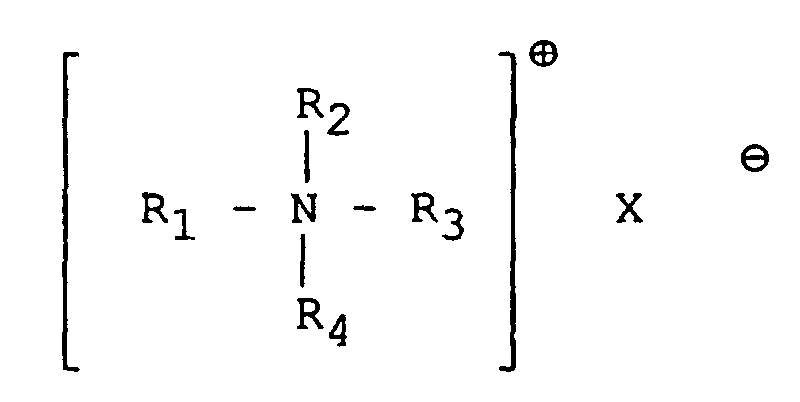
wherein R1 is an aryl or C1-C18 alkyl-substituted aryl group and R2, R3 and R4 may be the same or different and are independently selected from the group consisting of aryl groups, C1-C18 alkyl-substituted aryl groups, C1-C4 hydrocarbons and C1-C4 hydroxy-substituted hydrocarbons, and X is selected from the group consisting of a hydroxyl group, the halogens, and moieties of carbonic, bicarbonic, mono-and di-carboxylic acids,
said process including the step of heating said oligoester reaction mixture to a temperature sufficient to decompose said catalyst, prior to said reaction between said oligoester reaction mixture and said dibasic acid or anhydride.
wherein R1 is an aryl or C1-C18 alkyl-substituted aryl group and R2, R3 and R4 may be the same or different and are independently selected from the group consisting of aryl groups, C1-C18 alkyl-substituted aryl groups, C1-C4 hydrocarbons and C1-C4 hydroxy-substituted hydrocarbons, and X is selected from the group consisting of a hydroxyl group, the halogens, and moieties of carbonic, bicarbonic, mono-and di-carboxylic acids,
said process including the step of heating said oligoester reaction mixture to a temperature sufficient to decompose said catalyst, prior to said reaction between said oligoester reaction mixture and said dibasic acid or anhydride.
2. The process of claim 1, wherein R2, R3 and R4 are the same or different and are independently selected from the group consisting
of aryl groups, C1-C18 alkyl-substituted aryl groups, C1-C4 alkyl groups and C1-C4 hydroxy-substituted groups, and R1 is a benzyl group.
3. The process of anyone of claims 1 or 2, said catalyst having a decomposition temperature
of up to 240°C.
4. The process of anyone of claims 1 to 3, said decomposition temperature being from
150 to 220°C.
5. The process of anyone of claims 1 to 4, said catalyst, when heated to a temperature
greater than 50°C, having a half life of a least 10 hrs.
6. The process of anyone of claims 1 to 5, said catalyst being benzyltriethyl-ammonium
chloride.
7. The process of anyone of claims 1 to 6, said carboxylic diacid being selected from
the group consisting of isophthalic, terephthalic acid and mixtures thereof.
8. The process of anyone of claims 1 to 7, said alkylene oxide being selected from the
group consisting of propylene oxide, ethylene oxide and mixtures thereof.
9. The process of anyone of claims 1 to 8, including the step of carrying out said initial
reaction at a temperature of from 50 to 200°C, a pressure of from 0.0689 to 2.76 MPa
(10 to 400 psi) and for a time of from 20 min. to 20 hrs.
10. The process of anyone of claims 1 to 9, the molar ratio of said alkylene oxide to
said carboxylic diacid in said initial reaction being from 0.1:1 to 10:1.
11. The process of claim 10, said molar ratio being from 0.5:1 to 5:1.
12. The process of anyone of claims 1 to 11, including the step of carrying out said heating
of said oligoester reaction mixture for a period of from 10 min. to 3 hrs.
13. The process of anyone of claims 1 to 12, said temperature sufficient to decompose
said catalyst being from 100 to 240°C.
14. The process of anyone of claims 1 to 13, including the step of carrying out said second
reaction at a temperature of from 150 to 250°C, a pressure of from 0 to 2.07 MPa (0
to 300 psi) and for a time of from 2 to 50 hrs.
15. The process of anyone of claims 1 to 14, including the step of adding a glycol to
said oligoester reaction mixture prior to said reaction between said oligoester mixture
and said dibasic acid or anhydride.
16. The process of claim 15, said glycol being dipropylene glycol.
17. The process of anyone of claims 1 to 16, which leads to a final resin having a Gardner
color scale of less than 4 and more preferably less than 2.
1. Verfahren zur Herstellung eines Polyesters, bei dem zuerst eine Dicarbonsäure in Gegenwart
eines Katalysators mit einem Alkylenoxid zu einem Oligoester-Reaktionsgemisch umgesetzt
wird und das Oligoester-Reaktionsgemisch danach mit einer ungesättigten zweiwertigen
Säure oder einem Anhydrid davon oder mit einem Gemisch von ungesättigten zweiwertigen
Säuren oder Anhydriden davon in einer zweiten Umsetzung bei einer erhöhten zweiten
Reaktionstemperatur zum Polyester umgesetzt wird, dadurch gekennzeichnet, daß man bei der ersten Umsetzung einen Katalysator einsetzt, der sich bei einer Temperatur
bei oder unterhalb der erhöhten zweiten Reaktionstemperatur thermisch zersetzt und
aus der Gruppe bestehend aus Verbindungen der Formel
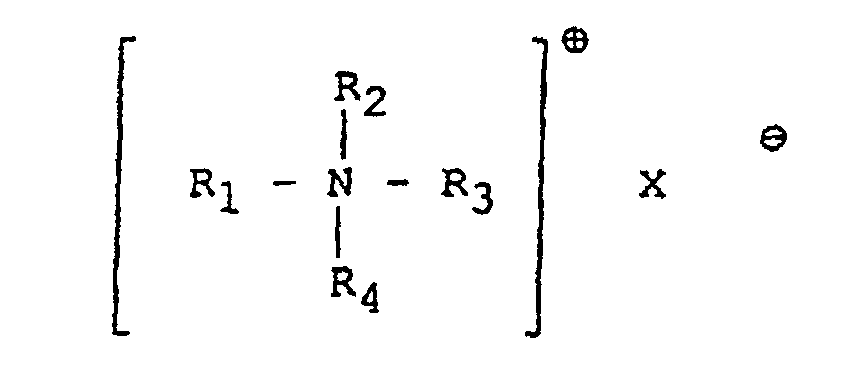
worin R1 für eine Arylgruppe oder durch C1-C18-Alkyl substituierte Arylgruppe steht, R2, R3 und R4 gleich oder verschieden sein können und unabhängig voneinander aus der Gruppe bestehend aus Arylgruppen, durch C1-C18-Alkyl substituierten Arylgruppen, C1-C4-Kohlenwasserstoffen und hydroxysubstituierten C1-C4-Kohlenwasserstoffen stammen und X aus der Gruppe bestehend aus einer Hydroxylgruppe, den Halogenen und Kohlensäure-, Mono- und Dicarbonsäuremolekülresten stammt, ausgewählt wird,
wobei man bei dem Verfahren das Oligoester-Reaktionsgemisch vor der Umsetzung zwischen dem Oligoester-Reaktionsgemisch und der zweiwertigen Säure oder dem Anhydrid davon auf eine zur Zersetzung des Katalysators ausreichende Temperatur erhitzt.
worin R1 für eine Arylgruppe oder durch C1-C18-Alkyl substituierte Arylgruppe steht, R2, R3 und R4 gleich oder verschieden sein können und unabhängig voneinander aus der Gruppe bestehend aus Arylgruppen, durch C1-C18-Alkyl substituierten Arylgruppen, C1-C4-Kohlenwasserstoffen und hydroxysubstituierten C1-C4-Kohlenwasserstoffen stammen und X aus der Gruppe bestehend aus einer Hydroxylgruppe, den Halogenen und Kohlensäure-, Mono- und Dicarbonsäuremolekülresten stammt, ausgewählt wird,
wobei man bei dem Verfahren das Oligoester-Reaktionsgemisch vor der Umsetzung zwischen dem Oligoester-Reaktionsgemisch und der zweiwertigen Säure oder dem Anhydrid davon auf eine zur Zersetzung des Katalysators ausreichende Temperatur erhitzt.
2. Verfahren nach Anspruch 1, bei dem R2, R3 und R4 gleich oder verschieden sind und unabhängig voneinander aus der Gruppe bestehend
aus Arylgruppen, durch C1-C18-Alkyl substituierten Arylgruppen, C1-C4-Alkylgruppen und hydroxysubstituierten C1-C4-Gruppen stammen und R1 für eine Benzylgruppe steht.
3. Verfahren nach Anspruch 1 oder 2, bei dem der Katalysator eine Zersetzungstemperatur
von bis zu 240°C aufweist.
4. Verfahren nach einem der Ansprüche 1 bis 3, bei dem die Zersetzungstemperatur 150
bis 220°C beträgt.
5. Verfahren nach einem der Ansprüche 1 bis 4, bei dem der Katalysator beim Erhitzen
auf eine Temperatur von mehr als 50°C eine Halbwertszeit von mindestens 10 h aufweist.
6. Verfahren nach einem der Ansprüche 1 bis 5, bei dem es sich bei dem Katalysator um
Benzyltriethylammoniumchlorid handelt.
7. Verfahren nach einem der Ansprüche 1 bis 6, bei dem man die Dicarbonsäure aus der
Gruppe bestehend aus Isophthalsäure, Terephthalsäure und Gemischen davon auswählt.
8. Verfahren nach einem der Ansprüche 1 bis 7, bei dem man das Alkylenoxid aus der Gruppe
bestehend aus Propylenoxid, Ethylenoxid und Gemischen davon auswählt.
9. Verfahren nach einem der Ansprüche 1 bis 8, bei dem man die erste Umsetzung bei einer
Temperatur von 50 bis 200°C, einem Druck von 0,0689 bis 2,76 MPa (10 bis 400 psi)
und über einen Zeitraum von 20 min bis 20 h durchführt.
10. Verfahren nach einem der Ansprüche 1 bis 9, bei dem das Alkylenoxid/Dicarbonsäure-Molverhältnis
bei der ersten Umsetzung 0,1:1 bis 10:1 beträgt.
11. Verfahren nach Anspruch 10, bei dem das Molverhältnis 0,5:1 bis 5:1 beträgt.
12. Verfahren nach einem der Ansprüche 1 bis 11, bei dem man das Oligoester-Reaktionsgemisch
über einen Zeitraum von 10 min bis 3 h erhitzt.
13. Verfahren nach einem der Ansprüche 1 bis 12, bei dem die zur Zersetzung des Katalysators
ausreichende Temperatur 100 bis 240°C beträgt.
14. Verfahren nach einem der Ansprüche 1 bis 13, bei dem man die zweite Umsetzung bei
einer Temperatur von 150 bis 250°C, einem Druck von 0 bis 2,07 MPa (0 bis 300 psi)
und über einen Zeitraum von 2 bis 50 h durchführt.
15. Verfahren nach einem der Ansprüche 1 bis 14, bei dem man dem Oligoester-Reaktionsgemisch
vor der Umsetzung zwischen dem Oligoester-Gemisch und der zweiwertigen Säure oder
dem Anhydrid davon ein Glykol zusetzt.
16. Verfahren nach Anspruch 15, bei dem man als Glykol Dipropylenglykol einsetzt.
17. Verfahren nach einem der Ansprüche 1 bis 16, das zu einem Harzprodukt mit einer Gardner-Farbzahl
von weniger als 4 und vorzugsweise weniger als 2 führt.
1. Dans un procédé de préparation d'un polyester comprenant les étapes consistant à faire
initialement réagir un diacide carboxylique avec un oxyde d'alkylène en présence d'un
catalyseur pour former un mélange réactionnel d'oligoesters, et à faire ensuite réagir
le mélange réactionnel d'oligoesters avec un diacide ou un anhydride insaturé ou avec
un mélange de diacides ou d'anhydrides insaturés et saturés, dans une seconde étape
à une seconde température réactionnelle élevée pour former le polyester, l'amélioration
qui comprend l'étape consistant à employer un catalyseur dans ladite réaction initiale
qui se décomposera thermiquement à une température inférieure ou égale à ladite seconde
température réactionnelle élevée, ledit catalyseur étant choisi dans le groupe constitué
par les composés de formule
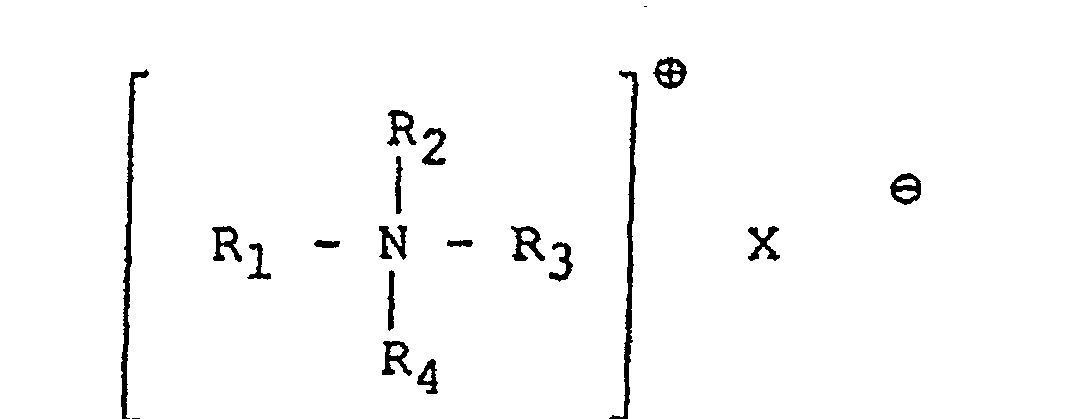
dans laquelle R1 est un groupe aryle ou aryle à substitution alkyle en C1-C18 et R2, R3 et R4 peuvent être identiques ou différents et sont choisis indépendamment dans le groupe constitué par les groupes aryle, les groupes aryle à substitution alkyle en C1-C18, les hydrocarbures en C1-C4 et les hydrocarbures hydroxylés en C1-C4, et X est choisi dans le groupe constitué par un groupe hydroxyle, les halogènes et les groupements d'acides carbonique, bicarbonique, mono- et dicarboxyliques,
ledit procédé comprenant l'étape consistant à chauffer ledit mélange réactionnel d'oligoesters à une température suffisante pour décomposer ledit catalyseur, avant ladite réaction entre ledit mélange réactionnel d'oligoesters et ledit diacide ou anhydride.
dans laquelle R1 est un groupe aryle ou aryle à substitution alkyle en C1-C18 et R2, R3 et R4 peuvent être identiques ou différents et sont choisis indépendamment dans le groupe constitué par les groupes aryle, les groupes aryle à substitution alkyle en C1-C18, les hydrocarbures en C1-C4 et les hydrocarbures hydroxylés en C1-C4, et X est choisi dans le groupe constitué par un groupe hydroxyle, les halogènes et les groupements d'acides carbonique, bicarbonique, mono- et dicarboxyliques,
ledit procédé comprenant l'étape consistant à chauffer ledit mélange réactionnel d'oligoesters à une température suffisante pour décomposer ledit catalyseur, avant ladite réaction entre ledit mélange réactionnel d'oligoesters et ledit diacide ou anhydride.
2. Procédé selon la revendication 1, dans lequel R2, R3 et R4 sont identiques ou différents et sont choisis indépendamment dans le groupe constitué
par les groupes aryle, les groupes aryle à substitution alkyle en C1-C18, les groupes alkyle en C1-C4 et les groupes hydroxylés en C1-C4, et R1 est un groupe benzyle.
3. Procédé selon l'une quelconque des revendications 1 ou 2, ledit catalyseur ayant une
température de décomposition pouvant atteindre 240°C.
4. Procédé selon l'une quelconque des revendications 1 à 3, ladite température de décomposition
étant de 150 à 220°C.
5. Procédé selon l'une quelconque des revendications 1 à 4, ledit catalyseur, lorsqu'il
est chauffé à une température supérieure à 50°C, ayant une demi-vie d'au moins 10
h.
6. Procédé selon l'une quelconque des revendications 1 à 5, ledit catalyseur étant le
chlorure de benzyltriéthylammonium.
7. Procédé selon l'une quelconque des revendications 1 à 6, ledit diacide carboxylique
étant choisi dans le groupe constitué par l'acide isophtalique, l'acide téréphtalique,
et des mélanges de ceux-ci.
8. Procédé selon l'une quelconque des revendications 1 à 7, ledit oxyde d'alkylène étant
choisi dans le groupe constitué par l'oxyde de propylène, l'oxyde d'éthylène, et des
mélanges de ceux-ci.
9. Procédé selon l'une quelconque des revendications 1 à 8, comprenant l'étape consistant
à mettre en oeuvre ladite réaction initiale à une température de 50 à 200°C, sous
une pression de 0,0689 à 2,76 MPa (10 à 400 psi) et pendant une durée de 20 min à
20 h.
10. Procédé selon l'une quelconque des revendications 1 à 9, le rapport molaire dudit
oxyde d'alkylène audit diacide carboxylique dans ladite réaction initiale étant de
0,1/1 à 10/1.
11. Procédé selon la revendication 10, ledit rapport molaire étant de 0,5/1 à 5/1.
12. Procédé selon l'une quelconque des revendications 1 à 11, comprenant l'étape consistant
à mettre en oeuvre ledit chauffage dudit mélange réactionnel d'oligoesters pendant
une durée de 10 min à 3 h.
13. Procédé selon l'une quelconque des revendications 1 à 12, ladite température suffisante
pour décomposer ledit catalyseur étant de 100 à 240°C.
14. Procédé selon l'une quelconque des revendications 1 à 13, comprenant l'étape consistant
à mettre en oeuvre ladite seconde réaction à une température de 150 à 250°C, sous
une pression de 0 à 2,07 MPa (0 à 300 psi) et pendant une durée de 2 à 50 h.
15. Procédé selon l'une quelconque des revendications 1 à 14, comprenant l'étape consistant
à ajouter un glycol audit mélange réactionnel d'oligoesters avant ladite réaction
entre ledit mélange d'oligoesters et ledit diacide ou anhydride.
16. Procédé selon la revendication 15, ledit glycol étant le dipropylèneglycol.
17. Procédé selon l'une quelconque des revendications 1 à 16, qui conduit à une résine
finale ayant une échelle de coloration Gardner inférieure à 4 et mieux encore inférieure
à 2.