(57) A reactor for removing impurities by electrochemcial means from liquids, such as
aqueous solutions, and in which the liquid is passed through series of plateshaped
reaction electrodes electrically insulated against each other with a liquid speed
above a minimum to prevent dissociation into constituent gases, but sufficient to
ensure interaction with an electrical current passing between the plateshaped electrodes.
The latter has corrugated forms and/or their surfaces provided with embossed relief
patterns to enhance the electrochemical effect between the electrodes. The reactor
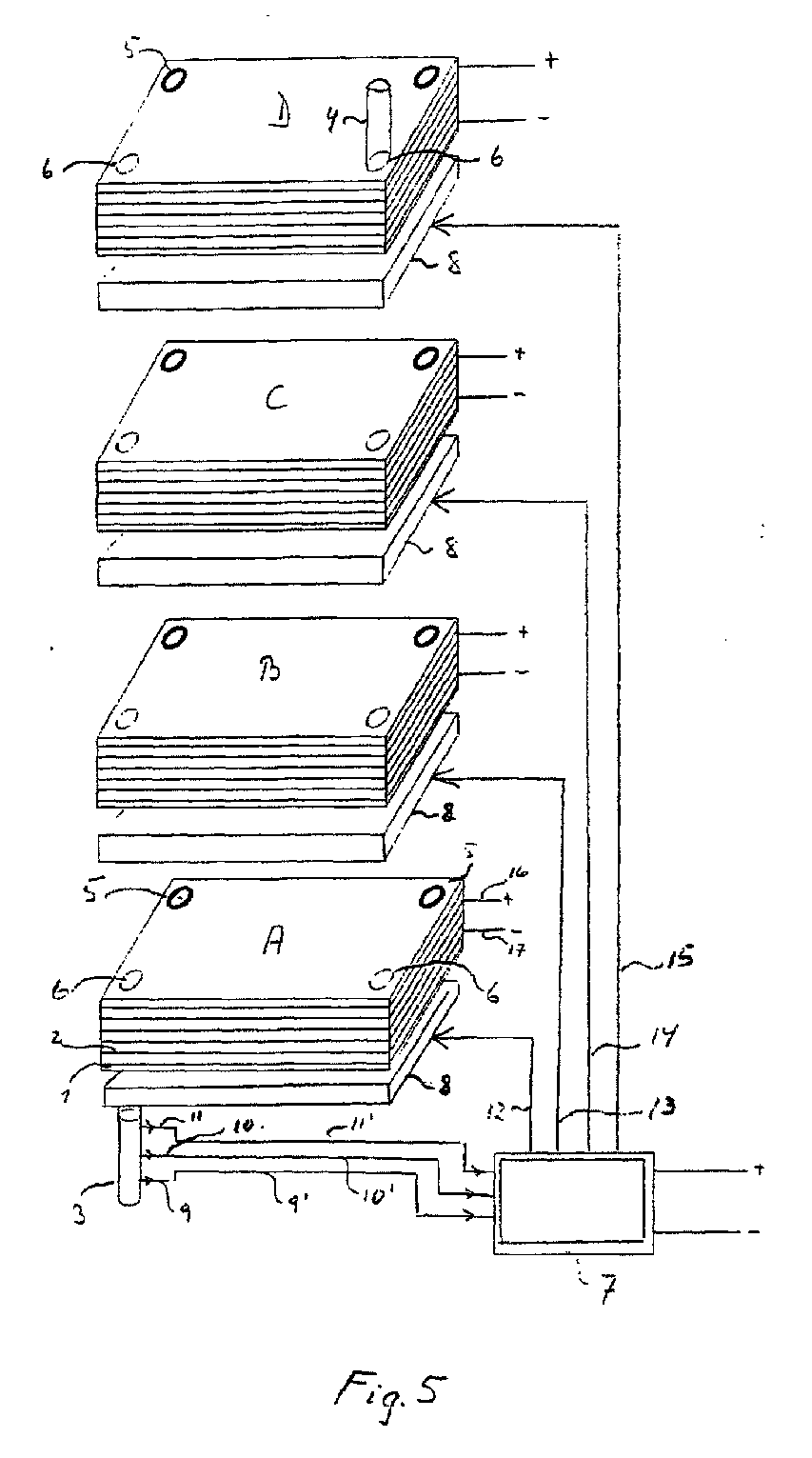
comprises one more interconnected units (A, B, C, D) with a series of plateshaped
electrodes (1, 2) valve means (8) and holes (5, 6) in the plates for redirecting the
liquid flow into and through the series of reaction electrodes (1, 2). An control
system consists of a number of sensors (9, 10, 11) at the liquid inlet (3) of the
reactor for measuring the conductivity of the treated liquid, the organic contents
of the liquid and the flow of the liquid means (9', 10', 11') for transferring the
measurements to a processor (7) for further treatment, and means (13, 14, 15) for
transferring the output commands from the processor (7) to the valve means (8) for
redirecting the liquid flow and for activating or deactivating the electrode unit
or units (A, B, C, D) in dependence on the measured parameters.
|
|
