|
(11) | EP 1 051 799 B1 |

| (12) | EUROPEAN PATENT SPECIFICATION |
|
|
| (54) |
A CONVERTER DEVICE WANDLERVORRICHTUNG CONVERTISSEUR |
|
|
|||||||||||||||||||||||||||||||
| Note: Within nine months from the publication of the mention of the grant of the European patent, any person may give notice to the European Patent Office of opposition to the European patent granted. Notice of opposition shall be filed in a written reasoned statement. It shall not be deemed to have been filed until the opposition fee has been paid. (Art. 99(1) European Patent Convention). |
FIELD OF THE INVENTION AND PRIOR ART
[0001] The present invention relates to a device for converting alternating voltage into direct voltage and conversely, which comprises a series connection of at least four units each consisting of a semiconductor element of turn-off type and a first diode connected in anti-parallel therewith, said series connection being arranged between two poles, a positive one and a negative one, of a direct voltage side of the device, an alternating voltage phase line connected to a first mid point, which is called phase output, of the series connection between two units while dividing the series connection into two parts, means adapted to provide a mid point between the two poles on said direct voltage side and put these poles on the same voltage but with opposite signs with respect to the mid point of the direct voltage side, a second mid point of each said part of the series connection being through a second diode with the conducting direction with respect to the phase output opposite to the conducting direction of the first diode in the unit arranged between this second mid point and the phase output connected to the mid point of the direct voltage side and an apparatus for controlling the semiconductor elements of the units to generate a train of pulses with determined amplitudes according to a pulse width modulation pattern on the phase output of the device by alternatingly connecting the alternating voltage phase line to at least the mid point, the plus pole and the minus pole of the direct voltage side.
[0002] Such devices may be used in all kinds of situations, in which direct voltage is to be converted into alternating voltage or conversely, in which examples of such uses are in stations of HVDC-plants (high voltage direct current), in which direct voltage normally is converted into a three-phase alternating voltage or conversely or in so called back-to-back-stations in which alternating voltage is firstly converted into direct voltage and this is then converted into alternating voltage, as well as in SVCs (Static Var Compensator), in which the direct voltage side consists of one or more capacitors hanging freely.
[0003] Such converter devices already known have a number of drawbacks, when these are used for transmitting high powers, and the present invention aims at a converter device being well suited to transmit high powers, although the invention is not restricted to this field of use, since a converter device of this type may very well find other field of uses. However, the case of transmitting high powers will for this reason hereinafter be discussed for eliminating but not in any way restricting the invention.
[0004] The device defined in the introduction is a so called multi-level converter, since it may deliver at least three different phase potentials on said phase output. Different types of such multi-level converters of this voltage stiff so called VSC-type (Voltage Source Converter) for high power applications have been described in the IEEE-article IEEE Trans on Ind. Appln. Vol 32, no 3, 1996, pages 509-517. Three different types of multi-level converters are described therein, namely multi-level converters with clamping diodes, multi-level converters based upon flying capacitors and multi-level converters based upon cascaded converters. Only the two first ones are suitable for transmitting active power, such as for example in HVDC- and back-to-back-applications. The greatest problem of multi-level converters having clamping diodes is that the diode cost will be very high when the number of levels increases, so that for example in the case of five levels the number of clamping diodes increases so that there is a need of more clamping diodes then said semiconductor elements of turn-off type. The converter devices with flying capacitors require for sure no clamping diodes, but they require instead a large number of capacitors, and the capacitor size increases with a comparatively large factor when the number of levels is increased, in which this factor is for example five to six when it is changed from three to five levels. Accordingly, this solution is also very costly.
SUMMARY OF THE INVENTION
[0005] The object of the present invention is to provide a converter device of the type defined in the introduction, which is well suited for high voltage and high power applications and in which the drawbacks mentioned above of such devices already known are reduced to a large extend, primarily at an increased number of levels of the converter.
[0006] This object is according the invention obtained by connecting a semiconductor element of turn-off type in anti-parallel with each of said second diodes in a device of the type mentioned in the introduction, and that the apparatus is adapted to control the semiconductor elements of the units between the two second mid points to be turned on and turned off with a pulse width modulation frequency of at least one order of magnitude higher than the fundamental frequency of the alternating voltage of said alternating voltage phase line and to control the semiconductor elements connected in anti-parallel with said second diodes and in the units between the respective second mid point and the respective pole to be turned on and turned off with a frequency being substantially lower than said pulse width modulation frequency and within or close to the frequency range one or a couple of times said fundamental frequency.
[0007] By arranging a semiconductor element of turn-off type in this way in anti-parallel with said second diodes it is possible to also control the connection of the mid point of the direct voltage side to the second mid point, and it gets possible to obtain a desired pulse width modulation pattern at the connection of the phase line to the phase output by turning these semiconductor elements on and off as well as those arranged between said second mid point and the respective pole with a comparatively low frequency in the order of the fundamental frequency of the alternating voltage of the alternating voltage phase line, whereas the semiconductor elements of the "inner" units are turned on and off with a significantly higher frequency, more exactly the so called real pulse width modulation frequency. The frequency through which the semiconductor elements first mentioned are switched may for example be 50 or 60 Hz, while the pulse width modulation frequency is typically 1-2 kHz. This means that totally different, more exactly lower, demands are made upon the semiconductor elements first mentioned, which have not to be turned on and turned off with any high frequency, which means that for this semiconductor elements having a considerable better ability to hold high voltages may be used, since such high voltage semiconductor elements cannot take high frequencies without unacceptably high switching losses. Voltages in the order of 10-400 kV are normally handled in devices of this type, and this requires then a series connection of a higher number of semiconductor elements within each said unit for a series connection of a higher number of said units so as to distribute the voltage these have to hold in the blocking state among a high number of such semiconductor elements. Thus, in the present case it will be possible to use a lower number of semiconductor elements connected in series between said second mid point and the respective pole, since these may be of high voltage type, for example hold 4-6 kV instead of 2-3 kV, which means a considerable saving of costs and simplifies the control of the device. Semiconductor elements with a smaller component area may alternatively be used, which have a higher thermal resistance, but which are available to a low cost, may be used for these semiconductor elements switched comparatively seldom. The same condition is valid for the semiconductor elements connected in anti-parallel with the second diodes and switched with a low switching frequency.
[0008] According to a preferred embodiment of the invention the apparatus is adapted to control the semiconductor elements connected in anti-parallel with said second diodes and in the units between the respective second mid point and the respective pole with a frequency coinciding with said fundamental frequency in absence of voltage harmonics in the alternating voltage phase line. A large difference in frequency between the control of these semiconductor elements and the other semiconductor elements is obtained by this and the advantages mentioned above of the invention with respect to the devices already known will by this be very remarkable. The apparatus is advantageously adapted, when said voltage harmonics occur to optionally carry out one or several additional switchings of the semiconductor elements connected in anti-parallel with said second diodes and those in the units between the respective second mid point and the respective pole within a fundamental frequency period, in which a switching is defined as comprising a turn-off and turn-on. It may in this way be compensated for such instabilities, in which the frequency in question may during a very short period of time become for example three times said fundamental frequency, but it is still considerably lower than the pulse width modulation frequency.
[0009] According to another preferred embodiment of the invention the apparatus is adapted to control the semiconductor elements of the units and the semiconductor elements connected in anti-parallel with said second diodes to alternatingly connect the alternating voltage phase line to an odd number of different levels, in which one of them is the mid point of the direct voltage side and just as many are positive as negative, in which said number is n, which is at least five, that at least (n-1)/2 of said units are connected in series between the second and the first mid point, that it comprises (n-3)/2 so called flying capacitors and that each said flying capacitor is connected with one pole thereof to a mid point of said series connection, which is located between the phase output and the second mid point on the opposite side of the phase output with respect to the connection mid point belonging to the opposite pole thereof and has at least one unit between itself and the second mid point and another unit between itself and another capacitor connection or the phase output. Such a multi-level converter device with a higher number of levels than another converter device, which has for example three levels, results in a better adaptation of the pulse width modulation pattern to the sinus wave desired to be obtained downstream of an inductor or transformer arranged in said alternating voltage phase line, so that the harmonics generated during the conversion are reduced or the size of these inductors and/or filters for extinguishing such harmonics may be reduced, lower voltage differentials may be obtained for said inductors or transformers, so that stresses thereon may be reduced and these may be made less costly, and lower switching losses may be obtained. Such converter devices with a higher number of levels and the advantages associated therewith may according to this advantageous embodiment of the invention be obtained in a simple way and to a low cost. The advantages of the lower frequency of the semiconductor elements arranged between the respective second mid point and the respective pole as well as the semiconductor elements connected in anti-parallel with said second diodes have been discussed above. In addition thereto, this way to arrange a flying capacitor is very advantageous with respect to the arrangement of flying capacitors of the second type mentioned above of converter devices based upon flying capacitors, since a flying capacitor (s) are connected in such a way that they across the poles thereof will have a considerably lower voltage than in the case of the flying capacitors of the devices already known, more exactly the voltage across the flying capacitor with the highest voltage thereacross is in the invention preferably not more than half the voltage across the entire series connection, which is of a great importance, since the power to be handled by a capacitor is proportional to the square of the voltage, so that the present invention enables a use of flying capacitors while avoiding the large number of clamping diodes which would be necessary in the case of a converter device of the type first mentioned, and the drawbacks of the second type of converter devices based upon flying capacitors has with respect to requirements of very large capacitors for a large number of levels of the converter device are nevertheless avoided. A large advantage of a converter device according to this embodiment of the invention is accordingly that it is possible to get a five-level-converter to a comparatively low additional cost with respect to a three-level-converter, and it will be easy to modify a three-level-converter.
[0010] According to a preferred embodiment of the invention n is 5 and said units are adapted to give the flying capacitor a voltage across the poles thereof substantially equal to U/4, in which U is the voltage between the two poles of the direct voltage side. The voltage of the flying capacitor may in this way be kept low and the size and the cost thereof may be kept at a low level.
[0011] According to another preferred embodiment of the invention the apparatus is adapted to control said units, when one pole of said flying capacitors is connected to said phase output so that the phase current passes said capacitor, to make this connection in one of two ways, which gives substantially the same phase potential on the phase outlet depending upon the instantaneous real level of the voltage between the poles of the capacitor, so that the capacitor is upon said connection charged for a voltage level thereof lower than desired and discharged for a voltage level thereof higher than desired. This process is possible thanks to the fact that there are two possible states giving almost the same potential on the phase output, in which one state may be used for charging the capacitor and the other for discharging the capacitor for a given direction of the phase current. This process means that the capacitance value of the capacitor may be kept at a minimum, with a time constant for the charging and the discharging, respectively, which is a suitable factor higher than the period of time during which the capacitor is normally switched in each of the positions for a given switching frequency.
[0012] Further advantages as well as advantageous features of the invention appear from the following description and the other dependent claims.
BRIEF DESCRIPTION OF THE DRAWINGS
[0013] With reference to the appended drawings, below follows a description of preferred embodiments of the invention cited as examples.
[0014] In the drawings:
- Fig 1
- is a circuit diagram illustrating a voltage stiff forced commutated three-level-converter already known connected to an alternating voltage network through inductors, in which only one phase leg is shown,
- Fig 2
- illustrates a converter device of three-level-type according to a first preferred embodiment of the invention, in which this is connected to a three-phase alternating voltage network through inductors,
- Fig 3
- illustrates the construction of the device according to Fig 2 for one phase of the alternating voltage network,
- Fig 4
- is a view corresponding to Fig 3 illustrating a five-level-converter device according to a second preferred embodiment of the invention, and
- Fig 5
- is a view corresponding to Fig 3 and 4, although some-what simplified, of a seven-level-converter device according to a third preferred embodiment of the invention.
DETAILED DESCRIPTION OF PREFERRED EMBODIMENTS OF THE INVENTION
[0015] The converter device shown in Fig 1 is a so called NPC (Neutral Point Clamped)-converter device with clamping diodes of a type well known, and this figure is shown here only for comparing the design of this converter device with a three-level-converter device according to a first preferred embodiment of the invention, which is shown in Fig 2 and 3 and now will be described with reference to these two figures. Only a part of the converter device connected to a phase of an alternating voltage phase line is shown in Fig 3, but it is also possible that this constitutes the entire converter device, when this is connected to a one-phase alternating voltage network. The converter device is a so called VSC-converter, which has four units 1-4, usually called transistor valves or alternatively thyristor valves, connected in series between the two poles 5, 6 of a direct voltage side of the device. Two capacitors 7, 8 connected in series are arranged between said two poles, and a point 9 (the mid point of the direct voltage side) therebetween is connected to ground through an impedance Z, in which this impedance may vary from 0 (= direct grounding of the mid point of the direct voltage side) to a value X (= impedance grounding of the mid point of the direct voltage side, through for example a resistance R or an inductance L) up to a value Xmax (= ungrounded mid point, in which the grounding is only determined by the stray capacitance between the mid point of the direct voltage side and ground), so that the potentials +U/2 and -U/2, respectively, are in this way provided at the respective pole, in which U is the voltage between the two poles 5, 6.
[0016] The units 1-4 are each made of a semiconductor element 10-13 of turn-off type, such as an IGBT or a GTO, and a first diode 14, a so called free-wheeling diode, connected in anti-parallel therewith. Although only one IGBT or GTO per unit has been shown this may stand for a plurality of IGBTs or GTOs connected in series and controlled simultaneously, which also normally is the case, since a comparatively high number of such semiconductor elements are required for holding the voltage to be held by each unit in the blocking state.
[0017] A first mid point 15 of the series connection between the two units 2 and 3, which constitutes the phase output of the converter, is connected to an alternating voltage phase line 16 through an inductor 17. Said series connection is in this way divided into two equal parts with two units 1, 2 and 3, 4, respectively, of each such part.
[0018] A second mid point 18, 19 of each said part of the series connection is through a second diode 20, 21 with a conduction direction with respect to the phase output opposite to the conducting direction of the first diode in the unit arranged between this second mid point and the phase output connected to the mid point 9 of the direct voltage side. A semiconductor element 22, 23 of turn-off type, such as an IGBT, is connected in anti-parallel with each second diode. It is also here valid that a great number of semiconductor elements may in practice be connected in series so as to distribute the voltage they have to hold in the blocking state among each of them, although one single semiconductor element has been shown in anti-parallel with each diode.
[0019] Furthermore, the device has an apparatus 24 adapted to control the different semiconductor elements and by that ensure that the phase output 15 is connected to and receive the same potential as the pole 5, the pole 6 or the mid point 9 of the direct voltage side. This apparatus 24 and the arrangement thereof is here very simplified illustrated, and a separate such apparatus could in practice be arranged on high potential at each individual unit and these receive control signals from a control apparatus arranged on ground level. The function of the apparatus will be explained further below.
[0020] The converter device shown in Fig 3 differs with respect to the construction thereof from the NPC-converter device already known shown in Fig 1 by the replacement of the two clamping diodes 20', 21' by a unit consisting of a semiconductor element of turn-off type and a second diode connected in anti-parallel therewith.
[0021] By the new characteristic of the invention, i.e. to replace a clamping diode by a unit comprising a diode and a semiconductor element of turn-off type connected in anti-parallel therewith, completely new possibilities to obtain the different voltage levels desired to be obtained on the phase output 15 are obtained. More exactly it is possible to control the semiconductor elements 11, 12 of the units between the two second mid points 18, 19 through the apparatus 24 as before to be turned on and turned off with a pulse width modulation frequency, which preferably is in the order of 1-2 kHz and at least an order of magnitude, usually 20-40 times higher than the fundamental frequency of the alternating voltage of substantially sinusoidal design to be obtained on the alternating voltage phase line 16 on the opposite side of the inductor 17 with respect to the phase output 15. However, through said replacement of the clamping diodes the semiconductor elements 10, 13 of the units located between the respective pole and the respective second mid point have not to be turned on and turned off with a higher frequency than a frequency in the order of said fundamental frequency any longer, in which the frequency in question preferably is identical to said fundamental frequency, but this may also be a multiple thereof, such as for example three times the fundamental frequency, especially when voltage harmonics occur on the alternating voltage phase line 16, in which the phase voltage may pass zero at more occasions than two times per period. The semiconductor elements 22 and 23 are also controlled with the same frequency as the semiconductor elements 10 and 13. The advantages of not being forced to control the semiconductor elements 10 and 13 with the same high frequency as the semiconductor elements 11 and 12 appear clearly from the disclosure above. +U/2 is obtained on the phase output 15 by turning the semiconductor elements 10 and 11 on, -U/2 is obtained by turning the semiconductor elements 12 and 13 on, while the mid point potential may be obtained either through turning the semiconductor elements 23 and 12 or the semiconductor elements 22 and 11 on.
[0022] It is illustrated in Fig 2 how a converter device according to Fig 3 is designed for converting direct voltage into alternating voltage and conversely between a direct voltage side and an alternating voltage network with three phases 25, 26, 27. A control for each phase is taking place in accordance with the description made with reference to Fig 3.
[0023] A converter device with respect to one phase according to a second preferred embodiment of the invention is illustrated in Fig 4 in a view corresponding to Fig 3, and this differs from the embodiment according to Fig 3 by the series connection of eight units 28-35 between the two poles 5 and 6, in which four are arranged on each side of the phase output 15. Furthermore, two units are arranged between the respective second mid point 18, 19 and the respective pole. Moreover, two units 36-39 are arranged instead of one such unit between each mid point 18 and 19, respectively, and the mid point 9 of the direct voltage side. Finally, a so called flying capacitor 40 is connected with one pole thereof to a mid point 41, 42 of the series connection of units, which is located between said phase output 15 and the second 18, 19 mid point on the opposite side of the phase output with respect to the connection mid point belonging to the opposite pole thereof and has a unit between itself and the second mid point and a unit between itself and the phase output.
[0024] It is possible to obtain five different levels of pulses delivered to the first mid point 15 in this device, namely +U/2, +U/4, 0-, -U/4 and -U/2. It is in this device intended to control the units located between the second mid points 18 and 19 as described above with a pulse width modulation frequency and the units 28, 29, 34, 35 located between the respective second mid point and the pole as well as the units 36, 37 and 38, 39 are controlled with a considerably lower frequency in the order of the fundamental frequency of the alternating voltage phase line 16.
[0025] The following switch state table indicates the voltage levels obtainable at the first mid point 15 and which switch states preferably should be used so as to obtain these voltage levels.
| 28 and 29 | 30 | 31 | 34 and 35 | 33 | 32 | 36 and 37 | 38 and 39 | |
| V=U/2 | 1 | 1 | 1 | 0 | 0 | 0 | 0 | 1 |
| V=U/4 | 1 | 1 | 0 | 0 | 0 | 1 | 0 | 1 |
| V=U/4 | 1 | 0 | 1 | 0 | 1 | 0 | 0 | 1 |
| V=0 | 1 | 0 | 0 | 0 | 1 | 1 | 0 | 1 |
| V=0 | 0 | 1 | 1 | 1 | 0 | 0 | 1 | 0 |
| V=-U/4 | 0 | 1 | 0 | 1 | 0 | 1 | 1 | 0 |
| V=-U/4 | 0 | 0 | 1 | 1 | 1 | 0 | 1 | 0 |
| V=-U/2 | 0 | 0 | 0 | 1 | 1 | 1 | 1 | 0 |
| 1 and 0 stand in a conventional way for turned on and turned off, respectively. |
[0026] The following "rules" have been used in this table.
- The following couples have the same state:
- 28, 29 and 38, 39, 34, 35 and 36, 37.
- The following couples are complementary:
- 28, 29 and 36, 37, 34, 35 and 38, 39 28, 29 and 34, 35 30 and 33 31 and 32 36, 37 and 38, 39.
[0027] It appear from the table above that the intermediate voltage levels +U/4 and -U/4, respectively, which voltages may be obtained by switching in the flying capacitor 40, which is charged to the voltage U/4, in either direction. This may be obtained in two different ways, which charges or discharges the flying capacitor 40. Which one of these two ways is the one to be used is determined by the voltage of the flying capacitor 40, so that an apparatus corresponding to the apparatus 24 in Fig 3 controls the different semiconductor elements to choose the way resulting in a charging of the capacitor when the voltage across the poles thereof is too low and a discharging thereof when the voltage thereacross is too high with the aim to keep the voltage across the poles of the capacitor at U/4. The voltage across the capacitor is by that kept almost constant, which means a low energy content and the capacitor may by that be made small, i.e. with a low capacitance.
[0028] We assume for the sake of exemplifying that the frequency of the alternating voltage on the phase line 16 is for example 50 or 60 Hz and the converter only has to deliver active or reactive power at this fundamental frequency. The following is then valid: we assume that the converter operates with a pulse width modulation frequency (PWM-frequency) of 1-2 kHz. The inner units 30-33 will then have a mean switching frequency of half the PWM-frequency, i.e. 0,5-1 kHz. The other units 28, 29, 34, 35, 36, 37 and 38, 39 will only switch with the fundamental frequency (50 or 60 Hz), and they will do so either at 0-current (28, 29 and 34, 35) or at 0-voltage (36, 37 and 38, 39). This means that the switching losses will be kept at a low level. This is valid especially for the semiconductor elements 28, 29, 34, 35, 36, 37, 38, 39. But also the semiconductor elements 30-33 will have a lower mean switching frequency than the corresponding 3-level-converter, so that high voltage semiconductor elements may be chosen, or alternatively semiconductor elements with a smaller area and a higher thermal resistance.
[0029] A seven-level-converter device constructed in the same way as the converter device according to Fig 4 is illustrated in Fig 5, and the function thereof appear from the description of the device according to Fig 4. Thus, two flying capacitors 43 are arranged for obtaining different voltage levels, in which the voltage across the outer capacitor 40 will be U/3 and across the inner capacitor 43 U/6. It is possible to continue in this way and by adding further flying capacitors obtain converter devices with more levels, i.e. 9, 11, ...
[0030] The valves are advantageously so designed that they give the flying capacitors a voltage Ux across the two poles thereof of
in which
and U is the voltage across the two poles of the direct voltage side. This means for example in the case of 9 levels U1 = U/8, U2 = 2U/8 and U3 = 3U/8.
[0031] The invention is of course not in any way restricted to the preferred embodiments described above, but many possibilities to modifications thereof would be apparent to a man with ordinary skill in the art without departing from the scope of the appended claims.
[0032] The distribution of the units arranged on both sides of the different mid points of said series connection and between said second mid points and the respective pole may for example be different should that be desired, so that the voltage levels obtained on the first mid point 15 have another mutual relation than shown above.
1. A device for converting alternating voltage into direct voltage and conversely, which
comprises a series connection of at least four units (1-4, 28-35) each consisting
of a semiconductor element of turn-off type (10-13) and a first diode (14) connected
in anti-parallel therewith, said series connection being arranged between two poles
(5, 6), a positive one and a negative one, of a direct voltage side of the device,
an alternating voltage phase line (16) connected to a first mid point (15), which
is called phase output, of the series connection between two units while dividing
the series connection into two parts, means (9) adapted to provide a mid point between
the two poles on said direct voltage side and put these poles on the same voltage
but with opposite signs with respect to the mid point of the direct voltage side,
a second mid point (18, 19) of each said part of the series connection being through
a second diode (20, 21) with the conducting direction with respect to the phase output
opposite to the conducting direction of the first diode (14) in the unit arranged
between this second mid point and the phase output connected to the mid point of the
direct voltage side and an apparatus (24) for controlling the semiconductor elements
of the units to generate a train of pulses with determined amplitudes according to
a pulse width modulation pattern on the phase output (15) of the device by alternatingly
connecting the alternating voltage phase line to at least the mid point, the plus
pole and the minus pole of the direct voltage side, characterized in that a semiconductor element (22, 23) of turn-off type is connected in anti-parallel with
each of said second diodes, and that the apparatus is adapted to control the semiconductor
elements of the units (2, 3, 30-33) between the two second mid points (18, 19) to
be turned on and turned off with a pulse width modulation frequency of at least one
order of magnitude higher than the fundamental frequency of the alternating voltage
of said alternating voltage phase line and to control the semiconductor elements (22,
23) connected in anti-parallel with said second diodes (20, 21) and in the units (1,
4, 28, 29, 34, 35) between the respective second mid point and the respective pole
to be turned on and turned off with a frequency being substantially lower than said
pulse width modulation frequency and within or close to the frequency range one or
a couple of times said fundamental frequency.
2. A device according to claim 1, characterized in that said apparatus (24) is adapted to control the semiconductor elements (22, 23) connected
in anti-parallel with said second diodes (20, 21) and in the units (1, 4, 28, 29,
34, 35) between the respective second mid point and the respective pole with a frequency
being a multiple of said fundamental frequency.
3. A device according to claim 1 or 2, characterized in that said apparatus (24) is adapted to control the semiconductor elements connected in
anti-parallel with said second diodes and in the units between the respective second
mid point and the respective pole with a frequency coinciding with said fundamental
frequency in absence of voltage harmonics in the alternating voltage phase line.
4. A device according to claim 3, characterized in that said apparatus (24) is adapted to optionally carry out one or several additional
switchings of the semiconductor elements connected in anti-parallel with said second
diodes and those in the units between the respective second mid point and the respective
pole within a fundamental frequency period.
5. A device according to any of claims 1-4, characterized in that it has four valves (1-4) with one or more said units connected in series adapted
to be controlled simultaneously through the apparatus (24), each of said valves being
designed to take substantially the same portion of a voltage applied to one or more
such valves connected in series as other such valves when the semiconductor elements
included therein are turned off, that two valves (1, 2 and 3, 4), respectively are
arranged between the phase output (15) and the respective pole (5, 6), that a valve
(1,4) is arranged between the respective mid point (18, 19) and the respective pole,
that a valve is arranged between the mid point (9) of the direct voltage side and
said second mid point (18, 19), and that the apparatus (24) is adapted to carry out
an alternating connection of three different potential levels to the phase output
(15).
6. A device according to any of claims 1-4, characterized in that the apparatus (24) is adapted to control the semiconductor elements (10-13) of the
units and the semiconductor elements (22, 23) connected in anti-parallel with said
second diodes to alternatingly connect the alternating voltage phase line to an odd
number of different levels, in which one of them is the mid point of the direct voltage
side and just as many are positive as negative, in which said number is n, which is
at least five, that at least (n-1 )/2 of said units are connected in series between
the second (18, 19) and the first mid point (15), that it comprises (n-3)/2 so called
flying capacitors (40, 43), and that each said flying capacitor is connected with
one pole thereof to a mid point (41, 42) of said series connection, which is located
between the phase output and the second mid point on the opposite side of the phase
output with respect to the connection mid point (41, 42) belonging to the opposite
pole thereof and has at least one unit between itself and the second mid point and
another unit between itself and another capacitor connection or the phase output.
7. A device according to claim 6, characterized in that n is 5, and that it has one said flying capacitor (40).
8. A device according to claim 7, characterized in that said units are adapted to give the flying capacitor (40) a voltage across the poles
thereof substantially equal to U/4, in which U is the voltage between the two poles
of the direct voltage side.
9. A device according to claim 7 or 8, characterized in that said series connection has eight valves (28-35), in which each valve is adapted to
take substantially the same portion of a voltage applied to one or more such valves
connected in series as other such valves when the semiconductor elements included
therein are turned off, that four valves (28-35) are arranged between the phase output
and the respective direct voltage pole, that two valves (28, 29, 34, 35) are arranged
between the respective second mid point and the respective direct voltage pole, that
a valve (31, 32) is arranged between the respective connection (41, 42) of the flying
capacitor (40) to the series connection and the phase output (15), and that two valves
(36-39) are connected in series between the mid point of the direct voltage side and
said second mid point.
10. A device according to claim 6, characterized in that n is 7.
11. A device according to claim 9, characterized in that it has two flying capacitors (40, 43), and that the inner capacitor (43) connected
by the poles thereof to said series connection closest to the phase output (15) is
adapted to have a voltage of U/6 across the poles thereof and the second, outer capacitor
(40) is adapted to have a voltage of U/3 across the poles thereof, in which U is the
voltage between the two poles of the direct voltage side.
12. A device according to claim 6, characterized in that the valves are adapted to give the flying capacitors (40, 43) a voltage Ux across the two poles thereof of
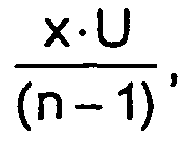
in which
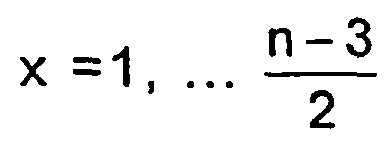
and U is the voltage across the two poles of the direct voltage side.
in which
and U is the voltage across the two poles of the direct voltage side.
13. A device according to any of claims 6-12, characterized in that the apparatus (24) is adapted to control said unit, when one pole of said flying
capacitors (40, 43) is connected to said phase output so that the phase current passes
said capacitor, to make this connection in one of two ways, which gives substantially
the same phase potential on the phase outlet depending upon the instantaneous real
level of the voltage between the poles of the capacitor, so that the capacitor is
upon said connection charged for a voltage level thereof lower than desired and discharged
for a voltage level thereof higher than desired.
14. A device according to any of claims 1-13, characterized in that said semiconductor elements are IGBTs (Insulated Gate Bipolar Transistor).
15. A device according to any of claims 1-13, characterized in that said semiconductor elements are GTOs (Gate Turn-Off thyristor).
16. A device according to any of claims 1-15, characterized in that said direct voltage side is formed by a direct voltage network for transmitting high
voltage direct current (HVDC) and the alternating voltage phase line belongs to an
alternating voltage network.
17. A device according to any of claims 1-15, characterized in that it is a part of a SVC (Static Var Compensator) with the direct voltage side formed
by capacitors hanging freely and the alternating voltage phase line belonging to an
alternating voltage network.
18. A device according to any of claims 1-17, characterized in that it has at least two alternating voltage phase lines (16, 25-27) included in a multiple-phase
alternating voltage network, and that it comprises one said series connection and
second diodes associated therewith and semiconductor elements of turn-off type connected
in anti-parallel therewith for each phase line connected in parallel with each other
between said poles of the direct voltage side.
19. A device according to claim 18, characterized in that the number of phases of the alternating voltage network is three.
1. Vorrichtung zum Umwandeln von Wechselspannung in Gleichspannung und umgekehrt, welche
eine serielle Verbindung von mindestens vier Einheiten (1-4, 28-35), von denen jede
aus einem Halbleiter-Element einer Abschaltart (10-13) und einer ersten, antiparallel
dazu verbundenen Diode (14) besteht, wobei die serielle Verbindung zwischen zwei Polen
(5, 6), einem positiven und einem negativen, einer Gleichspannungsseite der Vorrichtung
angeordnet ist, eine Wechselspannungs-Phasenleitung (16), die mit einem ersten Mittelpunkt
(15), welcher Phasenausgang genannt wird, der seriellen Verbindung zwischen zwei Einheiten
verbunden ist, während die serielle Verbindung in zwei Teile geteilt wird, Mittel
(9), welche angepasst sind, einen Mittelpunkt zwischen den zwei Polen auf der Gleichspannungsseite
bereitzustellen und diese Pole auf die gleiche Spannung aber mit unterschiedlichen
Vorzeichen in Bezug auf den Mittelpunkt der Gleichspannungsseite zu legen, einen zweiten
Mittelpunkt (18, 19) von jedem Teil der seriellen Verbindung, welche durch eine zweite
Diode (20, 21) mit der Durchlassrichtung in Bezug auf den Phaseausgang entgegengesetzt
zu der Durchlassrichtung der ersten Diode (14) in der Einheit besteht, welche zwischen
diesem zweiten Mittelpunkt und dem Phasenausgang angeordnet ist, welcher mit dem Mittelpunkt
der Gleichspannungsseite verbunden ist und einen Einrichtung (24) zum Steuern der
Halbleiter-Elemente der Einheiten umfasst, um einen Pulszug mit vorbestimmten Amplituden
gemäß einem Pulsbreiten-Modulationsmuster auf dem Phasenausgang (15) der Vorrichtung,
durch alternierendes Verbinden der Wechselspannungs-Phasenleitung mit mindestens dem
Mittelpunkt, dem Plus-Pol und dem Minus-Pol der Gleichspannungsseite zu erzeugen,
dadurch gekennzeichnet, dass ein Halbleiter-Element (22, 23) eines Abschalttyps anti-parallel mit jeder der zweiten
Dioden verbunden ist, und dass die Einrichtung angepasst ist, die Halbleiter-Elemente
der Einheiten (2, 3, 30-33) zwischen den zwei Mittelpunkten (18, 19) zu steuern, um
mit einer Pulsbreiten-Modulationsfrequenz von mindestens einer Größenordnung höher
als die Grundfrequenz der Wechselspannung der Wechselspannungs-Phasenleitung angeschaltet
und ausgeschaltet zu werden und um die Halbleiterelemente (22, 23), welche antiparallel
mit den zweiten Dioden (20, 21) verbunden sind, und in den Einheiten (1, 4, 28, 29,
34, 35) zwischen dem entsprechenden zweiten Mittelpunkt und dem entsprechenden Pol
zu steuern, welche mit einer Frequenz eingeschaltet und ausgeschaltet werden, die
wesentlich niedriger als die Pulsbreiten-Modulationsfrequenz und innerhalb oder nahe
des Frequenzbereichs des Ein- oder Mehrfachen der Grundfrequenz ist.
2. Vorrichtung nach Anspruch 1, dadurch gekennzeichnet, dass die Einrichtung (24) angepasst ist, die Halbleiterelemente (22, 23), welche antiparallel
mit den zweiten Dioden (20, 21) verbunden sind, und in den Einheiten (1, 4, 28, 29,
34, 35) zwischen dem entsprechenden zweiten Mittelpunkt und dem entsprechenden Pol
mit einer Frequenz zu steuern, die ein Vielfaches der Grundfrequenz beträgt.
3. Vorrichtung nach Anspruch 1 oder 2, dadurch gekennzeichnet, dass die Einrichtung (24) angepasst ist, die Halbleiterelemente, welche antiparallel mit
den zweiten Dioden verbunden sind, und in den Einheiten zwischen dem entsprechenden
zweiten Mittelpunkt und dem entsprechenden Pol mit einer Frequenz zu steuern, die
mit der Grundfrequenz in Abwesenheit der Spannungs-Oberschwingungen in der Wechselspannungs-Phasenleitung
übereinstimmt.
4. Vorrichtung nach Anspruch 3, dadurch gekennzeichnet, dass die Einrichtung (24) angepasst ist, optional einen oder mehrere zusätzliche Schaltungen
der Halbleiterelemente, welche antiparallel mit den zweiten Dioden verbunden sind,
und diesen in den Einheiten zwischen dem entsprechenden zweiten Mittelpunkt und dem
entsprechenden Pol innerhalb einer Grundfrequenzperiode auszuführen.
5. Vorrichtung nach einem der Ansprüche 1 - 4, dadurch gekennzeichnet, dass sie vier Ventile (1-4) mit einem oder mehreren der seriell verbundenen Einheiten
aufweist, welche angepasst sind, gleichzeitig durch die Einrichtung (24) gesteuert
zu werden, wobei jedes der Ventile derart gestaltet ist, um im Wesentlichen den gleichen
Anteil einer Spannung aufzunehmen, welche an eine oder mehrere derartige Ventile angelegt
ist, welche seriell verbunden ist, wie andere derartige Ventile, wenn die darin enthaltenen
Halbleiterelemente ausgeschaltet werden, dass zwei Ventile (1, 2 bzw. 3, 4) zwischen
dem Phasenausgang (15) und dem entsprechenden Pol (5, 6) entsprechend angeordnet sind,
dass ein Ventil (1, 4) zwischen dem entsprechenden Mittelpunkt (18, 19) und dem entsprechenden
Pol angeordnet ist, dass ein Ventil zwischen dem Mittelpunkt (9) der Gleichspannungsseite
und dem zweiten Mittelpunkt (18, 19) angeordnet ist und dass die Einrichtung (24)
angepasst ist, eine alternierende Verbindung von drei verschiedenen Potenzialpegeln
mit dem Phasenausgang (15) auszuführen.
6. Vorrichtung nach einem der Ansprüche 1-4, dadurch gekennzeichnet, dass die Einrichtung (24) angepasst ist, die Halbleiterelemente (10-13) der Einheiten
und die Halbleiterelemente (22, 23) zu steuern, welche antiparallel mit den zweiten
Dioden verbunden sind, um alternierend die Wechselspannungs-Phasenleitung mit einer
ungeraden Anzahl von verschiedenen Pegeln zu verbinden, wobei einer von ihnen der
Mittelpunkt der Gleichspannungsseite ist und genau so viele positiv wie negativ sind,
von denen die Anzahl n ist, welche zumindest 5 ist, dass mindestens (n-1)/2 der Einheiten
seriell zwischen dem zweiten (18, 19) und dem ersten Mittelpunkt (15) verbunden sind,
dass sie (n-3)/2 sogenannte schwebende Kondensatoren (flying capacitors) (40, 43)
umfasst, und dass jeder der fliegenden Kondensatoren mit einem seiner Pole mit einem
Mittelpunkt (41, 42) der seriellen Verbindung verbunden ist, welche zwischen dem Phasenausgang
und dem zweiten Mittelpunkt auf der entgegen gesetzten Seite des Phasenausgangs in
Bezug auf den Verbindungs-Mittelpunkt (41, 42) angeordnet ist, welcher zu seinem entgegen
gesetzten Pol gehört und mindestens eine Einheit zwischen sich und dem zweiten Mittelpunkt
und einer weiteren Einheit zwischen sich und einer weiteren Kondensatorverbindung
oder dem Phasenausgang aufweist.
7. Vorrichtung nach Anspruch 6, dadurch gekennzeichnet, dass n 5 ist und dass sie einen der fliegenden Kondensatoren aufweist.
8. Vorrichtung nach Anspruch 7, dadurch gekennzeichnet, dass die Einheiten angepasst sind dem fliegenden Kondensator (40) eine Spannung zwischen
seinen Polen zu liefern, welche im Wesentlichen gleich U/4 ist, wobei U die Spannung
zwischen den zwei Polen der Gleichspannungsseite ist.
9. Vorrichtung nach Anspruch 7 oder 8, dadurch gekennzeichnet, dass die serielle Schaltung acht Ventile (28-35) aufweist, wobei jedes Ventil angepasst
ist, um im Wesentlichen den selben Anteil einer Spannung aufzunehmen, welche an einem
oder mehreren derartigen seriell verbundenen Ventilen anliegt, wie andere derartige
Ventile, wenn die darin enthaltenen Halbleiterelemente ausgeschaltet werden, dass
vier Ventile (28-35) zwischen dem Phasenausgang und dem entsprechenden Gleichspannungspol
angeordnet sind, dass zwei Ventile (28, 29, 34, 35) zwischen dem entsprechenden zweiten
Mittelpunkt und dem entsprechenden Gleichspannungspol angeordnet sind, dass ein Ventil
(31, 32) zwischen der entsprechenden Verbindung (41, 42) des fliegenden Kondensators
(40) mit der seriellen Verbindung und dem Phasenausgang (15) angeordnet ist und dass
die zwei Ventile (36-39) seriell zwischen dem Mittelpunkt der Gleichspannungsseite
und dem zweiten Mittelpunkt verbunden sind.
10. Vorrichtung nach Anspruch 6, dadurch gekennzeichnet, dass n 7 ist.
11. Vorrichtung nach Anspruch 9, dadurch gekennzeichnet dass sie zwei fliegende Kondensatoren (40, 43) aufweist, und dass der innere Kondensator
(43), welcher durch seine Pole mit der seriellen Verbindung, welche am nächsten an
dem Phasenausgang (15) ist, verbunden ist, angepasst ist, eine Spannung von U/6 zwischen
seinen Polen aufzuweisen und der zweite, äußere Kondensator (40) eingerichtet ist,
ein Spannung von U/3 zwischen seinen Polen aufzuweisen, wobei U die Spannung zwischen
den beiden Polen der Gleichspannungsseite darstellt.
12. Vorrichtung nach Anspruch 6, dadurch gekennzeichnet, dass die Ventile angepasst sind den fliegenden Kondensatoren (40, 43) eine Spannung Ux zwischen seinen zwei Polen von
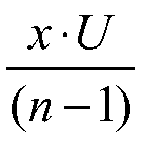
zu liefern, wobei
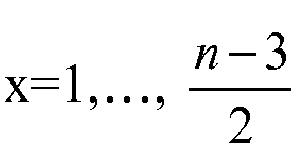
und U die Spannung zwischen den zwei Polen der Gleichspannungsseite ist.
zu liefern, wobei
und U die Spannung zwischen den zwei Polen der Gleichspannungsseite ist.
13. Vorrichtung nach einem der Ansprüche 6-12, dadurch gekennzeichnet, dass die Einrichtung (24) angepasst ist, die Einheit zu steuern, wenn einer der Pole des
fliegenden Kondensators (40, 43) mit dem Phasenausgang verbunden ist, so dass der
Phasenstrom den Kondensator durchfließt, um diese Verbindung in einem der beiden Richtungen
zu ergeben, was im Wesentlichen das selbe Phasenpotential auf dem Phasenausgang ergibt,
abhängig von dem unverzögerten realen Pegel der Spannung zwischen den Polen des Kondensators,
so dass der Kondensator über die Verbindung auf einen Spannungspegel, welches niedriger
als erwünscht ist, geladen wird und auf ein Spannungspegel welcher höher als erwünscht
ist, entladen wird.
14. Vorrichtung nach Ansprüche 1-13, dadurch gekennzeichnet, dass die Halbleiterelemente IGBTs (Insulated Gate Bipolar Transistor) sind.
15. Vorrichtung nach einem der Ansprüche 1-13, dadurch gekennzeichnet, dass die Halbleiterelemente GTOs (Gate Turn-Off thyristor) sind.
16. Vorrichtung nach einem der Ansprüche 1-15, dadurch gekennzeichnet, dass die Gleichspannungsseite durch ein Gleichspannungs-Netzwerk gebildet wird, um Hochspannungs-Gleichstrom
(HVDC) zu übertragen und die Wechselspannungs-Phasenleitung zu einem Wechselspannungs-Netzwerk
gehört.
17. Vorrichtung nach einem der Ansprüche 1-15, dadurch gekennzeichnet, dass sie ein Teil einer SVC (Static Var Compensator) mit einer Gleichspannungsseite ist,
welche durch Kondensatoren gebildet wird, welche frei betrieben werden und die Wechselspannungs-Phasenleitung
zu einem Wechselspannungs-Netzwerk gehört.
18. Vorrichtung nach einem der Ansprüche 1-17, dadurch gekennzeichnet, dass sie mindestens zwei Wechselspannungs-Phasenleitungen (16, 25-27) aufweist, welche
in einem Multi-Phasen-Wechselspannungsnetzwerk eingeschlossen sind und dass sie eine
der seriellen Verbindungen und zweite Dioden, welche damit verknüpft sind und Halbleiterelemente
eines Abschalttyps umfasst, welche damit anti-parallel für jede Phasenleitung, welche
miteinander parallel verbunden sind, zwischen den Polen der Gleichspannungsseite verbunden
sind.
19. Vorrichtung nach Anspruch 18, dadurch gekennzeichnet, dass die Anzahl der Phasen des Wechselspannungsnetzwerks drei ist.
1. Dispositif permettant de convertir une tension alternative en une tension continue
et inversement, comprenant un montage en série d'au moins quatre unités (1-4, 28-35)
constituées chacune d'un élément semiconducteur de type blocable (10-13) et d'une
première diode (14) connectée tête-bêche avec celui-ci, ledit montage en série étant
placé entre deux pôles (5, 6), un positif et un négatif, d'un côté tension continue
du dispositif, une ligne de phase de tension alternative (16) connectée à un premier
point médian (15), qui est nommé sortie de phase, du montage en série entre deux unités
tout en divisant le montage en série en deux parties, un moyen (9) adapté pour fournir
un point médian entre les deux pôles sur ledit côté tension continue et pour mettre
ces pôles à la même tension mais avec des signes opposés par rapport au point médian
du côté tension continue, un deuxième point médian (18, 19) de chacune desdites parties
du montage en série se faisant à travers une deuxième diode (20, 21) avec le sens
de conduction par rapport à la sortie de phase opposé au sens de conduction de la
première diode (14) dans l'unité placée entre ce deuxième point médian et la sortie
de phase connectée au point médian du côté tension continue et un appareil (24) pour
commander les éléments semiconducteurs des unités pour générer un train d'impulsions
avec des amplitudes déterminées selon un motif de modulation de largeur d'impulsion
sur la sortie de phase (15) du dispositif en connectant alternativement la ligne de
phase de tension alternative au moins au point médian, au pôle plus et au pôle moins
du côté tension continue, caractérisé en ce qu'un élément semiconducteur (22, 23) de type blocable est monté tête-bêche avec chacune
desdites deuxièmes diodes, et en ce que le dispositif est adapté pour commander les éléments semiconducteurs des unités (2,
3, 30-33) entre les deux deuxièmes points médians (18, 19) pour qu'ils soient rendus
passants et bloqués avec une fréquence de modulation de largeur d'impulsion supérieure
d'au moins un ordre de grandeur à la fréquence fondamentale de la tension alternative
de ladite ligne de phase de tension alternative et pour commander les éléments semiconducteurs
(22, 23) montés tête-bêche avec lesdites deuxièmes diodes (20, 21) et dans les unités
(1, 4, 28, 29, 34, 35) entre le deuxième point médian respectif et le pôle respectif
pour les rendre passants et bloqués avec une fréquence sensiblement inférieure à ladite
fréquence de modulation de largeur d'impulsion et dans ou à proximité de la plage
de fréquences une ou deux fois ladite fréquence fondamentale.
2. Dispositif selon la revendication 1, caractérisé en ce que ledit dispositif (24) est adapté pour commander les éléments semiconducteurs (22,
23) montés tête-bêche avec lesdites deuxièmes diodes (20, 21) et dans les unités (1,
4, 28, 29, 34, 35) entre le deuxième point médian respectif et le pôle respectif avec
une fréquence qui est un multiple de ladite fréquence fondamentale.
3. Dispositif selon la revendication 1 ou 2, caractérisé en ce que ledit dispositif (24) est adapté pour commander les éléments semiconducteurs montés
tête-bêche avec lesdites deuxièmes diodes et dans les unités entre le deuxième point
médian respectif et le pôle respectif avec une fréquence qui coïncide avec ladite
fréquence fondamentale en l'absence d'harmoniques de tension dans la ligne de phase
de tension alternative.
4. Dispositif selon la revendication 3, caractérisé en ce que ledit dispositif (24) est adapté pour éventuellement effectuer une ou plusieurs commutations
supplémentaires des éléments semiconducteurs montés tête-bêche avec lesdites deuxièmes
diodes et ceux des unités entre le deuxième point médian respectif et le pôle respectif
dans une période de fréquence fondamentale.
5. Dispositif selon l'une quelconque des revendications 1 à 4, caractérisé en ce qu'il comporte quatre valves (1-4), l'une ou plusieurs desdites unités étant montées
en série, adaptées pour être commandées simultanément par l'intermédiaire de l'appareil
(24), chacune desdites valves étant conçue pour prendre substantiellement la même
portion d'une tension appliquée à l'une ou plusieurs de ces valves connectées en série
que les autres valves quand les éléments semiconducteurs qu'elles comprennent sont
rendus bloqués, en ce que deux valves (1, 2 et 3, 4) respectivement sont agencées entre la sortie de phase
(15) et le pôle respectif (5, 6), en ce qu'une valve (1, 4) est placée entre le point médian respectif (18, 19) et le pôle respectif,
en ce qu'une valve est placée entre le point médian (9) du côté tension continue et ledit deuxième
point médian (18, 19), et en ce que l'appareil (24) est adapté pour effectuer une connexion alternée de trois niveaux
de potentiel différents à la sortie de phase (15).
6. Dispositif selon l'une quelconque des revendications 1 à 4, caractérisé en ce que l'appareil (24) est adapté pour commander les éléments semiconducteurs (10-13) des
unités et les éléments semiconducteurs (22, 23) montés tête-bêche avec lesdites deuxièmes
diodes pour connecter alternativement la ligne de phase de tension alternative à un
nombre impair de niveaux différents, l'un d'entre eux étant le point médian du côté
tension continue et dans lesquels le nombre de niveaux positifs est exactement égal
au nombre de niveaux négatifs, ledit nombre étant n, qui vaut au moins cinq, en ce qu'au moins (n-1)/2 desdites unités sont connectées en série entre le deuxième (18, 19)
et le premier point médian (15), en ce qu'il comprend (n-3)/2 condensateurs dits volants (40, 43), et en ce que chacun desdits condensateurs volants est connecté par un de ses pôles à un point
médian (41, 42) dudit montage en série, qui est situé entre la sortie de phase et
le deuxième point médian sur le côté opposé de la sortie de phase par rapport au point
médian de connexion (41, 42) appartenant à son pôle contraire et a au moins une unité
entre lui-même et le deuxième point médian et une autre unité entre lui-même et une
autre connexion de condensateur ou la sortie de phase.
7. Dispositif selon la revendication 6, caractérisé en ce que n est égal à 5 et en ce qu'il comporte un dit condensateur volant (40).
8. Dispositif selon la revendication 7, caractérisé en ce que lesdites unités sont adaptées pour donner au condensateur volant (40) une tension
entre ses pôles substantiellement égale à U/4, où U est la tension entre les deux
pôles du côté tension continue.
9. Dispositif selon la revendication 7 ou 8, caractérisé en ce que ledit montage en série comporte huit valves (28-35), dans lequel chaque valve est
adaptée pour prendre substantiellement la même portion d'une tension appliquée à l'une
ou plusieurs de ces valves connectées en série que les autres valves lorsque les éléments
semiconducteurs qu'elles comprennent sont rendus bloqués, en ce que quatre valves (28-35) sont agencées entre la sortie de phase et le pôle de tension
continue respectif, en ce que deux valves (28, 29, 34, 35) sont placées entre le point médian respectif et le pôle
de tension continue respectif, en ce qu'une valve (31, 32) est placée entre la connexion respective (41, 42) du condensateur
volant (40) au montage en série et la sortie de phase (15), et en ce que deux valves (36-39) sont connectées en série entre le point médian du côté tension
continue et ledit deuxième point médian.
10. Dispositif selon la revendication 6, caractérisé en ce que n est égal à 7.
11. Dispositif selon la revendication 9, caractérisé en ce qu'il comporte deux condensateurs volants (40, 43), et en ce que le condensateur intérieur (43) relié par ses pôles audit montage en série au plus
près de la sortie de phase (15) est adapté pour avoir une tension égale à U/6 entre
ses pôles et le deuxième condensateur, ou condensateur extérieur, (40) est adapté
pour avoir une tension égale à U/3 entre ses pôles, U étant la tension entre les deux
pôles du côté tension continue.
12. Dispositif selon la revendication 6, caractérisé en ce que les valves sont adaptées pour donner aux condensateurs volants (40, 43) une tension
Ux entre ses deux pôles égale à x.U/(n-1), dans laquelle x = 1, ...(n-3)/2 et U est
la tension entre les deux pôles du côté tension continue.
13. Dispositif selon l'une quelconque des revendications 6 à 12, caractérisé en ce que l'appareil (24) est adapté pour commander ladite unité, quand un pôle desdits condensateurs
volants (40, 43) est connecté à ladite tension de phase de sorte que le courant de
phase passe dans ledit condensateur, pour effectuer cette connexion d'une manière
parmi deux, qui donne substantiellement le même potentiel de phase sur la sortie de
phase en fonction du niveau réel instantané de la tension entre les pôles du condensateur,
de sorte que le condensateur est, après ladite connexion, chargé pour un niveau de
tension inférieur au niveau souhaité et déchargé pour un niveau de tension supérieur
au niveau souhaité.
14. Dispositif selon l'une quelconque des revendications 1 à 13, caractérisé en ce que lesdits éléments semiconducteurs sont des IGBT (transistors bipolaires à porte isolée).
15. Dispositif selon l'une quelconque des revendications 1 à 13, caractérisé en ce que lesdits éléments semiconducteurs sont des GTO (thyristors blocables par la gâchette).
16. Dispositif selon l'une quelconque des revendications 1 à 15, caractérisé en ce que ledit côté tension continue est formé par un réseau à tension continue pour transmettre
du courant continu à haute tension (HVDC) et la ligne de phase de tension alternative
appartient à un réseau à tension alternative.
17. Dispositif selon l'une quelconque des revendications 1 à 15, caractérisé en ce qu'il fait partie d'un compensateur statique d'énergie réactive (SVC), le côté tension
continue formé par des condensateurs pendant librement et la ligne de phase de tension
alternative appartenant à un réseau de tension alternative.
18. Dispositif selon l'une quelconque des revendications 1 à 17, caractérisé en ce qu'il comporte au moins deux lignes de phase de tension alternative (16, 25-27) incluses
dans un réseau de tension alternative polyphasé, et en ce qu'il comprend l'un desdits montage en série et deuxièmes diodes associé(e)s avec lui
et des éléments semiconducteurs de type blocable montés tête-bêche avec lui pour chaque
ligne de phase montée en parallèle entre lesdits pôles du côté tension continue.
19. Dispositif selon la revendication 18, caractérisé en ce que les phases du réseau de tension alternative sont au nombre de trois.
REFERENCES CITED IN THE DESCRIPTION
This list of references cited by the applicant is for the reader's convenience only. It does not form part of the European patent document. Even though great care has been taken in compiling the references, errors or omissions cannot be excluded and the EPO disclaims all liability in this regard.
Non-patent literature cited in the description
- IEEE-article IEEE Trans on Ind. Appln., 1996, vol. 32, 3509-517 [0004]