|
(11) | EP 1 062 209 B1 |

| (12) | EUROPEAN PATENT SPECIFICATION |
|
|
| (54) |
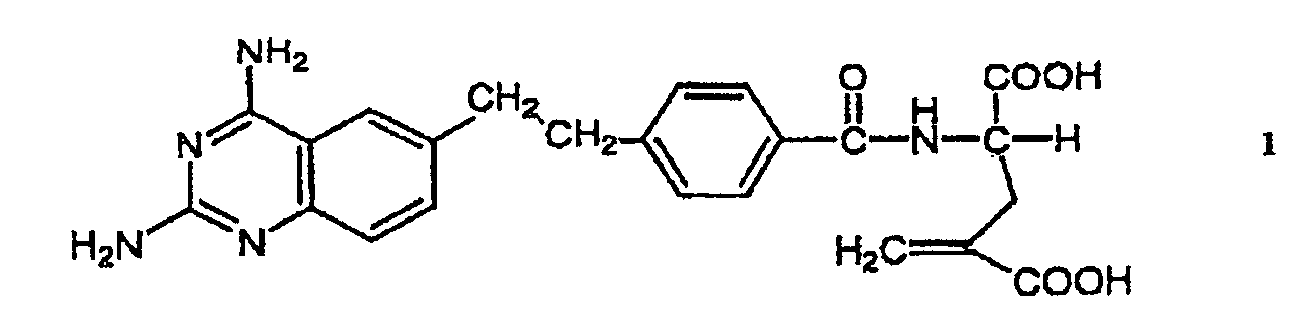
METABOLICALLY INERT ANTI-INFLAMMATORY AND ANTI-TUMOR ANTIFOLATES METABOLISCH INERTE ANTIFOLATE MIT ENTZÜNDUNGSHEMMENDER UND ANTI-TUMOR WIRKUNG ANTIFOLIQUES ANTI-INFLAMMATOIRES ET ANTITUMORAUX METABOLIQUEMENT INERTES |
|
|
|||||||||||||||||||||||||||||||||||
| Note: Within nine months from the publication of the mention of the grant of the European patent, any person may give notice to the European Patent Office of opposition to the European patent granted. Notice of opposition shall be filed in a written reasoned statement. It shall not be deemed to have been filed until the opposition fee has been paid. (Art. 99(1) European Patent Convention). |
Field of Invention
[0001] This invention relates to folic acid antagonists that are metabolically inert exhibiting a high level of anti-inflammatory and anti-tumor activity. Metabolically inert classical antifolates are new and therefore they exhibit unexpected biological properties such as those recited in this invention. The field of this invention is confined to the anti-inflammatory, anti-neoplastic and anti-rheumatoid activity of new and novel folate antimetabolites.
Background of the Invention
[0003] Antifolates are compounds that interfere at various stages of folate metabolism [ M. G. Nair. "The Chemistry of Antitumor Agents". Chapter, 7; Blackie & Sons. London. 1991]. Folate is a vitamin that is essential for the biosynthesis of purine and pyrimidine nucleotide precursors of DNA. Therefore antifolates are capable of inhibiting DNA biosynthesis and hence cell division. Indeed methotrexate (MTX) which is a powerful antifolate by virtue of its inhibition of Dihydrofolate Reductase (DHFR) mediated production of the active vitamin tetrahydrofolate is curative to Choriocarcinoma and Burkitt's lymphoma. MTX is also widely used as a single agent or in combination with other drugs for the treatment of various forms of human cancers [ M. G. Nair. "Cancer Growth and Progression: Cancer Management in Man" Volume 10, H. E. Kaiser (Ed); Kluwer Academic Publishers, Chapter, 7, 1989]. The anti-rheumatoid properties of MTX is well documented and it is currently used as an arthritis remittive agent under the trade name Rheumatrex. MTX has also shown activity against asthma, but it has not yet been used clinically for this indication, except on an experimental basis.
[0004] In 1973 Nair and Baugh [ Biochemistry, 12, 3923, 1973 ] discovered that MTX is metabolized to its polyglutamyl derivatives in human and other mammalian tissues. Once formed within the cells, MTX polyglutamates do not readily efflux and they remain for long periods exerting their cytotoxic effects to tumor and normal cells. This prolonged retention of MTX. polyglutamates relative to MTX results in the potentiation of host toxicity. In 1991 Nair discovered that [U.S. Patent , 5,073,554 ] contrary to the widely accepted notion, polyglutamylation of classical antifolates is not essential for anti-tumor activity and in fact this metabolic transformation may indeed cause the loss of pharmacological control and target specificity of the drug. This new finding resulted in the discovery of a number of non-polyglutamylatable classical antifolates and led to the clinical development of methylene-10-deazaaminopterin [MDAM] as an experimental anticancer drug for the treatment of human solid tumors [ Clinical Cancer Research, 2, 707-712, 1996 ]. In 1996 Nair and coworkers identified [ U.S. Patent, 5,550,128] the active enantiomer of MDAM as the one that possess the L-configuration [L-MDAM]. Further investigation by Nair and coworkers to delineate the metabolic disposition of certain non-polyglutamylatable antifolates led to the unexpected finding that the presence of the 4-methyleneglutamate moiety modulates the binding of such compounds to the liver enzyme aldehyde oxidase which mediates their oxidative deactivation to the corresponding 7-hydroxy derivatives [ Cellular. Pharmacology, 3, 29, 1996 ].
[0005] Another in vivo transformation of MTX is the cleavage of the C9-N10 bond during its entry to the enterohepatic circulation. The cleaved products are inactive and therefore constitutes an alternate pathway of metabolic inactivation. It has also been documented that the intestinal microflora are capable of removing the L-glutamate portion of methotrexate and aminopterin to inactive compounds that enter systemic circulation via enterohepatic circulation and further adversily complicate the biochemical pharmacology of these drugs. Taken together, these multiple pathways of drug inactivation and the formation of the 7-hydroxyderivative its competition with the parent drug for polyglutamylation and transport to target cells and the loss of target specificity secondary to the above metabolic transformation not only undermine the pharmacological control of MTR but also results in loss of efficacy and manifestation of undesirable toxicity.
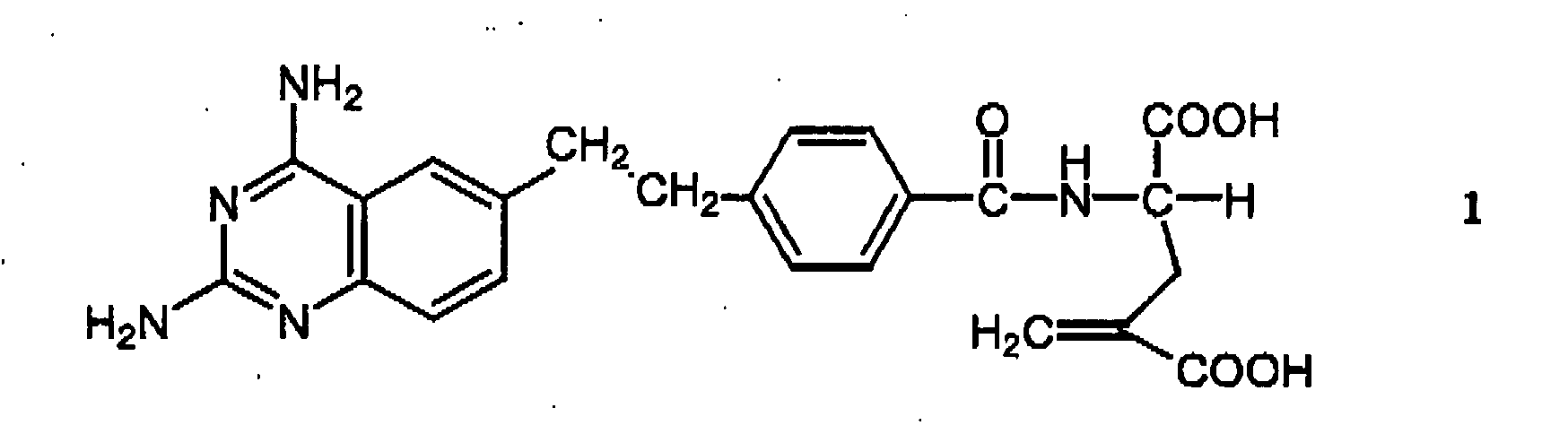
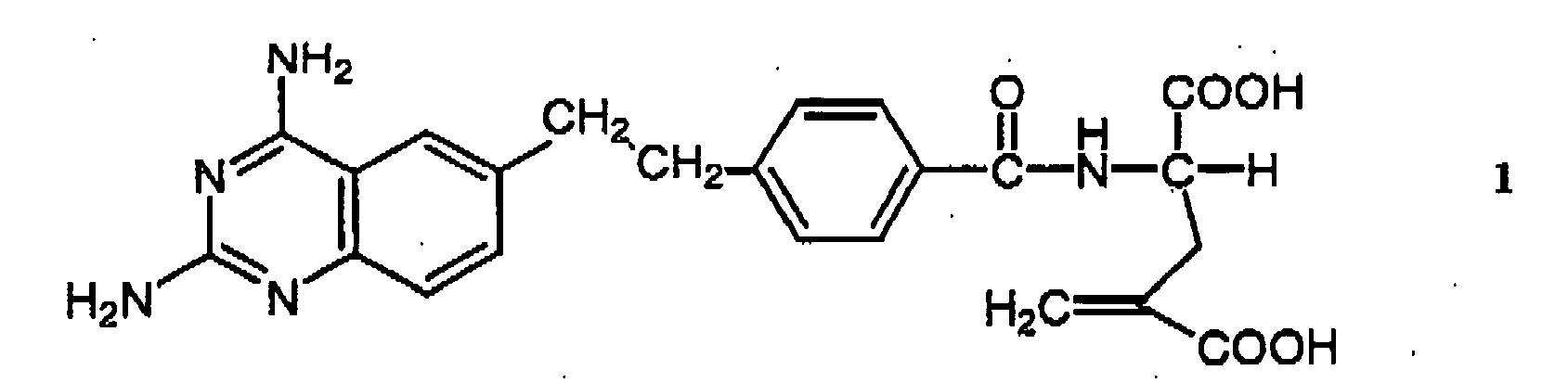
[0006] As part of a continuing program aimed at the development of less toxic and more specific antifolate drugs for the treatment of human cancers, the pteridine ring of the experimental anticancer drug methylene-10-deazaaminopterin [ MDAM ] was replaced with a quinazoline ring. This new compound 1 when evaluated for its potential utility as an antitumor agent using a number of biological test systems exhibited unexpected biological properties. For example 1 was completely inert when incubated with rabbit liver aldehyde oxidase establishing that it is not converted to the corresponding 7-hydroxy derivative. Compound 1 on incubation with carboxypeptidase derived from Pseudomonad sp failed to remove the 4-methyleneglutamate moiety establishing that it is resistant to microbial inactivation by intestinal flora. Further, and perhaps due to the total inertness of 1 to metabolic transformation, unlike other classical antifolates 1 was able to kill a large number of human luekemia and human solid tumor cells in culture at therapeutically relevant concentrations. Since compound 1 has a methylene group as opposed to the methylamino group of MTX at the tenth position it is also not subject to bacterial deactivation by cleavage of the bridge bond. When evaluated for inhibitory activity against the growth of a number of human cancer cells in culture, compound 1 was strikingly more active than MTX. Further evaluation in vitro using the enzyme folylpolyglutamate synthetase revealed that 1 and its analogs reported herein are not capable of elaboration to its polyglutamates due to the presence of the 4-methyleneglutamate moiety. There fore the unexpected enhanced biological activity of 1 must have its origin in the complete lack of its in vivo metabolism [Figure-1]. Unlike trimetrexate, the compounds described in this invention are capable of transport to target tumor cells by the reduced folate transporter (RFT) due to the presence of the 4-methyleneglutamate moiety. More strikingly, compound 1 was 4-5 times collaterally more sensitive in inhibiting the growth of leukemia cells that are resistant to MTX by virtue of detective polyglutamylation compared to the wild type MTX sensitive parental CCRF-CEM cell line. Accordingly, this invention demonstrates that metabolically inert classical folate analog inhibitors of dihydrofolate reductase are superior antitumor agents relative to the metabolizable classical antifolates such as methotrexate and aminopterin.
[0007] As a model of metabolically ineffective DHFR inhibitor, compound 1 was evaluated as a potential anti-inflammatory agent relative to MTX and surprisingly it exhibited outstanding activity in this animal model of asthma substantiating the superiority of metabolically inert DHFR inhibitors. In fact 1 was found to be not only superior to MTX but also to the well known anti-asthmatic drug theophylline in both early and late asthmatic responses and bronchial hyper responsiveness (BHR) when evaluated using allergic rabbits. The anticancer and anti-inflamatory antifolates reported in this invention include close analogues of 1 bearing modified C9-10 region incapable of aldehyde oxidase mediated 7-hydroxylation and the 4-methyleneglutamate moiety that prevents polyglutamylation and modulation of binding to aldehyde oxidase. These quinazoline-based compounds [1, 1a, and 1b] may possess the racemic D,L-4-methyleneglutamate, enantiomerically pure D-4-methyleneglutamate ["D" configuration] or enantiomerically pure L-4-methyleneglutamate ["L" configuration] moieties. They are also useful for the treatment of rheumatoid arthritis due to their inhibition of the enzyme dihydrofolate Reductase.
[0008] This invention accordingly provides a process for treating neoplastic diseases [ leukemia, ascetic and solid tumors ], a process for treating asthma and related inflammatory diseases and a process for treating rheumatoid arthritis and other auto immune diseases which comprises administering to a warm blooded animal with an abnormal proportion of leukocytes or other evidence of neoplastic disease, asthma or rheumatoid arthritis a therapeutically effective non-toxic amount of 5,8,10-trideaza-4'-methyleneaminopterin (1) [herein referred to as compound 1] or its close analogues 1a-1b as such or in the form of a pharmacologically acceptable salt thereof They maybe combined with other compounds such as leucovorin [folinic acid; citrovorum factor] to reduce toxicity or in combination with other anticancer drugs including but not limited to tomudex, 5-FU; 5-PdUR: carboplatin, oxaloplatin or cis-platin, taxol, campothecins or cyclophosphamide to enhance efficacy.
[0009] The salts of 1 or its close analogues [1a - 1b] may be formed with one or more of the amino groups of the quinazoline ring with acids such as acetic, hydrochloric, sulfuric, sulfonic, nitric, hydrobromic, phosphoric, citric, salicylic or methanesulfonic. Compound 1 or its close analogues and salts thereof may be administered to a warm blooded animal by oral or parenteral (intraperitoneal, intravenous, intrathecal, subcutaneous, intramuscular, etc.) routes, Higher dosage of 1 or its close analogues [1a - 1b] may be administered in conjunction with racemic leucovorin [6-(R,S) 5-formyltetrahydrofolate] and/or folic acid to further reduce toxicity.
[0010] Compound 1 or its close analogues [1a-1b] may be provided in composite forms to facilitate administration to patients or in dosage unit form. A non-toxic and sterile carrier may be added to 1 and its close analogues. This carrier may be solid, liquid or semi-solid that may serve as a medium, vehicle or excipient. Methyl cellulose, polyhydroxybenzoate, talc, gelatin, lactose, dextrose, starch, mannitol, sorbitol, mineral oil, gum acacia, oil of theobroma or magnesium stearate may serve as a carrier. Another useful and preferred formulation of these entities for administration to patients is their conversion to the corresponding sodium or potassium salts by dissolving in either sodium bicarbonate, potassium bicarbonate, sodium carbonate or potassium carbonate solution. The resulting solutions may be used as such or cryodessicated to the solid sodium or potassium salt and conveniently formulated in aqueous or non-aqueous vehicles or carriers. Compound 1, or its close analogues (1a-1b) and a carrier or diluent can be encapsulated or enclosed in a paper or other container, cachet, gelatin, capsule or sachet when intended for use in dosage units. ,
[0011] The process of the invention for the synthesis of compound 1 starts with the conversion of commercially available 5-methyl-2-nitrobenzoic acid to the corresponding amide 2 and its subsequent transformation to 5-methyl-2-nitrobenzonitrile (3) by standard procedures. Reaction of 3 in DMF under nitrogen with p-formylmethylbenzoate in presence of an organic base such as diazabicyclo octane for several hours gave the olefin (4) after work up as a mixture of geometric isomers: Olefin 4 can also be prepared by reacting 3 with p-formylmethylbenzoate in methanol using sodium methoxide as a base. In general this reaction can be performed in any appropriate organic solvents using commonly used organic or inorganic bases. Reduction of 4 with sodium dithionite gave the aminonitrile (5) which was cyclized with guanidine to the corresponding pteroate analogue (6) which after catalytic hydrogenation and hydrolysis gave 4-amino-4-deoxy-5,8,10-trideazapteroic acid (7). Coupling of 7 with diethyl-4-methyleneglutamate by the isobutylchloroformate method previously described by Nair and Baugh [Biochemistry, 12,3923-3927, 1973] followed by mild hydrolysis of the resultant diester gave crude 1 which was purified by reverse phase chromatography on C-18 silica gel using 12% acetonitrile in water as the eluting solvent [Scheme-1].
[0012] An alternate procedure for the preparation of olefin 4 is allylic bromination of 3 to the corresponding benzyl bromide (3b), and its subsequent reaction with triphenylphosphine to the wittig salt. Treatment of this Wittig salt with p-formylmethylbenzoate in an organic solvent (eg, DMF) using an organic base in a typical Wittig reaction gave 4 in moderate yield. Any covenient organic solvent and an organic or inorganic base comparable with the solvent can be used for this reaction.
[0013] Substitution of p-formyl methylbenzoate with p-carbomethoxyacetophenone in the above reaction with 3 gives the corresponding methyl substituted olefin which after dithionite reduction, guanidine cyclization, hydrogenation, hydrolysis, diethyl-4-methyleneglutamate coupling followed by mild hydrolysis yields the 10-methyl derivative 1a. Likewise substitution of p-formyl methylbenzoate with p-carbomethoxypropiophenone in the Reaction with 3 and workup as above should yield the 10-ethyl derivative 1b.
[0014] In order to unravel the mechanism of action of 1 and 1e they were examined as inhibitors ofhuman dihydrofolate Reductase. Both compounds exhibited inhibitory activity to this enzyme similar to that of MTX. The I50* values for the human enzyme by 1, 1e and MTX were 66.0, 66.0 and 11.0 nM respectively. The corresponding value for trimetrexate (TMTX) was 54.0 nM.
EXAMPLE-1
Evaluation of Asthmatic Responses and Bronchial Hyper Responsiveness
[0015] Experimental Model: Induction of Asthma in Rabbits. New Zealand White Pasturella-free rabbit litter mates were bred and immunized ip within 24 hour of birth with 312 AU dust mite allergen extract [Berkeley Biological, Berkeley, CA ] in 10% kaolin once every week for one month, then biweekly until the age of 4 months. Mustafa and co-workers used this rabbit model as described in American Journal of Physiology [ 266, 271-277, 1994 ]. These allergic animals preferentially produce allergen-specific IgE antibody and typically respond to aeroallergen challenge with an early and late phase asthmatic response and show increased bronchial hyper responsiveness (BHR).
[0016] Allergen, Theophylline and Antifolate Challenges: These experiments were carried out as described by Mustafa and co-workers in the Journal, Agents and Actions in 1992 [ 37, 168-170, 1992 ]. Briefly, allergic rabbits were challenged with ragweed allergen aerosol (10,000 PNU/mL) as described until there was an approximate 50% reduction in dynamic compliance (Cdyn). Pulmonary function was measured at 15 minutes intervals for 6 hours. The rabbit was challenged with indicated antifolates [ 5 mg/mL, aerosolized for 4 minutes ] followed immediately by the same total dose of allergen. Pulmonary function measurements as described by Mustafa and co-workers in the cited reference were carried out for 6 hours. A repeat histamine challenge was performed 24, hour later to determine the effect of MTX, theophylline and 1 on allergen induced bronchial hyper responsiveness.
[0017] To assess the effect of antifolates on allergen-induced changes in the airways, the area under the curve for early and late -phase response was digitalized by computer-assisted plenometry for each rabbit during the six hour time period. The results are summarized in table-1.
TABLE-1
| Comparative Effects of MTX and 1 on Allergen-induced Asthmatic Responses and Bronchial Hyper-responsiveness (BHR) in Allergic Rabbits [percent inhibition from controls] | |||
| Compound | Asthmatic Response | BHR | |
| Early | Late | ||
| MTX | 29 | 37 | 32 |
| 1 | 52 | 58 | 47 |
| Theophylline | 45 | 49 | 39 |
EXAMPLE-2
[0019] Commercially available 5-methyl-2-nitrobenzoic acid was converted to its corresponding amide by reaction with isobutylchloroformate and then ammonia. The resultant amide was converted to 5-methyl-2-nitrobenzonitrile (3) by POCl3 in DMF.
Preparation of 4
[0020] In a round bottomed flask a mixture of 6.6 gr (40 mmol) of 3 and 6.5 gr (-40 mmol) of 4-formylmethylbenzoate were dissolved in 75 mL of methanol and under stirring 40.8 mmol of a solution of sodium methoxide was slowly added The mixture was stirred for 72 hrs whereupon a bright yellow precipitate was formed. At this stage the reaction mixture was acidified with acetic acid, evaporated, and triturated with 100 gr of ice. The resultant bright yellow precipitate of 4 was filtered, washed sucessively with water, methanol and dried. Yield 5.8 gr; mp 266-269°C; MS (FAB),[C17H12N2O4], calcd, 308; found 309 [MH+].
[0021] Benzylic bromination of 5-methyl-2-nitrobenzonitrile by NBS by the standard procedure followed by treatment of the resultant product (3b) with triphenylphosphine gave 3-cyano-4-nitrobenzyltriphenylphosphonium bromide in good yield.
[0022] Wittig Reaction of 3-cyano-4-nitrobenzyltriphenylphosphonium bromide with p-formylmethylbenzoate. Alternate Synthesis of 4.
[0023] To a stirring solution of 8 mmol [4.025 gr] of the phosphonium bromide (3b) and 8 mmol [1.315 gr] of p-formylmethylbenzoate in 30 mL DMF under nitrogen was added 1.2 mL of DBN portion-wise during a period of 15 minutes and the red solution was allowed to stir for 4 days. Addition of 50 mL of absolute ethanol gave a yellow precipitate of 4 that was filtered, washed with water and again with absolute alcohol yield, 1.6 gr.
EXAMPLE-3
[0024] Dithionite Reduction of Product 4 of Example-2: To a stirring solution of 1.0 gr of 4 in 40 mL of DMF maintained between 60-70 degrees was added portion-wise 5.0 gr of sodium dithionite followed by the addition of 60 mL of water during 20 minutes. About 15 minutes after the addition was complete, the mixture was evaporated to dryness under reduced pressure and 25 gr of ice was added whereupon a pink solid was formed. After all the ice had melted the precipitate was filtered, washed with water and dried to obtain 700 mg of the product. The reduction product showed a single spot on a TLC plate which was more polar than the starting compound. mp, 195-197°C; MS[C17H14N2O2], Calcd, 278; Found, 279 [MH+].
EXAMPLE-4
[0025] Guanidine Cyclization of the Dithionite Reduction Product of Example-3 : Metallic sodium [70.0 mg] was dissolved in 15 mL of ethoxy ethanol and the resultant solution was mixed with a solution of 287 mg of guanidine hydrochloride in 15 mL of the same solvent, filtered and added to 556 mg of the above dithionite reduction product placed in a 100 mL round bottomed flask fitted with a solvent adapter. The mixture was slowly heated under stirring to reflux using a silicone oil bath during a period of two hours and the reflux continued till all the solvent was boiled off from the flask, the residue was kept in the oil bath at 190-200°C for 30 minutes and then removed from the bath. Addition of 50 mL ether and trituration gave a solid which was filtered, washed with water and dried. Repeated washing of the product with 8% methanol in methylene chloride gave the crude cyclization product 6. Yield, 150 mg. mp. >300°C; MS [C18H16O2N4] Calcd, 320; Found 321 [MH+]
EXAMPLE-5
[0026] Preparation of 4-amino-4-deoxy -5,8,10-trideazapteroic acid (7). The cyclization product [200 mg] was dissolved in 3 5 mL of DMF and hydrogenated for 48 hours at a hydrogen pressure of 20 psi with 50 mg of 10% palladium on carbon as a catalyst. The catalyst was removed by filtration and the filtrate was evaporated to dryness to obtain a solid which was stirred with a mixture of 50 mL of 0.1 N NaOH and 20 mL of acetonitrile for 18 hours. Acetonitrile was removed by rotary evaporation and the clear solution thus obtained was acidified with glacial acetic acid to pH 4.0 and chilled in the refrigerator overnight, filtered, washed with water and dried. Yield 65 mg, MS [C17 H16 N4 O2] Calcd, 308; Found 309 [MH+]. Alternately, the cyclization product can be hydrolysed first and then hydrogenated to 7.
EXAMPLE-6
[0027] Preparation of 4'-Methylene-5,8,10-trideazaaminopterin (1): A solution of 1 mmol (308 mg) of 4-amino-4-deoxy-5,8,10-tridezapteroic acid in 50 mL of DMF was cooled in an ice-bath and was added 1.25 mmol of triethylamine followed by 1.0 mmol of isobutylchloroformate. After 15 minutes the round bottomed flask containing the solution was removed from the ice-bath and allowed to warm up to room temperature during one hour. To this mixed anhydride a solution of 2.0 mmol of diethyl-4-methyleneglutamate hydrochloride dissolved in 15 mL of DMF and which was neutralized with 2.0 mmol of triethylamine was added and the reaction mixture allowed to stir for 18 hours and evaporated under reduced pressure On trituration with 75 gr of ice a brownish yellow precipitate was formed which was filtered, washed with water and suspended in a mixture of 100 mL of 0.1 N NaOH and 35 mL of acetonitrile and stirred overnight. The reaction mixture was evaporated to ~60 mL under reduced pressure at 40°C, cooled in an ice-bath and acidified to pH 4.0 with glacial acetic acid whereupon a bright yellow precipitate was formed. This precipitate was collected by filtration, washed with water and dissolved in minimum amount of 5% sodium bicarbonate and chromatographed using a C-18 silica gel column made in 12% acetonitrile in water and eluting with the same solvent. All fractions corresponding to the product were pooled and acidified to pH 4.0 with glacial acetic acid to obtain 1 as a precipitate which was filtered, washed with water and dried. Yield 125 mg. mp > 250°C; MS [C23 H23 N5 O5]; Calcd, 449; Found, 450 [MH+]
[0029] Compound 1 was evaluated for its anti-tumor activity using the Human Disease Oriented in vitro Antitumor Screen at the National Cancer Institute. Surprisingly 1 unlike other antifolates was able to kill cancer cells with remarkable potency. This unexpected finding may be due to the inability of 1 to undergo metabolic transformation. The total growth inhibition [TGI] of selected human tumor cells by 1 relative to methotrexate (MTX) is presented in Table-2. A log 10 TGI value of less than -4.0 is therapeutically non-relevant for MTX. The data in table-2 show that 1 is at least 1,000-10,000 times more effective than MTX in this panel and the values represent therapeutically relevant concentrations.
TABLE-2
| Total Growth Inhibition (TGI) of Selected Human Tumor Cells by Compound 1 and MTX | ||
| Cell line | Compound 1 | MIX |
| Log 10 TGI | LOG 10 TGI | |
| Leukemia | ||
| CCRF-CBM | <-8.00 | -3.77 |
| K562 | <-8.00 | -3.3 |
| MOLT-4 | -7.4 | -3.55 |
| RPMI 8226 | -7.44 | -3.66 |
| SR | <-8.00 | -3.25 |
| CNS Cancer | ||
| SF 539 | -6.3 | -3.65 |
| Breast Cancer | ||
| MCF7 | -6.32 | ---- |
| MCF7-ADR-RES | -7.26 | ---- |
1. A compound according to the general Formula 1e:
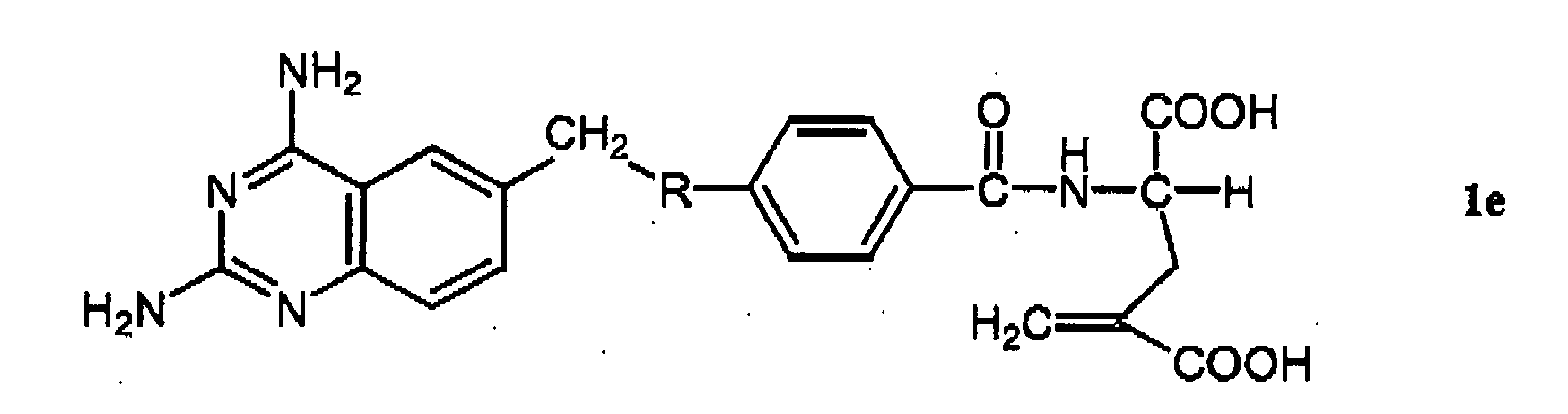
wherein R is selected from: -CH2-, -CH(CH3)-, -CH(C2H5)-, or a pharmacologically acceptable salt thereof.
wherein R is selected from: -CH2-, -CH(CH3)-, -CH(C2H5)-, or a pharmacologically acceptable salt thereof.
2. A pharmaceutical composition comprising a compound according to Claim 1 together with
a pharmaceutically acceptable carrier or diluent.
3. A pharmaceutical composition for the treatment of neoplastic growth that responds
to antifolates comprising a therapeutically effective and non-toxic amount of a compound
according to Claim 1 with or without a pharmaceutically acceptable carrier, diluent
or anti-tumour agent to inhibit the said neoplastic growth.
4. A pharmaceutical composition for the treatment of inflammation caused by allergens
or autoimmune response comprising a therapeutically effective and non-toxic amount
of a compound according to Claim 1 with or without a pharmaceutically acceptable carrier
or diluent to ameliorate said inflammation.
5. A pharmaceutical composition for the treatment of asthma comprising a therapeutically
effective and non-toxic amount of a compound according to Claim 1 with or without
a pharmaceutically acceptable carrier or diluent to ameliorate the asthma.
6. A compound according to Claim 1 in which the 4-methyleneglutamate moiety has the "L"
configuration.
7. A compound according to Claim 1 in which the 4-methyleneglutamate moiety has the "D"
configuration.
8. 4-Amino-4-deoxy-5,8,10-trideazapteroyl-4'-methyleneglutamic acid (1) having the following chemical structure in which the 4-methyleneglutamate moiety
has the "L" configuration, or a pharmacologically acceptable salt thereof.
9. 4-Amino-4-deoxy-5,8,10-trideazapteroyl-4'-methyleneglutamic acid (1) having the following chemical structure in which the 4-methyleneglutamate moiety
has the "D" configuration, or a pharmacologically acceptable salt thereof.
10. A compound according to any of claims 1 to 9, wherein the compound is in the form
of a sodium or potassium salt.
1. Verbindung mit der allgemeinen Formel 1e:
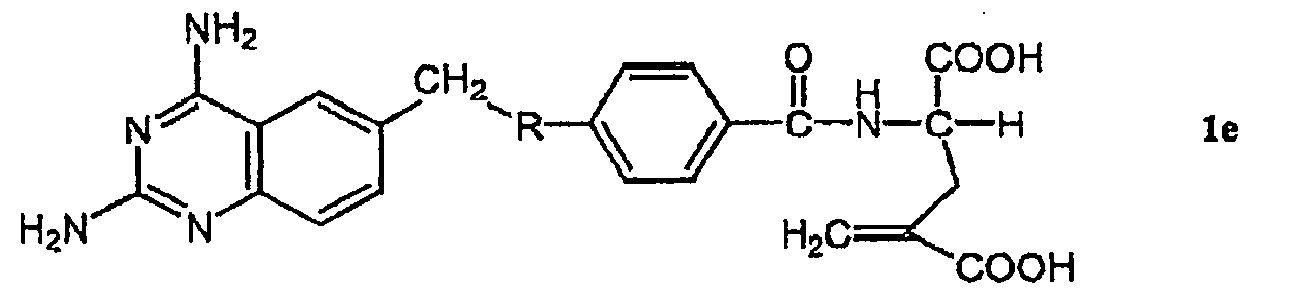
wobei R unter -CH2-, -CH(CH3)-, -CH(C2H5)- ausgewählt ist, oder ein pharmakologisch akzeptierbares Salz davon.
wobei R unter -CH2-, -CH(CH3)-, -CH(C2H5)- ausgewählt ist, oder ein pharmakologisch akzeptierbares Salz davon.
2. Pharmazeutische Zusammensetzung, die eine Verbindung nach Anspruch 1 zusammen mit
einem pharmazeutisch akzeptierbaren Träger oder Verdünnungsmittel aufweist.
3. Pharmazeutische Zusammensetzung zur Behandlung von neoplastischem Wachstum, das auf
Antifolate anspricht, wobei die Zusammensetzung eine therapeutisch wirksame und nichttoxische
Menge einer Verbindung nach Anspruch 1 mit oder ohne pharmazeutisch akzeptierbaren
Träger, Verdünnungsmittel oder Antitumormittel zur Hemmung des neoplastischen Wachstums
aufweist.
4. Pharmazeutische Zusammensetzung zur Behandlung einer durch Allergene oder Autoimmunantwort
verursachten Entzündung, wobei die Zusammensetzung eine therapeutisch wirksame und
nichttoxische Menge einer Verbindung nach Anspruch 1 mit oder ohne pharmazeutisch
akzeptierbaren Träger oder Verdünnungsmittel zur Besserung der Entzündung aufweist.
5. Pharmazeutische Zusammensetzung zur Behandlung von Asthma, wobei die Zusammensetzung
eine therapeutisch wirksame und nichttoxische Menge einer Verbindung nach Anspruch
1 mit oder ohne pharmazeutisch akzeptierbaren Träger oder Verdünnungsmittel zur Besserung
des Asthmas aufweist.
6. Verbindung nach Anspruch 1, wobei die 4-Methylenglutamat-Komponente die "L"-Konfiguration
aufweist.
7. Verbindung nach Anspruch 1, wobei die 4-Methylenglutamat-Komponente die "D"-Konfiguration
aufweist.
8. 4-Amino-4-desoxy-5,8,10-trideazapteroyl-4'-methylenglutaminsäure (1) mit der folgenden
chemischen Struktur, in der die 4-Methylenglutamat-Komponente die "L"-Konfiguration
aufweist, oder ein pharmakologisch akzeptierbares Salz davon.
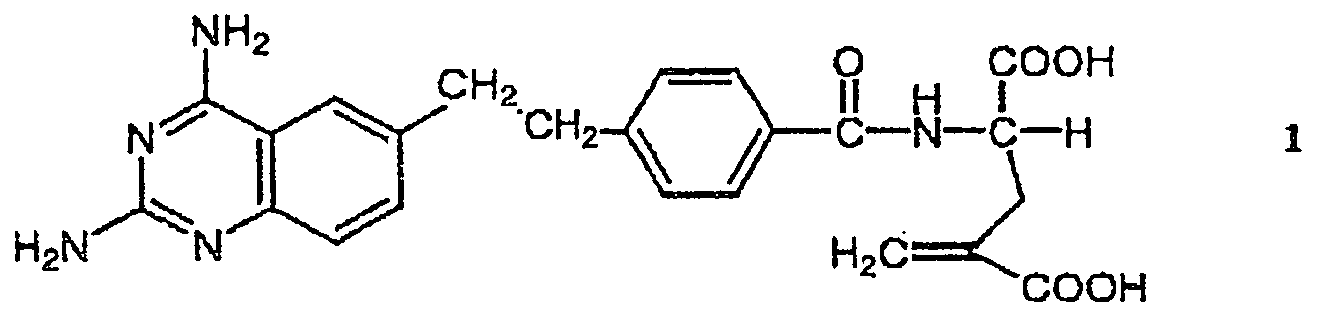
9. 4-Amino-4-desoxy-5,8,10-trideazapteroyl-4'-methylenglutaminsäure (1) mit der folgenden
chemischen Struktur, in der die 4-Methylenglutamat-Komponente die "D"-Konfiguration
aufweist, oder ein pharmakologisch akzeptierbares Salz davon.
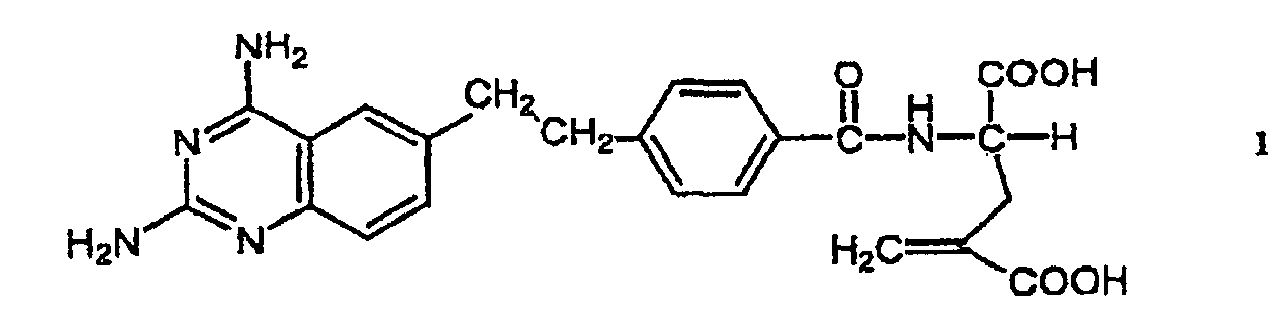
10. Verbindung nach einem der Ansprüche 1 bis 9, wobei die Verbindung die Form eines Natrium-oder
Kaliumsalzes hat.
1. Composé selon la formule générale le:
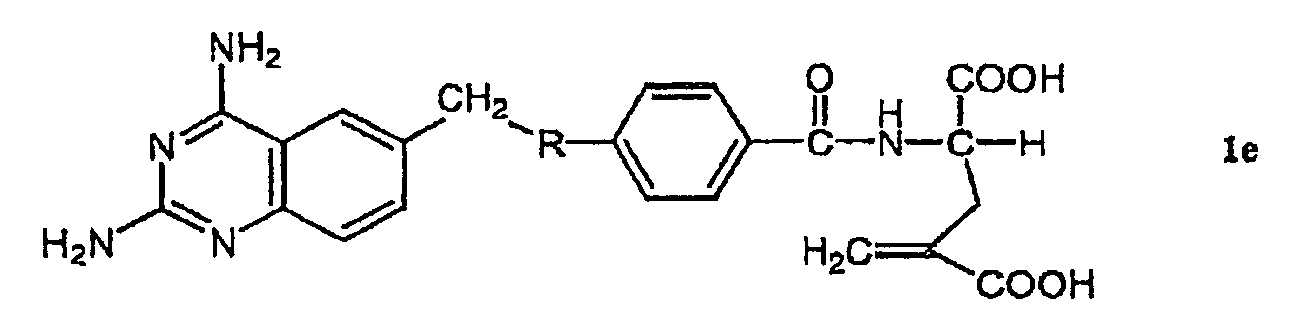
dans laquelle R est choisi parmi: -CH2-, -CH(CH3)-, -CH(C2H5)-, ou un sel pharmacologiquement acceptable de celui-ci.
dans laquelle R est choisi parmi: -CH2-, -CH(CH3)-, -CH(C2H5)-, ou un sel pharmacologiquement acceptable de celui-ci.
2. Composition pharmaceutique comprenant un composé selon la revendication 1 conjointement
avec un support ou diluant pharmaceutiquement acceptable.
3. Composition pharmaceutique pour le traitement d'une croissance néoplasique qui répond
aux antifolates, comprenant une quantité thérapeutiquement efficace et non toxique
d'un composé selon la revendication 1 avec ou sans véhicule, diluant ou agent antitumoral
pharmaceutiquement acceptable, pour inhiber ladite croissance néoplasique.
4. Composition pharmaceutique pour le traitement d'une inflammation provoquée par des
allergènes ou une réponse auto-immune, comprenant une quantité thérapeutiquement efficace
et non toxique d'un composé selon la revendication 1 avec ou sans véhicule ou diluant
pharmaceutiquement acceptable, pour améliorer ladite inflammation.
5. Composition pharmaceutique pour le traitement d'un asthme, comprenant une quantité
thérapeutiquement efficace et non toxique d'un composé selon la revendication 1 avec
ou sans véhicule ou diluant pharmaceutiquement acceptable, pour améliorer l'asthme.
6. Composé selon la revendication 1, dans lequel le groupe 4-méthylèneglutamate a la
configuration "L".
7. Composé selon la revendication 1, dans lequel le groupe 4-méthylèneglutamate a la
configuration "D".
8. Acide 4-amino-4-désoxy-5,8,10-tridéazaptéroyl-4'-méthylèneglutamique (1) ayant la
structure chimique suivante dans laquelle le groupe 4-méthylèneglutamate a la configuration
"L", ou un sel pharmacologiquement acceptable de celui-ci.
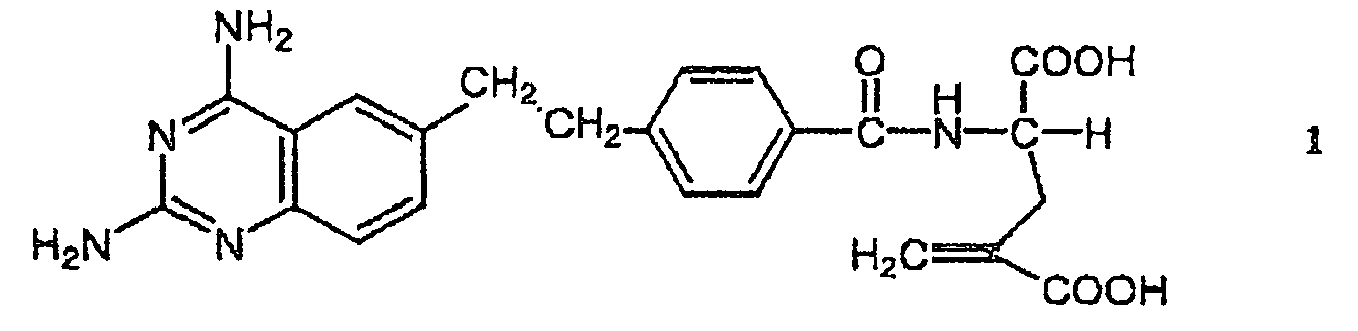
9. Acide 4-amino-4-désoxy-5,8,10-tridéazaptéroyl-4'-méthylèneglutamique (1) ayant la
structure chimique suivante dans laquelle le groupe 4-méthylèneglutamate a la configuration
"D", ou un sel pharmacologiquement acceptable de celui-ci.
10. Composé selon l'une quelconque des revendications 1 à 9, lequel composé est sous la
forme d'un sel de sodium ou de potassium.
REFERENCES CITED IN THE DESCRIPTION
This list of references cited by the applicant is for the reader's convenience only. It does not form part of the European patent document. Even though great care has been taken in compiling the references, errors or omissions cannot be excluded and the EPO disclaims all liability in this regard.
Patent documents cited in the description
Non-patent literature cited in the description
- M. G. NAIRThe Chemistry of Antitumor AgentsBlackie & Sons19910000 [0003]
- M. G. NAIR.Cancer Growth and Progression: Cancer Management in ManKluwer Academic Publishers19890000vol. 10, [0003]
- NAIRBAUGHBiochemistry, 1973, vol. 12, 3923- [0004]
- Clinical Cancer Research, 1996, vol. 2, 707-712 [0004]
- Cellular. Pharmacology, 1996, vol. 3, 29- [0004]
- NAIRBAUGHBiochemistry, 1973, vol. 12, 3923-3927 [0011]
- American Journal of Physiology, 1994, vol. 266, 271-277 [0015]
- MUSTAFAJournal, Agents and Actions in 1992, 1992, vol. 37, 168-170 [0016]