|
(11) | EP 1 097 937 B1 |

| (12) | EUROPEAN PATENT SPECIFICATION |
|
|
| (54) |
N-acyl derivatives of the LL-E33288 antitumor antibiotics N-Acylderivate der Antitumor-Antibiotika vom Typ LL-E33288 Dérivés n-acyles d'antibiotiques antitumoraux du type LL-E33288 |
|
|
|||||||||||||||||||||||||||||||||||
| Note: Within nine months from the publication of the mention of the grant of the European patent, any person may give notice to the European Patent Office of opposition to the European patent granted. Notice of opposition shall be filed in a written reasoned statement. It shall not be deemed to have been filed until the opposition fee has been paid. (Art. 99(1) European Patent Convention). |
[0001] Lee et al, J. Am. Chem. Soc. 1987, 109, 3464 -3466, describes a novel family of antitumor antibiotics referred to as the calichemicins. There is a reference to calicheinicin γ1I and N-acetylcalichemicin γ1I, (which latter has been referred to also in the following teaching) but it is believed that the paper does not provide an enabling disclosure of the compounds of the present invention.
[0002] EP-A-0289030 (Bristol-Myers Squibb) discloses N-acetyl derivatives designated N-acetylesperamicins A1. A2 and A1b. It is stated that these derivatives exhibit both antimicrobial and antitumor activity.
SUMMARY OF THE INVENTION
[0003] The invention describes certain N-acyl derivatives of the α2Br, β1Br, γ1Br, α2I, β1I, γ1I, and δ1I components and of the N-acyl-dihydro derivatives of the α2Br, β1Br, γ1Br, α2I, β1I, γ1I, and δ1I components of the LL-E33288 antibiotic complex prepared by reacting the antibiotic with an unsubstituted or substituted acid anhydride acyl cation equivalent or acid chloride. These N-acyl derivatives are effective antibacterial and antitumor agents.
[0004] European Patent No 392376B (of which this application is a divisional) discloses
N-acetyl-LL-E33288δ1I
N-formyl-LL-E33288δ1I
N-acetyl-LL-E33288γ1I and
N-acetyl-dihydro-LL-E332887γ1I, and their preparation.
DETAILED DESCRIPTION OF THE INVENTION
[0005] The family of antibacterial and antitumor agents, known collectively as the LL-E33288 complex, are described and claimed in European Patent Application Number EP-A-182152 and are used to prepare the N-acyl derivatives of this invention. The above application describes the LL-E33288 complex, the components thereof, namely,
LL-E33288α1Br, LL-E33288α2Br, LL-E33288α3Br,
LL-E33288α4Br, LL-E33288β1Br, LL-E33288β2Br,
LL-E33288 γ1Br, LL-E33288α1I, LL-E33288α2I,
LL-E33288α3I, LL-E32288β1I, LL-E33288β2I, LL-E33288γ1I
and LL-E33288δ1I
and methods for their production by aerobic fermentation utilizing a new strain of Micromonospora echinospora ssp. calichensis or natural or derived mutants thereof. The proposed chemical structures of some of the above named components are disclosed in European Patent Application Number EP-A-182152 and are reproduced in Table I below:
[0006] As can be seen from the structures disclosed in Table I, the α2Br, β1Br, γ1Br, α2I, β1I, γ1I, and δ1I components of the LL-E33288 antibiotic complex each contain a secondary amino group which is part of a substituted 4-aminopentose unit. It has now been discovered that the reaction of any of the above components with an unsubstituted or substituted, saturated or unsaturated alkyl or aryl acid anhydride, acid chloride or acyl cation equivalent results in the introduction of an acyl moiety on the secondary amino group as shown in Scheme I below.
wherein W is the substituent attached to R2NH- of the aminopentose in Table I, R is hydrogen or a branched or unbranched alkyl (C1-C10) or alkylene (C1-C10) group, an aryl or heteroaryl group, or an aryl-alkyl (C1-C5) or heteroaryl-alkyl (C1-C5) group, all optionally substituted by one or more hydroxy, amino, carboxy, halo, nitro, lower (C1-C3) alkoxy, or lower (C1-C5) thioalkoxy groups.
[0007] N-Acyl derivatives are also prepared from the dihydro derivatives of the LL-E33288 antibiotics, namely, dihydro-LL-E33288α2Br, dihydro-LL-E33288β1Br, dihydro-E33288γ1Br, dihydro-LL-E33288α2I, dihydro-LL-E33288β1I, dihydro-LL-E33288γ1I, and dihydro-LL-E33288δ1I, of parent application Serial No. 004,154.
[0008] As an example, reaction of LL-E33288γ1I with acetic anhydride in methanol produces N-acetyl-LL-E33288 γ1I while the reaction of LL-E33288 δ1I with the mixed anhydride of acetic acid and formic acid produces N-formyl-LL-E33288 δ1I, both potent new antitumor antibiotics. The reaction of dihydro-LL-E33288 E33288γ1I with acetic anhydride in methanol produces N-acetyl-dihydro-LL-E33288 γ1I . N-Acetyl-dihydro-LL-E33288 γ1I is also produced by the reaction of N-acetyl-LL-E33288 γ1I with sodium borohydride under the conditions described European Patent Application Number EP-A-276485.
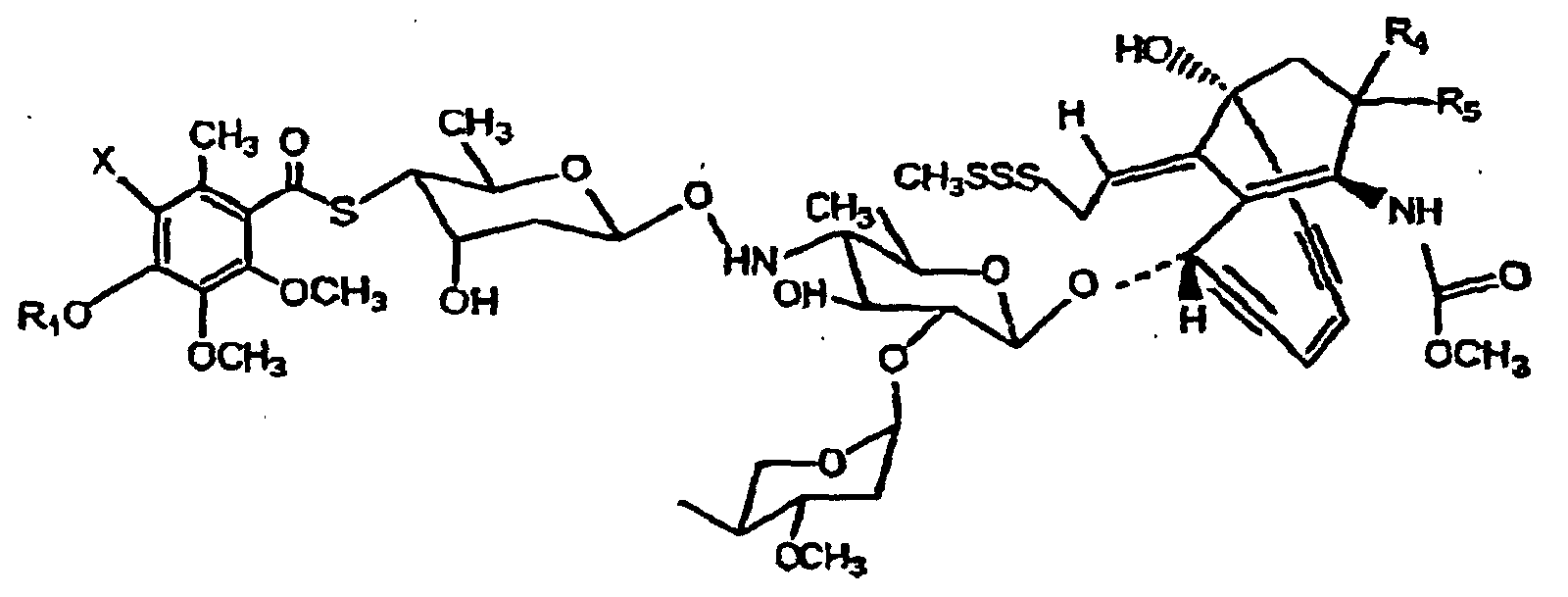
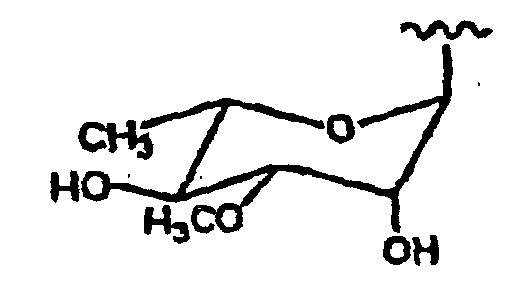
[0009] The present invention provides N-acyl derivatives of LL-E33288 and dihydro LL-E33288 antibiotics of the formula
wherein W is
R is hydrogen or a branched or unbranched alkyl (C1-C10) or alkylene (C1-C10) group, an aryl or heteroaryl group, or an aryl-alkyl (C1-C5) or heteroaryl-alkyl (C1-C5) group, all optionally substituted by one or more hydroxy, amino, carboxy, halo, nitro, lower (C1-C3) alkoxy, or lower (C1-C5) thioalkoxy groups;
R1 is H or
R2 is CH3, C2H5 or CH(CH3)2;
R4 is OH when R5 is H or R4 and R5 taken together are a carbonyl; and
X is an iodine or bromine atom, excluding:
N-acetyl-LL-E33288δ1I;
N-formyl-LL-E33288δ1I;
N-acetyl-LL-E33288γ1I
and
N-acetyl-dihydro-LL-E33288γ1I.
[0010] The N-acyl derivatives of the LL-E33288 antitumor antibiotics are most conveniently characterized by high-performance liquid chromatography (HPLC) and by thin-layer chromatography (TLC).
[0011] The N-acyl derivatives of the LL-E33288 antitumor antibiotics are useful as antibacterial agents and are also active as antitumor agents as determined in the Biochemical Induction Assay (BIA), a bacterial assay system which specifically measures the ability of an agent to directly or indirectly initiate DNA damage.
1. A compound of the formula
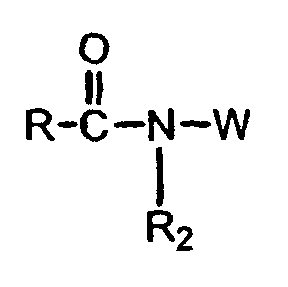
wherein W is
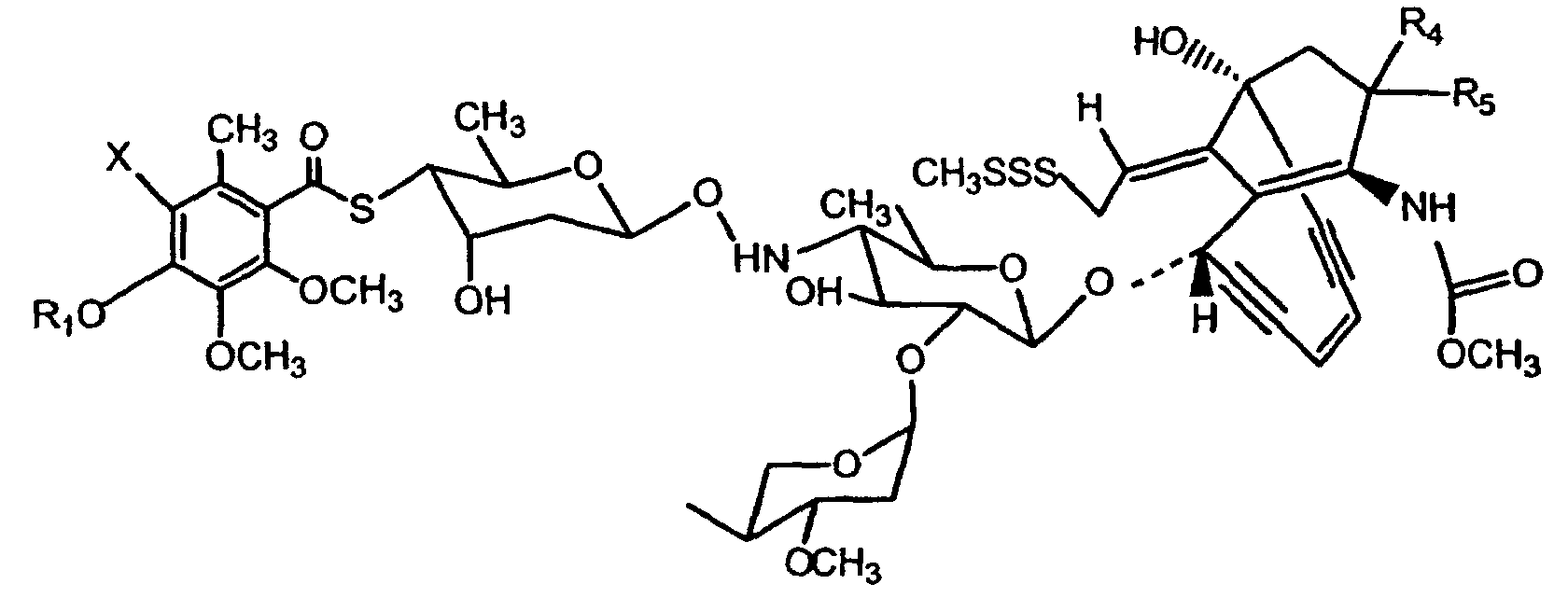
R is hydrogen or a branched or unbranched alkyl (C1-C10) or alkylene (C1-C10) group, an aryl or heteroaryl group, or an aryl-alkyl (C1-C5) or heteroaryl-alkyl (C1-C5) group, all optionally substituted by one or more hydroxy, amino, carboxy, halo, nitro, lower (C1-C3) alkoxy, or lower (C1-C5) thioalkoxy groups;
R1 is H or
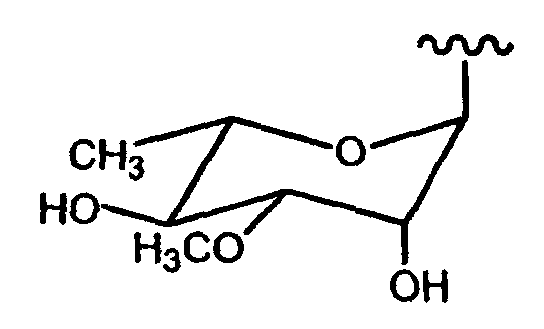
R2 is CH3, C2H5 or CH(CH3)2;
R4 is OH when R5 is H or R4 and R5 taken together are a carbonyl; and
X is an iodine or bromine atom, excluding:
wherein W is
R is hydrogen or a branched or unbranched alkyl (C1-C10) or alkylene (C1-C10) group, an aryl or heteroaryl group, or an aryl-alkyl (C1-C5) or heteroaryl-alkyl (C1-C5) group, all optionally substituted by one or more hydroxy, amino, carboxy, halo, nitro, lower (C1-C3) alkoxy, or lower (C1-C5) thioalkoxy groups;
R1 is H or
R2 is CH3, C2H5 or CH(CH3)2;
R4 is OH when R5 is H or R4 and R5 taken together are a carbonyl; and
X is an iodine or bromine atom, excluding:
N-acetyl-LL-E33288δ1I;
N-formyl-LL-E33288δ1I;
N-acetyl-LL-E33288γ1I
and
N-acetyl-dihydro-LL-E33288γ1I.
2. A compound according to Claim 1 for use in treating bacterial infections in warm-blooded
animals.
3. A compound according to Claim 1 for use in treating tumors in warm-blooded animals.
4. Use of a compound according to Claim 1 in the preparation of a medicament for treating
bacterial infections.
5. Use of a compound according to Claim 1 in the preparation of a medicament for treating
tumors in warm-blooded animals.
1. Verbindung der Formel
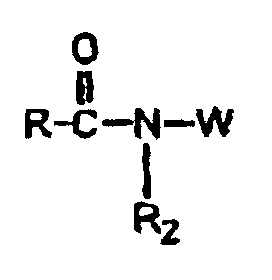
worin W für
steht, R ein Wasserstoff oder eine verzweigte oder nicht verzweigte Alkyl(C1-C10)- oder Alkylen (C1-C10) gruppe, eine Aryl- oder Heteroarylgruppe oder eine Aryl-alkyl(C1-C5)- oder Heteroaryl-alkyl(C1-C5)gruppe darstellt, alle gegebenenfalls substituiert durch eine oder mehrere Hydroxy-, Amino-, Carboxy-, Halogen, Nitro-, nied.-(C1-C3)-Alkoxy- oder nied.-(C1-C5)-Thioalkoxygruppen;
R1 für H oder
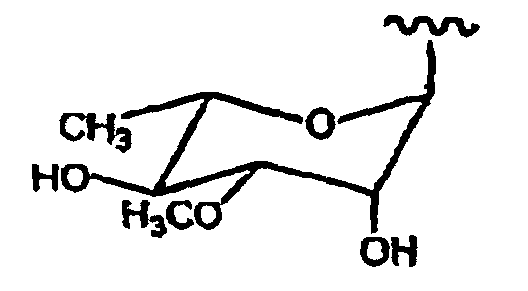
steht;
R2 für CH3, C2H5 oder CH(CH3)2 steht;
R4 für OH steht, wenn R5 für H steht, oder R4 und R5 zusammen genommen ein Carbonyl darstellen; und
X ein Iod- oder Bromatom darstellt, ausschließend:
N-Acetyl-LL-E33288δ1I;
N-Formyl-LL-E33288δ1I;
N-Acetyl-LL-E33288γ1I
und N-Acetyl-dihydro-LL-E33288γ1I.
worin W für
steht, R ein Wasserstoff oder eine verzweigte oder nicht verzweigte Alkyl(C1-C10)- oder Alkylen (C1-C10) gruppe, eine Aryl- oder Heteroarylgruppe oder eine Aryl-alkyl(C1-C5)- oder Heteroaryl-alkyl(C1-C5)gruppe darstellt, alle gegebenenfalls substituiert durch eine oder mehrere Hydroxy-, Amino-, Carboxy-, Halogen, Nitro-, nied.-(C1-C3)-Alkoxy- oder nied.-(C1-C5)-Thioalkoxygruppen;
R1 für H oder
steht;
R2 für CH3, C2H5 oder CH(CH3)2 steht;
R4 für OH steht, wenn R5 für H steht, oder R4 und R5 zusammen genommen ein Carbonyl darstellen; und
X ein Iod- oder Bromatom darstellt, ausschließend:
N-Acetyl-LL-E33288δ1I;
N-Formyl-LL-E33288δ1I;
N-Acetyl-LL-E33288γ1I
und N-Acetyl-dihydro-LL-E33288γ1I.
2. Verbindung gemäß Anspruch 1 zur Verwendung beim Behandeln von bakteriellen Infektionen
in warmblütigen Tieren.
3. Verbindung gemäß Anspruch 1 zur Verwendung beim Behandeln von Tumoren in warmblütigen
Tieren.
4. Verwendung einer Verbindung gemäß Anspruch 1 bei der Herstellung eines Medikaments
zum Behandeln von bakteriellen Infektionen.
5. Verwendung einer Verbindung gemäß Anspruch 1 bei der Herstellung eines Medikaments
zum Behandeln von Tumoren in warmblütigen Tieren.
1. Composé de formule
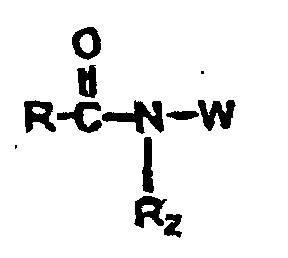
dans laquelle W est
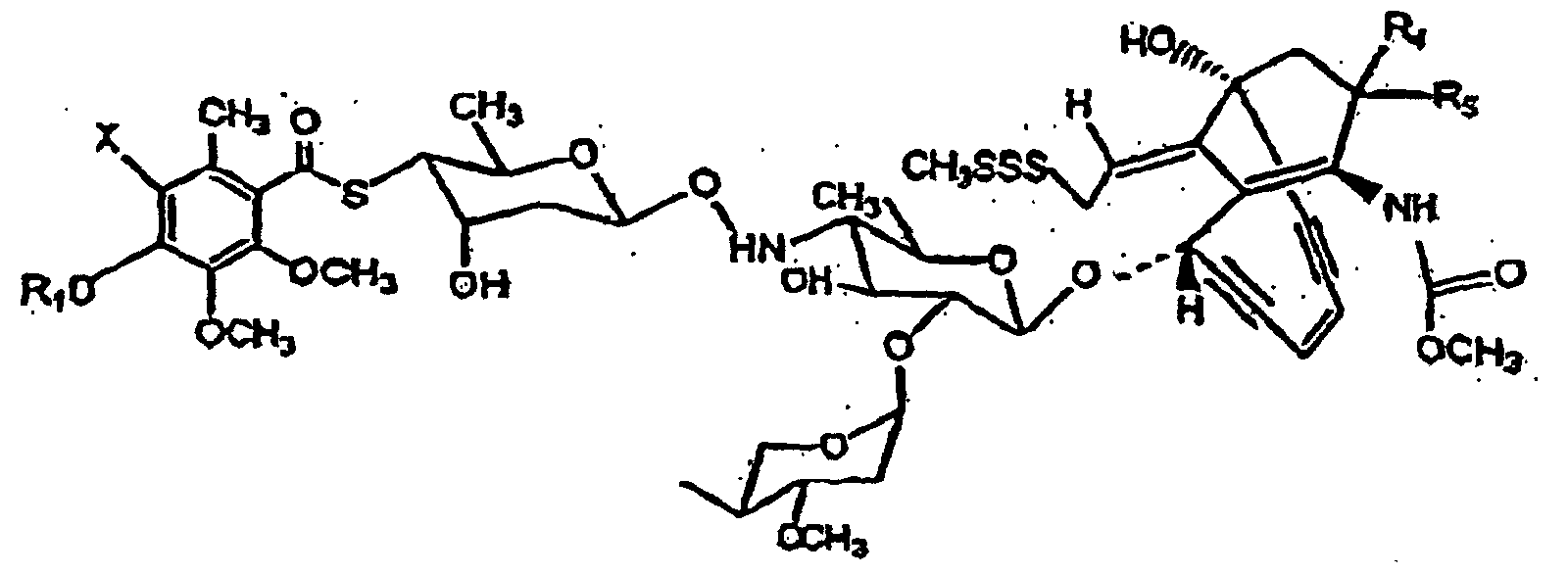
R est hydrogène ou un groupement alkyle en (C1-C10) ou alkylène en (C1-C10) ramifié ou non ramifié, un groupement aryle ou hétéroaryle, ou un groupement aryle-alkyle en (C1-C5) ou hétéroaryle-alkyle en (C1-C5), tous facultativement substitués par un ou plusieurs groupements hydroxy, amino, carboxy, halogène, nitro, alkoxy inférieur en (C1-C3), ou thioalkoxy inférieur en (C1-C5) ;
R est H ou
R2 est CH3, C2H5 ou CH(CH3)2;
R4 est OH quand R5 est H ou R4 et R5 pris ensemble sont un carbonyle, et
X est un atome d'iode ou de brome, à l'exclusion de :
N-acétyl-LL-E33288δ11;
N-formyl-LL-E33288δ11;
N-acétyl-LL-E33288γ11;
et de N-acétyl-dihydro-LL-E33288γ11.
dans laquelle W est
R est hydrogène ou un groupement alkyle en (C1-C10) ou alkylène en (C1-C10) ramifié ou non ramifié, un groupement aryle ou hétéroaryle, ou un groupement aryle-alkyle en (C1-C5) ou hétéroaryle-alkyle en (C1-C5), tous facultativement substitués par un ou plusieurs groupements hydroxy, amino, carboxy, halogène, nitro, alkoxy inférieur en (C1-C3), ou thioalkoxy inférieur en (C1-C5) ;
R est H ou
R2 est CH3, C2H5 ou CH(CH3)2;
R4 est OH quand R5 est H ou R4 et R5 pris ensemble sont un carbonyle, et
X est un atome d'iode ou de brome, à l'exclusion de :
N-acétyl-LL-E33288δ11;
N-formyl-LL-E33288δ11;
N-acétyl-LL-E33288γ11;
et de N-acétyl-dihydro-LL-E33288γ11.
2. Composé selon la revendication 1 pour une utilisation dans le traitement d'infections
bactériennes chez des animaux à sang chaud.
3. Composé selon la revendication 1 pour une utilisation dans le traitement de tumeurs
chez des animaux à sang chaud.
4. Utilisation d'un composé selon la revendication 1 dans la préparation d'un médicament
pour le traitement d'infections bactériennes.
5. Utilisation d'un composé selon la revendication 1 dans la préparation d'un médicament
pour le traitement de tumeurs chez des animaux à sang chaud.