| (19) |
 |
|
(11) |
EP 1 105 265 B1 |
| (12) |
EUROPEAN PATENT SPECIFICATION |
| (45) |
Mention of the grant of the patent: |
|
26.10.2011 Bulletin 2011/43 |
| (22) |
Date of filing: 29.01.1999 |
|
| (51) |
International Patent Classification (IPC):
|
| (86) |
International application number: |
|
PCT/US1999/002113 |
| (87) |
International publication number: |
|
WO 1999/038661 (05.08.1999 Gazette 1999/31) |
|
| (54) |
IMPROVED TOOTH FORM FOR A SAW BLADE
VERBESSERTE ZAHNFORM FÜR EIN SÄGEBLATT
FORME DE DENT AMELIOREE POUR UNE LAME DE SCIE
|
| (84) |
Designated Contracting States: |
|
DE DK FR GB IT SE |
| (30) |
Priority: |
29.01.1998 US 15122
|
| (43) |
Date of publication of application: |
|
13.06.2001 Bulletin 2001/24 |
| (73) |
Proprietor: AMERICAN SAW & MFG. COMPANY |
|
East Longmeadow MA 01028 (US) |
|
| (72) |
Inventors: |
|
- KORB, William, B.
Melrose, CT 06049 (US)
- MIILTON-BENOIT, John
Springfield, MA 01104 (US)
- HAMPTON, Stephen
East Longmeadow, MA 01028 (US)
- HOLSTEN, James
Orange, MA 01364 (US)
|
| (74) |
Representative: Richter, Werdermann, Gerbaulet & Hofmann |
|
Patentanwälte
Neuer Wall 10
20354 Hamburg
20354 Hamburg (DE) |
| (56) |
References cited: :
WO-A-96/05932
GB-A- 1 022 453
US-A- 4 292 871
US-A- 5 018 421
|
DE-A1- 2 341 706
US-A- 3 072 164
US-A- 4 587 876
US-A- 5 249 485
|
|
| |
|
|
|
|
| |
|
| Note: Within nine months from the publication of the mention of the grant of the European
patent, any person may give notice to the European Patent Office of opposition to
the European patent
granted. Notice of opposition shall be filed in a written reasoned statement. It shall
not be deemed to
have been filed until the opposition fee has been paid. (Art. 99(1) European Patent
Convention).
|
Field Of The Invention
[0001] The present invention relates generally to saw blades, and deals more particularly
with an improved tooth form for providing enhanced discharge of chips from the gullet
area of each tooth and improved tooth strength. The present invention relates to a
saw blade according to the preamble of claim 1. Such a saw blade is known from
US 4292871.
Background Of The Invention
[0002] The terms used herein to describe the profile of a saw blade tooth are to be construed
in accordance with the definitions found in International Standard Number ISO 4875/1-1978.
In addition, the phrase "effective gullet radius" as used herein should be construed
to mean the horizontal distance from the leftmost point of the gullet area, when the
saw blade is viewed with the teeth pointing upward, to the point where the gullet
depth reaches its maximum value.
[0003] In many instances, particularly in production settings, it is desirable to cut materials
such as wood, plastic, and metal at the highest feed rates achievable. However, the
rate at which a particular material can be presented to the saw blade is governed
in large part by the stresses induced in the teeth of the blade, as well as by the
rate at which particles or chips generated by the cutting action of the blade are
discharged from the gullet area between consecutively spaced teeth.
[0004] In prior art tooth forms, the effective gullet radius is relatively small, typically
less than approximately 25% of the tooth pitch. In addition, the gullet depth is typically
between about 40% and about 50% of the tooth pitch with the length of the rake face
accounting for approximately half of the height. As a result of this relatively small
effective gullet radius and the relatively long rake face, shear stresses are concentrated
at the base of each tooth on the saw blade which often are of sufficient magnitude
to tear or shear a tooth from the saw blade during a cutting operation.
[0005] Another problem associated with known tooth forms having a profile similar to that
described above is that during a cutting operation, the long rake face combined with
a small gullet radius inhibits the flow of chips out of the gullet area by acting
as a barrier. This creates the potential for the chips generated during a cutting
operation to become lodged in the gullet area, which in turn diminishes the cutting
efficiency of the saw blade. To minimize this problem, the feed rate of the material
through the saw, or the cutting speed of the blade, must be reduced, resulting in
a concomitant reduction in production.
[0006] Based on the foregoing, it is the general object of the present invention to provide
a saw blade employing a tooth profile that overcomes the above-described drawbacks
of prior art saw blade teeth.
[0007] It is a more specific object of the present invention to provide a saw tooth profile
having enhanced chip discharge characteristics.
Summary Of The Invention
[0008] These objects are achieved by a saw blade having the combination of features of claim
1.
Brief Description Of The Drawings
[0009]
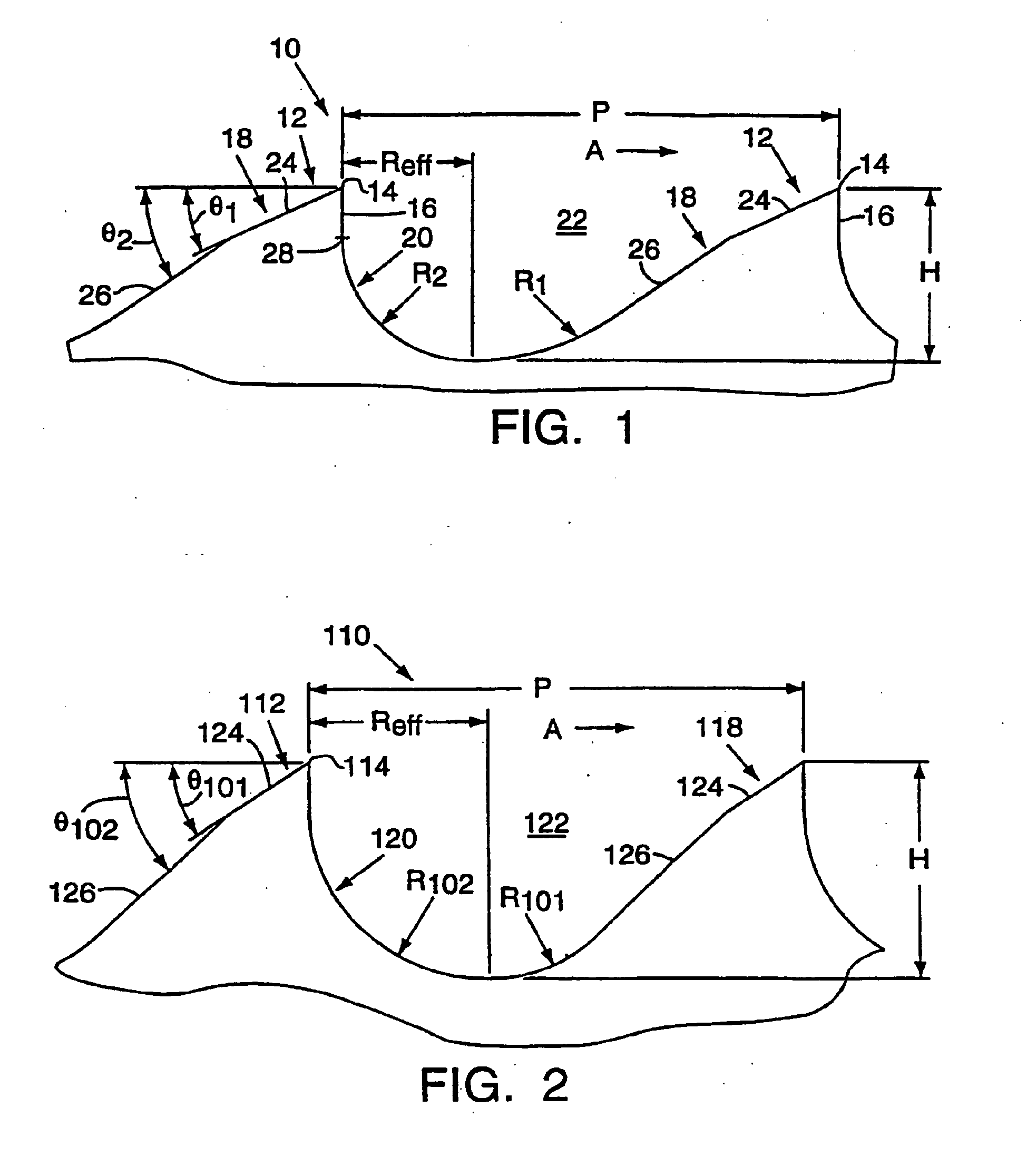
FIG. 1 is an enlarged partial side elevational view of the saw blade of the present
invention;
FIG. 2 is an enlarged partial side elevational view of an alternate embodiment of
the saw blade of FIG. 1;
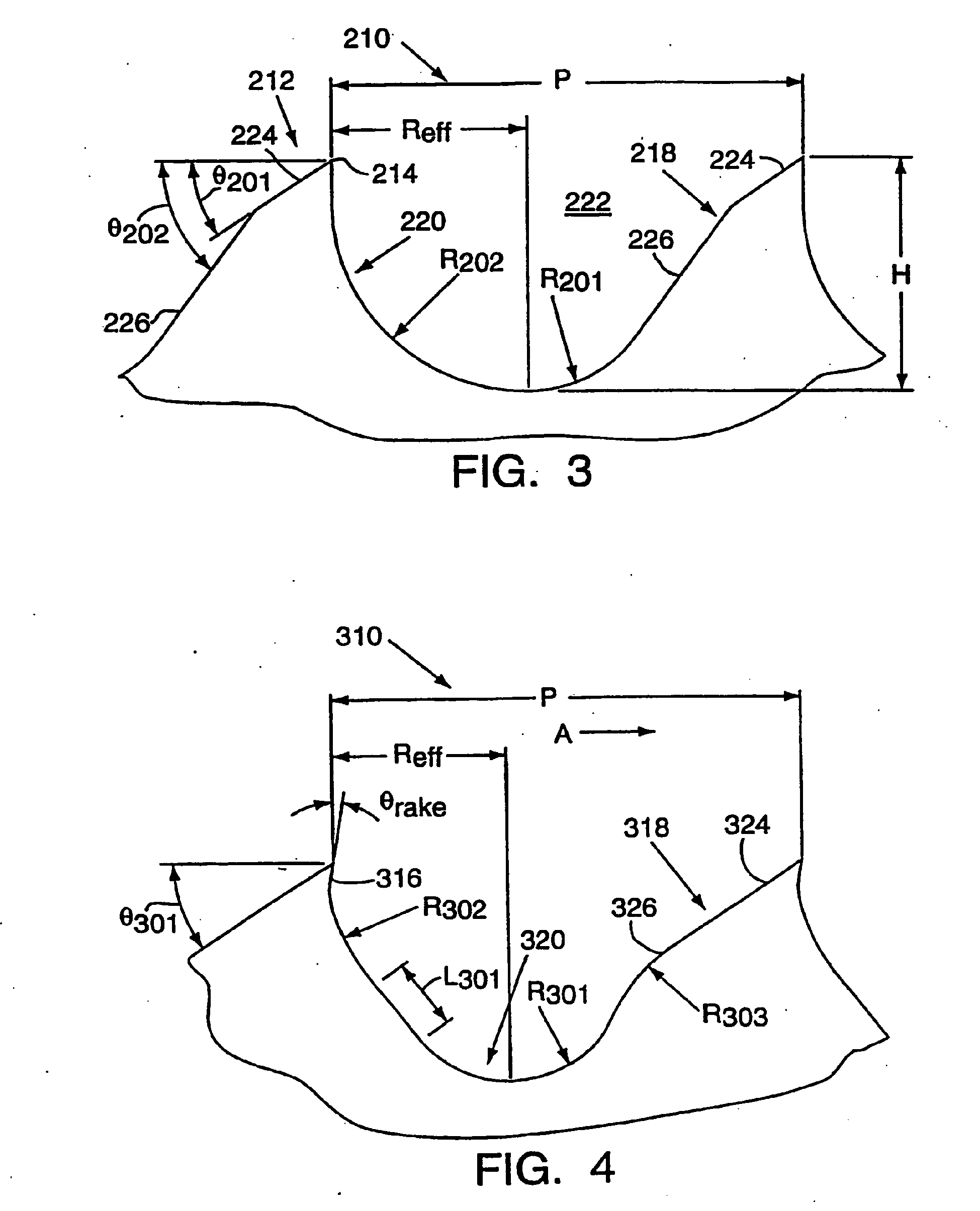
FIG. 3 is an enlarged partial side elevational view of an alternate embodiment of
the saw blade of FIG. 1; and
FIG. 4 is an enlarged partial side elevational view of an alternate embodiment of
the saw blade of FIG. 1.
Detailed Description Of The Preferred Embodiments
Detailed Description Of The Preferred Embodiments
[0010] FIG. 1 illustrates a saw blade embodying the invention. The saw blade, generally
designated by the reference numeral 10, includes a cutting edge defined by a plurality
of saw teeth 12, each tooth having a tip 14, a rake face 16, and a relief surface
18 extending from the tip in a direction opposite to the saw blade's cutting direction
designated in FIG. 1 by arrow A. The teeth 12 are spaced along the cutting edge with
the tip of one tooth and the tip of the next consecutively disposed tooth cooperating
to define a pitch distance P. A curvilinear base surface 20 extends between the rake
face 16 of one tooth 12 and the relief surface 18 of the next consecutive tooth. As
shown in FIG. 1, the base surface 20 is tangent to the rake face 16. The rake face
16, the curvilinear base surface 20, and the relief surface 18 cooperate to define
a gullet area 22. In addition, an effective gullet radius R
eff is defined by the rake face 16 and the curvilinear base surface 20. R
eff is equal to the horizontal distance from the leftmost point of the gullet area 22,
when the saw blade 10 is viewed in the orientation shown in FIG. 1, to the point where
the gullet depth or gullet depth H reaches its maximum value.
[0011] Still referring to FIG. 1, the relief surface 18 includes a primary relief surface
24 extending from the tip 14 of the tooth 12 and a secondary relief surface 26 extending
from the primary relief surface tangent to a radius
R1 defined by the curvilinear base surface 20. The primary and secondary relief surfaces,
24 and 26, respectively, are further defined by first and second relief angles, θ
1 and θ
2, respectively, measured from a plane extending parallel to the cutting direction
A of the saw blade 10. The second relief angle θ
2 is larger that the first relief angle θ
1, thereby increasing the size of the gullet area 22 over that which would be possible
if only the first relief surface were present.
[0012] In the embodiment of the present invention illustrated in FIG. 1, the effective gullet
radius R
eff is equal to 30% of the pitch distance P. In addition, the effective gullet radius
R
eff is between 65% and 85% of the gullet depth, and preferably equal to about 81 % of
the gullet depth. Moreover, the length of the rake face 16 between the tip 14 of the
tooth 12 and the point where the rake face is tangent to a radius
R2 defined by the curvilinear base surface 20, is preferably less than 25% of the gullet
depth. This relatively short rake face length allows the radius
R2 to be maximized, thereby minimizing stress at the base of the tooth.
[0013] Still referring to FIG. 1, during a cutting operation, chips generated by the saw
blade 10 flow into the gullet areas 22 between consecutively disposed teeth 12. As
the cutting operation continues, the chips must be discharged from the gullet areas
22 so that newly generated chips can be accommodated. The large effective gullet radius
R
eff, the relatively short rake face 16, the primary and secondary relief surfaces, 24
and 26, respectively, and the curvilinear base surface 20 all cooperate to define
a gullet area 22 that provides for the smooth ingress and egress of chips to and from
the gullet area.
[0014] A second embodiment of the saw blade of the present invention, shown in FIG. 2, is
generally designated by the reference numeral 110. The saw blade 110 is similar in
many respects to the saw blade 10 described above, and therefore like reference numerals
preceded by the number 1 are used to indicate like elements. The saw blade 110 differs
from the saw blade 10 in that the effective gullet radius R
eff is approximately 36% of the pitch distance P and approximately 77% of the gullet
depth H. In addition, the gullet depth is approximately 46% of the pitch distance
P.
[0015] Still referring to FIG. 2, the relief surface 118 includes a primary relief surface
124 extending from the tip 114 of the tooth 112, and a secondary relief surface 126
extending from the primary relief surface tangent to the radius R
101 defined by the curvilinear base surface 120. The primary and secondary relief surfaces,
124 and 126, are further defined by first and second relief angles, θ
101 and θ
102, respectively, measured from a plane extending parallel to the cutting direction
of the saw blade 110. The second relief angle θ
102 is larger than the first relief angle θ
101. In the illustrated embodiment θ
101 is approximately 35°, and θ
102 is approximately 45°.
[0016] A third embodiment of the saw blade of the present invention is shown in FIG. 3 and
is generally designated by the reference number 210. The saw blade 210 is similar
in many respects to the saw blade 10 described above, and therefore like reference
numerals preceded by the number 2 are used to indicate like elements. The saw blade
210 differs from the saw blade 10 in that the effective gullet radius R
eff is approximately 41% of the pitch distance P and approximately 79% of the pullet
depth H. In addition, the gullet depth is approximately 46% of the pitch distance.
[0017] The relief surface 218 includes a primary relief surface 224 extending from the tip
214 of the tooth 212, and a secondary relief surface 226 extending from the primary
relief surface tangent to the radius R
201 defined by the curvilinear base surface 220. The primary and secondary relief surfaces,
224 and 226, are further defined by first and second relief angles, θ
201 and θ
202, respectively, measured from a plane extending parallel to the cutting direction of
the saw blade 210. The second relief angle θ
202 is larger than the first relief angle θ
201. In the illustrated embodiment θ
201 is approximately 35°, and θ
202 is approximately 55°.
[0018] A fourth embodiment of the saw blade of the present invention is shown in FIG. 4
and is generally designated by the reference numeral 310. The saw blade 310 is similar
in many respects to the saw blade 10 described above, and therefore like reference
numerals preceded by the number 3 are used to indicate like elements. The saw blade
310 differs from the saw blade 10 in that the rake face 316 defines a positive rake
angle θ
rake measured from a plane extending approximately perpendicular to the cutting direction
A of the saw blade 310. While the angle θ
rake is positive in the illustrated embodiment, the present invention is not limited in
this regard as θ
rake can also be zero or negative without departing from the broader aspects of the invention.
[0019] The embodiment illustrated in FIG. 4 also differs from the other embodiments described
above in that the curvilinear base surface 320 is defined by a combination of radii,
R301 and
R302, with rectilinear portion
L301 interposed therebetween. In addition, the relief surface 318 includes a primary relief
surface 324 defined by relief angle θ
301, and a secondary relief surface 326 defined by radius
R303. In the illustrated embodiment, the radius
R303 is tangent to the primary relief surface 324 and the radius
R301 defined by the curvilinear base surface 320. In addition, the radius
R303 is convex relative to the radius
R301 defined by the curvilinear base surface 320. However, the invention is not limited
in this regard as the radius
R303 does not have to be tangent to the primary relief surface 324 or the curvilinear
base surface 320. In addition, while the curvilinear base surface 320 has been shown
and described as being defined by a combination of radii,
R301 and
R302' with rectilinear portion
L301 interposed therebetween, the present invention is not limited in this regard. The
curvilinear base surface 320 can be defined by any combination of radii and rectilinear
sections without departing from the broader aspects of the present invention. Moreover,
the relief surface 318, while shown and described in the illustrated embodiment as
including a rectilinear primary relief surface 324 and a radial secondary relief surface
326, is not limited in this regard as any combination of radial and rectilinear surfaces
can be employed without departing from the broader aspects of the present invention.
[0020] Referring to FIGS. 2-4, during a cutting operation, chips are generated by the saw
blades, 110, 210, or 310, which flow into the respective gullet areas. As the cutting
operation continues, the chips must be discharged from the gullet areas so that newly
generated chips can be accommodated. The larger effective gullet radii
Reff' the relatively short rake faces, the larger angles or radii of the secondary relief
surfaces 126, 226, and 326, as well as the curvilinear base surfaces 120, 220, or
320 of each of these blades, all cooperate to define gullet areas larger than those
of known saw blades. The larger gullet areas provide the saw blades with the capability
to handle larger volumes of chips, thereby enabling the blades to operate at higher
speeds. In addition, the large radii which define the curvilinear base surfaces provide
the teeth of these blades with enhanced stress-bearing capabilities by minimizing
any stress concentrations at the base of the teeth. This in turn reduces the likelihood
of the teeth shearing or tearing from the blades, thereby enabling them to cut materials
at higher speeds which would normally impose large amounts of stress on the teeth.
[0021] While preferred embodiments have been shown and described, various modifications
and substitutions may be made without departing from the scope of the present invention.
1. A saw blade (10, 110, 210, 310) having a cutting edge defined by a plurality of teeth
(12, 112, 212) disposed along the blade, each of said teeth (12, 112, 212) having
a tip (14, 114, 214), a rake face (16, 316) adjacent to the tip (14, 114, 214), a
curvilinear base surface (20, 120, 220, 320) located on an opposite side of the rake
face (16, 316) relative to the tip (14, 114, 214), and a relief surface (18, 118,
218, 318) located on an opposite side of the tip (14, 114, 214) relative to the rake
face (16, 316), the tip (14, 114, 214) of each tooth and the tip (14, 114, 214) of
the next consecutively disposed tooth defining a pitch (P) distance, and the curvilinear
base surface (20, 120, 220, 320) and the tip (14, 114, 214) of each tooth cooperating
to define a maximum gullet depth (H), wherein the rake face (16, 316) and the curvilinear
base surface (20, 120, 220, 320) of each tooth cooperate to define an effective gullet
radius (Reff) defined by the horizontal distance from the leftmost point of the gullet area (22,
122, 222), when the saw blade (10, 110, 210, 310) is viewed with the teeth (12, 112,
212) pointing upward, to the point where the gullet depth (H) reaches its maximum
value wherein the relief surface (18, 118, 218) of each tooth includes a primary relief
surface (24, 124, 224) located on an opposite side of the tip (14, 114, 214) relative
to the rake face (16), and a secondary relief surface (26, 126, 226) located on an
opposite side of the primary relief surface (24, 124, 224) relative to the tip (14,
114, 214) the primary relief surface (24, 124, 224) being defined by a first acute
relief angle (θ1, θ101, θ201) relative to a plane extending between the tips (14, 114, 214) of consecutively disposed
teeth (12, 112, 212), and the secondary relief surface (26, 126, 226) being defined
by a secondary relief angle (θ2,θ102, θ202) relative to said plane greater than the first relief angle (θ1, θ101, θ201,) and between 45 degrees and 55 degrees or wherein the relief surface of each tooth
is defined by a primary relief surface (324) extending from the tip of the tooth,
and a secondary relief surface (326) extending from the primary relief surface (324);
and wherein a respective one of the primary (324) and secondary relief (326) surfaces
is defined by a relief angle (θ301) measured from a plane parallel with the direction of cut (A) of the saw blade (310),
and the other of the primary (324) and secondary relief (326) surfaces is convex defined
by a radius (R303), and wherein the maximum gullet depth (H) is greater than 40% of the pitch (P) distance,
characterized in that the effective gullet radius (Reff) is between 65% and 85% of the maximum gullet depth (H) and at least 30% of the pitch
(P) distance.
2. The saw blade (310) of claim 1 wherein the rake face (316) of each tooth defines a
positive rake angle (θrake).
3. The saw blade (310) of claim 1 wherein the rake face (316) of each tooth defines a
negative rake angle (θrake).
4. The saw blade (10, 110, 210, 310) of claim 1 wherein the first relief angle (θ1 θ101,θ201, θ301) is 35 degrees.
5. The saw blade (10, 110, 210, 310) of claim 4 wherein the second relief angle (θ2, θ102, θ202) is 45 degrees.
6. The saw blade (10, 110, 210, 310) of claim 4 wherein the second relief angle (θ2,θ102,θ202) is 55 degrees.
7. The saw blade (10, 110, 210, 310) according to any of the preceding claims, wherein
the curvilinear base surface (20, 120, 220, 320) is defined by a first radius (R2, R102, R202, R302) tangent to the rake face (16, 316) and a second radius. (R1, R101, R201, R301) tangent at one end to the first radius (R2, R102, R202, R302).
8. The saw blade (10, 110, 210, 310) according to any of the preceding claims, wherein
the curvilinear base surface (20, 120, 220, 320) is defined by a first radius (R2, R102, R202, R302) tangent to the rake face (16, 316) and at least a second radius (R1, R101, R201, R301) tangent at one end to the first radius (R2, R102, R202, R302) and at another end to the at least one relief surface (18, 118, 218, 318).
9. The saw blade (10, 110, 210, 310) according to any of the preceding claims, wherein
the curvilinear base surface (20, 120, 220, 320) is defined by a combination of radial
and rectilinear sections (R301, L301, R302).
10. The saw blade (10, 110, 210, 310) according to any of claims 1-9, wherein the effective
gullet radius (Reff) is 77% of the maximum gullet depth (H) and the maximum gullet depth (H) is 46% of
the pitch (P) distance.
1. Sägeblatt (10, 110, 210, 310), welches eine Schneide aufweist, welche definiert ist
durch mehrere Zähne (12, 112, 212), die entlang dem Sägeblatt angeordnet sind, wobei
ein jeder der Zähne (12, 112, 212) eine Spitze (14, 114, 214) aufweist, eine Spanfläche
(16, 316), benachbart der Spitze (14, 114, 214), eine gekrümmte Zahngrundfläche (20,
120, 220, 320), welche sich an einer gegenüberliegenden Seite der Spanfläche (16,
316) befindet, relativ zu der Spitze (14, 114, 214), und eine Freifläche (18, 118,
218, 318) welche sich an einer gegenüberliegenden Seite der Spitze (14, 114, 214)
befindet, relativ zu der Spanfläche (16, 316), wobei die Spitze (14, 114, 214) eines
jeden Zahns und die Spitze (14, 114, 214) des nächsten darauffolgend angeordneten
Zahns eine Zahnteilung (P) definieren, und wobei die gekrümmte Zahngrundfläche (20,
120, 220, 320) und die Spitze (14, 114, 214) eines jeden Zahns zusammenwirken, derart,
dass sie eine maximale Tiefe des Zahngrunds (H) definieren, wobei die Spanfläche (16,
316) und die gekrümmte Zahngrundfläche (20, 120, 220, 320) eines jeden Zahns zusammenwirken,
derart, dass sie einen effektiven Radius des Zahngrunds (Reff) definieren, welcher durch die Entfernung, in horizontaler Richtung, von dem am weitesten
links gelegenen Punkt der Zahnlücke (22, 122, 222) definiert ist, wenn das Sägeblatt
(10, 110, 210, 310) aus einer Richtung gesehen wird, in welcher die Zähne (12, 112,
212) nach oben zeigen, bis zu dem Punkt, an dem die Tiefe des Zahngrunds (H) ihren
maximalen Wert erreicht, wobei wenigstens eine Freifläche (18, 118, 218) eines jeden
Zahns eine erste Freifläche (24, 124, 224) aufweist, welche sich an einer gegenüberliegenden
Seite der Spitze (14, 114, 214) befindet, relativ zu der Spanfläche (16), und eine
zweite Freifläche (26, 126, 226), welche sich an einer gegenüberliegenden Seite der
ersten Freifläche (24, 124, 224) befindet, relativ zu der Spitze (14, 114, 214), wobei
die erste Freifläche (24, 124, 224) durch einen ersten spitzen Freiwinkel (θ1, θ101, θ201,) definiert ist, relativ zu einer Ebene, welche sich zwischen den Spitzen (14, 114,
214) aufeinanderfolgend angeordneter Zähne (12, 112, 212) erstreckt, und wobei die
zweite Freifläche (26, 126, 226) durch einen zweiten Freiwinkel (θ2, θ102, θ202) definiert ist, relativ zu der Ebene, welcher größer ist als der erste Freiwinkel
(θ1, θ101, θ201), und welcher zwischen 45 Grad und 55 Grad beträgt, oder wobei die Freifläche eines
jeden Zahns definiert ist durch eine erste Freifläche (324), welche sich von der Spitze
des Zahns aus erstreckt, und eine zweite Freifläche (326), welche sich von der ersten
Freifläche (324) aus erstreckt; und wobei eine jeweilige von der ersten (324) und
der zweiten (326) Freifläche durch einen Freiwinkel (θ301) definiert ist, gemessen von einer Ebene aus, welche parallel zu der Schneiderichtung
(A) des Sägeblatts (310) verläuft, und wobei die andere von der ersten (324) und der
zweiten (326) Freifläche durch einen Radius (R303) definiert ist, und wobei die maximale Tiefe des Zahngrunds (H) größer ist als 40
% der Zahnteilung (P), dadurch gekennzeichnet, dass der effektive Radius des Zahngrunds(Reff) zwischen 65 % und 85 % der maximalen Tiefe des Zahngrunds (H) und wenigstens 30
% der Zahnteilung (P) beträgt.
2. Sägeblatt (310) nach Anspruch 1, wobei die Spanfläche (316) eines jeden Zahns einen
positiven Spanwinkel (θrake) definiert.
3. Sägeblatt (310) nach Anspruch 1, wobei die Spanfläche (316) eines jeden Zahns einen
negativen Spanwinkel (θrake) definiert.
4. Sägeblatt (10, 110, 210, 310) nach Anspruch 1, wobei der erste Freiwinkel (θ1, θ101, θ201, θ301) 35 Grad beträgt.
5. Sägeblatt (10, 110, 210, 310) nach Anspruch 4, wobei der zweite Freiwinkel (θ2, θ102, θ202) 45 Grad beträgt.
6. Sägeblatt (10, 110, 210, 310) nach Anspruch 4, wobei der zweite Freiwinkel (θ2,θ102,θ202) 55 Grad beträgt.
7. Sägeblatt (10, 110, 210, 310) nach einem der vorhergehenden Ansprüche, wobei die gekrümmte
Zahngrundfläche (20, 120, 220, 320) definiert ist durch einen ersten Radius (R2, R102, R202, R302), tangential zu der Spanfläche (16, 316), und einen zweiten Radius (R1, R101, R201, R301), an einem Ende tangential zu dem ersten Radius (R2, R102, R202, R302).
8. Sägeblatt (10, 110, 210, 310) nach einem der vorhergehenden Ansprüche, wobei die gekrümmte
Zahngrundfläche (20, 120, 220, 320) definiert ist durch einen ersten Radius (R2, R102, R202, R302), tangential zu der Spanfläche (16, 316), und wenigstens einen zweiten Radius (R1, R101, R201, R301), an einem Ende tangential zu dem ersten Radius (R2, R102, R202, R302), und am anderen Ende zu wenigstens einer Freifläche (18, 118, 218, 318).
9. Sägeblatt (10, 110, 210, 310) nach einem der vorhergehenden Ansprüche, wobei die gekrümmte
Zahngrundfläche (20, 120, 220, 320) definiert ist durch eine Kombination aus kreisbogenförmigen
und geraden Abschnitten (R301, L301, R302).
10. Sägeblatt (10, 110, 210, 310) nach einem der Ansprüche 1 bis 9, wobei der effektive
Radius des Zahngrunds (Reff) 77 % der maximalen Tiefe des Zahngrunds (H) beträgt, und wobei die maximale Tiefe
des Zahngrunds (H) 46 % der Zahnteilung (P) beträgt.
1. Lame de scie (10, 110, 210, 310) dotée d'un bord coupant défini par une pluralité
de dents (12, 112, 212) disposées le long de la lame, chacune desdites dents (12,
112, 212) ayant une pointe (14, 114, 214), une face de coupe (16, 316) adjacente à
la pointe (14, 114, 214), une surface de base curvilinéaire (20, 120, 220, 320) localisée
sur une face opposée de la face de coupe (16, 316) par rapport à la pointe (14, 114,
214), et une surface de dépouille (18, 118, 218, 318) localisée sur une face opposée
de la pointe (14, 114, 214) par rapport à la face de coupe (16, 316), la pointe (14,
114, 214) de chaque dent et la pointe (14, 114, 214) de la dent suivante disposée
consécutivement définissant une distance de pas (P) et la surface de base curvilinéaire
(20, 120, 220, 320) et la pointe (14, 114, 214) de chaque dent coopérant pour définir
une profondeur de creux (H) maximale, la face de coupe (16, 316) et la surface de
base curvilinéaire (20, 120, 220, 320) de chaque dent coopérant pour définir un rayon
de creux effectif (Reff) défini par la distance horizontale entre le point le plus à gauche de la zone du
creux (22, 122, 222) lorsque la lame de scie (10, 110, 210, 310) est vue avec les
dents (12, 112, 212) pointant vers le haut vers le point où la profondeur du creux
(H) atteint sa valeur maximale, l'au moins une surface de dépouille (18, 118, 218)
de chaque dent comprenant une surface de dépouille primaire (24, 124, 224) localisée
sur une face opposée de la pointe (14, 114, 214) par rapport à la face de coupe (16),
et une surface de dépouille secondaire (26, 126, 226) localisée sur une face opposée
de la surface de dépouille primaire (24, 124, 224) par rapport à la pointe (14, 114,
214), la surface de dépouille primaire (24, 124, 224) étant définie par un premier
angle de dépouille aigu (θ1, θ101, θ201,) par rapport à un plan s'étendant entre les pointes (14, 114, 214) des dents disposées
consécutivement (12, 112, 212), et la surface de dépouille secondaire (26, 126, 226)
étant définie par un angle de dépouille secondaire (θ2, θ102, θ202) par rapport audit plan et supérieur au premier angle de dépouille (θ1, θ101, θ201,) et situé entre 45 degrés et 55 degrés ou la surface de dépouille de chaque dent
étant définie par une surface de dépouille primaire (324) s'étendant depuis la pointe
de la dent et une surface de dépouille secondaire (326) s'étendant depuis la surface
de dépouille primaire (324) ; et une surface respective sur les surfaces de dépouille
primaire (324) et secondaire (326) étant définie par un angle de dépouille (θ301) mesuré depuis un plan parallèle à la direction de coupe (A) de la lame de scie (310)
et l'autre surface sur les surfaces de dépouille primaire (324) et secondaire (326)
étant définie par un rayon (R303), et la profondeur de creux maximale (H) étant supérieure à 40 % de la distance de
pas (P), caractérisée en ce que le rayon de creux effectif (Reff) est compris entre 65 % et 85 % de la profondeur de creux maximale (H) et au moins
30 % de la distance de pas (P).
2. Lame de scie (310) selon la revendication 1, la face de coupe (316) de chaque dent
définissant un angle de coupe positif (θcoupe).
3. Lame de scie (310) selon la revendication 1, la face de coupe (316) de chaque dent
définissant un angle de coupe négatif (θcoupe).
4. Lame de scie (10, 110, 210, 310) selon la revendication 1, le premier angle de dépouille
(θ1, θ101, θ201, θ301) étant de 35 degrés.
5. Lame de scie (10, 110, 210, 310) selon la revendication 4, le second angle de dépouille
(θ2, θ102, θ202) étant de 45 degrés.
6. Lame de scie (10, 110, 210, 310) selon la revendication 4, le second angle de dépouille
(θ2, θ102, θ202) étant de 55 degrés.
7. Lame de scie (10, 110, 210, 310) selon l'une quelconque des revendications précédentes,
la surface de base curvilinéaire (20, 120, 220, 320) étant définie par un premier
rayon (R2, R102, R202, R302) tangent à la face de coupe (16, 316) et un second rayon (R1, R101, R201, R301) tangent à une extrémité du premier rayon (R2, R102, R202, R302).
8. Lame de scie (10, 110, 210, 310) selon l'une quelconque des revendications précédentes,
la surface de base curvilinéaire (20, 120, 220, 320) étant définie par un premier
rayon (R2, R102, R202, R302) tangent à la face de coupe (16, 316) et au moins un second rayon (R1, R101, R201, R301 tangent à une extrémité du premier rayon (R2, R102, R202, R302) et à une autre extrémité de l'au moins une surface de dépouille (18, 118, 218, 318).
9. Lame de scie (10, 110, 210, 310) selon l'une quelconque des revendications précédentes,
la surface de base curvilinéaire (20, 120, 220, 320) étant définie par une combinaison
de sections radiales et rectilinéaires (R301 , L301, R302).
10. Lame de scie (10, 110, 210, 310) selon l'une quelconque des revendications 1 à 9,
le rayon de creux effectif (Reff) représentant 77 % de la profondeur de creux maximale (H) et la profondeur de creux
maximale (H) représentant 46 % de la distance de pas (P).
REFERENCES CITED IN THE DESCRIPTION
This list of references cited by the applicant is for the reader's convenience only.
It does not form part of the European patent document. Even though great care has
been taken in compiling the references, errors or omissions cannot be excluded and
the EPO disclaims all liability in this regard.
Patent documents cited in the description