|
(11) | EP 1 115 157 A1 |

| (12) | EUROPEAN PATENT APPLICATION |
| published in accordance with Art. 158(3) EPC |
|
|
|
|
||||||||||||||||
| (54) | POWER-SWITCHING SEMICONDUCTOR DEVICE |
| (57) In order to reduce a turn-on time of a power switching semiconductor device at a
low cost, a first main electrode divided into a plurality of segments forming segment
rows of a multi-concentric circle and a control electrode surrounding the segments
are formed on a front major surface of a semiconductor substrate, and a second electrode
is formed on a rear major surface thereof, and a turn-on operation is performed between
the first main electrode and the second main electrode with a control signal inputted
from the control electrode, specifying a relationship between a width of a segment
and a distance between adjacent segments, and others. |
Technical Field
[0001] The present invention relates to improvement on a power switching semiconductor device such as a gate turn-off thyristor (hereinafter referred to as "GTO"), for example, which has a first main electrode divided into a plurality of segments and a control electrode surrounding the segments formed on a front major surface of a semiconductor substrate, and a second main electrode formed on a rear major surface thereof, respectively, and which performs a turn-on operation between the first main electrode and the second main electrode with a control signal inputted from the control electrode.
Background Art
[0002] A conventional power switching semiconductor device of this kind will be described with reference to a schematic view of GTO shown in Fig. 4. Fig. 4 is a drawing of a semiconductor substrate viewed from a front major surface thereof.
[0003] A thyristor having a self arc-extinction capability such as GTO requires a structure endurable against a reverse bias at a turn-off, dissimilar to a common thyristor and a P base layer corresponding to a gate is formed in a mesa structure to achieve a withstand voltage of tens of volts. Cathode electrodes 1 (hereinafter referred to as "segments") of respective small thyristors each independently fabricated in a mesa structure are arranged radially and in a concentric double ring shape amounting to hundreds to thousands of pieces. A gate electrode 2 constituting a control electrode is formed on a front major surface 3a of a semiconductor substrate 3 in such a manner to surround the outer periphery of the segments 1.
[0005] Further, an anode electrode 5 constituting a second main electrode is formed on a rear major surface 3b of the semiconductor substrate 3.
[0006] The following relations was established between an inner segment row 6 forming an inner concentric circle and an outer segment row 7 arranged in a circle concentric to and outside the inner concentric circle:
where A2 is a width of a segment in a circumferential direction, B2 a distance between adjacent segments in a circumferential direction, C2 an outer diameter of the inner segment row, and D2 an inner diameter of the outer segment row.
[0007] In the GTO fabricated in such a structure, it is well known to perform the turn-on and turn-off operations, but there has been a problem that a turn-on time is long and a switching action is slow.
[0008] The present invention has been made in light of conventional circumstances as described above, and it is accordingly an object of the present invention is to provide a power switching semiconductor device having a shorter turn-on time at a low cost without deteriorating the conventional characteristics.
Disclosure of the Invention
[0009] The present invention is directed to a power switching semiconductor device, in which a first main electrode divided into a plurality of segments forming segment rows of a multi-concentric circle and a control electrode surrounding the segments are formed on a front major surface of a semiconductor substrate, and a second main electrode is formed on a rear major surface thereof, and a turn-on operation is performed between the first main electrode and the second main electrode with a control signal inputted from the control electrode, wherein a turn-on time is reduced without adopting any special structure by specifying a relationship among the maximum width of a segment in a circumferential direction, the minimum distance between adjacent segments in a circumferential direction arrangement, an outer diameter of an inner segment row, and an inner diameter of an outer segment row.
Brief Description of the Drawings
[0010]
Fig. 1 is a schematic view showing a structure of a first embodiment of the present invention;
Fig. 2 is a graph of turn-on characteristics of the first embodiment of the present invention;
Fig. 3 is a graph of turn-on characteristics of the first embodiment of the present invention; and
Fig. 4 is a schematic view showing a structure of a conventional device.
Best Mode for Carrying out the Invention
[0012] Fig. 1 is a schematic view showing a structure of a first embodiment of the present invention, and Figs. 2 and 3 are graphs showing turn-off characteristics of a power switching semiconductor device of the first embodiment of the present invention.
[0013] In Fig. 1, A1 is a width of a segment 1 in a circumferential direction, B1 a distance between adjacent segments 1 in a circumferential direction arrangement, C1 an outer diameter of an inner segment row and D1 an inner diameter of an outer segment row, and there is established the following relations:
where A1 is a width of a segment 1 in a circumferential direction, B1 a distance between adjacent segments 1 in a circumferential direction arrangement, C1 an outer diameter of an inner segment row and D1 an inner diameter of an outer segment row.
[0014] Note that reference marks other than those described above indicate the same constituents as or corresponding constituents of those attached with the reference marks in Fig. 4 showing a conventional power switching semiconductor device, and therefore descriptions thereof are omitted.
[0015] Next, description will be given of the operations. While the performance of the turn-on operation and turn-off operation is similar to that of a conventional device, a turn-on time "tgt" is shorter than in the conventional device, as shown in Figs. 2 and 3.
[0016] In a constitution having such a structure like this, there can be provided a power switching semiconductor device with reduction of a turn-on time, a faster switching speed and a less switching loss.
[0017] In addition, since the structure specifies a distance between the segments only, a power switching semiconductor device with high performance can be provided at a low cost due to no cost-up factor associated with improvement on performance.
[0018] Further, while in the first embodiment, a case of GTO is shown as an example, the present invention is not limited to GTO but can be applied to a gate commutation thyristor (in which no snubber circuit is required by commutation of a main current to the gate at a turn-off) or the like.
Industrial Applicability
1. A power switching semiconductor device, having a first main electrode which is divided
into a plurality of segments to form segment rows of a multi-concentric circle and
a control electrode surrounding the segments formed on a front major surface of a
semiconductor substrate, and having a second main electrode formed on a rear major
surface thereof, in which a turn-on operation is performed between the first main
electrode and the second main electrode with a control signal inputted from the control
electrode, characterized by establishing the following relationships in the power
switching semiconductor device:

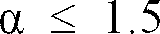

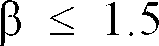
where A is a width of a segment in a circumferential direction, B a distance between adjacent segments in a circumferential direction arrangement, C an outer diameter of an inner segment row, and D an inner diameter of an outer segment row.
where A is a width of a segment in a circumferential direction, B a distance between adjacent segments in a circumferential direction arrangement, C an outer diameter of an inner segment row, and D an inner diameter of an outer segment row.