|
(11) | EP 1 172 700 B1 |

| (12) | EUROPEAN PATENT SPECIFICATION |
|
|
| (54) |
Photoconductive imaging members Photoleitfähiges Bildherstellungselement Elément de formation d'images photoconducteur |
|
|
|||||||||||||||||||||||||||||||
| Note: Within nine months from the publication of the mention of the grant of the European patent, any person may give notice to the European Patent Office of opposition to the European patent granted. Notice of opposition shall be filed in a written reasoned statement. It shall not be deemed to have been filed until the opposition fee has been paid. (Art. 99(1) European Patent Convention). |
[0001] With the present invention in embodiments thereof, there is provided a photoconductive imaging member containing a photogenerating layer of mixed perylenes, such as those of U.S. Patent 6,051,351, and which perylenes contain electron acceptors, or an electron acceptor, and which acceptor can enhance or increase the photosensitivity of the photogenerating layer by, for example, in embodiments about 40 percent, and more specifically, from 15 to 35 percent in embodiments.
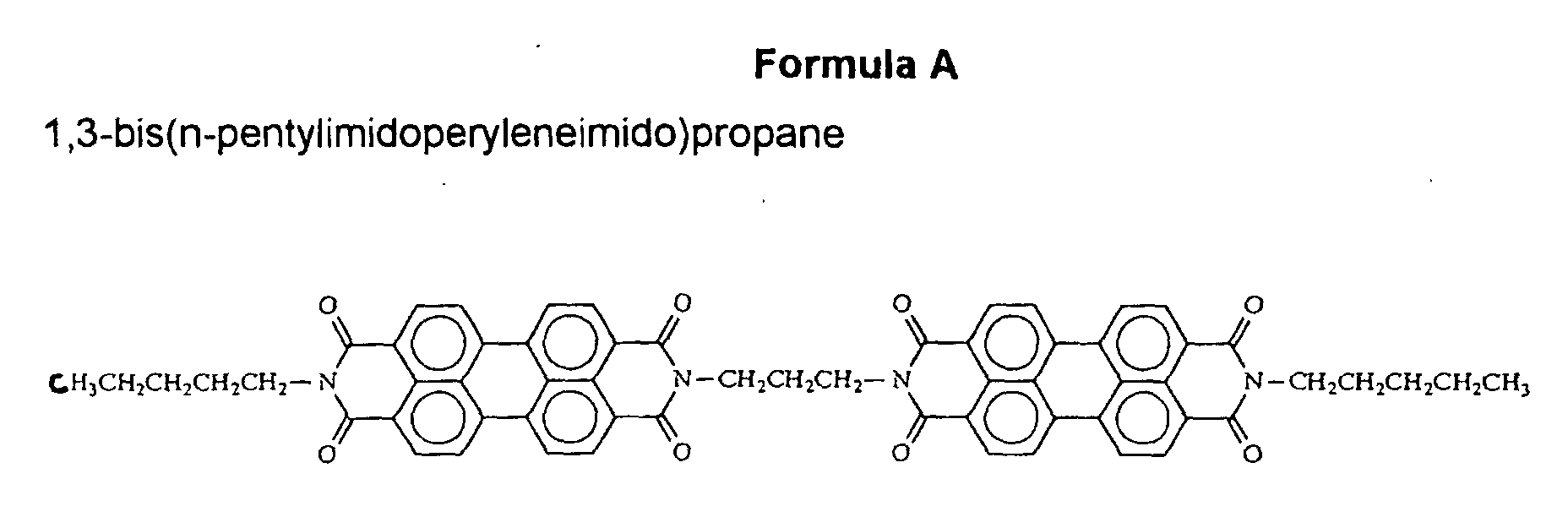
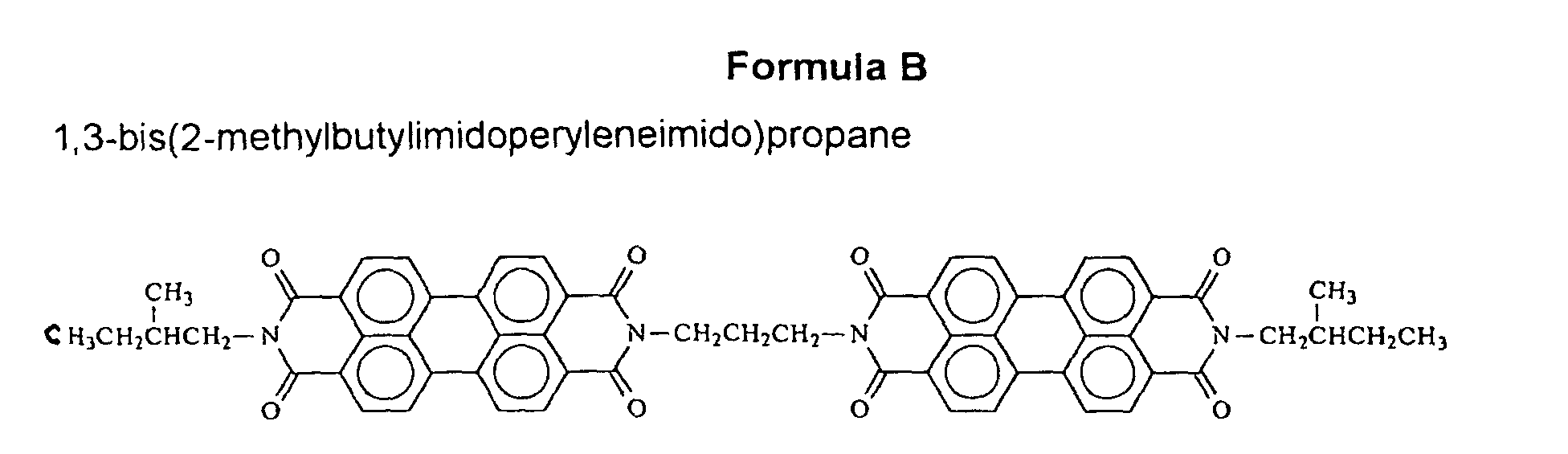
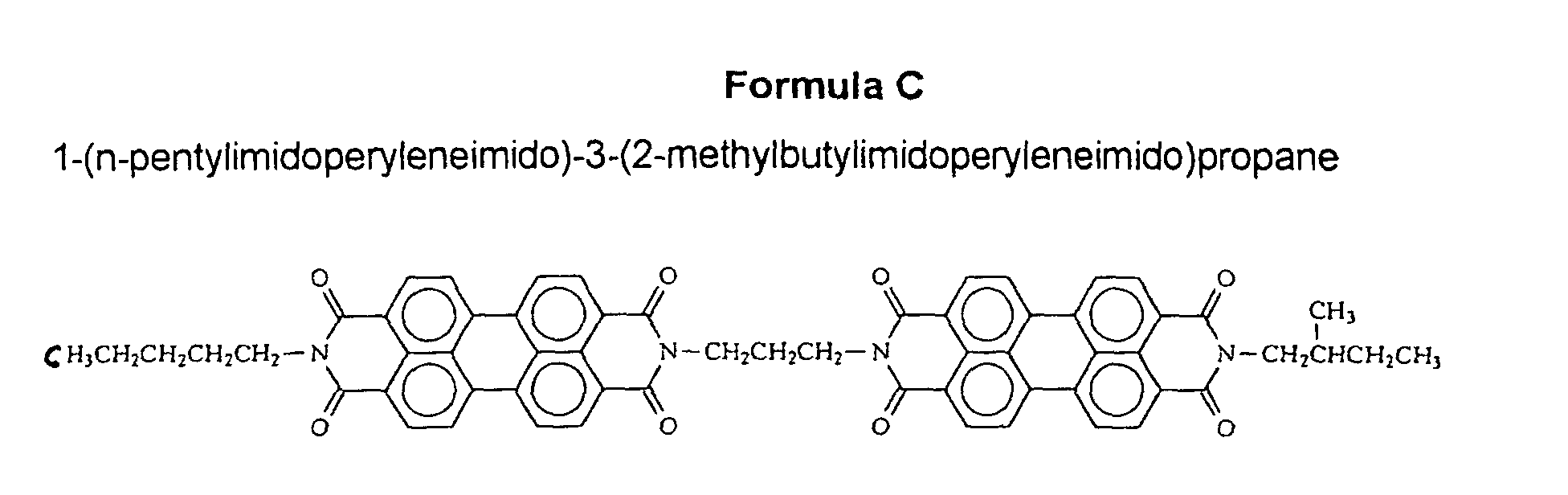
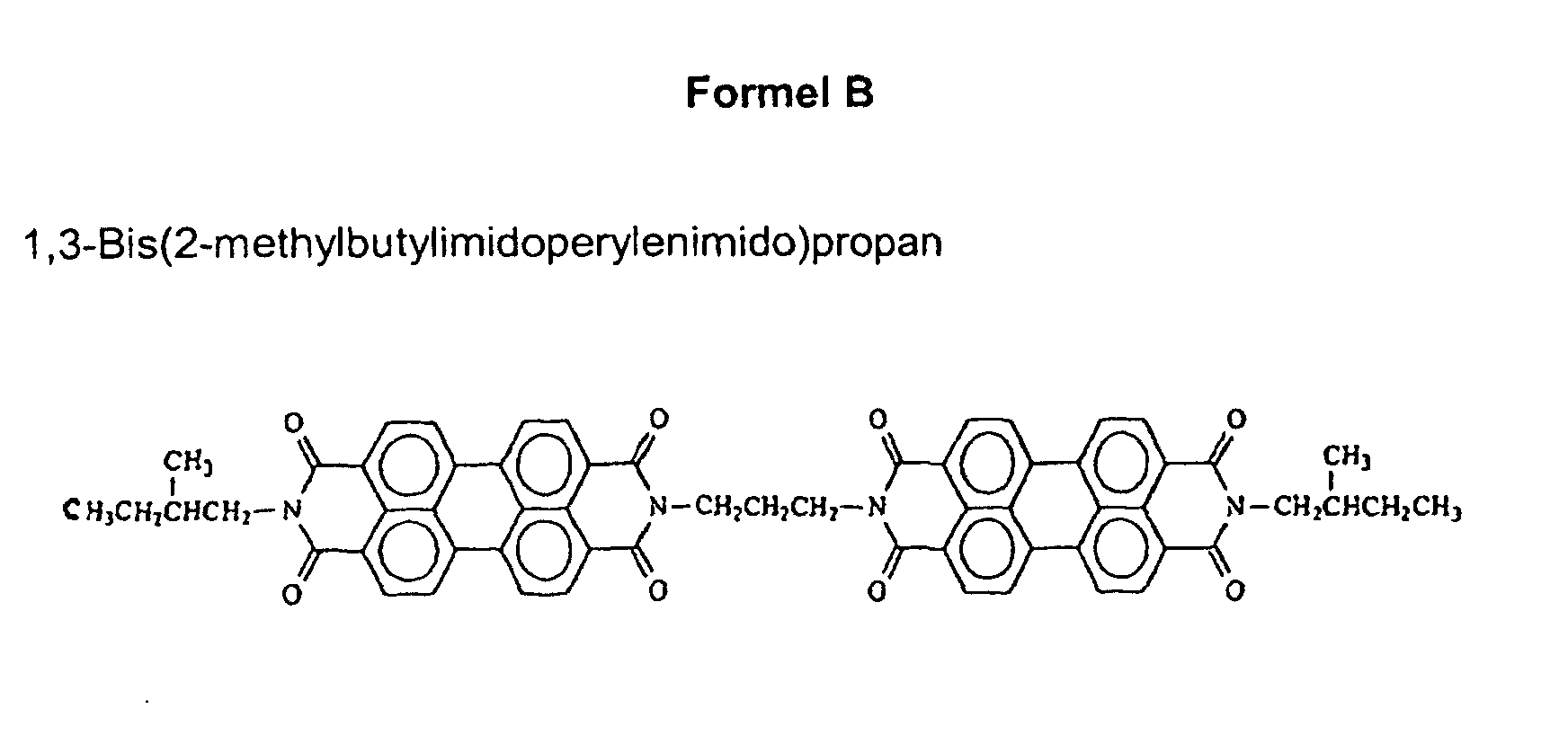
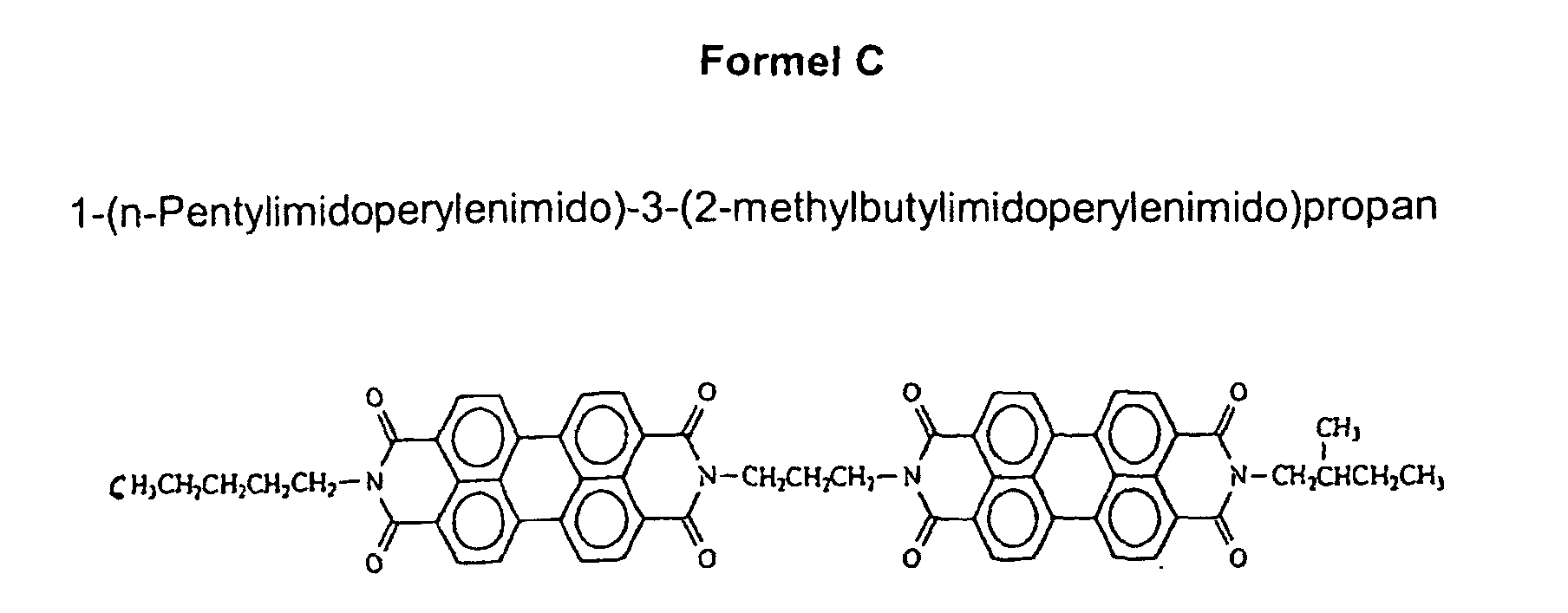
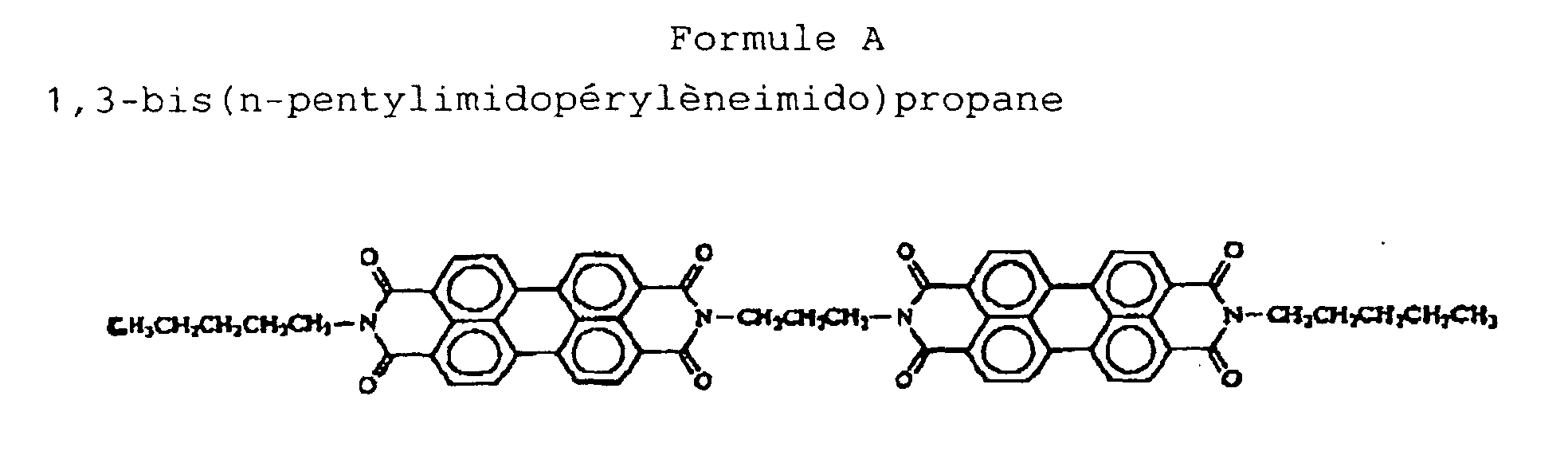
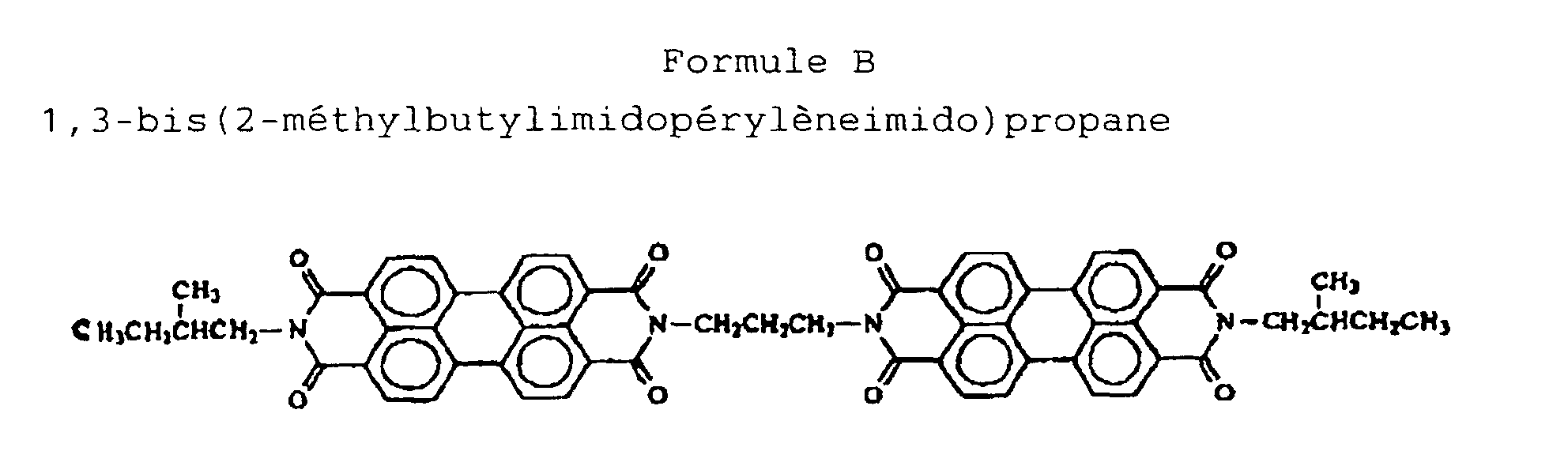
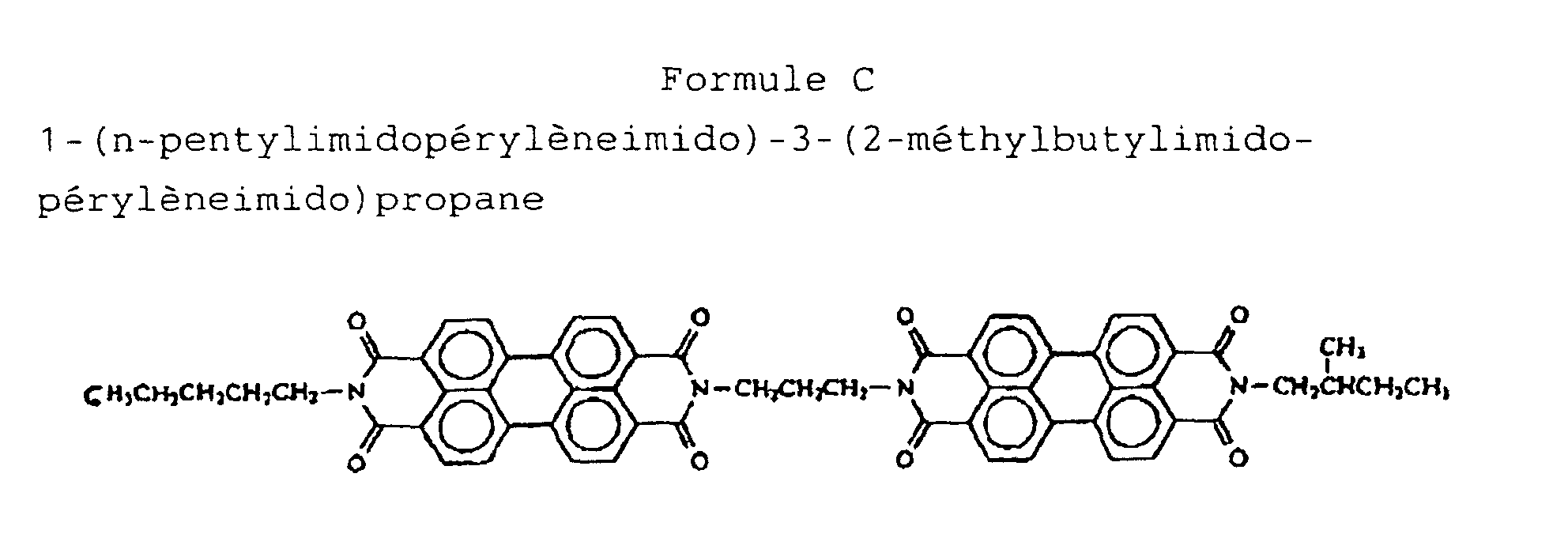
[0002] The present invention is directed, more specifically, to photoconductive imaging members with a photogenerating perylene mixture containing three perylene dimers represented, for example, by Formulae A, B and C (535+), and an electron acceptor component. In embodiments, the weight of electron acceptor relative to the total weight of perylene dimers is, for example, 0.1 to 20 weight percent; and more specifically, for example, the amount of electron acceptor varies from 0.9 percent to 16.7 percent, and the mixed perylene dimer amount varies from 99.1 to 83.3 percent. For the mixed perylene dimer portion, excluding the electron acceptor, each perylene may be selected in an amount of from 5 to 90, and in embodiments from 25 to 50 weight percent. More specifically, the mixed perylene dimer can be comprised of about 25 percent of 1,3-bis(n-pentylimidoperyleneimido)propane, about 25 percent of 1,3-bis(2-methylbutylimidoperyleneimido)propane, and about 50 percent of 1-(n-pentylimido peryleneimido)-3-(2-methylbutylimido peryleneimido)propane. In the perylene mixture in embodiments, each perylene of Formulae A, B, and C can be present in an amount of from 4 to 80 or 90 weight percent, and the electron acceptor can be present in an amount of from 0.1 to 20 weight percent, and wherein the total of the perylene mixture and the electron acceptor is 100 percent.
[0003] Furthermore, with the perylene dimer mixture composition components of the present invention there may be permitted larger latitudes and adjustment and design of the physical properties of the photogenerating pigment, such as increasing the photosensitivity, and improving the dispersion stability thereof. Increasing photosensitivity permits, for example, the use of light source at a reduced power rating by, for example, about 40 percent and hence a hardware cost savings. Also, dispersion stability time can be prolonged by more than about 100 percent as the dopants or electron acceptor components added can adsorb and modify the perylene pigment surface resulting in reduced aggregation of the perylene pigment particles.
[0004] The electron acceptor materials are carbazoles. The electron acceptor component can be added to the mixed perylene dimers prior to or during the preparation of photogenerator layer. The relative weight of electron acceptor with respect to the total amount of mixed perylene dimers can vary in embodiments of from 0.1 to 20 weight percent, and more specifically, from 1 to 16 or 10 weight percent.
[0005] Specific examples of electron acceptors are 9-vinylcarbazole, 9-phenylcarbazole, 9-ethylcarbazole, 9-naphthylcarbazole, polyvinylcarbazole.
[0006] Imaging members with the photogenerating pigment perylene and electron acceptor mixture of the present invention are sensitive to wavelengths of, for example, from about 400 to about 800 nanometers, that is throughout the visible and near infrared region of the light spectrum. Also, the imaging members of the present invention generally possess broad spectral response to white light from about 400 to about 800 nanometers and stable electrical properties, such as the charging voltage and the photodischarging characteristics remaining relatively constant over long cycling times as illustrated herein.
[0007] Certain individual perylene dimers are photoconductive and can be used to form photoconductive imaging members, however, these dimers may possess certain disadvantages, such as in some instances low photosensitivity, narrow spectral response range, poorer dispersion quality and the like, which disadvantages could limit their applications as imaging members. In U.S. Patent 6,051,351 there is illustrated a mixture of perylene dimers that generally exhibit an improved photosensitivity compared to the individual perylene components in the mixture. With the members of the present invention in embodiments thereof, these disadvantages can be minimized or eliminated, and increased photosensitivity can be obtainable by adding electron acceptor components.
[0008] US-A-5,320,921 discloses an electrophotographic photoreceptor comprising a conductive support and provided thereon a photoreceptive layer comprising a carrier generation layer containing 100 parts by weight of a polycyclic quinone compound and 0.01 to 100 parts by weight of at least one specific perylene compound.
[0009] JP-A-2136861 relates to an electrophotographic photoreceptor containing at least a charge generation layer containing an electron acceptive compound, and a charge transport layer on a conductive support.
[0010] JP-A-63186249 discloses an electrophotographic photoreceptor, containing a layer containing an electron acceptive material to improve the sensitivity and durability, on a conductive support.
[0011] JP-A-59031952 relates to a photoconductor having a sensitive layer containing (A) a perylene pigment of formula (I), (B) poly-N-vinylcarbazole, and (C) an electron accepting material comprising a benzene derivative whose nucleus is substituted by hydroxyl, carboxyl, carboalcoxyl and/or carbohalide, by nitro and/or halo.
[0012] Although the known imaging members may be suitable for their intended purposes, a need remains for imaging members containing improved photogenerator compositions. In addition, a need exists for imaging members containing photoconductive components with improved xerographic electrical performance including in some instances higher charge acceptance, lower dark decay, increased charge generation efficiency and charge injection into the transporting layer, tailored PIDC curve shapes to enable a variety of reprographic applications, reduced residual charge and/or reduced erase energy, improved long term cycling performance, and less variability in performance with environmental changes in temperature and relative humidity. There is also a need for imaging members with photoconductive components comprised of certain dimmer perylene photogenerating pigment mixtures with enhanced dispersibility in polymers and solvents. Moreover, there is a need for photogenerating pigment mixtures which permit the preparation of coating dispersions, particularly in dip-coating operations, which are colloidally stable and wherein settlement is avoided or minimized, for example little settling for a period of, for example, from 20 to 30 days in the absence of stirring. Further, there is a need for photoconductive materials with enhanced dispersibility in polymers and solvents that enable low cost coating processes for the manufacture of photoconductive imaging members. Also, there remains a need for adjusting the physical properties of photogenerating compositions to achieve a number of desired performance requirements for photoconductors. For instance, there is a need for photoconductive materials that enable imaging members with enhanced photosensitivity in the red region of the light spectrum enabling the resulting imaging members thereof to be selected for imaging by red diode and gas lasers. Furthermore, there is a need for photogenerator pigment mixtures with spectral response in the green and blue regions of the spectrum to enable imaging by newly emerging blue and green electronic imaging light sources. A need also exists for improved panchromatic pigments with broad spectral response from about 400 to about 800 nanometers for color copying using light-lens processes.
[0013] It was the object of the present invention to provide photoconductive compositions comprised of mixed perylene dimers of Formulae A, B and C and electron acceptors and imaging members thereof with improved photoconductivity, further to provide perylene dimer compositions admixed with electron acceptors, and which compositions are suitable for use as photogenerator pigments in layered photoconductive imaging devices, and moreover to provide photoconductive imaging members with perylene dimer photogenerating pigment mixtures that enable in embodiments imaging members with improved photosensitivity in the wavelength region of light spectrum, such as from about 400 to about 800 nanometers.
[0014] This object is achieved by a photoconductive imaging member comprising a photogenerating layer comprised of a mixture of (1) 1,3-bis(n-pentylimidoperyleneimido) propane (Formula A), 1,3-bis(2-methylbutylimido peryleneimido)propane (Formula B) and 1-(n-pentylimidoperyleneimido)-3-(2-methylbutylimidoperyleneimido)-propane (Formula C), and (2) a carbazole as an electron acceptor component
[0015] Preferred embodiments are set forth in the subclaims. The present invention also provides a photoconductive imaging member further containing a supporting substrate, a photogenerator layer comprised of the mixture and a charge transport layer; a photoconductive imaging member wherein the relative amount of electron acceptor to the mixed perylene dimers is from 0.1 to 20 percent by weight; a photoconductive imaging member wherein each perylene A, B and C is present in an amount of from 25 to 50 weight percent, and the total amount thereof is 100 percent; a photoconductive imaging member wherein the perylene 1,3-bis(n-pentylimidoperyleneimido)propane is present in an amount of 25 parts or weight percent, the 1,3-bis(2-methylbutylimido peryleneimido)propane is present in an amount of 25 parts, or weight percent and the 1-(n-pentylimidoperyleneimido)-3-(2-methylbutylimido peryleneimido)-propane is present in an amount of 50 parts or weight percent, and wherein the total of the parts of the mixed perylene dimers is 100 percent; a photoconductive imaging member wherein the carbazole is 9-vinylcarbazole, 9-phenylcarbazole, 9-ethylcarbazole, or 9-naphthylcarbazole; a photoconductive imaging member wherein the supporting substrate is comprised of a metal, a conductive polymer, or an insulating polymer, and wherein the substrate possesses a thickness of from 30 microns to 300 microns and is optionally overcoated with an electrically conductive layer with an optional thickness of from 0.01 micron to 1 micron; a photoconductive imaging member wherein the supporting substrate is comprised of aluminum, and there is optionally further included an overcoating top layer on the member, the overcoating being comprised of a polymer; a photoconductive imaging member wherein the photogenerating mixture is dispersed in a resinous binder in an amount of from 5 percent to 95 percent by weight; a photoconductive imaging member wherein the resinous binder is a polyester, a polyvinylcarbazole, a polyvinylbutyral, a polycarbonate, a polyethercarbonate, an aryl amine, a styrene copolymer, or a phenoxy polymer; a photoconductive imaging member wherein the charge transport layer is comprised of aryl amine molecules or aryl amine polymers; a photoconductive imaging member wherein the supporting substrate is comprised of a metal, a conductive polymer, or an insulating polymer, and wherein the substrate possesses a thickness of from 30 microns to 300 microns and is optionally overcoated with an electrically conductive layer with a thickness of from 0.01 micron to 1 micron; a photoconductive imaging member wherein the supporting substrate is comprised of aluminum, and there is further included an overcoating top layer on the member comprised of a polymer; a photoconductive imaging member wherein the photogenerating pigment mixture is dispersed in a resinous binder optionally in an amount of from 5 percent to 95 percent by weight for the mixture; a photoconductive imaging member wherein the resinous binder is a polyester, a polyvinylcarbazole, a polyvinylbutyral, a polycarbonate, a polyethercarbonate, an aryl amine, a styrene copolymer, or a phenoxy resin; a photoconductive imaging member wherein the charge transport layer is comprised of an aryl amine component; a photoconductive imaging member wherein the charge transport layer is comprised of aryl amine molecules of the formula
wherein X is alkyl or halogen; a photoconductive imaging member wherein the aryl amine is dispersed in a polymer of polycarbonate, a polyester, or a vinyl polymer; a photoconductive imaging member wherein the photogenerating layer is of a thickness of from 1 to 10 microns, and wherein the charge transport layer is of a thickness of from 10 to 100 microns; a photoconductive imaging member wherein the supporting substrate is overcoated with a polymeric adhesive layer of a thickness of from 0.01 to 1 micron; a photoconductive imaging member wherein the charge transport layer is situated between the supporting substrate and the photogenerator layer, or the photogenerating layer is situated between the supporting substrate and the charge transport layer; a photoconductive imaging method which comprises the formation of a latent image on the photoconductive imaging member the present invention, transferring the image to a substrate, and optionally fixing the image thereto; a photoconductive imaging member wherein the electron acceptor is a nonpolymer; a photoconductive imaging member wherein the electron acceptor is present in an amount of from 0.1 to 40 weight percent; a photoconductive imaging member comprised of a photogenerating layer comprised of (1) a mixture of perylenes, and (2) an electron acceptor component; a photoconductive imaging member wherein the mixture contains from 2 to 6 perylene photogenerating pigments; a photoconductive imaging member wherein the binder is polyvinylbutyral and which binder contains from 0.1 to 15 weight percent of the electron acceptor component; a photoconductive imaging member wherein the binder is polyvinylbutyral and which binder contains from 1 to 10 weight percent of the electron acceptor component; an imaging member comprised of, in the order indicated, a conductive substrate, a photogenerating layer comprising a mixture of (1) perylenes and (2) an electron acceptor, optionally dispersed in a resinous binder composition, and a charge transport layer, which comprises charge transporting components optionally dispersed in an inactive resinous binder composition, and a photoconductive imaging member comprised of a conductive substrate, a hole transport layer comprising hole transport molecules, such as an aryl amine, dispersed in an inactive resinous binder composition, and as a top layer a photogenerating layer comprised of a mixture of (1) perylene dimers and (2) an electron acceptor optionally dispersed in a resinous binder composition.
[0016] The substrate can be formulated entirely of an electrically conductive material, or it can be comprised of an insulating material having an overcoat of electrically conductive material. The substrate can be of an effective thickness, generally up to 100 mils, and preferably from 1 to 50 mils, although the thickness can be outside of this range. The thickness of the substrate layer depends on many factors, including economic and mechanical considerations. Thus, this layer may be of substantial thickness, for example over 100 mils, or of minimal thickness. In an embodiment, the thickness of this layer is from 3 mils to 10 mils. The substrate can be opaque or substantially transparent and can comprise numerous suitable materials having the desired mechanical properties. The entire substrate can comprise the same material as that in the electrically conductive surface, or the electrically conductive surface can merely be a coating on the substrate. Various suitable electrically conductive materials can be selected. Typical electrically conductive materials include copper, brass, nickel, zinc, chromium, stainless steel, conductive plastics and rubbers, aluminum, semitransparent aluminum, steel, cadmium, titanium, silver, gold, paper rendered conductive by the inclusion of a suitable material therein or through conditioning in a humid atmosphere to ensure the presence of sufficient water content to render the material conductive, indium, tin, metal oxides, including tin oxide and indium tin oxide, and the like. The substrate can be of any other conventional material, including organic and inorganic materials. Typical substrate materials include insulating nonconducting materials such as various resins known for this purpose including polycarbonates, polyamides, polyurethanes, paper, glass, plastic, polyesters such as MYLAR® (available from E.I. DuPont) or MELINEX 447® (available from ICI Americas, Inc.), and the like. If desired, a conductive substrate can be coated onto an insulating material. In addition, the substrate can comprise a metallized plastic, such as titanized or aluminized MYLAR® , a polyethylene terephthalate, wherein the metallized surface is in contact with the photogenerating layer or any other layer situated between the substrate and the photogenerating layer. The coated or uncoated substrate can be flexible or rigid, and can have any number of configurations, such as a plate, a cylindrical drum, a scroll, an endless flexible belt, or the like. The outer surface of the substrate preferably comprises a metal oxide, such as aluminum oxide, nickel oxide, titanium oxide, and the like. Generally, the conductive layer ranges in thickness of from 50 Angstroms to 100 centimeters, although the thickness can be outside of this range. When a flexible electrophotographic imaging member is desired, the thickness typically is from 100 Angstroms to 750 Angstroms.
[0017] In embodiments, intermediate adhesive layers may be situated between the substrate and subsequently applied layers to improve adhesion and minimize or avoid peeling. When such adhesive layers are utilized, they preferably have a dry thickness of from 0.1 micron to 5 microns, although the thickness can be outside of this range. Typical adhesive layers include film-forming polymers such as a polyester, polyvinylbutyral, polyvinylpyrrolidone, polycarbonate, polyurethane, polymethylmethacrylate, and the like and mixtures thereof. Since the surface of the substrate can be a metal oxide layer or an adhesive layer, the expression substrate can also include a metal oxide layer with or without an adhesive layer on the metal oxide layer.
[0018] The photogenerating layer is of an effective thickness, for example, of from 0.05 micron to 10 microns or more, and in embodiments has a thickness of from 0.1 micron to 3 microns. The thickness of this layer can be dependent primarily upon the concentration of photogenerating material in the layer, which may generally vary from 5 to 100 percent. A 100 percent value generally occurs when the photogenerating layer is prepared by vacuum evaporation of the pigment mixture. When the photogenerating mixture is present in a binder material, the binder contains, for example, from 25 to about 95 percent by weight of the photogenerating mixture, and more specifically, contains 60 to 80 percent by weight of the photogenerating material.
[0019] The resinous binder for the photogenerating mixture, when selected, can be a polyester, a polyvinylbutyral, such as PVB B79, a polycarbonate, a polyethercarbonate, an aryl amine polymer, a styrene copolymer, a phenoxy resin, and the like. The addition of a small amount, such as for example from 0.1 to 15 weight percent, of the electron acceptor component to the resin binder, especially PVB, can increase the photosensitivity of the imaging member. Generally, it is desirable to provide this layer in a thickness sufficient to absorb 90 to 95 percent or more of the incident radiation, which is directed upon it in the imagewise or printing exposure step. The maximum thickness of this layer is dependent primarily upon factors such as mechanical considerations, such as the specific photogenerating compound selected, the thicknesses of the other layers, and whether a flexible photoconductive imaging member is desired. Suitable binder materials that may be selected for the photogenerating layer, include polyesters, polyvinyl butyrals, polycarbonates, polyvinyl formals, poly(vinylacetals) and those illustrated in U.S. Patent 3,121,006, the disclosure of which is totally incorporated herein by reference.
[0020] Typical transport layers are described, for example, in U.S. Patents 4,265,990; 4,609,605; 4,297,424 and 4,921,773. Organic charge transport materials can also be employed. Typical charge, especially hole, transporting materials include the following.
[0021] Hole transport components of the type described in U.S. Patents 4,306,008; 4,304,829; 4,233,384; 4,115,116; 4,299,897; 4,081,274, and 5,139,910, can be selected for the imaging members of the present invention. Typical diamine hole transport molecules include N,N'-diphenyl-N,N'-bis(3-methylphenyl)-(1,1'-biphenyl)-4,4'-diamine, N,N'-diphenyl-N,N'-bis(4-methyl phenyl)-(1,1'-biphenyl)-4,4'-diamine, N,N'-diphenyl-N,N'-bis(2-methylphenyl)-(1,1'-biphenyl)-4,4'-diamine, N,N'-diphenyl-N,N'-bis(3-ethylphenyl)-(1,1'-biphenyl)-4,4'-diamine, N, N'-diphenyl-N, N'-bis(4-ethylphenyl)-(1,1'-biphenyl)-4,4'-diamine, N,N'-diphenyl-N,N'-bis(4-n-butylphenyl)-(1,1'-biphenyl)-4,4'-diamine, N,N'-diphenyl-N,N'-bis(3-chlorophenyl)-(1,1'-biphenyl)-4,4'-diamine, N,N'-diphenyl-N,N'-bis(4-chlorophenyl)-(1,1'-biphenyl)-4,4'-diamine, N,N'-diphenyl-N,N'-bis(phenylmethyl)-(1,1'-biphenyl)-4,4'-diamine, N,N,N',N'-tetraphenyl-[2,2'-dimethyl-1,1'-biphenyl]-4,4'-diamine, N, N, N', N'-tetra-(4-methylphenyl)-[2,2'-dimethyl-1,1'-biphenyl]-4,4'-diamine, N,N'-diphenyl-N,N'-bis(4-methylphenyl)-[2,2'-dimethyl-1,1'-biphenyl]-4,4'-diamine, N,N'-diphenyl-N,N'-bis(2-methylphenyl)-[2,2'-dimethyl-1,1'-biphenyl]-4,4'-diamine, N,N'-diphenyl-N,N'-bis(3-methylphenyl)-[2,2'-dimethyl-1,1'-biphenyl]-4,4'-diamine, N,N'-diphenyl-N,N'-bis(3-methylphenyl)-pyrenyl-1,6-diamine, and the like.
[0022] A specific hole transport layer, since it can enable, for example, excellent effective transport of charges, is comprised of aryldiamine components as represented, or essentially represented, by the following general formula
optionally dispersed in a highly insulating and transparent polymer binder, wherein X, Y and Z are selected from the group consisting of hydrogen, an alkyl group with, for example, from 1 to about 25 carbon atoms and a halogen, preferably chloro, and wherein at least one of X, Y and Z is independently an alkyl group or chloro. When Y and Z are hydrogen, the compound is N,N'-diphenyl-N,N'-bis(alkylphenyl)-(1,1'-biphenyl)-4,4'-diamine wherein alkyl is, for example, methyl, ethyl, propyl, n-butyl, or the like, or the compound may be N,N'-diphenyl-N,N'-bis(chlorophenyl)-(1,1'-biphenyl)-4,4'-diamine.
[0023] The charge transport component is present in the charge transport layer in an effective amount, generally from 5 to 90 percent by weight, preferably from 20 to 75 percent by weight, and more preferably from 30 to 60 percent by weight, although the amount can be outside of this range.
[0024] Examples of the resinous components or inactive binder resinous material for the transport layer include components, such as those described in U.S. Patent 3,121,006. Specific examples of suitable organic resinous materials include polycarbonates, acrylate polymers, vinyl polymers, cellulose polymers, polyesters, polysiloxanes, polyamides, polyurethanes, polystyrenes, and epoxies as well as block, random or alternating copolymers thereof. Preferred electrically inactive binder materials are in embodiments polycarbonate resins with a molecular weight (Mw) of from about 20,000 to about 100,000 or of from about 50,000 to about 100,000. Generally, the resinous binder contains from 5 to 90 percent by weight of the active material corresponding to the foregoing formula, and more specifically, from 20 percent to 75 percent of this material.
[0025] The photoconductive imaging member may optionally contain a charge blocking layer situated between the conductive substrate and the photogenerating layer. This layer may comprise metal oxides, such as aluminum oxide and the like, or materials such as silanes and nylons. Additional examples of suitable materials include polyisobutyl methacrylate, copolymers of styrene and acrylates, such as styrene/n-butyl methacrylate, copolymers of styrene and vinyl toluene, polycarbonates, alkyl substituted polystyrenes, styrene-olefin copolymers, polyesters, polyurethanes, polyterpenes, silicone elastomers, mixtures thereof, copolymers thereof, and the like. The primary purpose of this layer is to prevent charge injection from the substrate during and after charging. This layer is preferably of a thickness of equal to or less than 50 Angstroms to 10 microns, and most preferably being no more than about 2 microns.
[0026] The mixed perylene dimer comprised of Formulae A, B and C of the present invention can be readily prepared as illustrated in U.S. Patent 5,645,965, More specifically, the mixed perylene dimer can be prepared by the reaction, or condensation of 2 to 5 equivalents of mixed perylene monoimide-monoanhydride (Formula D)
with one equivalent of diamine, 1,3-diaminopropane, in an organic solvent, such as chloronaphthalene, trichlorobenzene, decalin, tetralin, aniline, dimethylformamide, dimethylsulfoxide, N-methylpyrrolidone and the like with the optional use of catalysts, such as zinc acetate or zinc iodide, in an amount equivalent to 1 to 50 mole percent of the perylene. The concentration of reactants in the solvent can range from 50 weight percent combined diamine and anhydride and 50 percent solvent to 2 percent diamine and anhydride and 98 percent solvent with a more specific range being from about 5 percent diamine and anhydride and 95 percent solvent to 20 percent diamine and anhydride and 80 percent solvent. The reactants can be stirred in the solvent and heated to a temperature of from 100°C to 300°C, and preferably from 150°C to 205°C for a period of from 10 minutes to 8 hours depending on the rate of the reaction. The resulting mixture is subsequently cooled to a temperature of between 50°C to 175°C, and the solid pigment mixture is separated from the mother liquor by filtration through, for example, a fine porosity sintered glass filter funnel or a glass fiber filter. The pigment product is then subjected to a number of washing steps using hot and cold solvents, such as dimethyl formamide, methanol, water and alcohols. Optionally, the pigment may be washed with a dilute hot or cold aqueous base solution, such as 5 percent of sodium hydroxide or potassium carbonate, which serves to remove by dissolution any residual starting anhydride and other acidic contaminants. Also, optionally, the pigment product may also be washed with dilute acid, such as 2 percent aqueous hydrochloric acid, which serves to remove residual metal salts, such as, for example, zinc acetate which can be optionally used as a reaction catalyst. The pigment is then dried either at ambient temperature or at temperatures up to about 200°C at atmospheric pressure or under a vacuum. The yield of the mixed perylene dimer product ranges from 50 percent to 100 percent.
[0027] More specifically, the process comprises stirring a mixture of 2.2 molar equivalents of mixed perylene monoimide-monoanhydride (Formula D) in a suitable solvent, such as a N-methylpyrrolidone solvent in an amount corresponding to 50 parts by weight of solvent to 2 parts of monoimide-monoanhydrides at room temperature, about 25°C, followed by adding 1 molar equivalent of 1,3-diaminopropane and, optionally, a catalyst primarily increases the reaction of the amine with the anhydride, such catalysts, including zinc acetate dihydrate in an amount corresponding to about 0.5 equivalent. The resulting mixture is stirred and heating is accomplished until the solvent begins to reflux (N-methylpyrrolidone boils at 202°C) during which treatment the diamine reacts sequentially with two molecules of the monoanhydride to form the dimeric perylene pigment molecule. The heating and stirring at the solvent reflux temperature is maintained for a period of about 2 hours to ensure completion of the reaction, followed by cooling the reaction mixture to about 150°C and filtering the mixture through a filter, such as fine-porosity sintered glass of a glass-fiber filter, which has been preheated to about 150°C with, for example, a boiling solvent such as dimethylformamide (DMF). Washing the pigment is then accomplished in the filter with DMF heated to about 150°C (which serves to dissolve and thus remove any residual starting anhydride) until the color of the filtrate wash becomes, and remains colorless or light orange. The pigment mixture is washed with DMF at room temperature and is finally washed with acetone, methanol or a similar low-boiling solvent and is dried at 60°C in an oven.
[0028] Optionally, water can be used in the final washing and the pigment mixture wet cake can be freeze dried. This process generally provides a free-flowing pigment mixture, which is more readily redispersed in solvent than solvent washed pigment, which has been dried using other methods which can sometimes result in the formation of a hard, caked mass of a pigment mixture, which can be difficult to redisperse.
[0029] Also optionally, in situations where the hot, for example 60°C to 150°C, solvent (e.g. DMF) fails to completely remove all the excess starting monoanhydride the product mixture can be dispersed in dilute (for example 1 to about 5 percent) aqueous potassium hydroxide for a period of time of from 1 hour to 24 hours, and preferably from 7 to 20 hours, at temperature of from 25°C to 90°C, which treatment converts the monoimide to a water-soluble, deep purple-colored dipotassium carboxylate salt, followed by filtration and washing the solid with water until the filtrate is colorless. Residual starting anhydride in the product can be detected by known spectroscopic methods, such as FT-IR and NMR, or by a color spot test in which the product is stirred in dilute, (about 2 percent) aqueous potassium hydroxide solution (the presence of monoanhydride is indicated by the development of a deep reddish purple color characteristic of the dipotassium salt of the monoimide).
[0030] The perylene dimer compositions illustrated herein in embodiments thereof enable enhanced photosensitivity in the visible wavelength range. In particular, imaging members with photosensitivity at wavelengths of from about 400 to about 800 nanometers are provided in embodiments of the present invention, which renders them particularly useful for color copying and imaging and printing applications, such as red LED and diode laser printing processes, which typically require sensitivity from about 600 to about 80 nanometers.
[0031] The present invention thus encompasses a method of generating images with the photoconductive imaging members disclosed herein. The method comprises generating an electrostatic latent image on a photoconductive imaging member of the present invention, developing the latent image with a known toner comprised of resin, colorant like carbon black, and a charge additive, and transferring the developed electrostatic image to a substrate. Optionally, the transferred image can be permanently affixed to the substrate. Development of the image may be achieved by a number of methods, such as cascade, touchdown, powder cloud, magnetic brush, and the like. Transfer of the developed image to a substrate may be by any method, including those making use of a corotron or a biased roll. Fixing may be performed by means of any suitable method, such as flash fusing, heat fusing, pressure fusing, vapor fusing, and the like. Any material used in xerographic copiers and printers may be used as a substrate, such as paper, transparency material, or the like.
SYNTHESIS EXAMPLE I
Preparation of Mixed Perylene:
[0033] In a 3 liter, 3-neck round-bottom flask, fitted with a mechanical agitator, a reflux condenser, a Dean-Stark trap, and a thermometer, a suspension of the mixed isomer n-pentylimidoperylene monoanhydride and 2-methylbutylimidoperylene monoanhydride (51.05 grams, 0.1106 mole) in 1,250 grams of N-methylpyrrolidinone (NMP) were treated with 4 grams (0.054 mole) of 1,3-propanediamine. The resulting mixture was then stirred and was heated (under a nitrogen atmosphere) to 200°C for 4.5 hours. The resulting thick dark brown-black mixture was cooled to 90°C then was vacuum filtered through a 12.5 centimeter preheated (in an oven at 100°C) Buckner funnel fitted with a glass fiber filter media (#30 grade Schleicher and Schnell) to separate the product.
[0034] The retained solid product was placed in a 2 liter beaker with 500 grams of N,N-dimethylformamide (DMF) solvent. A 3 inch magnetic stir bar was added and the mixture was stirred with heating to 90°C for 60 minutes. The mixture was filtered using a preheated 12.5 centimeter Buckner funnel (fitted with #30 glass fiber filter media) to isolate the product. This washing procedure was repeated 8 times until the color of the wash filtrate was clear in color. The solid was then washed three times with 500 grams of methanol heated to 50°C for 30 minutes, followed by vacuum filtration, as above. The dark brown-black solid of mixed perylene dimer was dried at 70°C for 20 hours to provide 46.7 grams (typical yield of 90 to 95 percent) of solid product. The resulting product mixed perylene dimers were identified by proton nuclear magnetic resonance spectroscopy as a mixture of the three dimers corresponding to the above Formulae A, B and C in a ratio of about 1:1:2, respectively.
DEVICE EXAMPLE I
Xerographic Evaluation of Perylene Dimer Compositions Containing an Electron Transport Dopant:
[0035] Photoresponsive imaging members were fabricated with the mixed perylene dimer A, B and C of Synthesis Example I and different electron acceptor dopant materials listed in Table A to form the photogenerator layer. The photogenerator layer contained about 81.5 weight percent of the perylene pigment mixture, 18.5 weight percent of polyvinylbutyral polymer binder (PVB, available from Monsanto as B79) and of the 81.5 percent, the perylene mixture containing the above three perylenes was present in an amount of about 74.1 weight percent, and the dopant was present in the mixture in an amount of about 7.4 weight percent. The relative weight ratio of dopant to the perylene mixture was 1:10.
[0036] The photogenerator layer thus contained about 18.5 weight percent or parts of PVB and about 81.5 weight percent of perylene mixture containing the three perylene dimers and dopant. Of this 81.5 percent, the mixed perylene dimers accounted for about 74.1 percent and the dopant for about 7.4 percent.
TABLE A
| IMAGING MEMBER ID | DOPANT USED |
| 1A | None |
| 1B | N, N'-diphenyl-N, N'-bis(3-methylphenyl)-(1,1'-biphenyl)-4,4'-diamine |
| 1C | N, N-bis(3,4-dimethylphenyl)biphenyl-4-amine |
| 1D | Tritolylamine |
| 1E | 9-vinylcarbazole |
[0037] The photoresponsive imaging members generally known as dual layer photoreceptors contain a photogenerator layer, and thereover a charge transport layer. The photogenerator layer was prepared from a pigment dispersion as follows: 0.2 gram of the above A, B, C mixed perylene dimer, 0.02 gram of the dopant, 0.05 gram of polyvinylbutyral (PVB) polymer, 3.5 grams of tetrahydrofuran (THF), and 3.5 grams of toluene were added to a 30 milliliter glass bottle containing 70 grams of 1/8-inch stainless steel balls. The bottle was placed on a roller mill, and the resulting dispersion was milled for 4 days. For reference purpose, a control dispersion was also prepared with the above component, but excluding the dopant.
[0038] Using a film applicator of 1 mil gap, the pigment dispersion was coated to form the photogenerator layer on a titanized MYLAR® substrate of 75 microns in thickness, which had a silane layer, 0.1 micron in thickness, thereover, and E.I. DuPont 49,000 polyester adhesive on the silane layer in a thickness of 0.1 micron. Thereafter, the photogenerator layer formed was allowed to dry in air for about 10 minutes. The photogenerator layer contained about 18.5 weight percent of the perylene pigment mixture present in an amount of 74.1 weight percent, and the dopant was present in an amount of about 7.4 weight percent.
[0039] The above perylene photogenerator layer for each device was overcoated with an amine charge transport layer prepared as follows. A transport layer solution was prepared by mixing 6.3 grams of MAKROLON®, a polycarbonate resin, 6.3 grams of N,N'-diphenyl-N,N'-bis(3-methylphenyl)-(1,1'-biphenyl)-4,4'-diamine and 72 grams of methylene chloride. The solution was coated onto the above photogenerating layer using a film applicator of 10 mil gap. The resulting member was dried at 115°C in a forced air oven for 60 minutes and the final dried thickness of transport layer was about 25 microns.
[0040] The xerographic electrical properties of each imaging member were then determined by electrostatically charging its surface with a corona discharging device until the surface potential, as measured by a capacitively coupled probe attached to an electrometer, attained an initial value Vo. After resting for 0.5 second in the dark, the charged member reached a surface potential of Vddp, dark development potential, and was then exposed to light from a filtered xenon lamp. A reduction in the surface potential to Vbg, background potential due to photodischarge effect, was observed. Usually the dark decay in volt/second was calculated as (Vo-Vddp)/0.5. The lower the dark decay value, the more favorable is the ability of the member to retain its charge prior to exposure by light. Similarly, the lower the Vddp, the poorer is the charging behavior of the member. The percent photodischarge was calculated as 100 percent x (Vddp-Vbg)/Vddp. The light energy used to photodischarge the imaging member during the exposure step was measured with a light meter. The photosensitivity of the imaging member can be described in terms of E1/2, amount of exposure energy in erg/cm2 required to achieve 50 percent photodischarge from the dark development potential. The higher the photosensitivity, the smaller the E1/2 value. Higher photosensitivity (lower E1/2 value), lower dark decay and high charging are desired for the improved performance of xerographic imaging members.
[0041] The following Table 1 summarizes the xerographic electrical results when the exposed light used was at a wavelength of 620 nanometers.
TABLE 1
| Imaging Member ID | Composition of Photogenerating Layer | Dark Decay V/s | E1/2 Erg/cm2 |
| 1A | 81.5 weight percent perylene in PVB | 11.7 | 3.04 |
| 1B | 81.5 weight percent (10:1 perylene/N,N'-diphenyl-N,N'-bis(3-methylphenyl)-(1,1'-biphenyl)-4,4'-diamine) in PVB | 14.4 | 3.02 |
| 1C | 81.5 weight percent (10:1 perylene/N,N-bis(3,4-dimethylphenyl)biphenyl-4-amine) in PVB | 10.2 | 2.99 |
| 1D | 81.5 weight percent (10:1 perylene/tritolylamine) in PVB | 13.0 | 3.04 |
| 1E | 81.5 weight percent (10:1 perylene/9-vinylcarbazole) in PVB | 26.9 | 2.71 |
[0042] With respect to the control member 1A, which contains only perylene and PVB, device 1E containing the electron acceptor dopants showed lower half-exposure energy E1/2 and hence higher photosensitivity. Devices 1B, 1C and 1D containing electron donor dopants showed little or no change in half-exposure energy. This demonstrates these electron acceptor dopants are useful in improving the photosensitivity of the mixed perylene dimer.
[0043] In the Table, perylene refers to a mixture of A, B and C perylenes of Synthesis Example I above.
DEVICE EXAMPLE II
Xerographic Evaluation of Perylene Dimer Mixture Containing Carbazole Dopants:
[0044] Photoresponsive imaging members of the perylene dimer mixture containing different kinds of carbazole molecules as a dopant were fabricated in accordance with the procedure of Device Example I except that photogenerator layers contained 42 weight percent of PVB and 58 weight percent of the perylene mixed pigment and dopant. The photogenerator layer was prepared from a pigment dispersion of 0.2 gram of the above prepared mixed perylene dimer, 0.02 gram of dopant material, 0.3 gram of polyvinylbutyral (PVB) polymer, 3.5 grams of tetrahydrofuran (THF), and 3.5 grams of toluene. The dopants were as indicated and the xerographic electrical results obtained for the resulting imaging members studied are provided in Table 2.
TABLE 2
| Imaging Member ID | Composition of Photogenerating Layer | Dark Decay V/s | E1/2 Erg/cm2 |
| 2A | 58 weight percent perylene in PVB | 7.8 | 3.5 |
| 2B | 58 weight percent (10:1 perylene /9-vinylcarbazole) in PVB | 7.3 | 2.53 |
| 2C | 58 weight percent (10:1 perylene /9-phenylcarbazole) in PVB | 8.0 | 2.62 |
| 2D | 58 weight percent (10:1 perylene /9-ethylcarbazole) in PVB | 8.0 | 2.57 |
| 2E | 58 weight percent (10:1 perylene /9-naphthylcarbazole) in PVB | 10.8 | 2.66 |
| 2F | 58 weight percent (10:1 perylene /polyvinylcarbazole) in PVB | 36.2 | 2.23 |
[0045] The results in Table 2 indicate that carbazole dopants generally improve the photosensitivity (i.e. reduced E1/2 value) of the perylene dimer photogenerator mixture layer.
DEVICE EXAMPLE III
Photosensitivity Concentration of Polyvinylcarbazole Dopant:
[0046] Primarily to determine the influence of the concentration of the polyvinylcarbazole (PVK) on xerographic performance, a series of photoresponsive imaging members incorporating different amounts of dopant were fabricated as illustrated in Device Example II. The amount of mixed perylene dimer was kept constant at 0.2 gram. The weight ratio of perylene to PVK varied from 100:1 to 100:10. The composition of the photogenerating layer and corresponding xerographic electricals are shown in Table 3.
TABLE 3
| Imaging Member ID | Composition of Photogenerating Layer | Dark Decay V/s | E1/2 Erg/cm2 |
| 3A | 58 weight percent perylene in PVB | 7.8 | 3.5 |
| 3B | 58 weight percent (100:1 perylene/PVK) in PVB | 13.6 | 3.09 |
| 3C | 58 weight percent(100:2 perylene/PVK) in PVB | 15.3 | 2.88 |
| 3D | 58 weight percent (100:5 perylene/PVK) in PVB | 16.3 | 2.56 |
| 3E | 58 weight percent (100:10 perylene/PVK) in PVB | 36 | 2.23 |
[0047] The photosensitivity of perylene dimer increased (i.e. half-exposure energy E1/2 decreases) with increasing amount of polyvinylcarbazole dopant added to the photogenerator layer. There was some increase in dark decay, but the value remains reasonable for practical applications even at the highest doping level used.
[0048] Imaging members as illustrated above with an electron acceptor polymer of PMMA-BCFM exhibited the following results.
TABLE 4
| Xerographic Electricals of 80 weight percent 535+ in PMMA-BCFM | ||||
| CGL | D.D. V/.5s | E1/2 erg/cm2 | E7/8 erg/cm2 | Vr, V |
| 80 weight percent 535+/4.5 mol percent PMMA-BCFM | 15.4 | 2.45 | 5.03 | 1 |
| 80 weight percent 535+/10 mol percent PMMA-BCFM | 30.5 | 2.39 | 4.75 | 2 |
1. A photoconductive imaging member comprising a photogenerating layer comprised of a
mixture of (1) 1,3-bis(n-pentylimidoperyleneimido) propane (Formula A), 1,3-bis(2-methylbutylimidoperyleneimido)propane
(Formula B) and 1-(n-pentylimidoperyleneimido)-3-(2-methylbutylimidoperyleneimido)-propane
(Formula C), and (2) a carbazole as an electron acceptor component
2. The photoconductive imaging member of claim 1 further containing a supporting substrate,
a photogenerator layer comprised of said mixture and a charge transport layer.
3. The photoconductive imaging member of claims 1 or 2 wherein the relative amount of
electron acceptor to the mixed perylene dimers is from about 0.1 to about 20 percent
by weight.
4. The photoconductive imaging member of any one of claims 1 to 3 wherein the perylene
1,3-bis(n-pentylimidoperyleneimido)propane is present in an amount of about 25 parts
or weight percent, the 1,3-bis(2-methylbutylimido peryleneimido)propane is present
in an amount of about 25 parts, or weight percent and the 1-(n-pentylimidoperyleneimido)-3-(2-methylbutylimido
peryleneimido)-propane is present in an amount of about 50 parts or weight percent,
and wherein the total of said parts of said mixed perylene dimers is about 100 percent.
5. The photoconductive imaging member of any one of claims 1 to 4 wherein said carbazole
is 9-vinylcarbazole, 9-phenylcarbazole, 9-ethylcarbazole, or 9-naphthylcarbazole.
6. The photoconductive imaging member of any one of claims 2 to 5 wherein the supporting
substrate is comprised of a metal, a conductive polymer, or an insulating polymer,
and wherein said substrate possesses a thickness of from about 30 microns to about
300 microns and is optionally overcoated with an electrically conductive layer with
an optional thickness of from about 0.01 micron to about 1 micron.
7. A photoconductive imaging method which comprises the formation of a latent image on
the photoconductive imaging member according to any one of claims 2 to 6, transferring
the image to a substrate, and optionally fixing the image thereto.
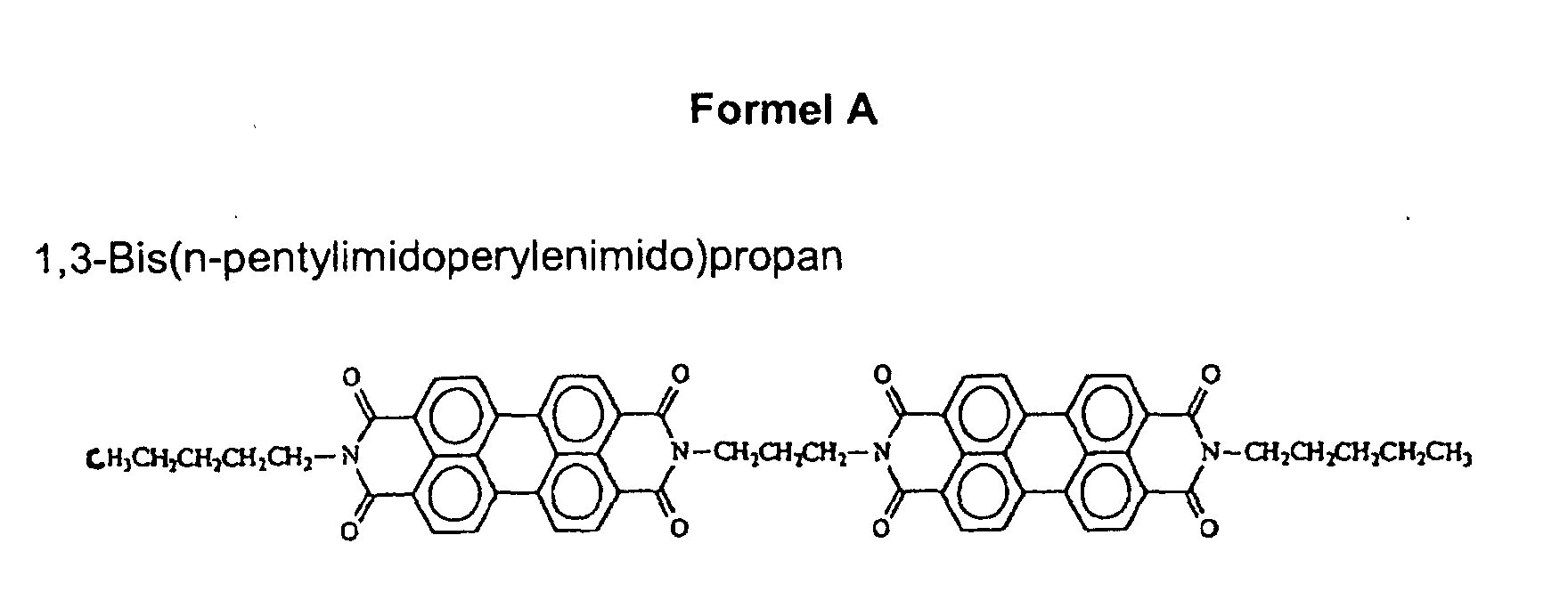
1. Fotoleitfähiges Abbildungselement, das eine fotoerzeugende Schicht umfasst, die eine
Mischung von (1) 1,3-Bis(n-pentylimidoperylenimido)propan (Formel A), 1,3-Bis(2-methylbutylimidoperylenimido)propan
(Formel B) und 1-(n-Pentylimidoperylenimido)-3-(2-methylbutylimidoperylenimido)propan
(Formel C) und (2) ein Carbazol als Elektronenakzeptorkomponente
enthält.
enthält.
2. Fotoleitfähiges Abbildungselement nach Anspruch 1, das weiter ein Trägersubstrat,
eine Fotoerzeugerschicht, welche diese Mischung enthält, und eine Ladungstransportschicht
enthält.
3. Fotoleitfähiges Abbildungselement nach Anspruch 1 oder 2, worin die Relativmenge von
Elektronenakzeptor zu den gemischten Perylen-Dimeren etwa 0,1 bis etwa 20 Gew.-% beträgt.
4. Fotoleitfähiges Abbildungselement nach einem der Ansprüche 1 bis 3, worin das Perylen-1,3-bis(n-pentylimidoperylenimido)propan
in einer Menge von etwa 25 Teilen oder Gewichtsprozent vorhanden ist, das 1,3-Bis(2-methylbutylimidoperylenimido)propan
in einer Menge von etwa 25 Teilen oder Gewichtsprozent vorhanden ist, und das 1-(n-Pentylimidoperylenimido)-3-(2-methylbutylimidoperylenimido)propan
in einer Menge von etwa 50 Teilen oder Gewichtsprozent vorhanden ist, und worin die
Gesamtmenge der Teile der gemischten Perylen-Dimere etwa 100 Prozent beträgt.
5. Fotoleitfähiges Abbildungselement nach einem der Ansprüche 1 bis 4, worin das Carbazol
9-Vinylcarbazol, 9-Phenylcarbazol, 9-Ethylcarbazol oder 9-Naphthylcarbazol ist.
6. Fotoleitfähiges Abbildungselement nach einem der Ansprüche 2 bis 5, worin das Trägersubstrat
aus einem Metall, einem leitfähigen Polymer oder einem isolierenden Polymer besteht,
und worin das Substrat eine Dicke von etwa 30 Mikron bis etwa 300 Mikron besitzt und
optional mit einer elektrisch leitfähigen Schicht mit einer optionalen Dicke von etwa
0,01 Mikron bis etwa 1 Mikron überzogen ist.
7. Fotoleitfähiges Abbildungsverfahren, welches die Bildung eines latenten Bildes auf
dem fotoleitfähigen Abbildungselement gemäß einem der Ansprüche 2 bis 6, das Übertragen
des Bildes auf ein Substrat und optional das Fixieren des Bildes darauf umfasst.
1. Elément photoconducteur formant des images comprenant une couche de photogénération
composée d'un mélange de (1) 1,3-bis(n-pentylimidopérylèneimido)propane (Formule A),
1,3-bis(2-méthylbutylimidopérylèneimido)-propane (Formule B) et 1-(n-pentylimidopérylèneimido)-3-(2-méthylbutylimidopérylèneimido)propane
(Formule C) et (2) un carbazole utilisé comme composant accepteur d'électrons
2. Elément photoconducteur formant des images selon la revendication 1 contenant en outre
un substrat servant de support, une couche de photogénération composée dudit mélange
et une couche de transport de charges.
3. Elément photoconducteur formant des images selon la revendication 1 ou 2 dans lequel
la quantité relative de l'accepteur d'électrons par rapport aux dimères de pérylène
en mélange va d'environ 0,1 à environ 20 pour cent en poids.
4. Elément photoconducteur formant des images selon l'une quelconque des revendications
1 à 3 dans lequel le pérylène 1,3-bis(n-pentylimidopérylèneimido)propane est présent
en une quantité d'environ 25 parties ou pour cent en poids, le 1,3-bis(2-méthylbutylimidopérylèneimido)propane
est présent en une quantité d'environ 25 parties ou pour cent en poids, et le 1-(n-pentylimidopérylèneimido)-3-(2-méthylbutylimidopérylèneimido)propane
est présent en une quantité d'environ 50 parties ou pour cent en poids, et dans lequel
le total desdites parties desdits dimères de pérylène en mélange est d'environ 100
pour cent.
5. Elément photoconducteur formant des images selon l'une quelconque des revendications
1 à 4 dans lequel ledit carbazole est le 9-vinylcarbazole, le 9-phénylcarbazole, le
9-éthylcarbazole, ou le 9-naphtylcarbazole.
6. Elément photoconducteur formant des images selon l'une quelconque des revendications
2 à 5 dans lequel le substrat servant de support est composé d'un métal, d'un polymère
conducteur, ou d'un polymère isolant, et dans lequel ledit substrat possède une épaisseur
d'environ 30 micromètres à environ 300 micromètres et porte éventuellement un revêtement
superficiel formé d'une couche électriquement conductrice présentant une épaisseur
éventuelle d'environ 0,01 micromètre à environ 1 micromètre.
7. Procédé de formation d'images par photoconduction qui comprend la formation d'une
image latente sur l'élément photoconducteur formant des images selon l'une quelconque
des revendications 2 à 6, le transfert de l'image sur un substrat, et le fixage éventuel
de l'image sur celui-ci.