| (19) |
 |
|
(11) |
EP 1 194 302 B1 |
| (12) |
EUROPEAN PATENT SPECIFICATION |
| (45) |
Mention of the grant of the patent: |
|
11.04.2007 Bulletin 2007/15 |
| (22) |
Date of filing: 05.07.2000 |
|
| (51) |
International Patent Classification (IPC):
|
| (86) |
International application number: |
|
PCT/AU2000/000810 |
| (87) |
International publication number: |
|
WO 2001/003951 (18.01.2001 Gazette 2001/03) |
|
| (54) |
SECURITY DOCUMENT WITH RAISED INTAGLIO PRINTED IMAGE
SICHERHEITSDOKUMENT MIT ERHÖHTEM, EINGELASSENEM BILD
DOCUMENT SECURISE COMPORTANT UNE IMAGE IMPRIMEE A INTAILLE SURELEVEE
|
| (84) |
Designated Contracting States: |
|
AT BE CH CY DE DK ES FI FR GB GR IE IT LI LU MC NL PT SE |
|
Designated Extension States: |
|
RO |
| (30) |
Priority: |
07.07.1999 AU PQ146199
|
| (43) |
Date of publication of application: |
|
10.04.2002 Bulletin 2002/15 |
| (73) |
Proprietor: Note Printing Australia Limited |
|
Craigieburn,
Victoria 3064 (AU) |
|
| (72) |
Inventor: |
|
- NEMETH, Joshua
Heathmont, Victoria 3135 (AU)
|
| (74) |
Representative: Hallybone, Huw George et al |
|
Carpmaels and Ransford,
43 Bloomsbury Square
London WC1A 2RA
London WC1A 2RA (GB) |
| (56) |
References cited: :
WO-A-90/02658
WO-A-98/53999
US-A- 4 033 059
|
WO-A-98/33658
GB-A- 2 063 775
US-A- 5 762 379
|
|
| |
|
|
- PATENT ABSTRACTS OF JAPAN & JP 07 057 545 A (DAINIPPON PRINTING CO LTD) 03 March 1995
|
|
| |
|
| Note: Within nine months from the publication of the mention of the grant of the European
patent, any person may give notice to the European Patent Office of opposition to
the European patent
granted. Notice of opposition shall be filed in a written reasoned statement. It shall
not be deemed to
have been filed until the opposition fee has been paid. (Art. 99(1) European Patent
Convention).
|
Field of the Invention
[0001] This invention relates to security documents such as passport, bonds, banknotes,
and security devices such as security passes and the like.
Background Of The Invention
[0002] Optically variable devices embedded in security documents are used to provide a high
level of security whilst also providing an aesthetically pleasing effect.
[0003] Printed matter always has the problem of being copied or simulated by photocopying
or scanning devices as well as simple printing techniques widely available in the
commercial world. Therefore, devices that change colour or shape under various lighting
conditions and or geometry make the task of counterfeiting or simulating the document
much more difficult.
[0004] The introduction of the polymer security substrate has offered the perfect medium
to produce secure devices in a cost effective and secure manner. As most high level
security documents are already printed via the intaglio process, a well known method
of printing which uses elevated temperatures and high pressures, 70° - 90°C at 25
- 30 Mpa, the machines and special inks for this process are only sold to bona fide
security printers, which offers a degree of inherent security.
[0005] In International Patent Application PCT/AU98/00046, (publication number: WO 98/33658),
a printed security document or device is described as including a reflective or brightly
coloured base layer and a raised printed image applied to that layer by a printing
process, at least part of the raised printed image having a height of at least 5µm,
the image being enhanced by the reflective or brightly coloured layer when viewed
at different angles under different lighting conditions. Subsequent research on the
effect created by this arrangement has revealed that it is important for best results
for the base layer to be highly reflective and for the raised printed image to be
printed in an ink having predetermined chroma and lightness.
[0006] It has now been determined that different effects can be achieved, while maintaining
the same or better security, by changing the nature of the ink for producing the raised
printed image.
Summary of the Invention
[0007] The invention provides a security document or other device including a substrate
(2), a reflective layer (1) applied to the substrate (2), and a raised printed image
(3) applied to the reflective layer (1) by a printing process, characterised in that
the reflective layer is a smooth highly reflective layer (1) having a reflectivity
of at least 60 gloss units as measured by a Micro-Tri-Gloss Meter, at least part of
the raised printed image (3) having a height of at least 10 µm (microns), said raised
printed image (3) being printed using a substantially transparent or translucent ink
which causes scattering of the light reflectance and transmittance in at least a partially
specular manner, whereby the raised printed image is visible at angles within a window
of high reflection and essentially invisible outside the window of high reflection.
[0008] By printing an image using substantially transparent or translucent ink on the reflective
layer or patch, a slightly specular scattering of the light is caused by the translucent
intaglio ink when the document is viewed within the window of high reflection, which,
is of a high contrast to the relatively coherent reflections from the substrate. This
contrast causes the image produced by the printed translucent intaglio ink to be very
visible within the window of high reflection.
[0009] In a preferred form of the invention, the translucent ink has a haze value range
of about 60 to 98, and more preferably about 85 to 95 as measured on an electro-optical
haze measuring instrument, such as the XL 211 Hazeguard
™ system manufactured by Gardener Laboratories Inc of Bethesda, Maryland, USA at an
ink thickness of 15µm (microns). The appearance of such a 15 µm (micron) sample is
similar to have copy paper or tracing paper in which light of the entire visible spectrum
is able to transmit through the sample but the degree of light scatter is considerable.
If the ink is touching an object such as by being printed on it, the underlying object
is clearly distinguishable, but if the underlying object is more than about one centimetre
away from the object, it is no longer distinguishable.
[0010] When the document as viewed from outside the window of high reflection, the substrate
below the translucent intaglio ink has a dull appearance.
[0011] This dull appearance does not have a contrasting effect to the slightly specular
reflectance and transmittance caused by the translucent ink. As a result, the image
of the translucent ink is essentially invisible outside the window of high reflection.
[0012] The invention also provides a method of producing a security document or other device,
including the steps of applying a reflective layer (1) to a substrate (2), and printing
a raised printed image (3) on the reflective layer characterised in that the reflective
layer (1) is a smooth highly reflective layer having a reflectivity of at least 60
gloss units as measured by a Micro-Tri-Gloss Meter, and at least part of the raised
printed image (3) has a height of at least 10 µm and is printed using a substantially
transparent or translucent ink which causes scattering of the light reflectance and
transmittance in at least a partially specular manner, whereby the raised printed
image is visible at angles within a window of high reflective and essentially invisible
outside the window of high reflection.
[0013] The smooth highly reflective layer can be applied by printing as part of the gravure
printing process used to print security documents and devices, such as banknotes.
If desired other printing processes, such as silk screen printing, may be used to
apply the layer. Alternatively, a layer having the required reflectivity can be achieved
by hot stamping of foil having the required reflectivity to the substrate.
[0014] Where the smooth highly reflective layer is applied by a printing process, it is
applied in a manner which achieves a layer thickness of about 3µm.
[0015] The layer can be restricted to a relatively small region or patch of the substrate
defining the security document or other device to thereby define a specific security
feature in the document or device. Alternatively, the layer can be applied to larger
areas of the substrate, including the whole substrate.
[0016] The substrate is preferably a smooth substrate such as a laminated polymer material
of the type used in the production of Australian banknotes, and manufactured and sold
by the applicant under the trade mark GUARDIAN, or any other smooth surfaced polymer
suitable for use in the production of security documents or devices. Although paper
substrates are not as smooth as polymer substrates, acceptable results can be achieved
by printing or laminating a reflective patch onto a paper substrate, which is then
calendared by the subsequent intaglio printing process.
[0017] Where the smooth highly reflective layer is applied by printing, the ink used should
incorporate selected pigments and binders which will enable the cured reflective surface
to withstand chemical and physical attack over an extended period of time, comparable
to the expected life of the document.
[0018] The printed image is preferably applied by intaglio printing, or although other known
printing processes capable of producing raised lines or dots on the reflective layer
may be used. Intaglio printing can produce superior tonal effects by altering line
widths and/or dot dimensions as in the other printing process, as well as by altering
the height of the print.
The height component of the intaglio_printing can be used well for this feature to
enhance the partial specular reflection and transmittance of light caused by the translucent
ink, thus enhancing the contrasting image viewed in the window of high reflection.
The printed image will typically have an average height of about 10 µm to 100 µm,
which is about the upper limit of the height which can be achieved using the intaglio
printing process.
[0019] The intaglio ink used for printing the image should be substantially transparent
or translucent such that it is able to scatter the light reflectance and transmittance
in at least a partially specular manner.
[0020] An interesting and marketable variation on this invention is created if the reflective
substrate bears non-reflective indicia. Using this arrangement, the contrast caused
by the slightly specular reflection and transmittance when the document is viewed
in the window of high reflection, causes the indicia to blur and become unrecognisable.
[0021] Therefore:
when the document is viewed in the window of high reflection the image produced by
the translucent intaglio ink is the visible image;
when the document is viewed outside the angle of high reflection the image produced
by the non-reflective indicia on the reflective substrate is the visible image.
Brief Description of the Drawings
[0022] A preferred embodiment of the invention will now be described with reference to the
accompanying drawings in which:
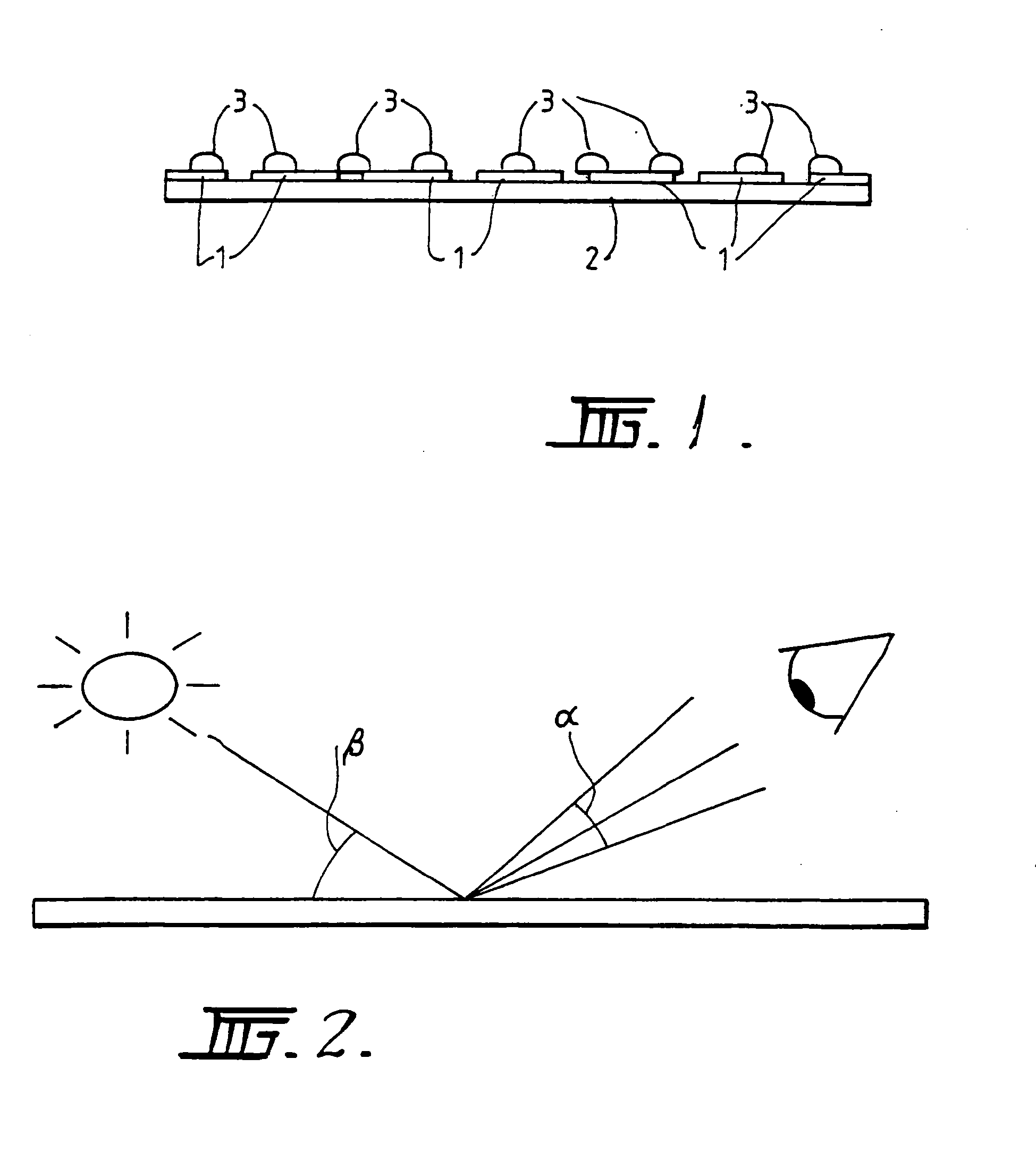
Figure 1 is a schematic illustration of a document embodying the invention,
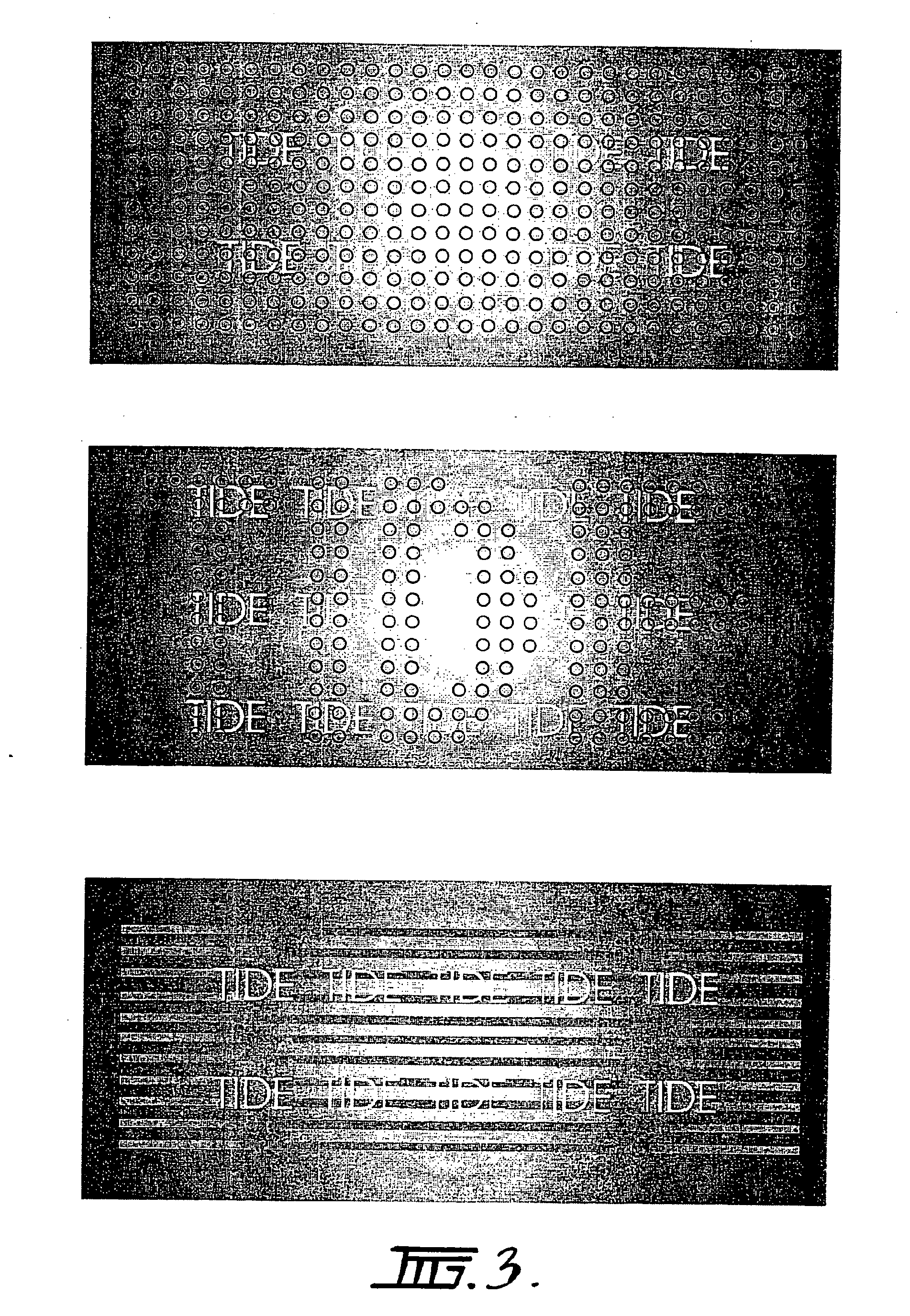
Figure 2 illustrates the optical properties of the reflective layer absent the printed
image and,
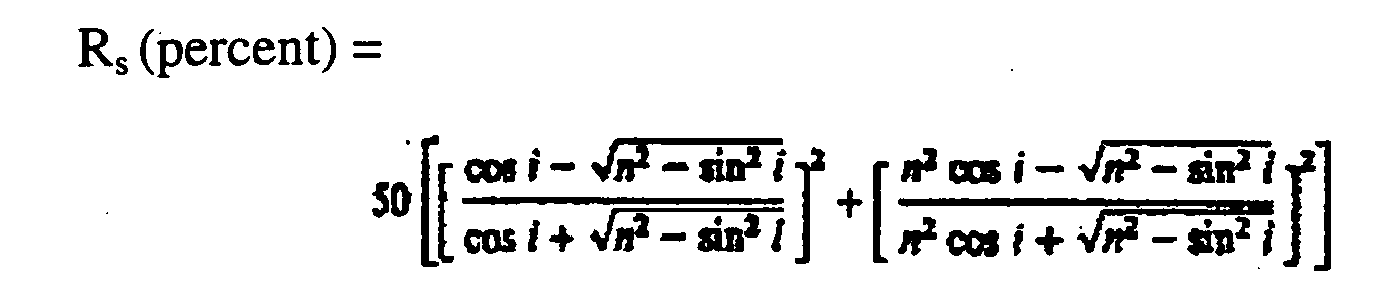
Figure 3 illustrates a document to which the invention has been applied in which the
repeated word TIDE is shown in hidden by dots (a) and (b) and lines (c).
Description of the Preferred Embodiments
[0023] As illustrated in Figure 1, reflective metallic ink patches 1 are printed by the
gravure printing process onto a smooth polymer substrate 2, such as any one of the
substrates currently used in the production of polymer banknotes in Australia and
overseas, for example "Guardian" substrate, and a printed image 3 is applied to the
patches 1 by intaglio printing. The following preferred ink formulations and gravure
engraving specifications will produce acceptable results in the reflective patches
1.
[0024] To achieve the required highly reflective surface, the following inter formulations
and gravure engraving specifications can be used:
| Silver coloured reflective patch |
| Eckart Aluminium (PCA) - 18% Syloid |
308-0.5-1.0% |
| Resin (two pack polyurethane system) -35% MIBK-3% |
Catalyst-5.3% |
Add Ethyl Acetate to achieve a printing viscosity of 21-23 secs. Using Zahn cup No.
2
| Gold coloured reflective patch. |
| Eckart Gold (Rotoflex, Resist Grade Rich Pale Gold)-31 % |
|
| Resin (two pack polyurethane system)-29% |
MIBK-3% |
| Syloid 308-0.5-1.0% |
Catalyst-4.4% |
Add Ethyl Acetate to achieve a printing viscosity of 21-23secs. using Zahn cup No.
2
The gravure cylinder configuration used for these formulations is:
Wall = 10 µm Width = 200.1838 µm
Channel = 36 µm Cell Depth = 57.78807 µm
Lines/cm = 59 µm Stylus = 120°
Screen = 41.2 µm
[0025] To measure the specular reflectance, in percent (R
s), of these metallic surfaces, the following equation can be used:
where:
i = the specular (incidence) angle, and
n = the index of refraction of the surface.
[0026] This formula can be found in ASTM Standard D 2457 - 97, Standard Test Method for
Specular Gloss of Plastic Films and Solid Plastics
[0027] A suitable instrument for reasoning specular reflectance is the Micro-Tri-Gloss Meter
which uses the above methodology to measure gloss units. The results are related to
a highly polished black surface with a refractive index of 1.567.
[0028] Below are typical measurements for different substrates measured at a 45° angle:
| Matt white paper - |
= 5.4 |
| Opacified "Guardian" substrate |
= 10.1 |
| Metallic Silver ink (on paper) |
= 20.4 |
| Silver on Opacified "Guardian substrate™" |
= 102.3 |
| Note: At a 45°angle, a perfect mirror measures 1000. |
[0029] With Matt white paper, the light is reflected in the direction of specular reflection
as well as other directions. The capacity of a surface to reflect a light source is
therefore significantly reduced. With opacified substrate, the surface is flatter
and smoother, however the light source is still reflected specularly. The metallic
ink on paper is better but the rougher surface of the paper still affects the reflective
properties of the ink. On the other hand, the metallic ink on opacified "Guardian"
substrate is more reflective. The intensity of the reflected light is dependent on
the angle of illumination and material properties.
[0030] The printed image 3 is applied to the reflective patches 1 by means of the intaglio
printing process using an ink having transparent or translucent properties, as explained
above.
[0031] The transparent intaglio ink has the following different properties to other standard
intaglio inks:
Higher resin content (about 40 - 55 % wt)
No pigments for clear translucent
Reduced pigments for coloured translucent(<2 % wt)
No opacifying agents
[0032] Use of transparent filler (such as commercially available "Transpafill" and "Aerosils"),
with a high loading (about 20 - 30% wt).
[0033] The ink has similar loadings of solvents, driers and waxes as other standard intaglio
inks.
[0034] The intaglio printing is applied to the patches 1 to form indicia or other desired
images 3.
[0035] A plain reflective patch 1 without a printed image experiences two modes of viewing
in the presence of a singular light source. When the viewing angle of the document
is equal to the angle of incidence of the light point source, the reflective patch
1 appears highly reflective, with minimal light scatter. If the viewing angle is outside
the angle of incidence β of the light source (with a buffer of about 15°), the patch
1 appears relatively dull. The viewing angles of high reflection α are referred to
as the window of high reflection, as illustrated in Figure 2.
[0036] By printing an image 3 of dots (Figs 3(a) and (b) or lines (Fig 3(c), using substantially
transparent or translucent ink on the reflective layer or patch 1, a slightly specular
scattering of the light is caused by the translucent intaglio ink when the document
is viewed within the window of high reflection, which, is of a high contrast to the
relatively coherent reflections from the substrate. This contrast causes the image
produced by the printed translucent intaglio ink to be very visible. It will be noted
from Fig. 3 that the pitch of the intaglio dots and lines is about half the height
of the underlying indicia.
[0037] When the document is viewed from outside the window of high reflection, the substrate
below the translucent intaglio ink has a dull appearance. This dull appearance does
not have a contrasting effect to the slightly specular reflectance and transmittance
caused by the translucent ink. As a result, the image of the translucent ink is essentially
invisible. In this way the described arrangement provides a useful security feature
which does not require special equipment or expertise for use.
1. A security document or device including a substrate (2), a reflective layer (1) applied
to the substrate (2), and a raised printed image (3) applied to the reflective layer
(1) by a printing process, characterised in that the reflective layer is a smooth highly reflective layer (1) having a reflectivity
of at least 60 gloss units as measured by a Micro-Tri-Gloss Meter, at least part of
the raised printed image (3) having a height of at least 10 µm (microns), said raised
printed image (3) being printed using a substantially transparent or translucent ink
which causes scattering of the light reflectance and transmittance in at least a partially
specular manner, whereby the raised printed image is visible at angles within a window
of high reflection and essentially invisible outside the window of high reflection.
2. The security document of claim 1, wherein the translucent ink has a haze value in
the range of about 60 to 98, as measured on an XL 211 Hazegard haze 2. The security
document of claim 1, wherein the translucent ink has a haze value in the range of
about 60 to 98, as measured on an XL 211 Hazegard haze measuring instrument at an
ink thickness of about 15 µm (microns).
3. The security document or device as claimed in claim 2, wherein the haze value is about
85 to 95.
4. The security document or device as claimed in any one of the preceding claims, wherein
the smooth highly reflective layer (1) is a printed layer.
5. The security document or device as claimed in claim 4, wherein the smooth highly reflective
layer (1) is applied to a specific region of the substrate and a remaining portion
of the substrate has printing applied by the same process as the smooth highly reflective
layer.
6. The security document or device as claimed in any one of the preceding claims, wherein
the reflective layer is about 3 µm (microns) thick.
7. The security document or device as claimed in any one of claims 1 to 3, wherein the
smooth highly reflective layer comprises a reflective foil applied to the substrate.
8. The security document or device as claimed in any one of the preceding claims, wherein
the substrate is a smooth surfaced polymer film.
9. The security document or device as claimed in any one of the preceding claims wherein
an image formed by non-reflective indicia is provided on the reflective layer (1).
10. The security document or device as claimed in claim 9, wherein the raised printed
image (3) is a pattern of dots or lines.
11. The security document or device as claimed in claim 10 wherein the pattern of dots
or lines is a regular array of spaced dots.
12. The security document or device as claimed in claim 10 wherein the pattern of dots
or lines is a series of regularly spaced substantially parallel lines.
13. The security document or device according to any one of the preceding claims wherein
the transparent or translucent ink contains less than 2% pigment by weight.
14. A method of producing a security document or device including the steps of applying
a reflective layer (1) to a substrate (2), and printing a raised printed image (3)
on the reflective layer characterised in that
the reflective layer (1) is a smooth highly reflective layer having a reflectivity
of at least 60 gloss units as measured by a Micro-Tri-Gloss Meter, and at least part
of the raised printed image (3) has a height of at least 10 µm and is printed using
a substantially transparent or translucent ink which causes scattering of the light
reflectance and transmittance in at least a partially specular manner, whereby the
raised printed image is visible at angles within a window of high reflection and essentially
invisible outside the window of high reflection.
15. The method of claim 14, wherein the ink has a haze value of about 60 to 98 as measured
on an XL 211 Hazegard haze measuring instrument at an ink thickness of about 15 µm
(microns).
16. The method of claim 15, wherein the haze value is about 85 to 95.
17. The method of any one of claims 14 to 16, wherein the smooth highly reflective layer
(1) is applied by a printing process.
18. The method of claim 17 wherein the printing process for the reflective layer (1) is
a gravure printing process.
19. The method of claim 17 or 18, wherein the smooth highly reflective layer (1) is applied
to a specific region of the substrate (2) and the method further comprises printing
a remaining portion of the substrate (2), by the same printing process as used to
print the smooth highly reflective layer.
20. The method of claim 14, wherein the smooth highly reflective layer (1) is reflective
foil applied to the substrate (2).
21. The method of any one of claims 14 to 20, wherein the substrate (2) is a smooth surfaced
polymer film.
22. The method of any one of claims 14 to 21, wherein the raised printed image is applied
in a pattern of raised dots or lines.
23. The method of claim 22, wherein the pattern of raised dots or lines is a regular array
of spaced dots.
24. The method of claim 22, wherein the pattern of raised dots or lines is a series of
regularly spaced substantially parallel lines.
25. The method of claim 23 or claim 24 wherein an image formed by non-reflective indicia
is applied to the reflective layer (1).
1. Sicherheitsdokument oder Sicherheitsvorrichtung bestehend aus einem Trägermaterial
(2), einer auf dem Trägermaterial (2) aufgebrachten reflektierenden Schicht (1) und
einem auf der reflektierenden Schicht (1) durch einen Druckvorgang aufgebrachten erhabenen
gedruckten Bild (3), wobei das Sicherheitsdokument dadurch gekennzeichnet ist, dass die reflektierende Schicht eine glatte, hochreflektierende Schicht (1) mit einer
Reflektivität von mindestens 60 Glanzeinheiten, gemessen mit einem Mikro-Tri-Gloss
Meter, ist, dass zumindest ein Teil des erhabenen gedruckten Bildes (3) eine Höhe
von zumindest 10 µm (Mikron) hat, und dass das erhabene gedruckte Bild (3) gedruckt
wird unter Verwendung einer im Wesentlichen durchsichtigen oder durchscheinenden Tinte,
die, zumindest teilweise durch Spiegelung, eine Streuung der Lichtreflektion und -übertragung
bewirkt, wodurch das erhabene gedruckte Bild aus bestimmten Winkeln in einem Fenster
hoher Reflektion sichtbar und im Wesentlichen unsichtbar außerhalb des Fensters hoher
Reflektion ist.
2. Sicherheitsdokument gemäß Anspruch 1, wobei die durchscheinende Tinte bei einer Dicke
der Tintenschicht von ungefähr 15 µm (Mikron) einen Trübungswert von ungefähr 60 -
98 hat, gemessen mit einem XL 211 Hazeguard-Trübungsmessgerät.
3. Sicherheitsdokument oder die Sicherheitsvorrichtung gemäß Anspruch 2, wobei der Trübungswert
ungefähr 85 - 95 beträgt.
4. Sicherheitsdokument oder die Sicherheitsvorrichtung gemäß einem der vorhergehenden
Ansprüche, wobei die glatte, hochreflektierende Schicht (1) eine gedruckte Schicht
ist.
5. Sicherheitsdokument oder die Sicherheitsvorrichtung gemäß Anspruch 4, wobei die glatte,
hochreflektierende Schicht (1) auf einen spezifischen Bereich des Trägermaterials
aufgebracht wird, während ein verbleibender Bereich des Trägermaterials bedruckt wird,
und zwar unter Anwendung desselben Verfahrens, durch das auch die glatte, hochreflektierende
Schicht gedruckt wurde.
6. Sicherheitsdokument oder die Sicherheitsvorrichtung gemäß einem der vorhergehenden
Ansprüche, wobei die reflektierende Schicht eine Dicke von 3 µm (Mikron) hat.
7. Sicherheitsdokument oder die Sicherheitsvorrichtung gemäß einem der Ansprüche 1 -
3, wobei die glatte, hochreflektierende Schicht aus einer auf das Trägermaterial aufgebrachten
reflektierenden Folie besteht.
8. Sicherheitsdokument oder die Sicherheitsvorrichtung gemäß einem der vorhergehenden
Ansprüche, wobei das Trägermaterial eine dünne Polymerschicht mit glatter Oberfläche
ist.
9. Sicherheitsdokument oder die Sicherheitsvorrichtung gemäß einem der vorhergehenden
Ansprüche, wobei die reflektierende Schicht (1) mit einem Bild aus nicht reflektierenden
Zeichen versehen ist.
10. Sicherheitsdokument oder die Sicherheitsvorrichtung gemäß Anspruch 9, wobei das erhabene
gedruckte Bild (3) ein Muster aus Punkten oder Linien ist.
11. Sicherheitsdokument oder die Sicherheitsvorrichtung gemäß Anspruch 10, wobei das Muster
aus Punkten oder Linien eine regelmäßige Anordnung von Punkten und Zwischenräumen
ist.
12. Sicherheitsdokument oder die Sicherheitsvorrichtung gemäß Anspruch 10, wobei das Muster
aus Punkten oder Linien aus einer Reihe von in regelmäßigem Abstand angeordneten im
Wesentlichen parallelen Linien besteht.
13. Sicherheitsdokument oder die Sicherheitsvorrichtung gemäß einem der vorhergehenden
Ansprüche, wobei die durchsichtige oder durchscheinende Tinte weniger als 2 Gewichtsprozente
Pigment enthält.
14. Verfahren zur Herstellung eines Sicherheitsdokumentes oder einer Sicherheitsvorrichtung,
das die Ablaufschritte beinhaltet, eine reflektierende Schicht (1) auf ein Trägermaterial
(2) aufzubringen und ein erhabenes gedrucktes Bild (3) auf die reflektierende Schicht
zu drucken, wobei dieses Verfahren dadurch gekennzeichnet ist, dass die reflektierende Schicht (1) eine glatte, hochreflektierende Schicht mit mindestens
60 Glanzeinheiten, gemessen mit einem Micro-Tri-Gloss-Meter, ist, und zumindest ein
Teil des erhabenen gedruckten Bildes eine Höhe von mindestens 10 µm hat, und dass
das Bild unter Verwendung einer im Wesentlichen durchsichtigen oder durchscheinenden
Tinte gedruckt wird, was eine Streuung der Lichtreflektion und -übermittlung zumindest
teilweise in Form einer Spiegelung bewirkt, wodurch das erhabene gedruckte Bild aus
bestimmten Winkeln in einem Fenster hoher Reflektion sichtbar und im Wesentlichen
unsichtbar außerhalb des Fensters hoher Reflektion ist.
15. Verfahren gemäß Anspruch 14, wobei die Tinte bei einer Dicke der Tintenschicht von
ungefähr 15 µm (Mikron) einen Trübungswert von 60 - 98 hat, gemessen mit einem XL
211 Hazeguard-Trübungsmessgerät.
16. Verfahren gemäß Anspruch 15, wobei der Trübungswert 85 - 95 beträgt.
17. Verfahren gemäß einem der Ansprüche 14 - 16, wobei die glatte, hochreflektierende
Schicht (1) durch einen Druckprozess aufgebracht wird.
18. Verfahren gemäß Anspruch 17, wobei der Druckprozess, durch den die reflektierende
Schicht aufgebracht wird, ein Tiefdruckverfahren ist.
19. Verfahren gemäß einem der Ansprüche 17 oder 18, wobei die glatte, hochreflektierende
Schicht (1) auf einen spezifischen Bereich des Trägermaterials (2) aufgebracht wird
und das Verfahren ferner darin besteht, einen verbleibenden Bereich des Trägermaterials
(2) unter Anwendung desselben Druckverfahrens zu bedrucken, das auch für den Druck
der glatten, hochreflektierenden Schicht verwendet wurde.
20. Verfahren gemäß Anspruch 14, wobei aber die glatte, hochreflektierende Schicht (1)
eine reflektierende Folie ist, die auf dem Trägermaterial (2) aufgebracht wird.
21. Verfahren gemäß einem der Ansprüche 14 - 20, wobei die Trägerschicht (2) eine dünne
Polymerschicht mit glatter Oberfläche ist.
22. Verfahren gemäß einem der Ansprüche 14 - 21, wobei das erhabene gedruckte Bild als
ein Muster aus erhabenen Punkten oder Linien aufgebracht wird.
23. Verfahren gemäß Anspruch 22, wobei das Muster aus erhabenen Punkten oder Linien eine
regelmäßige Anordnung von Punkten und Zwischenräumen ist.
24. Verfahren gemäß Anspruch 22, wobei das Muster aus erhabenen Punkten oder Linien aus
einer Reihe von im Wesentlichen parallelen Linien in regelmäßigem Abstand besteht.
25. Verfahren gemäß Anspruch 23 oder 24, wobei ein Bild aus nicht reflektierenden Zeichen
auf die reflektierende Schicht (1) aufgebracht wird.
1. Document ou dispositif de sécurité comprenant un substrat (2), une couche réfléchissante
(1) appliquée au substrat (2), une image imprimée surélevée (3) appliquée à la couche
réfléchissante (1) par un procédé d'impression, caractérisé en ce que la couche réfléchissante est une couche lisse très réfléchissante (1) ayant une réflectivité
d'au moins 60 unités de luisance comme mesuré par un dispositif de mesure de luisance
Micro-Tri-Gloss, au moins une partie de l'image imprimée surélevée (3) ayant une hauteur
d'au moins 10 µm (micromètres), ladite image imprimée surélevée (3) étant imprimée
en utilisant une encre pratiquement transparente ou translucide qui provoque la dispersion
du coefficient de réflexion et du coefficient de transmission de la lumière au moins
d'une manière partiellement spéculaire, grâce à quoi l'image imprimée surélevée est
visible suivant des angles à l'intérieur d'une fenêtre de réflexion élevée et pratiquement
invisible à l'extérieur de la fenêtre de réflexion élevée.
2. Document de sécurité selon la revendication 1, dans lequel l'encre translucide présente
une valeur de voile dans la plage d'environ 60 à 98, comme mesuré sur un instrument
de mesure de voile XL 211 Hazegard à une épaisseur d'angle d'environ 15 µm (micromètres).
3. Document ou dispositif de sécurité selon la revendication 2, dans lequel la valeur
de voile est d'environ 85 à 95.
4. Document ou dispositif de sécurité selon l'une quelconque des revendications précédentes,
dans lequel la couche lisse très réfléchissante (1) est une couche imprimée.
5. Document ou dispositif de sécurité selon la revendication 4, dans lequel la couche
lisse très réfléchissante (1) est appliquée à une région spécifique du substrat et
une partie restante du substrat est imprimée par application du même procédé que celui
de la couche lisse hautement réfléchissante.
6. Document ou dispositif de sécurité selon l'une quelconque des revendications précédentes,
dans lequel la couche réfléchissante présente une épaisseur d'environ 3 µm (micromètres).
7. Document ou dispositif de sécurité selon l'une quelconque des revendications 1 à 3,
dans lequel la couche lisse très réfléchissante comprend une feuille réfléchissante
appliquée au substrat.
8. Document ou dispositif de sécurité selon l'une quelconque des revendications précédentes,
dans lequel le substrat est un film de polymère à surface lisse.
9. Document ou dispositif de sécurité selon l'une quelconque des revendications précédentes
dans lequel une image formée par une marque non réfléchissante est réalisée sur la
couche réfléchissante (1).
10. Document ou dispositif de sécurité selon la revendication 9, dans lequel l'image imprimée
surélevée (3) est un motif de points ou de lignes.
11. Document ou dispositif de sécurité selon la revendication 10, dans lequel le motif
de points ou de lignes est un réseau régulier de points espacés.
12. Document ou dispositif de sécurité selon la revendication 10, dans lequel le motif
de points ou de lignes est une série de lignes pratiquement parallèles espacées de
façon régulière.
13. Document ou dispositif de sécurité selon l'une quelconque des revendications précédentes
dans lequel l'encre transparente ou translucide contient moins de 2 % de pigment en
poids.
14. Procédé de production d'un document ou d'un dispositif de sécurité comprenant les
étapes consistant à appliquer une couche réfléchissante (1) à un substrat (2), et
à imprimer une image imprimée surélevée (3) sur la couche réfléchissante caractérisé en ce que
la couche réfléchissante (1) est une couche lisse hautement réfléchissante ayant une
réflectivité d'au moins 60 unités de luisance comme mesuré par un dispositif de mesure
de luisance Micro-Tri-Gloss, et au moins une partie de l'image imprimée surélevée
(3) présente une hauteur d'au moins 10 µm et est imprimée en utilisant une encre pratiquement
transparente ou translucide qui provoque une dispersion du coefficient de réflexion
et du coefficient de transmission de lumière au moins d'une manière partiellement
spéculaire, grâce à quoi l'image imprimée surélevée est visible suivant des angles
à l'intérieur d'une fenêtre de réflexion élevée et pratiquement invisible à l'extérieur
de la fenêtre de réflexion élevée.
15. Procédé selon la revendication 14, dans lequel l'encre présente une valeur de voile
d'environ 60 à 98 comme mesuré par un instrument de mesure de voile XL 211 Hazegard
à une épaisseur d'encre d'environ 15 µm (micromètres).
16. Procédé selon la revendication 15, dans lequel la valeur de voile est d'environ 85
à 95.
17. Procédé selon l'une quelconque des revendications 14 à 16, dans lequel la couche lisse
hautement réfléchissante (1) est appliquée par un procédé d'impression.
18. Procédé selon la revendication 17 dans lequel le procédé d'impression pour la couche
réfléchissante (1) est un procédé d'impression par gravure.
19. Procédé selon la revendication 17 ou 18, dans lequel la couche lisse très réfléchissante
(1) est appliquée à une région spécifique du substrat (2) et le procédé comprend en
outre l'impression d'une partie restante du substrat (2) grâce au même procédé d'impression
que celui utilisé pour imprimer la couche lisse très réfléchissante.
20. Procédé selon la revendication 14, dans lequel la couche lisse très réfléchissante
(1) est une feuille réfléchissante appliquée au substrat (2).
21. Procédé selon l'une quelconque des revendications 14 à 20, dans lequel le substrat
(2) est un film de polymère à surface lisse.
22. Procédé selon l'une quelconque des revendications 14 à 21, dans lequel l'image imprimée
surélevée est appliquée suivant un motif de points ou de lignes surélevés.
23. Procédé selon la revendication 22, dans lequel le motif de points ou de lignes surélevés
est un réseau régulier de points espacés.
24. Procédé selon la revendication 22, dans lequel le motif de points ou de lignes surélevés
est une série de lignes pratiquement parallèles espacées de façon régulière.
25. Procédé selon la revendication 23 ou la revendication 24 dans lequel l'image formée
par une marque non réfléchissante est appliquée à la couche réfléchissante (1) .