(57) A handheld communication and processing device (100) that is responsive to a voice
command (500) received during communication with a remote terminal (110, 120) such
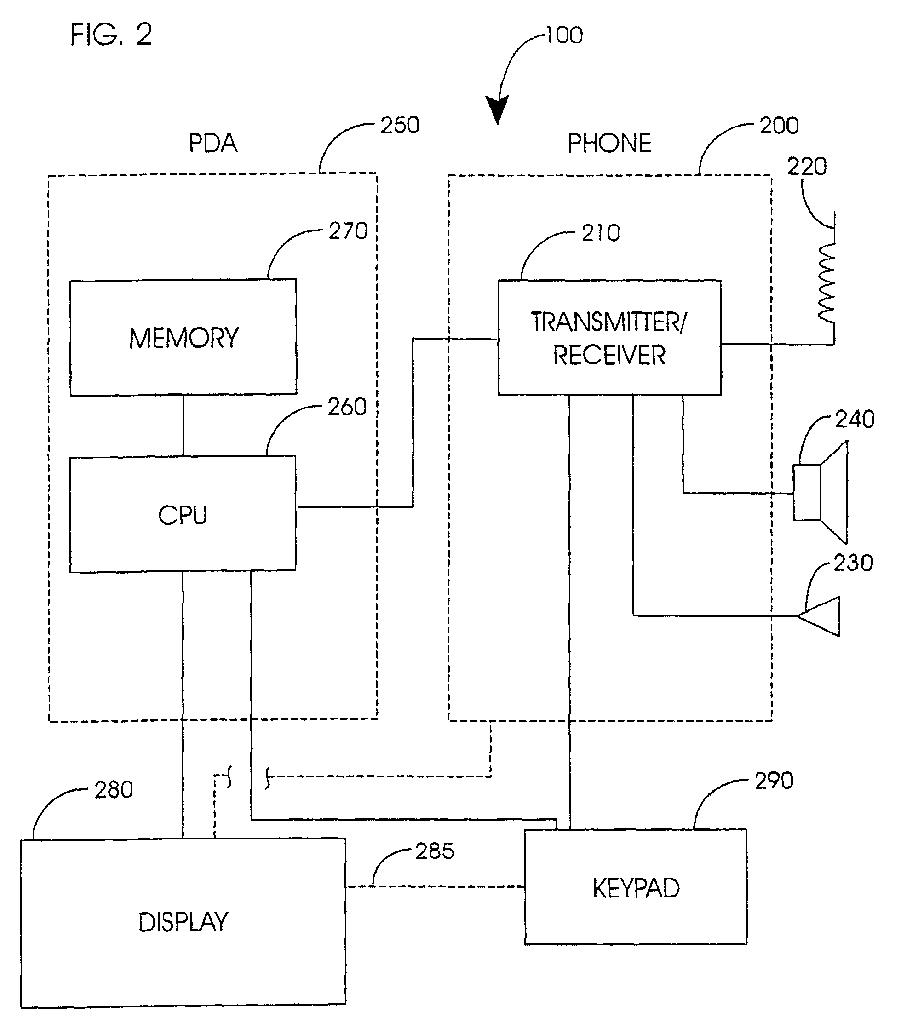
as another handheld device, a computer, etc. The handheld device (100) combines a
phone (200), for communicating with the remote terminal (110, 120), and the functional
tools of a personal digital assistant (PDA) (250). The handheld device (100) is operable
in a similar manner to a conventional phone used to communicate with a remote terminal
(110, 120). In addition, the handheld device (100) can also receive one or more voice
commands (500) during that communication. For example, a voice command (500) can cause
the handheld device (100) to schedule an appointment, check for conflicts with another
handheld device, computer, etc. Furthermore, the voice command (500) can be issued
from either the handheld device (100) or the remote terminal (110, 120). The voice
command (500) is converted to an executable command (530) using a speech recognition
component (510) (e.g., software) that is then executed by a processor (260). The phone
(200) and the processor (260) are housed together (300). Thus, the handheld device
(100) remains positioned adjacent to the user's face during communication when the
voice command (500) is received. Preferably, the handheld device (100) generates an
acknowledgment (580) when the command is executed. Also preferably, the handheld device
(100) includes a memory (270), a keypad (290), and a display (280).
|
|
