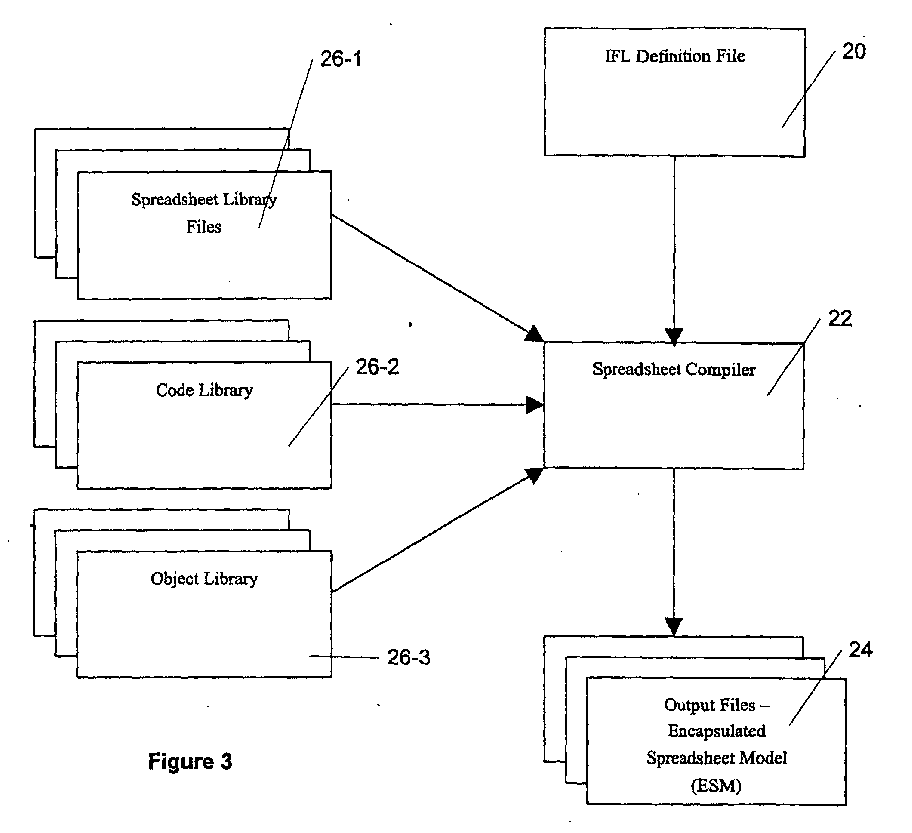
(57) A designer builds a condensed, generic form of a spreadsheet which is a definition
file. This can be designed in Microsoft Excel, following a set of guidelines, or using
a high level symbolic language. If required, HTML files can be produced directly from
the Excel definition file to enable the user to input parameters using a web browser.
A user defines the various parameters that are to be used for their particular spreadsheet
and the software of the present invention expands the template's rows and columns
according to those requirements, working out the effect on the formulae and linked
cells as this takes place. Behind the scenes a set of information tables are built,
either in memory or in a file, based on the information in the definition file. These
tables are processed in a structured way to build the spreadsheet formulae, reference
other tables and build any objects required to operate the model. Formulae are copied
and/or rebuilt depending on the circumstances in which they will be used. In addition,
the data input areas of the spreadsheet can be separated onto another worksheet to
facilitate usability. Reports and charts can be adjusted to suit the data. Several
templates or definitions can be combined into one spreadsheet and other objects, e.g.
drop down lists and scrollbars, can be added to enhance usability. VBA code can also
be included to perform complex operations not normally available in a spreadsheet.
Definition libraries that describe, or contain a copy of, a part of the model can
be added seamlessly, for example, a bar chart with a particular colour scheme or a
complicated calculating function. The definition library can also contain VBA code,
which can become part of the finished model and can add to its functionality.
|
|
