| (19) |
 |
|
(11) |
EP 1 223 900 B2 |
| (12) |
NEW EUROPEAN PATENT SPECIFICATION |
|
After opposition procedure |
| (45) |
Date of publication and mentionof the opposition decision: |
|
14.09.2011 Bulletin 2011/37 |
| (45) |
Mention of the grant of the patent: |
|
09.08.2006 Bulletin 2006/32 |
| (22) |
Date of filing: 28.09.2000 |
|
| (51) |
International Patent Classification (IPC):
|
| (86) |
International application number: |
|
PCT/SE2000/001871 |
| (87) |
International publication number: |
|
WO 2001/024743 (12.04.2001 Gazette 2001/15) |
|
| (54) |
RECTAL INSERTION DEVICE
REKTALE EINFÜHRUNGSVORRICHTUNG
DISPOSITIF D'INSERTION RECTALE
|
| (84) |
Designated Contracting States: |
|
AT BE CH CY DE DK ES FI FR GB GR IE IT LI LU MC NL PT SE |
| (30) |
Priority: |
06.10.1999 SE 9903613
|
| (43) |
Date of publication of application: |
|
24.07.2002 Bulletin 2002/30 |
| (73) |
Proprietor: Diproserva Medical AB |
|
431 39 Mölndal (SE) |
|
| (72) |
Inventor: |
|
- NESTENBORG, Daniel
S-431 21 Mölndal (SE)
|
| (74) |
Representative: Lind, Urban Arvid Oskar |
|
AWAPATENT AB
P.O. Box 11394
404 28 Göteborg
404 28 Göteborg (SE) |
| (56) |
References cited: :
WO-A1-99/30652
DE-A1- 4 436 796
GB-A- 2 251 384
US-A- 4 596 554
|
AU-A- 1 844 283
GB-A- 2 224 212
US-A- 4 325 370
US-A- 5 217 439
|
|
| |
|
|
|
|
| |
|
Field of the Invention
[0001] The present invention relates to a rectal insertion device for the treatment of disorders
of the digestive tract of a human or animal patient, said device comprising a forward
section which in an operative position of the device is disposed in the anal canal
of the patient and a first passageway which extends rearwardly in the device from
a first forward opening in the forward section.
[0002] Disorders of the digestive tract which may be treated with rectal insertion devices
of the type defined are colic, including infantile colic, haemorrhoids, constipation,
gas and piles.
Background and summary of the Invention
[0003] WO 99/30652 by the same applicant discloses a rectal insertion device of the above-mentioned
type, wherein the first passageway is provided to channel faeces and gastrointestinal
gases released on insertion of the forward section into the anal canal into a collection
bag. A drawback of this known device is that some of the released faeces, however,
may be ejected over the outer surface of the forward section instead of through the
first passageway and thus not be collected in the bag. This also renders the device
difficult to use efficiently.
[0004] Many of the known devices for treating disorders of the digestive tract are also
difficult and expensive to produce. Further, they could also be dangerous to use,
since a to deep insertion into the anal canal could result in severe injuries to the
intestine. This risk is especially high when treating infants.
[0005] The aim of the present invention is to provide a rectal insertion device of the above-mentioned
type which alleviates at least some of the drawbacks of the prior art devices.
[0006] According to a first aspect of the present invention there is provided a rectal insertion
device according to claim 1.
[0007] According to a second aspect of the invention there is provided a rectal insertion
device according to claim 2.
[0008] The device according to the invention is easy to use and produce. Further, it comprises
means for collecting the released faeces ejected over the outer surface of the forward
section instead of through the first passageway.
[0009] In an embodiment of the invention the forward end of the rearward section abuts with
the anus of the patient in an operative position of the device. The forward end of
the rearward section has a transverse dimension greater than the transverse dimension
of the forward section and the forward section extends forwardly from the forward
end of the rearward section. Hereby, the depth of insertion could be precisely controlled,
enabling the sphincter muscles to be stimulated if need be and gastrointestinal gases
and faeces to be discharged. The abutment also sees to that a too deep insertion of
the forward section into the anal canal is avoided. Hereby, the device could be used
without the risk of causing any harmful injuries to the user.
[0010] In an embodiment of the invention the forward section and rearward sections are co-axially
arranged. The second forward opening is, according to the invention, an annulus formed
around the forward section. Hereby, the device need not have a specific rotational
position in use, which makes the device self-explanatory and easier to use.
[0011] In an embodiment of the invention the first passageway communicates with the second
passageway. Hereby, discharged faeces and gases will be brought together, and could
thereafter emanate from the same output opening, making it easier to take care of.
[0012] In an embodiment of the invention the second passageway has a rearward opening in
the rearward section.
[0013] The rearward section of the device comprises, according to the invention, a tube
element having an open-ended axial lumen.
[0014] The device, according to the invention, comprises an elongate shaft having a forward
portion which presents the forward section of the device and a rearward portion which
extends rearwardly from the forward portion into the lumen of the tube element and
through which the first passageway extends
[0015] In an embodiment of the invention the first passageway has a rearward opening in
the rearward portion of the elongate shaft.
[0016] The rearward portion of the elongate shaft is, according to the invention, spaced
from, and attached to, the wall of the lumen through one or more ribs.
[0017] In an embodiment of the invention the forward section is made more flexible than
the rearward section in order to form a non-harmful and convenient insertion section,
while the more rigid rearward section may form a convenient gripping section.
[0018] Other benefits and advantageous features of the invention will be apparent from the
following description and claims.
[0019] An exemplary embodiment of the invention will now be described with reference to
the accompanying Figures of drawings.
Brief Description of the Drawings
[0020]
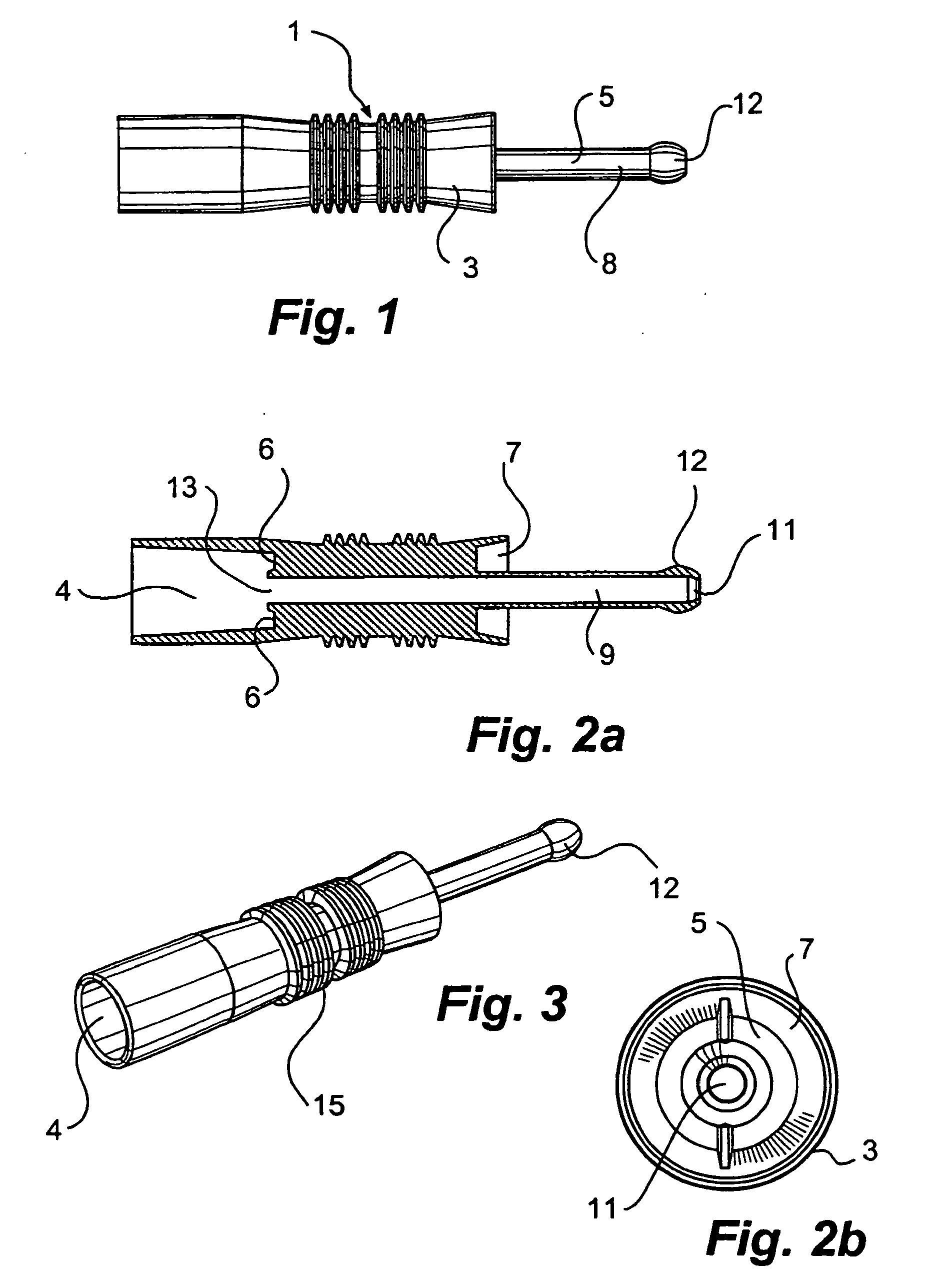
Figure 1 is a side view of a rectal insertion device in accordance with a first embodiment
of the invention.
Figure 2a is a cross-sectional side view of the rectal insertion device of Figure
1.
Figure 2b is an elevated view of the rectal insertion device in Figure 1.
Figure 3 is a perspective view of the rectal insertion device of Figure 1.
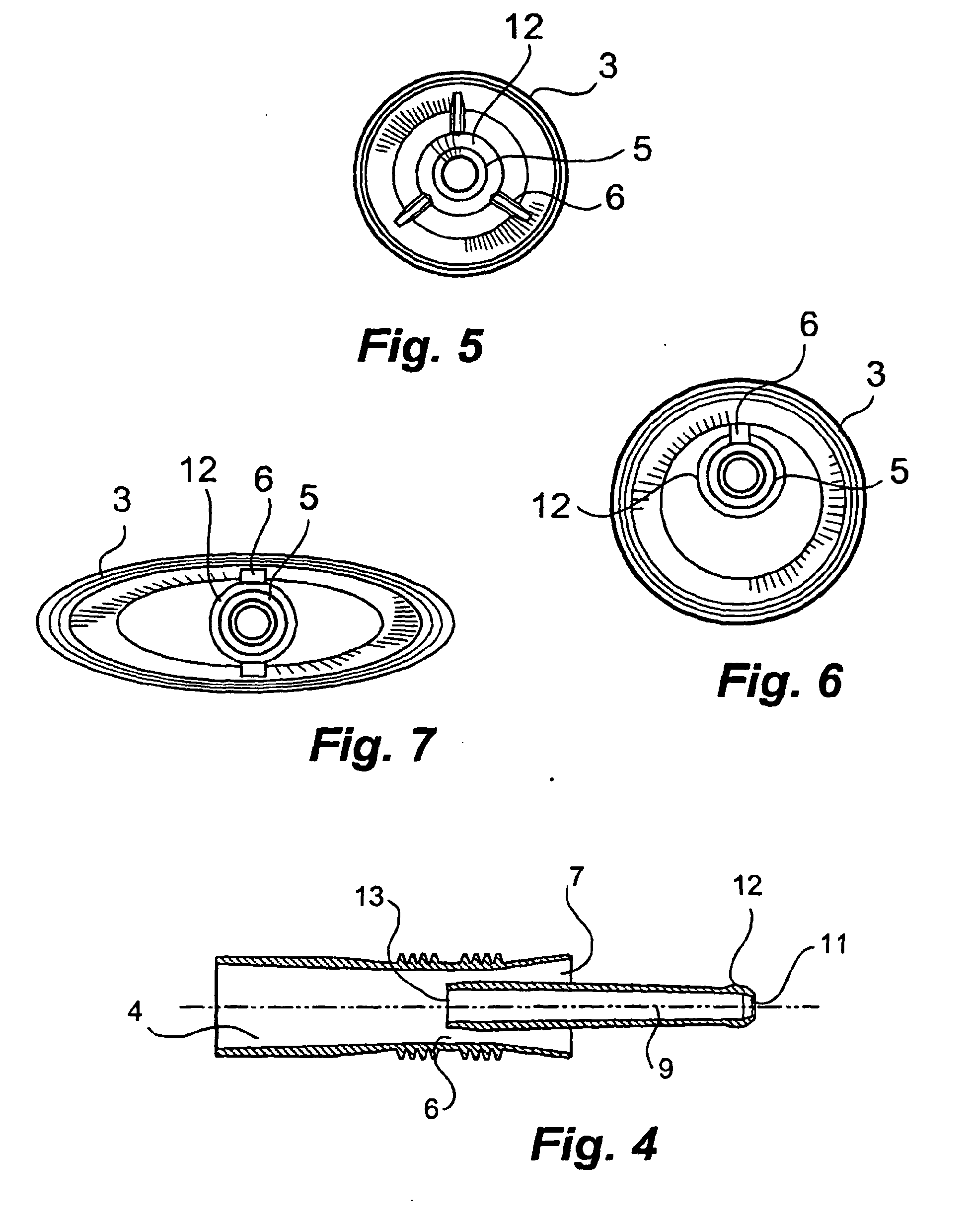
Figure 4 is a cross-sectional side view of a rectal insertion device according to
a second embodiment of the invention.
Figure 5 is an elevated view of the rectal insertion device of Figure 4.
Figure 6 is an elevated view of a rectal insertion device according to a third embodiment
of the invention.
Figure 7 is an elevated view of a rectal insertion device according to a fourth embodiment
of the invention.
Description of preferred embodiments
[0021] In the Figures 1-3 of drawings there is shown a rectal insertion device 1 for treating
disorders of the digestive tract of a human patient such as colic in accordance with
a first embodiment of the invention. In the Figures 4-7 alternative embodiments are
illustrated. However, someone skilled in the art would appreciate that the features
of the different embodiments may be combined in different ways, and when nothing else
is stated different aspects of certain features are regarded as mutually exchangeable.
[0022] The device is preferably injection moulded from a polyether block amide, such as
Pebax™ (Elf Atochem).
[0023] The device 1 has a body 3,5 comprising a rearward section comprising a tube element
3 having a second passageway, comprising an open-ended axial lumen 4, and an elongate
shaft 5 which is mounted in the lumen 4, preferably co-axially. In a preferred embodiment
the shaft is connected to the tube element through rib elements 6 so as to define
an annulus 7 between the elongate shaft 5 and the lumen wall.
[0024] In the illustrated embodiments of the invention, the lumen 4 of the tube 3 ends axially
in the rearward end. However, it is also conceivable to have a rearward opening debouching
radially, or at least partly in a radial direction. To this end, one or several lateral
openings could be arranged on the walls of the rearward section, ahead of a preferably
sealed rearward end. It is also conceivable to let the tube be curved, in which case
the rearward opening debouches axially, but not rearwardly. By providing an output
opening for discharged faeces and gases not debouching rearwardly, it is avoided that
discharge products are ejected onto the person manoeuvring the device.
[0025] The tube element is preferably substantially circular in cross-section, as is illustrated
in the embodiments according to Figure 1-6. However, other shapes are also conceivable,
e.g. oval, such as elliptic or eye-shaped, as is illustrated by the embodiment according
to Figure 7. Such a shape makes the device easier to bring into abutment with the
anus of the patient.
[0026] In Figures 1-3 the connection between the shaft 5 and the tube element 3 comprises
two axially elongated rib elements 6. However, it is also possible to use one single
rib element instead, or to use three or more rib elements, as is the case in the embodiment
illustrated in Figures 4 and 5. Further the ribs need not be axially elongated, but
could instead be arranged axially displaced.
[0027] As can be seen, the elongate shaft 5 is divided into a rearward portion which is
disposed inside the lumen 4 of the tube element 3 and a forward portion 8 which protrudes
from the lumen 4. The elongate shaft 5 comprises a first passageway, in this embodiment
a channel 9, which extends axially therethrough from a forward opening 11 in a forward
end 12 of the shaft 5 to a rearward opening 13 in a rearward end of the shaft 5. Hereby,
the first passageway 8 in the forward section 5 communicates with the second passageway
4 in the rearward section 3. However, other ways of obtaining such a communication
are possible. The first passageway, instead of or in addition to having a rearward
opening debouching axially inside the second passageway, could have a lateral opening
arranged inside the second passageway ahead of the rearward end, and hence debouching
radially, or at least partly in a radial direction.
[0028] The forward portion 8 of the elongate shaft 5 is adapted for insertion into the anal
canal of the patient, as will hereinafter be described. To this end, the forward portion
of the shaft 5 is preferably provided with a coating which exhibits a reduced friction
in use. Most preferably a coating which exhibits a reduced friction when wetted is
used, e.g. the hydrophilic coating disclosed in
EP-0 093 093 and
EP-0 217 771 by the same applicant.
[0029] Further, it is preferred that the forward end 12 of the shaft 5 is enlarged. Hereby,
a more efficient stimulation of the sphincter muscle is obtained when the forward
section is introduced into the anal canal of the patient. The enlarged forward end
preferably has a length in the range of 3-8 mm, and most preferably around 5 mm. These
lengths are especially suitable when the device is intended for infants. Fur adults
a suitable length could be in the range 12-20 mm, and preferably around 15 mm. Still
further, it is preferred that the enlarged end constitutes a smooth transition to
the shaft 5, and further presents a rounded forward end, in order to avoid discomfort
for the user, and alleviate the risk of causing any harmful injuries.
[0030] Further, it is preferred that the first passageway is tapering towards the forward
end of the forward section in the vicinity of the forward opening, making the forward
opening the narrowest part of the first passageway. This contributes in alleviating
the risk of causing injuries to the patient. Further, the risk of faeces clogging
and blocking the passageway is diminished.
[0031] To this end, it is also advantageous to let the whole, or at least a substantial
part of the first passageway be slightly tapering in the length direction towards
the front end. Such an embodiment is illustrated in the Figures 4 and5 in the drawings.
Preferably the tapering is more accentuated adjacent to the forward opening, and less
accentuated in the rest of the passageway. The whole or part of the external surface
of the forward portion of the forward section may also be tapering towards the forward
end.
[0032] Arranged on a mid-section of the outer surface of the tube element 3 is preferably
a series of circumferential ribs 15 to assist an operator in gripping the device 1.
To this end, it is also advantageous to let the rearward section be at least slightly
tapering towards the mid-section.
[0033] In use of the device 1, the operator inserts the enlarged forward end 12 of the elongate
shaft 5 into the anal canal of the patient until the tube element 3 abuts the anus.
This is the operative position of the device 1. The abutment of the tube element 3
with the anus allows the length of the forward portion 8 of the elongate shaft 5 to
be correct for the patient being treated, that is, so that the enlarged forward end
12 of the shaft 5 is positioned just past the external sphincter muscles at the entry
point of the anal canal thereby enabling the sphincter muscles to be stimulated if
need be and gastrointestinal gases and faeces to be discharged. With this in mind,
the length of the forward portion 8 of the shaft 5, i.e. the length of the part protruding
from the forward end of the rearward section, should for adults be in the range 40-50
mm, and most preferably around 45 mm. The same length for infants should be in the
range of about 15-35 mm, and preferably in the range 20-30, and most preferably around
25 mm. The abutment also sees to that a too deep insertion of the forward section
into the anal canal is avoided. Hereby, the device could be used without the risk
of causing any harmful injuries to the user.
[0034] It is also preferred that the forward section, or the elongate shaft 5, is more flexible
than the rearward section, or the tube element 3. Hereby, the rearward section provides
a good grip at the same time as a preferably pliable and non-harmful forward section
for insertion into the anal canal is provided. This difference in flexibility could
be obtained by suitable choice of dimensions and/or material thickness of the parts.
However, it could also be obtained by using different materials in different parts
of the device.
[0035] Once the device 1 is located in the operative position, the annulus 7 between the
elongate shaft 5 and wall of the lumen 4 of the tube element 3 acts to channel into
the lumen 4 of the tube element 3 faeces not discharged into the lumen 4 via the channel
9 in the elongate shaft 5. Further, the device preferably comprises means for collecting
discharged faeces or gases. For example, a bag (not shown) secured to the tube element
3 as in
WO99/30652 supra could be arranged to collect the faeces and gases discharged into the lumen
4 through the channel 9 and annulus 7. Alternately, the tube element 3 could have
a sealed rear end so that the tube element 3 acts as a container for the faeces and
gases. It is also conceivable to connect the discharge output to some type of per
se known suction or evacuation device.
[0036] It will be understood that the invention has been illustrated by an exemplary embodiment
and that the invention can be varied in many ways within the ambit of the appended
claims. For instance, the rectal insertion device can be made from many other plastic
materials besides Pebax™. It will further be understood that the inclusion in the
claims of reference numerals from the Figures of drawings is for illustration and
not to be construed as having a limiting effect on the claims.
1. A rectal insertion device (1) for the treatment of disorders of the digestive tract
of a human or animal patient comprising a forward section (8) which in an operative
position of the device is disposed in the anal canal of the patient and a first passageway
(9) which extends rearwardly in the device from a first forward opening (11) in the
forward section characterised in that the device further comprises a rearward section (3), comprising a tubular element
having an open-ended axial lumen, said rearward section having a forward end which
in the operative position is disposed extra-corporeally and a second passageway (4)
which extends rearwardly in the device from a second forward opening (7) in the forward
end of the rearward section, and further comprising an elongate shaft (5) having a
forward portion (8) which presents the forward section of the device and a rearward
portion which extends rearwardly from the forward portion into the tubular element
(3), wherein the rearward portion of the elongate shaft (5) is spaced from the inner
wall of the tubular element (3) and wherein the elongate shaft is attached to the
inner wall of the tubular element (3) through one or more rib elements (6), so as
to define an annulus between the elongate shaft and the wall of the second passageway,
said annulus forming the second forward opening (7), wherein, when the rectal insertion
device is intended for adults, the length of the forward section (8) protruding from
the forward end of the rearward section (3) is in the range 40-50 mm, and wherein,
when the rectal insertion device is intended for infants, the length of the forward
section (8) protruding from the forward end of the rearward section (3) is in the
range of about 15-35 mm.
2. A rectal insertion device (1) for the treatment of disorders of the digestive tract
of a human or animal patient, said device comprising a forward section (8) which is
intended to be inserted into the anal canal of the patient and a first passageway
(9) which extends in the device from a first forward opening (11) in the forward section
characterised in that it further comprises a rearward section (3), comprising a tubular element having
an open-ended axial lumen, having a forward end presenting a second forward opening
(7) intended to be extra-corporeally in use, said second forward opening (7) being
arranged rearwardly from the first forward opening (11), and further comprising an
elongate shaft (5) having a forward portion (8) which presents the forward section
of the device and a rearward portion which extends rearwardly from the forward portion
into the tubular element (3), wherein the rearward portion of the elongate shaft (5)
is spaced from the inner wall of the tubular element (3) and wherein the elongate
shaft (5) is attached to the inner wall of the tubular element (3) through one or
more rib elements (6), so as to define an annulus between the elongate shaft and the
wall of the second passageway, said annulus forming the second forward opening (7),
wherein, when the rectal insertion device is intended for adults, the length of the
forward section (8) protruding from the forward end of the rearward section (3) is
in the range 40-50 mm, and wherein, when the rectal insertion device is intended for
infants, the length of the forward section (8) protruding from the forward end of
the rearward section (3) is in the range of about 15-35 mm.
3. A rectal insertion device as claimed in claim 2, wherein the rearward section (3)
comprises a, preferably rearwardly extending, second passageway (4) being connected
to the second opening (7).
4. A rectal insertion device as claimed in claim 1, 2 or 3, wherein in an operative position
of the device the forward end of the rearward section (3) abuts with the anus of the
patient.
5. A rectal insertion device as claimed in claim 1 or 3, wherein the first and second
passageways (9, 4) are substantially co-axially arranged.
6. A rectal insertion device as claimed in any one of claims 1 to 5, wherein the forward
end of the rearward section (3) has a transverse dimension greater than the transverse
dimension of the forward section (8), the forward section (8) extending forwardly
from the forward end of the rearward section (3).
7. A rectal insertion device as claimed in any one of claims 1 to 6, wherein the forward
section (8) and rearward section (3) are co-axially arranged.
8. A rectal insertion device as claimed in any one of claims 1 to 6, wherein the forward
section (8) is arranged parallel but radially displaced relative to the rearward section
(3).
9. A rectal insertion device as claimed in claim 6, 7 or 8, wherein the second forward
opening (7) is in the form of an annular opening formed around the forward section
(8).
10. A rectal insertion device as claimed in claim 1 or 3, wherein the first passageway
(9) communicates with the second passageway (4).
11. A rectal insertion device as claimed in claim 10, wherein the first passageway (9)
has a rearward opening debouching inside the second passageway (4).
12. A rectal insertion device as claimed in any one of the preceding claims, wherein the
first passageway (9) extends through essentially the whole elongate shaft (5).
13. A rectal insertion device as claimed in claim 12, wherein the first passageway (9)
has a rearward opening (13) in the rearward portion of the elongate shaft (5).
14. A rectal insertion device as claimed in any one of the preceding claims, wherein the
rearward section (3) comprises a gripping portion (15) for manoeuvring the device.
15. A rectal insertion device as claimed in any one of the preceding claims, wherein the
forward section (8) is more flexible than the rearward section (3).
16. A rectal insertion device intended for adults as claimed in any one of the preceding
claims, wherein the length of the forward section (8) protruding from the forward
end of the rearward section (3) is around 45 mm.
17. A rectal insertion device intended for infants as claimed in any one of claims 1 to
15, wherein the length of the forward section (8) protruding from the forward end
of the rearward section (3) is in the range 20-30 mm, and most preferably around 25
mm.
18. A rectal insertion device as claimed in any one of the preceding claims, wherein the
device further comprises means for collecting faeces discharged into at least one,
and preferably both, of the first and second forward openings.
19. A rectal insertion device as claimed in claim 18, wherein the means for collecting
faeces comprises a collection receptacle, and preferably a collection bag.
20. A rectal insertion device as claimed in any one of the preceding claims, wherein the
forward section (8) presents a transversely enlarged forward end portion (12).
21. A rectal insertion device as claimed in any one of the preceding claims, wherein the
first passageway (9) is tapering towards the forward end of the forward section (8),
making the forward opening the narrowest part of the first passageway (9).
22. A rectal insertion device as claimed in any one of the preceding claims, wherein the
rearward section (3) is at least slightly tapering towards a mid-section.
1. Rektale Einführungsvorrichtung (1) zum Behandeln von Störungen des Verdauungstraktes
eines menschlichen oder tierischen Patienten, die einen vorderen Abschnitt (8) umfasst,
der in der Arbeitsposition der Vorrichtung im Analkanal des Patienten angeordnet ist,
und einen ersten Durchlass (9), der sich nach hinten in der Vorrichtung von einer
ersten vorderen Öffnung (11) im vorderen Abschnitt erstreckt, dadurch gekennzeichnet, dass die Vorrichtung ferner einen hinteren Abschnitt (3) umfasst, der ein Rohrelement
umfasst, welches ein axiales Lumen mit offenem Ende hat, wobei der hintere Abschnitt
ein vorderes Ende hat, das in der Arbeitsposition außerhalb des Körpers angeordnet
ist, und einen zweiten Durchlass (4), der sich nach hinten in der Vorrichtung von
einer zweiten vorderen Öffnung (7) im vorderen Ende des hinteren Abschnitts erstreckt,
und ferner einen länglichen Schaft (5) umfasst, der einen vorderen Teil (8) hat, welcher
den vorderen Abschnitt der Vorrichtung darstellt, und einen hinteren Teil, der sich
nach hinten vom vorderen Teil in das Rohrelement (3) erstreckt, wobei der hintere
Teil des länglichen Schaftes (5) mit Abstand von der Innenwand des Rohrelementes (3)
angeordnet ist und wobei der längliche Schaft an der Innenwand des Rohrelementes (3)
durch ein oder mehrere Rippenelemente (6) befestigt ist, um so einen Ringraum zwischen
dem länglichen Schaft und der Wand des zweiten Durchlasses zu definieren, wobei der
Ringraum die zweite vordere Öffnung (7) bildet, wobei bei Bestimmung der rektalen
Einführungsvorrichtung für Erwachsene die Länge des vorderen Abschnitts (8), der aus
dem vorderen Ende des hinteren Abschnitts (3) herausragt, im Bereich von 40-50 mm
liegt, und bei Bestimmung der rektalen Einführungsvorrichtung für Kleinkinder die
Länge des vorderen Abschnitts (8), der aus dem vorderen Ende des hinteren Abschnitts
(3) herausragt, im Bereich von etwa 15-35 mm liegt.
2. Rektale Einführungsvorrichtung (1) zum Behandeln von Störungen des Verdauungstraktes
eines menschlichen oder tierischen Patienten, wobei die Vorrichtung einen vorderen
Abschnitt (8) umfasst, der in den Analkanal des Patienten eingeführt werden soll,
und einen ersten Durchlass (9), der sich in der Vorrichtung von einer ersten vorderen
Öffnung (11) im vorderen Abschnitt erstreckt, dadurch gekennzeichnet, dass sie ferner einen hinteren Abschnitt (3) umfasst, der ein Rohrelement umfasst, welches
ein axiales Lumen mit offenem Ende hat, das ein vorderes Ende hat, welches eine zweite
vordere Öffnung (7) darstellt, die sich beim Einsatz außerhalb des Körpers befinden
soll, wobei die zweite vordere Öffnung (7) hinter der ersten vorderen Öffnung (11)
angeordnet ist, und ferner einen länglichen Schaft (5) umfasst, der einen vorderen
Teil (8) hat, welcher den vorderen Abschnitt der Vorrichtung darstellt, und einen
hinteren Teil, der sich nach hinten vom vorderen Teil aus in das Rohrelement (3) erstreckt,
wobei der hintere Teil des länglichen Schaftes (5) mit Abstand von der Innenwand des
Rohrelementes (3) angeordnet ist und wobei der längliche Schaft (5) an der Innenwand
des Rohrelementes (3) durch ein oder mehrere Rippenelemente (6) befestigt ist, um
so einen Ringraum zwischen dem länglichen Schaft und der Wand des zweiten Durchlasses
zu definieren, wobei der Ringraum die zweite vordere Öffnung (7) bildet, wobei bei
Bestimmung der rektalen Einführungsvorrichtung für Erwachsene die Länge des vorderen
Abschnitts (8), der aus dem vorderen Ende des hinteren Abschnitts (3) herausragt,
im Bereich von 40-50 mm liegt, und wobei bei Bestimmung der rektalen Einführungsvorrichtung
für Kleinkinder die Länge des vorderen Abschnitts (8), der aus dem vorderen Ende des
hinteren Abschnitts (3) herausragt, im Bereich von 15-35 mm liegt.
3. Rektale Einführungsvorrichtung nach Anspruch 2, wobei der hintere Abschnitt (3) einen
sich vorzugsweise nach hinten erstreckenden, zweiten Durchlass (4) umfasst, der mit
der zweiten Öffnung (7) verbunden ist.
4. Rektale Einführungsvorrichtung nach Anspruch 1, 2 oder 3, wobei in einer Arbeitsposition
der Vorrichtung das vordere Ende des hinteren Abschnitts (3) gegen den After des Patienten
stößt.
5. Rektale Einführungsvorrichtung nach Anspruch 1 oder 3, wobei der erste und zweite
Durchlass (9, 4) im wesentlichen koaxial angeordnet sind.
6. Rektale Einführungsvorrichtung nach einem der Ansprüche 1 bis 5, wobei das vordere
Ende des hinteren Abschnitts (3) eine Querabmessung hat, die größer als die Querabmessung
des vorderen Abschnitts (8) ist, wobei der vordere Abschnitt (8) sich vom vorderen
Ende des hinteren Abschnitts (3) aus nach vorn erstreckt.
7. Rektale Einführungsvorrichtung nach einem der Ansprüche 1 bis 6, wobei der vordere
Abschnitt (8) und der hintere Abschnitt (3) koaxial angeordnet sind.
8. Rektale Einführungsvorrichtung nach einem der Ansprüche 1 bis 6, wobei der vordere
Abschnitt (8) parallel zum hinteren Abschnitt (3), aber radial gegenüber demselben
versetzt ist.
9. Rektale Einführungsvorrichtung nach Anspruch 6, 7 oder 8, wobei die zweite vordere
Öffnung (7) in der Form einer ringförmigen Öffnung ist, die um den vorderen Abschnitt
(8) gebildet ist.
10. Rektale Einführungsvorrichtung nach Anspruch 1 oder 3, wobei der erste Durchlass (9)
in Verbindung mit dem zweiten Durchlass (4) steht.
11. Rektale Einführungsvorrichtung nach Anspruch 10, wobei der erste Durchlass (9) eine
hintere Öffnung hat, die in den zweiten Durchlass (4) mündet.
12. Rektale Einführungsvorrichtung nach einem der vorherigen Ansprüche, wobei der erste
Durchlass (9) sich im wesentlichen durch den ganzen länglichen Schaft (5) hindurch
erstreckt.
13. Rektale Einführungsvorrichtung nach Anspruch 12, wobei der erste Durchlass (9) eine
hintere Öffnung (13) im hinteren Teil des länglichen Schaftes (5) hat.
14. Rektale Einführungsvorrichtung nach einem der vorherigen Ansprüche, wobei der hintere
Abschnitt (3) einen Griffteil (15) zum Handhaben der Vorrichtung umfasst.
15. Rektale Einführungsvorrichtung nach einem der vorherigen Ansprüche, wobei der vordere
Abschnitt (8) flexibler als der hintere Abschnitt (3) ist.
16. Rektale Einführungsvorrichtung für Erwachsene nach einem der vorherigen Ansprüche,
wobei die Länge des vorderen Abschnitts (8), der aus dem vorderen Ende des hinteren
Abschnitts (3) herausragt, etwa 45 mm beträgt.
17. Rektale Einführungsvorrichtung für Kleinkinder nach einem der Ansprüche 1 bis 15,
wobei die Länge des vorderen Abschnitts (8), der aus dem vorderen Ende des hinteren
Abschnitts (3) herausragt, im Bereich von 20-30 mm liegt und am besten etwa 25 mm
beträgt.
18. Rektale Einführungsvorrichtung nach einem der vorherigen Ansprüche, wobei die Vorrichtung
ferner Mittel zum Sammeln von Kot umfasst, der in mindestens eine und vorzugsweise
beide aus ersten und zweiten Öffnungen abgegeben ist.
19. Rektale Einführungsvorrichtung nach Anspruch 18, wobei das Mittel zum Sammeln von
Kot einen Sammelbehälter und vorzugsweise einen Sammelbeutel umfasst.
20. Rektale Einführungsvorrichtung nach einem der vorherigen Ansprüche, wobei der vordere
Abschnitt (8) einen quer vergrößerten vorderen Endteil (12) zeigt.
21. Rektale Einführungsvorrichtung nach einem der vorherigen Ansprüche, wobei sich der
erste Durchlass (9) zum vorderen Ende des vorderen Abschnitts (8) hin verjüngt, wodurch
die vordere Öffnung der engste Teil des ersten Durchlasses (9) ist.
22. Rektale Einführungsvorrichtung nach einem der vorherigen Ansprüche, wobei der hintere
Abschnitt (3) sich zumindest leicht zu einem Mittelabschnitt hin verjüngt.
1. Dispositif d'insertion rectale (1) pour le traitement de troubles des voies digestives
d'un patient humain ou animal qui comprend une section avant (8) qui, dans une position
opérationnelle du dispositif, est disposée dans le canal anal du patient et une première
voie de passage (9) qui s'étend vers l'arrière dans le dispositif à partir d'une première
ouverture avant (11) dans la section avant, caractérisé en ce que le dispositif comprend en outre une section arrière (3), comprenant un élément tubulaire
ayant une lumière axiale à extrémités ouvertes, ladite section arrière ayant une extrémité
avant qui, dans la position opérationnelle, est disposée de manière extracorporelle
et une seconde voie de passage (4) qui s'étend vers l'arrière dans le dispositif à
partir d'une seconde ouverture avant (7) dans l'extrémité avant de la section arrière,
et comprenant en outre une tige allongée (5) ayant une partie avant (8) qui présente
la section avant du dispositif et une partie arrière qui s'étend vers l'arrière à
partir de la partie avant dans l'élément tubulaire (3), la partie arrière de la tige
allongée (5) étant espacée de la paroi interne de l'élément tubulaire (3) et la tige
allongée étant fixée à la paroi interne de l'élément tubulaire (3) par un ou plusieurs
éléments de nervure (6), de manière à définir un anneau entre la tige allongée et
la paroi de la seconde voie de passage, ledit anneau formant la seconde ouverture
avant (7), dans lequel, lorsque le dispositif d'insertion rectale est destiné à des
adultes, la longueur de la section avant (8) dépassant de l'extrémité avant de la
section arrière (3) se trouve dans la plage de 40 à 50 mm, et dans lequel, lorsque
le dispositif d'insertion rectale est destiné à des enfants, la longueur de la section
avant (8) dépassant de l'extrémité avant de la section arrière (3) se trouve dans
la plage d'environ 15 à 35 mm.
2. Dispositif d'insertion rectale (1) pour le traitement de troubles des voies digestives
d'un patient humain ou animal, ledit dispositif comprenant une section avant (8) qui
est destinée à être insérée dans le canal anal du patient et une première voie de
passage (9) qui s'étend dans le dispositif à partir d'une première ouverture avant
(11) dans la section avant, caractérisé en ce qu'il comprend en outre une section arrière (3), comprenant un élément tubulaire ayant
une lumière axiale à extrémités ouvertes, ayant une extrémité avant présentant une
seconde ouverture avant (7) prévue pour être à l'extérieur du corps durant l'utilisation,
ladite seconde ouverture avant (7) étant disposée vers l'arrière à partir de la première
ouverture avant (11) et comprenant en outre une tige allongée (5) ayant une partie
avant (8) qui présente la section avant du dispositif et une partie arrière qui s'étend
vers l'arrière à partir de la partie avant dans l'élément tubulaire (3), la partie
arrière de la tige allongée (5) étant espacée de la paroi interne de l'élément tubulaire
(3) et la tige allongée (5) étant fixée à la paroi interne de l'élément tubulaire
(3) par un ou plusieurs éléments de nervure (6), de manière à définir un anneau entre
la tige allongée et la paroi de la seconde voie de passage, ledit anneau formant la
seconde ouverture avant (7), dans lequel, lorsque le dispositif d'insertion rectale
est destiné à des adultes, la longueur de la section avant (8) dépassant de l'extrémité
avant de la section arrière (3) se trouve dans la plage de 40 à 50 mm, et dans lequel,
lorsque le dispositif d'insertion rectale est destiné à des enfants, la longueur de
la section avant (8) dépassant de l'extrémité avant de la section arrière (3) se trouve
dans la plage d'environ 15 à 35 mm.
3. Dispositif d'insertion rectale selon la revendication 2, dans lequel la section arrière
(3) comprend une seconde voie de passage (4) s'étendant de préférence vers l'arrière
et qui est raccordée à la seconde ouverture (7).
4. Dispositif d'insertion rectale selon la revendication 1, 2 ou 3, dans lequel dans
une position opérationnelle du dispositif, l'extrémité avant de la section arrière
(3) vient appuyer contre l'anus du patient.
5. Dispositif d'insertion rectale selon la revendication 1 ou 3, dans lequel les première
et seconde voies de passage (9, 4) sont agencées de manière sensiblement coaxiale.
6. Dispositif d'insertion rectale selon l'une quelconque des revendications 1 à 5, dans
lequel l'extrémité avant de la section arrière (3) a une dimension transversale supérieure
à la dimension transversale de la section avant (8), la section avant (8) s'étendant
vers l'avant à partir de l'extrémité avant de la section arrière (3).
7. Dispositif d'insertion rectale selon l'une quelconque des revendications 1 à 6, dans
lequel la section avant (8) et la section arrière (3) sont agencées de manière coaxiale.
8. Dispositif d'insertion rectale selon l'une quelconque des revendications 1 à 6, dans
lequel la section avant (8) est agencée parallèlement mais déplacée radialement par
rapport à la section arrière (3).
9. Dispositif d'insertion rectale selon la revendication 6, 7 ou 8, dans lequel la seconde
ouverture avant (7) se trouve sous la forme d'une ouverture annulaire formée autour
de la section avant (8).
10. Dispositif d'insertion rectale selon la revendication 1 ou 3, dans lequel la première
voie de passage (9) communique avec la seconde voie de passage (4).
11. Dispositif d'insertion rectale selon la revendication 10, dans lequel la première
voie de passage (9) a une ouverture arrière débouchant à l'intérieur de la seconde
voie de passage (4).
12. Dispositif d'insertion rectale selon l'une quelconque des revendications précédentes,
dans lequel la première voie de passage (9) s'étend essentiellement à travers l'ensemble
de la tige allongée (5).
13. Dispositif d'insertion rectale selon la revendication 12, dans lequel la première
voie de passage (9) a une ouverture arrière (13) dans la partie arrière de la tige
allongée (5).
14. Dispositif d'insertion rectale selon l'une quelconque des revendications précédentes,
dans lequel la section arrière (3) comprend une partie de préhension (15) pour manoeuvrer
le dispositif.
15. Dispositif d'insertion rectale selon l'une quelconque des revendications précédentes,
dans lequel la section avant (8) est plus flexible que la section arrière (3).
16. Dispositif d'insertion rectale pour les adultes selon l'une quelconque des revendications
précédentes, dans lequel la longueur de la section avant (8) dépassant de l'extrémité
avant de la section arrière (3) est d'environ 45 mm.
17. Dispositif d'insertion rectale pour les enfants selon l'une quelconque des revendications
1 à 15, dans lequel la longueur de la section avant (8) dépassant de l'extrémité avant
de la section arrière (3) se trouve dans la plage de 20 à 30 mm, et est idéalement
d'environ 25 mm.
18. Dispositif d'insertion rectale selon l'une quelconque des revendications précédentes,
dans lequel le dispositif comprend en outre un moyen de collecte des matières fécales
évacuées par au moins l'une, et de préférence les deux des première et seconde ouvertures
avant.
19. Dispositif d'insertion rectale selon la revendication 18, dans lequel le moyen de
collecte les matières fécales comprend un réceptacle de collecte, de préférence une
poche de collecte.
20. Dispositif d'insertion rectale selon l'une quelconque des revendications précédentes,
dans lequel la section avant (8) présente une partie d'extrémité avant (12) élargie
de manière transversale.
21. Dispositif d'insertion rectale selon l'une quelconque des revendications précédentes,
dans lequel la première voie de passage (9) est progressivement rétrécie vers l'extrémité
avant de la section avant (8), faisant de l'ouverture avant la partie la plus étroite
de la première voie de passage (9).
22. Dispositif d'insertion rectale selon l'une quelconque des revendications précédentes,
dans lequel la section arrière (3) est au moins légèrement progressivement rétrécie
vers une section centrale.
REFERENCES CITED IN THE DESCRIPTION
This list of references cited by the applicant is for the reader's convenience only.
It does not form part of the European patent document. Even though great care has
been taken in compiling the references, errors or omissions cannot be excluded and
the EPO disclaims all liability in this regard.
Patent documents cited in the description