|
(11) | EP 1 240 149 B1 |

| (12) | EUROPEAN PATENT SPECIFICATION |
|
|
| (54) |
PROCESS TO PREPARE ARYLTRIAZOLINONES VERFAHREN ZUR HERSTELLUNG VON ARYLTRIAZOLINONEN PROCEDE DE PREPARATION D'ARYLTRIAZOLINONES |
|
|
|||||||||||||||||||||||||||||||||||||
| Note: Within nine months from the publication of the mention of the grant of the European patent, any person may give notice to the European Patent Office of opposition to the European patent granted. Notice of opposition shall be filed in a written reasoned statement. It shall not be deemed to have been filed until the opposition fee has been paid. (Art. 99(1) European Patent Convention). |
[0001] The present invention relates generally to the field of process chemistry as used in the preparation of commercially valuable chemical products. In particular, it pertains to processes related to 1-aryltriazolinone ring formation.
[0002] The compound 4,5-dihydro-3-methyl-1-phenyl-1,2,4-triazol-5(1H)-one, among others, is a particularly useful 1-aryltriazolinone critical in the manufacture of commercially important herbicides. For example, US Patents 4,818,275 and 5,125,958 fully describe conversions of 1-aryltriazolinone intermediates to known herbicides.
[0003] Some known methods for the preparation of 1-aryltriazolinones require formation of a 1-aryltriazolidinone ring followed by conversion of the 1-aryltriazolidinone ring to the desired 1-aryltriazolinone. This requirement is disadvantageous because it adds an additional step to the process of preparing 1-aryltriazolinones. Other known methods provide less than optimum yields of 1-aryltriazolinone because of by-product formation. Given the commercial value of 1-aryltriazolinones, improved processes for their preparation are therefore needed.
Summary of the Invention
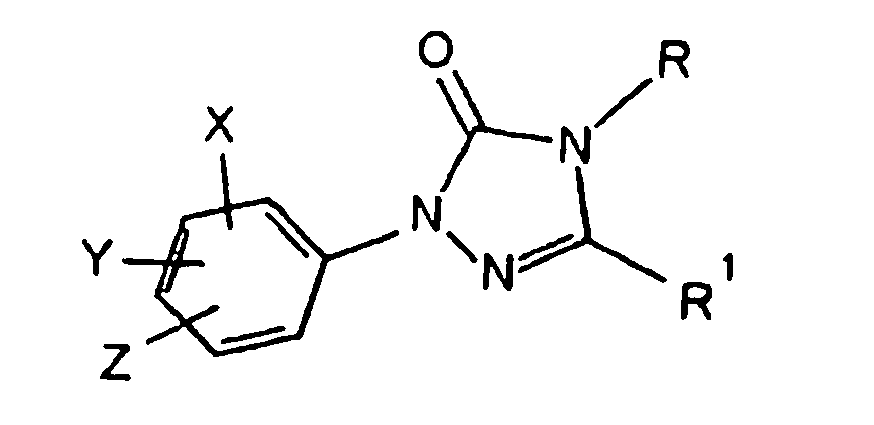
[0004] It has now been found that commercially useful 1-aryltriazolinones of formula I
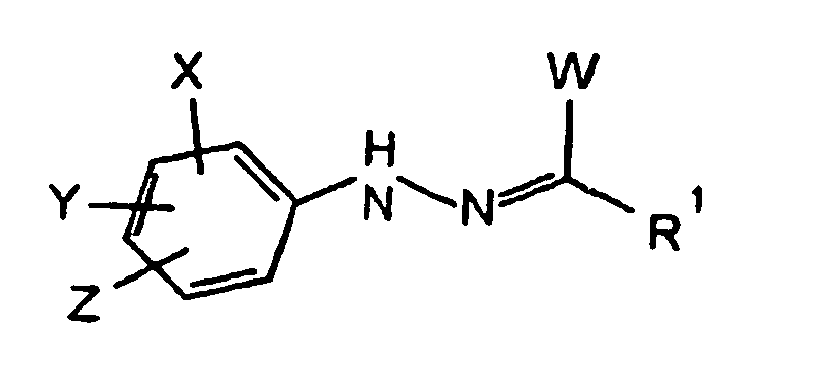
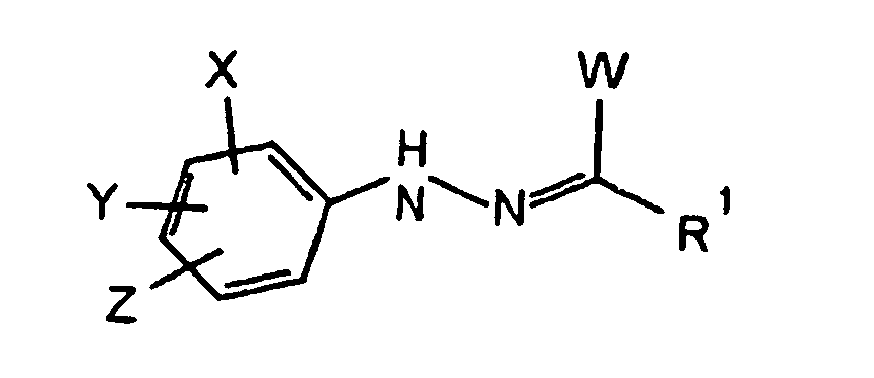
can be prepared in excellent yield and purity by carbonylating an amidrazone of formula (A) with at least one carbonylating agent wherein formula (A) is
where W, X, Y, Z, and R1 are fully described below. Preferred are those where W is -NHR where R is hydrogen or haloalkyl; X and Y are independently selected from hydrogen, chloro, or fluoro; Z is hydrogen, bromo, iodo, nitro, amino, or methylsulfonylamino; and R1 is methyl. These and other features, aspects, and advantages of the present invention will become better understood with reference to the following description and appended claims. According to a first aspect of the present invention there is provided a process according to claim 1.
Definitions
[0005] The modifier "about" is used herein to indicate that certain preferred operating ranges, such as ranges for molar ratios for reactants, material amounts, and temperature, are not fixedly determined. The meaning will often be apparent to one of ordinary skill. For example, a recitation of a temperature range of about 120° C to about 135° C in reference to, for example, an organic chemical reaction would be interpreted to include other like temperatures that can be expected to favor a useful reaction rate for the reaction, such as 105° C or 150° C. Where more than 10% of the absolute value of an end point or 10% of the range recited, whichever is less.
[0006] As used in this specification and unless otherwise indicated the substituent terms "alkyl", "alkoxy", and "haloalkyl", used alone or as part of a larger moiety, includes straight or branched chains of at least one or two carbon atoms, as appropriate to the substituent, and preferably up to 12 carbon atoms, more preferably up to ten carbon atoms, most preferably up to seven carbon atoms. The term "aryl" refers to phenyl or naphthyl optionally substituted with one or more halogen, alkyl, alkoxy, or haloalkyl. "Halogen" or "halo" refers to fluorine, bromine, iodine, or chlorine. The term "ambient temperature" refers to a temperature in the range of about 20° C to about 30° C. Certain solvents, catalysts, and the like are known by their acronyms. These include the acronyms "DMAC" meaning N,N-dimethylacetamide, "DMF" meaning N,N-dimethylformamide, "THF" meaning tetrahydrofuran, "DMAP" meaning 4-dimethylaminopyridine, "DBN" meaning 1,5-diazabicyclo[4.3.0]non-5-ene, and "DBU" meaning 1,8-diazabicyclo[5.4.0]undec-7-ene. The term "glymes" refers to a class of solvents comprised of monoglyme, diglyme, triglyme, tetraglyme, and polyglyme. The term "GC" refers to gas chromatography or gas chromatographic methods of analyses.
[0007] The term "amidrazone" or "amidrazone of formula (A)" is synonymous with and refers to a 2-(optionally-substituted phenyl)hydrazidethaneimidic acid, for example, but not limited to 2-(2,4-dichlorophenyl)hydrazidethaneimidic acid. The term "hydrazonoyl derivative" or "hydrazonoyl derivative of formula (A)" is synonymous with and refers to a N-(optionally-substituted phenyl)ethanehydrazonoyl derivative, for example, but not limited to N-(2,4-dichlorophenyl)ethanehydrazonoyl chloride. The term "compound or compounds of formula (A)" refers to both amidrazone and hydrazonoyl derivatives. The term "compound or compounds of formula I" is synonymous with and refers to 1-aryltriazolinone(s), for example, but not limited to 4,5-dihydro-1-(2,4-dichlorophenyl)-3-methyl-1,2,4-triazol-5(1H)-one.
Detailed Description of the Invention
[0008] As described herein the present invention relates to a process for preparing a compound of formula I:
in which an amidrazone of formula (A) is carbonylated with at least one carbonylating agent, where formula (A) is:
and wherein X and Y are independently selected from hydrogen, halogen, nitro, and amino; Z is selected from hydrogen, halogen, alkyl, alkoxy, nitro, amino, or alkylsulfonylamino; W is -NHR where R is hydrogen, alkyl, or haloalkyl; and, R1 is hydrogen, alkyl, haloalkyl, alkoxy, acetyl, or aryl.
[0009] Preferred species of amidrazone (A) with which to conduct the carbonylation reaction of the present invention are selected from those wherein X and Y are independently selected from hydrogen, chloro, or fluoro; Z is hydrogen, bromo, iodo, nitro, amino, or methylsulfonylamino; R is hydrogen or difluoromethyl; and R1 is C1 to C12 alkyl.
[0010] More preferred species of amidrazone (A) are selected from those wherein X, Y, and R are hydrogen, Z is hydrogen, 5-nitro, or 5-amino, and R1 is methyl, ethyl, or propyl; wherein X and R are hydrogen, Y is 4-chloro, Z is hydrogen or 5-nitro, and R1 is methyl, ethyl, or propyl; wherein X is 2-chloro or 2-fluoro, Y, Z, and R are hydrogen, and R1 is methyl, ethyl, or propyl; or wherein X is 2-chloro or 2-fluoro, Y is 4-chloro, Z is hydrogen, 5-bromo, 5-iodo, or 5-nitro, R is hydrogen, and R1 is methyl, ethyl, or propyl.
[0011] Most preferred species of amidrazone (A) are selected from those wherein X, Y, Z and R are hydrogen, and R1 is methyl; or wherein X is 2-fluoro, Y is 4-chloro, Z and R are hydrogen, and R1 is methyl.
[0012] For conducting the carbonylation of amidrazone (A), the use of at least one suitable organic solvent is employed.
[0013] Organic solvents, both polar and apolar, useful in the process include halogenated solvents, for example, such as, without limitation, chlorobenzene, carbon tetrachloride, bromodichloromethane, dibromochloromethane, bromoform, chloroform, bromochloromethane, butyl chloride, dichloromethane, tetrachloroethylene, trichloroethylene, 1,1,1-trichloroethane, 1,1,2-trichloroethane, 1,1-dichloroethane, 2-chloropropane, hexafluorobenzene, 1,2,4-trichlorobenzene, 1,2-dichlorobenzene, fluorobenzene and other halogenated solvents known in the art.
[0014] Polar organic solvents include ethers, for example, such as, without limitation, dimethoxymethane, THF, 1,3-dioxane, 1,4-dioxane, furan, diethyl ether, ethylene glycol dimethyl ether, ethylene glycol diethyl ether, diethylene glycol dimethyl ether, diethylene glycol diethyl ether, triethylene glycol dimethyl ether, tert.-butyl ethyl ether, tert.-butyl methyl ether and other ether solvents known in the art. Other polar organic solvents useful in the process include, for example, without limitation, propionitrile, ethyl formate, methyl acetate, hexachloroacetone, acetone, ethyl methyl ketone, ethyl acetate, nitromethane, nitrobenzene, glyines, and other polar solvents known in the art.
[0015] Other organic solvents useful herein include polar aprotic solvents, for example, such as, without limitation, DMF, DMAC, 1,3-dimethyl-3,4,5,6-tetrahydro-2(1H)-pyrimidinone, 1,3-dimethyl-2-imidazolidinone, N-methylpymolidinone, formamide,, N-methylacetamide, N-methylformamide, acetonitrile, dimethyl sulfoxide, sulfolane, N,N-dimethylpropionamide, tetramethylurea, hexamethylphosphoramide and other polar aprotic solvents known in the art.
[0016] Yet other organic solvents useful for implementation of the process include protic solvents, for example, such as, without limitation, water, methanol, ethanol, 2-nitroethanol, 2-fluoroethanol, 2,2,2-tritluoroethanol, ethylene glycol, 1-propanol, 2-propanol, 2-methoxyethanol, 1-butanol, 2-butanol, isobutanol, tert.-butanol, 2-ethoxyethanol, diethylene glycol, 1-, 2-, or 3-pentanol, 2,2-dimethyl-1-propanol, tert.-pentanol, cyclohexanol, anisole, benzyl alcohol, glycerol and other protic solvents known in the art.
[0017] Further organic solvents useful in the process include: acidic solvents, for example, such as, without limitation, trifluoroacetic acid, acetic acid, formic acid and other acidic solvents known in the art; basic solvents, for example, such as, without limitation, 2-, 3-, or 4-picoline, pyrrole, pyrrolidine, morpholine, pyridine, piperidine, triethylamine and other basic solvents known in the art; and hydrocarbon solvents, for example, such as, without limitation, benzene, cyclohexane, pentane, hexane, toluene, cycloheptane, methylcyclohexane, heptane, ethylbenzene, ortho-, meta-, or para-xylene, octane, indane, nonane, naphthaline and other hydrocarbon solvents known in the art.
[0018] Organic solvents most suitable for conducting the carbonylation of amidrazone (A) are those that are low cost, best enhance the solubility of the starting materials to promote rate of reaction, and offer minimum solvent decomposition. Accordingly, in the process of the invention carbonylating is conductet in at least one organic solvent selected from DMF, DMAC, acetonitrile, toluene, THF, and glymes. More preferred solvents include acetonitrile, toluene, tetrahydrofuran, monoglyme, and diglyme. The most preferred organic solvent in which to conduct the carbonylation of amidrazone (A) is toluene.
[0019] In the course of conducting chemical reactions, especially large scale organic chemical reactions yielding commercial quantities of desired product, a balance must be met between having to handle too much solvent and yet provide sufficient solvent to afford optimum reaction conditions. A useful ratio of solvent to amidrazone (A) to afford optimum reaction conditions is in the range of about 2.5/1 to about 20/1 wt/wt, preferably about 3/1 to about 15/1.
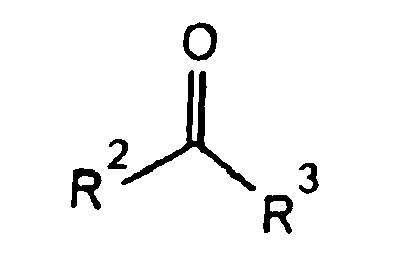
[0020] In order to form a compound of formula I, an amidrazone of formula (A) is carbonylated with at least one carbonylating agent. The carbonylating agents are represented by the following formula:
wherein R2 and R3 are the same and are selected from the group consisting of dichloromethoxy, trichloromethoxy, phenoxy or naphthoxy wherein phenoxy and naphthoxy are optionally substituted with halogen, alkoxy, or nitro. Preferred carbonylating agents are those wherein R2 and R3 are the same and are selected from the group consisting of dichloromethoxy, trichloromethoxy, or phenoxy optionally substituted with halogen, alkoxy, or nitro. A more preferred carbonylating agent with which to carbonylate amidrazone (A) is that wherein R2 and R3 are each phenoxy. A preferred mole ratio of carbonylating agent to amidrazone (A) is in the range of about 1/1 to about 2.5/1, more preferably about 1.1/1 to about 1.5/1.
[0021] Preferably, the carbonylation of an amidrazone of formula (A) to form a compound of formula I is conducted in the presence of an acid or base catalyst. The catalyst need not be present in order to form a compound of formula I; however, its presence will generally accelerate the formation of a compound of formula I. Whether or not a catalyst is preferably present may depend upon the compound of formula I being formed, the amidrazone (A) being used as the reactant, the catalyst, the desired reaction time, and the reaction temperature, which one of ordinary skill in the art can readily determine based on general knowledge and this disclosure.
[0022] An acid catalyst useful in the context of the present invention can be a protic (Brontsted) acid or an electron pair-accepting (Lewis) acid. Acid catalysts include, for example, mineral, organic, inorganic, and organometallic acids. Preferred acid catalysts include, but are not limited to, hydrochloric acid, hydrobromic acid, hydroiodic acid, sulfuric acid, perchloric acid, acetic acid, trifluoroacetic acid, trifluoromethanesulfonic acid, chlorosulfonic acid, methanesulfonic acid, para-toluenesulfouic acid, camphorsulfonic acid, benzenesulfonic acid, boron trifluoride, boron trifluoride etherate, aluminium chloride, zinc chloride, and lanthanum series trifluoromethanesulfonates such as the trifluoromethanesulfonates of scandium, praseodymium, and ytterbium, and other acid catalysts known in the art.
[0023] Preferred acid catalysts for use in carbonylating an amidrazone of formula (A) include, but are not limited to, boron trifluoride, aluminum chloride, lanthanum series trifluoromethanesulfonates, methanesulfonic acid, para-touluenesulfonic acid, acetic acid, and trifluoroacetic acid. Particularly preferred acid catalysts include boron trifluoride, scandium trifluoromethanesulfonate, methanesulfonic acid, and para-touluenesulfonic acid.
[0024] Preferably, the acid catalyst is present in a mole ratio of acid catalyst to amidrazone (A) in a range of about 0.0001/1 to about 1/1, preferably in a range of about 0.001/1 to about 0.1/1. Additional amounts of acid catalyst can be added if necessary to drive the reaction faster, for example.
[0025] Base catalysts include, but are not limited to, alkali metal, alkaline earth metal, and transition metal halides, hydrides, hydroxides, bicarbonates, carbonates, and the like. Metal halides useful in the present context include, but are not limited to, lithium chloride, lithium fluoride, lithium bromide, lithium iodide, sodium chloride, sodium fluoride, sodium bromide, sodium iodide, potassium chloride, potassium fluoride, potassium bromide, potassium iodide, magnesium chloride, magnesium fluoride, magnesium bromide, magnesium iodide, calcium chloride, calcium fluoride, calcium bromide, calcium iodide, silver bromide, and silver iodide. Metal hydrides useful in the present context include, but are not limited to, lithium hydride, sodium hydride, potassium hydride, magnesium hydride, calcium hydride, and barium hydride. Metal hydroxides useful in the present context include, but are not limited to, lithium hydroxide, sodium hydroxide, potassium hydroxide, magnesium hydroxide, calcium hydroxide, and barium hydroxide. Metal bicarbonates useful in the present context include, but are not limited to, sodium bicarbonate, and potassium bicarbonate. Metal carbonates useful in the present context include, but are not limited to, sodium carbonate and potassium carbonate. One of ordinary skill, upon receipt of the teachings hereof, may select other alkali metal, alkaline earth metal, and transition metal halides, hydrides, hydroxides, bicarbonates, and carbonates known in the art as catalysts.
[0026] Useful base catalysts also include alkali metal alkoxides, such as, without limitation, sodium methoxide, sodium ethoxide, potassium methoxide, potassium ethoxide, potassium tert.-butoxide, and other alkali metal alkoxides known in the art. Other useful base catalysts include organic alkyl amines and cyclic amines, for example, but are not limited to methylamine, ethylamine, dimethylamine, diethylamine, trimethylamine, triethylamine, ethyldiisopropylamine, butylamine, pyridine, DMAP, 2,6-dimethylpyridine, piperidine, piperazine, morpholine, quinoline, DBN, DBU, and other alkyl amines and cyclic amines known in the art.
[0027] Preferred base catalysts for use in carbonylating an amidrazone of formula (A) include sodium carbonate, potassium carbonate, sodium hydride, triethylamine, pyridine, DMAP, DBN, DBU, sodium methoxide, potassium methoxide, and potassium tert-butoxide. Particularly preferred base catalysts include sodium carbonate, potassium carbonate, DMAP, DBN, and DBU.
[0028] The base catalyst used in the present invention can be present in a mole ratio of base catalyst to amidrazone (A) in a range of about 0.0001/1 to about 1/1, preferably in a range of about 0.001/1 to about 0.1/1. Additional amounts of base catalyst may be added if necessary to drive the reaction faster, for example.
[0029] The temperature at which and the period for which a chemical reaction such as the carbonylation of amidrazone (A) is conducted will vary according to, among other things, the solvent or solvents in which the reaction is conducted, the reaction format (e.g., batch, semi-batch, or continuous), the carbonylating agent, and/or the formula of amidrazone (A), and whether or not a catalyst is used. The carbonylation of amidrazone (A) as set forth herein is conducted at a temperature in the range of about 10° C to about 200° C for a period of time of up to about 20 hours, preferably in the range of about ambient temperature to about 160° C for about 10 hours, and more preferably up to about 5 hours.
[0030] Generally, in a process of carbonylating an amidrazone (A), a hydrazine derivative, for example, 2,4-dichlorophenylhydrazine (1) is first prepared from its hydrochloride salt by treating the salt with a base, such as aqueous sodium hydroxide, giving the free hydrazine (1). The free hydrazine (1) is in turn reacted with, for example, ethyl acetimidate at a temperature of about 0° C to about ambient temperature in an appropriate solvent such as methylene chloride, yielding the corresponding amidrazone (A), 2,4-dichlocophenylhydrazidethaneimidic acid. Amidrazone (A) is in turn carbonylated with, for example, diphenyl carbonate at a temperature of about 100° C to about 115° C in a appropriate solvent such as toluene, yielding the corresponding compound of formula (I), 45-dihydro-1-(2,4-dichlorophenyl)-3-methyl-1,2,4-triazol-5(1H)-one. The carbonylation of amidrazone (A) to the compound of formula (I) is routinely aided with a catalyst, such as DMAP. A detailed procedure for the preparation, and carbonylation of an amidrazone (A) to yield a compound of formula (I) is set forth in Example 1 hereinbelow.
[0031] The process of the present invention is carried out in accordance with the procedures shown in example one below. Examples one serves only to illustrate the invention and should not be interpreted as limiting since further modifications of the disclosed invention will be apparent to those skilled in the art. All such modifications are deemed to be within the scope of the invention as defined in the claims.
Example 1
This example illustrates a process for preparing 4,5-dihydro-1-(2,4-dichlorophenyl)-3-methyl-1,2,4-triazol-5(1H)-one (I) from 2-(2,4-dichlorophenyl)hydrazidethaneimidic acid (A)
[0032] A stirred solution of 13.6 grams (0.1100 mole) of ethyl acetimidate hydrochloride and 13.2 grams (0.1300 mole) of triethylamine in 100 grams of methylene chloride was cooled to about 0 °C for five minutes, and 17.7 grams (0.1000 mole) of 2,4-dichlorophenylhydrazine (1) was added. Upon completion of addition the reaction mixture stirred at 0 °C for about one hour, then it was allowed to warm to ambient temperature where it stirred for about two hours. GC analysis of the reaction mixture indicated the presence of a small amount of unreacted (1). An additional 0.6 gram of ethyl acetimidate hydrochloride was added (total 14.2 gram-0.1150 mole), and the reaction mixture was stirred for an additional one hour. After this time the reaction mixture was washed with about 20 mL of water and dried with magnesium sulfate. The mixture was filtered, and the filtrate was concentrated under reduced pressure to a semi-solid residue. The residue was triturated with 20 mL of hexane, and the resultant solid was collected by filtration. The solid was washed with 50 mL of hexane and dried, yielding 20.4 grams (93.4% yield) of 2-(2,4-dichlomphenyl)hydrazidethaneimudic acid (A).
[0033] A stirred solution of 7.5 grams (0.0344 mole) of 2-(2,4-dichlorophenyl)-hydrazidethaneimidic acid (A), 7.4 grams (0.0344 mole) of diphenyl carbonate, and 0.2 gram (0.0017 mole) of 4-dimethylaminopyridine (DMAP) in 20 grams of toluene was heated at reflux for about 30 minutes. GC analysis of the reaction mixture after this time indicated the presence of unreacted diphenyl carbonate. An additional 0.3 gram of (A) was added (total 7.8 grams-0.0358 mole), and the reaction mixture was heated at reflux for an additional 30 minutes. After this time the reaction mixture was cooled and concentrated under reduced pressure to a residue. The residue was slurried for about two hours in refluxing hexane, then it was collected by filtration, yielding about 8.1 grams of subject compound (I) (yield from (A) is 93.2%; yield from (1) is 87.0%).
[0034] While this invention has been described with an emphasis upon preferred embodiments, it will be obvious to those of ordinary skill in the art that variations of the preferred embodiments may be used and that it is intended that the invention may be practiced otherwise than as specifically described herein. Accordingly this invention includes all modifications encompassed within the scope as defined by the following claims.
1. A process for preparing a compound of formula I:
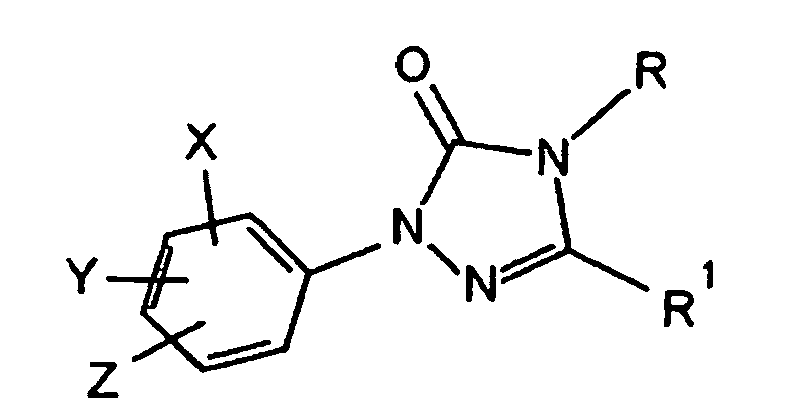
comprised of carbonylating an amidrazone of formula (A) with a carbonylating agent, wherein formula (A) is:
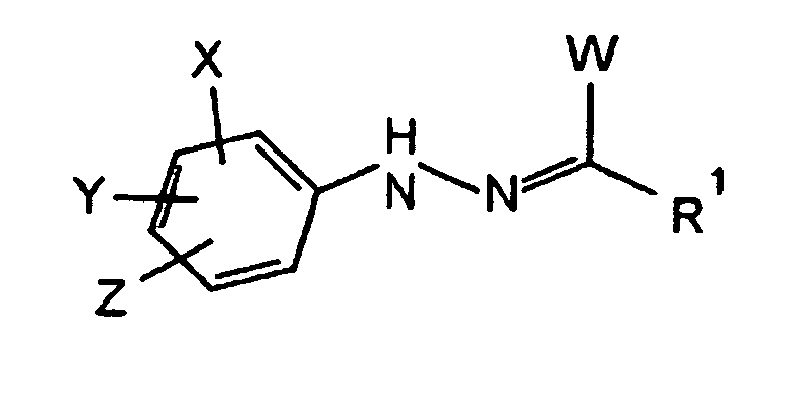
wherein X and Y are independently selected from hydrogen, halogen, nitro, and amino;
Z is selected from hydrogen, halogen, alkyl, alkoxy, nitro, amino, or alkylsulfonylamino;
W is -NHR where R is hydrogen, alkyl, or haloalkyl; and, R1 is hydrogen, alkyl, haloalkyl, alkoxy, acetyl, or aryl; and, said carbonylating agent is of the formula;
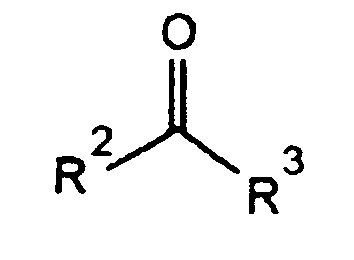
wherein R2 and R3 are the same and are selected from the group consisting of dichloromethoxy, trichloromethoxy, phenoxy or naphthoxy wherein phenoxy and naphthoxy are optionally substituted with halogen, alkoxy, or nitro;
and, wherein said carbonylating is conducted i) in at least one organic solvent selected from N,N-dimethylformamide, N,N-dimethylacetamide, acetonitrile, toluene, tetrahydrofuran, or glymes; ii) at a temperature in the range of 10°C to 200°C; iii) during a period of time of up to 20 hours.
comprised of carbonylating an amidrazone of formula (A) with a carbonylating agent, wherein formula (A) is:
wherein X and Y are independently selected from hydrogen, halogen, nitro, and amino;
Z is selected from hydrogen, halogen, alkyl, alkoxy, nitro, amino, or alkylsulfonylamino;
W is -NHR where R is hydrogen, alkyl, or haloalkyl; and, R1 is hydrogen, alkyl, haloalkyl, alkoxy, acetyl, or aryl; and, said carbonylating agent is of the formula;
wherein R2 and R3 are the same and are selected from the group consisting of dichloromethoxy, trichloromethoxy, phenoxy or naphthoxy wherein phenoxy and naphthoxy are optionally substituted with halogen, alkoxy, or nitro;
and, wherein said carbonylating is conducted i) in at least one organic solvent selected from N,N-dimethylformamide, N,N-dimethylacetamide, acetonitrile, toluene, tetrahydrofuran, or glymes; ii) at a temperature in the range of 10°C to 200°C; iii) during a period of time of up to 20 hours.
2. The process in accordance with Claim 1, wherein X, Y, and R are hydrogen, Z is hydrogen,
5-nitro, or 5-amino, and R1 is methyl, ethyl, or propyl; wherein X and R are hydrogen, Y is 4-chloro, Z is hydrogen
or 5-nitro, and R1 is methyl, ethyl, or propyl; wherein X is 2-chloro or 2-fluoro, Y, Z, and R are hydrogen,
and R1 is methyl, ethyl, or propyl; or wherein X is 2-chloro or 2-fluoro, Y is 4-chloro,
Z is hydrogen, 5-bromo, 5-iodo, or 5-nitro, R is hydrogen, and R1 is methyl, ethyl, or propyl.
3. The process in accordance with Claim 2, wherein X, Y, Z and R are hydrogen, and R1 is methyl; wherein X is 2-fluoro, Y is 4-chloro, Z and R are hydrogen, and R1 is methyl; or wherein X is 2-chloro, Y is 4-chloro, Z and R are hydrogen, and R1 is methyl.
4. The process in accordance with any one of Claims 1 to 3 wherein said carbonylating
agent is where R2 and R3 are the same and are selected from the group consisting of dichloromethoxy, trichloromethoxy,
or phenoxy optionally substituted with halogen, alkoxy, or nitro.
5. The process in accordance with any of Claims 1 to 4, wherein said carbonylating agent
is where R2 and R3 are the same and are each phenoxy.
6. The process in accordance with any of Claims 1 to 5, wherein said carbonylating agent
to said amidrazone (A) is a mole ratio in the range of 1/1 to 2.5/1, respectively.
7. The process in accordance with any one of claims 1 to 6, wherein said solvent is selected
from acetonitrile, toluene, tetrahydrofuran, monoglyme, or diglyme.
8. The process in accordance with Claim 7, wherein said solvent is toluene.
9. The process in accordance with any of Claims 1 to 8, wherein said solvent to said
amidrazone (A) is a weight ratio in the range of 2.5/1 to 20/1, respectively.
10. The process in accordance with any of Claims 1 to 9, wherein said carbonylating is
conducted at said temperature in the range of ambient temperature to 160°C during
said period of time of up to 10 hours.
11. The process in accordance with any of Claims 1 to 10, wherein said carbonylating is
conducted in the presence of an acid or base catalyst.
12. The process in accordance with Claim 11, wherein said acid catalyst is selected from
boron trifluoride, aluminium chloride, lanthanum series trifluoromethanesulfonates,
methanesulfonic acid, para-toluenesulfonic acid, acetic acid, or trifluoroacetic acid.
13. The process in accordance with Claim 12, wherein said acid catalyst is selected from
boron trifluoride, scandium trifluoromethanesulfonate, methanesulfonic acid, or para-toluenesulfonic
acid.
14. The process in accordance with Claim 11, wherein said base catalyst is selected from
sodium carbonate, potassium carbonate, sodium hydride, triethylamine, pyridine, 4-dimethylaminopyridine;
1,5-diazabicyclo[4.3.0]non-5-ene; 1,8-diazabicyclo[5.4.0]undec-7-ene; sodium methoxide,
potassium methoxide, or potassium tert-butoxide.
15. The process in accordance with Claim 14, wherein said base catalyst is selected from
sodium carbonate, potassium carbonate, 4-dimethylaminopyridine; 1,5-diazabicyclo[4.3.0]non-5-ene;
or 1,8-diazabicyclo[5.4.0]undec-7-ene.
16. The process in accordance with any of Claims 11 to 15, wherein said acid or base catalyst
to said amidrazone (A) is a mole ratio of 0.0001/1 to 1/1, respectively.
1. Ein Verfahren zur Vorbereitung einer Verbindung der Formel I:
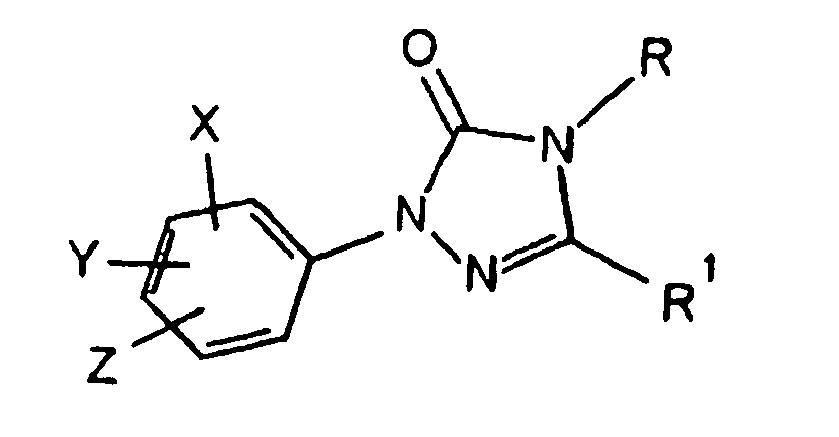
das das Carbonylieren eines Amidrazons der Formel (A) mit einem Carbonylierungsagens beinhaltet, wobei Formel (A) wie folgt ist:
wobei X und Y unabhängig aus Wasserstoff, Halogen, Nitro und Amino ausgewählt werden;
Z aus Wasserstoff, Halogen, Alkyl, Alkoxy, Nitro, Amino oder Alkylsulfonylamino ausgewählt wird;
W -NHR ist, wobei R Wasserstoff, Alkyl oder Halogenalkyl ist;
und R1 Wasserstoff, Alkyl, Halogenalkyl, Alkoxy, Acetyl oder Aryl ist; und das Carbonylierungsagens folgende Formel aufweist;
wobei R2 und R3 dieselben sind und aus der Gruppe, bestehend aus Dichlormethoxy, Trichlormethoxy, Phenoxy oder Naphthoxy ausgewählt werden, wobei Phenoxy und Naphthoxy wahlweise mit Halogen, Alkoxy oder Nitro ersetzt werden;
und wobei das Carbonylieren i) in mindestens einem organischen Lösungsmittel, ausgewählt aus N,N-Dimethylformamid, N,N-Dimethylacetamid, Acetonitril, Toluen, Tetrahydrofuran oder Glymes; ii) bei einer Temperatur im Bereich von 10 °C bis 200 °C; iii) während einer Zeitspanne von bis zu 20 Stunden, durchgeführt wird.
das das Carbonylieren eines Amidrazons der Formel (A) mit einem Carbonylierungsagens beinhaltet, wobei Formel (A) wie folgt ist:
wobei X und Y unabhängig aus Wasserstoff, Halogen, Nitro und Amino ausgewählt werden;
Z aus Wasserstoff, Halogen, Alkyl, Alkoxy, Nitro, Amino oder Alkylsulfonylamino ausgewählt wird;
W -NHR ist, wobei R Wasserstoff, Alkyl oder Halogenalkyl ist;
und R1 Wasserstoff, Alkyl, Halogenalkyl, Alkoxy, Acetyl oder Aryl ist; und das Carbonylierungsagens folgende Formel aufweist;
wobei R2 und R3 dieselben sind und aus der Gruppe, bestehend aus Dichlormethoxy, Trichlormethoxy, Phenoxy oder Naphthoxy ausgewählt werden, wobei Phenoxy und Naphthoxy wahlweise mit Halogen, Alkoxy oder Nitro ersetzt werden;
und wobei das Carbonylieren i) in mindestens einem organischen Lösungsmittel, ausgewählt aus N,N-Dimethylformamid, N,N-Dimethylacetamid, Acetonitril, Toluen, Tetrahydrofuran oder Glymes; ii) bei einer Temperatur im Bereich von 10 °C bis 200 °C; iii) während einer Zeitspanne von bis zu 20 Stunden, durchgeführt wird.
2. Verfahren gemäß Anspruch 1, wobei X, Y und R Wasserstoff sind, Z Wasserstoff, 5-Nitro
oder 5-Amino und R1 Methyl, Ethyl oder Propyl ist; wobei X und R Wasserstoff sind, Y 4-Chlor, Z Wasserstoff
oder 5-Nitro und R1 Methyl, Ethyl oder Propyl ist; wobei X 2-Chlor oder 2-Fluor ist, Y, Z und R Wasserstoff
sind und R1 Methyl, Ethyl oder Propyl ist; oder wobei X 2-Chlor oder 2-Fluor, Y 4-Chlor, Z Wasserstoff,
5-Brom, 5-lod oder 5-Nitro ist, R Wasserstoff ist und R1 Methyl, Ethyl oder Propyl ist.
3. Verfahren gemäß Anspruch 2, wobei X, Y, Z und R Wasserstoff sind und R1 Methyl ist; wobei X 2-Fluor ist, Y 4-Chlor ist, Z und R Wasserstoff sind und R1 Methyl ist; oder wobei X 2-Chlor ist, Y 4-Chlor ist, Z und R Wasserstoff sind und
R1 Methyl ist.
4. Verfahren gemäß einem der Ansprüche 1 bis 3, wobei das Carbonylierungsagens dort ist,
wo R2 und R3 gleich sind und aus der Gruppe, bestehend aus Dichlormethoxy, Trichlormethoxy oder
Phenoxy, wahlweise ersetzt durch Halogen, Alkoxy oder Nitro, ausgewählt wird.
5. Verfahren gemäß einem der Ansprüche 1 bis 4, wobei das Carbonylierungsagens dort ist,
wo R2 und R3 gleich sind und beide Phenoxy sind.
6. Verfahren gemäß einem der Ansprüche 1 bis 5, wobei das Carbonylierungsagens zu Amidrazon
(A) ein Molverhältnis im Bereich von 1/1 bzw. 2,5/1 aufweist.
7. Verfahren gemäß einem der Ansprüche 1 bis 6, wobei das Lösungsmittel aus Acetonitril,
Toluen, Tetrahydrofuran, Monoglyme oder Diglyme ausgewählt wird.
8. Verfahren gemäß Anspruch 7, wobei das Lösungsmittel Toluen ist.
9. Verfahren gemäß einem der Ansprüche 1 bis 8, wobei das Lösungsmittel zu Amidrazon
(A) ein Gewichtsverhältnis im Bereich von 2,5/1 bzw. 20/1 aufweist.
10. Verfahren gemäß einem der Ansprüche 1 bis 9, wobei das Carbonylieren während der Zeitspanne
von bis zu 10 Stunden bei der Temperatur im Bereich von Umgebungstemperatur bis 160
°C durchgeführt wird.
11. Verfahren gemäß einem der Ansprüche 1 bis 10, wobei das Carbonylieren in Anwesenheit
eines Säure- oder Basenkatalysators durchgeführt wird.
12. Verfahren gemäß Anspruch 11, wobei der Säurekatalysator aus Bortrifluorid, Aluminiumchlorid,
Trifluormethansulfonaten der Lanthanreihen, Methansulfonsäure, Paratoluensulfonsäure,
Essigsäure oder Trifluoressigsäure ausgewählt wird.
13. Verfahren gemäß Anspruch 12, wobei der Säurekatalysator aus Bortrifluorid, Scandiumtrifluormethansulfonat,
Methansulfonsäure oder Paratoluensulfonsäure ausgewählt wird.
14. Verfahren gemäß Anspruch 11, wobei der Basenkatalysator aus Natriumkarbonat, Kaliumkarbonat,
Natriumhydrid, Triethylamin, Pyridin, 4-Dimethylaminopyridin; 1,5-Diazabicyclo[4,3,0]non-5-en;
1,8-Diazabicyclo[5,4,0]undec-7-en; Natriummethoxid, Kaliummethoxid oder Kaliumtertiärbutoxid
ausgewählt wird.
15. Verfahren gemäß Anspruch 14, wobei der Basenkatalysator aus Natriumkarbonat, Kaliumkarbonat,
4-Dimethylaminopyridin; 1,5-Diazabicyclo[4,3,0]non-5-en; oder 1,8-Diazabicyclo[5,4,0]undec-7-en
ausgewählt wird.
16. Verfahren gemäß einem der Ansprüche 11 bis 15, wobei der Säure- oder Basenkatalysator
zu Amidrazon (A) ein Molverhältnis von 0,0001/1 bzw. 1/1 aufweist.
1. Un procédé pour préparer un composé de formule 1 :
comportant la carbonylation d'un amidrazone de formule (A) avec un agent carbonylant, dans lequel la formule (A) est :
dans laquelle X et Y sont indépendamment sélectionnés parmi : hydrogène, halogène, nitro, et amino ;
Z est sélectionné parmi : hydrogène, halogène, alkyl, alkoxy, nitro, amino, ou alkylsulfonylamino ;
W est -NHR où R est hydrogène, alkyl, ou haloalkyl ;
et, R1 est hydrogène, alkyl, haloalkyl, alkoxy, acétyl, ou aryl ; et, ledit agent carbonylant est de la formule ;
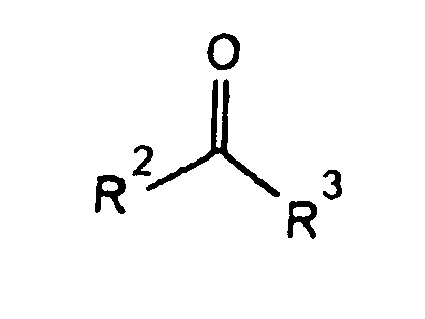
dans laquelle R2 et R3 sont les mêmes et sont sélectionnés dans le groupe consistant en dichlorométhoxy, trichlorométhoxy, phénoxy ou naphthoxy dans lequel phénoxy et naphthoxy sont facultativement substitués par halogène, alkoxy, ou nitro ;
et, dans lequel ladite carbonylation est menée i) dans au moins un solvant organique sélectionné parmi : N,N-diméthylformamide, N,N-diméthylacétamide, acétonitrile, toluène, tétrahydrofurane, ou glymes ; ii) à une température comprise dans la gamme allant de 10 °C à 200 °C ; iii) durant une période de temps allant jusqu'à 20 heures.
comportant la carbonylation d'un amidrazone de formule (A) avec un agent carbonylant, dans lequel la formule (A) est :
dans laquelle X et Y sont indépendamment sélectionnés parmi : hydrogène, halogène, nitro, et amino ;
Z est sélectionné parmi : hydrogène, halogène, alkyl, alkoxy, nitro, amino, ou alkylsulfonylamino ;
W est -NHR où R est hydrogène, alkyl, ou haloalkyl ;
et, R1 est hydrogène, alkyl, haloalkyl, alkoxy, acétyl, ou aryl ; et, ledit agent carbonylant est de la formule ;
dans laquelle R2 et R3 sont les mêmes et sont sélectionnés dans le groupe consistant en dichlorométhoxy, trichlorométhoxy, phénoxy ou naphthoxy dans lequel phénoxy et naphthoxy sont facultativement substitués par halogène, alkoxy, ou nitro ;
et, dans lequel ladite carbonylation est menée i) dans au moins un solvant organique sélectionné parmi : N,N-diméthylformamide, N,N-diméthylacétamide, acétonitrile, toluène, tétrahydrofurane, ou glymes ; ii) à une température comprise dans la gamme allant de 10 °C à 200 °C ; iii) durant une période de temps allant jusqu'à 20 heures.
2. Le procédé conformément à la revendication 1, dans lequel X, Y, et R sont hydrogène,
Z est hydrogène, 5-nitro, ou 5-amino, et R1 est méthyl, éthyl, ou propyl ; dans lequel X et R sont hydrogène, Y est 4-chloro,
Z est hydrogène ou 5-nitro, et R1 est méthyl, éthyl, ou propyl ; dans lequel X est 2-chloro ou 2-fluoro, Y, Z et R
sont hydrogène, et R1 est méthyl, éthyl, ou propyl ; ou dans lequel X est 2-chloro ou 2-fluoro, Y est 4-chloro,
Z est hydrogène, 5-bromo, 5-iodo, ou 5-nitro, R est hydrogène, et R1 est méthyl, éthyl, ou propyl.
3. Le procédé conformément à la revendication 2, dans lequel X, Y, Z, et R sont hydrogène,
et R1 est méthyl ; dans lequel X est 2-fluoro, Y est 4-chloro, Z et R sont hydrogène, et
R1 est méthyl ; ou dans lequel X est 2-chloro, Y est 4-chloro, Z et R sont hydrogène,
et R1 est méthyl.
4. Le procédé conformément à n'importe laquelle des revendications 1 à 3 dans lequel
ledit agent carbonylant est où R2 et R3 sont les mêmes et sont sélectionnés dans le groupe consistant en dichlorométhoxy,
trichlorométhoxy, ou phénoxy facultativement substitués par halogène, alkoxy, ou nitro.
5. Le procédé conformément à n'importe lesquelles des revendications 1 à 4, dans lequel
l'agent carbonylant est où R2 et R3 sont les mêmes et sont chacun phénoxy.
6. Le procédé conformément à n'importe lesquelles des revendications 1 à 5, dans lequel
le rapport entre ledit agent carbonylant et ledit amidrazone (A) est un rapport molaire compris dans la gamme allant de 1/1 à 2,5/1, respectivement.
7. Le procédé conformément à n'importe laquelle des revendications 1 à 6, dans lequel
ledit solvant est sélectionné parmi : acétonitrile, toluène, tétrahydrofurane, monoglyme,
ou diglyme.
8. Le procédé conformément à la revendication 7, dans lequel ledit solvant est du toluène.
9. Le procédé conformément à n'importe lesquelles des revendications 1 à 8, dans lequel
le rapport entre ledit solvant et ledit amidrazone (A) est un rapport de poids compris dans la gamme allant de 2,5/1 à 20/1, respectivement.
10. Le procédé conformément à n'importe lesquelles des revendications 1 à 9, dans lequel
ladite carbonylation est menée à ladite température comprise dans la gamme allant
de la température ambiante à 160 °C durant ladite période de temps allant jusqu'à
10 heures.
11. Le procédé conformément à n'importe lesquelles des revendications 1 à 10, dans lequel
ladite carbonylation est menée en présence d'un catalyseur acide ou basique.
12. Le procédé conformément à la revendication 11, dans lequel ledit catalyseur acide
est sélectionné parmi : trifluorure de bore, chlorure d'aluminium, trifluorométhanesulfonates
de la série des lanthanides, acide méthanesulfonique, acide para-toluènesulfonique,
acide acétique, ou acide trifluoroacétique.
13. Le procédé conformément à la revendication 12, dans lequel ledit catalyseur acide
est sélectionné parmi : trifluorure de bore, trifluorométhanesulfonate de scandium,
acide méthanesulfonique, ou acide para-toluènesulfonique.
14. Le procédé conformément à la revendication 11, dans lequel ledit catalyseur basique
est sélectionné parmi : carbonate de sodium, carbonate de potassium, hydrure de sodium,
triéthylamine, pyridine, 4-diméthylaminopyridine ; 1,5-diazabicyclo[4.3.0]non-5-ène
; 1,8-diazabicyclo[5.4.0]undec-7-ène ; méthoxyde de sodium, méthoxyde de potassium,
ou tert-butoxyde de potassium.
15. Le procédé conformément à la revendication 14, dans lequel ledit catalyseur basique
est sélectionné parmi : carbonate de sodium, carbonate de potassium, 4-diméthylaminopyridine
; 1,5-diazabicyclo[4.3.0]non-5-ène ; ou 1,8-diazabicyclo[5.4.0]undec-7-ène.
16. Le procédé conformément à n'importe lesquelles des revendications 11 à 15, dans lequel
le rapport entre ledit catalyseur acide ou basique et ledit amidrazone (A) est un rapport molaire allant de 0,0001/1 à 1/1, respectivement.