| (19) |
 |
|
(11) |
EP 1 258 158 B1 |
| (12) |
EUROPEAN PATENT SPECIFICATION |
| (45) |
Mention of the grant of the patent: |
|
24.06.2009 Bulletin 2009/26 |
| (22) |
Date of filing: 31.01.2001 |
|
| (51) |
International Patent Classification (IPC):
|
| (86) |
International application number: |
|
PCT/SE2001/000187 |
| (87) |
International publication number: |
|
WO 2001/058200 (09.08.2001 Gazette 2001/32) |
|
| (54) |
AUTHENTICATION OF PERSONS IN A COMMUNICATION SYSTEM
AUTHENTISIERUNG VON PERSONEN IN EINEM KOMMUNIKATIONSSYSTEM
IDENTIFICATION DES PERSONNES DANS UN SYSTEME DE COMMUNICATIONS
|
| (84) |
Designated Contracting States: |
|
AT BE CH CY DE DK ES FI FR GB GR IE IT LI LU MC NL PT SE TR |
|
Designated Extension States: |
|
LT LV |
| (30) |
Priority: |
04.02.2000 SE 0000357
|
| (43) |
Date of publication of application: |
|
20.11.2002 Bulletin 2002/47 |
| (73) |
Proprietor: TELIASONERA AB |
|
106 63 Stockholm (SE) |
|
| (72) |
Inventors: |
|
- ANDERSIN, Mikael
S-118 64 Stockholm (SE)
- EMILSSON, Stellan
S-655 94 Karlstad (SE)
- BLOMKVIST, H kan
S-653 50 Karlstad (SE)
- GUSTAFSSON, Jan
S-653 30 Karlstad (SE)
- ERIKSSON, Jonas
S-652 22 Karlstad (SE)
|
| (74) |
Representative: Hopfgarten, Nils et al |
|
L.A. Groth & Co. KB
P.O. Box 6107
102 32 Stockholm
102 32 Stockholm (SE) |
| (56) |
References cited: :
EP-A2- 0 827 356
WO-A1-97/45981
WO-A2-99/03285
US-A- 5 491 750
|
WO-A1-97/45814
WO-A1-98/12891
DE-A1- 19 716 111
|
|
| |
|
|
|
|
| |
|
| Note: Within nine months from the publication of the mention of the grant of the European
patent, any person may give notice to the European Patent Office of opposition to
the European patent
granted. Notice of opposition shall be filed in a written reasoned statement. It shall
not be deemed to
have been filed until the opposition fee has been paid. (Art. 99(1) European Patent
Convention).
|
Technical field
[0001] The present invention relates to a procedure for mutual authentication of persons
at communication between a first person and a second person and to a corresponding
arrangement for authentication, said persons communicating with each other via a respective
communication device over a communication system.
Background
[0002] A method for mutual authentication of components in a network is described in
WO 99/03285. The network then requests a set of data values from an authentication centre and
transmits at least one set of data values to the mobile station, which on the basis
of an internally stored key calculates a response from this set of data values and
transmits it to the network. To authenticate the network in relation to the mobile
station the response is sent back to the network to be interpreted simultaneously
by the network and for the network immediately to transmit a response to the mobile
station.
[0003] In many situations it is of great value to have possibility to check the identity
of the person with whom one is communicating. Examples of occasions when authentication
person to person would be advantageous are at payment transactions, when a person
shall be admitted through a gateway, or when a confidential talk is to begin with
an unknown opposite party. One problem with authentication of a person in a mobile
telephone system is that the technology which is used must be independent of where
the in the call included persons are. Another problem is to effect authentication
person to person without advanced additions to the mobile telephones of the parties
being needed, such as SIMAT, WAP or that the mobile telephones are connected to PDAs.
Summary of the invention
[0004] In order to overcome above mentioned problems, the present invention consequently
relates to a procedure for authentication of person at communication between a first
person and a second person, including the steps that, when a mutual authentication
person to person is wanted, one of the persons transmits a request for authentication
to the authentication server, the persons identify themselves to the authentication
server by means of personal codes and/or voice signatures, an authentication server
generates two codes, that both codes are transmitted both to the first person and
to the second person, that the first person reads aloud one of the codes to the second
person, and that the second person reads aloud to the first person, whereupon the
communicating persons authenticate each other by comparing the code that has been
read aloud to them with corresponding transmitted code.
[0005] In one embodiment said identification includes information about where the codes
shall be transmitted to reach the second person. In another embodiment said identification
is used by the authentication server to produce information about where the codes
shall be transmitted to reach the second person.
[0006] Said codes are preferably transmitted to the communication device of a respective
person. In one embodiment said codes are transmitted in the form of a text message,
and are shown on a display device at the communication device. In another embodiment,
said codes are transmitted in the form of a data sequence which represents a coded
sound message, which sound message is played back in a loudspeaker at the communication
device.
[0007] In one preferred embodiment said persons must, before the codes are transmitted to
them, identify themselves to, and be acknowledged by, the authentication server. In
one embodiment said persons identify themselves to the authentication server by transmitting
a personal code, which preferably is transmitted as a text message. In another embodiment
said personal code is pronounced by the person via his/her communication device, and
is detected by a speech recognition device in cooperation with the authentication
server. In yet another embodiment the authentication server identifies said persons
by a voice recognition device arranged in cooperation with the authentication server.
[0008] Said communication devices are preferably mobile telephones, at which the codes are
transmitted over a mobile telephone system to said mobile telephones, by means of
which mobile telephones said persons communicate.
[0009] Further, the present invention relates to an arrangement for authentication of persons
at communication between a first person and a second person, said persons communicating
with each other via a respective communication device over a communication system.
The arrangement is characterized by an authentication server arranged in the communication
system, which authentication server includes an input port arranged to from one of
said persons receive a request for authentication including an identification of said
persons. The authentication server is arranged to check the person's identities by
means of personal codes and/or voice signatures. A code generator in connection with
said input port is arranged to, in response to a received authentication request,
generate two codes, and distribution devices in connection with an output port are
arranged to via said communication system transmit both said codes to both said communication
devices, said communicating persons authenticating each other by comparing a code
read aloud to them with corresponding code transmitted to their communication devices.
[0010] In one embodiment said authentication request includes an identification of the addresses
of said communication devices. In another embodiment said authentication server is
preferably connected to a storing device, said storing device storing identifications
of the persons together with respective person's associate communication addresses,
and the authentication server further includes means arranged to, in response to a
received authentication request, select a communication address from the storing device
depending on received identification.
[0011] Said code generator is preferably a random number generator. In one embodiment said
authentication server is arranged to transmit said codes as text messages, and said
communication devices include presentation/display devices arranged to present/show
received codes. In another embodiment said authentication server is arranged to transmit
said codes as data sequences representing a coded sound message, and said communication
devices include devices to convert said data sequences to sound, and a loudspeaker
is arranged to play back the sound message.
[0012] In one preferred embodiment said authentication server includes code recognition
devices, adapted to detect a personal code given and transmitted to the authentication
server by a person with his/her communication device, and devices arranged to identify
persons by means of the personal code from a storing device which is connected to
the authentication server. In one embodiment said code recognition devices are arranged
to detect personal codes in form of text messages. In another embodiment said code
recognition device includes speech recognition devices arranged to detect a pronounced
personal code. Alternatively, the speech recognition device can be incorporated in
the communication device.
[0013] In one preferred embodiment said authentication server includes voice recognition
devices adapted to identify a person on basis of his/her voice.
[0014] Preferably, said communication devices are mobile telephones, said communication
system being a mobile telephone system.
Brief description of the drawings
[0015] Preferred embodiments of the present invention are described below in detail, with
reference to the only figure, where
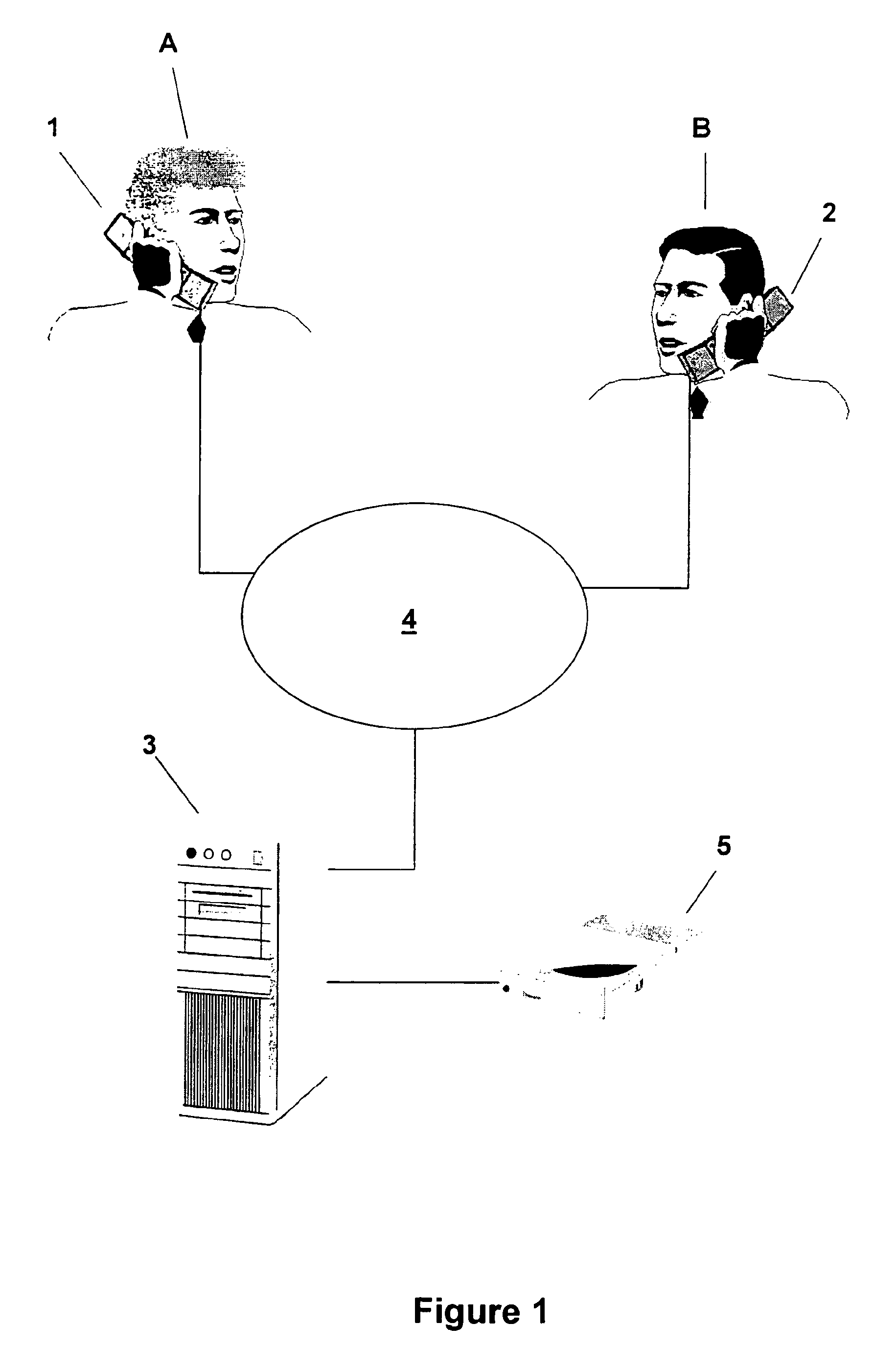
Figure 1 shows an embodiment of the arrangement according to the present invention.
Detailed description of preferred embodiments
[0016] The invention is based on that an uninvolved, trustworthy party C via an authentication
server 3 distributes two unique codes X and Y to the two persons A and B, which are,
or want to be, set up in a communication connection with each other. The invention
preferably relates to authentication between persons who communicate with each other
with mobile telephones 1 and 2 over a mobile telephone system 4, but can also be applied
to other types of communication, such as ordinary telephony by cable, or communication
over data communication network, for instance Internet. According to the invention,
person A then reads aloud for instance code X to the opposite party B, whereas B reads
the code Y aloud to A. Person A then compares the code Y, which the person B has read
aloud, with the code Y which A has received from the authentication server, whereas
person B compares the code X the person A has read aloud, with the code X which B
has received from the authentication server 3. In this way a mutual authentication
person to person is achieved.
[0017] In Figure 1 is shown an embodiment of the arrangement according to the present invention.
The first person A talks in his/her mobile telephone 1 with the second person B, via
his/her mobile telephone 2, over a mobile telephone system 4. To the mobile telephone
system 4 an authentication server 3 is connected via an input port, which authentication
server 3 belongs to one for the persons A and B independent party C. When a mutual
authentication person to person is wanted, one of the persons, for instance A, gets
into contact with the authentication server 3 and transmits a request for authentication.
This can be made before or after set up of the call with the person B.
[0018] The authentication server 3 is arranged to manage A-numbers, and consequently knows
who has initiated the contact. The authentication server, however, must also knows
who the opposite party B is, so the person A encloses this data. In one embodiment
this is made by the person A quite simply enclosing the number to the person B's mobile
telephone 2, i.e. the B-number, to the authentication server 3. In another embodiment
the person A instead transmits some form of identification for B to the authentication
server 3, for instance name, civic registration number, organization number or the
like. In such an embodiment the authentication server 3 is arranged in connection
with a database 5, from which the authentication server 3 can derive stored information
about the person B's mobile telephone number, by using a transmitted identification
as input data.
[0019] The authentication server 3 includes code generation devices, preferably a random
number generator, arranged to in reaction to a received authentication request generate
two codes X and Y. Further, the authentication server 3 is equipped with a distribution
device, arranged to transmit both the two codes X and Y, both to said A-number and
B-number. By the communicating parties A and B receiving the same codes, they then
can authenticate each other by each reading aloud a part, X or Y, of the code pair
to each other. Thus authentication is achieved person to person without advanced additions
to the communication devices, i.e. the mobile telephones 1 and 2, being needed. Preferably
are the codes X and Y transferred as simple text messages, for instance SMS, and shown
on the display of respective mobile telephone 1 and 2. Also authentication request
is preferably a text message. In a simple case the authentication request consists
of a B-number which is transmitted to the authentication server 3 by the authentication
server 3 being called. As reaction to that call, the authentication server 3 generates
two codes X and Y, and transmits them to the A-number from which the authentication
request was transmitted, and the enclosed B-number.
[0020] In one embodiment the authentication server is arranged for communication with voice
commands, so that authentication request can be pronounced in the microphone cf the
mobile telephone, and the codes X and Y can be played back in the loudspeaker of the
mobile telephone. Either the authentication server 3 or the mobile telephone 1 respective
2 is in this embodiment arranged with a speech recognition device, whereas the mobile
telephones 1 respective 2 include devices for play back of a received message with
a synthetic voice.
[0021] In one embodiment is to the communicating parties A and B also transmitted information
about the parties A and B which is stored in the database 5, i.e. name or the like
as above, together with the codes X and Y.
[0022] In a preferred embodiment of the arrangement according to the invention, the parties
A and B are known in advance by the independent party C, and have to identify themselves
to the authentication server 3 before the codes X and Y can be distributed. This identification
can for instance be made by a personal code for respective A and B being entered on
respective person's mobile telephone 1 and 2, and being transmitted to the authentication
server 3. The authentication server 3 includes means to detect the transmitted personal
code, and means to check its authenticity. Preferably is the authentication server
3 internally or externally connected to a database 5, in which the identification
of the communicating parties are stored, for instance in form of a digital certificate,
as well as their personal codes. The personal code can be a simple combination of
digits in known way, which is transmitted to the authentication server 3 as a text
message as above. The code can also be a voice signature, at which the authentication
server includes a voice recognition device arranged to detect a spoken voice, and
to find the person's identification and/or mobile telephone number in the database
5 with his/her voice signature as input data. In one embodiment is required that both
parties A and B are identified by the authentication server 3 before the codes X and
Y are distributed.
[0023] The invention consequently describes a general form of mutual authentication between
persons, preferably mobile telephone subscribers. The invention can for instance be
utilized in combination with a pay system, at which the technology offers a way to
buyers and sellers to verify the identity of the opposite party. The invention can
also be used when one, at a normal call, wants to be sure that the person one is talking
with is the right person. Today there exist methods for authentication towards a central
server. The invention instead describes a technology for authentication person to
person, and which does not make any specific demands upon the terminals 1 and 2. For
the realization via a mobile telephone system 4 it is sufficient with an ordinary
GSM-telephone with capacity to transmit and receive SMS. The expert, however, realizes
that the invention also can be realized in other types of communication systems 4,
with to them belonging communication devices 1 and 2. One example is communication
over Internet 4 between data communication terminals 1 and 2, for instance PC, at
which the equivalence of the A-number and the B-number is the IP-address. Another
example is communication between ordinary telephones by wire. The invention is only
limited by the enclosed patent claims.
1. Procedure for authentication of persons at communication between a first person (A)
and a second person (B), including the steps that:
- when a mutual authentication person to person is wanted one (A) of the persons transmits
a request for authentication to the authentication server (3), said request for authentication
including an identification of the second person (B);
- the persons (A, B) identify themselves to the authentication server (3) by means
of personal codes and/or voice signatures
- an authentication server (3) generates two codes (X;Y) in response to a proper identification,
by the authentication server, of the two persons indicated in said request for authentication
previously received by the authentication server;
- both codes (X,Y) are transmitted to the first person (A) and to the second person
(B);
- the first person (A) reads aloud one of the codes (X) to the second person (B),
and the second person (B) reads aloud the other code (Y) to the first person (A);
- the communicating persons (A, B) authenticate each other by comparing the code that
has been read aloud to them with corresponding transmitted code.
2. Procedure as claimed in claim 1, wherein said identification includes information
about where (2) the codes (X, Y) shall be transmitted to reach the second person (B).
3. Procedure as claimed in claim 3, wherein said identification is used by the authentication
server (3) to produce information about where (2) the codes (X, Y) shall be transmitted
to reach the second person.
4. Procedure as claimed in any of the previous claims, wherein said codes (X, Y) are
transmitted to the respective person's (A, B) communication device (1, 2).
5. Procedure as claimed in claim 4, wherein said codes (X, Y) are transmitted in the
form of a text message, and are presented/shown on a display device at the communication
device (1, 2).
6. Procedure as claimed in claim 4, wherein said codes (X, Y) are transmitted in the
form of a data sequence which represents a coded sound message, which sound message
is played back in a loudspeaker at the communication device (1, 2).
7. Procedure as claimed in any of the previous claims, wherein said persons (A, B), before
the codes (X, Y) are transmitted to them, must identify themselves to the authentication
server (3), and be acknowledged by the authentication server (3).
8. Procedure as claimed in claim 7, wherein said persons (A, B) identify themselves to
the authentication server (3) by transmitting a code.
9. Procedure as claimed in claim 8, wherein said code is transmitted as a text message.
10. Procedure as claimed in claim 8, wherein said code (X, Y) is pronounced by the person
(A, B) with his/her communication device (1, 2) and is detected by a speech recognition
device in cooperation with the authentication server (3).
11. Procedure as claimed in claim 7, wherein a voice recognition device in cooperation
with the authentication server (3) identifies said persons (A, B).
12. Procedure as claimed in any of the previous claims, wherein said communication devices
(1, 2) are mobile telephones, said codes being transmitted over a mobile telephone
system (4) to said mobile telephones (1, 2) by means of which said persons (A, B)
communicate.
13. Arrangement for authentication of persons at communication between a first person
(A) and a second person (B), said persons communicating with each other via a respective
communication device (1, 2) over a communication system (4), characterized by an authentication server (3) arranged in the communication system, which authentication
server includes an input port arranged to, from one (A) of said persons, receive a
request for authentication including an identification of said persons (A, B), the
authentication server (3) being arranged to check the persons' (A, B) identities by
means of personal codes and/or voice signatures, a code generator in connection with
said input port, arranged to, in response to a received authentication request, generate
two codes (X, Y), and by distribution devices in connection with an output port, arranged
to, via said communication system (4), transmit both of said codes (X, Y) to both
of said communication devices (1, 2), said communicating persons (A, B) authenticating
each other by comparing a code read aloud to them with corresponding code transmitted
to their communication devices (1, 2).
14. Arrangement as claimed in claim 13, wherein said request for authentication includes
an identification of the addresses of said communication device (1, 2).
15. Arrangement as claimed in claim 13, wherein said authentication server (3) is connected
to a storing device (5), said storing device storing identifications of the persons
together with associated communication addresses of the respective persons, and wherein
the authentication server (3) further includes means arranged to, in response to a
received request for authentication, select a communication address from the storing
device (5) depending on received identification.
16. Arrangement as claimed in any of the claim 13 - 15, wherein said code generator is
a random number generator arranged to generate random number codes.
17. Arrangement as claimed in claim 16, wherein said authentication server is arranged
to transmit said codes (X, Y) as text messages, and said communication devices (1,
2) include display devices arranged to display received codes (X, Y).
18. Arrangement as claimed in claim 16, wherein said authentication server is arranged
to transmit said codes (X, Y) as data sequences representing a coded sound message,
and where said communication devices (1, 2) include devices to convert said data sequences
to sound, and a loudspeaker is arranged to play back the sound message.
19. Arrangement as claimed in any of the claims 13 - 18, wherein said authentication server
(3) includes code recognition devices, adapted to detect a personal code given and
transmitted to the authentication server (3) by a person (A, B) with his/her communication
device (1, 2), and devices, arranged to, from said storing device (5) connected to
the authentication server (3), derive an identification for the person by means of
his/her personal code.
20. Arrangement as claimed in claim 19, wherein said code recognition device is arranged
to detect personal codes in the form of text message.
21. Arrangement as claimed in claim 19, wherein said code recognition device includes
speech recognition devices arranged to detect a pronounced personal code.
22. Arrangement as claimed in claim 19, wherein said communication devices (1, 2) include
speech recognition devices arranged to detect a pronounced personal code.
23. Arrangement as claimed in any of the claims 13 - 18, wherein said authentication server
(3) includes voice recognition devices, adapted to identify a person (A, B) on the
basis of his/her voice.
24. Arrangement as claimed in any of the claims 13 - 23, wherein said communication devices
(1, 2) are mobile telephones, said display devices being displays.
1. Verfahren zur Authentifizierung von Personen bei der Kommunikation zwischen einer
ersten Person (A) und einer zweiten Person (B), das die Schritte einschließt, dass:
- wenn eine gegenseitige Authentifizierung von Person zu Person gewünscht ist, eine
(A) der Personen eine Anforderung von Authentifizierung zu dem Authentifizierungsserver
(3) überträgt, welche Anforderung von Authentifizierung eine Identifizierung der zweiten
Person (B) einschließt;
- die Personen (A, B) sich selbst zum Authentifizierungsserver (3) mit Hilfe von persönlichen
Codes und/oder Sprachsignaturen identifizieren,
- ein Authentifizierungsserver (3) zwei Codes (X; Y) als Reaktion auf eine richtige
Identifizierung durch den Identifizierungsserver der beiden Personen erzeugt, die
in der Anforderung von Authentifizierung bezeichnet sind, die vorher durch den Authentifizierungsserver
empfangen ist;
- beide Codes (X, Y) zur ersten Person (A) und zur zweiten Person (B) übertragen werden;
- die erste Person (A) laut einen der Codes (X) der zweiten Person (B) vorliest, und
die zweite Person (B) den anderen Code (Y) der ersten Person (A) vorliest;
- die kommunizierenden Personen (A, B) einander authentifizieren, indem sie den Code,
der ihnen laut vorgelesen worden ist, mit einem entsprechenden übertragenen Code vergleichen.
2. Verfahren nach Anspruch 1, bei dem die Identifizierung Informationen darüber einschließt,
wo (2) die Codes (X, Y) übertragen werden sollen, um die zweite Person (B) zu erreichen.
3. Verfahren nach Anspruch 3, bei dem die Identifizierung durch den Authentifizierungsserver
(3) verwendet wird, Informationen darüber zu erzeugen, wo (2) die Codes (X, Y) übertragen
werden sollen, um die zweite Person zu erreichen.
4. Verfahren nach einem der vorangehenden Ansprüche, bei dem die Codes (X, Y) zu der
Kommunikationseinrichtung (1, 2) der entsprechenden Personen (A, B) übertragen werden.
5. Verfahren nach Anspruch 4, bei dem die Codes (X, Y) in Form einer Textmeldung übertragen
werden und auf einer Anzeigeeinrichtung an der Kommunikationseinrichtung (1, 2) dargeboten/gezeigt
werden.
6. Verfahren nach Anspruch 4, bei dem die Codes (X, Y) in Form einer Datensequenz übertragen
werden, die eine kodierte Tonmeldung darstellt, welche Tonmeldung in einen Lautsprecher
bei der Kommunikationseinrichtung (1, 2) abgespielt wird.
7. Verfahren nach einem der vorangehenden Ansprüche, bei dem die Personen (A, B), bevor
die Codes (X, Y) zu ihnen übertragen werden, sich selbst beim Authentifizierungsserver
(3) identifizieren und durch den Authentifizierungsserver (3) bestätigt werden müssen.
8. Verfahren nach Anspruch 7, bei dem die Personen (A, B) sich selbst beim Authentifizierungsserver
(3) durch Übertragen eines Codes identifizieren,
9. Verfahren nach Anspruch 8, bei dem der Code als eine Textmeldung übertragen wird.
10. Verfahren nach Anspruch 8, bei dem der Code (X, Y) durch die Person (A, B) mit seiner/ihrer
Kommunikationseinrichtung (1, 2) ausgesprochen wird und durch eine Spracherkennungseinrichtung
in Zusammenwirken mit dem Authentifizierungsserver (3) delektiert wird.
11. Verfahren nach Anspruch 7, bei der die Sprachenerkennungseinrichtung in Zusammenwirken
mit dem Authentifizierungsserver (3) die Personen (A, B) identifiziert.
12. Verfahren nach einem der vorangehenden Ansprüche, bei dem die Kommunikationseinrichtungen
(1, 2) mobile Telefone sind und die Codes über ein Mobiltelefonsystem (4) zu den mobilen
Telefonen (1, 2) übertragen werden, mit Hilfe derer die Personen (A, B) kommunizieren.
13. Anordnung für Authentifizierung einer Person bei Kommunikation zwischen einer ersten
Person (A) und einer zweiten Person (B), welche Personen miteinander über eine entsprechende
Kommunikationseinrichtung (1, 2) über ein Kommunikationssystem (4) kommunizieren,
gekennzeichnet durch einen Authentifizierungsserver (3), der in dem Kommunikationssystem angeordnet ist,
welcher Authentifizierungsserver einen Eingangsanschluss einschließt, der dazu ausgebildet
ist, von einer (A) der Personen eine Anforderung von Authentifizierung einschließlich
einer Identifizierung der Personen (A, B) zu empfangen, wobei der Authentifizierungsserver
(3) dazu ausgebildet ist, die Identitäten der Personen (A, B) mit Hilfe von persönlichen
Codes und/oder Sprachsignaturen zu prüfen, durch einen Codegenerator in Verbindung mit dem Eingangsanschluss, der dazu ausgebildet
ist, als Reaktion auf eine empfangene Authentifizierungsanforderung zwei Codes (X,
Y) zu erzeugen, und durch Verteilungseinrichtungen in Verbindung mit einem Ausgangsanschluss, die dazu ausgebildet
sind, über das Kommunikationssystem (4) beide Codes (X, Y) zu beiden Kommunikationseinrichtungen
(1, 2) zu übertragen, welche kommunizierenden Personen (A, B) einander dadurch authentifizieren, dass sie einen Code, der ihnen laut vorgelesen wird, mit einem
entsprechenden Code vergleichen, der zu ihren Kommunikationseinrichtungen (1, 2) übertragen
wird.
14. Anordnung nach Anspruch 13, bei der die Anforderung für Authentifizierung eine Identifizierung
der Adressen der Kommunikationseinrichtung (1, 2) einschließt.
15. Anordnung nach Anspruch 13, bei der der Authentifizierungsserver (3) mit einer Speichereinrichtung
(5) verbunden ist, welche Speichereinrichtung Identifizierungen der Personen zusammen
mit zugeordneten Kommunikationsadressen der entsprechenden Personen speichert, und
wobei der Authentifizierungsserver (3) weiter Mittel einschließt, die dazu ausgebildet
sind, als Reaktion auf eine empfangene Anforderung von Authentifizierung eine Kommunikationsadresse
von der Speichereinrichtung (5) in Abhängigkeit von der empfangenen Identifizierung
auszuwählen.
16. Anordnung nach einem der Ansprüche 13 bis 15, bei der der Codegenerator ein Zufallszahlengenerator
ist, der dazu ausgebildet ist, Zufallszahlencodes zu erzeugen.
17. Anordnung nach Anspruch 16, bei der Authentifizierungsserver dazu ausgebildet ist,
die Codes (X, Y) als Textmeldungen zu übertragen und die Kommunikationseinrichtungen
(1, 2) Anzeigeeinrichtungen einschließen, die dazu ausgebildet sind, empfangene Codes
(X, Y) anzuzeigen.
18. Anordnung nach Anspruch 16, bei der der Authentifizierungsserver dazu ausgebildet
ist, die Codes (X, Y) als Datensequenzen zu übertragen, die eine codierte Tonsequenz
darstellen, und wo die Kommunikationseinrichtungen (1, 2) Einrichtungen einschließen,
die Datensequenzen in Ton umzuwandeln, und ein Lautsprecher angeordnet ist, die Tonmeldung
abzuspielen.
19. Anordnung nach einem der Ansprüche 13 bis 18, bei der der Authentifizierungsserver
(3) Codeerkennungseinrichtungen, die dazu ausgebildet sind, einen persönlichen Code
zu detektieren, der durch eine Person (A, B) mit seiner/ihrer Kommunikationseinrichtung
(1, 2) gegeben und zum Authentifizierungsserver (3) übertragen ist, und Einrichtungen
einschließt, die dazu ausgebildet sind, von der Speichereinrichtung (5), die mit dem
Authentifizierungsserver (3) verbunden ist, eine Identifizierung für die Person mit
Hilfe seines/ihres persönlichen Codes abzuleiten.
20. Anordnung nach Anspruch 19, bei der die Codeerkennungseinrichtung dazu ausgebildet
ist, persönliche Codes in Form einer Textmeldung zu detektieren.
21. Anordnung nach Anspruch 19, bei der die Codeerkennungseinrichtung Spracherkennungseinrichtungen
einschließt, die dazu ausgebildet sind, einen gesprochenen persönlichen Code zu detektieren.
22. Anordnung nach Anspruch 19, bei der die Kommunikationseinrichtungen (1, 2) Spracherkennungseinrichtungen
einschließen, die dazu ausgebildet sind, einen gesprochenen persönlichen Code zu delektieren.
23. Anordnung nach einem der Ansprüche 13 bis 18, bei der der Authentifizierungsserver
(3) Sprachenerkennungseinrichtungen einschließt, die dazu ausgebildet sind, eine Person
(A, B) aufgrund seiner/ihrer Stimme zu erkennen.
24. Anordnung nach einem der Ansprüche 13 bis 23, bei der die Kommunikationseinrichtungen
(1, 2) mobile Telefone sind, wobei die Anzeigeneinrichtungen Anzeigen sind.
1. Procédé d'authentification de personnes lors d'une communication entre une première
personne (A) et une deuxième personne (B), comprenant les étapes telles que :
lorsqu'une authentification mutuelle de personne à personne est souhaitée, l'une (A)
des personnes transmet une demande d'authentification au serveur d'authentification
(3), ladite demande d'authentification comportant une identification de la deuxième
personne (B) ;
les personnes (A, B) s'identifient elles-mêmes sur le serveur d'authentification (3)
au moyen de codes personnels et/ou de signatures vocales ;
un serveur d'authentification (3) produit de deux codes (X, Y) en réponse à une identification
correcte, par le serveur d'authentification, des deux personnes indiquées dans ladite
demande d'authentification reçue préalablement par le serveur d'authentification ;
les deux codes (X, Y) sont transmis à la première personne (A) et à la deuxième personne
(B) ;
la première personne (A) lit à haute voix l'un des codes (X) à la deuxième personne
(B), et la deuxième personne (B) lit à haute voix l'autre code (Y) à la première personne
(A) ;
les personnes en communication (A, B) s'authentifient l'une par rapport à l'autre
en comparant le code qui leur a été lu à haute voix avec le code transmis correspondant.
2. Procédé selon la revendication 1, dans lequel ladite identification comporte des informations
concernant l'endroit où (2) les codes (X, Y) doivent être transmis afin d'atteindre
la deuxième personne (B).
3. Procédé selon la revendication 3, dans lequel ladite identification est utilisée par
le serveur d'authentification (3) afin de produire les informations concernant l'endroit
où (2) les codes (X, Y) doivent être transmis afin d'atteindre la deuxième personne.
4. Procédé selon l'une quelconque des revendications précédentes, dans lequel lesdits
codes (X, Y) sont transmis au dispositif de communication (1, 2) des personnes (A,
B) respectives.
5. Procédé selon la revendication 4, dans lequel lesdits codes (X, Y) sont transmis sous
la forme d'un message textuel, et sont présentés/montrés sur un dispositif d'affichage
au niveau du dispositif de communication (1, 2).
6. Procédé selon la revendication 4, dans lequel lesdits codes (X, Y) sont transmis sous
la forme d'une séquence de données qui représente un message sonore codé, lequel message
sonore est diffusé par un haut-parleur au niveau du dispositif de communication (1,
2).
7. Procédé selon l'une quelconque des revendications précédentes, dans lequel lesdites
personnes (A, B), avant que les codes (X, Y) leur soient transmis, doivent s'identifier
eux-mêmes sur le serveur d'authentification (3), et reconnus par le serveur d'authentification
(3).
8. Procédé selon la revendication 7, dans lequel lesdites personnes (A, B) s'identifient
elles-mêmes sur le serveur d'authentification (3) en transmettant un code.
9. Procédé selon la revendication 8, dans lequel ledit code est transmis sous la forme
d'un message textuel.
10. Procédé selon la revendication 8, dans lequel ledit code (X, Y) est prononcé par la
personne (A, B) avec son dispositif de communication (1, 2) et est détecté par un
dispositif de reconnaissance vocale en coopération avec le serveur d'authentification
(3).
11. Procédé selon la revendication 7, dans lequel un dispositif de reconnaissance vocale
en coopération avec le serveur d'authentification (3) identifie lesdites personnes
(A, B).
12. Procédé selon l'une quelconque des revendications précédentes, dans lequel lesdits
dispositifs de communication (1, 2) sont des téléphones mobiles, lesdits codes étant
transmis sur un système de téléphonie mobile (4) auxdits téléphones mobiles (1, 2)
au moyen desquels lesdites personnes (A, B) communiquent.
13. Agencement d'authentification de personnes lors d'une communication entre une première
personne (A) et une deuxième personne (B), lesdites personnes communiquant l'un avec
l'autre par l'intermédiaire d'un dispositif de communication respectif (1, 2) sur
un système de communication (4), caractérisé par un serveur d'authentification (3) agencé dans le système de communication, lequel
serveur d'authentification comporte un port d'entrée agencé de manière, à partir de
l'une (A) desdites personnes, à recevoir une demande d'authentification comportant
une identification desdites personnes (A, B), le serveur d'authentification (3) étant
agencé de manière à contrôler les identités des personnes (A, B) au moyen de codes
personnels et/ou de signatures vocales, un générateur de code en relation avec ledit
port d'entrée, agencé de manière à produire, en réponse à une demande d'authentification
reçue, deux codes (X, Y), et par des dispositifs de distribution en relation avec
un port de sortie, agencé de manière à transmettre, par l'intermédiaire dudit système
de communication (4), lesdits deux codes (X, Y) auxdits deux dispositifs de communication
(1, 2), lesdites personnes en communication (A, B) s'authentifiant l'une par rapport
à l'autre en comparant un code lu à haute voix avec un code correspondant transmis
à leurs dispositifs de communication (1, 2).
14. Agencement selon la revendication 13, dans lequel ladite demande d'authentification
comporte une identification des adresses dudit dispositif de communication (1, 2).
15. Agencement selon la revendication 13, dans lequel ledit serveur d'authentification
(3) est relié à un dispositif de mémorisation (5), ledit dispositif de mémorisation
mémorisant les identifications des personnes ensemble avec les adresses de communication
associées des personnes respectives, et dans lequel le serveur d'authentification
(3) comporte, en outre, des moyens agencés de manière à sélectionner, en réponse à
une demande d'authentification reçue, une adresse de communication à partir du dispositif
de mémorisation (5) en fonction de l'identification reçue.
16. Agencement selon l'une quelconque des revendications 13 à 15, dans lequel ledit générateur
de code est un générateur de nombre aléatoire agencé afin de produire des codes à
nombre aléatoire.
17. Agencement selon la revendication 16, dans lequel ledit serveur d'authentification
est agencé afin de transmettre lesdits codes (X, Y) sous la forme de messages textuels,
et lesdits dispositifs de communication (1, 2) comportent des dispositifs d'affichage
agencés de manière à afficher les codes (X, Y) reçus.
18. Agencement selon la revendication 16, dans lequel ledit serveur d'authentification
est agencé afin de transmettre lesdits codes (X, Y) sous la forme de séquences numériques
représentant un message sonore codé, et dans lequel lesdits dispositifs de communication
(1, 2) comportent des dispositifs destinés à convertir lesdites séquences numériques
en son, et un haut-parleur est agencé de manière à diffuser le message sonore.
19. Agencement selon l'une quelconque des revendications 13 à 18, dans lequel ledit serveur
d'authentification (3) comporte des dispositifs de reconnaissance de code, adaptés
afin de détecter un code personnel donné et transmis au serveur d'authentification
(3) par une personne (A, B) avec son dispositif de communication (1, 2), et des dispositifs
agencés de manière à déduire, à partir dudit dispositif de mémorisation (5) raccordé
au serveur d'authentification (3), une identification de la personne au moyen de son
code personnel.
20. Agencement selon la revendication 19, dans lequel ledit dispositif de reconnaissance
de code est agencé de manière à détecter des codes personnels sous la forme de message
textuel.
21. Agencement selon la revendication 19, dans lequel ledit dispositif de reconnaissance
de code comporte des dispositifs de reconnaissance vocale agencés de manière à détecter
un code personnel prononcé.
22. Agencement selon la revendication 19, dans lequel lesdits dispositifs de communication
(1, 2) comportent des dispositifs de reconnaissance vocale agencés de manière à détecter
un code personnel prononcé.
23. Agencement selon l'une quelconque des revendications 13 à 18, dans lequel ledit serveur
d'authentification (3) comporte des dispositifs de reconnaissance vocale adaptés de
manière à identifier une personne (A, B) sur la base de sa voix.
24. Agencement selon l'une quelconque des revendications 13 à 23, dans lequel lesdits
dispositifs de communication (1, 2) sont des téléphones mobiles, lesdits dispositifs
d'affichage étant des écrans d'affichage.
REFERENCES CITED IN THE DESCRIPTION
This list of references cited by the applicant is for the reader's convenience only.
It does not form part of the European patent document. Even though great care has
been taken in compiling the references, errors or omissions cannot be excluded and
the EPO disclaims all liability in this regard.
Patent documents cited in the description