| (19) |
 |
|
(11) |
EP 1 263 612 B1 |
| (12) |
EUROPEAN PATENT SPECIFICATION |
| (45) |
Mention of the grant of the patent: |
|
30.05.2012 Bulletin 2012/22 |
| (22) |
Date of filing: 12.03.2001 |
|
| (51) |
International Patent Classification (IPC):
|
| (86) |
International application number: |
|
PCT/EP2001/003483 |
| (87) |
International publication number: |
|
WO 2001/068384 (20.09.2001 Gazette 2001/38) |
|
| (54) |
METHOD AND APPARATUS FOR PRODUCING A MARKING ON AN OPHTHALMIC LENS HAVING A LOW SURFACE
ENERGY
VERFAHREN UND VORRICHTUNG ZUM ERZEUGEN EINER MARKIERUNG AN EINER OPHTHALMISCHEN LINSE
MIT NIEDRIGER OBERFLÄCHENENERGIE
PROCEDE ET DISPOSITIF SERVANT A EFFECTUER UN MARQUAGE SUR UNE LENTILLE OPHTALMIQUE
DE FAIBLE ENERGIE SUPERFICIELLE
|
| (84) |
Designated Contracting States: |
|
AT BE CH CY DE DK ES FI FR GB GR IE IT LI LU MC NL PT SE TR |
| (30) |
Priority: |
13.03.2000 US 524559
|
| (43) |
Date of publication of application: |
|
11.12.2002 Bulletin 2002/50 |
| (73) |
Proprietor: ESSILOR INTERNATIONAL (Compagnie Générale
d'Optique) |
|
F-94220 Charenton-le-Pont (FR) |
|
| (72) |
Inventors: |
|
- SOUEL, Thierry
F-55500 Ligny en Barrois (FR)
- DE ROJAS, Edward
Grapevine, TX 76057 (US)
|
| (74) |
Representative: Santarelli |
|
14 Avenue de la Grande Armée
B.P. 237
75822 Paris Cedex 17
75822 Paris Cedex 17 (FR) |
| (56) |
References cited: :
EP-A- 0 031 633
FR-A- 2 727 649
US-A- 4 829 716
|
EP-A- 0 472 303
US-A- 4 039 827
US-A- 4 912 298
|
|
| |
|
|
|
|
| |
|
| Note: Within nine months from the publication of the mention of the grant of the European
patent, any person may give notice to the European Patent Office of opposition to
the European patent
granted. Notice of opposition shall be filed in a written reasoned statement. It shall
not be deemed to
have been filed until the opposition fee has been paid. (Art. 99(1) European Patent
Convention).
|
[0001] The present invention relates to the marking of ophthalmic lenses and in particular
spectacle lenses, for the purpose of identifying the manufacturer, origin or characteristics
of the lens. Such marking is commonly referred to as "monogramming".
[0002] There are a wide variety of methods of marking ophthalmic lenses. Some involve the
selective removal of the ophthalmic lens material and/or coatings thereon, namely
by mechanical engraving and etching and by means of lasers and excimers. Such markings
are generally visible to the naked eye with or without special lighting conditions
and may be colored with pigments for enhanced visibility. Eyeglass wearers have objected
to such permanent markings which can be seen when the eyeglasses are worn. The same
holds for colored transfer and photochromic markings in or on the body of the lens
material.
[0003] Other kinds of markings are normally invisible but can been rendered visible by fogging
the lens, in practice, simply by exhaling against the lens to produce a thin layer
of condensation. Essentially such methods involve the change in the surface characteristics
of the lenses. Some known coatings have high surface energies such as anti-reflective
coatings. Others, such as top coats used as anti-smudge coatings to avoid dust and
grime collecting on the lens have low surface energies. Typically the high or low
surface energy material is selectively chemically modified or even removed to the
configuration of the indicia desired. Fogging reveals the low surface energy parts
as light colored droplets and the high surface energy parts as darker colored condensate
film.
[0004] US-A-4,912,298 discloses a method of producing a marking on a spectacle lens by irradiation of defined
regions of the spectacle lens with a high energy excimer laser through a suitably
cutout metal mask spaced from or on the lens which vaporizes a thin layer (0.1 µm)
of a lens so that the marking is recognizable as a breath mark.
[0005] In
EP-A-0.031.633 indicia are provided on a lens surface of a polycarbonate lens by applying concentrated
sulfuric acid by means of a printing block, pencil or brush to increase the surface
energy of the marked portion and visible when fogged with one's breath. Such a method
does not admit of precise delineation of the marked portion and also requires careful
washing and drying.
[0006] FR-A-2727649 discloses a method of marking eyeglass lenses of organic material with or without
anti-scratch coating or metallic reflective coatings. This method involves subjecting
the face of the lens to be marked to a corona discharge, a flame or ionized air In
order to increase the surface energy and thereby improve adherence of the surface
to be marked. The actual marking is produced by pad transfer or silk screening printing
with a special marking ink comprising an ink and an anti-fogging agent, which is then
dried and thereafter the ink component is removed with an appropriate solvent.
[0007] EP.A-0.472.303 concerns a hydrophobic contact lens casting mold, e.g. of polyolefin, which is subject
to a hydrophilizing treatment, namely by means of an electrical corona discharge to
enhance the adhesion of a hydrophilic monomer coloring dispersion without interference
with the release properties of the mold.
[0008] The object of the present invention is to provide a simplified method and apparatus
for providing a high surface energy marking of an ophthalmic lens surface having a
low surface energy which is rendered visible by fogging.
[0009] According to one aspect of the invention there is provided a method for producing
a marking on a surface of an ophthalmic lens overlying bulk material of the lens comprising
the steps of providing a surface energizing source, applying a mask to the surface
of the ophthalmic lens to be marked defining a negative image of the desired marking
and positioning the ophthalmic lens facing the surface energizing source with the
mask interposed therebetween, the energizing source providing a discharge, characterized
in that the outer coat has a low surface energy and the underlying bulk material or
an intermediate coat has a higher surface energy, and that the discharge increases
surface energy by selective removal of the outer coat to reveal the underlying bulk
material or intermediate coat so that the resulting marking is as set out in claim
1.
[0010] According to another aspect of the invention there is provided an apparatus for producing
a marking on a surface of an ophthalmic lens and an ophthalmic lens as set out in
claim 9
[0011] According to one preferred embodiment of the invention, the mask is a part of a flexible
screen which is impermeable to the surface energizing discharge and has a cutout corresponding
to the image of the desired marking. The mask part of the screen mates with the lens
surface to be marked when the lens is pressed against the screen hold taut. With such
an embodiment, the selective modification of the surface energy is effectively a single
step treatment of the lens, eliminating one or more steps heretofore necessary, before
and/or after.
[0012] According to another preferred embodiment, an ink mask is stamped directly on the
surface of the lens. The mask is impermeable to the surface energizing discharge.
The ink mask on the lens is brought in position facing the surface energizing source.
After treatment, the ink mask on the lens is removed, e.g. with a suitable solvent.
The application of an ink mask permits a very sharp and precise marking and also a
virtually infinite variety of markings since it is not dependent on the mechanical
characteristics of a cutout screen mask. Moreover, an ink mask permits the concave
as well as the convex surfaces of the lens to be marked.
[0013] The energizing source described above is a corona discharge source.
[0014] These and other features of the present invention will be brought out in the description
which follows, by way of example with reference to the accompanying drawings.
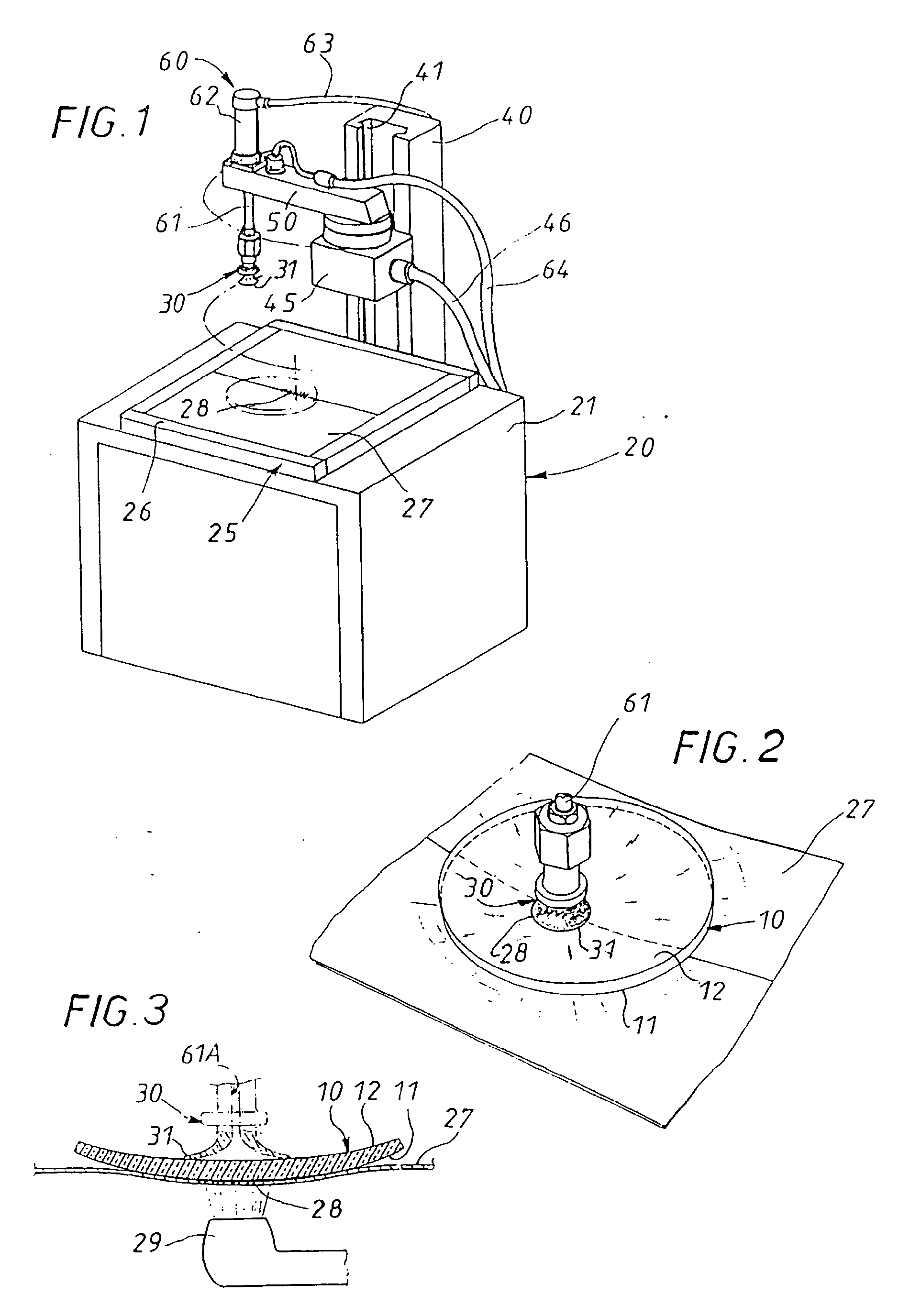
Fig. 1 is a perspective view of an apparatus for marking an ophthalmic lens surface
according to the present invention.
Fig. 2 is a detailed viewed on a larger scale showing the ophthalmic lens in position,
in mating contact with the mask for selective corona discharge treatment;
Fig. 3 is an axial cross section of the detailed view of Fig. 2; and
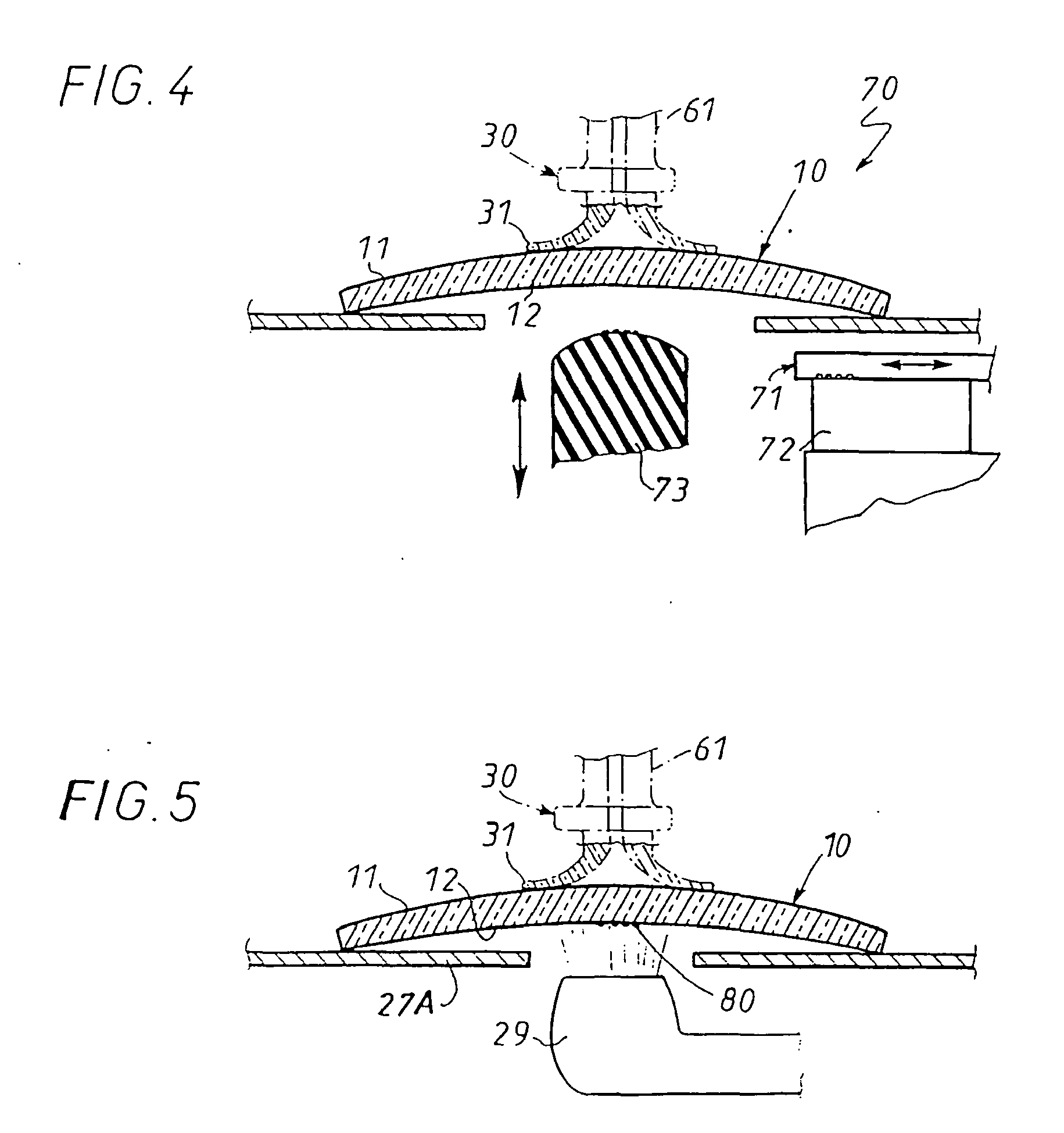
Figs. 4 and 5 are also axial cross sections, for an alternative embodiment, showing
a stamping station and the corona discharge treatment of a lens with an ink mask.
Fig. 1 illustrates an apparatus 20 for producing a normally invisible marking on a
face 11 of an ophthalmic lens 10 according to a first embodiment.
[0015] Typically such a face may be a low surface energy surface such as a hydrophobic anti-smudge
top coat, in particular the Applicant's CRIZAL® top coat. The low surface energy top
coat is, for example, provided on the convex front face of the lens 10. The bulk ophthalmic
lens material may be any suitable resin, in particular polycarbonate, or alternatively
mineral glass. At least the convex face of the bulk material of a polycarbonate lens
typically receives a high surface energy hard coat for protecting the polycarbonate
from scratching, as is known per se. The hard coat may in turn be coated with an high
surface energy anti-reflective coat, also known per se. The present invention is suitable
for any ophthalmic lens with a relatively low surface energy coat such as a top coat
which covers a high surface energy intermediate coat, such as an anti-reflective coat
or a hard coat or directly overlies bulk material of the lens having a high surface
energy.
[0016] In practice, such a hard coat has a thickness between 1 and 8 or 11 µm, the anti-reflective
coat between 0.1 and 0.5 µm and the anti-smudge top coat between 1 and 10 nm.
[0017] According to this preferred embodiment, the apparatus 20 has a generally rectangular
lower enclosure 21 which houses a surface energizing source, namely a corona discharge
unit.
[0018] The corona discharge unit may be a Tantec 650 W, low frequency (e.g. 50 or 60 Hz)
corona treatment unit having a discharge head 29 with a pair of electrodes providing
a corona discharge of 1500 volts. Though low frequencies are preferred for reasons
of safety, higher frequencies, e.g. 2,000 Hz, will provide good results.
[0019] In operation of the corona discharge unit, a low frequency high voltage is applied
across the electrodes which accelerates electrons in the airgap and ionizes the air
gap, causing electron avalanching. The resulting high energy field is capable of breaking
the molecular bonds, such as those of a hydrophobic top coat, to disintegrate the
coat to reveal the subjacent, high surface energy coat or substrate.
[0020] On top of the lower enclosure 21 is a screen sub-assembly 25 overlying the corona
discharge head 29. The screen sub-assembly has a rectangular frame 26 which holds
the screen 27 taut for example under a tension of about 1 kg. The screen material
is preferably a suitably polymer film impermeable to the field produced by the corona
discharge. The screen material has a cutout mask part 28 corresponding to the image
of the marking to be produced on the lens surface.
[0021] The screen material must be sufficiently flexible to mate intimately with the convex
face 11 of the lens. The selectively permeable mask part is substantially dimensionally
stable, so that when applied against the convex face, the mask 28 is not deformed.
Finally, the screen material must be thin enough (e.g. 0.05 mm) to permit accurate
cutting and intimate mating to avoid ripples which would otherwise produce leakage
at the interface. Preferably, the mask is cut out in the screen material with an excimer
laser.
[0022] It has been found that a Mylar® screen of several hundredths of a millimeter is the
most suitable available material and satisfies the foregoing desiderata even though
its flexibility is limited. A Mylar® screen may be cut out with an excimer laser to
the desired tolerances. Also, such a Mylar® film may be held taut in the frame 26
at a tension of about 1 kg.
[0023] Alternatively, the screen sub-assembly may comprise an impregnated polymer screen
fabric with an aperture generally in line with the corona discharge head. In this
case, a preferably Mylar® sheet of small dimensions is affixed to the impregnated
screen fabric and extends over the entire aperture in the screen. The Mylar® sheet
will define a mask part as in the preferred embodiment. When the ophthalmic lens is
lowered to the treatment position, the convex face of the lens comes into intimate
mating contact with the mask part of the screen.
[0024] The apparatus 20 further comprises a fixed upright support 40 which is located to
the rear of the lower enclosure 21 and extends well above the level of the screen
sub-assembly 25. The upright support has a vertical slideway 41 which receives a complementarily
shaped (e.g. dovetail) portion (not shown) of a slide member 45 to be adjustably positioned
at the desired height above screen 27.
[0025] The slide member 45 mounts a proximal end of an arm 50 for angular movement in a
generally horizontal plane as indicated in phantom line. In practice, the angular
movement is between a lens pick-up position which may, for example, be to the left
and rear of the screen, to a treatment position, at right angles and in alignment
with the mask part 28 of the screen and to a drop-off position which may be at the
same location as the pick-up position or at some other location, for example to the
other side or the rear of the screen.
[0026] A pneumatic actuator 60 is mounted at the distal end of arm 50. The actuator rod
61 is arranged for reciprocal movement relative to an actuator cylinder 62 between
raised and lowered positions, as shown.
[0027] A lens holding means 30 is mounted on the free lower end of the actuator rod 61 and
comprises, in practice, a suction cup 31 having an annular lip cooperable with the
concave face 12 of the ophthalmic lens.
[0028] The lens positioning means including the slide member 45, the arm 50 and the actuator
61, is preferably pneumatically, or hydraulically, controlled by a suitable control
system, the features of which are outside the present invention.
[0029] Suffice it to say that air line 46 is connected to the slide member 45 and controls
the angular position of arm between the pick-up, treatment and drop-off locations.
[0030] Line 63 connected to pneumatic actuator 60 controls the height of the suction cup
31 at the pick-up, treatment and drop-off positions and in the course of the swinging
of the arm 50 between those positions.
[0031] Finally, line 64 is connected to hollow axial passage 61 A extending through the
actuator rod 61 for communication at the suction cup 31 with a source of partial vacuum
(not shown) for selectively securely holding the lens on the suction cup and releasing
the lens when the arm and suction cup are brought to the drop-off position.
[0032] In operation, the arm 50 is first swung to the pick-up position, the suction cup
31 being located at a level above the screen 27 and the next lens to be treated. When
the arm reaches the pick-up position, the actuator rod 61 and suction cup 31 are lowered
to bring the suction cup into contact with the lens to be treated, then the suction
is applied to hold the lens on the suction cup.
[0033] The lens will in practice be previously precisely located at the pick-up station
and thereby on the suction cup. State of the art means, such as a lensometer may be
used for that purpose.
[0034] The suction cup 31 is thereafter raised and the arm 50 is swung to the treatment
location where the actuator rod 61, suction cup 31 and lens 10 are lowered so that
the lens is in desired location relative to the mask part 28 of the screen 27. The
center of the convex surface 11 of lens 10 is lowered to a level below that defined
by the screen in its rest position, such that the mask part 28 mates intimately with
the corresponding area of the convex surface 11 of the lens. In practice, head pressure
of about 0.9 kg is applied for this purpose.
[0035] Once the lens surface to be marked reaches the position shown in Fig. 3, the corona
discharge unit is, preferably automatically, turned on, producing, a field in direct
communication with the mask part, for a sufficient duration to break the molecular
bonds of the top coat to reveal an underlying high energy coat or substrate.
[0036] It is noted that partial removal of the subjacent coat or substrate material may
be tolerated as it does not affect the optical properties of the lens.
[0037] After treatment, the actuator rod, suction cup and lens are raised and the arm is
swung to its drop-off position which may coincide with the pick-up position or for
example be located to the opposite side and rear of the screen. The actuator rod 62
is then lowered and the suction applied to the cup is stopped and the lens 10 released
to the drop-off location. In practice, the lens is then placed in an envelope for
shipment.
[0038] According to another preferred embodiment schematically illustrated in Figs. 4 and
5, the mask is not part of the screen but rather is an ink mask 80 stamped directly
on the lens surface to be marked. The application of the ink mask on the lens held
by the suction cup 31 is effected at a stamping station 70, upstream from the pick-up
position schematically illustrated in Fig. 4. The stamping station 70 preferably includes
an ink plate 71 supplied with ink from an associated ink pot 72 and an ink pad 73.
Prior to stamping, the reciprocating ink pad 73 is brought into engagement with the
ink plate arranged for translatory movement to pick up ink. The face of the ink plate
71 has a negative image of the desired marking "engraved" therein. After inking, the
pad 73 is brought into contact with the concave surface 11 of the lens to be stamped,
or alternatively convex surface, in which case the lens would be oriented convex side
down. The ink pad may be made of any suitable material. An ink pad of Shore hardness
8, ref. 4070, manufactured by Equipements Moreau may be advantageously used.
[0039] The stamping station 70 may incorporate an MD 80GF model stamping unit manufactured
by Morlock.
[0040] After applying the ink mask 80 to the lens, the ink may be dried and/or polymerized.
Any suitable drying or polymerization means may be used for such purpose, such as
ultraviolet lamp.
[0041] After drying or polymerization, the ink masked lens 10 is transferred by the arm
50 and suction cup 31 to the pick-up position as described above and then treatment
location facing the corona discharge head. In this embodiment, the enclosure top wall
27A does not define the mask but rather has a suitable opening of appropriate dimensions
aligned with the corona discharge head 29. The lens is suitably supported on or above
the enclosure top wall or with its concave side facing the enclosure top wall when
that side is to be marked, or the opposite convex side. It goes without saying that
the position of the actuator rod 61 will be adjusted depending on whether the concave
or convex surface of the lens is to be marked to ensure the desired distance between
the discharge head and the lens surface to be marked.
[0042] After application of the corona discharge, the marked lens is taken by the lens positioning
means to a cleaning station (not shown) where the ink mask is removed from the lens
surface. The cleaning station may be part of the apparatus for producing the marking.
Alternatively, the ink mask may be removed and the lens cleaned subsequently by an
optician. Such an ink mask ensures very precise delineation of the desired marking
in addition to being suitable for marking both the concave and the convex surfaces
of the lens.
[0043] Accordingly to the preferred embodiments of the invention, the surface energizing
source is a corona discharge source.
[0044] It would be appreciated that these and other modifications and variants of the method
and apparatus may be adopted without departing from the scope of the invention defined
by the appended claims.
1. Method for producing a marking on a surface of an ophthalmic lens having an outer
coat overlying bulk material of the lens, comprising the steps of providing a surface
energizing source, applying a mask to the surface of the ophthalmic lens to be marked
defining a negative image of the desired marking and positioning the ophthalmic lens
facing the surface energizing source with the mask interposed therebetween, the energizing
source providing a discharge, wherein the outer coat has a low surface energy and
the underlying bulk material or an intermediate coat has a higher surface energy,
and the discharge increases surface energy by selective removal of the outer coat
to reveal the underlying bulk material or intermediate coat so that the resulting
marking is visible by fogging the lens.
2. Method according to claim 1, characterized in that the mask is defined by portion of a flexible film screen having a cutout corresponding
to the image of the desired marking.
3. Method according to claim 2, further comprising picking up the ophthalmic lens to
be marked at a pickup station spaced from the screen and transferring the ophthalmic
lens to the screen and removing the ophthalmic lens from screen after marking and
transferring the ophthalmic lens to a drop-off area spaced from the screen.
4. Method according to any of claims 1 to 3, characterized in that the surface energizing source is a corona discharge source and the duration of the
corona discharge is about 5 to 10 seconds.
5. Method according to any of claims 1 to 4, characterized in that the surface energizing source is an ozone generating source.
6. Method according to claim 1 to 4, characterized in that the surface energizing source is a corona discharge source.
7. Method according to any of the preceding claims, characterized in that the thin coating comprises a top coat having a thickness between 1 and 10 nm.
8. Method according to any of claims 1, 3 to 7, characterized in that the mask is an ink mask stamped on the surface of the ophthalmic lens to be marked,
and removed from the lens after surface energizing treatment.
9. Apparatus for producing a marking on a surface of an ophthalmic lens (10) and an ophthalmic
lens having an outer coat overlying bulk material of the ophthalmic lens, the outer
coat having a low surface energy and the underlying bulk material or intermediate
coat having a higher surface energy for carrying out any of claims 1 to 9, comprising
a surface energizing source (29), a mask (28, 80) corresponding to a negative image
of a desired marking, means (25, 70) for applying the mask (26, 80) on a surface of
an ophthalmic lens (10) to be marked" means for positioning the ophthalmic lens so
that the surface (12) of the lens to be marked faces the energizing source with the
mask interposed therebetween, wherein the energizing source provides an energizing
discharge to increase the surface energy by selectively removing the outer coat to
reveal the underlying bulk material or an intermediate coat, so as to render the resulting
marking visible by fogging.
10. Apparatus and ophthalmic lens according to claim 9, characterized in that the surface energizing source is an ozone generating device.
11. Apparatus and ophthalmic lens according to claim 9 or claim 10, characterized in that the surface energizing source is a corona discharge source (29).
12. Apparatus and ophthalmic lens according to any of claims 10 or 11, characterized in that the mask is part of a flexible screen (27) impermeable to the surface energizing
source and having a cutout corresponding to the image of the desired marking, said
mask part (28) of said flexible screen being matable with the lens surface to be marked.
13. Apparatus and ophthalmic lens according to any one of claims 10 to 12 characterized in that the means for positioning comprises lens holding means (30) for selectively picking
up and releasing the ophthalmic lens.
14. Apparatus and ophthalmic lens according to claim 13, characterized in that an ophthalmic lens pickup zone is located spaced from said screen (27), the means
for positioning further comprises an arm (50) mounted for movement between the pick-up
position and a marking position located on the screen, said lens holding means (30)
being carried on the arm for movement therewith between the pickup and marking positions.
15. Apparatus and ophthalmic lens according to claim 14, characterized in that said arm is also mounted for movement to and from a drop-off position for dropping
off a marked ophthalmic lens (10) at a position spaced from the screen (27).
16. Apparatus and ophthalmic lens according to any one of claims 10 to 15, characterized in that said screen comprises a plurality of mask parts.
17. Apparatus and ophthalmic lens according to any of claims 9 to 16, characterized in that the outer coating comprises a top coat having a thickness between 1 and 10 nm.
18. Apparatus and ophthalmic lens according to any of claims 9 to 12 and 15, characterized in that the means for applying the mask comprises an inked printing block for stamping a
negative image of the desired marking on the surface of the ophthalmic lens to be
marked.
19. Apparatus and ophthalmic lens according to claim 18, characterized in that it further comprises means for removing the inked masked from the ophthalmic lenses
after the application of the surface energizing treatment.
1. Verfahren zur Herstellung einer Markierung auf einer Oberfläche einer ophthalmischen
Linse mit einer äußeren, das Kernmaterial überlagernden Schicht, welches die Schritte
umfasst: Bereitstellen einer die Oberfläche erregenden Quelle, Anfbringen einer Schablone
an die zu markierende Oberfläche der ophthalmischen Linse, wobei die Schablone ein
Negativbild der erwünschten Markierung definiert, und Anordnen der ophthalmischen
Linse derart, dass sie der die Oberfläche erregenden Quelle gegenübersteht mit der
Schablone dazwischen, Bewirken einer Entladung durch die die Oberfläche erregende
Quelle, wobei die äußere Schicht eine niedrige Oberflächenenergie aufweist und das
darunter liegende Kernmaterial oder eine Zwischenschicht eine höhere Oberflächenenergie
aufweist, und wobei die Entladung die Oberflächenenergie erhöht durch selektives Entfernen
der äußeren Schicht zur Freilegung des darunter liegenden Kernmaterials oder der Zwischenschicht,
so dass die resultierende Markierung durch Beschlagsbildung der Linse sichtbar ist/wird.
2. Verfahren nach Anspruch 1, dadurch gekennzeichnet, dass die Schablone durch einen Abschnitt einer flexiblen Filmabschirmung mit einer Ausschneidung,
die dem Bild der erwünschten Markierung entspricht, definiert ist.
3. Verfahren nach Anspruch 2, ferner umfassend Aufnehmen der zu markierenden ophthalmischen
Linse an einer Aufnahmestation, die von der Abschirmung beabstandet ist, und Übertragen
der ophthalmischen Linse hin zur Abschirmung und Entfernen der ophthalmischen Linse
von der Abschirmung nach dem Markieren und Übertragen der ophthalmischen Linse hin
zu einer Abgabestation, welche von der Abschirmung beabstandet ist.
4. Verfahren gemäß einem der Ansprüche 1 bis 3, dadurch gekennzeichnet, dass die die Oberfläche erregende Quelle eine Corona-Entladungsquelle ist, und die Dauer
der Corona-Entladung ungefähr 5 bis 10 Sekunden andauert.
5. Verfahren nach einem der Ansprüche 1 bis 4, dadurch gekennzeichnet, dass die Oberfläche erregende Quelle eine Ozon-generierende Quelle ist.
6. Verfahren nach einem der Ansprüche 1 bis 4, dadurch gekennzeichnet, dass die Oberfläche erregende Quelle eine Corona-Entladungsquelle ist.
7. Verfahren nach einem der vorhergehenden Ansprüche, dadurch gekennzeichnet, dass die dünne Schicht einen Topcoat mit einer Dicke zwischen 1 und 10 nm umfasst.
8. Verfahren nach einem der Ansprüche 1, 3 bis 7, dadurch gekennzeichnet, dass die Schablone eine Tintenschablone ist, welche auf die Oberfläche der zur markierenden
ophthalmischen Linse gestempelt wird und nach der die Oberfläche erregenden Behandlung
von der Linse entfernt wird.
9. Gerät zur Herstellung einer Markierung auf einer Oberfläche einer ophthalmischen Linse
(10) und ophthalmische Linse mit einer aüßeren, das Kernmaterial der ophthalmischen
Linse überlagernden Schicht, wobei die äußere Schicht eine niedrige Oberflächenenergie
und das darunter liegende Kernmaterial oder eine Zwischenschicht eine höhere Oberflächenenergie
hat, um einen der Ansprüche 1 bis 8 auszuführen, umfassend eine die Oberfläche erregende
Quelle (29), eine Schablone (28, 80), die einem negativen Bild der erwünschten Markierung
entspricht, Mittel (25, 70) zum Anbringen der Schablone (26, 80) an die Oberfläche
der zu markierenden ophthalmischen Linse (10), Mittel zum Anordnen der ophthalmischen
Linse, so dass die Oberfläche (12) der zu markierenden Linse der die Oberfläche erregenden
Quelle gegenübersteht mit der Schablone dazwischen, wobei die die Oberfläche erregende
Quelle eine erregende Entladung bereitstellt, um die Oberflächenenergie durch selektives
Entfernen der äu-βeren Schicht zum Freilegen des darunter liegenden Kernmaterial oder
einer Zwischenschicht zu erhöhen, damit die resultierende Markierung durch Beschlagsbildung
sichtbar ist/wird.
10. Gerät und ophthalmische Linse nach dem Anspruch 9, dadurch gekennzeichnet, dass die Oberfläche erregende Quelle eine Ozon-generierende Vorrichtung ist.
11. Gerät und ophthalmische Linse nach dem Anspruch 9 oder 10, dadurch gekennzeichnet, dass die Oberfläche erregende Quelle eine Corona-Entladungsquelle (29) ist.
12. Gerät und ophthalmische Linse gemäß einem der Ansprüche 10 oder 11, dadurch gekennzeichnet, dass die Schablone Teil einer flexiblen Abschirmung (27) ist, welche impermeabel gegenüber
der die Oberfläche erregenden Quelle ist und eine Ausschneidung, die dem Bild der
erwünschten Markierung entspricht, vorweist, wobei der Schablonenpart (28) der flexiblen
Abschirmung mit der Oberfläche der zu markierenden Linse passbar oder zusammenfügbar
ist.
13. Gerät und ophthalmische Linse nach einem der Ansprüche 10 bis 12, dadurch gekennzeichnet, dass das Mittel zum Anordnen ein Mittel (30) zum Halten der Linse zur selektiven Aufnahme
und Abgabe der ophthalmischen Linse umfasst.
14. Gerät und ophthalmische Linse nach Anspruch 13, dadurch gekennzeichnet, dass eine Zone zur Aufnahme der ophthalmischen Linse räumlich getrennt von der Abschirmung
(27) angeordnet ist, und das Mittel zum Anordnen ferner einen Arm (50), montiert zur
Bewegung zwischen der Aufnahmeposition und einer Markierungsposition auf der Abschirmung,
umfasst, wobei das die Linse haltende Mittel (30) getragen wird durch den Arm zur
Bewegung zwischen der Aufnahmeposition und der Markierungsposition.
15. Gerät und ophthalmische Linse nach Anspruch 14, dadurch gekennzeichnet, dass der Arm ebenfalls montiert ist zur Bewegung hin zu und von einer Entladeposition
zum Entladen einer markierten ophthalmischen Linse (10) an einer Position, welche
von der Abschirmung (27) beabstandet ist.
16. Gerät und ophthalmische Linse nach einem der Ansprüche 10 bis 15, dadurch gekennzeichnet, dass die Abschirmung eine Vielzahl von Schablonenparts umfasst.
17. Gerät und ophthalmische Linse nach einem der Ansprüche 9 bis 16, dadurch gekennzeichnet, dass die äußere Schicht einen Topcoat mit einer Dicke zwischen 1 und 10 nm umfasst.
18. Gerät und ophthalmische Linse nach einem der Ansprüche 9 bis 12, und 15, dadurch gekennzeichnet, dass das Mittel zum Anbringen der Schablone einen mit Tinte versehenen Stempel zum Stempeln
eines negativen Bildes der erwünschten Markierung auf die Oberfläche der zu markierenden
ophthalmischen Linse umfasst.
19. Gerät und ophthalmische Linse nach Anspruch 18, dadurch gekennzeichnet, dass sie ferner Mittel zum Entfernen der mit Tinte versehenen Schablone von den ophthalmischen
Linsen nach der Anwendung der die Oberfläche erregenden Behandlung umfassen.
1. Procédé pour produire un marquage sur une surface d'une lentille ophtalmique ayant
un revêtement externe recouvrant la matière constituant la masse de la lentille, comportant
les étapes de fournir une source d'application d'énergie de surface, d'appliquer un
masque sur la surface de la lentille ophtalmique devant être marquée, définissant
une image inverse du marquage souhaité, et de positionner la lentille ophtalmique
au regard de la source d'application d'énergie de surface avec le masque interposé
entre elles, la source d'application d'énergie produisant une décharge, dans lequel
le revêtement externe a une faible énergie de surface et la matière recouverte constituant
la masse ou un revêtement intermédiaire a une haute énergie de surface, et la décharge
augmente l'énergie de surface en éliminant sélectivement des parties du revêtement
externe afin de révéler la matière recouverte constituant la masse ou un revêtement
intermédiaire de sorte que le marquage résultant soit visible par embuage de la lentille.
2. Procédé selon la revendication 1, caractérisé en ce que le masque est défini par une partie d'un écran à film flexible ayant une découpe
correspondant à l'image du marquage souhaité.
3. Procédé selon la revendication 2, comportant en outre la prise de la lentille ophtalmique
devant être marquée, d'un poste de prélèvement espacé de l'écran, le transfert de
la lentille ophtalmique jusqu'à l'écran, l'enlèvement de la lentille ophtalmique de
l'écran après le marquage, et le transfert de la lentille ophtalmique jusqu'à une
zone de pose espacée de l'écran.
4. Procédé selon l'une des revendications 1 à 3, caractérisé en ce que la source d'application d'énergie de surface est une source à décharge à effet corona
et la durée de la décharge à effet corona est d'environ 5 à 10 secondes.
5. Procédé selon l'une des revendications 1 à 4, caractérisé en ce que la source d'application d'énergie de surface est une source générant de l'ozone.
6. Procédé selon la revendication 1 à 4, caractérisé en ce que la source d'application d'énergie de surface est une source à décharge à effet corona.
7. Procédé selon l'une des revendications précédentes, caractérisé en ce que le revêtement mince comporte un revêtement de finition ayant une épaisseur comprise
entre 1 et 10 nm.
8. Procédé selon l'une des revendications 1, 3 à 7, caractérisé en ce que le masque est un masque à encre imprimé sur la surface de la lentille ophtalmique
devant être marquée, et enlevé de la lentille après le traitement d'application d'énergie
de surface.
9. Appareil pour produire un marquage sur une surface d'une lentille ophtalmique (10)
et une lentille ophtalmique ayant un revêtement externe recouvrant la matière constituant
la masse de la lentille ophtalmique, le revêtement externe ayant une faible énergie
de surface et la matière recouverte constituant la masse ou un revêtement intermédiaire
ayant une haute énergie de surface pour mettre en oeuvre l'une des revendications
1 à 8, comportant une source (29) d'application d'énergie de surface, un masque (28,
80) correspondant à une image inverse d'un marquage souhaité, des moyens (25, 70)
destinés à appliquer le masque (26, 80) sur une surface de la lentille ophtalmique
(10) devant être marquée, des moyens destinés à positionner la lentille ophtalmique
de sorte que la surface (12) de la lentille devant être marquée soit au regard de
la source d'application d'énergie avec le masque interposé entre elles, dans lequel
la source d'application d'énergie produit une décharge d'énergie pour augmenter l'énergie
de surface, en éliminant sélectivement des parties du revêtement externe afin de révéler
la matière recouverte constituant la masse ou un revêtement intermédiaire, de sorte
à rendre le marquage résultant visible par embuage.
10. Appareil et lentille ophtalmique selon la revendication 9, caractérisés en ce que la source d'application d'énergie de surface est un dispositif générateur d'ozone.
11. Appareil et lentille ophtalmique selon la revendication 9 ou la revendication 10,
caractérisés en ce que la source d'application d'énergie de surface est une source à décharge à effet corona
(29).
12. Appareil et lentille ophtalmique selon l'une des revendications 10 ou 11, caractérisés en ce que le masque fait partie d'un écran flexible (27) imperméable à la source d'application
d'énergie de surface et ayant une découpe correspondant à l'image du marquage souhaité,
ladite partie de masque (28) dudit écran flexible pouvant être accouplée à la surface
de la lentille devant être marquée.
13. Appareil et lentille ophtalmique selon l'une quelconque des revendications 10 à 12,
caractérisés en ce que les moyens de positionnement comportent des moyens (30) de maintien de la lentille
destinés à sélectivement prendre et libérer la lentille ophtalmique.
14. Appareil et lentille ophtalmique selon la revendication 13, caractérisés en ce qu'un poste de prélèvement de la lentille ophtalmique est placé à distance dudit écran
(27), les moyens de positionnement comportent en outre un bras (50) monté mobile entre
la position de prise et une position de marquage située sur l'écran, lesdits moyens
(30) de maintien de la lentille étant portés par le bras afin de se déplacer avec
lui entre les positions de prise et de marquage.
15. Appareil et lentille ophtalmique selon la revendication 14, caractérisés en ce que ledit bras est également monté mobile vers et à partir d'une position de pose pour
poser une lentille ophtalmique marquée (10) dans une position espacée de l'écran (27).
16. Appareil et lentille ophtalmique selon l'une quelconque des revendications 10 à 15,
caractérisés en ce que ledit écran comporte plusieurs parties de masque.
17. Appareil et lentille ophtalmique selon l'une des revendications 9 à 16, caractérisés en ce que le revêtement externe comporte un revêtement de finition ayant une épaisseur comprise
entre 1 et 10 nm.
18. Appareil et lentille ophtalmique selon l'une des revendications 9 à 12 et 15, caractérisés en ce que les moyens destinés à appliquer le masque comportent un bloc d'impression encré pour
imprimer une image inversée du marquage souhaité sur la surface de la lentille ophtalmique
devant être marquée.
19. Appareil et lentille ophtalmique selon la revendication 18, caractérisés en ce qu'ils comportent en outre des moyens destinés à enlever le masque encré des lentilles
ophtalmiques après le traitement d'application d'énergie de surface.
REFERENCES CITED IN THE DESCRIPTION
This list of references cited by the applicant is for the reader's convenience only.
It does not form part of the European patent document. Even though great care has
been taken in compiling the references, errors or omissions cannot be excluded and
the EPO disclaims all liability in this regard.
Patent documents cited in the description