|
(11) | EP 1 336 597 B1 |

| (12) | EUROPEAN PATENT SPECIFICATION |
|
|
| (54) |
Hydroxyphenyl adamantanes and process for the production of the same Hydroxyphenyladamantane und Verfahren zu ihrer Herstellung Hydroxyphényl adamantanes et procédé pour leur préparation |
|
|
|||||||||||||||||||||||||||||||
| Note: Within nine months from the publication of the mention of the grant of the European patent, any person may give notice to the European Patent Office of opposition to the European patent granted. Notice of opposition shall be filed in a written reasoned statement. It shall not be deemed to have been filed until the opposition fee has been paid. (Art. 99(1) European Patent Convention). |
[0001] The present invention relates to novel hydroxyphenyl adamantanes which are useful as excellent materials in improving heat resistance and mechanical strength of e.g. epoxy resins, photosensitive resins and aromatic polycarbonate resins.
[0002] More specifically, the present invention relates to novel 1,3-bis(hydroxyphenyl)adamantanes and methods for the production thereof.
[0003] Hydroxyphenyl adamantanes, namely bisphenols having an adamantane ring skeleton, are desired to be highly heat resistant. One of such adamantane bisphenols already known is 1,3-bis(4-hydroxyphenyl)-5,7-dimethyl adamantane which is synthesized using 1,3-dibromo-5,7-dimethyl adamantane and phenol as raw materials as described in US-A- 3,594,427. Further, 1,3-bis(4-hydroxyphenyl)adamantane which is synthesized using 1,3-adamantane-diol and phenol as raw materials is described in JP-A- 2000-143566. Furthermore, 2,2-bis(4'-hydroxyphenyl)adamantane which is synthesized using 2-adamantanone and phenol as raw materials is described in JP-A- H10-130371.
[0004] However, these known adamantane bisphenols are those which have no substituent group in their hydroxyphenyl groups.
[0005] In recent years, characteristic requirements for compounds used as materials for resins such as epoxy resins, photosensitive resins, and aromatic polycarbonate resins, have been increasingly heightened and diversified and accordingly, also as for adamantane bisphenols, those having various substituent groups such as alkyl group substituents bonded to hydroxyphenyl groups are desired. However, such compounds and industrially advantageous methods for producing such compounds are not known.
[0006] An object of the present invention is to provide novel 1,3-bis(hydroxyphenyl)adamantanes which are useful as raw material compounds for resins having high heat resistance, and methods for the production thereof.
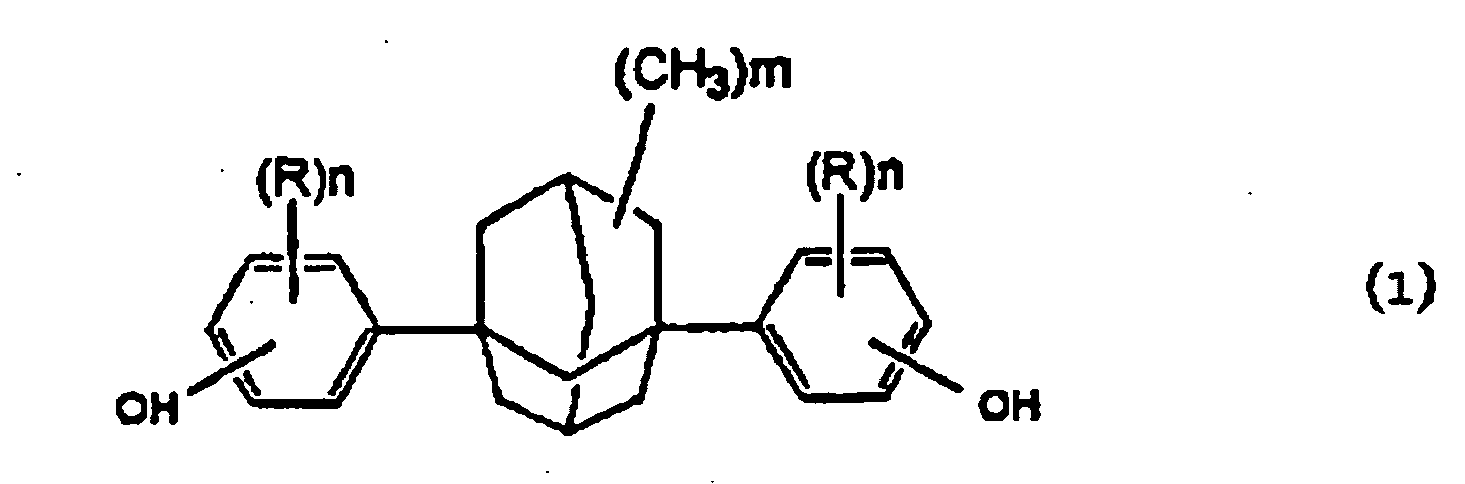
[0007] 1,3-bis (hydroxyphenyl)adamantanes of the present invention are 1,3-bis (hydroxyphenyl)adamantanes represented by the following general formula (1) in which 4-hydroxyphenyl groups having substituent groups are bonded to positions 1 and 3 of the adamantane ring.
[0008] In the general formula (1) above, R is an alkyl group, cycloalkyl group or phenyl group, n is an integer 1, 2 or 3, and m is 0 or an integer 1 or 2.
[0009] Further, these compounds can be efficiently produced by reacting a 1,3-adamantane-diol and substituted phenols in the presence of an acid catalyst under reaction conditions which are industrially feasible without difficulty.
[0010] In the hydroxyphenyl adamantanes represented by the general formula (1) above, R is an alkyl group, cycloalkyl group, or phenyl group, and when R is an alkyl group, the alkyl group is preferably a straight chain or branched chain alkyl group having 1 to 12 carbon atoms, more preferably an alkyl group having 1 to 4 carbon atoms. Examples of such groups include a methyl group, ethyl group, propyl group, and butyl group. The propyl group or butyl group can be a straight chain or branched chain. Further, when R is a cycloalkyl group, a cycloalkyl group having 5 to 6 carbon atoms is preferable, and examples of such groups include a cyclopentyl group and cyclohexyl group. Further, m is 0 or an integer 1 or 2, preferably 0. n is an integer 1, 2 or 3. Further, when n is 2 or 3, R can be either the same or different.
[0011] Examples of the abovementioned 1,3-bis(hydroxyphenyl)adamantanes according to the present invention include 1,3-bis(2-methyl-4-hydroxyphenyl)adamantane, 1,3-bis(3-methyl-4-hydroxyphenyl)adamantane, 1,3-bis(4-methyl-2-hydroxyphenyl)adamantane, 1,3-bis(5-methyl-2-hydroxyphenyl)adamantane, 1,3-bis(3-ethyl-4-hydroxyphenyl)adamantane, 1,3-bis(3-isopropyl-4-hydroxyphenyl)adamantane, 1,3-bis(3-s-butyl-4-hydroxyphenyl)adamantane, 1,3-bis(3-t-butyl-4-hydroxyphenyl)adamantane, 1,3-bis(3,6-dimethyl-4-hydroxyphenyl)adamantane, 1,3-bis(3,5-dimethyl-4-hydroxyphenyl)adamantane, 1,3-bis(3,6-dimethyl-2-hydroxyphenyl)adamantane, 1,3-bis(2,3,5-trimethylhydroxyphenyl)adamantane, 1,3-bis(2,3,6-trimethyl-4-hydroxyphenyl)adamantane, 1,3-bis(3,4,6-trimethyl-2-hydroxyphenyl)adamantane, 1,3-bis(3-cyclohexyl-4-hydroxyphenyl)adamantane, 1,3-bis(2-methyl-5-cyclohexyl-4-hydroxyphenyl)adamantane, 1,3-bis(3-phenyl-4-hydroxyphenyl)adamantane, 1,3-bis(3-methyl-4-hydroxyphenyl)-5,7-dimethyladamantane, 1,3-bis(3-isopropyl-4-hydroxyphenyl)-5,7-dimethyladamantane, 1,3-bis(3,6-dimethyl-4-hydroxyphenyl)-5,7-dimethyladamantane, 1,3-bis(2,3,5-trimethyl-4-hydroxyphenyl)-5,7-dimethyladamantane, 1,3-bis(2,3,6-trimethyl-4-hydroxyphenyl)-5,7-dimethyladamantane, 1,3-bis(3-cyclohexyl-4-hydroxyphenyl)-5,7-dimethyladamantane, 1,3-bis(2-methyl-5-cyclohexyl-4-hydroxyphenyl)-5,7-dimethyladamantane, 1,3-bis(3-phenyl-4-hydroxyphenyl)-5,7-dimethyladamantane, 1,3-bis(3-methyl-4-hydroxyphenyl)-4-methyladamantane, 1,3-bis(3-isopropyl-4-hydroxyphenyl)-4-methyl-adamantane, 1,3-bis(3,6-dimethyl-4-hydroxyphenyl)-4-methyl-adamantane, 1,3-bis(2,3,5-trimethyl-4-hydroxyphenyl)-4-methyl-adamantane, 1,3-bis(2,3,6-trimethyl-4-hydroxyphenyl)-4-methyl-adamantane, 1,3-bis(2-methyl-5-cyclohexyl-4-hydroxyphenyl)-4-methyl-adamantane, and 1,3-bis(3-phenyl-4-hydroxyphenyl)-4-methyl-adamantane.
[0012] The 1,3-bis(hydroxyphenyl)adamantanes according to the present invention can be obtained by reacting a 1,3-adamantane-diol and substituted phenols in the presence of an acidic catalyst.
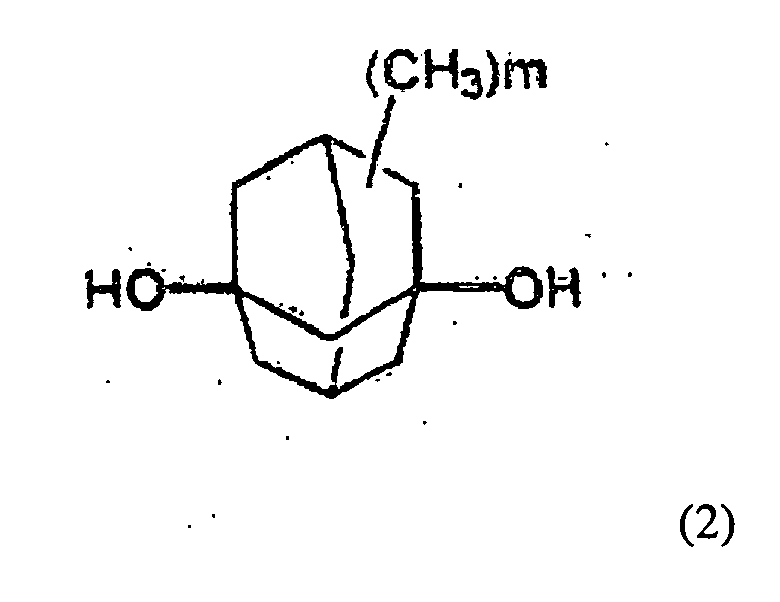
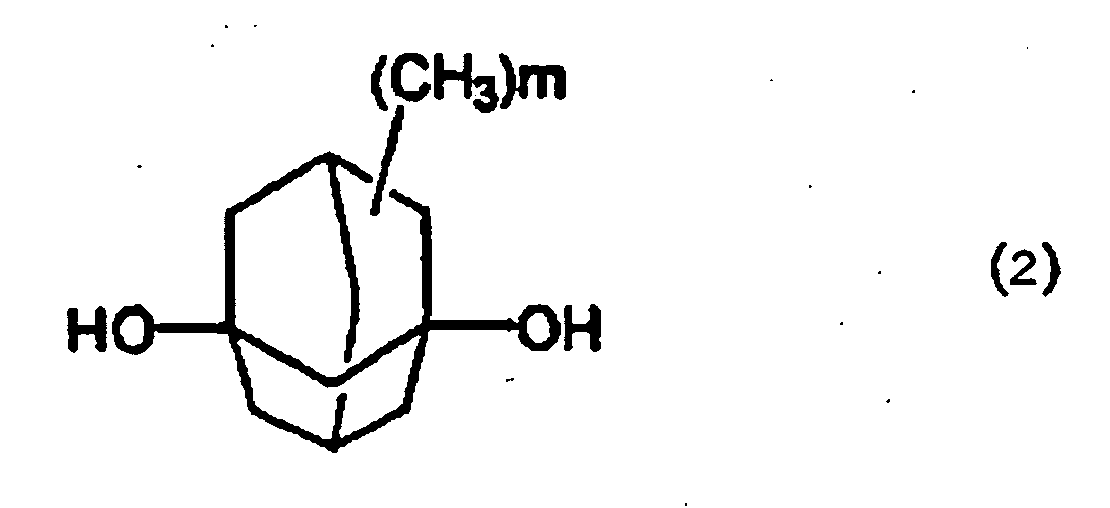
[0013] For the 1,3-bis(hydroxyphenyl)adamantanes of the present invention, 1,3-adamantane-diols used as one raw material are represented by the following general formula (2):
wherein m is 0 or an integer 1 or 2.
[0014] Examples of the abovementioned 1,3-adamantane-diols include 1,3-adamantane-diol, 5,7-dimethyl-1,3-adamantane-diol, 2-methyl-1,3-adamantane-diol, and 4-methyl-1,3-adamantane-diol. 1,3-adamantane-diol is preferable.
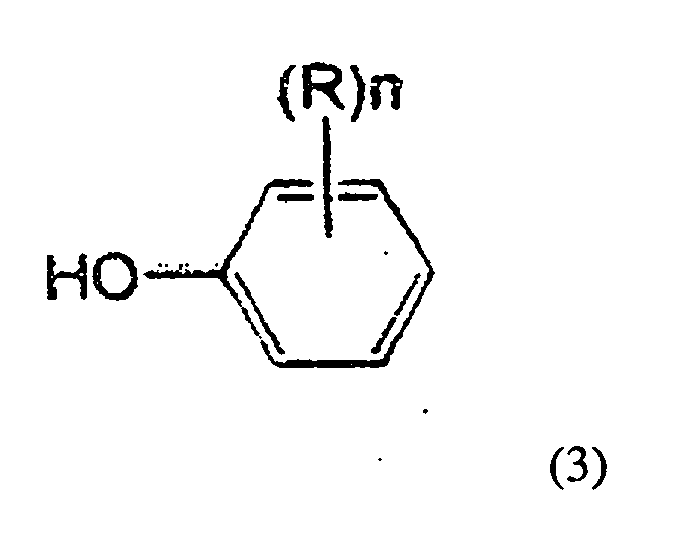
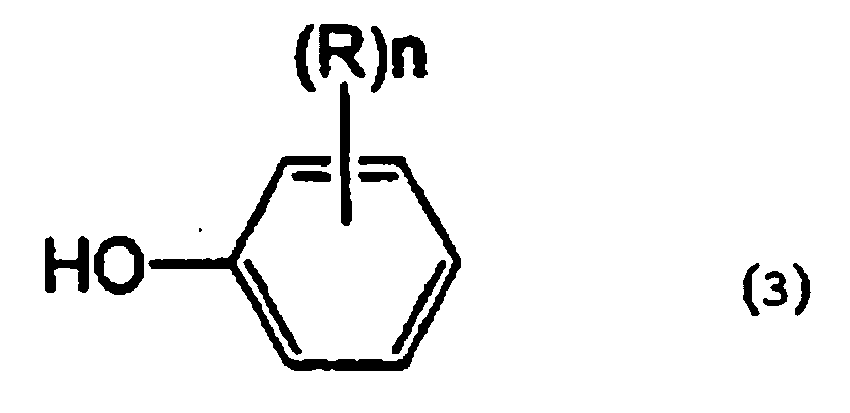
[0015] On the other hand, substituted phenols used as the other raw material in the present invention are represented by the following general formula (3):
wherein R and n are as defined in the general formula (1) above.
[0016] Examples of the compounds of the general formula (3) above include 2-methylphenol, 2-ethylphenol, 2-isopropylphenol, 2-s-butylphenol, 2-t-butylphenol, 3-methylphenol, 2,5-dimethylphenol, 2,6-dimethylphenol, 2,6-diisopropylphenol, 2,6-di-t-butylphenol, 2-methyl-6-t-butylphenol, 3, 5-dimethylphenol, 3-methyl-6-t-butylphenol, 2,3,5-trimethylphenol, 2,3,6-trimethylphenol, 2-cyclohexylphenol, 3-methyl-6-cyclohexylphenol, 2-phenylphenol, and 2-isopropyl-6-phenylphenol.
[0017] In the reaction of the abovementioned 1,3-adamantane-diol and phenols, the ratio of the 1,3-adamantane-diol to the phenols is in the range of 3-30, preferably 6-10 by mol.
[0018] In the method for the production according to the present invention, an acid catalyst is used in the reaction. Examples of such an acid catalyst include inorganic acids such as hydrogen chloride, hydrochloric acid, sulfuric acid, nitric acid, and phosphoric acid; sulfonic acids such as methanesulfonic acid, trifluoromethanesulfonic acid, benzenesulfonic acid, and p-toluene sulfonic acid; carboxylic acids such as acetic acid and propionic acid; heteropolyacids; and cation exchange resins. Of these acids, strong acids including inorganic acids such as hydrochloric acid and sulfuric acid, sulfonic acids such as p-toluenesulfonic acid, heteropolyacids, highly acidic cation exchange resins are preferable, and in particular, p-toluenesulfonic acid is preferable in terms of reaction velocity and reaction selectivity.
[0019] p-Toluenesulfonic acid used is generally a monohydrate. The amount of p-toluenesulfonic acid generally ranges from 30 to 80% by mol, preferably 40 to 60% by mol, of a raw material, i.e., a 1,3-adamantane-diol. In the reaction of a 1,3-adamantane-diol with phenols in the presence of an acid catalyst, the reaction can be carried out either with or without a reaction solvent. Examples of preferable reaction solvents are aromatic hydrocarbons such as toluene. The amount to be used generally ranges from 5 to 50% by weight of a raw material, i.e., phenols. Further, the reaction temperature generally ranges from 60 to 200°C, preferably 70 to 150°C, more preferably 80 to 110°C. Under these reaction conditions, the reaction generally completes within about 1 to 100 hours with 1,3-adamantane-diols.
[0020] After the reaction, an aromatic hydrocarbon solvent such as toluene and xylene is added to the reaction mixture thus obtained if necessary, and the reaction mixture is dissolved, after which the solution is neutralized by adding an aqueous solution of alkali such as sodium hydroxide or potassium hydroxide with stirring. Next, the water layer is separated and removed from the neutralized oil-water mixture to obtain the oil layer which contains the target product. The targeted 1,3-bis(hydroxyphenyl)adamantane is crystallized from the oil layer thus obtained, filtered, and isolated to obtain crude crystals of the target product.
[0021] Further, if necessary, a pure product of the target product can be obtained by the purification procedure such as recrystallization.
Example 1
1,3-Bis(3,5-dimethyl-4-hydroxyphenyl)adamantane
[0022] In a 3000 ml four-necked flask equipped with a stirrer, a thermometer, and a reflux condenser were placed 176 g (1.05 mol) of 1,3-adamantane-diol and 1023 g (8.39 mol) of 2,6-dimethylphenol, and the air in the reaction container was replaced with nitrogen, after which the temperature was raised to 90°C. Next, while maintaining the temperature, 88 g of p-toluenesulfonic acid monohydrate was added thereto and the reaction was carried out for 7 hours.
[0023] After the reaction, the temperature of the reaction mixture thus obtained was lowered to 70°C, and 1023 g of toluene and 2 g of a 75% phosphoric acid aqueous solution were added thereto. Next, a 12% sodium hydroxide aqueous solution was added thereto for neutralization, after which the water layer was separated and the remaining oil layer was washed twice with ion exchange treated water. After washing, the oil layer was cooled down for crystallization, and filtered to obtain crude crystals The crude crystals were washed with toluene and dried to obtain 230 g of the target product, 1,3-bis(3,5-dimethyl-4-hydroxyphenyl)adamantane, as white crystals (purity: 99.8%).
[0027] Proton nuclear magnetic resonance spectrum (solvent: DMSO, 400 MHz); formula 1
| Assignment | δ | Signal | Number of protons |
| a | 2.1 | s | 12 |
| b | 6.9 | s | 4 |
| c | 2.2 | m | 2 |
| d.e.f.g.h.i | 1.8 | m | 10 |
| j | 1.7 | m | 2 |
| k | 7.9 | s | 2 |
Example 2
1,3-Bis(3-methyl-4-hydroxyphenyl)adamantane
[0028] In a 2000 ml four-necked flask equipped with a stirrer, a thermometer, and a reflux condenser were placed 155 g (0.92 mol) of 1,3-adamantane-diol and 798 g (7.4 mol) of 2-methylphenol, and the air in the reaction container was replaced with nitrogen, after which the temperature was raised to 90°C. Next, while maintaining the temperature, 78 g of p-toluenesulfonic acid monohydrate was added thereto and the reaction was carried out for 47 hours.
[0029] After the reaction, the temperature of the reaction mixture thus obtained was lowered to 80°C, and 798 g of toluene and 2 g of a 75% phosphoric acid aqueous solution were added thereto. Next, the mixture was neutralized by adding a 12% sodium hydroxide aqueous solution, after which the water layer was separated and the remaining oil layer was washed twice with ion exchange treated water. After washing, the oil layer was cooled down for crystallization, and filtered to obtain crude crystals The crude crystals were recrystallized with toluene, then washed with toluene and dried to obtain 193 g of the target product, 1,3-bis(3-methyl-4-hydroxyphenyl)adamantane, as white crystals (purity: 99.8%).
[0030] The yield against 1,3-adamantane-diol was 60 % by mol.
Melting point: 169°C (light transmittance method)
Molecular weight: 347 M- (mass spectrometry)
[0031] Proton nuclear magnetic resonance spectrum (solvent: DMSO, 400 MHz); formula 2
| Assignment | δ | Signal | Number of protons |
| a | 2.1 | s | 6 |
| b | 7.1 | d | 2 |
| c | 7.0 | m | 2 |
| d | 6.7 | d | 2 |
| e | 2.2 | m | 2 |
| f,g,h,i,j,l | 1.8 | m | 10 |
| k | 1.7 | m | 2 |
| m | 8.9 | s | 2 |
Example 3
1,3-Bis(3-phenyl-4-hydroxyphenyl)adamantane
[0032] In a 300 ml four-necked flask equipped with a stirrer, a thermometer, and a reflux condenser were placed 25.5 g (0.15 mol) of o-phenylphenol and 2.1 g of p-toluenesulfonic acid monohydrate, and the air in the reaction container was replaced with nitrogen, after which the temperature was raised to 90°C. Next, while maintaining the temperature, a mixed solution of 8.5 g (0.05 mol) of o-phenylphenol and 4.2 g (0.025 mol) of 1,3-adamantane-diol was added thereto over a period of 1 hour and the reaction was carried out for 85 hours.
[0033] After the reaction, the temperature of the reaction mixture thus obtained was lowered to 80°C, and 20 g of toluene, 5 g of ion exchange treated water, and 0.2 g of a 75% phosphoric acid aqueous solution were added thereto. Next, the admixture was neutralized by adding a 16% sodium hydroxide aqueous solution, cooled down, and then filtrated to obtain crude crystals. The crude crystals were washed with a mixed solvent of methanol and methylisobutyl ketone, filtered and then dried to obtain 2.0 g of the target product, 1,3-bis(3-phenyl-4-hydroxyphenyl)adamantane, as white crystals (purity: 98.2%).
[0034] The yield against 1,3-adamantane-diol was 17% by mol.
Melting point: 201°C (differential thermal analysis)
Molecular weight: 471 M- (mass spectrometry)
[0035] Proton nuclear magnetic resonance spectrum (solvent: DMSO, 400 MHz)
| Assignment | δ | Signal | Number of protons |
| a,d,f | 7.2-7.3 | m | 6 |
| B | 7.4 | t | 4 |
| C | 7.5 | d | 4 |
| E | 6.9 | d | 2 |
| G | 2.2 | s | 2 |
| h,i,j,k,l,m | 1.8-1.9 | m | 10 |
| N | 1.7 | s | 2 |
| O | 9.3 | s | 2 |
Example 4
1,3-Bis(3-cyclohexyl-4-hydroxyphenyl)adamantane
[0036] In a 300 ml four-necked flask equipped with a stirrer, a thermometer, and a reflux condenser were placed 26.4 g (0.15 mol) of o-cyclohexylphenol and 2.1 g of p-toluenesulfonic acid monohydrate, and the air in the reaction container was replaced with nitrogen, after which the temperature was raised to 90°C. Next, while maintaining the temperature, a mixed solution of 8.8 g (0.05 mol) of o-cyclohexylphenol and 4.2 g (0.025 mol) of 1,3-adamantane-diol was added thereto over a period of 1 hour and the reaction was carried out for 25 hours.
[0037] After the reaction, the temperature of the reaction mixture thus obtained was lowered to 80°C, and 10 g of toluene, 5 g of ion exchange treated water, and 0.2 g of a 75% phosphoric acid aqueous solution were added thereto. Next, the mixture was neutralized by adding a 16% sodium hydroxide aqueous solution, after which the water layer was separated and the remaining oil layer was washed twice with ion exchange treated water. After washing, the oil layer was cooled down for crystallization, and filtered to obtain crude crystals. The crude crystals were recrystallized with toluene and diisobutylene and then crystals were filtered. Further, the resulting crystals were recrystallized with methanol water, then filtered and dried to obtain 4.1 g of the target product, 1,3-bis(3-cyclohexyl-4-hydroxyphenyl)adamantane, as white crystals (purity: 100%).
[0038] The yield against 1,3-adamantane-diol was 34% by mol.
Melting point: 149°C (differential thermal analysis)
Molecular weight: 482 M- (mass spectrometry)
[0039] Proton nuclear magnetic resonance spectrum (solvent: DMSO, 400 MHz)
| Assignment | δ | Signal | Number of protons |
| a,b,c,i,j,k,l,m,n,o | 1.2-1.9 | m | 32 |
| D | 2.8 | t | 2 |
| E | 7.1 | d | 2 |
| F | 6.7 | d | 2 |
| G | 7.0 | d,d | 2 |
| H | 2.2 | s | 2 |
| P | 9.0 | s | 2 |
Example 5
1,3-Bis(3-cyclohexyl-6-methyl-4-hydroxyphenyl)adamantane
[0040] In a 300 ml four-necked flask equipped with a stirrer, a thermometer, and a reflux condenser were placed 28.5 g (0.15 mol) of 2-cyclohexyl-5-methylphenol and 2.1 g of p-toluenesulfonic acid monohydrate, and the air in the reaction container was replaced with nitrogen, after which the temperature was raised to 70°C. Next, while maintaining the temperature, a mixed solution of 9.5 g (0.05 mol) of 2-cyclohexyl-5-methylphenol and 4.2 g (0.025 mol) of 1,3-adamantane-diol was added thereto over a period of 1 hour, the temperature was raised to 80°C, and then the reaction was carried out for 1 hour.
[0041] After the reaction, 60 g of toluene, 5 g of ion exchange treated water, and 0.2 g of a 75% phosphoric acid aqueous solution were added to the reaction mixture thus obtained. Next, the admixture was neutralized by adding a 16% sodium hydroxide aqueous solution, cooled down, and then filtrated to obtain crude crystals. The crude crystals were washed with methanol water, filtered and then dried to obtain 6.2 g of the target product, 1,3-bis(3-cyclohexyl-6-methyl-4-hydroxyphenyl)adamantane, as white crystals (purity: 99.7%).
[0042] The yield against 1,3-adamantane-diol was 48.2% by mol.
Melting point: 238°C (differential thermal analysis)
Molecular weight: 512 M- (mass spectrometry)
[0043] Proton nuclear magnetic resonance spectrum (solvent: DMSO, 400 MHz)
| Assignment | δ | Signal | Number of protons |
| a,b,h,i,j,k,l,m,n,o | 1.3-2.2 | m | 22 |
| C | 2.0 | s | 8 |
| D | 2.8 | s | 2 |
| E | 7.0 | s | 2 |
| F | 6.5 | s | 2 |
| G | 2.4 | s | 2 |
| P | 8.8 | s | 2 |
Example 6
1,3-Bis(4-methyl-2-hydroxyphenyl)adamantane
[0044] In a 300 ml four-necked flask equipped with a stirrer, a thermometer, and a reflux condenser were placed 16.2 g (0.15 mol) of 3-methylphenol and 2.1 g of p-toluenesulfonic acid monohydrate, and the air in the reaction container was replaced with nitrogen, after which the temperature was raised to 85°C. Next, while maintaining the temperature, a mixed solution of 5.4 g (0.05 mol) of 3-methylphenol and 4.2 g (0.025 mol) of 1,3-adamantane-diol was added thereto over a period of 1 hour, the temperature was raised to 90°C, and then the reaction was carried out for 3 hours.
[0045] After the reaction, the temperature of the reaction mixture thus obtained was lowered to 80°C, and 30 g of toluene, 5 g of ion exchange treated water, and 0.2 g of a 75% phosphoric acid aqueous solution were added thereto. Next, the admixture was neutralized by adding a 16% sodium hydroxide aqueous solution, after which the water layer was separated and the remaining oil layer was washed with ion exchange treated water. After washing, the oil layer was cooled down for crystallization, and filtered to obtain crystals The crystals were dried to obtain 5.7 g of the target product, 1,3-bis(4-methyl-2-hydroxyphenyl)adamantane, as white crystals (purity: 99.2%).
[0046] The yield against 1,3-adamantane-diol was 64.9% by mol.
Melting point: 183°C (differential thermal analysis)
Molecular weight: 347 M- (mass spectrometry)
[0047] Proton nuclear magnetic resonance spectrum (solvent: DMSO, 400 MHz)
| Assignment | δ | Signal | Number of protons |
| a,c | 6.5 | t | 4 |
| d | 6.9 | d | 2 |
| b,f,g,h,i,j,k | 2.0-2.1 | m | 16 |
| e | 2.3 | s | 2 |
| 1 | 1.7 | s | 2 |
| m | 9.0 | s | 2 |
| Assignment | δ | Signal | Number of protons |
| g | 9.3 | s | 3 |
| c | 7.5 | d | 6 |
| a,b,d,e | 7.4-7.1 | m | 15 |
| f | 6.9 | d | 6 |
| h | 2.4 | m | 1 |
| j | 2.1-1.9 | dd | 6 |
| i | 1.9 | m | 6 |
[0048] Novel hydroxyphenyl adamantanes of the present invention are bisphenols in which bulky hydroxyphenyl groups having substituent groups are bonded to an adamantane skeleton at positions 1 and 3, and can be useful and excellent materials for improving e.g. heat resistance and mechanical strength characteristics, when used as materials for e.g. epoxy resins, photosensitive resins, and aromatic polycarbonate resins and the like.
1. 1,3-Bis (hydroxyphenyl)adamantanes represented by the general formula (1):
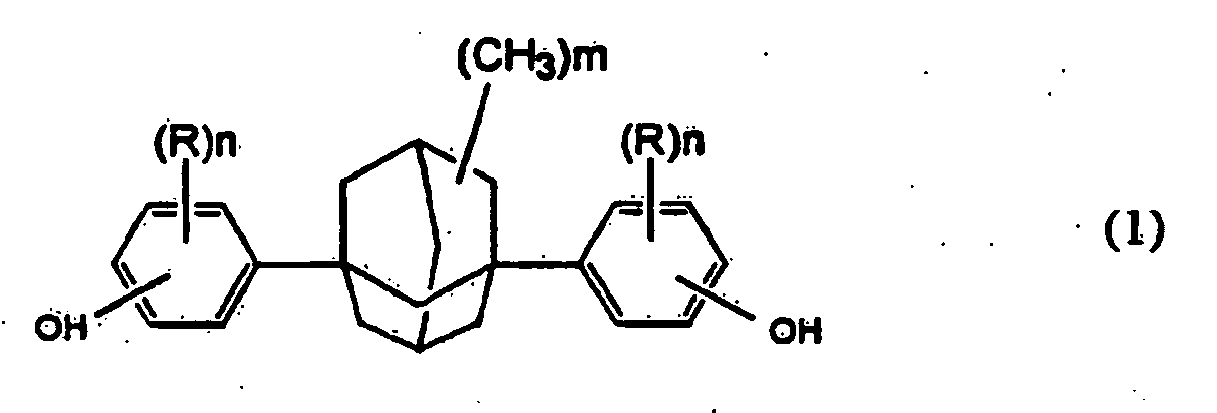
wherein R is an alkyl group, cycloalkyl group or phenyl group, n is an integer 1, 2 or 3, and m is 0 or an integer 1 or 2.
wherein R is an alkyl group, cycloalkyl group or phenyl group, n is an integer 1, 2 or 3, and m is 0 or an integer 1 or 2.
2. A method of manufacturing 1,3-bis(hydroxyphenyl)adamantanes recited in claim 1, which
comprises reacting 1,3-adamantane-diol represented by the general formula (2) :
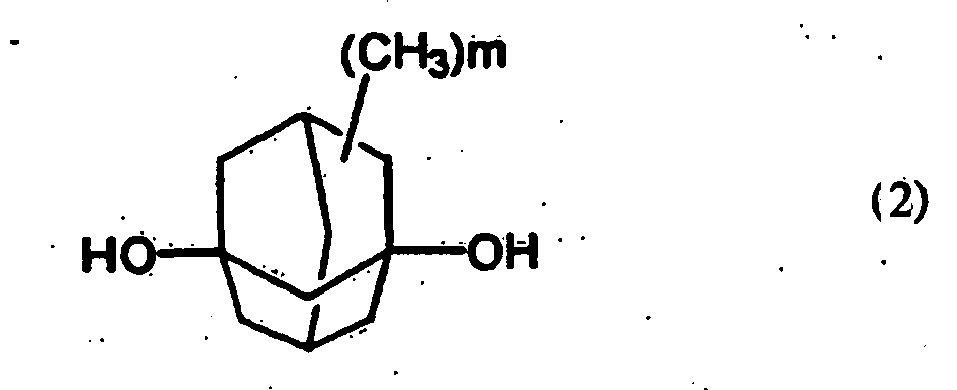
wherein m is 0 or an integer 1 or 2,
and substituted phenols represented by the general formula (3):
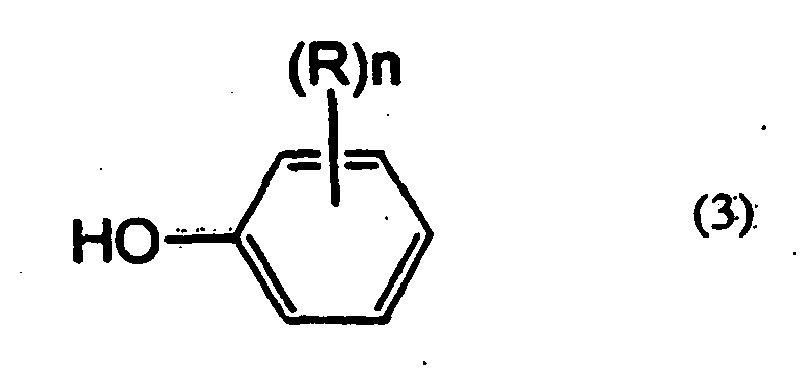
wherein R and n are as defined in the general formula (1) above, in the presence of an acid catalyst.
wherein m is 0 or an integer 1 or 2,
and substituted phenols represented by the general formula (3):
wherein R and n are as defined in the general formula (1) above, in the presence of an acid catalyst.
1. 1,3-Bis(hydroxyphenyl)adamantane der allgemeinen Formel (1)
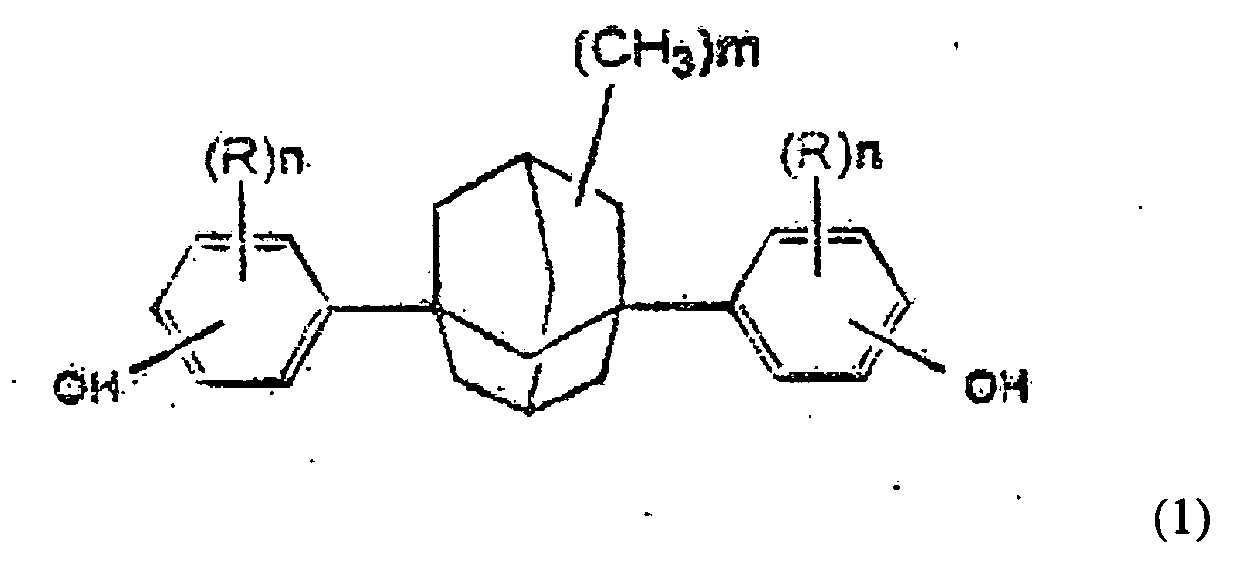
wobei R ein Alkylrest, Cycloalkylrest oder Phenylrest ist, n eine ganze Zahl 1, 2, oder 3 ist und m 0 oder eine ganze Zahl 1 oder 2 ist.
wobei R ein Alkylrest, Cycloalkylrest oder Phenylrest ist, n eine ganze Zahl 1, 2, oder 3 ist und m 0 oder eine ganze Zahl 1 oder 2 ist.
2. Verfahren zur Herstellung von 1,3-Bis(hydroxyphenyl)adamantanen gemäß Anspruch 1,
welches das Umsetzen von 1,3-Adamantandiol der allgemeinen Formel (2):
wobei m 0 oder eine ganze Zahl 1 oder 2 ist,
und substituierter Phenole der allgemeinen Formel (3):
wobei R und n wie in der vorstehenden allgemeinen Formel (1) definiert sind, in Gegenwart eines saueren Katalysators umfasst.
wobei m 0 oder eine ganze Zahl 1 oder 2 ist,
und substituierter Phenole der allgemeinen Formel (3):
wobei R und n wie in der vorstehenden allgemeinen Formel (1) definiert sind, in Gegenwart eines saueren Katalysators umfasst.
1. 1,3-bis(hydroxyphényl)adamantanes représentés par la formule générale (1) :
dans laquelle R est un groupe alkyle, un groupe cycloalkyle ou un groupe phényle, n est un entier valant 1, 2 ou 3, et m vaut 0 ou est un entier valant 1 ou 2.
dans laquelle R est un groupe alkyle, un groupe cycloalkyle ou un groupe phényle, n est un entier valant 1, 2 ou 3, et m vaut 0 ou est un entier valant 1 ou 2.
2. Procédé de fabrication de 1,3-bis (hydroxyphényl) adamantanes selon la revendication
1, qui comprend le fait de mettre à réagir du 1,3-adamantane-diol représenté par la
formule générale (2) :
dans laquelle m vaut 0 ou est un entier valant 1 ou 2, et des phénols substitués représentés par la formule générale (3) :
dans laquelle R et n sont tels que définis dans la formule générale (1) ci-dessus, en présence d'un catalyseur acide.
dans laquelle m vaut 0 ou est un entier valant 1 ou 2, et des phénols substitués représentés par la formule générale (3) :
dans laquelle R et n sont tels que définis dans la formule générale (1) ci-dessus, en présence d'un catalyseur acide.
REFERENCES CITED IN THE DESCRIPTION
This list of references cited by the applicant is for the reader's convenience only. It does not form part of the European patent document. Even though great care has been taken in compiling the references, errors or omissions cannot be excluded and the EPO disclaims all liability in this regard.
Patent documents cited in the description